ESSAYS ON THE DEVELOPMENT OF ENTREPRENEURIAL REGIONS
Paige Alyse Clayton
A dissertation submitted to the faculty at the University of North Carolina at Chapel Hill in partial fulfillment of the requirements for the degree of Doctor of Philosophy in the Department
of Public Policy.
Chapel Hill 2020
Approved by:
Maryann Feldman
Howard Aldrich
Shiri Breznitz
Nichola Lowe
ABSTRACT
Paige Clayton: Essays on the Development of Entrepreneurial Regions (Under the direction of Maryann Feldman)
This four-paper dissertation improves our understanding of how regional entrepreneurial
economies emerge and develop over time. It illuminates the mechanisms of regional industrial
development, focusing on the role of entrepreneurial finance, social networks, and technology
licensing regimes. The dissertation advances a new theory of regional coherence that posits
system-oriented knowledge spillovers and organizational linkages lead to economic growth. It
tests the proposition that regional coherence is influenced by the actions of embedded actors over
time, including organizations, policy, and entrepreneurs, and that the degree of coherence, in
turn, influences regional entrepreneurial development.
Paper one reviews the literature on entrepreneurial ecosystems and intermediary
organizations and presents a future research agenda. Papers two and three examine the process of
entrepreneurial emergence with an in-depth analysis of one ecosystem: North Carolina’s
Research Triangle region’s life sciences cluster. Paper two empirically demonstrates temporal
phases of regional industrial development and examines the interacting roles of private and
multi-level public (state and federal) funding of startups in facilitating emergence. Findings
indicate clear differences in the relationship between funding sources and in how these funding
sources influence firms’ survival across development phases. Paper three investigates the
to their pre-founding social and human capital, in helping their firms access finance and survive.
Findings demonstrate that entrepreneurial support organization use is importantly related to
firms’ ability to acquire external finance and survive; however, certain firms benefit more than
others. Finally, paper four advances the topic of knowledge spillovers between organizations as a
mechanism of regional development by examining the differing diffusion patterns of two
technologies which were sufficiently novel to introduce new patent classes. This paper asks
whether diffusion differed more across organizations and cities depending on the organizational
form of the inventing organization or on the organization’s technology licensing strategy.
Findings show that diffusion patterns differ more depending on the technology licensing strategy
than organizational form, which has implications for the public and private management of
intellectual property. Aside from each paper’s contribution to the literature, each paper has
ACKNOWLEDGMENTS
This dissertation represents several years of hard work that would not have been possible without the unwavering support of many individuals in both my professional life and my
personal life. First, I am indebted to the tireless support of my advisor, Maryann Feldman. Next, I would be remiss if I did not also acknowledge Shiri Breznitz, who introduced me to research and pushed me to consider the PhD. I am extremely grateful to have these women as my mentors.
I also want to thank my other dissertation committee members Howard Aldrich, Nichola Lowe, and Jeremy Moulton. Each graciously lent me their time, knowledge, and wisdom in order to strengthen this dissertation. I am thankful as well to the many other faculty and staff at UNC Public Policy who helped over the past six years.
this is because of you. I am eternally grateful to trudge this road with you. Every year is better and better.
Parts of this dissertation were conducted with coauthors and have been published in
academic journals. Chapter two is from work for a published paper with coauthors Maryann
Feldman and Nichola Lowe (published in Academy of Management Perspectives). All coauthors
provided permission for me to include this work in my dissertation. All copyrighted materials
included in this dissertation are used with permission from the relevant copyright holders. I wish
to provide specific acknowledgements for each dissertation chapter as follows:
• Chapter 2: This work was supported by funding from the National Science Foundation
(NSF) and the Kauffman Foundation. I would like to especially thank Howard Aldrich and
Jeremy Moulton for comments on an earlier version of this paper.
• Chapter 3: Funding for the development of the PLatform to Advance Community Economies
(PLACE) database was provided by the NSF and the Kauffman Foundation. I thank Mahka
Mooen, who provided Bioscan data, and Christos Kolympirisa, who provided National
Institutes of Health (NIH) data. I also thank Mercedes Delgado and participants at AOM,
APPAM, and Danish Research Unit for Industrial Dynamics (DRUID). As this chapter is
currently under journal review, I also acknowledge my coauthors Maryann Feldman and
Benjamin Montmartin.
• Chapter 4: I would like to thank participants at DRUID, APPAM, and SKEMA KTO
Doctoral Workshop for comments on an earlier version of the paper, as well as support
organization managers, interview participants, Charlie Joyez, and Benjamin Montmartin.
Funding for the PLACE database was provided by NSF and the Kauffman Foundation.
TABLE OF CONTENTS
LIST OF FIGURES ... xi
LIST OF TABLES ... xii
LIST OF ABBREVIATIONS ... xiv
CHAPTER 1 - INTRODUCTION ... 1
CHAPTER 2 – BEHIND THE SCENES: INTERMEDIARY ORGANIZATIONS THAT FACILITATE SCIENCE COMMERCIALIZATION THROUGH ENTREPRENEURSHIP. ... 7
Abstract ... 7
Introduction ... 8
Intermediaries Inside and Out ... 10
Methodology ... 14
University Technology Transfer and Licensing Offices ... 16
Physical Space: Incubators, Accelerators, and Co-Working Spaces ... 19
Professional Service Firms ... 24
Networking, Connecting, and Assisting Organizations ... 27
Finance Providers ... 29
Conclusion ... 38
REFERENCES ... 42
CHAPTER 3 – FUNDING EMERGING ECOSYSTEMS. ... 54
Introduction ... 55
Theoretical Background ... 56
Empirical Context ... 60
Data & Descriptives ... 61
Methodology ... 66
Detecting Emergence ... 67
Funding Sources & Emergence ... 76
Funding Sources & Firm Survival Across the Ecosystem Life Cycle ... 85
Discussion & Conclusion... 93
REFERENCES ... 97
CHAPTER 4 – DON’T GO IT ALONE: FIRM SURVIVAL, FUNDING, AND THE INFLUENCE OF LOCAL ENTREPRENEURIAL SUPPORT ORGANIZATIONS, HUMAN CAPITAL, AND SOCIAL NETWORKS. ... 104
Abstract ... 104
Introduction ... 105
Theoretical Background ... 109
Empirical Setting ... 114
Data & Methodology ... 115
Results ... 126
Discussion ... 135
Conclusion ... 139
REFERENCES ... 140
Abstract ... 147
Introduction ... 148
Theoretical Foundation ... 151
Tales of Two Technologies: PCR and rDNA ... 159
Data & Variables ... 165
Model & Results ... 169
Conclusion ... 178
REFERENCES ... 181
APPENDIX 1: CHAPTER 2 ... 186
APPENDIX 2: CHAPTER 3 ... 188
LIST OF FIGURES
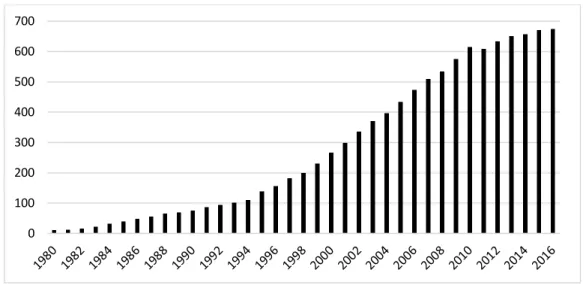
Figure 3.1 Annual number active Research Triangle region entrepreneurial life science firms. . 61
Figure 3.2 Annual number Research Triangle entrepreneurial life science firms receiving funding by source. ... 64
Figure 3.3 Annual real dollar of funding to Research Triangle entrepreneurial life science firms by source... 65
Figure 3.4 Research Triangle region life science industry timeline. ... 72
Figure 4.1 No. of active firms in the Research Triangle’s life sciences ecosystem by year... 115
Figure 5.1. PCR and rDNA patent applications and inventors by MSA, 1985-2014 ... 162
Figure 4.2. Firm hazard function ... 195
LIST OF TABLES
Table 2.1. Intermediary definitions and roles in scientific entrepreneurship ... 15
Table 3.1 Sector classifications... 65
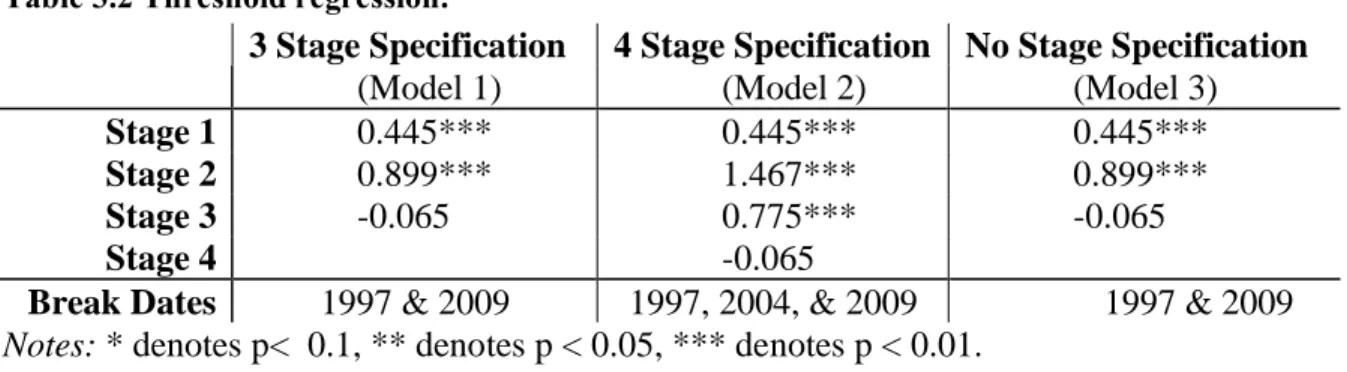
Table 3.2 Threshold regression. ... 69
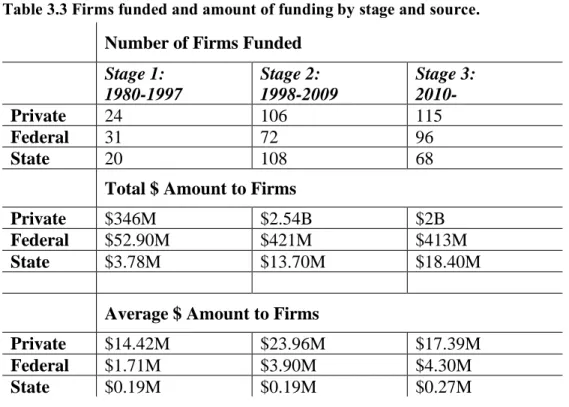
Table 3.3 Firms funded and amount of funding by stage and source. ... 75
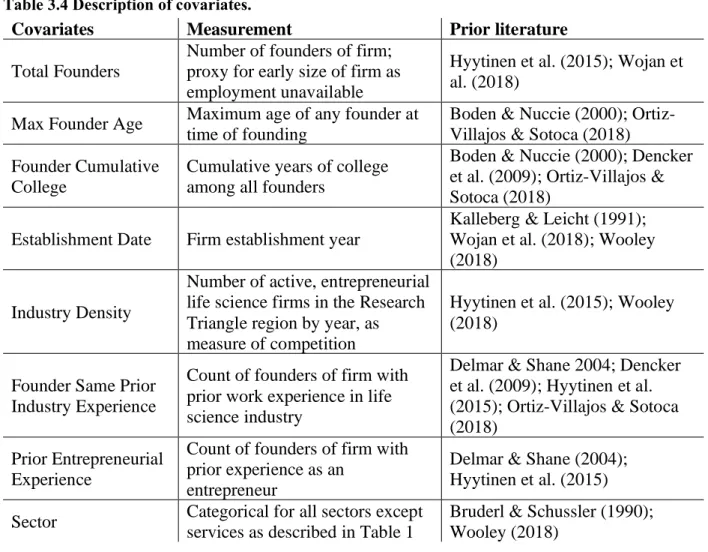
Table 3.4 Description of covariates. ... 79
Table 3.5 Summary statistics, all firms. ... 80
Table 3.6 Correlations between covariates. ... 80
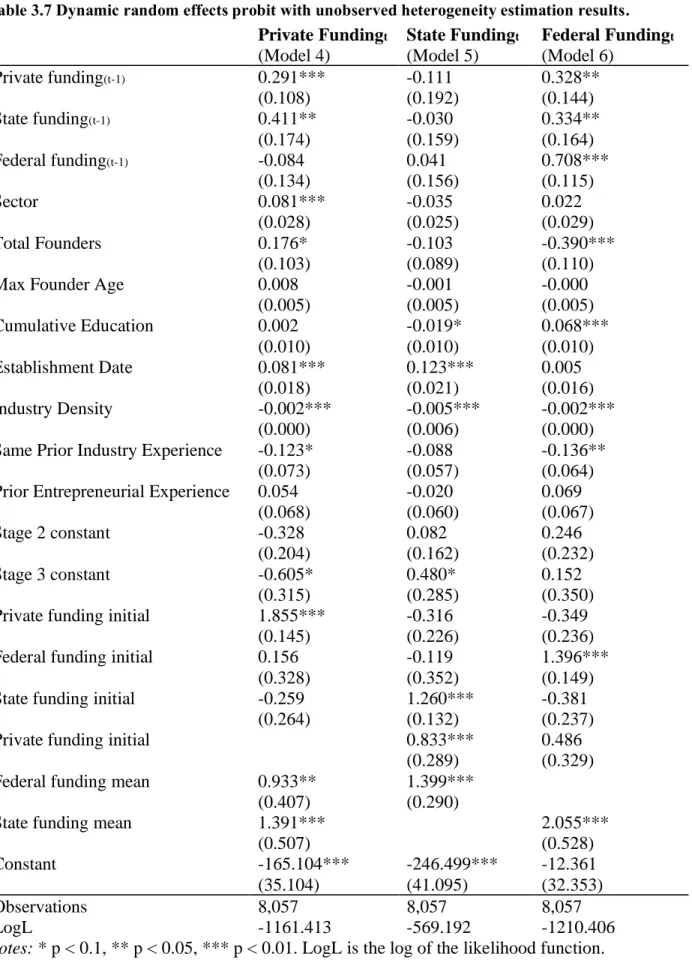
Table 3.7 Dynamic random effects probit with unobserved heterogeneity estimation results. .... 81
Table 3.8 Summary of dynamic random effects probit models with regime analysis for private funding. ... 83
Table 3.9 Summary analysis of dynamic random effects probit models with analysis for state funding. ... 83
Table 3.10 Summary analysis of dynamic random effects probit models with regime analysis for federal funding. ... 83
Table 3.11 Non-parametric duration models for business survival. ... 87
Table 3.12 Duration models for business survival by funding source(s). ... 90
Table 3.13 Summary analysis of discrete event history models with regime analysis. ... 91
Table 4.1 Number of ESO users receiving funding by each funding source. ... 119
Table 4.2 Mean dollar amount of funding received by start-ups participating in ESOs. ... 119
Table 4.3 Descriptive statistics. ... 124
Table 4.4 Correlations. ... 125
Table 4.5 Estimating OLS and logistic regression of ESO use on start-up funding. ... 126
Table 4.7 Estimating OLS regression of any ESO use on start-up funding by funding source.. 129
Table 4.8. Estimating discrete event history analysis: association with firm exits... 130
Table 4.9 Regression results of ESO participation on firm funding: Local University Employment, Gender, & Network Brokerage ... 134
Table 5.1. Comparing PCR and rDNA Technologies and Patenting ... 159
Table 5.2. Key places (metropolitan statistical areas – MSAs) of PCR invention, 1985-2014 .. 163
Table 5.3. Key places (metropolitan statistical areas – MSAs) of rDNA invention, 1976-2014 164 Table 5.4. Descriptive statistics for city social proximity to PCR, rDNA inventors ... 166
Table 5.5. Descriptive statistics for cognitive proximity of cities to PCR, rDNA technology ... 167
Table 5.6. Estimating the influence of different forms of proximity on the likelihood of a city inventing a first patent in PCR or rDNA in relation to the baseline hazard ... 171
Table 5.7. Estimating the Cox extended hazard model for different cities with different patenting levels... 173
Table 5.8. Estimating Cox extended hazard model for different time periods of technology development and/or ownership ... 175
Table 5.9. Estimating Cox extended proportional hazard model for PCR diffusion with rDNA social and cognitive proximity predictors ... 177
Table 3.14: Dynamic random effects probit model with regime switching ... 188
Table 3.15: Results of Gaussian frailty duration models for firm survival ... 189
Table 3.16: Results of gamma frailty duration models for firm survival ... 190
Table 3.17: Detailed funding: Gaussian and gamma frailty duration models for firm survival . 190 Table 3.18: Discrete Event History Analysis with Regime Model Estimation Output ... 191
Table 4.10. Robustness of OLS Regression of Any ESO Use on Start-up Funding ... 194
LIST OF ABBREVIATIONS
BIO – Biotechnology Industry Organization
CED – Council for Entrepreneurial Development
CEM – coarsened exacting match
CMO – contract manufacturing organization
CRO – contract research organization
ESO – entrepreneurial support organization
IPO – initial public offering
MSA – metropolitan statistical area
NCSU – North Carolina State University
NIEHS – National Institute of Environmental Health Sciences
NIH – National Institutes of Health
NSF – National Science Foundation
PCR – polymerase chain reaction
PLACE – PLatform for Advancing Community Economies
PSF – professional service firm
rDNA – recombinant DNA
R&D – research and development
RT – Research Triangle
RTP – Research Triangle Park
SBA – Small Business Administration
SBIR – Small Business Innovation Research
STTR – Small Business Technology Transfer
TBI – technology business incubation
TCS – technology commercialization strategy
TTO – technology transfer office
UNC – University of North Carolina (Chapel Hill)
USPC – United States Patent Classification
VC – venture capital
CHAPTER 1 - INTRODUCTION
A large literature examines the question of why some regions succeed in nurturing
high-technology industries and entrepreneurship, while other regions, that are seemingly rich in
factors that should produce such growth, fail. Answers remain elusive and our current
understanding is incomplete. This creates a policy problem, because governments devote
considerable resources to try to create vibrant local economies. Local governments develop,
fund, and operate programs and policies to bolster local entrepreneurial activity, often by
mimicking the actions of seemingly successful regions, or by attempting to attract and build new
industries, often without regard to whether the desired industry matches and builds on current
capabilities. Answering questions about regional entrepreneurial development therefore carries
policy as well as scholarly significance and has implications for firm strategy.
This dissertation argues one reason behind divergence in regional entrepreneurial
development is due to the degree of coherence in the regional system. I define regional
coherence as the degree of alignment in knowledge and institutional and organizational policies
and actions that create necessary resources for entrepreneurial development, as well as the degree
of network connectivity which allows entrepreneurs an ability to access and make use of
resources. Such coherence occurs when a region’s scientific, industrial, and technological bases
operate in a synergistic, system-oriented fashion, driven by knowledge spillovers and
organizational linkages that lead to economic and innovative growth. This dissertation tests the
including organizations, policy, and entrepreneurs, and that the degree of coherence, in turn,
influences regional entrepreneurial development.
Each chapter of this dissertation examines a different set of relationships that occur
between policies, entrepreneurs, firms, and intermediaries, in order to examine why and how
alignment occurs and the impact on regional entrepreneurship and innovation development. The
entrepreneurial ecosystem is used throughout this dissertation as a useful framework which
allows an account of the types of organizations, institutions, and people which should be present
in an entrepreneurial community and which relationships could exist between them. This
dissertation adds theoretical and empirical rigor to the study of ecosystems as it also attempts to
move the ecosystem framework toward an ecosystem theory.
Specifically, this dissertation advances three main hypotheses, each dedicated to one
paper.
i. Entrepreneurial ecosystems emerge through complex processes that bring about
the accumulation of individual entry by entrepreneurs and must be considered
within a long temporal framework. Multi-level public and private funding is the
mechanism behind local industrial emergence, but different funding sources play
a role in different stages of ecosystem emergence. Without consideration of these
temporal and relational differences, policymakers, civic leaders, and start-up
managers are at risk of choosing sub-optimal funding and development strategies.
ii. Entrepreneurial support organizations, an increasingly popular economic
development policy tool, endow participant start-ups with local institutional
capital to help them navigate their local entrepreneurial ecosystems to gain
on start-ups, however, must be considered within the context of start-ups’
pre-entry human and social capital in order to provide a more holistic understanding
of the role of support organizations within the local ecosystem.
iii. The distinction between public and private science (science originating from
public versus private organizations) is commonly made, but the empirical
evidence supporting this distinction is thin. New technologies emanating from
both types or organizations can follow the same general diffusion and geographic
spillover patterns. A more useful distinction is made between the licensing and
commercialization strategies of organizations in explaining how social networks
and related local knowledge bases influence whether a new technology is adopted
and built upon with new patents.
Each of the three chapters dedicated to these hypotheses uses different methodological
approaches and different data sources to examine the micro-foundations of regional
entrepreneurial development. Each chapter concludes with policy implications as well as
implications for entrepreneurs and entrepreneurial ecosystem members as relevant. Before these
empirical chapters, however, chapter one presents the literature on entrepreneurial ecosystems
and intermediary organizations in order to introduce the topics which feature prominently in the
dissertation.
Chapter Two. Chapter two presents an overview of the literature and theory which will serve as a framework for the subsequent three empirical chapters. An overarching theme of this
dissertation is that entrepreneurship does not occur in a vacuum and that context, especially
policy and institutional context, have important consequences for entrepreneurial actions and
and build their firms, they look to external sources of help within their local ecosystem. This
chapter presents an overview of the five most common types of ecosystem resources
entrepreneurs turn to for support: university technology transfer and licensing offices; physical
spaces (incubators, accelerators, and co-working spaces); professional services providers;
networking, connecting, and assisting organizations; and finance providers (including venture
capital, angel investors, public financing, and crowdfunding). These organizations often operate
patiently and behind the scenes to support firm and ecosystem development. Recent calls for
more evidence on the context of entrepreneurship has brought these organizations to the
forefront of the ecosystem framework, however, and so academic and practitioner interest in
understanding their antecedents and consequences has grown. This chapter highlights how each
intermediary type supports new ventures while also offering insight into opportunities for
coordination and development among the organizations and suggestions for future research.
Chapter Three. The third chapter investigates the temporal development of regional entrepreneurial ecosystems. It does so by empirically examining one industry in one region over
a long time period (36 years), using a unique longitudinal dataset of entrepreneurial firms. This
paper focuses on start-up funding from private, federal, and state sources as the mechanism
behind emergence. The paper uses several innovative techniques for empirically identifying the
stages of industry development (threshold regression), examining the relationship between
funding sources over time (dynamic random effects probit model, regime analysis), and
explicating the role of each funding source in helping start-ups survive (discrete event history
analysis, regime analysis). Findings indicate clear differences in the relationship between
funding sources and in how these funding sources influence firms’ survival across development
promote industry development at the region level. Aside from theoretical implications for the
literatures on ecosystems, entrepreneurial finance, and industry emergence, the paper has
important implications for policymakers attempting to nurture new industries and for
entrepreneurs attempting to navigate their ecosystems and grow their firms. If financial resources
matter differently to firms and regions depending on the phase of emergence, then ‘one size fits
all’ firm strategies and policy mechanisms are inappropriate to promote economic growth.
Chapter Four. The fourth chapter expands our understanding how organizations, policies, and other actors in an entrepreneurial ecosystem interact in a way that can lead to
economic prosperity. The chapter asks why entrepreneurs choose to participate in entrepreneurial
support organizations and under what conditions their start-ups benefit most. I empirically
investigate how participation in entrepreneurial support organizations influences firms’ ability to
acquire external financial capital, controlling for start-ups’ internal stock of social and human
capital. I coarsen exact match the data to create a control group of similar firms. I then examine
how support organizations influence the likelihood of firm failure relative to the start-up’s own
human, network, and financial capital using discrete event history analysis. I find entrepreneurial
support organization use is indeed importantly related to firms’ ability to acquire external finance
and survive. Aside from the tangible resource and knowledge services such organizations
provide, the organizations act as network brokers, connecting entrepreneurs to finance and new
ties by acting as bridges across small world clusters. Certain start-ups benefit more from
participation. Since entrepreneurial support organizations contribute a public good, findings have
direct implications for policymakers attempting to develop these organizations, for the managers
Chapter Five. The fifth chapter uses a national level patent dataset to test the knowledge spillover hypothesis. The paper examines the differing diffusion patterns of two technologies
which were sufficiently novel to introduce new patent classes, recombinant DNA (rDNA) and
polymerase chain reaction (PCR), focusing on the role of social networks and knowledge
relatedness. The paper asks whether diffusion patterns differ across corporate versus university
channels as rDNA was patented by a university, while PCR was patented by Cetus, a for profit
firm, or whether diffusion differs more depending on the organization’s commercialization
strategy. This question is important as distinctions between university and corporate patent
regimes have been made in the literature for many years, without much empirical evidence.
Findings indicate that social and cognitive proximity matter differently for spillovers depending
on the licensing and commercialization approach, rather than an organization type distinction.
This finding implies private, public, and nonprofit organizations’ licensing schemes may have
broader impacts than typically considered, and these should be carefully weighed when devising
a commercialization strategy. This consideration is especially important for the case of public
CHAPTER 2 – BEHIND THE SCENES: INTERMEDIARY ORGANIZATIONS THAT FACILITATE SCIENCE COMMERCIALIZATION THROUGH
ENTREPRENEURSHIP.
Abstract
When they lack resources to commercialize science, entrepreneurs rely on intermediary organizations often within their local ecosystems. This paper seeks to improve our understanding of how intermediaries operate to advance the commercialization of science by providing a set of specialized services. We review five intermediaries commonly mentioned in the ecosystem literature: university technology transfer and licensing offices; physical space (incubators, accelerators, and co-working spaces); professional services providers; networking, connecting, and assisting organizations; and finance providers (including venture capital, angel investors, public financing, and crowdfunding). Specifically, we explore how these various intermediaries’ function and provide complementary and related services in support of scientific
Introduction
A successful theater performance requires a large support cast working behind the scenes,
without which the show would not go on. Just as the audience focuses its attention on the
dramatic action happening on stage, the commercialization of science tends to orient its gaze
toward the innovative technology and its enabling star, the entrepreneur. But as with theater,
diverse entities work behind the scenes to support the necessary processes of founding,
managing, and scaling a new scientific venture. In the commercialization of science, the least
visible players are intermediary organizations—entities that operate in the void between the
scientific discovery and the ultimate realization of value from commercialization, providing
specialized services and access to equipment and resources beyond the reach of many start-up
firms. Although these support organizations have a long history of helping disseminate
information important to technology innovation, they are often treated as tangential to the study
of science-based entrepreneurship (Howells, 2006). Yet varying access to these background
supports can have a profound effect on entrepreneurial performance, as well as helping to sustain
innovative activities within a regional economy (Cooke et al., 1997).
Academic interest in entrepreneurial ecosystems creates an opportunity to shine the
spotlight on these behind-the-scenes organizations. By definition, ecosystems are “a set of
interconnected entrepreneurial actors, institutions, entrepreneurial organizations and
entrepreneurial processes which formally and informally coalesce to connect, mediate and
govern the performance within the entrepreneurial environment” (Mason & Brown, 2014, p. 5).
Thus, the nascent ecosystem literature makes room for a variety of innovation-supporting
intermediaries, including nonprofit, private, and public organizations as well as universities,
capitalists (Auerswald, 2015; Bell-Masterson & Stangler, 2015; Isenberg, 2011; Mack & Mayer,
2015; Mason & Brown, 2014; Stam, 2015). The ecosystem model also suggests an organic and
fluid relationship between intermediaries that coevolve in a region. While each type of
intermediary offers the potential to bring unique—yet complementary—services and supports to
a regional ecosystem, there is also the potential for multiple intermediaries to coordinate, and
even duplicate, efforts to address persistent innovation challenges or gaps. Thus, to fully
appreciate the synergistic effects of this relational dynamic, we first need to recognize the
contribution each intermediary makes to this science commercialization ecosystem.
The objective of this paper is to improve our understanding of intermediaries in the
commercialization of science. We limit our review to five intermediaries commonly mentioned
in the ecosystem literature: university technology transfer and licensing offices; physical space
(incubators, accelerators, and co-working spaces); professional services providers; networking,
connecting, and assisting organizations; and finance providers (including venture capital, angel
investors, public financing, and crowdfunding). Specifically, we explore how intermediaries
operate in the context of scientific entrepreneurship by providing a set of specialized services to
advance the commercialization of science. What unites these various intermediaries is their
function and provision of both complementary and related services in support of scientific
commercialization through entrepreneurship. After a brief framing of intermediation, we review
the literature on each organization type in turn, providing a definition and considering the
contribution of the intermediary and the related policy implications. Each section concludes with
Intermediaries Inside and Out
Consideration of intermediaries adds a new theoretical dimension to studies on the
commercialization of science. The Bush (1945) linear model argued that commercialization
could be left entirely to the private sector if government supported upstream research (Hart,
1998). Stokes (1997), however, questioned this division of labor, arguing that interactions
between public- and private-sector actors are often essential for bringing scientific discoveries to
market. Adding to the discussion, Branscomb and Auerswald (2002) used the colorful metaphor
“valley of death” to not only explain the frequent failure of science-based commercialization, but
also to recognize the need for intervention to bridge these noted gaps.
As this suggests, the ability to commercialize science depends on complex, dynamic, and
adaptive responses and relationships among private, quasi-public, and public-sector
organizations. The concept of systems of innovation has been used to capture the relational
dimensions and characteristics of environments that support knowledge creation and enhance
innovation (Edquist, 1997). Systems of innovation are most succinctly defined as “the set of
institutions whose interactions determine the innovative performance. . .of national firms”
(Nelson & Rosenberg, 1993, pp. 4–5). Yet the innovation system approach often assumes
homogeneity within a single country, when significant regional differences within countries
suggest that innovation is more often a subnational phenomenon.
Recent work by several European scholars has attempted to expand the triple helix model
to include intermediaries that operate between universities, industry, and government in several
European contexts (Fernández-Esquinas et al., 2016; Suvinen et al., 2010; Todeva, 2013). While
challenges of intermediation among the tripartite partners with differing goals, the theory is
limited by its singular focus on university–industry–government links.
In contrast, the ecosystem concept, which originated with practitioners in the mid-1990s
(Autio & Thomas, 2014), recognizes the micro-geography of innovation and thus captures the
diverse mix of locally embedded support organizations that contribute to innovation. The modern
concept of an innovation ecosystem is rooted in the earlier literature on systems of innovation
and builds on endogenous growth theory (Romer, 1990). New growth theory, for example, puts
knowledge creation at the center of models of economic growth, while resonating with
observations of the dynamic intraregional social relations described as part of late 19th-century
Marshallian industrial districts. Increased interest in capturing the subnational geography of
innovation suggests an opportunity to look closely at the intermediary organizations that
contribute to the vital health of a regional innovation ecosystem.
It has long been recognized that innovative firms must be able to access, acquire,
assimilate, and exploit external knowledge to develop and sustain competitive advantage (Cohen
& Levinthal, 1990; Zahra & George, 2002). Yet firms, especially small entrepreneurial firms,
rarely innovate in isolation. Networking with other firms often aids in the transmission of tacit
and highly complex knowledge across firm boundaries, where vertical integration is inefficient
and knowledge cannot be easily priced (Powell, 1990). Equally important, however, is access to
other mediating agents and intermediary organizations that act as boundary spanners to help
facilitate network formation among firms while also extending essential resources, services, and
guidance in support of innovation and the transfer of tacit and explicit knowledge (Howells,
Intermediaries are especially important for science-based entrepreneurial firms, given
high barriers to commercializing scientific knowledge. At a general level, intermediary
organizations support innovation by directly engaging with individual establishments through the
provision of services and access to resources that can enhance business development or expedite
technology commercialization. More specifically, intermediaries work with science-based
entrepreneurs to overcome information and resource asymmetries by providing specialized
information about intellectual property protection, the navigation of clinical trials in the life
sciences, and the negotiation of technical standards for firms innovating in information, Internet,
and equipment technologies. Some intermediaries offer specialized services that help
entrepreneurs refine their ideas and business plans, reducing the transaction costs of engaging in
commercialization activity. McEvily and Zaheer (1999) found that the development of new
capabilities is stronger in firms with ties to regional intermediaries.
Intermediaries can also help firms resolve financial constraints either directly, through
subsidies, or indirectly, by making introductions to other sources of finance. Intermediaries also
play an essential coordinating role, forging networks and partnerships across the science-based
business community and introducing nascent entrepreneurs to more established and influential
business leaders, mentors, or partners. In this regard, intermediaries do not just address
innovation gaps at the individual firm level; they also contribute to agglomeration economies by
shaping and reshaping relational dynamics within and across the regional economy, by creating
an industry commons (Berger, 2013). Intermediaries diffuse knowledge across firms and supply
chains, thus providing a mechanism to give greater material substance to the concept of
While Marshall (1890) noted that the “secrets of the industry are in the air,” these
intermediate support organizations provide channels for air circulation, a concept supported by
recent research. Corredoira and McDermott (2014), for example, supported these findings,
suggesting that intermediaries play an invaluable role in filling structural holes that separate
firms, allowing for the fluid movement of knowledge. Their geographic concentration can also
contribute to greater regional specialization, thereby helping to motivate new product and firm
development (Feldman & Kogler, 2010).
Yet despite these advantages, it is important to consider the possibility of negative
externalities from the networking role of intermediaries. For example, Pahnke et al. (2015) found
evidence of competitive information leakage across shared intermediaries. Specifically, when
firms are indirectly linked because they share the same intermediary (e.g., a venture capital firm),
information may accidentally be leaked to a competitor and hinder—rather than support—
innovation. This suggests that there are important qualitative differences in the ways that
intermediaries operate.
Innovation is clearly a high-risk undertaking, not simply for entrepreneurial firms that
seek to transform novel ideas into society-enhancing solutions and marketable products, but also
for the regions in which these innovative firms are embedded. In this regard, it is important to
also recognize an additional, yet often obscured, contribution of regional intermediaries. An
intermediary can reach well beyond the business community to support and sustain regional
innovation and science commercialization through their ongoing interaction with other
intermediaries. This is the essential idea behind innovation systems or ecosystems: The whole is
Intermediaries have been known to join forces to shape and inform policy action and
regional strategy, even engaging in forms of collective action to amass political support to
advance policy goals and capacity building (Feldman & Lowe, 2017). But equally,
intermediaries align efforts to shape the types of scientific discoveries that get commercialized
by local entrepreneurs, and in ways that often reflect the unique social, environmental, or
technological challenges facing residents in their region (Owen-Smith & Powell, 2006). In this
respect, intermediaries are not only well positioned to address some of the emergent gaps in US
federal science policy, but they also provide a resource for guiding policy in support of science
commercialization and regional economic development.
Methodology
With this potential contribution in mind, we examined the ecosystem literature.
Admittedly, the ecosystem concept encompasses a variety of cultural, social, and symbolic
conditions that augment the contribution of more formal support institutions (Stam, 2015). Still,
as Spigel (2015) noted, formal institutions within an ecosystem are tangible entities that are most
easily influenced by policy. We focused on five tangible, physical entities most commonly
featured in ecosystem analysis: university technology licensing offices; professional service
firms; workspace providers, including incubators, accelerators, and co-working spaces;
organizations that provide networking and programmatic assistance; and financing entities,
including venture capital, angel investment, public funding, and crowdsourcing. Table 2.1
Table 2.1. Intermediary definitions and roles in scientific entrepreneurship
Intermediary Type Definition Primary Roles in Scientific Entrepreneurship
University Intermediaries University Technology
Transfer/ Licensing Office
University offices that manages intellectual property of university-created technologies
Provide incentives for invention disclosure Engage faculty in development process Work with businesses to license technology Service Intermediaries
Professional Service Firms
Third-party firms—including law, accounting, and real estate firms—that provide resources and connections
Reduce transaction costs
Advise IP and business formation strategy Act as dealmakers
Other Assisting Organizations
Public, quasi-public, and nonprofits groups that provide networking, specialized services, and programs
Facilitate networking and mentoring Influence policy through agenda setting Physical Space Intermediaries
Incubators Physical space for early-stage firm formation and idea development
Offer affordable space Provides support services
Generate revenue for incumbent firms
Accelerators
Physical space, complemented with provision of resources and financial investment
Offer intensive programming Accelerate milestones
Invest in exchange for equity
Co-working spaces Physical space that promotes proximity and interaction
Provide flexible, less structured programming Offer space for social interaction
Facilitate networking and peer mentoring Financial Intermediaries
Venture Capital firms Investment firms that raises funds from individuals and institutions to support new ventures with high growth potential Provide multistage, benchmarked financingMotivated to increase firm performance
Angel Investors Individual investors or investment clubs that provide early-stage financing in support of new ventures
Provide early-stage funding Act as a source of patient capital Offer business advice and mentoring
Public funding programs Public and quasi-public programs that provide financial assistance in the form of grants or loans to new ventures
Offer a long-term source of support Act as a non-dilutive source of funding
Signal quality for private financing mechanisms
Crowdfunding platforms Method of securing large numbers of small investments
Recession proof
Enable inventors to gain immediate product feedback
1
For each of these categories, we conducted an extensive literature search using a variety
of keywords outlined in Appendix 1. This produced a large cross-section of the literature.
Scholarly journal articles were found through online searches of bibliographic databases such as
Web of Science, Google Scholar, and ProQuest Summon. In an effort to reduce bias in the
results of searches, we specifically included highly cited as well as more recent articles. We also
included articles from a range of journal rankings and disciplinary fields. Papers were included
based on whether they contributed to the state of knowledge on intermediation or a specific
intermediary organization.
University Technology Transfer and Licensing Offices
The commercialization of academic science typically begins with university technology
transfer or licensing offices (TTOs) that work with businesses to license a university-created
technology (Spigel, 2015; Stam, 2015). In the United States, the Bayh-Dole Act of 1980
formalized a process for the licensing of university inventions that resulted from
government-funded research, although there was a historical precedent for university ownership (Mowery et
al., 2004). Other countries have adopted policies similar to the US system of university
ownership or, alternatively, assert professors’ privilege so that the individual inventor retains
ownership (Cunningham & Link, 2016; Huyghe et al., 2016). Many review articles consider the
role of universities in the economy and highlight their role in ecosystems (D’Este & Patel, 2007;
Etzkowitz et al., 2000; Rothaermel et al., 2007). Our focus, however, is limited to the specific
role of TTOs as intermediary organizations that assist in the commercialization of science. It is
worth noting that ideas with scientific value can also originate from government labs and from
firms, internal offices and legal counsel (rather than intermediaries) manage the licensing
relationship (Kline, 2003; Maine, 2008).
TTOs participate in markets for technology, defined as “transactions for the use, diffusion
and creation of technology (or intellectual property)” (Arora et al., 2001, pp. 423). While firms
of all sizes license technology, academic startups feature most prominently in scholarly work as
they are seen to offer the possibility of greatest impact. Yet university technology transfer is
characterized by highly skewed distributions, with the majority of offices failing to break even
while other TTOs have big hits and enjoy strong revenue flows (Feller & Feldman, 2010).
Siegel and Wright (2015a) argued that TTOs overcome three main challenges: (1) they
provide faculty incentives to disclose inventions and engage in the commercialization process,
(2) they maintain researcher involvement in the development process, and (3) they provide
information about the value of technology. Of course, faculty can bypass the formal TTO process
by patenting directly with industry (Siegel et al., 2004). While some critics complain that
licensing may diminish the traditional strength of informal university knowledge spillovers,
Thursby and Thursby (2002) provided evidence that this is not the case. In a study of TTOs in
the United Kingdom, Belgium, Germany, and Sweden, however, Wright and colleagues (2008)
found that TTOs are better at intermediating the transfer of explicit rather than tacit knowledge.
The organization of the TTO and the level of resources committed by the university are
important to the capacity to commercialize technology (Bercovitz et al., 2001; Siegel et al.,
2003). Thursby and Kemp (2002) found that private universities tend to be more efficient in
licensing than public universities, while universities with a medical school are less efficient in
licensing. O’Shea et al. (2005) found that the number of start-ups a university is able to generate
and the amount of resources devoted to TTO staff. Markman et al. (2005) found a positive
relationship between the speed with which the TTO processes new invention reports and the
creation of start-ups. Importantly, based on the case of Belgium’s K.U. Leuven TTO, Debackere
and Veugelers (2005) argued that well-managed and-structured TTOs reduce information
asymmetries between industry and university, fostering industry–university linkages that are
lacking in the European context and cause the “European paradox” of high levels of scientific
expertise with low contributions to industry. This idea is reflected in findings by Huyghe and
colleagues (2016) showing that more than half of surveyed pre- and postdoctoral researchers at
24 European universities were completely unaware of their university’s tech transfer operations.
TTOs use various mechanisms to improve the commercialization of academic science,
including equity and uniform start-up licenses, educational support programs, and incubators.
Universities started using equity in lieu of licensing fees to encourage new firm formation
(Feldman et al., 2002). Di Gregorio and Shane (2003) found that TTO policies, rather than
capital market constraints, affect the number of new ventures created: More start-ups are formed
when TTOs make equity investments. Many types of licensing agreements are used by TTOs,
with new express licenses recently becoming popular (Rector & Thursby, 2016).
The commercialization of academic science now involves more stakeholders, especially
at the regional level. Furthermore, the methods of commercialization have expanded—for
example, accelerators and business plan competitions (Siegel & Wright, 2015b). If the local TTO
is not effectively engaged, other intermediaries are likely to gain importance in the ecosystem. If
TTOs serve an important purpose, then faculty members who commercialize on their own (either
intermediary. And even when the university TTO is well resourced and has a strong history,
other intermediaries may assist with commercialization activity.
Physical Space: Incubators, Accelerators, and Co-Working Spaces
The commercialization of science requires physical workspace, laboratory space, clean
rooms, and advanced equipment. Incubators, accelerators, and co-working spaces provide
entrepreneurs access to physical facilities at below-market rates, and with preferential terms.
Moreover, the collocation of physical facilities allows for the circulation of ideas. Incubators,
accelerators, and co-working spaces may be affiliated with universities or operate as public,
for-profit, or nonprofit entities. Mian et al. (2016) called for the development of a field of study
called technology business incubation (TBI) to further define these intermediaries’ contributions.
Perhaps what is most interesting is that while incubators have been in existence for more than
half a century, accelerators are a much newer phenomenon, and new organizational forms (such
as co-working spaces) are proliferating. In general, the trend is for physical space providers to
add services that aid commercialization, reflecting the political and social context surrounding
these organizations (Phan et al., 2005).
Incubators. Incubators, as the name implies, attempt to support early-stage firms to a point where they hatch,or become viable entities. The expectation is thatsuccessfully incubated
firms can exit in a strategicbusiness position (Aernoudt, 2004). Though firstappearing in the
1950s, incubators began to grow innumber in the United States during the 1980s forreasons
including the passage of Bayh-Dole, expansionof IP rights in the US, and newfound profitsfrom
biotechnology commercialization—all factorsdriven by the potential for commercializing
science(Hackett & Dilts, 2004). The rise of European scienceparks occurred largely as a result
Categorizing the organizational forms and management practices of incubators has been a
vexing problem, which is one reason there is little conclusive empirical research. Bruneel et al.
(2012) presented an evolutionary process that characterizes generations of incubators, with each
augmenting the value proposition. First-generation incubators focused only on offering
affordable space, while second-generation incubators added knowledge-based business support
services. Third-generation incubators began to add networking support and serve earlier stage
companies, focusing more on selection and quicker tenant turnover in an effort to make profits.
While the earliest incubators were publicly financed, for-profit and corporate incubators
emerged, with incumbent companies offering incubation as a means to generate new sources of
revenue (Becker & Gassmann, 2006).
Incubators can also be categorized according to their objectives: Mixed-type incubators
serve all technologies and types of firms, while economic development incubators aim to
leverage local activities to create employment opportunities (Aernoudt, 2004). Those in a third
category, technology incubators, typically focus on specific sectors (often aligned with cluster
development strategies) and offer access to shared specialized resources, such as testing facilities
or chemical formularies, that are especially important for the commercialization of science. In a
study of 13 specialized and 13 diversified German business incubators, Schwartz and Hornych
(2010) found that a firm’s industry rather than incubator specialization better explains the
likelihood of firm linkages to academic institutions and found no difference in internal network
patterns between incubator types. This heterogeneity of mission, organizational form, and
practice complicates impact assessments (Bergek & Norman, 2008; Di Gregorio & Shane, 2003;
Hackett & Dilts, 2004, 2008; Mian, 1996, 1997; Mian et al., 2016; Theodorakopoulos et al.,
Not surprisingly, the effectiveness of incubator participation on the commercialization
outcomes of individual firms also varies. Schwartz (2013) found that incubated firms do not have
a statistically significantly higher chance of survival than non-incubated firms. In contrast, Lewis
et al. (2011) used discriminant analysis and found that business incubation positively affects firm
outcomes. Incubator quality is more predictive of outcomes than incubator size, age, or regional
capacity for entrepreneurship. They also found that most top-performing incubators tend to be
nonprofit, have government support, have larger budgets, and exhibit similar management
practices (Lewis et al., 2011). Furthermore, incubator success is correlated with having incubator
graduates and technology transfer specialists on the incubator’s board.
In interesting new research analyzing the roles of business incubators in emerging
markets, Dutt and colleagues (2016) found that these incubators may operate as “open system
intermediaries” to support market development as well as to support individual business
development. These contrast to “closed system intermediaries,” as open system intermediaries
“seek to create benefits for parties beyond a well-identified set of participating actors” (p. 819).
More research on intermediaries in these emerging economies is warranted.
The number of incubators is ever increasing, suggesting an opportunity for
evidence-based research to guide operations. Contradictory results may reflect the wide range of services
offered by incubators, from subsidized real estate to intensively managed, supportive
environments. This suggests the possibility of developing a matrix of incubator characteristics
matched against the local characteristics of entrepreneurs and the existence of other support
organizations in the region.
includingduration, business model, selection, andmentorship, among others (Cohen, 2013).
Firms aretypically provided with a small investment in returnfor an equity share. Selection into
accelerators ishighly competitive, which sends a quality signal tooutside investors (Kim &
Wagman, 2014). Acceleratorsmake extensive use of seminars for educationabout
entrepreneurship. Furthermore, mentorship isintense in accelerators, and a multitude of
relationshipscan exist between the accelerator and the startup, including direct investment, help
with findingadditional investment, and partnering in pilot productionand distribution (Kohler,
2016). Acceleratorsalso stress finding the value proposition for the customer, which can be
especially beneficial for scientists-turned-entrepreneurs who tend to focuson the scientific
aspects of their firms. Moreover,many accelerators focus on ideas, projects, or venturesbefore
the formation of a company. After anintense three- to six-month program, entrepreneurshave
gained information about the viability of theirproject—the science may be strong, but if a
marketdoes not yet exist then it is not a good opportunity.
Accelerator funders are more like venture capitalists in that they invest in a group of
firms, while expecting to receive large returns on only a few ventures. Therefore, they will
accept earlier investments overall, which is important for commercializing science. Hallen et al.
(2014) studied the impact of accelerators based on the time it takes ventures to reach certain
milestones, such as the first round of VC. They found mixed results using a Cox proportional
hazard model on a matched set comparison of accelerated and nonaccelerated ventures. They
found no difference between accelerated and non-accelerated firms, but firms in some specific
accelerators did realize a faster time to milestones than those in other accelerators. Hallen and
process. Empirical work is needed to shed further light on acceleration processes and outcomes,
as data on accelerators becomes more widely available.
Recent studies have found that accelerators do have an effect on early firm outcomes.
Winston-Smith and Hannigan (2015) used hazard analysis to compare start-up exits and
follow-on funding outcomes between accelerated and angel-funded firms. With data from two top
accelerators and 19 top angel funders, they found that accelerated ventures are more likely to exit
by acquisition, and at an earlier date, than angel-funded firms. Accelerated firms are also more
likely to receive a first round of VC funding earlier than angel-funded firms, and this earlier date
is around the time of the accelerator’s “demo day.” Winston-Smith and Hannigan (2015) argued
that these findings are the result of differences between the processes of angel and accelerator
investing, and the ways in which angels and accelerator managers realize returns. The fact that
accelerator operators invest in cohorts and spend more time nurturing and mentoring the firms
could be such an explanation.
The presence of an accelerator may signal a strong or growing entrepreneurial ecosystem.
Fehder and Hochberg (2014) used difference-in-differences analysis to analyze the impact of
accelerators on entrepreneurial ecosystems. They found that start-ups located in MSAs with an
accelerator receive more financing whether or not they participated in the accelerator and argued
that this indicates that accelerators have an impact on ecosystem strength. The role of
accelerators in ecosystems and compared to other workspace provision models, however, would
benefit from greater theoretical and empirical development.
Co-working Spaces. Co-working spaces—low-rent alternative workspacesintended to offer a fun and informalatmosphere—are another new phenomenon in theworkspace
their emphasis on social interactions, aestheticdesign, and management by cashed-out
entrepreneursand potential investors (Waters-Lynch et al., 2016). They are found inhotspots of
activity and range from small operationsto national organizations (such as WeWorks) to large
firms (such as Microsoft and Google). Incubatorsand accelerators have evolved to offer
co-workingspaces, but Moriset (2014) questioned their future,arguing that the spaces neither create
much profit foroperators nor add much value to occupants.There are three types of co-working
space users:freelancers, microbusinesses, and people workingfor themselves or for companies
external to thespace (Parrino, 2015). Knowledge exchange throughcollaborative relationships
occurs only when the coworkingorganization encourages such collaboration—collocation alone
does not foster collaborativerelationships. Data from an online co-working magazine,Deskmag,
indicates that entrepreneurs are presentand active users of co-working spaces; approximately
20% of co-workers are entrepreneurs who employother workers (Foertsch, 2011).
Research on the contribution of co-working spaces to science entrepreneurship is limited
thus far. A case analysis in South Wales found that co-working spaces support entrepreneurs and
entrepreneurial activities through networking, peer mentoring, and easier access to forms of
capital, among other things, but this study has limited generalizability (Fuzi et al., 2015).
Waters-Lynch and colleagues (2016) argued that Schumpeterian economic theory is a useful theoretical
lens through which coworking may be studied to understand how it contributes to innovation.
For scientists working on an idea, a third place to go to meet with like-minded people may be an
important first step. Future empirical work will be important for this field.
Professional Service Firms
Professional service firms (PSFs) aid in the commercialization of science by vetting
and entrepreneurial support. These service professionals have access to specialized knowledge,
are usually embedded in an existing entrepreneurial community, and can serve as network
bridges for new entrepreneurs, thus helping reduce transaction and search costs (Zhang & Li,
2010). Extending the entrepreneurial ecosystem concept, Stam (2015) considered PSFs to be
vital “feeders” into that system. Hayter (2016) found that service providers are especially
important to academic entrepreneurs as they provide information related to law and accounting,
as well as services such as product testing that might not be accessible to them through their
established academic networks.
Professional service firms have not been studied widely in the management literature
(Empson et al., 2015). This reflects difficulty in identifying which ancillary firms qualify as
technology intermediaries. Von Nordenflycht (2010) presented a taxonomy based on three
defining features: knowledge intensity, low capital intensity, and high degree of
professionalization. Knowledge intensity— high degree of knowledge specialization—is the
most important defining feature. The higher the degree of knowledge specialization, the more
important the service is to the entrepreneur.
The majority of studies focus on law firms. Gilson’s (1984) seminal work found that
Silicon Valley attorneys act as transaction cost engineers, reducing costs of engaging in
commercialization. In a study of prospective entrepreneurs, Shane (2001) found that local
attorneys provide initial advice on patent protections and scope, affecting the decision to start a
company. Accountants and investment bankers provide a similar function in reducing the impact
of information market failures on start-ups (Gilson, 1984). Suchman and Cahill (1996) found that
Silicon Valley business attorneys further define local business norms and integrate norms into
as business counselors, dealmakers, gatekeepers, proselytizers, and matchmakers. As
dealmakers, lawyers link startups to other firms, such as VC. As gatekeepers, they selectively
connect start-ups to other members of their networks. As proselytizers, they use their influence to
educate start-ups on business norms, further solidifying those norms. As matchmakers, attorneys
sort and match clients and resources. These roles shape the broader community. Cable (2014)
argued that this model of start-up lawyering has grown with the proliferation of entrepreneurship
as an economic development strategy. Originating in Silicon Valley, the practice has several
distinctive features as attorneys set contract standards and defer initial payments in lieu of equity,
believing that greater return will follow.
In an investigation of the spatial patterns of semiconductor firms that had recently had an
initial public offering, Patton and Kenney (2005) found that legal counsel used by entrepreneurs
is always proximate to start-up activity, followed by investment bankers, venture capital, and
finally independent directors. While locational patterns differ across industries, a subsequent
paper using the same data found that attorney start-up services remain highly local (Kenney &
Patton, 2005).
Gompers and Lerner (2010) argued that real estate brokers and managers familiar with
equity investing also reduce transaction costs of obtaining finance. Accountants and investment
bankers provide a similar function, reducing the impact of market failures on start-ups (Gilson,
1984). Zhang and Li (2010) analyzed the impact of start-up network ties to PSFs on production
innovation in a study of 202 firms in a Chinese technology cluster. They found that new
ventures’ networks with technology service firms, law firms, and accounting firms have a
The sparse and disconnected nature of the literature outlined here shows ample room for
continued research on the role of PSFs as intermediaries in the entrepreneurship and technology
commercialization process. The literature lacks a theoretically constructed conceptualization of
the impact of attorneys, accountants, insurance agents, and other service providers on technology
commercialization. Additional analysis at a regional scale will be most useful as previous studies
show service providers mostly operate at a local level. Finally, an important yet unanswered
question raised by Friedman et al. (1989) is whether Silicon Valley attorneys help the
high-technology industry grow, or whether—conversely—the high-high-technology industry led to growth
in the local legal sector. Perhaps it is less a case of determining directionality and more a future
research opportunity for studying positive feedback and mutual reinforcement.
Networking, Connecting, and Assisting Organizations
Public, quasi-public, and nonprofit programs frequently step in to support scientific
entrepreneurship. These public service organizations have limited expectation for direct financial
gain, but rather a greater focus on the public outcomes of economic growth through the
promotion of start-ups. They serve networking support roles for entrepreneurs, coordinating local
organizations and programs by bringing together public and private entities, and serve
agenda-setting roles for policy and practice. Motivated to serve a public purpose, these organizations
exist to address network failures (Schrank & Whitford, 2009).
One example of such an organization is the North Carolina Biotechnology Center (herein,
“the Biotech Center”), established by the North Carolina legislature in 1981 as a nonprofit
501(c)(3), with the majority of its budget derived from annual state appropriations (Feldman &
Lowe, 2011). As a quasi-public nonprofit, the Biotech Center has the option to secure additional
Center to position itself as less partisan, and thus retain state support even during changing
political environments (Lowe & Feldman, 2015). Another example of a successful quasi-public
coordinating and networking program is San Diego CONNECT. This intermediary was founded
in 1985 as a bottom-up effort of entrepreneurs, supported by economic development officials, to
connect industry to academia and advance local entrepreneurship and the commercialization of
academic science (Kim & Jeong, 2014; Walcott, 2002). Disconnecting from the university may
have allowed CONNECT to reach a broader base of entrepreneurs to assist.
Not-for-profit organizations with more limited government involvement also offer a
portfolio of topical programs to respond to local needs and contribute to the commercialization
of science through entrepreneurship. One example is the nonprofit Council for Entrepreneurial
Development (CED), one of the nation’s first membership organizations dedicated to supporting
new firms by providing networking assistance, mentorship, entrepreneurial education and
training, and identification of capital sources. Research has found such organizations’ efforts
fruitful. Cumming and Fischer’s study (2012) of the one-stop Innovation Synergy Center in
Ontario found that publicly provided business advisory services positively affect entrepreneurial
outcomes.
Both nonprofit and quasi-public programs can operate at multiple scales. Nonprofits such
as SCORE and America’s Small Business Development Centers (SBDCs) have a national reach
and receive federal funding from the Small Business Administration (SBA), but they operate a
decentralized network of local programs. SCORE offers entrepreneur training workshops and
mentoring through more than 300 chapters. SBDCs form an entrepreneur and small business
assistance network that offers training and mentoring through partnerships with universities and
spent in “guided preparation” with an outside adviser at an SBDC before starting a company was
associated with increased start-up performance, including better employment and sales
outcomes. Still, the time spent had diminishing marginal returns. Yusuf (2010) argued that
start-up assistance programs like these may not have an immediate effect, but often help sstart-upport
entrepreneurs’ latent, rather than perceived, needs.
Local programs to support entrepreneurship also exist and may be directed by a higher
level of government. In their case study of a Midwest region, Feldman and Lanahan (2010)
found that firms pursue state and local funding programs more often than federal programs. They
also found that local innovation programs have difficulty coordinating activities and practices
and argue for the creation of bottom-up regional coordinating bodies.
As nonprofit and quasi-public structures and governing bodies continue to proliferate,
there is a need for greater research on these organizations, their programs, and their impact.
Multiple points of contact, however, make evaluations of single organizations more difficult.
There is an opportunity for more empirical work on the interaction, sequencing, and coordination
of various forms of public and quasi-public support.
Finance Providers
Finance organizations are especially important intermediaries for supporting the
commercialization of science through entrepreneurship. Without money, science- and
technology-based companies simply cannot grow. Kerr and Nanda (2015) reviewed the literature
on innovation finance and found that four features of the R&D process constrain finance. First,
the innovation process is uncertain. Second, innovation’s returns are highly skewed. Third,
information asymmetries between entrepreneurs and investors favor entrepreneurs. Fourth, new
leave; these expenses for science-based start-ups are higher than average due to the costs of labs
and clean workspaces, highly skilled employees, insurance, consulting services, and the need to
protect intellectual property. This list of expenses could easily be substantially increased,
depending on the technology. Thus, a variety of entrepreneurial funding sources have emerged to
help companies commercialize. These sources entail varying costs to the entrepreneur and
provide different degrees of value-added services. For example, both banks and VCs monitor
investee firms, but VCs also offer value adding services (Fraser et al., 2015).
Funding sources are typically characterized by ownership: public, nonprofit, and private.
Funding organizations may be local or operate at a national level. Furthermore, universities take
equity in academic start-ups in lieu of licensing fees, which provides legitimacy for the start-up
and allows the university to share in any potential upside (Feldman et al., 2002). Entrepreneurs
typically initially bootstrap their companies, obtaining funding from what is known as the three
F’s—friends, family, and fools. Other financial intermediaries screen start-ups, provide
contractual agreements, and monitor investments on behalf of investors (Berger & Udell, 1998).
We look at financial intermediation in terms of its impact on commercialization outcomes, rather
than just in terms of financial outcomes for investors, and to investigate the nonpecuniary roles
of financial intermediaries.
Venture Capital. Defined as “the professional asset managementactivity that invests funds raised from institutionalinvestors, or wealthy individuals, into promisingnew ventures
with a high growth potential” (Da Rin et al., 2012, pp. 573), VC firms operate aspartnerships
that raise money from institutionaland individual investors. They may be corporate,
bank-owned, or private- or government-sponsored. Private-sponsored VC is less common in European