European Journal of Physical Education and Sport Science
ISSN: 2501 - 1235 ISSN-L: 2501 - 1235 Available on-line at: www.oapub.org/edu
doi: 10.5281/zenodo.1286569 Volume 4 │ Issue 8 │ 2018
OPINIONS ABOUT BALLET AND
MODERN DANCERS’ IMAGE
Eleni Zaggelidou, Alexandros Malkogeorgos, Fotios Mavrovouniotis, Georgios Zaggelidis
School of Physical Education and Sport Sciences, Aristotle University of Thessaloniki, Greece
Abstract:
The present study aimed to evaluate dancers’ image/personality. For this purpose, ninety eight dancers of ballet and modern dance participated in the research. All the subjects answered to a 35-item questionnaire describing the image they have towards dancers, regarding to five factors such as social nature, volition nature, active nature, physical nature and emotional nature. The participant’s opinion about dancers’ image was higher as for active nature, volition nature, social nature, and physical nature, but lower as for emotional nature. The younger dancers aged<18 years rated higher than the other two age categories (19-25y, >26y) in all the natures, while the advanced dancers rated higher than professional dancers and dance teachers in all the natures. One-way Anova, on the whole sample, showed that age influences significantly on dancers’ image as for emotional nature F2,95=3.586, p<0.05, while dancing influences significantly
on dancers’ image as for social nature F2,95=6.317, p<0.01, for volition nature F2,95=4.616,
p<0.05, for physical nature F2,95=4.626, p<0.05 and for emotional nature F2,95=9.236,
p<0.001. The results indicate that dance training and performing effects positively all the natures. Consequently, dance could be used as a part of physical education due to its three-dimension qualitative nature, since dance is an art, it’s physical education and exercise.
Keywords: opinions, dance training, image, personality
harmony are highlighted through the choreography that is designated by the term of classical ballet (Silva & Bonorina, 2008). Customary terminology with austerely restricted forms and instructions construct the movements of ballet, the aim is technical brilliance, which is presented via a disciplined body. Characteristically ballet attempts to create the idea of lightness, and its technique mainly emphasizes in defying gravity. Ballet is represented through the use of direct and constant movement in arms and the torso, rather than flexible spatial movements (Nieminen, 1998). Other distinctions in ballet are high leaps, upward movements, pirouettes and balance (Costa, Ferreira, & Felicio, 2013).
Unconventional to the rigid rules of classical ballet is modern dance, which is also partially considered as a type of protest versus the sterile and formalism ballet. Another characteristic of modern dance in opposition to ballet is the deliberate use of gravity. Whereas classical ballet dancers strive to be light and airy on their feet, modern dancers often use their body weight to enhance movement (Nieminen, 1998). This type of dancer rejects the classical ballet stance of an upright, erect body, often opting instead for deliberate falls to the floor. Modern dancers reject the limitations of classical ballet and favor movements derived from the expression of their inner feelings (Silva & Bonorina, 2008). Turning against the structured techniques, costumes and shoes of ballet, these dancers favored a more relaxed, free style of dancing. Modern dance pioneers often danced in bare feet and revealing costumes. Modern dance encourages dancers to use their emotions and moods to design their own steps and routines. It is not unusual for dancers to invent new steps for their routines, instead of following a structured code of technique, as in ballet (Nieminen, 1998).
Dance has physiological and psychological benefits. More specifically, dancing is effective in state anxiety reduction (Brooks & Stark, 1989; Keuttel, 1982; Koch, Kunz, Lykou, & Cruz, 2014). In agreement, other authors suggest that dancing causes anxiety and neuromuscular tension reduction, well-being increase, and, also, causes psychological and physical calm (Garnet, 1974; Leste & Rust, 1984; Payne, 1992; Stanton-Jones, 1992; Steiner, 1992; Mavrovouniotis, Argiriadou, & Papaioannou, 2010). In addition, dancing promotes benefits, such as an increase of bone density and consequently a reduction of osteoporosis danger, an improvement of old people’s rhythm and balance, decreasing thus the risk of falls and fractures. At the same time, joint flexibility and muscle strength, especially of lower extremities, is improved (Malkogeorgos, Zaggelidou, Zaggelidis, Galazoulas, 2013). Moreover, dancing contributes to the activation and improvement of myocardial contractility, to the reduction of the risk for high blood pressure appearance, as well as to the increased calorie burning, so that the body weight can be maintained in normal levels. In addition, dancing provides a relief/break from everyday problems and mental health improvement, strengthening of family relations, as well as an enlargement of social circle (Garnet, 1974; Scott-Bilmann, 1997; Koch, Kunz, Lykou, & Cruz, 2014).
Eleni Zaggelidou, Alexandros Malkogeorgos, Fotios Mavrovouniotis, Georgios Zaggelidis OPINIONS ABOUT BALLET AND MODERN DANCERS’ IMAGE
influence of participation in sport, dance or music on personality: is there a change in a person’s personality traits as a consequence of his or her participation in those activities? Questions in the second category have to do with attempts to identify personality profiles of athletes, musicians, dancers etc. Do these persons possess personality traits which predispose them to be more successful in sport, dance or music than those who do not have these traits? (Bakker, Whiting, & Van der Brug, 1990).
However, research should focus much more on athletes' personalities, because they help to solve many problems connected with the efficiency of training and success in sport competition. However, research on the effects of dance training in general and, more specifically, on ballet/modern dance training, remains a relatively young area in behavioral science research. For these reasons, the purpose of the present study was to examine the ballet/modern dancers’ characteristics according to their image/personality. All the people have an image about dancers’ personality. More specifically this image may play a role in participating in dance practice or may be a motive for beginning different kinds of dance. This image may be, certainly, different for dancers or anybody else who is engaged to dance, such as dance teachers, or to other people engaged generally to physical education or generally to different kinds of dances including ballet/modern dances. Thus, the purpose of the present study was to work out scientific studies examining the ballet/modern dancers’ image and personality and, also, to evaluate the opinions of ballet/modern dancers, about ballet/modern dancers’ personality or else to evaluate the image toward ballet and modern dancers.
2. Material and Methods
2.1 Sample
Ninety eight (98) female and male dealing with ballet/modern dance as dancers participated in the research, after the aim and the design of the research were described. Procedures were in agreement with ethical standards of the Declaration of Helsinki of the World Medical Association 2000. Dancers’ age was 23.06+6.882 years. As for the dancing level, the subjects were advanced dancers, professional dancers or dance teachers.
2.1Procedure
2.2 Questionnaire
Regarding the examination of the opinions about ballet/modern dancers’ personality (image toward people already dancing), all the participants answered to a 35-item questionnaire. The questionnaire was compiled by the Research Group of the “Association for the Scientific Studies on Judo”, having as a reference Ogata’s and Soeda’s (1979) research, for the survey of Matsumoto and colleagues (1984) of the image toward people already doing ballet/modern dance. The participants were asked to express what kind of image they have toward people who are doing ballet/modern dance, expressing their first impression, regarding 35 items that describe some personality characteristics. The 35 items were evaluated on a 5-level scale, with 1=not at all to 5=strong, that the participants were asked to circle according the number that applied to their thoughts. These values were then converted and an average scale made. The differences area by area in evaluation of the survey areas was investigated. The 35 items of the questionnaire represent five factors: 1) active nature (7 items), 2) physical nature (7 items), 3) emotional nature (6 items), 4) social nature (8 items) and 5) volition nature (7 items).
The five-factor structure originally established by Matsumoto et al. (1984) survey using men and women policemen, judo practitioners and non-judo practitioners regarding their image toward people who are doing judo as well as is used from Zaggelidis, Mavrovouniotis, Argiriadou, & Ciucurel, 2013), regarding Greek judo athletes and Zaggelidis (2016), regarding karate Greek athletes. In addition, the five-factor structure established in the present sample by using five-factor analysis. Additionally, the scale for the examination of the image toward ballet/modern dance athletes, in the present study, demonstrated acceptable internal consistency (a ranges from .73 to .90). The questionnaire was translated, from the published in English form by Matsumoto et al. (1984) into Greek by bilingual individuals, taking into account the grammar of the language so that the meaning was correctly expressed. More specifically, a standard procedure involving the discussion of multiple alternative wordings by a group of five bilingual experts was followed, intended on the full adaptation of the questionnaire to Greek conditions.
2.3 Statistical Analysis
The statistic packet SPSS/PC Version 22.0 for windows was used. The non-parametric test Kolmogorov-Smirnov was used to evaluate samples’ normal distribution. Moreover, the descriptive analysis was used for the extraction of descriptive statistics. In order to check significant differences, as well as to check possible interactions, one-way Anova was used. The level of significance was set to p<0.05.
3. Results
Eleni Zaggelidou, Alexandros Malkogeorgos, Fotios Mavrovouniotis, Georgios Zaggelidis OPINIONS ABOUT BALLET AND MODERN DANCERS’ IMAGE
Figure 1: Dancers’ rating to the items of Social Nature
In Figure 2, athletes’ rating to the 7 items regarding the active nature are presented. Dancers rated quite high in all the items of the active nature. However, the images of “being active” and “having power of concentration” were higher than the other items.
Figure 2: Dancers’ rating to the items of Active Nature
Figure 3: Dancers’ rating to the items of Volition Nature
In Figure 4, dancers’ ratings to the 7 items regarding the physical nature are presented. Dancers rated quite high in all the items of the physical nature. However, the image of “having physical endurance” was higher than the other items.
Figure 4: Dancers’ rating to the items of Physical Nature
Eleni Zaggelidou, Alexandros Malkogeorgos, Fotios Mavrovouniotis, Georgios Zaggelidis OPINIONS ABOUT BALLET AND MODERN DANCERS’ IMAGE
Figure 5: Dancers’ rating to the items of Emotional Nature
In Figure 6, dancers’ rating to the five factors, that is social nature, volition nature, active nature, physical nature and emotional nature are presented. As it is shown, according the item number, dancers’ image about ballet/modern dance athletes was higher as for active nature, but lower as for emotional nature.
Figure 6: Dancers’ rating to the five natures
Figure 7: Dancers’ rating according to age
Table 1: Dancers’ rating according to age
Age Category
Natures ≤18y N=21 19-25y N=49 ≥26y N=28
Social nature 26,48±4,02 24,59±4,89 24,25±4,10
Volition nature 27,62±4,62 26,02±4,09 26,39±3,94
Active nature 28,05±4,13 26,80±4,14 26,25±3,76
Physical nature 26,33±4,58 23,88±4,20 24,82±3,66
Emotional nature 18,76±4,11 16,35±3,82 15,89±4,16
One-way Anova, on the whole sample, showed that age influences significantly dancers’ image as for emotional nature F2.95=3,586, p<0.05. According to Scheffe Post
Hoc test, images of dancers aged<18 years differed significantly in comparison with those aged>26 years.
Eleni Zaggelidou, Alexandros Malkogeorgos, Fotios Mavrovouniotis, Georgios Zaggelidis OPINIONS ABOUT BALLET AND MODERN DANCERS’ IMAGE
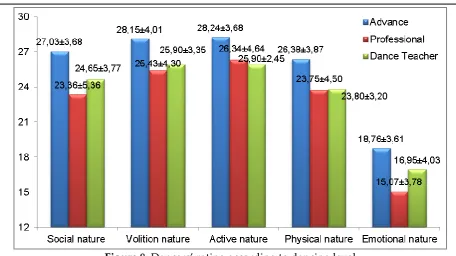
Figure 8: Dancers’ rating according to dancing level
Table 2: Dancers’ rating according to dancing level
Natures Dancing Level
Advanced N=34 Professional N=44 Dance Teachers N=20
Social nature 27,03±3,68 23,36±5,36 24,65±3,77
Volition nature 28,15±4,01 25,43±4,30 25,90±3,35
Active nature 28,24±3,68 26,34±4,64 25,90±2,45
Physical nature 26,38±3,87 23,75±4,50 23,80±3,20
Emotional nature 18,76±3,61 15,07±3,78 16,95±4,03
One-way Anova revealed that dancing level, that is advanced, professional or dance teacher, influences significantly dancers’ image as for social nature F2,95=6,317, p<0,01,
for volition nature F2,95=4,616, p<0,05, for physical nature F2,95=4,626, p<0,05 and for
emotional nature F2,95=9,236, p<0,001. According to Scheffe Post Hoc test, images of
dancers’ of advanced level differed significantly than those of professional level in the above mentioned four natures.
4. Discussion
elements accumulated by past kinetic experience of all five senses, and such physical movement provides a continuity through a fixed time” (Tsuruhara, Watanabe, Nakagawa, & Araki, 1981).
Dancers identified their reasons for participation in dance as being related to socializing, performance, entertainment, recreation, spirituality, education, physical fitness, therapy, religion, culture, creativity, health and well-being, competition, aesthetics, research and self-expression (Graham, 2002). Studies regarding the effects of dance practice on youth show different images. Most refer that dance offers enhanced personal and social opportunities, increased levels of socialization and characteristic behavior among its participants (Malkogeorgos, Zaggelidou, Manolopoulos, & Zaggelidis, 2011).
Commonly held perceptions on the value of involvement in dance are often largely based on perceptions obtained through the media and entertainment industry. It has been pointed out that popular media have created a pleasant image of dance for (commercial) entertainment purposes (Hagood, 2000). Dance involvement is believed to provide positive learning opportunities for youth in general, as well as with regard to specific target groups. In addition, working with the understanding that is developed through movement can assist not only the artistic development but also the cognitive and emotional development of the child (Briskin, 1981). In dance education the analysis of children’s movement has become recognized as one means through which children can be understood and helped educationally and, if necessary, therapeutically. Also, specific initiatives have been set up in several countries in which educators make use of dance in their work with socially deprived youth, as well as for behavioral problems (North, 1989). It is worth to be mentioned that dance can help students explore the reciprocity between thoughts and actions, and that students like to use their kinesthetic abilities as a learning resource for their academic pursuits, and as a mental tool for constructing knowledge (Allison, 1997).
The comparisons in personality traits according to the participation in sports, dances, indicate changes in personality traits. Athletes, for example, appear to be consistently more extraverted than non-athletes and lower in emotionality. Dancers, in contrast, have been found to be more introverted and higher in emotionality than non-dancers (Bakker, 1988). Dance provides an outlet for releasing emotional expression, allows for creativity, and the socialization aspect lowers stress, depression, and loneliness (Kerr, Kawaguchi, Oiwa, Terayama, & Zukawa, 1999). It is evident that dance is not only a sustainable form of exercise but it also has a body-mind effect on anyone who dares engage in this form of physical activity (Alpert, 2011).
In agreement in the present study, the participant dancers have a somewhat strong image for the dancers as for the social nature, believing that they have a sociable nature, uphold rules and are cooperative. As for the emotional nature, they believe they are cheerful, while as for volition nature they have a somewhat strong image that they have perseverance, are hard workers, have a strong will and are independent natures.
Eleni Zaggelidou, Alexandros Malkogeorgos, Fotios Mavrovouniotis, Georgios Zaggelidis OPINIONS ABOUT BALLET AND MODERN DANCERS’ IMAGE
favorable self-attitudes. Socialization into dance differs according to dance forms. Ballet dancers in particular socialize into dance already in childhood, in social dance, folk dance and competitive ballroom dance well into a mature age, and a person might become socialized into them in adulthood (Nieminen, 1998).
Moreover, benefits of fun, creative expression and socialization have been found. Dancing was also shown to elevate mood, increase sense of self-esteem and well-being, and increase social contact in healthy adolescent females, in younger adults (age range 19-44 years) or professional dancers (Blackman, Hunter, Hilyer, & Harrison, 1988; Estivill, 1995;Van Zelst, Clabaugh, & Morling, 2004). The above findings have been substantiated by many investigators (Kirkendall & Calabrese, 1983; Karlsson, Johnell, & Obrant, 1993; Palo-Bengtsson & Ekman, 1997; Malkogeorgos et al., 2011). In addition to psychological benefits, physiological benefits also have been found (Hopkins, Murrah, Hoeger, & Rhodes, 1990). Moreover, Adiputra, Alex, Sutjana, Tirtayasa, and Manuaba (1996), found that dancing lowered the resting heart rate and blood pressure and increased the maximum aerobic capacity in young male ballet dancers. Many dance forms provide a total body workout, which tones the body and provides aerobic benefits, unlike working just the lower body when on the stationary bike or walking on the treadmill (Alpert, 2011). In agreement, dancers, in the present study rated quite high in all the items of the physical nature. More specifically, they strongly believe that dancers have physical endurance, have confidence in their bodies and are healthy.
Still, on the negative side dancers -especially ballet dancers- have been reported to have views of their bodies that are unrealistically strict, and which lead to psychological and physical problems such as anorexia nervosa (Abraham, 2006). Bettle, Bettle, Neumarker, and Neumarker, (2001) found that adolescent ballet dancers view themselves as less desirable, less attractive, less confident, less lovable, and more sensitive than age-matched non-dancers, while Tiggemann and Slater (2001) found that former ballet dancers reported higher self-surveillance and disordered eating than the same age group of non-dancers. However, none of these findings has been reported in the present study. In contrast the participant dancers reported in a high degree that dancers doing ballet/modern dance are active, positive, healthy, energetic and cheerful, and have a strong will, physical endurance and confidence in their bodies.
Thus, the results lead to the conclusions that the rating in the image of all thirty-five items, of all the thirty-five senses, social nature, volition nature, active nature, physical nature and emotional nature in dancers regarding ballet/modern dance is high and is thought to be an expression of attitudes provided in ballet/modern dance lessons and practice time.
to be mentioned that dance must be handled according to its three-dimension qualitative nature, since dance is an art, it’s physical education and exercise.
About the authors
Eleni Zaggelidou, MSc, is a graduate from the School of Physical Education & Sport
Sciences, Aristotle University of Thessaloniki (Hellas). She also received diploma in teaching classical and modern dance from professional dance school (Hellenic Ministry of Culture and Tourism). She is interesting in dance and she working as dance teacher and as trainer in rhythmic gymnastics.
Alexandros Malkogeorgos, MSc, is a member of the Special Teaching Staff of the
School of Physical Education & Sport Sciences, Aristotle University of Thessaloniki (Hellas). She received Masters in Human Performance and Health Sciences, from the School of Physical Education & Sport Sciences, Aristotle University of Thessaloniki. He is PhD candidate in School of Physical Education & Sport Sciences, Aristotle University of Thessaloniki, Hellas. He is interested in sports and health and specialized in dance activities and has worked as dance teacher in traditional Hellenic dances for many years. He has published as author or co-author numerous papers.
Fotios I. Mavrovouniotis, PhD is currently an Associate Professor in Exercise and
Physical Health, at School of Physical Education & Sports Science of Aristotle University of Thessaloniki (Greece). He specialized in “Physical Education as a Way of Physical Health Disturbances Prevention”, “Special Issues of Aging”, and also in “Sports Medicine”, “Pathology of the Trainee”, “Applied Sports Medicine”, “Obesity and Physical Activity”, “Greek Dances” etc.. He is supervisor at a major number of student projects and post-graduate theses and reviewer in four scientific Journals. He, also, is author and co-author of many articles published in international and Greek journals and many books regarding his Scientific Interests.
Georgios Zaggelidis, Ph.D. is an Associate Professor of the School of Physical
Education & Sport Sciences, Aristotle University of Thessaloniki (Hellas), is specialized in judo-karate. He received a Ph.D in Pedagogy (Sport), from University of Bucharest (Department of History-philosophy), Romania. His research interests involve Sport Pedagogy, coaching and combat sports. He has published as author or co-author numerous papers.
References
1. Abraham, S. (2006). Characteristics of eating disorders among young ballet dancers. Psychopathology 29, 223-229.
2. Adiputra, N., Alex, P., Sutjana, D. P., Tirtayasa, K., & Manuaba, A. (1996). Balinese dance exercises improve the maximum aerobic capacity. Journal of human ergology, 25(1), 25-29.
Eleni Zaggelidou, Alexandros Malkogeorgos, Fotios Mavrovouniotis, Georgios Zaggelidis OPINIONS ABOUT BALLET AND MODERN DANCERS’ IMAGE
4. Alpert, P. (2011). The Health Benefits of Dance. Home Health Care Management & Practice 23(2), 155-157.
5. Bakker, F. C., Whiting, H. T. A., & Van der Brug, H. (1990). Sport psychology: Concepts and applications. London: John Wiley & Sons.
6. Bakker, F. C. (1988). Personality differences between young dancers and non-dancers. Personality and Individual Differences, 9. 121-131.
7. Bettle, N., Bettle, O., Neumarker, U., & Neumarker, K. J. (2001). Body image and self-esteem in adolescent ballet dancers. Perceptual and Motor Skills, 93(1), 297-309. 8. Blackman, L., Hunter, G., Hilyer, J., & Harrison, P. (1988). The effects of dance team participation on female adolescent physical fitness and self-concept. Adolescence 23, 437-448.
9. Briskin, S. (1981). “Movement Observation and Cognitive Development”. Master’s thesis, Hahnemann University, and Isla Grant, “A Pilot Study of the Comparison of Movement and Language Development in Children”. Master’s thesis, Hahnemann University.
10.Brooks, D., & Stark, A. (1989). The effect of dance/ movement therapy on affect: A pilot study. American Journal of Dance Therapy, 11, 101-111.
11.Costa, M. S. D. S., Ferreira, A. D. S., & Felicio, L. R. (2013). Static and dynamic balance in ballet dancers: a literature review. Fisioterapia E Pesquisa, 20(3), 292– 298.
12.Dance UK (2008). Dance Facts and Stats.
http://www.danceuk.org/metadot/index.pl?id=25043&isa=Category&op=show 13.Estivill, M. (1995). Therapeutic aspects of aerobic dance participation. Health Care
Women International, 16, 341-350.
14.Garnet, E.D. (1974). A Movement Therapy for Older People, In K. Mason (Eds.), Dance Therapy: Focus Dance VII, (pp. 59-61). Washington D.C.: American Association for Health, Physical Education and Recreation Publication.
15.Graham, S. (2002). Dance: A Transformative Occupation. Journal of Occupational Science, 9(3), 128-134.
16.Hagood, T. (2000). “Popular Culture and the Imagined Body”. Arts Education Policy Review, 102(2), 33-35.
17.Hopkins, D. R., Murrah, B., Hoeger, W. W., & Rhodes, R. C., (1990). Effect of low impact aerobic dance on the functional fitness of elderly women. Gerontologist, 30, 189-192.
18.Karlsson, M. K., Johnell, O., & Obrant, K. J. (1993). Bone mineral density in professional ballet dancers. Bone Mineral, 21, 163-169.
22.Koch, S., Kunz, T., Lykou, S., & Cruz, R. (2014). Effects of dance movement therapy and dance on health-related psychological outcomes: A meta-analysis. Arts in Psychotherapy, 41(1), 46–64.
23.Leste, A., & Rust J. (1984). Effect of dance on anxiety. Perceptual and Motor Skills, 58, 767-772.
24.Malkogeorgos, A., Zaggelidou, E., Manolopoulos, E., & Zaggelidis, G. (2011). The social-psychological outcomes of dance practice: A review. Sport Science Review, 20(5-6): 105-126.
25.Malkogeorgos, A., Zaggelidou, E., Georgescu, L. (2011). The Effect of Dance Practice on Health: A review. Asian Journal of Exercise & Sports Science, 8(1), 100-112.
26.Malkogeorgos, A., Zaggelidou, E., Zaggelidis, G., Galazoulas, C. (2013). Physiological Elements Required by Dancers. Sport Science Review, 22, (5-6), 343-368.
27.Matsumoto, Y., Hosokawa, K., Kudo, N., Daigo, T,, Sato, T., Iida, E., et al. (1984). A survey of the measures for the judo dissemination. Bulletin of the Association for the Scientific Studies on Judo, Kodokan, Report VI, 35-54.
28.Mavrovouniotis F., Argiriadou Eir., & Papaioannou Chr. (2010). Greek traditional dances and quality of old people’s life. Journal of Bodywork and movement therapies, 14: 209-218.
29.Nieminen. (1998). Four dances subcultures. A Study of Non-Professional Dancers’ Socialization, Participation Motives, Attitudes and Stereotype. (Academic dissertation). University of Jyväskylä, Finland.
30.North, M. (1989). From Personality Assessment to Dance Education and Therapy. The Educational Forum, 54(1), 65 -70.
31.Ogata T. & Soeda T. (1979). The research of regarding the consciousness of judo-with special references to Junior High School students. Ibaraki University Education Department Bulletin (Education Division), 28, 35-56.
32.Palo-Bengtsson, L., & Ekman, S. L. (1997). Social dancing in the care of persons with dementia in a nursing home setting: a phenomenological study. Scholarly Inquiry for Nursing Practice, 11, 101-118.
33.Payne, H. (1992). Dance movement therapy: Theory and practice. London & New York: Tavistock/ Routledge.
34.Schott-Billmann, F. (1997). When the dance cures: An anthropologic approach of dance therapeutic function. Athens: Greek Letters.
35.Silva, A. H., & Bonorina, K. C. (2008). BMI and flexibility in ballerinas of contemporary dance and classical ballet. Fitness Performance Journal, 49(1), 48–52. 36.Stanton-Jones, K. (1992). An Introduction to Dance Movement Therapy in Psychiatry.
London and New York: Tavistock /Routledge.
37.Steiner, M. (1992). Alternatives in Psychiatry Dance Movement Therapy in the community. In H. Payne (Ed.), Dance Movement Therapy: Theory and Practice (pp. 141-162). London and New York: Tavistock /Routledge.
Eleni Zaggelidou, Alexandros Malkogeorgos, Fotios Mavrovouniotis, Georgios Zaggelidis OPINIONS ABOUT BALLET AND MODERN DANCERS’ IMAGE
39.Tiggemann, M., & Slater, A. (2001). A test of objectification theory in former dancers and nondancers. Psychology of Women Quarterly, 25(1), 57-64.
40.Tsuruhara, K., Watanabe, A., Nakagawa, A., & Araki, M. (1981). Some problem of terminology in the field of motor learning. Journal of Sports Psychology, 8, 49-55. 41.Van Zelst, L., Clabaugh, A., & Morling, B. (2004). Dancers’ Body Esteem, Fitness Esteem, and Self-esteem in Three Contexts. Journal of Dance Education, 4(2), 48–57. 42.UCAS (2007). UCAS Search Results. http://search.ucas.co.uk/cgi-bin/hsrun/search/ 43.Zaggelidis, G., Mavrovouniotis, F., Argiriadou, Eir., & Ciucurel, M.M. Opinions
about judo athletes’ image. Journal of Human Sport & Exercise 8(2), 322-333.
Creative Commons licensing terms