European Journal of Physical Education and Sport Science
ISSN: 2501 - 1235 ISSN-L: 2501 - 1235 Available on-line at: www.oapub.org/edu
Copyright © The Author(s). All Rights Reserved.
doi: 10.5281/zenodo.1283743 Volume 4 │ Issue 7 │ 2018
THE EFFECT OF DYNAMIC AND STATIC CORE EXERCISES
ON PHYSICAL PERFORMANCE IN CHILDREN
Abdurrahman Boyacii,
Murat Tutar, Türker Biyikli
School of Physical Education and Sports, Nisantasi University, Istanbul, Turkey
Abstract:
The study aims to investigate whether or not there is an acute effect of dynamic and static core exercises applied to footballer children with 12-14 years of age on their physical performances. The experimental method with pre-test and post-test pattern and control group has been used in the study. A sampling of the study has been created from the athletes between 12-14 years of age and playing in a football team in a private school. A total of 48 students have participated voluntarily as dynamic core group (DCG, n=15), static core group (SCG, n=15) and Control Group (CG, n=15). Static and dynamic core exercises with 30-35 minutes and 3 days have been applied during 10 weeks to the study groups. Pre-test measurements of height, weight, vertical jump, pull-up, standing long jump, flamingo balance, flexibility hand grip strength and plank have been taken from child athletes before exercises. After obtained data has been applied in a computer environment, arithmetic mean (x) and standard deviation (ss) of DCG, SCG and CG groups have been taken and Paired Samples t-test has been applied for the differences between pre-test and post-test. Significance level has been studied in p>0.05 level. According to the findings, static and dynamic core exercises of 10 weeks have exhibited significant differences according to the performances of control group athletes. (p<0.05). In addition to this, it is observed that physical performance values of dynamic core exercises are better when compared with the group performing static core exercises. As a result, a contribution can be provided to development periods of child athletes with core exercise to be applied. Also, the fact that there are dynamic core exercises of movements within exercise program will affect strength developments much more when compared with static movements. It is contemplated that applying dynamic and static exercises in combination will affect their developments much more efficiently.
Keywords: dynamic, static, core, football, children
1. Introduction
"Sports training" contributes the physical and mental development of children. Learning of movements requiring several skills is initiated and developed with the studies of
"orientation, kinesthetic fractionating, balance, rhythm and reaction" in school period within development phases of children. (Çelik, 2016). In this period, “strength” development of children remains very restricted. This restriction is eliminated with variation in "age increase and hormonal system" of children and strength increase occurs. (Muratlı, 2007).
It has been established that strength poses positive contribution of the human organism in several studies conducted in relation to "strength" indicated as the most important of motor characteristics. (Demir and Filiz, 2004). It is observed that strength exercises have an effect on "strength development of children" and "reaching puberty from childhood". (Suman and et al., 2001; Inglea and et al., 2006).
Strength development in children exhibits parallelism with the development of the mass of "age growth and height, weight and skeletal system and muscle." This development contributes to having an athletic structure and posture development of body with "increase in testosterone level" secreted by the hormonal system in the post-puberty period. Also, the onset of "increase of stimulus and cardiovascular development of
the central nervous system (MSS)" in children shows an increase in Strength
development. (Muratlı, 2007).
Given the motor development ages of children, it is known that primary and secondary periods are the fastest period. This period in which motor development age is the fastest is referred to as "ideal age" wherein movement skills are developed. Also, it has been reported that there is a significant increase in 300-500% level in children and young people between 7-17 years of age given the muscle mass aspect. (Eniseler, 2009).
Core concept can be defined as complete muscle groups playing an influential role in force transitions in lower and upper extremity, supporting and covering spine and constituting the body. Strengthen core muscles is a critical factor for developing physical performance and dynamic core expediting returning to the site for being protected from sports injuries and for rehabilitation. For this reason, core exercise has become a method used for a common strength development in recent times. Movements in core exercise program include static or dynamic exercises.
│ │
2.Method
The experimental method with pre-test and post-test pattern and control group has been used in the study. A sampling of the study has been created from the athletes between 12-14 years of age and as a registered player in the infrastructure of the amateur football team. A total of 48 students have participated voluntarily as dynamic core group (DCG, n=15), static core group (SCG, n=15) and Control Group (n=15).
A. Dynamic Core Group (DCG): 6 dynamic core movements (Figure 1) designated in addition to the football exercise program were applied by two specialists on the football pitch with artificial turf surface at the same hours, three times a week and during 10 weeks. Pre-test and then post-test measurements before core exercises have been taken and data has been recorded into a computer environment.
B. Static Core Group (SCG): 6 static core movements (Figure 2) designated in addition to the football exercise program were applied by two specialists on the football pitch with artificial turf surface at the same hours, 3 times a week and during 10 weeks. Pre-test and then post-Pre-test measurements before core exercises have been taken and data has been recorded into a computer environment.
C. Control Group: Aerobic and anaerobic exercises that are included in annual football exercise programs have been applied. Only football exercise has been applied to control group 3 days a week for 10 weeks. Group has not been subjected to any additional strength exercise program.
3. Application and Measurement Tools
A. Height and Weight Measurement: Heights of study and control group athletes have been measured with bare feet and pharmacy type height measurement tool (precision: 0.5 cm) and body weight (precision 100 gr).
B. Vertical jump Measurement: Athletes will jump with its entire strength upward without stepping and bouncing on the sensitive ground with time and distance scale and jumped distance will be identified in centimeter on distance device. After athletes have jumped twice, it has been recorded that the best degree is vertical jump value. (Arthur and et al. 1998).
C. Pull-up Measurement: Measurement of flat pull-up movement will be performed with flat pull-up movement again. It has been recoded that child will lie flat with its hand on its neck, tight body and legs are kept in combined position and child will be instructed to straighten its body frontward without getting support and in how many times the child has made this in 1 minute. (Biçer et al., 2004).
distance from the line to their heels will be measured and will be recorded in cm. Measurement will be taken twice and the best degree has been evaluated. (Sevim, 1997).
E. Flamingo Balance Test: Flamingo Balance Test has been used for designating static balances of the study group. The child has been asked for ascent and keep in balance with its dominant foot on a board balance instrument in 50 cm length, 4 cm height and 3 cm width. Child has been asked to bend its leg from its knee and pull toward its hip and will hold it with its hand on the same side. Child has tried to remain in balance in this way during 1 minute. When the balance is disrupted, the time has been stopped. (if it leaves while holding its leg and falls from the board or touches any place with any part of its body and the like). The study group will ascend on a balance instrument and redresses its balance, the time has continued from the stopped area. This test will continue in this way for a period of one minute. Once time is completed, the trial of the study group to establish balance (after falling down) will be counted and this number has been recorded as a score of the study group once a period of one minute is completed. (Hazar and Taşmektepligil, 2008).
F. Flexibility measurement: Measurement of the flexibility of subjects has been conducted with the sitting-lying test. Measurement has been taken after subjects have adapted to this test. Subjects lean their bare feet soles leaning on test table as the position of sitting on the ground; they have extended forward without bending its knee and throws forward the rules on the table and flexibility distance has been recoded provided that 2 seconds are stopped in the most remote point it has extended. (Sevim, 1997).
G. Measurement of Hand Grip Strength: While the subject is in a vertical position, tensiometer has been adjusted to hand scale of the subject. Maximum grip strength has been measured firstly from starting from the right hand while subject's hand is flat and that will create an angle with 10-15 degrees from shoulders from one side. Subject has made 4 repetitions with its both hands and the better degree has been recorded. (Sevim, 1997).
H. Plank Test: This is to maintain balance by creating a flat line with heels and head on elbow and feet in lying face down with its body on the ground. The athlete has received a command of plant position. The warning has been announced in case of position disruption (falling down of the hip or lifting upwards). Test of an athlete receiving 3 warnings has been ended. The athlete has remained in plank position and the time of remaining in this way has been recorded in second.
│ │
Figure 1: Dynamic core exercise program of 10 weeks
Exercises 1.-4th Week 5.-8th Week 9.-10th Week
Time / Reps Time / Reps Time / Reps Plank + Push-up 25sec. x 2 reps 30sec. x 3 reps 40sec. x 3 reps
Lying Twist Trunk 25sec. x 2 reps 30sec. x 3 reps 35sec. x 3 reps
Deep Squat 30sec. x 2 reps 35sec. x 3 reps 40sec. x 3 reps
Mountain Climber 20sec. x 2 reps 25sec. x 3 reps 30sec. x 3 reps
Crunch 35sec. x 2 reps 40sec. x 3 reps 45sec. x 3 reps
Burpee 30sec. x 2 reps 35sec. x 3 reps 40sec. x 3 reps
Figure 2: Static core exercise program static 10 weeks
Exercises 1.-4th Week 5.-8th Week 9.-10th Week
Time / Reps Time / Reps Time / Reps Front Plank 30sec. x 2 reps 35sec. x 3 reps 40sec. x 3 reps
Side Plank (Right) 25sec. x 2 reps 30sec. x 3 reps 35sec. x 3 reps
Side Plank (Left) 25sec. x 2 reps 30sec. x 3 reps 35sec. x 3 reps
Back Plank 20sec. x 2 reps 25sec. x 3 reps 30sec. x 3 reps
Crunch (Static) 35sec. x 2 reps 40sec. x 3 reps 45sec. x 3 reps
Leg Raise (Static) 40sec. x 2 reps 45sec. x 3 reps 50sec. x 3 reps
4. Findings
What extent the dynamic and static core exercises of 10 weeks cover is provided in the following tables.
Table 1: Descriptive statistics table of athletes participating in the study
Variables n DCG
(X±ss)
SCG (X±ss)
KG (X±ss) Age (year) 15 13,00 ± ,84 12,80 ± ,77 13,13 ± ,74
Height(cm) 15 1,43 ± ,10 1,42 ± ,11 1,42 ± ,08
Body Weight (kg) 15 34,49 ± 6,15 34,22 ± 7,85 33,06 ± 6,25 DCG: Dynamic Core Group, SCG: Static Core Group, CG: Control Group Cm: Centimetres, Kg: Kilogram
Given the Table 1 and average values of athletes participating in the study; it has been found out that dynamic core group has 13,00 ± ,84 years of age, height 1,43 ± ,10 cm and body weight 34,49 ± 6,15; static core group has 12,80 ± ,77 years of age, height 1,42 ± ,11 cm and body weight 34,22 ± 7,85 kg; control group has 13,13 ± ,74 years of age, height 1,42 ± ,08 and body weight 33,06 ± 6,25 kg.
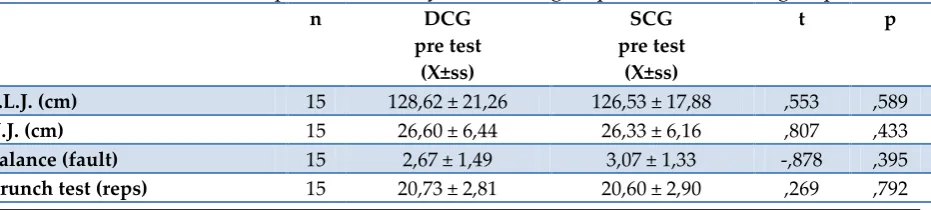
Table 2: Pre-test comparison of the dynamic core group and a static core group
n DCG
pre test (X±ss)
SCG pre test
(X±ss)
t p
S.L.J. (cm) 15 128,62 ± 21,26 126,53 ± 17,88 ,553 ,589
V.J. (cm) 15 26,60 ± 6,44 26,33 ± 6,16 ,807 ,433
Balance (fault) 15 2,67 ± 1,49 3,07 ± 1,33 -,878 ,395
Hand grip - right (kg) 15 15,42 ± 4,36 15,02 ± 4,11 1.854 ,085
Hand grip - left (kg) 15 12,49 ± 3,21 12,58 ± 2,93 -,337 ,741
Flexibility (cm) 15 33,45 ± 3,87 33,47 ± 4,04 -,026 ,980
Plank (sec.) 15 49,13 ± 23,50 49,06 ± 23,34 ,115 ,910 H.L.J. : Standing Long Jump, V.J. : Vertical Jump, Sec: Second, Kg: Kilogram
DCG: Dynamic Core Group, SCG: Static Core Group, CG: Control Group Cm: Centimetres,
Given the Table 2, it has been found out that there is a statistically significant difference between DCG and SCG pre-test measurements before core exercise of 10 weeks.
Table 3: Pre-test comparison of dynamic core group and control group
Variables n DCG
pre test (X±ss)
CG pre test
(X±ss)
t p
S.L.J. (cm) 15 128,62 ± 21,26 128,35 ± 21,31 ,116 ,909
V.J. (cm) 15 26,60 ± 6,44 23,93 ± 5,95 1.296 ,216
Balance (fault) 15 2,67 ± 1,49 3,53 ± 2,16 -1.653 ,121
Crunch test (reps) 15 20,73 ± 2,81 19,87 ± 2,41 1.078 ,299
Hand grip - right (kg) 15 15,42 ± 4,36 13,40 ± 3,91 2.044 ,060
Hand grip - left (kg) 15 12,49 ± 3,21 12,11 ± 2,65 ,919 ,373
Flexibility (cm) 15 33,45 ± 3,87 33,14 ± 4,03 ,248 ,808
Plank (sec.) 15 49,13 ± 23,50 45,06 ± 18,64 ,626 ,541 H.L.J. : Standing Long Jump, V.J. : Vertical Jump, Sec: Second, Kg: Kilogram NoP: Number of Patient DCG: Dynamic Core Group, SCG: Static Core Group, CG: Control Group Cm: Centimetres
Given the Table 3, it has been found out that there is a statistically significant difference between DCG and KG pre-test measurements before core exercise of 10 weeks.
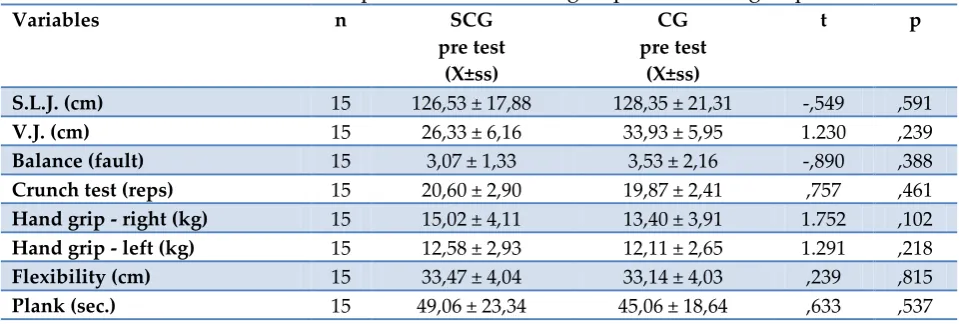
Table 4: Pre-test comparison of static core group and control group
Variables n SCG
pre test (X±ss)
CG pre test
(X±ss)
t p
S.L.J. (cm) 15 126,53 ± 17,88 128,35 ± 21,31 -,549 ,591
V.J. (cm) 15 26,33 ± 6,16 33,93 ± 5,95 1.230 ,239
Balance (fault) 15 3,07 ± 1,33 3,53 ± 2,16 -,890 ,388
Crunch test (reps) 15 20,60 ± 2,90 19,87 ± 2,41 ,757 ,461
Hand grip - right (kg) 15 15,02 ± 4,11 13,40 ± 3,91 1.752 ,102
Hand grip - left (kg) 15 12,58 ± 2,93 12,11 ± 2,65 1.291 ,218
Flexibility (cm) 15 33,47 ± 4,04 33,14 ± 4,03 ,239 ,815
Plank (sec.) 15 49,06 ± 23,34 45,06 ± 18,64 ,633 ,537 H.L.J. : Standing Long Jump, V.J. : Vertical Jump, Sec: Second, Kg: Kilogram NoP: Number of Patient DCG: Dynamic Core Group, SCG: Static Core Group, CG: Control Group Cm: Centimetres
│ │
Table 5: Comparison of pre-test and final post-test measurements of the dynamic core group
Variables n DCG
pre test (X±ss)
DCG post test
(X±ss)
t p
S.L.J. (cm) 15 128,62 ± 21,26 147,86 ± 19,32 -4.157 ,001 V.J. (cm) 15 26,60 ± 6,44 35,27 ± 6,13 -8,309 ,000 Balance (fault) 15 2,67 ± 1,49 ,47 ± ,640 5.436 ,000 Crunch test (reps) 15 20,73 ± 2,81 30,87 ± 3,40 -11.921 ,000 Hand grip - right (kg) 15 15,42 ± 4,36 16,62 ± 4,11 -1.129 ,278
Hand grip - left (kg) 15 12,49 ± 3,21 14,87 ± 4,60 -2.743 ,016 Flexibility (cm) 15 33,45 ± 3,87 39,13 ± 23,50 -4.936 ,000 Plank (sec.) 15 49,13 ± 23,50 60,67 ± 21,33 -5.389 ,000
p<0.05* H.L.J. : Standing Long Jump, V.J. : Vertical Jump, Sec: Second, Kg: Kilogram
NoP: Number of Patient DCG: Dynamic Core Group, SCG: Static Core Group, CG: Control Group Cm: Centimetres
Given Table 5; it has been reported that there is a statistically significant difference in standing long jump, vertical jump, balance performance, pull-up, left-hand grip strength, flexibility and plant performance of athletes as a result of dynamic core exercise of 10 weeks. (p>0.05). However, it is observed that there is no difference in right-hand grip strength.
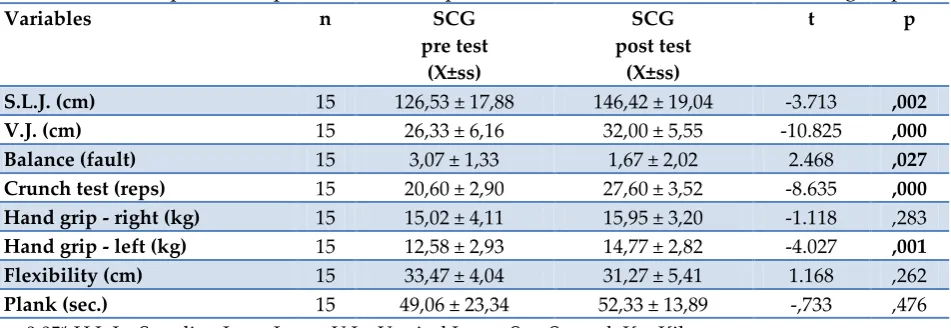
Table 6: Comparison of pre-test and final post-test measurements of the static core group
Variables n SCG
pre test (X±ss)
SCG post test
(X±ss)
t p
S.L.J. (cm) 15 126,53 ± 17,88 146,42 ± 19,04 -3.713 ,002 V.J. (cm) 15 26,33 ± 6,16 32,00 ± 5,55 -10.825 ,000 Balance (fault) 15 3,07 ± 1,33 1,67 ± 2,02 2.468 ,027 Crunch test (reps) 15 20,60 ± 2,90 27,60 ± 3,52 -8.635 ,000 Hand grip - right (kg) 15 15,02 ± 4,11 15,95 ± 3,20 -1.118 ,283
Hand grip - left (kg) 15 12,58 ± 2,93 14,77 ± 2,82 -4.027 ,001 Flexibility (cm) 15 33,47 ± 4,04 31,27 ± 5,41 1.168 ,262
Plank (sec.) 15 49,06 ± 23,34 52,33 ± 13,89 -,733 ,476 p<0.05* H.L.J. : Standing Long Jump, V.J. : Vertical Jump, Sec: Second, Kg: Kilogram
NoP: Number of Patient DCG: Dynamic Core Group, SCG: Static Core Group, CG: Control Group Cm: Centimetres
Table 7: Comparison of pre-test and final post-test measurements of the control group
Variables n CG
pre test (X±ss)
CG post test
(X±ss)
t p
S.L.J. (cm) 15 128,35 ± 21,31 128,82 ± 21,05 1.168 ,262
V.J. (cm) 15 23,93 ± 5,95 27,80 ±5,96 -2.143 ,051
Balance (fault) 15 3,53 ± 2,16 3,35 ± 1,92 ,238 ,423
Crunch test (reps) 15 19,87 ± 2,41 20,60 ± 1,69 -1.852 ,085
Hand grip - right (kg) 15 13,40 ± 3,91 13,38 ± 3,05 ,050 ,961
Hand grip - left (kg) 15 12,11 ± 2,65 12,48 ± 2,06 -1.823 ,090
Flexibility (cm) 15 33,14 ± 4,03 34,00 ± 3,57 -2.637 ,020 Plank (sec.) 15 45,06 ± 18,64 48,06 ± 18,15 -1.572 ,138 p<0.05* H.L.J. : Standing Long Jump, V.J. : Vertical Jump, Sec: Second, Kg: Kilogram
NoP: Number of Patient DCG: Dynamic Core Group, SCG: Static Core Group, CG: Control Group Cm: Centimetres
Given the Table 7, it has been found out that there is a significant difference in only flexibility performance in control group to which no strength exercise of 10 weeks has been applied. (p>0.05). No significant difference has been encountered statistically in the performances of standing long jump, vertical jump, balance, right-self hand grip strength and plank.
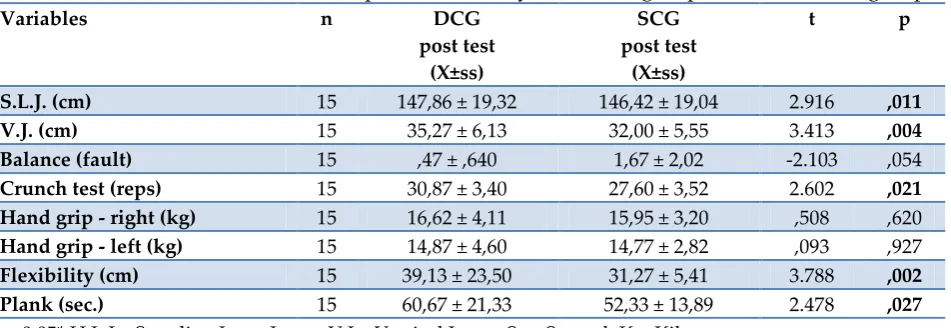
Table 8: Final test measurement comparison of the dynamic core group and a static core group
Variables n DCG
post test (X±ss)
SCG post test
(X±ss)
t p
S.L.J. (cm) 15 147,86 ± 19,32 146,42 ± 19,04 2.916 ,011 V.J. (cm) 15 35,27 ± 6,13 32,00 ± 5,55 3.413 ,004 Balance (fault) 15 ,47 ± ,640 1,67 ± 2,02 -2.103 ,054
Crunch test (reps) 15 30,87 ± 3,40 27,60 ± 3,52 2.602 ,021 Hand grip - right (kg) 15 16,62 ± 4,11 15,95 ± 3,20 ,508 ,620
Hand grip - left (kg) 15 14,87 ± 4,60 14,77 ± 2,82 ,093 ,927
Flexibility (cm) 15 39,13 ± 23,50 31,27 ± 5,41 3.788 ,002 Plank (sec.) 15 60,67 ± 21,33 52,33 ± 13,89 2.478 ,027
p<0.05* H.L.J. : Standing Long Jump, V.J. : Vertical Jump, Sec: Second, Kg: Kilogram
NoP: Number of Patient DCG: Dynamic Core Group, SCG: Static Core Group, CG: Control Group Cm: Centimetres
│ │
5. Discussion and Conclusion
Given the effects of dynamic core and static core exercise of 10 weeks applied to child athletes participating in the study, it has been observed that there are differences in the values of standing long jump of dynamic core group as (p>0.01), vertical jump as (p>0.00), balance as (p>0.00), pull-up (p>0.00), left hand grip (p>0.016), flexibility (p>0.00) and plank (p>0.00). It has been found out that there are significant differences in the performances of static core group standing long jump as (p>0.02), vertical jump (p>0.00), balance (p>0.27), pull-up (p>0.00), and left-hand grip (p>0.01). Given the difference between dynamic and static core groups, it has been reported that there is a difference between the performances of standing long jump (p>0.11), vertical jump (p>0.04), pull-up (p>0.21), flexibility (p>0.02) and plank (p>0.27). It is observed that this difference between dynamic and static core groups results from better performance values of dynamic core group athletes.
A wide range of studies have been conducted on performance development of core exercises in recent times; it has been attempted to reveal whether or not core exercise applied to different branches and age groups has an acute effect. (Afyon and Boyacı, 2016; Weston et al., 2015; Mayer et al., 2015; Rahmat et al., 2014; Brilla and Kauffman, 2014; Allen et al., 2014; Basset and Leach, 2011). It has been reported in the relevant literature that core exercises applied to child athletes have positively improved their motor developments. As a result of core exercise of 12 weeks applied to athletes with average age 13,17±10,04, Boyacı and Afyon (2017) have found out that there are statistically significant differences in the performances of the pull-up, standing long jump, plank, balance and vertical jump. Rahmat et al., (2014). They have reported that the children have made an improvement in the performances of long jump and pull-up as a result of core exercises applied to child athletes between 9-12 years of age. Boyacı and Tutar (2018) have identified that core strength and durability of children has shown an improvement with Quad-Core exercises exercised statically and 4 different position of plank movement. Allen el al., (2014) have discovered that there is a core strength development after dynamic core exercises applied to the children with 11,5±2,5 age average. Oliver et al., (2010) have reported that core exercises applied to child athletes are useful for children and they get more pleasure when compared with doing typical sitting exercises.
dynamic core and mixed and static dynamic core exercises will contribute to development processes of children.
References
1. Afyon, Y.A. & Boyacı, A. 2016. The Effect of 8-week core training on the development of some motoric features among 18-year-old footbllers. Journal of Human Sciences, 13(3) 4595-4603.
2. Muratlı, S. 2007. Antrenman Bilimi Yaklaşımıyla Çocuk Ve Spor. Ankara: Nobel yayın dağıtım;.
3. Çelik, A. 2016. Hareket Eğitimi. Koordinatif Yetiler ve Temel Becerilerin Eğitimi. Ergun Kitapevi.
4. Boyacı, A. & Tutar, M. 2018. The Effect of the Quad-Core Traning on Core Muscle Strenght and Endurance. International Journal of Sports Science, 8(2), pp. 50-54.
5. Boyacı, A., & Afyon Y.A. 2017. The Effect of the Core Training to Physical Performance in Children. Journal of Education and Practice, Vol.8, No.33.
6. Demir M & Filiz K. 2004. Spor Egzersizlerinin İnsan Organizması Üzerindeki Etkileri. Gazi Üniversitesi Kırşehir Eğitim Fakültesi Dergisi;5:109-14.
7. Suman OE, Spies RJ, Celis MM, Mlack RP, Herndon DN. 2001. Effects of a 12-week resistance exercise program on skeletal muscle strength in children with burn injuries. J Appl Physiol 2001;91:1168-75.
8. Inglea L, Sleapa M, Tolfreyb, K. 2006 The Effect Of A Complex Training And Detraining Programme On Selected Strength And Power Variables İn Early Pubertal Boys. J Sports Sci 2006;24:987-97.
9. Eniseler N. 2009. Çocuk ve Gençlerde Futbol. İstanbul: TFF Futbol Eğitim Yayınları;.
10.Weston, M., Hibbs, A. E., Thompson, K. G. and Spears, I. R. 2015. Isolated core training improves sprint performance in national-level junior swimmers. International Journal of Sports Physiology and Performance, 10(2), 204-210. 11.Mayer, J. M., Quillen, W. S., Verna, J. L., Chen, R., Lunseth, P. and Dagenais, S.
2015. Impact of a Supervised Worksite Exercise Program on Back and Core Muscular Endurance in Firefighters. American Journal of Health Promotion, 29(3), 165-172.
12.Rahmat, A., Naser, H., Belal, M. and Hasan, D. 2014. The effect of core stabilization exercises on the physical fitness in children 9-12 years. Medicina Sportiva: Journal of Romanian Sports Medicine Society, 10(3), 2401.
│ │
14.Basset, S. H., Leach, L. L. 2011. The effect of an eight-week training programme on core stability in junior female elite gymnasts. Afr. Journal Phys. Hlth. Edu, 9-19.
15.Allen, B. A., Hannon, J. C., Burns, R. D. and Williams, S. M. 2014. Effect of a core conditioning intervention on tests of trunk muscular endurance in school-aged children. The Journal of Strength & Conditioning Research, 28 (7), 2063-2070. 16.Oliver, GD, Adams-Blair, HR, and Dougherty, CP. 2010. Implementation of a
Creative Commons licensing terms