International Journal of Advances in Management, Economics and Entrepreneurship
Available online at:
www.ijamee.info
RESEARCH ARTICLE
Employee Motivation based on the Hierarchy of Needs,
Expectancy and the Two-Factor Theories Applied with Higher
Education Employees
Lynn De Vito*1, Antonio Brown1, Brenton Bannister1,Marc Cianci1, Bahaudin G. Mujtaba2 1Nova Southeastern University.
2Huizenga College of Business and Entrepreneurship of Nova Southeastern University Florida, United States.
Abstract
Motivation strategies and practices can be seen as the necessary supplemental nutrition for enhancing employee engagement, satisfaction, commitment, and performance in the workplace. Providing a motivational environment is especially important in workplaces that do not traditionally have high compensation levels such as the not-for-profit universities and colleges where funding is limited and salary increases are rare. In this study, we discuss several motivational theories and assess their application in one higher education institution to determine employees’ perception about their workplace and level of satisfaction with management practices. The study is based on qualitative interviews with six employees from one university in South Florida. The results show that while employees are happy with their direct managers, there are motivational opportunities for further enhancing the work environment through better compensation and development opportunities. Implications, recommendations and limitation are presented for future researchers and managers who want to enhance their workplace through effective motivational strategies.
Keywords: Motivation, Maslow’s Hierarch of Needs, Vroom’s Expectancy Theory, Herzberg’s Two-Factor Theory, high education.
Introduction and Motivation
Managers and other organizational leaders have the responsibility of providing a motivational work environment for all their employees as this is a necessity for survival in today’s globally competitive workplace. Engaged managers and leaders stay motivated by getting to know about their employees, engaging them in the department’s main tasks, and by providing growth and developmental opportunities for all their direct reports as part of professional goal achievement processes. These engaged managers and leaders should also try to periodically audit their department and organization’s culture on a regular basis in order to have a finger on the pulse of their employees’ feelings, attitude toward the workplace, and overall motivation levels.
Assessing and surveying employee
that determine the specifics of motivational determinants, however it is the underlying theories that remain fairly universal.
Theories of motivation may stem from either a Content or Process type of theoretical base to keep employees motivated, energized, happy, and committed. Those theories stemming from a Content base focus on internal individual factors that are inferred by energizing, directing, sustaining or stopping behaviors. Process based theories use an external view to describe, explain, and analyze the way that behavior has been energized, directed, sustained and stopped [3,4,5]. Motivation focuses on direction, intensity, and persistence at its core, where direction refers to decision-making, intensity refers to the strength of the decision made, and persistence refers to the length of time devoted to the follow-through of the decision [4]. While this may apply by simply making a decision to work for a company and subsequently continuing to work for the company for some duration, it can also be applied to decisions made at work that require continuous effort or follow-through, such as taking on a new client or a new management system.
A popular theory of Content based motivation is Maslow’s Needs Hierarchy, which is a five-tier hierarchy of individual needs. Maslow assumes that people will try to satisfy basic needs before reaching for more developed needs. Therefore, the bottom of his hierarchy contains Physiological Needs, such as receiving a decent salary to support oneself. The second tier up is Safety and Security, which constitutes insurance and a safe work environment. While the second tier needs may be very important for decent living, they are not as essential as the Physiological Needs but are something to aspire to when building a career. The third tier up is the need for Belonging, which constitutes having an efficient work environment with supportive employers and co-workers. Fourth tier up from the bottom is the need for Esteem, such as through receiving awards or promotions to show recognition for hard work. The top tier of Maslow’s Needs Hierarchy is that of Self-Actualization, at which point, the employee
is giving back to others what they have learned either by mentoring or using their business savvy in a new fashion. Maslow’s Needs Hierarchy is an abstract way of classifying employees’ needs and desires as each level is devised of specific motivational forces that are to be attained throughout career progression [5]. By arranging for levels to become more abstract as they rise through the hierarchy, Maslow believes employees are continually faced with the idea of rising through the organization to continue their development and provide a constant challenge. With each tier, less and less people are able to attain the desired internally perceived needs so only the most motivated and high-achieving will be able to fully succeed.
Herzberg developed a similar theory to Maslow’s in the form of two-factors. The first set of factors are Hygiene Factors, which relate more to Maslow’s bottom tiers, and comprise of pay, job security, working conditions that lead to a general satisfaction and the prevention of dissatisfaction. The second set of factors are Motivating Factors, such a feelings of achievement, recognition and increased responsibility, relating more directly to Maslow’s higher tiers and will produce high motivation, high satisfaction and a strong commitment. By having more Motivators and Hygiene Factors, an employee will have higher job satisfaction and virtually no job dissatisfaction just as having equally less Motivators and Hygiene Factors will mean less job satisfaction and higher job dissatisfaction [3]. Although Maslow and Herzberg developed their theories individually, the similarities illustrate different nuances of motivational trends. While employees need to feel they are being paid enough to keep them at their current job, alone that will not give them job satisfaction or motivation to perform highly. It is Maslow’s higher ordered needs and Herzberg’s Motivators that truly inspire top performance in employees, drawing from their desire to improve, take on new challenges, and earn recognition for hard work.
employees are more motivated when they believe that their efforts will result in successful performance and, ultimately, desired rewards and outcomes” [3]. This theory operates on the idea that once an employee puts in effort he or she expects to perform well. The employee then anticipates receiving the desired outcomes from that effort, at which point the desired outcomes become positively motivational [3[. Equity Theory is another popular Process theory that was developed to address motivational trends in employees. As it considers external factors, Equity Theory allows employees to judge how fairly they are treated at work based on the differences in treatment towards co-workers and self from supervisors and peers. Equity Theory assumes that motivation is contingent on how we relate to other people around us. When we examine the treatment of another, or a comparison person, in the workplace, they become a reference point for judgment based on the individual inputs they have brought to their job and the outcomes given from his or her supervisor. Although these Process theories operate from an external perspective, they are similar to the aforementioned Content theories in that they give employees a goal to strive for, whether it be a raise, job promotion, or benefits and therefore relates to Maslow’s higher-order needs and Herzberg’s Motivating Factors.
By examining the motivation of higher education employees, there is opportunity to understand the university culture from a viewpoint other than the students’, which is a unique perspective not often garnered by the public. Often university employees are overlooked as the building block of a university but this is a unique opportunity to take a closer look at what factors are necessary for employees to stay satisfactorily employed by the university and what motivates them to work hard and build loyalty with the institution. For this study, we used a convenience sampling methodology by conducting a qualitative study with employees of Nova Southeastern University, located in South Florida, United States. Determinants evaluated included examining the Physiological Needs and
Hygiene Factors, as well as higher-order needs or Motivators, for an internal analysis. External factors analyzed include evaluating reward management and social interactions in the work environment. NSU is a great organization to research because of the opportunity to view its culture through new eyes and uncover the real motivation of the people who make the university the strong institution it is now and what it is aiming to become based on their vision. Nova Southeastern University
As investors in our education, most people’s motivation for learning stems from an internal drive to further their careers; and this leads one to wonder what motivates higher education employees at a university to continually provide growth and development opportunities to their students. As one example of an American higher education institution in Florida, we will look at the case of Nova Southeastern University (NSU), which is a not-for-profit organization offering bachelor, master and doctoral degrees. Originally founded as the small college of Nova University of Advanced Technology in 1964, a 1994 merger with Southeastern University of Health Sciences led to the development of Nova Southeastern University. Located in Fort Lauderdale, Florida, NSU allows students the privilege of a private university education in a tropical climate. NSU’s vision is to be known as a “premier, private, not-for-profit university of quality and distinction,” and their mission to offer a variety of on-campus and distance education opportunities to “foster academic excellence, intellectual inquiry, leadership, research, and commitment to community” has contributed towards ensuring their vision is being realized (NSU, 2015, para. 2). In order to stay in line with this vision and mission, NSU has adopted eight core values to continually aspire towards the values of academic excellence, student centered, integrity, innovation, opportunity, scholarship/research, diversity, and community [6].
individuals, as evidenced by academically supporting approximately 27,000 students and having accumulated approximately 180,000 alumni. NSU is also able to attract large numbers of employees because they offer a variety of academic programs on undergraduate, graduate, and professional levels. These programs cater to the fields of business, dental medicine, medicine, nursing, optometry, pharmacy, psychology, education, engineering and computing, arts, humanities, social sciences, law, and natural sciences and oceanography over NSU’s sixteen colleges. To effectively accommodate their growing demand, NSU employs around 3,000 employees across the departments of Full-Time Faculty, Executive/ Administrative/Managerial, Other Administrative and Professional, Secretarial / Clerical, Technical / Paraprofessional, and Maintenance / Skilled Crafts [6].
When a university dedicates itself to building a strong reputation, their mission and vision guide the decisions that are made, acting as motivational conductors that drive accomplishment. While NSU’s Board of Trustees determines the goals of the university, discovering the determining factors of motivation of the university’s employees becomes an individual task. In order to have highly effective employees, organizations need to create an environment where “employee motivation is channeled in the right direction at an appropriate level of intensity and continues over time” [3]. Maintaining this productive and supportive environment becomes a crucial aspect in continuing and enabling the growth of the organization at each level of development. External Environmental Analysis Nova Southeastern University has the attributes to be one of the most well-known universities in the country. The opportunities are endless for NSU as opportunities can be big or small. It can be a chance to build a new academic building or add another sport to the athletics program. Any department or project at NSU needs highly driven employees to become operational and successful and a SWOT analysis can help to identify the strengths, weaknesses, opportunities and threats facing the organization. Specific
opportunities for motivating employees are benefits, networking, and community engagement. Researchers have reported that:
Incentives for health workers have also been proposed as a means of improving work outcomes and have been utilized in a number of settings, with varying degrees of success. When discussing incentives for different divisions of professionals, it is difficult to design incentives for employees that are financially based in that they may undermine the philosophy of the public service that motivates them. Gifts and community recognition are considered to be within the domain of social markets and appear to be important particularly for the motivation of both employed individuals and volunteers, as they are considered to reinforce rather than undermine efforts [7].
Benefits can go a long way in determining accepting a job offer. At NSU, benefits include health care, tuition waivers, retirement plans, such as a 401k, and other attractive incentives, which help to paint the type of motivational environment found at NSU, as employees expect to be compensated for their work in non-financial ways as well. NSU also provides employees with medical insurance, pharmacy prescriptions, dental insurance, vision insurance, life insurance, and workers compensation to ensure employees feel well taken care [8].
A popular benefit NSU provides is tuition waivers. Many people want the ability to send their kids to college or even go back themselves. NSU provides some assistance by rewarding some employees “100% off of an undergraduate degree and 80% off of a Master’s degree” and family members would get 50% off for their education [8]. NSU employees also receive discounted tickets on the tri-rail and a gym membership to the NSU Health and Wellness Facility with employment.
peers; as many have heard, ‘It’s not what you know, but who you know’, which reiterates the importance of peer-to-peer networking for promotion and opportunity. Therefore creating and maintaining a large network is very important when it comes time to move on to the next job or be promoted at a current one. Being set up to promote networking can encourage employees to feel more motivated in their positions by showing them there is room for advancement.
In addition to the benefits provided to employees, NSU is known as one of the leaders in South Florida for helping out the community and changing lives for the better. All employees and many students on campus take part in initiatives to help the community of Broward County, thereby strengthening the reputation of NSU. The NSU Athletics Department and its’ student athletes participate and partner with various community groups to provide support to those in need, fulfilling the philosophy of being an NCAA Division II member institution as well as one of the fundamental core values of the university [9]. Below is only a partial list of the many community activities NSU athletics is involved in.
Broward County Special Olympics
H.A.N.D.Y (Helping Abused, Neglected, and Disadvantaged Youth)
Miracle League World Series Make-A-Wish Foundation
Jack and Jill Children’s Center Toy Drive Joe DiMaggio Children’s Hospital Toy
Drive
The Pantry of Broward County [10]
NSU as a university, like most other organizations of higher learning, faces threats daily due to the changing and evolving field of formal education. General threats to a company can include the state of the economy or the location of the business, but threats that specifically face a university are competition, employee turnover, and budget cuts, which can make or break employee motivation. While competition surrounds every type of business, NSU is a private, not-for-profit institution in a location surrounded by a plethora of colleges
and universities in South Florida and its surrounding regions. Nearby is Broward College and Florida Atlantic University, not far away in Boca Raton is Lynn University, a little farther north is Florida Atlantic’s main campus and Palm Beach Atlantic, and to the south towards Miami is Barry University, Florida International University, and University of Miami, and those are only just to name a few. Overall, there are over 30 high education institutions just in South Florida competing with NSU and other schools locally and globally for the best and brightest learners. NSU has to compete with all of these schools to bring in the best students and faculty to continue reaching their vision. Since deciding on a college for a Bachelor’s degree or finding a program for a graduate degree is a complicated and difficult decision, NSU competes everyday with other schools to increase enrollment and keep employees happy so they will not leave for a neighboring school.
existent. According to the Equity Theory, employees judge their status in the organization against those around them; so when jobs are lost, demotions issued and budgets cut, it is likely that employees will become nervous of their current positions and may look elsewhere for work, increasing employee turnover in a viscous cycle.
Internal Environmental Analysis
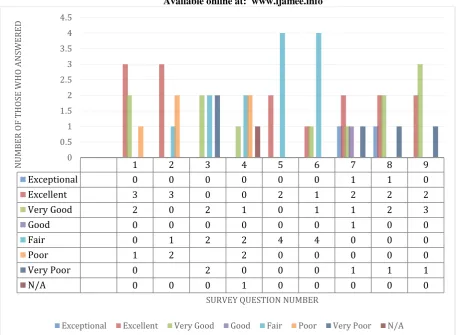
In order to gain an in-depth look into the internal motivators of NSU employees, a survey with closed and open-ended questions (see Appendix A) was developed and distributed to a convenient sample population of six employees who volunteered to provide feedback. The data contained in Figure 1 is from questions one through nine on a Likert-style questionnaire. Based on the data, Figure 1 depicts multiple trends in the data set. Starting with first question regarding their level of happiness, it can be seen that more than half of the sample found themselves to be overly happy with their job. The second question shows that the sample was divided, having half of the sample stating their benefits at NSU are excellent while the rest found them to be only ‘fair’ or ‘poor’. In regards the third question on compensation equity, more than half of the sample found the pay level for their position to be ‘fair’ or ‘very poor’, which were less than the median measure on the scale that was utilized. The relationship between questions 1, 2, and 3 shows that despite half of the sample finding their benefits and pay levels to be below average, they seem satisfied with their position as Maslow’s Physiological and Safety needs are met and Herzberg’s Hygiene Factors are taken care of for the respondents.
The nature of this finding is quite unusual when related to exchange theory. According to Ivancevich et al. [3], “exchange theory suggests that members of an organization engage in reasonably predictable give-and-take relationships (exchanges) with each other”. If this theory were to be utilized as a guide, the previously interpreted occurrence would be a direct breach of the psychological contract. A psychological contract is an “unwritten agreement between an employee and the organization that specifies what
each expects to give and receive from the other” [3[. Using all of the previously stated data, it is fair to say that despite knowing what employees are giving in return for what they have received is not equitable, employees are still satisfied with their situation.
In regards to the employee evaluation question, there was another split sample response. Half the sample found the employee review system to be below average. This has a direct effect on one’s intrinsic motivation to perform well as it relates to the way their performance is being perceived as one of Herzberg’s Motivating Factors. The findings directly relate to the concept of organizational justice. As said by Ivancevich, Konopaske, Matteson [3], “organizational justice is the area of organizational science research that focuses on the perceptions and judgments by employees regarding the fairness of their organization’s procedures and practices. There are various types of justices and this particular issue falls under the umbrella of interpersonal justice.
According to Greenberg [11], interpersonal justice focuses on the consequences of the outcomes directly, and not on the knowledge of the procedures leading to outcomes (informational justice). In relation to NSU’s employee review system, it means that the lack of fairness in the review system is directly affecting the employees because their need for Recognition is not being met.
Figure 1: The effects of questions 1-9 on the Likert answering scale
motivational for NSU employees, the respondents still feel their managers’ attempts to motivate them is above average and makes up for the university’s lack of internally motivating factors. In terms of management effectiveness, excluding one outlier, the results showed that the
respondents found their managers’
effectiveness to be above average. This is very positive news for the university since managers have a direct influence on the motivation, commitment, engagement, and satisfaction of their direct reports [4].
According to Luthans [12], the effectiveness of a manager comes from communication and human resource management activities. When utilizing Luthans’s finding in conjunction with the data presented, the lack of morale, lacking faith in the review system, and high frequency of tasks to be completed depicts a manager with low effectiveness, which negatively reflect on employee motivation. For question 9, most employees in the sample agreed on their reasons for coming to work as for most of the sample, it was for necessity and want. Based on the data presented, it seems that the
organizational culture within NSU believes
high responsibility count increases
productivity and / or efficiency and the opinions of its employees lack relevancy. Figure 1 depicts the lack of belief that the employees have in regards to the review system in place. In regard to the attitude of the employees, the data shows that overall NSU does not always provide a positive work environment. The data shows that low morale within the departments is a view shared by many within the sample. Herzberg [13] discussed the two-part theory of motivation in regards to motivators, such as achievement, recognition for achievement, the work itself, responsibility, and growth or advancement, and hygiene factors, which he refers to as dissatisfaction avoidance factors such as company policy and administration, supervision, interpersonal relationships, working conditions, salary, status, and security. Analysis of the motivating factors
and hygiene factors reaffirms that
motivators are responsible for job
satisfaction whereas hygiene factors are
responsible for only preventing job
dissatisfaction [13]. Therefore, applying and
1 2 3 4 5 6 7 8 9
Exceptional 0 0 0 0 0 0 1 1 0
Excellent 3 3 0 0 2 1 2 2 2
Very Good 2 0 2 1 0 1 1 2 3
Good 0 0 0 0 0 0 1 0 0
Fair 0 1 2 2 4 4 0 0 0
Poor 1 2 2 0 0 0 0 0
Very Poor 0 2 0 0 0 1 1 1
N/A 0 0 0 1 0 0 0 0 0
0 0.5 1 1.5 2 2.5 3 3.5 4 4.5
NU
MBER
OF
T
H
OSE
WH
O
A
NS
WERED
SURVEY QUESTION NUMBER
implementing Herzberg’s Motivating Factors to the departments of NSU will help to lessen the threats to employee motivation.
Discussion of Analysis
The responses to both questions 5 and 6 explain why some of NSU’s employees feel they do not have a purpose within their role in the university. Although a couple of the responses implied the managers provide the necessary tools in order for employees to be successful within their role, there are no details provided, which may be in the response to the workers being provided challenging tasks on the job. A job itself can become mundane and it seems as if some employees are coming to work just to be employed, not because they feel loyal to the university. The reply itself can be misleading though as many have felt that at the end of the day, they decide to challenge themselves by asking for more responsibility or taking it upon themselves to acquire new skills on the job to keep the work from becoming mundane. This is a key point of employee relations but more directly describes the relationship between managers and their subordinates, who may feel otherwise unmotivated to improve and maintain quality standards. In terms of the manager providing challenging opportunities for subordinates, the answers can be misleading as it seems that although work is being provided, the feeling of being challenged can be short lived. Although work may be consistently provided, it will only become mundane once the employee has learned all they can about the task and its challenges.
Based on the findings, it appears NSU employees feel that their compensation does not match their actual capability and worthiness in the job. As Content Theories emphasize, the need for employees to feel happy and respected will ultimately improve their motivation, as they will feel valued [14]. Whether or not funding is available for salary increases or extra benefits, feeling worthless can decrease employee morale within the environment. Employees want to feel like they are wanted, but often times large organizations can replace an employee
at any given time regardless of how they feel about their own worth. In addition to feeling wanted and having strong office morale, employees like to know their managers are in charge due to their experience so they can provide employees with the support, encouragement, and skills for improvement when necessary. When an employee feels he or she is qualified to be in a supervisory role but is kept from it, his or her motivation will decrease, essentially decreasing their productivity along with it. Per the article, Boosting Morale, actual workplace morale can be directly linked to productivity, and vice versa [14].
Employees in education genuinely want to serve a greater purpose, according to our survey results. Working at a university, one wants to feel that they are having some type of impact or some type of change in helping shape someone’s day or life. Finding that purpose can be a struggle when looking at an immediate situation and many may find too many things to dislike about where they are at the moment. Therefore, offering continuously changing and challenging opportunities, all employees know they deserve and will receive a chance to know that they are serving an intended purpose, effectively bolstering employees’ pride [15].
become stressful when an associate needs to go to someone else regarding a problem and the answer cannot be found; morale is lowered because of the lack of direction and inability to help oneself.
According to the responses received from the NSU employee surveys, a good percentage of individuals from the sample do enjoy their work but not the work environment, as morale appears to be down within various departments. Perhaps these dissatisfied employees have not approached their managers regarding more responsibility or perhaps they are not satisfied with their role, but some effort should be made internally to hold discussions to ensure that everyone fully comprehends the agenda and has a sense of responsibility. The managers’ perceptions could be that all is well, but from the subordinates’ perspective, things may be unclear or unsettling. NSU has a lot of improvement opportunities for further engaging and motivating employees by continuing to improve their work environment and supporting employees. Assessment
Managers should always be cognizant of areas needing improvement within an organization and responses received from the survey administered to NSU employees identified several areas in need of development. Several factors capture how employees feel about their current position at NSU, including social factors, professional growth, management, office morale and stability, and recognition. Social factors were addressed by some of the responses to questions regarding their jobs and compensation, which revealed that majority of the sample did not find their pay high enough to match the work required in their position. This may relate to the particular social lifestyle that some employees may be looking to uphold and can be affected based on the environment where the employee was raised, as well as their current family situation, and other financial responsibilities held. Responses to the survey did however show that most employees felt a sense of belonging in the university, satisfying the need for Belonging in the middle of Maslow’s Hierarchy of Needs [16].
Environmental analysis is an essential part of determining what role various factors play in business [4]. Looking at employee motivation in NSU from an external perspective shows that the employees enjoy the work environment, but there are some areas that need to be paid more attention. While everyone within the environment seems to have a sense that they are professionally progressing, employees are developing personally as well. For the process of development and progression to continue, areas such as appreciation, salary, and staff interaction need to be reanalyzed to accommodate changing needs.
Employees at NSU are more motivated by the example set by their respective department managers, as it seems employees do not have a place to turn to when facing a challenging situation due to the survey results showing that the spread of knowledge throughout the company is unilateral. Not only does having superiors with limited knowledge create an unfair environment for promotion, it also creates an environment with a lack of true leadership, generating a lower morale office wide. In order to correct the lack of supervision and leadership perception, superiors should regularly create open discussion forums with subordinates to encourage the sharing of information.
NSU employees are clearly not motivated most by financial compensation, but by non-financial compensation, rewards and benefits, according to the survey results. Non-financial rewards like recognition, praise, personal growth, and a good work environment can produce results that outweigh their financial counterparts. Specifically by recognizing employees and improving the peer-review system, NSU can build loyalty among employees. The emotional connection of a physical recognition can be much stronger than that of receiving an equivalent amount of money [18].
Employee motivation has always been a central problem for leaders and managers. Unmotivated employees are likely to spend little or no effort in their jobs, avoid the workplace as much as possible, leave the organization if given the opportunity, and produce low quality work. However, employees who feel motivated to work are likely to be persistent, creative, and productive while turning out high quality work that they willingly undertake. According to Thomas [17], the more work an employee puts into a position, the higher degree to which he or she will feel the intrinsic rewards, such as a sense of purpose for their role, training and competency.
Recommendations
To bolster employee motivation, Emery and Oertel [19] recommend implementing a system where employees are hired based on their motivational fit with NSU rather than by trying to create motivation for employees lacking it. Based on the Expectancy Theory of Motivation, finding motivational fit suggests that new hires should be chosen based on their traits and characteristics that fit best with the job and organizational culture. While selecting motivation is a less common approach to hiring, selection is becoming a more important approach to effective organizational management as the economy becomes more globalized and competition more aggressive. Organizations should “select only those employees that will be motivated by the company’s existing motivational systems” [19] and culture in
order to develop a highly motivated team to work effectively and efficiently towards company goals. Managers should develop an appropriate system to screen applicants before and during their interviews to ensure they are motivated by the incentives offered and to ensure they “select skilled workers possessing positive attitudes towards their jobs” [20].
Monetary job salary is consistently found as a constant factor of employee motivation throughout time as it remains the key to financial stability [21]. From the survey administered to NSU employees, results from question three show that four of six employees found their pay at NSU to be “fair” or “very poor”, demonstrating NSU’s inability to adequately motivate some of their employees through compensation. Assuming employees should be financially compensated and rewarded for their work, NSU should look more carefully at the training, overtime, and effort given by each employee in order to adjust salaries accordingly [20]. Through utilizing Maslow’s Hierarchy of Needs, NSU can determine appropriate benefits packages for their employees that will increase motivation by catering to the factors desired most after their salary. In the Hierarchy of Needs model, job salary would help cover physiological needs of employees but adding a well-designed benefits package could help care for employees’ safety needs so they know they are being cared for [22].
managers should regularly update employees about the status of the university and any expansions or financial growth that is or will be occurring to ensure they know their jobs are not in jeopardy [21]. Providing a sense of job security can help fill Maslow’s Hierarchy tier of Belonging [22].
Further fulfilling “Belonging” needs is about providing employees with a good team to produce quality work backed by strong motivation [22]. From the survey results for question five, it is clear that NSU morale is lacking as four of six employees rated it only as “fair”. Coming to work in an environment where employees are friendly and independently responsible can bolster motivation to return to work and strengthen morale of the office. When comparing oneself to co-workers, it is important to match the quality of those around, thereby creating an internal drive in employees to work hard so as to not embarrass themselves in comparison. In order for NSU to boost morale, they should consider having managers and department heads look at the dynamics of each department to identify in which ways employees work well together and how that can be strengthened or renewed to provide employees with a comfortable work environment conducive to eliciting a sense of teamwork in employees.
While employees may compare themselves to their co-workers, it is important for management to develop a fair appraisal system of all employees they are responsible for to reduce bias [23]. Survey results show that four of six employees believe the current review system at NSU to be “fair” or “poor”. Due to the competitive nature of the current economy, it has become even more important for employees to have “recognition of the work they perform, presented in a positive light (to) service as a beneficial, long-term motivational stimulus” [15] Employees are motivated by the goals they have to achieve, so parallel to Expectancy Theory, having a thorough employee review system that is judged as fair by all employees, allows employees to know which strengths they need to continue thriving in and which weaknesses they should aim to improve upon. Revising NSU’s review
system to be more fair to all employees can help employees fill the need for Esteem on the Hierarchy of Needs and can eventually help them develop to reaching the highest tier, the need for Self-Actualization, whereby employees know they have become the best that they were capable of becoming [22].
Of course, like most other studies, there are many limitations and drawbacks to this qualitative study. Most importantly, it is acknowledged that this study is limited to the views and perceptions of only a few employees at the university and it does not represent the collective morale of everyone at the organization. As such, the recommendations and generalizations have huge limitations. Therefore, higher education managers and leaders should carefully select those recommendations that might have a direct link to their organizations and departments for brainstorming, reflection and application.
Conclusion
ultimately leading to improved morale and more efficient work teams in various departments. Developing a sense of pride in the organization and reducing employee turnover will help to increase stability in the university and help employees to know that their jobs are secure so their work performance does not suffer. NSU has some improvements to be made to increase employee motivation but it is the ability to
recognize those improvements that will first set them on the path to change. Overall, despite the improvement challenges and recommendations, NSU seems to be a great place to work as employees and faculty get the opportunity to help future leaders, researchers, scientists, medical doctors, lawyers, and entrepreneurs by going above and beyond the classroom in their students’ journey of learning and development.
References
1. Cheretis, D, Mujtaba BG (2014) Maximizing long-term value and conscious capitalism at whole foods. SAM Advanced Management Journal, 79(3):4-16.
2. Dressler G (2012) Fundamentals of Human Resources Management (2nd edition). Prentice Hall: New York.
3. Ivancevich, JM, Konopaske R, Matteson MT
(2014) Organizational Behavior &
Management (10th Ed.) McGraw-Hill, United States, p.1-200.
4. Mujtaba BG (2014) Managerial Skills and
Practices for Global Leadership. ILEAD Academy: Florida.
5. Jones Gareth R, George Jennifer M (2011) Contemporary Management, 7th edition. McGraw Hill, New York.
6. About NSU (2015) Retrieved November 22, 2015, from http://www.nova.edu/about/index.html 7. Singh D, Negin J, Otim M, Orach CG, Cumming
R (2015) The effect of payment and incentives on motivation and focus of community health workers: Five case studies from low- and middle-income countries. Human Resources for Health, 13, 58.
8. Benefits (2015) Retrieved November 22, 2015, from http://www.nova.edu/hr/benefits/
9. Athletic Department. (2015) Retrieved November
22, 2015, from http:
http://www.nsusharks.com/news/2015/11/5/GEN_1 105154645.aspx?path=general#
10. Community Resources (2015) Retrieved November 22, 2015, from http://www.nova.edu/community-outreach/community-resources/index.html
11. Greenberg J (1993) The Social Side of Fairness: Interpersonal and Informational Classes of Organisational Justice . In R. Cropanzano (Ed.), Justice in the workplace: Approaching fairness in human resource management, Hillside, NJ: Erlbaum, p. 79-103.
12. Luthans F (1988) Successful vs. Effecive Real Managers. The Academy of Management Executive , 2(2):127-132.
13. Herzberg F (1968) One more time: How do you motivate employees? Best of Harvard Business Review (2003) p. 87-96. Retrieved from http://lyle.smu.edu/emis/even8364/fall2009/Journa l%20Articles%2009/How%20Do%20You%20Motiva te%20Employees.pdf
14. Novotney A (2010) Monitor on Psychology,
41(11):32. Retrieved form
http://www.apa.org/monitor/2010/12/morale.aspx 15. White JL (2001) The work itself as a motivator.
FBI Law Enforcement Bulletin, 70(2):7-9.
16. Valencia C (n.d.) Motivation and productivity in the workplace. Myriad, Westminster’s Academic Research Journal. Retrieved from https://www.westminstercollege.edu/myriad/?pare nt=2514&detail=4475&content=4798
17. Thomas K (November/December, 2009) The four intrinsic rewards that drive employee engagement. Ivey Business Journal,. Reprint:
9B09TF06 Retrieved from
http://iveybusinessjournal.com/publication/the- four-intrinsic-rewards-that-drive-employee-engagement/
18. Sturman MC, Ford R (2011) Motivating your staff to provide outstanding service. etrieved 11/29/15 from Cornell University, School of Hospitality
Administration site:
http://scholarship.sha.cornell.edu/cgi/viewcontent. cgi?article=1242&context=articles/
19. Emery CR, Oertel S (2006) An examination of employee culture-based perceptions as a predictor of motivation. Journal of Organizational Culture, 10(2):13-29.
20. Hoque ME (2000) Interaction effects of skill and motivation on work performance. Pakistan Journal of Psychological Research, 15(3-4):75-88. 21. Wiley C (1997) What motivates employees
according to over 40 years of motivation studies? International Journal of Manpower, 18(3):263. 22. Sadri G, Bowen RC (2011) Meeting employee
requirements: Maslow’s hierarchy of needs is still a reliable guide to motivating staff. Industrial Engineer, 43(10):44-48.
Appendix A-Survey Questions
1. How happy are you with your job overall? [1 = Not happy at all/10 = Ecstatic]
1 2 3 4 5 6 7 8 9 10
2. How do you feel about your benefits at NSU? [1 = Terrible/10 = Great]
1 2 3 4 5 6 7 8 9 10
3. How do you feel about the pay levels at NSU as compared to similar employers? [1 = Worse
than most/10 = Better than most]
1 2 3 4 5 6 7 8 9 10
4. How do you feel about the employee-review system at NSU?
[1 = Hate it /10 = Love it]
1 2 3 4 5 6 7 8 9 10
5. How is the overall morale in your department? [1 = Awful/10 = Wonderful]
1 2 3 4 5 6 7 8 9 10
6. How do you feel about the responsibilities of your job?
[1 = Too little/10 = Too much]
1 2 3 4 5 6 7 8 9 10
7. Do you believe that your manager takes an active role in motivating you?
[1 = Very poor/10 = Very good]
1 2 3 4 5 6 7 8 9 10
8. How effective is your department manager? [1 = Remarkably bad/10 = Terrific]
1 2 3 4 5 6 7 8 9 10
9. Why do you come to work every day? [1 = Have to/10 = Want to]
1 2 3 4 5 6 7 8 9 10
10.Does your manager provide an atmosphere that encourages, supports, and sustains
improvement?
11.What department do you work in?
12.How long have you worked for NSU?
13.Does your manager provide you with challenging tasks?
14.What do you like least about you job and/or the company? Please explain.
15.What do you like most about the job and/or the company? Please explain.