Intermediate Care
A GUIDE FOR HEALTH AND SOCIAL SERVICES
PROFESSIONALS
seminars and workshops; publications; information and library services; a specialist bookshop; and conference and meeting facilities.
Published by King’s Fund 11–13 Cavendish Square London W1G 0AN www.kingsfund.org.uk © King’s Fund 2002
Charity registration number: 207401
First published 2002
All rights reserved, including the right of reproduction in whole or in part in any form.
ISBN 1 85717 466 6
A CIP catalogue record for this book is available from the British Library
Available from:
King’s Fund Bookshop 11–13 Cavendish Square London W1G 0AN Tel: 020 7307 2591 Fax: 020 7307 2801 www.kingsfundbookshop.org.uk Edited by
Cover design by Minuche Mazumdar Farrar Figures by Peter Powell Origination and Print Limited Typeset by Grasshopper Design Company
Introduction
1
Part 1
The policy context
0
This part of the book looks at the policy issues surrounding intermediate care. It covers:
■ definitions of intermediate care
■ government policy on intermediate care
■ the trends driving the development of intermediate care.
Section 1
What is intermediate care?
00
Intermediate care is a relatively new concept. As yet, there is no representative example showing how it works. However, most authorities would agree that intermediate care is a short-term intervention to preserve the
independence of people who might otherwise face unnecessarily prolonged hospital stays or inappropriate admission to hospital or residential care. The care is person-centred, focused on rehabilitation and delivered by a combination of professional groups.
Section 2
What is prompting the development of
intermediate care?
00
Rehabilitation services for older people are under
pressure, often leading to avoidable loss of independence for service users. In response, recent policy documents, including the National Beds Inquiry, the NHS Plan and the National Service Framework for Older People, have proposed a range of intermediate care services to build a bridge between hospital and home, involving closer working between health and social services. The
Government has also allocated new money, via a range of initiatives, for the expansion of intermediate care.
FUND MAY SUPPLY
IMAGE/ICON HERE
FUND MAY SUPPLY
IMAGE/ICON HERE
Part 2
Making the case for change
0
This part of the book provides planners, commissioners and providers with a summary of research evidence that can be used to support plans for intermediate care and inform service developments.Section 3
Evidence for the effectiveness of
intermediate care
00
There is a large body of research evidence to support proposals to introduce intermediate care. But this evidence has its limitations. This is partly because the evidence does not always compare like with like, and partly because there are still large gaps in our understanding of the subject.
Section 2
What is prompting the development of
intermediate care?
00
Rehabilitation services for older people are under
pressure, often leading to avoidable loss of independence
Part 3
Making it happen
0
The remaining part of this book offers practical guidance on how to develop intermediate care in your local care community. It offers a detailed analysis of the tasks you will need to tackle it, supported by examples of useful tools and methods. It provides a range of examples, so that readers from different agencies and professional backgrounds may choose the methods that seem most appropriate to their circumstances. This ‘pick and mix’ approach enables the reader to explore the potential for system changes in ways acceptable to all the stakeholders who need to be involved.
Section 4
Agreeing the future direction of intermediate care
development
00
The first step in developing intermediate care in your local community is to involve all stakeholders in creating a shared vision of the new system of services. You will first need to agree upon the values and principles upon which it will be based, and then look together at how national policy and local circumstances might affect the shape of the proposed services and making it happen. The existing services should then be mapped so that you can see where the gaps are. This will enable you to match the proposed services to the needs you have identified. An effective way to consult with stakeholders is to organise ‘whole systems’ events.
FUND MAY SUPPLY
IMAGE/ICON HERE
FUND MAY SUPPLY
IMAGE/ICON HERE
Section 5
Making practical plans
00
In order to deliver intermediate care effectively, you may need to redesign the local care system, either wholly or in part. Looking at information about how specific service models can contribute will be helpful. The next step is to set up the appropriate partnership arrangements with other agencies. Then you can start to draw up an action plan that specifies exactly what needs to be done, and who will do it.Section 6
Putting intermediate care plans into practice
00
Putting your plans into practice will require strong leadership and effective management of change: you will need to engage the support of existing staff and explore new ways of working. Medical input to the new services will have to be arranged. The resulting system should be flexible enough to meet the needs of all users and to ensure continuity of care. This may involve contracting out some functions to the independent sector. You will also have to agree on a single assessment process with all stakeholders. Finally, it will be necessary to decide who will co-ordinate the intermediate care.
Section 7
Evaluation
00
The NHS and local authorities are charged with ensuring that intermediate care is suitably evaluated and that systems for evaluation are built into new intermediate care arrangements at the earliest possible stage (Department of Health, 2001a). This section will show you how to develop a simple framework for evaluating intermediate care. The framework can also be used as a quality improvement tool if it is designed as part of a continuous quality
Introduction 1
Part 1
The policy context
3
Section 1 What is intermediate care? 00
Some definitions of intermediate care 00
What intermediate care is not 00
Early attempts to define intermediate care 00
Section 2 What is prompting the development of
intermediate care? 00
Government support for intermediate care 00
The National Beds Inquiry 00
The NHS Plan 00
The National Service Framework for Older People 00
The drivers of intermediate care 00
The funding of intermediate care 00
New money from National Insurance increases 00 League tables for social services 00
Part 2
Making the case for change
00
Section 3 Evidence for the effectiveness of intermediate care 00 The types of evidence and their limitations 00 Shortcomings of the current arrangements for rehabilitation 00 Older people caught in the ‘vicious circle’ 00 Who could benefit from intermediate care? 00
People in acute hospital beds 00
People in long-term residential and nursing care 00
People at home in the community 00
Which types of services can be used to deliver intermediate
care, and how effective are they? 00
Hospital at Home 00
Early/supported discharge schemes 00
Rapid response 00
Community rehabilitation 00
Residential intermediate care 00
Day rehabilitation 00
The role of intermediate care in specific conditions 00
Related services 00
What research exists on the operational aspects of
intermediate care? 00
Assessment 00
Team working 00
Part 3
Making it happen
00
Introduction to Part 3 00
The cycle of change 00
Section 4 Agreeing the future direction of intermediate care
development 00
Agreeing shared values and principles 00 Developing a common understanding of national policy and
local circumstances 00
Trends 00
Uncertainties 00
Major issues 00
Mapping existing services 00
The basic map 00
Filling in the detail 00
A useful diagnostic tool 00
Point prevalence studies 00
Matching services to needs 00
Consulting with stakeholders 00
Case study 1 Northumberland Health Action Zone 00 Case study 2 Mid-Hants Primary Care Trust 00 Case study 3 Nuffield Institute for Health 00 What ‘whole systems’ events can achieve 00
Section 5 Making practical plans 00
Working with complexity
Which services to offer 00
The balance of care approach 00
Information about individual service models 00 The former South West Regional Office 00
Partnership arrangements 00
Drawing up an action plan 00
Section 6 Putting intermediate care plans into practice 00
The success factors 00
Change management 00
Managing change – the reality 00
Why do we need to change? 00
SWOT analysis 00
Who and what can change? 00
Force field analysis 00
Readiness and capability 00
Securing individual behaviour change 00 The operational implications of change 00
New ways of working 00
Intermediate care and specialist medical assessment 00 Redesigning existing intermediate care systems 00
Patient/user pathways 00
Consulting clients and carers 00
Contracting for intermediate care with the independent sector 00 Working with the voluntary sector 00
Publicising local services 00
Assessment 00
Tools and scales 00
Choosing an assessment tool 00
The role of the intermediate care co-ordinator 00 The context for strategic development 00 Strategic and operational level functions 00
Section 7 Evaluation 00
Why it is important to evaluate 00
Developing an evaluation framework 00
When to establish a framework 00
Which model to use 00
Bibliography
00
Appendices
00
Index
00
The Government has stated its belief that intermediate care is an important approach that will help to promote independence for older people and at the same time relieve pressures on the health and social services. As a practical demonstration of support, it has committed
considerable resources towards intermediate care.
Outside government, however, there is still some confusion. Because intermediate care has evolved over a number of years and in response to a number of different pressures, development has been piecemeal, and not everyone is at the same stage. However, there is already a body of evidence to suggest that intermediate care could make decent rehabilitation services a reality and reduce pressures on hospital beds and on the long-term care budget.
This book aims to stimulate change by providing those who will have to commission or provide intermediate care with an ‘all-in-one’ guide to policy and practice. We have tried to ensure that the book has something to offer not only to people who already have a good grasp of
intermediate care issues but also to those who as yet know little.
This book will be useful for anyone who is responsible for the strategic and operational planning and development of intermediate care for older people in health, social care and housing organisations – especially intermediate care co-ordinators and senior staff working on care strategy. It will also be of interest to a range of service providers, patients’ forums and older people’s champions.
Part 1
The policy context
This part of the book looks at the policy issues surrounding intermediate
care. It covers:
■
definitions of intermediate care
■
government policy on intermediate care
■
the trends driving the development of intermediate care.
Section 1 What is intermediate care?
00
Some definitions of intermediate care
00
What intermediate care is not
00
Early attempts to define intermediate care
00
Section 2 What is prompting the development of intermediate care?
00
government support for intermediate care
00
The drivers of intermediate care
00
Some definitions of intermediate care
The Audit Commission (2000a) has proposed a useful definition for intermediate care, which in essence states that the primary function of intermediate care is to build up people’s confidence to cope once more with day-to-day activities. It serves as an extension to specialist clinical care and rehabilitation, but not as a substitute for it: quick access to specialist medical and other support when needed is vital.
Intermediate care has evolved over a number of years and in response to a variety of different pressures. One consequence of this has been that across the country a variety of different names have been given to teams and services that have broadly similar aims and objectives. Hence there is a considerable amount of confusion, among both policy makers and practitioners, about what intermediate care really is. The Government has addressed this problem by officially defining the nature and purpose of intermediate care and issuing clear criteria.
The Department of Health (2001a) set out a standard definition of intermediate care:
To ensure a consistent approach to developing, monitoring and benchmarking services across the country. The NHS and Councils are expected to apply this definition [from January 2001] in reporting investment and activity plans for intermediate care. For these purposes intermediate care should be regarded as services that meet all the following criteria; that they:
■ are targeted at people who would otherwise face unnecessarily prolonged hospital stays or inappropriate admission to acute in-patient care, long-term residential care, or continuing NHS in-patient care
■ are provided on the basis of comprehensive assessment, resulting in a structured individual care plan that involves active therapy, treatment or opportunity for recovery
■ have a planned outcome of maximising independence and typically enabling patient/users to resume living at home
■ are time limited to normally no longer than six weeks, and frequently as little as one to two weeks or less
■ involve cross-professional working, with a single assessment framework, single professional records and shared protocols.
Adapted from Department of Health (2001b). National service framework for older people.
London: Department of Health.
Intermediate care is a relatively new concept. As yet, there is no representative example showing how it works. However, most authorities would agree that intermediate care is a short-term intervention to preserve the independence of people who might otherwise face unnecessarily prolonged hospital stays or inappropriate admission to hospital or residential care. The care is person-centred, focused on rehabilitation and delivered by a combination of professional groups.
This section will look at:
■ some definitions of intermediate care
■ what intermediate care is not
■ early attempts to define intermediate care.
What is intermediate care?
1
The guidance also emphasises that:
Intermediate care should form an integrated part of a seamless continuum of services linking health promotion, preventative services, primary care, community health services, social care, support for carers and acute hospital care. Support from these linked services remains essential for the successful development of intermediate care, to ensure that its benefits are fully realised.
Department of Health (2001b), as above.
The Department of Health circular provides initial guidance on a number of other important areas:
■ service models (see ‘Which type of services can be used to deliver intermediate care?’ p. x)
■ responsibility for intermediate care
■ charges associated with council-arranged intermediate care services
■ factors to be taken into account in planning development of services (see Section 5, p. x)
■ role of independent sector (see Section 6, p. x)
■ funding for intermediate care and community equipment services
■ information that the NHS and councils will be asked to include in their investment and implementation plans for 2001–02.
What intermediate care is not
The Department of Health (2001a) also states that:
Intermediate care should be distinguished from:
■ those forms of transitional care that do not involve active therapy or other interventions to maximise independence, i.e. for patients who are ready to leave acute in-patient care and are simply waiting for longer-term packages of care to be arranged
■ longer-term rehabilitation or support services
■ rehabilitation that forms part of acute hospital care. […]
Intermediate care services should normally be provided in community-based settings or in the patient/user’s own home, but may be provided in discrete step-down facilities on acute hospital sites. […]
The process of assessment, appropriate patient/user selection and clear care plans are vital. It is essential to ensure close involvement of patients/users and carers in assessment and in drawing up an individual care plan that is held by the patient/user.
Adapted from Department of Health (2001a). Intermediate care. HSC 2001/1: LAC (2001) 1. London: Department of Health.
The distinctions between what is, and what is not, intermediate care are further clarified by the following two lists, compiled by Professor Ian Philp, National Director, Older People’s Services, at the Department of Health:
Intermediate care is:
✓ patient centred, with the development of an individual care plan
✓ about facilitating access to acute rehabilitation and long-term care services based on need
✓ about active rehabilitation
✓ time limited, with clear entry and exit points and responsibility for managing transition
✓ Part of a whole system approach to the delivery of health and social care to older people and related groups.
It is not:
✗ marginalising older people from mainstream services (a ghetto service)
✗ providing transitional care for older pending long-term placement (a hotel service)
✗ solely the responsibility of one professional group (a dumping service)
✗ indeterminate care (a dustbin service)
✗ a means of funding all good things for older people (a honeypot service).
Adapted from Philp, Prof. I (2000). ‘Intermediate care: the evidence base in practice’. Presentation at the Royal College of Physicians/British Geriatric Society, 30 September. London: RCP.
Early attempts to define intermediate care
The King’s Fund was a pioneer in conceptualising intermediate care at a time when it was not a universally accepted part of the care system. Andrea Steiner (1997) argued that intermediate care is a function of services rather than a discrete service, since many services already exist that in principle could be mobilised to meet intermediate care needs.
Steiner offered two definitions of intermediate care, first, a broader definition:
a whole set of services designed to smooth transitions between hospital and home, treat chronically or terminally ill people without recourse to hospital care, and prevent long-term institutionalisation
Steiner A (2000). ‘Evidence and evaluation’. Presentation to King’s Fund conference ‘Care closer to home’, 15 September. Ambassadors Hotel, London.
and second, a narrower definition:
that range of services designed to facilitate the transition from hospital to home, and from medical dependence to functional independence, where the objectives of care are not primarily medical, the patient’s discharge destination is anticipated, and a clinical outcome of recovery (or restoration of health) is desired’
Steiner (2000), as above.
This second definition was later revised to include social as well as functional independence.
Steiner (1997) noted that the need for intermediate care could, in principle, be identified by a range of health or social service professionals outside the hospital setting, and that
intermediate care could be provided in contexts other than simply ‘between hospital and home’.
Lastly, she pointed out that intermediate care services border on, or overlap with, a range of existing options including shared care, community care and continuing care. These can offer a foundation on which to build intermediate care structures – but they may just as easily constitute a barrier to introducing a new paradigm of care (Steiner, 1997).
These overlaps have led many local care communities to challenge the Department of Health definition as too narrow. Developments of intermediate care before the Department of Health’s circular (Department of Health, 2001a) were often designed to fill gaps in the care continuum for older people being inappropriately cared for in acute hospital beds and for whom there was little available in the form of alternative care provision, such as people who needed longer than six weeks of rehabilitation and terminally ill people wishing to return or remain at home.
The National Evaluation Team has recognised that some schemes classified as intermediate care do not fall within the definition given by the Department of Health ‘but act as a crucial link in the IC chain’. They conclude that ‘there will be no such thing as a typical or representative whole system of intermediate care’ (personal communication, 2002).
For some years, there has also been confusion about the relationship between rehabilitation and intermediate care. Both have been described as a function of services rather than as services in their own right. The terms are often used interchangeably to describe service models based on a strong rehabilitation ethos.
The ‘intermediate care’ label has been used more widely since the Government gave priority to the development of transitional care to bridge the gap between hospital and home (Department of Health, 2000a) and included a requirement for intermediate care to be
rehabilitative. Indeed, many people now regard intermediate care as a subset of rehabilitation, since it is focused more narrowly on short-term transitional care and support. (See ‘Matching services to needs’, p. x.)
1
INTERMEDIATE CARE – WHAT IS IT?Rapid response? Convalescent unit? Community hospital? GP unit Hospital at home? Community rehabilitation team? Early supported discharge? Nursing home beds? unit? Residential home beds? unit? Sheltered housing unit?
Further reading
King’s Fund (2000). Rehabilitation and intermediate care for older people. Briefing 6. London: King’s Fund.
Royal College of Physicians (2000). Intermediate care: statement from the Royal College of Physicians of London, London: RCP.
Vaughan B & Lathlean J (1999). Intermediate care: models in practice. London: King’s Fund.
Key points from this section
■ There is no single definition of intermediate care.
■ Intermediate care preserves independence and is patient centred. It prevents unnecessarily prolonged hospital stays or inappropriate admission to hospital or residential care. It is based on comprehensive assessment and is delivered by a combination of existing services.
■ Intermediate care does not exclude older people from mainstream services, nor is it indeterminate in duration or solely the responsibility of one service.
Government support for intermediate care
Government policy on intermediate care has developed in the wake of a series of policy and guidance papers on the theme of promoting independence through linked government initiatives. They include:
■ Better services for vulnerable people(Department of Health, 1997a; 1998a)
■ The new NHS: modern, dependable(Department of Health, 1997b)
■ Modernising social services(Department of Health, 1998b)
■ Shaping the future NHS(Department of Health, 2000b)
■ The NHS Plan(Department of Health, 2000a)
■ The National Service Framework for Older People(Department of Health, 2001a), which included intermediate care as its Standard Three (see pxx [ref to Standard Three: Intermediate Care])
■ Implementing the NHS Plan, Department of Health 2001i).
Ministers have continued to place great emphasis on intermediate care’s potential to help solve system pressures, though by early 2002 they no longer seemed to see it as the complete panacea. A further paper reviewing progress in intermediate care to date and summarising current thinking was issued in June 2002 (Department of Health, 2002a).
This latest Department of Health paper highlights the areas where action is still needed. It describes:
The evolutionary process of locally led initiatives at the grass-roots of health and social care – small scale and often dependent on one or two committed individuals. There now exists a wide diversity of models based on local need, happenstance or opportunism.
Department of Health (2002a). Intermediate care: moving forward. London: Department of Health.
The proliferation of schemes has led to confusion and fragmentation, and in turn to inequality of provision and access, duplication of effort, reduced cost effectiveness and lack of impact. The Department of Health sees the next phase in the development of intermediate care as one Rehabilitation services for older people are under pressure, often leading to avoidable loss of independence for service users. In response, recent policy documents, including the National Beds Inquiry, the NHS Plan and the National Service Framework for Older People, have proposed a range of intermediate care services to build a bridge between hospital and home, involving closer working between health and social services. The Government has also allocated new money, via a range of initiatives, for the expansion of intermediate care. This section will look at:
■ government support for intermediate care
■ the drivers of intermediate care
■ the funding of intermediate care.
What is prompting the
development of intermediate
care?
in which the growing body of evidence and evaluation will enable identification of ‘service models more likely to be associated with improved clinical [sic] outcomes’ (Department of Health, 2002a). It calls for local action to:
■ review existing and proposed services in the light of the principles, success factors and evidence presented in the paper
■ ensure that intermediate care services are co-ordinated and integrated with the full range of other services
■ address key issues in development
■ establish effective ways of learning from good practice and supporting professional development.
The Government has clear expectations of what the outcomes of successful intermediate care provision will be, firstly, for older people as service users, and secondly, for services and organisations. These expectations are reported in a variety of documents, some of the key statements from which are given below.
The National Beds Inquiry
The Inquiry found that the health and social care systems are not fully meeting the needs of older people – as demonstrated, for example, by the shortage of community-based
alternatives to hospital care, the widespread inappropriate use of hospital beds and the significant levels of delayed discharges (Department of Health, 2000b).
There was consultation on three options for the future development of care. Option Three, reproduced below, was accepted and subsequently developed as part of the NHS Plan:
Option Three: Care closer to home
Under this scenario, there would be an active policy of building up intermediate care services (i.e. services designed to prevent avoidable admissions to acute care settings and to facilitate the transition from hospital to home and from medical dependence to functional independence). There would be a major expansion of both community health and social care services. In contrast, acute hospital services would be focused on rapid assessment, stabilisation and treatment. Hospital day units and community based services would be aimed at maintaining people in their home communities in good health, preventing avoidable admissions, facilitating early discharge and active rehabilitation post-discharge and supporting a return to normal community-based living wherever possible. Over time, ‘places’ in community schemes might replace some acute hospital beds.
Department of Health (2000a). The NHS Plan: a plan for investment, a plan for reform. London: Department of Health.
The NHS Plan
The NHS Plan (Department of Health, 2000a) proposes a range of intermediate care services to build a bridge between hospital and home, and suggests where they might be offered:
The stated aims of these services are:
■ to help people recover and regain independence more quickly
■ to bring about swifter hospital discharge when people are ready to leave
■ to avoid unnecessary long-term care.
The new services will be expected to provide high-quality pre-admission and rehabilitation care to older people, thus reducing inappropriate admissions and ensuring year on year
reduction in the delays to discharges of patients aged 75 years or more. Progress will be monitored in the performance assessment framework, and an end to ‘widespread bed-blocking’ is expected by 2004.
The closer working arrangements between health and social services will remove outdated institutional barriers, enabling care services for older people to be improved. The NHS Plan sees intermediate care and related services as the main ways of achieving this improvement. The new working arrangements will be jointly inspected by the Commission for Health
Improvement, the Audit Commission and the Social Services Inspectorate, using the best value system.
These bodies will also assess the effect that joint working arrangements are having on:
■ reducing the number of delayed discharges of older people
■ reducing preventable hospital admission and re-admission of older people
■ speed at which older people’s needs are assessed.
As a key test of improved partnerships between health and social services, it is expected that pooled budgets and the use of other Health Act flexibilities (Department of Health, 1999a) will be the norm in arranging intermediate care services (Department of Health, 2000a).
The National Service Framework for Older People
The National Service Framework for Older People (NSF) (Department of Health, 2001b) reiterates the Government’s determination to deliver real improvements for older people and their families. It expresses the themes outlined above in the form of standards, many of which focus on quality of care and rehabilitation:
Standard Three: Intermediate care
Older people will have access to a new range of intermediate care services at home or in designated care settings, to promote their independence by providing enhanced services from the NHS and councils to prevent unnecessary hospital admission and effective rehabilitation services to enable early discharge from hospital and to prevent premature or unnecessary admission to long-term care. …
Intermediate care services are expected to focus on three key points in the pathway of care:
■ responding to, or averting, a crisis
■ active rehabilitation following an acute hospital stay
■ where long-term care is being considered.
The key to the next phase of service development is integrated and shared care, including primary and secondary health care, social care and care involving the statutory and independent sectors.
Adapted from Department of Health (2001b). National service framework for older people. London: Department of Health.
TABLE 1: HOW MANY PEOPLE WILL BENEFIT FROM THE REFORMS?
■ 150,000 older people each year will have access to new beds or places
■ 70,000 older people will benefit from rapid response and other admission prevention initiatives ■ Home care will enable 50,000 more people to live independently at home
■ 75,000 carers will benefit
Intermediate care provision must also meet the standard on person-centred care (Standard Two). In addition, there is scope for intermediate care to contribute to the care of people who have had a stroke, a fall or who are at risk of falling, and of people who have mental health problems (Standards Five, Six and Seven, respectively).
The drivers of intermediate care
Although the King’s Fund work on intermediate care, reported in Section 1, drew attention as early as 1996 to the potential for intermediate care to respond to the drivers shown in Figure 2 (opposite, below etc), the concept did not gain official government recognition until the National Beds Inquiry (Department of Health, 2000b). Up until then, there had been a growing perception of a decline in NHS rehabilitation services.
Providing rehabilitation could respond to these drivers by enabling individuals impaired by illness or injury to regain, as far as possible, control over their own lives through a mixture of clinical, therapeutic, social and environmental interventions. Policy documents tended to emphasise the need to prioritise rehabilitation services for older people (Department of Health, 1997).
To inform the new programme, Developing rehabilitation opportunities for older people, which had been set up in response to joint work by the King’s Fund and the Audit Commission (Nocon & Baldwin, 1998; Robinson & Turnock, 1998; Sinclair & Dickinson, 1998), a briefing paper was produced describing the emerging policy agenda on rehabilitation for older people (Hanford et al., 1999). There follows an excerpt from the policy summary given in that paper:
Promoting action
1. A lead from central government
Better services for vulnerable people (Department of Health, 1997a) and other policy papers identify rehabilitation for older people as a government priority; they also call for an end to a culture that fosters dependency. Better preventative services are also needed – ones that do not concentrate on people who already cannot cope, to the detriment of those who need less help and so get nothing.
2. New organisations and frameworks
Primary Care Groups will begin to commission programmes of care for specific populations,
2
THE DRIVERS OF INTERMEDIATE CAREThe Drivers of Intermediate Care Pressure on acute sector beds NHS financial pressures LA financial
pressures More older people, with chronic care
needs Patient choice Policy of seamless care Technology to enable home therapy Positive evaluations of some new developments
such as older people; and through their commissioning, they will help to shift resources away from hospital and institutional care.
Health Improvement Programmes (HImPs) will:
■ provide a new basis for health commissioning
■ involve local authorities and Primary Care Groups, and
■ set local frameworks for action.
Joint Investment Plans (JIPs) must focus on needs of vulnerable people and require joint health–social services planning.
National Service Frameworks (NSFs) will:
■ Provide standards and performance measures to reduce unfair geographical variations in care
■ Focus attention on the best ways of organising care for older people 3. Changes in the law
The 1999 Health Bill aims to extend the scope for shared funding between health and social care bodies. Rehabilitation stands to benefit greatly.
Adapted from Hanford L, Easterbrook L & Stevenson J (1999). Rehabilitation for older people: the emerging policy agenda. London: King’s Fund.
The funding of intermediate care
Many early initiatives to provide rehabilitation or intermediate care were funded from the extra cash provided by the Government from 1997–98 onwards to help the NHS meet increased demand during the winter. Other initiatives were developed using Challenge Funding.
Some of these monies were used to fund community services to assist the rehabilitation and recuperation of older people, thus reducing the pressure on hospital beds. These services tended to stand alone, providing good rehabilitation opportunities but only for a limited number of people (Stevenson, 2000). They often struggled to attract mainstream funding, and many closed once the initial funding ceased.
At that time, the only realistic way of funding new mainstream services was to divert resources away from existing services. This is notoriously difficult to achieve.
The NHS Plan (see ‘Government support for intermediate care’, p. x) promised significant new money for intermediate care (£900 million by 2004) and set targets for service outcomes based on the increased expenditure. This included new capital investment of around £66 million available to the NHS over two years (£33 million in 2002–03 and 2003–04) to support the development of intermediate care, and in particular an increase in bed numbers
(Department of Health, 2000a).
The delays in issuing the follow-up guidance and the National Service Framework for Older People (see ‘Government support for intermediate care’, p. x) have perpetuated the differences in how the implementation agenda is interpreted across the country. There are fears that the money may be diverted for other purposes in the NHS and local authorities (Stevenson, 2001a).
In addition to the £900 million through the NHS Plan, other, smaller pockets of new money have been allocated, with the expectation that some (or all, in some cases) would be used to support intermediate care developments. These monies include:
■ The Promoting Independence partnership and prevention grants (Department of Health, 1999b)
■ Supporting People grants, which will, through a new initiative, help vulnerable people to live independently in the community by providing a wide range of housing support services (Department of Health, 2001c)
■ £65 million that will be provided by 2004 to integrate community equipment services (Department of Health, 2001d, 2001e)
■ The Cash for Change initiative, which allocated £300 million to local authorities to free up hospital beds over the years 2001–02 and 2002–03 (Department of Health, 2001f)
■ Grant for building capacity: £90.5 million is to be paid to local authorities towards expenditure incurred in 2001–02 for the provision of community care services to people who could not be discharged from hospital without them (Department of Health, 2001g, 2001h).
New money from National Insurance increases
The increases in National Insurance (NI) contributions announced in the April 2002 budget will be used to fund major new investment in health and social care. The Department of Health has outlined how this money should be used (Department of Health, 2002f) to continue the implementation of the NHS Plan.
Presenting this document to Parliament, the Secretary of State for Health said that improved care for older people remains a key goal of the reforms. He continued that the increased funds for local councils must be used to ensure that older people can leave hospital when their treatment is complete:
The balance of services will shift, with more patients seen in primary and community settings, not just in hospitals. Social services will have resources to extend by one-third rehabilitation care for older people. Councils will be able to increase fees to stabilise the care home market and secure more care home beds. And more investment will mean more old people with the choice of care in their own homes rather than simply in care homes.
Alan Milburn, Secretary of State for Health, Statement to Parliament on the next steps on reform and investment in health and social services, 18 April 2002
In order to bridge the gap, the Government has said that it will legislate to make local councils responsible for the costs of beds needlessly blocked in hospitals. At the same time, it
announced increased funding for social services, at an average of 6 per cent above inflation annually for three years from 2003–04 to 2005–06.
These measures are expected to increase the provision of intermediate care by about 30 per cent by 2005–06.
League tables for social services
In May 2002, the Social Services Inspectorate published the first league tables for local authority social services (Department of Health, 2002g).
Each of England’s 150 councils has been given a rating of three, two, one or zero stars, together with a judgement on how well they are delivering services for adults and children.
Councils receiving three stars will be given greater flexibility. This includes the freedom to spend social services grants and their share of the £50 million Performance Fund on any area of social services they wish, and they will also be subject to less inspection and monitoring by the Social Services Inspectorate.
Councils with zero, one and two stars will also receive a share of the Performance Fund, and will be asked to use the money to develop innovative intermediate care services. This is in addition to the £300 million already allocated to local councils to reduce delayed discharges.
Further reading
Department of Health (2002). Implementing reimbursement around discharge from hospital (consultation document). Available at:
www.doh.gov.uk/jointunit/delayeddischarge/consultjuly02.pdf
HM Treasury (2002). Securing our future health: taking a long-term view: final report. (The Wanless Report). London: HM Treasury.
House of Commons Health Committee (2002). Delayed discharges. Third Report of Session 2001–02; 1. Report and proceedings of the Committee. HC 617-I.
Rose S (2001) Intermediate care: a manager’s guide. Management Briefing. National Electronic Library for Health. Available at: www.nelh.nhs.uk/management/mantop/0117intermed.htm Stevenson J (2001). Intermediate care. In Merry P (ed), Wellard’s NHS Handbook 2001/02. Wadhurst: JMH Publishing.
Wistow G, Waddington E & Fong Chiu L (2002) Intermediate care: balancing the system. Leeds: Nuffield Institute for Health
Key points from this section
■ Rehabilitation services for older people are under pressure.
■ Existing intermediate care initiatives are fragmented.
■ The Government has promoted intermediate care through a series of policy documents, especially the National Beds Inquiry, the NHS Plan and the National Service Framework for Older People.
■ New organisations and frameworks may also stimulate the introduction of intermediate care, for example: primary care trusts, care trusts, Health Improvement and Modernisation Plans and Annual Development Agreements (ADAs).
■ The Government is allocating a large amount of money, under a variety of headings, for the expansion of intermediate care.
Part 2
Making the case for change
This part of the book provides planners, commissioners and providers with a
summary of research evidence that can be used to support plans for
intermediate care and inform service developments.
Section 3 Evidence for the effectiveness of intermediate care
xx
The types of evidence and their limitations
xx
Shortcomings of the current arrangements for rehabilitation
xx
Who could benefit from intermediate care?
xx
Which types of services can be used to deliver intermediate care,
and how effective are they?
xx
What research exists on the operational aspects of intermediate care?
xx
The types of evidence and their limitations
There is a vigorous and continuing debate between academics and between health and social care practitioners about the merits of different kinds of research methods. In seeking the evidence here, we have reviewed a wide range of literature. However, this section is not offered as a systematic literature review, but rather as a selection of evidence from various sources that we have found to be helpful. Where possible, information from published reviews has been used, supplemented by information from ‘grey’ (unpublished) literature and accounts from practice.
Randomised controlled trials (RCTs), which have a control group chosen at random to avoid bias, and systematic reviews, which use a systematic approach to review the literature, are considered to be the most rigorous and reliable methods. But although RCTs can be helpful when comparing the benefits of single-service models, they cannot be used to assess how the service system as a whole is functioning. The more qualitative methods lend themselves better to exploring processes and the individual experiences of users and professionals. The most important principle is to choose the method most appropriate for answering the question you wish to ask.
The evidence summarised in this section has limitations, not only in terms of how it was originally presented, but also because there are still significant gaps in our understanding of intermediate care. This is acknowledged in the National Service Framework for Older People (Department of Health, 2001b).
Sinclair and Dickinson’s review of rehabilitation highlighted many of these limitations (Sinclair & Dickinson, 1998). They found:
■ Important details about the components of the different interventions were often lacking.
■ Different perspectives of users, carers and services were not sufficiently explored.
■ Common measures of outcomes were not used, making it difficult to pool results. There is a large body of research evidence to support proposals to introduce intermediate care. But this evidence has its limitations. This is partly because it does not always compare like with like, and partly because there are still large gaps in our understanding of the subject.
This section will look at:
■ the types of evidence and their limitations
■ the shortcomings of the current arrangements for rehabilitation
■ who could benefit from intermediate care
■ which types of services can be used to deliver intermediate care, and how effective they are
■ what research exists on the operational aspects of intermediate care
■ current Government-funded research programmes.
Evidence for the effectiveness
of intermediate care
Furthermore, a lack of information about the timing of the intervention, the staffing and skills mixture and many other aspects of the process make it extremely difficult to ascertain what inputs have produced the outcomes. This is a particular problem with the evidence from randomised control trials (Sinclair & Dickinson, 1998).
More recently, a review of intermediate care by the Nuffield Institute for Heath found there was a tendency to focus on regaining physical function, to take ‘snapshots’ during patients’ journeys and to look at either a single component of care or individual model of care, usually in hospital settings, rather than at the whole of the patient’s journey (Wistow et al., 2002). The review notes that this approach to evaluating intermediate care ignores the potential role of prevention and health promotion in reducing and managing service pressures (Wistow et al., 2002). It indicates that there is very limited evidence on whole system effects.
The evidence on cost effectiveness is complicated because it is not always clear what has been included in the costs and what has not. Where data is available, we have included it, but readers are advised to use caution when interpreting these findings.
While acknowledging these limitations, we should also put them in context. Parker et al.
(2000), who reviewed the care options for older people after acute and during subacute illness, noted that:
Despite considerable recent development of different forms of care for older patients, evidence about effectiveness and costs is weak. However, evidence is also weak for longer-standing care models.
Parker et al., 2000
Shortcomings of the current arrangements for
rehabilitation
In the mid-1990s, a King’s Fund working paper (Robinson & Batstone, 1996) examined the shortcomings of the current system of rehabilitation and the benefits that might arise from additional investment in this area.
The authors found that there were concerns that early discharge from hospital left insufficient time for people to recover from medical and surgical interventions, with older people being especially disadvantaged. In some cases, short episodes of intensive rehabilitation in hospital were possible, but there was often insufficient follow-through in the community. The practice of providing rehabilitation opportunities in hospital environments rather than at home, or in more homely settings, was also questioned. It was unusual to find approaches to rehabilitation that entailed long-term monitoring, enabling early intervention and prevention of crises.
In addition, they found:
■ Short episodes of therapy, where the recipient was signed off at the end of specific treatments, were felt to be unhelpful to people with long-term illness or disability.
■ Professionals and service users both thought that too much emphasis was placed on ‘minding’ people with long-term illness or disability, rather than enabling them to live lives that offered greater independence, control and choice.
■ There were widespread concerns about the lack of co-ordination between services and the failure to adopt care management and teamwork approaches.
The working paper reported these concerns against a background of policy statements from community care plans and joint planning documents following the NHS and Community Care Act (Department of Health, 1990) that called for new care-management arrangements to provide person-centred care – calls that had clearly not been heeded.
Older people caught in the ‘vicious circle’
These perceptions were reinforced by the publication ofThe coming of age: improving care services for older people, a review of the health and social care of older people (Audit Commission, 1997). The Audit Commission found shortcomings in the way health and social services worked together to develop services that would offer alternatives to unnecessary admission to hospital, residential care or nursing homes. The report used the term ‘vicious circle’ (Figure 3, below) to describe how increasing hospital admissions and decreasing lengths of stay were reducing the time available for recovery and rehabilitation, and leading to growing (and unsustainable) demands on social services, especially for residential and nursing home placements. This in turn tied up resources, thus reducing the funds available for
community services that could have helped to contain the increase in hospital admissions.
Recognising the key role that rehabilitation services could play in breaking this ‘vicious circle’, the Audit Commission undertook a comprehensive review of rehabilitation services for older people in England and Wales.
The report of this review, The way to go home: rehabilitation and remedial services for older people(Audit Commission, 2000a), suggested that older people who have had an illness or an accident fall into three broad groups:
3
THE VICIOUS CIRCLESource: Audit Commission
Th en um be rs of old erpe ople a d mit ted to ho spit alar egr owing
Pressures on hospital bedsare increasing
Peop le are b eing disch arg ed so on er More
peopleare receiving expensi
ve
resid
ential andnursing home
care T h e re is le ss m oneyfor p re v e n ta tive se rvices Ther ear ein su ff ic ie nt rehab ilita tio nse rv ic e s
1. those who will recover quickly and who do not need more than a limited amount of help with rehabilitation
2. those who will take much more time and who need a lot more help
3. those whose recovery will be limited, and who will need palliative or continuing care.
The review focused on the rehabilitation of people in the second group (whose primary condition was stroke) and identified a range of rehabilitation and intermediate care services, which it said should not exist in isolation, but as part of a whole care system. The Commission found that, in most areas, the services available reflected historical rather than planned development, producing very different patterns overall, with significant gaps.
Some areas appeared to rely entirely on hospitals to provide rehabilitation. The Audit Commission found huge variations in hospital service provision:
■ The number of beds on rehabilitation wards per head of population varied widely.
■ Some beds labelled ‘rehabilitation’ seem to have been used for other purposes.
■ There were big differences in the staffing and skills mixture of ostensibly similar rehabilitation services. Some supposedly ‘intensive’ services were found to have less therapeutic input available than general care of the elderly wards. The wards with low availability of therapy were ill-equipped to provide active rehabilitation.
The report pointed out that once a patient’s medical condition has stabilised the full range of services available in hospital (whether acute or community hospital) is not always needed and intermediate care services can be used instead.
The Audit Commission concluded that a range of services is needed. In hospital, rehabilitation starts with acute care, but for those who require more time, rehabilitation may continue on
4
THE COMPLEX JIGSAW OF SERVICES PROVIDING REHABILITATIONSource: Audit Commission (2000)The Way to Go Home: Rehabilitation and Remedial Services for Older People. London: Audit Commission.
Rehabilitation wards
Rehabilitation
wards rehabilitationSocial
units Day centres OT services Day hospital Rapid response teams Re-ablement teams Out-patient facilities Inpatient/ residential Day services Home-based
specialist rehabilitation wards and in intermediate care. People at home, or who have returned home, need the support of a multidisciplinary re-ablement team.
If intermediate care is regarded as a function of services (Steiner, 1997), rather than as a service in its own right, there is a growing body of evidence to inform decisions about how, where and by whom particular types of intermediate care needs can be met. These service models variously describe care:
■ delivered in a range of settings
■ given by groups of people who work together
■ aimed at people with specific conditions
■ designed to prevent inappropriate admission to hospital or premature admission to long-term residential care, or to facilitate early discharge from hospital
■ designed to maximise independence. This theme is expanded upon in Section 4 (p. xx).
Who could benefit from intermediate care?
Many people are receiving care and support in environments that are inappropriate for their needs. This is happening in:
■ acute hospital beds
■ long-term residential care
■ the community.
A significant proportion of these people could benefit from intermediate care if the right support was available.
Furthermore, if people could be identified as being at risk of increasing dependency at an earlier stage, they could be managed more effectively, thus avoiding the necessity for crisis management. Managing this group in a different way could mean that a significant proportion will not need intermediate care or admission to the acute sector.
There is an emerging literature on the role of preventative services in minimising dependence and promoting well being (Wistow et al., 2002). However, the connections between these services are not always made, raising the possibility that intermediate care will be developed in isolation from the services to which it should relate.
A review of the literature on the effectiveness of preventative strategies found that, although there is a considerable amount of material on health, there is a lack of evidence on the social care perspective (Godfrey, 1999).
People in acute hospital beds
Recent research suggests that the proportion of patients in acute hospitals at any given time who no longer need the range of services provided by such hospitals – and could therefore be cared for in a more appropriate setting – ranges from about 20 per cent to about 40 per cent (Department of Health, 2000b; Fear, 2000; Vaughan & Withers, 2002). The patients in question were most often to be found in elderly care wards (average of 43 per cent) and were most often aged 74–85 years. However, in areas of high social deprivation, these patients were likely to be younger. (See also the discussion of point prevalence studies in ‘Mapping existing services’, p. x.)
Some point prevalence studies have also assessed the appropriateness of the admission, and concluded that significant numbers of older people occupying acute hospital beds did not need acute care at the time of admission. They could have been cared for in other settings, including their own homes had there been suitable services available.
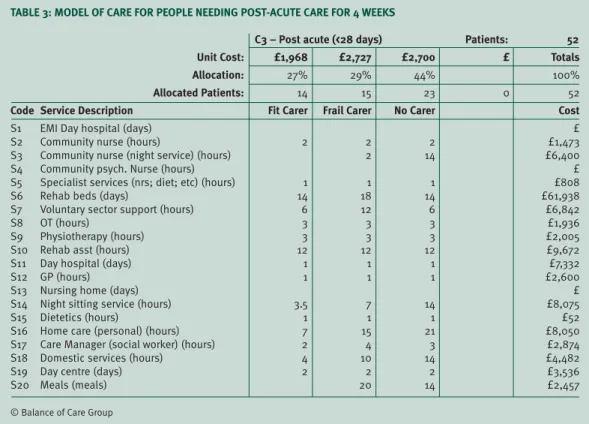
Table 2 (above) gives data from a point prevalence study carried out by the Balance of Care Group (personal communication) that illustrates this point.
People in long-term residential and nursing care
On the basis that at least one-third of residents recorded improved Barthel scores after they were admitted, a study of 150 nursing homes concluded that 17 per cent of the people
concerned no longer needed nursing care (Clinical Audit Unit, 1999). The researchers suggested that the decision to admit people to permanent nursing home care was made too soon, i.e. before rehabilitation was offered or completed. They also questioned the adequacy of the assessment process. The study concludes that ‘regular national audits are needed to ensure that older people are not simply warehoused in nursing homes’ (Clinical Audit Unit, 1999).
A study of residents of Scottish nursing homes found that a significant number of people with low-level needs had been placed in nursing homes because care requirements had been overemphasised (Penrice et al., 2001).
Research shows that, once people are admitted to long-term care, the provision of specialist nursing and therapy services for them is very variable (Clinical Audit Unit, 1999; Stevenson, 2001c). These services would help residents to maximise their abilities and improve their quality of life, as well as potentially preventing inappropriate admission to hospital.
[Table 2: title?]
NB: This table wasn’t supplied by Peter Powell, and I don’t have any reference for shape/size. Will half a page be enough/too much space?
People at home in the community
US researchers found that a small number of older people use a large proportion of health and social care resources. Systems were therefore introduced to monitor people with chronic health problems living in the community. Those found to be at risk of hospitalisation receive a period of intensive case management. It seems that consequently, hospital admission rates and lengths of stay have been reduced and the use of other services has declined (King’s Fund, 2001a). (See also ‘Assessment’, p. x [Section 6].)
In the UK, there is potential for using similar approaches to relieve pressure on hospital emergency services. Recent research has found that the rate of emergency admissions for respiratory disease peaks at the same time every year, not only in London but throughout the rest of the England. Significantly, a high percentage of these admissions were older people with chronic respiratory problems (Damiani & Dixon, 2002). Primary care should be able to identify these people and improve their management, thus helping to prevent admissions. Approaches that target older people with complex conditions, such as respiratory disease, are starting to be developed, and early results are encouraging (King’s Fund, 2001a).
Which types of services can be used to deliver intermediate
care, and how effective are they?
Intermediate care has evolved over a number of years and in response to a range of different pressures. The result is that, across the country, a variety of different names have been given to teams and services that carry out broadly similar functions. For example, the following names were cited during a workshop on rapid response services:
■ rapid response
■ crisis care
■ early supported discharge
■ community rehabilitation teams
■ community rehabilitation services
■ Hospital at Home.
Moreover, the terms used do not always reflect the full range of the services provided
(Spencer, 2000). In addition, the names used to describe intermediate care services also vary widely in the published studies. In an attempt to review the evidence for the effectiveness of these services systematically, we have organised this section according to the different service models involved. However, readers are warned that, in practice, two services bearing different titles can often be very similar to each other.
Where possible, the evidence given includes outcomes, financial costs and (when available) the views of users and carers. Gaps in the evidence are also highlighted (see ‘The types of limitations and their evidence’, p. x).
Hospital at Home
Well established in many parts of the UK, Hospital at Home (HaH) services provide active treatment by health and social care professionals in a person’s home, for a condition that would otherwise require acute hospital in-patient care. Hospital at Home encompasses both early discharge and admission avoidance.
Research suggests that, for people recovering from elective surgery and for older people with a medical condition, early discharge schemes may help to reduce the length of stay in acute
hospital beds, providing the views of the carers are taken into account. There is some evidence that admission avoidance schemes may provide a less expensive alternative to hospital care (Shepperd & Iliffe, 2002). There is conflicting evidence on the effectiveness of HaH for people recovering from a stroke, with some suggestion of increased mortality for people treated at home at the early stages (Parker, 2002). (See also ‘Stroke’, p. x.)
The evidence on cost effectiveness is complex. Although the cost per patient day is lower in the HaH scheme, in some cases, the longer duration of care experienced by people in such schemes compared with those conventionally discharged from hospital, is sufficient to outweigh any savings made in the in-patient costs for the HaH group (Goddard et al., 1999).
A recent study (Campbellet al., 2001) found that, for older people assessed as needing no more than 14 days of hospital care, HaH offers savings to health and social care agencies when compared with conventional in-patient care. However, these savings would be maintained only if the costs of expanding the service were offset by a corresponding increase in the number of patients being treated.
Users have shown high levels of satisfaction with HaH (Shepperd & Iliffe, 2002); they appreciate the more personal care and the better communication it offers, and particularly value the opportunity to stay at home (Wilson et al., 2002). However, carers’ experiences are more complex. Some studies found that HaH was less popular among carers (Shepperd & Iliffe, 2002), whereas other carers felt that the workload imposed by HaH was no greater than that related to hospital admission – any reduction in care duties at home is cancelled out by the necessity for hospital visiting (Wilson et al., 2002).
Early/supported discharge schemes
This term covers a wide range of schemes designed to allow people to be cared for at home following a period of acute care.
A review by Steiner (2001c) found that, although early studies were not encouraging
(Dunn,1996; Bourset al., 1998), the most recent research (Hyde et al., 2000) concluded, with relative certainty, that early discharge:
■ reduces the length of stay in hospital for older people with hip fracture and increases the likelihood of people being able to return to their previous living arrangements (Cameron
et al., 2000).
■ ensures that a higher proportion of older people remain at home 6–12 months after admission, resulting in a consistent fall in admissions to long-stay care over the same period, without any apparent increases in mortality.
With some notable exceptions, the costs of early or supported discharge schemes seem to be lower than those of conventional care (Goddard et al., 2000; Coastet al., 1998).
Rapid response
Rapid response is a relatively new service that aims to provide a swift response to people’s health and social care needs and simultaneously reduce pressures on the health and social care systems. Interest in the model was stimulated when the Government issued the NHS High Level Performance Indicators (Department of Health, 1999c) and the Social Services Performance Assessment Framework (Department of Health, 1999d), the findings of the National Beds Inquiry (Department of Health, 2000b) and the NHS Plan (Department of Health, 2000a).
The evaluation of the fast response service run by Rotherham Health and Social Care’s community assessment treatment scheme is one of the few published studies of rapid response so far (Sanderson & Wright, 1999). The service provides short-term support (up to 72 hours) in people’s homes, mainly to prevent hospital admission (about three-fifths of recipients) or to facilitate earlier discharge from hospital (about one-quarter of recipients). The researchers concluded that the service was very effective at safely diverting people away from hospital.
The cost effectiveness of the fast response service is difficult to determine, as it depends upon one’s assumptions about the ‘average’ length of stay in hospital. However, if the 1998 NHS reference costs for relevant diagnostic related groups (DRGs) are used as cost comparators, the service is undoubtedly more cost-effective (Sanderson & Wright, 1999).
The service was extremely popular with users, carers, primary care professionals and staff based in the local accident and emergency (A&E) department or involved in hospital bed management.
One important finding was that hospital-based staff made insufficient use of the fast response service because they were not aware of its existence. This seemed to be a widespread
problem: participants in a workshop on rapid response spoke of the need to ‘trawl A&E Departments for referrals’ and to ‘work intensively with general practitioners to convince them that the service would work‘ (Spencer, 2000).
Community rehabilitation
The number of services claiming to provide ‘community rehabilitation’ has grown considerably in the last few years. However, there are enormous variations between these services. Most seem to have developed in an ad hoc manner, responding to local pressures and without the support of research evidence (Enderby & Wade, 2001). In view of the important role community rehabilitation plays in delivering intermediate care, this is an alarming trend.
The evidence to support community rehabilitation is problematic, not just because the term is poorly defined (Enderby & Wade, 2001) but also because of the potential for overlap with other models of care (Parker, 2002).
An analysis of five trials comparing the effects of rehabilitation in people’s own homes with some form of hospital rehabilitation (Parker, 2002) found no significant difference in mortality or outcomes (length of stay, re-admission rates and destination at final follow-up). Nor did any clear picture emerge from cost comparisons.
The review by Parker (2002) did not investigate the experiences of users and carers. However, an evaluation of a community rehabilitation team in Portsmouth (Sander, 2000) found that users had a strong preference for home rather than hospital rehabilitation, and that the cost of care packages at referral and at discharge had fallen by an average of £96.62 per person (Sander, 2000).
Residential intermediate care
Community hospitals
Descriptive studies highlight the flexible, multipurpose role of community hospitals. However, so far, there is little evidence on clinical outcomes and cost effectiveness (Department of Health, 2002a) to suggest that community hospitals care are particularly appropriate settings