2 Name: Jamiel Vital Esli Arens BSc
Date of birth: 30-09-1994
Email: [email protected] Studentnumber: 1250426
Number of words: 24.410 words Date of submission: August 3rd 2016
First Reader: John P. Sabou
Second Reader: Drs. Constant W. Hijzen MA
3
TABLE OF CONTENTS
TABLE&OF&FIGURES&...&4! FOREWORD&...&5! INTRODUCTION&...&6!
1.1#RESEARCH#QUESTION#...#8!
1.2#JUSTIFICATION#...#11!
1.3#READERS#GUIDE#...#14!
CONCEPTUAL&FRAMEWORK&...&16! 2.1#DEFINING#INTELLIGENCE#...#16!
2.2#THE#INTELLIGENCE#CYCLE#...#19!
THEORETICAL&FRAMEWORK&...&25! 3.1#EXPLAINING#CROWD?SOURCING#...#25!
3.2#NEO?INSTITUTIONALISM#...#31!
3.3#INNOVATION#ADOPTION#...#33!
3.4#THEORY#SELECTION#AND#JUSTIFICATION#...#41!
METHODOLOGY&...&43! 4.1#RESEARCH#DESIGN#...#43!
4.2#LIMITATIONS#&#EPISTEMOLOGY#...#48!
FINDINGS&...&50! 5.1#CONTEXTUAL#FACTORS#...#50!
5.2#INTERNAL#FACTORS#...#57!
5.3#IMPLEMENTING#CROWD?SOURCING#...#63!
DISCUSSION&...&69! 6.1#APPLICATION#OF#ROGERS’#MODEL#...#69!
RECOMMENDATIONS&...&77! 7.1#ADDITIONAL#RESEARCH#...#77!
4
TABLE OF FIGURES
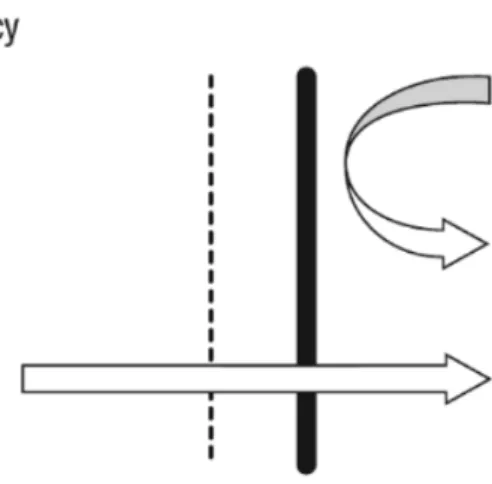
FIGURE&1:#THE#SEMIPERMEABLE#MEMBRANE#(LOWENTHAL,#2009,#PP.5)!...!18!
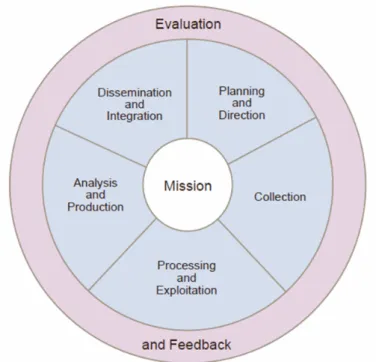
FIGURE&2:&THE#INTELLIGENCE#CYCLE#(JOINT#CHIEFS#OF#STAFF,#2013)!...!20!
FIGURE& 3:&HOW# TO# DISTINGUISH# BETWEEN# CROWDSOURCED# INTELLIGENCE# (CSI),# HUMINT,#OSINT,#AND#RESEARCH#(STOTTLEMYRE,#2015,#P.#586)!...!30!
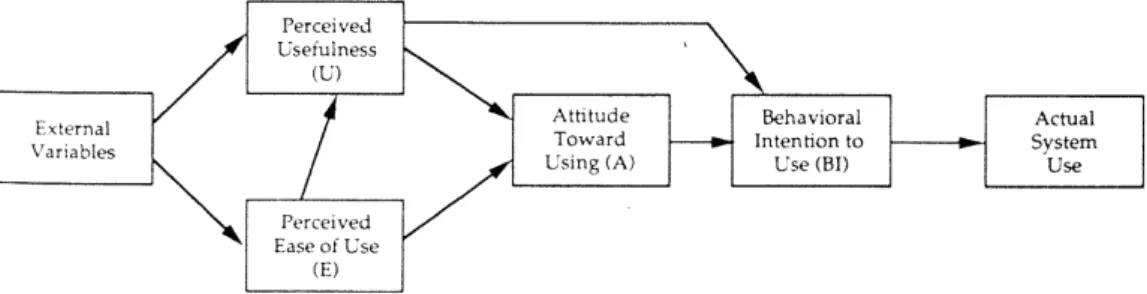
FIGURE&4:!TECHNOLOGY#ACCEPTANCE#MODEL#(DAVID,#BAGOZZI,#&#WARSHAW,#1989)!36!
FIGURE&5:!ROGERS'#MODEL#?#RATE#OF#ADOPTION#(ROGERS,#2003)!...!38!
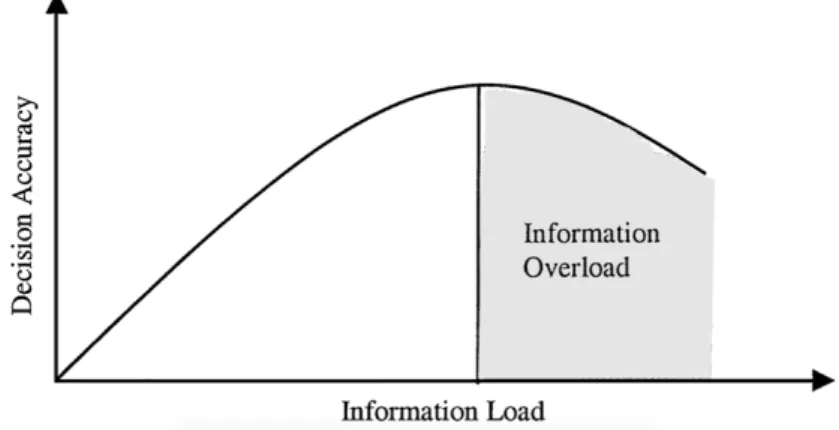
FIGURE&6:!INFORMATION#OVERLOAD#(EPPLER#&#MENGIS,#2004,#P.#326)!...!52!
5
FOREWORD
You are reading the thesis “Dirty Buggers” - Adoption of innovations in the us intelligence community: A case-study into the implementation of crowd-sourced intelligence. The title refers to a quote from a letter to a member of the Communist Party of Great Britain. The letter stated: “to MI5, if you steam this open you are dirty buggers”. Major Denman, the officer in charge of Post Interception, framed this letter and hanged it in his office (Wright, 1987, p. 46).
This quote shows the unique relationship between the intelligence services and society. The work of the intelligence services can be seen as an intrusive endeavour, as they are allowed to collect personal data. Yet, with innovation concerning crowd-sourced intelligence, this historical relationship can change drastically.
This thesis concerns the US intelligence community and the implementation crowd-sourced intelligence. The main goal is to understand which factors influence the speed of adoption of innovations within the US intelligence community. It combines organisational theories with the academic discourse about crowd-sourced intelligence and reform in the intelligence services. This thesis has been written to fulfil the graduation requirements for the master’s programme Crisis and Security Management from Leiden University.
I hope you enjoy reading this thesis.
Jamiel Arens
6 CHAPTER 1:
INTRODUCTION
Since the IT revolution, there have been many developments in the field of information systems and online (collaboration) platforms. This has resulted in a variety of new methods to exchange data between agents. In both private and public environments, computers and digital information technologies have become of great importance. These new platforms have reached far into daily lives and have a direct effect on the production of data. Online connections have become an important point of access which allows individuals to consume information at low costs.
Also, personal computers have been integrated into many parts of human society. Over the years ICT environments have become more closely integrated into human lives. All different organisations try to use the full potential of these collective information sources to boost revenue or gain important insights about their organisation.
One current and important development in this particular field, is the wide use of crowd-sourcing. Platforms such as Kickstarter, Wikipedia and Threadless use the potential of group dynamics and expert opinions to harvest information, knowledge and even crowd-made products. There is no longer a need to employ expert teams, as tasks can -to a greater extent- be fulfilled by a group of individuals outside the actual companies (Estellés-Arolas & González-Ladrón-de-Guavara, 2012, pp. 189, 194).
Collective knowledge, derived from sources such as Wikipedia, offer a great example of crowd intelligence. Wikipedia is fully constructed by using the knowledge of individuals contributing their expertise or building upon the expertise of others. The combined efforts of the different individuals offer important and rich information resources which is freely accessible. The amount of information submitted to and edited on Wikipedia has risen exponentially since its launch in 2001 (Wikipedia, 2016). This shows the power crowd-sourcing initiatives has gained over the last years.
7 concerning intelligence collection in the new environment of fast changing threats and new networked adversaries.
Jefferys-Jones (1997) argues that the CIA was established as a direct consequence of the Pearl Harbour attacks of 1941. The congressional hearings in July 1947 identify a “pre-eminent concern” (Jeffreys-Jones, 1997, p. 25) for strategic failures like the Japanese attack. Despite the fact that the US Congress has made some considerable changes to the structure of the USIC, the governance framework has, to this day, remained largely unchanged. Berkowitz (1996, p. 41) argues that the current layout of a centralized and traditional organisation is still an “artefact from [this] earlier age”, and does not see it as a long-term sustainable organizational model.
Despite the advantages associated with crowd-sourced intelligence, there have been some failed cases in the United States. In particular, during the Boston bombings in 2013, the FBI tried to use crowd-sourcing to identify the perpetrators and possible future threats. Online, different initiatives were established for witnesses to upload photographic evidence of the attack. Among these pieces of material, many false-positives were uploaded, making the work of the FBI even more difficult. In the aftermath of the attacks in Boston, there were well over a dozen falsely accused victims of amateur detective work. As a result, their identities were broadcasted nationally and framed by media outlets as terrorists (Wadhwa, 2013). When even the FBI opened an option to upload evidence from the Boston scene, according to Wadhwa (2013), an ugly online witch hunt started. Crowd-sourcing can have negative consequences for both governmental bodies as well as individual citizens.
Crowd-sourcing as both a method for analysis, as well as an method of information collection, could offer new possibilities for the US intelligence community to keep up with the rapid changes (Munn, 2012). Yet, to implement these changes into the USIC asks for attention and knowledge of the intelligence field. In order to study the implementation of crowd-sourcing, this thesis will assess which internal and external factors are of influence to this implementation process.
8
1.1 RESEARCH QUESTION
The overall goal of this study is to gain better insights into the factors contributing to organisational change within the US intelligence community. As new technological innovations are becoming available to the market of the intelligence agencies, the process of implementing them becomes more important. Without proper adoption of these applications, the full potential of these developments will not see the light of day. Understanding the difficulties revolving around the implementation process helps to smoothen the eventual adoption (Rogers, 2003).
Keeping up with the rapid changes and implementing innovation quickly, has proven to be difficult and time consuming for the intelligence community (Hamrah, 2013; Jones, 2007; U.S. Government Publishing Office, 2005). As a consequence of rapid changes in the ICT environment, the USIC has had to follow the trend of the increased use of IT. In particular since the IT revolution, the USIC has gone through significant changes in information processing methods.
According to Berkowitz (1996, pp. 35-36) the IT revolution has resulted in a rapid increase in microchip processing power, and the economic significance of IT in companies and organisations. Following Dewar’s (1998, p. 2) understanding, the phenomenon of the many-to-many communication through computers is the defining characteristic of the information age. For this reason, some conventional methods of intelligence collection have become less relevant, as ICT is taking over these tasks (Brantly, 2013, p. 77).
Nowadays, the US intelligence community is no longer situated in a world based on traditional hierarchical structures. The world has shifted to a more
interconnected networked society with decentralized ad hoc networks and groups
(Nicander, 2011, p. 547). According to Berkowitz and Goodman (2000, p. 92) the intelligence community needs to work towards a “decentralized, market-based, fluid model”. Contrary to the older and more secret bureaucracy layout, contemporary intelligence agencies should be able to cope with these new structures. Only this could help the intelligence processes to deal with the new information reality (Berkowitz & Goodman, 2000).
9 It can arguably produce better results than conventional methods, as it offers the possibility to calculate a (more exact) mean estimate (Dickenson, 2013; Surowiecki, 2005). This will be discussed in more detail in section 1.2 and chapter 3.
One of the main advantages of this particular method of collecting intelligence is the fluid decentralized structure it builds upon. Crowd-sourcing allows the intelligence community to tap more directly into local communities and collect information about possible future threats. Since the networks used to build crowd-sourcing can come from all different places, it allows a local variety of information to be added into the analysis (Munn, 2012). In the end, crowd-sourcing could create the possibility to improve assessments about networked threat structures and map their activities more adequately.
The adoption of these new forms of intelligence collection is a matter based in organisational theory. Previous studies have created general frameworks to explain changes within organisations (Ajzen & Fishbein, 1980; Dacin, Goodstein, & Scott, 2002; Davis, 1989; Eder & Igbaria, 2001; Klepper & Hoffman, 2000; Rogers, 2003; Scott, 2001). These studies create insights into the factors contributing to the overall application of new rules or practices within social systems and organisations.
This thesis aims to study the innovation of new technologies and decentralizing techniques within the US intelligence community. It combines organisational theory with insights from the academic literature to understand which factors contribute to the speed of crowd-sourcing adoption. These factors will be identified and discussed to gain significant insights into the development of this emerging field.
The US intelligence is an interesting case to start the investigation into crowd-sourced intelligence, since it has had some projects regarding this application. These experiments show the interest of the USIC in this contemporary field. Furthermore, there is a relatively large amount of literature available about the US intelligence community as a whole.
10 “What internal and external factors influence the adoption and implementation of crowd-sourcing methods into the United States intelligence community?”
This study uses an analytical approach to understand and explain how this phenomenon could occur. It focuses on applying earlier formulated theories and frameworks to a relatively new development within public administration. By combining explanations and frameworks from the field of crowd-sourcing, intelligence studies and innovation diffusion, it offers new insights into the factors contributing to the adoption of crowd-sourcing.
Looking at the organisational implications and the adoption of this new method is only one way of discussing crowd-sourced intelligence. Research into the organisational aspects of the US intelligence community is much broader. There has been important groundwork done about organisational changes and the adoption of innovations (Fessenden, 2005; Gosler, 2005; Jones, 2007; Nicander, 2011; Posner, 2005). This study adds to this comprehensive body of literature by adding a specific case-study into the implementation of crowd-sourcing within the USIC.
Although this case-study only analyses a specific topic related to crowd-sourced intelligence, it adds important insights to the academic body of literature concerning innovation adoption within the USIC. To understand these developments, it is necessary to have both general- and more specific knowledge about this contemporary field.
Some authors point out a compelling difference between the symmetrical layout of the US intelligence community and the asymmetrical threats (Berkowitz, 1996; Dickenson, 2013; Olcott, 2013). New fluid networking structures have formed as a consequence of new online communication capabilities. Crowd-sourcing is viewed as a possibility for the intelligence community as a way of dealing with these new threats, because it has the potential to combine the symmetrical and asymmetrical structures (Dickenson, 2013; Drummond, 2010; Olcott, 2013).
11
1.2 JUSTIFICATION
The relevance of this topic originates from the increase of Information
Communication Technology (ICT)-generated information, especially the impact of social media and its usage. ICT has created an environment for intelligence gathering practices among clandestine services and has moved the production of information closer to the citizen. These considerations make the topic of crowd-sourced intelligence a very interesting and important subject to research.
Information has become more timely and more specific about events, coming from more individualized sources. Adapting organisations to these new developments has been a key struggle and has been an important subject of academic research. Since ICT becomes more user-centric, so too does information in the context of deriving valuable findings that may be capitalized upon. Exploring these opportunities and the companying changes, helps to further analyse and understand the implications of the changes and the factors contributing to the innovation and implementation of these new technologies.
In 2005, one of the first works on crowd-sourcing and the benefits of the “wisdom of the crowd” was introduced by James Surowiecki (2005). This book resulted in an increased academic and public interest in this social phenomenon. Academic research was interested in theorizing this, as well as finding possible explanations for the increased use of crowd-sourcing platforms and -initiatives.
Initiatives such as Wikipedia (collective intelligence), Kickstarter
(crowd-funding) and Threadless (crowd-sourcing), showed the potential crowd-sourcing
has to support organisational efforts. These different applications showed the wide possibilities of crowd-sourcing into both private and public realms. In other words, crowd-sourcing has radically shaped the way organisations use information and internet platforms.
Crowd-sourcing as a concept and social phenomenon has sparked considerable attention from within the academic world. The combination of implementing these practices into existing governmental structures has been researched in the last decade (Clark, Zingale, & Logan, 2016; Clark, Zingale, Logan, & Brudney, 2015; Dacin, Goodstein, & Scott, 2002; Klepper & Hoffman, 2000). These contributions have focused on the way that crowd-sourcing is implemented into institutionalized and transparent parts of government.
12 about innovation-adoption to insights from the intelligence agencies, this study adds new perspectives to the body of knowledge. It ties concepts from theories with data from the literature.
By looking at a specific part of governmental practice and understanding the role and processes behind crowd-sourcing, this study helps to improve the body of knowledge about crowd-sourcing in intelligence organisations. It identifies the factors contributing to the application of new technologies in the social system of the US intelligence community.
The main issue with new innovations for intelligence purposes has been the implementation of these practices into the US intelligence community. There has been comprehensive research into these difficulties, since it is usually written after official reports concerning internal effectiveness have been published. These reports are usually presented several years after strategic failures have occurred (see, for instance, the reports of the National Commission on Terrorist Attacks upon the United States (2004) and the U.S. Government Publishing Office (2005)).
Despite the research into overall implementation and change, there have been significantly less contributions on the acceptance of new technologies or innovation diffusion. Overarching models to understand technology adoption and innovation implementation have been developed. However, these models are yet to be applied to the US intelligence community to understand the case specific implications and difficulties.
The case of the United States intelligence community was selected for several reasons. Firstly, there have already been some trials to test the applicability of crowd-sourcing for intelligence estimates (Defense Advanced Research Projects Agency, 2011; Dickenson, 2013). Furthermore, there is an extensive literary corpus concerning the US intelligence community. This body of literature allows the build upon the established knowledge of researchers with access to primary intelligence sources.
SCIENTIFIC RELEVANCE
13 case of crowd-sourcing has not been researched before and is therefore an important addition to the academic discourse1.
Despite the lack of a comprehensive body of literature with regard to this issue, there have been studies providing information into adjacent and related fields (Atwood, 2015; Olcott, 2013; Steele, 2007; Wadhwa, 2013). Studying these theories and insights helps to understand the theoretical boundaries of the phenomenon, and can provide stepping stones for new research into this development. By showing the outer boundaries, there is more understanding about the demarcation of the crowd-sourcing field.
Furthermore, the application of crowd-sourcing within the US intelligence community has not been researched from an organisational perspective. It has already been discussed that the literature concerning crowd-sourcing is primarily aimed at understanding the phenomenon. This study holds another perspective as it is engaged in the concrete implementation processes behind crowd-sourcing.
By applying these existing theories on specific phenomena within the intelligence agencies, there is a contribution to the body of knowledge about a difficult research subject. Research into the intelligence community is inherently difficult, as the organisations are often secretive. To support and guide future research, there has to be substantive research into this field. This study applies already established knowledge regarding the intelligence community to contemporary problems they are facing.
Case-studies, such as the one presented in this thesis, can provide future research with an overview of, or even empirical grounds to formulate new theories about the intelligence community. Patterns can then be derived from a set of case-studies, which in turn can be used to formulate a general theory explaining the adoption of innovations in the USIC.
SOCIETAL RELEVANCE
As the intelligence community, as a public institute, has direct implications on both politics and government, studying such an organisation can prove to have important societal implications. Contemporary developments and innovations are especially important to study, so as to identify the different consequences related to their implementation.
1 Nicander (2011, pp. 561-562) discusses some implementation frameworks in relation to
14 First of all, the overall purpose of the intelligence community is to identify potential strategic risks. By assessing threats to national security, the US intelligence community seeks to protect its citizens from danger. The work of the intelligence community therefore has a direct consequence for society and individual actors. Since these agencies have far-reaching implications on society and its security, improving efforts to collect intelligence is key. Without such improvements, the intelligence community will fall behind in its innovative efforts, exposing citizens to potential risks.
To prevent future strategic failures like Pearl Harbour and the recent Middle Eastern crises, the US intelligence community is searching for new ways to collect and analyse available data-sources. Investing time and effort in developing new applications can help to process information more adequately. This sparked recent interest into researching the application of crowd-sourcing within the US intelligence community (Defense Advanced Research Projects Agency, 2011).
As the intelligence community is experimenting with innovations in data creation and collection, there are growing possibilities to improve the work of the USIC. Yet, more important is the eventual implementation process. Without eventual implementation and use of new technologies, there will be no advantage of such developments, thereby creating no additional advantages to national security.
This study identifies the different factors contributing to the adoption speed of innovations. Knowledge about these factors can aid the intelligence community in streamlining the implementation process. By identifying the difficulties and opportunities of such innovation beforehand, the process can be steered and adjusted into the right direction. The advantage of implementing these innovations can help to improve national security and be beneficial for the overall security assessments of the intelligence agencies.
1.3 READERS GUIDE
In order to understand this context, this study aims to provide both a theoretical insight into the intelligence community, as well as specifying this towards the application of crowd-sourcing. Therefore, this study will apply different levels of abstractness to fully encompass the notion of implementing crowd-sourced intelligence;
15 down into more concrete issues will be difficult as these are situated in the nature of the social system and structures of the USIC.
The third chapter will discuss the theoretical insights used to build the framework for this study. The main concepts will be discussed here, namely crowd-sourcing, crowd-sourced intelligence, and innovation adoption. Lastly, the theories for the eventual study will be selected, and the arguments why will be presented.
In the subsequent fourth chapter, the methodology for this study will be presented and discussed. Additionally, the justification and the arguments leading to the methodology selection will be outlined.
The fifth chapter will contain the main findings from the academic literature. In this section the main identifiable patterns and discussion points within the data will be discussed. These findings will construct the basis for the discussion chapter, leading to the answer to the research question. The findings will be presented in three parts; contextual factors, internal factors and crowd-sourcing implementation. Overall, this chapter will present the factors leading to the implementation speed of crowd-sourcing.
The sixth chapter contains the discussion, wherein the findings from the literature will be tied to the theory of innovation adoption. This section will discuss the usefulness of the theory in explaining the implementation process of crowd-sourcing. Discussing these findings in the light of the theoretical frameworks could provide new insights into which factors are of significant importance during the implementation phase.
16 CHAPTER 2:
CONCEPTUAL FRAMEWORK
To fully understand the context of this study, it is important to introduce the US intelligence community as a whole. Through this, it is possible to better understand the internal affairs within the USIC. This section is based upon the theories and patterns published in earlier literature concerning the intelligence services. It provides insights into the organisational structures of the current intelligence community, thus creating the framework upon which the organizational theory can be applied.
2.1 DEFINING INTELLIGENCE
The notion of (strategic) intelligence remains a contested concept: there are many different views and definitions concerning the concept, and it is therefore very difficult to formulate an overarching theoretical framework agreed upon by scholars (Hastedt & Skelly, 2009; Davies, 2002; Johnson, 2003).
Kahn (2009, p. 81) identifies two different sources of intelligence: the first is
actual physical intelligence, that was especially used up to- and during World War
I. Most intelligence gathered was meant to gain insight into the enemy’s manpower, weaponry, and movements. This knowledge could aid in winning battles and even wars.
But as nations evolved, so did the intelligence. Physical intelligence became a less primary part of the intelligence services. The establishment of modern houses of parliament took away the need to know the specifics about the enemy’s army. All information about the budget and weaponry was discussed within these open institutions, with publicly available sources.
In combination with modern communication devices such as telegrams and
telephones, much more information could be obtained by focussing on verbal
intelligence (Kahn, 2009, pp. 81-82). This allowed states and intelligence services to predict enemy battlefield behaviour together with the estimated number of resources. Contrary to physical intelligence, verbal intelligence could be a more decisive factor in modern battlefield situations. Kahn (2009) identifies this turning point as the start of investing extensively in modern day intelligence.
17 developments regarding crowd-sourced intelligence. The use of crowd-sourcing can be the next chapter in the collection methods of the US intelligence community to gain strategic advantages over their adversaries.
AN EFFECTIVE INTELLIGENCE COMMUNITY
The effectiveness of strategic intelligence is not always guaranteed. In United States history there have been many cases of insufficient strategic intelligence to counter attacks on the USA. The two most important cases being the attack on Pearl Harbour (Jeffreys-Jones, 1997) and the terrorist attacks of 9/11 (Posner, 2005).
Both cases showed that the US intelligence services lacked important information or analytical connections, leading to significant historical attacks on US troops or -soil. In order to obtain an effective body of strategic intelligence, the intelligence community is in need of gaining essential information. Akhgar, Yates and Lockley (2013, p. 6) formulated six requirements which shape a good functioning intelligence service:
!" Assessment: This ensures that the US intelligence services have knowledge about the situation wherein the research is situated. It should include an overarching assessment of the current strengths and weaknesses together with national situation and its opportunities in the international realm.
!" Knowledge: It should be ensured that all parts of the US intelligence community are focused on relevant intelligence topics. This provides specific intelligence for knowledge based decision-making for policy officers.
!" Holistic: There should be no narrow view on different topics to ensure information about the full spectrum of relevant topic. All threats and opportunities have to be analysed by the US intelligence services to ensure an optimal mapping of the situation.
!" Goal Driven: All divisions and disciplines within the USIC should be engaged in a collaborative approach to combine all different areas of expertise and skills. Instead of pursuing one’s own goals and objectives, it is more efficient to combine the efforts working towards shared objectives. !" Adaptive: Ensures the flexibility of the intelligence services to quickly
shift its attention to different fields and issues. With new threats and issues emerging quickly, such flexibility is deemed necessary to support the intelligence service in analysing ever changing actors, policy fields and states.
18 of the intelligence services. Such target oriented culture should be embedded in the very culture of the intelligence services in order to make the intelligence apparatus as effective as possible.
To fulfil these requirements, the US intelligence community is constantly investigating new collection methods (for example the research of DARPA and IARPA). This could help the intelligence agencies to align their efforts with the outside reality. Crowd-sourcing can be a factor helping the USIC to fulfil some of these requirements more adequately. Therefore, identifying these requirements gives a better understanding of the field wherein crowd-sourced intelligence is introduced.
INTELLIGENCE VS POLICY
Intelligence is all about information, knowledge, and the actions and capabilities of other nations and non-state actors. Information helps policy officials make better decisions and gain situational awareness about foreign events (Johnson, 2009, pp. 2-4). In intelligence theory, policy officers and -managers are often described as the consumers of intelligence products. Policy officials ask the US intelligence community to investigate certain issues and report back important information.
Lowenthal (2009, p. 5) describes the relationship as “separated by a
semipermeable membrane”. This separation between the two fields of government is only one-sided. Policy makers are allowed to cross over to the side of intelligence services, but the intelligence agency cannot. This makes it possible for policy officials to shape the methods and structures within the intelligence community. With their requests, policy officials can influence what methods are employed to construct intelligence estimates.
19 First of all, there is an important distinction between the goals of the intelligence community and the policy officials. The latter is mainly focused on furthering their political agenda: especially the area of foreign policy is a high stakes environment, which means that the policy officials have a certain end-goal in mind.
The intelligence community is completely dependent on the financial means provided by the executive branch of government. According to Lowenthal (2009, p. 212), policy makers assume that all topics will be covered, even to a minimal extent, so that if one issue suddenly becomes more important, the intelligence community can gear up quickly and provide critical information. Lowenthal argues that these assumptions are wrong: from a budgetary perspective, it is almost impossible for the intelligence services to cover all parts of the world and analyse the events there.
Intelligence is mostly a zero-sum game, without enough means to do everything. The intelligence managers need to weigh the different interests and make priorities of their own, where the capabilities will be invested (Lowenthal, 2009, p. 212). This makes it also very hard to directly increase attention to a certain region or event in case of rapid changes. As the money is already invested elsewhere, the intelligence managers need to pull resources from other topics to focus on the new priority.
These trade-offs and decisions are a constant factor within the intelligence community, since the world is constantly changing. In order to successfully adapt to these changes, the intelligence community needs to make decisions where to invest time and money (Lowenthal, 2009, p. 32). Understanding these trade-offs shaping the organisational layout is essential to study the implementation of crowd-sourcing. The adoption is partly dependant on time, money and policy constrains, coming from different parts of government. These constrains on the intelligence community are essential to understand the adoption of new innovations and methods.
2.2 THE INTELLIGENCE CYCLE
20 information and intelligence to enhance their decision-making capabilities (Gill & Phythian, 2012).
To (theoretically) streamline all action involved in the intelligence process, Sherman Kent (1966) introduced the intelligence cycle. This cycle identifies all the different steps of the intelligence services to collect, analyse and report intelligence products back to government officials (Johnson, 2009).
The intelligence cycle helps to structure theories about the intelligence community and offer a framework to investigate the internal affairs and its activities (Johnson, 2009, p. 33; Lowenthal, 2009, pp. 67-70; Gill & Phythian, 2012, pp. 11-17). In this research, the intelligence cycle helps to identify the theoretical placement of crowd-sourcing within its different stages. Its position within the intelligence cycle shapes the overall applications and implications for the implementation process. Understanding the differences between the distinct parts of the cycle can help to identify difficulties for the implementation trajectory.
Figure 2: The intelligence cycle (Joint Chiefs of Staff, 2013)
21 process. However, it only includes the key processes, and cannot create a detailed view of theinternal processes.
In reality, there is often neither smooth transition nor demarcation of the different steps. Instead, an observer will often see a shift between the different stages and division. As Johnson (2009, p. 34) puts it, the cycle is “characterized by interruptions, mid-course corrections, and multiple feedback loops”. Although these considerations are important to understand the process of the intelligence community, the cycle mostly offers a theoretical framework to further investigate the practises of the intelligence community. The different phases will now be discussed briefly, because without an understanding of the general processes within the intelligence cycle, the implementation of crowd-sourcing will be difficult to comprehend.
PLANNING AND DIRECTION
As mentioned earlier, the intelligence process is basically satisfying the information need of the customers: policy makers want to know more about a certain situation and ask the intelligence services to provide situational awareness. To do so, intelligence officers and managers need to identify the exact need for information.
Johnson (2009) identifies two important features to the planning-and-direction phase. The first important part is the scope of the intelligence. This refers to the ‘manpower’ (or machine-power) assigned to the question of the policy maker. The second important element defined by Johnson is the communication between the intelligence managers and the policy officials. These two factors contribute to a clear formulation of the request from policy officials.
Getting concrete questions and priorities is essential to the intelligence managers, since it determines what information needs to be collected. Only then will they be able to translate requests into workable questions for the intelligence apparatus. This also means deciding on what tools and methods of information collection are suited best for the questions. This process is especially important to streamline following the collection and analysis of the data-sources. Investing time to make sound plans can prevent some unforeseen risks in the remainder of the process (Gill & Phythian, 2012, p. 79).
COLLECTION
22 officials. It is important for the US intelligence community to choose the right type of information collection. Every form of information collection has its own benefits and costs, identifying these weight-offs helps to collect information more efficiently (Lowenthal, 2009).
Besides the financial aspect of the collection capabilities, it is also important to ask how much information will be collected by the intelligence services. Collecting more information can result in either finding the critical part of the puzzle, or creating a puzzling pile of information (Lowenthal, 2009). In every case there should therefore be a trade-off, because every new source of information that could be processed and analysed has the potential of slowing down the actual intelligence process.
PROCESSING AND EXPLOITATION
To understand the collected data, it needs to be processed and exploited. This step is also referred to as interpretation, since it translates the raw data to computer- and human readable formats. (Samuels, 2006, p. 359). Furthermore, during the processing-and-exploitation phase, expert opinions can be added to the collected data to provide interpretation and context. This essential step enables the intelligence services to analyse collected information in the next step of the intelligence cycle.
A big problem for the analysis stage is the amount of collected data. There is often so much data collected, that the analysis of the information is problematized. In those cases, the amount of collected information is more than the analytic capability of the intelligence services. Lowenthal (2009) estimates that the United States’ data collection far outruns the process and exploitation capabilities.
This is a direct consequence of the (wrong) perception that collection is the most important part of the intelligence cycle (Lowenthal, 2009). Processing capabilities are an integral part of the in-house intelligence apparatus to make sense of all the data. As well as every other part of the intelligence cycle, without processing there will be no intelligence in the end.
PRODUCTION AND ANALYSIS
23 In either way, a basic technique to gain analytic insights into future events is by
conducting risk assessments. This form of assessments makes “the estimation of
the likelihood of an adverse event balanced against the possible harm caused by the event” (Bond, 2004, p. 120). In cases of a more scattered threat, intelligence analysts often turn to network mapping to analyse the nature and intention of the faced threat, and identify the main actors of the organisation or group. One last example of analytic methods of the intelligence community is competitive analysis. Working with this method, analysts formulate different hypotheses to research. Their aim is then to refute or prove these hypotheses, to estimate the likelihood of certain events taking place in the future (Gill & Phythian, 2012, pp. 106-109).
Specialization and bureaucracy prevents analysts from accessing the needed information to analyse, thereby harming the overall accuracy of the formulated estimates in the analysis process. In the 9/11 report on the intelligence services such barriers were identified (National Commission on Terrorist Attacks upon the United States, 2004, pp. 78-80). One of the identified problems was the lack of built-in warning signals spanning across different sub-fields of information analysis. Due to the fact that there was little cross-division analysis, valuable information was not exchanged and therefore missed in the intelligence process (Gill & Phythian, 2012, p. 108).
DISSEMINATION
The last stage is all about language and formulation. In the dissemination phase of the intelligence cycle the acquired intelligence is reported back to the initial policy officials. As the products of intelligence services are not absolute or the whole truth, communication and formulation is a very important part of the intelligence cycle.
The interpretation of the estimates presented by the intelligence community is vital to the eventual effect and usability of the estimates formulated by the analysts (Gill & Phythian, 2012, p. 116). Because the intelligence community will not be able to present the truth without uncertainties, communicating these flaws is essential to successful dissemination of information. As policy officers are looking for guidance in an insecure environment, there should be no definitive answer being included in the intelligence reports.
25 CHAPTER 3:
THEORETICAL FRAMEWORK
The theoretical framework described below will structure the overall data collection and interpretation of this study. It identifies the main concepts within
this thesis: (1) crowd-sourcing, (2) innovation-adoption and (3)
neo-institutionalism. These concepts will be used to identify the factors contributing to the rate of adoption of crowd-sourced intelligence into the US intelligence community.
3.1 EXPLAINING CROWD-SOURCING
We live in an interconnected world and our technological devices allow us to contact and communicate with devices and people all over the world. This radically changes the way we live. The amount of data we can access has grown exponentially and the means to produce this data has become more of a commodity (IBM, 2015). With the advent of the information age came new ways to exchange knowledge and information. One of these developments was a wider public application of crowd-sourcing technology.
Platforms such as Wikipedia allow every individual to contribute and share knowledge. It combines experts’ opinions with collective intelligence. Another
example of crowdsourcing is the company Threadless, which completely relies on
designers to participate and create new T-shirts. Such applications are key examples of crowd-sourcing initiatives. The adaptability of crowd-sourcing applications makes it a versatile tool for organisations and policy-makers to utilize, but makes it difficult to define and categorize.
There have been several applications of crowd-sourcing in other fields as well. All these initiatives seek to combine information from groups into relevant and quick
resources for other actors. For example, the online platform Bellingcat combines
resources for investigative journalism, provided by other citizens with an expertise in a certain topic. Furthermore, mobile apps like Field Agent provide companies with data about customer behaviour and preferences, as the app asks consumers to provide companies with important information.
DEFINING CROWD-SOURCING
The definition of “crowd-sourcing” is heavily contested, with many scholars trying to find a common definition of the concept (Estellés-Arolas & González-Ladrón-de-Guavara, 2012; Brabham, 2008; Howe, 2008). The definition which is most often quoted is that of Howe (2006):
26 “Crowdsourcing represents the act of a company or institution taking a function once performed by employees and outsourcing it to an undefined (and generally large) network of people in the form of an open call. This can take the form of peer-production (when the job is performed collaboratively), but is also often undertaken by sole individuals. The crucial prerequisite is the use of the open call format and the large network of potential laborers.”
This definition argues that crowdsourcing takes over conventional functions of companies and organizations, but there is no specific group that is asked to perform these tasks. This creates a whole new perception of collaboration and out-sourcing then earlier. Instead of targeting a predefined group or organisation, crowd-sourcing can include everyone with the right credentials to carry out some of the organisational tasks.
Brabham (2008) argues that problem-solving will no longer be an activity of a few individuals, but will, in the future, be carried out by larger groups of individuals. All aspects of a problem will be distributed among the boundaries and expertise of professionals and individuals, making the decision-making process more adequate and more ambitious. In his more simplified definition, Brabham (2008, p. 1) emphasized that the notion of crowd-sourcing is an online and distributed endeavour:
“Crowdsourcing is an online, distributed problem-solving and production model”
Contrary to the definition by Howe, Brabham does not identify crowd-sourcing as a phenomenon taking over conventional organisational processes. In his article, Brabham emphasizes more the recently established online initiatives to combine
crowd-sourcing methods with conventional business, such as InnoCentive and
iStockphoto. Yet, the integration of crowd-sourcing into existing business has not been studied by Brabham.
CLASSIFYING CROWD-SOURCING APPLICATIONS
27
The first classification can be done by looking at the nature of the tasks that will be carried out by the organisation and the crowd in question:
-" Creation tasks: Organisations try to align their business model to fit the intellect of the crowd. The information derived from crowd-sourcing largely defines the directions and actions of an organisation. The combination of organisations and crowd-sourcing creates the possibility to automate decision-making processes. Using online crowd-dynamics help to analyse problems and create tangible solutions.
-" Evaluation tasks: This category of crowd-sourcing is often used in customer-based companies to steer the business towards the desire of the consumers. Contrary to the earlier form of crowd-sourcing, evaluation tasks may provide input for decision making, instead of directly steering and making decisions within the organisation.
-" Organisational tasks: crowd-sourcing initiatives falling in this category are equipped to take over organisational micro-tasks from organisations. In these instances, the crowd takes over tasks that previously were an internal- and integral part of the organisation. For example, the reCAPTCHA initiative uses crowd-generated input to read texts and textualize online images by asking website users to create the translation from image to text. So, instead of having an employee working on these tasks, organisations now have the possibilities to crowd-source small organisational tasks to the wisdom of the crowd.
The second important element –according to the framework of Corney and Torres-Sanchez (2009)- is the kind of workers that are needed for the specific organisational crowd-sourced tasks:
-" Any individual tasks: These tasks contain easy, common tasks that can be carried out by every individual. It doesn’t need any prior or in-depth knowledge about specific concepts or subjects to complete these tasks. These tasks often rely on human judgement coming from the crowd and ask for a simple assessment of the crowd-sourced information.
28 often numeric in nature, as it gives the opportunity to aggregate all responses to the mean number.
-" ‘Expert’ tasks: In this category, tasks are outsourced to people with special qualities or specialisations within the field of study. To successfully carry out the set tasks, the respondents need to solve a difficult assignment in their field of expertise. Without specific knowledge, carrying out these tasks would either be impossible, or lack analytical depth. Since these tasks are seldom of a numerical nature, it is usually impossible to use aggregation techniques.
Lastly, the categorization of Corney and Torres-Sanchez focuses on the payment for those collaborating in the crowd-sourcing projects. It looks at the incentives offered to participants of crowd-sourcing initiatives:
-" Voluntary contribution: This system totally relies on the satisfaction an individual gets after participating in the crowd-sourcing environment. There is no monetary compensation. Another option falling in this category, is the possibility of rewarding people with some small amount of recognition (i.e. wall of fame).
-" Rewarded contribution at a flat rate: This system pays its contributors by compensating for every part of accepted work at a flat rate. So, the more contributions, the more a platform will pay the participant.
-" Rewarded contribution with a bonus or prize: This form of reward system is looking at the quality and performance of the work within the crowd-sourcing environment. It rewards the best or most contributing individuals by handing out prizes and bonuses. This can also take the shape of a contest or competition, rewarding the winner of the actual event.
The framework set out by Corney and Torres-Sanchez (2009) helps to identify the different possibilities and applications of crowd-sourced information/informatics. Crowd-sourced intelligence is a specific application of crowd-sourcing methods. The following section will look at the relation between general intelligence theory and crowd-sourcing categorizations.
CROWD-SOURCED INTELLIGENCE
29 (Drummond, 2010). In its elucidation of the budget, DARPA explained the
project Deep ISR Processing byCrowds as:
“Novel frameworks will be developed to capture the experience base of users and systems to allow optimum problem partitioning, quantitative confidence assessment, and validation in environments that may be partially compromised by adversaries.” (Defense Advanced Research Projects Agency, 2011, p. 46)
With this research program, DAPRA is looking to harness the unique analytical capabilities of crowd-dynamics, and to enhance the quality of information derived from Intelligence, Surveillance, and Reconnaissance (ISR) systems (Drummond, 2010).
In the past five years, the US intelligence community has been experimenting with crowd-sourcing applications for intelligence purposes. In a pilot study, carried out in mid-2011, the potential application of the phenomenon was further
investigated. In a project called Good Judgement, 3.000 selected amateur
forecasters battled senior CIA analysts for the best intelligence estimates. The goal of the pilot study was to identify the future functions and applications of crowd predictions for intelligence purposes (Dickenson, 2013).
During the course of the study, both teams were asked to estimate the likelihood of certain events taking place in the near future. The layout of the study allowed all participants to use their preferred source of information. As expected, the intelligence analysts used the internal CIA sources to formulate their estimates. The 3.000 amateur forecasts, on the other hand, used publicly available sources and search engines such as Google. Questions that participants needed to answer
varied from “What will the highest price of one ounce of gold be between January
1, 2014 and May 1, 2014?” to “Who will be the King of Saudi Arabia on March 15, 2014?”.
To score the accuracy of the estimates –both individually as well as a group estimate- the project used Brier-scores to provide the best possible comparison (Dickenson, 2013). Remarkably, the amateur forecasters scored significantly higher on their accuracy. The overall score of the amateurs was 30% higher than the score of the CIA analysts. Even though there were more extreme individual predictions within the amateur team, there was a more accurate median estimate provided by the whole group (Olcott, 2013).
30 In addition, in 2015, the Intelligence Advance Research Projects Activity (IARPA) had announced it was starting an investigation into the usefulness of crowd-sourcing. Drawing upon earlier applications and experiments, this research facility was dedicating efforts into applying crowd-sourcing into the intelligence services. At this point in time (august 2016) the report on this research has not yet been published.
According to Stottlemyre (2015, p. 585), the definition of crowd-sourced intelligence depends on the theoretical position vis-à-vis Open-Source Intelligence (OSINT) and Human Intelligence (HUMIT). To understand this relative placement one should answer four questions regarding information collection:
1.! Is the collector acting on behalf of a national security organization?; 2.! Is information being acquired or collected?;
3.! Is the information directed to a national security organization?; and 4.! Are the intelligence questions issued directly to a group of potential
sources?
He argues that for information to be considered OSINT, it has to be acquired second-hand and it should not originally be designated for national security purposes. HUMINT is, on the other hand, information that is secretly elicited for matters of intelligence (Stottlemyre, 2015, pp. 585-586). According to Stottlemyre
(2015, p. 585) “Crowdsourced intelligence must therefore be something separate
from HUMINT and OSINT, since crowdsourcing requires open requests for crowd assistance”. Figure 3 shows the relative position of crowd-sourced intelligence.
Figure 3: How to distinguish between Crowdsourced Intelligence (CSI), HUMINT, OSINT, and Research (Stottlemyre, 2015, p. 586)
31 enlarges the pool of available information and analytic partners (Buecheler, Sieg, Füchslin, & Pfeifer, 2010, p. 680).
The main idea behind the concept of crowd-sourced intelligence is the guidance it offers within an environment of uncertainty. It has the potential to improve intelligence analysis with problem definitions, context validation and analytic induction (Halman, 2015, p. 22). It allows analysts to work with multiple perspectives to assess intelligence requests.
Nowadays, (almost) every phone is equipped with a digital camera and can shoot videos about significant events. The collection of this audio-visual data can help intelligence- and law enforcement agencies to better understand and contextualize situations. This method offers more different perspectives than only using CCTV cameras or ‘official’ government video material. Contrary to surveillance cameras, mobile phones do not have a fixed position and can therefore capture situations from more locations and angles, eliminated problems such as immobility and blind spots.
Atkins (2014) argues that crowd-sourcing is especially effective in case of information collection. Since there is nothing secretive about information, the intelligence community can empower crowds to collect specific data and information. He argues that, since not all intelligence questions are about nuclear proliferation, there are a lot of opportunities for crowd-sourcing. A good example are cases concerning democracy and elections, where the public can support the collection and analysis of information.
3.2 NEO-INSTITUTIONALISM
The concept of neo-institutionalism is drawn from political science and sociology.
It seeks to explain the role institutions have on individual agents and society. As DiMaggio and Powel (1983, p. 149) argue, institutions can be seen as individual agents, influenced by the broader context of other organisations or the overall field. Neo-institutionalism provides the theoretical underpinnings to explain the importance of the context wherein an organisation is situated. It offers an explanation on how an organisation and its environment influence internal change.
32 would very probably bring strategic difficulties to the organisation, which is ideally avoided.
No matter how rational the decisions from the institutions themselves are, the actual adoption process is also strongly influenced by an irrational individual adoption process. In other words, change within the institution does not necessarily have to lead to operational implementation of changes, as individuals can still hold back overall adoption. This means that despite the fact that institutions are constantly trying to change, success is not always guaranteed. DiMaggio and Powell argue that:
“after a certain point in the structuration of an organisational field, the aggregate effect on the individual change is to lessen the extent of diversity in the field” (DiMaggio & Powell, 1983, pp. 148-149)
Instead of changing according to the internal organisational need, change is incentivised by the surrounding context. The structured approach to change is highly dependent on the contextual factors wherein it is situated. The nature of these institutions becomes more important when the field is highly structured and bureaucratic.
DiMaggio and Powell identify the concept of institutional isomorphism. It refers
to the constraining process that:
“forces one unit in a population to resemble other units that face the same set of environmental conditions” (DiMaggio & Powell, 1983, pp. 149)
These forces can occur both within an organisation or in a specific structured institutional field. The concept of institutional isomorphism holds critical implications for the overall structures and organisation within institutions and how it influences individual behaviour. If institutional isomorphism occurs within an organisation, all agents are expected to resemble each other as they face the same set of environmental conditions.
There are three distinct categories of institutional isomorphic change identified by DiMaggio and Powell; (1) coercive isomorphism, (2) mimetic isomorphism and (3) normative isomorphism. These three categories are a product of the specific context and responses institutions have on changing situations.
The first category of institutional isomorphic change is coercive isomorphism. It
33 resemble another’s behaviour. The existence of common legal factors may influence many aspects of an institution’s context. Legislation often constructs the overall authority of some institutions, and has additional influence the broader organisational environment as well. As a consequence of this legal framework, coercive change can be instigated by governmental authority.
The second category –mimetic isomorphism- is influenced by uncertainty in the context of the institution. In a field of high uncertainty and ambiguous goals, institutions tend to fall back on mimetic behaviour. By structuring and modelling themselves to resemble other agents, organisations attempt to deal with this uncertainty and ambiguity. Attempts to model behaviour can come from both internal as well as external factors. Mimetic behaviour within organisations impairs creative and competing decision-making processes: instead of having different perspectives and competing analytical processes, isomorphism aligns all internal agents, making the organisation vulnerable to group-think processes.
The last kind of institutional isomorphic change is normative pressure. This concept refers to professionalism as a source of isomorphic behaviour. As organisations are a combination of individuals, they tend to work according to the normative standard of their institution. In case of normative pressure, institutions adopt their behaviour according to other adjacent organisations as a consequence of professional behaviour.
Neo-Institutionalism identifies the nature of the social systems and the institutions as critical shaping actors of individual behaviour. The changes occurring in organisations are highly influenced by contextual factors and are shaped by the internal practices within organisations.
3.3 INNOVATION ADOPTION
The adoption of such new practices will seldomly be as smoothly as planned. The implementation of new methods can be countered by many actors or factors within an organisation. This will also be the case for the implementation of crowd-sourcing. To understand the mechanisms behind the implementation of
innovations, this sections looks at three different adoption models: (1) Theory of
Reasoned Action, (2) Technology Acceptance Model and (3) Rate of adoption of innovations. These frameworks will help to identify the important factors within organisational adoption theory and guide further data collection.
34 (2003). Rogers (2003) has been one of the main scholars on this particular topics for many years. His theory –after introduction in 1968- have been revised and adopting new insights and perspectives, making it still one of the most influential organisational theories.
The framework of Davis (1989) has been selected over other organisational frameworks, as this is one of the main theories linking technology to organisational theory (Lederer, Maupin, Sena, & Zhuang, 2000; Legris, Ingham, & Collerette, 2003). The TAM model and its measures have been proven to:
“… highly reliable and may be used in a variety of contexts.” (King & He, 2006, p. 751)
This application has not been described earlier, and has been used by other scholars to explain technology acceptance in other fields REF. The TRA model (Ajzen & Fishbein, 1980) has been discussed since it offers the basis for the technology acceptance model of Davis (1989). Therefore, it is an important theory to discuss in this study.
THEORY OF REASONED ACTION
To understand how technological innovations are implemented and
institutionalized, Davies introduced the Technology Acceptance Model. This
model identifies the factors contributing to the level of technology acceptance within organisations. It has been built upon the earlier formulated framework by Ajzen and Fishbein (David, Bagozzi, & Warshaw, 1989). This model is a general theory concerning the behaviour of individuals regarding change or situations.
Ajzen and Fishbein (1980) argued in their Theory of Reasoned Action (TRA), that
the actual behaviour intention (BI) is a sum of attitudes (A) and subjective norms (SN) leading up towards the actual behaviour of individuals.
!"# = #%# + '(
BI is the measure of the strength of the intention of an individual taking a certain action. It is defined by the sum of both the attitude toward behaviour (A) and the set of subjective norms (SN) present. Ajzen and Fishbein (1980) define the A as the positive or negative feelings an individual has towards desired target behaviour. It relates to the attitudes of the individuals and the willingness to show such target behaviour. The subjective norms (SN) are further defined as the person’s perception about the desire of people -important to him- to perform or not perform the set-out target behaviour.
35 In addition, the model of Ajzen and Fishbein (1980) identifies the attitude towards the target behaviour as the sum of both subjective and rational probability of the consequences intended with the target behaviour.
% = )*+*#
bi is defined as the subjective probability of an individual that performing the
target behaviour b will lead to the intended consequences i. Together with the evaluative response e of the intended behaviour, this makes the sum of the attitude formation towards change. This sum helps to explain the behaviour of individuals when facing changes or other desired behaviour.
The other factor contributing to the intended behaviour of individuals facing
change, are the subjective norms SN from within the organisation and the
individual. This subjective norm is theorized by the TRA as the product of both normative beliefs of an individual (nbi) and the motivation to comply (mci):
'( = ,)*-.*#
The sum of these functions create a model to analyse human behaviour towards change and the motivation to comply to the desired behaviour. Ajzen and Fishbein (1980) have created a very general theory applicable to almost all different situations of organisational reform and change. Yet, the theory of the authors is mainly focused on the psychology behind human behaviour and does not take the influence of external factors into account within the formal model. For organisational reform regarding technological implementation and influence, external factors can play a decisive role in the acceptance of change. Factors such as design characteristics, development- and implementation processes, political issues, etcetera are not explicitly included in the model and can only have an indirect influence on human behaviour.
TECHNOLOGY ACCEPTANCE MODEL
To theorize technological change, Davis (1989) introduced the Technology
36 computerized change acceptance, by explaining user behaviour and the influence of outside factors. A critical part the TAM adds, is the particular inclusion of external factors contributing to the acceptance of technology within organisations.
Davis (1989) identifies two main factors contributing to the acceptance of newly implemented technology within organisations: (1) perceived usefulness and (2) perceived ease of use. These factors indicate the degree wherein an individual is open towards digitalized change and will actually use the innovation in the future. The perceived usefulness is the idea practitioners have whether or not the product will enhance their job performance or make their processes easier to manage. Having a positive perception about the future consequences of the new product or technology will significantly improve the success of the eventual implementation. Davis also identifies the expectations about the ease of use as an important factor influencing the adaptability of individuals facing technological change.
Figure 4: Technology Acceptance Model (David, Bagozzi, & Warshaw, 1989)
The theory acknowledges the fact that technological change is not only influenced by internal and personal perceptions, but can also be hindered or helped by other factors such as political preference and technological skills. Both factors, are – according to the TAM- therefore influenced by the external factors relating to the technological change. The actual attitude towards eventual change is the product of these two values (U+E) and shape the behaviour of individuals when facing change.