• No results found

Chapter 5

N/A
N/A
Protected

Academic year: 2020

Share "Chapter 5"

Copied!
68
0
0

Loading.... (view fulltext now)

Full text

(1)

Emergency Medical Responder

Emergency Medical Responder

First on Scene

First on Scene

CHAPTER

TENTH EDITION

Introduction to

Pathophysiology

(2)

Objectives

1.

Define the following terms

a.

Aerobic metabolism

b.

Anaerobic metabolism

c.

Cardiac output

d.

Cell membrane

e.

Cell nucleus

f.

Dead air space

g.

Dehydration

h.

DNA

(3)

Objectives

1.

Define the following terms

i.

Edema

j.

Electrolytes

k.

Metabolism

l.

Patent

m.

Pathophysiology

n.

Perfusion

o.

Stroke volume

p.

Tidal volume

(4)

Objectives

2.

Explain the importance of

understanding basic pathophysiology.

3.

Differentiate between the processes of

aerobic and anaerobic cellular

metabolism.

4.

Explain the concept of perfusion,

including the components necessary to

maintain perfusion.

(5)

Objectives

5.

Describe the composition of ambient

air.

6.

Explain how changes in respiratory

system function can affect ventilation.

7.

Describe the transport of oxygen and

carbon dioxide in the blood.

8.

Discuss factors that affect cardiac

output.

(6)

Objectives

9.

Describe the two ways the heart can

fail resulting in decreased cardiac

output.

10.

Model a desire for Continuous Quality

Improvement (CQI) both personally

and professionally.

11.

Value the importance of quality

(7)

Topics

Pathophysiology

(8)
(9)

Pathophysiology

Pathophysiology

The study of how disease processes

affect the body

Allows for better identification of certain

(10)

Pathophysiology

The Cell

Basic unit of the human body

All organs and systems

Cell membrane

Outer protective layer of cell

Controls movement in and out of cell

Disease processes can alter

effectiveness.

(11)

Pathophysiology

The Cell

Nucleus

DNA

Glucose is a basic nutrient for cell.

Converts to energy through metabolism

(12)

Pathophysiology

The Cell

Water

Membrane regulates movement in and

out.

Cells dry and die without enough water.

Cellular function is interrupted with too

much water.

Influences the concentrations of

electrolytes

(13)

Pathophysiology

The Cell

Oxygen

Fuels metabolism

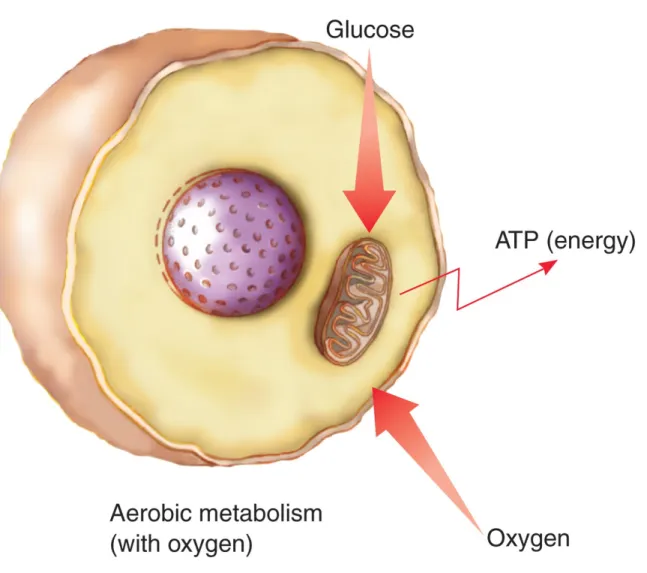
Aerobic metabolism

-

Normal glucose metabolism using oxygen

-

Carbon dioxide is a byproduct.

(14)

Pathophysiology

The Cell

Oxygen

Fuels metabolism

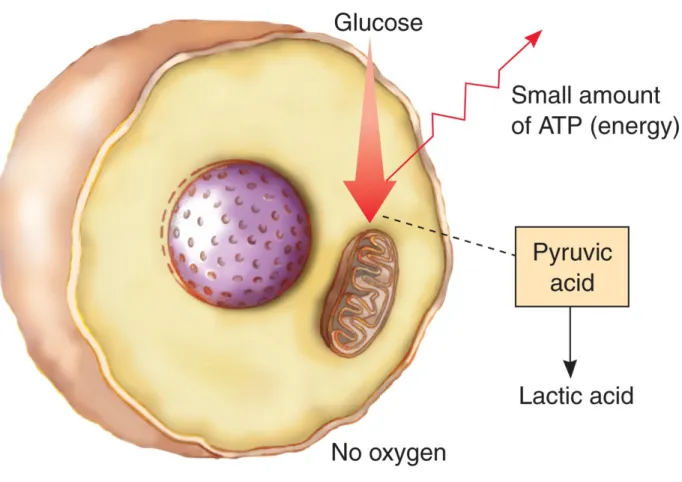
Anaerobic metabolism

-

Abnormal glucose metabolism without

oxygen

-

Creates increased byproducts of carbon

dioxide and lactic acid

(15)

Figure 5.1a

Aerobic metabolism requires an adequate supply of glucose and oxygen.

(16)
(17)

Pathophysiology

Fluid Balance

The body is 60% water.

Balance is necessary for proper cellular

function.

(18)

Pathophysiology

Fluid Balance

Body adjusts fluid levels through intake

and elimination of fluids.

Drinking fluids

Sweating

Breathing

Urination

(19)

Pathophysiology

Disruption of Fluid Balance

Dehydration

Not enough fluid intake

Excessive fluid elimination

Vomiting and diarrhea

(20)

Pathophysiology

Disruption of Fluid Balance

Edema or swelling

Fluid trapped in the body's tissues from

illness

Hands, legs and feet

Injury

(21)

Think About It

A patient's fluid balance can easily be

assessed externally.

Dry mucous membranes, sunken eyes,

tachycardia, and low blood pressure can

indicate dehydration.

Edema in the ankles and feet can give

(22)
(23)

The Cardiopulmonary System

Cardiopulmonary System

Cardiovascular and respiratory systems

work together.

Respiratory system

Transfers oxygen to the bloodstream

Cardiovascular system

Transports oxygen to the body's cells

Brings carbon dioxide back to the lungs for

(24)

The Cardiopulmonary System

Respiratory System

Structures

Airway

Lungs

Muscles of respiration

(25)

The Cardiopulmonary System

Respiratory System

Airway

Movement of air in and out of the chest

requires a patent airway.

Upper airway obstructions

Obstructions above the trachea prevent air

from reaching the lower airway.

-

Altered mental status

-

Foreign bodies

-

Trauma

(26)

The Cardiopulmonary System

Respiratory System

Airway

Lower airway complications

Bronchoconstriction increases airway

resistance and decreases amounts of air

that reaches the alveoli.

(27)
(28)

The Cardiopulmonary System

Respiratory System

Lungs

Diaphragm and chest wall responsible for

pressure changes that stimulate

breathing

Tidal volume

Air moved in and out in one breath

(29)

The Cardiopulmonary System

Respiratory System

Lungs

Dead air space

Air remaining in the space between the

mouth and alveoli

-

About 150mL

(30)

The Cardiopulmonary System

Respiratory System Dysfunction

Disruption of respiratory control

Damage to the medulla oblongata

Stroke

Brain tumors

Infection

Toxins and drugs

Spinal cord injuries and diseases

(31)

The Cardiopulmonary System

Respiratory System Dysfunction

Disruption of pressure

Chest cavity is a closed container.

Diaphragm, ribs and intercostal muscles

change the size of the cavity.

(32)

The Cardiopulmonary System

Respiratory System Dysfunction

Disruption of pressure

Lungs are attached to the chest with two

membranes.

Parietal pleura on the chest wall

Visceral pleura on the lung

Pleural space

-

May accumulate blood and air

(33)

The Cardiopulmonary System

Respiratory System Dysfunction

Disruption of pressure

Expanded chest cavity creates negative

pressure and lets air in.

Relaxed chest cavity creates positive

pressure and forces air out.

Hole in the chest wall affects the changes

in pressure.

Blood or air in the pleural space creates a

hemothorax or a pneumothorax.

(34)

The Cardiopulmonary System

Respiratory System Dysfunction

Disruption of lung tissue.

Damage to lung tissue reduces ability for

gas exchange.

Trauma

Pneumonia

Infection

Reduced oxygen levels and increased

(35)

The Cardiopulmonary System

Respiratory System Compensation

Brain monitors carbon dioxide levels in

blood.

(36)

The Cardiopulmonary System

Cardiovascular System

Blood

Transport system of the body

Insufficient quantity leads to poor

circulation.

(37)

The Cardiopulmonary System

Cardiovascular System

Blood vessels are pathways.

Arteries

Carries oxygenated blood away from the

heart

Veins

Carries deoxygenated blood to the heart

(38)

The Cardiopulmonary System

Cardiovascular System

Blood vessels are pathways.

Arterioles

Feeds oxygenated blood to the capillaries

Capillaries

Offloads oxygen and picks up carbon

dioxide

(39)

The Cardiopulmonary System

Cardiovascular System

Blood vessels are pathways.

Pulmonary arteries

Carries deoxygenated blood from the

heart to the lungs

Pulmonary veins

Carries oxygenated blood from the lungs

to the heart

(40)

The Cardiopulmonary System

Cardiovascular System

Blood pressure

Created by the beating heart to move

blood around the body

(41)

The Cardiopulmonary System

Cardiovascular System

Blood pressure

Diameter of blood vessels and volume of

blood directly affects amount of pressure.

Dilated vessels and blood loss decreases

pressure.

-

Hypotensive

(42)

The Cardiopulmonary System

Cardiovascular System

Blood pressure

Diameter of blood vessels and volume of

blood directly affects amount of pressure.

Constricted vessels or increased fluid in

the blood increases pressure.

-

Hypertensive

(43)

The Cardiopulmonary System

Cardiovascular System

Heart

4 chambered pump designed to move

blood

Stroke volume

Volume of blood ejected from the heart in

one contraction

(44)

The Cardiopulmonary System

Cardiovascular System

Heart

Cardiac output

Amount of blood ejected from the heart in

one minute

Increased heart rate leads to increased

CO.

If rate is too fast, output actually

decreases.

-

>180 bpm in adults

(45)

The Cardiopulmonary System

Cardiovascular System

Heart

Cardiac output

Autonomic nervous system response

adjusts cardiac output.

-

Sympathetic "fight or flight" response

-

Parasympathetic response

(46)

The Cardiopulmonary System

Cardiovascular System

Heart failure

Electrical failure

Tachycardia

Bradycardia

Ventricular fibrillation

Mechanical failure

Trauma

Squeezing of the heart muscle

(47)

Think About It

The best way to assess a patient's tidal

volume is to watch the chest rise and

fall while counting the ventilations per

minute.

Hypoxia leads to cell death.

Getting your patient on oxygen can

delay the change to anaerobic

metabolism.

(48)

Think About It

Low blood pressure can lead to hypoxia

(49)
(50)

Hypoperfusion and Shock

Perfusion

Delivery of oxygen and nutrients and

removal of waste to every cell and

organ

(51)

Hypoperfusion and Shock

Perfusion

All components of the cardiopulmonary

system must be functioning.

Oxygen delivered all the way to the

alveoli and carbon dioxide transported all

the way out

Enough available blood, a functioning

(52)

Hypoperfusion and Shock

Hypoperfusion and Shock

Shock occurs when perfusion fails.

Hypoperfusion

Cells become hypoxic without perfusion

of adequate oxygen.

Switch to anaerobic metabolism

Lactic acid and waste products build up.

Cells eventually die.

(53)

Hypoperfusion and Shock

Compensation

Sympathetic nervous system compensates

for hypoperfusion.

Vessels constrict.

Heart rate increases.

Pupils dilate.

Skin sweats.

Brain responds to increased levels of carbon

dioxide.

(54)

Hypoperfusion and Shock

Pediatric Compensation

One of the leading causes of death in

pediatric patients.

Children compensate differently than

adults.

Increased heart rate is the main

mechanism.

(55)

Hypoperfusion and Shock

Pediatric Compensation

Vasoconstriction allows them to

maintain blood pressure with significant

volume loss.

Blood pressure is an unreliable factor

during assessment.

Higher metabolism rates burn off

(56)

Think About It

Recognizing compensation is an

important element in the assessment of

a patient because it can rapidly identify

the patient in shock.

EMRs should always be on the lookout

for telltale signs of shock such as

increased heart rate, decreased blood

pressure, and abnormal respiratory

(57)
(58)

Summary

Understanding pathophysiology helps

you understand the basic and most

important functions of the body and

their critical dysfunctions.

Delicate balance of fluid in the body

Levels must be appropriate in the major

spaces and balanced constantly to

maintain life.

(59)

Summary

Aerobic metabolism

The normal way the body converts

glucose into energy

Anaerobic metabolism

Not as efficient, and it creates

significantly more waste product

(60)

Summary

Perfusion

Combined function of the respiratory

and cardiovascular systems.

All functions needed to order to deliver

oxygenated blood to the cells

Oxygen is introduced into the body

from the ambient air.

Respiratory system moves air in and out

of the lungs.

(61)

Summary

Inspired air pairs with circulating blood

for perfusion.

Appropriate quantities ensure adequate

delivery of oxygen to the cells.

(62)

Summary

The cardiovascular system

Transport mechanism for oxygen,

carbon dioxide, and nutrients for the

cells

Requires the presence of appropriate

elements of blood, pressure within the

system, and a functioning pump

(63)

Summary

Cellular metabolism

Relies upon a constant supply of glucose

and oxygen

Normal metabolism relies upon perfusion

and the successful operation of the

(64)
(65)

Review Questions

1.

How is the process of aerobic

metabolism different from the process

of anaerobic metabolism?

2.

What is perfusion and what are the

components necessary to maintain it?

3.

How do changes in respiratory function

affect ventilation?

(66)

Review Questions

4.

How are oxygen and carbon dioxide

transported in the blood?

5.

What are the factors that affect

cardiac output?

(67)

Review Questions

6.

What are the two ways the heart can

fail and result in decreased cardiac

output?

7.

What are the responses by the body

(68)

Please visit

www.bradybooks.com

and follow the Resource Central

links to access content for this

Figure

Figure 5.1a   Aerobic metabolism requires an adequate supply of glucose and oxygen.
Figure 5.1b   Anaerobic metabolism occurs when there is not enough oxygen.
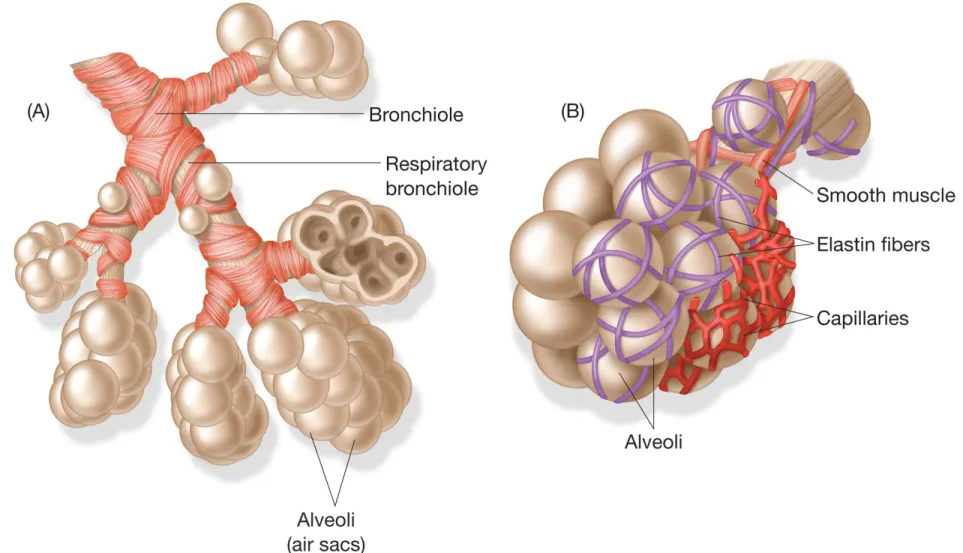
Figure 5.2   (A) In the alveoli is where the exchange of oxygen and carbon dioxide take place

References

Related documents

section of the diametral plane of OR with the given planes are conjugate lines.]. From a fixed point H perpendiculars HA , HB, HC are drawn

The pressure against the walls of the blood vessels as blood is ejected from the heart and circulates through the body is the ________ blood pressure..

Carries blood from lungs to heart (left atrium).. Only veins that carry

Answers: Heart – organ pumping oxygenated blood, Artery – blood vessels leaving heart with oxygenated blood, Vein – blood vessels returning blood to heart, Capillary – small

Section 2 discusses how, in principle, natural assets may be incorporated within general equilibrium models: the analogues between natural assets (or natural capital)

the bias in the covariance matrix in terms of different so called sensitivity parameters, and assess how large they have to be in order to change the variance of a parameter

• The high-resolution CT scan makes it possible to prioritize the diagnostic possibilities and allows early detection of conditions that are not visible on the chest X-ray, such

To generate high- pressure water with the required volume flow we used a WOMA plunger pump type 180 Z P18 with a water volume flow of 21 l/min at a maximum pressure of 200 MPa and