3rd Generation Partnership Project;
Technical Specification Group Services and System Aspects;
Telecommunication Management;
Fault Management;
Part 4: Alarm Integration Reference Point:
CMIP Solution Set Version 1:1
(Release 1999)
3GPP TS 32.111-4
V3.2.0 (2001-12)
Technical Specification
The present document has been developed within the 3rd Generation Partnership Project (3GPP TM) and may be further elaborated for the purposes of 3GPP.
The present document has not been subject to any approval process by the 3GPPOrganisational Partners and shall not be implemented.
This Specification is provided for future development work within 3GPPonly. The Organisational Partners accept no liability for any use of this Specification. Specifications and reports for implementation of the 3GPP TM system should be obtained via the 3GPP Organisational Partners' Publications Offices.
Keywords
UMTS, Alarm, Management
3GPP
Postal address
3GPP support office address 650 Route des Lucioles - Sophia Antipolis
Valbonne - FRANCE
Tel.: +33 4 92 94 42 00 Fax: +33 4 93 65 47 16 Internet
http://www.3gpp.org
Copyright Notification
No part may be reproduced except as authorized by written permission. The copyright and the foregoing restriction extend to reproduction in all media.
© 2001, 3GPP Organizational Partners (ARIB, CWTS, ETSI, T1, TTA, TTC). All rights reserved.
Contents
Foreword... 4
1
Scope ... 5
2
References ... 5
3
Definitions and abbreviations... 6
3.1 Definitions ...6
3.2 Abbreviations...6
4
Basic aspects... 6
4.3 Reporting cleared alarms ...7
4.4 Acknowledgment of alarms ...7
4.5 Alignment of alarm conditions over the Itf-N...7
4.6 Mapping ...10
4.6.1 Mapping of Operations...10
4.6.2 Mapping of Parameters of each operation...11
4.6.3 Mapping of Notifications ...12
4.6.4 Mapping of Parameters of each notification ...12
5
GDMO definitions... 13
5.1 Managed Object Classes ...13
5.1.1 alarmControl ...13 5.2 Packages ...14 5.2.1 alarmControlBasicPackage ...14 5.2.2 alarmAcknowledgementPackage ...14 5.2.3 alarmIRPVersionPackage...15 5.3 Actions ...15 5.3.1 acknowledgeAlarms (M)...15 5.3.2 getAlarmCount (O) ...16 5.3.3 getAlarmList (M) ...17 5.3.4 getAlarmIRPVersion (M)...19 5.3.5 unacknowledgeAlarms (O) ...19 5.4 Notifications...20 5.4.1 alarmListRebuilt (M)...20 5.5 Attributes ...21 5.5.1 alarmControlId ...21 5.5.2 alarmsCountSummary...21 5.5.3 supportedAlarmIRPVersions ...21 5.6 Parameters...22 5.6.1 ackStateParameter ...22 5.6.2 ackSystemIdParameter ...22 5.6.3 ackTimeParameter...22 5.6.4 ackUserIdParameter ...23
6
ASN.1 definitions for Alarm IRP ... 24
Foreword
This Technical Specification (TS) has been produced by the 3rd Generation Partnership Project (3GPP).
The present document is part 4 of a multi-part TS covering the 3rd Generation Partnership Project: Technical Specification Group Services and System Aspects, as identifies below:
Part 1: “3G Fault Management Requirements”;
Part 2: “Alarm Integration Reference Point: Information Service”;
Part 3: “Alarm Integration Reference Point: CORBA Solution Set Version 1:1”; Part 4: “Alarm Integration Reference Point: CMIP Solution Set”.
The contents of the present document are subject to continuing work within the TSG and may change following formal TSG approval. Should the TSG modify the contents of the present document, it will be re-released by the TSG with an identifying change of release date and an increase in version number as follows:
Version x.y.z where:
x the first digit:
1 presented to TSG for information; 2 presented to TSG for approval;
3 or greater indicates TSG approved document under change control.
y the second digit is incremented for all changes of substance, i.e. technical enhancements, corrections, updates, etc.
1 Scope
The present document (3GPP TS 32.111 Part-4) defines the alarm integration reference point for the CMIP solution set. In detail:
- Clause 4 contains an introduction to some basic concepts of the CMIP interfaces.
- Clause 5 contains the GDMO definitions for the Alarm Management over the CMIP interfaces - Clause 6 contains the ASN.1 definitions supporting the GDMO definitions provided in clause 5.
2 References
The following documents contain provisions, which through reference in this text, constitute provisions of the present document.
• References are either specific (identified by date of publication, edition number, version number, etc.) or non-specific.
• For a specific reference, subsequent revisions do not apply.
• For a non-specific reference, the latest version applies.
[1] 3GPP TS 32.101: "3G Telecom Management principles and high level requirements". [2] 3GPP TS 32.102: "3G Telecom Management architecture".
[3] 3GPP TS 32.106-2: "Notification Integration Reference Point: Information Service".
[4] ITU-T Recommendation X.710: "Common management information service definition for CCITT applications".
[5] ITU-T Recommendation X.711: "Common management information protocol specification for CCITT applications".
[6] ITU-T Recommendation X.721: "Information technology - Open Systems Interconnection - Structure of management information: Definition of management information".
[7] ITU-T Recommendation X.731: "Information technology - Open Systems Interconnection - Systems Management: State management function".
[8] ITU-T Recommendation X.733: "Information technology - Open Systems Interconnection - Systems Management: Alarm reporting function".
[9] ITU-T Recommendation X.734: "Information technology - Open Systems Interconnection - Systems Management: Event report management function".
[10] ITU-T Recommendation Q.821: “Specification of System Signalling No. 7 Q3 Interface- Stage 2 and Stage 3 description for the Q3 interface - Alarm Surveillance”
[11] 3GPP TS 32.111-1: “3G Fault Management”.
[12] 3GPP TS 32.111-2: “Alarm Integration Reference Point: Information Service”.
[13] 3GPP TS 32.111-3: “Alarm Integration Reference Point: CORBA Solution Set Version 1:1”. [14] 3GPP TS 32.106-4: "Notification Integration Reference Point: CMIP Solution Set".
3
Definitions and abbreviations
3.1 Definitions
For the purposes of the present document, the terms and definitions defined in 3GPP TS 32.111-1 [11] apply.
3.2 Abbreviations
For the purposes of the present document, the following abbreviations apply: ASN.1 Abstract Syntax Notation number 1
CCITT The International Telegraph and Telephone Consultative Committee
CM Configuration Management
CMIP Common Management Information Protocol CMIS Common Management Information Service
CMISE Common Management Information Service Element
EFD Event Forwarding Discriminator
EM Element Manager
FTAM File Transfer Access and Management
GDMO Guidelines for the Defifition of Managed Objects IRP Integration Reference Point
Itf-N Interface N (between NM and EM/NE)
ITU-T International Telecommunication Union – Telecommunications M Mandatory
MOC Managed Object Class MOI Managed Object Instance
NE Network Element
NM Network Manager
NMC Network Management Centre O Optional
OS Operations System
TMN Telecommunications Management Network
4 Basic
aspects
The present document provides all the GDMO and ASN.1 definitions necessary to implement the Alarm IRP Information Service for the CMIP interface. The Alarm IRP Information Service is based on Operations and Notifications.
In the present document, for the CMIP interfaces the Operations are modeled as GDMO “Actions” of a MOC defined specifically for alarm management while the Notifications are modeled as GDMO “Notifications” included in MOCs that need to report events to the Manager. In more detail, the Notifications related to alarm management are included in a MOC defined in the present document while the Notifications defined for alarm reporting are not included in any MOC defined in the present document. They will be included in other MOCs defined in other CMIP Solution Set or in other CMIP
Information Models.
Regarding the Notifications, the present document is based on the Notification IRP CMIP Solution Set (3GPP TS 32.106-4 [14]).
4.3
Reporting cleared alarms
On the CMIP interfaces the clearing of alarms is reported by the Agent to the Managers in accordance with the mechanisms defined in ITU-T Recommendation X.733 [8] and ITU-T Recommendation Q.821 [10].
4.4
Acknowledgment of alarms
This clause relates to the co-operative alarm acknowledgment managed on Itf-N, which implies that the acknowledgment of alarms can be done on both NM and EM.
The acknowledgment of alarms is managed by means of the MOC alarmControl, which includes: – One Action to acknowledge alarms;
– One Action to unacknowledge alarms;
– ITU-T Recommendation X.721 [6] compliant Alarm Notification to inform Managers about changes of acknowledgment state.
In case an alarm is acknowledged by an operator or automatically by a management system, the ackUserId,
ackSystemId, ackState and ackTime information is stored in the additionalInformation field of the alarm present
in the alarm list.
4.5
Alignment of alarm conditions over the Itf-N
The IRP Manager is able to trigger the alarm conditions alignment using the Action getAlarmList
The following specifies the logical steps of the alignment procedure, by describing a possible implementation. Any other implementation showing the same behaviour on the Itf-N interface is compliant with the present document.
– The Manager sends to the Agent a getAlarmList request containing the following information:
- alarmAckState, used to select the alarms from the Agent's alarm list for the current alignment (e.g. all active alarms).
- destination, identifying the destination to which event reports that have passed the filter conditions are sent. - filter, this optional parameter defines the conditions an alarm notification shall fulfil in order to be forwarded to
the Manager. It applies only for the current alignment request.
– After evaluation of the request, the Agent first generates an alignmentId value, which unambiguously identifies this alignment process. This value is used by the Manager to correlate alarm reports to the corresponding alignment requests, in case this Manager issues several alarm alignments in parallel.
– The Agent creates a temporary Event Forwarding Discriminator (EFD) instance for the purpose of this alarm alignment, using the parameters destination and filter received in the request. If the filter parameter is absent or NULL, all alarm notifications are forwarded to the Manager through this EFD, according to the value of the parameter alarmAckState.
The filter is set by the Agent automatically in order to forward to only those alarm notifications containing, at the beginning of the field additionalText, either the string "(ALIGNMENT-<alignmentId>)“ or the string „(ALIGNMENTEND-<alignmentId>)“.
– The Agent sends back a getAlarmList response, which contains the alignmentId described above and the status
– The Agent scans now its alarm list. For every alarm, which matches the criteria defined by the alarmAckState
parameter, the Agent inserts, at the beginning of the field additionalText, the string „(ALIGNMENT-<alignmentId>)“. According to ITU-T Recommendation X.734 [9], the Agent forwards these alarm notifications towards all EFDs. In the last alarm of the list the Agent inserts the string „(ALIGNMENTEND-<alignmentId>)“ to indicate the end of the alarm alignment.
NOTE: These alarm notifications can reach the current Manager only via the temporary EFD created for the current alignment. They are filtered out:
a) By all the EFD instances used for „real-time“ alarm reporting, due to the presence of the sub-string „ALIGNMENT“ in the field additionalText (see 3GPP TS 32.106-4 [14]).
b) By all temporary EFD instances possibly created for parallel alignments, due to the presence of the unambiguous sub-string „<alignmentId>“ in the additionalText field.
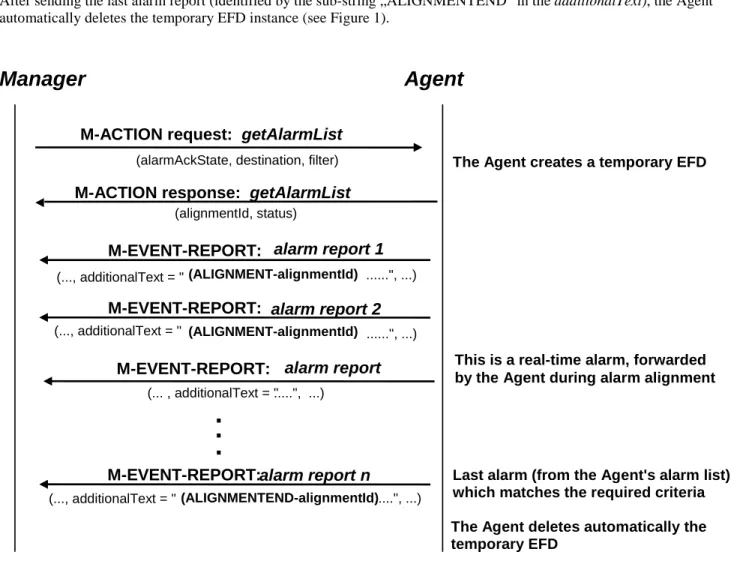
– After sending the last alarm report (identified by the sub-string „ALIGNMENTEND“ in the additionalText), the Agent automatically deletes the temporary EFD instance (see Figure 1).
Figure 1: Alignment arrow diagram
M-ACTION request:
getAlarmList
(alarmAckState, destination, filter)Manager
Agent
M-EVENT-REPORT:
alarm report 1
(..., additionalText = "(ALIGNMENT-alignmentId) ...", ...)M-ACTION response:
getAlarmList
(alignmentId, status)This is a real-time alarm, forwarded by the Agent during alarm alignment The Agent creates a temporary EFD
M-EVENT-REPORT:
alarm report 2
(..., additionalText = " (ALIGNMENT-alignmentId) ...", ...)M-EVENT-REPORT:
alarm report
(... , additionalText = "...", ...).
.
.
M-EVENT-REPORT:
alarm report n
(..., additionalText = " (ALIGNMENTEND-alignmentId)...", ...)
Last alarm (from the Agent's alarm list) which matches the required criteria The Agent deletes automatically the temporary EFD
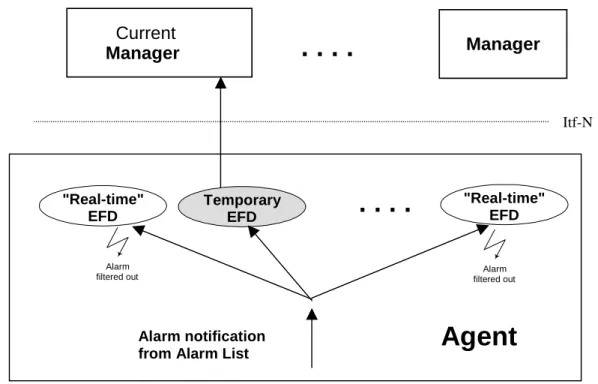
Figure 2 shows the handling of a „real-time“ alarm notification (occured during the execution of the getAlarmList
operation), which is forwarded by the Agent (according to ITU-T Recommendation X.734 [9]) to all currently available EFD instances. Dependent on the discriminatorConstruct setting of every EFD, such an alarm may or may not reach the related Manager. In any case, this alarm is filtered out by the temporary EFD assigned to the Manager, which triggered the getAlarmList request.
Figure 2: Treatment of “real time” alarms
Agent
. . . .
Current
Manager
"Real-time" EFD "Real-time" EFDManager
Temporary EFD Alarm filtered out "Real-time" alarm notification. . . .
Itf-NFigure 3 shows the handling of an alarm notification from the alarm list, matching the criteria defined in the parameters
alarmAckState of the getAlarmList request and forwarded by the Agent to all EFD instances as well. This alarm is filtered out by all EFD instances in charge of discrimination of „real-time“ alarms and can reach only the Manager, which triggered the getAlarmList request, because it passes the temporary EFD instance assigned to this Manager.
Figure 3: Treatment of “alignent” alarms
4.6 Mapping
The semantics of the Alarm IRP is defined in 3GPP TS 32.111-2 [12]. The definitions of the management information defined there are independent of any implementation technology and protocol. This section maps these protocol-independent definitions onto the equivalences of the CMIP solution set of Alarm IRP.
4.6.1 Mapping
of
Operations
Table 1 maps the operations defined in the IS of the Alarm IRP to its equivalents in the CMIP SS. The equivalents are qualified as Mandatory (M) or Optional (O).
Table 1: Mapping of Operations Operations of Information
Services of the Alarm IRP
CMIP SS Equivalents solution set for the Alarm IRP Qualifier acknowledgeAlarms acknowledgeAlarms M getAlarmCount getAlarmCount O getAlarmList getAlarmList M getAlarmIRPVersion getAlarmIRPVersion M unacknowledgeAlarms unacknowledgeAlarms O
Agent
. . . .
Current
Manager
"Real-time" EFD "Real-time" EFDManager
Temporary EFD Alarm filtered out Alarm notification from Alarm List. . . .
Itf-N
Alarm filtered out
4.6.2
Mapping of Parameters of each operation
The tables in the following subclauses show the parameters of each operations defined in the IS described 3GPP TS 32.111-2 [12] and their equivalents in this CMIP SS.
The parameters of the IS operations are mapped, in the CMIP SS equivalents.
Table 2: Mapping of parameters of ‘acknowledgementAlarms’ Operation parameters of Information
Services
CMIP equivalences Qualifier
alarmInformationReferenceList alarmReferenceList M
ackUserId ackUserId M
ackSystemId ackSystemId O
badAlarmInformationReferenceList errorAlarmReferenceList M
status status M
Table 3: Mapping of Parameters of ‘getAlarmCount’ Operation parameters of Information
Services
CMIP equivalents Qualifier
filter filter O alarmAckState alarmAckState O criticalCount criticalCount M majorCount majorCount M minorCount minorCount M warningCount warningCount M indeterminateCount indeterminateCount M clearedCount clearedCount M status status M
Table 4: Mapping of Parameters of ‘getAlarmList’ Operation parameters of Information
Services
CMIP equivalents Qualifier
filter filter O
alarmAckState alarmAckState O
-- destination (input) - see NOTE 1 M
alarmInformationList (sequence of alarm notifications) (see Clause 4.5)
M
status status M
-- alignmentId (output) - see NOTE 2 M
NOTE 1: destination is a CMIP specific parameter and is determined by the Manager. NOTE 2: alignmentId is a CMIP specific parameter and is determined by the Agent
Table 5: Mapping of Parameters of ‘getAlarmIRPVersion’ Operation parameters of Information
Services
CMIP equivalents Qualifier
versionNumberList versionNumberList M
Table 6: Mapping of Parameters of ‘unacknowledgeAlarms’ Operation parameters of Information
Services
CMIP equivalents Qualifier
alarmInformationReferenceList alarmReferenceList M ackUserId ackUserId M ackSystemId ackSystemId O badAlarmInformationReferenceList errorAlarmReferenceList M status status M
4.6.3
Mapping of Notifications
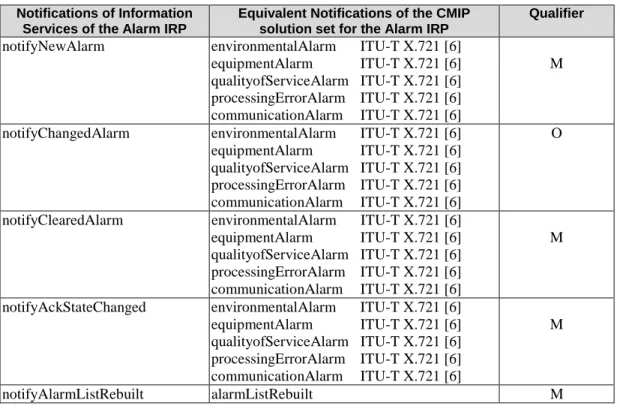
Table 7 maps the Notifications defined in the Information Service of the Alarm IRP to the equivalent Notifications of the CMIP solution set for the Alarm IRP. The CMIP Notifications are qualified as Mandatory (M) or Optional (O).
Table 7: Mapping of Notifications Notifications of Information
Services of the Alarm IRP
Equivalent Notifications of the CMIP solution set for the Alarm IRP
Qualifier notifyNewAlarm environmentalAlarm ITU-T X.721 [6]
equipmentAlarm ITU-T X.721 [6] qualityofServiceAlarm ITU-T X.721 [6] processingErrorAlarm ITU-T X.721 [6] communicationAlarm ITU-T X.721 [6]
M
notifyChangedAlarm environmentalAlarm ITU-T X.721 [6] equipmentAlarm ITU-T X.721 [6] qualityofServiceAlarm ITU-T X.721 [6] processingErrorAlarm ITU-T X.721 [6] communicationAlarm ITU-T X.721 [6]
O
notifyClearedAlarm environmentalAlarm ITU-T X.721 [6] equipmentAlarm ITU-T X.721 [6] qualityofServiceAlarm ITU-T X.721 [6] processingErrorAlarm ITU-T X.721 [6] communicationAlarm ITU-T X.721 [6]
M
notifyAckStateChanged environmentalAlarm ITU-T X.721 [6] equipmentAlarm ITU-T X.721 [6] qualityofServiceAlarm ITU-T X.721 [6] processingErrorAlarm ITU-T X.721 [6] communicationAlarm ITU-T X.721 [6] M notifyAlarmListRebuilt alarmListRebuilt M
4.6.4
Mapping of Parameters of each notification
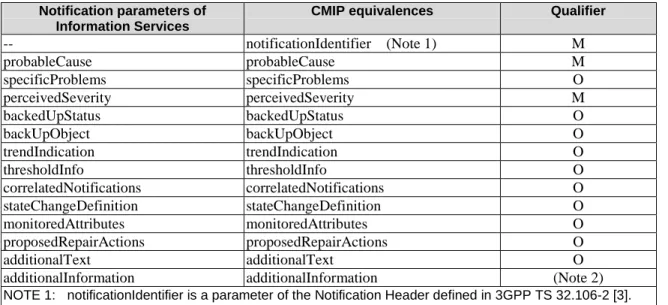
Table 8 and table 9 show the parameters of each notification defined in the Information Service described in 3GPP TS 32.111-2 [12] and their equivalence in this CMIP SS.
The input parameters of the Information Service notifications are mapped, in the CMIP SS, onto the “event information”.
Table 8: Mapping of Parameters of ‘notifyNewAlarm’, ‘notifyClearedAlarm’ and ‘notifyAckStateChanged’ Notification parameters of
Information Services
CMIP equivalences Qualifier
-- notificationIdentifier (Note 1) M probableCause probableCause M specificProblems specificProblems O perceivedSeverity perceivedSeverity M backedUpStatus backedUpStatus O backUpObject backUpObject O trendIndication trendIndication O thresholdInfo thresholdInfo O correlatedNotifications correlatedNotifications O stateChangeDefinition stateChangeDefinition O monitoredAttributes monitoredAttributes O proposedRepairActions proposedRepairActions O additionalText additionalText O
additionalInformation additionalInformation (Note 2)
NOTE 1: notificationIdentifier is a parameter of the Notification Header defined in 3GPP TS 32.106-2 [3]. NOTE 2: See qualification information in 3GPP TS 32.111-2 [12], Table 13: Parameter-Attributes of
alarmInformationBody.
Table 9: Mapping of Parameters of ‘alarmListRebuilt’ Notification parameters of
Information Services
CMIP equivalents Qualifier
notificationIdentifier (see Note)
reason reason M
NOTE: notificationIdentifier is a parameter of the Notification Header defined in 3GPP TS 32.106-2 [3].
5 GDMO
definitions
5.1 Managed
Object
Classes
5.1.1 alarmControl
This Managed Object Class (MOC) models the alarm information available within the Agent and significant for the NM-EM interface. It deals with both active and cleared but not yet acknowledged alarms. The NMC may initiate the transfer of current alarms according to the required parameters in the M-ACTION request ‘getAlarmList’. alarmControl MANAGED OBJECT CLASS
DERIVED FROM
”Rec. X.721 | ISO/IEC 10165-2 : 1992”:top; CHARACTERIZED BY
alarmControlBasicPackage, alarmAcknowledgementPackage, alarmIRPVersionPackage;
5.2 Packages
5.2.1 alarmControlBasicPackage
alarmControlBasicPackage PACKAGE BEHAVIOUR alarmControlBasicPackageBehaviour; ATTRIBUTES alarmControlId GET, alarmsCountSummary GET; ACTIONS getAlarmCount, getAlarmList; NOTIFICATIONS alarmListRebuilt; REGISTERED AS { ts32-111AlarmPackage 1}; alarmControlBasicPackageBehaviour BEHAVIOUR DEFINED AS“The MOC alarmControl has been defined to provide information to the Manager about the currently alarms controlled by the Agent.
An instance of the 'alarmControl' MOC is identified by the value of the attribute 'alarmControlId'.
The attribute ‘alarmsCountSummary’ provides a summary of the number of alarms managed in the Agent’s alarm list (including the number of cleared but not yet acknowledged alarms).
The action 'getAlarmCount' is the means, for the Manager, to ask the number of currently available alarms in the Agent according to the specification in the action request.
The action 'getAlarmList' is the means, for the Manager, to trigger an alarm alignment procedure in
accordance with the parameter specified in the action request (this may be needed e.g. for first time alignment or after a link interruption between the Agent and the Manager). The alarm list is sent as a sequence of single alarm reports.
The notification ‘alarmListRebuilt’ is sent by the Agent to the Manager to inform that the alarm list has changed. It is recommended that the Manager subsequently triggers an alarm alignment.”;
5.2.2 alarmAcknowledgementPackage
alarmAcknowledgementPackage PACKAGE BEHAVIOUR alarmAcknowledgementPackageBehaviour; ACTIONS acknowledgeAlarms, unacknowledgeAlarms; NOTIFICATIONS"Rec. X.721 | ISO/IEC 10165-2 : 1992":communicationsAlarm, "Rec. X.721 | ISO/IEC 10165-2 : 1992":environmentalAlarm, "Rec. X.721 | ISO/IEC 10165-2 : 1992":equipmentAlarm, "Rec. X.721 | ISO/IEC 10165-2 : 1992":processingErrorAlarm, "Rec. X.721 | ISO/IEC 10165-2 : 1992":qualityofServiceAlarm; REGISTERED AS { ts32-111AlarmPackage 2};
alarmAcknowledgementPackageBehaviour BEHAVIOUR DEFINED AS
“This package has been defined to provide information to the Manager about the acknowledgement status of the alarms controlled by the Agent.
The action 'acknowledgeAlarms' allows the NM operator to acknowledge one or several alarms previously sent by the Agent as alarm notifications.
The action 'unacknowledgeAlarms' allows the NM operator to unacknowledge one or several alarms previously acknowledged by himself.
The ITU-T Recommendation X.721 [6] compliant alarm notifications are sent by the Agent to the Manager to inform that one alarm has been acknowledged or unacknowledged. The acknowledgement related information is carried in the additionalInformation attribute.”;
5.2.3 alarmIRPVersionPackage
alarmIRPVersionPackage PACKAGE BEHAVIOUR alarmIRPVersionPackageBehaviour; ATTRIBUTES supportedAlarmIRPVersions GET; ACTIONS getAlarmIRPVersion; REGISTERED AS { ts32-111AlarmPackage 3}; alarmIRPVersionPackageBehaviour BEHAVIOUR DEFINED AS“This package has been defined to allow the Manager to get information about the Alarm IRP versions supported by the Agent.
The attribute ‘supportedAlarmIRPVersions’ indicates all versions of the Alarm IRP currently supported by the Agent.
The action ‘getAlarmIRPVersion’ may be invoked by the Manager to get information about the Alarm IRP versions supported by the Agent.”;
5.3 Actions
5.3.1 acknowledgeAlarms
(M)
acknowledgeAlarms ACTION BEHAVIOUR acknowledgeAlarmsBehaviour; MODE CONFIRMED;WITH INFORMATION SYNTAX
TS32-111-AlarmAsn1TypeModule.AckOrUnackAlarms; WITH REPLY SYNTAX
TS32-111-AlarmAsn1TypeModule.AckOrUnackAlarmsReply; REGISTERED AS { ts32-111AlarmAction 1};
acknowledgeAlarmsBehaviour BEHAVIOUR DEFINED AS
”This action is invoked by the Manager to indicate to the Agent that one or several alarms (previously sent by the Agent as alarm notifications) have to be acknowledged. In the action request the NM supplies the
parameter ackUserId and ackSystemId. The other acknowledgement history parameters, i.e. alarm
acknowledgement state (in this case acknowledged) and the acknowledgement time are set by the Agent itself. The 'Action information' field contains the following data:
• alarmReferenceList
This parameter contains a set of MOI (Managed Object Instance) and notificationIdentifier. Each pair identifies unambiguously in the scope of the Agent an alarm (previously received by the NM) that have to be now acknowledged. MOI can be absent if scope of uniqueness of notificationIdentifier is across the
IRPAgent.
• ackUserId
It contains the name of the operator who acknowledged the alarm or a generic name (dependent on the operational concept). It may have also the value NULL.
• ackSystemId
It indicates the management system where the acknowledgment is triggered. It may have also the value NULL.
The 'Action response' contains the following data:
• status
This parameter contains the results of the NM acknowledgement action. Possible values: noError (0, all alarms found and ack state changed according to the manager request), ackPartlySuccessful (some alarms not found / not changeable, see next parameter), error (value indicates the reason why the complete operation failed).
• errorAlarmReferenceList
This parameter (significant only if status = ackPartlySuccessful) contains the list of moi (managed object instance) and notificationIdentifier pairs of the alarms which could not be acknowledged and, for each alarm, also the reason of the error.“;
5.3.2 getAlarmCount
(O)
getAlarmCount ACTION BEHAVIOUR getAlarmCountBehaviour; MODE CONFIRMED;WITH INFORMATION SYNTAX
TS32-111-AlarmAsn1TypeModule.GetAlarmCount; WITH REPLY SYNTAX
TS32-111-AlarmAsn1TypeModule.GetAlarmCountReply; REGISTERED AS { ts32-111AlarmAction 2};
getAlarmCountBehaviour BEHAVIOUR DEFINED AS
”The NM invokes this action to receive the number of available alarms in the Agent' alarm list according to the specification in the action request. The Manager may use this action to find out the number of alarms in the alarm list before invoking a synchronisation by means of the getAlarmList operation. The request is possible also before the Manager creates an own event forwarding discriminator instance within the Agent.
The ‘Action information’ field contains the following data:
• alarmAckState
Depending on this optional parameter value, the NM gets the number of alarms of each perceivedSeverity
value according to the following possible choices: - all alarms
- all active alarms (acknowledged or not yet acknowledged) - all active and acknowledged alarms
- all active and unacknowledged alarms - all cleared and unacknowledged alarms.
If the parameter is absent, all alarms from the Agent's alarm list are taken into consideration.
• filter
The handling of this optional parameter is as follows:
- if present and not NULL, it indicates a filter constraint which shall apply in the calculation of the results - if its value is NULL, no filter shall be considered and the Agent shall return the number of all alarms
according to the value of the parameter alarmAckState (see above)
- if absent, the handling depends on the availability of an event forwarding discriminator instance within the Agent. If this instance is valid, the filter construct of the event forwarding discriminator shall apply. If no EFD instance is available, the Agent shall return the number of all alarms according to the value of the above-mentioned parameter alarmAckState.
The ‘Action response’ is composed of:
• The numbers of alarms for each perceivedSeverity value (if applicable).
• The parameter status containing the results of the NM action. Possible values: noError (0), error (the value indicates the reason of the error).”;
5.3.3 getAlarmList
(M)
getAlarmList ACTION BEHAVIOUR getAlarmListBehaviour; MODE CONFIRMED;WITH INFORMATION SYNTAX
TS32-111-AlarmAsn1TypeModule.GetAlarmList; WITH REPLY SYNTAX
TS32-111-AlarmAsn1TypeModule.GetAlarmListReply; REGISTERED AS { ts32-111AlarmAction 3};
getAlarmListBehaviour BEHAVIOUR DEFINED AS
”This action starts an alarm alignment procedure between a NM and Agent, which takes into account the acknowledgment state of the alarms and a dedicated filter (valid only for the current request).
The ‘Action information’ field contains the following data:
• alarmAckState
Depending on this optional parameter value, the NM gets the alarm reports according to the following possible choices:
- all alarms
- all active alarms (acknowledged or not yet acknowledged) - all active and acknowledged alarms
- all active and unacknowledged alarms - all cleared and unacknowledged alarms.
If the parameter is absent, all alarms from the Agent's alarm list are taken into consideration.
• destination
This parameter identifies the destination to which the alarm reports that have passed the test conditions specified in the parameter 'filter' are sent. According to ITU-T Recommendation X.721 [6], if no destination is specified in the request, then the discriminator is created with the destination defaulted to the AE-Title of the invoker.
• filter
The handling of this optional parameter (valid only for the current alignment request) is as follows:
- if present and not NULL, it indicates a filter constraint which shall apply in the forwarding of the alignment-related alarm reports
- if its value is NULL, no real filter shall be considered and the Manager receives the alarms according to the value of the parameter alarmAckState (see above).
The ‘Action response’ contains the following data:
• alignmentId
The parameter is defined by the Agent and identifies unambiguously the current alarm alignment procedure. It allows the Manager to distinguish between alarm reports sent as consequence of several own alignment requests triggered in parallel.
• status
The parameter contains the results of the NM action. Possible values: noError (0), error (the value indicates the reason of the error).
After the action response is forwarded to the NM, the Agent sends the alarm list as a sequence of single alarm notifications in accordance with the values of the request parameters. Every alarm notification contains all fields of the alarm stored in the alarm list. In particular:
• The field additionalText contains at the beginning a string to allow a Manager to recognise that this alarm report is sent due to a previous getAlarmList request. The structure of this string is:
- '(ALIGNMENTEND-alignmentId)' for the last alarm report sent by the Agent due to the current getAlarmList
request.
• If available, the data related to the acknowledgment history (i.e. ackState, ackTime, ackUserId, ackSystemId) are provided in the field additionalInformation.
Further details about the implementation of this operation are provided in the 'Introduction'.”;
5.3.4 getAlarmIRPVersion
(M)
getAlarmIRPVersion ACTION BEHAVIOUR getAlarmIRPVersionBehaviour; MODE CONFIRMED; WITH REPLY SYNTAXTS32-111-AlarmAsn1TypeModule.GetAlarmIRPVersionReply; REGISTERED AS { ts32-111AlarmAction 4};
getAlarmIRPVersionBehaviour BEHAVIOUR DEFINED AS
”The NM invokes this action to get information about the Alarm IRP versions supported by the Agent. The 'Action information' field contains no data.
The ‘Action response’ is composed of the following data:
• versionNumbersList
It defines a list of Alarm IRP versions supported by the Agent. A list containing no element, i.e. a NULL list means that the concerned Agent doesn’t support any version of the Notification IRP.
• status
It contains the results of the NM action. Possible values: noError (0), error (the value indicates the reason of the error).”;
5.3.5 unacknowledgeAlarms
(O)
unacknowledgeAlarms ACTION BEHAVIOUR unacknowledgeAlarmsBehaviour; MODE CONFIRMED;WITH INFORMATION SYNTAX
TS32-111-AlarmAsn1TypeModule.AckOrUnackAlarms; WITH REPLY SYNTAX
TS32-111-AlarmAsn1TypeModule.AckOrUnackAlarmsReply; REGISTERED AS { ts32-111AlarmAction 5};
unacknowledgeAlarmsBehaviour BEHAVIOUR DEFINED AS
”This action is used by the Manager to indicate to the Agent that one or several alarms (previously
acknowledged) have to be unacknowledged. Subsequently the 'acknowledgement history' information of these alarms in the Agent’s alarm list is completely removed (this operation may be used by operators in case of a previous acknowledgement by mistake).
The 'Action information' field contains the following data:
• alarmReferenceList
This parameter contains a set of MOI (Managed Object Instance) and notificationIdentifier pair. Each of them identifies unambiguously in the scope of the Agent an alarm (previously acknowledged by the NM) that have to be now unacknowledged. MOI can be absent if scope of uniqueness of notificationIdentifier is across the IRPAgent.
• ackUserId
It contains the name of the operator who unacknowledged the alarm or a generic name (dependent on the operational concept). It may have also the value NULL. Note that only the user who previously acknowledged the alarm is allowed to unacknowledge it later.
• ackSystemId
It indicates the management system where the acknowledgment is triggered. It may have also the value NULL. Note that the unacknowledgement is allowed only at the management system where previously the acknowledgement took place.
The 'Action response' contains the following data:
• status
This parameter contains the results of the NM unknowledgement action. Possible values: noError (0, all alarms found and ack state changed according to the manager request), unackPartlySuccessful (some alarms not found / not changeable, see next response parameter), error (value indicates the reason why the complete operation failed).
• errorAlarmReferenceList
This parameter (significant only if status = unackPartlySuccessful) contains the list of MOI (Managed Object Instance) and notificationIdentifier pairs of the alarms which could not be unacknowledged and, for each alarm, also the reason of the error. MOI can be absent if scope of uniqueness of notificationIdentifier is across the IRPAgent. “;
5.4 Notifications
5.4.1 alarmListRebuilt
(M)
alarmListRebuilt NOTIFICATION BEHAVIOUR alarmListRebuiltBehaviour; WITH INFORMATION SYNTAXTS32-111-AlarmAsn1TypeModule.AlarmListRebuiltInfo; REGISTERED AS { ts32-111AlarmNotification 1};
alarmListRebuiltBehaviour BEHAVIOUR DEFINED AS
”This notification is used by the Agent to inform the NM that the alarm list has been rebuilt. The 'Event Information' field contains the following data:
This ITU-T X.721 standardised parameter, together with MOI (Managed Object Instance), unambiguously identifies this notification.
• reason
The parameter indicates the reason for alarm list rebuilding (if applicable).”;
5.5 Attributes
5.5.1 alarmControlId
alarmControlId ATTRIBUTE WITH ATTRIBUTE SYNTAX
TS32-111-AlarmAsn1TypeModule.GeneralObjectId; MATCHES FOR EQUALITY; BEHAVIOUR alarmControlIdBehaviour; REGISTERED AS { ts32-111AlarmAttribute 1}; alarmControlIdBehaviour BEHAVIOUR DEFINED AS
”This attribute names an instance of a ‘alarmControl’ object class.”;
5.5.2 alarmsCountSummary
alarmsCountSummary ATTRIBUTE WITH ATTRIBUTE SYNTAX
TS32-111-AlarmAsn1TypeModule.AlarmsCountSummary; MATCHES FOR EQUALITY; BEHAVIOUR alarmsCountSummaryBehaviour; REGISTERED AS { ts32-111AlarmAttribute 2}; alarmsCountSummaryBehaviour BEHAVIOUR DEFINED AS
”This attribute indicates a summary of number of alarms managed in the Agent’s alarm list sorted according to the perceived severity (including the number of cleared but not yet acknowledged alarms). Additionally the number of all currently active alarms is provided.”;
5.5.3 supportedAlarmIRPVersions
supportedAlarmIRPVersions ATTRIBUTE WITH ATTRIBUTE SYNTAX
TS32-111-AlarmAsn1TypeModule. SupportedAlarmIRPVersions; MATCHES FOR EQUALITY; BEHAVIOUR supportedAlarmIRPVersionsBehaviour; REGISTERED AS { ts32-111AlarmAttribute 3}; supportedAlarmIRPVersionsBehaviour BEHAVIOUR
DEFINED AS
”This attribute provides the information concerning the Alarm IRP versions currently supported by the Agent.”;
5.6 Parameters
5.6.1 ackStateParameter
ackStateParameter PARAMETER CONTEXT TS32-111-AlarmAsn1TypeModule.AlarmInfo.additionalInformation; WITH SYNTAX TS32-111-AlarmAsn1TypeModule.AckState; BEHAVIOUR ackStateParameterBehaviour; REGISTERED AS { ts32-111AlarmParameter 1}; ackStateParameterBehaviour BEHAVIOUR DEFINED AS”This parameter models the optional additionalInformation field of the alarm notification. If present, it informs the NM about the current acknowledgement state of the present alarm.”;
5.6.2 ackSystemIdParameter
ackSystemIdParameter PARAMETER CONTEXT TS32-111-AlarmAsn1TypeModule.AlarmInfo.additionalInformation; WITH SYNTAX TS32-111-AlarmAsn1TypeModule.AckSystemId; BEHAVIOUR ackSystemIdParameterBehaviour; REGISTERED AS { ts32-111AlarmParameter 2}; ackSystemIdParameterBehaviour BEHAVIOUR DEFINED AS”This parameter models the optional additionalInformation field of the alarm notification. If present, it informs the NM about the identifier of the management system where the present alarm has been acknowledged.”;
5.6.3 ackTimeParameter
ackTimeParameter PARAMETER CONTEXT TS32-111-AlarmAsn1TypeModule.AlarmInfo.additionalInformation; WITH SYNTAX TS32-111-AlarmAsn1TypeModule.AckTime; BEHAVIOUR ackTimeParameterBehaviour; REGISTERED AS { ts32-111AlarmParameter 3}; ackTimeParameterBehaviour BEHAVIOUR DEFINED AS”This parameter models the optional additionalInformation field of the alarm notification. If present, it informs the NM about the time the present alarm has been acknowledged by the Agent.”;
5.6.4 ackUserIdParameter
ackUserIdParameter PARAMETER CONTEXT TS32-111-AlarmAsn1TypeModule.AlarmInfo.additionalInformation; WITH SYNTAX TS32-111-AlarmAsn1TypeModule.AckUserId; BEHAVIOUR ackUserIdParameterBehaviour; REGISTERED AS { ts32-111AlarmParameter 4}; ackUserIdParameterBehaviour BEHAVIOUR DEFINED AS”This parameter models the optional additionalInformation field of the alarm notification. If present, it informs the NM about the identifier of the user who acknowledged the present alarm.”;
6
ASN.1 definitions for Alarm IRP
TS32-111-AlarmAsn1TypeModule --{ObjectIdentifierValueitu-t(0) identified-organization(4) etsi(0) mobileDomain(0) umts-Operation-Maintenance(3) ts-32-111(111) part4(4) informationModel(0) asn1Module(2) version1(1)}
DEFINITIONS IMPLICIT TAGS ::= BEGIN
--EXPORTS everything IMPORTS
NotificationIdentifier, Destination
FROM Attribute-ASN1Module {joint-iso-ccitt ms(9) smi(3) part2(2) asn1Module(2) 1} AlarmInfo
FROM Notification-ASN1Module {joint-iso-ccitt ms(9) smi(3) part2(2) asn1Module(2) 2} CMISFilter, ObjectInstance
FROM CMIP-1 {joint-iso-ccitt ms(9) cmip(1) modules(0) protocol(3)};
baseNode3gpp OBJECT IDENTIFIER ::= {itu-t(0) identified-organization(4) etsi(0) mobileDomain(0) umts-Operation-Maintenance(3)}
ts32-111Alarm OBJECT IDENTIFIER ::= { baseNode3gpp ts-32-111(111) part4(4) informationModel(0)} ts32-111AlarmObjectClass OBJECT IDENTIFIER ::= {ts32-111Alarm managedObjectClass(3)}
ts32-111AlarmPackage OBJECT IDENTIFIER ::= {ts32-111Alarm package(4)} ts32-111AlarmParameter OBJECT IDENTIFIER ::= {ts32-111Alarm parameter(5)} ts32-111AlarmAttribute OBJECT IDENTIFIER ::= {ts32-111Alarm attribute(7)} ts32-111AlarmAction OBJECT IDENTIFIER ::= {ts32-111Alarm action(9)} ts32-111AlarmNotification OBJECT IDENTIFIER ::= {ts32-111Alarm notification(10)}
-- Start of 3GPP SA5 own definitions AckErrorList ::= SET OF ErrorInfo AlarmReference ::= SEQUENCE {
moi ObjectInstance OPTIONAL, -- absent if scope of uniquness of notificationId is across IRPAgent notificationIdentifier NotificationIdentifier
}
AckOrUnackAlarms ::= SEQUENCE {
alarmReferenceList SET OF AlarmReference,
-- ITU-T X.721
ackUserId AckUserId,
ackSystemId AckSystemId OPTIONAL } AckOrUnackAlarmsReply ::= SEQUENCE { status ErrorCauses, errorAlarmReferenceList AckErrorList } AckState ::= ENUMERATED { acknowledged (0), unacknowledged (1) } AckSystemId ::= GraphicString AckTime ::= GeneralizedTime AckUserId ::= GraphicString
AlarmChoice ::= ENUMERATED { allAlarms (0), allActiveAlarms (1), allActiveAndAckAlarms (2), allActiveAndUnackAlarms (3), allClearedAndUnackAlarms (4) } AlarmsCountSummary ::= SEQUENCE {
activeAlarmsCount INTEGER, -- this is the sum of criticalCount, majorCount, minorCount, warningCount -- and indeterminateCount criticalCount INTEGER, majorCount INTEGER, minorCount INTEGER, warningCount INTEGER, indeterminateCount INTEGER, clearedCount INTEGER } AlarmListRebuiltInfo ::= SEQUENCE
{ notificationIdentifier NotificationIdentifier, -- ITU-T X.721 reason ErrorCauses
}
ErrorCauses ::= ENUMERATED {
noError (0), -- operation / notification successfully performed wrongFilter (1), -- the value of the filter parameter is not valid
wrongAlarmAckState (2), -- the value of the alarmAckState parameter (e.g. getAlarmCount) is not valid ackPartlySuccessful (3), -- acknowledgment request partly successful
unackPartlySuccessful (4), -- unacknowledgment request partly successful
wrongAlarmReference (5), -- alarm identifier used in the alarm reference list not found (e.g. in case of acknowledgement request)
wrongAlarmReferenceList (6), -- the alarm reference list (e.g. in case of acknowledgement request) is empty or completely wrong
alarmAlreadyAck (7), -- alarm to be acknowledged is already in this state alarmAlreadyUnack (8), -- alarm to be acknowledged is already in this state
wrongUserId (9), -- the user identifier in the unacknowledgement operation is not the same as in the previous acknowledgementAlarms request
wrongSystemId (10), -- the system identifier in the unacknowledgement operation is not the same as in the previous acknowledgementAlarms request
alarmAckNotAllowed (11), -- current management system not allowed to acknowledge the alarm (e.g. due to acknowledgement competence rules)
unspecifiedErrorReason (255) -- operation failed, specific error unknown }
ErrorInfo ::= SEQUENCE {
moi ObjectInstance OPTIONAL, -- absent if uniqueness of notificationIdentifier is across IRPAgent notificationIdentifier NotificationIdentifier, -- ITU-T X.721
reason ErrorCauses }
GeneralObjectId ::= INTEGER GetAlarmCount ::= SEQUENCE {
alarmAckState AlarmChoice OPTIONAL,
filter CMISFilter OPTIONAL -- ITU-T X.711 }
GetAlarmCountReply ::= SEQUENCE { criticalCount INTEGER, majorCount INTEGER, minorCount INTEGER, warningCount INTEGER, indeterminateCount INTEGER, clearedCount INTEGER, status ErrorCauses } GetAlarmIRPVersionReply ::= SEQUENCE { versionNumberList SupportedAlarmIRPVersions, status ErrorCauses } GetAlarmList ::= SEQUENCE {
alarmAckState AlarmChoice OPTIONAL,
destination Destination, -- ITU-T X.721 filter CMISFilter OPTIONAL -- ITU-T X.711 } GetAlarmListReply ::= SEQUENCE { alignmentId INTEGER, status ErrorCauses } IRPVersionNumber ::= GraphicString
SupportedAlarmIRPVersions ::= SET OF IRPVersionNumber END -- of module TS32-111-AlarmAsn1TypeModule
Annex A (informative):
Change history
Change history
Date TSG # TSG Doc. CR Rev Subject/Comment Old New
Mar 2000 S_07 SP-000012 -- -- Approved at TSG SA #7 and placed under Change Control 2.0.0 3.0.0
Mar 2000 -- -- -- -- cosmetic 3.0.0 3.0.1
Jun 2000 S_08 SP-000254 005 -- Split of TS - Part 4: Alarm Integration Reference Point (IRP): CMIP Solution Set (SS)
3.0.1 3.1.0
Sep 2000 -- -- -- -- cosmetic 3.1.0 3.1.1
![Figure 2 shows the handling of a „real-time“ alarm notification (occured during the execution of the getAlarmList operation), which is forwarded by the Agent (according to ITU-T Recommendation X.734 [9]) to all currently available EFD instances](https://thumb-us.123doks.com/thumbv2/123dok_us/8591951.2329055/9.918.172.758.210.582/notification-execution-getalarmlist-operation-forwarded-according-recommendation-currently.webp)