KINDERGARTEN LINGUISTIC AWARENESS INTERVENTION: THE EFFECTS OF PHONOLOGICAL, MORPHOLOGICAL, AND ORTHOGRAPHIC INSTRUCTION ON
EARLY LITERACY OUTCOMES IN AT-RISK STUDENTS
Jennifer Lynn Zoski
A dissertation submitted to the faculty at the University of North Carolina at Chapel Hill in partial fulfillment of the requirements for the degree of Doctor of Philosophy in the Department
of Allied Health Sciences in the School of Medicine.
Chapel Hill 2015
ABSTRACT
Jennifer Lynn Zoski: Kindergarten Linguistic Awareness Intervention: The Effects of Phonological, Morphological, and Orthographic Instruction on Early Reading Outcomes in
At-Risk Students
(Under the direction of Dr. Karen Erickson)
The primary purpose of this study was to determine if a three-pronged linguistic awareness intervention (i.e., phonological awareness [PA], letter knowledge [LK], & morphological awareness [MA]) was more effective than the commonly implemented two-pronged intervention (i.e., PA & LK) at increasing the early literacy skills of kindergarten students at risk for reading difficulties. The study also investigated the effectiveness of an intervention targeting morphological awareness alone as compared to the two other
interventions. Seventeen kindergarten students at risk for reading difficulties completed a pretest and posttest battery that assessed PA, MA, word reading, and morphological spelling and
participated in a six-week small group therapy program, for a total of 12 intervention hours. Three groups of five to six students received therapy in one of the following: PA and LK; MA; or a three-pronged linguistic awareness program.
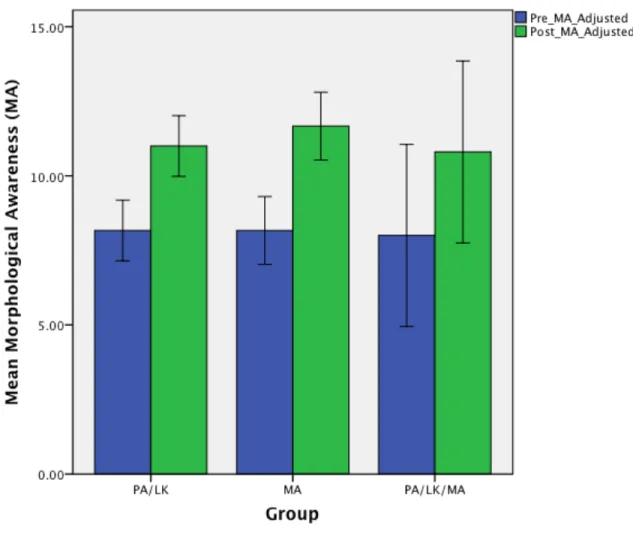
who received the PA/LK and MA interventions made large gains in MA (d = 1.46 to 3.96), with the largest effect for the MA group. Finally, large and significant student gains for
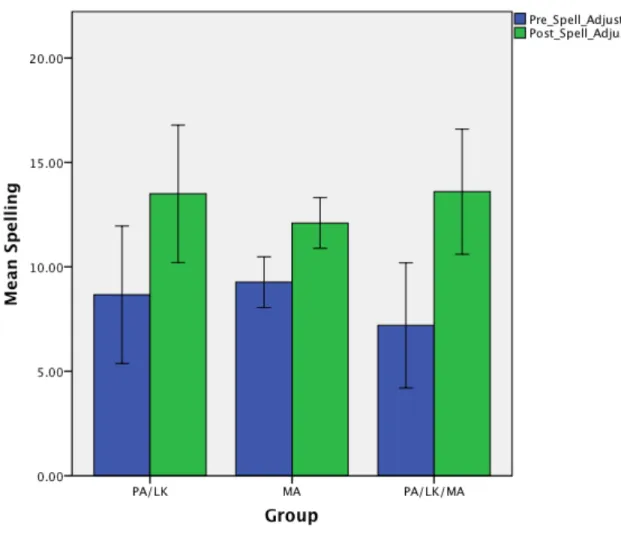
morphological spelling (d = 1.33 to 3.0) were found for students receiving both the MA and three-pronged interventions.
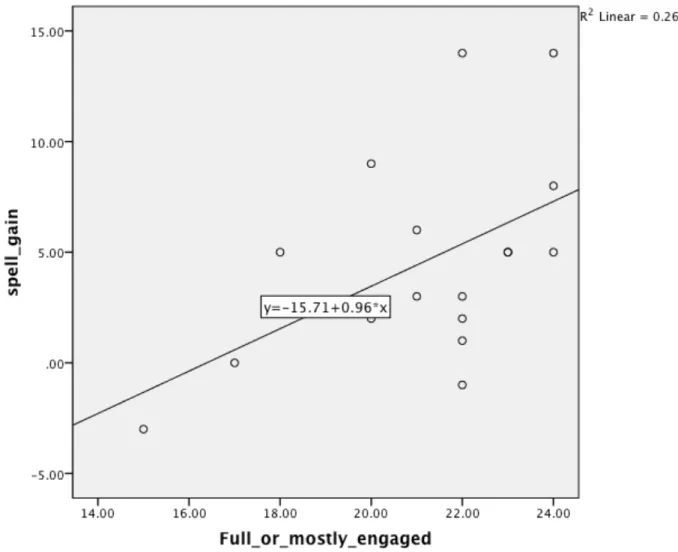
Additional analyses revealed no significant pretest or gain differences between native Spanish-speaking English language learners (ELLs; n = 10) and native English-speaking students (n = 7) in the full sample, suggesting that ELLs and native English-speaking kindergarteners with low early literacy skills at pretest benefited similarly from the varied forms of linguistic awareness intervention. Although there were no significant differences in student engagement in instructional activities among groups, when students from the three groups were considered together, the observed level of student engagement significantly predicted gains in
morphological spelling, explaining 26.7% of the variance in this outcome.
Additional larger scale research is required to further investigate the differential impact of intervention targeting multiple linguistic areas before conclusive recommendations can be made. However, the results of this study provide preliminary evidence for the feasibility of
ACKNOWLEDGEMENTS
The guidance and support of my teachers, colleagues, friends, and family made the completion of this dissertation possible. First I would like to acknowledge my dissertation committee, Karen Erickson, Betsy Crais, Penny Hatch, Cara McComish, Lisa Domby, and Lori Geist. I have relied on their wisdom during my doctoral training and have learned so much from each of them. In particular, I would like to thank my mentor, Karen, for providing me with the many experiences that allowed me to develop as a teacher and researcher over the past four years. From the very beginning, Karen instilled in me the confidence I needed to achieve my goals. She taught me to view even the goals that seemed the most challenging as reachable, giving me the support I needed to pursue them and the drive to complete them, and for that I am extremely thankful.
the administration of assessments. I would like to thank Melanie Annis, who also participated in the interventions and the coding of the spelling assessment. You are an excellent clinician, and I am so thankful for your assistance throughout this study.
TABLE OF CONTENTS
LIST OF TABLES ... XI LIST OF FIGURES ... XII
CHAPTER 1: STATEMENT OF THE PROBLEM ... 13
Multi-Tiered System of Supports ... 14
Importance of Early Literacy ... 15
Phonological Awareness and Early Literacy ... 15
Orthographic Knowledge and Early Literacy ... 16
Morphological Awareness and Early Literacy ... 17
Linguistic Awareness Instruction ... 18
Purpose ... 19
CHAPTER 2: REVIEW OF THE LITERATURE ... 20
Theoretical Framework ... 20
The Triangle Model of Word Reading ... 20
A Model of Linguistic Influences on Word Reading ... 22
Metalinguistic Predictors of Word Reading ... 24
Phonological Awareness and Letter Knowledge ... 24
Morphological Awareness ... 27
Linguistic Awareness Intervention ... 30
Phonological Awareness and Letter Knowledge Intervention ... 30
Multi-Tiered System of Supports ... 48
The Impact of High-Intensity Early Literacy Interventions ... 49
Factors That Influence Intervention Effectiveness ... 51
Fidelity of Implementation ... 51
Student Engagement ... 52
In-Class vs. Pull-Out Instruction ... 54
Intervention Sustainability ... 54
Conclusion ... 55
CHAPTER 3: METHODS ... 57
Research Questions ... 57
Participants and Setting ... 58
Setting ... 58
Participants ... 59
Literacy Instruction in the Classroom ... 63
Procedures ... 64
Recruitment and Screening ... 64
Testing ... 65
Assignment to Intervention Condition ... 66
Assessment Measures ... 67
Screening Measures ... 67
Morphological Production Probe ... 69
Phonological Awareness ... 70
Morphological Awareness ... 70
Intervention Programs ... 73
Phonological Awareness and Letter Knowledge Intervention ... 73
Morphological Awareness Intervention ... 75
Three-Pronged Linguistic Awareness Intervention ... 77
Fidelity of Intervention ... 79
Planned Data Analyses ... 83
Summary ... 84
CHAPTER 4: RESULTS ... 85
Descriptive Statistics ... 86
Within-Group Intervention Effects ... 88
Normality Assumptions by Group ... 89
Visual Depiction of Student Gains by Group ... 90
Paired Samples t-tests ... 90
Post-Intervention Outcome Differences Across Groups ... 91
Univariate Assumptions ... 92
Data Transformation ... 94
MANOVA with Two Groups that Met Normality Assumptions ... 94
Kruskal-Wallis Test ... 96
English Language Learners ... 96
Assumptions for Independent t-tests ... 97
Group Differences ... 97
Student Engagement ... 98
External Validity ... 100
Summary of Findings ... 103
CHAPTER 5: DISCUSSION ... 105
Literacy Gains Within Intervention Groups ... 107
Phonological Awareness and Letter Knowledge Intervention ... 107
Morphological Awareness Intervention ... 108
Three-Pronged Intervention ... 108
Differences in Literacy Gains Across Groups ... 110
English Language Learners ... 111
Student Engagement ... 112
External Validity ... 113
Limitations ... 115
Directions for Future Research ... 117
Conclusion ... 120
APPENDIX A: KINDERGARTEN ORAL MORPHOLOGICAL PRODUCTION TASK ... 122
APPENDIX B: WORDS AND SENTENCES FOR THE SINGLE-WORD MORPHOLOGICAL SPELLING TASK ... 123
APPENDIX C: MORPHOLOGICAL SPELLING TASK SCORING DIRECTIONS ... 124
APPENDIX D: LESSON TARGETS ... 125
APPENDIX E: SAMPLE INTERVENTION FIDELITY CHECKLIST ... 128
APPENDIX F: BOX PLOTS FOR PRETEST AND POSTTEST MEASURES BY GROUP . 130 APPENDIX G: BAR CHARTS WITH ADJUSTED ERRORS BARS BY VARIABLE ... 133
LIST OF TABLES
Table 3.1 Ethnic Representations by Grade, School, & District ... 58
Table 3.2 Descriptive Statistics for Gender, Educational Placement, and English Language Learner Status of Sample Population (N=17) ... 60
Table 3.3 English Language Learner Status by Group ... 61
Table 3.4 English Language Proficiency by Group ... 61
Table 3.5 Correct Word-Final Morpheme Production as a Percentage of Total Obligatory Contexts for Each Student by Group ... 62
Table 3.6 Composition of Intervention Groups by Classroom Teacher ... 67
Table 3.7 Assessment Protocol ... 68
Table 3.8 Descriptive Statistics for Exact Lesson Length by Group ... 80
Table 3.9 Descriptive Statistics for Student Attendance by Group ... 81
Table 3.10 Percentage of Attended Sessions Students Were Fully, Mostly, and Infrequently Engaged by Group ... 81
Table 3.11 Descriptive Statistics for Number of Sessions Students Were Fully Engaged by Group ... 82
Table 3.12 Descriptive Statistics for Number of Sessions Students Were At Least Mostly Engaged by Group ... 82
Table 4.1 Descriptive Statistics for Pretest Outcomes by Group (N=17) ... 87
Table 4.2 Descriptive Statistics for Posttest Outcomes by Group (N=17) ... 88
Table 4.3 Mean Student Gains Reported by Teachers & Study Effect Sizes ... 101
LIST OF FIGURES
CHAPTER 1: STATEMENT OF THE PROBLEM
In 2008, the National Early Reading Panel (NELP) published a report synthesizing research findings related to the predictive power of early literacy skills on later reading
outcomes. Six early literacy skills were found to predict later reading measures above the impact of other known predictors (i.e., IQ and socioeconomic status): alphabet knowledge;
socioeconomic backgrounds (Apel, Brimo, Diehm, & Apel, 2013; Apel & Diehm, 2013), first-grade students with spelling deficits (Wolter & Dilworth, 2013), and English language learners (Filippini, Gerber, & Leafstedt, 2012). Given these promising findings, continued research is needed to determine if MA intervention leads to gains in the literacy outcomes of students from other at-risk populations, such as those who demonstrate delays in early literacy skills during the kindergarten year.
Multi-Tiered System of Supports
Public schools in the United States routinely screen students in kindergarten to identify those who are not meeting grade-level literacy expectations and provide them with intervention in key areas related to early literacy achievement in order to prevent persistent reading
difficulties. Universal screening is a part of response to intervention (RTI) within the framework of a multi-tiered system of supports (MTSS) that is utilized by many public school systems. Intervention for at-risk students increases in intensity levels, or tiers, such that students who do not make progress are provided with more intensive targeted small-group instruction, which may include special education (Fuchs & Fuchs, 2006; Justice, 2006). Research has shown that about 75% of kindergarten students who receive Tier 2 literacy intervention in addition to high-quality classroom instruction respond well to intervention within seven months and do not require additional services to maintain grade-level literacy skills in the early elementary grades (Coyne, Kame’enui, Simmons, & Harn, 2004).
literacy intervention for lower elementary students, including students as young as
kindergarteners (Apel, Brimo et al., 2013; Apel & Diehm, 2013), continued research is required to determine whether adding a focus of MA to existing kindergarten RTI programs will allow more students to make adequate progress as a result of Tier 2 intervention. Research in this area could provide valuable information for teachers and administrators on how to most effectively focus Tier 2 instruction for at-risk kindergarten students in order to address students’ needs.
Importance of Early Literacy
The kindergarten year is often the first opportunity that schools have to provide instruction and targeted intervention in early literacy skills for students who enter school with low early reading skills. Students who enter kindergarten with low literacy ability tend to continue to stay behind their typically developing peers throughout the school years (Snow, Burns, & Griffin, 1998). By providing students with Tier 2 interventions in targeted linguistic areas, students may be able to increase their rate of literacy growth (Justice, 2006). Thus it is essential that students who are at risk for persistent reading difficulties be provided with early intensive intervention in the linguistic areas that have been shown to predict literacy outcomes. Phonological Awareness and Early Literacy
the development of phonemic awareness, and the two skills become correlated, such that phonemic awareness no longer contributes unique variance to word reading (Hogan, Catts, & Little, 2005). Thus, PA should be assessed in kindergarten and targeted in Tier 2 interventions for at-risk students; however, from second grade on, phonetic decoding is a better predictor of later word reading outcomes (Hogan et al., 2005).
Orthographic Knowledge and Early Literacy
Orthographic knowledge includes the knowledge of letter names and their corresponding sounds, and the awareness of orthographic patterns and rules. Through the use of this
knowledge, readers learn to form connections between letters and sounds, and eventually recognize words as larger orthographic units, including irregular words that do not conform to typical letter-sound correspondence conventions (Adams, 1990; Kirby, Roth, Desrochers, & Lai, 2008). Perhaps not surprisingly, orthographic knowledge is related to reading outcomes in emergent and early readers (e.g., Lonigan et al., 2000; NIFL, 2008; Schatschneider et al., 2004). Specifically, the knowledge of letter names and sounds is a unique predictor of later decoding (Lonigan et al., 2000), as well as word identification and reading comprehension (Schatschneider et al., 2004) in kindergarten students. By the end of the kindergarten year, letter name
Morphological Awareness and Early Literacy
Research with struggling readers has highlighted the importance of MA in children’s ability to read and spell complex words, especially in the later elementary grades (Bowers, Kirby, & Deacon, 2010). Specifically, MA is an independent form of linguistic awareness contributing to reading skills above and beyond other known predictors, such as PA and orthographic knowledge (Bryant, Nunes, & Bindman, 2000; Roman, Kirby, Parrila, Wade-Wooley, & Deacon, 2009).
A growing body of research has begun to highlight the importance of MA in reading acquisition, in conjunction with other key early reading skills, such as PA and orthographic knowledge (Apel et al., 2012; Carlisle, 1995; Carlisle & Nomanbhoy, 1993; Deacon, Campbell, Tamminga, & Kirby, 2010; Deacon & Kirby, 2004; Nunes, Bryant, & Bindman, 2006; Wolter et al., 2009). For students in the early elementary grades, the results of several studies suggest that MA makes a unique and significant contribution to variance in single word reading, above and beyond the contribution of PA and other known predictors (Apel et al., 2012; Carlisle & Nomanbhoy, 1993; Deacon et al., 2010; Wolter et al., 2009). Wolter and colleagues, for example, found MA to uniquely contribute to 9% of the variance in the word reading of first-grade children. Others have found MA to be predictive of spelling in the primary first-grades (Apel et al., 2012; Nunes et al., 2006; Wolter et al., 2009). In second and third-grade students, for
example, Apel and colleagues (2012) found MA to be the only unique contributor to variance in spelling performance. Thus, the evidence suggests MA makes a small, but significant
Linguistic Awareness Instruction
The skills related to word reading in beginning reading have received a great deal of attention in recent years (NICHD, 2000; NIFL, 2008). The two areas given the most attention have been phonological/phonemic awareness and orthographic/letter knowledge (Casalis & Colé, 2009; Gillon, 2000; Hogan, Catts, & Little, 2005; Lonigan, Burgess, & Anthony, 2000). The National Reading Panel Report lists PA (i.e., specifically phonemic awareness, the awareness of individual sounds) and knowledge of letter-sound relationships as two of six key skills children require in order to learn how to read well (NICHD, 2000). In addition, the report states it is essential to combine PA instruction with the explicit instruction of letter-sound relationships. The literature clearly suggests instruction in both PA and letter-sound relationships is an
especially when it was combined with other areas of literacy instruction. Given preliminary evidence from intervention studies and the building evidence of MA as a unique and significant predictor of literacy outcomes, it is a promising area to investigate with children just beginning their school career.
Purpose
Research has suggested MA instruction can be included in existing linguistic awareness programs without increasing instructional time (Reed, 2008) and is most effective when taught in conjunction with instruction in PA and LK (e.g., Bowers et al., 2010). An effective kindergarten literacy program may include linguistic awareness instruction in all three areas. Letter
knowledge and PA have been studied for several decades and are well established as effective interventions, especially when implemented jointly. However, MA has only recently been highlighted within the research domain; thus, it is not yet known if this type of instruction provides benefit to kindergarten students beyond the instruction they are already receiving.
The primary purpose of this study was to determine if a three-pronged linguistic awareness intervention (i.e., PA, LK, and MA) is more effective than the commonly implemented two-pronged intervention (i.e., PA and LK) at increasing the literacy skills of kindergarten students who are at risk for persistent reading difficulties. Additionally, the study investigated the effectiveness of MA intervention administered alone as compared to the other two intervention groups. The ultimate goal of this study was to provide information regarding the effectiveness of three different kinds of linguistic awareness instruction during the
CHAPTER 2: REVIEW OF THE LITERATURE
Students who struggle to read in the early elementary grades face challenges across all subject areas in successive grades. They are often unable to access the material necessary to learn, spend a large amount of time playing “catch-up,” and may actually never catch up with their peers (Stanovich, 1986). A report from the National Institute for Literacy (NIFL) states that “approximately 8.7 million fourth through twelfth grade students struggle with the reading and writing tasks that are required of them in school” and that these issues are often a reason for students to drop out of school (p.1, 2007). At-risk students must be identified early and provided with intervention in key areas related to the development of literacy in order to reduce the
number of students with persistent literacy difficulties that impact later academic outcomes (Snow, Burns, & Griffin, 1998).
Theoretical Framework
The current investigation is grounded in a combination of theories regarding word reading and linguistic influences on word reading. The following sections will highlight the impact that phonological, morphological, and orthographic processing make on early word
reading, and in turn, on the successful literacy and academic outcomes of students in later grades. The Triangle Model of Word Reading
which suggests that word reading is accomplished through the development and recognition of connections among spellings, pronunciations, and meanings. Thus, learning to read involves establishing mappings among the orthographic, phonological, and semantic representations of words. According to the Triangle Model (Seidenberg & McClelland, 1989), there are two pathways for word recognition, the phonological pathway and the semantic pathway. With reading experience, the semantic pathway becomes favored for familiar words, as well as for exception words; the phonological pathway becomes specialized for reading unfamiliar words that require decoding. Students with dyslexia (i.e., a written language disorder) have difficulty developing and accessing the mappings between orthography and phonology, as is demonstrated by their poor nonword reading, but better word reading skills (Bishop & Snowling, 2004). Children with oral language impairment tend to have difficulty with exception word reading, which can be explained by inefficient access of the mappings between the spellings and
meanings of words, required for reading exception words (e.g., Snowling, 2005). Thus, children with dyslexia have an impaired phonological pathway and children with language impairment have an impaired semantic pathway.
A Model of Linguistic Influences on Word Reading
In order to provide successful literacy instruction that prevents persistent problems, it is critical to have an in-depth understanding of the essential underlying components of effective reading intervention for elementary students beginning in kindergarten, and perhaps before. The connections between the spellings, pronunciations, and meanings of words create morphological structure, and students who are able to recognize morphological units are able to more efficiently decode written words (e.g., Seidenberg & McClelland, 1989). Further, learning to read words may be related to the interrelated growth of multiple linguistic awareness areas, including
morphological awareness (MA), and children typically utilize multiple linguistic strategies when learning to read words (e.g., Apel & Lawrence, 2011). A weakness in one area may leave children unable to utilize other areas of linguistic awareness during literacy activities. Thus, deficits in the area of morphology or any area of linguistic awareness may impact both a student’s ability to read words and comprehend text. The proposed model (Figure 2.1) posits that literacy growth in kindergarten, as well as later reading and academic outcomes, requires the interrelated growth of several linguistic awareness skills.
This model of the impact of linguistic awareness is grounded in several linguistic
apply a range of linguistic awareness strategies when learning to read and spell, even as they are just beginning literacy instruction (Apel & Lawrence, 2011; Siegler, 1996).
Figure 2.1. The Impact of Linguistic Awareness on Reading and Academic Outcomes
reading system and their interrelations (Adams, 1990). It is through this depth of understanding that the most effective reading instruction can be developed, targeting not only skills that provide clear pay-off at the moment, but also those skills that may be working under the surface to bolster current skills and therefore pay off down the road.
Metalinguistic Predictors of Word Reading
In order to prevent persistent reading difficulties, universal screenings and subsequent emergent literacy interventions for kindergarten students should target metalinguistic skills that have been found to strongly relate to later reading outcomes. Students in the lower elementary grades are capable of substantial growth in their phonological, orthographic, and morphological awareness skills (Berninger, Abbott, Nagy, & Carlisle, 2010), while they are simultaneously learning to read. The concurrent and predictive relationships between phonological awareness (PA), letter knowledge (LK), and reading, and more recently, between MA and reading has been investigated widely. The following sections provide evidence for these metalinguistic skills as predictors of word reading and spelling outcomes.
Phonological Awareness and Letter Knowledge
different PA tasks to accurately discriminate PA ability in kindergarten, first, and second-grade students. Using item response theory, these researchers reported that the PA tasks varied in their ability to provide information about students’ PA skills, due to not only the difficulty level of the task but also the developmental level of the student. The easier and earlier developing PA tasks were better at accurately representing the PA skills of the younger (i.e., kindergarten) students, but not the older (i.e., first and second-grade) students. Overall, blending (of onset-rimes and phonemes) and phoneme elision seemed to be the most discriminating tasks of the battery and the PA battery as a whole was most accurate for students from kindergarten through the middle of first grade.
It has been well established over the past several decades that PA in the early elementary grades is related to reading outcomes (e.g., Apel & Lawrence, 2011; Hogan, Catts, & Little, 2005; Lonigan, Burgeess, & Anthony, 2000; NIFL, 2008; Schatschneider, Fletcher, Francis, Carlson, & Foorman, 2004; Torgesen, Wagner, & Rashotte, 1994). Students’ LK and/or
language and literacy assessments to kindergarten students in order to determine the best predictors of first and second-grade reading outcomes. Results suggested that kindergarten students’ PA, letter-sound knowledge, and rapid naming of letters contributed unique variance to later word identification and reading comprehension measures. Letter naming speed was the strongest predictor of reading fluency outcomes. However, the knowledge of letter names was only a significant predictor when measured during the beginning of the kindergarten year; after that there was a ceiling effect for this measure.
In another longitudinal study, a large sample of students with and without language impairment were administered measures of PA and letter identification in kindergarten and measures of PA, phonetic decoding, and word reading in second and fourth grades (Hogan et al., 2005). The primary purpose of this study was to determine whether measures of PA in
kindergarten and/or second grade were useful for predicting later word reading difficulties. Through path analysis, the researchers determined that kindergarten PA uniquely predicted second-grade word reading, beyond variance accounted for by letter identification. However, grade PA did not explain unique variance in fourth-grade word reading; instead, second-grade phonetic decoding was a better predictor of later word reading skills. This study suggests that measures of PA and LK in kindergarten have high utility in predicting later reading
outcomes, yet by second grade these measures lose their predictive validity.
the kindergarten year; yet the knowledge of letter-sound relationships is a better predictor by the end of kindergarten.
Morphological Awareness
Morphological awareness, the ability to explicitly focus on and manipulate morphemes, has a significant relationship with reading ability in school-age children. Specifically, it has been shown to predict word reading (e.g., Carlisle, 1995), pseudo-word reading (e.g., Apel, Diehm, & Apel, 2013), spelling (e.g., Apel & Lawrence, 2011), and reading comprehension (e.g., Carlisle, 2000; Deacon & Kirby, 2004), and to make a unique contribution to reading beyond other known predictors, such as PA (e.g., Deacon & Kirby, 2004). It is often suggested that the conscious and explicit awareness of morphological relationships (i.e., MA) is particularly important for learning to read (e.g., Carlisle, 1995). During the kindergarten and first-grade years, students typically make a shift from an implicit awareness of morphology to metalinguistic ability, by which they begin to be able to think about the morphological properties of language and complete more complex morphological tasks (Carlisle, 1995).
grammatical change) and derived (i.e., involving a change in word class or meaning) forms (e.g., Apel, Diehm, & Apel, 2013; Apel & Lawrence, 2011; Carlisle, 1995). Results from these studies and others suggest that MA predicts word reading, pseudo-word reading, spelling, and reading comprehension in school-age children (e.g., Apel et al., 2012; Apel et al., 2013; Carlisle, 2000).
It is well established that MA is related to word reading in the upper elementary grades, when students must learn how to decode words that are morphologically complex (e.g., Bowers, Kirby, & Deacon, 2010). In recent years, researchers have turned their attention to the
relationship between MA and reading in the early elementary grades. Apel and colleagues have a research line that focuses on this relationship in order to inform early literacy instruction for young students who are at risk for later reading difficulties (e.g., Apel et al., 2012; Apel, Diehm, & Apel, 2013; Apel & Lawrence, 2011; Kim, Apel, & Al Otaiba, 2013). The results of these studies suggest that there is a predictive relationship between MA and a variety of reading outcomes in kindergarten through third grade. For example, kindergarten, first, and second-grade students from low socioeconomic status (SES) homes were administered a variety of MA tasks (Apel, Diehm, & Apel, 2013), and the morphological relatives task, which was an oral derivational sentence cloze task, most frequently predicted students’ reading outcomes across the three grades. Specifically, this MA task uniquely predicted pseudo-word reading in kindergarten students, above contributions from PA. Morphological awareness did not uniquely predict any reading outcomes for first-grade students; however, MA uniquely predicted pseudo-word
In another study (Wolter et al., 2009) first-grade students completed an oral MA
assessment (i.e., a derivational cloze task, as in: Farm. My uncle is a ____) and a morphological spelling assessment, in addition to PA, word reading, and spelling measures in order to
determine the relationship between MA and spelling and reading outcomes. Together, MA and PA accounted for 54% of the variance in word reading and 42% of the variance in spelling. Uniquely, MA contributed 9% of the variance to word reading, and 7% of the variance to
spelling. Thus, these results suggest that MA makes a small but significant contribution to word reading and spelling outcomes in first-grade students. Importantly, the morphological spelling assessment required students to spell morphological and pseudo-morphological suffixes, which allowed the researchers to determine that students utilized knowledge of morphology in their spelling and did not rely solely on phonological knowledge.
Additional studies provide further evidence that younger elementary school students have access to multiple forms of linguistic awareness when learning to read and spell words (Apel and Lawrence, 2011; Apel et al. 2012; Kim et al., 2013). For example, second and third-grade students were administered measures of MA (with derivational morphemes only), PA,
orthographic awareness (OA; i.e., the ability to recognize legal spelling patterns, as in zeg vs.
zzeg), receptive vocabulary, and rapid naming (Apel et al., 2012). Of all these measures, MA was the only unique predictor of spelling outcomes and both OA and MA uniquely contributed to word reading. Apel and Lawrence (2011) also found evidence that multiple forms of
linguistic awareness are related to word reading and spelling outcomes. First-grade students with and without speech sound disorders were administered a battery of assessments, including
developing students only. Additionally, Kim and colleagues (2013) found all three forms of linguistic awareness (i.e., PA, MA, and OA) to be unique predictors of word reading, and PA and OA to be unique predictors of spelling in first-grade students.
The results from these studies suggest that MA measured in the early elementary grades is related to a variety of reading outcomes. This highlights the importance of including MA assessment as part of a screening battery in order to better identify students who are at risk for later reading disorders, and suggests that MA should be a target of intervention for at-risk readers with and without language disorders in the early grades and beyond. In addition, it may be beneficial to target multiple forms of linguistic awareness (i.e., PA, LK, and MA) during beginning reading and spelling instruction, including students who are at risk for reading
disorders, and those who have identified speech and language disorders, as students may be able to use multiple linguistic strategies when learning how to read and spell words.
Linguistic Awareness Intervention
Given the strong evidence that metalinguistic skills predict reading outcomes in lower elementary students, researchers have investigated the effectiveness of instruction and targeted intervention in PA, LK, MA, and combined approaches for students of varying abilities,
including those who are at risk for later reading difficulties, those with identified disabilities, and those who are English language learners (ELLs). The following sections will review the
metalinguistic intervention research with these populations. Phonological Awareness and Letter Knowledge Intervention
Human Development [NICHD]). Overall, the findings suggested that PA instruction has a large effect (d = .86) on PA outcomes and moderate effects on reading (d = .53) and spelling (d = .59) outcomes in the early grades. Importantly, this meta-analysis provided specific guidelines for the conditions by which PA intervention is most effective. For both typically developing and at-risk students, effect sizes for PA and reading outcomes were larger when instruction was explicit and focused on one or two PA skills (rather than three or more) and was combined with
instruction in LK. Students who received intervention in small group settings for less than twenty hours of total instruction (as opposed to more than 20) made greater gains in these areas. Targeted instruction in blending and segmenting resulted in greater reading gains than
intervention focused on multiple phonemic awareness skills. Preschool and kindergarten
students, and those who were at risk for reading difficulties made the greatest gains overall. SES did not impact student gains in PA; however, students from mid to high SES families made greater gains on reading outcomes than those from low SES families.
At-risk students should be provided with instruction in blending and segmenting of sound units including individual phonemes, as well as LK, as instruction in these areas results in the greatest student gains (e.g., NICHD, 2000; NIFL, 2008). In a review of best practices in PA intervention, Schuele and Boudreau (2008) offer suggestions for providing explicit instruction in segmenting and blending with at-risk and struggling readers. The goal is for students to
independently analyze the sound structure of oral language. Thus, instruction should involve the modeling of skills such as segmenting and blending, with the clinician using a think-aloud strategy to explain what she is doing in order to show students how to complete each PA task. With repeated examples and guided practice, students will be able to develop insights that allow them to be successful without clinician support.
The following sections will review the results of a selection of PA intervention studies with preschool and kindergarten students from at-risk, identified disabilities, and ELL
populations.
Students who are at risk for reading difficulties. The National Reading Panel synthesis suggested that the students who are at risk for later reading difficulties are likely to benefit the most from combined instruction in PA and LK (NICHD, 2000). While students with low SES backgrounds are at risk for later reading difficulties (e.g., Bowey, 1995), students from low-income households do not appear to benefit as much as students from higher socioeconomic backgrounds when provided with direct intervention in PA and LK (NICHD, 2000). They do, however, benefit to some extent as several intervention studies with low-income preschoolers suggest that PA intervention is effective with this population (e.g., Koutsoftas, Harmon, & Gray, 2009; PASS Research, n.d.) For example, one study investigated the effectiveness of PA
Students were selected for participation in the intervention based on low performance on a beginning sound awareness screening. The intervention took place twice a week for six weeks in a small-group classroom setting and focused on the concepts of beginning sounds, and ultimately identifying beginning sounds in words. Results indicated that 71% of the children had medium to large treatment effects. Additionally, results from the DIBELS Initial Sound Fluency (Good & Kaminski, 2002) administered in the fall of their kindergarten year suggested that the
intervention effects were maintained. Other researchers have found similar results for PA intervention administered in conjunction with instruction in LK for low-income students (PASS Research, n.d.).
Students with identified disabilities. Phonological awareness intervention has been shown to result in moderate literacy gains for students who have already been identified with disabilities (NICHD, 2000). For example, children with speech and language disorders are at risk for later reading difficulties (e.g., Bishop & Adams, 1990; Snowling, 2005). Thus,
phoneme deletion, a skill not targeted during instruction, suggesting that typically developing children were better able to transfer PA skills targeted during instruction to related skills. Both groups of children made significant improvement in reading skills; however, typically
developing children demonstrated greater gains in pseudo-word reading, pseudo-word spelling, and real-word spelling skills, suggesting that typically developing children were able to transfer PA skills to reading and spelling tasks more effectively. However, it is important to note that students with speech and language impairment had post-instruction scores on measures of phoneme blending, deletion, and segmentation, as well as non-word reading and real-word spelling skills that were not significantly different from typically developing students who did not receive instruction. Thus, these results suggest that it is possible to raise the literacy skills of at-risk students to a typical level following classroom-delivered PA instruction.
students with speech and language impairments who received intervention in PA integrated with speech and language therapy made more gains in PA and reading outcomes than their peers who only received speech and language therapy, and their PA skills improved to levels similar to children with typically developing speech and language skills (Gillon, 2000).
English language learners. In 2006, the National Literacy Panel (NLP) published a report synthesizing the results of recent research with ELLs in the areas of prevention and intervention of persistent literacy difficulties (August & Shanahan). It highlighted that the same areas that predict reading skills in native English speakers (i.e., PA, phonics, fluency,
vocabulary, and text comprehension) also predict reading in ELLs. Others have found that kindergarten phonological processing skills and LK are the best predictors of ELLs’ later word reading skills across all languages (Gorman, 2009). This suggests that PA and LK instruction should be included as part of literacy instruction for ELLs just learning to read in English, as it is for students who are native English speakers. Additionally, ELLs benefit from instruction in oral language proficiency and from instruction that takes advantage of students’ oral and written proficiency in their native languages (August & Shanahan, 2006). Gorman (2009) reports that although hundreds of languages are spoken by ELLs in the United States, Spanish is the top language, representing 79% of ELLs. Thus, it is important to consider the impact of PA and LK intervention on the reading outcomes of Spanish-speaking ELLs.
Spanish-speaking kindergarten students. The kindergarten students who had the weakest skills in LK and phonetic spelling at the start of kindergarten also had the weakest literacy outcomes measured at the end of kindergarten and the beginning of first grade. The two profiles of students with either low or moderate PA skills, both with low LK, were associated with weak later reading outcomes. Thus, the researchers suggested that OA (including LK) should be assessed early and targeted in literacy intervention for Spanish-speaking ELLs who are at risk for later reading difficulties.
Several researchers have found PA intervention combined with a variety of literacy targets to be effective for increasing the literacy skills of ELLs in the early elementary years (e.g., Gunn, Biglan, Smolkowski, & Ary, 2000; Linan-Thompson, Vaughn, Prater, & Cirino, 2006; Simmons et al., 2014; Vaughn, Linan-Thompson, et al., 2006; Vaughn, Mathes, et al., 2006). In one study, first-grade Spanish-speaking ELLs who did not pass early reading screening measures in both English and Spanish were randomly assigned to a control or
experimental intervention group (Vaughn, Mathes, et al., 2006). The control group received the school’s existing intervention for struggling readers. Students in the experimental group
received instruction in English from bilingual teachers in a small-group setting five days a week for 50 minutes for 7 months. The intervention provided explicit and systematic instruction in PA, letter-sound correspondences, decoding and connected text reading, and reading
comprehension, as well as oral language and vocabulary development. Students in the
which was the language of instruction of this sample’s core reading program (Vaughn, Linan-Thompson, et al., 2006). Spanish-speaking first-grade ELLs in the experimental group made significantly greater gains in the following outcomes measured in Spanish: letter-sound identification (d = .72), PA (d = .73), word attack (d = .85), reading comprehension (d = .55), and fluency (d = .58); there were no significant differences for literacy outcomes measured in English. At the end of first grade, more students who were involved in the experimental
intervention (both in Spanish and English) met the end of year reading benchmarks; this finding was maintained through the end of second grade (Linan-Thompson et al., 2006).
Roth and colleagues (PASS Research, n.d.) researched the effectiveness of the rhyming component of their PA curriculum (i.e., PASS, Roth et al., 2012) combined with instruction in LK for preschool ELLs (94% Spanish-speaking) who presented with weak rhyming skills at the start of the intervention. Students received instruction delivered by a speech-language
pathologist in a small-group context twice per week for thirty minutes. Compared to a group of native English-speaking preschoolers with low rhyming skills who received the same
intervention, the intervention administered to ELLs resulted in greater pre- to post-intervention effects. Specifically, the native English-speaking preschoolers increased their rhyming skills (effect size of d = 1.15), but the ELL preschoolers showed even greater gains in rhyming (effect size of d = 2.07). Both groups of students exceeded rhyming benchmarks at the end of the intervention. The researchers concluded that the curriculum was particularly effective in
Morphological Awareness Intervention
Recently, the importance of providing MA intervention to students at risk for later reading difficulties as early as kindergarten has become a topic of interest for several groups of researchers (e.g., Apel & Diehm, 2013; Ramirez, Walton, & Roberts, 2013; Wolter & Dilworth, 2013). Morphological awareness intervention seems to benefit at-risk and struggling readers, as well as ELLs, and school-age students across grade levels have made gains in PA and MA, as well as gains in word reading, spelling, and reading comprehension (Bowers, Kirby, & Deacon, 2010; Carlisle, 2010; Goodwin & Ahn, 2010; 2013; Reed, 2008). While one study found
intervention in MA to be most effective when combined with other types of literacy intervention (Bowers et al., 2010), another study found no differences in effect sizes for interventions with an explicit focus on MA as compared to multiple areas of literacy instruction (Goodwin & Ahn, 2013). In this most recent meta-analysis of MA intervention studies, Goodwin and Ahn (2013) investigated the moderators of MA intervention across a broad range of students and contexts. The overall effect size for MA intervention across studies was small (d = .32), with different literacy outcomes ranging in effect sizes from not significant (reading comprehension and fluency) to moderate (PA, MA, and decoding). The hours of intervention ranged from 0-5 total hours to 20 or more hours. Although the largest gains were reported for interventions totaling at least 20 hours, there were no significant differences in intervention effects, with even the shortest interventions resulting in some moderate effects. Additionally, no significant differences were found based on delivery model (i.e., individual, small-group, or whole-class), although the effects for individual treatment were slightly larger. Overall, interventions that were
statistically significant overall, MA intervention did significantly impact the reading
comprehension of early elementary students receiving interventions that lasted more than 20 hours and were administered in small-group settings. These results suggest that one way to increase a broad range of literacy skills for young students who are at risk for developing reading difficulties is to provide MA intervention, either alone or as part of a more comprehensive literacy intervention program.
The following section will review the research on MA intervention implemented alone or combined with vocabulary instruction for kindergarten through second-grade students who are at risk for later reading difficulties. Morphological awareness intervention combined with other linguistic awareness areas (i.e., PA and OA) will be discussed in a later section, which will include descriptions of research with students with identified disabilities and with ELLs.
second grade: d = .87). This suggests that MA intervention is appropriate for students beginning in kindergarten, as it can result in large gains in MA and moderate gains across a variety of reading outcomes. Further research is required to determine if these reading and MA gains are maintained over time.
Given these promising results, Apel and Diehm (2013) conducted an efficacy study for their MA intervention. Kindergarten through second-grade students from low SES backgrounds were randomly assigned to a small group intervention and were provided eight weeks of MA instruction four times per week for 25 minutes a day. Students were taught how to analyze oral and written words to discover the patterns and meanings of eleven inflectional and derivational affixes. The control group did not receive intervention outside of typical school district
instruction. Students from all grades who received the MA intervention showed significantly greater gains in MA skills (d = .67 to 1.26), with kindergarten students demonstrating the largest effect; however, students in the experimental group did not make significantly greater gains than students in the control group for other literacy outcomes (i.e., decoding, word reading, reading comprehension). The researchers suggested that although students did not make significantly greater gains, the small sample size lacked the sufficient power to detect group differences. However, small positive effects for first-grade reading comprehension and second-grade decoding indicate important gains with practical significance. Apel and Diehm also analyzed their results to determine if students of varying levels of MA ability at the start of the
are most at risk for later reading difficulties may benefit the most from MA intervention in kindergarten.
In another recent study, kindergarten students from low SES neighborhoods were provided classroom-teacher delivered instruction in vocabulary and MA (Ramirez et al., 2013). Teachers received professional development in strategies for teaching vocabulary and MA. Specifically, teachers learned to choose high-utility vocabulary words for instruction (Beck, McKeown, & Kucan, 2002) and to highlight the meanings of compound words and their morphemes when reading with their students. Teachers received a resource kit including ten picture books with lists of words to explicitly target, including compound words, for each book. They also learned how to extend opportunities for learning from shared reading experiences with a variety of full-class activities. Over three months, teachers implemented strategies for the explicit teaching of vocabulary and MA for at least 24 30-minute sessions. Morphological awareness (i.e., in this study, a measure of students’ ability to combine single-morpheme words to create compound words) and expressive vocabulary were assessed before and after the intervention for all students. Overall, the students made significant gains in MA (partial η2 =
.61) and vocabulary (partial η2 = .53). Additional analyses revealed that students with the lowest MA and expressive vocabulary skills at pretest made the greatest gains in these respective areas. Although preliminary, results from these studies provide promising evidence for the efficacy of MA intervention for at-risk students in the lower elementary grades, particularly for students with low MA and vocabulary abilities.
Multi-Linguistic Awareness Intervention
for later reading disabilities with instruction in all three linguistic awareness areas starting as early as the kindergarten year, and perhaps before. Interventions provided to students as young as preschoolers have resulted in crossover effects among linguistic domains (e.g., Apel, Brimo, Diehm, & Apel, 2013, Casalis & Colé, 2009; Kirk & Gillon, 2007; Lyster, 2002). For example, training in MA has led to moderate to large gains in PA for kindergarten through second-grade students (Apel, Brimo, Diehm, & Apel, 2013). The reverse has also occurred; preschoolers with speech and language impairment who received training in PA and LK were shown to have greater ability in MA (i.e., morphological spelling and decomposition) several years after the intervention than their peers who did not receive PA and LK intervention (Kirk & Gillon, 2007).
thus, it is essential to further investigate the impact of separate and combined interventions in these areas on the metalinguistic and early reading skills of young students.
The following sections will review current research on the impact of multi-linguistic awareness (i.e., PA, OA, and MA) intervention for lower elementary students who are at risk for reading difficulties, students with identified disabilities, and for ELLs.
Students who are at risk for reading difficulties. In one study, second-grade students at risk for persistent reading difficulties based on low decoding, word reading, spelling, and
sentence comprehension scores with no prior reading intervention experience received individual tutoring by trained teachers (Vadasy, Sanders, & Peyton, 2006). The tutoring sessions were 30 minutes, four days per week for a total of 20 weeks and focused on structural analysis, including explicit instruction in letter-sound correspondences, linking phonological units to orthographic patterns, segmenting and blending morphological affixes, and reading and spelling practice. The students receiving the intervention outperformed the control group on measures of word reading, spelling, comprehension, and fluency (d = .75 to 1.06), with the largest effect size in spelling. Due to promising results, these researchers repeated this study with a group of second and third graders (Vadasy et al., 2006). Again, these students presented with low reading scores but had no identified reading disorders and had not received reading intervention previously.
Students with identified disabilities. Recently, researchers have investigated the effectiveness of two multi-component literacy interventions for first and second-grade struggling readers (Morris et al., 2012). Four groups of students with reading disabilities received a total of 70 hours of instruction by trained teachers in a small group setting. The two experimental interventions targeted instruction in phonological analysis and phonics, including teaching letter-sound and spelling-pattern-letter-sound correspondences. One of these interventions was combined with instruction in word analysis, including strategies such as word identification by analogy, and “peeling off” prefixes and suffixes in multisyllabic words. The second intervention was combined with reading instruction that highlighted the orthographic, semantic, syntactic, and morphological aspects of words in addition to phonology. For example, children in this group learned to “chunk” words based on spelling and meaning-based (i.e., morphological) patterns. Thus, both experimental interventions included explicit instruction in phonological,
orthographic, and morphological reading strategies. Compared to students in the two control groups (who received intervention in math and phonological decoding), students participating in both multi-dimensional intervention programs demonstrated significantly greater skills after the intervention and at a one-year follow up in all literacy skills measured (i.e., decoding, word reading, spelling, fluency, and comprehension). There were no significant differences in gains based on IQ, race, or SES, suggesting that multi-component reading interventions that include emphasis in phonological, orthographic, and morphological strategies are effective for first and second-grade students with reading disabilities across a range of demographic variables.
In another study, second-grade students with spelling deficits received either a multi-linguistic awareness intervention with a phonological and orthographic focus, or with a
students were receiving special education services in speech/language and/or resource service in reading and spelling. The interventions took place during summer literacy camps, for 90-minute sessions over nine consecutive weekdays. The first intervention focused on PA and OA, and included guided practice with word sorts and word building to help students to reflect on
orthographic patterns and their phonological pronunciations. The second intervention focused on all three areas of linguistic awareness and included word sorts and word building activities that encouraged students to reflect on inflectional and derivational morphological patterns and word meanings, in addition to orthographic patterns. Both interventions also incorporated practice with decoding and reading comprehension. Students in both groups significantly improved their sight-word reading (d = .29 to .76) and decoding skills (d = .42 to .99), and there were no
differences between groups. However, students who received the intervention that included MA showed greater gains in reading comprehension (d = 1.49) and for a standardized spelling
measure (d = .66); students in the other intervention group did not make significant gains in these areas. A non-standardized spelling measure was also given, in order to assess students’ growth in spelling patterns that do and do not include morphological units. Both groups made
significant gains for the spelling of orthographic-only spelling patterns (d = .85 to .99), and there were no differences between groups. As expected, students who received the intervention including MA instruction made greater gains on the spelling of words with morphological
English language learners. Little research is currently available on the effectiveness of MA intervention, either implemented alone or within a multi-linguistic awareness framework, with ELLs in the lower elementary grades. An exception is a recent study conducted by Filippini and colleagues (Filippini, Gerber, & Leafstedt, 2012) with first-grade students from low SES backgrounds who were predominantly Spanish-speaking ELLs. Students received instruction in one of the following: (a) PA and decoding; (b) PA and decoding combined with vocabulary instruction focused on morphology; or (c) PA and decoding combined with vocabulary
differences between groups were not significant for the lower performing students; yet, it is interesting to note that the MA group made the greatest gains in decoding (d = 1.01) compared to the semantic (d = .65) and control (d = .61) groups. Overall, these results provide preliminary evidence for the effectiveness of MA intervention implemented in conjunction with PA and decoding for ELLs, particularly for students with the lowest decoding skills.
awareness intervention is an effective means for remediating and perhaps preventing persistent reading difficulties in students in the lower elementary grades.
Multi-Tiered System of Supports
Public schools in the United States now regularly identify students who are at risk for reading difficulties in order to provide targeted early intervention, thereby reducing the number of students with persistent reading difficulties whose academic performance is impacted in later years (Averill & Rindali, n.d.; Justice, 2006; Fuchs & Fuchs, 2006). This paradigm, known as a multi-tiered system of supports (MTSSs), allows educators to provide research-based
do not make adequate progress in this level of intervention receive increasingly more intensive interventions, which may include special education, in what is called Tier 3 intervention. The Impact of High-Intensity Early Literacy Interventions
As PA and LK intervention have been well established as effective areas to target in order to increase the early literacy skills of kindergarten students (e.g., NIFL, 2008), intervention in these areas has been a major focus of RTI efforts in kindergarten (e.g., Coyne, Kame’enui, Simmons, & Harn, 2004; Justice, 2006; O’Connor, Fulmer, Harty, & Bell, 2005; O’Connor, Harty, & Fulmer, 2005). Recently, researchers have also begun to explore the effectiveness of MA intervention with at-risk students in Tier 2 interventions as early as kindergarten (Apel & Diehm, 2013). Students who participate in high-intensity Tier 2 interventions in kindergarten have benefited from intervention targeting linguistic awareness. For example, Coyne and colleagues (2004) found that 75% of kindergarten students who received a seven-month Tier 2 intervention targeting PA and LK in conjunction with reading words and connected text were deemed “strong responders,” as they demonstrated grade-level or above literacy skills by the end of the intervention. Further, these students maintained grade-appropriate skills in decoding, word reading, and reading comprehension through the middle of first grade without receiving literacy intervention outside of high-quality classroom instruction, suggesting that strong responders to kindergarten linguistic awareness intervention can continue to make progress without additional intervention.
Kindergarten students who received high-intensity linguistic awareness Tier 2
intervention for reading, the number of students requiring special education services is reduced (O’Connor, Harty, et al., 2005). For example, O’Connor, Fulmer, and colleagues (2005) investigated the long-term reading effects of participation in a kindergarten or first-grade Tier 2 intervention for at-risk students. Kindergarteners received small-group instruction for 10 to 15 minutes a day, three days per week in PA and LK. First-grade students received a similar small-group intervention for 20 to 25 minutes a day, three days per week, focused on letter-sounds and decoding. Classroom teachers also received professional development in effective literacy practices for Tier 1 instruction. Students were followed longitudinally and the literacy outcomes for those students who had received the small-group intervention and for those whose teachers had received professional development only were compared to a control group. Students whose teachers had received professional development scored higher than control group students on decoding, fluency, and reading comprehension outcomes at the end of second grade. Compared to the control group, students in the Tier 2 intervention scored higher on all reading measures (including word identification) at the end of both second and third grades. These results suggest that providing at-risk students with research-based Tier 1 classroom literacy instruction in conjunction with high-intensity targeted literacy intervention in Tier 2 can have a strong positive impact on later reading skills.
uniquely predict word-reading outcomes across all tiers of instruction (Kim et al., 2013). Thus, it is possible that a three-pronged linguistic awareness intervention will lead to positive word reading outcomes for kindergarteners at risk for later reading difficulties. Research suggests that 25% of at-risk students do not respond well to Tier 2 intervention, requiring intervention that is longer and more intensive (Coyne et al., 2004). Through the existing model of RTI, targeted intervention in three linguistic awareness areas may attenuate the reading difficulties of some of these “poor responders,” even further decreasing the number of students who require prolonged intensive intervention.
Factors That Influence Intervention Effectiveness
There are several factors that may influence the effectiveness of an intervention that need to be considered when interpreting the results of intervention studies. The content of the
program may be efficacious, yet the program may not lead to increased literacy outcomes if it has not been implemented as designed or if students are not appropriately engaged during instruction. Further, the setting in which the intervention is delivered and the opinions of the teachers who will eventually be delivering the intervention may impact student literacy gains, as well as the sustainability of the program. These factors will be explored in greater detail in the following sections.
Fidelity of Implementation
are implemented with low fidelity are less effective at increasing language and literacy outcomes than are those interventions that are implemented with high fidelity (e.g., Hamre, Justice, Pianta, Kilday, Sweeney, Downer, & Leach, 2010; Wasik & Hindman, 2011). Further, fidelity of implementation is a dynamic variable that may change over time, and thus should be monitored regularly (Odom et al., 2010). Fidelity of implementation is often broken up into three
components: duration of the intervention, adherence to intervention guidelines, and quality of delivery (e.g., Hamre et al., 2010).
Hamre and colleagues (2010) investigated the variability by which teachers implemented a classroom curriculum based on duration of the intervention, adherence to intervention
guidelines, and quality of delivery. They found that teachers implemented the curriculum with fidelity for the duration required and followed the curriculum’s lesson plans appropriately. However, the quality of delivery, which was defined as the use of evidence-based, teacher-child interactions, was lower and varied by teacher. Preschool students, including those who did not speak English at home, who received intervention that was deemed higher in quality made greater gains in early literacy skills than students who received lower quality instruction. Others have found that students who have the lowest skills before intervention benefit the most from high-quality delivery (Odom et al., 2010). This suggests that literacy interventions for at-risk students should include methods to track implementation fidelity over time in order to accurately measure the effectiveness of the content of the program and ensure positive outcomes for
students.
Student Engagement
even during challenging tasks (Greenwood, Horton, & Utly, 2002; Skinner & Belmont, 1993). Students who are highly engaged during academic instruction are better able to focus on tasks, meet classroom expectations, and interact appropriately with learning materials (Robinson & Mueller, 2014). It is not surprising that student engagement positively relates to academic achievement across all grade levels, even in students as young as kindergarteners (e.g., Marks, 2000; Robinson & Mueller, 2014; Wanzek, Roberts, & Al Otaiba, 2014). For example, Wanzek and colleagues (2014) observed kindergarten students during Tier 1 reading instruction delivered by their classroom teachers. Specifically, students’ opportunities to respond academically during teacher facilitated reading instruction included reading print and responding (i.e., responding to reading-related questions, requests, or commands from the teacher). Kindergarten students who spent more time responding academically during reading instruction had higher reading
In-Class vs. Pull-Out Instruction
Students who require intensive intervention in early reading in addition to high-quality classroom literacy instruction are often instructed in small groups with students who have similar needs and abilities (Justice, 2006). These interventions can take place in a small group within a larger classroom context or in a separate room away from the students’ classrooms (Woodward & Talbert-Johnson, 2009). The benefits of providing this instruction in a separate environment include making instruction highly individualized to meet students’ needs and increasing student confidence by giving them the opportunity to practice reading skills in a setting with others who have similar literacy skills. However, children who are pulled out of the classroom setting for literacy services may be missing valuable classroom instruction, and separate Tier 2 intervention tends not to be integrated with regular classroom instruction (Bean, 2009). The results of a survey of classroom teachers and reading specialists in one school system revealed a variety of pros and cons for both types of delivery, but did not provide conclusive findings regarding the most effective model for reading intervention (Woodward & Talbert-Johnson, 2009). Although decisions about service delivery should certainly consider the individual needs of each child, further research is required to investigate whether the effectiveness of a Tier 2 literacy program is impacted by whether it is delivered in a separate or classroom environment.
Intervention Sustainability
intervention with a representative sample of students. Yet, it is also important during this stage to involve the teachers who will ultimately be implementing the intervention, in order to
determine if they value and hence will be more likely to sustain the intervention after the
research study has concluded. Social validity measures participants’ perceptions about the goals, procedures, and/or effects of a practice; collecting this kind of data from teachers provides researchers with valuable information regarding potential obstacles that might impede future larger scale implementation and sustainability of an effective intervention (Lindo & Elleman, 2010). Unfortunately, Lindo and Elleman found that most experimental reading instruction studies did not report feedback from teachers. Future studies that incorporate social validity data at the end of the intervention, as well as stakeholder input as the intervention is being developed, will provide information regarding teacher and/or administrator concerns that if addressed may increase the chances that the intervention will be implemented and sustained on a larger scale.
Conclusion
number of students who do not make adequate progress, and thus require prolonged intervention throughout their school years. However, it is not known at this time if providing at-risk
CHAPTER 3: METHODS
The primary purpose of this study was to investigate the effectiveness of a three-pronged linguistic awareness intervention (i.e., phonological awareness [PA], letter knowledge [LK], and morphological awareness [MA]) at increasing the early literacy skills of kindergarten students who are at risk for later reading difficulties. Specifically, a three-pronged linguistic awareness intervention was administered to students and gains in four early literacy areas were compared to gains students made in two other intervention groups (i.e., PA and LK administered alone, and MA administered alone). The six major research questions are listed below.
Research Questions
Research Question 1. Do students make significant gains in word reading, PA, MA, and/or spelling of morphological endings after exposure to six weeks of intervention in: PA and letter-sound knowledge; MA; and/or three-pronged linguistic awareness (i.e., PA, LK, and MA)?
Research Question 2. Do students receiving a three-pronged linguistic awareness intervention (i.e., PA, LK, and MA) make greater gains in word reading, PA, MA, and/or spelling of
morphological endings than students receiving intervention in either PA/LK alone or MA alone?
Research Question 3. Do students receiving MA intervention make different gains in word reading, PA, MA, and/or spelling of morphological endings than students receiving PA and LK intervention?