Stigma in the South
How does HIV-related stigma act as a barrier to healthcare in the American South?
Senior Honors Thesis Department of Sociology
University of North Carolina at Chapel Hill April 3, 2019
Approved:
Table of Contents
I. Abstract………... 2
II. Introduction and Literature Review……….... 3
III. Research Design……….... 14
IV. Results and Analysis………. 21
V. Discussion………. 32
VI. Conclusion………...………....…. 37
Abstract
While rates of HIV transmission have generally been declining for the past few decades, there are still certain groups seeing a persistent and problematic increase in their risk for HIV. We know that there are many nuanced reasons why people are unable to seek prevention or treatment services for HIV, like cost or distance from care. My research focuses specifically on stigma and the ways in which it acts as a barrier to healthcare. I’m particularly interested in experiences of HIV stigma and discrimination in the American South, because HIV has become highly stigmatized in this region based on religious and cultural stereotypes, which influence social constructions of people who have HIV or are perceived to have HIV. My research
Introduction
Despite major advances in treatment and prevention in the last decade, coupled with the belief that HIV is a thing of the past, HIV continues to be a major concern for the United States. While national rates of HIV transmission have been declining over the last few decades, certain groups and regions are actually seeing an increase in rates of HIV. The “Deep South” is one such region, accounting for nearly 45% of all people living with HIV in the United States even though it is home to only 38% of the country’s population (AIDSVu, 2018). Within the Deep South, which includes Alabama, Florida, Georgia, Louisiana, Mississippi, North Carolina, South Carolina, Tennessee, and Texas, we can see even more specific groups of people facing HIV at epidemic levels: young people, gay men, and people of color are much more likely to acquire HIV than their neighbors. Equally concerning is the fact that prevention and treatment options are heavily underutilized among these groups and in the U.S. as a whole. In-home testing kits make it easier and more confidential for individuals to check their HIV status and decide how to seek treatment if they need it. Antiretroviral therapies (ARTs) are more advanced than ever, meaning that for people who are diagnosed with HIV, their chances of survival are extremely high. In 2012, the FDA approved PrEP, a medication that can reduce risk of HIV infection by up to 98% when taken daily. But even with the widespread availability of such advanced medical technologies for prevention and treatment, thousands of people are still diagnosed with HIV every year, and nearly as many go undiagnosed or without the necessary treatment. What is keeping people from accessing the healthcare they want and need?
from getting the care they need, such as cost, availability of providers, the type of care available and the stigma and attitudes surrounding the type of care they need. This research will focus specifically on stigma and attitudes related to HIV as a barrier to healthcare, because this barrier is one of the hardest to isolate and treat. Much literature has found that stigma often manifests itself as a subconscious or “invisible” barrier, even to the people experiencing it first hand. To be even more specific, this research will focus on the role of health care providers (HCPs) and various other health care workers (HCWs) in perpetuating or addressing HIV-related stigma in the delivery of healthcare. Through an electronic survey and in-depth interviews, I will
investigate the role of HIV-stigma as a mediator in the relationship between patients and their access to high-quality health care, as depicted in Figure 1 below:
Figure 1. Stigma as a Barrier to Care
majority of federal funding (65%), many researchers have begun to recognize the value in an approach called “treatment as prevention” (TasP) (Kalichman, Cherry, Eaton, Kohler, Montro, Schinazi, 2018). TasP prioritizes the prevention of HIV in order to mitigate the negative effects of HIV farther down the line. TasP also has the ultimate goal of eliminating HIV and AIDS altogether, by preventing the spread of HIV and eliminating new transmissions. In 2017, the New York Times published a story which stated that public-health officials “believe that an AIDS-free generation could be within reach” (Villarosa, 2017).
Based on this framework, I argue that it is absolutely necessary to prioritize research about stigma and other barriers to HIV care. Therefore, this research focuses specifically on stigma because I believe it is a vital piece of the effort to end HIV. The stigma-focused perspective I present here should be given the same amount of value as medical and scientific approaches.Background Quantitative Data
HIV who don’t know they have been infected, which means they aren’t receiving any of the treatment options available to them (CDC, 2017).
This study focuses primarily on HIV in North Carolina, which ranks 6th in the United States for rate of new infections (CDC, 2017). It is estimated that approximately 40,000 people are living with HIV or AIDS in North Carolina, including an estimated 5,000 people who have HIV but are currently undiagnosed (NC Department of Health and Human Service, 2017).
Stigma Mechanisms Causes of Stigma
In order to mediate and reduce the effects of stigma, we must first understand its causes, as well as the varying types of stigma. According to seminal sociological theorists like Erving Goffman, Herbert Blumer, and Thomas Scheff, stigma is an inherently social phenomenon (Goffman, 1963; Blumer, 1986; Scheff, 2000) These theorists agree that we assign our own meanings to our experiences, based on what we learn from society and the socialization process. While this may be helpful in allowing us to classify and categorize our world and our experiences, this does not necessarily mean that we classify or categorize things correctly or justly. Stereotypes are
Stigma may also arise from a lack of knowledge about a given topic or condition. According to the CDC, incorrect information about HIV is widespread, especially regarding modes of transmission for HIV (CDC, 2018). Many people believe that HIV can be transmitted from hugging, kissing, sharing toilets, or even touching hands. This leads to fear and often isolation of people who have HIV or who are perceived to have HIV. When people experience this type of stigma, they are much less likely to seek out treatment and prevention options because they don’t want people to think they have HIV.
Personal experiences of stigma can lead to the reproduction of stigma. Individuals who have experienced stigma in the past may avoid treatment and prevention services as a way to prevent repeating negative experiences. In some cases, this can lead them to stigmatize other people in order to distance themselves from an unpopular type of person. Regardless of HIV status or experienced stigma, people may assume that they are going to be stigmatized. This can lead to self-isolation and other behaviors that negatively impact access to health care (Mahajan et. al., 2008)
In some cases, religion can mandate how people should or shouldn’t react to HIV. Religion can be a huge source of stigma, as is seen in many black Southern Baptist churches. Often, congregation members are shunned or isolated if people discover that they have HIV. In addition, people may feel they have limited access to information about HIV prevention and treatment because they are only given religious options like prayer and repentance (Isler, 2009).
Since stigma has a historic connotation of signaling deviance, it often leads people to believe that stigma is the fault of the stigmatized, rather than the stigmatizer (Corrigan, 2013).
Stigma Mechanisms
Exploring the actual mechanisms by which stigma operates can help to explain the pathways by which stigma can shape behavior and influence people’s beliefs regarding HIV and other diseases. Earnshaw and Chaudoir group these mechanisms into three different types: prejudice, which refers to “negative emotions and feelings such as disgust, anger, and fear” directed towards people with HIV; stereotypes, which refer to “group-based beliefs about people with HIV often applied to specific to specific people living with HIV/AIDS;” and
discrimination, which refers to “behavioral expressions of prejudice” (Earnshaw and Chaudoir, 2009).
Levels of Stigma
Stigma can also be categorized by the level at which it is experienced. Mahajan et. al. describes three different levels of stigma as follows:
● Self stigma: People living with HIV may not present to a clinic because they assume that they will be stigmatized or refused treatment
● Individual: A person is discriminated against by another person because of their real or assumed HIV status (i.e. not being offered a seat on the bus)
Outcomes and Effects of Stigma
For this research, the most important aspect of stigma is its outcomes on behavior. We have established that stigma exists and explored some of its causes and mechanisms. We have also discussed some of the different types of stigma that people might experience. But what does stigma actually do? How does it impact people’s behavior? And most importantly, how does it affect access to healthcare?
reality, half of black gay men and a quarter of Latino gay men are projected to be diagnosed with HIV within their lifetime if current rates continue (CDC, 2016).
Historical Evidence
At this point, I will shift from the theoretical ideas I’ve presented towards a more
contemporary and example-based explanation of HIV stigma. In his book Stigma of Disease and Disability, author Patrick Corrigan highlights the fact that HIV is not the first disease to be associated with high levels of stigma. Corrigan uses the example of the 1832 cholera epidemic to highlight the social constructions of disease, such as the belief that people with cholera were immoral, sinners, and that they deserved whatever happened to them (Corrigan, 2013). Before the advent of modern medicine, diseases were often linked to moral deficiencies and bad
personal choices, causing people to rely heavily on their emotions and social influences in order to understand physical illnesses.
non-heterosexual behaviors altogether. While this seemed like the best strategy at the time, we now know that this kind of language has been extremely damaging. The AIDs epidemic is perhaps one of the most salient examples of large-scale stigma developed at the social and institutional levels, and this stigma continues continues to influence contemporary attitudes and behaviors, often subconsciously.
Current Attitudes
Although stigma and attitudes toward HIV have greatly improved in the last few decades, recent survey data shows the persistence of some alarming trends. National research surveys conducted by the Washington Post and the Kaiser Family Foundation have found that
respondents felt discomfort about working with a person who has HIV (33%), uncomfortable having their child taught by a teacher with HIV (26%), uncomfortable being close friends with someone who has HIV (35%) and uncomfortable having their food prepared by someone with HIV (44%). Additionally, over 30% of respondents provided incorrect answers about modes of HIV transmission. A majority of respondents also said that they talked about HIV with their friends and family rarely or never (Kaiser Family Foundation 2012, 2017). HIV and AIDS are also viewed rather negatively by the government. Domestic efforts for treatment and prevention are consistently defunded, and much of the funding and publicity in the last few administrations has been focused on international programs for HIV and AIDS. These programs have failed to appropriately address the need for HIV research and funding in the United States.
impact patients’ willingness and ability to get treatment, as has been demonstrated in several previous studies. For example, in 2005, Perrin, Flower, and Ammerman found that physicians often struggle to talk to their patients about weight and obesity because of biases regarding their own weight. In this study, overweight physicians were more likely to misclassify their patients as “non-overweight,” confirming the authors’ hypothesis that physicians personal attitudes and experiences can yield incorrect and incomplete diagnoses for their patients (Perrin et. al., 2005). Similar concerns exist for HIV diagnoses - Hart-Cooper, Allen, Irwin, and Scott found that provider willingness to talk about HIV prevention and treatment directly impacted how many of their patients chose to start taking preventative HIV medication (Hart-Cooper et. al., 2018).
Assumptions of HCWs about their patients may be influenced by many of the causes of stigma previously discussed. In a 2005 study, Ding found that many providers believed that people with HIV (especially injection drug users) would not adhere to medication or treatment plans, and many providers in the study felt that it was “futile” to treat such patients. This study also found that limited exposure to HIV patients may make providers feel awkward or
uncomfortable when asked to treat them, and HCW who have less knowledge about HIV and treat fewer HIV patients are more likely to have negative attitudes about HIV (Ding et. al., 2005).
In addition to assessing HCW attitudes about HIV, my research will explore the following questions:
- Do HCW talk to their clients about HIV prevention and treatment? - Do HCW discriminate in who gets treatment?
- Are HCW properly trained to talk about prevention and treatment options? - Are they comfortable bringing up these topics with their patients?
Preliminary Conclusions, Connections, and Hypotheses
When AIDS was discovered in 1981, the nation was both shocked and terrified by the lack of information we had about the disease. Nearly 40 years later, our understanding of the disease has greatly increased, but our ability to prevent and treat it lags far behind. By addressing this disparity from a sociological perspective of stigma, I believe that we can find ways to close the gap.
Research Design
For this research, I relied on two methods of data collection. First, I created and
administered an online survey for healthcare professionals which addressed attitudes about HIV, knowledge about HIV, and potential causes of HIV-related stigma. The survey was distributed via email to respondents in a variety of fields and positions, including community health workers, people who work at nonprofits, medical case managers, social workers, nurses, physicians, and others who work in health-related fields with direct patient interaction.
Respondents were asked to provide demographic information about both themselves and their patients, as well as answering questions about their personal attitudes about HIV. Particiaptns were also asked to rank the significance of different barriers to HIV-related care according to the experiences of their patients and clients. I also conducted a series of short interviews in order to gather in-depth qualitative data on physicians’ attitudes toward HIV. The hope was that
interviews would provide participants with an opportunity to share specific stories and experiences related to HIV stigma and access to care.
Because I studied stigma specifically, I wanted to collect my own data from local health providers. Lots of data exists regarding rates of HIV infection (which individuals are most likely to contract HIV based on age, race, gender, geographic location, and sexual orientation), but there is much less data addressing the causes and effects of stigma on access to healthcare. I used existing scales, measures, and questionnaires on related topics to structure my survey and
Key Concepts
Before conducting both the survey and interviews, I had to define a few key concepts for my research. These definitions are based on the literature review I conducted, as well as my previous work with HIV and healthcare professionals.
● Healthcare Worker (HCW): According to the World Health Organization, healthcare workers can broadly be classified as “people whose job it is to protect and improve the health of their communities” (WHO, 2006). For this research, this broad definition is helpful because it expands the audience for my survey and interview sample.
● Patient interaction: This term describes the type of interaction respondents have with the target population. Since I was unable to directly sample people living with HIV (PLWH) or people at risk of HIV, I looked for healthcare workers who had an acceptable level of interaction with the target population. For this research, acceptable interactions include things like providing primary care (doctors, nurses, clinic workers who directly administer HIV-related care), medical case management (nonprofits and other
organizations who help clients navigate insurance, mental health needs, etc.) and patient advocacy (policy groups and nonprofits that works directly with PWLH in order to protect and promote their rights).
management, insurance counseling etc. When constructing my sample, I looked for a wide range of organizations that provide HIV-related healthcare.
Survey
Participant Recruitment
In order to locate an appropriate audience for survey distribution, I used a number of different recruitment methods. I explain each of them in-depth below. The first three methods listed (HIV.gov tool, CDC tool, and HRSA tool) are all interactive map tools. Users type in their current city and state, and the tool finds service providers within a certain range. For each of these tools, I used the following procedure:
1. Determine the 20 largest cities in North Carolina based on current population size, using these cities as a representative sample for the state. These cities are listed below.
Apex Charlotte Greensboro Raleigh
Asheville Concord Greenville Rocky Mount
Burlington Durham High Point Wilmington
Cary Fayetteville Huntersville Wilson
Chapel Hill Gastonia Jacksonville Winston-Salem
2. Use the online maps tools to locate service providers within a selected range. I chose the largest range (50-100 miles away) in order to collect as many service providers as possible.
prevention and treatment services, case management, housing assistance, patient advocacy, etc.
4. Distribute the survey via email to organizations that meet the criteria.
For each recruitment method, participants were also asked to share the survey with coworkers and colleagues in their field.
● HIV.gov locator tool: An interactive tool managed by the U.S. Department of Health & Human Services and supported by the Secretary’s Minority AIDS Initiative Fund
(SMAIF). It is a “location-based search tool that allows [users] to search for testing services, housing providers, health centers and other service providers near [their] current
location” (HIV.gov).
● CDC “Get Tested” Tool: An interactive tool managed by the CDC and the National Prevention Information Network with the purpose of “connecting public health professionals with trusted information and each other” (NPIN.gov).
● HRSA Online Data Warehouse: An interactive tool maintained by the U.S. Health Resources and Services Administration. HRSA’s primary goal is to “provide health care to people who are geographically isolated, economically or medically vulnerable. This includes people living with HIV/AIDS, pregnant women, mothers and their families, and those otherwise unable to access high quality health care” (HRSA.gov).
Interviews
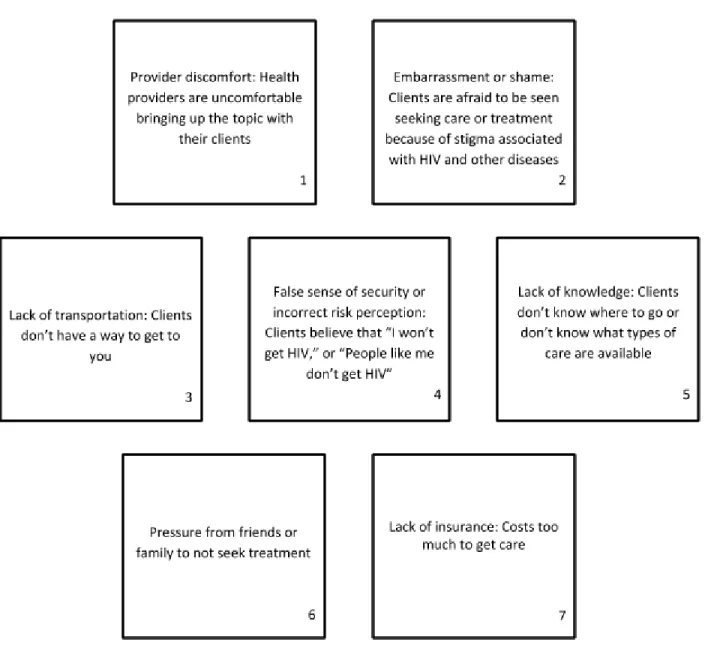
I conducted interviews with 5 participants in order to give them a chance to talk about their specific experiences in the field. The main focus of the interviews was a card sorting exercise similar to one of the survey sections. I asked participants to rank a number of different barriers to HIV-related healthcare, and then to explain their top three choices to me, giving specific examples they had seen over the course of their careers. The cards represented the following barriers to care:
Figure 2. Common Barriers to Care
Lack of insurance/costs too much to get care
Lack of knowledge - clients don’t know where to go or don’t know what types of care are available
Lack of transportation - clients don’t have a way to get to you
Embarrassment or shame - clients are afraid to be seen seeking care and treatment because of stigma associated with HIV and other diseases
False sense of security or incorrect risk perception - clients believe that “I won’t get HIV,” or “People like me don’t get HIV”
Pressure from friends or family to not seek treatment
Provider discomfort - Health providers are uncomfortable bringing up the topic with their clients
Limitations to this Design
to involve health departments in my study because many offer HIV-related care, I found it rather difficult to obtain contact information for health department employees, as this information is not freely available in most counties. According to research focusing on HIV prevention in the Southeastern US, health departments tend to lack PrEP providers and may be unsure where to refer clients who ask for PrEP (Hurt, 2017). There may also be a general lack of awareness about PrEP among health department providers. Perhaps one of the biggest problems for health
departments is a perceived lack of PrEP candidates. In an environment where a wide range of patients are treated, it is possible that providers assume that even patients presenting with STIs are not immediately in need of PrEP (even though STIs are one of the MAIN warning signs of potential HIV exposure and can even increase HIV risk).
Rural health care providers, nonprofits, and miscellaneous organizations: Because of the way that I collected my sample, it is possible that I missed certain health care providers. Organizations without websites, organizations not listed in state or national databases, and organizations that do not explicitly offer HIV-related services may have been missed in my search criteria.
Sample size: This sample only included 37 participants. While the results came from a wide range of people, the results are not statistically significant.
experiences may be similar to those in other regions of the country, my research is limited to the unique causes and effects of stigma in the South. It is important to focus on this region because there are a number of factors which drastically change the experience of disease-related estigma, especially for HIV. Religion, education, location, income, culture, and attitudes in the American South all create a unique set of barriers to high quality healthcare. Because this study was conducted on a fairly small scale, it will only be truly representative of people who live in North Carolina or similar Southern states/regions of the country.
Results and Analysis
The online survey was shared with approximately 150 nonprofits, clinics, researchers, health departments, and primary care providers in the state of North Carolina. The survey was open for approximately 6 weeks (February - March 2019) and I received 27 responses, yielding a response rate of about 20%. Table 1 shows the breakdown of respondents by category.
Figure 3. Sample size Healthcare provider (doctor, nurse, clinic-based medical
staff, etc.) 5
Community health worker (leading health programs,
educational programs, community organizing, etc.) 4 Patient advocate (case manager, patient outreach, financial
assistance) 1
Nonprofit (focused on health-related issues or serving populations that need access to health care, help accessing
services, etc.) 8
Research-based role 4
Other 5
TOTAL 27
nonprofit employees, and medical and behavioral researchers. This is representative of the many different pathways to care for HIV, and this diversity is captured in Figure 4 below.
Figure 4. Health Care Worker Demographic Data
Gender % of sample
Male 0.31
Female 0.56
Trans male 0.03
Trans female 0.03
Nonbinary 0.03
Other 0.00
Race
American Indian or Alaska Native 0.03
Asian 0.00
Black or African American 0.25 Native Hawaiian or Other Pacific Islander 0.00
White 0.56
Other 0.03
Hispanic/Latino
Yes 0.06
No 0.78
Years in Position
Less than 1 year 0.13
1-5 years 0.31
5-10 years 0.09
More than 10 years 0.31
Job Type
Healthcare provider (doctor, nurse, clinic-based medical staff) 0.16 Community health worker (leading health programs,
educational programs, community organizing, etc.) 0.13 Patient advocate (case manager, patient outreach, financial
assistance) 0.03
Nonprofit (focused on health-related issues or serving populations that need access to health care, help accessing
services, etc.) 0.25
Research-based role 0.13
In order to better understand the types of barriers faced by people seeking HIV prevention and treatment services, I felt that it was necessary to collect some demographic data about the clients that healthcare workers most commonly see in their clinics. Based on the data I collected, it appears that healthcare workers in North Carolina are serving a wide variety of clients. They are diverse in race and gender, but they do have some things in common. Most providers reported that their clients had at least a high school education, and that most of them were between the ages of 25-60. These statistics are fairly similar to national statistics reported by the CDC, showing that HIV affects a wide range of people of different ages, race, and gender.
Figure 5. Client Demographics
Gender % of sample
Male 0.49
Female 0.41
Trans male 0.02
Trans female 0.05
Nonbinary 0.02
Other 0.00
Race
American Indian or Alaska Native 0.02
Asian 0.00
Black or African American 0.48 Native Hawaiian or Other Pacific Islander 0.00
White 0.43
Other 0.07
Hispanic/Latino
Yes 0.04
No 0.89
Not Sure 0.07
Age
Pediatric (0-13) 0.00
Adolescents and teens (13-18) 0.07
Older adults (60+) 0.12
All ages 0.07
Not sure 0.00
Education level
Some high school 0.07
High school 0.44
Vocational training 0.00
Some college 0.07
College degree 0.11
Master's or higher 0.00
Not sure 0.30
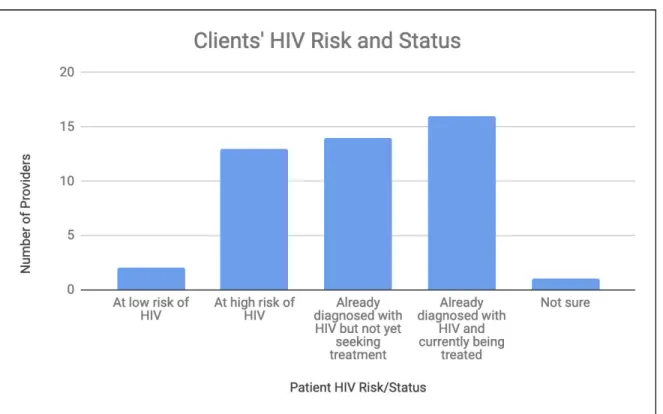
HIV Risk/Status
At low risk of HIV 0.08
At high risk of HIV 0.33
Already diagnosed with HIV but not yet seeking treatment 0.10 Already diagnosed with HIV and currently being treated 0.41
Not sure 0.08
Figure 6. Clients’ HIV Risk and Status
The survey results also showed another important theme: most providers reported that their clients do not have insurance, and they struggle to pay for HIV care and services, which is noted in Figure 7 below.
This is important to know, because it indicates that people may not be accessing services in traditional ways (i.e. primary care facilities or hospitals). If clients are more likely to seek care from free or low-cost options like nonprofits and state health departments, then policy reform and future research on stigma should be focused in these places.
Ranking Barriers to Care
Figure 8a. Card Sort Activity
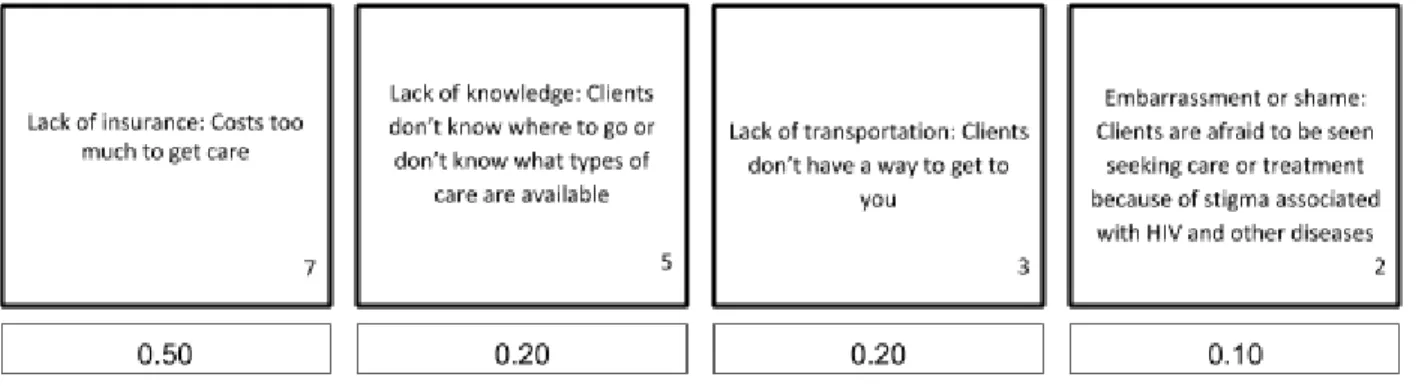
I compiled the results of the card sort activity in order to determine the most common barrier to care among clients and providers in this sample. Across all responses (both surveys and
Figure 8b. Card Sort Activity
Lack of insurance (card 7) was indicated as the most important barrier to care by nearly 50% of respondents, followed by lack of knowledge (card 5), lack of transportation (card 3), and
embarrassment/shame (card 2). Feelings of embarrassment and shame represent the outcomes of stigma, which is the main focus of this study.
Lack of transportation (card 3) also came up often in interviews with healthcare providers. One provider noted that many of his clients did not have their own personal
transportation, and were relying on public transportation or ride-share programs organized by the clinic. If clients miss their rides, they will likely miss their appointments. This is problematic for many reasons: clients are less likely to stay in care if they don’t come in for regular visits, and some federally funded programs like Ryan White will issue “penalties” for clients who miss multiple appointments, further limiting their access to care.
It is also worth noting that “Provider discomfort - Providers are uncomfortable bringing up the topic with their clients” was a popular choice for the number 2 ranking. Even though it
was not ranked as the most important barrier to care, respondents felt that it was a common
experience for their clients to interact with healthcare providers who were uncomfortable or
unwilling to talk about HIV.
Further Barriers to Care
Figure 9. Discussing HIV outside of healthcare settings
Although the results are somewhat scattered, providers reported that their clients are generally not able to discuss HIV prevention and treatment outside of the healthcare setting. The survey also asked questions about clients’ willingness to talk about HIV. Almost 60% of
respondents said that their clients were not embarrassed to talk about HIV prevention and treatment in a health care setting, indicating that the stigma occurs more often outside of the healthcare setting. This also supports the findings in Figure 9.
Discussion
In 2016, the Joint United Nations Programme on HIV/AIDS (UNAIDS) announced that an AIDS-free generation is “within reach,” and that with a set of concerted strategies, we could see this generation by 2030. One of their targets is for “HIV-related stigma and discrimination [to be] eliminated among service providers in health-care, workplace and educational settings” (UNAIDS, 2016). This echoes the findings across my research and underscores the need for further research on HIV-related stigma.
Nearly every participant in this study mentioned stigma at some point, noting that their patients experience it in many different ways. Based on prior research I believed that stigma was a barrier to HIV care for people, but I wanted to get a deeper look at the kinds of stigma people face and the different experiences they have as a result of this stigma.
The results of the card sort activity indicate that while stigma is an important barrier to HIV care, it is only one of many obstacles clients are facing. HIV care ultimately needs to be more well rounded, taking a “wrap around” approach to care and helping clients all the way through the care continuum. Because HIV is linked to so many other health disparities, there are more variables to consider when treating a patient. Social stigma and internalized stigma are two such variables.
ever makes contact with a healthcare provider. This is important to note, because the existing body of research has dedicated more space to reduction of stigma among healthcare workers rather than the general public. Healthcare workers may be trained at some point in their careers about recognizing and reducing stigma, but the average person is not exposed to such
knowledge.
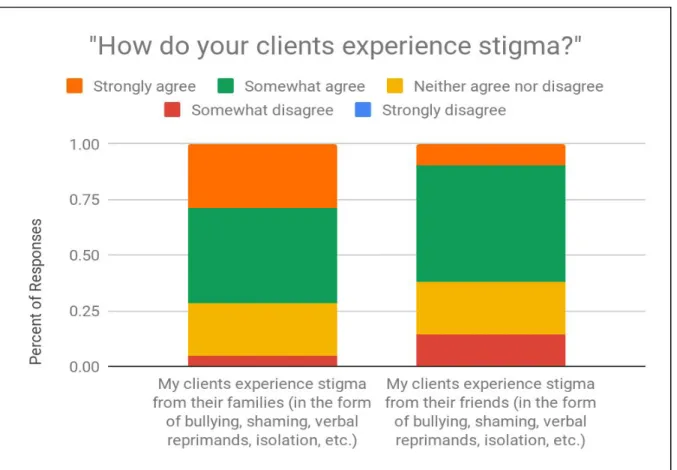
The results also suggest that stigma negatively impacts people’s ability to find a support system. It is generally believed that people diagnosed with HIV will benefit from a social support system if they are to remain in care and maintain their health over time (Ghisvand et. al., 2019). Figure 10 “Experiences of Stigma” suggests that many clients are experiencing stigma from their close friends and family, which are the same groups which traditionally make up social support systems.
This study also asked questions regarding experiences of stigma based in religion, but the data for this topic was insufficient for analysis. Future research could examine the complex relationships between religion and culture in the South, and the ways in which these beliefs impact HIV-related stigma.
This study looked at stigma attitudes and experiences at a single point in time, but it’s also important to assess how this adds to the changing narrative of stigma over time. For younger generations, HIV isn’t nearly as terrifying as it used to be. The panic that circulated in the 1980s has largely dissipated, but some scholars feel that HIV has become a “silent epidemic,”
especially among young people. Changing social climates have lead to decreased risk
risk has not. And in many cases, the climate may be even worse because stigma is more invisible than earlier scare tactics. Unlike in the past, HIV is no longer a disease of gay white men. HIV affects everyone, regardless of race, gender, or social status.
Still, I think that it’s important to take an individualized approach when addressing stigma. Because it is ultimately a structural issue, stigma affects different people in different ways. My survey data suggests unique cultural and racial variations of stigma in the South which may or may not exist in other regions of the country.
In order to prevent and treat HIV, it is imperative that people be willing to seek treatment. Without some type of interaction with a health care provider, it is nearly impossible for people to learn their HIV status, learn about their prevention options, and find treatment for their
diagnosis. HIV care has come a long way in the last 40 years, but if we truly want to eliminate HIV in the United States then we have to address the reasons that people don’t seek care in the first place.
Limitations
As with all research, this project faced certain limitations. The most important one to address would be the population from which I collected my data, and subsequently the privileges afforded to certain voices. When structuring policy approaches and treatment plans, most
sociologists recognize the importance of including the voices of the population most affected by the research. In this case, that population would be people who are experiencing HIV-related stigma. Unfortunately, based on time and financial constraints and ethical concerns, I was unable to interact directly with this population. Prior research notes that “the perspective of HIV
individuals” (Earnshaw, 2009). In an ideal world, I would have included perspectives from people currently experiencing stigma, rather than relying on their healthcare providers to paint a picture of what their lives look like. Future studies should attempt to integrate perspectives from both healthcare workers and their clients.
Another way to improve upon this study would be to compare results between providers and their clients. Other types of studies are able to compare provider feedback and attitudes with patient feedback and attitudes in order to establish measures of reliability.
The sample size for this study was relatively small, meaning that the results may not be statistically significant. A larger sample size would allow for a deeper look into individual qualities among physicians that influence the way they do or don’t stigmatize their clients. Any number of factors, including a provider’s age, race, religion, gender identity, ot sexual
orientation, may contribute to the type and severity of stigma reproduced by the health care system. It is hard to disentangle the effects of societal stigma vs. individual stigma, and therefore it is complicated to isolate stigma that occurs specifically in HIV healthcare settings.
Implications
individual actions of healthcare workers will make a large impact, this research demonstrates the need for a multilevel approach which addresses many types of stigma at many different levels.
Policy responses: New research suggests that a “biobehavioral response” is the most effective way to treat HIV. Biobehavioral responses combine both medical and behavioral responses to diseases in order to reduce barriers to care and increase the efficacy of treatment (Wechsburg, 2019). These are multilevel approaches which engage individual, couples, groups, communities, social networks, and institutional structures in addition to biomedical responses like PrEP and antiretrovirals.
Policy responses to HIV currently focus on funding medications and medical research. However, some researchers suggest that we need to re-evaluate the arenas in which we address public health concerns. They suggest that HIV should be discussed outside of the doctor’s office,
and that we should make HIV testing more normalized by offering it in more locations and
moving away from “risk-based” testing [targeting people based on their demographics]
(Bernstein, 2008). Many existing organizations are lacking the capacity and resources to treat the
full range of health disparities associated with HIV. This research suggests that future policy
responses should address this need and potentially fund HIV research in less traditional ways,
such as housing and transportation assistance, mental health counseling, and comprehensive case
Conclusion
In the introduction of this study, I presented Figure 1 as a hypothetical pathway for
stigma. This is reproduced below.
Figure 1. Stigma as Barrier to Care
Based on the results of the survey and interviews, I think that this pathway is incorrect. Stigma
appears at many points in the pathway to care, but it is not the only obstacle. Additionally,
stigma is not only caused by health care providers; in fact it appeared to primarily come from
other sources. I have adjusted this diagram to more accurately reflect the findings of my
research.
Treating HIV in the modern era requires new and unique ways to address all the barriers
people face when seeking care, including shame and stigma. The most important takeaway from
this research is that preventing and treating HIV is a much more complex process than it appears,
References
AIDSVu City Data. (n.d.). Retrieved October 22, 2018, from https://aidsvu.org/state/north-carolina/raleigh/
Bernstein, Kyle T. 2008. “Same-Sex Attraction Disclosure to Health Care Providers Among New York City Men Who Have Sex With Men: Implications for HIV Testing Approaches.” Archives of Internal Medicine 168(13):1458.
Blumer, H. (1986). Symbolic Interactionism. University of California Press.
Calabrese, S. K., Dovidio, J. F., Tekeste, M., Taggart, T., Galvao, R. W., Safon, C. B., … Kershaw, T. S. (2018). HIV Pre-Exposure Prophylaxis Stigma as a Multidimensional Barrier to Uptake Among Women Who Attend Planned Parenthood: JAIDS Journal of
Acquired Immune Deficiency Syndromes, 79(1), 46–53.
https://doi.org/10.1097/QAI.0000000000001762
CDC. (n.d.). Get Tested | National HIV, STD, and Hepatitis Testing. Retrieved January 23, 2019, fromhttps://gettested.cdc.gov/
Corrigan, P. W. (2013). Stigma of Disease and Disability: Understanding Causes and
Overcoming Injustices. Washington, UNITED STATES: American Psychological
Association.
Ding, L., Landon, B. E., Wilson, I. B., Wong, M. D., Shapiro, M. F., & Cleary, P. D. (2005). Predictors and Consequences of Negative Physician Attitudes Toward HIV-Infected Injection Drug Users. Archives of Internal Medicine, 165(6), 618.
https://doi.org/10.1001/archinte.165.6.618
Earnshaw, V. A., & Chaudoir, S. R. (2009). From Conceptualizing to Measuring HIV Stigma: A Review of HIV Stigma Mechanism Measures.
Ghisvand, Hesam, Peter Higgs, Mehdi Noroozi, Gholamreza Ghaedamini Harouni, Morteza Hemmat, Elahe Ahounbar, Javad Haroni, Seyran Naghdi, Ali Nazeri Astaneh, and Bahram Armoon. 2019. “Social and Demographical Determinants of Quality of Life in People Who Live with HIV/AIDS Infection: Evidence from a Meta-Analysis.”
Biodemography and Social Biology 1–16.
Goffman, E. (1963). Stigma: Notes on the Management of Spoiled Identity. Simon and Schuster.
HIV/AIDS | CDC. (2018). Retrieved November 11, 2018, from https://www.cdc.gov/hiv/default.html
HRSA. (n.d.). HRSA Online Data Warehouse. Retrieved January 23, 2019, from
https://findhivcare.hrsa.gov/
Hurt, C. (2017). Pre-Exposure Prophylaxis Perspectives from the Southeast. Webinar presented at the UNC Institute for Global Health and Infectious Diseases, UNC Chapel Hill. Retrieved from
https://www.seaetc.com/webinar-pre-exposure-prophylaxis-perspectives-southeast/
Isler, M. D. R. (2009). Perceptions and Social Constructions of HIV Prevention in the Black Baptist Church, 233.
Kaiser Family Foundation. (2017). U.S. Federal Funding for HIV/AIDS: Trends Over Time. Retrieved November 19, 2018, from
https://www.kff.org/global-health-policy/fact-sheet/u-s-federal-funding-for-hivaids-trend s-over-time/
Kaiser Family Foundation. (2017). National Survey of Young Adults on HIV/AIDS. Retrieved November 19, 2018, from
https://www.kff.org/hivaids/report/national-survey-of-young-adults-on-hiv-aids/
Kalichman, S. C., Cherry, C., Kalichman, M. O., Eaton, L. A., Kohler, J. J., Montero, C., & Schinazi, R. F. (2018). Mobile Health Intervention to Reduce HIV Transmission: A Randomized Trial of Behaviorally Enhanced HIV Treatment as Prevention (B-TasP).
Journal of Acquired Immune Deciency Syndrome, 78(1), 9.
Mahajan, A. P., Sayles, J. N., Patel, V. A., Remien, R. H., Sawires, S. R., Ortiz, D. J., … Coates, T. J. (2008). Stigma in the HIV/AIDS epidemic: a review of the literature and
recommendations for the way forward: AIDS, 22(Suppl 2), S57–S65.
https://doi.org/10.1097/01.aids.0000327438.13291.62
National Prevention Information Network. (n.d.). Retrieved from https://npin.cdc.gov/
North Carolina Department of Health and Human Services. (2018). HIV in North Carolina, 2017. North Carolina Department of Health and Human Services.
Scheff, T. J. (2000). Shame and the Social Bond: A Sociological Theory. Sociological Theory, 18(1), 84–99.https://doi.org/10.1111/0735-2751.00089
UNAIDS. (2016). UNAIDS Strategy 2016-2021. UNAIDS.
Villarosa, L. (2017). America’s Hidden H.I.V. Epidemic. The New York Times. Retrieved from
https://www.nytimes.com/2017/06/06/magazine/americas-hidden-hiv-epidemic.html
Wechsberg, Wendee M., Courtney Peasant Bonner, William A. Zule, Charlie van der Horst, Jacqueline Ndirangu, Felicia A. Browne, Tracy L. Kline, Brittni N. Howard, and Nathaniel F. Rodman. 2019. “Addressing the Nexus of Risk: Biobehavioral Outcomes from a Cluster Randomized Trial of the Women’s Health CoOp Plus in Pretoria, South Africa.” Drug and Alcohol Dependence 195:16–26.