Nascent Geographies of Austerity –
Understanding the Implications of a
(Re)new(ed) Welfare-to-Work Discourse
David Rigby
A doctoral thesis submitted in partial fulfilment of the requirements
for the award of Doctor of Philosophy of Loughborough University
September 2015
Loughborough University
ii
Abstract
Following the 2008/9 global financial crisis and ensuing economic uncertainty, the roll out of austerity politics has seen significant welfare retrenchment and a
recalibration of the state-citizen relationship which can arguably be characterised by a process of “punitive Neoliberalism.” Nevertheless, the impacts of austerity politics are proving to be geographically uneven: spatially, there is significant evidence that the northern and western parts of Britain, particularly towns and cities therein, are especially prone to the punitive impacts of neoliberal austerity politics, while socially, some parts of society (e.g. the young, the disabled) find themselves exposed to the worst effects of austerity. Conducted under the period of a Conservative-Liberal Democrat UK Coalition Government (2010-2015) this thesis starts by considering the degree to which punitive austerity policies are economically necessary or driven by political ideology. Alongside this it determines whether austerity politics is a
(re)new(ed) approach to welfare provision and the state-citizen relationship. The empirical parts of the thesis examine the tactics and strategies utilised by those conducting (the state), implementing (welfare providers and employers), and recipients (people and employees) of welfare-to-work policies, before considering what adaptations, innovations, co-operation, resistance and coping strategies are being employed by these stakeholders in response to austerity politics. In the final part, I argue that whilst many of the neoliberalised policies devised by the Coalition Government have been a renewal and reinvention of those already in place, this is part of a broader trend which is marked by the emergence of a more “punitive Neoliberalism” associated with a ‘work-first welfare’ regime.
Key words: Austerity; welfare reform; work-first welfare; punitive Neoliberalism; state-citizen relationship; in-work conditionality; England.
iii
Acknowledgements
I would like to start by acknowledging the support I have received from
Loughborough University who funded this research. I would also like to thank the Department of Geography for providing a productive environment in which to conduct the research.
Furthermore, the completion of this thesis would not have been possible without the guidance and diligence of my two supervisors, Dr John Harrison and Mr Michael Hoyler, who have been an ever present source of advice and support throughout my period of study. I have known both of them for the majority of my undergraduate and post-graduate studies at Loughborough University and much of what I have achieved is testament to the enthusiasm, encouragement and feedback that they have
provided me. Thanks must also be given to Professor Darren Smith, also of
Loughborough University, who as my final year undergraduate tutor first suggested to me that undertaking a PhD was something I should consider.
I would also like to extend a special thanks to all those who contributed to the data collection within the research. I am indebted to them for providing me with significant amounts of their valuable time as well as the insight they have been prepared to divulge to me of their day to day experiences of austerity and welfare reform, often going to well beyond the level of information required to enable me to have the best chance possible of completing an interesting and meaningful research project.
Finally, I would like to thank all my family and friends who have given me constant reinforcement and backing for the duration of my PhD study.
iv
Table of Contents
Abstract ii Acknowledgements iii Table of Contents iv List of Figures xiList of Tables xiii
Chapter 1: Introduction - Nascent Geographies of Welfare in the
Age of Austerity 1
1.1 Austerity and Welfare-to-Work – something new or more of
the same? 1
1.2 The United Kingdom as a lens on ‘austerity politics’ and
welfare reform 3
1.3 Research aims 5
1.4 Structure of thesis 5
Chapter 2: Nascent Welfare Geographies – (Re)new(ing) Prosperity
Through Austerity? 8
2.1 The Welfare State and its ‘Golden Age’ 9
2.2 Welfare State retrenchment and the rise of the Workfare
State 12
2.2.1 The collapse of Atlantic Fordism and the threat to the
v
2.2.2 The origins of welfare-to-work 13
2.2.3 The era of welfare-to-work 16
2.2.4 Moving towards a ‘Third Way’ 18
2.3 The age of austerity - qualitative shift or more of the same? 32
Chapter 3: (R)enew(ed) Geographies of Welfare - A Scalar Perspective
of Provision in the Era of Austerity 47
3.1 Austerity and shifting geographies of welfare provision on the
international stage 47
3.2 Austerity and welfare provision in the UK 56
3.3 The plight of welfare provision and austerity politics - the case
of North West England 68
3.4 Austerity, welfare provision, and the state - the importance
of cities 77 Chapter 4: Methodology 84 4.1 Introduction 84 4.2 Qualitative Research 85 4.3 Research Methods 85 4.3.1 Semi-structured interviews 85
4.3.2 Selection and recruitment of interviewees 87
4.3.3 Conducting interviews 93
vi
4.3.5 Coding 97
4.3.6 Triangulation 101
4.4 Positionality and ethical considerations 102
4.4.1 Positionality 102
4.4.2 Reflexivity 103
4.4.3 Ethical considerations 104
4.5 Wider policy relevance and academic research 105
4.5.1 Studies of welfare-to-work 105
4.5.2 Studies of post-recession austerity 106
4.6 Research questions and the presentation of empirical findings 106
4.7 Dissemination of research 107
4.8 Research limitations 108
Chapter 5: Austerity Politics - Economic Necessity or Politically
Driven Strategy? 110
5.1 Introduction – the geo-economics and geopolitics of austerity 110
5.2 The plan: austerity politics - in what sense a (re)new(ed)
welfare-to-work discourse? 113
5.2.1 (Re)new(ing) conditionality 115
5.2.2 In-work conditionality: extending welfare-to-work 118
5.3 The plan: (re)new(ing) welfare-to-work policies - economically
and/or politically driven? 123
vii
5.3.2 Small state ideology and the neoliberal tendencies of
welfare-to-work 127
5.3.3 Where the cuts fall 131
5.4 Contradictions between the politics and the economics of
(re)new(ed) welfare-to-work policies 133
5.4.1 Making work pay (better) 134
5.4.2 Dependency 137
5.4.3 Contributions 141
5.5 Perceptions: attitudes towards welfare-to-work 144
5.6 Summary 147
Chapter 6: ‘Creaming’ and ‘Parking’ – Examining the Strategies
and Tactics Employed by the Conductors, Implementers and
Recipients of (Re)new(ed) Welfare-To-Work Policies 150
6.1 Introduction 150
6.2 The conductors of welfare-to-work: the changing role of the
state 151
6.2.1 Incentivising work 151
6.2.2 Encouraging work through conditionality 157
6.3 The implementers of welfare-to-work: welfare providers,
employers and the privatisation of welfare services 158
6.3.1 Implementing work incentives 159
viii
6.3.3 Implementing Personal Independence Payments and Disability
Living Allowance reforms 174
6.3.4 Implementing housing benefit reforms 177
6.4 The recipients of welfare-to-work: people and employees on the
receiving end of austerity-fuelled welfare reforms 180
6.4.1 Experiencing work incentivisation policies 180
6.4.2 Experiencing the implementation of Universal Credit 181
6.5 Summary 188
Chapter 7: Co-operation, Conversion and Coping Strategies –
Responding to Austerity and Welfare-To-Work 191
7.1 Introduction 191
7.2 Adaptation: responding to welfare-to-work 192
7.2.1 Financial adaptations 192
7.2.2 Adaptation to Universal Credit: digital-by-default 195
7.2.3 Adapting to advice and support demands 197
7.3 Doing more with less: innovation in response to welfare-to-work 201
7.4 Forms of co-operation in response to welfare-to-work policies 204
7.4.1 Localised co-operative working 205
7.4.2 Co-operative funding arrangements 207
7.4.3 Collaborative monitoring and analysis 208
7.4.4 Co-operation around contract bidding 211
ix
7.5.1 Political resistance to austerity and welfare-to-work 215
7.5.2 Challenging welfare-to-work decisions 217
7.5.3 Resistance to austerity and welfare-to-work in cities 218
7.5.4 Justifying resistance: education and understanding 219
7.5.5 Organised resistance to austerity and welfare-to-work 221
7.6 Coping strategies in response to austerity and welfare-to-work
policies 222
7.6.1 Organisations coping with austerity and welfare-to-work 223
7.6.2 Citizens coping with austerity and welfare-to-work 226
7.6.3 Coping with welfare-to-work through employment 230
7.7 Summary 234
Chapter 8: Nascent Geographies of Austerity – Reflecting on the
Implications for (Re)new(ed) Welfare-To-Work in the Present and
Future 237
8.1 Nascent geographies of welfare in the age of austerity: resolving
the research questions 237
8.1.1 To what extent is austerity influencing the nature of welfare
provision in cities? 238
8.1.2 What political strategies and their associated material effects
are emerging in response to austerity? 244
8.1.3 How are the least insulated cities acting as locations of
x
processes? 248
8.2 The UK General Election: something new or more of the same? 257
8.3 “Punitive Neoliberalism”: connections with the wider theoretical
debate 261
References 265
Appendices 304
Appendix 1: Draft Interview Schedule: National Stakeholders 304
Appendix 2: Draft Interview Schedule: Regional Stakeholders 309
Appendix 3: Draft Interview Schedule: Local Stakeholders 314
Appendix 4: Participant Consent Form 319
xi
List of Figures
Figure 1: Distribution of youth unemployment in the UK in 1997 compared with 2000 (pages 21-22)
Figure 2: Youth unemployment in the worst affected towns and cities in the UK (page 23)
Figure 3: Percentage of total spend by the Labour Government on welfare provision
in 1997, 2004 and 2007, compared to Coalition spending in 2012 (pages 26-27)
Figure 4: UK public sector debt, 1900-2011 (page 28)
Figure 5: Increase in total UK Government debt, 2005-2015 (page 29)
Figure 6: Change in public sector debt under New Labour (page 29)
Figure 7: Change in poverty indicators over time in the UK up to 2010 (page 37)
Figure 8: Changes to UK public welfare spending between 1998 and 2015 (page 38-39)
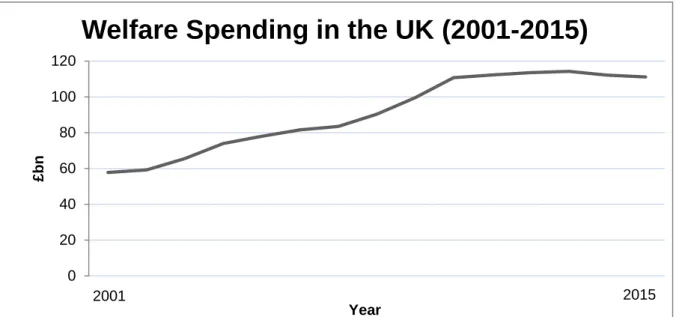
Figure 9: Welfare spending in the UK since 2001 (page 45)
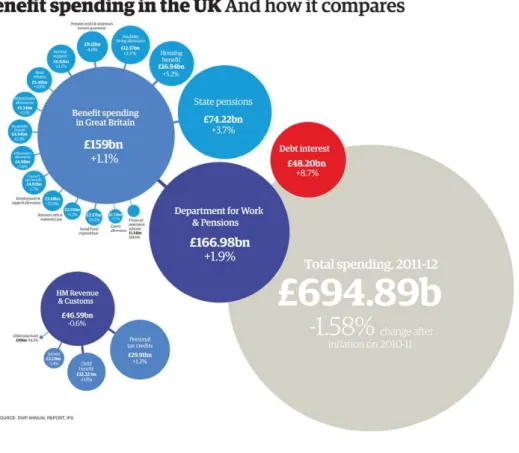
Figure 10: Breakdown of welfare spending in the UK for 2011-12 (page 46)
Figure 11: Projected progress of UK benefit cuts from 2010-2017 (page 60)
Figure 12: Government budget deficit reduction projections to 2020 (page 60)
Figure 13: Rate of youth unemployment in the UK compared with the EU and other OECD countries (page 62)
Figure 14: Youth unemployment in the OECD 2007-2012 (page 63)
Figure 15: Index of Multiple Deprivation 2010 for England (page 64)
Figure 16: Differences in reliance on public sector employment by constituency in 2010 (page 65)
xii
Figure 18: Differing risk of poverty between constituencies of North West England (page 70)
Figure 19: Local authorities whose constituents are at greatest risk of poverty in England (page 71)
xiii
List of Tables
Table 4.1: Selection of interviewees (page 89)
Table 4.2: Actual interviewee numbers (page 90)
Table 8.1: Breakdown of research findings: Austerity and welfare-to-work post-2008 financial crisis (page 243)
1
Chapter 1: Introduction – Nascent Geographies of Welfare
in the Age of Austerity
1.1 Austerity and welfare-to-work – something new or more of the same? The financial crisis of 2008-9 is portrayed as a pivotal moment for many states and their citizens, marking the onset of an economic collapse not seen since the 1970's, and possibly even the 1920's (Boyer, 2012). Yet unlike previous economic crises, such as the Great Depression of the 1920's and 1930's which preceded the formation of Welfare States, or the Organisation of the Petroleum Exporting Countries (OPEC) crisis of the 1970's which triggered neoliberal workfarism, it is arguable whether the events of 2008-9 are leading to a similar ‘new’ approach to welfare. It appears certain that welfare geographies, by which I mean the changing state-citizen relationship, as well as geographies of welfare, by which I mean the spatial complexion of welfare reliance and provision, are changing as a result of the 2008-9 financial and economic crisis. However, it remains uncertain whether this is sparking (re)new(ed) welfare geographies/geographies of welfare. It is this
uncertainty that this thesis seeks to explore.
One thing which is for sure is that the global economic downturn that followed the 2008-9 global financial crisis has further challenged the state’s legitimacy as a
guarantor for its citizens and further exposed many aspects of welfare policies to the scrutiny of the market-driven capitalist ideology associated with Neoliberalism (Peck, 2010). Many governments have either decided, been forced, or through a
combination of decision and enforcement responded to the crises by implementing policies of fiscal rationalisation in order to curb rising public sector debts, preserve economic wellbeing, and, they hope, lead to a return to growth. However, there are those on the political left who vehemently oppose such policy discourses, insisting that they merely serve to intensify the fiscal crisis. They advocate alternative methods, such as lowering debt levels at a more sustainable rate coupled to proactive social policies, or even more simplistic ‘tax and spend’ regimes which dismiss the role of public debt in the process of economic recovery altogether
2
“somehow it has become conventional wisdom that now is the time to slash spending, despite the fact that the world’s major economies remain deeply depressed. This conventional wisdom is not based on either evidence or careful analysis. Instead, it rests on…figments of the policy elite’s imagination - specifically, on belief in what I’ve come to think of as the invisible bond vigilante and the confidence fairy.”
For a number of states, servicing debt has become increasingly difficult and near impossible in some cases, following the financial crisis of 2008-9. Taking the
example of the United Kingdom (UK), by February 2015 public sector net spending was still greater than income to the tune of £6.9bn. Indeed, whilst the deficit in 2013-14 was one third less than at its peak in 2009/10, public sector debt has continued to increase, and by February 2015 amounted to £1468.5bn, or 79.6% of UK Gross Domestic Product (Office for National Statistics (ONS), 2015).
What is clear is that it was left to the state in countries that were at the centre of the crisis to bail out the financial institutions (though some point out this was still a choice rather than the absolute necessity it was portrayed as being). In the UK, this amounted to £133bn cash outlay, with a total guaranteed outlay of £1,162bn
between 2007 and 2010 (National Audit Office, 2015), whilst Greece has, since 2010, been subject to a €259bn bailout from the European Union (EU) and
International Monetary Fund (IMF) (European Union, 2015). This compares with the USA, where the Federal Government allowed Lehman Brothers to go bust by
refusing to bail it out of its $613bn debt (Marketwatch, 2008) – a decision coming after the US Treasury took over Fannie Mae and Freddie Mac in September 2008 as the subprime mortgage crisis threatened their viability.
Such events have inevitably put immense strain on basic public expenditure requirements and have led to what is being termed “austerity politics” (Peck,
2012:633). Moreover, it is putting the state-citizen relationship under the microscope once again, as people examine what the state is providing (an empirical question), and debate what the state should be providing (a normative question), for its citizens (Mooney, 2011). As a consequence, it can be said that a ‘new politics of austerity’ has come to the forefront of government discourse as the preferred response to debt and spiralling government spending, with the primary intention of many being to cut
3
their ballooning fiscal deficits to more manageable and sustainable levels. MacLeavy (2011:355) defines this ‘new’ form of austerity as an attempt to:
“garner public support for the reduction or withdrawal of welfare entitlements through appeals to frugality, self-sufficiency and fiscal prudence. In
particular…the recasting of the former Labour Government’s work incentives and welfare disincentives amidst mounting pressures on public expenditure.”
Coupled to this is a more distinctive workfare dialogue (MacLeavy, 2011; 2014), but there is an ongoing debate as to whether this ‘new’ dialogue is something
qualitatively new or a new phase in a much longer process of neoliberal welfare reform?
The impacts of this more stringent workfare regime discourse appear to be highly contingent and geographically uneven over time and space, often to the detriment of those parts of society who are already suffering most from what is transpiring to be a prolonged economic downturn (MacLeod and Jones, 2011; Martin, 2012). This in turn leads to an interesting nexus of (re)new(ed) geographies of welfare and welfare geographies in the UK and beyond.
A number of questions therefore arise over the nature of austerity politics and the accompanying welfare-to-work rhetoric which has emerged over the past seven years. In particular, it is important to ask whether the policy responses to this latest economic crisis are entirely new, a continuation of previous ideas and approaches, or whether they signify a renewal (by this I mean a hardening) of extant approaches? In the same way, are the responses of citizens and communities affected different from before, and are there any contradictions presenting themselves as a result of austerity measures being enforced?
1.2 The United Kingdom as a lens on ‘austerity politics’ and welfare reform This research project sets out to critically analyse the fundamental implications of austerity from the perspective of welfare-to-work discourses as they have been designed and implemented in the UK post-crisis. The first question which must be answered is why the UK? It could be contended that the socio-economic plight of the
4
UK state is far from unique, not only on the global scale but even within Europe. Similarly, it has not been one of the countries least hit or hardest hit since the financial crisis (Hodson and Mabbett, 2009; Taylor-Gooby, 2012a). Instead, this research project has chosen to focus on the UK because of the stark contrast between London and the South East region – Europe’s biggest financial centre and one of the world’s most important finance hubs and a centrepiece for wider global economic and social flows and processes (Sassen, 1991; Allen et al., 1998; Massey, 2007), and the largely public sector-dependent post-industrial regions of northern and western Britain (Gardiner et al., 2013; Martin, 2013; Hildreth and Bailey, 2013). For many, the UK is the birthplace of social welfare and the paternalistic relationship between the state and its citizens (Beveridge Report, 1942; Powell, 2000). For these reasons the UK can offer particularly revealing insights into (re)new(ed) welfare geographies and how nascent geographies of welfare are being articulated under the auspices of an austerity-driven welfare-to-work prerogative.
However, in order to analyse these issues in as much detail as possible, the UK as a whole encompasses a spectrum which is too large for the purposes of this project. Indeed, Lowndes and Pratchett (2012:24) have noted how “it is at the local level that most of the social and welfare issues that arise from cuts and unemployment will be experienced.” Equally, it has been well documented that areas heavily reliant on the public sector for jobs and services are suffering disproportionately as a consequence of austerity politics (Kitson et al., 2011). To this end, empirical research was focused on the towns and cities of North West England. The North West was chosen
because it displays some of the most pertinent characteristics and conditions for austerity and welfare-to-work to be implemented and experienced. In 2011 when the research began, the North West was the region with the greatest proportion of local authorities classified as deprived (Department for Communities and Local
Government (DCLG), 2011), with 15 of the 50 English boroughs with the most constituents at risk of poverty located in the region – most being inner city areas (Guardian, 2012). The Index of Multiple Deprivation 2010 also revealed that 7 of the 28 most deprived cities in England were in the North West region (Centre for Cities, 2011a). More broadly, cities have been identified by academics as key sites of welfare provision, and so are likely to be the locations where nascent welfare geographies will be most prominent. In this context, Brenner and Theodore
5
(2002:367) have indicated that “the retrenchment of National Welfare State regimes … [has] imposed powerful new fiscal constraints upon cities.”
1.3 Research aims
The aim of this thesis is to examine whether or not there has been a qualitative shift in the welfare-to-work discourse following the crisis in capitalism triggered by the 2008-9 financial crisis. The overriding aim is to discover if what we are witnessing is simply a reinvention or re-articulation of the neoliberal paradigm which has preceded it. Moreover, this means uncovering whether in fact what is now being contingently experienced across a number of spatial scales is something altogether innovative and new, or whether what we are seeing is the emergence of new aspects but contained within broadly the same direction of travel (Brenner et al., 2010). Given these initial conceptual and theoretical groundings, three core research questions frame the project:
To what extent is austerity influencing the nature of welfare provision?
What political strategies and their associated material effects are emerging in response to austerity?
How are the least insulated cities acting as locations of co-operation and resistance to such strategies and policy processes?
1.4 Structure of thesis
Following this introductory chapter, Chapter 2 adopts a chronological approach to UK state welfare provision from its inception in the mid-1940’s up to the mandate of the 2010-2015 Conservative-Liberal Democrat Coalition Government. This chapter pinpoints the primary features denoting each period of welfare reform. In so doing it identifies the major economic and social policies and processes characterising each era. This chapter enables me to unpack issues relating to the key question
surrounding whether or not there has been a qualitative shift in the policies of welfare provision following the recent financial crisis and subsequent economic downturn.
6
Chapter 3 then examines new theoretical frameworks for conceptualising welfare geographies post-financial crisis. A scalar framework is used to reveal the uneven nature of welfare reforms at global, national, regional and local levels.
Chapter 4 outlines the methodology used. This includes a detailed analysis of the methods utilised and applied in the design and execution of the research project in order to answer these questions. The chapter also addresses issues concerning research ethics, positionality and reflexivity.
The second part of the thesis addresses the research questions outlined earlier in three empirical chapters, each one focusing specifically on answering one of the research questions laid out.
Chapter 5 looks at the current raft of austerity policies and their influence on the discourse of welfare-to-work. It places particular emphasis on assessing whether the policies are an economic necessity as the Coalition Government suggests, or a politically conscious decision based on ideology. The chapter is structured so that it looks at whether these processes are new or renewed in comparison to those seen previously, elucidates whether these policies are economically necessary or part of a politically driven narrative, before finally identifying some contradictions which have emerged.
Chapter 6 examines the tactics and strategies being utilised by different stakeholders in the welfare-to-work process. The chapter is broken down by the perspectives of each key stakeholder. It begins by observing the tactics and strategies employed by those conducting welfare-to-work policies, principally the state. It then goes on to look at those charged with implementing welfare-to-work policy, most notably welfare providers and employers, with a particular emphasis on assessing the privatisation of welfare services. Finally, the chapter scrutinises those tactics and strategies utilised by the recipients of welfare-to-work policies, namely people and employees, and in particular how such policies are applied to their individual circumstances and hence how they respond and deal with the impacts which result and which they experience in their daily lives.
The final empirical chapter is Chapter 7, which addresses the specific array of responses to austerity and welfare-to-work policies, both from those implementing
7
the reforms and those who experience them. The chapter begins by addressing how stakeholders - local authorities, private companies and voluntary organisations - are adapting to changes brought about by austerity and welfare reform. It then goes on to look at how they are also being innovative to overcome the consequences of austerity politics. The chapter analyses how key stakeholders are co-operating to mitigate the impacts of welfare reform, particularly from the perspective of
overcoming resource constraints in order to respond to and meet welfare-to-work objectives effectively. Following on from this, the penultimate section draws attention to forms of resistance aimed at rebuking austerity and welfare reform agendas and lessening their impacts. The final part of the chapter focuses on the coping strategies citizens and employees are using to respond and develop strategies to manage welfare reform more effectively in their everyday lives.
Chapter 8 resolves my questions by connecting my findings, principally from the interviews undertaken, with the academic and policy literatures. It uncovers a
number of additional questions which have arisen in the research process and which might usefully be used to formulate future research projects that can extend and deepen our understanding of this topic. Crucially, the chapter will also elucidate the unique contribution to the existing knowledge base and the connections with
established theory and literature around austerity politics and welfare-to-work that the thesis makes, and what the implications of such a contribution are going forward.
8
Chapter 2: Nascent Welfare Geographies – (Re)new(ing)
Prosperity Through Austerity?
This research is focused on identifying whether there has been a qualitative shift in both the geographies and politics of welfare provision following the 2008-9 financial crisis. To begin to address this main research aim, the purpose of this chapter is to identify the key periods and shifts in welfare geographies since the advent of Welfare States in advanced capitalist countries in the second quarter of the 20th Century. This is necessary if we are to decipher whether or not we are currently witnessing a qualitative shift sparked by the 2008-9 financial crisis and ensuing global economic downturn. The notion of a qualitative shift is important because a number of
academic and political commentators are relating current political-economic shifts to those which accompanied the collapse of the Atlantic Fordist-Keynesian institutional compromise in the 1970’s, and before that the Great Depression of the 1920’s and 1930’s which prompted the formation of the Keynesian Welfare National State (Jessop, 1993; 2002). Moreover, and in the UK context, the notion of a shift in welfare policy, provision and the geographies of welfare has particular pertinence to the shift which has arguably occurred under the auspices of an ‘austerity package’ of policy measures outlined and implemented by the 2010-2015 Conservative-Liberal Democrat Government (HM Government, 2010). This in particular has important implications for the state-citizen relationship, that is, the always contested and negotiated bedrock of how modern democratic societies operate (Pykett, 2012; Painter and Pande, 2013).
To achieve this, the chapter will be structured according to the generally accepted periods of welfare geographies, specifying the characteristics of each period and the qualitative shifts which have taken place from one period to the next. Section 2.1 will therefore focus on the ‘Golden Age of the Welfare State’ – from its infancy in the inter-war and immediate post-war years through the forty years of political
consensus. Specific emphasis is then placed on the widely accepted qualitative shift from traditional Keynesian-style welfare policies of the mid-20th Century to the emergence of workfare in the final quarter of the 20th Century. Accounting for this
9
qualitative shift, Section 2.2 traces the emergence of a ‘welfare-to-work’ discourse, but in particular, will identify and characterise different elements to this discourse with reference made to the different political standpoints adopted by various UK Governments from the late-1970’s (and the advent of Thatcherism) to the ‘Third Way’ policies of New Labour which immediately preceded the financial crash of 2008-9. It will outline the various different phases this system went through, as well as contending how these were arguably part of the same wider agenda as opposed to completely different notions in their own right. The final part of this chapter, Section 2.3, will focus more acutely upon the current political-economic era of ‘austerity’. An emerging academic literature is developing around notions of post-Neoliberalism (Peck et al., 2009; Hodkinson and Robbins, 2013), as well as a ‘new’ politics of austerity (MacLeavy, 2011; Ladi and Tsarouhas, 2014) and stricter
welfare-to-work conditionality, particularly for those in low paid forms of employment (Newman, 2011; Etherington and Daguerre, 2015). Henceforth, this section
interrogates whether these contributors are suggesting a qualitative shift in the welfare geographies and the state-citizen relationship, or are we are seeing a reinforcement of more substantial long-term processes of neoliberal restructuring, welfare-to-work albeit through a new discourse of austerity.
2.1 The Welfare State and its ‘Golden Age’
Prior to World War Two, there was no effective structure for welfare provision through the state. For the most part, citizens were reliant upon themselves and their families, as well as a growing number of charities, to access welfare services (Carpenter and Speeden, 2007, in Carpenter et al., 2007). Whilst it cannot be ignored that there were extremely basic forms of welfare provision provided by the state prior to this, they were minimal and sporadic at best. However, post-World War Two this all changed, with a dedicated system of provision implemented by governments to establish conditions enabling an adequate standard of living for all citizens (Pierson, 1998). These countries included those in Western Europe, as well as those in North America, New Zealand, Australia and Japan. This new system of welfare provision entailed a number of key traits including free healthcare and universally available child benefits, as well as employment support for those out of work (Jones and
10
Lowe, 2002) - a policy especially pertinent given the large number of soldiers returning from the end of World War Two. Furthermore, it defined for the first time that the state had a specific responsibility to provide the basic necessities for
attaining a minimum standard of living for its citizens and returning soldiers, who as constituents of the state had a preordained right to such provision (Goodwin and Painter, 1996). In essence this was the first significant qualitative shift in ideology seen in advanced countries; there was a definitive shift to enforce the responsibilities of states, and concomitantly emphasis upon the basic rights and needs of their citizens and former military personnel.
The conceptual basis of the Welfare State in the UK has its origins in the early 1940’s, when Lord Beveridge published The Report of the Inter-Departmental Committee on Social Insurance and Allied Services (otherwise known as the
Beveridge Report). This was to shape the attitudes of British Governments for years to come. In his 1942 report, Beveridge identified five ‘evils’ (squalor, idleness, want, ignorance and disease) which he believed were effectively choking social progress and stunting the potential for greater economic growth. He proposed a radical overhaul and reformation of the primitive social welfare system already in place in order to address these issues. His solution was to replace it with a fully-embedded system of welfare. In his report, Beveridge stated that:
“the main feature of the Plan for Social Security is a scheme of social insurance against interruption and destruction of earning power and for
special expenditure arising at birth, marriage or death. The scheme embodies six fundamental principles: flat rate of subsistence benefit; flat rate of
contribution; unification of administrative responsibility; adequacy of benefit; comprehensiveness; and classification…Based on them and in combination with national assistance and voluntary insurance as subsidiary methods, the aim of the Plan for Social Security is to make want under any circumstances unnecessary” (Beveridge Report, 1942:9).
The cessation of World War Two and the subsequent election victory of the Labour Party in 1945 saw the recommendations of the Beveridge Report widely
implemented. With them came the inception of the nascent Welfare State in the UK, accompanied by a swathe of new political legislation and policy processes, such as
11
the birth of the National Health Service in 1948. This was the beginning of a new relationship between the state and the individual citizen; the state defined the individual as having certain societal responsibilities to fulfil, but which would only be attained via state provision of core services such as education, health care and social security (Jessop, 1993). Thus, the national welfare system became inherently focused on citizen rights to an adequate standard of living and it was the
responsibility of the state to ensure such welfare provision to all citizens in a redistributive manner ‘from cradle to grave’ (Beveridge Report, 1942).
The Keynesian Welfare National State, as the public welfare system became known, had several key features, the foremost of which surrounded the ideology of state intervention ensuring sustained and stabilised economic growth. By embodying a full employment rhetoric, the Fordist system of mass production and consumption traits associated with continued internationalisation of the world economy through the Keynesian Welfare State, could be suitably maintained and progressively
strengthened (Mishra, 1999). Indeed, Keynesian-based welfare would create a ‘floor’ in the downward spiral caused by an economic downturn, creating conditions for a “minimum level of consumption regardless of economic activity” (Painter, 2002:161). As corollaries of this principle, through investment in a full employment ideology, the state could then recycle its economic surpluses back into the national system to target improvements in the standard of living of citizens, public services, and infrastructural integrity amongst others. Furthermore, it marked the point at which specific boundaries of citizenship were created to dictate the responsibilities imposed on the state for sustaining its citizens (Raco, 2009).
During this period of Keynesianism, the UK economy went through a ‘Golden Age’ of macroeconomic stability and growth (Pierson, 1998), and this boom in economic productivity was accompanied by extensive social progress, primarily through the widespread expansion of the Welfare State and other public sector enterprises. Piachaud (2012) has noted that a large percentage of the population were lifted out of poverty (which is frequently defined as 60% of median adjusted income), and inequality, which had for a long period of time been markedly increasing, fell
significantly during this period. As Prime Minister Harold Macmillan aptly put it on the 20th July 1957, “you’ve never had it so good” (quoted in British Political Speech, 2015a:n.p).
12
General living standards also increased substantially, and unemployment fell below 3%, a level which has never since been achieved (Mishra, 1999). This post-war boom rapidly gathered pace in the 1950’s and 1960’s, taking advantage of the success of Fordist mass production and consumption, and its reliance upon large reservoirs of locally-available labour (Jessop, 1993). High levels of consumerism were sustained as disposable income for many families rose rapidly, along with their living standards and quality of life, and was aided by the enormous package of national public sector expansion, and the subsequent jobs that came with it (King et al., 2012).
2.2 Welfare State retrenchment and the rise of the Workfare State
2.2.1 The collapse of Atlantic Fordism and the growing threat to the traditional Welfare State
This long post-war economic ‘boom’ came to an abrupt end in the early 1970’s as the structure of the internationalised Fordist-Keynesian system of capitalism began to crumble (Jones and Lowe, 2002; Jessop, 1993). The global economy went through a series of unprecedented upheavals, including the demise of the Bretton-Woods system in 1973, as well as the OPEC oil crises of 1973 and 1979, which pushed the global economy from one crisis to another throughout the 1970s (Altvater, 2009). The global nature of these crises threatened North Atlantic Fordist states (due to the role of foreign direct investment (FDI), the freeing up of capital and labour, and the emancipation of newly industrialising countries (NICs) in South East Asia), with the implications for the state being rapidly rising unemployment, low economic
productivity and exponential growth in government debt. More locally, it consisted of issues surrounding local labour disputes, stagflation and strained living standards.
With the economic crisis being seen overwhelmingly as a failure of the Fordist-Keynesian system, this implied that the traditional Welfare State was also to fall on its own sword as a perpetrator of economic instability. It also forced politicians and businesses alike to start searching for alternatives to the failed Keynesian Welfare State system.
13
Welfare State retrenchment has been the underlying facet of the majority of Welfare States following the end of the ‘Golden Age’ (Schulze, 2010). It had become clear that the system of welfare provision which had underlain both global and national economies since the inception of the Keynesian Welfare State in the 1940’s was flawed. The result was another definitive shift in policy thinking; at the end of the 1970’s there was a clear qualitative shift away from the Keynesian Welfare National State (Jessop, 1993), which had become so well established over a number of decades in many countries, towards a more punitive and market-oriented regime of post-industrial Schumpeterian Post-national Workfare Regimes (Jessop, 2002).
2.2.2 The origins of welfare-to-work
This emerging regime of workfare represented a clear and definitive shift away from the Welfare State which had preceded it. It consisted of an ethos of the responsibility of the citizen to earn their rights to state welfare provision, primarily through paid employment (Jessop, 1993). The state system in this era began to be scaled back dramatically. Basic amenities such as unemployment support were still available to those who required them in their most basic forms, however the primary emphasis was placed upon people beginning to help themselves rather than relying on the state as a guarantor (Jessop, ibid). This shift in emphasis did not change overnight; however, there was a clear shift from the 1970s onwards whereby the process of shifting the emphasis from the state towards its citizens began.
Conditioned access to welfare support, including housing benefit, tax credits and disability support, coupled with an increased requirement to work, marked a
distinctive shift in discourse. A second trend saw the state not only cut back on some welfare functions, but an increasing number of welfare functions were outsourced by the state to private sector providers including a growing number of voluntary and third sector organisations (Leonard, 1996). This new discourse became known as workfarism, or welfare-to-work. This new approach to welfare became most
prevalent in countries falling under right-wing (neo) conservative mandates, such as the USA under President Ronald Reagan (1981-1989), and the UK, under
successive Conservative Governments (1979-1990 under Margaret Thatcher, and 1990-1997 under John Major) (Dolowitz, 1998; Jessop, 2003; Peck, 2001; Peck and
14
Theodore, 2001). The policy of welfare-to-work became established as the
cornerstone of many political mandates at this time, with far greater conditionality being placed on welfare provision than in the ‘Golden Age’, as well as the state actively pushing people back towards the labour market (Carpenter and Speeden, 2007, in Carpenter et al., 2007). This marked a further qualitative shift, with power moving away from the labour force and its trade unions to reside within the neoliberal principles of the market and the wider capitalist system (Cripps et al., 2011; Painter, 2002; Wills, 2001).
In the UK, the Conservative Party election victory of 1979 ushered in a new era of supposedly rationalised economic thinking, founded on minimal state intervention, faith in the market and the advocating of private enterprise and ‘financialisation’ of the economy (Jessop, 1995; King et al., 2012; Peck and Tickell, 1992; Peck and Tickell, 1995). This new economic agenda promoted deregulation, privatisation and reduced state intervention in accordance with an “ideological attachment to a neoliberal economic orthodoxy” (Held et al., 2003:4). States were driven to adopt a new economic imperative; one aimed at reducing public spending on welfare provision and re-concentrating it in certain spatial domains to maximise global competitiveness in a “new, ruthless economy” (Head, 1996, cited in Leonard, 1996:113) known as the neoliberal competition state. The very fabric of state space began to be restructured. As Brenner (2004) notes, the power logistics of globalising forces began to dictate that the national state was no longer sufficient as the spatial fix for competitive global accumulation regimes. Subsumed by the discourse of “locally embedded economic interactions becoming the basic preconditions for
globalised capital accumulation” (Sassen, 1991, cited in Brenner, 2004:6), it was now national and post-national spaces - what Brenner (2004) terms “new state spaces” - which were taking precedence. In turn, this discourse also meant a shift from welfare to workfare through a neoliberal mandate (MacLeavy, 2014).
What this workfare discourse meant for UK society was a targeted reduction in benefits across the system (including the rate of unemployment benefit), juxtaposed with increased conditionality, greater scrutiny over welfare provision eligibility, and raising tax rates. These changes had significant consequences; many people had lost their jobs in traditional manufacturing and other industrial sectors, and many citizens had slipped into poverty due to the combined effects of diminishing income
15
from the lack of employment and concomitant reduction in state welfare support (Taylor-Gooby, 1988). In 1984, one decade after ruptures in the Fordist-Keynesian consensus emerged, unemployment in the UK peaked at over 3 million (12%) and this put enormous pressure on the welfare system (Office of National Statistics (ONS), 2009).
Henceforth, the traditional Keynesian Welfare State that had existed so successfully up until the 1970’s had rapidly become unsustainable. In short, there were less people in employment contributing to the welfare budget through taxation, and more people drawing on the welfare budget due to rising unemployment. Because of this, the traditional system of welfare provision as it had existed for several decades was considered no longer viable by leading socio-economic organisations such as the World Bank and IMF, as well as the right wing Conservative element of the British political system, and was to be reconfigured through a twin-track neoliberal workfare framework deemed far more effective and competitive in an era of globalisation. However it should be noted that there were alternative views, including those on the political left who advocated even greater expansion of the public sector as a means of overcoming sustained economic decline. Thus whilst for the majority the everyday reality became one of workfare underlain by certain basic welfare allowances, a more traditional, yet highly conditional, rubric of welfare provision for those most in need remained in place. Such a policy mantra would be vigorously championed by successive Conservative Governments between 1979-1997, and although many argued it successful in maintaining a quasi-Keynesian welfare system the cutbacks were often to the detriment of those members of society occupying the most
precarious working circumstances (low paid, part time), as well as those in poverty, left on the periphery of society (Brenner and Theodore, 2002).
The workfare state ideology in the UK effectively began altering the cultural
perception of welfare responsibility being the absolute remit of the state, and instead enforcing it upon individuals, families, and, to an extent, the voluntary sector (Ross, 2009; Grimshaw and Rubery, 2012). This fresh approach to governmental policy processes had started to reverse the state-citizen relationship; welfare provision from now on would be much more closely attributed to the responsibilities of citizens to contribute economically to the overall wealth of the state in return for even the most basic welfare services, with concerted state intervention only coming to the fore as a
16
last resort (Raco, 2009). If the Welfare State was seen to provide a win-win for the state (a better educated, healthier workforce leading to increased productivity) the move to workfarism was seen to offer another win-win (moving more people into work, reducing reliance on welfare benefits, and reducing the state’s direct commitment to supporting its citizens). In addition, an underpinning feature of
Thatcherist neoliberal discourse was the enactment of a swathe of policies designed to promote deregulation of economic activities and corporate tax breaks. These procedures were incorporated to create a more attractive business climate, as well as a more competitive economic environment given the impending global threats from FDI outflows and the growing dominance of NICs, and therefore generating higher profitability and greater revenues for the UK state to plug the large hole in its fiscal budget.
Thus, the move towards a new ‘Workfare State’ by the Thatcher Government began to offer a fairly consistent resemblance to the right wing ideologies of welfare
extremism devised by the Reagan Government and their Wisconsin Model in the USA. The Wisconsin Model prescribes how social mobility is attained through economic and social determinants. This was instead of its more traditional links to the socio-democratic systems seen across many of the advanced states of Europe (Groot et al., 2011).
2.2.3 The era of welfare-to-work
It is now common-place to talk of welfare-to-work as the dominant discourse of welfare provision in the post-Fordist, post-Keynesian, post-national era of neoliberal capital accumulation. The outcome of adopting such a discourse and “its
destructively creative ‘logic’” (Peck, 2010:106), coupled to the widespread diminution of state benefits, has led many to point to a colossal growth in inequality, insecurity and a rapid loss of social stability (Lister, 1998; Peck, 2002; Taylor-Gooby, 2004; Theodore and Peck, 1999).
The neoliberalisation of welfare provision was pivotal in further increasing the
distinctive geographical unevenness through which wealth, employment and welfare provision, and therefore quality of life and standard of living, have developed in the
17
UK as a result of welfare-to-work policies (Carpenter, Speeden, Griffin and Walters, 2007, in Carpenter et al., 2007). Dealing with economic crisis in the 1970’s and early 1980’s and then again in 1992/3, successive Conservative Governments had
managed not only to control budget deficits and relinquish the state from its ties to a role of basic socio-economic guarantor, but had also succeeded in transforming the underlying ethos of British society by setting in motion the diminution and
reorganisation of an assumed set of particular citizen rights to be provided directly by the state. As Fothergill and Wilson (2007) point out, the Conservatives had
institutionalised a system nurturing individual responsibility and private innovation, or more succinctly, a shift towards conditional state provision in exchange for individual contribution to society through meaningful employment, or the accession of the responsibilities of citizens over their basic rights. Taylor (2010:3) succinctly acknowledges this, suggesting that:
“because of Neoliberalism most states became more subtly callous towards their less well off, tolerated more exploitation of those who worked…were less generous with welfare provision and were more prone to support the
ambitions of the super-rich.”
This radical new ‘welfare-to-work’ agenda was to lay the foundations of the
increasingly privatised system of welfare provision we see today. Whilst the UK did not go as far in this process as other states around the world, most notably the American conservative movement under Reagan and then George Bush Senior (Pierson, 1995), under the Thatcher regime state enterprises were progressively and systematically rolled back in favour of privatisation and unfettered market capitalism (Peck and Tickell, 1992; Peck and Tickell, 1995).
By the mid 1990’s it became clear that the workfare regime which numerous states had rigorously implemented and followed incorporated a number of flaws and challenges which could not necessarily be overcome. States were encountering significant difficulties with respect to poverty and unemployment under such a mandate as well as rapidly rising inequality (Holt and Greenwood, 2012). These problems paved the way for change in political leadership, with more liberal and socially sympathetic politics coming to the fore in many countries; in the USA the Democrat Bill Clinton came to power, and similarly in the UK the reformed New
18
Labour Party under the leadership of Tony Blair began rapidly gaining in popularity (King and Wickham-Jones, 1999; Peck and Theodore, 2001). Indeed New Labour promised to make acute changes to the way the state system was run. In their 1997 election manifesto they continued to advocate the primacy of the market akin to many of their Conservative predecessors, however coupled to this they believed in the state taking a proactive stance in tackling many of the social problems still present in the UK through their ‘New Deal’ programme (Daguerre, 2004). Whilst this might give a false impression of another significant policy shift back towards
traditional Keynesian welfarism, it can more accurately be defined as a re-articulation of the welfare-to-work rhetoric which had come before, but simply in a more
palatable, socially democratic, form.
2.2.4 Moving towards a ‘Third Way’
The 1990’s saw the emergence of what has become known as a ‘Third Way’ political discourse (Fyfe, 2005). This agenda is somewhat more difficult to define than the systems that had come before it, taking the middle ground between socialism and unfettered market capitalism (Powell, 2000). Third Way politics advocated the important role of the market and private enterprise in securing prosperity and strong economic growth in the long term, whilst simultaneously accepting that the state had a pivotal role to play in the emancipation both of its citizens and the economy itself (Fuller and Geddes, 2008). What was coming to fruition was a shift towards the public and private sectors working together (essentially a balance between the state and the market), along with a renegotiation of the relationship between the state and its citizens, with both parties being deemed as having responsibility for ensuring an adequate standard of living (Powell, 2000). However, the underlying workfare mandate remained as strong as ever, with welfare-to-work initiatives such as the New Deal becoming the focal point of many policy agendas, and:
“represented policy transfer from the USA in terms of the diagnosis of the problem (welfare dependency), the proposed solution (the centrality of paid work) and the instruments (a greater use of compulsion)” (Daguerre, 2004:47; see also Peck, 2002; Peck and Theodore, 2001).
19
Thus whilst the underlying politics of workfare have continued to play a pivotal role in socio-economic prerogatives worldwide into the 21st Century, in the UK there has in
fact been a slight change in direction of such discourses since the first election victory of New Labour under Tony Blair in 1997. The New Labour Government concurred that workfare policies were the right way forward (Daguerre, 2004; Finn, 2003) as a method of bolstering competitiveness and flexibility in an ever more globalising economy, as well as acting as an effective tool for tackling the growing welfare bill being faced by the state and the deep-rooted ‘politics of expectation’ (Raco, 2009). Labour believed that there would always be a ‘hard core’ of individuals who simply had no desire or interest in relinquishing their purportedly generous state benefit packages by becoming actively subsumed into the workforce in line with the government’s full employment rhetoric (Finn, 2000). It was also noted that many of the people classed as long term unemployed or reliant on incapacity benefits (IB) were those who had left school with only a low level of educational attainment,
mainly women and young people, or tended to be older workers who had been made redundant from low skilled, blue collar jobs or where the skills had become
redundant in both the modern UK, and a quicksilver global, economy (Fothergill and Wilson, 2007).
Blair’s Labour Governments were keen to escape from a period of ‘serial policy failure’ seen under previous Conservative Governments, by rearticulating the existing framework of workfare into an alternative semblance (Peck, 2010:107). They set about utilising alternative human capital development (HCD) programmes, which specifically targeted those in society lacking the skills and confidence to re-enter the labour market in anything other than the most menial and insecure jobs.
Policymakers identified many of those claiming benefits as lacking the relevant skills to obtain meaningful and long term employment into the future, and so encouraged behavioural change through educational ‘up skilling’, work placements and
increasing the intensity of job search programmes (Fletcher, 2011), as well as ‘incentive reinforcement’ measures (Bonoli, 2010:449). All these aspects were incorporated within several New Deal initiatives established after Labour’s 1997 election victory. The following years saw a gradual decline in the unemployment headcount in the UK, however, it remains debatable as to how much of this reduction could be afforded to these New Labour initiatives, and how much was actually the
20
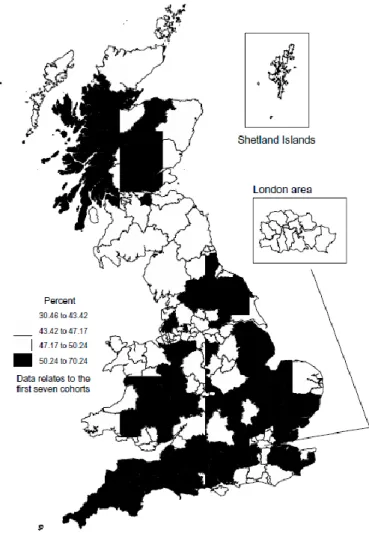
result of a continually expanding and strengthening UK economy. What is for sure, the two did so hand in hand. Furthermore, as Sunley et al. (2001) have conveyed, the New Deal programmes have paradoxically been least effective in inner city areas where youth unemployment has been most pronounced (see Figure 1 and Figure 2). This is important because it is where their policies are sold as being most influential. The dirigiste Labour Government also made considerable alterations to the state benefits system. They enforced an initiative to ‘make work pay’, and attached a high level of conditionality to the acquisition of benefits. Of particular significance was their focus on reducing child poverty (Piachaud, 2012) and the implementation of working tax credits, but Labour also gave greater attention to the needs of those classed as long term sick or disabled through welfare-to-work support under the ‘New Deal for Disabled People.’ This encompassed a number of elements such as Disability Living Allowance, Incapacity Benefit and tax credits designed to support sick and disabled people with their specific needs as well as helping them overcome the societal barriers to work where possible (Drake, 2000).
22
23
Figure 2: Youth unemployment in the worst affected towns and cities in the UK (Source: Sunley et al., 2001:488).
Overall, the Labour Government maintained the neoliberal practices embedded in the UK in the 1980’s, but also reinvigorated certain aspects of the Keynesian Welfare State system. Consequentially, whilst acknowledging that some members of society were completely dependent on the state for welfare provision, and as such had a rightful entitlement as citizens to expect it, they also promoted the need to reduce the welfare bill through a number of ‘time-limited welfare’ policies (Peck and Theodore, 2001) combining both active employability and job search assistance with effective authoritarian benefit sanctioning. In short, Labour claimed this was a successful modern ‘carrot and stick’, but one which offered ‘Opportunity for All’ (Department for Work and Pensions (DWP), 1999). Yet, Blair himself came to acknowledge this was a crucial part of his ‘Third Way’ policy discourse (Foley and Martin, 2000), but which required significant expansion of state enterprises in order to act as a
24
Throughout the Labour Governments of Tony Blair and Gordon Brown, heavy emphasis was placed on the “rights and responsibilities” rhetoric of citizens (Peck and Theodore, 2001). Labour prioritised the reduction of child poverty, and despite a distinct lack of progress in this area in the latter years of their administration, this issue continually had a large swathe of policy measures dedicated to it (Dickens, 2011). What is crucial to understand is that the Labour Government recognised the inherent complexity of the socio-economic situation in the UK. They acknowledged that the private and public domains were far from self-contained entities, instead being interlinked and therefore heavily dependent on each other for their own
efficiency and effectiveness. Nevertheless this system has served primarily to erode the entitlements of citizens to basic social welfare provision (Ross, 2009). This is very much akin to the policies advocated by earlier Conservative Governments of the 1980’s and early 1990’s, although in a slightly altered form. The result is that the state has an underlying conditional responsibility to its citizens to ensure that this minimum level of amenity is provided for all citizens, no matter what their race, class, age or gender; however the overriding responsibility in the long term now rests with individuals and their behavioural tendencies (Fuller and Geddes, 2008).
Under New Labour, citizens saw the expansion of welfare provision not experienced since the era of post war rebuilding, including a vastly increased and specialised array of social benefits, strong minimum wage regulations and more generous unemployment protection amongst others. Stalwart New Labour advocate Anthony Giddens (2007:18) identifies similarly important principles, suggesting that:
“as far as possible, the object of social policy should be to clear away the barriers that prevent those at the bottom from being able to realise their aspirations.”
Furthermore, Labour were determined that their government would not slip into the trap of once again increasing public debt to unsustainable levels, but would instead utilise the revenues generated from a more attractive and competitive economic arena and overhauled tax system that they had created in the UK as the platform for increased expenditure on the social needs of the state and its citizens (Smith, 2010). However, hindsight tells us that such an agenda would be far more difficult to
25
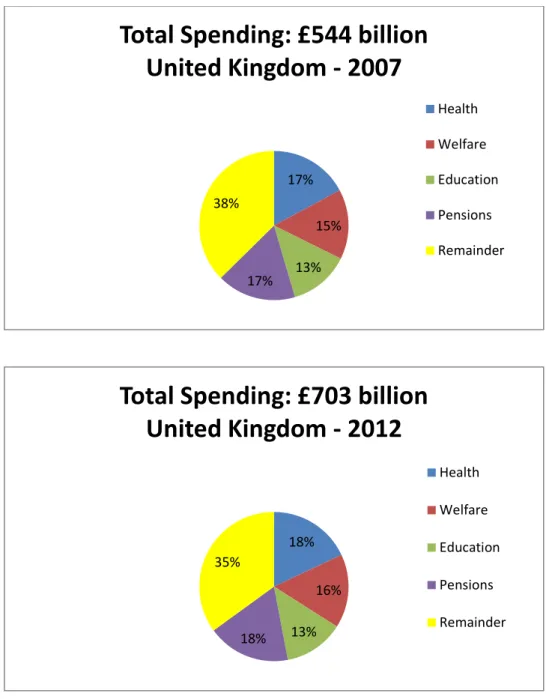
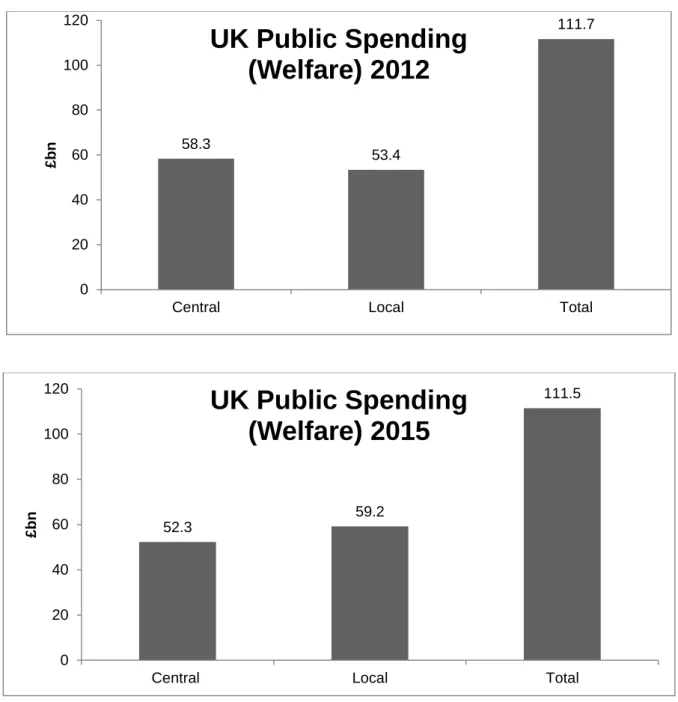
part of the agenda, Labour’s policies prevented such economic processes from subsuming the social goals which they firmly believed in. Even though Labour failed to prevent further accentuation of the wealth gap overall in the UK - because while the poor did become wealthier, those already rich increased their wealth at a far greater rate - they did succeed in reducing the rate of increase in inequality within society to some extent (Fuller and Geddes, 2008). As can be seen in Figure 3, this acclaimed success can most certainly be attributed to the massive influx of welfare spending implemented during this time, sustained and underpinned by economic growth, and can clearly be seen as a reversal of fortunes for many in society compared with their plights under the auspices of previous Conservative Governments as well as the subsequent policies of the Conservative-Liberal Democrat Coalition, and hence a more rigid form of neoliberal workfare.
26 16% 18% 12% 16% 38%
Total Spending: £312 billion
United Kingdom - 1997
Health Welfare Education Pensions Remainder 17% 16% 14% 18% 35%Total Spending: £451 billion
United Kingdom - 2004
Health Welfare Education Pensions Remainder27
Figure 3: Percentage of total spend by the Labour Government on welfare provision in 1997, 2004 and 2007, compared to Coalition spending in 2012 (Source: UK Public Spending, 2012a).
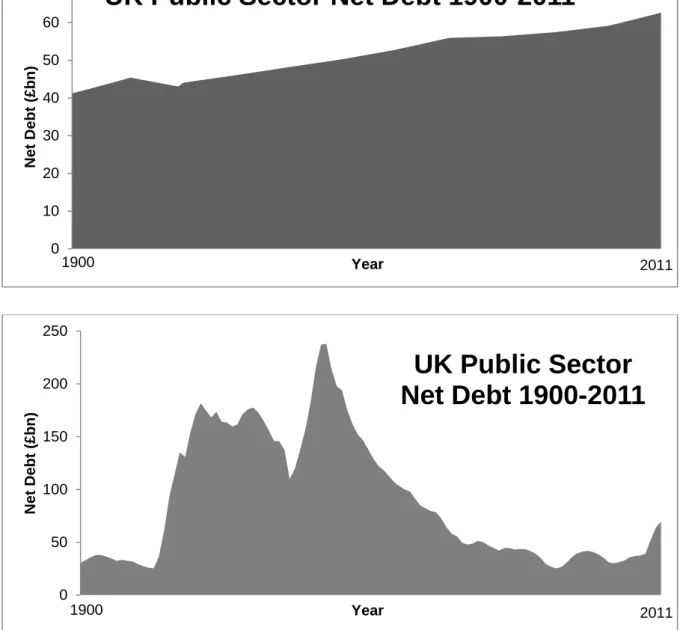
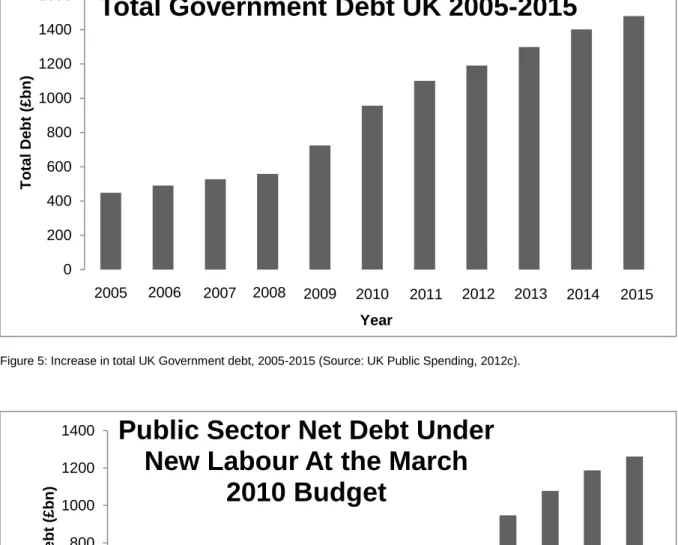
It became abundantly clear however, that state governments had been spending beyond their means when the financial crash of 2008-9, and subsequent economic crisis, exposed what had appeared manageable government debts to crisis-ridden international markets (Smith, 2010) (see Figure 4, Figure 5 and Figure 6). In the UK, the keystone mandate of the Labour Government had been to reduce poverty and inequality through increased public spending, financed by imposing a greater burden on big business, financial transactions and upon those in the upper ranks of society (Peck and Theodore, 2001) through a regime of ‘tax and spend’ (Pearce, 2011:8). This in effect would ensure that public deficit remained manageable despite high
17% 15% 13% 17% 38%
Total Spending: £544 billion
United Kingdom - 2007
Health Welfare Education Pensions Remainder 18% 16% 13% 18% 35%Total Spending: £703 billion
United Kingdom - 2012
Health Welfare Education Pensions Remainder28
levels of spending, concomitantly containing inflation and interest rates at low levels. Despite this promise, it became clear that such improvements were increasingly being financed by heightened borrowing, as greater levels of spending than could be obtained via tax returns and economic expansion were required in order to sustain continual socio-economic improvements over time, along with the burgeoning cost of welfare (Smith, 2010), and the apparently over-generous benefits system which had accompanied their ‘make work pay’ rhetoric.
Figure 4: UK public sector debt, 1900-2011 (Source: UK Public Spending, 2012b).
1900 2011 0 10 20 30 40 50 60 70 Net Debt ( £bn ) Year
UK Public Sector Net Debt 1900-2011
1900 2011 0 50 100 150 200 250 Net Debt ( £bn ) Year
UK Public Sector
Net Debt 1900-2011
29
Figure 5: Increase in total UK Government debt, 2005-2015 (Source: UK Public Spending, 2012c).
Figure 6: Change in public sector debt under New Labour (Source: The Market Oracle, 2011).
With the onset of the financial crisis and the subsequent global recession, in
conjunction with the array of fiscal stimulus packages and financial bailouts provided by central states, public debt in Britain grew exponentially to levels not seen since the end of the Second World War (Hills, 2011), and furthermore, was becoming increasingly difficult to service (Hodson and Mabbett, 2009). This situation appeared to be very similar to the situation experienced in the early 1970’s, where it became
2005 2006 2007 2008 2009 2010 2011 2012 2013 2014 2015 0 200 400 600 800 1000 1200 1400 1600 T o tal Debt ( £bn ) Year
Total Government Debt UK 2005-2015
2001 2002 2003 2004 2005 2006 2007 2008 2009 2010 2011 2012 2013 0 200 400 600 800 1000 1200 1400 P u b lic Net Debt ( £bn ) Year
Public Sector Net Debt Under
New Labour At the March
30
increasingly difficult to service the Welfare State. It is this which has subsequently indicated that welfare provision in the UK might be entering an entirely new phase, although at the present it would be difficult to insinuate whether this is likely to be something entirely new, or more a reinvention of the neoliberal system which has come before it.
The policy discourse brought in by New Labour came to a shuddering halt in 2008 with the onset of the financial crisis and recession which were to violently shake the economic core of the global economy. As Peck et al. (2010) have recently argued, the neoliberal model had demised into a self-perpetuated crisis. The global system of market capitalism which had existed from the late 1970s up until the onset of the 2008 crisis was inherently built upon financial speculation and a state of “endemic ‘myopia’” (Altvater, 2009:77) – the assumption that prices, and henceforth profits, would continue to steadily rise. In the words of Gordon Brown, the then Chancellor of the Exchequer, at the 2000 Labour Party Conference, this would “protect hard
working families from a return to boom and bust” (British Political Speech, 2015b). This is a similar argument to that of Keynesianism and its placing of a ‘floor’ in the level of popular consumption. This expectation accumulated over several years and ran into the early years of the 21st Century, eventually creating a significant ‘credit bubble’ (Peck et al., 2009:98) in housing markets. This occurred in many countries around the world, but most pertinently, in the USA, where there was a surge in subprime mortgage lending overseen by Federal organisations Freddie Mac and Fannie Mae (Aalbers, 2008, 2009; French et al., 2009; Martin, 2011).
This boom phenomenon became precariously intertwined with the global banking system, creating a scenario whereby any faltering of this continual growth would cause serious implications worldwide. When this occurred in 2008 as a result of the widespread global exposure of multinational banks to the frailties of the market through high risk investment activities (Derudder et al., 2011), it became rapidly apparent that both public and private enterprises within national states had been forged on undeniably strained foundations. This was linked to over-borrowing and under-consumption, and subsequently both national governments and their debts became exposed to this crisis of global finance (Cripps et al., 2011). In the USA, the bursting of the housing bubble led to financial meltdown within the banking sector, and the crisis quickly spread worldwide, with the UK being one of the heaviest