TRADITIONAL VS. PROJECT-BASED LEARNING:
THE EFFECTS ON STUDENT PERFORMANCE AND MOTIVATION IN HONORS LEVEL MATHEMATICS COURSES
by Sunletha Carter Liberty University
A Dissertation Presented in Partial Fulfillment Of the Requirement for the Degree
Doctor of Education
Liberty University 2016
TRADITIONAL VS. PROJECT-BASED LEARNING:
THE EFFECTS ON STUDENT PERFORMANCE AND MOTIVATION IN HONORS LEVEL MATHEMATICS COURSES
by Sunletha Carter
A Dissertation Presented in Partial Fulfillment Of the Requirement for the Degree
Doctor of Education
Liberty University, Lynchburg, VA 2016
APPROVED BY: Jerry Westfall, Ph.D., Committee Chair Steve McDonald, Ed.D., Committee Member Fred Decovsky, Ed.D., Committee Member Scott B. Watson, Ph.D., Associate Dean, Advanced Programs
ABSTRACT
Since the charge by the National Council for Teachers of Mathematics (NCTM) to move away from the traditional learning (TL) method of instruction to more learner-controlled techniques, project-based learning (PBL) has been on the rise. This quasi-experimental nonequivalent control group design study compared the academic achievement of 122 eleventh and twelfth grade students who were instructed using PBL techniques, with a control group of their counterparts who were instructed using TL techniques, in honors level mathematics courses. Pretest and Posttest data collected from both groups of students were statistically analyzed using independent t-tests, and Analysis of Covariance (ANCOVA), respectively, since the independent t-tests on the pretest data yielded significant differences between the two groups. The ANCOVA results showed a statistically significant difference between the mean performance of the PBL group and the mean performance of the TL group. Similar results were obtained when the mean performance of male students only, as well as the performance of female students only, were compared between the two groups, thereby revealing that PBL instructional method helped to improve student achievement in honors level mathematics courses. In addition, students’ motivation data obtained from the Instructional Materials Motivation Survey (IMMS) were analyzed using Multivariate Analysis of Variance (MANOVA) and Analysis of Variance (ANOVA). The results showed that there was no statistically significant difference in the motivation of students instructed using PBL method and students instructed using TL method. The study further discussed implications for teaching and learning, as well as made
recommendations for future research.
Keywords: Constructivists, traditional learning, project-based learning (PBL), ARCS model (attention, relevance, confidence, and satisfaction), motivation, motivational theories.
Dedication
I dedicate this study to my precious grandsons, Jamison, Hudson, Maison, and Carson. You may be too young, at this time, to understand the concept of hard work and perseverance, but soon you too will come to realize that with God all things are possible. Always Be Confident and reach for the stars.
I dedicate this study, also, to the parents of the sons, my children Rondell, Candace, and their spouses, for their love, respect, encouragement, and unwavering support. Indeed, “children are a gift from God” (Psalm 127:3, NLT).
Acknowledgements
I have always believed that “I can do all things through Christ who strengthens me” (Philippians 4:13, NAS); and so I thank God for blessing me with his love and grace, and for giving me the strength to complete this monumental task.
I would also like to express thanks to my team of committee members, Dr. Jerry Westfall (chair), Dr. Steve McDonald, and Dr. Fred Decovsky. I am truly grateful for your patience, constructive criticism, support, and encouragement.
In addition, to my professors from whose expertise I benefitted immensely, I wish to express special thanks to my professional colleagues for their invaluable contribution by way of data collection and the advice they offered to me throughout my studies.
Finally, I wish to express thanks to my family and friends, for their unconditional love, unwavering support, and continual encouragement. God bless you all.
Table of Contents ABSTRACT ... 3 Dedication ... 4 Acknowledgements ... 5 List of Tables ... 10 List of Figures ... 11 List of Abbreviations ... 12
CHAPTER ONE: INTRODUCTION ... 14
Background ... 15
Problem Statement ... 17
Purpose Statement ... 19
Significance of the Study ... 19
Research Questions and Hypotheses ... 20
Identification of Variables ... 22
Definitions of Key Terms ... 22
CHAPTER TWO: REVIEW OF THE LITERATURE ... 24
Introduction ... 24
Theoretical Framework ... 27
Constructivist Theorists... 28
Traditional Based Instruction ... 46
Project-Based Learning ... 48
Motivation in Mathematics ... 50
Keller’s ARCS Model of Motivation ... 52
Summary ... 55
CHAPTER THREE: METHODOLOGY ... 56
Overview ... 56
Design of the Study ... 56
Research Questions and Hypotheses ... 57
Participants ... 59
Setting ... 61
Data Gathering Procedure ... 63
Instrumentation ... 64
Sampling Procedure ... 66
Data Analysis Procedure ... 67
CHAPTER FOUR: RESULTS ... 69
Introduction ... 69
Demographic ... 69
Research Question One and Null Hypotheses ... 72
Research Question Two and Null Hypotheses... 80
Assumption Testing... 81
CHAPTER FIVE: DISCUSSION ... 87
Introduction ... 87
Restatement of the Research Questions ... 87
Summary of Findings for Research Question One... 88
Summary of Findings for Research Question Two ... 88
Discussion of the Results ... 89
Student Achievement ... 89
Student Motivation ... 93
Conclusion ... 95
Implications... 96
Limitations ... 97
Recommendation for Future Research ... 98
REFERENCES ... 101
APPENDICES ... 115
Appendix A: Institutional Review Board Approval ... 115
Appendix B: Investigator Agreement and Signature Page ... 116
Appendix C: Approval by School Superintendent to Conduct Research ... 117
Appendix E: Parent and Student Information Letter ... 119 Appendix F: Posttest ... 121 Appendix G: Permission to Use Diagram in Figure 4.10 ... 126
List of Tables
Table 3.1: Race/Ethnicity Composition...62
Table 3.2: Demographic and Performance Indicators...63
Table 3.3: IMMS Reliability Estimates...66
Table 4.1: Descriptive Statistics for the Control and Experimental Group...70
Table 4.2: Post Scores Unadjusted and Adjusted Means and Variability...71
Table 4.3: Descriptive Statistics for Motivation...72
Table 4.4: Tests of Normality for Female PBL...76
Table 4.5: Tests of Normality for Male PBL...77
Table 4.6: Levene’s Test of Equality of Error Variance...78
Table 4.7: Test of Between-Subjects Effects with Dependent Variable: Posttest...79
Table 4.8: Tests of Normality: ARCS...82
Table 4.9: Variance Inflation Factor. Dependent Variable: Attention...83
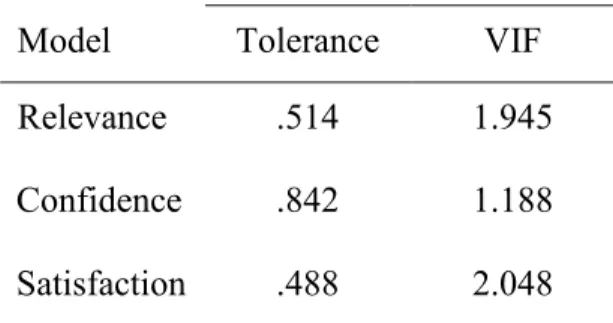
Table 4.10: Variance Inflation Factor. Dependent Variable: Relevance...83
Table 4.11: Variance Inflation Factor. Dependent Variable: Confidence...83
Table 4.12: Variance Inflation Factor. Dependent Variable: Satisfaction...83
List of Figures
Figure 4.1: Bar Graph of Means of Pretest and Posttest for Control and
Experimental Groups...71
Figure 4.2: Histogram of Pretest...73
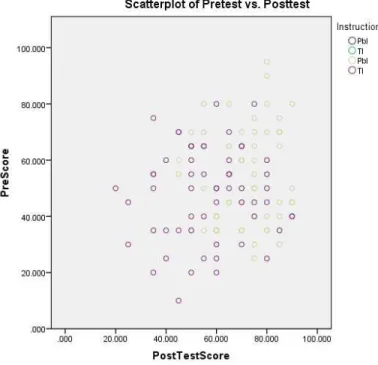
Figure 4.3: Scatterplot of Pretest vs. Posttest...74
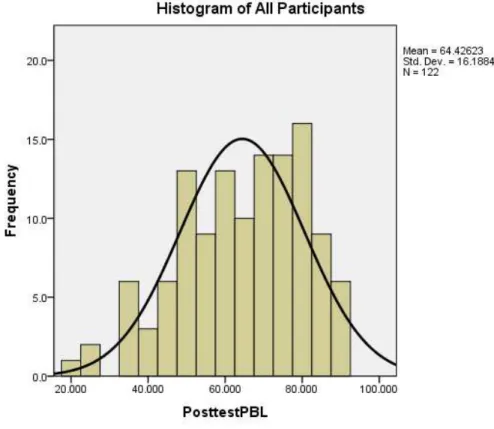
Figure 4.4: Histogram of Posttest of All Participants...75
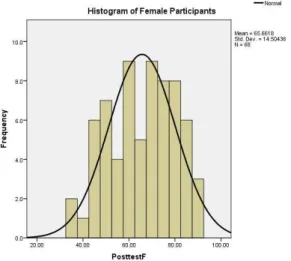
Figure 4.5: Histogram of Posttest of Female Participants...76
Figure 4.6: Histogram of Posttest of Male Participants...76
Figure 4.7: Plot of Standardized Residuals...77
Figure 4.8: Scatter Matrix for Instruction: PBL...84
Figure 4.9: Scatter Matrix for Instruction: TL...84
List of Abbreviations Analysis of Covariance (ANCOVA)
Analysis of Variance (ANOVA)
Attention Deficit/Hyperactivity Disorder (ADHD)
Attention, Relevance, Confidence, and Satisfaction (ARCS) Central Limit Theorem (CLT)
Common Core State Standards Initiative (CCSSI) Every Student Success Act (ESSA)
Instructional Materials Motivation Survey (IMMS) Mean (M)
Multiple Intelligence (MI)
Multivariate Analysis of Variance (MANOVA)
National Council of Teachers of Mathematics (NCTM) No Child Left Behind (NCLB)
Partnership for Assessment of Readiness for College and Career (PARCC) Project-based Learning (PBL)
Quartile 1, Quartile 3 (Q1, Q3) Race to the Top (RTT)
Science, Technology, Engineering, and Mathematics (STEM)
Specific, Measurement, Attainable, Relevant, and Time-bound (SMART) Standard Deviation (SD)
Traditional Learning (TL) Variance Inflation Factor (VIF)
CHAPTER ONE: INTRODUCTION
Education in America continues to experience a myriad of reforms with renewed
emphasis on mathematics. These reforms took center stage after the government’s proclamation of an educational crisis when Russia launched Sputnik, the first space satellite, in 1957.
However, it was the 1983 publishing of The Nation at Risk by the National Commission on Excellence in Education, however, that catapulted America’s reform. The Nation at Risk report contained alarming statistics regarding the low academic performance of American students, relative to their international counterparts (U.S. Department of Education, 1983). Twenty-five years later, A Nation Accountable reported that America was at an even greater risk due to rising demands in the global economy, and in order to keep pace with these demands, American students needed to be educated at higher levels. (U.S. Department of Education, 2008). Petric (2011) cited Schmidt, Houang & Wolfe (1999) who warned that “the American students lack not only logical and analytical skills needed to figure out complex mathematical problems but also the knowledge of the fundamental theoretical concepts and how to discover those concepts through investigations” (p. 2).
The ‘New Math’ period (1950s to 1970s) which heralded in the introduction of calculus courses at high school levels, was conceived by many to be suitable only for college capable students (Ellis & Berry, 2005). In the 1990s, mathematics education policies in American public schools experienced much criticism due to the introduction of new books, diminished content, and a dearth of basic skills (Klein, 2003), but it was the National Council of Teachers of Mathematics (NCTM) report entitled “An Agenda for Action” (NCTM, 1980) that challenged mathematics educators to re-evaluate the significance of calculus in the mathematics program. The recommendation of this action report included, but was not limited to, more emphasis on
problem solving, and more options in mathematics so as to accommodate the diverse needs of the students. Algebra, and Precalculus, at the average and accelerated levels not only provide the foundation for the higher level calculus courses but also provide students with the opportunity to engage in real-life application and integration problems.
This quantitative study compares instructional strategies for their effectiveness in promoting students’ understanding and motivation in foundational honors level mathematics classes. This is in keeping with the NCTM goal about understanding the value of mathematics through exposure to a variety of learning experiences. All such experiences should be
representative of the cultural, historical, and scientific evolution of mathematics (NCTM, 1989). In this research presentation, the background information on educational reforms is followed by the problem and purpose statements, and a brief statement that described the significance of the study. The research questions, hypotheses, description of the variables, assumptions, results and limitations of the study are also defined. A summary of the research is included.
Background
Mathematics education in America’s public schools has been heavily influenced by both the traditionalist and constructivists theories. It is important to understand, though, that whatever the viewpoint, the aim has always been the same; to enhance students achievement in
mathematics. Views differ, however, on how to achieve this aim. Traditionalists contend that mathematics is best learned in a drill and practice manner with memorization and recall of mathematical facts (Ellis & Berry, 2005; Davison & Mitchell, 2008), whereas, the
constructivist’s viewpoint is one in which students are actively involved in the learning process. Ellis & Berry (2005), upon examining the research on the past century mathematics reform
movements, discovered that past practices still led “inherently to inequitable practices and outcomes” (p. 14).
The 1965 Elementary and Secondary Education Act (ESEA), which was enacted by then President Johnson was a reform measure to address the inequitable practices and thus, fight the ‘war on poverty’ (The Social Welfare History Project, 2014). In 2002, the No Child Left Behind Act (NCLB), a reauthorization of the ESEA, was signed into law by then president Bush (Burke, 2012). The NCLB Act is a federal law that was enacted to provide additional financial assistance for the education of poor children. The standards and accountability measures of NCLB allowed for the accumulation and analysis of data regarding students, teachers and general school performance, particularly in the secondary schools. Ten years after this mandate, there was evidence that NCLB was not functioning as expected. Teachers and other educators claimed that “NCLB has set impossible high standards and has narrowed curricula, forcing teachers to teach to the test” (Webley, 2012). Still concerned about the students’ performance, especially in the core subject areas of mathematics and reading, current president Obama’s most significant educational initiative in 2009, Race to the Top (RTT), was an attempt to kick start yet another education reform to improve teaching and learning in school. According to President Obama, “America will not succeed in the 21st century unless we do a far better job of educating our sons and daughters” (Boser, 2012).
The grants obtained by states, which are voluntary participants of the RTT initiative, focus on reforms in four main areas that would enable students to be successful and competitive in the global economy. These include (a) designing and implementing standards and
assessments for college and success, (b) increasing efficiency in the acquisition of data so as to provide adequate information for improving instruction, (c) recruiting, evaluating, and retaining
highly effective teachers in an effort to help close the achievement gap and get more students into college and a career, and (d) improving performance in the lowest achieving schools (The White House, 2009). In 2015, President Obama reauthorized the 50 year old ESEA as the Every Student Success Act which will become fully operational in 2017-2018 academic year. This bipartisan bill will ‘fix’ the NCLB while addressing the current initiatives of the RTT.
The newly adopted common core state standards in mathematics is a response to this call as it aims to make the mathematics curriculum “more focused and coherent in order to improve mathematics achievement in this country” (Common Core State Standards Initiative (CCSSI), 2011, p. 3). The standards for practice require that mathematically proficient students “make sense of problems and persevere in solving them” (CCSSI, 2011, p.6). The instructional method that will be researched and analyzed in this study, allows for the demonstration of this principle.
The most recent initiative targets assessment and is known as the Partnership for Assessment of Readiness for College and Career (PARCC). This is a partnership of local educators and states to develop assessment that would serve as tools for enhancing teaching and learning (PARCC, 2015). The intent of this partnership is for teachers and educators to
customize their instructions in mathematics and English language arts literacy, in order to meet students’ needs as they relate to the rigorous Common Core State Standards introduced in 2010 and 2011. PARCC assessments are the resulting high quality assessments which are aligned to these standards.
Problem Statement
“Mathematics classes such as pre-calculus serve as ‘gatekeepers’ to educational and vocational opportunities in STEM disciplines” (Olson, Cooper, & Lougheed, 2011, p. 747). These mathematics classes lay the foundation for careers in the field of science, technology,
engineering, and mathematics (STEM). The problem is that many students, who enroll in the honors level courses with the intention of going on to the higher level calculus classes, fail to do so. Among the reasons cited for this change is the decline in mathematics achievement of many of these students who must now challenge themselves even more in the accelerated classes. Marcoulides, Gottfried, Gottfried, & Oliver (2008), who analyzed achievement and motivation in at-risk, intermediate, and gifted students, theorized that “declining mathematics achievement was associated with a decline in intrinsic mathematics motivation. Other researchers such as Olson et al., 2011), who conducted a longitudinal study to investigate teaching approaches to
mathematics, hypothesized that the problem was more one of the type of instructional method used. The active learning which is inherent in student-centered learning methods such as PBL, is antithetical to the traditional teacher-centered learning method of instruction. Zydney, Diehl, Grincewicz. Jones, & Hasselbring (2010) cited other research which indicated that increasing learner control was better suited for students with high prior knowledge, such as those enrolled in advanced placement and honors level mathematics courses.
In addition to motivation, there are conflicting reports as to whether or not differential cognitive ability exists between male and female students. For example, Ding, Song, and Richardson (2006) found that, while both male and female students demonstrated the same growth trend in mathematics performance over time, females reported significantly higher grade point averages than males. They also found that, as the content became increasingly more difficult and challenging, the gender difference favored females, in terms of grade. This is contradictory to other studies including those conducted by Kyriakides & Antoniou (2009) and by Liu & Wilson (2009). In both of these studies it was found that boys outperformed girls on
the most difficult test items. This study seeks to test the afore-mentioned claims and provide answers to the problem stated.
Purpose Statement
The purpose of this proposed quantitative study was to test the theory of learning and motivation that relates instructional methods to students’ achievement and motivation, controlling for difference in academic ability among students enrolled in the honors level mathematics courses at a New Jersey suburban high school. A non-equivalent control-group design was employed to investigate this relationship. The independent variable, instructional method, was defined as traditional learning, a teacher-centered technique in which mastery of knowledge through drill and practice is emphasized, and project-based learning, which is a student-centered technique requiring students to complete tasks based on challenging questions and problems that engage their interests. The dependent variables were student achievement, and student motivation.
Significance of the Study
The literature base on the effectiveness of the student-centered project-based learning (PBL), and instructional method is limited to the elementary levels and other subject areas, particularly, the sciences and web-based courses. Research which compares PBL instructional method with Traditional Learning (TL) at the high school level, particularly at the honors or advanced level, is non-existent. Consequently, this study will contribute to the body of knowledge for high school level and beyond.
The researcher, who is also a mathematics teacher, has encountered many instances in which students have expressed the need for more engaging activities instead of the overused traditional direct methods of instruction. This is especially critical for schools that operate an
extended time schedule such as an eighty to ninety minutes block. This study will further provide teachers and other educators with empirical evidence to support modifications in the quality, type and duration of mathematics instruction that high school students find motivating and engaging.
Research Questions and Hypotheses
The following research questions and accompanying hypotheses will guide the researcher throughout this project.
RQ1: Is there a difference in the mean performance scores of students instructed using project-based learning techniques and students instructed using traditional learning techniques, in an honors level mathematics class?
H01a: There will be no statistically significant difference in the mean performance score
of students in an honors level mathematics class instructed using project-based learning
techniques and students instructed using traditional learning techniques, as shown by the expert-validated end-of-unit posttest.
H01b:There will be no statistically significant difference between the mean performance
of male students in an honors level mathematics class instructed using project-based learning techniques and male students instructed using traditional learning techniques, as shown by the expert-validated end-of-unit posttest.
H01c: There will be no statistically significant difference between the mean performance
of female students in an honors level mathematics class instructed using project-based learning techniques and female students instructed using traditional learning techniques, as shown by the expert-validated end-of-unit posttest.
H01d: There will be no statistically significant difference between the mean performance
instructed using project-based learning techniques in an honors level mathematics class, as shown by the expert-validated end-of-unit posttest.
RQ 2: Is there a difference in the motivation of students instructed using project-based learning techniques and the motivation of students instructed using traditional learning
techniques, in an honors level mathematics class?
H02a: There will be no statistically significant difference in the motivation scores
between students instructed using project-based learning techniques and the motivation scores of students instructed using traditional learning techniques in an honors level mathematics class, as indicated by the Instructional Materials Motivation Survey (IMMS).
H02b: There will be no statistically significant difference in the mean attention subscale
scores between students in an honors level mathematics class instructed using project-based learning techniques and the mean attention scores of students instructed using traditional learning techniques, as indicated by the IMMS.
H02c: There will be no statistically significant difference in the mean relevance subscale
scores between students in an honors level mathematics class instructed using project-based learning techniques and the mean relevance scores of students instructed using traditional learning techniques, as indicated by the IMMS.
H02d: There will be no statistically significant difference in the mean confidence
subscale scores between students in an honors level mathematics class instructed using project-based learning techniques and the mean confidence scores of students instructed using traditional learning techniques, as indicated by the IMMS.
H02e: There will be no statistically significant difference in the mean satisfaction
project-based learning techniques and the mean satisfaction scores of students instructed using traditional learning techniques, as indicated by the IMMS.
Identification of Variables
For this study, the independent variable is identified as the instructional method. The two factors of this variable are project-based, and traditional. Project-based learning, also called project-based pedagogy, refers to instruction that emphasizes students’ selection and
investigation of authentic or real-world problems (Colley, 2008). Traditional method, on the other hand, consists of mostly note-taking, drills and memorization. Students are expected to be cognitively active, while being physically inactive, except when taking notes (Hagnighi, Vakil, & Wetiba, 2006). There are two factors of the dependent variables, namely, student’s
mathematics achievement, and motivation. Student mathematics achievement measure will be obtained through comparison between the mean posttest scores. Motivation will be measured using the IMMS, a 36-item Likert scale instrument based on Keller’s Attention, Relevance, Confidence, Satisfaction (ARCS) model of motivational design.
Definitions of Key Terms
Following are key term that is included in this research study.
At-Risk Students: Students who are ‘at-risk’ of failing for one or more reasons, such as, socio-economic status, learning disability, negative peer pressure.
Behavioral Learning Theory: A theory that focuses on change of behavior based on whether or not the outcomes and consequences are pleasant or unpleasant (Slavin, 2003).
Common Core State Standards: Standards for mathematics (and English language arts) that stress conceptual understanding of key ideas, sequentially. These standards replace individual states standards. (CCSSI, 2011).
Constructivist Theory: “The idea that learners must individually discover and transform complex information if they are to make it their own” (Slavin, 2003, p.257).
External Locus of Control: External factors such as luck, task difficulty, and other people’s action being offered as the cause of success or failure (Slavin, 2003).
Extrinsic Motivation: Use of praise, rewards and incentives to encourage students to perform at their best (Slavin, 2003).
Intrinsic Motivation: Motivation that comes from within an individual and driven by his or her own interest, as well as the enjoyment derived from learning or completing the task.
Project-based learning: Learning that takes place when students select and work cooperatively to investigate authentic or real world problems as projects, under the supervision of the teacher (Bell, 2010; Colley, 2008).
Race to the Top: An education initiative which requires states to compete for financial grants in order that they use such grants for greater educational innovations (Boser, 2012).
Scaffolding: The process of providing complete support at the early stages of learning then diminishing the support to allow the learner to take on increasing responsibility for his or her learning (Slavin, 2003).
Student Success Act: A bill introduced by Representative John Kline (R-MN), to rewrite Title I of NCLB. (Burke, 2012).
Traditional Instruction: Instruction that is teacher-centered and involves passive
involvement of students in whatever is said by the teacher or is printed in a textbook. It involves whole-group learning and students remain physically inactive, except for note taking. (Ornstein & Hunkins, 2004).
CHAPTER TWO: REVIEW OF THE LITERATURE Introduction
There are many non-traditional instructional methods that are available to teachers of mathematics yet the predictable traditional method of memorization and regurgitating of facts prevail in American schools (Nesmith, 2008). Many teachers, who are experts in their
disciplines at the secondary level, continue to provide instructions through examples,
demonstrations and guided practice, with the aid of the textbooks and/or workbooks, to the class as a whole. Although revisions are constantly being made to the mathematics curriculum so as to meet the scientific and technical challenges, teaching and learning by the traditional lecture-based method persists.
The contemporary approach to teaching mathematics involves a more progressive and constructivist focus whereby students are actively involved in constructing their own
understanding based on their prior knowledge and their experiences (Nesmith, 2008; Ornstein & Hunkins, 2004; Schifter & Fosnot, 1993) affirmed that “once one accepts that the learner must herself [sic] actively explore mathematical concepts in order to build the necessary structures of understanding, it follows that teaching mathematics must be reconceived as the provision of meaningful problems designed to encourage and facilitate the constructive process”. (Nesmith, 2008, p. 9).
The National Council of Teachers of Mathematics (NCTM), like many other
organizations concerned about pedagogy and mathematics reform, implemented standards based on constructivist principles. These standard-based principles include specific requirements for teachers to provide a variety of learning experiences that represent the cultural, historical, and scientific evolution of mathematics, while simultaneously ensuring academic rigor and
accountability (NCTM, 1989; Newell & Van Ryzin, 2007). These principles are identified and outlined by McKinney & Frazier (2008), as follows.
NCTM (2000) vision of the equity principle is based on the premise that, despite the learning differences among students, and differences in their socio-economic background, age or gender, all students are capable of learning mathematics. By holding students to high
expectation and giving them the same high level of support, they are able to improve their mathematics competencies.
The curriculum principle places emphasis on the development of a well-designed curriculum across all levels of instruction. This means that the curriculum should be “coherent and integrate and link mathematical ideas” (McKinney & Frazier, 2008, p. 205).
The teaching principle is based on the understanding on how students learn, what they already know and need to learn. This is crucial for teacher in order for them to provide the necessary support to the learners. Teachers must acknowledge and prepare their lessons to appeal to the different learning styles of students.
The learning principle suggests that students’ understanding is critical to their learning as is “actively building new knowledge from experience and prior knowledge” (McKinney & Frazier, 2008, p. 202).
The assessment principle is based on the preparation of formative and summative assessments which support the mathematical content studied. “Authentic assessment is best achieved through teaching: interactions between both teacher and student, and student and student; and observing students in meaningful tasks” (Ishii, 2004, p.3). The feedback from multiple assessment practices must inform both teacher and student.
The technology principle is a critical component in mathematics education as it serves to enhance students’ content learning and critical thinking skills, by making it possible for students to produce, collect, and analyze data they need for problem-solving.
According to Brooks and Brooks (1999), the typical constructivist classroom is one in which teachers pose problems of emerging relevance to students. This is a guiding principle of constructivist pedagogy. Often when students enter a classroom they do so with varying interests and they are not all interested in the list of academic goals already set out in the curriculum as necessary and relevant for their academic development. It is therefore the
responsibility of the teacher to invite relevance through mediation. Mediation takes the form of posing questions that pique the interest of the learners, and allow them to appeal to their own thoughts and conceptions, as a point of departure from which to engage their interest and be self-motivated.
Since students are more engaged when problems and ideas are posed “holistically rather than in separate, isolated parts” (Brooks & Brooks, 1999, p. 46), the curriculum for the
constructivist classrooms must be structured around main ideas and primary concepts. This is unlike the curriculum of the traditional classroom in which more emphasis is placed on acquiring basis skills in parts, focusing on each part separately. Many students encounter problems as they try to put the parts back together, in order to understand the big concepts. If however, students are presented with the concepts as a whole, they can find their own meanings as they look at the parts within the whole. They do this by comparing, contrasting, analyzing, and synthesizing.
Of much importance in the constructivist classroom also, is the importance of teachers valuing the points of view of students whom they continually challenge to make learning meaningful. “Students’ points of view are windows into their reasoning” (Brooks & Brooks,
1999, p. 60). Hence, teachers must demonstrate their willingness to listen to students by
providing them adequate opportunities to do so. Also critical in the constructivist classroom, and based on the seminal works of Jean Piaget, is the teachers’ adaptation of the curriculum to
address students’ suppositions. This refers to the matching of the cognitive demands of the curriculum with the cognitive abilities of the students.
In this chapter, the theories of some prominent constructivist, as well as motivation theories, are examined for their relevance to the learner centered instructional technique of project-based learning that is emerging in the mathematics classrooms. A review of the literature pertaining to the traditional lecture-based method and project-based learning is followed by a discussion of motivational techniques and the applicability of Keller’s ARCS (attention, relevance, confidence, and satisfaction) model of motivation to students’ achievement in mathematics.
Theoretical Framework
The process of project-based learning has its roots in constructivist theory, which posits learners takes an active part in generating meaning and constructing their own understanding (Garmston & Wellman, 1994; Ishii, 2003; Ornstein & Hunkins, 2004). This is antithetical to traditional lecture-based learning in which the learner adopts the role of passive observer,
absorbing mounds of information from an external source, the teacher. According to this theory, learners are in a continual process of checking for new information by using old rules which they revise as they (rules) become obsolete (Slavin, 2003). There are several pedagogical
implications of the constructivist theory, as discussed by Ernest (1996). These include
• The teachers’ sensitivity to the learners’ previous conceptions, previous knowledge, and their informal knowledge, a critical step in the construction of new knowledge.
• Students use of cognitive conflict techniques, which afford them the practice of thinking through their problems, and developing their own meanings as they work through rectifying and finding solutions.
• Students assume responsibilities for their learning through self-regulation.
• Students make use of multiple representations to facilitate the connection between previous learning and new constructs.
• Students develop more awareness of the importance and value of the goals that they are working to achieve. This may differ from the teachers’ goal of acquiring knowledge and skills.
• Students develop understanding and appreciation of the importance of the social context of learning. While some learning may occur in the formal setting of the classroom, some learning may occur in a more social setting, which may be outside of the classroom. To fully appreciate the relevance of constructivism in the teaching and learning of mathematics, it is necessary to explore the cognitive theories of the earliest and most notable constructivists. Constructivist Theorists
Jean Piaget (1896-1980). He was considered to be the original constructivist, and contended that the cognitive development of children from birth to adolescence occur in four stages each marked by “the emergence of new intellectual abilities” (Slavin, 2003, p.32). He (Slavin) listed these stages as (a) sensorimotor (birth to 2 years), (b) preoperational (2 to 7 years), (c) concrete operational (7 to 11 years), and (d) formal operational (11 years to adulthood). He (Piaget) also believed that children are constantly constructing new knowledge of the world around them, and as such, they must be encouraged to learn through self discovery (Edwards, Hopgood, Rosenberg, & Rush, 2000; Siegler & Ellis, 1996). However, his principle that
development precedes learning has been largely criticized, not only his research method, but also for his belief that the developmental stages he posited were fixed. Researchers disputed this latter tenet, suggesting instead that children can be taught many Piagetian tasks at earlier developmental stages, and citing environmental factors, including teaching methods, to be the influential factors (Cherry, 2012; Slavin, 2003).
Bhattacharya & Han (2001) identified adaptation and organization as two of Piaget’s major principles which guide intellectual growth and biological development, facilitating the self discovery process. With regards to the adaptation principle, they explained that, the learner must assimilate information into an existing cognitive structure or schema which he/she modifies to accommodate new experiences. As the learner makes the necessary adjustment of his/her mental structures and accommodations, the process of organization follows as they attempt to make sense of new information
The educational implications of Piaget’s theory to student’s mathematics classes center on providing them with an environment and resources that are developmentally appropriate (Berk 2001, Slavin, 2003). A summary of the main teaching implication for teaching include the following.
1. Understanding the thought process in the mathematical computation instead of focusing only on correct answers. This technique involves planning to include the kinds of problems and projects that will foster critical thinking and “build the child’s level of cognitive functioning” (Edwards et al., 2000).
2. Encouraging students to be active participants in their own learning by engaging them in discovery type activities such as is the case with project-based learning.
3. Being mindful of students’ cognitive abilities and refraining from incurring practices aimed at speeding up their development.
4. Ensuring that class activities appeal to the individual differences of students. Small group activities for groups, formed by ability instead of age, tend to address these differences appropriately.
Lev Vygotsky (1896-1934). There is a great deal in common between Piaget’s cognitive constructivism and the social constructivist theory of Lev Vygotsky. Chen (n.d.), in her
overview of social constructivism, discussed the emphasis that Vygotsky placed on the
importance of culture and the social context for cognitive development. She noted that unlike Piaget, Vygotsky placed more emphasis on the role of the teacher and other adults. For Vygotsky, the most important role of the teacher in mediating the learning process is that of creating a social environment (i.e., classroom culture) through the use of appropriate material tools, symbolic systems, and other human beings, while functioning as a participant-observer and assisting students in the construction of new knowledge (Eun, 2010). This begins with the careful diagnostic assessment of the learner’s category system in order to facilitate the development of appropriate learning experiences in the proper sequence, in the curriculum (Marsigit, 2009).
According to Slavin (2003), Vygotsky also believed that learning could only take place when children were working on tasks within their Zone of Proximal Development (ZPD). The ZPD is the gap between what the child is able to do independently and that which he/she can do with the guidance and assistance of a competent adult or peer(s). Hence, according to this view “effective instruction neither exceeds the learner’s current level of understanding nor
2010, p. 193). This is a concept widely embraced by many teachers and researchers. Hence, the tasks are the ones that require input from the teacher in order for students to attain full mastery. The teacher is able to provide assistance in the ZPD by being sensitive to the needs of the learners and by being willing to assist them in creating the opportunity to do so. Critical also in Vygotsky’s ZPD is the role of assessment in the process of social interaction.
According to Newman et al. (1989, in Marsigit, 2009, the ZPD provides an alternative to traditional standardized test. Whereas traditional tests focus on rightness and wrongness, on how well students do, and how poorly they fail, for Vygotsky it is more about giving the students tasks, observing them as they perform the tasks, and giving them guidance and help as needed for successful completion. In the latter case, the student is not assessed alone but instead, in a social context with the teacher and their peers thereby measuring the degree of progress. This type of performance assessment further provides students with the opportunity for developing their ability to assess their own progress. This is a zone, as described by Vygotsky because as learners become more and more involved in self assessment they will be able to take over the task from their teachers, complementing the other skills that have acquired.
In planning a developmentally appropriate mathematics curriculum, it is incumbent on teachers to recognize and plan activities that would appeal not only to those who are capable of working on their own, but also to those who learn best with help from other competent peers and adults. The cooperative learning arrangements that are part of project-based learning is an effective way to meet the learning needs of the diverse group of students commonly found in most classrooms. Vygotsky insisted that cooperation and collaborative instructional practices are paramount to the development of higher psychological functioning in students (Eun, 2010). Byrnes (2001) also suggested that students who worked together are usually more engaged in
their learning. They learn how to analyze and solve problems, thereby acquiring a deeper understanding of the problem situation and the overall concept. This is achieved with the guidance, encouragement and advice of the teacher, who diminishes support so that the student can take on more of the responsibility for his/her own learning. This scaffolding, as it is termed by Vygotsky, is a principle that supports the use of projects and other real-life authentic tasks. The teacher is more than an instructor in this case. Rather, he or she works along with the learners, helping in the process of constructing meaning. At this time, too, much emphasis is placed on communication.
The constructivist approach to teaching mathematics places emphasis on presenting students with real-life problem situations for them to formulate their own inquiry questions, explore multiple interpretation and multiple intelligences through collaboration. According to Ernest (1996), the essentials of teaching for this purpose have several components, which include discussion between and among students, between students and their teachers, projects and
investigative type problems for critical skills development, problem solving, and creativity. Ernest (1996) further suggested that because of the varied, active, socially engaged and self-regulatory nature of learning, the resources of teaching should (a) be of a wide variety to facilitate many different approaches to teaching, (b) include authentic materials such as
newspaper, official statistics, and so on, so as to make learning more socially relevant, and (c) be relevant and easily accessible.
There is a vast array of technological resources now available to facilitate students’ collaborative and research efforts, and giving them some responsibility for their own learning. No longer is the teacher the only person with the keys to learning. Computers, word processors,
multimedia programs, and compact discs databases are some of the tools of technology that students can use to demonstrate their learning.
Howard Gardner (1943-). For teachers to provide meaningful learning activities and problem situations in an environment that is conducive to students’ learning needs, they must take students’ interests into account. Howard Gardner proposed eight multiple intelligences (MI) inherent in each student, although some may be more dominant than others. With collaborative learning being part of the project-based learning environment, so does the opportunity for interdisciplinary learning (Lamie, 2000). It is also an opportunity for students to showcase their stronger intelligence(s). Lamie (2000) further suggested that stronger intelligences can be used to nurture weaker ones. Although Gardner’s MI theory was developed from brain research its principles are constructivist. It posits that the teacher must not only create a suitable working environment, but must also develop the kind of purposeful problem-related projects and other activities that engage students higher order thinking skills of analysis, synthesis, and application. According to Gardner (2000), “all human possess at least eight forms of intelligences which call linguistic, logical-mathematical (the two favored in school), musical, spatial, bodily-kinesthetic, naturalist, interpersonal, and intrapersonal” (Gardner, 2000, p.32). A brief explanation of the intelligences, as discussed by Armstrong (2009), Heiss (2002), and Smith (2002, 2008) follows.
Linguistic Intelligence (word smart). Being able to learn and master the use of language to express oneself. Students with this type of intelligence find pleasure in activities such as poetry, reading and storytelling. They are also likely to excel in subject areas that require reading and research. In the collaborative group setting of the mathematics class, these are the students who would most likely opt to take on the written report of performance tasks.
Logical-Mathematical Intelligence (number smart). Also called “scientific thinking”, is described by Gardner as the ability to engage in inductive and deductive reasoning, and to express thoughts in logical and sequential steps. Students who possess this type of ‘number smarts’ will derive much satisfaction from logic problems and brainteasers and more likely to lead an organized life (Heiss, 2002). They are usually the ones who excel in the traditional mathematics classroom because “the kind of processes used in the service of logical-mathematical intelligence, include categorization, classification, inference, generalization, calculations, and hypothesis testing” (Armstrong, 2009, p.6).
Musical Intelligence (music smart). This intelligence concerns appreciation and
involvement in all kinds of music. For learners manifesting this kind of intelligence, it is usually a way of self-expression. Students with this dominant intelligence think in notes, beats, rhythms, and would likely tap to beats or prefer the sound of music as they engage in learning. They would necessarily create their own music if there is none in the background. They are the ones who most likely incorporate appropriate and meaningful sounds into their projects (Lamie, 2000). Gardner felt that this MI was parallel to the linguistic or verbal intelligence since many students are able to create impressive pieces of writing and convert them to music.
Bodily-Kinesthetic Intelligence (body smart). This intelligence involves the use of the entire body in the learning process. Learners of this intelligence type may do great in physical education but have difficulty sitting still for a forty minute class. They need to move around, and for this reason they are often mislabeled as ‘hyperactive’. Varying the learning activities to include movement, appeal to these learners. For example, having students measure the dimension of a room in a geometry lesson on calculating surface area is better than supplying them with formulas and expecting them to quietly contemplate computations.
Spatial Intelligence (art smart). Involves the ability of the learner to visualize patterns and use the mental images they form to find solutions to abstract problems. According to
Gardner, these learners will benefit from visual aids such as puzzles, pictures, manipulables, and art media. Computer-Assisted Design (CAD) programs and video programs will also appeal to learners with this dominant intelligence.
Naturalist Intelligence (nature smart). This intelligence is manifested through the ability to categorize plants, animals, and inanimate object such as cultural artifacts. Nature smart learners will invariably demonstrate sensitivity to the environment, and as such, would function best in outdoor learning situations such as nature walk, field trips, and video recording of natural events.
Interpersonal Intelligence (people smart). Described by Armstrong (2009) as the ability to discern feelings in others and make distinctions in their moods, intentions, and motivation. Students with this type of intelligence are able to collaborate with others in any learning situation. Not only do they enjoy working with others but they are able to increase their own learning by doing so. They are very influential and will function very effectively as project leaders because of their confidence and influential status.
Intrapersonal Intelligence (self smart). A learner with this dominant intelligence has a heightened sense of self. That is, understanding personal strengths, weaknesses, and limitations. Activities such as the writing of journals, autobiographies, and designing projects, provide ample opportunities for students’ reflections, allowing them to develop the capacity to regulate their lives.
In the mathematics classroom, all of these multiple intelligences are usually present, and as such, activities that encourage students to use these intelligences should be included on a
regular basis. It is not necessary to employ all intelligences simultaneously but problems and projects may vary over time so that all students are engaged meaningfully by way of their particular multiple intelligence(s).
Jerome Bruner (1915-2016). Bruner was considered to be one of the founding fathers of constructivism. Like Vygotsky, he posited that learning is an active social process during which students construct new ideas based on previous and current knowledge and experiences. This process involves selection and transformation of the information selected. The learner must formulate hypotheses, discover meanings, and make decisions from the information they amass, a process that is facilitated by their own experiences. At this time too, it is incumbent on the teacher to encourage students in discovery type and in Socratic learning.
Bruner’s ‘enactive’ and ‘iconic’ stages of development can be compared to Piaget’s sensorimotor and pre-operational stages, respectively. By the time the learner reaches
adolescence and is enrolled in secondary or high school, he/she has attained Bruner’s symbolic stage and is therefore ready for interpreting and representing abstract
ideas, as well as extrapolating to create new ideas. In his landmark book entitled The Process of Education (1960), the following themes emerged (Smith, 2002).
• Teaching and learning structures should focus on more than just the mastery of facts and techniques. More emphasis should be placed on activities that give the learner
opportunity to categorize. In his theory, Bruner stressed the importance of categorization in perception, conceptualization, forming new knowledge, and in decision making. • A child’s readiness to learn should be taken into account when planning the curriculum.
Bruner believed that by using a spiral curriculum it is possible to present any subject to children, at any stage of development. Such a curriculum allows concepts to be presented
in a way that builds on students’ previous knowledge, in a manner commensurate with their cognitive abilities.
• Not enough emphasis is placed on the development of students intuitive and analytical skills. As such, teachers should make every effort to incorporate techniques that would provide students with ample opportunities to develop these underdeveloped skills. • Students’ interest in the material to be learned is a better motive for learning, and should
be encouraged over competition for grades.
Bruner later published The Culture of Education (1996) in which he made some revision of his thinking. In this publication he expressed greater appreciation for the role of culture in
development, stating that “culture shapes the mind . . . it provides us with the toolkit by which we construct not only our words but our very conception of ourselves and our powers” (Bruner, 1996, x). In accordance with this changed viewpoint, he then listed four features of effective instruction, as follows:
• Predisposition to learn: This is influenced by motivational, cultural, and personal experiences. Teachers and parents can be instrumental in this process by engaging children in exploratory type activities, as these would increase learning and general problem solving skills.
• Structure of knowledge: The content should be presented in an ordered and structured so that all learners have a fair chance of understanding. Categorization is important in this process.
• Modes of representation: These should vary to include visual, words, and symbols. • Effective sequencing: The varying needs the learners can be met by using an
To ensure learning, Bruner supported the idea of appropriately paced rewards and punishment, for concept reinforcement.
Motivational Theories
Several theories of motivation are applicable and pertinent to understanding the mathematics achievement of students involved in project-based learning. These include, but are not limited to, behavioral theories of motivation, attribution theory, expectancy theory, and goal theory.
Behavioral theories of motivation. Slavin (2003), describes the concept of motivation as being closely linked to the principle of behaviors being more likely to be repeated if they are reinforced, than those that have not been reinforced. This is a simple behavioral learning principle for classroom practice. Traditional instructional method is based on this premise by using rote and repetition. Reinforcement can be positive or negative. Examples of positive reinforcement include rewards, praises, and grades are commonly given to students in schools. A negative reinforcement is any action that releases or excuses someone from an unpleasant or undesirable task or situation. Both of these types of reinforcements can strengthen students’ learning behavior. This is essentially the position of behavioral learning theorists such as Albert Bandura (1986) and B.F.Skinner (1953) as cited in Slavin (2003).
According to Bandura, people learn by observing others such as role models. The type of behavior involved in this modeling process are: Paying attention to learn something new;
retaining what was acquired while paying attention, with the aid of imagery and language; and being able to reproduce or translate the images in desired behavior (Careersnz, 2012).
Slavin (2003) further identified the following practices for teachers to consider when using reinforcement to elicit appropriate learning behaviors.
1. Make a decision on the type of behaviors for which reinforcement will be needed before they actually occur. This would prevent rewards and praises be given for work that is below students’ capabilities.
2. Inform students about what is considered acceptable forms of behavior. When
reinforcement is used they should be notified of the reason(s) so that they can use the feedback to evaluate their strengths and weaknesses.
3. Reinforcement should take place as soon as possible after the need arises, for maximum benefit.
Other behavioral scientists, for example Maslow (1954, as cited in Slavin, 2003), focus on motivation as the drive which involves satisfying a hierarchy of basic individual needs, desires for self-actualization, and the perceived necessity for achieving success but avoiding failures (Middleton & Spanias, 1999; Rabideau, 2005; Slavin, 2003). Thus, an individual learner is motivated to satisfy the basic physiological, safety, belonging, love, and self-esteem needs in order to attend to growth needs such as wanting to obtain knowledge, and the need for creativity and self-actualization. In the classroom, the teacher can help to create an environment and a feeling of acceptance, trust, fairness among students, as being a precursor to self-directed learning.
Behavioral theory aptly provides a framework for students’ achievement in the study of mathematics at an advanced level. For example, students opting to study a mathematics course at the honors and advanced placement levels will normally do so with the expectation that they will be successful. This perception in itself is motivating but it must be coupled with equally engaging and meaningful tasks in order to sustain the motivational effort and realize the long term benefits. To this end, however, behavioral researchers caution about the overuse of
extrinsic incentives to individuals, and recommend instead, group rewards for individual learning. Motivating students in a group allow them to help each other while they seek to challenge themselves individually. While Middleton and Spanias (1999) confirmed that the “expectation of tangible task-contingent rewards tend to weaken the intrinsic desire to learn”(p. 69) it is important to understand that individuals who are intrinsically motivated may seek reward incentives but not as a condition for evoking acceptable study habits and behaviors.
Attribution theory. This theory, which has implications for academic motivation, concerns how individual learners interpret and explain their successes and failures at tasks they undertake. According to Bernard Weiner’s (1935- ) model of attribution, learners are affected by environmental factors such as theirhomesand schools, as well as by personal factors such as their prior knowledge and experiences (Anderman & Anderman, 2012). Attribution theory assumes that people will interpret their environment in a way to maintain a positive self-image (Slavin, 2003; Vockell, n.d.). Thus, if learner experiences an unexpected achievement-related outcome then he/she will undertake an attributional search to determine the cause, since their perception of the cause will affect motivation for engaging in similar tasks in the future. The level of the learner’s motivation will depend on whether the cause was external such as environmental factors or internal - originating from within. Task difficulty, other people’s actions, and luck are identified as external factors whereas one’s own ability and effort are the internal factors which are related to attribution theory. This personality trait is referred to as the Locus of Control, a concept that was originally developed by social learning theorist Julian Potter (1916 - 1985) in 1954 (Neill, 2006) and is one of three sets of characteristics used for analyzing the explanations for a learners success or failure. The other characteristics refer to the
stability - whether the cause(s) is the same over time and situation, and the controllability - the degree to which the learner can alter the cause of such successes and failures.
Students tend to be successful if they attribute their successes to ability, and fail if they attribute their failures to lack of ability (Middleton & Spanias, 1999). Consequently, it is
incumbent on teachers to establish confidence within their students throughout each step of their project tasks and other learning activities. It is not uncommon to find some teachers who
unwittingly convey to their students that they are not capable of realizing academic excellence. This happens, for example, when (teachers) place more emphasis on competitive grading. Emphasizing effort on the cause of success and failure, and rewarding students’ efforts rather than their ability is more likely to provide greater motivation (Slavin, 2003). It is also necessary for teachers to impress upon students that other factors such as the difficulty of the task, as well as inadequate effort, are credible reasons for failure. Understanding that occasional failure is acceptable in learning is necessary for building students’ self confidence and competence, especially in the mathematics classroom. Thus, when students encounter problems in their self-directed learning environment they can be confident to recognize and accept these problems as phases in the learning process rather than as failures.
Another factor that has yielded mixed results in explaining the causes of students’ successes and failures is that of gender. In a study conducted by Meyer and Fennema (1998), they found significant gender differences in students’ perception of the reasons for success and failure (Middleton & Spanias, 1999) . That is “girls tend not to attribute their successes to ability but do attribute their failures to lack of ability (p. 70). Their findings for boys were not so
mathematics classrooms in such a manner that they perpetuate these differences in motivation between the genders.
Expectancy theory. Unlike other theories of motivation (Maslow, Herzberg),
expectancy theory as posited by Vroom (1974), makes reference to the conscious behavior made by individuals, based on factors that would yield maximum benefit (Your Coach BVBA, 2016). Hence, the effort a student puts into his work is linked to his or her motivation. The student would make greater effort based on his/her expectation of a greater reward. In other words, “children’s achievement performance, persistence, and choice of achievement tasks are most directly predicted by their expectancies for success on those tasks and the subjective value they attach to success on those tasks (Widfield, 1994, p. 50). Thus, if a student believes that with more effort he/she can be placed on the high honor roll, then it is likely that he/she will work hard towards that end. The perceived probability of success is what motivates the student. If on the other hand the chances of being placed on the honor roll is perceived as an unlikely task to accomplish then the motivation to make the effort in non-existent (Slavin, 2003; Widfield & Eccles, 2000).
It is not surprising then that students with high motivation tend to be successful in almost all tasks. The question is whether high achievement motivation leads to success in school, or whether success leads to high achievement. In studies conducted by Widfield, Eccles, & Rodrigues (1998), it was concluded that each contributed to the other.
To discuss the influence of motivation on students’ performance, Oliver (1995), summarized the requirements Vroom’s expectancy theory as nine Cs, which are as follows.
Criteria – refers to whether or not the student is able to differentiate between good and bad performance.
Compensation – students will always want to know if they are going to be rewarded for their good work.
Capability – refers to how well the student can perform the task.
Confidence – does the student believe that he/she can perform the task, adequately? Credibility – the student must believe that the teacher is capable of presenting the information which they must use in order to construct their knowledge.
Consistency – is about the students’ assurance that the reward for their performance, good or poor, is consistent over person and time.
Cost – refers to knowing how much effort needs to be put into a task in order to get the desired outcome of performing well.
Communication – this concerns the teacher’s ability to communicate to ensure the other eight Cs.
Teachers should have an understanding of this theory in order that they can create the learning environment in which students are actively engaged in their learning, and in which positive social interaction are encouraged so as to enhance motivation, and subsequently, achieve academic success.
Goal theory. This theory makes a distinction between learning (or mastery) goal, and performance goal. While learning goals are set by individuals to improve their knowledge and competency, performance goals are set to gain favorable judgments and prove one’s competency. (Ferlazzo, 2010; Vockell, n.d.). Dr. Edwin Locke, who carried out a study on goal setting and motivation in the 1960s, concluded that setting a goal and working towards it is the motivation
that is needed to achieve this goal and improve one’s performance (Mindtools, 2012). In his published works three decades later, he identified five principles for goal setting, which are summarized as follows:
Clarity - a goal should be clear, specific, measurable, and have a definite time set for completion. Hence, before students become engaged in their self-directed projects and other cooperative learning activities they should be provided with clear instructions on what is expected and how it will be measured.
Challenge - the level of the challenge of a goal is of utmost importance. If the task is too easy it will be viewed as unimportant. At the same time, goals must be realistic. There should be a balance between a challenging and a realistic goal. Rewarding students for their efforts on more difficult tasks will boost their enthusiasm and motivate them to do their best.
Commitment - understanding and agreement of set goals leads to a commitment for learners to achieve same. Locke (Mindtools, 2012) felt that there is a positive association between difficulty and goal commitment. That is, the harder the goal, the more commitment is required. Involving students in goal setting for their learning tasks not only lend credibility to the goals but ensures more commitment from them.
Feedback - providing consistent feedback is just as important as selecting the right goals. It provides the learner with the opportunity to seek clarifications, make adjustments and engage in self-assessments. The teacher should ensure that time is built in for formal and informal feedback to each student or team of students involve in a performance task. This feedback must include a discussion on goal performance.
Task Complexity - In an effort to set goals that are challenging care must be taken to ensure that the tasks assigned are not overwhelming. Locke (Mindtools, 2012) again suggested
that enough time be given to meet and improve performance, as well as for individuals to
practice and learn what is expected and required for success. Including students in the setting of their goals also provide them with the opportunity to agree on a suitable time frame for meeting the required expectations.
Each of the five aforementioned principles of Locke’s goal setting theory incorporates at least one aspect of SMART (Specific, Measurable, Attainable, Relevant, and Timebound) goals characteristics, an acronym that is familiar in human resource management. These
characteristics are just as valid and useful for motivating students to increase their academic achievement.
Students enrolled in an honors level mathematics course usually possess superior learning goals as they are willing to work hard, take risks, if necessary, to achieve mastery of the tasks to which they are assigned. Because these students are motivated by their own desire to learn and improve, they are more likely to view mistakes as just another learning opportunity. According to the expectancy value theory, another mastery or goal theory, past experiences of success, complexity of the task, encouragement of others, feedback, and the skill of the individual student are some of the factors that will affect the students’ expectations of success (Slavin, 2003). This is not so for the performance oriented students who play it safe by sticking with only what is familiar to them and take precautions to avoid mistakes (Svinicki, 2012). There is a third orientation referred to as ‘work avoidance’, in which the individual thrive on exhilarating ‘nice’ behavior at the expense of academic work. Middleton and Spanias, (1999) stated that “work avoidance is often developed as a coping method for preserving feelings of adequacy by
eliminating any threatening or difficult activities so that a legitimate negative evaluation of one’s ability cannot be made by others (p. 73). In the mathematics classroom one or the other of these
orientations may exist and structuring the classroom to incorporate project-based learning in a cooperative environment, and setting SMART goals may discourage work avoidance just as it would discourage ego goals among students.
Traditional Based Instruction
Traditional based instruction has its foundation in behaviorist theory which “emphasizes conditioning behavior and altering of the environment to elicit selected responses from the learner” (Ornstein & Hunkins, 2004, p.101). This method of instruction is characterized as a system that encourages students to “bank” knowledge from teachers who are authorities on their fields, and who control the learning environment. Brazilian educator Paulo Freire (1921-1997), who was an advocate for liberation pedagogy, denounced this method in which he called the teacher the ‘talking head’ supplying every piece of information, and giving little or no
opportunity for students to develop their critical thinking skills (Gutek, 2005). The curriculum is organized with the aim of mastery of the content. Hence, the emphasis is on knowledge,
information, uniformity of classroom experiences, instructional situations, and to a lesser degree, on conceptual understanding. Behaviorist Edward Thorndike (1873-1949) and his colleagues contended that mathematics is best learned in a drill and practice manner, and viewed
mathematics as a ‘hierarchy of mental habits or connections’ (Thorndike, 1923, p.52, as cited in Ellis & Berry, 2005). This was also the view of Dewey (1859-1952) who contended that:
Since the subject matter as well as standards of proper conduct are handed down from the past, the attitude of pupils must, upon the whole, be one of docility, receptivity, and obedience. Books, especially textbooks, are the chief representatives of the lore and wisdom of the past, while teachers are the organs through which pupils are brought into