1
CHANGE IN INTERNAL AUDITING PRACTICE:
EVOLUTION, CONSTRAINTS AND
INGENIOUS SOLUTIONS
AZHARUDIN ALI
Doctor of Philosophy
ASTON UNIVERSITY
July 2016
© Azharudin Ali, 2016
Azharudin Ali asserts his moral right to be identified as the author of
this thesis.
This copy of the thesis has been supplied on condition that anyone
who consults it is understood to recognise that its copyright rests
with its author and that no quotation from the thesis and no
information derived from it may be published without appropriate
2
ASTON UNIVERSITY
CHANGE IN INTERNAL AUDITING PRACTICE:
EVOLUTION, CONSTRAINTS AND INGENIOUS SOLUTIONS
AZHARUDIN ALI Doctor of Philosophy
July 2016
THESIS SUMMARY
The main purpose of this research is to investigate if and how the internal auditing (IA) profession and practitioners exercise ingenuity to deal with the constraints faced by them during the development of IA and implementation of IA activities at the societal and organizational level. The key aim is to explore whether, through exercising ingenuity, the Institute of Internal Auditors (IIA) and IA functions can strengthen and improve IA quality and effectiveness in order to meet the expectations of management, key stakeholders and the changing role of IA, in order to remain relevant and to survive in the challenging environmental conditions. The data for the study was collected and analysed at both societal and organizational levels, including how they interact each other. The theoretical approach employed in this research offers a valuable lens on the relationship between ingenuity, ingenious strategies and constraints. This theoretical framework offers a way to understand how constraints at societal and organizational levels can be resolved over time as IA evolves. The results of this study found three main constraints: the continuously changing IA role; insufficient resources and capabilities; and low IA status and quality. These led to five main ingenuity strategies that emerged at the societal and organizational levels, such as the use of Risk-Based Internal Auditing (RBIA), co-sourcing, talent management, the continuous improvement of IPPF, and forging collaborative partnerships between internal auditing and risk management. These strategies enable the IIA to improve the quality and effectiveness of IA and assist IA functions to tackle the constraints they face, exercise activities that improve organization operations, and add more value to organizations. This study takes the initiative to categorize ingenious solutions according to types of ingenuity and constraint. The findings of this study (see Chapter 7, 8 and 9) also show that constraints can motivate the IA profession and its practitioners to identify and exercise ingenious practices and become a source for creativity and innovative problem-solving.
3
DEDICATION
4
ACKNOWLEDGEMENTS
In the name of Allah, the Most Beneficent, the Most Merciful. All praise due to Allah, Lord of the Universe and peace and blessings be upon His Prophet and
Messenger, Muhammad S.A.W.
I wish to thank Allah for all the guidance and blessing through my PhD journey. I would like to express my sincere and deepest gratitude to my supervisors, Professor Margaret Wood, Professor Alan Lowe and Dr. Nunung Nurul Hidayah for their continuous support, attention, invaluable supervision, advice, guidance, encouragement and motivation throughout this gratifying and challenging PhD journey. Thank you for your patience and trust in me too. I am greatly indebted to all of them for their passion in guiding me and gave me their precious time, insights, and love throughout my study. I also wish to express my highest appreciation to the Institute of Internal Auditors and the Institute of Risk Management for their kind assistance and support.
My special thanks to my half, soulmate, and beloved wife, Wan Norhayati Wan Ahmad, and my three children, Aidi, Hakim and Auni for their unconditional love, sacrifice, patience, encouragement and prayers that made this journey completion possible. I also owe a debt of gratitude to my beloved parents and family for their loves, enduring support, and everlasting prayers for me. To all my dearest friends, especially Fazlin, Nizam, Aidi, Kak Siti, Ady Zakry and MCiB for all the support and discussion within this Ph.D period. I will keep all these memories in my heart forever.
Last but not least, I would like to express my appreciation and sincerest thanks to the companies and organisations that gave me the opportunity and cooperation to carry out my research at their place. This PhD process would not be possible without a full support from the Ministry of Higher Education Malaysia and Universiti Utara Malaysia Malaysia for their sponsorship of my PhD study. I pray that Allah reward all of you for your kindness. My warmest thanks also goes to RDP team, Ranjit, Liz and Jeanette for their support and assistance.
5
TABLE OF CONTENTS
THESIS SUMMARY ... 2 DEDICATION ... 3 ACKNOWLEDGEMENTS ... 4 TABLE OF CONTENTS ... 5 LIST OF ABBREVIATION ...10 LIST OF TABLES ...11 LIST OF FIGURES ...12 1.1 INTRODUCTION ...13 1.2 RESEARCH BACKGROUND ...131.3 THE PROBLEM STATEMENT ...17
1.3.1 The Role of IA ...17
1.3.2 The Myth of Ingenuity ...19
1.4 RESEARCH AIMS, OBJECTIVES AND RESEARCH QUESTIONS ...20
1.4.1 Research Aim ...20
1.4.2 Research Questions ...20
1.5 MOTIVATION AND CONTRIBUTION OF THE STUDY ...21
1.5.1 Contribution to Theory and the Academic Literature ...23
1.5.2 Contribution to Practitioners and Policy Makers ...25
1.6 SUMMARY OF THE RESEARCH APPROACH AND METHODOLOGY ...26
1.7 STRUCTURE OF THE THESIS ...27
2.1 INTRODUCTION ...31
2.2 THE DEVELOPMENT AND EVOLUTION OF IA ...31
2.2.1 Prior to 1999 ...32
2.2.3 Contemporary Internal Auditing (1999 and Onward) ...36
2.3 THE RISE OF THE INTERNAL AUDITING PROFESSION AND EMERGENCE OF INTERNAL AUDIT APPROACHES ...41
2.3.1 The Role of Internal Auditing in Risk Management/Enterprise Risk Management ...43
6
2.3.2 The ‘Three Lines of Defence’ Model...46
2.3.3 The Increasing Significance of Risk-Based Internal Audit (RBIA) Approaches ...52
2.4 CONCLUSION ...59
3.1 INTRODUCTION ...61
3.2 AN OVERVIEW OF INTERNAL AUDITING AND ITS ROLE IN CORPORATE GOVERNANCE ...61
3.2.1 The IA Role in Corporate Governance ...66
3.3 THE EFFECTIVENESS AND QUALITY OF INTERNAL AUDITing ...67
3.4 INGENUITY, CONSTRAINTS AND IA INNOVATION ...73
3.5 REVIEW OF INTERNAL AUDITING RESEARCH ON THE NEW IA DEFINITION, ROLE AND STATUS ...75
3.5.1 IA Competency and Professionalism...78
3.5.2 The IA Role in Consulting Activities ...79
3.5.3 The IA Role in Risk Management (RM) ...81
3.5.4 The IA Role in Value-Added Activities ...84
3.5.5 The IA Status in Organizations...86
3.6 CONCLUSION ...87
4.1 INTRODUCTION ...88
4.2 INGENUITY: WHAT AND WHY? ...88
4.2.1 Definition of Ingenuity and Organizational Ingenuity ...89
4.2.2 The Root of Ingenuity Theory ...90
4.2.3 Alternative Theoretical Approaches to Ingenuity Theory ...94
4.2.4 Overview of Prior Research Using the Ingenuity Concept ...95
4.2.5 Why Ingenuity Is a Useful Concept for Studying Changes in Internal Auditing ... 102
4.3 THE CONCEPT OF CONSTRAINT ... 105
4.3.1 Ingenuity in Dealing with Constraints ... 107
7 4.5 CONCLUSION ... 112 5.1 INTRODUCTION ... 113 5.2 RESEARCH METHODOLOGY ... 113 5.2.1 Research Philosophies ... 114 5.2.2 Research Approaches ... 117
5.2.3 Selection of Research Strategies and Field Research Processes ... 119
5.3 NEGOTIATING ACCESS FOR DATA COLLECTION ... 126
5.3.1 Case Studies and Case Selection ... 127
5.3.2 Interviews... 129
5.3.3 Review of Documents ... 130
5.3.4 Additional Data Collection Techniques ... 132
5.4 DATA ANALYSIS ... 132
5.4.1 Thematic Analysis ... 132
5.4.2 How Ingenious Solutions Were Identified in the Data ... 136
5.5 MAINTAINING CREDIBILITY AND TRUSTWORTHINESS ... 142
5.6 RULES ON ETHICS AND CONFIDENTIALITY ... 144
5.7 CONCLUSION ... 145
6.1 INTRODUCTION ... 147
6.2 THE PARTICIPANTS OF the INTERNAL AUDIT SURVEY (IAS) ... 147
6.3 BACKGROUND AND CHARACTERISTICS OF THE INTERNAL AUDIT FUNCTIONS FROM THE IAS RESULTS ... 149
6.3.1 Background Information on the Internal Audit Functions from the IAS . 149 6.3.2 Characteristics of Internal Audit Functions from the IAS ... 150
6.4 CONCLUSION ... 157
7.1 INTRODUCTION ... 158
7.2 REDEFINING AND UPDATING THE IA ROLE AND PRACTICE FRAMEWORK ... 158
7.2.1 Redefining the Role of IA ... 159
8
7.3 INGENIOUS SOLUTIONS TO ADDRESS CAPABILITY AND RESOURCE
CONSTRAINTS ... 167
7.3.1 The Use of Co-Sourcing and RBIA ... 168
7.3.2 Enhancing IA Function through Training and Talent Management ... 170
7.3.3 Greater Use of Technology ... 173
7.3.4 Ingenuity through Social Media Networking ... 174
7.4 Ingenuity via improving IA STATUS and quality ... 176
7.5 CONCLUSION ... 178
8.1 INTRODUCTION ... 182
8.2 INGENIOUS SOLUTIONS TO DEAL WITH CHANGES IN THE REGULATORY AND BUSINESS ENVIRONMENT ... 184
8.2.1 Ingenious Solutions through Changing and Extending the IA Role ... 184
8.3 INGENIOUS SOLUTIONS TO ADDRESS CAPABILITY AND RESOURCE CONSTRAINTS ... 194
8.3.1 The Use of Co-sourcing and Risk-Based Internal Audit (RBIA) ... 195
8.3.2 Enhancing the IA Function through Training and Talent Management 204 8.3.3 Greater Use of Technology ... 209
8.4 INGENUITY THROUGH IMPROVING IA STATUS AND QUALITY ... 211
8.5 CONCLUSION ... 214
9.1 INTRODUCTION ... 219
9.2 ALLIANCE AS AN INGENIOUS SOLUTION AT THE SOCIETAL LEVEL ... 220
9.3 ALLIANCE AS AN INGENIOUS SOLUTION AT THE ORGANIZATIONAL LEVEL ... 228
9.4 CONCLUSION ... 235
10.1 INTRODUCTION ... 238
10.2 DISCUSSION, IMPLICATIONS AND CONTRIBUTIONS ... 239
10.2.1 Theoretical and Academic Implications ... 240
10.2.2 Implications for Practitioners and Regulators ... 250
10.3 LIMITATIONS OF THE RESEARCH AND SUGGESTIONS FOR FUTURE RESEARCH ... 250
9
10.3.1 Limitation: Participants Merely from Public or Big Companies ... 250
10.3.2 Limitation: Study Sensitivity ... 251
10.3.3 Limitation: Less Extensive Research Respondents ... 251
10.3.4 Suggestion for Future Research ... 252
10.4 CONCLUSION: SUMMARY COMMENTS ... 253
10.5 REFLECTIONS ON THE RESEARCH PROCESS ... 257
LIST OF REFERENCES ... 260
APPENDICES ... 295
Appendix 1: Survey Questionnaires ... 295
Appendix 2: Invitation Letter ... 301
Appendix 3: Information Leaflet ... 302
10
LIST OF ABBREVIATION
AIRMIC Association of Insurance and Risk Managers BARC Board Audit and Risk Committee
BC Britain Communication
BMAC Britain's Most Admired Companies CAE Chief Audit Executive
CBOK Common Body of Knowledge
CCO Chief Compliance Officer CEO Chief Executive Officer
CIIA Charted Institute of Internal Auditors COO Chief Operating Officer
COSO Committee of Sponsoring Organizations CRO Chief Risk Officer
ERM Enterprise Risk Management
EY previously known as Ernst and Young
IA Internal Audit
IAF Internal Audit Function
IASB Internal Auditing Standards Board IIA Institute of Internal Auditors
IIARF Institute of Internal Auditors Research Foundation IPPF International Professional Practices Framework IRM Institute of Risk Management
LSE London Stock Exchange
OLS Ordinary Least Squares
PPF Professional Practice Framework RBIA Risk-Based Internal Audit
RM Risk Management
RMF Risk Management Function
ROI Return on Investment
ROIA Research Opportunities in Internal Auditing SEC Securities and Exchange Commission SOR Statement of Responsibilities
SPPIA Standards for the Professional Practice of IA
11
LIST OF TABLES
Table 1.1: Major Corporate Failures and Accounting Scandals ...14
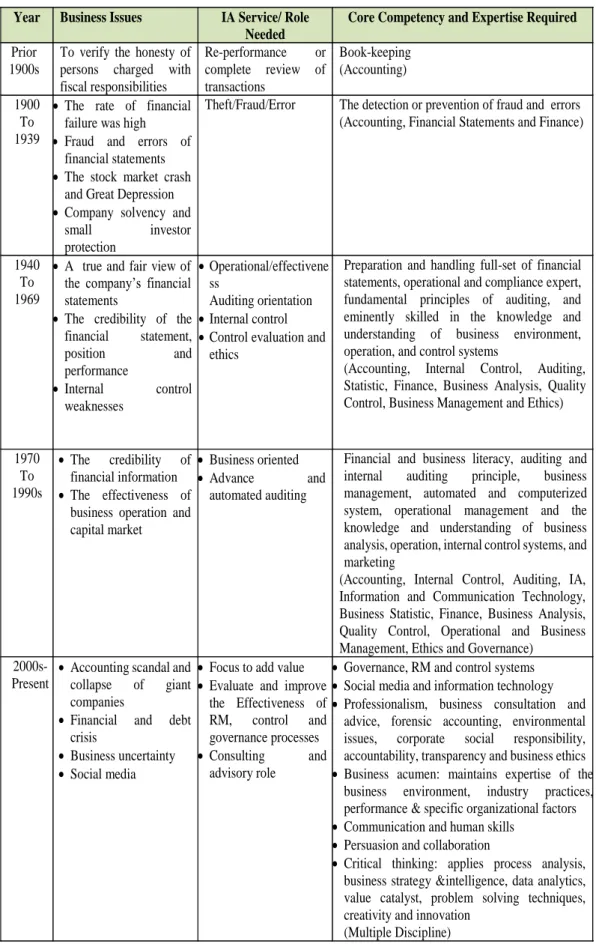
Table 2.1: IA Core Competency and Services Needed ...39
Table 2.2: Areas of Overlapping Interest ...48
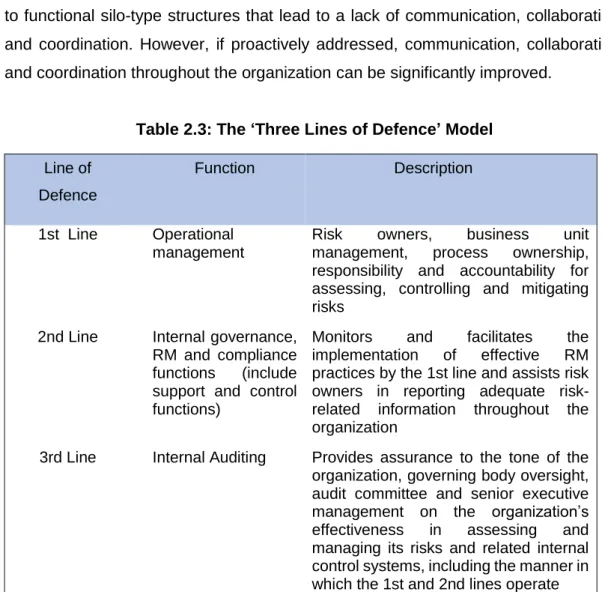
Table 2.3: The ‘Three Lines of Defence’ Model ...50
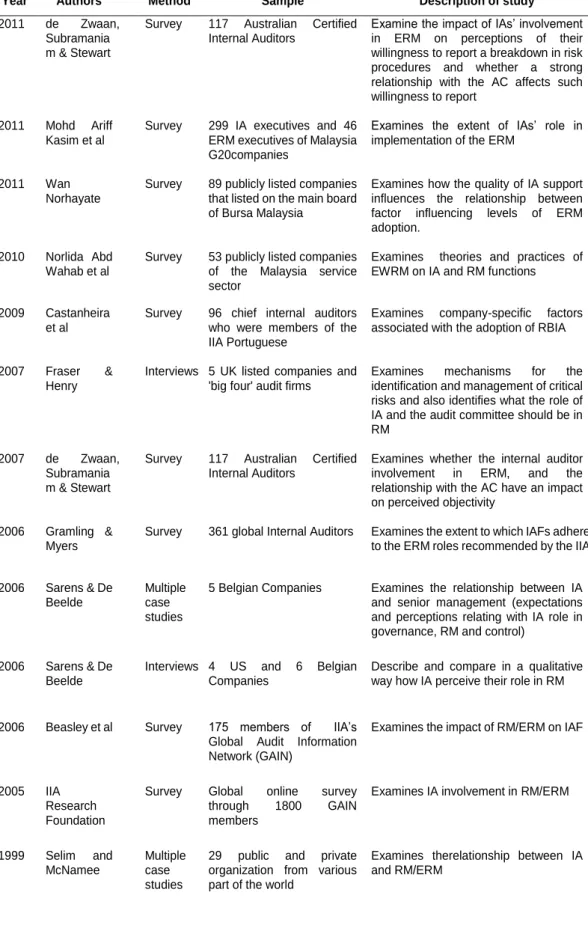
Table 3.1: Previous Studies on Internal Audit and Risk Management ...83
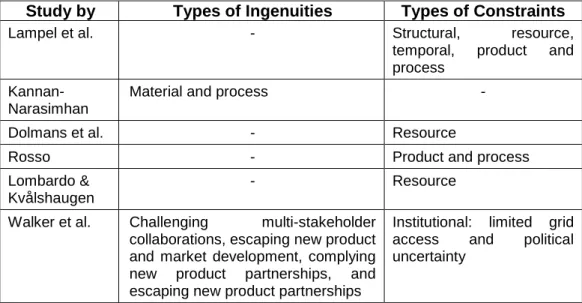
Table 4.1: Summary of Types of Ingenuities and Constraints ...99
Table 5.1: Comparison of the Four Philosophies in Management Research ... 116
Table 5.2: Case 1 – the Interviewees of the IIA (the CIIA) ... 129
Table 5.3: Case 2 & 3 – the Interviewees of the BC Company ... 129
Table 5.4: Case 2 & 3 – the Interviewees of the UKC Company ... 130
Table 5.5: Additional Interviewees for Case 1*, 2** and 3*** ... 130
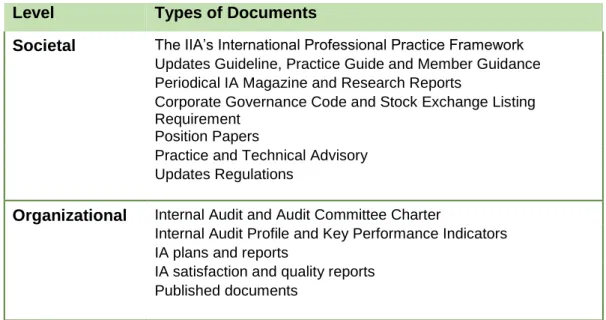
Table 5.6: Examples of Documents Analysed ... 131
Table 7.1: Constraints and Ingenious Solutions to Address Changes in Regulations, Business Environment and Key Stakeholder Interests ... 159
Table 7.2: Ingenious Solutions to Tackle Capability and Resource Constraints ... 167
Table 7.3: Driver of Constraints, Impact and Ingenious Solutions to Solve IA Status and Quality Constraints ... 176
Table 7.4: Summary of Issues and Ingenious Solutions ... 180
Table 8.1: Types of Ingenuities and Constraints... 183
Table 8.2: Summary of Constraints and Ingenious Solutions ... 216
Table 9.1: Ingenious Solutions to Solve the Rivalry Constraint ... 220
Table 9.2: Risk Management Bodies and Professional Organizations ... 223
Table 9.3: How RM and IA Collaborate ... 232
Table 9.4: Respondents’ Views on Collaborative Efforts ... 234
Table 10.1: Types of Ingenuity, Ingenious Solutions, and Constraints Which Have Been Solved by IA Functions ... 239
12
LIST OF FIGURES
Figure 2.1: The Evolving Role, Focus and Professionalism of IA ...32
Figure 2.2: IA Role and Competency Requirements...38
Figure 2.3: Internal Auditor Role in ERM ...45
Figure 2.4 The ‘Three Lines of Defence’ Model ...49
Figure 2.5: RM Maturities and IA Approach ...56
Figure 2.6: Implementation and Ongoing Operation of RBIA ...57
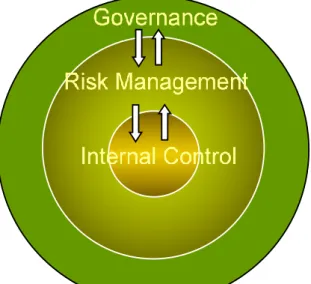
Figure 3.1: Overview of Governance ...62
Figure 3.2: Key Components of Governance Oversight ...62
Figure 3.3: Depiction of Key Governance Elements ...65
Figure 5.1: The Fundamental Research Term Continuum in Management Research ... 115
Figure 5.2: Research Strategies Diagram ... 120
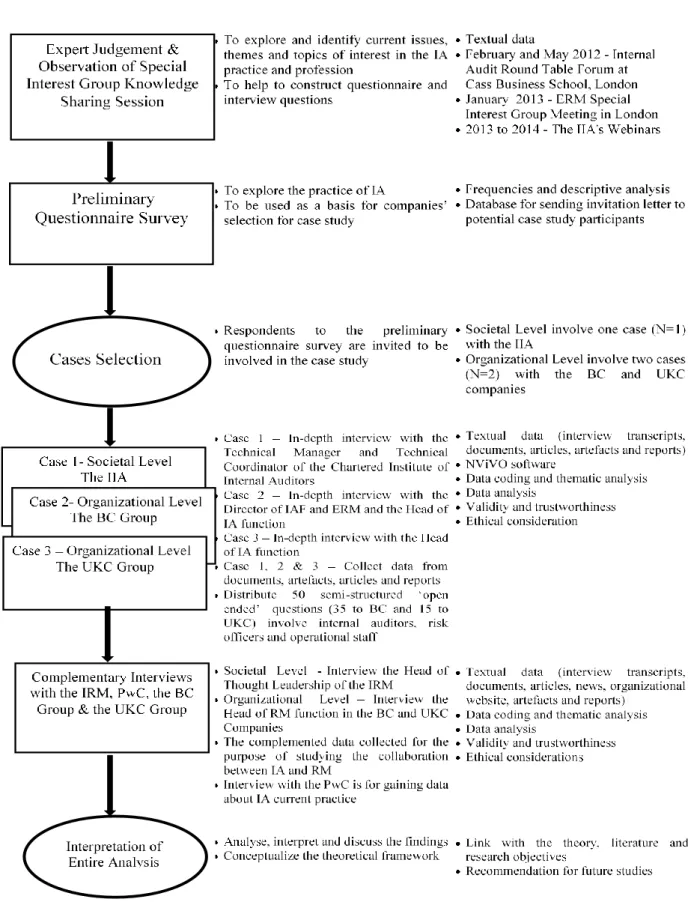
Figure 5.3: Research Sequential and Process ... 123
Figure 5.4: Sample Coding, Themes, and Theoretical Process ... 134
Figure 5.5: Changes, Constraints and Ingenious Solutions ... 138
Figure 6.1: Respondents’ Backgrounds ... 148
Figure 6.2: Age of the Internal Audit Functions from the IAS ... 149
Figure 6.3: Characteristics of IA Functions from the IAS ... 150
Figure 6.4: Quality Assurance of the IA Function ... 153
Figure 6.5: IA Involvement in RM ... 154
Figure 6.6: Internal Auditors’ Training and Competence ... 156
Figure 7.1: The IA’s Historical Roles Prior to 1999 ... 160
Figure 7.2: The IA New Role (Post 1999) ... 163
Figure 7.3: The Changes to the PPF and the Updated IPPF ... 166
13
INTRODUCTION
1.1 INTRODUCTION
This thesis examines if and how the internal auditing (IA) professional body (the Institute of Internal Auditors) and IA practitioners (IA functions) exercise ingenious strategies to help strengthen and improve the effectiveness and quality of IA. Through these ingenuity practices, it is expected that IA is able to overcome the constraints it faces and increase its capability to remain relevant in the changing environmental conditions.
The chapter begins by presenting the background to the research and the problem statement. This is followed by the research aims, questions and objectives, then the motivation (significance) and contribution of the study. The chapter concludes with a summary of the research approach and methodology, as well as the structure of the thesis.
1.2 RESEARCH BACKGROUND
The role of IA continuously evolves as the organization’s structure, risks and environmental conditions change over time. By changing or improving their role, IA functions can provide different types of services (or activities) to their key stakeholders (such as the board, audit committee, senior management, operating line managers, regulators, external auditors and other auditees) according to their needs. Within the last three decades, IA services and activities have improved and expanded from the traditional IA role that focused on financial, compliance, internal controls, operational, computer, value-for-money, quality and management auditing (Cooper et al., 2006; Zakaria et al., 2006; Pickett, 2003) to a contemporary IA approach. This contemporary role is designed to also provide assurance and consulting services (Selim et al., 2009; Hass et al., 2006; Arena et al., 2006; Allegrini et al., 2006; Anderson, 2003; Chapman, 2001); value-added activities (Roth, 2003); business insights and strategic advice services (Deloitte, 2012; Christopher et al., 2009; Bou-Raad, 2000); and risk
14
management (RM), governance and control processes (Soh & Martinov-Bennie, 2011; Burnaby et al., 2007; Sarens & De Beelde, 2006; Fraser & Henry, 2007; De Zwaan et al., 2009; Fadzil et al., 2005; Gramling et al., 2004). Today’s expanded role means that the IA profession and its practitioners sometimes face constraints that inhibit their ability to perform their duties in a cost-effective manner. Strategies of ingenuity and creativity are, therefore, required to overcome these constraints. These issues have triggered the researcher’s interest to find out whether ingenuity has an impact on the effectiveness and quality of AI. According to D’Silva and Ridley (2007), it is essential to have effective and quality IA to help the board and management to develop a good governance practice in its organization.
A series of corporate failures, fraud, the recent global financial crisis (2007 – 2012), and the collapses of corporations, such as Enron, WorldCom, AIG and Lehman Brothers with losses of more than hundred billion, have made good governance a central concern for stakeholders (Muchhala, 2007). Table 1.1 shows a series of corporate failures and accounting scandals that have received broad coverage in the past years. Collectively these suggest that RM and governance remain very challenging issues for a wide range of organizations.
Table 1.1: Major Corporate Failures and Accounting Scandals
Source: Adapted from the Office of the Registrar of Indigenous Corporations (ORIC), 2010
Corporate Failures Year Country
Maxwell Publishing Group Late 1980s UK
Savings and loans collapse 1986–1995 USA
Barings Bank, Poly Peck, BCCI, Marconi 1990s UK
Crédit Lyonnais 1990s France
Holtzman, Berliner Bank, Babcok 1990s Germany
Banking Industry (in the Asian crisis) 1997 Asia
HIH, Ansett Airlines, One.tel 2001 Australia
Parmalat 2003 Italy
AIG 2007 USA
Enron, WorldCom, Tyco, Adelphia, 2000s USA
Vivendi 2000s France
Swissair 2000s Switzerland
Accounting Scandals
BANINTER 2003 Dominican Republic
Northern Rock 2007 UK
Satyam Computer 2009 India
Lehman Brothers 2010 USA
Olympus Corporation 2011 Japan
HSBC, Lloyds, Royal Bank of Scotland, Barclays 2012 UK
J.P Morgan 2012 UK
Tesco Plc 2014 UK
15
These corporate failures and accounting scandals have raised questions as to the ability of boards and managements to manage legitimately the risks confronting their organizations. According to Stanton (2012) and Parsons et al. (2011), poor RM and control processes in dealing with uncertainty and changing risks contribute to less effective corporate governance. In addition, the ineffective management of risks may indicate that the board of directors, executive management and the IA function have failed to discharge properly their professional and statutory responsibilities. As a consequence, today, more than ever, organizations are required to establish sound governance and effective RM processes in order to protect shareholders’ rights and maintain stakeholders’ trust and confidence (Gramling et al., 2004). Therefore, the focus needs to be placed on how organizations address the challenges of delivering good corporate governance, creating value, and improving profitability and growth within the boundaries of acceptable risk appetites and values.
Governance issues have stimulated organizations to place more emphasis on control, and RM and IA functions (Zabihollah Rezaee, 1995). This had led to growing demand for improved IA, not just from business entities but also from government and regulatory bodies. As one of the four main corporate governance pillars1 (Reding et
al., 2009; Gramling et al., 2004), IA plays a crucial role through helping audit committees, executive managements and external auditors to evaluate and improve organizations’ operations and performance. In order to fulfil this crucial role, IA functions must possess the appropriate capability and have deep business knowledge and insight to enable them to support managements in improving and strengthening organizations’ governance practice. Consequently, in response to the demand for effective corporate governance, a new definition for IA has been created to incorporate a broader role that focuses on adding value through providing assurance and consulting activities. A strong IA function has the capability to discharge its role effectively, leading to sound RM, control and governance processes, which are crucial in preventing corporate failures and regaining stakeholders’ confidence. For example, in the United States of America and Malaysia, corporate failures have led government to require more companies to have IA functions and to specify additional roles from internal auditors (Plant & Steyn, 2009).
1 Four interdepended pillars of an organization’s governance process are represented by the
16
The ‘Three Lines of Defence’ model has positioned IA functions as the third line of defence within organizations to provide assurance and an advisory role to audit committees, senior managements and risk owners on the effectiveness of internal governance and risk processes (see Chapter 2). The ‘Three Lines of Defence’ model was developed in the 1990’s by a KPMG consultant called Smith. It defined and segregated the responsibilities of each group of risk and control professionals, so that the boundaries of their responsibilities are well understood (IIA, 2013).
IA needs to change and adapt to new requirements by recognizing more clear lines of responsibility, authority and accountability (IIA, 2004; Albrecht &Sack, 2000). For example, the latest (2014) corporate governance code in the United Kingdom highlighted a series of challenges that may have a significant impact on the IA profession. This raises the question of the extent to which IA, as the third line of defence in the organization, is sufficiently well placed, tasked and resourced to perform an assurance and advisory role to help the board and management to effectively manage organizational risks (IIA, 2013).
On the other hand, the uncertain economic conditions, growing business risks and borderless world with fast innovation and advanced technology (i.e., the internet, social media, and the advancement of computer, information and communication technology) have created a very competitive and dynamic environment that puts almost all organizations in a challenging and risky position to achieve their objectives (Mikes & Kaplan, 2013; Muchhala et al., 2007; Volberda, 1996). This has driven changes in business conduct, systems, processes, operations, plans, market models and regulatory requirements. As a result, these conditions have led to a better focus on corporate governance frameworks and the responsibilities of different constituents of the governance mechanism. In reviewing governance processes, the issue of IA function quality and effectiveness has received huge attention from stakeholders, including regulators, rating agencies, shareholders and corporate managements (Ernst & Young, 2011; CIMA, 2010; Cohen & Sayag, 2010; Arena & Azzone, 2009; Power, 2009; Saren, 2009; Bou-Raad, 2000).
Effective IA is vital because of its potential link with business performance and continuity by helping organizations to manage risk effectively, add value, and meet stakeholder expectations (Davey, 2001: 1–4). In this context, the IA function can be considered as playing a potentially key role in protecting shareholders’ and other
17
stakeholders’ values. In addition, creating and maintaining a good reputation, restoring confidence, and meeting the stakeholders’ values are essential for organizations to succeed and survive.
Undoubtedly, organizations are increasingly under pressure to create surprise-free environments by practising good governance. A possible avenue through which organizations (or even regulators) could develop proactive and effective monitoring and control mechanisms in the corporate governance system is by relying on the work undertaken by IA functions (a key component of governance oversight) (Reding et al., 2009; Felix, Gramling & Maletta, 2001; Gramling, 1999). The role of IA has been evolving and shifting to a more value-added approach in line with changes in business strategies and the growth of regulations (IIA, 2008). To realize this, IA functions may need ingenuity to be able to act as a catalyst in problem-solving and adding value to their organizations. The IIA and IA functions have to improve the quality, effectiveness and efficiency of IA, which is potentially achieved by exercising ingenuity throughout all IA activities, strategies and methodologies. IA ingenuity has a huge prospective to improve organizations’ performance and stability by reducing the uncertainty of the business environment. Organizations that can effectively manage their risks are likely to create more a stable environment and winning strategies, and these are essential for surviving in a dynamic and competitive market, both in the short and long term. The need to provide a broader range of services has raised questions about how the IIA and IA functions should improve their quality and effectiveness to meet these challenges. Whether the evolution that has been driven by these challenges leads to strategies of ingenuity raises interesting questions to be explored. These ideas form the basis for the research in this thesis.
1.3 THE PROBLEM STATEMENT
This section presents the problem statement in two parts; the role of IA and the myth of ingenuity as follows.
1.3.1 The Role of IA
With an increasing series of major corporate failures, accounting scandals and economic uncertainties, it is reasonable to query the role of IA functions in corporate governance mechanisms and the quality and effectiveness of IA in improving
18
governance processes. More specifically, there are questions to be asked relating to how IA functions build necessary capabilities and exercise ingenuity strategies to deliver services as expected by the boards of directors and managements of organizations. In addition, the following questions could also be asked: Where were the internal auditors during the financial crisis (2007 -2012)? Why have corporate scandals and failures occurred repeatedly in recent times? What should IA functions do to prevent similar events from happening in the future? How can IA help the board to restore investors’ confidence and trust? Is there any difference between having and not having sound and innovative IA functions in organizations? How successful is IA in helping to protect an organization’s fragile, intangible asset, “reputation”? Do directors and managers get the best from their IA functions and internal auditors? Can IA functions act as business partners and contribute to organizations’ strategic plans? What are the real values that IA is able to provide during scandals and periods of crisis?
All of these questions need to be addressed prospectively and retrospectively to better understand IA practices and its current issues. Interestingly, one big question that emerges from addressing this wide range of questions is how the IIA (at the societal level) and IA functions (at the organizational level) exercise ingenuity or create ingenious solutions in their efforts to meet various key stakeholders’ expectations.
As a key component of governance oversight, the IA function is supposed to continuously evolve to become more a value-added and relevant service. According to the IIA (2000), value is delivered by improving opportunities to achieve organizational objectives, make improvements to operational processes and effectively reduce and manage risk through both assurance and consulting services. In other words, value is created if those the IA function serve are significantly improved because of its work. It seems that the quality of IA and the effectiveness of the IA function could potentially bring a lot of benefits to the organization (OpenPages, 2009; Beasley et al., 2006; Turnbull, 2006; Stoh, 2005; Power, 2004; ERM COSO, 2004; Walker et al., 2002; KPMG, 2001). However, the question remains: How can IA achieve these goals?
In searching for the answer to this question, research is needed to examine and address whether IA evolves and improves its quality and effectiveness over time through ingenuity strategies developed by the IIA (at the societal level) and IA
19
functions (at the organizational level). Understanding how the IIA and IA functions deal with change successfully through instances of ingenuity provides great opportunities for expanding the study and literature on this subject. In addition, the relationship between IA ingenuity and IA performance, as well as how constraints may boost or deter ingenuity, is so far quite an under-researched area in the IA discipline. This study focuses on: exploring the various types of ingenious solutions used by the IA profession and IA functions; examining whether these solutions help the profession and functions to solve the constraints they face; and evaluating how IA is evolving and remaining relevant in organizations.
1.3.2 The Myth of Ingenuity
In this study, “ingenuity” refers to the organizational ingenuity concept introduced by Lampel et al. (2014, p. 467). This research states organizational ingenuity “as the ability to create innovative solutions within structural constraints using limited resources and imaginative problem-solving”. According to Isaacson (2011), organizational ingenuity is a domain of the organizational actor to solve challenging problems creatively in a particular organizational context, credible in negotiating organizational boundaries, and fully aware of the constraints and limitations imposed by the bureaucratic institution they inhabit. In general, “ingenuity” can be associated with creative problem-solving; “the quality of being clever, original, inventive; having a skill or cleverness that allows someone to solve problems, and invent things” (The Oxford Dictionary and The Merriam-Webster Dictionary). In the context of this research, IA ingenuity refers to creative solutions, such as new or improved IA frameworks, methodologies, strategies, tools and techniques that the IIA and IA functions use to conduct IA activities in order to help the organization towards success, to improve performance and to achieve desired objectives. However, in this research, the researcher sees ingenuity as not merely a term used to describe a big or highly creative solution to a problem, but also as to how the IIA (at the societal level) and IA functions (at the organizational level) make small improvements, that are nevertheless crucial, or achieve breakthroughs that can change the IA function’s practice in the organization or change the entire IA profession.
20
1.4 RESEARCH AIMS, OBJECTIVES AND RESEARCH QUESTIONS
1.4.1 Research Aim
This study explores whether ingenious strategies used by the IIA and IA functions help them to improve the quality, effectiveness and efficiency of IA and its activities, including: adding value, safeguarding the survival of IA, and striving to remain relevant as a cornerstone of corporate governance in organizations. The study concentrates on exploring ingenuity practiced by the IIA and IA functions from 1999 to the present day, the time period from the issuance of the IIA’s new definition of IA. It seeks to develop a better understanding of the role of ingenuity and its impact on the continuous development of the IA profession and practice to meet the needs and expectations of IA key stakeholders. In particular, this study aims to explore IA ingenuity through the use of risk methodology and IA involvement (or role) in RM. This is important in ensuring that sound governance, RM and control processes are in place to help organizations manage risks effectively and achieve their business and strategic objectives. The research aims lead to the following research questions and objectives.
1.4.2 Research Questions
This study attempts to answer four research questions, which are:
RQ1. How does the Institute of Internal Auditors (the IIA) exercise ingenuity in the development of the IA profession at the societal level in order to survive and remain relevant in the challenging environmental conditions?
RQ2. How do IA functions (IA departments in organizations) exercise ingenuity in executing and conducting their activities at the organizational level in meeting management and other key stakeholders’ expectations?
RQ3. What ingenious solutions (types of ingenuity) are used by the IIA (at the societal level) and IA functions (at the organizational level) in dealing with the variety of constraints faced by them?
RQ4. How do IA and RM (professional bodies and functions) collaborate at the societal and organizational level to strengthen their relative position in RM (as stated in the ‘Three Lines of Defence’ model)?
21
1.5 MOTIVATION AND CONTRIBUTION OF THE STUDY
The Institute of Internal Auditors (IIA) defines internal auditing as:
“An independent, objective assurance and consulting activity designed to add value and improve an organization’s operation. It helps an organization accomplish its objectives by bringing a systematic, disciplined approach to evaluate and improve the effectiveness of risk management, control, and governance processes” (IIA, 2000).
This definition has shifted the focus of IA from control to risk and from one of an assurance role to a value-added and consultancy role. This study on IA is motivated by the increasing focus by regulators and stakeholders, specifically on the need to improve corporate governance, RM and control processes, and compliance to the relevant rules and regulations. As discussed in Section 1.2 and 1.3, the continuous scandals and failures of big corporations have triggered regulatory reforms and calls to improve existing corporate governance mechanisms and practices. This can be seen in a range of new acts, regulations and guidelines, security commission rules, corporate governance codes and standards that have been revised and issued globally. These new rules and frameworks aim to instil public confidence, protect organizational reputation, and help to ensure business prosperity and accountability in dealing with uncertainties, whilst also combating unethical behaviour.
Major governance reforms have taken place in the United States (the US) and the United Kingdom (the UK) in the last two decades. In the US, the reforms include the Sarbanes-Oxley Act (2002), Committee of Sponsoring Organizations (COSO) of the Treadway Commission on Enterprise Risk Management (ERM) (2004), Emergency Economic Stabilization Act (2008), American Recovery and Reinvestment Act (2009), New York Stock Exchange (NYSE) Corporate Governance Rules (2009), The Dodd-Frank Act (2010), and the new COSO framework (2013). In the UK, there are the UK Corporate Governance Code (2010), the Companies Act (2006), the Operational Risk Management Practices (Financial Services Authority, 2005), the Walker Review of corporate governance in UK banks and other financial industry entities (HM Treasury, 2009), the UK Stewardship Code (2010), and the London Stock Exchange (LSE) listing rules. These reforms have put pressure on organizations to strengthen their IA practices, systems of governance, RM and control to prevent and minimize the risk of
22
future major corporate failures and unethical misconducts (Collier & Woods, 2011; The Financial Regulation Forum, 2011).
The reforms have also highlighted the importance of the IA function in helping organizations to achieve their objectives, protecting and creating good reputations, and fulfilling stakeholders’ expectations by creating more stable and surprise-free environments (Chambers, 2013; Boesso & Kumar, 2007). Accordingly, as a central point to good corporate governance, the IA profession must help organizations to win back stakeholders’ confidence (Peters, 2013). The endless lists of financial and debt crises in Western countries have caused the role of IA to be cited as among the top agenda topics (Ernst & Young, 2011; and PwC, 2009). Therefore, IA functions need to strive and improve the quality and effectiveness of their role in the current business environment as prominent assurance and consulting service providers. In addition it needs to become the ’third line of defence’ in corporate governance structures to help organizations mitigate risks and ensure proper control across their operations (COSO, 2004; ISO 31000, 2009).
The IIA and IA practitioners inherently claim that contemporary IA operates to add value and improve organizational operations. However, there is still a lack of research evidence explaining if and how both the IIA (at the societal level) and IA functions (at the organizational level) add value, improve organizational operations and tackle issues of limited resources and the constraints they face.
In addition, this study is inspired to respond to Sarens et al.’s (2011) call to investigate to what extent IA quality and effectiveness are associated with, or have a positive impact on, the quality and effectiveness of RM and corporate governance. According to Sarens et al. (2011), the involvement and role of IA in RM and governance will continue to increase, and this necessitates the appropriate status (i.e., authority, responsibility and independence) and the allocation of more resources to IA activities (i.e., an increase in staff size, competency, audit tools, and techniques). In this context, the use of IA ingenuity by the IIA and IA practitioners in developing IA across a variety of IA activities is necessary, in order to improve and strengthen the quality and effectiveness of both the IA profession and its practitioners. This study is, therefore, motivated by the drive to get a deeper understanding of whether ingenious strategies (whether new or modified for the circumstances) help the IIA and IA functions to resolve the constraints and challenges they face in the modern world.
23
1.5.1 Contribution to Theory and the Academic Literature
The importance of practising good corporate governance in preventing accounting scandals and corporate failures highlights the necessity of quality and effective IA. This research contributes insights on IA practices, particularly regarding the use of ingenuity strategies in both theoretical and empirical aspects that are yet to receive sufficient research attention (Sarens, 2009).
To date, the literature in the IA discipline shows that there are many studies that have been conducted to investigate the development and evolution of IA, including examining how IA functions cope with the expectations and needs of management and regulation. Nonetheless, the research has found no studies to date in IA that have attempted to use the “organizational ingenuity” theory to examine how the IA profession and practitioners overcome the constraints and limited resources they face. Therefore, this study extends the use of a theoretical framework in IA research by introducing the ingenuity and constraints concept to explain how IA is able to continuously improve its effectiveness and quality. This, in turn, helps to safeguard and raise IA’s prominent position in the governance structure. In addition, the use of the ingenuity theory in IA research has extended the application of the theory in a new area of study.
This study contributes to the literature by extending the evidence on areas of improvements made by the IIA and IA functions. It shows how the IIA and IA functions problem-solve through using ingenuity to overcome constraints in order to fulfil stakeholder expectations. For example, IA functions are required to do more with less and to operate ingeniously within their existing resource constraints to improve the quality and effectiveness of IA. In addition, this study aims to demonstrate how IA ingenuity stimulates different types of ingenious solutions to deal with different type of constraints. Ingenuity strategies enable IA functions to deal with some significant challenges, including adding value and moving towards becoming a trusted adviser to top management.
Prior studies, such as by Kasim et al. (2010), acknowledge that research in this area has been largely practitioner-based and undertaken by big public accounting and consulting firms such as Deloitte, Ernst & Young, PwC, KPMG and Protiviti. Their studies are normally restricted to descriptive material and lack empirical evidence.
24
Sarens (2011) highlights the fact that most IA research fails to critically evaluate the added value of IA at both the macro level (the profession) as well as at the micro level (the organization). Thus, this study attempts to fill the gap in IA literature, as well as extending existing literature, in terms of the theoretical framework (ingenuity theory) employed. Uncovering the use of ingenious strategy in the IA role and its development can provide a new lens and insight for scholars in looking at IA practice at both societal and organizational levels. The findings generated could also be tested in different organizations in different economic and cultural contexts, thus extending the literature further.
While previous research has looked into the current state of IA’s involvement in RM, almost none seeks to understand the collaboration between IA and RM through the ingenuity perspective. Therefore, this study attempts to extend the literature by exploring how ingenuity emerges through IA’s partnership with RM in order to safeguard both functions’ roles as described in The ‘Three Lines of Defence’ model. Moreover, empirical evidence of the positive impacts, resulting from a collaboration between IA and RM at the societal level (professional bodies) and the organizational level (IA and RM functions), could provide ideas to organizations regarding improving the effectiveness of their RM and governance processes.
At present, there is no formal framework or standards available for ingenuity in IA. This study contributes to enrich the literature of IA by offering a common definition of ingenuity and organizational ingenuity that have been defined and discussed in the organizational studies literature. In addition, the more specific definition of IA ingenuity has been addressed in this study. This definition establishes a fundamental framework that recognizes ingenuity in the societal and organizational context. The definition also makes clear that ingenuity is not merely a term used to describe a big change or a highly ingenious solution to a problem. It also indicates that, if the IIA (at the societal level) and IA functions (at the organizational level) make small improvements, these can be crucial for raising the quality, effectiveness and efficiency of IA. The study, therefore, contributes to the IA literature by providing insights and understanding on the strategies and concept of ingenuity that potentially could help in influencing and improving the quality, performance and effectiveness of IA activities. Ultimately, looking at the potential for ingenuity strategies in IA functions may contribute to the success and effectiveness of organizational processes.
25
Prior studies on the quality, effectiveness and performance of IA have mostly focused on the assessment, quantifying and construction of measuring instruments (Kassim et al., 2012; Arena and Azzone, 2011; Ridley & D’Silva, 2008; Mihret & Yismaw, 2007; Van Gansberghe, 2005; Dittenhofer, 2001). In addition, they have been primarily conducted quantitatively. There is a necessity to explain such findings in more detail, especially in terms of the approaches and strategies used to improve IA quality and effectiveness and to explain how IA functions resolve problems while dealing with limited resources and constraints. Through two case studies and qualitative inquiries, this research provides greater insight on these issues. Since little is known about the relationship between IA ingenuity and the role of IA in RM, this study extends the scope of the research by investigating collaborative efforts between IA and RM functions and how IA impacts the overall corporate governance of organizations.
1.5.2 Contribution to Practitioners and Policy Makers
In order to meet management expectations in a fast-changing and dynamic environment, IA functions and professional bodies need to create new ways, or adopt existing approaches, to perform IA activities, starting from planning, to communicating reports and implementing recommendations. On the other hand, IA practitioners cannot afford to spend a lot of time designing frameworks, building expertise and capabilities, and developing strategies to manage risks that may have short lives. It is also unlikely for the IIA and IA functions to obtain additional resources and power to develop all the new capabilities needed by them to execute their new ideas. Faced with structural constraints and limited resources, the best solutions for improving quality and effective IA may well be found through exercising ingenious strategies. In this manner, big or small IA functions are able to increase their potential to meet management and other key stakeholder expectations.
At the societal level, the findings of this study could help professional bodies such as the IIA and Institute of Risk Management (IRM) to continuously be aware of constraints faced by their members. It is crucial for them to provide appropriate assistance, such as by issuing or updating frameworks, guidance and the training required by their members. The findings from the study could influence professional bodies and regulators to embrace the ingenuity concept in developing and improving their frameworks, standards, guidelines, making sure these are up to date and relevant at all times. Finally, the research findings could inspire the IIA and regulators in
26
developing a framework that embeds ingenuity practice into the IA profession, and its role and activities.
1.6 SUMMARY OF THE RESEARCH APPROACH AND METHODOLOGY
To achieve the objectives of the thesis, the researcher adopted the interpretivist research philosophy (Myers, 1997; Saunders et al., 2009; Crotty, 2009) and employed a qualitative approach in gathering the evidence to address the research questions posed in Section 1.4.2. The research adopted a case-study approach, complemented with interviews with practitioners and experts in related fields.
In collecting the data, the researcher used both semi-structured interviews and documentation. Documents reviewed by the researcher include professional standards and guidance resources, the IIA members’ documents, public and regulatory documents, research reports, news clippings and articles in mass media, professional bodies’ and consulting firms’ research and practice reports, virtual documents, administrative and strategic documents, IA customers’ satisfaction surveys, IA quality review reports, IA reports and recommendations, board and management reports, IA plans, IA profiles and charters.
Referring back to the research questions, a key component used to address these are the analysis at the societal and organizational levels of IA. Data was collected for both levels and to show how the levels interact. The data was analysed using thematic content analysis. Themes used were based on the ingenuity practice and implementation at societal and organizational levels. The themes were identified based on the occurrences, repetitions or synonyms of the texts, words, phrases and events within the interview transcript data. These themes included (i) the evolution and extended role of IA; (ii) the resources and capabilities of IA; (iii) the status and quality of IA; and (iv) the collaboration between IA and RM.
In explaining the empirical data, the researcher also aimed to match the phenomena with the theoretical framework and previous literatures. Finally, yet importantly, the researcher also ensured that the whole process met research ethics; and that confidentiality and safety of the data were safeguarded. Details on the research process and methodology are discussed in Chapter 5.
27
1.7 STRUCTURE OF THE THESIS
This section describes the structure and organization of the research thesis, providing an overview of its contents. The thesis consists oftenchapters as follows.
Chapter 1: Introduction
This introductory chapter discusses the background, gap and justification for the study together with the motivation for the current research by emphasizing its importance and key contributions to knowledge and practice. The chapter then states the research aims, objectives and core research questions that are a focal point of the investigation. A summary of the research approach, methodology and the methods employed to undertake the study are also presented in this chapter.
Chapter 2: Internal Auditing: The Research Context
The second chapter discusses the research context. It discovers the history and evolution of IA, and the rise of IA as a professional profession, and as a prominent function in an organization that adds value and enables effective RM, control and governance processes (Coram et al., 2008; Carcello et al., 2005; Spira & Page, 2003; Beasley et al., 2000; IIA, 1999). The chapter also covers: the Risk-Based Internal Audit (RBIA) approach, the role of IA in RM, the ‘Three Lines of Defence’ model, the IA competency framework and the maturity of the IA model.
Chapter 3: Literature Review
This chapter provides insights to previous studies of the IA role, a role that is continuously evolving over the years to adapt to changes in business operations, regulatory demands, customer needs, and stakeholder expectations. The discussion on previous literature covers issues of the effectiveness and quality of IA, the role of IA in corporate governance mechanisms, IA’s new definition, IA’s role in RM and the collaboration between IA and RM.
28
Chapter 4: Theoretical Framework: Theoretical Lens of the Study
In this chapter, the researcher applies the ingenuity theory as a theoretical lens to explain the changes and innovation involved in IA (Homer-Dixon, 2000; Lampel et al., 2011). This theory is based on the concept of human ideas (or sets of instructions) that are applied to solve practical, social and technical problems, to aid the achievement of goals (Lampel et al., 2011). The research uses an organizational ingenuity framework to show the ability to create innovative solutions within structural constraints using limited resources and imaginative problem-solving to overcome practical problems and help in the achievement of goals. This ingenuity concept is explored in the IA development and practices that the researcher reports in Chapters 7, 8 and 9.
Chapter 5: Research Method
This chapter outlines and presents the adopted research method, providing the overall approaches and perspectives used in conducting this research. It focuses on the research methods and procedures involved in collecting and analysing data, which are applied based on the philosophical assumptions used for achieving the research objectives outlined in Chapter 1. This chapter also explains and discusses the selection of preferred research strategies and the justification for choosing those strategies.
Chapter 6: Preliminary Study
This chapter gives details of the quantitative preliminary study that was carried out before the data collection process for the case study took place. Using questionnaire surveys, a background of IA practices and characteristics in organizations is presented. The data is analysed descriptively, such as by using statistics figures and frequency. The findings from this chapter help the researcher to identify areas that need to be explored in depth in the case study. Subsequently, the survey participants’ organizations become the targeted organizations for the case study.
29
Chapter 7: Ingenuity of Internal Auditing at the Societal Level
This chapter discusses the way professional bodies such as the IIA perform ingenuity initiatives at the societal level. How the IIA exercises ingenuity is shown based on constraints faced by IA profession. These are categorized into three themes, which are (i) redefining the role of IA, (ii) IA capabilities and resources, and (iii) IA status and quality. The findings reveal how ingenuity initiatives taken by the professional body are crucial in advancing IA practice and solving the IA profession’s constraints in order to fulfil the needs and expectations of organizations and key stakeholders.
Chapter 8: Ingenuity of Internal Auditing at the Organizational Level
This chapter explores the constraints faced by IA functions in the two case studies of the organizations listed on the London Stock Exchange (LSE). In addition, it also addresses the ingenious strategies that the IA functions in the two companies have exercised in dealing with constraints to assist the functions to effectively meet their organizations’ demands. The discussion topics in this chapter cover the same themes used in Chapter 7.
Chapter 9: Ingenuity through Forging a Collaborative Cooperation between IA and RM
This chapter explores the collaborative effort between the IA and RM professions from an ingenious perspective at the societal and organizational level. The collaboration effort is viewed as an ingenuity process that aims to solve process constraints, such as unclear role divisions and rivalry issues between the IA and RM disciplines (professional bodies) at the societal level, and between both IA and RM functions at the organizational level. In discussing this issue, the researcher incorporates interviews with top senior executives from the Charted Institute of Internal Auditors (CIIA) UK and Ireland, and the IRM UK.
Chapter 10: Discussion and Conclusion
This final chapter provides a brief overview of the study conducted as a whole. This chapter includes a summary, a review of the purpose of the study, the research methodology used, and a reflection about the theoretical and practical contribution of
30
the study. This chapter also includes a discussion of the results as compared to existing literatures, as well as the potential implications of the research. Limitations of the study and recommendations for future research conclude this chapter.
31
INTERNAL AUDITING: THE RESEARCH CONTEXT
2.1 INTRODUCTION
This chapter aims to provide the context, background, principles, history, development and evolution of the IA discipline and practices. It also discusses the rise and development of the IA profession and accompanying frameworks, standards and guidelines. The chapter explores how these attributes have changed the role, purpose, nature, scope and effectiveness of IA. Further, the application and practice of several major approaches, models and methodologies, such as the IA role in RM, RBIA, and the role of IA within the ‘Three Lines of Defence’ model, are reviewed. The use of these approaches has a huge potential to strengthen and improve the profile and performance of IA. A number of other issues that are of fundamental importance to IA’s organizational success and survival are explored later on in the chapter.
2.2 THE DEVELOPMENT AND EVOLUTION OF IA
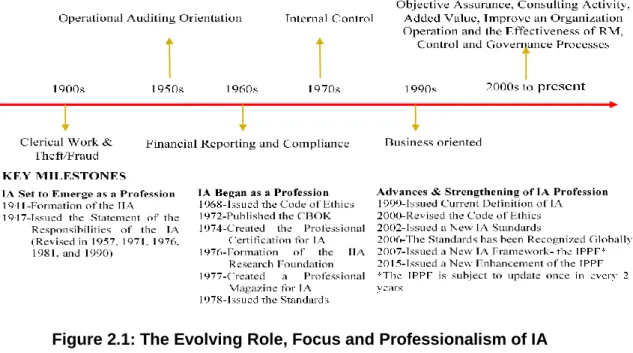
This section discuss the development and evolution of IA; covering the time period of before 1999 and post 1999 to present. The summary of the development and the evolution of IA and its role are summarised in the following Figure 2.1.
32
Figure 2.1: The Evolving Role, Focus and Professionalism of IA
2.2.1 Prior to 1999
According to Ramamoorti (2003) and Sawyer (1996), the existence of auditing has been construed from records of a Mesopotamian civilization that dates back to around 4000–3500 B.C. The systems found encompass accounting and financial transactions that demanded independent verifications (or detailed checks and counterchecks) to prevent book-keeping errors and irregularities, misappropriation of assets, as well as bribery and fraud within business and non-business organizations (Ramamoorti, 2003). Over time, as business activities grew in size, capacity, and complexity, book-keeping practices evolved from the hearing of accounts to include a need for an auditing service from independent internal assurance functions. Accounting records were verified and the information then used for decision-making by managements (Ramamoorti, 2003). In addition to the independent verification of accounting records, business managements also needed an IA function to evaluate the efficiency of work performed by their employees and employees’ honesty in financial transactions. Further, the Industrial Revolution in Europe created demand for both external and internal auditing with characteristics similar to current auditing (Ramamoorti, 2003). Subsequently, the Europeans brought these practices to North-American settlements.
Auditing practice was further developed during the economic and stock market crash in the early 20th century. At that time, there was a new demand for financial auditing,
33
to reinstate shareholder and public confidence in financial and investment activities. The Great Depression (1929–1933) and the economic recession (1937) that occurred in the United States brought about a need for the IA in US public- listed companies (Sawyer, 1996) and the role of IA grew in importance.
Generally, in most organizations, the IA function performed accounting-related audits as a sub-function of the accounting department (Brink, 1991). IA, during the 1930s, initially emerged as an aid to external audit activities. It could even be seen as performing an extension of the external auditor’s work in completing the detailed verification of financial audit tasks and reducing external audit costs for the benefit of management (Reeve, 1986).
The development of modern IA began with the foundation of the Institute of Internal Auditors (the IIA) in 1941 (refer to Figure 2.1). Since the establishment of the IIA, it can be seen that the role of IA to serve organizations’ board members, management and other stakeholders has continuously altered and advanced for more than seven decades. The sequence of IA development started with the early focus on clerical work and prevention of theft/fraud (1900s), before moving into work on operation effectiveness (1950s) and then financial reporting and compliance (1960s). More recently, the emphasis has been on: internal control (1970s), control evaluation and ethics (1980s), the achievement of business objectives (1990s) and, most recently, value adding and the evaluation and improvement of the effectiveness of risk management, control and governance (2000s to present) (Pickett, 2004:11-12).
The year 1941 was a defining moment in the progress and development of the profession and practice of modern IA. The birth of the IIA and the publication of the first book on IA by Victor Z. Brink in 1941 marked the start of the IA professional, creating its own identity and becoming recognized as an independent profession.
The establishment of the IIA has enabled the creation of a clearly defined scope of IA activities, the continued expansion of the scope and the move towards becoming a body engaged in standardized and consistent practices (Burns et al., 1994). The professionalization of the practice of IA depended heavily on the development of professional underpinnings, which emerged over a long period of time. Since the establishment of the IIA in 1941, it was only in 1947 that the IIA issued its first Statement of Responsibilities (SOR). Meanwhile, the Code of Ethics (the Code) was
34
issued in 1968; the first Common Body of Knowledge (CBOK) was published in 1972; the first Certified Internal Auditor (CIA) exams were written in 1974 (indicating that there was a recognized body of knowledge governing IA professionals); the IIA Research Foundation was established in 1976; and the first standards for the Professional Practice of IA (SPPIA) (currently known as the International Standards for the Professional Practice of Internal Auditing (ISPPIA)) were issued in 1978 (see Table 2.1). Each stage in this history marks a move towards professionalization of the IA function.
The role, scope and focus of IA have all changed over the years in response to regulatory changes, new market order and stakeholders’ expectations within the business environment. Selim and McNamee (1999) and Nagy and Cenker (2002) state that, over the years, these changes are evident throughout the periodical revision and transformations of SOR, standards, and the IA definition. For example, the SOR has been revised accordingly in 1957, 1971, 1976, 1978, 1981, 1990, and 1993. The first definition of IA was issued in 1978 and was replaced in 1999 by the current definition. According to Chambers et al. (1987), the broadening role and significant changes in the scope of the IA was made clear in all the revisions of SOR. For example, in 1957, at the time of the first revision, operational audits were promoted to be co-equal partnerships to financial audits. In the second revision in 1971, operational auditing was the main focus of IA, and IA was known as operational auditing. The term “operational auditing” was adopted in this revision to describe the expanded audit scope and activity.
A significant turnaround in the IA profession happened in 1978 when the IIA issued the Standards for the Professional Practice of Internal Auditing (SPPIA) to provide guidelines on how the IA function should be managed, and how audit engagement should be performed. The issuance of the SPPIA is important to accommodate the evolving IA profession. The first definition of IA was issued in 1978 as part of the Professional Practice Framework (PPF) (Sawyer, 1996), with the aim of stating the fundamental purpose, nature, and scope of IA, as well as to continuously assist internal auditors in ensuring the highest quality of IA services. In this respect, the IIA officially issued the first definition of IA as the following:
“Internal auditing is an independent appraisal function established within an organization to examine and evaluate its activities as a service to the organization. The objective of internal auditing is to assist members of the
35
organization in the effective discharge of their responsibilities. To this end, internal auditing furnishes them with analyses, appraisals, recommendations, counsel, and information concerning the activities reviewed.”
At this time, IA was defined as an “independent appraisal function” which is established fully in-house within an organization. This means no other sourcing format such as outsourcing and co-sourcing are permitted. The scope of IA services during the 1960s focused on the verification of financial statement information and data. Later on, by 1970s, IA practice had been expanded in scope by broadening financial auditing into the examination of business operations and value-for-money auditing (reviewing all areas where money was being spent). By the mid-70s, an increasingly important role was attributed to the creation of systems of internal control and understanding IA as an essential element of that function. This resulted in the evolution of the IA definition by the IIA, incorporating the role of the auditor as appraiser in the business operation and internal control process. According to Williamson (1975), IA is an appraisal function, integral and complementary part of the control systems to assess financial and operational controls.
According to Reding et al. (2009), the practice and landscape of the IA profession started changing in the 1980s. One of the key changes in IA was the release of a 1987 report by the Committee of Sponsoring Organizations of the Treadway Commission (COSO) which required that: (i) an IA should exist in every public corporation, and (ii) there should be a corporate audit committee composed of non-executive directors of the corporation. This change was aimed at IA assuming an active role in preventing and detecting fraudulent financial reporting. Another significant change in the IA profession and practice came about in 1990s when the use of risk assessment as a method to determine the allocation of audit resources dramatically gained in popularity (Reding et al., 2009). Similarly, the use of outsourcing arrangements became a popular means for organizations to manage their IA activities. In the 1990s, there was also a shift in the amount of time allocated to different activities in IA, with more time being allocated to operational audit activities (evaluating the effectiveness and efficiency of operations). As a result, less time is allocated for traditional audit activities (financial control and focus) (Reding et al., 2009). By this point, the traditional IA definition appeared to be no longer adequate to address the change in the role, nature of work and focus of IA. Consequently, a new definition was required to deal with the current and future changes in IA.