“Why single me out”? Peer Mentoring, Autism and Inclusion in
mainstream schools
By
Ryan James Bradley
A thesis submitted to the University of Birmingham for the degree of
DOCTOR OF PHILOSOPHY
School of Education
College of Social Sciences The University of Birmingham April 2017University of Birmingham Research Archive
e-theses repository
This unpublished thesis/dissertation is copyright of the author and/or third parties. The intellectual property rights of the author or third parties in respect of this work are as defined by The Copyright Designs and Patents Act 1988 or as modified by any successor legislation.
Any use made of information contained in this thesis/dissertation must be in accordance with that legislation and must be properly acknowledged. Further distribution or reproduction in any format is prohibited without the permission of the copyright holder.
ABSTRACT
The past decade has seen a significant increase in the number of autistic students attending mainstream educational provision. Improving outcomes for this group is a complex issue given the deficit of evidence based practice within schools. A mixed methods multiple case study design was used to evaluate the impact and outcomes of a new peer mentoring programme targeting the inclusion of autistic students. Twelve autistic students and thirty-six non-autistic students participated as mentors across five mainstream secondary schools in the South East of England.
Semi-structured interviews were used to record the views and experiences of the mentors and staff participating in the programme. Autistic mentors completed questionnaires on levels of social satisfaction, bullying and social competence. All showed improvements over the course of the programme. These findings highlight the importance of the full inclusion of autistic students in peer mentoring programmes and the use of approaches promoting social competence. The study has wider implications on the way educational approaches for autistic students are developed and implemented in mainstream secondary schools.
ACKNOWLEDGEMENTS
My great thanks go to Dr Karen Guldberg who was my supervisor for this thesis. Karen provided ongoing support, guidance and encouragement that has been invaluable. I would also like to thank Dr Sarah Parsons and Dr Simon Wallace without whom I would not have begun this process and Dr Stephen Gorard for his invaluable words of wisdom at the start of the project.
I was very fortunate to have been awarded a scholarship from the School of Education and would like to thank the University for investing in me and seeing the potential for my research. Being a Research Fellow at ACER and part of the Transform Autism Education team has been of great help and I am grateful for the advice and support offered by colleagues. This has greatly broadened my experience and knowledge of autism education and research.
To all the students, staff and schools who embraced the new peer mentoring programme and helped shape the research. This thesis would not have been possible without your involvement and I am very grateful for that.
Most importantly I would like to thank Cate, Billy and Bea for their never-ending support and for tolerating my endless hours spent on the laptop. A special mention to my dogs Martha and Lucy who provided a great distraction and important thinking time during the many walks in the woods over the past six years.
TABLE OF CONTENTS
1.
INTRODUCTION.……….1
1.1 Background.………1
1.2 Terminology………5
1.3 Rationale for Study: A Personal and Professional Perspective………..6
1.4 Aims and Research Questions………7
1.5 Research Design………..9
1.6 Thesis Structure.………11
2.
REVIEW OF THE LITERATURE………13
2.1 Introduction……….13
2.2 Methodology for Literature Review………14
2.21 Procedure for the Empirical Strand……….14
2.22 Procedure for the Expert Strand………16
2.23 Limitations of Review Methodology...17
2.24 Results of Review Methodology………...17
2.3 Peer Relationships and Educational Approaches for Autistic Students……..18
2.31 Background………..18 2.32 Friendships………25 2.33 Bullying………...29 2.34 Summary………...31 2.4 Educational Approaches………..31 2.41 Introduction………...31 2.42 Friendships………32 2.43 Bullying………34 2.44 Summary………...35 2.5 Peer Mentoring………...36 2.51 Introduction………....36
2.52 Impact and Limitations……….37
2.53 Summary……….40
3. THE NEW PEER MENTORING PROGRAMME………..42
3.1 Introduction……….42
3.2 Rationale for Peer Mentoring……….44
3.3 Agency Theory………45
3.32 Agency and Education………..47
3.33 Agency and Autism……….48
3.4 The New Peer Mentoring Programme……….51
3.41 Development Process………51
3.42 Overview of Programme……….57
3.5 Summary and Statement of Research Questions……….62
4. METHODOLOGY, DESIGN AND PROCEDURES………66
4.1 Introduction
………664.2 Research Paradigm……….66
4.21 The Mixed Methods Paradigm………67
4.22 Selection of Research Paradigm and Methodology……….70
4.3 Evidence Based Practice.………72
4.4 Research Design………..76
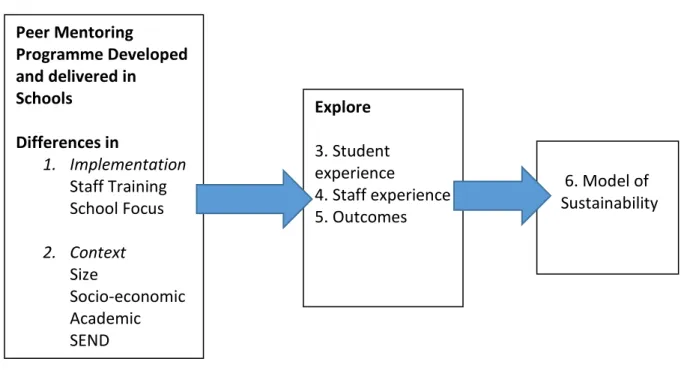
4.41 Conceptual Framework………77
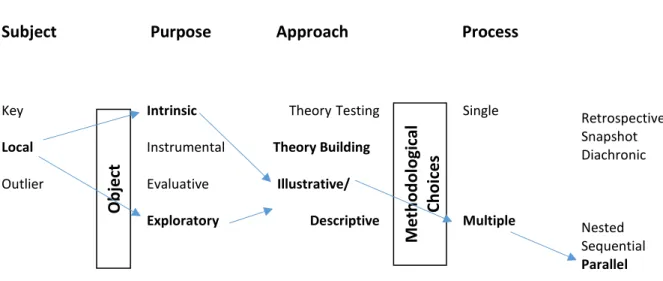
4.42 Case Studies……….78
4.43 Selection of Cases and Participants……….80
4.5 Role of the Researcher………90
4.6 Methods………91
4.61 Introduction……….91
4.62 Survey………..92
4.63 Semi-Structured Interviews………..97
4.64 Survey Implementation………99
4.65 Interview Implementation………..100
4.7 Data Analysis and Reporting……….102
4.71 Triangulation……….102
4.72 Survey Analysis………...103
4.73 Semi-Structured Interview Analysis………....105
4.74 Reporting Mixed-Methods Research………...107
4.75 Validity and Reliability………108
4.76 Internal Validity………..109
4.77 External Validity………...110
4.78 Reliability……….111
4.8 Ethical Considerations and Participant Welfare……….112
5. PEER MENTORING PROGRAMME CASE STUDIES……….116
5.1 Introduction
……….1165.2 The New Peer Mentoring Programme in School One……….119
5.21 Aims……….119
5.22 Implementation………..120 5.23 Impact………...125
5.24 Contributory Factors………131
5.3 The New Peer Mentoring Programme in School Two……….135
5.31 Aims……….135
5.32 Implementation………..136
5.33 Impact………...143
5.34 Contributory Factors………148
5.4 The New Peer Mentoring Programme in School Three……….152
5.41 Aims………...152
5.42 Implementation………...153
5.43 Impact………158
5.44 Contributory Factors………...164
5.5 The New Peer Mentoring Programme in School Four………167
5.51 Aims………...167
5.52 Implementation………....169
5.53 Impact………175
5.54 Contributory Factors………...180
5.6 The New Peer Mentoring Programme in School Five……….184
5.61 Aims………...184
5.62 Implementation………...185
5.63 Impact………193
5.64 Contributory Factors………...198
6. COMPARING CASE STUDIES………202
6.1 Introduction……….202 6.2 Context………203 6.3 Implementation………211 6.4 Impact……….229 6.5 Contributory Factors……….244 6.6 Summary………...255
7. CONCLUSION AND RECOMMENDATIONS.………258
7.1 Introduction………258 7.2 Summary Conclusions………...258 7.3 Contribution………..264 7.31 New Knowledge………...264 7.32 Methodological Contribution……….266 7.4 Limitations of Research……….2697.5 Recommendations for Future Directions……….271
7.6 Concluding Thoughts………..273
APPENDICES………275
1. Search Terms for Empirical Strand of the Literature Review………276
2. Different strands of the Mixed Methods Research Paradigm……….277
3. Loneliness and Social Dissatisfaction Questionnaire……….278
4. Questionnaire on level of Bullying ………279
5. Self-Perception Profile for Children………..281
6. Pre-and post-programme questionnaire for peer mentors………...285
7. Pre-programme Questionnaire for programme co-ordinators………..286
8. Post-Programme Questionnaire for Programme Co-ordinators………...290
9. Semi-Structured Interview Schedule for Autistic Students………294
10.Semi-Structured Interview Schedule for Non-Autistic Students………...296
11.Semi-Structured Interview Schedule for Programme Co-ordinators………..298
12.Extract of the analysis grid with details of initial codes………304
13.Email Record of Ethics Approval………305
15.Peer Mentoring Programme Consent Form……….309
16.Peer Mentoring Programme Guidelines……….310
REFERENCES………318
FIGURES
Figure 1 Thesis Structure………...12
Figure 2 Self-Regulation Construct……….49
Figure 3 Conceptual Framework for the Study………..77
Figure 4 Case Study Typology……….80
Figure 5 Mixed Method Framework………..92 Figure 6 Triangulation Design: Convergence Model………103
Figure 7 Thematic Map………...118
Figure 8 Pre-programme aims identified by mentors in school one………119
Figure 9 Pre-programme aims identified by mentors in school two………135
Figure 10 Pre-programme aims identified by mentors in school three………152
Figure 11 Pre-programme aims identified by mentors in school four………..168
Figure 12 Pre-programme aims identified by mentors in school five………184
TABLES
Table 1.1: Research Questions………8
Table 2.1: Inclusion criteria - Peer relationships and approaches……….15
Table 2.2: Inclusion criteria - Peer mentoring………....15
Table 2.3: Criteria for Expert Strand on peer relationships and approaches……….16
Table 2.4: Criteria for Expert Strand on peer mentoring……….16
Table 3.1: AET Outcomes Report and the new Peer Mentoring Programme………...54
Table 3.2: Agency Theory and the new Peer Mentoring Programme……….57
Table 3.3: New Peer Mentoring Programme………58
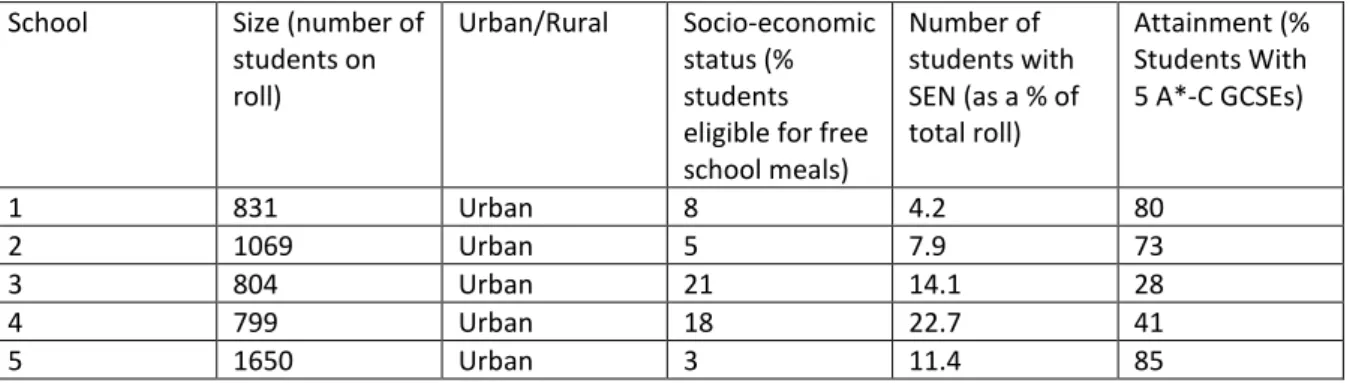
Table 4.1: Background details for each school in the study……….81
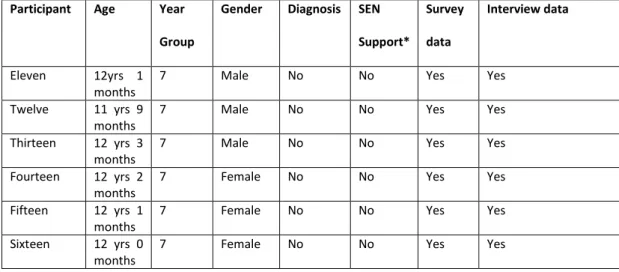
Table 4.2: Participant characteristics for autistic peer mentors in School One………82
Table 4.3: Participant characteristics for non-autistic peer mentors in School One…….82
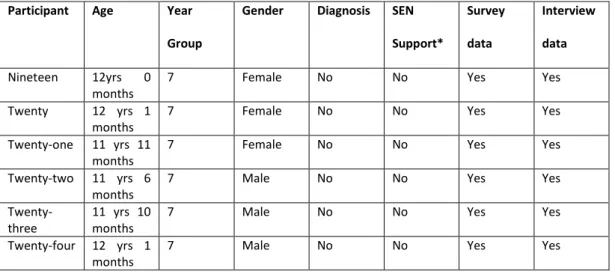
Table 4.4: Participant characteristics for autistic peer mentors in School Two………84
Table 4.5: Participant characteristics for non-autistic peer mentors in school two…....84
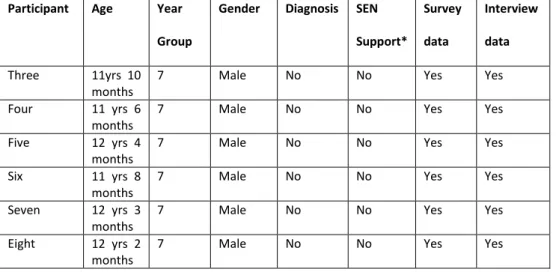
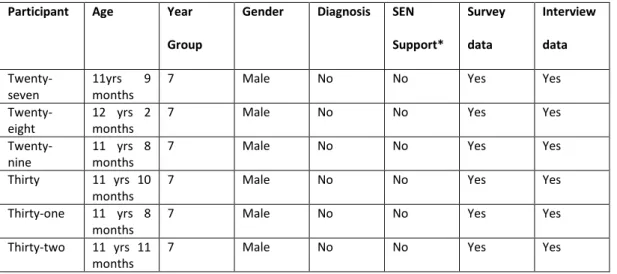
Table 4.6: Participant characteristics for autistic peer mentors in school three………….85
Table 4.7: Participant characteristics for non-autistic peer mentors in school three…..86
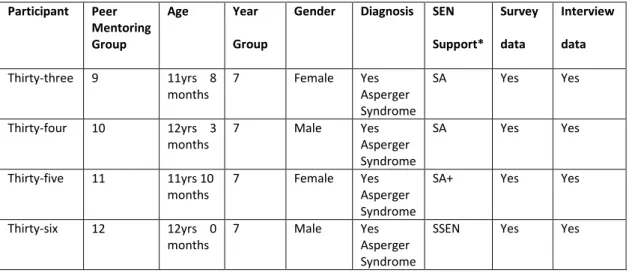
Table 4.8: Participant characteristics for autistic peer mentors in school four………87
Table 4.9: Participant characteristics for non-autistic peer mentors in school four…….87
Table 4.10: Participant characteristics for autistic peer mentors in school five…………..88
Table 4.11: Participant characteristics for non-autistic peer mentors in school five……89
Table 4.12:The Strengths and Weaknesses of Semi-Structured Interviews………..97
Table 4.13: The process of thematic analysis………106
Table 4.14: Summary of data analysed……….108
Table 5.2: School One scores on perceived social and academic competence………….126
Table 5.3: School One scores on levels of social satisfaction……….126
Table 5.4: School One results on bullying……….128
Table 5.5: School Two Mentor Views at T1 and T2………..138
Table 5.6: School Two scores on perceived social and academic competence………….144
Table 5.7: School Two scores on levels of social satisfaction……….144
Table 5.8: School Two results on bullying………146
Table 5.9: School Three Mentor Views at T1 and T2………..156
Table 5.10: School Three scores on perceived social and academic competence……..160
Table 5.11: School Three scores on levels of social satisfaction………..161
Table 5.12: School Three results on bullying……….162
Table 5.13: School Four Mentor Views at T1 and T2………..171
Table 5.14: School Four scores on perceived social and academic competence……….177 Table 5.15: School Four scores on levels of social satisfaction……….177
Table 5.16: School Four results on bullying………179
Table 5.17: School Five Mentor Views at T1 and T2………188
Table 5.18: School Five scores on levels of social satisfaction………..193
Table 5.19: School Five scores on perceived social and academic competence………..194
Table 5.20: School Five results on bullying……….196
Table 6.1: Contextual data for all case study schools………..204
Table 6.2: Contextual data for each case study school……….204
Table 6.3: Programme management, aims and mentoring experience……….206
Table 6.4 Programme aims for all case study schools……….208
Table 6.5: Programme aims for all peer mentors………..208
Table 6.6: Overview of autistic peer mentors………..210
Table 6.7: Role and experience of programme co-ordinators………..212
Table 6.8: Programme co-ordinator confidence levels………..213
Table 6.9: Impact of co-ordinator training………..214
Table 6.10: Staff awareness of peer mentoring programme in case study schools…..215
Table 6.11: Combined Mentor views on the peer mentoring programme……….218
Table 6.12: Mentoring sessions: frequency, duration, time, location, and incentives.224 Table 6.13: Overall scores on perceived social competence……….235
Table 6.14: Overall scores on levels of social satisfaction………237
Table 6.15: Overall scores on perceived academic competence………...238
1
CHAPTER 1. INTRODUCTION
“Research that increases diversity in research samples, addresses the daily challenges children face in school, and assists school staff in implementing effective and personalized
inter-ventions should lead to better outcomes for children with autism.” (Kasari and Smith, 2013, p.265).
1.1 BACKGROUND
International educational policy sets out that every child has unique characteristics and a fundamental right to education (UNESCO, 1994). Within the UK, educational settings have been directed to take account of the wide diversity of children to ensure those identified with special educational needs (SEN), including autism, are included in mainstream schools (DfE, 2014). In this context, it is important to address whether schools are meeting the needs of this population given the increase in the number of autistic children being diagnosed and attending mainstream schools in the UK. Recent figures estimate that approximately one percent of the population in the UK has an autism spectrum condition, including 600,000 children and young people (Baird et al., 2006; Brugha et al., 2011). This represents a more than twenty-fold increase from the results of the first epidemiological studies in the 1960s, with similar figures seen internationally (Elsabbagh et al., 2012). The picture emerging from statistics in England show a pattern of growth in the numbers of children and young people diagnosed with autism in the school population (DfE, 2014). The figures for students with autism as a primary need has seen an annual increase between 2010 and 2014. The total numbers in English school standing at 76,015 (DfE, 2014). Furthermore, figures from the Department of Education (DfE, 2010) indicate that approximately seventy percent of autistic students attend mainstream schools rather than specialist or special educational settings.
2
Improving outcomes for these students is a challenging issue given the nature of autism as a spectrum condition and the evidence that no single approach or programme will meet the needs of all learners with autism (Parsons et al., 2009; Bond et al., 2015).
Autism has traditionally been categorised through medical terminology resulting from a diagnostic model and culture that predominates the identification and support of autistic people. The Diagnostic and Statistical Manual (DSM) for Mental Disorders is commonly used to determine whether a person has an Autism Spectrum Disorder or ASD, the latest version of which was revised in 2013 (DSM-5; APA, 2013). The term ASD was first introduced by Lorna Wing (Wing, 1996) to encompass different subgroups within the autistic spectrum, including autism and Asperger syndrome. It was referred to as ‘spectrum condition’ because while there are similar core areas affected, each child or person diagnosed will experience them differently and may have varying degrees of associated learning disability. Whilst there remains an emphasis on the continuity between neurotypical and autistic
development, this does not necessarily mean that there are only quantitative differences between people but qualitative ones as well (Frith, 2015).
Developments in the field of molecular genetics (Happé and Plomin, 2006) lent support to the notion that autism was probably two genetically distinct traits, namely impaired social communication abilities and repetitive, restrictive and ritualistic behaviour, but which tend to have a high frequency of co-occurrence. This two-fold model of autism underpins the current DSM-5 definition whilst acknowledging the possibility of the separate occurrence of each set of traits, both of which are readily measurable in themselves. More recently a consensus has emerged that autism has“multiple etiologies and various genetic and
3
biological characteristics” (Amaral et al., 2017, p.1). This recognises the heterogenous nature of the condition with both genetic and environmental factors playing a significant role.
The heterogeneity of autism, including social, communication, sensory and cognitive differences across a broad spectrum of need, means identifying effective educational approaches to meet those needs is a complex issue. Several systematic reviews have been undertaken with the aim of identifying which approaches are most effective in meeting the needs of autistic children and young people. Many of these have focused on approaches designed to address specific aspects of autism, for example to increase adaptive behaviour (Palmer et al., 2012) or increase social interaction (Hughes et al., 2012); whilst other reviews have focused on broader themes such as how technology may be used to address organisational skills or social understanding. In addition to these, several reviews have evaluated the quality of the evidence base for autism interventions (National Autism Centre, 2009; Odom et al., 2010). These have tended to prioritise a narrow range of methodologies for generating evidence of best practices with experimental intervention studies dominating the field (Fletcher-Watson, 2014; Guldberg, 2016). Other studies have noted further limitations with research in this field: a lack of research in schools and settings; small sample sizes; a lack of research on autistic adolescents; and an insufficient understanding of why some children respond well to approaches while others do not (Kasari and Smith, 2013). Thus, the choice of educational approaches needs to be based on both research evidence and the individual needs of the students. Practitioners should also consider the views of the individual and their family and the capacity, training, and experience of the staff to implement any given approach.
4
These were all considerations in the development of a new peer mentoring programme that formed the basis of study for this thesis. Previous research has shown that peer mentoring can improve social and communication skills, such as learning to negotiate with others, learning to ask for help and increased confidence in social interactions (Cowie et al., 2002). Peer mentoring programmes were also seen as being effective in raising staff and students’
awareness of issues that affect emotional health, such as bullying, disability and peer relationships (Phillip and Spratt, 2007; Cowie and Wallace, 2000; Smith et al., 2003). The findings from the literature review in Chapter two provided evidence for the need to develop a new peer mentoring programme as no existing programmes specifically for autistic students were found. The new approach was designed to target peer relationships, particularly the areas of friendships and bullying, and to be inclusive and participatory for both autistic students and their non-autistic peers.
This thesis explored, for the first time, the impact and outcomes of being a peer mentor for autistic students. It also examined the use of principles and practice from Agency Theory for the development of the new programme. Discussion and collaborative problem-solving were embedded in real-life contexts rather than artificially created scenarios from adult directed resources. This enabled the content or ‘what’ of the programme to be established by the students themselves in collaboration with peers and staff. This meant the focus of the programme was on developing social competence for students, rather than just social skills.
The ‘how’ or structure of the new peer mentoring programme was established through identifying good practice from previous research in this area (Wittemeyer et al., 2011; DCSF, 2008) and adapting this to the needs of autistic students. This recognises the importance in
5
research of obtaining the perspective of autistic students to both better understand their experiences and inform future practice (Billington, 2006).
1.2 TERMINOLOGY
It is important to clarify the language and terminology used within this thesis. Several national projects funded and endorsed by the Department for Education (DfE), through the Autism Education Trust (AET), have supported the view that autism should be seen primarily as a difference rather than deficit in the context of education. This views autism as a neurodevelopmental condition that impacts on an individual’s language and communication, social interaction and emotional expression, sensory processing, information processing and interests. The AET Schools and Early Years Training Programmes (Guldberg et al., 2012, 2014) and AET National Standards (Jones et al., 2012, Bradley et al., 2014) have promoted this view and have used the terms autism or autism spectrum in their materials. A recent research project surveyed the views of 3,470 people, including 502 autistic adults, 2,207 parents of children and adults on the autism spectrum, 1,109 professionals, and 380 extended family members and friends, on the terminology used to describe autism (Kenny et al., 2015). Analysis of the results showed that amongst autistic adults, the term ‘autistic person/people’
was the most commonly preferred term. Whilst, ‘people on the autism spectrum’ was the most preferred term amongst all stakeholders.
While acknowledging the wider debate on the appropriateness of these terms I will be using the terms autistic, autism, or autism spectrum throughout this thesis. This recognises the rights of individuals who view their autism as a different rather than disordered way of being, while ensuring the right resources are given at the right time to meet their individual needs.
6
1.3 RATIONALE FOR STUDY: A PERSONAL AND PROFESSIONAL PERSPECTIVE
The rationale for this thesis is closely aligned to my professional role and experience of working within the field of autism education for the past sixteen years. Following the completion of an undergraduate MA thesis, on communication styles between parents and autistic infants, I went onto work in special needs education as a teacher. I joined the Communication and Interaction Service in Oxfordshire in 2006 where I work as a manager of autism advisory services for schools and autism resource bases attached to mainstream schools. This is a local authority service that works with students, schools, parents and other services to promote the education and inclusion of over 2500 autistic children and young people in Oxfordshire.
I work with schools, students, and parents on a weekly basis and as such have developed a good understanding of the issues faced by mainstream secondary schools in meeting the needs of autistic students (Moorewood et al., 2011). The work I have done at a local level has been enhanced through my experience of national and international work in the field of autism education as a member of the Autism Education Trust (AET) Programme Board and as a Research Fellow at the Autism Centre for Educational Research (ACER) at The University of Birmingham. The AET is a Department of Education funded body who aim to improve educational and wider outcomes for all autistic children and young people in England. Their innovative Schools, Early Years and Post-16 programmes have meant that over 150,000 educational practitioners and staff have been trained in autism education over the past five years. As a core writer of the schools and Early Years programmes I have had the opportunity to impact on the way educational practitioners understand autism and the way they support autistic children and young people in their settings (Guldberg et al., 2012, 2014). As a Research
7
Fellow at ACER I am working on the ‘Transforming Educational Practice in Autism’ research project which is funded by the European Commission. The project proposes to promote equity and inclusion in autism education by enhancing the skills, knowledge and understanding of teachers and other school staff who work with children aged between five and ten. Firstly, through researching the current state of autism education in the UK, Greece, and Italy. Secondly, by developing training materials, a set of quality indicators, a competency framework, an open source website and a model of training delivery for Italy and Greece that is relevant to each countries context. The project is modelled on, and complements, the AET training programmes.
The three strands of my work with the local authority, ACER and the AET has helped to shape my understanding of autism, inclusion and the ongoing issue of addressing the needs of autistic students in schools. This work has informed the development of my doctoral work including the motivations, aims and research questions that are outlined in the following sections.
1.4 AIMS AND RESEARCH QUESTIONS
A review of ‘best practice’ in educational provision for children with autism concluded that “More quality research is needed across all stages and contexts of provision. In particular, there is a need for research on educational interventions and settings to explicitly address questions of social validity” (Parsons et al., 2009; p.113). A comprehensive search of the literature has indicated that despite the rhetoric on its importance there are a lack of studies on educational programmes targeting improved outcomes for autistic students in mainstream secondary schools. As such the purpose of the study was to evaluate the impact
8
and outcomes of a new peer mentoring programme in mainstream secondary schools targeting the inclusion of autistic students.This included triangulating data on the views and experiences of autistic students, their non-autistic peers and school staff participating in the programme. Contextual factors influencing the implementation and delivery of individual peer mentoring programmes were explored to better understand factors influencing future sustainability of such approaches in schools.
The research questions for the study are shown in Table 1.1. The questions focus on three separate but interrelated areas. RQ1-RQ3 focus on specific outcomes relating to areas seen as important in peer relationships. These have traditionally been challenges for children and young people on the autistic spectrum. RQ4 evaluates the new peer mentoring programmes effectiveness in enabling autistic students to successfully participate as peer mentors. Finally, RQ5 is concerned with the factors that would support or challenge the future implementation of this approach more widely.
In Chapter five I also report on pre-and post-programme levels of academic competence for the autistic students. This was not an original focus of the research, and did not form part of the literature review, but is included due to the staff and student focus on academic support as part of the peer mentoring programme. It is of interest given the focus on agency and autonomy over the content of the programme and the possible impact of this on outcomes.
Table 1.1: Research Questions
9
RQ2. Does being a peer mentor improve levels of social satisfaction for autistic students? RQ3. Does being a peer mentor reduce levels of bullying for autistic students?
RQ4. Did the new peer mentoring programme promote participation and inclusion for autistic students? RQ5. What factors are key to the sustainability of the peer mentoring programme as an educational approach to support autistic students in mainstream secondary schools?
1.5 RESEARCH DESIGN
Due to differences in the way inclusion is interpreted, and educational approaches are implemented in schools, it is believed that there may be variance in the delivery of the new peer mentoring programme. There has been a little done to compare these differences previously which would lead to more informed knowledge about the factors needed to create a sustainable and embedded model of good practice within schools. It is therefore justifiable to undertake a comparative study, using similar methodologies and concepts, to obtain knowledge about differences in the implementation and impact of the new peer mentoring programme under different contexts and institutional frameworks. A comparative study would thus enable an understanding of how the new peer mentoring programme is supported and perceived by the participants, as well as how these participants have changed because of involvement in the programme. This reflects the need to study both process and outcomes as part of the research. Outcome evaluations measure to what degree programme objectives have been achieved. In this case, whether the new peer mentoring programme had a positive impact for autistic students on selected measures identified in research questions RQ1-3. However, this would not necessarily provide information on the participant experience of the peer mentoring programme and why any changes in outcomes had occurred. It was therefore important to evaluate the process of programme implementation and the involvement and
10
experience of staff and students. This would enable more robust recommendations to be made on sustainability, and the inclusion of autistic students in the peer mentoring programme, as identified in research questions RQ4-5. A view supported by Guldberg (2017, p.13), “It is difficult to see how a practice can be effective at generating improvement if we do not also gain an understanding of the way that the world is viewed and experienced by the individuals whose outcomes we are aiming to improve.”
As such, the research design for this thesis was a mixed methods multiple case study in five mainstream secondary schools in the South-East of England. Qualitative data was gathered from semi-structured interviews with the peer mentors (twelve autistic and thirty-six non-autistic students) and the five programme co-ordinators in each school. This was used to better understand the experiences of being a peer mentor or co-ordinator across the twelve-peer mentoring programmes, the decision-making and strategies that were used to implement the new programme and the factors that may impact on the sustainability of the programmes within schools. Quantitative data, in the form of mentor and co-ordinator questionnaires from the Mentoring and Befriending Foundation (DCSF, 2008), gave further information on the pre-and post-programme views of the mentors and co-ordinators. In addition, questionnaires: Loneliness and Social Dissatisfaction Scale (Asher and Renshaw, 1984); Self-Perception Profile for Children (Harter, 1984); and the Anti-Bullying Alliance (2007); were used to assess the impact of being a peer mentor on levels of social satisfaction, social competence, academic competence and bullying for the autistic mentors. Qualitative and quantitative data were analysed and interpreted at the case level, as well as across cases, to highlight meaningful similarities, differences and site-specific experiences relevant to the research questions.
11
1.6 THESIS STRUCTURE
The structure of this thesis is shown in Figure 1. This consists of seven Chapters of which the first Chapter is the introduction providing an overview of the objectives and the structure of the thesis. Chapter Two is a review of extant literature in relation to peer mentoring and autism education, with a specific focus on peer relationships and approaches used in schools and settings to support this. The findings from the literature review informed the identification of peer mentoring as a possible approach to support the needs of autistic students in secondary schools. Chapter Three provides an overview of the development of the new programme which was written due to a gap in the research literature on peer mentoring for autistic students. The programme was based on existing models of good practice found in the literature and used Agency Theory as a framework to inform both principles and practice. Chapter Four gives a description of the methodology selected for the study. The relationship between theory, methodology and my epistemological position are outlined in this chapter. The research data from each school is reported on in Chapter Five. Within each case study the experiences, views and impact of the peer mentoring programme on the autistic peer mentors are explored, as are the views and experiences of the non-autistic peer mentors and school staff involved in the programme. The findings from each school are then compared, triangulated and discussed in Chapter Six, in relation to the research literature and research questions. Chapter Seven summarises findings for each research question and presents areas of contribution in relation to new knowledge and methodology. I make recommendations on the further use of peer mentoring for autistic children and young people in mainstream secondary schools, discuss the limitations of the study and outline areas for further research. A list of references and appendices follow this.
12 Figure 1: Thesis Structure
Research Questions: RQ1-RQ5
Literature Review New Peer Mentoring Methodology Individual Discussion of Programme Design and Case Study Analysis Findings
Procedures
Methodology Rationale Case study analysis Comparisons Peer Mentoring Agency Theory Pragmatism of peer mentoring between schools
Peer Relationships Principles and Mixed Methods programmes within Relating findings to Bullying Practice Case Study Design each school literature review and
Friendships Development Data analysis and
Process Reporting Overview of Validity and Reliability Programme Ethics and Welfare Chapter 1 Introduction Chapter 7
Conclusions and Recommendations
13
CHAPTER 2. REVIEW OF THE LITERATURE
2.1 INTRODUCTION
As documented by multiple researchers (Humphreys and Lewis, 2008; Kasari and Smith, 2013) the inclusion of autistic students in schools is still a complex and poorly understood area of education and there is evidence that they are at an increased risk of experiencing negative outcomes in comparison to other learners. This Chapter will examine empirical and expert literature that seek to explain the current approach to the education of autistic children and young people in England and the drivers and barriers that exist to enabling positive outcomes for this group. I begin by looking at background information on inclusion policy and practice to provide a situational context for the education of students with special educational needs and disabilities, including autism. Next is a review of the literature relating to peer relationships, specifically friendships and bullying, that are of interest due to the challenges for autistic students in these areas. This is followed by a review of the literature relating to educational approaches focussing on peer relationships for autistic students. Finally, I review the findings from the literature relating to peer mentoring in schools. I identified this as an approach that may be used to target peer relationships for autistic children and young people.
I start with an outline of the methodology employed for the review of the literature in this Chapter which was based on good practice from the methodology used in NCSE ‘International Review of the Literature of Evidence of Best Practice Provision in the Education of Persons with Autistic Spectrum Disorders’ (Parsons et al., 2009).
14
2.2 METHODOLOGY FOR LITERATURE REVIEW
Similar to the NCSE study, two main strands of literature review were used for this thesis. This recognises the importance of both empirically informed research and publications based on expert opinion in the field of autism education, policy and practice. A systematic search of electronic databases focusing on empirical studies (empirical strand) was initially undertaken. I then did a separate search focussing on reports, articles, guidance and case studies from professionals, practitioners, autistic children and young people and their families (expert strand). The searches were separated into two areas covered in this Chapter, due to the lack of research literature found on initial searches when the terms were combined. Firstly, peer relationships and approaches for autistic students in mainstream secondary schools, and secondly, peer mentoring in mainstream schools. The empirical and expert strands together generated a total of seventy-nine separate articles which formed the basis of the review. In addition, I used similar systematic search criteria for the background section found in this Chapter.
2.21 PROCEDURE FOR THE EMPIRICAL STRAND
Inclusion criteria (see Tables 2.1 and 2.2) were identified and translated into lists of related search terms (see Appendix 1). These terms were then systematically applied to five main databases that were used in the study: ERIC, British Education Index (BREI), Research Autism Database, Google Scholar, and the ISI Web of Knowledge. These databases all had an extensive breadth and depth of literature related to the research topic and enabled me to combine search terms which increased the efficiency and effectiveness of the search.
15
Table 2.1: Inclusion criteria - Peer relationships and approaches
Inclusion criteria – Studies included met all the following
Scope Focus on autistic children and young people Focus on peer relationships
Focus on educational provision, approaches, and interventions for peer relationships
Take place in mainstream schools
Study Type Are empirical, that is include the collection of (quantitative or qualitative data) or systematic reviews of empirical data
Time and Place Are written in English Are published after 2000
Table 2.2: Inclusion criteria - Peer mentoring
Inclusion criteria – Studies included met all the following
Scope Focused on mentoring programmes for children and young people
Indicates aims and outcomes for children and young people
Indicates aims and outcomes for staff and schools Takes place in mainstream schools
Study Type Are empirical, that is include the collection of (quantitative or qualitative data) or systematic reviews of empirical data
Time and Place Are written in English Are published after 1990
The search on peer relationships and approaches for autistic students was limited to publications from 2000 onwards in order remain as relevant as possible to the current study and to make the literature review a manageable task, given the number and range of published work in this field. The date for peer mentoring was extended to 1990 due to the relatively limited literature in this area. As with the NCSE study, each search within each of the five databases was run in the same way with the combination of terms occurring in the same order. The separate sets of results were then combined and the duplicates removed.
16
2.22 PROCEDURE FOR THE EXPERT STRAND
The criteria for inclusion in this strand were similarly pragmatic to the NCSE methodology given the number of papers found in the empirical strand. This was based on my professional knowledge as both a practitioner and researcher in the field of autism education. Table 2.3 shows the criteria that were used in relation to peer relationships and approaches for autistic students in mainstream schools. Tables 2.4 shows the criteria used for peer mentoring. International material was included due to the lack of information an initial UK only search uncovered.
Table 2.3: Criteria for Expert Strand on peer relationships and approaches
1. Published from 2000 onwards.
2. Focused on mainstream educational provision for autistic students (broadly defined as taking place in schools or colleges).
3. Focused on approaches targeting peer relationships for autistic students
4. Available in English.
5. Permanent documents i.e. standalone published documents or downloadable pdfs/word documents from websites.
6. Focused in the UK.
Table 2.4: Criteria for Expert Strand on peer mentoring
1. Published from 1990 onwards.
2. Discuss educational policies or practice relating to peer mentoring for all children and young people, including those on the autistic spectrum.
3. Focused on educational provision (broadly defined as taking place in schools or colleges). 4. Available in English.
17
5. Permanent documents i.e. standalone published documents or downloadablepdfs/word documents from websites.
6. Focused on the UK and international work.
2.23 LIMITATIONS OF REVIEW METHODOLOGY
While the research project attempted a systematic and comprehensive review of the literature it is recognised that I cannot include all relevant papers, reports and policies. Throughout the course of a six-year part-time PhD new research or policy guidelines are published which means that the literature search, to a certain extent, is an ongoing process and represents the current state of knowledge over a period rather than a snapshot in time. This inevitably means that the interpretation and impact of new policy and research can influence the direction and focus of PhD study and I have tried to incorporate this into my work. As ever, human error, the efficiency of search engines and lack of time present barriers to the overall effectiveness of any literature search. However, I have attempted to ensure that my search methodology has been as robust and objective as possible based on good practice from the NCSE study.
2.24 RESULTS OF REVIEW METHODOLOGY
The review of the empirical literature resulted in the following number of articles per database:
Research Autism Database = 16 BREI = 14
ISI Web of Knowledge = 18 ERIC = 20
18 Google Scholar = 21
In total this produced eighty-nine articles for possible inclusion. The results for each database were then cross-referenced and the duplicates removed which meant the remaining total of article summaries (titles and summaries) requiring closer inspection was seventy-three. This included fifty-five documents for peer relationships and approaches and eighteen documents for peer mentoring.
The expert strand produced six articles for inclusion in the literature review. Out of this number, four were for peer relationships and two were for peer mentoring. The results informed the following sections on friendships, bullying and peer mentoring. In each case, the empirical and expert strands were combined when writing up each section of the literature review.
2.3 PEER RELATIONSHIPS AND EDUCATIONAL APPROACHES FOR AUTISTIC STUDENTS 2.31 BACKGROUND
This section provides contextual information within which this thesis is situated. I consider the impact of inclusion legislation on practice in schools and how this has informed the provision, approaches and outcomes for students with special educational needs, including those on the autistic spectrum. This is important as globally there has been a move towards inclusive practice over the past twenty years and wide agreement on the key principles first encompassed in the Salamanca Statement (1994). Principles that have been reinforced by legislation, policy and recommendations at national, European and global levels, including the
‘UN Convention on the Rights of Persons with Disabilities’ (2006), which makes explicit reference to the importance of ensuring inclusive systems of education. The UNESCO ‘Policy
19
Guidelines on Inclusion in Education’ (2009) set out the clear justifications for working towards inclusive practices and educating all children together:
Educational justification. Inclusive schools must develop ways of teaching that respond to individual differences and benefit all children.
Social justification. Inclusive schools can change attitudes towards diversity and form the basis for a just, non-discriminatory society.
Economic justification.It costs less to establish and maintain schools that educate all children
together than to set up a complex system of different schools ‘specialising’ in different groups
of children.
The UNESCO (2008, p.3) definition states that inclusive education is “an ongoing process aimed at offering quality education for all while respecting diversity and the different needs and abilities, characteristics and learning expectations of the students and communities, eliminating all forms of discrimination.” This widens the context for inclusion as opposed to earlier definitions that have often focused on the argument between special education and
‘integration’ into mainstream school. This represents a significant shift from a definition of inclusion as a means of understanding and overcoming a deficit to a broader definition including issues of gender, ethnicity, class, social conditions, health and human rights that encompasses universal involvement, access, participation and achievement (Ouane, 2008). This change in our understanding of inclusion has run parallel to the international
community’s commitment to human rights and has led to a reduced emphasis on an
individual’s disability where “inclusion may be understood not just as adding on to existing structures, but as a process of transforming societies, communities and institutions such as schools to become diversity-sensitive” (Arnesen et al., 2009, p.46).
20
The ideology of inclusive education, as outlined above, is implemented in different ways across different contexts and varies with national policies and priorities. These are in turn influenced by a whole range of social, cultural, historical and political issues. Therefore, it is important to keep in mind that policy makers and practitioners are not always talking about the same thing when considering policy and practice for inclusive education across different countries (Watkins and D’Alessio, 2009).
Despite the differences in both national contexts and definitions, the European Agency for Development in Special Needs Education (which includes the UK) highlighted key principles of inclusive policies agreed upon by Agency member countries in the report ‘Key Principlesfor Promoting Quality in Inclusive Education’(2009). These inter-related and mutually supporting principles include widening participation to increase educational opportunity for all learners; policies that promote inclusion; organisational culture and ethos that promotes inclusion; flexible resourcing systems that promote inclusion; education and training in inclusive education for all teachers; support structures organised to promote inclusion and legislation that promotes inclusion. The extent to which these principles have been enacted in the UK and specifically England will be discussed next.
‘The Report of the Committee of Enquiry into the Education of Handicapped Children and Young People’(Warnock, 1978), better known as the‘Warnock Report,’was the biggest ever study of special education in England, Scotland and Wales and put the issue of the integration of disabled children into ordinary schools on to the national agenda for the first time. Key proposals included the integration of children into mainstream schools wherever possible and the need for early diagnosis and pre-school support. The principle of integration was to
21
underpin special educational needs policy up until the early nineties when the ‘Salamanca Statement’ (1994) provided a catalyst for policy in the UK to follow a largely inclusive direction. More recently, The Equality Act (2014) has provided legislation that underpins educational policy across England, Scotland and Wales. The Act places a duty on schools and education authorities not to discriminate against students with disabilities and they must take reasonable steps to avoid putting these students at a substantial disadvantage.
Though the UK education system has several regional differences, with separate legislation for England, Wales, Northern Ireland and Scotland, there are some common principles adopted by policy and guidance documents that has contributed to the way inclusion has been conceptualised in schools. Significantly, this has led to the development and continuation of a similar range of provision within each country to meet the needs of autistic children and young people. This includes mainstream schools, units linked within mainstream schools, special schools and specialist schools for those on the autistic spectrum. In England, the popular perception (e.g. Warnock, 2005) is that the policy of inclusion has led to the
closure of special schools and the ‘forcing’ of some children into mainstream schools when it
is not in their best interests to be there, resulting in distress for students and families. Whilst there are local variations national policy has been relatively consistent from Warnock (1978) onwards in recognising that a small number of students would require specialist provision. The version of inclusion presented within government documents has always involved a role for special schools, though only part of this role is in providing a placement. The most significant effect on special school numbers seems to have occurred because of the policy of
22
integration seen in the late seventies and eighties rather than the drive for inclusion following policies such as ‘Excellence for All Children’ in 1997.
Though policy has supported the move to mainstream education for more children with special needs it was criticised (Armstrong, 2005) for rejecting the language of individual student needs in favour of the school effectiveness and improvement paradigm. This followed on closely fromthe White Paper‘Excellence in Schools’ (DfEE, 1997) that aimed to transform institutional failure into success by means of individual student achievement. There was no recognition of wider strategic aims in encompassing the role of education for supporting social cohesion and inclusion or removing the barriers that can create educational disadvantage. It can be argued in the years since that inclusion in England has been transposed onto an increasingly diverse educational system that contains competing and opposing systems such as school performance tables and age-assessed attainment (e.g.,
Excellence in Schools, 1997; Academies Act, 2010). As such, there has been a lack of coherence in the way educational policies in relation to SEN, inclusion and raising standards have been developed.
The Green Paper ‘Support and Aspiration: A new approach to special educational needs and disability’ (2011) sought to address some of these issues and respond to key findings from Warnock and Cameron (2005) and the Lamb Inquiry (2009). The subsequent statutory guidance found in the ‘Children and Families Act’ (2014) contained a new SEND code of practice built on the four key principles of Participation; Outcomes; Collaboration and Clear information about SEN and disability support in all areas. As such, legislation in England has
23
moved towards greater inclusion, in keeping with international governments shift towards inclusion as a model for education (Lambe and Bones, 2006). The terms inclusion and inclusive promised a positive focus, going beyond disability to cover other forms of ‘diversity’ with the implication that regular schools will accommodate and restructure for this diversity. These ideas and terms are still influential internationally and in countries like England, but over the last fifteen years, some negatives aspects have started to emerge (Norwich, 2008). As seen earlier, inclusion as a concept and value is now recognised as complex with multiple meanings.
Ravet (2011) argues that the needs-based and rights-based perspectives on inclusion have come to dominate the field of autism education and provide contradictory standpoints on the effective inclusion of children and young people on the autism spectrum in mainstream
schools. The ‘needs-based’ perspective highlights the lack of research evidence for mainstreaming autistic students and the risk of exclusion this may cause. Key to this perspective is the availability of a range of schools and educational provision to meet the distinctive group needs of autistic children who have identified additional support needs
(Lindsay, 2007). In contrast, the ‘rights-based’ perspective argues for no educational
segregation and the inclusion of all children and young people in mainstream schools (Allen, 2008). This approach prioritises the right of children to wide academic and social inclusion, and the requirement of schools and practitioners to adapt their practice to meet the needs of autistic students. An argument is made by Ravet (2011) for an integrative model that enables multiple rather than binary possibilities for the inclusion of autistic children and young people within education. Within this model the two dominant perspectives can be
24
reconciled, whilst acknowledging that neither has a “monopoly on the values of social justice, social democracy and social equality” (Ravet, 2011, P.679).
Critiques have developed of inclusive education in terms of its utopian orientation and that the incorporation of inclusion into international and national policy has softened its radical and hard edge. Furthermore, the outcomes seen for children and young people on the autistic spectrum, within the mainstream education system in England, means we need to re-evaluate what inclusion really means for those students. Rix et al., (2006) define a range of outcome measures relevant to aspects of the learning and participation of children and young people. These include their attainment levels, progress, attitude, confidence, self-esteem and independence skills. This broader definition is particularly important when understanding the experiences of autistic students and reflects the wider range of needs of this population. Two reports by the charity Ambitious about Autism (Schools Report, 2012; Schools Report, 2013) did look at a broader range of outcomes and brought key statistics together to provide an overview of what school was like for children and young people on the autistic spectrum in England. The 2013 Report found that seventy-one percent of autistic students were educated in mainstream schools and the remainder in specialist provision; sixty percent of all teachers in England did not feel they have had adequate training to teach autistic students; thirty-five percent of teachers felt it had become harder to access specialist support for autistic students in the past twelve months and over forty percent of autistic students had been bullied at school. In addition, the 2012 Schools Report had found that less than one in four of autistic young people continued their education beyond school.
25
The Ambitious About Autism reports give a clear picture of the challenges that exist within education to effectively meet the needs of children and young people on the autistic spectrum in England. Shown by the fact that they are more likely to be excluded than students with other or no special educational needs (DfE, 2012). The findings are more significant given the increase in numbers of autistic students being educated in mainstream settings following the national policy focus on inclusion over the past decade. They also question the extent to which inclusion has been successfully managed for autistic students if we accept Ainscow’s
(2007) definition of inclusive education as participation, presence, achievement and acceptance for all. The following section looks at this in more detail by focussing on two key indicators for inclusion that emerged from the literature review on peer relationships, namely friendships and bullying.
2.32 FRIENDSHIPS
The importance of having a friend to a child’s development and adjustment has been well
documented in the literature on neurotypical children (Newman et al., 2003). Friendship quality has been proposed to create various psychological benefits and costs for children that, in turn, affect their development and adjustment.Therefore, it is the quality of friendships that makes a difference in terms of the function of that friendship and not simply whether children have friendships or not. For example, friendship quality has been shown to be both a protective factor against bullying (Bollmer et al., 2005) and a precursor to feelings of loneliness and social isolation.
Studies have shown that some autistic children and young people do have a desire for friends and involvement with other children (Bauminger and Kasari, 2000), do seek out their
non-26
autistic peers and report having friends and best friends (Daniel and Billingsley, 2010). Furthermore, interviews with young autistic people suggest that establishing and maintaining friendships play a significant role in their overall experience of school, just as it does for non-autistic children (Connor, 2000; Humphrey and Lewis, 2008; Ochs et al., 2001). However, these relationships may be strained and not always reciprocated (Bauminger and Kasari, 2000; Bauminger et al., 2003; Chamberlain, Kasari and Rotheram-Fuller, 2007). Furthermore, autistic children tend to rate their best friendship as lower on several dimensions, including companionship, helpfulness, security and closeness (Bauminger and Kasari, 2000; Kasari et al., 2011; Whitehouse et al., 2009). Findings from a longitudinal study showed that autistic adolescents were more likely never to see friends, be called by them or be invited to activities, relative to adolescents with other special educational needs (Shattuck et al., 2011). This reinforces the finding that children on the autistic spectrum experience more rejection and neglect from their peers than other children (Symes and Humphrey, 2010). Though research has shown that autistic children can establish social connections with other children in their mainstream classroom, despite having more limited social networks (Chamberlain et al., 2008).
The differences that autistic children and young people show in their relationships with peers may be because of several factors, including their level of social competence and the low frequency of interaction with peers. When autistic children are observed in the presence of other children, they make fewer attempts to engage with them and are less responsive to
others’ bids for social interaction (Chamberlain et al., 2003). These missed opportunities are
likely to affect children’s social status in a group, particularly in their classroom social structure. Less is known about the social networks of older children and adolescents on the
27
autistic spectrum. It may be even more difficult for autistic adolescents to fit into peer social groupings because of the increasing complexity of social networks found in this age group. Humphrey and Symes (2011, p.401) highlight the circular nature of this issue when concluding that “At the level of the student with autism, the negative social outcomes reduce the motivation for further peer interaction, creating a pattern of avoidance and solitary behaviour that does not provide adequate opportunities for the development of social and communicative skills. At the level of the peer group, the reduced social contact with students with autism limits the opportunities for the development of understanding and awareness, further accentuating feelings of difference.”
Research by Locke et al., (2010) into loneliness in autistic adolescents found that they have the social desire to develop relationships with other adolescents their age. However, they may experience a lack of connection between what they want and what is occurring within their social networks and friendships. This seems to be the result of the autistic adolescents’
difficulty with reciprocating what they believe to be necessary in a healthy relationship. Questionnaire responses showed that they tend to view themselves negatively in terms of the qualities that they believe are essential in a friendship. This suggests that autistic students in mainstream schools seem aware of their social situations and desire social engagement with others, but may lack the skill and opportunity to do so.
Recent research has indicated that gender differences may also be significant in the motivation and social networks of autistic children and young people. Head et al., (2014) found that autistic girls aged ten to sixteen years scored significantly higher on a Friendship Questionnaire than autistic boys and, furthermore, scored similarly to boys withoutautism.
28
Similarly, when examining children’s friendship patterns, Dean et al., (2014) showed that autistic girls were more connected and had higher levels of social motivation, whereas autistic boys were more likely to be actively excluded and rejected by their peers. The authors suggested that the neurotypical friends of autistic girls helped to prevent their active exclusion from social networks, allowing them to maintain their greater connectedness and number of relationships. Much of the research on friendships has focused on the differences found in the social skills of autistic people rather than their relationships, social networks and friendships. It has often been based on targeting within person factors and a deficit model of social functioning. This is perhaps understandable given that social skills have traditionally been viewed as a core deficit of autism and that autistic individuals were seen as lacking the desire and skills needed to foster meaningful relationships with others. However, the picture emerging from research is more complex despite the fact relatively little is still known about the nature and quality of these relationships, particularly in older autistic children (Locke et al., 2010).
The ability of autistic children and young people to actively engage with peers and adults is likely to significantly impact on their academic achievement and attainment without the appropriate understanding, knowledge and support in place. Autistic children and young people may not understand that teachers and peers can be a source of help, emotional support or information (Prizant, 2015). This can result in internalising and externalising behaviors (Gomez and Baird, 2005) that cause unusual coping strategies, isolation from peers and increased risk factor for bullying that are explored more in the following section (Myles and Simpson, 2002).
29
2.33 BULLYING
Bullying is widely accepted as a form of social aggression (Griffin and Gross, 2004) where a power imbalance is exploited (Olweus, 2013). Many studies continue to use the definition originally proposed by Olweus (1993, p.9) that states “A student is being bullied or victimised when he or she is exposed, repeatedly and over time, to negative actions on the part of one or
more other students.” Bullying includes actions such as making threats, spreading rumours, attacking someone physically or verbally and excluding someone from a group on purpose. At its most extreme, bullying in general school-aged populations has resulted in self-harm (McMahon et al., 2010), suicide (Nansel et al., 2001), suicide ideation and behaviour difficulties (Olweus, 2013). In addition, children and young people who are bullied are at risk of becoming depressed, anxious, having low self-esteem and falling behind in the classroom due to poor concentration or sleep issues (Kloosterman et al., 2013; Reid and Batten 2006; Turner et al., 2006). They are also more likely to miss school, leave school at sixteen and to be not in employment, education or training (DfE, 2010), all of which may remain long after the bullying has stopped. Whilst all schools in England are required to have an anti-bullying policy that reflects national legislation, bullying remains a concern and a significant policy issue for schools and educational services. Several groups at risk of increased exposure to bullying have been identified (Green et al., 2010), with the most vulnerable being children with special educational needs and disabilities (McLaughlin et al., 2010) and autistic children considered particularly at risk (Reid and Batten, 2006).
Victims of bullying often exhibit difficulties in social understanding (Garner and Hinton, 2010), occupy low social status (Card and Hodges, 2007) and are perceived as deviating from peer group norms (Horowitz et al., 2004). These are common characteristics of autistic children
30
and young people and as such place them at higher risk of being bullied, both within and outside of school. Research by the University of Sheffield in mainstream secondary schools found that ninety percent of autistic students were bullied compared to fifty-six percent of their peers (Wainscot et al., 2008). Humphrey and Symes (2011) found that autistic students are at least three times more likely to be bullied and report receiving less social support from parents, classmates, and friends. The challenges in forming and maintaining friendships can lead to isolation from peers, increasing potential vulnerability among autistic students (Humphrey and Symes, 2011; Lasgaard et al., 2010). Autistic children and young people may also be perceived as ‘different’ by their peers, due to differences in understanding and conforming to social norms. This may arise from the misinterpretation of non-literal language (including jokes) due to pragmatic language issues or a different understanding of social rules leading to socially incongruent behaviour (Wainscot et al., 2008). Thus, their peers may actively reject or ignore them (Kasari et al., 2011), which means they are more likely to lack protective social support (Humphrey and Symes, 2010). We know that having at least one friend can serve as a protective factor against peer victimisation and overall adjustment for children and adolescents (Malcolm and Jensen-Campbell, 2006). However, as discussed earlier, research suggests that it is not just whether children have friendships that is important but rather the quality of these friendships that makes a difference as to whether the friendship will serve in a protective capacity (Bollmer et al., 2005).
Further issues may arise in autistic students understanding and reporting of bullying. Differences in social understanding experienced by autistic individuals can make them either unaware they are being bullied or misinterpret the actions of others as bullying. They are also less likely to report bullying when it occurs, because they may incorrectly assume that others