CBH_DMS_PROD#1089421 v2
CBH Group Submission to the Rural Affairs and Transport Committee Inquiry into operational issues arising in the export grain storage, transport, handling and shipping network in Australia
CBH Group Submission to the
Rural
Affairs
and
Transport
Committee Inquiry into Operational
Issues Arising in the Export Grain
Storage, Transport, Handling and
Shipping Network in Australia.
CBH_DMS_PROD#1089421 v2
CBH Group Submission to the Rural Affairs and Transport Committee Inquiry into operational issues arising in the export grain storage, transport, handling and shipping network in Australia
2. INTRODUCTION TO THE CBH GROUP SUBMISSION...4
3. SUBMISSION TO TERM OF REFERENCE (A) ...6
3.1 MAXIMISING VOLUME THROUGHPUT...6
3.2 PROVIDING A COMPETITIVE ENVIRONMENT FOR WESTERN AUSTRALIAN GROWERS GRAIN...6
3.3 FAIR, RELIABLE AND TRANSPARENT ACCESS TO CBH SERVICES...7
3.4 RESPONSE TO INQUIRY SUBMISSIONS...7
4. SUBMISSION TO TERM OF REFERENCE (B)...9
4.1 INFORMATION PROVISION AND MARKET TRANSPARENCY...9
4.2 INFORMATION SEGREGATION...9
5. SUBMISSION TO TERM OF REFERENCE (C) ...10
6. SUBMISSION TO TERM OF REFERENCE (D) ...13
6.1 GROWER DELIVERY DIRECT TO PORT...13
6.2 DIRECT PORT ACCESS...13
6.3 REDELIVERY IN TO THE UPCOUNTRY NETWORK...13
7. SUBMISSION TO TERM OF REFERENCE (E)...13
7.1 ON FARM QUALITY MANAGEMENT...14
7.2 ACCURACY AND CONSISTENCY OF CLASSIFICATION...14
7.3 DEVELOPMENT AND APPLICATION OF GRAIN RECEIVAL STANDARDS...15
8. SUBMISSION TO TERM OF REFERENCE (F) ...15
8.1 RESPONSE TO INQUIRY SUBMISSIONS...16
CBH_DMS_PROD#1089421 v2
CBH Group Submission to the Rural Affairs and Transport Committee Inquiry into operational issues arising in the export grain storage, transport, handling and shipping network in Australia
Page 1 of 17
The CBH Group is a grower owned and focused cooperative with approximately 4,600 grower members. Western Australia is an export dependant state with approximately 90% of Western Australia’s annual grain crop being exported to the global market.
The growers of Western Australia are reliant on the CBH Group to provide an efficient and cost effective export supply chain to maintain their competitiveness on the global market.
The storage and handling industry is capital intensive and its efficient operation is reliant on managing costs and maximising throughput.
In the past 10 years CBH, on behalf of its members, has invested approximately $865 million in capital upgrades to the storage and handling network (including ports but excluding rail infrastructure). CBH’s facilities are acknowledged as amongst the most accessible, modern and efficient in the world.
The growers of Western Australia require the CBH Group to maximise the marketing options available for their grain by providing all buyers equitable, reliable and transparent access to CBH’s services to encourage competition for their grain.
f As a grower-owned co-operative, CBH is reluctant to release information that we believe could potentially disadvantage growers. The CBH Group already releases a significant amount of information on the grain delivered into the CBH storage and handling network. The CBH Group believes there may be a need to ensure the currently published grain market information can be aggregated and delivered to market faster.
The CBH Group believes it is imperative that growers maintain every advantage possible in maximising the value of their grain and that this advantage is not transferred to traders and buyers by inequitably forcing growers to make supply information completely transparent while demand information remains totally obscured.
In 2008 the CBH Group voluntarily implemented an information segregation policy to ensure that third party information did not transfer from CBH Operations to CBH’s marketing arm, CBH Grain, which would provide CBH Grain with an unfair or improper advantage over similar competitors. The CBH Group’s information segregation policy has been subject to three reviews by independent auditing firms since its inception in 2008 and each time CBH has been found to be compliant with that policy.
f In 2008 the CBH Group developed and implemented the freight co-ordination and efficiency maximisation initiative known as “Grain Express”.
In the two years since the introduction of Grain Express CBH has been able to clearly demonstrate the advantages of Grain Express to growers and exporters by providing the most efficient and cost effective grain freight in Australia. Under Grain Express the CBH Group ensures all growers and marketers benefit from equitable and non-discriminatory access to the CBH Group’s wide reaching and efficient transport network.
The efficiency and stability provided by Grain Express enabled joint capital investment by the CBH Group, Federal and State Governments of approximately five hundred million dollars into Western Australia’s previously ailing grain rail network.
CBH_DMS_PROD#1089421 v2
CBH Group Submission to the Rural Affairs and Transport Committee Inquiry into operational issues arising in the export grain storage, transport, handling and shipping network in Australia
Page 2 of 17
CBH’s port terminals via the CBH upcountry network.
The CBH Group allows growers and non-growers to deliver grain from on-farm storage or third party storage facilities into CBH’s upcountry storage network outside of the harvest period. In addition to standard storage and handling fees these deliveries incur a charge of $1.10/tinne to cover the operational and administrative cost of conducting this uncommon activity.
The quality control delivered through CBH’s upcountry receival, storage and logistics network delivers significant efficiencies in port terminal operations by reducing the risks associated with incoming grain. If in the future Direct Port Deliveries threatened these efficiencies CBH would have to pass on the costs associated with managing quality and other issues to safeguard the reputation of Western Australian growers.
The CBH Group’s upcountry storage, transport and terminal network are designed to monitor, manage and maintain grain quality at every step of the supply chain. Grain being re-delivered into CBH’s storage network or port terminals from third party storage constitutes a significant risk particularly in regard to chemical residues and grain insect infestation.
f The CBH Group has an objective to maximise grower returns while safeguarding the reputation of Western Australian growers as reliable suppliers of safe, quality grains.
CBH has invested significantly in both assisting growers to manage grain quality on farm and developing accurate, consistent and objective systems for assessing and classifying grain being delivered into CBH’s storage network.
The CBH Group recognises and respects the role of the Grain Industry Association of Western Australia (GIWA) and Grain Trade Australia (GTA) in standardising grain receival standards and assessment methods. However the CBH Group believes it is critical that it maintains the flexibility to quickly respond to the highly variable seasonal conditions experienced in the Western Australian grain harvest in order to protect both grower value and reputation. If this flexibility to introduce new standards and segregations is lost or diminished then WA Growers will lose value.
f Since the construction of CBH’s first grain export terminal over 70 years ago, CBH has given grain marketers access to its port terminals in order to allow member’s grain to be exported. In 2009 CBH developed the first shipping slot auction system to be implemented in a grain terminal in the world. The auction system provides fair, open and non-discriminatory access to CBH’s port terminals.
f The CBH Group is concerned over increasing costs of regulation that is not imposed on the competitors of Western Australian and Australian grain growers. Western Australian growers in particular are totally export dependant and are subject to the global price of grains and as such have no mechanism for recovering additional regulatory costs.
The CBH Group supports the Productivity Commission in its report into Wheat Export Marketing in 2010 that accreditation (together with its supporting regulatory overheads) should be ceased from September 2011. Examples of these impediments on the CBH Group include large obligations to provide information and accreditation uncertainty associated with CBH Grain not being accredited beyond 30 September 2011 unlike some of its major competitors.
The CBH Group is also concerned over the increasing levels of regulation and associated regulatory inertia. Notwithstanding that CBH has provided access and complied with its non-discriminatory and no hindering obligations in its undertaking, and there have been no major problems or disputes in the first two years, CBH will not be permitted to change even the most minor of its terms and conditions without the approval of the ACCC. There is a growing perception that CBH cannot make changes designed to improve performance of its port terminals without a unanimous popular vote and ACCC approval.
CBH_DMS_PROD#1089421 v2
CBH Group Submission to the Rural Affairs and Transport Committee Inquiry into operational issues arising in the export grain storage, transport, handling and shipping network in Australia
CBH_DMS_PROD#1089421 v2
CBH Group Submission to the Rural Affairs and Transport Committee Inquiry into operational issues arising in the export grain storage, transport, handling and shipping network in Australia
Page 4 of 17
approximately 4,600 grower members. CBH operates a receival point network of almost 200 receival points including four export port terminals, with grain storage capacity of around 20 million tonnes. CBH’s Port Terminals historically export approximately 90% of Western Australians average annual crop of between 10-12 million tonnes. Western Australian grain exports represent up to 40 per cent of Australia’s annual grain production.
The CBH Group’s purpose is to create and return value to Western Australian grain growers primarily by; 1. Providing an efficient, cost effective and open access supply chain from farm gate to Western
Australia’s export markets; and 2. Linking growers to their customers by;
a. providing a competitive and credible option in the market place and; b. promoting the value of Western Australian grain to its customers.
Growers exercise control over their co-operative primarily through the direct election of nine of the twelve members of the board of directors. An additional three directors with special skills are appointed by the nine grower elected members and ratified by grower members at the next General Meeting.
In the past 10 years alone the CBH Group, on behalf of its members, has invested approximately $865 million in capital upgrades to the storage and handling network (including ports but excluding rail infrastructure). CBH’s facilities are acknowledged as amongst the most accessible, modern and efficient in the world.
In 2008 the CBH Group developed and implemented a freight co-ordination and efficiency initiative known as “Grain Express”. Grain Express has enabled the following benefits for the WA supply chain;
• Co-ordinated the vessel accumulation task in a deregulated marketing environment.
• Provided transparent transport costs to all growers and customers
• Allowed marketers to commit to port allocation booking slots with confidence that grain stocks would be available at port when required
• Allowed all marketers to post prices and compete for all grain from all growers at all sites without
the risk of having small quantities of grain stranded at isolated sites where the transport cost would make moving the small quantity of grain to port inhibitive.
• Maintained quality and consistency of Western Australian grain in the market place by actively managing grain to all exporters.
In its 2008 decision not to oppose the exclusive dealings notification lodged by the CBH Group in regard to the grain transport arrangements known as “Grain Express” the ACCC recognised the benefits inherent in Grain Express and determined that the benefits of Grain Express outweighed any potential lessening of competition.
The efficiency and stability provided by Grain Express enabled the CBH Group to make its own investment in new purpose built grain rolling stock thus replacing the current ageing rail fleet which in some instances dates back more than 40 years. The CBH Group made the decision in 2010 to invest approximately $175 million on new locomotives and aluminium wagons making it the most modern and efficient dedicated grain rail fleet in Australia. When combined with the Federal and State Governments rail funding packages this investment will significantly enhance the safety, efficiency and productivity of grain transport in Western Australia. The partnership between Western Australian growers and the Federal and State Governments, enabled by Grain Express, will result in almost half a billion dollars being invested into ensuring the longevity and viability of the safest and most efficient mode of transport from up country to port.
To provide the industry and Government with confidence that Grain Express would not adversely impact the grain trading and marketing environment in Western Australia the CBH Group voluntarily implemented
CBH_DMS_PROD#1089421 v2
CBH Group Submission to the Rural Affairs and Transport Committee Inquiry into operational issues arising in the export grain storage, transport, handling and shipping network in Australia
Page 5 of 17
each time CBH has been found to be compliant with that policy.
CBH provides this submission in relation to the matters set out in the terms of reference for the Senate Inquiry by the Rural Affairs and Transport Committee into operational issues arising in the export grain storage, transport, handling and shipping network in Australia.
CBH may wish to make further submissions to the committee and welcomes the opportunity to provide evidence in any future hearing.
CBH_DMS_PROD#1089421 v2
CBH Group Submission to the Rural Affairs and Transport Committee Inquiry into operational issues arising in the export grain storage, transport, handling and shipping network in Australia
Page 6 of 17
storage, transport, handling and shipping network, and any implications for open and fair access to essential grains infrastructure;
Up to 90% on average of Western Australia’s grain is dependant on finding markets external to WA and as such, while facilitating other types of trade, CBH’s network is primarily focused on providing an efficient and cost effective path to export markets. It is absolutely imperative to the survival of the CBH Group’s grower members that the WA supply chain operates in the most efficient and cost effective manner. As a consequence the growers of Western Australia task the CBH Group to manage the supply chain to market and to create an environment which maximises marketing options for their grain. To achieve these objectives the CBH Group must;
A) Maximise the volume throughput at its facilities;
B) Encourage as many reputable grain marketers and buyers to utilise the CBH system by posting prices and offering marketing options to growers through the CBH system as possible;
C) Provide fair, reliable and transparent access to services provided by CBH’s facilities; and D) Provide equitable access to efficient transport services.
3.1 Maximising Volume throughput
The CBH Group is a capital intensive, infrastructure business such that managing costs and maintaining volume throughput is essential to ensure the network remains economically viable.
To this end the CBH Group embarked on a major initiative to improve and transform the business through 2010 and 2011. The results of this initiative have been to reduce the CBH Group’s costs by almost $30 million per annum. This reduction is vital to keeping the WA grain supply chain internationally competitive. Third party customers provide approximately fifty percent of the throughput of CBH’s ports and upcountry storage and transport network. Any action by CBH which discourages these customers from using the CBH network would potentially put the viability of the entire network in jeopardy and would not be in the interests of the CBH Group’s grower members.
3.2 Providing a competitive environment for Western Australian growers grain
The CBH Group has undertaken a number of initiatives to promote a competitive and transparent environment for Western Australian growers to market their grain.
The development of LoadNet® by the CBH Group has allowed growers to “harvest in haste and market at leisure”. Growers are not required to make any marketing decisions on delivery of grain to a CBH receival point and their full range of marketing options remains open.
Grain delivered by a grower at a CBH receival point remains in the grower’s name until the grower selects a marketing option. Growers have from the date of delivery until the 30th of the following September to make their marketing decisions without incurring any additional charges. LoadNet® allows growers to deliver grain into a pool or against any grain contract they have with any marketer who has a storage and handling service agreement with CBH. These transactions can be made online or if the grower chooses via the CBH Grower Service Centre.
In 2009 the CBH Group procured a 50% stake the independent price discovery service DailyGrain® on which all marketers can post daily pool, cash and forward contract prices. The CBH Group has provided a free membership to all members of the cooperative allowing approximately 4600 Western Australian growers access to the most up to date pricing options from 10 to 25 grain acquirers on any given day.
CBH_DMS_PROD#1089421 v2
CBH Group Submission to the Rural Affairs and Transport Committee Inquiry into operational issues arising in the export grain storage, transport, handling and shipping network in Australia
Page 7 of 17
3.3 Fair, reliable and transparent access to CBH services
Since the construction of CBH’s first grain export terminal over 70 years ago, CBH has given grain marketers access to its port terminals in order to allow member’s grain to be exported. In 2009 CBH developed the first shipping slot auction system to be implemented in a grain terminal in the world. The auction system is designed to provide fair, open and non-discriminatory access to CBH’s port terminals. In implementing the auctioning of port capacity CBH had a number of objectives including;
• Provide fair, open and non-discriminatory access to all market participants.
• Be governed by a framework that is transparent & accountable.
• Be designed to efficiently allocate capacity and minimise associated administrative costs.
• Provide operational flexibility for all parties.
• Allow market forces to set price in the (unilateral) primary market according to demand for shipping slots (via an auction premium).
• To distribute the auction premium equitably across those actually exporting
• Ensure maximum flexibility and transparency in the primary market.
• Ensure the primary market is highly efficient.
• Facilitate a secondary market but allow it to operate independent of CBH and ensure that the purpose of the secondary market is to maximise efficiency of the allocation process NOT to allow profit taking through speculation.
CBH acknowledges that markets are dynamic and systems require ongoing development and subsequently further changes have already been made to the auction system in its two years of operation. Notwithstanding the success of the auction system in achieving the stated aims, there was general reluctance by the trade to its introduction.
Since deregulation of the wheat export market in 2008 an average of 14 exporters have utilised CBH port terminals each year. During the same period an average of 58 grain marketers and end-users have utilised CBH’s Storage and Handling network to purchase and store grain from Western Australian growers.
3.4 Response to Inquiry Submissions
Cargill’s submission (under the AWB (Australia) Limited brand), accuses the CBH Group of misusing its up country storage facilities to disadvantage third party container packing businesses and as a result force marketers who wish to export grain in containers to use the CBH Group’s Metro Grain Centre (MGC) container packing facility. Cargill alleges that as a consequence of this the growth of the containerised grain exports from Western Australia has been curtailed. This claim like so many others is simply not supported by any evidence.
Table one below outlines the MGC’s market share of Western Australia’s containerised grain exports. The graph compares containers packed at the MGC with total grain container trade through the Fremantle Port. It is clear that with 49% of market share in 2008/09 and only 30% market share in 2009/10 the MGC is not the dominant provider of containerisation services in Western Australia and that in fact alternative container packing businesses have not only been competitive but have the majority of the market.
CBH_DMS_PROD#1089421 v2
CBH Group Submission to the Rural Affairs and Transport Committee Inquiry into operational issues arising in the export grain storage, transport, handling and shipping network in Australia
Page 8 of 17
Year Volume in Containers Share Year Volume Containers Share
Nov-08 15,647 24,726 63% Nov-09 3,916 21,296 18% Dec-08 22,452 57,962 39% Dec-09 5,944 35,834 17% Jan-09 23,327 58,882 40% Jan-10 8,941 43,215 21% Feb-09 43,823 62,208 70% Feb-10 8,212 31,886 26% Mar-09 30,614 77,891 39% Mar-10 7,200 30,965 23% Apr-09 26,384 56,616 47% Apr-10 12,976 22,473 58% May-09 24,485 43,489 56% May-10 5,625 19,564 29% Jun-09 12,238 24,445 50% Jun-10 5,098 22,527 23% Jul-09 14,762 25,255 58% Jul-10 4,930 19,789 25% Aug-09 6,307 10,472 60% Aug-10 7,358 15,548 47% Sep-09 16,505 24,075 69% Sep-10 11,791 19,508 60% Oct-09 4,628 30,909 15% Oct-10 7,756 13,710 57% Total 08/09 241,172 496,929 49% Total 09/10 89,747 296,316 30% Source: FPA Grain volume in Containers: Fremantle Port Authority MGC Container Volume: CBH Group Western Australian grain exports have been dominated by bulk cargo since deregulation of the bulk wheat export market. The Western Australian container export market share has suffered in comparison to Eastern Australia due mainly to Western Australia providing the lowest supply chain costs in Australia for bulk export and the wider gap between bulk and container sea freight ex-Fremantle Port as demonstrated below in chart one.
Chart One: Comparison Bulk and Container Freight Rates to Indonesia ex Fremantle & Melbourne
0 10 20 30 40 50 60 70
May-07 May-08 Jan-09 2009/10 2010/11 Q4 2011
$
/m
t
CBH_DMS_PROD#1089421 v2
CBH Group Submission to the Rural Affairs and Transport Committee Inquiry into operational issues arising in the export grain storage, transport, handling and shipping network in Australia
Page 9 of 17
marketing advantages;
4.1 Information provision and market transparency
The CBH Group is of the view that it and the wider industry already provides detailed information to aid decision-making on the farm and in the supply chain. Release of any further level of detail should be at the agreement of those that own the grain i.e. growers or marketers, with the balance of decision residing with our grower members who have built and own the central storage system.
As a grower-owned co-operative, CBH is reluctant to release information that we believe could potentially disadvantage growers. The CBH Group already releases a significant amount of information on the grain delivered into our storage and handling network. The CBH Group believes there may be a need to ensure currently published grain market information can be processed and delivered to market faster. This would include the aggregation and publishing of all grain market information in an easily accessible central and/or independent location such as a website or portal co-ordinated by the Grain Industry Group of WA or the Australian Grain Institute.
Information the CBH Group currently provides includes:
• Monthly wheat stocks held in the CBH system broken down into feed and milling grades. This is
currently given to the Australian Bureau of Statistics on the first business day after the end of the month and is published by the ABS approximately 3 weeks later.
• Weekly harvest reports showing total grain receivals by port zone.
• A daily list of all bulk cargo departures from CBH ports by either bulk wheat or non-bulk wheat,
tonnage and exporter via the Shipping Stem on the CBH Group website.
• Updates throughout the growing season and harvest on CBH Operations forecasts for total grain
production in Western Australia.
The CBH Group’s concerns about releasing more detailed information on grain production and stocks in WA include:
• It could result in growers receiving lower prices. Publication of stocks by grain type, grade, location and/or sold/unsold is incredibly valuable to the buyer, particularly if there is a large crop of wheat, barley or canola.
• There are mixed and polarised views among farmers over the level of information which should
be released.
• CBH Operations relies on information provided by growers in the production estimates survey for
harvest site and service planning. If CBH were forced to release this information it is likely the rate of response would fall, seriously affecting CBH ability to manage harvest receival planning to the detriment of the entire industry in Western Australia.
• It could create incentives to store grain outside of the CBH Group system in order to take further
advantage of an information asymmetry between CBH as the defacto information provider and other storage providers.
• It contains information that is relevant to CBH’s core business of storage and handling and which
may be detrimental to CBH if it were released. CBH is subject to potential competition from other storage providers and needs to ensure that it is not disadvantaged.
• It is imperative that Australia does not erode any competitive advantage by releasing detailed stock and quality information that is detrimental to the returns of growers.
4.2 Information Segregation
As a consequence of Grain Express the CBH Group voluntarily implemented an information segregation policy to ensure that third party information did not transfer from CBH Operations to the CBH Group’s marketing arm, CBH Grain, which would provide CBH Grain with an unfair or improper advantage over
CBH_DMS_PROD#1089421 v2
CBH Group Submission to the Rural Affairs and Transport Committee Inquiry into operational issues arising in the export grain storage, transport, handling and shipping network in Australia
Page 10 of 17
CBH does not release information regarding grower’s warehoused grain to CBH Grain or any other party. CBH believes that this information belongs to the grower and that the grower has the opportunity to decide if it is in their best interest to provide this information to third parties if and when they wish.
There have been several submissions to this enquiry which have directly accused Bulk Handling Companies, and by association the CBH Group, of providing information on grain stocks, grain quality and grower warehousing stocks unfairly to their associated marketing arms. These allegations, in the case of the CBH Group, are unfounded and no such submission has provided any verification of their claims. Disappointingly Wheat Exports Australia has also adopted this approach of making allegations without evidence.
Cargill’s submission (under the AWB (Australia) Limited brand), directly alleges that bulk handlers improperly share information with their own trading operations which they prohibit grain buyers from accessing. Again no evidence is provided and CBH notes that Cargill does not in their submission categorically state that this practice does not take place between their own bulk handling arm, GrainFlow and their numerous trading entities. To the best of the CBH Group’s knowledge, Cargill has not implemented an independently audited information segregation policy between its bulk handling and trading entities comparable to the CBH Group’s policy.
Certain stake holders have suggested that the CBH Group should be forced to give up its integrated business model and revert to being solely a bulk handling company. This goes against the global trend in the grains industry of increasing vertical integration and consolidation. Forcing the CBH Group to disband its trading and marketing arm would effectively remove the only substantial Australian and grower owned and controlled marketing option available to growers in Western Australia. The absence of CBH Grain in the market would result in the total domination of the market by foreign owned multi-national conglomerates who have proven their desire to further commoditise Western Australian grain to better suit their global multi-origin supply strategies. This will result in the erosion of premiums currently gained by growers from the efforts of CBH to promote Western Australian grain and specifically target premium markets for Western Australian grain.
5. Submission to Term of Reference (c)
Equitable access to the lowest cost route to market, including transport options;
In 2008 CBH developed and implemented a freight co-ordination and efficiency maximisation initiative known as “Grain Express”. Grain Express has enabled the following benefits for the WA supply chain;
• Co-ordinated the vessel accumulation task in a deregulated marketing environment.
• Provided transparent transport costs to all growers and customers
• Allowed marketers to commit to port allocation booking slots with confidence that grain stocks
would be available at port when required
• Allowed all marketers to post prices and compete for all grain from all growers at all sites without the risk of having small quantities of grain stranded at isolated sites where the transport cost would make moving the small quantity of grain to port inhibitive.
• Maintained quality and consistency of Western Australian grain in the market place by actively
managing grain to all exporters.
In its 2008 decision not to oppose the exclusive dealings notification lodged by CBH in regard the grain transport arrangements known as “Grain Express” the ACCC recognised the benefits inherent in Grain Express and determined that the benefits of Grain Express outweighed any potential lessening of competition.
In the two years that Grain Express has been in operation CBH has been able to clearly demonstrate the advantages of Grain Express to growers and exports using the CBH system. The charts below compare the CBH Group’s Grain Express freight rate in Western Australia with the freight rates offered by other
CBH_DMS_PROD#1089421 v2
CBH Group Submission to the Rural Affairs and Transport Committee Inquiry into operational issues arising in the export grain storage, transport, handling and shipping network in Australia
Page 11 of 17
Chart Two: September 2010 Comparison of Road and Rail Freight Rates
$-$5.00 $10.00 $15.00 $20.00 $25.00 $30.00 $35.00 $40.00 $45.00 $50.00 $55.00 0 100 200 300 400 500 600 700 Distance to Port (km) $ /N T K
CBH Freight Rate Viterra Freight Rate
Chart Three: September 2010 Comparison of Road and Rail Freight Rates
$-$5.00 $10.00 $15.00 $20.00 $25.00 $30.00 $35.00 $40.00 $45.00 $50.00 $55.00 $60.00 0 100 200 300 400 500 600 700 Distance to Port (km) $ /N T K
CBH_DMS_PROD#1089421 v2
CBH Group Submission to the Rural Affairs and Transport Committee Inquiry into operational issues arising in the export grain storage, transport, handling and shipping network in Australia
Page 12 of 17 $-$5.00 $10.00 $15.00 $20.00 $25.00 $30.00 $35.00 $40.00 $45.00 0 100 200 300 400 500 600 700 Distance to Port (km) $ /N T K
CBH Freight Rate GNC NSW Freight rate
Chart Five: September 2010 Comparison of Road and Rail Freight Rates
$-$5.00 $10.00 $15.00 $20.00 $25.00 $30.00 $35.00 $40.00 $45.00 $50.00 $55.00 0 100 200 300 400 500 600 700 Distance to Port (km) $ /N T K
CBH Freight Rate GNC Vic Freight Rate
Under Grain Express the CBH Group ensures all growers and marketers benefit from equitable and non-discriminatory access to the CBH Group’s wide reaching and efficient transport network. Under Grain Express all grain delivered to a rail site will benefit equitably from the CBH Group’s investment in efficient rail infrastructure.
CBH_DMS_PROD#1089421 v2
CBH Group Submission to the Rural Affairs and Transport Committee Inquiry into operational issues arising in the export grain storage, transport, handling and shipping network in Australia
Page 13 of 17
6.1 Grower Delivery Direct to Port
In the course of the annual harvest growers in all zones have the option to deliver grain to port or in some cases to near port storage. Approximately 23% of all grain delivered to the CBH system is delivered to port or near port storage at Esperance, Albany, Kwinana and Geraldton. Some grower deliveries to port attract no freight cost and others such as Esperance and Geraldton, which due to space restrictions in the port itself require grain to be stored outside of the port area, attract a small freight fee.
6.2 Direct Port Access
Direct Port Access allows exporters to access CBH’s Grain terminals from alternative supply chains such as third party or on-farm storage. The Direct Port Access option was formalised in 2009 due to the Wheat Export Marketing Act requiring port operators with marketing operations to provide access to all accredited wheat exporters.
The CBH Group provides direct to port access to exporters at no additional cost over those exporters who access CBH’s port terminals via the CBH upcountry network. All exporters whether accessing the port terminal via the CBH upcountry network or third party storage are charged a basic fee of $17.10. This includes the Upfront Marketer Fee to secure the port capacity and the Export Fee to receive, store for up to 21 days and load the grain onto their nominated vessel.
The CBH Group endeavours to protect the reputation of Western Australian growers as producers and suppliers of high quality, safe grain. CBH maintains a system across its supply chain which continuously assesses and maintains the integrity and quality of grain in its care.
The quality control delivered through CBH’s upcountry receival, storage and logistics network delivers significant efficiencies in port terminal operations by reducing the risks associated with incoming grain. If in the future Direct Port Deliveries threatened these efficiencies CBH would have to pass on the costs associated with managing quality and other issues to safeguard the reputation of Western Australian growers.
6.3 Redelivery in to the upcountry network
The CBH Group allows growers and non-growers to deliver grain from on-farm storage or third party storage facilities into CBH’s upcountry storage network outside of the harvest period. These deliveries attract a fee of $1.10/tonne in addition to the standard storage and handling fees to compensate the operational and administrative cost of conducting this uncommon activity.
Grain delivered to a CBH site needs to be handled regardless of whether it is a harvest delivery or a re-delivery and this incurs costs. Deliveries post harvest have a higher risk of insect infestation and contamination from other loads (back loading of products like fertiliser is generally not feasible during the high intensity usage at harvest time).
7. Submission to Term of Reference (e)
The absence of uniform receipt, testing and classification standards and practices and any implications for growers and/or for Australia’s reputation as a quality supplier;
The testing and classification of grain is critical to realising the full value of grain to the grower in both the short and long term. As a grower focused organisation CBH is dedicated to the continuous development and improvement of technology and systems which will assist growers to maximise the return for their grain and safeguard their reputation as a reliable supplier of safe, quality grain. Along with being fully certified and compliant to ISO 9001 / HACCP, ISO 1401, Halal and the European Feed Material Assurance scheme, CBH spends approximately $5.2 million annually on specialist staff dedicated to
CBH_DMS_PROD#1089421 v2
CBH Group Submission to the Rural Affairs and Transport Committee Inquiry into operational issues arising in the export grain storage, transport, handling and shipping network in Australia
Page 14 of 17
7.1 On Farm Quality Management
CBH understands that maximising the value of harvested grain begins on farm and has invested in a number of initiatives that assist growers to manage grain quality and maximise grain value on farm, prior to delivery.
In 2010 to support growers to manage grain quality CBH invested over $2 million in on farm and community sample stands to allow growers to assess their grain, on or near their farm using the same equipment and methods used by CBH. These facilities allow growers to assemble truck loads of grain targeting a specific quality result which they can deliver with confidence. This is particularly valuable to those who are required to travel a large distance to deliver their grain.
The CBH Group partnered with international technology company FOSS to develop the SOFIA, a Near Infrared (NIR) instrument capable of providing highly accurate protein and moisture measurements on farm. In the partnership with FOSS, CBH’s objective was to develop an affordable, highly accurate instrument which is rugged enough to cope with the on farm environment using the same technology and calibrations used by CBH for grain assessment. Accurate on farm assessment of Protein and Moisture allow growers to manage both the quality of their grain and to optimise harvesting hours with confidence that moisture limits will not be exceeded.
7.2 Accuracy and Consistency of Classification
Providing growers and customers with confidence in the assessment of grain quality is critical to capturing value in the supply chain. The accuracy, consistency and objectiveness of grain quality assessment have been a key focus of the CBH Group.
CBH is the industry leader in supporting the National Measurements Institute (NMI) to develop verifications for various grain assessment instruments including NIR, top loading balances and screens and is the only bulk handler in Australia to use NMI verified chondrometers for measuring test weights. This NMI verified equipment is used for every load from every grower. CBH is continuing to work with the NMI to develop further trade verifications for other grain assessment instruments.
The CBH Group believes in continuous improvement and consistently strives for better outcomes for Australian growers and their customers. While CBH regards itself as the leader in grain classification technology and systems in Australia we recognise the value of consistent and accurate classification to growers and their customers. This has led CBH down a path of research and development into objective grain analysis instruments commonly known as “Image Analysis”. CBH, in partnership with technology developer FOSS, has developed unique prototype hardware and software systems which CBH hopes will achieve our long standing objective of “Removing the Hands and Eyes from Grain Assessment”. Image analysis is a digital imaging multi-spectral seed analysis system which uses unique software and hardware to identify, characterise and quantify diseases, damage and impurities found in grain. The software is calibrated to local conditions in order to recognise the great variation of grain defects associated with disease, environmental influence and to accurately and consistently categorise these grains.
The objective of the image analysis instrument will be to greatly enhance the grain assessment process and improve consistency of results across the CBH receival network, and through out the supply chain. This will address growers concerns by objectively, independently and accurately assessing grain quality and allow the CBH Group to better manage the storage and supply network, whilst providing marketers with more accurate data on grain quality.
CBH_DMS_PROD#1089421 v2
CBH Group Submission to the Rural Affairs and Transport Committee Inquiry into operational issues arising in the export grain storage, transport, handling and shipping network in Australia
Page 15 of 17
exporters, domestic processors and bulk handling companies. GIWA also generally adopts wheat receival standards as published by Grain Trade Australia (GTA). CBH is actively involved in the development of standards at numerous levels with both organisations representing Western Australian growers and their customers.
The CBH Group recognises and respects the role of GIWA and GTA in standardising receival standards and assessment methods. However, the CBH Group believes it is critical that it maintains the flexibility to quickly respond to the highly variable seasonal conditions experienced in the Western Australian grain harvest in order to protect both grower value and reputation.
CBH understands that growers can not afford to have the value of their crop adversely affected by an error in grain assessment or classification and while CBH prides itself on the quality of its people and systems we understand mistakes are possible.
To minimise the occurrence of mistakes CBH maintains a strict risk based auditing system and during the course of an average harvest conducts approximately 14,000 audits.
CBH also provides growers with a comprehensive range of dispute options should they believe their grain has been incorrectly assessed. Growers can utilise a number of averaging and redo options offered at the sample station during the assessment process and can also opt for one of two dispute options should the grower believe their grain has been incorrectly assessed. These options include;
1. The Unofficial Dispute: The grower can ask for a sample of their load to be sent to either the local district audit centre or the NATA certified Australian Grains Centre for reassessment. The grower can discharge the truck as graded at the receival site but the final grade and grower payment will be determined by the assessment at the audit centre.
2. The Official Dispute: Similar to the Unofficial Dispute except the sample is sent to and assessed by the Department of Agriculture and Food Western Australia.
CBH believes these dispute options are a vital to providing growers with confidence in CBH’s Grain classification system. Growers can deliver to the CBH system with the confidence that should they believe that their grain has been incorrectly classified and valued they have a number of options for independent, objective redress.
Growers have submitted 240 unofficial disputes and 2 official disputes from 2,177,927 loads of grain assessed and received by CBH since 2005. Of the 240 unofficial disputes CBH has ruled in the growers favour on 25 occasions resulting in the disputed load’s payment grade being upgraded. Both official disputes that were lodged with the Department of Agriculture and Food Western Australia concluded with CBH’s original assessment being upheld.
8. Submission to Term of Reference (f) Equitable and efficient access to the shipping stem;
Since the construction of CBH’s first grain export terminal over 70 years ago, CBH has given grain marketers access to its port terminals in order to allow member’s grain to be exported. In 2009 CBH developed the first shipping slot auction system to be implemented in a grain terminal in the world. The auction system is designed to provide fair, open and non-discriminatory access to CBH’s port terminals. In implementing the auctioning of port capacity CBH had a number of objectives including;
• Provide fair, open and non-discriminatory access to all market participants.
• Be governed by a framework that is transparent & accountable.
• Be designed to efficiently allocate capacity and minimise associated administrative costs.
CBH_DMS_PROD#1089421 v2
CBH Group Submission to the Rural Affairs and Transport Committee Inquiry into operational issues arising in the export grain storage, transport, handling and shipping network in Australia
Page 16 of 17
• Ensure the primary market is highly efficient.
• Facilitate the secondary market but allow it to operate independent of CBH and ensure that the
purpose of the secondary market is to maximise efficiency of the allocation process NOT to allow profit taking through speculation.
CBH acknowledges and agrees that the auction system (like any system) requires ongoing development and further changes have already been made to the system in its two years of operation. Notwithstanding the success of the auction system in achieving the stated aims, there was general reluctance by the trade to its introduction.
8.1 Response to Inquiry Submissions
A number of submissions to this enquiry have called for the abandoning or redistribution of port booking fees. The port booking fee is integral to the efficient management of the port terminal and ensuring equitable access to port capacity to genuine exporters. The objectives of the port booking fee include;
• Recouping administration costs of operating the port capacity auction system;
• Discourage speculative booking of port capacity with the aim of profiting from the secondary market.
• Ensure effective planning and utilisation of port assets through improving the correlation between
booking activity and actual execution of shipments.
Some submissions to this enquiry have alleged that the Port booking fee does not discourage speculative or anticompetitive booking behaviour by the trading arms of bulk handlers. This argument ignores a number of key pillars of the CBH Group’s business which ensure this type of activity does not occur. Firstly, CBH relies on volume throughput in its port terminals to manage operating costs and maximise the return to growers for their investment in port infrastructure and CBH would not allow its marketing arm to engage in any activity which would detrimentally impact on the throughput or efficiency of port terminals. Secondly, subsidising port booking fees between CBH Grain and CBH Operations would be in breach of the non-discrimination clause of CBH’s access undertaking and would also jeopardise the tax exempt status of CBH Operations which delivers significant value to Western Australian growers every year. Thirdly, it overlooks the fact that CBH has chosen to allocate capacity using an auction that allocates the premium to those marketers who actually ship grain. This means that CBH Grain would not recoup its share of any auction premium paid in relation to unused shipping windows.
9. Submission to Term of Reference (g) Other related matters.
CBH is concerned over the increasing costs of regulation that is not imposed on the competitors of WA and Australian growers. WA growers in particular take the global price for grain and cannot recoup additional regulatory costs. Every extra dollar of regulation is a dollar less to WA growers.
CBH supports the recommendation of the Productivity Commission in its report in Wheat Export Marketing in 2010 that accreditation (together with its supporting regulatory overheads) should be ceased from September 2011. Examples of these impediments on the CBH Group include large obligations to provide information and accreditation uncertainty associated with CBH Grain not being accredited beyond 30 September 2011 unlike some of its major competitors.
CBH is also concerned over the increasing levels of regulation and associated regulatory inertia. Notwithstanding that CBH has provided access and complied with its non-discriminatory and no hindering obligations in its undertaking, and there have been no major problems or disputes in the first two years,
CBH_DMS_PROD#1089421 v2
CBH Group Submission to the Rural Affairs and Transport Committee Inquiry into operational issues arising in the export grain storage, transport, handling and shipping network in Australia
Page 17 of 17
may benefit the industry. Even without an actual legal right of veto, CBH’s costs in making changes have been exponentially increased such that the effort required to make a change may be disproportionate. As an example of how this could detrimentally impact on the industry, there was general scepticism and resistance to the auction system, yet it is now supported by marketers who opposed it1. The ability and desire of the bulk handlers and port terminal operators to react to changes in the market with new ideas is being rapidly eroded by increasing regulation.
CBH also supports the recommendation of the Productivity Commission in its report in Wheat Export Marketing in 2010 that the requirement for a compulsory access undertaking should be ceased by 2014. The compulsory access undertaking has deprived CBH of the right of appeal against any decision by the ACCC, as CBH is faced with an invidious choice to appeal a decision and lose its accreditation or accept the decision to retain its accreditation. Such an approach does not lead to an appropriate regulatory decision making environment.
1
For instance, AWB and AGEA initially opposed the auction system in 2009 yet in their submission to the senate inquiry both have supported CBH’s auction system.
A review of the
Wheat Export
Marketing Act 2008
A review of the Wheat Export Marketing Act’s impacts on the Western Australian wheat market
Prepared for Co-operative Bulk Handling Ltd
ACIL Tasman Pty Ltd ABN 68 102 652 148
Internet www.aciltasman.com.au
Melbourne (Head Office)
Level 6, 224-236 Queen Street Melbourne VIC 3000 Telephone (+61 3) 9604 4400 Facsimile (+61 3) 9600 3155
Email [email protected]
Darwin
Suite G1, Paspalis Centrepoint 48-50 Smith Street Darwin NT 0800 GPO Box 908 Darwin NT 0801 Telephone (+61 8) 8943 0643 Facsimile (+61 8) 8941 0848 Email [email protected] Brisbane
Level 15, 127 Creek Street Brisbane QLD 4000 GPO Box 32 Brisbane QLD 4001 Telephone (+61 7) 3009 8700 Facsimile (+61 7) 3009 8799 Email [email protected] Perth
Centa Building C2, 118 Railway Street West Perth WA 6005
Telephone (+61 8) 9449 9600 Facsimile (+61 8) 9322 3955 Email [email protected]
Canberra
Level 1, 33 Ainslie Place Canberra City ACT 2600 GPO Box 1322 Canberra ACT 2601 Telephone (+61 2) 6103 8200 Facsimile (+61 2) 6103 8233 Email [email protected] Sydney PO Box 1554 Double Bay NSW 1360 Telephone (+61 2) 9389 7842 Facsimile (+61 2) 8080 8142 Email [email protected]
For information on this report Please contact: Mark Barber Telephone (02) 6103 8206 Mobile 0427 603 433 Email [email protected] Dr Alistair Davey (02) 6103 8209 0422 211 110 [email protected]
iii
Contents
Executive summary v
1 Introduction 1
2 Characterisation of the WA grain industry 1
2.1 Grain Express 5
2.2 Storage and handling post deregulation 10
2.2.1 Export marketing signals 11
2.2.2 The development of alternative storage and handling systems 12
2.3 The export bottleneck in 2009 14
3 The Wheat Marketing Act 2008 25
3.1 Background to the Act 25
3.1.1 Deregulation of the wheat market 26
3.1.2 Second reading speech 27
3.1.3 Objectives of the Act 28
3.1.4 The operations of Wheat Exports Australia 29 3.1.5 Distortions and efficiency of a continuation of the scheme 31 3.1.6 Duplication of the existing regulations 33 3.2 The continued need for licensing 34 3.2.1 WEMA as a transitional instrument 37 3.2.2 Risks associated with continuing the WEA 39
4 Industry good functions what is required and who will provide
the services? 40
5 Competition policy and access regimes 41
5.1 Objectives of competition policy 42
5.2 Competition and access 44
5.2.1 Access to essential facilities 44 5.2.2 Essential facilities doctrine 45
5.2.3 Hilmer report 48
5.2.4 Part IIIA of the Trade Practices Act 49 5.3 Access regulation and the risk of regulatory failure 51
6 Access Regulation and the Wheat Export Marketing Act 2008 54
6.1 Wheat Export Marketing Act 2008 and the access test 54 6.2 Consistency of the WEMA with Australian access regulation 57 6.3 The WEMA access test and economic efficiency 58 6.4 WEMA access test and the undertaking process 61 6.5 Upstream/Up-Country extension of the access test 65
iv
6.6 Is the WEMA access test necessary? 68
6.6.1 Part IIIA of the TPA 68
6.6.2 Section 46(1) of the TPA 69
6.6.3 Role of potential competition 70
6.6.4 Incentives facing CBH 71
6.6.5 Voluntary access arrangement 73
6.7 Conclusions 74
7 Monopolisation 75
7.1 Protections against monopolisation 76 7.2 Problems with structural separation 78
8 General discussion of effectiveness and efficiency 81
8.1 Reform options 84
9 Bibliography 84
List of boxes
Box 1 The launch of the ASX Western Australian Wheat Futures and
Options 11
Box 2 Elders on farm grain storage accreditation system 13 List of charts
Chart 1 Receivals across the CBH Operations network 14
Chart 2 Harvest deliveries 16
Chart 3 Warehousing and nomination trends 17
Chart 4 Ship charter rates 17
Chart 5 Grain transport modal share (% of total grain moved) 19 Chart 6 Old crop and new crop cash prices in WA between August 2008
and September 2009 21
Chart 7 Australian milling wheat contracts from Jan to Sept 2009 22 Chart 8 Estimated wheat market share grower accumulated tonnes 38 List of figures
Figure 1 Representation of the CBH Operations accumulation and out turn
network 4
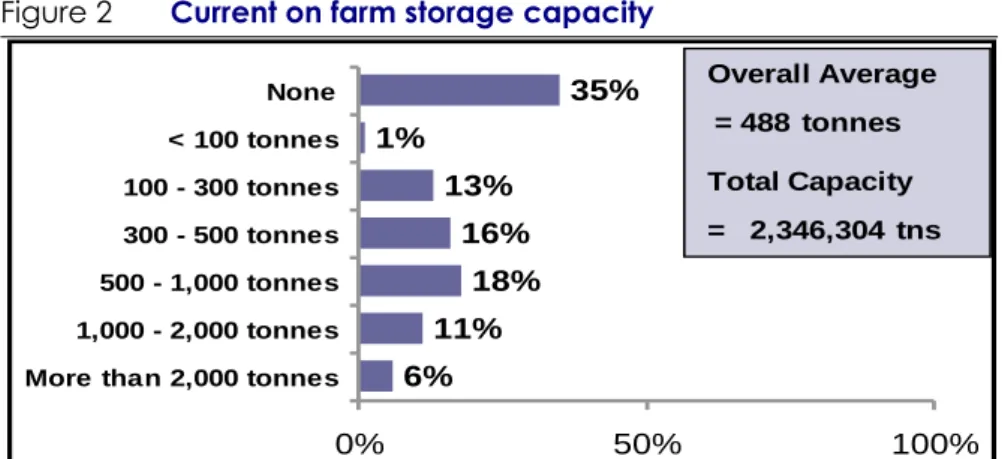
Figure 2 Current on farm storage capacity 13
Figure 3 Anticipated on farm storage capacity in 2012 13
Figure 4 How to export grain from WA 24
Figure 5 Estimated market share of grower accumulated market share in
WA 39
List of tables
Table 1 Australian and WA grain production (selected major grains) 3
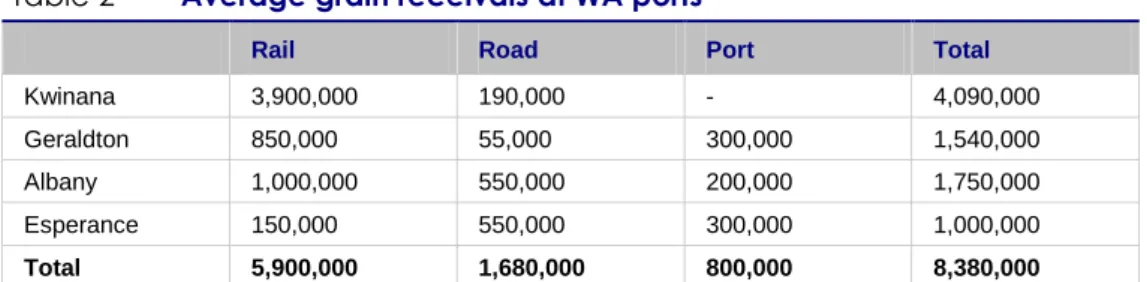
Table 2 Average grain receivals at WA ports 18
Table 3 WA wheat stocks, export commitments and actual exports March
to August 2009 23
Table 4 Accredited wheat exporter customers of CBH Operations 27
Executive summary v
Executive summary
ACIL Tasman was commissioned by Cooperative Bulk Handling Ltd (CBH) to assist the organisation to prepare a submission for the Productivity
Commission‘s (PC) inquiry into wheat marketing arrangements in Australia.
WA and the global wheat market
The Australian bulk export wheat market is part of a highly competitive domestic global market for wheat. WA is the most export oriented state with up to 90 per cent of wheat being exported to a wide range of regions.
Therefore the price WA growers receive is almost entirely set by international supply and demand conditions, less the costs of getting the grain to end users. Thus Australian wheat grower interests are served by an efficient export supply chain. Australia‘s current wheat policy is predicated on this notion.
Supply chain inefficiencies or obstructions will be borne by growers who will respond by diverting at the margin production resources to alternative uses reducing the amount of grain produced. The fact that Australia is a price taker for exported wheat imposes a significant overarching competitive constraint on the behaviour of all participants in the grain supply chain including the CBH Group.
Not only is the CBH Group subject to these competitive constraints, it is a cooperative which has a charter that specifically directs that its activities must benefit its members who are the overwhelming majority of WA grain growers. However, CBH cannot distribute financial returns to members, but rather reinvests profits into the services for the benefit of its members—these benefits spillover to all participants in the supply chain.
WA grains industry
There are two important features that characterise the WA grain industry: • It is export dependent with between 80 and 90 per cent of all grain being
exported1
• Growers typically are larger and are increasingly becoming more specialised grain producers and have the incentive and capacity to manage price risk and assess the commercial credentials of those that they deal with.
1 Based on ABARE WA grain export statistics supplied to the author on the 03-11-2009 by ABARE
Executive summary vi
There are several overarching factors that will influence the development of the WA industry post deregulation:
• Increased niche marketing opportunities (although the bulk wheat supply chain will continue to dominate)
• Growers will have the choice of a wide range of marketing products, a number of which will be based on cash sales. Thus a greater proportion of wheat on average will be sold for cash rather than pooled (however this will vary from year to year).
As a result buyers and sellers will increasingly want to have more control over the supply chain to ensure they have the capacity to:
• respond to store or sell price signals
• blend grains to achieve a competitive advantage.
This is particularly so as most of the new entrants to the WA export wheat market are large multinational corporations who not only have the capacity to create integrated supply chains where they own and operate critical supply chain infrastructure, but have done so in other markets. In addition, WA grain growers have already invested in significant on farm storage capacity utilising the latest storage and handling technology. On farm storage could double within 3 years to be 20 to 25 percent of the existing central bulk storage capacity.
To achieve control over the supply chain buyers and sellers will seek to coordinate their activities through:
• Contractual arrangements with storage and handling and freight suppliers • Invest in partial or full alternative supply chains to the current bulk
handling system.
Ultimately this will lead to increased incentives to develop alternative storage and handling facilities on farm, at the regional level, and even at port,
bypassing small scale local bulk handling company (BHC) facilities. The port congestion experienced in WA in early 2009 was symptomatic of these drivers of change.
Export wheat licensing
The licensing of bulk export wheat traders is an artificial delineation in the market and could only be justified to assure growers that their interests were being protected during a policy reform process.
The Productivity Commission has expressed the view that a reliance on specific licensing requirements is most likely to confer net benefits where the potential detriment from making a poor choice is significant and:
Executive summary vii
• the costs of obtaining product information are high; and/or
• verification of quality by the consumer or other third parties is difficult. (Productivity Commission, 2008, p. 93)
In the case of wheat marketing it is difficult to claim the costs of obtaining product information are high as there are considerable incentives for firms to demonstrate their credential to growers. The majority of wheat growers have a long history of dealing with many of the firms now participating in the export wheat market.
Also it could not be claimed that verification by growers (consumers) or third parties is difficult as there are numerous market commentators providing advice on a range of marketing services for a fee. Generally the costs of these services are modest. Where there is a failure of a marketing product or a marketer industry networks quickly transmit this information.
There does not appear to be any economic justification for continuation of the licensing scheme established by the Wheat Export Marketing Act 2008 (Cth) (WEMA) beyond the 2009-10 harvest.
Competition policy
Competition policy should not be pursued as an end in itself but as a means of promoting economic growth (or the growth of income) through preservation and promotion of economic efficiency. The struggle for Australian
competition policy is to try to maintain laws that preserve and promote economic efficiency whilst avoiding the resort to populism.
Access to essential facilities
Competition can be stifled in situations where a vertically integrated firm excludes its non-integrated rivals from a vital input, thereby resulting in market foreclosure. The 1993 Hilmer report recommended the establishment of a legal regime to provide third party access to essential facilities under prescribed circumstances (Hilmer, Rayner, & Taperell, 1993, p. 266).
The inspiration for a third party access regime for essential facilities came from the antitrust jurisprudence of the United States. It is clear that the essential facilities doctrine has been applied only sparingly by US courts and that it has not created a general obligation to share one‘s resources. The Hilmer report in turn recommended the establishment of an access regime which had attached to it very clear safeguards in order to protect the interests of facility owners.
Executive summary viii
In response to the Hilmer report recommendations on the establishment of a third party access regime for essential facilities, the Commonwealth
Government enacted Part IIIA of the Trade Practices Act (Cth) (TPA). Imposing obligations upon facility owners to provide access to the facility or facility service is a significant imposition on their property rights. For this reason access regimes need to be very carefully applied otherwise they could result in regulatory failure. In particular, inappropriate access regulation could deter investment.
Access Regulation and the Wheat Export Marketing
Act 2008
Under section 13(1)(e) of the WEMA, in order to be eligible as a wheat exporter, a party that is the operator of one or more port terminal services must pass the access test. Section 24 of the WEMA outlines the access test which imposes a number of obligations upon potential wheat exporters who are the operator of one or more port terminal service.
Section 24 of the WEMA operates as a de facto access declaration regime for the port terminal services of parties that also seek to export wheat but lacking in the protections afforded by Division 2 of Part IIIA of the TPA. Without any test of essentiality nor consideration of factors contained in section 44G(2) of the TPA, there is the possibility that the WEMA access test is being applied in such a manner that is detrimental to overall economic efficiency and thus resulting in regulatory failure.
The interaction of the WEMA access test with Division 6 of the TPA has had several adverse effects on wheat exporters who provide port terminal services. It has imposed significant compliance costs on parties who seek to comply with the access test under the WEMA. The deadline in the WEMA provided the ACCC with considerable leverage in negotiations for an access undertaking and effectively removed an important check on the administrative decision making power of the ACCC through merits review in the event that a draft access undertaking was rejected. The access test has been the source of
enormous regulatory uncertainty for those parties that must satisfy it which has placed them at a substantial competitive disadvantage compared to
non-integrated wheat exporters.
Low barriers to entry make the up-country extension of the WEMA access test completely unnecessary. Extension of the WEMA access test to up-country facilities would result in regulatory failure.
There are several constraints on the conduct of bulk grain handlers that make the operation of the WEMA access test unnecessary. Even without the
Executive summary ix
WEMA access test, the conduct of bulk grain handlers is constrained as parties still have recourse to Division 2 of Part IIIA of the TPA. In addition, parties have recourse to section 46(1) of the TPA. The potential for new entry in the provision of port terminal services may also serve to impose a further
competitive constraint on the conduct of bulk grain handlers. In relation to CBH, the cooperative structure of its business and WA legislative requirements impose significant unique constraints which preclude it from exercising any market power that it may possess.
An alternative to the regulatory access arrangements under the WEMA access test is a voluntary port terminal service access regime provided for through the development of a voluntary code of conduct which makes provision for a dispute resolution process overseen by an appropriate grain industry body. A voluntary port terminal service access regime avoids the compliance costs associated with the WEMA access test while giving dissatisfied access seekers the option of pursuing other regulatory remedies.
The development of the WEMA access test has far more to do with the pursuit of populism and could be acting to the detriment of economic efficiency. With no apparent market failure to address, extension of the WEMA access test up-country would constitute yet a further departure from economic efficiency.
Monopolisation
CBH is a volume based business which needs to generate a high level of throughput though its port terminal facilities to provide sufficient revenue in order to cover its high fixed costs. According to CBH, it has never
unreasonably refused any accredited exporter of grain access to the CBH Port Terminal Facilities (Cooperative Bulk Handling Limited, 2009, p. 24).
However, concerns have been expressed that the single desk export wheat monopoly of AWB could be replaced by three regional monopolies operated by the bulk grain handlers. Sections 46 and 50 of the TPA coupled with Part IIIA of the TPA provide adequate protections against potential
monopolisation and abuse of market power in Australian grain related markets. On this basis, there is no need for any additional specific provisions to deal with monopolisation in grain marketing.
In consideration of any specific legislative provisions to impose structural separation in grain marketing, it is absolutely essential that such policy
measures are accompanied by a thorough cost benefit analysis. There are likely to be substantial costs associated with imposing structural separation. In pursuit of structural separation of vertically integrated bulk grain handlers, it is critically important to ensure that the cure is not far worse than the disease.
Executive summary x
Reform options and conclusions
ACIL Tasman sees no merits in retention of the WEMA whatsoever. Under these circumstances it recommends rescinding the WEMA.
However, if the Commonwealth Government is not amenable to rescinding the WEMA altogether, then:
• The licensing requirements should be diluted or the terms of the license extended indefinitely with random and infrequent high level audits • Significant reforms should definitely be made to the WEMA access test. Even without the WEMA access test, the conduct of bulk grain handlers is constrained as parties still have recourse to Division 2 of Part IIIA of the TPA and section 46(1) of the TPA. If the WEMA is to be retained, then ACIL Tasman believes the WEMA access test should be abolished. Instead, a voluntary port terminal service access regime provided for through the development of a voluntary code of conduct which makes provision for a dispute resolution process overseen by an appropriate grain industry body should be established. A voluntary port terminal service access regime avoids the compliance costs associated with the WEMA access test while giving dissatisfied access seekers the option of pursuing other regulatory remedies. If the Commonwealth Government is not amenable to abolishing the WEMA access test, then the operation of the test should be amended to protect the interests of facility owners who export wheat. In the first instance,
accreditation as a wheat exporter should not be made conditional on passing the access test. In the second instance, the access test should be applied by a legislative requirement for Wheat Exports Australia (WEA) to make an
application to the National Competition Council under Division 2 of Part IIIA of the TPA for an access declaration of port terminal services. Both these measures would ensure that the rights of facility owners are fully respected and they are not placed at a competitive disadvantage as compared to other non-integrated wheat exporters.
Introduction 1
1
Introduction
ACIL Tasman was commissioned by Cooperative Bulk Handling Ltd (CBH) to assist the organisation to prepare a submission for the Productivity
Commission‘s (PC) inquiry into wheat marketing arrangements in Australia. The PC inquiry is wide ranging covering the operations of the Wheat Export
Marketing Act