A COLD WIND BLOWS
Prepared by Kathleen Jamieson
Edited by Karen Isaac
AN
ENVIRONMENTAL
SCAN
OF
PUBLIC
POLICY
AND
PROGRAMS
FOR
YOUNG
ABORIGINAL
CHILDREN
IN
BC:
A
COLD
WIND
BLOWS
ACKNOWLEDGEMENTS
The BC Aboriginal Child Care Society (BCACCS) is grateful to all those who shared their knowledge and experience with us during the two year preparation of this 2014 Environmental Scan: A Cold Wind Blows. In particular, we would like to thank the federal and provincial government officials and the staff of the First Nations Health Authority for providing information on current policy and programs. We also thank the board and staff of BCACCS and the children and families of our preschools for inspiring us to keep trying to make the world a better place for all children. And, very importantly, we are grateful to the United Way of the Lower Mainland for providing funding support for this project.
BCACCS is a provincial Aboriginal non-profit organization dedicated to supporting Aboriginal early childhood development and care (Aboriginal ECDC) programs and services in British Columbia. Our services are provided to Aboriginal children, families and communities in rural, remote and urban locations on and off reserve. We develop and share spiritually enriching, culturally relevant, high quality early childhood tools and services in order to ensure every Aboriginal child in BC has access to quality care. We also provide training (delivered directly to communities), research, advocacy, and an annual professional development conference. In addition, we manage two urban Aboriginal Head Start (AHS) Programs.
Thank you to the Eagle’s Nest AHS preschool early childcare workers for use of their photo for the front cover and to Melody Charlie for use of her photo in the table of contents. Copyright 2014 BC Aboriginal Child Care Society
All Rights Reserved
Permission is granted to reproduce contents providing reproduction is for personal or instructional use only and does not constitute republication or sale of this document, or reproduction of the included photos in whole or in part, in any form.
BC Aboriginal Child Care Society 102 – 100 Park Royal South West Vancouver, BC V7T 1A2
Tel: 604-913-9128 / Fax: 604-913-9129 Email: [email protected] Website: www.acc-society. bc.ca
SUMMARY
This 2014 Environmental Scan updates the 2007 BCACCS Environmental Scan: Winds of Change. The purpose of the Scan is, as in 2007, to describe, clarify, and put in political context the patchwork of federal and provincial Aboriginal early childhood development and care (Aboriginal ECDC) policies and programs specifically designed by the federal and BC provincial governments to close the “gap in life chances” between Aboriginal children and other children in BC.
This Scan is primarily intended to be a tool that will encourage debate about Aboriginal ECDC and be of planning assistance to First Nations, Métis, and Inuit communities in BC. Like the earlier Scan, it may also be of interest to a wider audience of policy makers, advocates, funders, scholars, students, and members of the general public.
The three key questions that the Scan attempts to answer are:
1) What actions are our federal and BC provincial governments taking to address the glaring inequality between young Aboriginal children and non-Aboriginal children in BC today? 2) How are the impacts of the current public investments in Aboriginal ECDC reported on,
monitored, and evaluated?
3) What are the contexts that shape current ECDC government policies and programs for Aboriginal children in BC?
To answer these questions, the Scan reviews public policies and programs specifically designed for Aboriginal preschool children ages 2½-6 that support early learning, enhance and protect their culture, identity, and well-being, and contribute to ensuring that they achieve their full potential as future citizens and leaders.
While ensuring a better future for Aboriginal children also means that the health and well-being of their families and communities must be vastly improved, the objective in this Scan is to put a spotlight on policies and programs that put young Aboriginal children at the centre. This objective presents some data collection challenges as the Committee that monitors countries’ compliance with the Convention on the Rights of the Child (CRC) noted in 2012 in its report on Canada. The CRC Committee recommended that Canada implement a child specific approach to budget planning because the lack of such an approach in Canada made it “practically impossible to identify, monitor, report, and evaluate the impact of investments in children.” The CRC Committee has also strongly criticized Canada for its treatment of Aboriginal children.
This Scan provides an overview of the federal government’s Aboriginal early childhood development (Aboriginal ECD) policies and the programs that were first established between 1994 and 2005 to “close the gap in life chances” between Aboriginal and other children in Canada. At that time, the scientific evidence that ECD was an effective means for addressing inequality in early childhood had been accumulating for almost three decades.
However, more recent international studies about the impact of ECD in marginalized populations have shown that it is high quality programs, which have a strong focus on early learning and development that are most effective in combatting inequality in early childhood. Indeed, longitudinal studies of high quality programs that have tracked child participants into adulthood show that the long-term benefits for vulnerable child participants can persist throughout their lives and that the benefits to society as a whole are substantial.
BCACCS community-based research has determined - through a community consultation process - that “high quality” in a BC Aboriginal ECDC context means that programs for Aboriginal children must be culturally appropriate, reinforce pride in identity, be grounded in an Aboriginal world view and spirituality, and include Aboriginal knowledge, values, ways of being and ways of caring for young children. Research shows Aboriginal ECDC needs to have sustainable funding, structural supports, and a strong focus on early learning and care to be successful.
Today, in 2014, Aboriginal ECDC programs continue to receive federal government funding but funding levels have been mostly static for several years. Moreover, the research provided here indicates that the current federal government is uninterested in expanding access to Aboriginal ECDC programs or in ensuring the level of quality that leads to successful outcomes.
This laissez-faire approach is facilitated by the ECD and the Early Learning and Child Care (ELCC) agreements that were negotiated by the provinces and territories with the federal Liberal government prior to the 2006 federal election. These negotiated agreements do not require provincial and territorial governments to specify in any detail, in their financial reports to the federal government, how the funding is spent. Instead, program content, delivery, and funding is described as being accountable to the citizens of the province or territory. In BC, detailed information that would indicate what the ECD/ELCC funding is spent on is sparse or unavailable.
The information and analysis provided in this Scan is drawn from a wide variety of sources: government documents, parliamentary proceedings, communications and interviews with government officials, academic journal articles, BCACCS research reports, focus groups, and discussions related to Indigenous child early learning and well-being conducted by BCACCS between 2011 and 2014.
The picture that emerges, based on the accumulation of evidence presented throughout this report, is one marked by a decline of political will and support at the federal level for Aboriginal ECDC. At the provincial level, this picture is marked by frequent changes in direction and senior management in the lead Ministry for Aboriginal ECDC, the Ministry of Children and Family Development (MCFD), a lack of meaningful consultation with Aboriginal community and service providers, a lack of accountability for Aboriginal ECDC funding, and an overall ambivalence regarding community consultation on Aboriginal ECDC.
There does not appear to be any measurement of outcomes or an impact assessment of investments in Aboriginal ECDC programs federally or provincially. Federally, there are occasional program evaluations and administrative reports from projects but there has not, to our knowledge, ever been an impact assessment that might show the effectiveness of Aboriginal ECDC programs.
Hope for less fragmentation of scarce Aboriginal ECDC resources, greater transparency, accountability, and more attention to Aboriginal ECDC outcomes in BC now lies with the BC Early Years Strategy (EYS) announced in 2013 and the Provincial Office of the Early Years (OEY) established in March 2014. The EYS is linked to Premier Clark’s Families First election promises and is a response to community concerns about the need for increased coordination, accountability and transparency of all BC ECD policies and programs.
The EYS appears to be a step forward in that it promises better coordination of services. However, prior consultation with First Nations and other Aboriginal communities did not, to our knowledge, occur in the development of the EYS or for a new funding program launched in 2014, called Aboriginal Service Innovations - Early Years (ASI-EY). Neither is there a mechanism that allows First Nations and other Aboriginal groups to have input on EYS or on how Aboriginal ECD policies, programs and services can be improved.
In adopting such an approach, the Province disregards the guiding principles of the Child, Family and Community Services Act, which requires that Aboriginal cultural differences be respected and states among other things that, “aboriginal people should be involved in the planning and delivery of services to aboriginal children and their families.” The promise of better coordination should come with a commitment to these guiding principles.
The context for all MCFD services is that MCFD, the lead BC Ministry for Aboriginal ECD as well as the new Early Years Strategy, has focused primarily on their child welfare/protection service. This service, which has a well-documented over-representation of Aboriginal children and youth in its care, has been the focus of two public inquiries in the last two decades. The judges involved in the inquiries and also, more recently, the BC Advocate for Children and Youth, have described the Ministry as being in a continuing state of crisis.
The October 2013 establishment of the First Nations Health Authority (FNHA) and the transfer of responsibility for the delivery of federal ECD programs for BC First Nations on reserve to FNHA is a hopeful development. The transfer will be complete on December 1, 2014. FNHA has informed BCACCS that it expects that the transfer will ensure more culturally enriched ECD programs and lead to major improvements in the health and well-being of First Nations children, families, and communities in BC. FNHA has also indicated that First Nations communities will have flexibility in deciding priorities for ECD programs.
The transfer of federal Aboriginal ECD programs to the BC FNHA has raised expectations of better outcomes for young children living on reserve in BC. However, the decline of federal interest in Aboriginal ECDC, together with a weak provincial commitment to Aboriginal ECDC
policy and programs, and the continuing high child and family poverty rates in BC mean that the current policy environment for ensuring effective and responsive Aboriginal ECDC and programs for the majority of Aboriginal children in BC is a chilly one indeed.
TABLE OF CONTENTS
ACKNOWLEDGEMENTS ... 1
SUMMARY ... 2
TABLE OF CONTENTS ... 6
INTRODUCTION: CLOSING THE GAP IN LIFE CHANCES ... 8
Purpose ... 8
Scope ... 11
APPROACH AND METHODS ... 11
Approach ... 11
Methods ... 11
THE POLITICS OF NAMING EARLY CHILDHOOD POLICIES AND PROGRAMS
... 12
THE SOCIAL AND DEMOGRAPHIC CONTEXT FOR ABORIGINAL ECDC
POLICIES AND PROGRAMS ... 13
Population of Young Aboriginal Children... 13
On Reserve Population Size ... 15
Early Childhood Inequality ... 16
ECDC RESEARCH AND EARLY CHILDHOOD INEQUALITY ... 17
OVERVIEW OF THE CHANGING POLITICAL ENVIRONMENT FOR ECDC
2007-2014: A DECLINE IN IMPORTANCE ... 19
FEDERAL POLICY AND PROGRAMS FOR ABORIGINAL ECDC ... 24
Federal ECDC Policies for Young Aboriginal Children: addressing the gap in life
chances ... 24
Federal Aboriginal ECDC Programs in BC: Descriptions ... 25
Overview of the two Aboriginal Head Start Programs ... 26
Aboriginal Head Start in Urban and Northern Communities (AHSUNC): Access and
Funding Issues ... 28
The First Nations and Inuit Child Care Initiative ... 29
THE FIRST NATIONS HEALTH AUTHORITY AND ECD ... 30
PROVINCE OF BC POLICES AND PROGRAMS: ENVIRONMENT FOR
ABORIGINAL ECDC ... 32
The Political Environment for AECD in BC. ... 32
The Policy Environment for BC Aboriginal ECDC ... 34
The Ministry of Children and Family Development (MCFD) ... 34
History of MCFD Programs... 34
MCFD ECDC Policy Environment: 2010-2014 ... 36
MCFD ECDC Plans and Frameworks ... 37
MCFD Strategic and Operational Plan Working Draft 2012/13-2014/15 ... 38
Ministry of Children and Family Development Aboriginal ECD Program
Funding ... 39
Provincial Ministries and Aboriginal Early Childhood Programs ... 39
BC Aboriginal ECD/ELCC Programs ... 41
The Aboriginal Supported Child Development Program (ASCDP) Description ... 42
The Aboriginal Infant Development Program (AIDP) ... 42
The Aboriginal ECD Regional Initiative ... 43
Aboriginal Service Innovations - Early Years and the Demise of the First Nations
and Urban Aboriginal ECD Re-investment Initiative ... 43
A Note on Child Care Funding Programs ... 44
ECD mainstream programs accessed by Aboriginal preschool children ... 45
INTRODUCTION: CLOSING THE GAP IN LIFE CHANCES
“There will always be some interest in protecting the well-being of
children. There will never be a more important one.”
UNICEF, Report
Card 11, 2013
.
1Purpose
This 2014 Environmental Scan updates the 2007 BCACCS Environmental Scan: Winds of Change. The purpose is, as in 2007, to clarify, describe, and put in political context the confusing patchwork of federal and provincial early childhood development and care (ECDC) policies and programs specifically designed by the federal and BC provincial governments to close the gap in life chances2 between Aboriginal3 children and other children in BC.
This Scan is primarily intended to be a tool that will stimulate debate and be of planning assistance to First Nations, Métis, and Inuit communities in BC. It may also be of interest to a wider audience of policy makers, funders, advocates, scholars, students, and members of the general public.
The three key questions that the Scan seeks to answer are:
1) What actions are our federal and BC provincial governments taking to address the glaring inequality between young Aboriginal children and non-Aboriginal children in BC today?
2) How are the impacts of the current public investments in Aboriginal ECDC reported on, monitored, and evaluated?
3) What are the contexts that shape current government policies and programs in regards to ECD for Aboriginal children in BC?
To answer these questions, the Scan reviews federal and provincial policies and programs specifically designed for Aboriginal preschool children between 2½-6 years of age that support early learning, enhance and protect their culture, identity, and well-being, and contribute to ensuring that they achieve their full potential as future world citizens and leaders.
Ensuring a positive future for Aboriginal children also means that the health and well-being of their families and communities must be vastly improved. However, the objective in this
Scan is to shine a spotlight on policies and programs that put young Aboriginal children at the
1 UNICEF, Office of Research (2013) Report Card 2011. Child Well-being in Rich Countries: A comparative
overview. www.unicef.c/en/discover/article/child-well-being-in-rich-countries-a-comparative-overview 2 Health Canada. 2013-14 Supplementary information (tables) report on plans and priorities.
http://www.hc-sc.gc.ca/ahc-asc/performance/estim-previs/plans-prior/2013-2014/supplement-eng.php Accessed 3/6/2013
3 The term “Aboriginal” is used here as it is in S.35 of the Canadian Constitution to refer to First Nations, Inuit and Métis peoples. When the information in the Scan refers specifically to First Nations, Métis, or Inuit, these are the terms used. The term Indigenous peoples is used when the context is an international one.
centre. A child specific approach for budget planning was recommended by the UN Committee monitoring countries’ compliance with the UN Convention on the Rights of the Child (UNCRC) in 2012 because the lack of such an approach in Canada made it “practically impossible to identify, monitor, report, and evaluate the impact of investments in children.”4 The child specific approach taken in this Scan, following the recommendation of the UNCRC Committee excludes current government programs that may be funded as Aboriginal early childhood development but which are primarily designed for adults - such as pregnancy and maternal health or anti-smoking initiatives - in order to identify ECDC programs designed specifically for Aboriginal preschool children.
The inequality in life chances between Aboriginal children and other children in Canada today is well documented. What comes under less public scrutiny, and what this Scan examines, is the apparent lack of political will on the part of both the federal government and the BC provincial government to implement policies and programs that would create fundamental change in the lives of young Aboriginal children and their families. A number of Canadian Senate Committees that have produced reports making recommendations on the need for the federal government to take action to transform the lives of Aboriginal children and their families have had their findings and recommendations largely ignored.5
The lack of concerted action on the part of federal and provincial governments to act to close the gap in the educational attainment and well-being of Aboriginal children compared with other children or to comply with international conventions on the rights of the child or the child’s Indigenous rights has also been criticized in international forums - for more than a decade – by organizations such as the United Nations Committee on the Rights of the Child (UNCRC).6
In 2011 the members of the Canadian Council of Child and Youth Advocates - who are probably in a better position than most policy makers to have acquired a detailed knowledge of the conditions facing vulnerable children in all Canadian provinces - submitted a report to the UNCRC that was highly critical of Canada. The report focused primarily on the plight of First Nations and other Aboriginal children and on government inertia in addressing the issues.7
4 UN, Convention on the Rights of the Child, Committee on the Rights of the Child (2012). Concluding observations on the combined third and fourth periodic report of Canada, adopted by the Committee at its sixty-first session (17 September – 5th October 2012).
tbinternet.ochr.org/_layouts/treatybodyexternal/TBSearch.aspx?Lang=en&TreatyID=5&TreatyID=10&TreatyI D=11&DocTypeID=5
5 For example, the reports of the Standing Senate Committee on Human Rights (2007), the Standing Senate Committee on Aboriginal Peoples (2011), the Standing Senate Committee on Social Affairs, Science and Technology (2008), and the Standing Committee on Human Resources, Skills and Social Development have made related recommendations
6 Reported in Canadian Council of Child and Youth Advocates (2011). Special report: Aboriginal Children: Canada Must Do Better: Today and Tomorrow.
http://www.rcybc.ca/Images/PDFs/Reports/CCCYA_UN_report-Final. Retrieved 2014-03-24 7 Ibid.
There is no single or simple solution that will heal or undo the profound intergenerational harm caused by the residential school system and the discriminatory government policies of the past two hundred years. The issues are complex, racism persists and remnants of colonial era policies such as the 150-year-old federal Indian Act remain firmly in place today.
However, there is compelling international evidence that public policies which support high quality early childhood development, education and care (ECD/ECEC) can work to close the gap in life chances between Aboriginal and other children in Canada. Some U.S. longitudinal studies that have tracked vulnerable child participants in ECD programs into adulthood show long-term benefits for child participants can persist throughout their lives and that the benefits to society as a whole are substantial.8
The federal government recognized the potential of this approach two decades ago when it implemented Aboriginal child care and Head Start programs but, unfortunately, as we discuss later on, it has only taken hesitant steps since then to implement effective policies and programs to counter Aboriginal early childhood inequality.
Research shows that to be effective in closing the gap between Aboriginal and other children in Canada, Aboriginal ECDC programs must be of high quality. High quality in an Aboriginal ECDC context means that programs for Aboriginal children must be culturally appropriate, reinforce pride in identity, be grounded in an Aboriginal world view and spirituality, and include Aboriginal knowledge, values, and ways of being and ways of caring for young children.9
The requirement for programs to reinforce pride in identity may also be a prerequisite for children’s success right through school. Political scientist, John Richards of Simon Fraser University, notes in a 2009 paper analyzing the gap in educational attainment between Aboriginal and other students in Canada, “Virtually all analysts of education gaps among marginalized minorities stress the importance of affirming the inherent value in the minority culture – both for its intrinsic worth and as a means to improve performance in core academic skills.”10
The BC Ministry of Education recently affirmed the importance of such an approach in 2012 when it committed funding for the inclusion of Aboriginal languages, history and culture in the BC school curriculum. A Superintendent of Aboriginal Achievement was also appointed in 2013. The new approach is designed to address the high dropout rate of Aboriginal students and the wide gap in high school graduation rates between Aboriginal and other students.1112
8 National Institute for Early Education and Research (2012), Barnett, W.S. and M. Nores. Investing in Early Childhood Education and Care: A Global Perspective. Nieer.org/publications/presentations/meeting-early-childhood-education-and-care. Retrieved 2014-03-24
9 BCACCS (2004). Quality Statement. www. acc-society.bc.ca/files-new/quiz-2.html Retrieved 2014-03-25
10 Richards, John and Megan Scott (2009). Aboriginal Education: Strengthening the Foundations. CPRN Research Report. cprn.org/documents/51984-FR.pdf Retrieved 2014-03-25
11 Government of B.C., Ministry of Education (2013). How are we doing? Aboriginal Performance Data. www.bced.gov.bc.ca/abed/performance.htm. Retrieved 2014-03-25
Scope
This Scan: Describes currently existing federal and provincial early childhood policies and programs designed specifically for young Aboriginal children and their families in BC;
Provides an analysis of the changing political and policy contexts for these programs;
Provides an overview of the current socio-economic and demographic contexts for these programs;
Draws conclusions about the current state of Aboriginal early childhood policies and programs.
APPROACH AND METHODS
Approach
The conceptual approach used here is grounded in the early childhood theory of change that evolved from the ecological systems theory for human development of psychologist, Urie Bronfenbremmer, a founder of the U.S. Head Start program. The theory of change identifies five environmental systems within which an individual child interacts and that need to be understood and acted on to effect change: 1) the immediate environment of the child such as family, school, and neighbourhood; 2) the relations between these immediate contexts; 3) the wider outside environment that affects the child’s family and community; 4) the broad cultural context; 5) the patterns evolving from socio-historical circumstances.13 This approach provides a framework for understanding the many intersecting contexts that influence outcomes for Aboriginal children and their families.
Methods
The information and analysis in this Scan is directed to the questions included in the Approach and drawn from: federal and provincial government documents; parliamentary proceedings; communications and interviews with a number of key BC government officials and non-profit agency personnel; academic research; information about the immediate effects of changes in authority around the delivery of ECD on reserve in BC provided by the First Nations Health Authority; BCACCS community consultations and focus groups conducted over the last few years; and the BCACCS Aboriginal ECDC programs and services mapping initiative of 2012. The patterns and trends that emerge in the process are based on the accumulation of evidence presented throughout this report.
12 Vancouver Sun (Jan, 29, 2014). Support pulls First Nations children through school. Editorial. p. A14.
13 Paquette, Dede and John Ryan (2001). Bronfenbrenner’s Ecological Systems Theory.
www.floridahealth.gov/alterantivesites/CMS-Kids/providers/early_steps/training/documents /bronfenbrenner’s ecological system theory.pdf . Retrieved. 2014-03-24
THE POLITICS OF NAMING EARLY CHILDHOOD POLICIES
AND PROGRAMS
The varied terms currently used to describe early childhood programs and services for children 0-6 years are loaded with unacknowledged historical and cultural connotations and need to be understood in their geo-political context.
In Canada, governments define the meaning and scope of the terms used for government-funded early childhood programs. Over time, this ascribed meaning and its scope tend to gain broad acceptance.
The child specific approach recommended by the UNCRC and adopted for this Scan means that components of current federal or provincial government programs that may be labeled and funded as ECD or ELCC (or the Early Years) but which are aimed at adults such as pregnancy and maternal health programs, or anti-smoking initiatives are not a focus here. In the literature, the umbrella term used for early childhood research may reflect the particular focus of a given profession. For example, those involved in health-related fields seem more likely to use the term early childhood development (ECD) whereas educators in Canada and Europe are likely to use the terms “early learning” or “early childhood education and care”.
It is important to be aware, however, that the extensive literature that is cited to demonstrate the success of early childhood programs in addressing inequality is based primarily on studies of early childhood education and care (ECEC) programs, broadly similar to the Canadian Head Start program, and usually designed for children 3-6 years old. These programs focus on early learning as well as on approaches that foster the well-being of vulnerable children.14
Some of the other terms for early childhood policies and programs currently used in Canada - sometimes interchangeably – include: early childhood care and development (ECCD), early learning and child care (ELCC), early childhood education (ECE) and in BC, “the Early Years” which appears to be the umbrella term now favoured by the province as a replacement for ECD.
In the international development literature, the term “early childhood development“ may be used to describe a broad spectrum of early childhood programs. The emphasis of these ECD programs is on reducing inequality and social exclusion through a range of programs that aim at improving the health and well-being of disadvantaged young children and their families and communities. Similarly, ECD is also the term currently used by the federal government to refer to the select range of initiatives aimed at closing the gap in life chances between Aboriginal children and other children in Canada by improving their health and well-being.
ECD is also a term understood within the Aboriginal community to refer to the existing federal programs for Aboriginal preschool children.
“Child care” can also be used as a comprehensive term as it is by BCACCS. However, the phrase now tends to be used in Canada, as “day care” was, to refer specifically to non-parental care for children and is mostly linked to the labour force attachment of mothers with young children.
BCACCS chooses to use the term Aboriginal early childhood development and care (Aboriginal ECDC)to describe the rangeofpublicly-funded preschoolprograms and services for children age 2½-6 yearsof agethat are designed to address the inequality in life chances of young Aboriginal children in Canada today.
BCACCS mapping research indicates that there is a gap in services for BC Aboriginal children ages 0-2½ and their families but information and analysis of programs and services for this age group is not within the scope of this report.
SOCIAL AND DEMOGRAPHIC CONTEXT FOR ABORIGINAL
ECDC POLICIES AND PROGRAMS IN BC
Population of Young Aboriginal Children
Currently, Aboriginal children represent between 8%-9% of all BC children.15 The population of Aboriginal children in BC is growing at a faster rate than that of other children and so it is likely that Aboriginal children will comprise an increasing proportion of BC’s young children in the foreseeable future.16 This growth means that it is more crucial than ever to develop culturally appropriate Aboriginal ECDC, education, health, and social services for young First Nations, Métis, and Inuit children.
Where First Nations children and their families live and receive these services is also an important planning issue. Research shows that the First Nation population is quite mobile. It is commonplace for young families to move from reserves to urban centres or rural areas in search of employment, training, or housing.17
The statistics used in this section of the Scan come from the mandatory 2006 Census rather than the voluntary 2011 National Household Survey because, as the Auditor General of Canada noted in May 2014, quality data for 25% of Census subdivisions was lacking in 2011 and cannot be reported. The response rate had also dropped to 69% from 94% in 2006.18 The
15 Extrapolated from B.C. Stats. 2006 Census Fast Facts [email protected] Retrieved 2014-03-26 16 Ibid.
17 Newhouse, David and E. Peters, Eds.(2009). Not Strangers in These Parts: Urban Aboriginal peoples.
18 Canada, Auditor General of Canada (2014) 2014 Spring Report of the Auditor General of Canada. www.oag-bvg.gc.ca?English / parl_oag_201405_e39319.html. Retrieved 15/05/2014
2006 Census statistics are therefore likely to be more reliable for Aboriginal and other low-income communities than those of the 2011 Survey.1920
The 2006 Census statistics are broken down into sections for ages 0-4 and 5-9 years and not the 0-6 demographic that is the focus of government policies and programs discussed in this report. Census 2006 numbers for both 0-4 and 5-9 years are shown below. Whether to ascribe Aboriginal identity or not to a young child in a Census form likely reflects the decision of the householder who completed the form which could lead to some variability in reported identity over time.
Number and Residence of Aboriginal identity children in BC (0-4 years) Census 2006:
16,195 Aboriginal children lived in BC.
11,785 (72.8%) of these children were First Nations [Note: North American Indian is the Census term].
4,120 (34.9%) of First Nations children lived on reserve.
1,220 (10.3%) of First Nations children lived in a rural area.21
6,440 (54.6%) of First Nations children lived in an urban area.
3,905 (24.1%) of BC Aboriginal children were Métis.
3,015 (77.2%) of Métis children lived in an urban area.
860 (22.0%) of Métis children lived in a rural area, only 25 lived on reserve.
A total of 45 Inuit children lived in BC, 40 in an urban area.
These statistics show that almost three quarters of all Aboriginal children 0-4 years in BC identify as First Nations and that just over half (54.6%) of First Nations children 0-4 lived in an urban area, as did more than three quarters of Métis children and almost all Inuit children. Number and Residence of Aboriginal identity children in BC (5-9 years) Census 2006:
18,010 Aboriginal children lived in BC.
12,295 (68.3%) of these children were First Nations children.
4,450 (36.2%) of First Nations children lived on reserve.
1,595 (13.0%) of First Nations children lived in a rural area.
6,250 (50.8%) of First Nations children lived in an urban area.
5,155 Métis children lived in BC.
3,825 (74.2%) of Métis children lived in an urban area.
1,300 (25.2%) of Métis children lived in a rural area, 30 lived on a reserve.
75 Inuit children lived in BC, 70 in an urban area.
19 Canada, Statistics Canada. 2006 Census: Aboriginal peoples. www.12.statcan-gc-ca. Retrieved 2014-03-25
20 Goar, Carol (2014). “Canada’s globally admired statisticians undercut. Auditor General’s report provides a first look at the damage the Harper government has done by hacking statistics Canada.” The Star.
Commentary.
21 Rural in the Census refers to “sparsely populated lands lying outside urban areas” (Statistics Canada 1999a:226) Cited in Statistics Canada, Agriculture Division, Agriculture and Rural Working Paper Series. (2002) “Working Paper No 61.” Definitions of Rural.
These statistics show that the number of Aboriginal children 5-9 years is almost 2,000 greater than the number in the 0-4 years category. For First Nations children on reserve, the increase in the 5-9 years category over the 0-4 category is a total of 330 more (4,450- 4,120). Most of the 2,000 overall increase in numbers relate to Métis children in the 5-9 age category. About a third more Métis children age 5-9 years are identified as Métis over the number of children age 0-4 years identified as Métis.
A partial explanation for the increase in the Métis child population numbers is provided by Aboriginal Affairs and Northern Development Canada (AANDC) demographers reporting on national trends to a parliamentary committee in 2008. The demographers noted, “among Métis, in particular, the primary component of the urban Aboriginal population explosion is due to changes in self-reporting of ethnic identity from one Census to another.”22 As the demographers further note, “The misinterpretation of urban population growth could result in an over emphasis of migration from Indian reserves to cities ...It might also lead to pressures for a policy shift away from First Nations and Inuit communities. Using the community wellness index, it has been recognized that those are among the most socio-economically disadvantaged communities in Canada. Misinterpretation of the urban population growth could therefore have a significant impact on policy orientation.”23
The observations about a misinterpretation of the urban Aboriginal population growth and a policy shift are prescient. A major policy shift is reflected in the May 18, 2011 change of name of the federal Department of Indian Affairs and Northern Development to Aboriginal Affairs and Northern Development Canada.
On Reserve Population Size
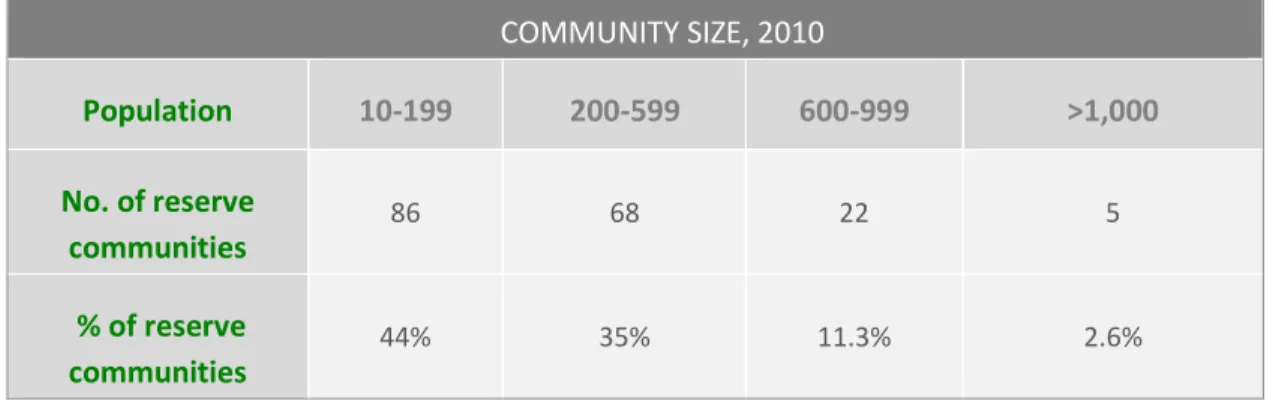
TABLE 1: BC ON-RESERVE AND CROWN LAND INDIAN REGISTER POPULATION BY COMMUNITY SIZE, 2010 Population 10-199 200-599 600-999 >1,000 No. of reserve communities 86 68 22 5 % of reserve communities 44% 35% 11.3% 2.6%
This table indicates the 181 on reserve communities that had First Nations children living in them in 2010. Population sizes vary considerably. The table indicates that the vast majority (79%) of registered BC First Nations living in 181 on reserve and crown land communities had
22 https://openparliament.ca/committees/aboriginal-affairs/39-2/34/eric-guimond-1/only/ ccs/aboriginal-affairs/39-eric-guimond
populations of less than 600.Partial or no statistics were available for about 50 very small on-reserve communities.24
44% of communities had populations of less than 200; 35% had populations between 200-599; 11.3% had populations between 600-999 and 2.6% had populations over 1,000.25 According to the BCACCS Mapping Initiative, access to government ECD programs for the 44% of First Nations children with populations under 200 is likely to be limited compared with the 14% of communities with populations over 600.26 The larger on reserve communities tend to have a greater capacity to respond to government requests for proposals, grants or other initiatives than small communities do. Unequal access to early childhood programs and services is therefore increased by the small size, remoteness or isolation of a community, as a BCACCS Mapping Initiative of ECD services for First Nations and Aboriginal communities in BC found in 2012.
Early Childhood Inequality
If the primary goal of Aboriginal ECD is to eliminate the inequality in life chances between Aboriginal children and other children in Canada, as so many government documents say, a major factor in that inequality in life chances is poverty. The likelihood that a young Aboriginal child will live in and be affected by poverty is high, much higher than that of a non-Aboriginal child in Canada. On family income alone, the differences are great. In 2006, the median income of First Nations families was $11,224 on reserve and $17,464 off reserve – much less than the median income of $25,955 for non-Aboriginals. The gap in income levels between First Nations and non-Aboriginal families has not decreased in several years. 27 On reserve First Nations children are particularly likely to be living in poverty. According to 2006 Census statistics, Aboriginal children were almost nine times more likely to live in families with a crowded home (26%) than non-Aboriginal children (3%). Single parents are those most likely to experience continuing and deep poverty. 35% of First Nations children aged 14 and under - living off reserve - lived in a single parent family; as did 26% of the children on reserve. 31% of Métis children lived in a single parent family. The vast majority (86%) of these Aboriginal single parents are women. This number included grandmothers caring for their grandchildren. These figures show a discrepancy compared with the 14% of non-Aboriginal people that are single parents.28
According to Dieticians of Canada, Aboriginal children are going to school hungry and experiencing higher rates of obesity and diabetes because of a lack of access to nutritious
24 Information on community population size based on AANDC statistics provided by AANDC 2011. 25 Ibid.
26 BCACCS. (2012). Aboriginal ECD Programs and Services Mapping Initiative. Unpublished.
27 Statistics Canada (2009). Canadian Social Trends. First Nations People: Selected findings of the 2006 Census 28 Statistics Canada, 2006 Census (2009). Living arrangements of First Nations and non-Aboriginal children 14
foods.29 Indeed, Aboriginal people were found to be four times more likely than non-Aboriginal people to experience hunger as a direct result of poverty.
The National Collaborating Centre for Aboriginal Health (NCCAH) recently noted “poverty and ill-health are inextricably linked” and that “poverty has many dimensions – material deprivation (food, shelter, sanitation, and safe drinking water) social exclusion, lack of education, unemployment and low income – each of which ‘diminishes opportunities and limits choices, undermines hope, and threatens health.“30
ECDC RESEARCH AND EARLY CHILDHOOD INEQUALITY
Since the early 1960s, studies focusing on the outcomes of early childhood policies and programs for disadvantaged children have been conducted by educators, economists, political scientists, epidemiologists, biologists, sociologists, social workers, and medical practitioners, among others. The researchers all agree that a child’s experiences in the early years are crucially important for a child’s development and can affect the whole of a child’s life and his or her contribution to society. The issues are then, how to ensure these children get the opportunity to develop to their full potential through policies and programs, which policy and program changes can make sure they have the opportunity to have a safe, happy, healthy childhood.
Many of these studies have focused on the effectiveness of ECD programs designed to counter the effects of poverty, racism, and marginalization in early childhood. The best known of these studies are: the U.S. HighScope Perry Preschool study started in 1962,31 the Abecedarian public preschool project started in 197232, and the U.S. Head Start33 program started in 1964 as part of the U.S. War on poverty policy. The studies have found that these programs can result in major improvements in the socio-emotional development, well-being, and school readiness of disadvantaged children.
Some studies of the impact of these programs over time have shown that they produce long-term benefits that include increased high school graduation, years of education completed and higher earnings, and reduced crime and teen pregnancy.34 Such programs offer savings
29 Dieticians of Canada (2013). News Release, July 23,2013. Dieticians horrified that vulnerable Aboriginal
children exposed to nutrition experiments. http://www.dieticians.ca/NEWS –Releases/2013/Vulnerable-Aboriginal –Children.aspx
30 National Collaborating Center for Aboriginal Health (2008). Fact Sheet. Poverty as a Social Determinant of
Health.
31 HighScope Perry Preschool Study. Lifetime Effects:The HighScope Perry Preschool Study Through to Age
40.(2005). www.highscope.org/content.asp?contenid=219
32 Coalition for Evidence-Bases Policy (N.D). Abecedarian Project.
Evidencebasedprograms.org/1366-2/abecedarian-project. Retrieved 2014-03-25
33 US Department of Human Health and Human Services, Administration for Children, Youth, and Families
(January, 2010) Head Start Impact Study: Final Report.
www.acf.hhs.gov/programs/opre/research/project/head-start-impact-study Retrieved 2104-03-25
34 Yoshikama , Hirokazu, and Christina Welland et al. (2013). Investing in our future: The evidence based on
to society that have been quantified by, for example, the U.S. National Institute for Early Education Research (NIEER) which notes that a Chicago Longitudinal Study of pre-Kindergarten programs reported a benefit-cost ratio of $11 for every $1 invested in the program.35
More recently, however, studies have emphasized that to be effective ECD must be of high quality and researchers have noted that the earliest successful programs were so effective because they were well resourced.36
Some others have focused on research that shows the result of inaction on early childhood poverty and the neurological effects of early deprivation and stress on young children. Professor Jessica Ball, who has done extensive research on Aboriginal early childhood issues in Canada, summarizes that body of research thus:
“Research linking early experiences with neurobiological development suggests that environmental conditions in the early years literally ‘sculpt’ the developing brain. Poverty, with its attendant risk factors of poor nutrition, high stress and high stigma, has a particularly strong impact on early development. A plethora of studies show that up to 50% of the variance in early childhood outcomes is significantly associated with socioeconomic status. Education deficits of Indigenous children can thus be understood to reflect the cumulative effects of pervasive poverty and social exclusion.”37
Dr. Ball concludes that early childhood care and development programs (Dr. Balls’ preferred term) have been shown to be a “powerful equalizer” for children from disadvantaged backgrounds because they foster the development of strong social and communication skills and support overall cognitive development and learning skills.38 These advantages, she states, not only better prepare children to start school, but are also linked to better long term outcomes such as improved high school graduation rates.
However, together with some other scholars,39 Ball also cautions that mainstream ECD curricula are “cultural constructions grounded in the worldviews, beliefs and norms of those who create and deliver” the teachings. Ball asserts that if ECD curricula are not informed by Aboriginal cultures, they will not be taught in a manner that is “fully accessible to Aboriginal children who have different views, beliefs and norms.”40
35 Barnett,W.S. (2012). Fast Facts Summary.
http://nieer.org/publications/policy-reports/getting-facts-rights-pre-K-and-presidents-pre-k-proposal
36 Ibid.
37 Ball, J. (2012). “Equity for Indigenous Children in Early Childhood Education.” In J. Heyman and A. Cassola
(Eds.) Lessons in educational equity: Successful approaches to intractable problems around the world (pp. 282-312).
38 Ibid.
39 For example, Dahlberg, G, et al. (2004) Beyond Quality in Early Childhood Education and Care: Postmodern
Perspectives. 2nd edition, Helen Penn (1997a); Martin Woodhead (1996) ; Michael Cole (1996) 40 Ibid.
In a similar vein, a 2011 study of the Canadian Head Start program by educator, M. Nguyen, argues that there is a positive correlation between culturally appropriate education that fosters a strong cultural identity and the fact that students who receive a cultural education are more likely to report that they liked school and to graduate from high school.41 This approach implies that students who have a sense of being included in their community are more successful in life. The Public Health Agency of Canada (PHAC) also notes that, “When a child feels a sense of belonging to family, community and peers, he or she is better able to deal with adversity.”42
OVERVIEW OF THE CHANGING POLITICAL
ENVIRONMENT FOR ABORIGINAL ECDC, 2007-2014: A
DECLINE IN IMPORTANCE
Canada decided to invest in ECD policies and programs focusing on Aboriginal children in the mid 1990s - three decades after the U.S. ECD programs were created as part of the U.S. War on Poverty policy. Since then, Canadian government support for early childhood programs for Aboriginal children has blown hot and cold depending on the prevailing political wind. Until the mid 1990s, Canadian health policy, which had largely emphasized the responsibility of individuals for their own well-being, changed direction and began to emphasize a public or societal responsibility for population health and for initiating social change to reduce inequality. At the same time, a new federal interest emerged in the potential of early childhood policies and programs to improve the health, well-being, and educational outcomes of children living in marginalized families and communities. This trend reflected the extensive research that had been emerging in the U.S. and Europe for three decades. It showed the importance of the social determinants of health in health outcomes; it also reflected the findings of long-term studies, largely conducted in the U.S., that quality ECEC and ECDC programs for vulnerable children were effective in reducing inequality both in the short term and long term.
The emergence, in the mid 1990s, of federal programs for disadvantaged Aboriginal children and their families (just as the last residential school was closing in 1996)43 were part of this major change in federal policy. The change also followed on the ratification by Canada of the UNCRC in 1991 and the publication of the findings of the 1991-1996 Royal Commission on
41 Nguyen, M. (2011). Closing the education gap: A case for Aboriginal early childhood education in Canada: A
look at the Aboriginal Head start Program. Canadian Journal of Education, 43.3, 229-248. Retrieved , 2013-06-15
42 Canada, Public Health Agency of Canada. Aboriginal children: the healing power of cultural identity.
http://www.phac-aspc.gc.ca/hp-ps/dca-dea/prog-ini/ahsunc-papacun/aboriginal-autochtones-eng.php. Retrieved July, 2013
43 Aboriginal Affairs and Northern Development Canada (2013). Residential Schools.
Aboriginal Peoples (RCAP).44 The RCAP’s reports showed, in compelling detail, that Canada’s Aboriginal children did not enjoy the same level of health and well-being as other children in Canada and that Canada was in clear contravention of the legally binding UNCRC.
The 2007 BCACCS EnvironmentalScan, the precursor to this one, described how enhanced federal and new provincial government policies and programs provided support for early childhood development and education programs for all Canadian children first emerged in the early part of 2000 in the form of The Early Childhood Development Initiative. There were four key areas of support that were identified in this ECD Agreement: 1) healthy pregnancy, birth and infancy; 2) parenting and family support; 3) early childhood development and care; 4) and community support. To support the Initiative provincial and territorial governments agreed to report on their progress in expanding ECD programs and services.45
Margo Greenwood from the University of Northern BC has noted that, “Aboriginal peoples were conspicuously missing“ from this Agreement.46 However, in 2002, the federal government announced a commitment of $320 million over the next five years (2003-04 to 2007-08) and $6.5 million for a strategy to support Aboriginal ECD. An additional amount of $5 million over five years to “build on federal early learning and child care programs for First Nations children, primarily on reserve,” was announced in the 2004 budget. Additional funding of $10 million over four years (2004-05 to 2007-08) was then announced.47
The Multilateral Framework on Early Learning and Child Care (ELCC) was announcedin 2003. Both the 2000 Initiative and the 2003 Multilateral Framework on ELCC were established through negotiated agreements among the federal government, provinces, and territories and depended on continued federal funding. The objectives of the ELCC agreement are described as expanding the scope of the ECD Initiatives to, “Promote health, pregnancy, birth and infancy; Improve parenting and family supports; Strengthen early childhood development, learning and care; and Strengthen community supports.” Apart from the important new emphasis on “learning and care” the objectives of the 2000 and 2003 initiatives are virtually the same.48
The funds from these agreements are transferred to the provinces as block funding through a program called the Canada Social Transfer (CST). Accountability for outcomes and expenditures for this funding is not the responsibility of the federal government. According to the federal government, “The Provincial and Territorial governments have the
44 Government of Canada, Royal Commission on Aboriginal Peoples (1996). Report of the Royal Commission On
Aboriginal Peoples. www.collectionscanada.gov.gc.ca/webarchives/20071115053257/
http://www.ainc-inac.gc.ca/ch/rcap/sg/sgmm_ehtml
45 http://www.fin.gc.ca/fedprov/fsc-eng.asp
46 Greenwood, Margo (2005). Where to From Here? Building a First Nations Early Childhood Strategy. AFN
Secretariat. Retrieved 2014-03-25
47 Canada, Department of Finance (2012). Federal Support for Child Care.
http://www.fin.gc.ca/fedprov/fsc-eng.asp
responsibility to design and deliver these programs and are accountable to their citizens and legislatures for outcomes delivered and dollars spent.”49
With the funding from these initiatives, the province of BC became directly involved - for the first time - in the delivery of some ECD programs and services for primarily urban Aboriginal children but also a few First Nations children on reserve. Up until that point they had been mainly concerned with child protection, which often entailed taking Aboriginal children into government care.
In 2014, BC is guided, as are all the provincial and territorial governments, by the objectives of the ECD/ELCC Agreements and required to send regular program descriptions and summary spending reports to the federal government. Since there is, however, no statutory obligation to report specific amounts spent on ECD/ELCC, spending on Aboriginal early learning or ECD is not clearly identified. Monitoring and evaluation of the effectiveness of these investments appears to be very limited.
In 2005, progress in closing the gap between Aboriginal and other children seemed attainable when, after 18 months of negotiations, First Ministers and national Aboriginal leaders signed the Kelowna Accord in November 2005. The Accord was an agreement that committed $5.085 billion over five years to improve the quality of life for Aboriginal peoples of Canada in four key areas: health, education, housing and relationships.50
With the defeat of the federal Liberals and the election of a Conservative government, the prevailing federal political philosophy changed back again in 2006 to one that prioritized individual or parental responsibility over societal responsibility for young children’s care and well-being. Immediately after the election, Early Learning and Child Care (ELCC) agreements that had been negotiated from 2003 to 2005 between the previous Liberal government and the provinces and territories were abruptly cancelled. After a short hiatus, however, the decision to cancel the ELCC Agreements was reversed; provinces received the expected funding and will continue to do so until 2014-15.51 The Kelowna Accord was, however, shelved.
Plans for a national childcare program promised by the Liberal government prior to the election were also discarded and replaced by the Universal Child Care Benefit that is described as promoting “choice in child care.” This benefit gives individual families with children six years and under a taxable $100 per month per child to offset childcare expenses. According to Ontario ECDC researcher, Martha Friendly, the public cost of this program will
49 Canada, Department Human Resources and Social Development Canada (2010). Public Investments in Early
Childhood Education and Care in Canada. p.23. www.ecd-elcc.ca/eng/ecd/ecec/early_childhood_education-eng.pdf Retrieved 16/10/2014
50 Parliament of Canada (2006). Aboriginal Roundtable to Kelowna Accord: Aboriginal Policy Negotiations,
Report Prepared by Lisa Patterson. www.parl.gc.ca/content/LOP/researchpublications/prb0604-e.htm Retrieved10/12/13
51 Parliament of Canada, Library of Parliament (2007). Child Care in Canada: The Federal Role. Prepared by
reach $17.5 billion in 2014. Friendly argues that the funding is not well spent and estimates that “the funds - if used for regulated child care instead - could modestly fund 700,000 additional spaces for children”.52
When Canada ratified the UNCRC in 1991 it agreed to report, every five years, on its compliance with the legally binding Convention to the UNCRC Committee that oversees countries’ compliance with the terms of the Convention. Since Canada’s first report, the UNCRC Committee has been critical of Canada for its lack of a national child rights strategy and for ongoing breaches of the Convention. The extent of child poverty in Canada is a major issue for the Committee and in 2012 the Committee reported, “poverty among Aboriginal, black and immigrant children as well as disabled children is significant and growing.” The Committee further noted, “Canada seems to have no way to ensure that things don’t get worse or to know whether its programs are tackling the problems efficiently.”53
In 2011 the authors of a federal government summative evaluation of the Understanding the Early Years Initiative (which ended in 2010) candidly concluded that: “In terms of current alignment, federal and provincial government representatives noted that current federal priorities have changed, so early childhood development has declined in importance.”54 In other words, the federal and provincial government officials interviewed for the evaluation about the Early Years Initiative were in agreement that the political will to invest in early childhood development was largely gone.
At the same time, some signs of increased awareness by the federal government of the depth of the trauma caused by the residential school system emerged in 2008 when the Canadian Prime Minister Stephen Harper, publicly apologized for the harm caused by the residential school system and established the Truth and Reconciliation Commission on residential schools.55 In 2010, Canada also officially endorsed the United Nations Declaration on the Rights of Indigenous Peoples after some delay and with some reservations. However, the federal government seems ambivalent about its commitment to any attendant policy changes and continues to claim that the UN Declaration should have no effect on resource development decisions affecting First Nations.56
In BC, the previous Premier, Gordon Campbell, who had opposed the Nisga’a Treaty through the courts, unexpectedly moved away from the provincial Liberal’s adversarial relationship
52 Friendly, Martha (2013). The $17.5 billon question: Has the Universal Child Care Benefit given families
“choices” in child care? Childcare Resource and Research Unit. Retrieved from http://childcarecanada. org/print/documents/research-policy-practice/13/10/175-billio-question … 2013/10/29.
53 UN Committee on the Rights of the Child
54 Canada, Employment and Social Development (2011). Summative Evaluation of Understanding the Early
Years Initiative. September 2011. 4.1.3.
55 Truth and Reconciliation Commission of Canada. www.trc.ca/trcinstitution/index-php?p=3 Retrieved
2014-03-24-
56 Chiefs of Ontario (2013). Media Release. Canada Must Respect the Right of Indigenous Peoples to make
Decisions about Resource Development on their land. http;//nationtalk.ca/story/Canada-must-respect – the- right- of -indigenous -peoples –to-make-decisions-about-resource development -on -their -land. Accessed 9/13/13
with Aboriginal peoples and began to be more conciliatory. Consultations were held with First Nations, Métis organizations and Aboriginal leaders that resulted in groundbreaking agreements - the New Relationship vision statement, the Transformative Change Accord, and the Métis Nation Relationship Accord. According to the BC government in 2008, these agreements showed that, “we are forging a path to dramatically improve the lives of Aboriginal people and build healthier communities that benefit all British Columbians.”57 Former premier Campbell was also directly involved in the negotiations around the doomed
Kelowna Accord.
Today, in 2014, the climate for consultation with First Nations provincially is chilly according to Stewart Phillip, Grand Chief of the Union of BC Indian Chiefs. Chief Phillip was recently quoted as saying that Premier Campbell was heading in the right direction but that the warmer relationships then developed between government and First Nations have since deteriorated.58
In recent years, a number of lesser agreements with First Nations and Métis in BC relating to child protection and the delegation of responsibility for child protection to First Nations and Aboriginal agencies have also been signed. However, a coherent provincial policy or plan for providing prevention, early learning, and development related early childhood programs for young Aboriginal children in BC has not emerged.
The scope and scale of investment by both levels of government is not sufficient to achieve the desired outcome of closing the gap between Aboriginal children and non-Aboriginal children.
The newly established Provincial Office for Early Years (OEY) that opened in February 2014 will provide a cross-ministry coordinating body for ECD and ELCC policy and programs including Aboriginal ECD.59 The OEY is responsible to MCFD. Only time will tell how effective this new Provincial Office of the Early Years will be in ensuring the provision, delivery and coordination of ECDC programs for young Aboriginal children and their families.
In BC, the broad context for all ECD/ELCC programs is that child and family poverty is high and has been the highest in Canada for most of the last decade.60 During the tenure of former BC Premier Gordon Campbell, successive cutbacks in social, education and health services funding, as well as legal aid shredded the social safety net that had been slowly developing until then.61 Since Aboriginal families tend to have the lowest incomes, have
57 Province of BC (2008) The New Relationship with First Nations and Aboriginal People.
http://ww.newrelationship.gov.bc.ca. Retrieved 17/09/2013
58 Vancouver Sun (2014). Advisory Body Plays Key Role in Development. January 30, 2014, p. D8
59 www.newsroom .gov.bc.ca./2014/01/provincial-office-for-the-early-years-launched.html. Retrieved
2014-03-12
60 B.C. campaign 2000 (2012). Child Poverty Report Card.
www.firstcallbc.org. pdp/Economic equality/First%20CallBC%child%20Poverty%Reports . Retrieved 2014-03-24
worse health, lower levels of educational attainment and employment, and to be more frequently in conflict with the law than other Canadians, they are deeply affected by these cuts.
A positive new development since the last BCACCS Environmental Scan of 2007 is that, starting in October 2013, the administration and delivery of most of the federal ECD programs established in the 1990s for First Nations on reserve are being transferred to a new BC First Nations Health Authority (FNHA). One related program that has not been transferred is the First Nations and Inuit Child Care Initiative (FNICCI). FNICCI is part of the Aboriginal Skills and Employment Training Strategy (ASETS) program delivered by Employment and Social Development Canada (ESDC).
The goals and content of the transferred ECD programs will likely remain unchanged in the immediate future. The extent to which other ECD/ELCC programs for First Nations, Inuit and Métis, provided by the Province, will be affected is unclear. What is clear is that the federal government, for better or worse, is gradually divesting itself of the responsibility for promoting ECD/ELCC/ECEC for Aboriginal children and their families.
FEDERAL POLICY AND PROGRAMS FOR ABORIGINAL
ECDC
Federal ECDC Policies for Young Aboriginal Children: addressing the gap
in life chances
Currently, funding for Aboriginal ECD/ELCC flows through the Early Childhood Development and Early Learning and Child Care – Strategy for First Nations and other Aboriginal Children. The goal of the Strategy is the same as that announced in October 2002, “to address the gap in life chances between Aboriginal and non-Aboriginal children by improving the developmental opportunities which Aboriginal children (and their families) are exposed to at an early age (0-6 years).”62
The Strategy has involved three federal departments and one agency: 1) Health Canada (HC), which was responsible for the on reserve ECD programs in BC that have now been transferred to the BC First Nations Health Authority (FNHA); 2) Employment and Social Development Canada (ESDC) which is responsible for the First Nations and Inuit Child Care Initiative (FINICCI) a component of the Aboriginal Skills and Employment Training Strategy (ASETS); 3) the Public Health Agency of Canada (PHAC) which is responsible for Aboriginal
62 Government of Canada, Treasury Board Secretariat. Early Childhood Development and Early Learning and
Child Care: Strategy for First Nations and Other Aboriginal Children. www.tbs-sct.gc.ca.hidb-bdih/initiative.eng Retrieved 2014-03-25
Head Start in Urban and Northern Communities (AHSUNC); and, 4) Aboriginal Affairs and Northern Development Canada (AANDC) which was responsible for capacity building funding and the coordination of the Strategy. This involvementended in 2012.63
Federal Aboriginal ECDC Programs in BC: Descriptions
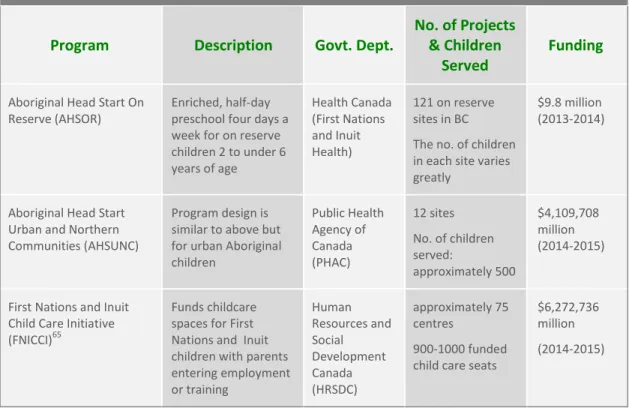
Table 2 (below) lists the Aboriginal ECDC programs operating in BC that are federally funded, the number of projects or sites, the number of children served and the approximate funding levels where this information is available. Funding levels have not increased significantly since 2005.
TABLE 2: FEDERAL GOVERNMENT ABORIGINAL ECDC PROGRAMS IN BC64
Program Description Govt. Dept.
No. of Projects & Children
Served
Funding
Aboriginal Head Start On Reserve (AHSOR)
Enriched, half-day preschool four days a week for on reserve children 2 to under 6 years of age Health Canada (First Nations and Inuit Health) 121 on reserve sites in BC The no. of children in each site varies greatly
$9.8 million (2013-2014)
Aboriginal Head Start Urban and Northern Communities (AHSUNC)
Program design is similar to above but for urban Aboriginal children Public Health Agency of Canada (PHAC) 12 sites No. of children served: approximately 500 $4,109,708 million (2014-2015)
First Nations and Inuit Child Care Initiative
(FNICCI)65
Funds childcare spaces for First Nations and Inuit children with parents entering employment or training Human Resources and Social Development Canada (HRSDC) approximately 75 centres 900-1000 funded child care seats
$6,272,736 million (2014-2015)
The federal Community Action Program for Children (CAP-C) is not included here because it does not focus on programs designed specifically for Aboriginal children and families. CAP-C is a multi-ethnic mostly urban program open to all disadvantaged children and may include First Nations, Inuit and Métis children but is not designed to respond to the cultural and other specific needs of Aboriginal children.
Also excluded here are the Prenatal Nutrition Program and the Maternal & Child Health programs since they are adult-oriented and not child-specific.
63 Ibid.
64 The budget information in this table was provided by federal government officials in Health Canada, PHAC,
and HRSDC/E & SD Canada