A software development
Business plan and feasibility assessment
Daníel Au
ð
unsson
Thesis of 30 ECTS credits
Master of Science in Engineering Management
May 2015
A software development
Business plan and feasibility assessment
Daníel Au
ð
unsson
Thesis of 30 ECTS credits submitted to the School of Science and
Engineering
at Reykjavík University in partial fulfillment
of the requirements for the degree of
Master of Science in Engineering Management
May 2015
Supervisor(s):
Páll Kr. Pálsson
Dr. Páll Jensson, Reykjavík University, Iceland
Examiner(s):
Abstract
This thesis examines how to build a perfect business plan and use the information to determine the presumptions for a feasibility assessment. When developing software it is important to confirm that there is a demand from the market. If there is a demand then the next question is if it is possible to gain profits. An overview of the innovation community in Iceland is presented, as well as a brief overview of a business plan buildup, which will be used as a guide for the case study along with feasibility methods.
The case study illustrates the use of building a business plan and a feasibility assessment model for Verkvaki software development. The conclusion is that despite a need from the market and a promising cash flow, software development is an expensive process and in this case not feasible. Support from the innovation society in forms of grants or venture capitalists are essential and exportation should be considered from the beginning to gain more buyers.
Keywords: software development, innovation, entrepreneurs, financial feasibility, business plan
Útdráttur
Þessi ritgerð skoðar hvernig byggja á hina fullkomnu viðskiptaáætlun og nota upplýsingarnar úr henni sem forsendur fyrir arðsemismat. Við
hugbúnaðarþróun er mikilvægt að staðfesta aðþað sé þörf frá markaðnum. Ef
þörfin er til staðar er hægt að skoða hvort hugmyndin sé arðbær. Yfirlit yfir frumkvöðlaumhverfið á Íslandi er kynnt auk yfirlits yfir hvernig byggja á viðskiptaáætlun sem notað verður sem leiðarvísir fyrir rannsóknardæmi þar sem gert verður að lokum arðsemismat.
Dæmið mun sýna fram á hvernig byggð er viðskiptaáætlun og arðsemismat í kringum hugbúnaðinn Verkvaki. Niðurstöðurnar gefa til kynna að þrátt fyrir góða hugmynd og upprennandi fjármagnsstreymi þá er hugbúnaðarþróun dýr og í þessu tilfelli ekki arðbær. Stuðningur frá frumkvöðlaumhverfinu í formi styrks eða áhættufjárfesti er nauðsynlegur auk þess sem huga ætti að
A software development
Business plan and feasibility assessment
Daníel Au
ð
unsson
30 ECTS thesis submitted to the School of Science and Engineering
at Reykjavík University in partial fulfillment
of the requirements for the degree of
Master of Science in Engineering Management
May 2015
Student: Daníel Auðunsson Supervisors: Páll Kr. Pálsson Dr. Páll Jensson Examiner: Þórdís Jóhannsdóttir Wathne
Table of Contents
List of Figures... 4 List of Tables ... 5 Acknowledgement... 6 1. Introduction... 7 2. Innovation in Iceland ... 82.1 Support for innovation... 8
2.1.1 Innovation Center Iceland - Nýsköpunarmiðstöð Ísland... 8
2.1.2 Innovit and Klak... 8
2.1.3 Startup Reykjavik ... 9
2.1.4 Startup Iceland ... 10
2.2 Funding for Innovation ... 10
2.2.1 The J-curve and the Death Valley ... 10
2.2.2 Grants in Iceland ... 11
2.2.3 Angels and Seed forum Iceland ... 12
2.2.4 Venture capital ... 12
3. Theory of innovation ... 12
3.1 Costs versus Benefits... 13
3.2 Variables ... 14
3.2.1 Benefits ... 14
3.2.2 Costs ... 15
3.2.3 Resources ... 16
3.2.4 Discounting factor... 17
4. Steps behind a perfect business plan ... 17
4.1 The investor ... 18
4.2 Structure ... 18
5. Theory of feasibility assessment ... 22
5.1 The purpose of financial feasibility analysis ... 22
5.2 Feasibility Study vs. Business Plan ... 23
5.3 Criteria of financial feasibility ... 24
6. Case Study - The Verkvaki business plan... 26
6.1 Summary ... 26
6.2 Verkvaki explained ... 27
6.3 The Company Leda Ltd... 28
6.3.1 Goals and vision... 28
6.4 The Software Verkvaki ... 29
6.4.1 Important features of Verkvaki ... 29
6.4.2 The users ... 29
6.4.2.1 The Administrator ... 30
6.4.2.2 The User... 33
6.4.3 Description ... 35
6.4.4 The need ... 35
6.4.4.1 Customer’s feasibility assessment ... 36
6.4.5 Technical knowledge of user... 37
6.4.6 Quality and upgrades ... 37
6.5 Market and demand curve ... 39 6.5.1 Competition Analysis... 39 6.5.1.1 Domestic market ... 39 6.5.1.2 Foreign Market ... 41 6.5.2 The Four P’s... 43 6.5.2.1 Product ... 43 6.5.2.2 Price ... 44 6.5.2.3 Place ... 44 6.5.2.4 Promotion ... 45
6.5.3 Inner and outer analysis ... 46
6.5.3.1 Inner analysis ... 47
6.5.3.2 Outer analysis – PESTLE analysis... 48
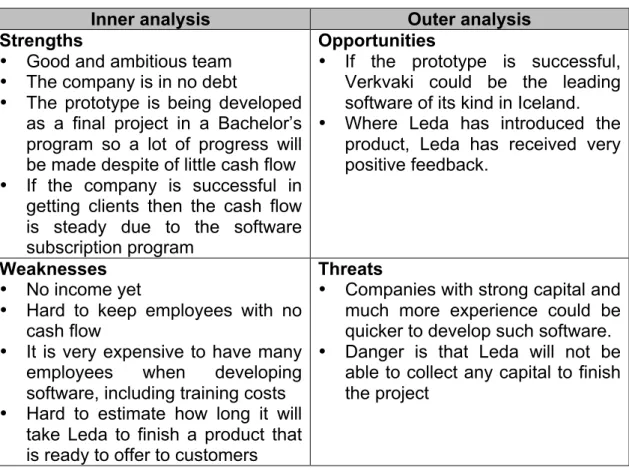
6.5.3.3 SWOT analysis... 51
6.5.4 Product and researching the need ... 54
6.5.4.1 Market overview ... 54
6.5.4.1.1 Size of the domestic market ... 54
6.5.4.1.2 Scandinavia... 54
6.5.4.1.3 The European market and other markets... 54
6.5.4.1.4 Target groups ... 55 6.5.4.1.5 Companies ... 55 6.5.4.1.6 Single Worker... 55 6.5.4.1.7 Supporting Parties... 55 6.5.4.2 Market Research ... 56 6.5.4.3 Product model ... 61
6.5.4.4 Product and market conclusions ... 65
6.5.5 Demand Curve ... 66
6.5.5.1 Sales Quantity ... 66
6.5.5.2 Product price and sales... 67
6.5.6 Marketing plan... 71 6.5.6.1 Vision... 71 6.5.6.2 Webpage ... 71 6.5.6.3 Video ... 72 6.5.6.4 Commercials ... 72 6.5.6.5 Word-of-Mouth ... 72 6.5.6.6 Personal Sales ... 72
6.5.6.7 Potential Customer Motivation ... 73
6.5.6.8 Service after sale... 73
6.5.6.9 Marketing Cost ... 73
6.5.7 Technical Strategy and implementation ... 74
6.5.7.1 Operational objective... 74
6.5.7.1.1 Technical approach ... 75
6.5.7.1.2 Roles and responsibility ... 75
6.5.7.2 Building the prototype... 76
6.5.7.2.1 Requirement analysis and system design... 76
6.5.7.2.2 Planning the programming ... 76
6.5.7.2.3 Setting up the SQL ... 76
6.5.7.2.4 Programming the back-end ... 76
6.5.7.2.5 Programming the front end... 76
6.5.7.2.6 Programming the admin preferences ... 77
6.5.7.2.7 Error testing... 77
6.5.7.2.8 Finalizing the prototype ... 77
6.5.7.2.9 Report and documentation ... 77
6.5.7.3 Verkvaki made into a marketable product ... 77
6.5.7.4 Verkvaki 2.0 and future ... 78
6.5.7.5 Project plan - Gantt-Chart ... 79
6.5.7.6 Development cost... 80 6.5.7.7 Overhead Cost ... 81 6.5.7.7.1 Computers... 81 6.5.7.7.2 Software ... 81 6.5.7.7.3 Office space ... 81 6.5.7.7.4 Operating Cost ... 82 6.5.7.7.5 Other Cost ... 82
6.5.7.7.6 Total Overhead Cost ... 82
6.6 Financial Model ... 83
6.6.1 Capital requirements ... 83
6.6.1.1 Business development ... 83
6.6.1.2 Technical design and planning... 83
6.6.1.3 Programming the prototype... 84
6.6.1.4 Copyrights and branding ... 84
6.6.1.5 Marketing... 84
6.6.2 Basic investment ... 84
6.6.2.1 Establishing the company ... 84
6.6.2.2 Overhead cost ... 84
6.6.2.3 Equipment and software... 84
6.6.3 Capital for unseen cost... 84
6.6.4 Capital needed for debtors ... 84
6.6.5 Working capital... 85 6.7 Financing ... 85 6.7.1 Owners’ equity... 85 6.7.2 Grants... 85 6.7.3 Venture capital ... 85 6.8 Operational model... 86 6.8.1 Investment... 86 6.8.2 Operating revenue... 86 6.8.3 Operating expenses ... 86
6.9 Operational and financial plan ... 86
6.9.1 Working with a venture capitalist... 87
6.9.2 Loan ... 87
6.9.3 Getting a grant... 87
6.10 Organizational chart... 89
7. Conclusion ... 90
Bibliography ... 92
Appendix A – Survey – Full questions and figures left out... 94
Appendix B – Scrum methodology... 96
Appendix C – API architecture... 97
List of Figures
Figure 1: "The valley of death". Cumulative cash flow of a start up. [6] ... 11
Figure 2: The admins start project screen... 30
Figure 3: Projects information screen... 31
Figure 4: Screen for projects task list ... 31
Figure 5: The home screen of the project ... 32
Figure 6: The mobile home screen of user... 33
Figure 7: Mobile screen for the task list... 33
Figure 8: Mobile screen for the clock in... 34
Figure 9: Administrator supervising users around town ... 35
Figure 10: Influences and influencing factors in a company’s environment [29] ... 46
Figure 11: Companies’ opinion... 58
Figure 12: Customers value estimation... 59
Figure 13: Communication channels... 59
Figure 14: Money spent on project-related software monthly ... 60
Figure 15: Companies’ notion towards participating with start-ups ... 61
Figure 16: Sales during the first 3 years... 66
Figure 17: Cumulative subscribers of each solution... 67
Figure 18: Rising monthly earnings from each solution ... 70
Figure 19: Cash Flow according to receiving a grant ... 87
Figure 20: NPV of total CF and Net CF... 88
List of Tables
Table 1: Monthly savings from software efficiency... 37
Table 2: Net present values with cost and savings included... 37
Table 3: Domestic Competitors ... 39
Table 4: Foreign Competitors... 41
Table 5: SWOT analysis for the company Leda... 51
Table 6: SWOT analysis for the software Verkvaki ... 52
Table 7: Industries, numbers and statistics ... 62
Table 8: Number of companies divided by number of employees ... 63
Table 9: Estimated distribution of sales... 63
Table 10: Sales of each solution ... 64
Table 11: Estimated sales during the first year ... 64
Table 12: Estimated sales during the second year ... 65
Table 13: Estimated sales during the third year ... 65
Table 14: Estimated sales over the first three years ... 65
Table 15: Cumulative subscription from sales... 66
Table 16: Average amount of respondent in ISK ... 67
Table 17: Profitability estimation from using Verkvaki... 68
Table 18: Calculated prices for each subscription... 69
Table 19: Early earnings ... 70
Table 20: Outlined expected costs from marketing ... 73
Table 21: Development cost during the first phase in thousand ISK... 80
Table 22: Development cost during second phase in thousand ISK... 81
Table 23: Total overhead cost for the first year... 82
Acknowledgement
First of all, I would like to thank my supervisors, Páll Kr. Pálsson and Páll Jensson for their academic guidance and support.
Páll Kr. Pálsson motivated my interest in innovation through an innovation course he taught during my master studies. It was very valuable to have a supervisor with so much insight and experience in the entrepreneurial world. Páll Jensson is a great teacher. He has been teaching me since my bachelor studies and has given me lectures on various subjects. Páll is easy to contact and a good advisor. The things I will remember about him, apart from the studies, are his calm personality and comfortable presence.
Finally, I would like to express my love and gratitude to my parents for their support through the years. I’ve always had their encouragement in the multiple tasks upon which I have embarked. Finishing the master studies is one of the biggest indications of how far their unconditional support has taken me.
1. Introduction
Before an investment is made it is important to look into it and analyze if it is profitable. Even though the standard procedure is to make a feasibility analysis and then do a business plan, we will do both to follow up on the idea no matter how profitable the idea is. A software company called Leda will be used as a case study where the software Verkvaki is the product.
The objective of this thesis will be summarized in the following three questions:
1. Is there a need on the market for a solution like Verkvaki?
2. How would one plan and perform the Verkvaki software development? 3. Is the solution feasible?
These questions will all be answered with a business plan that goes through the whole process.
This thesis examines how to take an idea about making software and putting it to the next level by making a business plan and feasibility assessment. At first the innovation society in Iceland will be examined, what support it has to offer and how entrepreneurs can fund their ideas.
The theory comes afterwards and is divided into three sections: the theory of innovation, the theory of a perfect business plan, and in the end the theory of a feasibility assessment.
The business plan of Verkvaki is the largest part of this thesis. It goes through the description of the product. After that the market is analyzed and an inner and outer analysis is performed. Leda does market research and uses the solutions to estimate the quantity of the sales and the price of the product. After that there is an overview of the operation, which includes how to market and build the product. The financial model is introduced where we go over financing and the feasibility assessment and after that it is possible to estimate if the company should proceed with the idea or abort. At the end the organizational structure will be briefly introduced.
2. Innovation in Iceland
Innovation has been one of the leading forces in the development of the Icelandic economy from the last decades of the 20th century until today. Ambitious university research in contact with real life companies in the Icelandic economy have led to the foundation of companies that have taken this knowledge to the next level and established an innovation pathway, which documents and makes use of these ideas. [1]
2.1
Support for innovation
There are few organizations that have been very visible when it comes to helping out entrepreneurs in Iceland. Some examples include Nýsköpunarmiðstöð Íslands, Innovit and Klak, which were recently merged, Startup Reykjavík, and Startup Iceland.
Here below there will be summed up the biggest organizations when it comes to innovation support. The reason these companies were picked is because they’ve been visible to the writer in the process of the research. There are other companies and funds that endorse innovation even though they are not covered in this essay.
2.1.1 Innovation Center Iceland - Nýsköpunarmiðstöð Ísland
The Innovation Center of Iceland (ICI) is a government run organization under the Ministry of Industries and Innovation. The difference between ICI and other supporters of innovation is that this organization takes in research innovators and helps them by giving them a place to stay and the right environment to work in. ICI also runs few incubators for entrepreneurs where they have access to inexpensive desk space, a creative environment among other entrepreneurs, a network of contacts and professional consulting. Some of the places are run with collaboration with companies in the Icelandic economic life. [2]
2.1.2 Innovit and Klak Innovit
University students founded Innovit in 2007. Innovit was an innovation and entrepreneurship centre and the emphasis was on helping ambitious people
out of the Icelandic university environment. Innovit offers consulting for entrepreneurs.
The company offers various events for entrepreneurs but the biggest event is the innovation contest “The Golden Egg” (Gulleggið), where entrepreneurs compete with their business plans. With this competition Innovit stimulates and pushes the innovator to take his idea to the next level, make a business plan, and think about every issue when it comes to the idea. Innovit also assists when it comes to Startup Reykjavik, which will be covered in the summation below. [3]
Klak
Klak is an innovation centre, which focuses on education for entrepreneurs. Klak operates the Business Accelerator, which is thought of as a fast track for new companies to speed up a part of their business model. Klak offers consulting to small and medium sized companies alongside hosting various networking events. Like ICI, Klak is an incubator center where they host entrepreneurs in their offices from many different industries. Klak has also worked on Reykjavik Startup with Innovit. [4]
In 2013 Innovit and Klak were merged and a new company was founded, which was given the name Klak Innovit Ltd. [3]
2.1.3 Startup Reykjavik
Startup Reykjavik is a mentorship-driven seed stage investment program. This is an international program, which is held in many countries. Part of the team that are chosen each year are international. The program runs for 10 weeks during summer in Reykjavik, Iceland once a year. Innovation companies apply to be in Startup Reykjavik and early in the year the companies are chosen. Selected companies or ideas, which make it into the program, receive 2m ISK (~$16.000) in seed funding from the Icelandic Bank Arion Banki. The bank will receive a 6% of the stocks in exchange. Startup Reykjavik founders also get great perks such as free hosting and services, a nice place to work, ten weeks of intensive mentorship, and the chance to pitch to angel investors and venture capitalists at the end of the program. This program is founded by Arion Banki, Innovit and Klak. [5]
2.1.4 Startup Iceland
Startup Iceland is an innovation conference held in Iceland in the summer. The program is one weekend and promotes the development of “antifragile startup ecosystems.” During the weekend entrepreneurs have the opportunity to listen to compelling stories and experiences with the brightest entrepreneurial talent in Iceland and from around the world.
2.2
Funding for Innovation
When new innovators are starting to take their first steps into the funding environment, it can look complicated. Compared to the countries closest to Iceland the environment is getting close to being similar but the Icelandic entrepreneurship environment is not as developed compared to those communities we want to resemble. Here there are fewer angels and venture capitalists. Because there is less experience investing in start-ups, there is not always the understanding that the start-up cannot be value estimated as normal companies that have assets and revenue. The advantage the Icelandic community has is that every person such as CEOs and other are only one phone call away. That gives entrepreneurs the opportunity to have easy access to professional opinion or advise.
2.2.1 The J-curve and the Death Valley
The J-Curve is a curve that describes the lifespan of a startup company in terms of cash flow. In the beginning steps, which are sometimes called the seed stage, startup companies have to finance themselves by getting grants, using their own money or borrowing from a bank or friends/family.
Here below we can see a picture of the cumulative profit/loss for a startup company. At the point where the product becomes a success the curve stops leaning down and takes a turn upwards. When the profit equals the cumulative negative cash flow the graph reaches above zero.
Figure 1: "The valley of death". Cumulative cash flow of a start up. [6]
The “valley of death” is a common term in the startup world. It refers to the difficulty of covering negative cash flow in the early stages of the startup, before their new product or service is bringing in revenue from customers. According to the Gompers and Lerner study [6], the challenge is very real, with 90% of new startups that don’t attract investors failing within the first three years. The problem is that professional investors (angels and venture capital) want a proven business model before they invest; ready to scale, rather than the more risky research and development efforts.
At the early stages, if the idea and the company are good, some startups manage to get angels to invest. Some early stage venture capital firms come in at this point but venture capital usually comes in when the company is more established, meaning that the cash flow is positive. [6], [7]
2.2.2 Grants in Iceland
Grants are usually the first steps in the financing of a startup company. Obviously people try to get grants before they finance a startup with their own money or start borrowing from banks or someone close.
When it comes to funding in Icelandic innovation, grants are listed by the Icelandic banks Arionbanki and Landsbankinn alongside the innovation center. [7] [8]
2.2.3 Angels and Seed forum Iceland
An angel investor, also known as a business angel, is an affluent individual who provides capital for a business startup.
The angel environment is developing in Iceland but in 2004 the global network seed forum came to Iceland. “Seed Forum is a global network of national not-for-profit foundations and national representatives in more than 40 countries. The global collaboration entity of the Seed Forum network is Seed Forum International Foundation working out of London. The Seed Forum concept has grown rapidly since it was founded in Norway in 2002”. [9]
Every year Seed forum Iceland throws a conference for investors interested in the most promising seed and early stage growth companies presenting in Iceland. The companies are nominated and specially selected by an international investor jury.
2.2.4 Venture capital
Venture capital is money provided by investors to startup firms and small businesses with perceived long-term growth potential. This is a very important source of funding for startups that do not have access to capital markets. Most venture capital comes from a group of wealthy investors, investment banks and other financial institutions that pool such investments or partnerships.[10]
In Iceland there are a number of venture capital funds: NSA, Frumtak, Eyrir Invest, Kjölfesta to name a few.
3. Theory of innovation
Introductory definitions are required for the ensuing discussion. Innovation is conceptualized here as a quantified dimension of behavior. We define innovation as the earliness or extent of use by a given organization of a new idea, where “new” means only new to the adopting agent, and not necessarily to the world in general [11, Ch. 19][12]. Our focus, then, is on the willingness
and ability of an organization to innovate in the sense of adopting something new. Although the agent of innovation here is the organization, the theoretical approach should also be applicable to individuals.
Nowadays the popularity of innovation and entrepreneurship is increasing since organizations and governments realize that by encouraging people to innovate, they are directly stimulating the economy in the long run.
Since the computer was invented the possibilities to innovate are infinite and a lot of individuals have made a fortune just by inventing and marketing a good idea.
There is much debate about the theory of innovation since the process of inventing something new and being successful from beginning to end is both complex and nonlinear. Many different variables make it impossible to specify the effect of each and make a comprehensive generalization.
“Theory-building in many social science subfields has apparently reached an impasse. The ability to make the kinds of generalization and prediction that are typically associated with science and models is consistently being undermined by the phenomenon of complexity.” [13]
Today new methodologies are being born, i.e. The Lean Startup by Eric Ries and The Business Model Generation (Business Model Canvas) by Alexander Osterwalder and Yves Pigneur, to name a few. Taken e.g. The Lean Startup, Eric Rice walks us through his experience of making a company and dealing with customers. In the book he suggests different methods, scales to measure or just ideas to promote, and no one of them is correct but could work for different kinds of businesses.
3.1
Costs versus Benefits
When it comes to innovation then costs versus benefits can be a good predictor. Most innovation is not free and resources are necessary to offset the cost. Thus, resources of various kinds would logically become even better, more stable predictors of innovation when the associated costs are also considered. If the costs of the innovation are not specified, the varying
impact of specific resources will frustrate efforts to build a cumulative theory. This same logic leads one to include the idea of benefits, as well, since the costs clearly are more or less important depending on what the potential benefits are. [14]
When building a theory, or a plan around a project, and mapping the costs and benefits will always give a good picture of how realistic the project is. Developing descriptive innovation theory on the basis of costs and benefits might appear both naïve and unenlightening since any behavior can obviously be reduced to pleasure and pain on equivalent terms. The choice of the model here, however, is a strategic one. [14]
Despite its universal applicability, benefit-cost theory would not recommend itself as the best model for the explanation of all behavior. For the normal, more routine kinds of organizational decision-making, a configuration of concepts including sequential attention to goals, quasi-resolution of conflict, reaction to feedback, and problematic search. [15, Ch. 4]
A benefit cost model is a good descriptive model for innovation because innovation is transformative. It is supposed to achieve a better state. The consequences of change, positive and negative, absorb decision making attention and trigger a comparative rational process, an evaluation of states in terms of the good and the bad, even though the calculations may not be precise nor the information complete or correct.
3.2
Variables
In this section we will talk about particular set of variables that concern innovation. These are costs, benefits, resources, and associated variables that comprise a theory of innovation.
3.2.1 Benefits
There is no single motivation behind innovation at either the individual or organizational level. We can enumerate many different of benefits that have been found to be related to the adoption of innovation, but these invariably seem to fall in to one of three categories [14]
a) Programmatic benefits: benefits of increased effectiveness and efficiency in accomplishing externally related goals. These benefits are often summarized as “profits” in the private sector.
b) Prestige benefits: benefits of recognition and approval that accrue to the organization and its members by virtue of their being earlier rather than later adopters of new programs and technologies.
c) Structural benefits: purely internal benefits such as greater worker satisfaction and better internal relationship.
These varieties of benefits may be interrelated with respect to a given innovation but of course in many cases they will not be.
3.2.2 Costs
When it comes to costs we can divide them into two general categories [14] a) Decision cost: the cost of arriving at a decision on whether to
implement an innovation or not and, if so, to what extend and at what rate. This could also be called development cost. This category should be broken down into the costs of technical skill and managerial time, the costs of gathering new information, and internal social costs (i.e. costs associated with disrupting the organizations status quo)
b) Implementation costs: The costs associated with the actual implementation of the innovation. Subcategories are: equipment costs, manpower costs, and internal and external social costs (the latter being costs associated with disrupting the status quo in the organization’s environment; i.e. adopting an innovation that is somehow frowned upon).
Costs differ greatly between organizations. For development you might need only one person, or you might need a whole team of computer programmers. One organization may have an organizational structure or location that makes implementation less costly for it than another. The complexity of the process has a lot to do with the implementation.
The distinction between decision and implementation costs reflects a common division of the process of innovating into a decision or initiation stage and an implementation stage. [16] Although these two categories are composed of some of the same cost elements, they are kept separate since it is likely that various costs have greater consequences during one stage than another. For example, decision makers might be much more reluctant to expand manpower resources during the decision stage than during the implementation stage. This being true, an innovation that costs a large amount of manpower resources during the decision stage is likely to be less adoptable than another innovation requiring the same amount of resources during the implementation stage.[14]
3.2.3 Resources
The centrality of resources in any model of the determinants of innovation has long been acknowledged. Wealth in particular has figured in studies on both the organizational and individual levels. Nevertheless, much remains to be learned about the relative importance of different kinds of resources. Five types of resources whose impacts appear to warrant inclusion are: wealth, manpower, expertise and time, equipment, information, and staff tolerance for change.
The amount of resources considered to be available for an innovation depends upon the return rate associated with those resources. Should decision makers be confronted with an innovation believed to produce a benefit-cost ratio of 1/3, it is unlikely that they would consider any of the organizations holdings or unused credit to be excessive, not even cash reserved lying idle in the bank. This is true because the rates of return, which its resources are currently yielding, are almost certainly greater than that of this innovation. On the other hand, if the decision makers judged the innovation to have a benefit-cost ratio of 30/1, it is probable that they would consider virtually everything that they could beg, borrow, or steal to be investable. Resources already committed elsewhere would, within legal and practical bounds, quickly be diverted to the new project. [14]
When it comes to private entrepreneurs with small companies and resources then it is almost always the wealth resource that is lacking, but on the other hand an entrepreneur would be unlikely to participate in a project with a low benefit-cost ratio.
3.2.4 Discounting factor
Equivalence in the basic benefit and cost calculations made by two organizations is no guarantee that they will respond to the innovation in an identical fashion. This is true because the values that they attach to benefits and costs are likely to vary. Four factors that play a significant role in determining the utility functions of organizational decision makers with respect of benefits, costs, and resources are:
a) Risk: degree of concern over possible “catastrophe”
b) Average cost of discontinuance: the average cost associated with cancelling the innovation between 0% adoption and full implementation.
c) Uncertainty: the lack of confidence that the organization has in its benefit-cost calculations.
d) Instability in the future stream of benefits: fear that the benefit-cost ratio will unexpectedly decrease at some date beyond the point where the adopter thinks he can foresee benefits and costs. The instability could be due to depreciation, obsolescence, and more.
4. Steps behind a perfect business plan
Making a good business plan is crucial when it comes to attracting venture capitalists, bankers or others to invest in your company or your solution. A business plan can reveal if a certain project is feasible or profitable, and can save a lot of time and money for both the entrepreneur and the investor.
Making the perfect business plan can be quite relative since it depends on the context and the person you are trying to reach. It is hard to find a scientific paper on the subject but there are many well-written articles and books. The source material used for this chapter follows. [17] [18] [19] [20] [21]
4.1
The investor
Some investors may read over a hundred business plans a year and most will not even read past the executive summary. They want to see exactly where their money is going, so the plan must map a specific and clearly defined route on how you are going to meet your goal, and how their investment will help you do this. [17]
According to a Harvard business review [20], it is a problem that most entrepreneurs waste too much ink on numbers and devote too little to the information that really matters to the investors. An experienced investor knows that financial projections for a new company that stretch out month-by-month for more than a year is not a reliable source for the success of the company. According to the review, what really matter to the investors are four key elements.
The People. The men and women starting and running the venture, as well
as the outside parties providing key services or important resources for it, such as its lawyers, accountants, and suppliers.
The Opportunity. A profile of the business itself—what it will sell and to whom, whether the business can grow and how fast, what its finances are, who and what stands in the way of success.
The Context. The big picture—the regulatory environment, interest rates,
demographic trends, inflation, and the like—basically, factors that inevitably change but cannot be controlled by the entrepreneur.
Risk and Reward. An assessment of everything that can go wrong and right,
and a discussion of how the entrepreneurial team can respond.
4.2
Structure
Executive summary
This is the abstract of the business plan, a summary of everything you will say in greater detail in the ensuing pages. It points out the goals of the plan, emphasizing all the highlights. This section is key for seeking outside funding as it introduces potential investors to the business. What to include is the background about your company, the market opportunity, the capital
your business' competitive advantages, and a summary of your financial projections over the next three years.
The summary should not be longer than 1-2 pages and should interest the investor from the first paragraph. A good guideline is to spend around two paragraphs on each of the key areas and not go too deep into any details.[19]
Company overview
The company overview is designed to provide more information about your company and your business: why and when it was formed, its mission, business model, strategy, and any existing strategic relationship. [19]
Business description
The business description usually begins with a short description of the industry. When describing the industry, discuss the present outlook as well as future possibilities. You should also provide information on all the various markets within the industry, including any new products or developments that will benefit or adversely affect your business.
Next, you describe what you are selling or offering. If you are selling a product then specify where you are in the chain: manufacturer, distributor, or retailer. Take the product and tell about your manufacturing process, availability of materials, how you handle inventory and fulfillment, etc. If you provide services, describe those services. Make sure to address any new product lines or service lines that you expect to enter into in the future.[21]
Marketing strategies and competitive analysis
Here you should spell out your marketing strategy and give your opinion on the market analysis. Doing a marketing analysis forces the entrepreneur to look into all the aspects of the market so the target market can be defined and the company can be positioned in order to garner its share of sales, and even reach out to a possible buyer and see what how he will value your product. In this section the entrepreneur can reveal why his business will be successful, backing that up with market research that identifies the target market and industry and customer trends.[19]
The purpose of the competitive analysis is to determine the strengths and weaknesses of the competitors within your market, strategies that will provide you with a distinct advantage, the barriers that can be developed in order to prevent competition from entering your market, and any weaknesses that can be exploited within the product development cycle.[21]
Strategy and implementation
The purpose of this section is to provide investors with a description of the product's design, chart its development within the context of production, marketing and the company itself, and create a development budget that will enable the company to reach its goals.[21]
A good development plan covers three areas • Product development
• Market development
• Organizational development
Each of these elements needs to be examined from the funding of the plan to the point where the business begins to experience a continuous income. This includes laying down the cost for the development plans, including material and employees and featuring sales forecasts. Overall, the company should lay out their milestones so the investor can realize the dates and deadlines.
Operation and Management plan
The operation and management plan describes how the business will function on a continuing basis. It lists how the organization is set up and how the responsibility is distributed in the management team.
There are two areas that need to be accounted for when planning the operations of the company. The first area is the organizational structure, and the second is the expense and capital requirements associated with its operation. After this chapter the company should list out all the costs for the financial chapter.[21]
Financial projection
Financial data is always at the back of the business plan but that doesn’t mean that it is less important than the project, business concept or the team. There are three financial statements in the business plan: a cash flow statement, an income statement and a balance sheet. [21]
• The income statement is a report that states how the business and its sources will generate cash. The income statement will also state cost of goods, taxes, operation cost, and gross and net profit at different stages. Following the income statement is a short note analyzing the statement.
• Cash flow statement is one of the most critical information tools since this shows how the business is going to meet all its obligations, when revenue will be required and from where the money will be received. • The balance sheet is the last financial statement. It uses all the
information listed in the previous sections of the business plan. The balance sheet is generated on an annual basis and is a summary of all the preceding financial information broken down into three areas: assets, liabilities and equity.
5. Theory of feasibility assessment
5.1
The purpose of financial feasibility analysis
When entrepreneurs are starting a project it doesn’t only have to meet technical and performance requirements - it must also be financially viable. The investor must see from the analysis that the proposed investment in the project is at least equal in return to a similarly risky investment. The concept of using return on investment (ROI) is appropriate for most projects, both in the private and the public sector. If we take the private sector, for example, a manufacturing facility making an investment must make enough cash flow from operating the facility to pay for construction and ongoing operating expenses and, in the end, have a decent rate of return. Similarly, in publicly funded projects, those ratepayers who provide the funding for each project expect the project to have benefits, either in monetary terms or non-quantifiable measures, and that those benefits will be at least equal to the funds invested in that project. Estimates of the costs of operating and maintaining a manufacturing plant, as well as the income its operation is expected to generate, will be essential in determining financial viability. [22] In few words it could be said that a feasibility study is the analysis of the viability of an idea. Feasibility studies can be used in many ways, but focus primarily on proposed business ventures. The study addresses the essential question of whether companies should proceed with a proposed project idea. The conclusion of a feasibility study should outline various scenarios and the implications, strengths and weaknesses of each. Feasibility studies are not necessarily definitive. When you collect a great deal of information and investigate alternatives, neither negative nor positive may emerge. It can sometimes be unclear if a company should proceed with a project. Sometimes the weaknesses can be overcome and rarely does the analysis come out as extremely positive. The study will help you assess the tradeoff between the risks and rewards of moving forward with the business project. [23]
Reasons to Do a Feasibility Study
Hofstrand and Holz-Clause, [23, p. 3] put forward a number of reasons to conduct a financial feasibility study:
• Gives focus to the project and outline alternatives • Narrows business alternatives
• Identifies new opportunities through the investigative process • Identifies reasons not to proceed
• Enhances the probability of success by addressing and mitigating factors
early on that could affect the project
• Provides quality information for decision making
• Provides documentation that the business venture was thoroughly
investigated
• Helps in securing funding from lending institutions and other monetary
sources.
• Helps to attract equity investment.
5.2
Feasibility Study vs. Business Plan
There is a danger of confusing the role of two tools in project development – the feasibility study and the business plan. The feasibility study is not a business plan. The feasibility study starts an investigation around the question, “Is this idea or is this project profitable,” but the business plan provides the planning function.[23]
The business plan outlines the action needed to realize an idea. The feasibility study often outlines and analyzes several alternatives and methods to achieve the project’s success. It narrows down the scope of the projects and helps to identify the best scenario. The business plan only deals with one plan or scenario. Often in a company there is a group that works on the feasibility study to identify the best alternative. This forms the basis of the business plan.
The business plan is then created after the feasibility study, when project details (which required assumptions in the feasibility study) have been decided. Standard business plans include details such as key management
personnel, business location, the financial package, product flow, and possible customers. Although this difference is not as important for project development considerations, the feasibility study is only applicable for the developmental stage of a project. Businesses continue to use and revise their business plans after a project has been implemented. As the feasibility study refines the group's initial ideas, the business plan uses information from the study to further prepare the project to evolve into an operating business.[24]
5.3
Criteria of financial feasibility
There are certain tools for measuring the feasibility of an investment. The feasibility can be measured on the basis of accounting or the projected cash flow of the project. There are several methods used, such as Net Present Value (NPV), Internal Rate of Return (IRR), Annual Equivalent worth (AE) and Benefit-Cost ratio (B/C). Since the feasibility assessment is a small part of the thesis we will only use NPV and IRR to estimate the feasibility of the project.[25]
Net Present Value
Net present value is defined as the sum of the present values of incoming and outgoing cash flows over a period of time. Incoming and outgoing cash flows can also be described as benefit and cost cash flow, respectively. The NPV can help determine whether or not an investment project is an acceptable investment.
The interest rate used to calculate the NPV is often referred to as MARR, which is the Minimum Attractive Rate of Return[25, p. 795], and it represents the opportunity cost of the investment. The planning period of the project has to be determined as well as the cash flow for each period.
The formula for NPV is: Where € NPV(i)= A0 (1+i)0 + A1 (1+i)1 +...+ AN (1+i)N = An (1+i)n n=0 N
∑
An = Net cash flow at the end of period n;
i = MARR;
If the NPV is greater than zero it does not only mean that the investment will return profits but also that it gives greater profits than any alternative investment, which is an option that the investor can always choose.
From an Economical Engineering perspective the decision heuristic is: If NPV(i) > 0, accept the investment;
If NPV(i) = 0, remain indifferent to the investment; If NPV(i) < 0, reject the investment;
When comparing alternatives the one with the greatest positive NPV is selected. When comparing alternatives it is important to use the same interest rate over the same period of time.
Internal Rate of Return
IRR, also known as the discounted cash flow rate of return (DCFROR), is a rate of return calculated when NPV given the IRR (denoted i*) is set equal to zero. It is used in capital budgeting to measure and compare the profitability of investments.
The definition of IRR (i*) is:
[25, p. 326] Investors will usually institute a minimum investment policy, which can then be defined relative to MARR, in which case the IRR and the MARR are used as a measurement for a project’s feasibility. The heuristic for simple projects is as follows:
If IRR > MARR, accept the investment;
If IRR = MARR, remain indifferent to the investment; If IRR < MARR, reject the investment.
6. Case Study - The Verkvaki business plan
6.1
Summary
What is Verkvaki
Verkvaki is software for companies with on-site management and time registrations. With Verkvaki, administrators can follow employee’s progress in real-time and employees can clock-in each task through their smartphone, when they arrive at the workplace.
Advantage
The biggest advantage of Verkvaki is the time registration and work progress updates, which are all logged in real-time and can be followed as the task is being worked on. With the Internet connection on every Smartphone, data can flow between the user, other users, and the administrator. Management overview will improve, tasks will be more transparent and efficient, and less time will be spent on information flow and administration.
Need / Problem
Many companies have problems following up on tasks and projects. They spend much time keeping track of data, and often it is hard to monitor how time and work is spent.
Funding
The feasibility assessment showed that according to this plan, the solution is not feasible. With more marketing in foreign countries and large development contracts with companies, the solution could be feasible.
Goals and vision
Verkvaki solves a real problem in an efficient and simple way. With Verkvaki companies can optimize the use of time, which might make the software really important for companies. The goal of Verkvaki is to lead in mobile time registering in Iceland, in the future.
6.2
Verkvaki explained
What does Verkvaki do?
Verkvaki collects data on time-registration and work progress, and stores the information in a database. The project and task information can be accessed by any employee signed to the job at any time.
How?
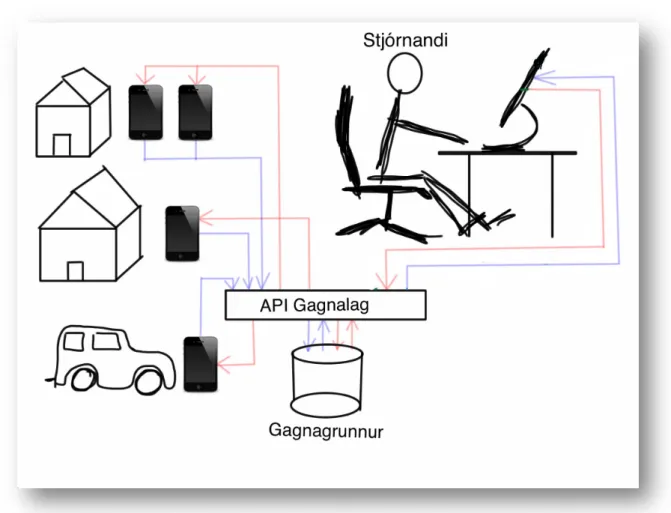
The administrator creates a project in the software, either using a tablet or a computer. The user can then clock in on each task of the project using their mobile device. The progress of each task in the project updates in real time. All information flow goes through the internet, either through local area wireless technology (WiFi) or 3G/4G.
For whom?
Verkvaki is for everyone that manages many projects and/or people and wants to make their project more transparent, increase quality control, and save time. The software could be of huge benefit to many different companies such as real-estate, insurance companies, contractor companies, municipalities, and other public entities.
Why?
In recent years Internet speed has been developing dramatically. Nowadays technology has made it possible for information to flow in and out of our smart devices in real time. For example, 4G will soon be standard equipment in every smartphone.
Has this been done before?
Using your phone to clock-in to work has been used for quite some time, but in the past this was done by phone call (which cannot transfer much data, unlike software online). On the international market there are similar solutions, but they can be expensive.
Supporting Parties
During requirement analysis we used the assistance of two Icelandic companies: VÍS, which is an insurance company, and Öryggismiðstöðin, which is a security company. It was very helpful to use these companies to visualize how the software would be built up and also to realize the need it will solve.
6.3
The Company Leda Ltd.
Leifur Björnsson and Daníel Auðunsson founded the company Leda around a graduation project in the University of Reykjavík. The idea originated when an insurance company approached Leifur with the idea. The company was interested in developing software that could keep track of all their projects and time schedules. After thinking about the idea and getting positive feedback, the colleagues decided to found the company Leda.
6.3.1 Goals and vision
Fast development of smartphones and the data that they can transfer opens up new ways to facilitate time registration and project overview. Companies that have many employees traveling around and working on many different projects need to keep track of their projects and time registrations. Smartphones and tablets are ideal tools to collect all this information in real time, save overall management, and return a more clear and professional outcome that will benefit both the buyer and the contractor.
Since smartphones and tablets are still fairly new on the market there are many ideas still developing. In Iceland there is no software like Verkvaki so it is important to enter the market as quickly as possible. The Software will increase the competitiveness of Icelandic companies, while also giving Leda the experience to develop the software faster.
Looking to the future the goal for Leda is to fully develop the product in Iceland and take it from there to market it elsewhere. Scandinavia will be the first market since it is the closest to us in culture.
6.4
The Software Verkvaki
Verkvaki is software that connects the administrator and the user. The administrator creates a project in the system and the user works on the project. The user clocks in and out of each task in the project through a mobile interface, and the project will update in real time.
6.4.1 Important features of Verkvaki Important features for the administrator
• See where each employee or contractor is placed at all times • Progress of tasks is updated in real time
• Hours spent on the project are updated in real time
• The work report gets done alongside the project so no time is spent on it afterwards
• Transparency in the workflow
• The software can support quality control with ample documentation • Can solve arguments since more data is registered
• Can return useful statistics to increase efficiency and the use of human resources
Important features for the user
• The workflow is registered in real time
• The user can plan his work better since now he can see when preceding work gets done
• The user can send in pictures, notes and voice messages to support the final report
• Better overview of the project
• Better time management that will give better service for the buyer
6.4.2 The users
Verkvaki is software made for project administrators and contractors to make time registration easier, and facilitate easy access to each project’s overview.
The system is useful to everyone who is managing real-estate, real-estate organizations, insurance companies, contractor companies, municipalities, public counterparts, etc. Verkvaki increases transparency in projects, helps with quality control, collects hours for invoice making, and collects data for job reports, in addition to being very convenient when solving arguments.
Here below the user interface is explained: first the user interface for the administrator, and then the user interface for the user.
6.4.2.1 The Administrator
The administrator will have to make the project, which then he will assign to a different user. Here below we go through a simple process of making a project and a task list.
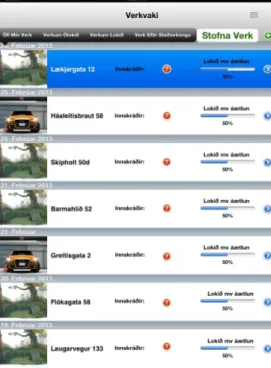
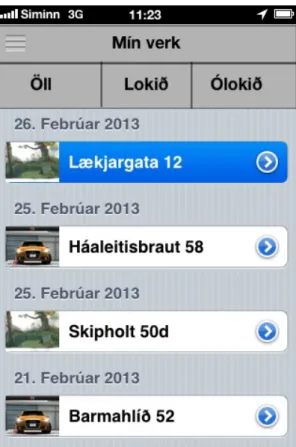
The first screen shows a list of all the projects that the administrator is supervising. This is an example of how it would look in a tablet, but the admin could be using a smartphone or a computer. In this situation we will let him use the command “Stofna Verk” but that means that he will make a new project in the database.
When the admin has made the project he fills in all the information for the person who will work on it, such as employee, address, pictures, drawings, list of tasks, contacts and timeframe.
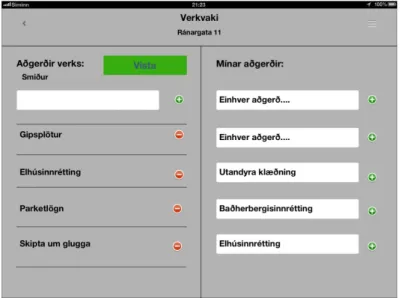
When all the information on the project is finished the admin can create a task list for the project. The admin can either insert text or drag pre-made tasks into the list. When the task list is ready the admin saves the project.
Figure 3: Projects information screen
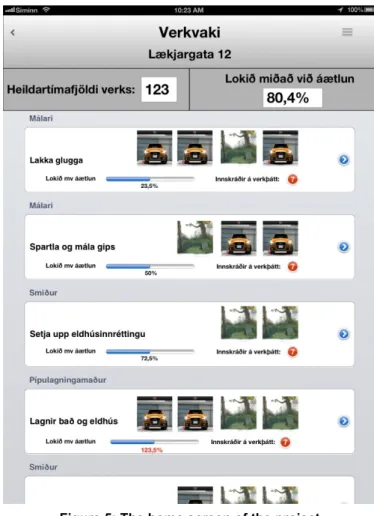
Then he can go back to the front page of the project, where he can follow up on all the information in the project: man-hours spent, whether the project is following the time schedule, the schedule of each individual task, which worker is registered into each task, and pictures of each task.
6.4.2.2 The User
The user works on the projects and tasks that have been assigned to him. Below we can see how his user interface will look.
The first screen of the user will be an overview of all the different projects that are assigned to him, and he has agreed to take. The user can access each project if he needs to check out some information or work on the projects.
When the user chooses a project from the home screen he will see a list of tasks and by each task he will see its progress. If the task is over the estimated time limit, it starts being marked red. Tasks are often connected to other users, so the task screen will also reflect when tasks are dependent on others before a user can start his work. On this screen the user will pick a task that he is going to work on.
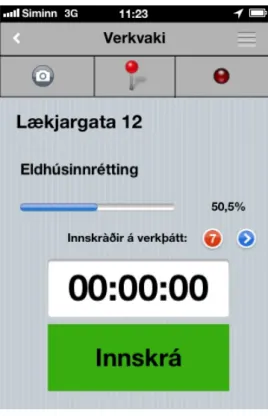
Figure 6: The mobile home screen of user
In each task the user sees a site with a counter. The user can then clock in to the task, at which point Verkvaki will start counting the time and collecting the data concerning the task. His status will then up-date in real time and if an administrator is following up on him as other users, they can see which task he is working on and how many hours he is spending on it.
6.4.3 Description
Figure 9: Administrator supervising users around town
While the user is working he uses his smartphone to collect the data. He collects everything that he values as suitable for the final report, voice messages with comments, pictures, etc. When he finishes the task, or finishes the workday, he signs out of the task with the phone and the software will update the status of the whole project. Now all the data should be saved in the database and be accessible to all users and administrators connected to the project. With this the administrator can overview the whole project, if the time schedule is on track, and whether there are any unforeseen events that have come up.
6.4.4 The need
During requirement analysis for Verkvaki with our supporting parties, we realized that companies in Iceland use very primitive methods for collecting
data. Usual methods are writing everything down on paper and then either storing the paper or entering it in the computer afterwards. This system is expensive and time consuming. (See better chapter 6.5.4.1.7 Supporting parties.) In chapter 6.5.1.Competition analysis, there are listed out all the solutions that are available on the domestic market that companies can buy. There is not much software that the companies can use so there is still an important need that Verkvaki will solve. It is very important that software like Verkvaki has a simple user interface and clear native-language instructions so it will be easier to get a market share in the country. With the arrival of the 4G system in Iceland, and also the increase in smartphone usage in recent years, there are no technical barriers that stand in the way.
6.4.4.1 Customer’s feasibility assessment
Leda did a feasibility assessment for a potential customer to test the need for the software and to realize how much companies can gain from the solution. The cooperative company has around 3000 tasks a year. The contact person with the company said that by using software like Verkvaki their inspection person would not have to come into the office since all the tasks were accessible from the software and the customer could get instant solutions after each visit.
The inspectors that travel around town can finish around 5 projects a day since they have to come into the office in the morning, plan the route and then do the paperwork at the end of the day. After doing a few analyses there was decided that the software could increase the efficiency from 5 to 7 tasks a day. The contact person also assumed that software like this could cut down on communication since the company could assign contractors into the system, where they could access all the information about the project. To give us a value it was assumed that the software could save 5 minutes on each task.
To calculate the Net Present Value of the solution the cost had to be assumed for the company. The cost assumed was 1 m ISK for setup cost and 100k ISK as a subscription fee.
Table 1: Monthly savings from software efficiency
Monthly savings
2 task increase a day 449.309
5 min less com/task 93.606
Table 2: Net present values with cost and savings included
1 year 3 years
NPV 4.098.274 13.140.832
If the 3 year NPV is divided between each month the average amount is 365k ISK savings a month after paying subscription fee and setup cost. What these numbers expose is that there is a need for this kind of software and it can benefit companies highly.
6.4.5 Technical knowledge of user
Since the user interface will be simple, there will be no need for the user to have any technical skills to use Verkvaki. The interface should be as simple as can be and be in the user’s native language. There will be almost no areas that require written text, and mobility will be as standardized as possible. The user interface should then be usable for everyone who is able to use a smartphone. The administrator, on the other hand, has to have minimum computer knowledge since his part will be more complex as there are more available features, but it will be as standardized and as simple as possible.
6.4.6 Quality and upgrades
Leda will constantly work on new upgrades to make the software more user friendly and more developed. The target is to have many updates the first two years after the product goes on market. During those developments, Leda believes it is important to listen to the needs of their customers to optimize the efficiency of the work that is put into the development. The newest version of the software will always be fully tested before it is released.
6.4.7 Service and maintenance
When companies buy Verkvaki, Leda will install the software on the administrator’s computer and teach him how to use the software. Many companies will choose to host their own data if their security level is high, but Leda can also help companies to host the data elsewhere. Companies will then pay for the installation of the software, plus related tasks. The price then collected will be a monthly payment dependent on how many users each company has. If there are any non-software problems concerning Verkvaki, Leda will charge for an hourly price for a technician.
6.5
Market and demand curve
In the beginning the market area will be bound to Iceland in order to build up experience and develop the software. In Iceland Leda can try out different methods of marketing, whether to large companies, small ones, or even single workers. Leda concludes that it is important to have a finished and thoroughly-tested product before moving it to a bigger scale where there is not the same presence with those markets as with the Icelandic market. Leda can build up a starting cash flow in the domestic market, which makes it possible for the company to go abroad, building up more cash flow and market share.
6.5.1 Competition Analysis
There are number of solutions available in the world with different emphases. Below I will try to clarify the market, both domestic and foreign, to see how reasonable it is for Leda to proceed with the development and the marketing of Verkvaki.
6.5.1.1 Domestic market
Looking at the Icelandic market, there is an increasing development in software management tools. There is no software in Iceland that does exactly what Verkvaki does, but the clock-into work functionality has been around for a long time, though in many cases it is quite primitive. The competitors in Iceland are listed in the table below.
Table 3: Domestic Competitors
System
Seller
Price
Tímon Trackwell
Given price was for 10 people Start cost was 6.757 p/user Monthly subscrp. 1.003 kr.p/ user Bakvörður Advania Not available
Tempo TM Software
Few types of packages Monthly subscription
$10 for 10 users $150 for 100 users $500 for 2000 users
Tímon
With the software Tímon you can look over the attendance of employees, see the absences and holidays, and sum up the cost of the salary. It is easy to transfer the salary data into the accounting system and each project into the project account. Some of the qualities that Tímon names on the webpage are more accurate time registrations and easier follow-up on each project margin. You can sign into each project with a smartphone or a tablet.
The benefit of Verkvaki over Tímon is that Verkvaki has better micromanagement options. With Verkvaki, information can go back and forth, and the projects can change as they go along in real time. The job report is created alongside the project so no time is wasted on job reports afterwards. [26]
Bakvörður
In Bakvörður, employees clock in and out of their project at their workplace, through a mobile device, and managers/foremen can see who are present through a browser. Each foreman can access the time registration for his employees, and by the end of each salary period the foreman can view their time report. Bakvörður connects to the work registration system, so all the data can be moved to the company’s system and from there matched with the accounting. Managers and other administrators can use the reports from Bakvörður to value the status of each project after each day, value the efficiency of each employee or each project, and follow up on wasted hours. Advania is a strong company with good connections, big capital, and a lot of experience. Advania could definitely develop software like Verkvaki fast if they would show it any interest. Bakvörður is similar to Tímon so again the advantages of Verkvaki are the micro-management process plus the fact that you can make the job report alongside the project. [27]
Tempo
Tempo offers an overall solution when it comes to project accounting, project management, resource management, and business analysis alongside other things. Tempo was built as an add-on to the solution from JIRA, which is task
![Figure 1: "The valley of death". Cumulative cash flow of a start up. [6]](https://thumb-us.123doks.com/thumbv2/123dok_us/10251727.2930507/15.892.140.761.115.488/figure-valley-death-cumulative-cash-flow-start.webp)

![Figure 10: Influences and influencing factors in a company’s environment [29]](https://thumb-us.123doks.com/thumbv2/123dok_us/10251727.2930507/50.892.168.730.468.1028/figure-influences-influencing-factors-company-s-environment.webp)