GE-International Journal of Management Research
Vol. 4, Issue 5, May 2016 IF- 4.88 ISSN: (2321-1709)© Associated Asia Research Foundation (AARF)
Website: www.aarf.asia Email : [email protected] , [email protected]
A STUDY ON CONSUMER PREFERENCE OF GREEN RESTAURANTS
IN PUNE
* Prof. Ms. Sampada Paranjpe,
Asst. Professor, Maharashtra State Institute of Hotel Management Pune.
** Dr. Ms. Vidya Vilas Kadam,
Asst. Professor, Maharashtra State Institute of Hotel Management Pune.
ABSTRACT
Following Green practices which used to be a fashion statement earlier is now become the need
of the hour. It not only has a positive effect on the expense statements but also helps to generate
a certain goodwill about the product or service in the market. Customers have become more
conscious of such practice and would readily be a part of this movement and contribute in their
small ways. The main aim of the research is to identify the awareness and the attitude of
customers towards restaurants following the green practices and their willingness to contribute
to be a part of this practice. During the course of this study, it was revealed that the customers
are very conscious of the green ways and are sensitive towards the environment. There is a gap
between the restaurants policies and the customer’s perception of these green practices.
Communication between the restaurant management and the customers about these practices
will help contribute towards achieving the green objectives.
Key Words: Green Practices, customer preference, stand-alone, Green Objectives
Introduction:-
observed and followed at all times. There is always a Green option that would justify the process
or product or activity undertaken. Probably it started off as a fashion statement. But now it has
become the need of the day. We need to realize that if we are cautious today our future
generations will be able to enjoy at least a part of the nature that we see today. Every enterprise
has a social responsibility to fulfill. These range from reusing materials to re-cycling to
altogether reducing the use of non-green products or substituting them for greener or more
eco-friendly options. This has inspired many a researchers to create or discover new and green ideas.
The food industry is not far behind in such activities. It has successfully identified certain
process by which it has been able to reduce the consumption of non-Eco-friendly materials, reuse
food and other items where ever possible and recycle all that is possible. These practices have
also resulted in the rise in efficiency levels of energy consumption to the reduction of food and
water wastage to creating a more effective garbage disposal system.
It is not only the industries and corporations but individuals in their day to day life have adopted
practices that would be beneficial to the society. These range from reduced water consumption to
making compost pits from household garbage. Not all customers however are very sensitive
towards such practices. Some are extremely sensitive while others feel that such practices are a
sheer waste of time and resources and a gimmick used by marketers to fleece them. Given an
opportunity and the understanding of the eco-friendly activities followed by restaurants, they
would be more than willing to follow them and support them. Thus customers need to be taken
into confidence and made to realize their vital contribution towards the achievement of the Green
goals of the restaurants. The customer of today is extremely educated and if made aware of such
practices is willing to extend his support to such activities. This would help the restaurants in
turn to make their practices more viable and effective over the long run. This collaboration
makes the efforts more sustainable and realistic.
Objectives –
To identify customer preferences for green practices followed in restaurants on the basis of
The five characteristics identified by Ginsberg and Bloom was the basis for designing the
questionnaire for customers. The characteristics are as follows:
True Blue Green- These green consumers have strong environmental values and
intensive desire to participate in activities and organizations supporting the environment.
This group, who forms about 9% of green consumers, intensively refuses to buy the
products from manufacturers unresponsive to the environment.
Green Back Green- This sector of green consumers, who makes up about 6% of the
total, are not interested as true blue green to join organizations supporting environment
but they show their interest to buy green products.
Sprouts- Sprouts are only concerned about the environment, and in practice they are less
willing to pay extra-price for green products. These types of green consumers, who make
up 31% of the total, can be encouraged by appropriate green marketing strategies to buy
green products.
Grousers- Environmental knowledge level in grouser consumers is very low, so this
group, who constitutes 19% of total green consumers, believes that green products have
low efficiency and quality and the manufacturers' claims about these products is only to
increase sales.
Basic Browns- These groups of consumers are more involved with their daily problems
and ignore the environmental problems. Such classification can give the hotel employers
and management to give services as per their needs and try to gain as much as possible by
customized services to ensure environment protection as well as better profit.
Research methodology
The research has been conducted with a qualitative approach .Present paper is predominantly
based on primary data. Questionnaire was used as a research tool for collecting data from
customers of varying demographics in order to extract quality data. 48 nos. of customers
responded and their data was analyzed. A checklist was used to identify the Green Practices
followed by Sample restaurants because most of these practices are followed behind the curtains
Scope of research
The focus of this study is to categorize the Customers on the basis of their preferences for green
practices. It will thus bring to light the customer perspective of Green Practices followed by the
sample restaurants.
Literature Review:-
In his study, “Responsiveness of fast-food chain managers along Far Eastern University
(FEU-Manila) towards the implementation of green practices in restaurants” Jose S. Hilario
examined the different factors that may contribute to the responsiveness of fast- food chain
restaurant managers towards implementation of green practices. He investigates the hotels on the
four parameters: Proper wastes segregation, Demand and purchase of environmentally-friendly
products, water shortage Reduction and Conservation of energy. It was found that employees are
not fully aware and educated about the current condition in use of green practices in their
respective establishments. Moreover, green products were projected as additional cost due to
which customers would not demand or pressure them to be an environmentally-friendly company. Inadequate knowledge could be curbed by increasing employees‟ participation, they
should be provided with the necessary knowledge, and steps that the hospitality management
industry need to take to implement green practices and where possible, take the initiative to
develop and sustain it.
The study gives insight into the approach of the employees towards environment practices as
well as the actual customer participation and their perspective towards green practices.
Similarly, Oksana, Gustin, Lee Wendy and Reiboldt try to find out the consumers‟
attitudes toward sustainable restaurant practices and their intention to dine at a green restaurant
in the study, “College Students’ Attitudes, Perceived Consumer Effectiveness and Intention to Dine at a Green Restaurant.” The purpose was to investigate the relationship of attitudes
and perceived consumer effectiveness (PCE) to consumer‟s intention to dine at a green
Responsible Environmental Behavior version in which attitudes and PCE predict students‟
intention to dine at a green restaurant.
The study found that the selected consumers- College students agree that restaurants should
utilize most of the green practices suggested in the study. The overwhelming majority of students
are concerned about environmental issues and this directly influences their restaurant choice. The
results of this research can be used as an aid for the restaurants in deciding which sustainable
practices to implement in order to communicate their “green message” to public. Additional
findings also indicated that a majority of the students do not know if they ate at a certified green
restaurant or a restaurant that utilizes some green practices. Not only that, the study suggests few
measures like Green practices should be a part of a hospitality management curriculum.
In order for students and consumers in general to know about green restaurants, Researchers
suggest few ways like posting the information on the menu boards, distributing brochures,
posting the green updates on the web-site, and integrating information into advertisements are
some of the possible ways to increase awareness and bring sustainability in foodservice. This study will help in understanding the consumers‟ criteria of choosing a restaurant and how the “green factor” plays an important part in taking the decision.
Further Franziska Schubert, J Kandampully, D Solnet and A Kralj too investigate consumer
attitudes towards green restaurant and whether they are aware of such restaurants. In the study, “Exploring consumer perceptions of green restaurants in the US,” they collected data from
455 restaurant customers across five casual dining restaurants and found that customers care for
the environment and show the willingness to pay more for the restaurants that engage in „green‟ practices. They also note that there is an unfilled market niche for „green ‟ restaurants. The study
sheds light on the steps consumers take to ensure their dining does not harm but instead help
protecting the environment. The findings illustrate that customers care about restaurants
protecting the environment and would be willing to pay more to offset any additional costs
associated with „green‟ practices.
degree to which employees embrace the green practice initiatives. In the study, “An Investigation Into Hotel Employees’ Perception Of Green Practices” Sun-Hwa Kim found
that employees perceived green practices in a positive light and attached a high level of
importance to them just like a customer would think. Moreover, employees recognize the quality of their employers‟ performance in green related activities and agree that industry wide
improvement is needed. Yet, Kim recommends training to improve green practices should be
versatile and job-specific with strategies developed to motivate the employees to engage in green
practices. In addition, hotels need to spend more time and effort in communicating their green
practice to employees. This would help hotel organizations to look forward to positive result of
green practices. Kim feels the root of commitment should be cultivated by the employees to
realize success.
Additionally, in the study, “Green Generals, Jade Warriors: The Many Shades Of Green In
Hotel Management,” Ioannis Pantelidis, W Geerts and S Acheampong try to identify
environmental sustainability perceptions of senior management as against that of front line
employees. Though there is evidence of some good environmental practice in the sector, there is
still a clear discrepancy in the understanding of the implementation of such policies between
senior management and lower level employees. Such variation may confuse the consumers as well as cause the confusion in functioning of the restaurant‟s green practices. Study examines
three sides to the same environmental message. One is what the customers are told, the second
what the managers believe and the third is what the employees may understand. Our findings
highlight a clear discrepancy between what the managers believe the employees should know
and understand and what the employees actually do know.
For proper uniform implementation of the green practices and to remove the discrepancy, the
researchers suggest that Hoteliers need to focus on constantly improving their sustainable
practices, as well as, establishing training programmes that communicate their company values
and current practices to all.
From exploring the attitudes of consumers and employers, taking a step further is to know how
Khaldoon Nusair and Hsin-Hui analyze the determinants of green hotel image on
word-of-mouth, and an impact of word-of-mouth on willingness to pay, and intentions to revisit in the
context of Generation Y. They study the generation Y customers of Unites States. Through
structural equation model (SEM), they examine the impact. The travelers are expecting hotels to
pay greater attention to the environmental concerns and to operate in an eco-friendly Way, and
once the travelers notice this is being done, they praise the hotel, trust it and through word-of
mouth, publicize the hotel. Findings suggest that image has effect on word-of-mouth and in turn,
word-of-mouth influences willingness to pay and revisit intentions.
In addition, the study, “Profile of Green Consumers in Romania in Light of
Sustainability Challenges and Opportunities brings forward the actual steps taken by the
consumers considering their concern for the environment” T Roman, Manolică A and I
Mitrica explore the green consumption of Romanian consumers, to know whether the concern
for environmental problems is actually materialized and seen in their choice of restaurants.
Although there are attempts to save energy, to use common transport more frequently, to reduce
the degree to which the environment is polluted due to personal actions and even though there is
the intention to protect the environment, when it comes to the behavior of purchasing green
products, consumers think of the expenses and may switch to less expensive facilities that may
not be that environment-friendly. The problem arises at the level of the population‟s income and
information level, because people may purchase green products, but they are not aware of this
aspect. Moreover, there are differences between individual opinions on green consumption and
the actual behavior adopted in trying to ameliorate this issue. To bridge the gap, the researchers
suggest Education is a very powerful means to develop a green orientation, but they are aware
that it will take time to change habits.
Like Romania, attitude and behavior of customers in Malaysia are also studied.
Booi-Chen Tan & Peik-Foong Yeap examine how various attitudes and pro-environmental behaviors
influence consumers‟ intention to patronize green restaurants in the study, “What Drives Green Restaurant Patronage Intention?” They find that there is a high need for both academic and
marketing researchers to focus their future studies more on the food service sector. This group of
theoretical framework to examine the influence of environmental factors from three aspects of
attitudes variables (i.e., attitude towards the environment, attitude towards green behaviours, and
attitude towards restaurant green practices) as well as various aspects of pro-environmental
behaviours/green behaviours on the behavioural intention to patronize green restaurants. The
factors Society well-being, Restaurant patron, Business players and Policy makers influence the
choice of the customers. Moreover, excellent food and service quality, pleasant ambience
conditions plus the environmental friendly practices at the restaurant determine the intention to
patronize green restaurants. The joint efforts and cooperation from all parties are needed to
generate more sustainable and responsible consumption behavior among the society and produce
a healthier environment. They further suggest environmental programmes should be organised to
encourage the adoption of environmentally friendly management approaches by restaurant
operators.
Continuing the same line of research, N Shabani, M Ashoori ,M Taghinejad, H Beyrami
and M Noor Fekri study eco-friendly and concerned customers‟ traits so that this knowledge help
marketers in choosing target green consumers and appropriate marketing mix. Their study, “The study of green consumers’ characteristics and available green sectors in the market”
suggest single marketing program cannot be used for necessary for effective marketing of green
products. Rather they should be divided into sections with similar characteristics. Then
appropriate green marketing should be applied proportional to unique needs and characteristics
of each part.
Thus, the studies give an account of the different perceptions and current state of green practices
Data interpretation:-
1. Do you think restaurants follow Eco-Friendly practices?
Fig 1- Customers perception of Green Practices followed in Restaurants
(Source- Field work)
Out of 48 respondents, only 15% agreed that the restaurants follow Green Practices which is a very dismal figure where as 85% strongly feel that the restaurants do not follow Green Practices.
[image:9.612.70.434.434.654.2]2. What do you think is your preference towards Eco-Friendly practices?
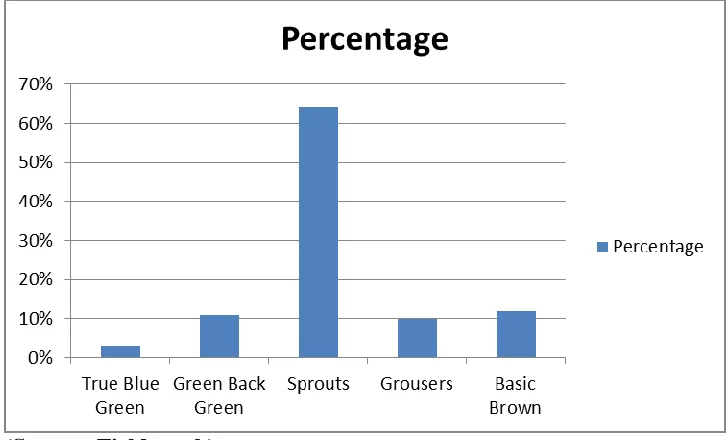
Fig 2- Categorization of customers as per Ginsberg and Bloom
According to the above Bar diagram reveals that True Blue Green Customers are 3%, Green
Back Green are 11% Grousers are 10% and Basic Browns are 12% of the total where- as Sprouts
are 64% of the total sample size. According to the theory of Ginsberg and Bloom, True Blue
Green Customers are 9%, Green Back Green are 6% Grousers are 19% and Basic Browns are
35% of the total where- as Sprouts are 31% of the total sample size. This establishes the fact that
the customers in the city are aware of Green Practices in general. However they still remain in
the dark with the specific practices followed by restaurants as they have less know how of
initiatives taken by restaurant owners and the reasons for choosing those alternative practices
[image:10.612.69.543.291.558.2]3. Which out of the following practices are eco-friendly, according to you?
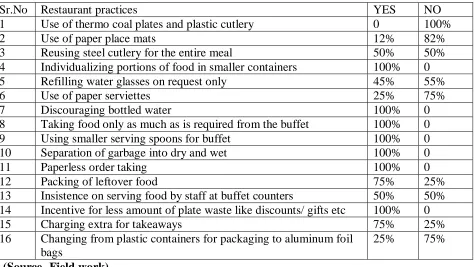
Fig 3 – Understanding of Green Practices followed in restaurants
(Source- Field work)
Looking at the above data, the researcher can summarize that only 50% of the mentioned
practices are known to customers as Green Practices. However with regards to the remaining
practices, the real essence of the practices has not reached the customers as yet. They have
misunderstood certain practices like refilling water glasses on request as „non-attentive service staff‟ or using aluminum foil bags instead of plastic containers as a source of saving cost.
Sr.No Restaurant practices YES NO
1 Use of thermo coal plates and plastic cutlery 0 100%
2 Use of paper place mats 12% 82%
3 Reusing steel cutlery for the entire meal 50% 50% 4 Individualizing portions of food in smaller containers 100% 0 5 Refilling water glasses on request only 45% 55%
6 Use of paper serviettes 25% 75%
7 Discouraging bottled water 100% 0
8 Taking food only as much as is required from the buffet 100% 0 9 Using smaller serving spoons for buffet 100% 0 10 Separation of garbage into dry and wet 100% 0
11 Paperless order taking 100% 0
12 Packing of leftover food 75% 25%
13 Insistence on serving food by staff at buffet counters 50% 50% 14 Incentive for less amount of plate waste like discounts/ gifts etc 100% 0
15 Charging extra for takeaways 75% 25%
16 Changing from plastic containers for packaging to aluminum foil bags
Suggestion / Recommendation:-
1. The green practices of restaurants should be communicated to the guests through media
and made obvious in the restaurant scape.
2. Customers following green practices should be encouraged and rewarded
3. The specific practices chosen by the restaurant to reduce wastage should be informed to
the customers then and there.
4. At restaurants serving unlimited food, smaller initial portions could be offered and
customers advised to take second servings as per requirement.
5. While following Green Practices the quality, hygiene and value for money should not be
compromised on.
Conclusion:-
With reference to the five categories of Green Consumers, the customers of Pune are
predominantly falling in the Sprout Category. These are the customers who are curious about the
Green Practices but do not have their complete knowledge. There seems to be hence a gap
between the fact that the restaurants are following the Green Practices but the customers are
unaware of the same. This gap could be bridged by educating the customers about the Green
Practices followed by restaurants and their impact on the environment as well as the operations
in the unit.
References
Hilario, J. (2014) Responsiveness of fast-food chain managers along Far Eastern University (FEU-Manila) towards the implementation of green practices in restaurants. International Research Journal of Public and Environmental Health Vol.1 (9); 183-191.
Iurkevych, O., Gustin, L., Blecher L Reiboldt W (2014) College Students‟ Attitudes, Perceived Consumer Effectiveness and Intention to Dine at a Green Restaurant. International journal of Science Commerce and Humanities Vol. 2 (1);
Kubickova, M., Parsa H., Khaldoon N., Hsin-Hui, H. (2015) Does Green Hotel Image Influence Guests‟Behavior: The Case of Generation Y. Journal of Services Research, Vol 14, (2); 1
Pantelidis, I., Geerts, W., and S Acheampong (2010) Green Generals, Jade Warriors: The Many Shades Of Green In Hotel Management. London Journal of Tourism, Sport and Creative Industries Vol 3 (4); 8-18
Roman, T., Manolică, A. and I Mitrica (2015) Profile of Green Consumers in Romania in Light of Sustainability Challenges and Opportunities Sustainability (7) 6394-6411; http://www.mdpi.com/journal/sustainability
Shabani, N., Ashoori, M., Taghinejad, M., Beyrami, H. and Fekri, N. (2013) The study of green consumers‟ characteristics and available green sectors in the market. International Research Journal of Applied and Basic Sciences Vol, 4 (7): 1880-1883 Science Explorer Publications http:// www.irjabs.com
Tan, Booi-C., & Yeap F. (2012) What Drives Green Restaurant Patronage Intention?