A Comparative Study of ANFIS Membership Function to
Predict ERP User Satisfaction using ANN and MLRA
Nikhil Gupta Gajanand Sharma Ravi Shanker Sharma
Research Scholar Assistant Professor Assistant Professor SGVU, Jaipur SGVU, Jaipur SGVU, Jaipur
ABSTRACT
An Enterprise resource Planning (ERP) system is packaged business software that integrates organizational process and functions into a unified system. Many researchers and practitioners agree that Enterprise Resource Planning (ERP) systems are the most important development in terms of corporate use of information technology (IT) in the 1990s. In this author predict a Comparative study of Anfis membership function selection and prediction of ERP user satisfaction. In which author use eight Anfis membership function that predict different-different output for ERP user satisfaction and predict different diagrams and choose best prediction of Anfis membership function means which function predict their value closer to ERP user satisfaction. In membership function author predict output type constant and linear value and use two sets which predict all eight functions. In this research First author want proposed Anfis membership function. In which author load data sets for training and testing. Both Training and testing data predict different output of all eight membership function.
Keywords
Implementation, ANFIS, ANFIS membership functions, output type – constant, linear
Index Term
Methodology, ANFIS membership function implementation, user satisfaction, prediction
1. INTRODUCTION
The unprecedented growth of information and communication technologies (ICT) driven by microelectronics, computer hardware and software systems has influenced all facets of computing applications across organizations. Simultaneously the business environment is becoming increasingly complex with functional units requiring more and more inter-functional data flow for decision making, timely and efficient procurement of product parts, management of inventory, accounting, human resources and distribution of goods and services [3] [11]. Starting in the late 1980s and the beginning of the 1990s new software systems known in the industry as enterprise resource planning (ERP) systems have surfaced in the market targeting mainly large complex business organizations. These complex, expensive, powerful, proprietary systems are off the-shelf solutions requiring consultants to tailor and implement them based on the company’s requirements [7] [11].
2. METHODOLOGY AND RESEARCH
In this research author predicted a comparative study of ANFIS membership function to predict ERP user satisfaction using MLRA, ANN, and ANFIS. In this paper author take two data sets which predict ERP user satisfaction. In this author
predicted a comparative study of ANFIS membership function which predicted both type constant and linear output for ERP user satisfaction.
2.1 MLRA (Multilevel Regression Analysis)
MLRA means Multilevel Regression Analysis. It is a mathematical statically tool. That toolbox is basically used in excel. This can be used for prediction value for ERP user satisfaction [1]. Which facilitate MLRA computation? In this MLRA we take three factors that are: - process, strategic and vendor.
2.2 Artificial Neural Network (ANN)
Neural network an extremely simplified model of brain. That can be used essentially function approximate means that can be transform input to output in his best quality [13]. That composed many neurons that co-operate to perform desired function. Neural networks are composed of simple elements operating in parallel. These elements are inspired by biological nervous systems. In the network function is determined largely by the connections between elements and can train a neural network to perform a particular function by adjusting the values of the connections between elements. Neural networks are adjusted or trained so that a particular input leads to a specific target output.
Fig1. Diagram of Artificial neural network [13]
2.3 ANFIS (Adaptive Neuro- Fuzzy
Interference System)
2.3.1 ANFIS Membership Functions
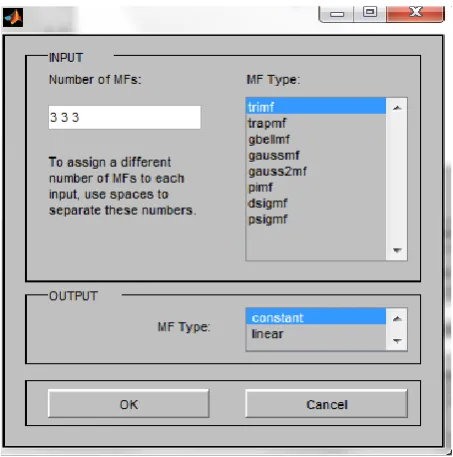
1. Anfis_trimf2. Anfis_trapmf 3. Anfis_gbellmf 4. Anfis_gaussmf 5. Anfis_gauss2mf 6. Anfis_pimf 7. Anfis_dsigmf 8. Anfis_psigmf
These functions are input type and all produced output type constant as well as linear
Fig2. ANFIS membership function diagram when output type is constant
2.3.2 Membership Function Prediction when
Output type is Constant
1. Open MATLAB window then write anfisedit command then open Anfis Editor Window.
2. In next step load data for set1 and then training data are show to Anfis Editor.
3. Now generate FIS to all Anfis Membership function. 4. Now after train data test data and then save data to Export file.
5. At last after training and testing data save file and predict output value of Anfis membership Function.
In this predict Anfis membership function where output type is constant. Now predicted output is=
OUTPUT = EVALFIS ([-0.28925 -1.53267 -1.49165]’, Anfis_gaussmf)
Then predict output 1.8261 (gaussmf)
This predicts only gaussmf; now predict all membership function like this and produced output in table -
Table 1 for all membership function for data set 1 when output is constant
Membership Function
Original value
Evaluate value
Diff-= Original- evaluate
Anfis_Trimf 4 3.5 0.5 Anfis_Trapmf 4 3.5 0.5
Anfis_gbellmf 4 1.434 2.566
Anfis_gaussmf 4 1.8261 2.1739
Anfis_gauss2mf 4 0.0754 3.9246
Anfis_Pimf 4 3.5 0.5
Anfis_dsigmf 4 0.075 3.925
Anfis_Psigmf 4 0.075 3.925
when evaluate value of all membership functions then Anfis_trimf , Anfis_trapmf and Anfis_pimf predict best result for ERP users satisfaction. Because these membership functions are predict their value closer to original value.
In data set 2 same steps are use as shown in above and all eight membership function is used to predict value. In this author use trimf membership function that predict output value and output constant (Trimf = 1.7467)
OUTPUT = EVALFIS ([2 2.33 2.66]’, A_trimf)
This predicts only trimf; now predict all membership function like this and produced output in
table-Table 2 for all membership function for data set 2 when output is constant
Membership Function
Original value
Evaluate value
Diff-= Original- evaluate
A_Trimf 5 1.7467 3.2533
A_Trapmf 5 -1.2464 6.2464
A_Gbellmf 5 0.8805 4.1195
A_Gaussmf 5 1.4622 3.53784
A_Gauss2mf 5 -0.8994 5.8994
A_Pimf 5 -17.0397 22.0397
A_Dsigmf 5 -2.4112 7.4112
A_Psigmf 5 -2.4112 7.4112
when author evaluate value of all membership functions then Anfis_trimf predict best result for ERP users satisfaction. Because this membership function predict their value closer to original value. At last this can say that TRIMF membership function predict best result for ERP user satisfaction.
2.3.3 To predict ANFIS Membership Function
when Output type is Linear
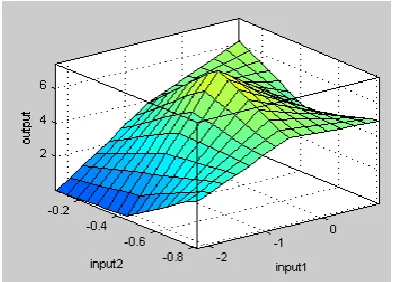
[image:2.595.55.282.239.468.2]Fig3. - ANFIS membership function diagram when output type is linear
In this use all the same steps which are used in above constant output type, in this take output type is linear instead of constant.
[image:3.595.318.545.134.290.2]OUTPUT = EVALFIS ([-0.28925 -1.53267 -1.49165]’, L_Trimf)
Table 3 for all membership function for data set 1 when output is linear
Membership Function
Original value
Evaluate value
Diff-= Original- evaluate
L_Trimf 4 3.5 0.5
L_Trapmf 4 3.5 0.5
L_Gbellmf 4 1.1841 2.8159
L_Gaussmf 4 1.6647 2.3353
L_Gauss2mf 4 0.0628 3.9327
L_Pimf 4 3.5 0.5
L_Dsigmf 4 0.0685 3.9315
L_Psigmf 4 0.0685 3.9315
In data set 2 same steps are use as shown in above and all eight membership function is used to predict value. OUTPUT = EVALFIS ([2 2.33 2.66]’, L1_trimf)
[image:3.595.331.529.604.745.2]This predicts only trimf; now predict all membership function like this and produced output in table
Table 4 for all membership function for data set 2 when output is linear
Membership Function
Original value
Evaluate value
Diff-= Original- evaluate
LI_Trimf 5 2.0068 2.9932
LI_Trapmf 5 0.6457 4.3543
LI_Gbellmf 5 1.3773 3.6227
LI_Gaussmf 5 1.7395 3.2605
LI_Gauss2mf 5 0.6233 4.3767
LI_Pimf 5 0.5453 4.4547
LI_Dsigmf 5 0.42 4.58
LI_Psigmf 5 0.4202 4.5798
To evaluate both sets in linear output of membership function
trimf function is best, because it predict closer value of ERP user satisfaction.
In this project we use two data sets tables which are:-
Predicted Data set 1 for all membership functions
Predicted Data set 2 for all membership functions
3. PREDICTION RESULT AND
SIMULATION AND LIMITATION
3.1 Prediction Output of Eight Membership
Functions when Output type is Constant
TRIMF Function
ANFIS_TRIMFFOR DATA SET 1
A_TRIMF FOR DATA SET 2
OUTPUT= 1.7467/5
These diagrams predicted and simulate result of Anfis membership function. Anfis_trimf predicts result for data set 1 and A_trimf predicts result for data set2. Here show only trimf membership function then remaining all functions predicts simulation results like that shown in above.
3.2 Prediction Output of Eight Membership
Functions when Output type is Linear
TRIMF Function L1_TRIMF FOR DATA SET 1
OUTPUT = 3.5/4 L_TRIMF FOR DATA SET 2
OUTPUT= 2.0068/5
To evaluate both sets in linear output type of membership function trimf function is best, because it predict closer value of ERP user satisfaction.
4. LIMITATION
This proposed work is for prediction of ERP user satisfaction as this relies on various non linearly related input criteria & the most unpredictable human being intersection & aspires, it is impossible to eliminate opposites or untruthful prediction from the some.
5. CONCLUSION
Author wants to do a comparative study of Anfis membership function to predict ERP user satisfaction by using ANN and MLRA. In this author take two data sets both data sets predict theirs value to all of eight Anfis membership functions and ANN and MLRA. In this research author want to propose Anfis membership function. In which load data sets for training and testing. Both Training and testing data predict different output of all eight membership function. In this author uses constant and linear output value of input membership function. At last check which membership function is closer to ERP user satisfaction value. In the both data sets using then TRIMF function are predict best ERP satisfaction value.
6. FUTURE WORK
1. Implementing of prediction of ERP user satisfaction via various AI (Artificial Intelligence) techniques has already been worked out. Fuzzy logic, ANN & combination of both of these i.e. ANFIS & effect of its membership functions has been worked out. Only integration of Adaptive & self learning neural network needs to be done in light of the fact that no other AI tools are presently available.
2. Integration of biological inspired algorithms with such as Ant colony optimization or partial swarm optimization with existing all technique can further enhance prediction ratio.
7. REFERENCES
[1] Comparative study of institute based ERP based on ANFIS, ANN and MLRA ISSN:2321-0869, Volume-2,Issue-5,May 2014
[2] T. Radecki, ”An evaluation of the fuzzy set theory approach to information retrieval,” in R. Trappl, N.V. Findler, and W. Horn, Progress in Cybernetics and System Research, Proceedings of a Symposium Organized by the Austrian Society for Cybernetic Studies, Hemisphere Publ. Co., NY: 2012.
[3] C. Venugopal and S. Rao, “Detecting Project Risks in ERP Projects Measurement Models for Critical Success Factors and Success of ERP Implementations,” Proceedings of International Conference on Advances in Indus- trial Engineering Applications, Chennai, India, 2010.
[4] M. Eschbach and J. Cunnyngham, ”The logic of fuzzy Bayesian influence,” paper presented at the International Fuzzy Systems Association Symposium of Fuzzy information Processing in Artificial Intelligence and Operational Research, Cambridge, England: 2010. [5] Nozdrina, L.: Applying of Fuzzy Logic Modeling for the
Assessment of ERP Projects Efficiency. In: Proc. 5th Int. Sci. Conf. Project Management: Status and Opportunities, pp.1–2, NUS, Nikolaev (2009)
[7] Finney. S., Corbett. M.: ERP Implementation: a Compilation and Analysis of Critical Success Factors. Business Process Management Journal, (2007).
[8] Finney. S., Corbett. M.: ERP Implementation: a Compilation and Analysis of Critical Success Factors. Business Process Management Journal, (2007).
[9] Ifinedo, P. & Nahar, N. (2006). Quality, Impact and Success of ERP Systems: A Study involving Some Firms in the Nordic-Baltic Region. Journal of Information Technology Impact.
[10] Jones, M. C., & Young, R. (2006). ERP usage in practice: An empirical investigation.
[11] Enterprises Resource Planning: Global opportunities and challenges by Liaquat Hossain, Jon David Patrick and M.A. Rashid.
[12] ERP making IT happen, The implementers guide to success with Enterprises Resource Planning. Thomas F. Wallance and Michael H. Kremzar 19-07-1338-17-49-13.pdf
[13] An introduction of neural network by Vincent cheung & kevis cannons department of computer engineering, NeuralNetworks.CheungCannonsNotes.pdf.