comm
en
t
re
v
ie
w
s
re
ports
de
p
o
si
te
d r
e
se
a
rch
refer
e
e
d
re
sear
ch
interacti
o
ns
inf
o
rmation
Systematic analysis of gene expression in human brains before and
after death
Henriette Franz
*
, Claudia Ullmann
†
, Albert Becker
†
, Margaret Ryan
‡
,
Sabine Bahn
‡
, Thomas Arendt
§
, Matthias Simon
¶
, Svante Pääbo
*
and
Philipp Khaitovich
*
Addresses: *Max-Planck-Institute for Evolutionary Anthropology, Deutscher Platz, D-04103 Leipzig, Germany. †Department of
Neuropathology and National Brain Tumor Reference Center, University of Bonn Medical Center, Sigmund-Freud-Strasse, D-53105 Bonn, Germany. ‡Cambridge Centre for Neuropsychiatric Research, Institute of Biotechnology, University of Cambridge, Tennis Court Road, Cambridge CB2 1QT, UK. §Paul Flechsig Institute for Brain Research, University of Leipzig, Jahnallee, D-04109 Leipzig, Germany. ¶Department of Neurosurgery, University of Bonn Medical Center, Sigmund-Freud-Strasse, D-53105 Bonn, Germany.
Correspondence: Philipp Khaitovich. E-mail: [email protected]
© 2005 Franz et al.; licensee BioMed Central Ltd.
This is an open access article distributed under the terms of the Creative Commons Attribution License (http://creativecommons.org/licenses/by/2.0), which permits unrestricted use, distribution, and reproduction in any medium, provided the original work is properly cited.
Profiling post-mortem human brains
<p>Comparison of the gene expression profiles of pre- and post-mortem human brains suggests that post-mortem human brain samples are suitable for investigating general gene-expression patterns.</p>
Abstract
Background: Numerous studies have employed microarray techniques to study changes in gene expression in connection with human disease, aging and evolution. The vast majority of human samples available for research are obtained from deceased individuals. This raises questions about how well gene expression patterns in such samples reflect those of living individuals.
Results: Here, we compare gene expression patterns in two human brain regions in postmortem samples and in material collected during surgical intervention. We find that death induces significant expression changes in more than 10% of all expressed genes. These changes are non-randomly distributed with respect to their function. Moreover, we observe similar expression changes due to death in two distinct brain regions. Consequently, the pattern of gene expression differences between the two brain regions is largely unaffected by death, although the magnitude of differences is reduced by 50% in postmortem samples. Furthermore, death-induced changes do not contribute significantly to gene expression variation among postmortem human brain samples.
Conclusion: We conclude that postmortem human brain samples are suitable for investigating gene expression patterns in humans, but that caution is warranted in interpreting results for individual genes.
Background
Microarray studies examining gene expression profiles of thousands of genes have become an important tool in uncov-ering molecular mechanisms of human diseases, aging and evolution [1-3]. Many such studies are conducted on
post-mortem human tissues, since neither cell culture nor animal models can fully recapitulate relevant human conditions [4,5]. This is particularly the case for studies that examine the human brain. Several factors may alter gene expression pro-files in postmortem human brain samples. Such factors
Published: 30 December 2005
Genome Biology 2005, 6:R112 (doi:10.1186/gb-2005-6-13-r112)
Received: 4 July 2005 Revised: 23 August 2005 Accepted: 6 December 2005 The electronic version of this article is the complete one and can be
include the delay between death and the time of tissue freez-ing, the method of freezfreez-ing, and the duration of storage of the frozen brain material. Prior studies have indicated that these factors have relatively small effects on gene expression [6-8]. In contrast, the duration and nature of the agonal state pre-ceding death appear to have a substantial effect on gene expression by affecting the integrity of messenger RNAs [7-9]. Thus, postmortem brain samples obtained from individu-als who died after a protracted agonal phase are not suitable for gene expression studies. Without any prolonged agonal conditions, however, death itself may alter gene expression patterns in postmortem human brains. Study of expression levels of 14 genes in human brain autopsy and biopsy samples found significant change in one of the genes, indicating that a substantial proportion of all expressed genes could be affected by death [10].
We surveyed gene expression in 10 postmortem human brain samples (autopsy samples) and 12 samples obtained from brain surgery (resection samples) derived from frontal cortex and hippocampus using Affymetrix® HG-U133plus2
microar-rays containing probes for all annotated human genes. All autopsy samples were obtained from individuals that died rapidly with no prolonged agonal state, thus minimizing the influence of agonal factors on gene expression patterns in our study.
Results
Expression differences between autopsy and resection samples
Gene expression profiles were determined in six resection samples from hippocampus and frontal cortex, and in four and six autopsy samples from hippocampus and frontal cor-tex, respectively, using Affymetrix® HG U133plus2 arrays
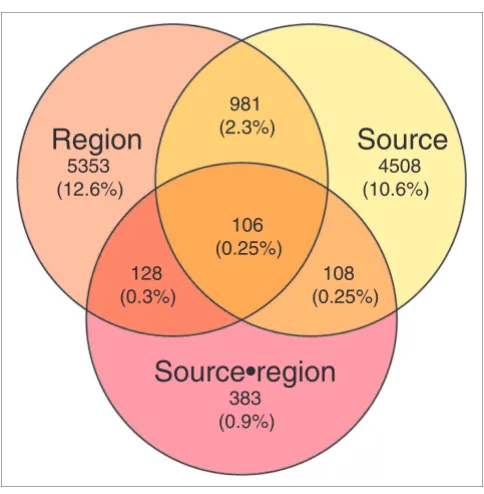
(see Materials and methods). Of the 54,613 probe sets on the microarray, 42,427 (77.69%) gave a detectable hybridization signal in at least one individual (see Materials and methods). Among these probe sets, we found 5,703 with a significant dif-ference in expression (13.4%) using analysis of variance (ANOVA) with a nominal significance cutoff of 0.01 (false dis-covery rate (FDR) = 4.12%, permutation test) and 8,643 using significance analysis of microarrays (SAM) at the 5% FDR cutoff. Out of the 5,703 probe sets identified in ANOVA, 5,515 (96.7%) overlapped with the probe sets identified by SAM. Further, of these 5,703 probe sets, 4,508 differed significantly (p < 0.01) between autopsy and resection samples in both brain regions while 981 probe sets showed a significant differ-ence between autopsy and resection samples as well as between brain regions (Figure 1). For none of these 5,489 probe sets did the differences between autopsy and resection samples depend significantly on the brain region. Finally, for 214 probe sets (0.5% of all detected ones), expression differ-ences between autopsy and resection samples differed signif-icantly (p < 0.01) depending on the brain region examined. This indicates that death-induced expression changes are highly consistent in both brain regions and influence only a small fraction of the total observed expression differences (214 out of 5,703).
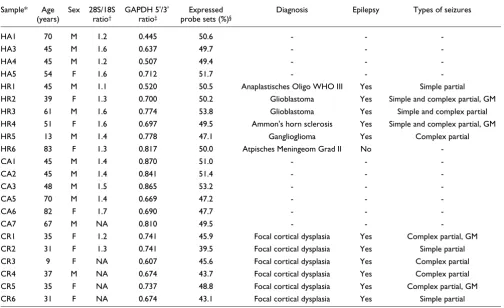
Since all but one surgery patient were diagnosed with epilepsy (Table 1), we first tested whether differences between autopsy and resection samples are significantly affected by the epilep-tic condition. Among the 42,427 expressed probe sets, we found none with a significant effect of epilepsy either in hip-pocampus or in frontal cortex using both linear regression and SAM (FDR = 5.0%). Further, we tested whether known changes in expression caused by epilepsy are over-repre-sented among differences seen between autopsy and resec-tion samples. Using a published set of genes where expression change was observed in at least two epilepsy studies (N = 54) [11], we found no such over-representation (Fisher's exact test, p = 0.45). Finally, we tested whether expression differ-ences we found between autopsy and resection are also seen when only the samples unaffected by epilepsy are considered. To this end, we identified probe sets showing expression dif-ferences between autopsy and resection samples, excluding from the analysis samples from patients not affected by epi-lepsy (ANOVA, p < 0.01). We found a strong and significant correlation when these expression differences were compared to the ones observed in non-affected control samples; three resections composed of two cerebral cortex samples from an unaffected region and one hippocampus sample from a non-epileptic patient gave Pearson's correlation R = 0.948 (N =
[image:2.612.57.299.397.644.2]ANOVA test results Figure 1
ANOVA test results. Numbers indicate number of probe sets with expression significantly influenced by brain region, source of sample material, and their interaction. The interaction term is significant when the expression changes due to death differ significantly in the two brain regions examined (see Material and methods). Numbers in brackets indicate the percentage of significant probe sets compared to the total number included in the analysis. Overlapping regions include probe sets with more than one significant term.
Region
5353 (12.6%)
Source
4508 (10.6%)
Source•region
383 (0.9%)
981 (2.3%)
128 (0.3%)
108 (0.25%) 106
comm
en
t
re
v
ie
w
s
re
ports
refer
e
e
d
re
sear
ch
de
p
o
si
te
d r
e
se
a
rch
interacti
o
ns
inf
o
rmation
2,983, p < 10-15) or using the one hippocampus sample only
gave Pearson's correlation R = 0.905 (N = 4,088, p < 10-15).
Thus, the overwhelming majority of expression differences between autopsy and resection identified in samples affected by epileptic condition are also present in the non-affected samples.
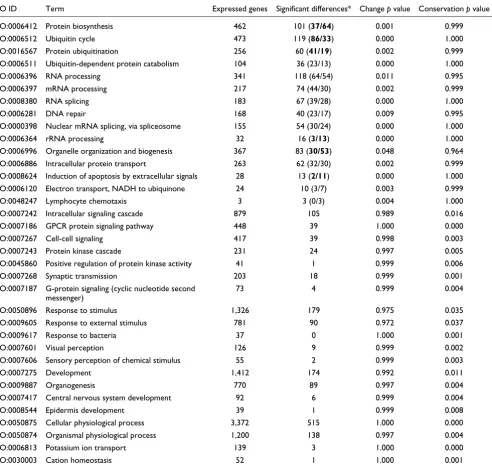
We next asked whether the genes represented by the 4,508 probe sets that showed significant differences in expression between autopsy and resection samples in both brain regions cluster in functional categories as defined by the Gene Ontol-ogy (GO) consortium [12]. Differently expressed genes clus-tered significantly in all three GO taxonomies, 'biological process', 'molecular function' and 'cellular component' (p < 0.0001). Among 15 GO 'biological process' categories with significant over-representation of differently expressed genes, four are involved in cellular protein metabolism and six in nucleobase, nucleoside, nucleotide and nucleic acid metabolism. Most of the remaining genes are found in the categories 'organelle organization and biogenesis' and
'intra-cellular protein transport' (Table 2). The expression of genes involved in the ubiquitin cycle and protein ubiquitination is significantly increased after death, while the expression of genes involved in protein biosynthesis, rRNA processing, organelle organization and biogenesis and induction of apop-tosis are significantly decreased (two-sided binomial test, p < 0.05).
Among 20 GO categories with significant under-representa-tion of genes differently expressed between autopsies and resections, seven are involved in cell communication, three in response to stimulus, two in sensory perception, and four in development. In addition, 'cellular physiological process' and 'organismal physiological process' are among the GO catego-ries that are significantly conserved in their expression between autopsy and resection samples (Table 2).
[image:3.612.54.558.122.430.2]In contrast, no chromosome showed either an excess or lack of expression differences (two-sided binomial test, p < 0.341, corrected for multiple testing).
Table 1
Sample information
Sample* Age
(years)
Sex 28S/18S
ratio†
GAPDH 5'/3' ratio‡
Expressed
probe sets (%)§
Diagnosis Epilepsy Types of seizures
HA1 70 M 1.2 0.445 50.6 - -
-HA3 45 M 1.6 0.637 49.7 - -
-HA4 45 M 1.2 0.507 49.4 - -
-HA5 54 F 1.6 0.712 51.7 - -
-HR1 45 M 1.1 0.520 50.5 Anaplastisches Oligo WHO III Yes Simple partial
HR2 39 F 1.3 0.700 50.2 Glioblastoma Yes Simple and complex partial, GM
HR3 61 M 1.6 0.774 53.8 Glioblastoma Yes Simple and complex partial
HR4 51 F 1.6 0.697 49.5 Ammon's horn sclerosis Yes Simple and complex partial, GM
HR5 13 M 1.4 0.778 47.1 Ganglioglioma Yes Complex partial
HR6 83 F 1.3 0.817 50.0 Atpisches Meningeom Grad II No
-CA1 45 M 1.4 0.870 51.0 - -
-CA2 45 M 1.4 0.841 51.4 - -
-CA3 48 M 1.5 0.865 53.2 - -
-CA5 70 M 1.4 0.669 47.2 - -
-CA6 82 F 1.7 0.690 47.7 - -
-CA7 67 M NA 0.810 49.5 - -
-CR1 35 F 1.2 0.741 45.9 Focal cortical dysplasia Yes Complex partial, GM
CR2 31 F 1.3 0.741 39.5 Focal cortical dysplasia Yes Simple partial
CR3 9 F NA 0.607 45.6 Focal cortical dysplasia Yes Complex partial
CR4 37 M NA 0.674 43.7 Focal cortical dysplasia Yes Complex partial
CR5 35 F NA 0.737 48.8 Focal cortical dysplasia Yes Complex partial, GM
CR6 31 F NA 0.674 43.1 Focal cortical dysplasia Yes Simple partial
*Sample names: position one = brain region (H, hippocampus; C, cortex); position two = sample source (A, autopsy; R, resection); position three =
individual. †Ribosomal RNA bands ratio was measured using Agilent 2100 Bionalyzer system. ‡GAPDH ratio was measured using probes to 5' and 3'
of the transcript on Affymetrix® array. §Expressed probesets were defined based on detection p < 0.05. F, female; GM, grand mal; M, male; NA, not
Expression differences between brain regions
To test whether in vivo expression differences between the brain regions are conserved in postmortem samples, we first considered the ANOVA results (Figure 1). Among 42,427 probe sets with hybridization signals detectable in at least one individual, 6,568 (15.5%) showed significant expression dif-ferences between the two brain regions analyzed (nominal significance p < 0.01, FDR = 3.6%, permutation test). Out of
[image:4.612.64.556.123.590.2]these probe sets, 6,431 (97.9%) overlapped with the ones identified by SAM (FDR = 5%). In 234 of these 6,431 probe sets, differences between brain regions depended signifi-cantly on the source of sample material (p < 0.01). Thus, although autopsy and resection samples differ substantially with regard to their gene expression profiles, the patterns of expression differences between the brain regions remain largely preserved.
Table 2
Functional analysis of gene expression differences between autopsy and resection samples
GO ID Term Expressed genes Significant differences* Change p value Conservation p value
GO:0006412 Protein biosynthesis 462 101 (37/64) 0.001 0.999
GO:0006512 Ubiquitin cycle 473 119 (86/33) 0.000 1.000
GO:0016567 Protein ubiquitination 256 60 (41/19) 0.002 0.999
GO:0006511 Ubiquitin-dependent protein catabolism 104 36 (23/13) 0.000 1.000
GO:0006396 RNA processing 341 118 (64/54) 0.011 0.995
GO:0006397 mRNA processing 217 74 (44/30) 0.002 0.999
GO:0008380 RNA splicing 183 67 (39/28) 0.000 1.000
GO:0006281 DNA repair 168 40 (23/17) 0.009 0.995
GO:0000398 Nuclear mRNA splicing, via spliceosome 155 54 (30/24) 0.000 1.000
GO:0006364 rRNA processing 32 16 (3/13) 0.000 1.000
GO:0006996 Organelle organization and biogenesis 367 83 (30/53) 0.048 0.964
GO:0006886 Intracellular protein transport 263 62 (32/30) 0.002 0.999
GO:0008624 Induction of apoptosis by extracellular signals 28 13 (2/11) 0.000 1.000
GO:0006120 Electron transport, NADH to ubiquinone 24 10 (3/7) 0.003 0.999
GO:0048247 Lymphocyte chemotaxis 3 3 (0/3) 0.004 1.000
GO:0007242 Intracellular signaling cascade 879 105 0.989 0.016
GO:0007186 GPCR protein signaling pathway 448 39 1.000 0.000
GO:0007267 Cell-cell signaling 417 39 0.998 0.003
GO:0007243 Protein kinase cascade 231 24 0.997 0.005
GO:0045860 Positive regulation of protein kinase activity 41 1 0.999 0.006
GO:0007268 Synaptic transmission 203 18 0.999 0.001
GO:0007187 G-protein signaling (cyclic nucleotide second
messenger)
73 4 0.999 0.004
GO:0050896 Response to stimulus 1,326 179 0.975 0.035
GO:0009605 Response to external stimulus 781 90 0.972 0.037
GO:0009617 Response to bacteria 37 0 1.000 0.001
GO:0007601 Visual perception 126 9 0.999 0.002
GO:0007606 Sensory perception of chemical stimulus 55 2 0.999 0.003
GO:0007275 Development 1,412 174 0.992 0.011
GO:0009887 Organogenesis 770 89 0.997 0.004
GO:0007417 Central nervous system development 92 6 0.999 0.004
GO:0008544 Epidermis development 39 1 0.999 0.008
GO:0050875 Cellular physiological process 3,372 515 1.000 0.000
GO:0050874 Organismal physiological process 1,200 138 0.997 0.004
GO:0006813 Potassium ion transport 139 3 1.000 0.000
GO:0030003 Cation homeostasis 52 1 1.000 0.001
comm
en
t
re
v
ie
w
s
re
ports
refer
e
e
d
re
sear
ch
de
p
o
si
te
d r
e
se
a
rch
interacti
o
ns
inf
o
rmation
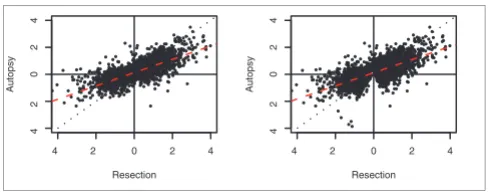
We tested further whether in vivo expression differences between the brain regions are conserved in the postmortem samples by separately identifying, independent of the ANOVA results, probe sets differently expressed between the brain regions in the autopsy and in the resection samples. Using Student's t test with nominal significance p < 0.01, we found 788 and 3,943 probe sets with a significant difference in expression between the brain regions in the autopsy and in the resection samples, respectively (FDR = 22.8% and 4.3% respectively, permutation test). Similarly, using SAM with FDR = 5% we found 874 and 6,699 probe sets with a signifi-cant difference in expression between the brain regions in the autopsy and in the resection samples, respectively. This large discrepancy in the numbers of differences between the brain regions when the autopsy and resection samples are consid-ered separately seems to contradict the ANOVA results. To address this, we examined whether probe sets that do not overlap between these two lists tend to show the same pattern of change between the brain regions or, alternatively, are completely uncorrelated in their expression behavior. For this purpose, we considered all probe sets present on either of the two lists and calculated the strength of correlation of the expression difference between the brain regions measured in the autopsy and in the resection samples. We found a strong and significant correlation between the expression differ-ences for both t test (Pearson's correlation R = 0.763, N = 4,471, p < 10-15) and SAM results (Pearson's correlation R =
0.726, N = 7,162, p < 10-15) (Figure 2). Similarly, we found
slightly reduced but still highly significant correlations using expression differences normalized to the average variation (effect size) (Pearson's correlation R = 0.566, p < 10-15 and R
= 0.584, p < 10-15, respectively). Thus, expression differences
betweenthe two brain regions are largely concordant in the autopsy and resection samples. Interestingly, the slopes of the regression lines (β) fitted through the distributions of the expression differences between the two brain regions in the autopsy and the resection samples equal 0.49 for both sets of
genes (Figure 2). An even stronger effect was observed using the effect size measurements (β= 0.33 and β= 0.32 for t test and SAM results, respectively). Thus, despite an overall agreement of the measurements of expression differences in the two sources of sample material, the amplitude of expres-sion differences measured in the autopsy samples is, on aver-age, half of that observed in the resection samples. Limiting the regression to genes with a high expression difference amplitude in either autopsy or resection samples did not change this effect. Interestingly, it was even more pro-nounced for genes with lower expression in the frontal cortex compared to the hippocampus (β= 0.27 and β= 0.34 for t test and SAM results, respectively). Since the significance test depends on the effect size, smaller expression differences explain the reduced number of identified probe sets in the autopsy samples.
Influence of death on expression variation
All microarray studies involving postmortem human samples report substantial biological variation among individuals. We asked whether death-induced expression changes contribute to this variation by affecting different individuals to different degrees. To do this, we examined published gene expression data from 40 brain autopsy samples [13]. First, we asked whether probe sets that differ in expression between autopsy and resection samples vary more among individuals in this dataset than other probe sets. From the 16,376 probe sets with a detectable hybridization signal in at least one of the 40 individuals, 1,752 overlap with the probe sets showing signif-icant differences in expression between autopsy and resection samples. Using logarithm transformed variation measures, we found no significant difference between the expression variation among these probe sets and among the remaining probe sets (Student's t test, p = 0.916). Thus, genes that differ in expression between autopsy and resection samples do not vary more among postmortem samples compared to the other genes.
Next, we asked whether the amplitude of death-induced expression changes correlates with the duration of postmor-tem interval. To test this, we computed correlations between gene expression levels and postmortem delay in the 40 brain autopsy samples for 1,752 probe sets that differ in expression between autopsy and resection samples and for 1,000 subsets of the same size randomly sampled from the other 14,624 probe sets. In 837 out of 1,000 random subsets, the correla-tion was greater or equal to the one observed for probe sets with significant difference in expression between autopsy and resection samples. Thus, genes that differ in expression between autopsy and resection samples do not correlate more with duration of postmortem interval than the rest of the detected genes.
[image:5.612.53.297.85.183.2]Scatter plot of expression differences between cortex and hippocampus in resection (x-axis) and autopsy (y-axis) samples
Figure 2
Scatter plot of expression differences between cortex and hippocampus in resection (x-axis) and autopsy (y-axis) samples. Expression differences were calculated as base two logarithm transformed ratios of gene expression values. All probe sets showing significant differences in expression levels between the two brain regions, either in the autopsy or in resection samples, are plotted: (a) according to Student's t test; (b) according to SAM. Red dashed lines represent linear regression results and black dotted lines represent expected regression lines with the slope = 1.
4 2 0 2 4
42
024
Resection
Autopsy
4 2 0 2 4
42
024
Resection
Discussion
In this study, we observe that death causes substantial changes in the expression of more than 10% of genes expressed in human brain. Furthermore, this change is highly reproducible, with 96% of differences being shared when two very different brain regions (frontal cortex and hippocampus) are considered. Since all brain resection samples were obtained from people with certain brain abnormalities, an alternative explanation is that the observed changes are induced by disease of the living brain rather than by death. However, for several reasons we find this explanation unlikely. First, we used resection samples from patients suf-fering from several different neurological disorders (Table 1), which are not likely to induce the same pattern of gene expression change. Second, although all but one of the patients were diagnosed with epilepsy, severity of the disease did not significantly influence expression differences between autopsy and resection samples. Third, we observed similar gene expression differences between autopsy and resection samples in both frontal cortex and hippocampus. It is unlikely that these brain regions are affected in the same way by the diseases in question. Finally, we found consistent gene expression differences in the four frontal cortex samples affected by disease at the histological level and the ones with normal histology. Taken together, these arguments suggest that the gene expression differences we observed between autopsy and resection samples are not due to disease-induced change in the resection samples.
Still, two factors, epilepsy and surgery, are shared among most or all patients, respectively. We found no genes with a significant effect of epilepsy on expression either in hippoc-ampus or in frontal cortex. Similarly, using data from the resection samples of non-epileptic patients, we found the same expression differences between autopsy and resection samples as we found with epileptic patients' samples. In addi-tion, known expression changes induced by epilepsy are not over-represented among differences between autopsy and resection samples. These results indicate that epilepsy is unlikely to have contributed a great deal to the expression dif-ferences we see. Due to the small number of samples used in the analysis, however, we cannot completely exclude such an effect. Similarly, we cannot exclude influence of surgery and surgery related treatments, like anesthesia, on gene expres-sion in all resection samples. This remains a confounding fac-tor for estimation of the expression differences between postmortem and living human brain tissue that we cannot address in this study.
Yet, given the widespread use of postmortem human brain tissue in research, the most important question is how well gene expression differences measured in postmortem sam-ples reflect those occurring in vivo. We found that despite the large impact that death as such and, potentially, surgery have on gene expression patterns in autopsy and resection sam-ples, respectively, differences between brain regions that exist
in the living brain are mostly retained in postmortem sam-ples. However, it is striking that the magnitude of the expres-sion differences between the two brain regions decreases by approximately 50% on average and that the effect size is reduced by approximately two-thirds in postmortem sam-ples. This reduction did not depend on the magnitude of dif-ference. Interestingly, the reduction was even more pronounced in genes with lower expression in frontal cortex than in hippocampus (Figure 2). This indicates that gene expression differences measured in postmortem brain sam-ples may underestimate differences existing in the living tissue.
Interestingly, gene expression changes induced by death do not appear to increase variation among postmortem brain samples. In agreement with this, we found no significant cor-relation between the duration of postmortem interval and the magnitude of expression differences between autopsy and postmortem samples. This suggests that expression changes occur quickly in the process of dying and remain stable there-after. This observation is in agreement with recent findings that postmortem delay does not substantially influence gene expression variation among human brain samples [6-8], whereas prolonged agonal states significantly influence expression profiles.
comm
en
t
re
v
ie
w
s
re
ports
refer
e
e
d
re
sear
ch
de
p
o
si
te
d r
e
se
a
rch
interacti
o
ns
inf
o
rmation
More than three quarters of the GO categories with signifi-cant conservation of their expression levels after death fall into processes involved in intra- and extracellular signaling and in development (Table 1). This is rather unexpected since these processes underlie essential brain functions and genes involved in such functions have been shown to differ in their expression levels among various brain regions [17,18]. Intui-tively, one might expect that death would affect these proc-esses first. The excess or paucity of expression differences in certain functional processes could be caused by differences in RNA degradation rates. In this case we would expect genes with low RNA turnover to fall into functional categories that maintain their observed expression levels after death and genes with high RNA turnover to fall into significantly changed functional categories. However, genes involved in signal transduction and development are known to have high RNA turnover rates [19,20] while genes involved in general metabolic functions, biosynthesis and catabolism have low RNA turnover rates [20,21]. Thus, it is unlikely that the observed clustering of expression differences in distinct func-tional categories is due to differences in RNA degradation rates.
Conclusion
Despite the large effect of death on gene expression in human brain, postmortem samples maintain the vast majority of the expression differences that exist between brain regions in vivo. However, the amplitude of expression differences between brain regions in postmortem samples is reduced by approximately 50% compared to the living tissue. It should be noted that the results reported here examined only a limited number of samples representing only few conditions and that confounding effects, including surgery and anesthesia, may influence some of the expression differences we observe. Nev-ertheless, given that the primary source of brain tissue is post-mortem collection, it is encouraging that there is such a high degree of correlation in gene expression patterns between sources.
Materials and methods
Tissue samples and microarray data collection
Human postmortem samples were obtained from the National Disease Research Interchange. Informed consent for use of the tissues for research was obtained in writing from all donors or the next of kin. None of the subjects had a history of neurological disease or had indications of brain abnormalities at the tissue level as determined at autopsy. All individuals suffered sudden death for reasons other than their participation in this study and without any relation to the tissues used. Human resection samples were obtained from patients with brain tumors and/or chronic pharmaco-resistant epilepsy who underwent surgical treatment in the Surgery/Epilepsy Surgery Programs at the University of Bonn Medical Center. In all patients, surgical removal of the
tumor/lesion tissue was necessary. Informed consent for additional studies was obtained in writing from all patients. The diagnosis of the individual patients is presented in Table 1. All procedures were conducted in accordance with the Dec-laration of Helsinki and approved by the ethics committees of the respective institutions. Representative tissue sections were snap frozen at -80°C. Based on neuropathological anal-yses by means of hematoxilin and eosin stainings, normal tis-sue adjacent to the tumor or lesions was used for subsequent experiments. Intense care was taken to avoid tumor infil-trated tissue. None of the surgically obtained tissue samples used in this study, with the exception of four frontal cortex samples with focal cortical dysplasia, showed any histological abnormalities. Age, sex, and degree of relatedness of all indi-viduals are listed in Table 1.
All samples were processed in parallel starting from the fro-zen tissue by the same person (HF) in random order with respect to brain region and the source of sample material. Total RNA was isolated from approximately 50 mg of frozen tissue using TRIZol® (GIBCO, San Diego, CA, USA) reagent
according to the manufacturer's instructions and purified with QIAGEN® RNeasy® kit (Valencis, CA, USA) following
the 'RNA cleanup' protocol. All RNA samples were of high and comparable quality as determined by the ratio of 28S to 18S ribosomal RNAs estimated using the Agilent® (Palo Alto, CA,
USA) 2100 Bioanalyser® system and by the signal ratios
between the probes for the 5' and 3' ends of the mRNAs of GAPDH used as quality controls on Affymetrix® (Santa Clara,
CA< USA) microarrays (Table 1). Labeling of 1.2 µg of total RNA, hybridization to Affymetrix® HG U133plus2 arrays,
staining, washing and array scanning were carried out follow-ing Affymetrix® protocols. All primary expression data are
publicly available at the ArrayExpress database (accession number E-TABM-20) [22].
Microarray data analyses
Affymetrix® microarray image data were collected with
Affymetrix® GeneChip® Operating Software version 1.1 using
default parameters. We used the robust multichip average (rma) procedure [23] for array normalization and calculation of expression base two logarithm transformed intensity val-ues. Since logarithm-transformed intensity values are approximately normally distributed, we used them for all analyses. We calculated detection p values using the Biocon-ductor 'affy' software package [24]. We defined probe sets having a detectable hybridization signal using Affymetrix default detection cutoff of 0.065.
We used ANOVA to identify probe sets that showed a statisti-cally significant change in expression depending on the brain region or on the source of sample material among human samples using the following model: Yij = µj + sourcei + regioni
for the effect of the source of sample material, regioni is the term for the effect of the source of the brain region, (source*region)i is the term for the interaction effect of the two factors, and εij is the error term. For each term we used a nominal significance level of 0.01. In order to estimate an average number of probe sets expected by chance at this sig-nificance cutoff, we applied the same ANOVA approach to 1,000 datasets constructed by random permutation of the sample labels in the original data.
Alternatively, differently expressed probe sets were deter-mined using SAM software version 2.01 with 5% FDR cutoff [25]. In all cases except the analysis of epilepsy effects, we performed t statistics on the logarithm transformed expres-sion values. FDR estimates were based on 500 permutations of the samples within the set. We used block permutation design for the two-factor analysis and time course for the analysis of epilepsy effects. Effect of epilepsy was scored based on the diagnosis and seizure type: 0, no diagnosed epi-lepsy; 1, simple partial seizures; 2, simple and complex partial seizures; 3, complex partial seizures; 4, simple and complex partial seizures, grand mal; 5, complex partial seizures. Effect size was calculated as a difference between means divided by the pooled standard deviation. The pooled standard deviation was defined as the square root of the average of the squared standard deviations.
Functional analysis and distribution on chromosomes
To functionally annotate the probe sets on the Affymetrix®
HG U133plus2 arrays, we integrated information from four public databases: Affymetrix® NetAffx™ (12/2004 release)
[26], LocusLink (12/2004 release) [27], and Gene Ontology (12/2004 release) [28]. Affymetrix® probe sets were linked to
the corresponding genes using LocusLink annotation pro-vided by NetAffx™. When a single gene was represented by multiple probe sets, the gene was classified as detected if at least one probe set was detected and classified as differen-tially expressed if at least one probe set was both detected and differentially expressed. Genes were assigned to their GO annotations from each of the three GO taxonomies ('molecu-lar function', 'biological process', and 'cellu('molecu-lar component') using GenMapper [29,30]. Note that a gene belongs to its assigned GO group as well as all higher groups in the taxonomy.
To assess if the overall distribution of genes differentially expressed between autopsy and resection samples across the groups in a GO taxonomy differs significantly from the distri-bution of all detected genes, we compared it with 10,000 ran-dom sets in which the same number of differentially expressed genes was randomly drawn from the annotated detected genes as described elsewhere [18]. GO groups with significant excess and with significant lack of expression dif-ferences between autopsy and resection samples were deter-mined independently using the hypergeometric distribution [18]. The percentage of false positive GO groups was
esti-mated from the ratio of the number of significant groups in the observed data to the average number of the significant groups in 10,000 random sets. In the GO taxonomy 'biologi-cal process', we expect 20% false positives for the groups with significant excess and 5.8% false positives for the groups with significant lack of expression differences between autopsy and resection samples. Significant over-representation of up-or down-regulated genes in GO groups with significant excess of expression differences was determined by binomial test. Probability of up- and down-regulation within a group was based on distribution of all differently expressed genes. To assign chromosomal location to genes we used annotation provided by NetAffx™. Genes differently expressed between autopsy and resection samples were defined the same way as for the functional analysis.
Acknowledgements
We thank Stanley Medical Research Institute, Bethesda, for providing the well-matched brain collection courtesy of MB Knable, EF Torrey, MJ Web-ster, S Weis and RH Yolken; U Gärtner of the Paul Flechsig Institute, Leip-zig, for help with dissections; M Lachmann, W Enard, J Kelso, M Leinweber, and all members of our laboratory for discussion; H Creely for critical read-ing of the manuscript; the Max Planck Society, the Bundesministerium für Bildung und Forschung grant 01GR0481, and the Sächsisches Staatsministe-rium für Wissenschaft und Kunst for financial support.
References
1. Marcotte ER, Srivastava LK, Quirion R: cDNA microarray and proteomic approaches in the study of brain diseases: focus on schizophrenia and Alzheimer's disease. Pharmacol Ther 2003, 100:63-74.
2. Preuss TM, Caceres M, Oldham MC, Geschwind DH: Human brain evolution: insights from microarrays. Nat Rev Genet 2004, 5:850-860.
3. Vijg J, Calder RB: Transcripts of aging. Trends Genet 2004, 20:221-224.
4. Gotz J, Streffer JR, David D, Schild A, Hoerndli F, Pennanen L, Kurosinski P, Chen F: Transgenic animal models of Alzheimer's disease and related disorders: histopathology, behavior and therapy. Mol Psychiatry 2004, 9:664-683.
5. Soutourina O, Cheval L, Doucet A: Global analysis of gene expression in mammalian kidney. Pflugers Arch 2005, 450:13-25. 6. Bahn S, Augood SJ, Ryan M, Standaert DG, Starkey M, Emson PC: Gene expression profiling in the post-mortem human brain - no cause for dismay. J Chem Neuroanat 2001, 22:79-94. 7. Li JZ, Vawter MP, Walsh DM, Tomita H, Evans SJ, Choudary PV,
Lopez JF, Avelar A, Shokoohi V, Chung T, et al.: Systematic changes in gene expression in postmortem human brains associated with tissue pH and terminal medical conditions. Hum Mol Genet 2004, 13:609-616.
8. Tomita H, Vawter MP, Walsh DM, Evans SJ, Choudary PV, Li J, Over-man KM, Atz ME, Myers RM, Jones EG, et al.: Effect of agonal and postmortem factors on gene expression profile: quality con-trol in microarray analyses of postmortem human brain. Biol Psychiatry 2004, 55:346-352.
9. Hynd MR, Lewohl JM, Scott HL, Dodd PR: Biochemical and molecular studies using human autopsy brain tissue. J Neurochem 2003, 85:543-562.
10. Castensson A, Emilsson L, Preece P, Jazin EE: High-resolution quantification of specific mRNA levels in human brain autop-sies and biopautop-sies. Genome Res 2000, 10:1219-1229.
11. Lukasiuk K, Pitkanen A: Large-scale analysis of gene expression in epilepsy research: is synthesis already possible? Neurochem Res 2004, 29:1169-1178.
comm
en
t
re
v
ie
w
s
re
ports
refer
e
e
d
re
sear
ch
de
p
o
si
te
d r
e
se
a
rch
interacti
o
ns
inf
o
rmation
13. Ryan MM, Huffaker SJ, Webster MJ, Wayland M, Freeman T, Bahn S: Application and optimization of microarray technologies for human postmortem brain studies. Biol Psychiatry 2004, 55:329-336.
14. Li J, Gould TD, Yuan P, Manji HK, Chen G: Post-mortem interval effects on the phosphorylation of signaling proteins. Neuropsy-chopharmacology 2003, 28:1017-1025.
15. Siew LK, Love S, Dawbarn D, Wilcock GK, Allen SJ: Measurement of pre- and post-synaptic proteins in cerebral cortex: effects of post-mortem delay. J Neurosci Methods 2004, 139:153-159. 16. Zhai QH, Ruebel K, Thompson GB, Lloyd RV: Androgen receptor
expression in C-cells and in medullary thyroid carcinoma. Endocr Pathol 2003, 14:159-165.
17. Evans SJ, Choudary PV, Vawter MP, Li J, Meador-Woodruff JH, Lopez JF, Burke SM, Thompson RC, Myers RM, Jones EG, et al.: DNA microarray analysis of functionally discrete human brain regions reveals divergent transcriptional profiles. Neurobiol Dis 2003, 14:240-250.
18. Khaitovich P, Muetzel B, She X, Lachmann M, Hellmann I, Dietzsch J, Steigele S, Do HH, Weiss G, Enard W, et al.: Regional patterns of gene expression in human and chimpanzee brains. Genome Res 2004, 14:1462-1473.
19. Raghavan A, Ogilvie RL, Reilly C, Abelson ML, Raghavan S, Vasdewani J, Krathwohl M, Bohjanen PR: Genome-wide analysis of mRNA decay in resting and activated primary human T lymphocytes. Nucleic Acids Res 2002, 30:5529-5538.
20. Yang E, van Nimwegen E, Zavolan M, Rajewsky N, Schroeder M, Mag-nasco M, Darnell JE Jr: Decay rates of human mRNAs: correla-tion with funccorrela-tional characteristics and sequence attributes. Genome Res 2003, 13:1863-1872.
21. Wang Y, Liu CL, Storey JD, Tibshirani RJ, Herschlag D, Brown PO: Precision and functional specificity in mRNA decay. Proc Natl Acad Sci USA 2002, 99:5860-5865.
22. ArrayExpress Database [http://www.ebi.ac.uk/arrayexpress/] 23. Bolstad BM, Irizarry RA, Astrand M, Speed TP: A comparison of
normalization methods for high density oligonucleotide array data based on variance and bias. Bioinformatics 2003, 19:185-193.
24. Ihaka R, Gentleman R: R: A language for data analysis and graphics. J Comp Graph Stat 1996, 5:299-314.
25. Significance Analysis of Microarrays [http://www-stat.stan ford.edu/~tibs/SAM/]
26. Affymetrix [http://www.affymetrix.com] 27. LocusLink [ftp://ftp.ncbi.nih.gov/refseq/LocusLink]
28. Gene Ontology [http://www.godatabase.org/dev/database/ archive]
29. GenMapper [http://ducati.izbi.uni-leipzig.de:8080/GenMapper/] 30. Do HH, Rahm E: Flexible integration of molecular-biological