International Journal of Emerging Technology and Advanced Engineering
Website: www.ijetae.com (ISSN 2250-2459,ISO 9001:2008 Certified Journal, Volume 3, Issue 11, November 2013)
613
Application of HBM on Linearly Extensible Triangle
Multiprocessor Network
Manaullah
Associate Prof., Department of Electrical Engineering, Faculty of Engineering and Technology, Jamia Millia Islamia, New Delhi.
Abstract— Hierarchical Balancing Method is applied on
Linearly Extensible ∆ - multiprocessor network. This method is used for calculating Load imbalance Factor for arbitrary binary and ternary trees. The result obtained are plotted and found that results are better as compared to HBM giving other results on some other multiprocessor network. Simulation studies show the better performance to other similar systems.
Keywords— Hierarchical Balancing Method (HBM)
Multiprocessor Architecture, Linearly Extensible Network, Load Imbalance Factor, Scheduling, and Diameter,
I. INTRODUCTION
Beside that several new parallel architectures have been proposed to increase computing speed to complement the advances in technology [1, 2]. But to this day the problem of interconnecting the processing elements to achieve high computational bandwidth has not been fully solved. Increase parallelism means more communication overheads; internodes distance, message traffic density and fault tolerance are dependent on the diameter of the network and the degree of a node in it [2-7]. An interconnection network with large diameter has very low message passing bandwidth and a network with high degree of node has higher hardware complexity. In addition, computing system should be easily expandable; there should be no changes in the basic node configuration as we increase the number of nodes in a system.
The choice of topology of the interconnection network is critical in design of massive parallel computer system. Due to this only, a large number of interconnection networks proposals have appeared in the literature and an enormous amount of research has centered on the design and analysis of the networks [8]. In additional to designing an appropriate network, the efficient management of parallelism on an interconnection network involves optimizing conflicting performance indices, like minimization of communication and scheduling overheads and uniform load distribution among the processors. Such issues are addressed at the organizational level by appropriate scheduling mechanisms.
Lately an organizational model has been reported as Linearly Extensible Tree (LET) network with a dynamic scheduling scheme Hierarchical Balancing Method [9]. This architecture consists of 6 processors instead of 8 processors as in hypercube or de-Bruijn architecture. Using the dynamic scheduling scheme, named Hierarchical Balancing
Method (HBM); it has been shown that the LET is
performing at par with other architectures [10]. Another Linear Extensible Cube (LEC) network has also been reported [11]. This LEC combines the features of LET and hypercube networks. It is shown that the LEC is performing on equal footing or rather better than the remaining similar networks.
The Hierarchical Balancing Method (HBM), [9,10] is implemented on a new linearly extensible triangle –based architecture has been developed recently and the performance parameters are obtained. These results are compared with other linearly extensible networks with the same scheduling schemes in the following chapters.
II. DESIGN OF THE DEVELOPED MULTIPROCESSOR NETWORK
The developed triangle-based multiprocessor network is basically having the concept of simple geometry and its interconnections topology exhibits, the properties of a linearly extensible multiprocessor architecture. The details of the design of a triangle-based network topology are given below.
Draw an isosceles triangle i.e. a triangle whose two sides are equal. Bisect the base angles of
this
triangle P0 P1 P2. The new isosceles triangle is P0 P1 P3. Connect the vertex of these two triangles right angle upward. It is the proposed triangle based multiprocessor architecture as shown in Fig. 2.1(a) along with its (b) adjacency matrix.International Journal of Emerging Technology and Advanced Engineering
Website: www.ijetae.com (ISSN 2250-2459,ISO 9001:2008 Certified Journal, Volume 3, Issue 11, November 2013)
614
2.1 Properties of the LE∆ network: Some properties of
the developed network have been compared with LET, LEC, de-Bruijn and hypercube networks.
a) Number of Nodes: The number of nodes in a
multiprocessor network plays a vital role by virtue of which the complexity of the system is affected. Lesser the number of nodes, lesser is the systems complexity and hence is more economical. The number of nodes in the LEC network is N = 2n (for n>0), whereas the number of nodes in the LET network N=k, where as the nodes in hypercube and deBruijn networks are 2n. In the proposed network, it is k+1, (for k>3) i.e. 4. Thus the proposed network is more economical than other networks of having lesser number of processing elements in it.
b) Degree of Node: Degree or connectivity of a node in a
multiprocessor system is the number of connections required at each node. Connectivity of the node determines the hardware complexity of the network. The higher the connectivity, the higher is the hardware complexity and hence the cost of the network. The degree of node in the LEC is always 4 or less, same as in LET network. Though in case of deBruijn it is constant at 4 where as in hypercube, the degree increases with the size of the system. In the proposed network it is (N-1).
c) Extensibility: Extensibility is the property which
facilitates large sized system out of small ones with minimum changes in the configuration of the nodes. In the proposed network the extension complexity increases in a constant manner. Each extension requires single layer of two nodes in LEC whereas in the case of LET network the extension complexity increases linearly because each extension requires adding a single layer of (N+1) nodes, where as in hypercube and deBruijn networks, the extensibility is exponential. In the proposed network, each extension requires only one node without changing the basic configuration.
d) Diameter: The diameter of a multiprocessor network
is a measure of the maximum internodes distance in the network. This property is important in determining the distance involved in communications and hence the performance of the multiprocessor system. The diameter of the network is bound to increase as the size grows unless there is no limit on the number of the links.
Ignoring the fold back connections, the diameter of LET network is ON, whereas in LEC network the diameter is O([N]), where as in hypercube & de-Bruijn it is logarithmic. In the proposed network the diameter is only 2 and is constant for all stages of the system with drastically reduced number of processors at different depths in comparison to LET & LEC networks.
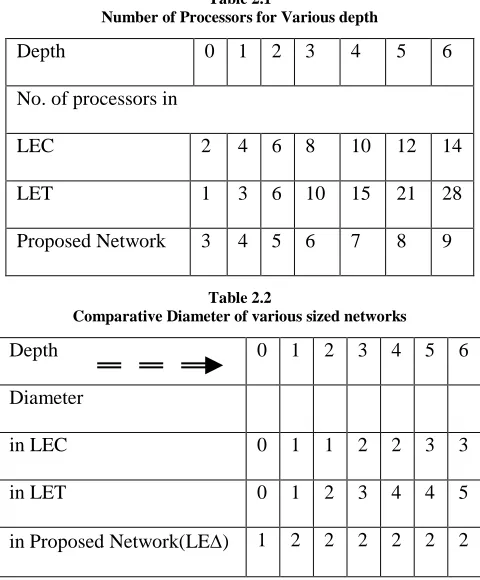
A comparative study of number of processors for various depth of a network is shown in Table 2.1.
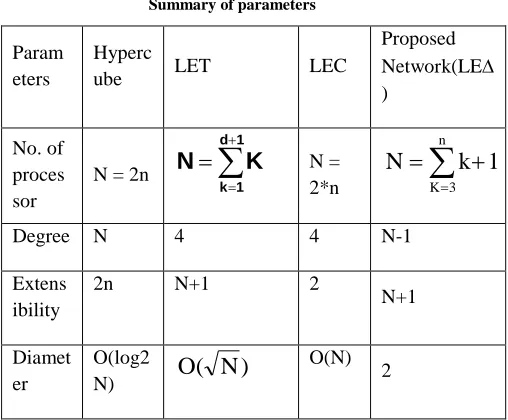
Table 2.2 shows the diameter of different depth. These results have been obtained using shortest path algorithm. It may be seen that the diameter does not always increase with the addition of a layer of processors.
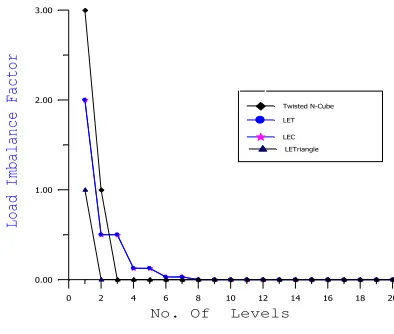
[image:2.612.324.564.323.613.2]Table 2.3 shows the summary of these parameters, which is depicted, in a comparative form.
Table 2.1
Number of Processors for Various depth
Depth 0 1 2 3 4 5 6
No. of processors in
LEC 2 4 6 8 10 12 14
LET 1 3 6 10 15 21 28
Proposed Network 3 4 5 6 7 8 9
Table 2.2
Comparative Diameter of various sized networks
Depth 0 1 2 3 4 5 6
Diameter
in LEC 0 1 1 2 2 3 3
in LET 0 1 2 3 4 4 5
International Journal of Emerging Technology and Advanced Engineering
Website: www.ijetae.com (ISSN 2250-2459,ISO 9001:2008 Certified Journal, Volume 3, Issue 11, November 2013)
[image:3.612.52.306.147.357.2]615
Table 2.3 Summary of parameters
Param eters
Hyperc
ube LET LEC
Proposed Network(LE )
No. of proces sor
N = 2n
d 11 k
K
N
N =2*n
n3 K
1
k
N
Degree N 4 4 N-1
Extens ibility
2n N+1 2
N+1
Diamet er
O(log2
N)
O(
N
)
O(N) 2
III. THE HBM(HIERARCHICAL BALANCING METHOD) SCHEDULING ALGORITHMS
When the problem graph topology is not known in advance, the mapping is done on the fly onto the processors. This dynamic load balancing is essential for efficient utilization of highly parallel systems when solving non-uniform problems with unpredictable load estimates. Our studies show that the network has good load balancing properties when considering problem structures having parallelism but non-uniform growth in various branches.
The general model of the dynamic load balancing is mainly based on the load balancing profitability determination at various sites in a multiprocessor network [10]. Whenever profitable, a balancer is invoked which migrates tasks to achieve a more uniform distribution of load on processors. Each donor processor, during balancing, selects most suitable tasks (based on task dependencies) for migration thus maintaining minimum distance. The balancer uses the concept of balancing domains, which reduces the overhead of the balancing process, but does not ensure a balanced load for the entire system. This trade-off is illustrated in the scheduling strategies.
3.1 The HBM algorithm
The HBM strategy organizes the multi-computer system into a hierarchy of balancing domains, thereby decentralizing the balancing process.
Specific processor is designated to control the balancing operations at different levels of the hierarchy. In this case, processors in-charge of the balancing process at a level Ii, receive load information from both level, Ii-1, domains. Global balancing is achieved by ascending the net and balancing the load between adjacent domains at network level in the hierarchy. This procedure is asynchronous, however, where balancing is invoked within a domain whenever an imbalance is detected by the domain’s designated controller. For a binary hierarchical configuration, the size of the balancing domains doubles from one level to the next.
The hierarchical balancing scheme functions asynchronously. The balancing process is triggered at different levels in the hierarchy by the receipt of load update messages indicating an imbalance between lower level domains. All load levels are initialized with each processor sending its load information up the network. To implement HBM in the proposed/developed network, this scheme has been modified. The implementation of this algorithm in C-like notation is given below:
hier ( ) {
/* Generate the first task at the PMAX –2 and PMAX –1 processors */
ZDS [PMAX-1] = 1 ; ZDS [PMAX-2] = 1
while (it _ count < L ) {
/* calculate IL & RIL */ IL = CIL (ZDS);
RIL = Ceil (IL); Printf (ZDS); For (j = 0; j <N; ++j) {
flag = 0;
/* find the table no of jth processor */ for (m = 0; m <N/2; ++m)
for (n=0; n <f2; ++n)
if (1[m] [n] = = j) label_No = m; /* find where to migrate */
if (label_No = = (N/2 1) to_migrate = 0; else to_migrate = label_No +1;
International Journal of Emerging Technology and Advanced Engineering
Website: www.ijetae.com (ISSN 2250-2459,ISO 9001:2008 Certified Journal, Volume 3, Issue 11, November 2013)
616 {
while (true) {
for (m=0;m <2++m)
if (ZDS [1 [to_migrate] [m] ] < RIL) flag = 1; if (flag = = 1) break;
else {
to_migrate ++;
if (to_migrate > = N/2) to_migrate = 0; }
}
if (flag = = 1) migrate (j, to – migrate); if (ZDS[1] < = RIL)break;
}}}
/* calculate LIF */
LIF = (maximum (ZDS) IL)/ IL; Printf (ZDS);
/* double the task */ ZDS = 2 * ZDS; It_count ++; }}
/* FUNCTIONS USED BY algorithm */
/*CIL & maximum are identical to the previous algorithms */
Migrate (P_No, to_migrate) {
/* get minimum loaded processes at the level where migration is being done */
small = ZDS [1 [to_migrate] [0] ];
if (ZDS [1 {to_migrate] [1] ])< ZDS [1 [ to_migrate] [0]; small = 1 [to-migrate [1];
/* transfer the load */ ZDS [P_No] --; ZDS [small] + = 1; }
IV. SIMULATION RESULTS
4.1 Dynamic Load Model:
The scheduling performance of various strategies in the modified form has been tested for the proposed network by simulating artificial dynamic loads.
In order to characterize a non-deterministic load, the total problem is conceived to be an arbitrary tree, which unwinds itself level by level. A task scheduled on a processor spawns an arbitrary number of sub-tasks, which are part of the whole problem tree. Thus the load on each processor is varying at run time creating unbalance, and balancer has to be invoked after each unwinding step.
Using the above-simulated dynamic load, the performance of the proposed network is being tested for HBM scheduling scheme. The performance is measured in terms of load imbalance left after a balancing action. A constraint that has been forced in the scheduling to maintain minimum distance i.e. task do not migrate to under loaded processors in a way so as to make the distance from parent task more than one hop in the processor network. Under this constraint, the network gets fully balanced at all levels for different types of trees. Its comparison with the LET & LEC networks shows better load balancing. The performance of the network becomes more attractive considering the fact that the diameter of the network remains fixed and having the lesser number of processors unlike other same type of networks.
4.2 HBM Scheme on the proposed network and its comparison with other networks
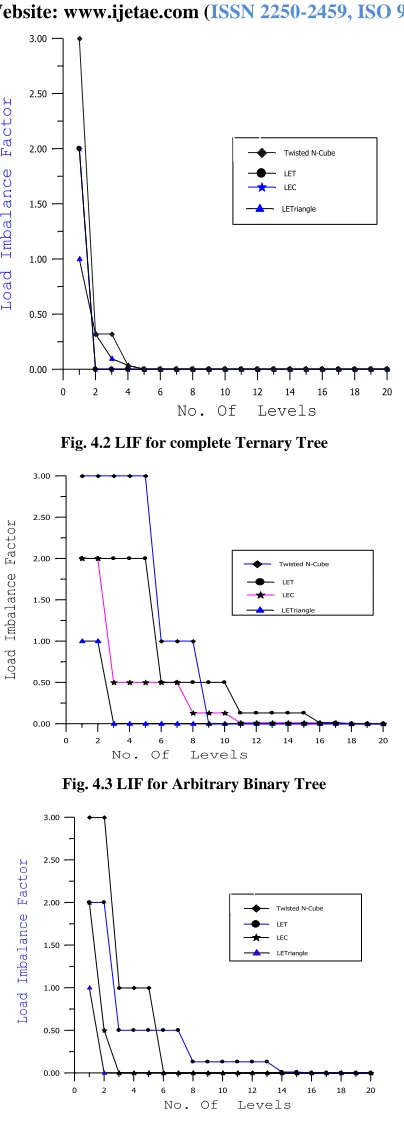
To study the behavior of the Hierarchical Balancing Method (HBM) Scheduling Scheme on the proposed networks, LEC, LET and Twisted N-cube networks, the LIF’s are computed for different classes of task structures. The estimation of LIF is obtained and the curves are plotted as the LIF against the problem size (in terms of task tree depth) as shown in Fig. 4.1 - 4.4.
0 2 4 6 8 10 12 14 16 18 20 No. Of Levels
0.00 1.00 2.00 3.00
L
oa
d
Im
ba
la
nc
e
Fa
ct
or
[image:4.612.344.541.504.671.2]LETriangle LEC LET Twisted N-Cube
International Journal of Emerging Technology and Advanced Engineering
Website: www.ijetae.com (ISSN 2250-2459,ISO 9001:2008 Certified Journal, Volume 3, Issue 11, November 2013)
617
0 2 4 6 8 10 12 14 16 18 20
No. Of Levels
0.00 0.50 1.00 1.50 2.00 2.50 3.00
L
o
a
d
I
m
b
a
l
a
n
c
e
F
a
c
t
o
r
LETriangle LEC LET Twisted N-Cube
Fig. 4.2 LIF for complete Ternary Tree
0 2 4 6 8 10 12 14 16 18 20
No. Of Levels
0.00 0.50 1.00 1.50 2.00 2.50 3.00
Lo
ad
I
mb
al
an
ce
F
ac
to
r
LETriangle LEC LET Twisted N-Cube
Fig. 4.3 LIF for Arbitrary Binary Tree
0 2 4 6 8 10 12 14 16 18 20 No. Of Levels
0.00 0.50 1.00 1.50 2.00 2.50 3.00
L
oa
d
Im
ba
la
nc
e
Fa
ct
or
[image:5.612.71.273.119.683.2]LETriangle LEC LET Twisted N-Cube
Fig. 4.4 LIF for Arbitrary Ternary Tree
HBM Scheme on different networks for various classes of task structures
The trend of the curves obtained, indicates the average behavior of the load imbalance factor (LIF) with respect to the level in the task tree for different randomly generated task tree structures when HBM scheme is implemented on different networks. It has been observed that LIF shows a similar behavior in both the cases of binary & ternary tree task structures, decreasing rapidly to zero after attaining sufficient number of tasks. In case of complete binary task trees, this reduction is earlier than in case of ternary task trees and complete ternary task trees.
The same HBM scheme is implemented on the Twisted N cube, LET & LEC, for the same class of task tree. The simulation study indicates that the HBM scheduling is performing poorly but comparatively for all class of task tree in comparison to proposed network. The performance results indicate that the LIF is always higher for Twisted N cube and same in case of LET & LEC in comparison to the proposed network.
The reason for better load balance in the proposed network for all class of tree-structured problems is that the diameter of the network is very small & constant having small number of processors. It may be argued that to obtain better load balance means higher performance, there should be a lesser diameter and better connectivity in the system.
V. CONCLUSION
It is always possible to obtain a better load balance in a smaller and compact network. It is accomplished that the proposed triangle based interconnection topology with only 4 processors, is also a complete multiprocessor network, which exhibits the better performance in comparison to other similar networks. Hence the proposed network is on equal footing for comparison with other similar linearly extensible multiprocessor networks.
LE∆ is a linearly growing structure with every extension requires only one processor thereby reducing the number of processors at various depths drastically. Hence the triangle-based network is a compact and economical architecture, which exhibits better properties.
International Journal of Emerging Technology and Advanced Engineering
Website: www.ijetae.com (ISSN 2250-2459,ISO 9001:2008 Certified Journal, Volume 3, Issue 11, November 2013)
618 REFERENCES
[1] Manaullah, ―Minimum Distance Scheduling Scheme on Linearly Extensible Multiprocessor Network‖, IJETAE, Vol3, Issue 10, October 2013.
[2] Abdus Samad & Qasim Rafiq ―A Novel architecture LEC for Network Sever‖, Ph.D, 2010
[3] Abdel, A A E and Khaled D ―The Hyperstar Interconnection Network‖ Journal of Parallel and Distributed Computing 48, 175-199, 1998
[4] Min, W Y and Wei. S ―DDE: A Modified Dimension Exchange Method for Load Balancing in k-array n-cubes‖ Journal of Parallel and Distributed Computing 44, 88-96, 1997.
[5] Ganeshan E and Pradhan, D K ―The hyper-de Bruijn networks: Scalable versatile architecture,‖ IEEE Trans. on PDS, Vol.4, No.9, pp 962-978, Sept. 1993.
[6] Stone, H.S., ―Multiprocessor scheduling with the aid of network flow algorithms,‖ IEEE Trans. on Software Engineering, vol. S-3, no.1, pp 85-93, 1997.
[7] H. Esfahanian, L. M. Ni, and B.E. Sagan, ―The Twisted N-Cube with application to multiprocessing‖, IEEE Trans. on Computers, Vol 40, No.4, pp 88-93, Jan 1993.
[8] Mohan Kumar J, and Patnaik, L.M., ―Extended Hypercube: A hierarchical interconnection network of hypercube‖, IEEE Trans on PDS, vol. No.1, pp 45-57, Jan 1992.
[9] Rafiq, M.Q. ―A Linearly Extensible Tree Network: Scalable Versatile Architecture‖ sent for publication in IEEE PDS (No 109754)
[10] Rafiq M.Q., Padam Kumar & Gupta, J.P, ―A Novel Tree-Structured Multiprocessor Network‖ International Conference on Robotics Vision and Parallel Processing for Automation, Malaysia, July 16 - 18, 1999.