Investigating the role of Human Resource Development (HRD) policy formulation, implementation and regulation of academic staff in two case study Nigerian Polytechnic
institutions
Stephen, Makoji Robert
Salford Business School
College of Business and Law
University of Salford, Salford, UK
i
Table of Contents
List of Tables... vii
List of Figures ... viii
Glossary of Terms and Abbreviations ... ix
Dedication... x
Acknowledgements ... xi
Abstract ... xiii
CHAPTER ONE ... 1
Introduction ... 1
1.1Research background... 1
1.2 Problems and issues to be investigated ... 3
1.3 The need for this research ... 4
1.3.1 Poor quality of the Nigerian educational system ... 4
1.3.2 The relevance of Polytechnic education ... 6
1.3.3 Government policy ... 7
1.3.4 The dearth of research on HRD policy in the Polytechnic education sub-sector . 8 1.3.5 The industrial dispute in Nigerian higher education system ... 8
1.4.1 Aim of research ... 9
1.4.2 Research objectives ... 9
1.4.3 Research questions ... 10
1.4.4 Research hypothesis ... 10
1.5 Expected contribution to knowledge ... 11
1.6 Research methodology ... 12
1.6.1 Literature review ... 12
1.6.2 Case study organisations ... 12
1.7 Structure of the research ... 12
1.8 Summary ... 14
The Study Context ... 15
2.0 Introduction ... 15
2.1 Historical Background of Nigeria ... 15
ii
2.3 An overview of the Nigerian Economy and Higher Education ... 17
2.4 Politics and the Higher Education System in Nigeria ... 18
2.5 Nigeria Higher Education System ... 20
2.6 The Management of the Nigerian Higher Education system ... 22
2.7 History of Nigeria Polytechnics ... 24
2.8 Yaba College of Technology, Lagos ... 27
2.9 The Federal Polytechnic Idah, Kogi State, Nigeria ... 28
2.9.1 Administrative and Academic Arrangement of the Yaba College of Technology Lagos state and the Federal Polytechnic Idah, Kogi State ... 29
2.10 Staff Development Policy for Nigeria Polytechnics ... 30
2.10.1 Study Leave ... 31
2.10.2 Study Fellowship ... 32
2.10.3 Sabbatical Leave ... 33
2.11 Staff Development Interventions in Polytechnics ... 34
2.12 Challenges of HRD Development in Nigerian Polytechnics ... 36
2.13 Summary ... 45
CHAPTER THREE ... 46
Literature Review and Theoretical Framework ... 46
3.0 introduction ... 46
3.1 Definition, scope and place of HRD in organizational management ... 46
3.2 Scope of HRD ... 50
3.3 Human Resource Development Policy ... 51
3.4 Human Resource Development Strategy ... 53
3.5 The Need for Academic Staff Development in Higher Education Institutions .... 60
3.6 Current debates on HRD and its implications for Human Resource development in Nigerian Polytechnics ... 63
3.7 Theoretical Framework ... 75
3.8 Justifications for using both a top-down and bottom-up approach ... 76
3.9 Van Meter and Van Horn’s Theory of Implementation ... 77
3.10 Operationalization of the Van Horn and Van Meter’s Theory of Policy Implementation in this research ... 78
3.10.1 Policy Standards and Objectives ... 79
iii
3.10.3 Inter-organisational communication and enforcement activities ... 81
3.10.4 Characteristics of the implementing agencies ... 82
3.10.5 The economic, social and political environment ... 82
3.10.6 The disposition or response of the implementers ... 83
3.11 The Concept of Street-Level Bureaucracy ... 83
3.12 Placing Lipsky’s Street-Level Bureaucracy Approach in a Higher Education Context ... 85
3.13 Summary ... 86
CHAPTER FOUR ... 88
Research Methodology ... 88
4.0 Introduction ... 88
4.1 Research Philosophy ... 89
4.1.1 The Underpinning Philosophy of the Research ... 92
4.1.2 Features of Pragmatism guiding the research ... 95
4.1.3 Rationale for mixed methods in Pragmatism ... 97
4.2 Research design ... 101
4.2.1 Case study Strategy ... 102
4.2.2 Number of case studies ... 105
4.2.3 Justification for the choice of two Cases ... 106
4.3 Research Approach ... 108
4.4 Data Collection Plan and Techniques Used ... 110
4.5 Construction of the Data Collection Instruments ... 111
4.5.1 The questionnaire as a research tool ... 112
4.5.2 Piloting the questionnaire ... 113
4.5.3 Questionnaire respondents ... 114
4.5.4 Role of the researcher ... 114
4.5.5 Ethics and confidentiality ... 115
4.6 Semi-Structured Interview ... 115
4.6.1 Interviewing ... 117
4.6.2 Interview Participants ... 118
4.6.3 Characteristics of the interviewees ... 120
iv
4.6.5 Interview process ... 121
4.7 Documentation ... 123
4.8 Archival Records... 123
4.9 Strategies Taken to Establish the Trustworthiness of the Qualitative Study ... 124
4.10 Measures ... 126
4.11 Data analysis ... 127
4.12 Ethical approval ... 129
CHAPTER FIVE ... 131
Research Findings ... 131
5.0 Chapter introduction ... 131
5.1 Semi-structured interview findings with Senior Management Staff of the Yaba College of Technology and the Federal Polytechnic Idah ... 131
5.1.1 Objectives of HRD ... 132
5.1.2 HRD Strategies ... 135
5.1.3 Key Factors for developing effective HRD ... 138
5.1.4 HRD Policy ... 140
5.1.5 HRD Policy Implementation and challenges ... 144
5.2 Semi-structured Interview Findings with Academic Staff of the Yaba College of Technology and the Federal polytechnic Idah... 152
5.2.1 Objectives of HRD ... 153
5.2.2 HRD Strategies ... 159
5.2.3 Key factors for developing effective HRD ... 163
5.2.4 HRD Policy ... 166
5.3 Yaba College of Technology Questionnaire Research ... 179
5.3.1 Demographic Profile ... 180
5.3.2 HRD Interpretation ... 181
5.3.3 HRD Policy ... 183
5.3.4 Implementation and Challenges ... 185
5.3.5 HRD Practices ... 187
5.4 The Federal Polytechnic Idah, Kogi State Questionnaire Research ... 188
5.4.1 Demographic Profile ... 189
v
5.4.3 HRD Policy ... 193
5.4.4 Implementation and challenges ... 195
5.4.5 HRD Practices ... 196
5.6 Summary of Findings from Quantitative Study in the Two Case Study Institutions ... 200
5.6.1 HRD Interpretation and Objective ... 200
5.6.2 HRD Policy ... 202
5.6.3 HRD Implementation and Challenges ... 203
5.6.4 HRD Practices ... 203
5.7 Cross –Case Analysis ... 204
5.8 Summary ... 211
Discussion, Conclusion and Recommendation ... 212
6.0 Introduction ... 212
6.1 Policy Standards and Objectives ... 212
6.2 Policy Resources ... 216
6.2.1 Low Budgetary Allocation and Insufficient Allocation of Fund for Academic Staff Development Programmes ... 216
6.2.3 Misappropriation and Misallocation of Funds ... 218
6.3 Inter-organisational Communication and Enforcement Activities ... 220
6.4 Characteristics of the Implementing Agencies ... 223
6.5 The Economic, Social and Political Environment ... 228
6.5.1 Economic Environment ... 228
6.5.1 Social Environment ... 229
6.5.3 Political Environment ... 230
6.6 The Disposition or Response of the Implementers ... 232
6.6.1 Senior Management Commitment to HRD ... 233
6.7 Conclusion ... 237
6.7.1 Achieving the Aim and Objectives of the Research ... 238
6.8 Contributions to Knowledge ... 240
6.8.1 Academic Contributions ... 240
6.8.2 Methodological Contributions ... 242
6.8.3 Theoretical Contributions ... 243
vi
6.9 Recommendation for Practice ... 244
6.10 Limitations of the Research... 247
6.11 Recommendation for Further study ... 250
References ... 251
Appendix A: Ethical approval ... 282
Appendix B: Consent form ... 283
Appendix C: Interview Protocol ... 284
vii
List of Tables
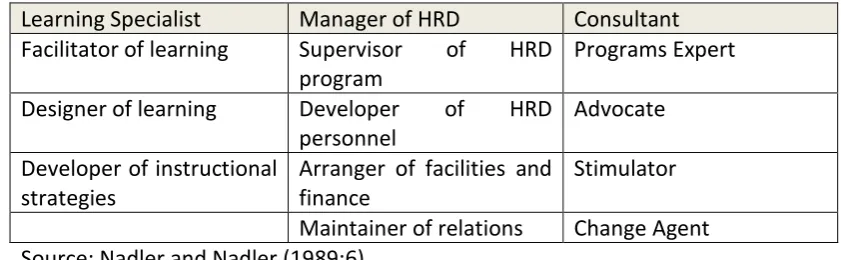
Table 3. 1Roles of the Human Resources Developer ... 59
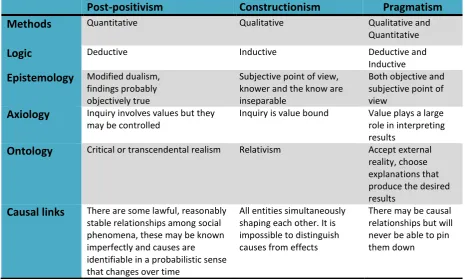
Table 4. 1 Comparism between post-positivism, constructivism, and pragmatism ... 91
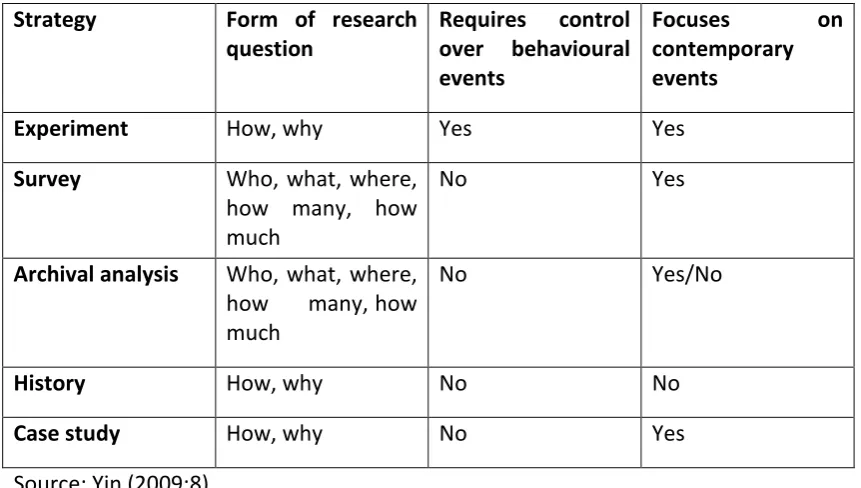
Table 4. 2 Relevant situations for different research designs ...102
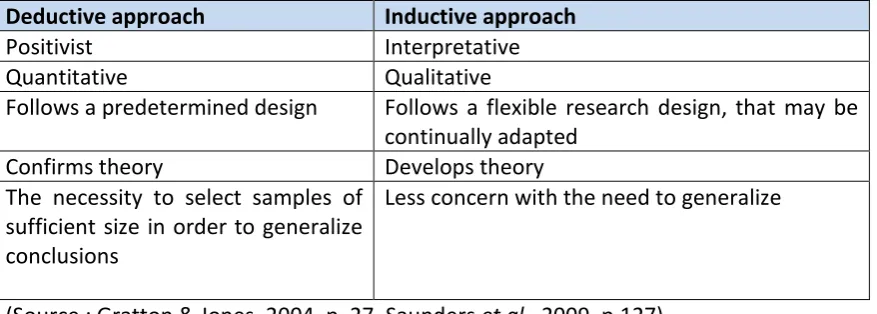
Table 4. 3: Summary of the deductive and inductive approaches. ...109
Table 4. 4: Senior Management Staff/Stakeholders ...119
Table 4. 5: Academic Staff ...119
In general, the interviews lasted between twenty-five minutes to forty minutes on the average. All the interviews were conducted in the case study Polytechnics and this afforded the interviewees the opportunity of giving me circulars/ documents to substantiate their claims when the need arose. Table 5.4 shows the number of interviewees in the case study Polytechnics.Table 4. 6: Categories of Staff interviewed .121 Table 4. 7: Summary of Strategies with Which to Establish Trustworthiness ...126
Table 5. 1: Aggregate response details elicited from Questionnaire administered ...179
Table 5. 2:Aggregate Response Details Elicited from Questionnaire Administered ...189
Table 5. 3:Below Provides a Summary of the Key Findings from the Semi-Structured Interviews Carried Out in Both Case Study Polytechnics: ...198
viii
List of Figures
Figure 2. 1: The Political Map of Nigeria. ... 16
Figure 2. 2 Nigerian Education System and Qualification structure ... 21
Figure 3. 1A model of the policy-implementation process ... 78
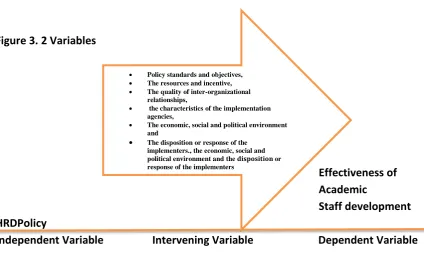
Figure 3. 2 Variables ... 79
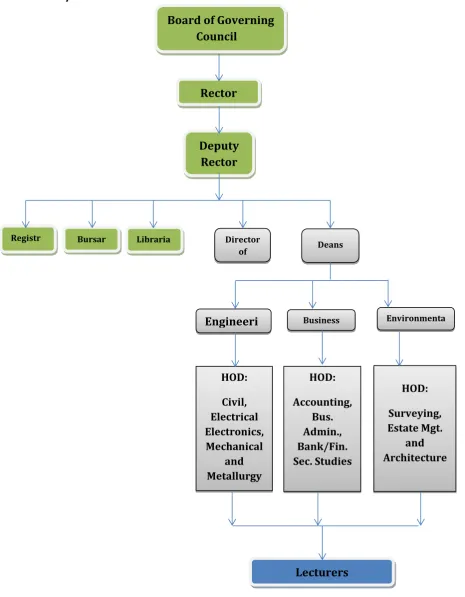
Figure 4. 1below is the organisational structure of the Polytechnic showing clearly participants interviewed and the respondents that questionnaires were administered to at the Polytechnic level. ...100
Figure 5. 1: Policy Standards and Objectives ...181
Figure 5. 2: Staff Development Appraisal ...182
Figure 5. 3: Adequacy of Staff Development Programme Provided ...183
Figure 5. 4: Knowledge of Staff Development Policy ...184
Figure 5. 5: Satisfaction with Staff Development Policy Implemented ...185
Figure 5. 6:Level of policy implementation ...186
Figure 5. 7: Measures for the improvement of HR underdevelopment and challenges ...187
Figure 5. 8: HRD Practices ...188
Figure 5. 9: Policy Standards and Objectives ...191
Figure 5. 10: Staff Development Appraisal ...192
Figure 5. 11:Adequacy of Staff Development Programmes Provided ...192
Figure 5. 12: Knowledge of Staff Development Policy and an Assessment of Staff Personal Development ...193
Figure 5. 13: Satisfactions with Staff Development Policy ...194
Figure 5. 14: Level of Policy Implementation...195
Figure 5. 15: Measures for the Improvement of HR Underdevelopment and Challenges ...196
ix
Glossary of Terms and Abbreviations
ASUP: Academic Staff Union of Polytechnics
ASUU: Academic Staff Union of Universities
FME: Federal Ministry of Education
HEI: Higher Education Institutions
HRD: Human Resource Development
NCE: National Council on Education
NBTE: National Board for Technical Education
NPE: National Policy on Education
x
Dedication
I would like to dedicate this thesis to the following:
To the Almighty God for giving me the opportunity and grace to complete this
thesis
To the memory of my father; Late Stephen Umaru Ekpo and
Finally, to the loving and blessed memory of the loved ones I lost in the course of
xi
Acknowledgements
I am profoundly grateful to my supervisor Professor Ralph Darlington for his immense support, useful comments, patience in reading the drafts of this research work several times in the course of this PhD research. I have come to know Professor Ralph Darlington as a principled academic, highly sympathetic, enthusiastic and with proclivity for high quality research. As well as being my supervisor, he provided me the opportunity to work under him as a PGR Representative, a member of the College of Business and Law Research and Innovation Committee (CRAIC) and also, as a member of the staff-student committee. These responsibilities afforded me the opportunity to contribute to the forging of a new staff-student relationship in the Salford Business School. I owe him much gratitude and feel highly fulfilled having him supervise this PhD research work.
I would want to express my appreciation to my wife Mrs Abigail Makoji-Stephen for her support, encouragement and perseverance throughout the period of this doctoral research. You have always told me that “together we can” and this completed thesis stands as a testimony to that fact. To my Children; Tovia, Salem and Emmanuel, I say a big thank you for understanding with daddy during his usually long stay in the library at nights. To Salem who would always ask me who will be teaching me at nights while I am away in the library, I have this completed work to show.
I am indeed grateful to my mum, Evangelist Joy Ekpo and to my siblings, Mrs Ilebuyo Oku, Mrs Mabe Daura, Eleojo Abraham and Mrs Victoria Sanda for their prayers and support. I must not fail to acknowledge the support and encouragement of the families of Col (Rtd) and Evangelist Julie Amego, Mr and Mrs Adaji Ameh and that of Mr Clement Utti.
It is practically impossible for me to mention all those who at various points contributed towards the successful completion of my PhD research. I wish to place it on record that those who are not mentioned did play as much role as those who I have mentioned. I am extremely grateful to my friends, Dr Friday Wada, Dr Hassan Achimugu, Dr and Mrs Alex Adelakun, Dr Idakwoji Salami Pious (JP), Alhaji Alhassan Alukman, Francis Agbali, Mr Abdulnasser Daura (ND Bonne), Mr Ali Muhammed, Victor Nnadozie, Dcn Martins, Khaled Hailat, Trevor, Babafemi, Data, Patience Oche and others too numerous to mention for your support and encouragement. I will not forget to mention Pastor and Pastor Mrs Sam Okodoa for their spiritual and moral support.
I would also like to express special thanks to the management of the Federal Polytechnic Idah (my employer) for releasing me for the programme as admitted and to the Tertiary Education Trust Fund (TETFund) Nigeria for providing sponsorship for my study and for their invaluable support. Special thanks to the Rector of the Federal Polytechnic Idah, Mr Matthew Itopa Akpata. My gratitude also goes to the families of late Chief Emanuel Ilonah and Alhaji Karim Abu Musa for their support and encouragement.
xii
thanks to Michelle Jones and her colleagues for their administrative assistance. In the meantime, I would like to thank Mrs Susan Sharples (Rtd) who provided tremendous support in the early period of my research work. I wish to say a massive thank you to the academic and non-academic staff in the case study institutions for their co-operation. Words fail me to appreciate Dr Mrs Ladipo and Dr Adebakin of the Yaba College of Technology for ensuring access to my respondents.
xiii
Abstract
The context of dramatic change in the Nigerian Polytechnic education sub-sector has made issues that relate to the effectiveness of academic staff development policies and the programs they support critical. Yet the nature and practice of academic staff development within this sub-sector has continually been a subject of concern with claims that resources are inadequate, activities are marginal, and goals are not met. In the light of such considerations, this research investigates the role of Human Resource Development (HRD) policy formulation, implementation and regulation of academic staff in two case study Nigerian polytechnic institutions as a means of examining the nature, extent and causes of human resources underdevelopment in the sub-sector more generally.
Extensive fieldwork research was conducted involving semi-structured interviews, questionnaires, documentation and archival records, so as to achieve a triangulation of data. The qualitative evidence was analysed by the employment of thematic analysis to explore the implementation of HRD policy and to provide more in-depth understanding of the critical issues affecting academic staff development.
The researcher used the analytical framework of Van Horn and Van Meter’s theory of policy implementation (Van Meter and Van Horn,1975) supplemented by Lipsky’s (2010) street-level bureaucracy to penetrate issues and challenges, debates and current concerns posed in critical areas of HRD policy implementation for academic staff. The researcher contends that applying Van Horn and Van Meter’s theory of Policy Implementation (Van Meter and Van Horn, 1975) supplemented by Lipsky’s (2010) street-level bureaucracy in understanding and analysing issues relating to the practice of academic staff development has the potential of providing robust learning and feedback structures well-suited to institutional inquiry and adaptation that will assist Nigerian Polytechnic to adapt to the challenges of an unpredictable future.
Even though the research findings identified some perceived policy successes, perceived policy failures were also identified with reference to implementation as follows: insufficient funding, policy misinterpretation, inadequate leadership commitment to HRD, lack of an enabling policy environment, absence of well-articulated strategy to guide HRD development, lack of accurate HR needs assessment, lack of political will to implement policies, corruption, ethnicity, nepotism and the politicization of HRD effort, all of which account for HRD policy implementation challenges.
In highlighting these perceived constraints in HRD development of academic staff in the case study Nigerian Polytechnics the study recommends that management ensure the strengthening of administrative capacity to drive and implement policy and also the provision of efficient and effective leadership with strategies that favour development-oriented growth on-the-job for academic staff. Furthermore, it suggests academic staff development initiatives are taken in consultation with all stakeholders with feedback about HRD, which is clear and consistent.
xiv
1
CHAPTER ONE Introduction
1.1Research background
Academic staff development has an important role to play in Nigerian higher education
institutions (HEI’s) which includes Polytechnics, Colleges of Education, and Universities.
Generally, HEI’s in Nigeria have Human Resource Development (HRD) policy under the
general rubric of Public Service Rules and Regulation that are designed to enhance, with
varying degrees of emphasis, organisational and individual effectiveness. These policies
share the common goal of improving higher education and aim to influence the
knowledge, skills and aptitudes of academic staff.
However, despite these policy provisions and regulation for academic staff
development, its situation which entails the availability, quality and adequacy appears to
be critical in many Nigerian Polytechnics with claims that resource meant for HRD of
academic staff are not adequate, activities marginal, and goals not met (Giwa, 2000).
Specifically, scholars (Adeyemi and Uko-Aviomoh, 2004; Olukoju, 2004; Solanke, 2014)
suggest that the critical state of Polytechnic education in Nigeria stems from a lack of
administrative willingness and capacity to drive HRD, a fact corroborated by the Nigerian
Education Sector Report (2010) which chronicled the challenges in Nigeria’s education
sector in the following words:
The education sector has historically suffered from years of neglect and mismanagement and inadequacy of resources commensurate with national needs, population growth and demand. As a result, education as a strategic priority of the government has not been well positioned as a transformational tool and a formidable instrument for socio economic development (The Nigerian Education Sector Report 2010:7)
The Report (2010) noted the challenges in Nigeria’s higher education system to
include:
Low carrying capacity of Nigerian tertiary institutions
Inequality of education across the states
Academic staff shortages across the board and the absence of a system to
2
Divided interest by academics (with Moonlighting and the taking up of additional
jobs to supplement salary)
Illegal institutions/satellite campuses/external campuses
For more than two decades, these challenges and the need to address them has
been a major cause of industrial disputes between the academic staff of Nigerian
Polytechnics under the aegis of Academic Staff Union of Polytechnics (ASUP) and the
Federal government of Nigeria (FGN) in most cases leading to strike actions. Several
issues of importance to the union include welfare of staff, provision of infrastructure,
Polytechnic autonomy, funding, and academic staff training and development which
appears to be limiting the quality of teaching, research, scholarship and innovation.
Even though recently, the Federal government of Nigeria as a way forward towards
addressing these challenges came up with its reform/transformation agenda which set
out well defined priorities that reflect policy pronouncements, yet, expected results have
not been achieved (Okoroma, 2006; Gyong, 2012; Imam, 2012).
While there may seem to be no general consensus on what has led to the apparent
poor state of affairs in Nigeria’s educational system, all concerned stakeholders seem to
agree that higher education institutions in the country need to consciously create an
enabling environment that will stimulate and expose its human resources to
opportunities for learning and the acquisition of a new knowledge base in other to cope
with the challenges linked to globalization and technological advancement (Obijiofor,
2005).
With the need for an update of knowledge, skills and aptitude of staff in higher
education institutions duly recognised, the fundamental question that may arise is how
well Nigerian Polytechnics are prepared to equip their academic staff with capacities to
comprehend and play active roles within this globalised society. In the light of the
tensions and ambiguities associated with academic staff development and the slip and
twist expectations and actualities, the idea of investigating the critical issues and
challenges in HRD policy implementation in Nigerian Polytechnics become timely and
3
This study therefore investigates the role of Human Resource Development (HRD)
policy formulation, implementation and regulation of academic staff in two case study
Nigerian Polytechnic institutions from the perspectives offered by Van Horn and Van
Meter’s theory of Policy Implementation (Van Meter and Van Horn, 1975) supplemented
by Lipsky’s (2010) street-level bureaucracy to provide a thorough exploration of the
issues, challenges and dilemmas facing Nigerian Polytechnics in conceiving and
implementing academic staff development programs. The study also seeks to underscore
the need to put in place a strategic management framework robust enough to enhance
continuous improvement of teaching and learning of academic staff in line with global
trends.
1.2 Problems and issues to be investigated
Although it is clear from research that HRD is key to organisational survival in the
changing global environment, it seems that appropriate strategies to grapple with the
challenges of HRD in Nigerian Polytechnics is urgently needed. Although it can be said
that the calibre of research and teaching in some Polytechnics compares to international
best practice and standards, overall effectiveness and efficiency reflects a range of
systemic problems, key among them being poor development of the human resources
(Adeyemi and Uko-Aviomoh, 2004; Usoro, 2010; Kayode et al., 2013).
International organisations like UNESCO at the World Conference on Higher
Education (2009) emphasised that Higher Education Institutions must invest in the
training of faculty and staff to fulfil new functions in evolving teaching and learning
systems. Yet, as observed by notable scholars (Akin-Ogundeji, 1989; Adeyemi and
Uko-Aviomoh 2004; Odu, 2011), HRD development in Nigerian Polytechnics appears to
underplay the importance and need to identify and explore opportunities to advance the
individual and organisational learning capacity and development. This scenario had been
linked to the historical and political development of the HRD policy framework for the
Nigeria Polytechnic. Thus, the problem of HR processes and procedures of Identifying
HRD needs and its subsequent development had been encumbered by poorly developed
policies and unclear procedures of implementation, leaving little or no room for learning
4
Whereas on a global scale higher education institutions (for example in Taiwan,
Singapore and Finland) are experiencing major changes in development and research and
in improving systems and processes to enhance efficiency, productivity and the capacity
in the human resources, lower income or less-developed countries like Nigeria seem to be
discounted from this global trend. It is against this background that this research project
has sought to investigate the role of Human Resource Development (HRD) policy
formulation, implementation and regulation of academic staff in two case study Nigerian
Polytechnic institutions.
1.3 The need for this research
There are a number of reasons that make this study an indispensable area to investigate.
These factors are discussed in turn.
1.3.1 Poor quality of the Nigerian educational system
There is a general consensus among scholars and international agencies that the quality
of Nigeria’s educational system is low (UNESCO, 2000; Ali-Akpajiak and Pyke, 2003;
Okemakinde, 2014).According to the Global Competitiveness Report (Schwab, 2013), in
terms of performance, Nigeria did not have an impressive outlook in the 12 pillars of
competitiveness against which the country’s level of competitiveness was measured. Of
all the 148 countries that were assessed, Nigeria ranked 113 in the quality of educational
system (Table 1.1). On all the indicators of higher education and training, primary
education, innovation and institutions measured in the GCR survey, Nigeria ranked among
the bottom one-third of the 148 economies surveyed.
From Table 1.1 below, it can be observed that despite the crucial role higher
education play as the pillar of the knowledge economy, the quality of higher education in
Nigeria has assumed a deteriorating dimension with scholars and international
organisations observing that the higher education system is poor in quality and standard,
limited in its reach, and with a disturbing future outlook (UNESCO, 2000; Uwaifo, 2010;
Asiyai, 2014). Furthermore, it has been noted (Yusuf & Oluwakemi, 2012) that the quality
of intellectual output in the nation’s tertiary institutions of learning has continued to
decline. Corroborating, scholars (Nkechi et.al., 2012; Venatus, 2013) note that the output
5
higher institutions are producing a steady stream of graduates whose skills are suspect,
[image:20.595.112.558.160.349.2]and whose work ethic is abhorrent.
Table 1. 1 Ranking of higher education and training, primary education, innovation and institutions, Nigeria.
Country Ranking
Quality of educational system 113
Quality of math and science education 117
Quality of management schools 102
Availability of research and training services 83
Extent of Staff Training 45
Quality of primary education 119
Quality of scientific research institutions 111
University-industry collaboration in R&D 92
Source: Global Competitiveness Report 2013-2014 (World Economic forum, 2013).
The Nigeria Millennium Development Goals Report (NPC, 2010) attested to the
declining state of higher education in Nigeria when it acknowledged that quality
assurance in the education system in Nigeria is yet to be adequately addressed in terms
of teachers, curricula, teachers support, teaching learning materials etc. In order to
effectively tackle the challenges in the education sector, Ogunsola & Aboyade (2005)
emphasized that Nigeria must be active in developing infrastructural, institutional and
human capital capacities. Also, the Report of the Vision 20:2020 National Technical
Working Group on Education Sector (NPC, 2009) emphasized human capacity
development facilitated by strong learning systems as central to addressing the
challenges in the nation’s education system and a necessary first step if Nigeria’s Vision of
becoming one of the 20 most developed countries in the year 2020 is to be actualized.
In as much as it should be acknowledged that Nigeria has made modest progress
particularly within the current democratic dispensation (1999-date) in addressing the
challenges in the higher education system, the proposed turn around strategies have not
addressed in clear terms the challenges in the Polytechnic education sub-sector,
6
the body of knowledge in HRD policy in higher education and more specifically to the
Polytechnic education sub-sector.
1.3.2 The relevance of Polytechnic education
In Nigeria, Polytechnics are institutions established to provide technical education that
lead to the acquisition of practical and applied skills as well as basic scientific knowledge
(Osami, 2013). According to the National Policy on Education, (FRN, 2014:30), the goals of
Polytechnic education are fivefold:
First, to provide full-time or part time courses of instruction and training in engineering, other technologies, applied science, business and management leading to the production of trained manpower.
Second, to provide the technical knowledge and skills necessary for agricultural, industrial, commercial and economic development of Nigeria
Third, to give training and impart the necessary skills for the production of technicians, and other skilled personnel who shall be enterprising and self-reliant
Fourth, is to train people, who can apply scientific knowledge to solve environmental problems for the convenience of man
Fifth, to give exposure on professional studies in the technologies.
However, achieving these goals has been constrained by a number of challenges.
Even though the original vision of establishing the Polytechnics was laudable and pursued
with mission and purpose initially (Okebukola, 2002), it would seem that the clear
opportunities to build and progress on these opportunities were met by many
impediments, key amongst which is poorly developed human resources. The Nigerian
Education Sector Report (2010) corroborates Okebukola’s claim when it categorically
mentioned that Nigerian Polytechnics have academic staff shortages across the board as
well as the absence of a system to produce teaching staff.
While the political desire to improve and address the challenges in the Polytechnic
education sub-sector appears to be high, it has become apparent from my own personal
experience as a Polytechnic lecturer that many government’s efforts aimed at addressing
these challenges have been very limited and ineffective. Even though the emphasis laid
7
need to create an enabling environment for research and collaboration is laudable, it is
arguable that little has been done to address the specific issues of human resource
development. It is against this background that an in-depth study of the Polytechnic
education sub-sector is both necessary and timely.
1.3.3 Government policy
Another issue that serves as a motivation for this research work is the growing clamour
for the mounting of degree programmes in Nigerian Polytechnics. The Federal Ministry of
Education in 1999 appointed a committee (Yabani Committee) to look into the modalities
for mounting degree programmes in selected Polytechnics (Yabani, 2009). The highpoint
of the policy on the mounting of degree programmes in Polytechnics was the convocation
in March 2002, of a National Summit on Higher Education which set to examine specific
policy issues arising from the government’s university autonomy policy. The Summit
which was attended by a reported 1,200 stakeholders representing students, parents,
academic staff, management, government and employers, addressed a number of issues
relating to management, funding, access, curriculum relevance, and social problems
(Federal Ministry of Education 2003). At the end of the Summit, the communiqué issued
on the policy of granting Polytechnics degree awarding status was clear: "A review of the
policy and mandates of Polytechnics and Colleges of Education be undertaken to enable
them award degrees’ subject to the availability of appropriate human and material
resources" (Federal Ministry of Education, 2003). It recommended that Polytechnics that
have the requisite academic facilities and appropriate qualified staff should be granted
autonomy to award their own degrees in engineering, science and technology based
programmes. The committee argued that empowering the Polytechnics to award degrees
would enhance the quality of students, attract and retain qualified staff, and generally
enhance the image of the Polytechnics as tertiary institutions.
Of the 21 Federal Polytechnics in Nigeria assessed, only 2 Polytechnic institutions
(Yaba College of Technology and Kaduna Polytechnic) have so far qualified in terms of
facilities and the quality of staff to become degree-awarding institutions. This calls into
8
the need to put in place robust strategies that will facilitate the production of qualified
academic staff that would facilitate the current efforts being made by the Nigerian
government aimed at conferring on Polytechnics degree-awarding status.
1.3.4 The dearth of research on HRD policy in the Polytechnic education sub-sector
The primary motive of conducting this research is the lack of empirical research generally
on academic staff development in the Nigerian Polytechnic education sub-sector. While
there has been significant attention devoted to issues of human resource development in
the University education sub-sector, there is little literature on the Polytechnics. An
empirical study carried out by Chiemeke et al.(2009) on research outputs from Nigeria’s
tertiary institutions reported poor research output in Nigerian Polytechnics. Yusuf (2013)
corroborated this view when he acknowledged that research in the Polytechnics and
Colleges of Education is generally marked by low output. This seeming lackadaisical
attitude to research relating to issues that pertains to Polytechnics, perhaps accounts for
why there is a dearth of literature in that area. Most of the literature consulted spoke to
the university education sub-sector. As a Polytechnic lecturer myself, this study is a
modest attempt on my part to address this gap in the literature by carrying out this study
on the Polytechnic education sub-sector. It is hoped that the study will stimulate further
research interest on issues that relate to Polytechnics in Nigeria.
1.3.5 The industrial dispute in Nigerian higher education system
For over three decades now, the higher education system in Nigeria has witnessed
incessant industrial action involving the Academic Staff Union of Universities (ASUU); the
umbrella industrial union for academic staff in universities, and the Academic Staff Union
of Polytechnics (ASUP), the umbrella industrial union for academic staff in the
Polytechnics. Disputes have occurred over several issues relating to funding of HEI’s, poor
salaries and condition of service of academic staff, infrastructural neglect, government
support for HEI’s and the non-implementation of the agreement between the Federal
Government of Nigeria and the various academic staff unions. The resolution of these
issues according to the unions is central to the quality of teaching, research, scholarship
9
quality of teaching and research activities in HEI’s include strikes, poor teaching and
research facilities among others.
My concern in this research is therefore borne out of my experience as a lecturer
and a labour union activist for almost two decades in the Polytechnic education sub-
sector where I saw first-hand the state of academic staff development, the dilapidated
state of facilities and the general conditions within Polytechnics. In this respect, the
driving force behind this research work does have a subjective element to it. Put in
another way, this research work is based on my experience in, and passion for the
development of Polytechnic education in Nigeria. I see this research work as a modest
attempt at bringing to the fore the frustrations of students and academic staff in HEI’s
and more specifically Polytechnics in Nigeria. It is my hope this research work will
contribute positively to debates on how to create an enabling environment for leveraging
academic standard in Polytechnics (free of incessant industrial action) through robust
management of Polytechnic education, academic staff development, funding and
effective resource mobilisation and utilisation. Also, the knowledge gained from this
research work will hopefully contribute significantly to the understanding of the steps to
be taken in order to ensure HRD’s critical place in the Polytechnic education sub-sector.
1.4 Research outline
This section is dedicated to an outline of the aims of research, objectives of research and
Research questions.
1.4.1 Aim of research
The aim of this research work is to investigate the impact of leadership, funding, ethnicity,
corruption and nepotism on academic staff development within two case study Nigerian
Polytechnics.
1.4.2 Research objectives
The research is set to achieve the following objectives:
To develop and articulate a contextual synopsis of challenges to Human Resource
10
To critically discuss, analyse and present a review of Human Resource
Development policies in Nigerian Polytechnics examining their formulation,
implementation and evaluation, particularly with reference to academic staff
development.
To identify and categorise the factors responsible for Human Resources
underdevelopment of academic staff in Nigerian Polytechnics and proffer
recommendations.
To critically evaluate HRD policies and practices in the Nigerian Polytechnics.
To identify how HRD policies and practices in Nigerian Polytechnics could be
developed to meet future needs.
1.4.3 Research questions
The research work will be guided by the following research questions
1. What is the nature of the challenges faced in Human Resource Development
policy of academic staff in Nigerian Polytechnics?
2. How have HRD policies for academic staff been formulated, implemented and
evaluated in Nigerian Polytechnics?
3. Why is there Human Resource underdevelopment of academic staff in Nigerian
Polytechnics; are these of poor policy formulation or poor implementation?
4. What are the current human resource development policies and practices in
Nigerian Polytechnics?
5. How can HRD policies and practices in Nigerian Polytechnics be developed to meet
future needs?
1.4.4 Research hypothesis
As stated in section 1.2, there is on-going debate that the problem of HR processes and
procedures of Identifying HRD needs and its subsequent development in Nigerian
Polytechnics had been encumbered by poorly developed policies and unclear procedures
11
poorly implemented HRD Policy accounts for the observed underdevelopment of human
resources in Nigerian Polytechnics.
The research hypothesis advanced above will be confirmed or disconfirmed on the
basis of the findings from the research. In summary, the thrust of this study is not to
prove a theoretical proposition or to test quantitative hypothesis but to explore and
describe the phenomenon of academic staff underdevelopment in Nigerian Polytechnics
as a function of policy formulation or implementation.
1.5 Expected contribution to knowledge
It is hoped that the findings of this research work will contribute to the frontiers of
knowledge by contributing to the body of knowledge on HRD in the Nigerian Polytechnic
education sub-sector. Specifically, the main contribution will be an in-depth
understanding of the key challenges to HRD/Staff development with the aim of
ascertaining whether it is a function of Policy formulation or policy implementation or
both.
Generally, while HRD has attracted attention in the University education
sub-sector, there has been less interest in HRD in the Polytechnic education sub-sector with
the result that very little empirical literature exists (Yusuf, 2013). Even where literature
exists, none has carried out an in-depth analysis of the challenges of HRD in the nation’s
education sectors from the angle of HRD policy formulation and implementation. It is
therefore hoped that as well as contributing to bridging the gap in the HRD policy
formulation and implementation literature, the work will play an important role in the
bridging of the knowledge gap concerning the practice of HRD in Polytechnics, an area
that has received comparatively little consideration to date (Chiemeke et al.,2009).In
addition, it is expected the research will contribute to situating government policies to
address these issues. The recommendations will facilitate robust and appropriate policy
formulation and implementation with a view to addressing the challenges of HRD in
12
1.6 Research methodology
On the basis of a study aimed at investigating the role of Human Resource Development
(HRD) policy formulation, implementation and regulation of academic staff in two case
study Nigerian Polytechnic institutions, the study was approached taking into cognizance
two main stages: undertaking a critical literature review, and conducting an empirical
case study in two Polytechnic institutions in Nigeria. The literature review was undertaken
with the aim of acquiring in-depth knowledge and understanding on issues that are
relevant to the area of study. The in-depth case study elicited vital data and information
needed to address the research questions for this study.
1.6.1 Literature review
The literature review engaged the theoretical lens of Van Horn and Van Meter policy
implementation theory (1975) supported by Lipsky’s (2010) work on Street-Level
Bureaucracy to penetrate issues and challenges, debates and current concerns posed in
critical areas of organizational change, learning and development and HRD policy
implementation. Furthermore, the definition of the field of HRD and attempts to
professionalize it are included in the review. Moreover, the researcher explored HRD and
policy for higher education organizations with particular focal attention to HRD and
organizational change in Nigerian Polytechnics.
1.6.2 Case study organisations
Two Polytechnic institutions namely Yaba College of Technology and the Federal
Polytechnic Idah were selected to conduct data collection. Semi-structured interviews
were administered to senior management staff while academic staff had both
semi-structured interviews and questionnaires administered to them on the basis of a study
related to academic staff in the case study Polytechnics.
1.7 Structure of the research
13
Chapter One (Introduction) This chapter provides a brief overview of the importance of HRD in Nigeria Polytechnics, a contextual overview of Nigerian Polytechnics and
challenges for HRD development, the rationale for carrying out the study, the research
questions and also states the aims and objectives hoped to be achieved at the end of the
research. It also states the contribution of this study to knowledge.
Chapter Two (The context of the study) This chapter provides the context under which this research work was carried out. It highlights the historical background of Nigeria, its
geography, an overview of the Nigerian economy and higher education, as well as politics
and the higher education system in Nigeria. Also, background information on the Nigeria
higher education system as well as the management of the Nigeria higher education
system is provided. The chapter goes further to look at the history of Polytechnics in
Nigeria generally and specifically the two case study Polytechnics comprising Yaba College
of Technology Lagos and the Federal Polytechnic Idah.
Chapter Three(Literature review and theoretical framework) This chapter takes a review of researchers’ and scholars’ works in articles, journals and books, and in the print media,
to explore the definition and scope of HRD. It also engages current debates on HRD and
explores how this touch on HRD in Nigeria Polytechnics. Also in this chapter, the
researcher highlights the theoretical framework for this study which is the Van Horn and
Van Meter (1975) theory of policy implementation supplemented by Lipsky’s (2010)
theory of street- level bureaucracy which is considered critical in analysing issues relating
to HRD policy for academic staff.
Chapter Four (Research methodology) This chapter explains the research methods and methodology followed in this research work. The ontological, epistemological and
methodological assumptions that underpinned the research work are discussed. The
influence of these assumptions on the choice of pragmatism as a philosophical
perspective guiding this work as well as a justification for its adoption is also highlighted.
Also discussed in this chapter is the case study research approach adopted for this study
as well as an explanation as to why the approach is adopted.
14
regulation of academic staff in the two case study polytechnics using data from
questionnaires and semi-structured interviews administered to senior management and
academics in Yaba College of Technology, Lagos and the Federal Polytechnic Idah. Also in
this chapter, the findings from both case study institutions are synthesised in order to
find out areas of divergence and convergence in the findings from the case study
institutions.
Chapter Six(Discussion, conclusion and recommendation) In this chapter key findings are discussed with reference to the existing literature that was previously reviewed. The
chapter also summarizes the research work as well as drawing logical conclusions based
on the analysis. It also briefly highlights some limitations of this study as well as the
theoretical, methodological and practical contributions of this research to knowledge. In
addition, recommendations are made for meeting the identified challenges of HRD in
Nigeria Polytechnics and insights are thrown to evoke further discussions and research.
This chapter also considers whether the aims and objectives of this study have been
achieved or not.
1.8 Summary
This introductory chapter has offered a general overview of the research work; it has
highlighted why this study should be conducted and also how this study is valuable to the
Nigerian education system and the Polytechnic education sub-sector specifically. The aim,
research questions, and objectives to be achieved have been considered. It has also
identified the contributions of this research work to knowledge. The next chapter will
provide a general overview of higher education in Nigeria and provides information on
the economy, history, geography, and politics of higher education in Nigeria as well as the
15
CHAPTER TWO The Study Context 2.0 Introduction
The chapter will discuss the context and policy of academic staff development in the
Polytechnic education sub-sector in Nigeria as a focus of this empirical investigation
which is set to investigate the role of Human Resource Development (HRD) policy
formulation, implementation and regulation of academic staff in two case study
Polytechnic institutions. The two case study adopted in this thesis lies within the public
sector of Nigeria. The chapter looks at the historical background of Nigeria, its geography,
an overview of the Nigerian economy and higher education, as well as politics and the
higher education system in Nigeria. Also, background information on the Nigeria higher
education system as well as the management of the Nigeria higher education system is
provided. The chapter goes further to look at the history of Polytechnics in Nigeria
generally and specifically the two case study polytechnics comprising Yaba College of
Technology Lagos and the Federal Polytechnic Idah. An overview of the case study
Polytechnics is carried out with the aim of analysing the important characteristics of the
institution with regards to the aims, policies and styles of administration which have a
direct bearing on academic staff development. The chapter equally looked at the staff
development policy in Nigeria Polytechnics as well as staff development interventions.
Finally, the challenges of HRD development in Nigeria Polytechnics are highlighted. All
these background information is important in understanding the issues, challenges and
dilemmas in academic staff development in the two case study institutions.
2.1 Historical Background of Nigeria
The Federal Republic of Nigeria is the most populous country in Africa. It was created in
the nineteenth century during the colonial period. Nigeria got her independence in 1960,
and became a republic in 1963 (CIA 2011). It is a member of the Commonwealth of
Nations and OPEC. Nigeria has strong economic ties with various countries notably
Britain, Japan, France, Germany and United States of America. The official language in
Nigeria is English and it is composed of over 250 ethnic groups; the more prominent ones
are the Hausa/Fulani in the north (29% of population), Yoruba in the southwest (21%),
16
north and south, with the north and parts of the south having about 50% of total
population as Muslims and south with predominantly 40% Christians, while the remaining
10% is composed of practitioners of indigenous belief systems.
It is made up of 36 states with Abuja as the Federal Capital Territory and 774 local
governments. Nigeria operates a constitutional democracy with levels of power sharing
[image:31.595.197.472.224.527.2]between the three tiers of government contentiously defined.
Figure 2. 1: The Political Map of Nigeria.
Source: (http://www.mapsofworld.com/nigeria/nigeria-political-map.html, 2012)
2.2 The Geography of Nigeria
Nigeria is a country with uneven topography, geographically, politically, economically
which in very challenging ways impact the planning, administration, social justice, equity
and development in education. Nigeria is Located in West Africa on the Gulf of Guinea
between Benin and Cameroon. Nigeria is home to 1/5 of Africa’s population with an estimated population of about 168.8 million, projected to more than double by 2050
17
Congress, 2008). Nigeria has a total area of 923,768 square kilometres occupying about
14% of West Africa land scale (CIA 2011). It lies between 4°N and 14°N and between 3°E
and 15°E. It is bordered on the north, east, and west by Niger, Cameroon, and Benin
Republic, respectively. Nigeria is located within the tropics and therefore experiences
high temperatures throughout the year. The mean for the country is 27°C. Average
maximum temperatures vary from 32°C along the coast to 41oC in the far north, while
mean minimum figures range from 21°C in the coast to under 13°C in the north (Library of
Congress, 2008).
2.3 An overview of the Nigerian Economy and Higher Education
Nigeria is the most populous country and perhaps the richest in the black continent of
Africa given the fact that Nigeria is the largest oil producer in Africa and the World’s
largest exporter of petroleum and the fifth largest Liquefied Natural Gas (LNG) exporter in
the world (Ekenenah, 2004; EIA, 2012). Given this huge deposit of petroleum, the
Nigerian economy is heavily dependent on its hydrocarbon sector, which accounted for
more than 95 percent of export earnings and more than 75 per cent of federal
government revenue in 2011 (EIA, 2012).This perhaps explains the existence of over 85
universities (Federal, State and Private), 78 Polytechnics (Federal, State and Private), and
64 Colleges of Education (Federal, State and Private) in the country, a feat that is
unparalleled in the African continent. With Nigeria’s large reserve of human and natural
resources, it is glaring that Nigeria has the potential to build a thriving economy, reduce
poverty significantly, and provide health, education and infrastructural facilities to its
population. Yet, despite the country’s oil wealth, poverty still remain widespread. The
World Bank Nigeria Economic Report (World Bank, 2013) notes that despite the high
economic growth reported in official statistics; Nigeria has yet to find a formula for
translating its resource wealth into significant welfare improvements for the population.
The education sector has been significantly affected by the acknowledged
misapplication of the vast human and natural resources. Based on statistics, the Nigerian
government’s allocation to the education sector is abysmally low especially when
18
invest as much as 26 per cent of their annual budgetary allocation to the education sub
sector. The table below shows the total budgetary allocation to the education sub sector
[image:33.595.175.489.182.442.2]from the year 1999 to 2013.
Table 2.1: - Federal Government Allocation to Education Sector (1999-2013).
YEARS ALLOCATION
(BILLION) PERCENTAGE
1999 23.0 11.2
2000 44.2 8.3
2001 39.9 7.0
2002 100.2 5.1
2003 64.8 11.8
2004 72.2 7.8
2005 92.6 8.3
2006 166.6 8.7
2007 137.5 6.1
2008 210.0 13.0
2009 183.4 7.2
2010 249.1 6.4
2011 356.49 7.5
2012 - 8.4
2013 426.53 8.7
Source: Compiled by the researcher from data obtained from the Federal Ministry of Finance, Abuja, Nigeria (2013).
From the above table, it can be seen that the percentage Annual Federal
Budgetary allocation to the Nigerian education sub-sector is far below the UNESCO 26 per
cent benchmark. Even though it cannot be said that Nigeria is alone in the list of countries
that have not met the UNESCO benchmark, it might suffice to submit that given its
abundant human and natural resources, it is expected that Nigeria would have fared
better in terms of its allocation to the education sub sector. The low level of budgetary
allocation to the education sector certainly affects the implementation of government
policy on education in Nigeria and in particular the higher education sub-sector.
2.4 Politics and the Higher Education System in Nigeria
From independence in Nigeria in the year 1960 to the present, military rule in Nigeria
19
the political landscape of Nigeria brought about major distortions and constraints in the
development of the higher education system in Nigeria. Between Independence in 1960
and 1980, some Higher Education Institutions (HEI’s) in Nigeria had global recognition for
quality teaching and research. However, because of successive military coup d’état
between the 1980’s and 1990’s and the questionable higher education policies under
various military administrations, the global recognition accorded these institutions of
higher learning began to dwindle (Saint, Hartnett, & Strassner, 2003). The military,
apparently bowing to political pressures of social demand for access, left the higher
education system to expand seamlessly without a concomitant increase in resource
allocation to match this expansion. HEI’s were established without adequate provision for
their sustenance. The period equally saw the unfettered interference of the military in the
country’s higher education system. Vice-chancellors of Universities, Rectors of
Polytechnics and Provost of Colleges of Education were appointed without recourse to
laid down procedures for appointment. In some cases, military “sole administrators” were
appointed to administer universities in Nigeria. With the overbearing intervention of the
central government in the affairs of higher education, the autonomy of these institutions
became gradually whittled down and reward for research productivity and excellence in
teaching became compromised. The net effect of this negative trend in the administration
and management of higher education is that it resulted in a sharp and steady drop in
research output and educational quality. The flexibility in the management of higher
education and the participatory nature of decision making gave way to a management
structure that became rather regimented/ rigidified.
The rigidified management structure in the nation’s higher education system
attracted widespread criticism from academic staff and students of the military regime in
power. Perhaps, because the military saw academic staff and students in the various
higher education institutions as bases of opposition to military rule, the military decided
to decrease significantly the budget for higher education. Hartnett (2000) noted that
between 1990 and 1997, the allocation to higher education institutions from the
government reduced drastically by 27% even though enrolment grew by 79%. The
consequence of this reduction in the purchasing power of the budgets of higher
education institutions according to Hartnett (2000) was the sudden and dramatic fall in
20
that the deteriorating working condition of staff in the various institutions of higher
learning as well as the political repression of staff and student unions was soon to result
in series of strike action by staff and riots by students which culminated into the closure
of the universities for one year in 1990 and 1996.
This negative trend continued until the election of a democratically elected
government in 1998. The democratically elected government came on board with every
determination as evidenced in the series of reforms that was put in place to tackle the
challenges in the nation’s higher education system. For example, in July 2000, the Federal
government enunciated a new policy on autonomy for Universities (Federal Ministry of
Education, 2001), 180% increase in student allocation from an equivalent of USD360 to
USD970 per year (Federal Republic of Nigeria, 2001) and the convocation of a National
Summit on Higher Education to discuss issues bordering on management, funding, access,
curriculum relevance, and social problems (Borishade and Okebukola, 2006). Between
1998 and the present day, even though the democratically elected government has put in
place strategies to revamp the ailing higher education sector, the general consensus
among scholars and commentators is that much more needs to be done by the Federal
Government in order to reposition the higher education sector.
2.5 Nigeria Higher Education System
The Nigerian system of higher education is binary in nature and is constituted of
universities and a non-university sector which is comprised of Polytechnics, and Colleges
of Education. In the Nigerian Education system, Higher Education is generally regarded as
education given after secondary education. Most times, they are referred to as
Post-secondary Education, Institution of Higher learning, or Tertiary Institution and are
established either by the Federal Government, State Government or by private individuals
(NPE, 2014).
The first HEI in Nigeria was the Yaba Higher College, established in 1934. Since
then, the number of HEI’s in Nigeria has increased and now comprises of a total of 36
Universities, 37 State Universities, and 45 Private Universities accredited by the National
Universities Commission (NUC); 21 Federal Polytechnics, 38 State Polytechnics, and 19
21
There are also 22 Federal colleges of Education, 38 State Colleges of Education and 4
private colleges of education approved by the National Commission for Colleges of
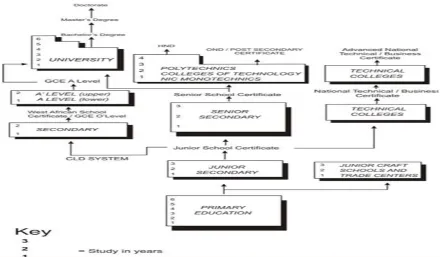
Education (NCCE). The diagram below shows the Nigerian Education System and
[image:36.595.112.553.191.448.2]Qualification structure
Figure 2. 2 Nigerian Education System and Qualification structure
Source: Federal Ministry of Education, (2013)
Nigeria, with an estimated population of about 168.8 million (World Bank, 2012)
depends on the Higher Education System to ensure that the citizens have skills and
competencies that will drive the economic growth of the country (Pathik et al., 2012).
Okebukola (2008) notes that higher education helps with the provision of high level
human resources for driving the economy with a view to rapid societal transformation.
What this means is that the greater the participation rate (the proportion of 18-35 years’
age group who are enrolled and attend higher education institutions) of citizens in higher
education, the wider the opportunity for rapid social and economic development. Besides
economic gains, the skilling of individuals assist in the integration of learners into the
knowledge society where the educated workers are better able to apply their skills and
22
Specifically, the goals of higher education in Nigeria, as contained in Section 5 of
the National Policy on Education (2014) are as follows:
a. Contribute to national development through high-level relevant manpower training.
b. Develop and inculcate proper values for the survival of the individual and the society.
c. Develop the intellectual capability of individuals to understand and appreciate their
local and external environments.
d. Acquire both physical and intellectual skills, which will enable individuals to be
self-reliant and useful members of the society.
e. Promote and encourage scholarship and community service.
f. Forge and cement national unity and promote national and international understanding
and interaction.
In order to achieve these goals, the higher education system needs to have the
requisite human resources at its disposal so as to be able to meet the HR requirement of
the nation. However, this is not so in Nigeria as there are critical academic staffing deficits
in all three types of tertiary institutions with the Polytechnics and the Colleges of
Education topping the list with a shortfall of 17,074 (57%) and 14,858 (57%) respectively,
followed by the Universities with 19, 548 (42%) as contained in the Nigeria Vision 2020
Report (NPC, 2009). This negative trend portends grave implications for the products that
eventually graduate from these institutions and calls for urgent steps for revamping the
ailing education sector.
2.6 The Management of the Nigerian Higher Education system
The responsibility for the management of all Federal Higher Institutions in Nigeria is
vested in the Federal Ministry of Education. The Federal Ministry of Education (FME) is
government body that directs education in all the states of the federation through the
National council of Education (NCE). The NCE is the highest policy making body in all
23
Federal Ministry of Education and the ones that relate to the higher education system are
as follows:
National Universities Commission (NUC): is responsible for the supervision of all the Universities in Nigeria.
National Board for Technical Education (NBTE):is a principal organ of Federal Ministry of Education specifically created to handle all aspects of Technical and
Vocational Education falling outside University Education. It was established by
Act No. 9 of 11th January, 1977.In addition to providing standardised minimum
guide curricula for technical and vocational education and training (TVET), the
Board supervises and regulates, through an accreditation process, the
programmes offered by technical institutions at secondary and post-secondary
levels. It is also involved with the funding of Polytechnics owned by the
Government of the Federation of Nigeria (http://www.nbte.gov.ng/).
National Commission for Colleges of Education (NCCE): which was established by Decree (now Act) 13 of 17th January, 1989 (Amended Act 12 of 1993) is
responsible for the maintenance of quality assurance in teacher education in
Nigeria.
Tertiary Education Trust Fund (TETFund) was established as an intervention agency under the TetFund Act - Tertiary Education Trust Fund (Establishment, Etc)
Act, 2011. TETFund is charged with the responsibility for managing, disbursing and
monitoring the education tax to public tertiary institutions in Nigeria. To enable
TETFund achieve the above objectives, TETFund Act, 2011 imposes a 2 per cent
(2%) Education Tax on the assessable profit of all registered companies in Nigeria.
The Federal Inland Revenue Service (FIRS) is empowered by the Act to assess and
collect Education Tax. The Fund administers the tax imposed by the Act and
disburses the amount to tertiary educational institutions at Federal and State
levels. It also monitors the projects executed with the funds allocated to the
beneficiaries.
The mandate of the Fund as provided in Section 7(1) (a) to (e) of the TETFund Act,