Georgia State University Georgia State University
ScholarWorks @ Georgia State University
ScholarWorks @ Georgia State University
Public Management and Policy Dissertations
Summer 8-11-2011
Sustainable Governance and Management of Defined Benefit
Sustainable Governance and Management of Defined Benefit
Plans in the Public Sector: Lessons From the Turbulent Decade of
Plans in the Public Sector: Lessons From the Turbulent Decade of
2000-2009
2000-2009
Rayna L. Stoycheva
Follow this and additional works at: https://scholarworks.gsu.edu/pmap_diss
Recommended Citation Recommended Citation
Stoycheva, Rayna L., "Sustainable Governance and Management of Defined Benefit Plans in the Public Sector: Lessons From the Turbulent Decade of 2000-2009." Dissertation, Georgia State University, 2011. https://scholarworks.gsu.edu/pmap_diss/44
Sustainable Governance and Management of Defined Benefit Plans in the Public Sector: Lessons from the Turbulent Decade of 2000-2009
A Dissertation Presented to The Academic Faculty
by
Rayna L. Stoycheva
In Partial Fulfillment of the Requirements for the Degree
Doctor of Philosophy in the School of Public Policy
Sustainable Governance and Management of Defined Benefit Plans in the Public Sector: Lessons from the Turbulent Decade of 2000-2009
Approved by:
Dr. Katherine G. Willoughby, Advisor Andrew Young School of Policy Studies
Georgia State University
Dr. Douglas S. Noonan School of Public Policy
Georgia Institute of Technology
Dr. Carter A. Doyle
Andrew Young School of Policy Studies
Georgia State University
Dr. David L. Sjoquist
Andrew Young School of Policy Studies
Georgia State University
Dr. W. Bartley Hildreth
Andrew Young School of Policy Studies
Georgia State University
Dr. Gregory D. Streib
Andrew Young School of Policy Studies
Georgia State University
iv
ACKNOWLEDGEMENTS
This dissertation would not have been possible without the guidance and input provided
by my dissertation committee. I would like to thank my advisor, Dr. Katherine Willoughby, for
agreeing to work with me on this topic, and for her input and support throughout the process.
Dr. David Sjoquist provided extensive feedback about the theoretical model. Dr. Douglas
Noonan provided considerable input into the development of the analytical techniques.
Dr. W. Bartley Hildreth, Dr. Greg Streib, and Dr. Carter Doyle contributed with comments at
different stages in the process.
I am also very grateful for the help provided by Keith Brainard, Research Director at the
National Association of State Retirement Administrators, specifically with the Public Fund
Survey dataset and my survey questionnaire. I would like to thank Georgia State University for
the research grant that funded part of the data collection for this project. Christina Zamboni at
Georgia State University administered the electronic survey and I was impressed by the extent of
support available on her part. I also appreciate the help of Tracy Williams with the data
collection.
Finally, I would like to thank everyone who has made my years in the PhD program a
memorable experience. I cannot possibly list all the faculty and fellow students during the years,
but I would like them to know that they are appreciated. Last but not least, I would like to thank
my husband for his support throughout the process, for his input in many academic discussions,
v
TABLE OF CONTENTS
ACKNOWLEDGEMENTS ... IV
LIST OF TABLES ... VII
LIST OF FIGURES ... VIII
LIST OF ABBREVIATIONS ... IX
SUMMARY ... X
CHAPTER 1: INTRODUCTION ... 1
Introduction ... 1
Motivation for the Study ... 2
Contribution to the Literature ... 7
CHAPTER 2: GOVERNANCE AND THE FINANCIAL MANAGEMENT OF PUBLIC PENSION SYSTEMS ... 9
Governance, Financial Management, and Investment Return ... 9
Governance, Fiscal Stress, and Pension Funding ... 15
Actuarial Assumptions and Pension Funding ... 18
CHAPTER 3: THEORETICAL FRAMEWORK ... 22
Agency Theory ... 22
Theoretical Model ... 23
Hypotheses ... 31
CHAPTER 4: DATA AND RESEARCH METHODOLOGY ... 39
Data Sources ... 39
Estimation Methodology ... 42
Arellano-Bond Estimator ... 44
Three-Stage Least Squares ... 46
vi
Dependent Variables ... 48
Independent Variables... 49
Descriptive Results ... 55
Pooled OLS ... 61
Arellano-Bond Estimation ... 69
Three-Stage Least Squares ... 75
Sensitivity Analysis ... 78
CHAPTER 6. CONCLUSION ... 88
APPENDIX 1 ... 93
APPENDIX 2 ... 95
APPENDIX 3 ... 99
vii
LIST OF TABLES
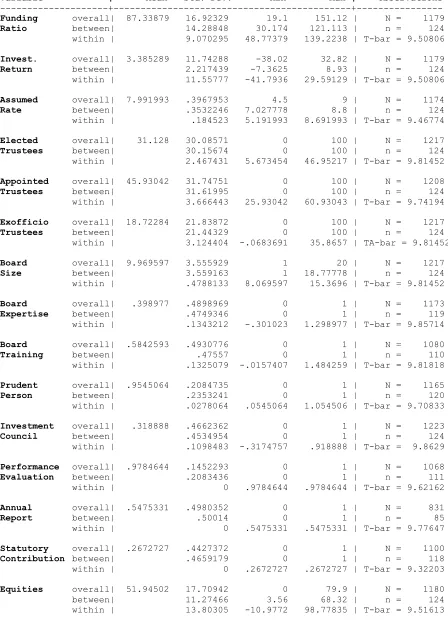
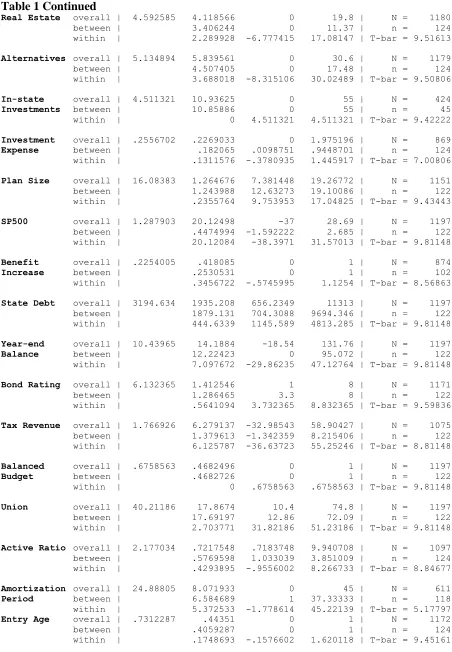
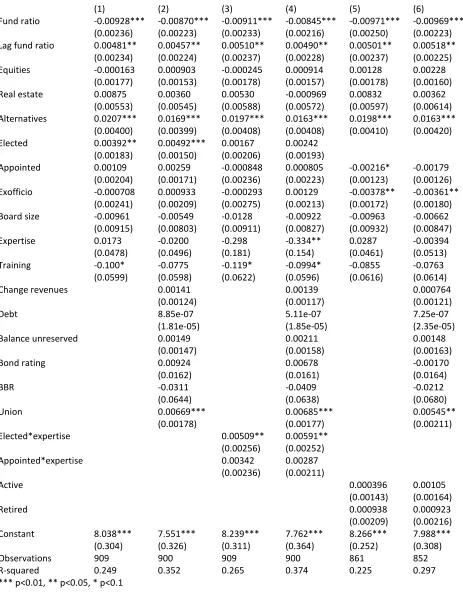
Table 1. Summary statistics for all dependent and independent variables ………..58
Table 2. Pooled OLS, Funding Ratio, with serial correlation and heteroskedasticity robust
standard errors ………...62
Table 3. Pooled OLS, Investment Return, with serial correlation and heteroskedasticity robust
standard errors ………...65
Table 4. Pooled OLS, Assumed Rate of Return, with serial correlation and heteroskedasticity
robust standard errors ………....67
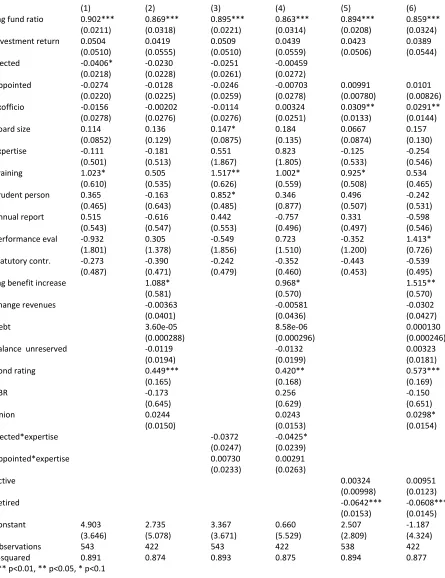
Table 5. Arellano-Bond Regressions, Difference GMM, Funding Ratio ………70
Table 6. Arellano-Bond Regressions, Difference GMM, Alternative Specifications ………….73
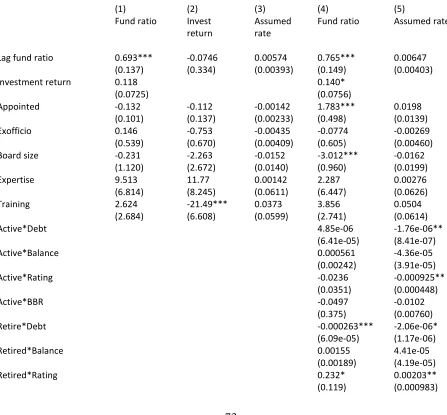
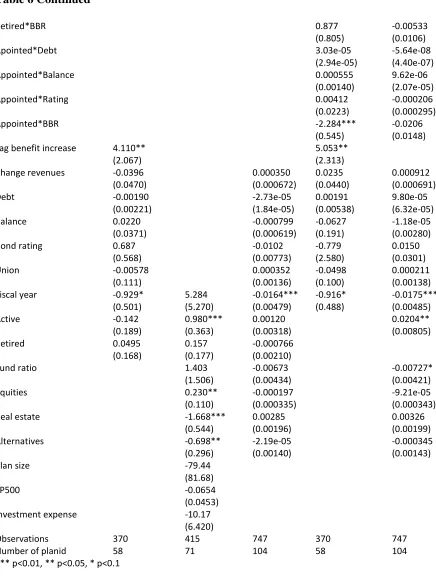
Table 7. 3SLS and 2SLS, Funding Ratio, Investment Return, and
Assumed Rate of Return ………...76
Table 8. Pooled OLS, with serial correlation and heteroskedasticity robust standard errors,
Imputed Data ………79
Table 9. Arellano-Bond Regressions, Difference GMM, Imputed Data ……….82
viii
LIST OF FIGURES
Figure 1: Schematic model of pension funding determinants ……….30
ix
LIST OF ABBREVIATIONS
BBR Balanced Budget Requirement
CAFR Comprehensive Annual Financial Report
COLA Cost of Living Adjustment
CPS Current Population Survey
DB Defined Benefit
DC Defined Contribution
ETI Economically Targeted Investments
FAS Final Average Salary
GAO Government Accountability Office
GASB Governmental Accounting Standards Board
NASBO National Association of State Budget Officers
NASRA National Association of State Retirement Administrators
OLS Ordinary Least Squares
PFS Public Fund Survey
2SLS Two-Stage Least Squares
x
SUMMARY
This study examined the determinants of public pension fund performance through the
lens of agency theory. The study sought to answer the following questions: (1) How much of the
fluctuation in the performance of pension plans is due to political interference – either directly
from decisions made by legislatures or through the governance structure of the pension boards,
after controlling for asset allocation, plan size, and other external factors? (2) Do pension board
expertise, education and training, and information disclosure requirements improve the
performance of pension plans? (3) Do pension trustees strategically determine the actuarial rate
of return (discount rate) in order to reduce contributions in times of fiscal stress for the pension
sponsor? Using longitudinal data of pension fund performance over the period 2000 to 2009
and instrumental variables methods to address endogeneity issues, the study found partial
support for the agency theory hypotheses. The results indicate that political interference through
reduced contributions was the main factor explaining pension performance. There was no direct
evidence about the negative impact of politically appointed trustees on pension performance.
1
CHAPTER 1: INTRODUCTION
Introduction
The pension systems for state and local government workers are major providers of
retirement income, as well as significant investors in US and international markets. According to
the US Census Bureau (2010), in 2008, the total number of members in these systems was 19
million, of which 7.5 million received some kind of benefits. Cumulatively, state and local
pension systems held over $3 trillion in assets in that year and indicated the use of a variety of
investment options. Most notably, more than $1 trillion was invested in domestic corporate
stocks, and $500 billion in international stocks. Given such economic and social importance, the
performance of these systems has attracted significant attention from the general public as well
as from academics.
A great deal of attention has focused on the funding levels of public pension plans. The
funding level – the ratio of assets to the present value of liabilities – is an indicator of the ability
of the plan to pay accumulated benefits in the future. Assets include employer and employee
contributions as well as investment returns. Due to the increased investment in equities in the
1990s, investment returns have become the largest component of pension assets, accounting for
almost three quarters of all pension assets, and the rest comprised of employee and employer
contributions (Almeida et al., 2009). Pension liabilities depend on the benefit parameters of the
plan, as well as actuarial assumptions built into the calculation of their present value so that they
can be compared to current assets. Benefit parameters include among others the benefit
multiplier (usually increasing with years of service), which determines the monthly pension
2
parameters are the early and the normal retirement age, cost-of-living adjustments (COLAs), and
vesting period (the years of service necessary for employees to have full rights over accumulated
benefits). The actuarial assumptions include demographic and economic indicators that vary
with the nature of the pension plan. Economic assumptions include estimates of investment
return (a function of the investment strategy of the pension plan), payroll growth, and inflation.
And, non-economic assumptions include forecasts of retirement rates, withdrawal rates, and
mortality rates, which are adjusted periodically based on the actual experience of the pension
plan.
Motivation for the Study
Pension sustainability is defined in this research as the ability of the pension sponsor to
pay promised benefits over the long run. Following this definition, sustainability is measured by
the funded ratio of the pension plan. Although the goal of Governmental Accounting Standards
Board (GASB) requirements is for pension plans to be fully funded (100% or higher), a 2008
GAO study reports that pension experts consider 80% or higher funding ratio to be acceptable
for public plans. Part of the reasoning behind this rule-of-thumb is that pension plans only
started working towards full funding in the 1990s as a result of the GASB requirements and they
have 30 years to reach full funding. Another reason why pension plans do not need to be fully
funded lies in the nature of the pension plan sponsor. State and local government have a very
low probability of going into bankruptcy, therefore, full funding is not necessary as it is in the
private sector (Munnell et al., 2008).
Concerns over the sustainability of public pension systems have been driven, of late, by
relatively recent guidelines by GASB regarding the accounting and reporting of pension
3
accounting and reporting guidelines in 1994 for state and local pension plans. Both were
amended by Statement 50 in 2007 to reflect changes in reporting for all post-employment
benefits, including health care benefits, which are for the most part unfunded. Currently, there is
an ongoing effort to further revise guidelines in order to address concerns about the transparency
and accounting practices of the existing pension financial reports (GASB, 2009). GASB issued a
preliminary statement in 2010 that if implemented would change, among other things, the
pension liability account for by governments from the annual unfunded obligation (the difference
between required contribution and actual contribution) to the total unfunded obligation (the
difference between assets and liabilities) (GASB, 2010).
Interest in these systems is further piqued by media reports regarding the mismanagement
of investments, deferrals of pension contributions by state and local governments, especially
during economic downturns, and ever growing unfunded liabilities. With the onset of the Great
Recession and the extreme stock market losses in 2008, state and local pension funds were again
in the public limelight. A series of articles in 2010 focused on the impact of the latest market
losses on pension liabilities and future contributions. One article warned about a ―death spiral‖
for public pension funds because of their growing benefit payments as a percent of assets and
their low average investment returns in the last decade (McNichol, 2010). In Missouri, the
Public School Retirement System was considering pension reforms in the face of expected
increases in the contribution rates from 14% to 19.5% (Young, 2010). As actuarially-determined
required contributions fluctuate with pension funding levels, this story applies to the majority of
public pension system who would have to find ways to increase their pension contributions with
4
The unprecedented losses in 2008 have triggered pension reforms throughout state and
local governments due to the significant drop in their funding status (Snell, 2010). Most of the
enacted reforms after the market downturn include increases in employer and employee
contributions, as well as benefit cuts in different forms (Snell, 2010). But the exposure of public
pension systems during the economic downturn has also generated a lot of research on the
impact of their current accounting and actuarial practices. Specifically, a very active line of
research has focused on how the reported pension liabilities change with different discount rates
than those currently used by pension funds, indicating even much larger liabilities than those
reported by pension plans (Novy-Marx and Rauh, 2010; Brown et al., 2010).
The drop in pension funding levels and the pressure that pension liabilities put on state
and local budgets have prompted Moody’s Investors Service to begin considering these liabilities
when appraising state credit ratings (Walsh, 2011). Although the potential for this has always
been brought up as one of the concerns regarding pension liabilities, the move by Moody’s
signifies a sharp shift in how pension liabilities are perceived. State and local governments now
will have to account for these liabilities in the same way they account for any other public debt.
Therefore, the impact of accumulating unfunded liabilities will be felt immediately by states
through increases in their borrowing costs.
Attempts to allay concerns about the current funding status of public pension plans are
made by some who argue that the funding status at any given point in time is not important due
to the taxing power of the plan sponsor. Since state and local governments are expected to exist
in perpetuity, they will be able to generate the revenues necessary to meet pension obligations.
However, one of the main rationales for pre-funding pension plans is the principle of
5
receive. Pensions and other post-employment benefits are part of the compensation package of
public employees, and therefore need to be paid as these government services are rendered
(GASB, 2009, p.4). Yet, demographic shifts that increase the ratio of retirees to workers and
sustained taxpayer efforts to impose constraints on the taxing power of governments
compromises the funding status of public pensions and reinforces the need for the sustainable
management of these plans.
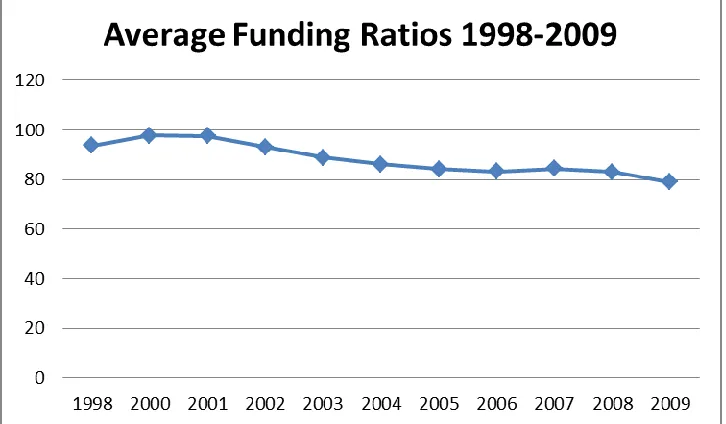
Generally, the funding status of public pension plans has followed the cyclical financial
market performance. The funding ratios of many state and local pension systems improved in the
1990s with the strong performance of the stock market, and as a result of increased equity
holdings in the portfolios of these systems. Mostly reflecting high investment returns, the mean
funding ratio increased from 86 percent in 1990 to 99 percent in 2000 (Yang and Mitchell,
2005).1 With much higher returns than expected, many governments used flush revenues as an
excuse to expand the benefits provided by their pension plans. In some instances, benefit
increases substituted for pay increases in order to attract and retain public sector workers. But
the implications for the actuarial value of pension liabilities were not taken into account. A case
in point is the City of Atlanta – benefit increases were approved in 2001 and 2005 and were
already putting pressure on the City budget by 2009. In fact, annual pension costs have tripled
since 2001 and by 2008, the City spent 20 percent of its budget on pension benefits (McWhirter,
2009).
Furthermore, the high investment returns in the 1990s created a ―contribution holiday‖
for many governments because assets grew at much higher rates than expected. Instead of using
the excess revenue to cushion against the proverbial rainy day – an economic downturn –
1 Yang and Mitchell, 2005, Table 1, p. 28. These numbers are from the PENDAT survey dataset; the number of
6
governments reduced their contributions to pension systems. PENDAT2 data reveals that the mean contribution rate dropped from about 12.9 percent in 1990 to 11.8 percent in 2000 (Yang
and Mitchell, 2005). During the economic decline of 2001 and 2002, when investment returns
then worsened, governments not only were unable to increase system contributions, but many
even reduced or deferred contributions into pension systems to balance state budgets.
Unfortunately, state and local governments appeared to rely heavily on risky stock
market returns to sustain their pension plans. However, the turbulent financial markets in the
past decade exposed the dangers of such an approach, especially when it does not account for the
potential disruptions of significant market downturns. The frequency and severity of the market
downturns after 2000 and their impact on state and local government finances imply that public
pension sponsors need to reconsider their approach to pension management. Simply put,
governments have favored short term over long term budget strategies in the management of
their pension funds.
This research examines the conflict between short and long term management of public
pensions, explains ―best practices‖ related to long term pension management and examines
factors that most positively and negatively influence pension management through up and down
economies. Specifically, this work seeks to answer the following questions: (1) How much of the
fluctuation in the performance of pension plans is due to political interference – either directly
from decisions made by legislatures or through the governance structure of the pension boards,
after controlling for asset allocation, plan size, and other external factors? (2) Do pension board
expertise, education and training, and information disclosure requirements improve the
2
7
performance of pension plans? (3) Do pension trustees strategically determine the actuarial rate
of return (discount rate) in order to reduce contributions in times of fiscal stress for the pension
sponsor?
Contribution to the Literature
While there has already been some interest in the governance of pension systems, results
from the research to date are inconclusive. Perhaps more importantly, little to no attention has
been paid to public pension performance in a down economy. Early studies (Romano, 1993; Hsin
& Mitchell, 1997; Chaney et al. 2002) provide intriguing findings about the impact of fiscal
stress on pension health, but are limited by the lack of comprehensive data on a majority of
pension systems and given their cross-sectional nature. The latest published studies about public
pension governance and management (Hess, 2005; Useem & Mitchell, 2000; Yang & Mitchell,
2005) use a longitudinal survey of pension systems known as the PENDAT. The PENDAT
provides rich material for examining the factors driving pension performance, but the data is
limited by the fact that it was collected in the 1990s, a period characterized by strong stock
market performance and high investment returns for pension plans.
This study examines only defined-benefit (DB) public pension plans.3 There are very
few public stand-alone defined-contribution (DC) plans (Alaska, Michigan), although many
retirement systems offer an optional or supplemental defined-contribution or hybrid plan
together with the defined-benefit plan. The optional DC plans have been introduced in an effort
to provide more flexible retirement options for public employees. However, the membership in
alternative pension plans is relatively minor compared to total membership in DB plans.
3 Defined-benefit pension plans promise a fixed benefit after retirement depending upon length of service and final
8
The study uses a new public pension dataset for fiscal years 2000 through 2009, a period
of significant stock market fluctuation. The goal of this research is to investigate pension
management in such a period and generate recommendations about best practices for pension
management given this environment. Further, this research models the interplay of political,
governance, and financial management factors using agency theory as a framework. This
approach structures more rigorously the discussion of expected relationships. The empirical
methods take into account the simultaneous determination of the funding status, investment
return, and assumed rate of return. The panel dataset allows the use of fixed effects methods and
simultaneous equations methods in order to control for endogeneity due to unobserved fixed
9
CHAPTER 2: GOVERNANCE AND THE FINANCIAL
MANAGEMENT OF PUBLIC PENSION SYSTEMS
There are two outcomes used as measures for the short-term and long-term performance
of pension systems – the investment return and the funding ratio. The investment return is
determined by the financial management and asset allocation decisions for the particular pension
fund. The funding ratio is determined by the contributions to the plan, investment gains, and
changes in pension liabilities. There have been a number of studies that examine the
determinants of these outcomes. Additionally, several studies have looked at whether actuarial
assumptions are determined strategically depending on the fiscal condition of the pension
sponsor rather than reflecting the true characteristics of the pension plan. This section reviews
the literature on the determinants of investment return, pension funding, and actuarial
assumptions.
Governance, Financial Management, and Investment Return
Romano (1993) was among the first to examine the effect of pension governance,specifically board composition, on investment return for state pension systems. The focus in the
study is on pension fund activism and corporate governance, but she also explores the effect of
board composition on public pension investment returns. The study uses random effects panel
methods with five years of data for the 50 state public employee retirement systems, from 1985
to 1989. Romano finds that board trustees elected by pension fund members are associated with
stronger investment performance, after controlling for asset allocation. These findings are in line
with expectations that politically appointed trustees may not select the most optimal investment
10
that trustees are elected, and therefore held accountable to pension members through the election
process, not that they are pension plan members only. She finds pension membership to be an
insignificant predictor of investment performance. Romano also reports a negative impact of
policies of investment restrictions, including economic investments and international restrictions,
on investment return.
Coronado et al. (2003) also study the impact of board composition, as well as in-state
investments and investment restrictions, on the financial return of public pension plans. Their
sample is based on one year of PENDAT data, with a total of 246 retirement systems responding
for fiscal year 1998, and the model is estimated with linear regression. They find a positive, but
insignificant, relationship between elected trustees and investment return, and negative, also
insignificant, relationships between in-state investments and investment restrictions on the one
hand, and investment return on the other. Furthermore, they find that the investment returns of
public plans are lower than those of comparable private plans after controlling for equity
allocation, plan size, board composition, and investment practices. They conclude that this effect
is most likely due to political influence that is not adequately captured by the variables in their
study, that include board composition, in-state investments and investment restrictions.
However, their findings are limited by the cross-sectional data.
On the other hand, Murphy and Van Nuys (1994) do not find any such differential in the
performance of public and private pension plans after controlling for asset allocation and plan
size. They argue that the main goal of plan member trustees is to maximize the security of their
pensions rather than investment returns. Unlike Romano (1993), they focus on all plan member
11
performance.4 The sample in their study consists of all state administered pension systems, a total of 107 in 1992, and investment data for 1988 to 1992. The OLS estimates for investment
performance indicate a negative (and marginally significant) relationship between trustees who
are retirees and investment return. They also find that portfolio allocations are more
conservative when there are more retirees on the board of trustees, which may explain the lower
investment returns of such pension plans.
Useem and Mitchell (2000) examine the impact of governance policies on investment
return with a focus on the intermediary role of investment strategies. Governance policies
expected to influence performance in their study include statutory investment restrictions,
independent investment performance evaluations, responsibility of the board for asset allocation
and investment decisions, and the size and composition of the board. The investment strategies
include tactical investment, equity investment, external investment management, and
international investment.5 The data analysis is based on 1992 and 1993 PENDAT data, with a final sample of 104 pension systems. They measure investment performance with the lagged
investment return and estimate their models with OLS.
They find that governance policies influence investment return only indirectly, through
the choice of investment strategies. Even then, board composition does not appear to be a
predictor of investment outcomes. Specifically, they find that constitutional restrictions on
investment are associated with less tactical, equity and international investments. Systems with
4 Plan member trustees may be appointed or elected to the Board. Consequently, the overall proportion of plan
member trustees is higher than the proportion of elected plan member trustees.
5
12
independent evaluations6 invest more in equities and internationally. Larger boards are more likely to invest in equities and internationally, and less likely to contract out investment
management. Investment strategies, in turn, are the key predictors of investment return.
Specifically, higher allocations to equity and international investments are associated with higher
investment return. This is another study limited by the cross-sectional analysis and timing of the
study – conducted in a period of high stock-market returns that drive investment performance.
Yang and Mitchell (2005) examine the determinants of investment return and pension
funding with seven years of PENDAT data, using pooled OLS regressions to estimate a set of
three equations in order to address endogeneity issues. Similarly to Murphy and Van Nuys
(1994), they find that pension investment performance suffers if a greater proportion of the
trustees are retired plan members. This result may reflect one of several underlying causes.
Either plan members engage in less risky investments in order to protect the security of their
benefits (as argued by Murphy and Van Nuys (1994)), or they simply do not have any incentives
to monitor the performance of the pension plan since their benefits are guaranteed.
Alternatively, it is possible that retired trustees are less likely to have financial management
expertise and therefore make suboptimal investment decisions. Further, the authors find that
annual reports sent automatically to all pension system members improves investment
performance, though conducting an independent performance evaluation of a system was not
found to be a significant predictor of investment return. In line with the results of Useem and
Mitchell (2000), Yang and Mitchell (2005) find that a higher percentage of equity investment is
associated with higher investment return.
6 Some retirement systems contract with an external organization to conduct a periodic independent performance
13
Another study using data for all years from the PENDAT survey was conducted by Hess
(2005) with a focus on governance and investment performance. Hess focuses on
single-equation estimation of investment performance, using OLS regressions, and therefore, does not
address endogeneity concerns, although he employs a longitudinal dataset. He examines how
investment returns vary with board composition and board decision authority, as well as the
presence of prudent person principle7 and ethics code, and automatic distribution of the annual report, which are deemed to potentially control agency issues. Hess finds that systems with
boards with higher proportions of appointed trustees indicate better investment performance,
contrary to expectations based on agency theory. He also reports a curvilinear relationship
between boards with higher proportions of member-elected trustees and investment return –
initially performance improves, but as more of these members make up the board, returns
diminish. These findings partially support agency theory, but indicate that there are other factors
particular to board composition that may influence investment performance, such as the expertise
of the trustees. If appointed trustees are more likely to have investment experience, then they
will make better investment decisions overall. However, if there is political pressure to invest in
suboptimal but politically preferred investments the two effects operate in the opposite direction
and will be difficult to distinguish empirically when using only appointed status as an
independent variable.
Surprisingly, requirements for distributing annual reports to all system members and the
existence of an ethics code appear to negatively impact investment performance. Perhaps such
controls restrain board members from investment decisions of higher risk that potentially
produce higher returns. Additionally, Hess finds that board authority over asset allocation is
7 Prudent person principle is a guideline that is explicitly specified for the majority of pension boards that they will
14
associated with lower investment return; he explains this result as the lack of expertise in
tailoring the appropriate asset allocation strategy for the particular pension system. When
pension boards do not have investment authority, there is usually a separate investment board
composed of professionals who are responsible for asset allocation and other financial
management decisions.
Although there is not much formal analysis about the impact of trustees’ expertise and
training on pension performance in the U.S, concern with these issues was brought up by the
2001 Myners Report on institutional investors in Britain. The majority of the surveyed trustees
were found to have no professional qualifications in financial management; they were exposed to
very little training and afforded limited preparation before investment meetings of the board.
The report further indicates that pension trustees cannot properly evaluate the recommendations
of external investment managers or tailor an optimal investment strategy for their pension fund.
Given the nature of the trust organization, there are two approaches to this problem according to
Clark (2004). Either trustees can be required to have the necessary expertise to engage in
financial management decisions, or the pension system can employ internally investment
managers who would be accountable to the particular pension system in order to avoid another
set of agency problems between the trustees and the consultants. The report suggests, however,
that the second option would be cost-effective only with larger pension funds because they need
to pay competitive salaries in order to attract high quality financial managers.
In summary, previous studies of the impact of pension governance and financial
management on investment return have employed different approaches to the specification of the
models and the empirical testing, and therefore their results are not directly comparable and may
single-15
equation models, and only Yang and Mitchell (2005) attempt to control for possible endogeneity
problems, although they employ pooled OLS, which does not control for unobserved fixed
effects. Romano (1993) and Hess (2005) focus on member-elected trustees, while the other
studies use all pension member trustees in their board composition variable. They also use
different measures of investment return, due to data availability. Finally, no study has examined
directly the impact of education and training requirements of board members on pension
performance, although these relationships have been discussed tangentially in the discussion of
the results. This study builds on the existing literature by improving the estimation methodology
in order to account for the endogeneity of the investment and funding variables. It will also be
the only study in the extant literature to capture the separate effects of board composition and
financial expertise on investment performance.
Governance, Fiscal Stress, and Pension Funding
Two of the studies discussed above also examined the impact of governance on pension
funding. Murphy and Van Nuys (1994) studied in a separate equation the impact of board
composition on pension funding for the period 1988 to1992. Their analysis shows that active
members on the board of trustees of pension systems are associated with higher funding levels.
The coefficient for retirees is positive, but not significant. These findings support expectations
based on agency theory that plan member trustees are more likely to be concerned with the
long-term sustainability of pension plans and less likely to be influenced by political pressures.
However, their analysis is based on pooled OLS regressions and controls only for plan size and
year effects and not for fiscal stress and investment returns.
Yang and Mitchell (2005) study the determinants of stock funding (the ratio of assets to
16
model. They find that plan members on the board of trustees, both retired and active, are
associated with lower funding ratios, in contrast with expectations from agency theory. Again,
this measure of board composition is different than the one used by Romano, which focuses on
elected trustees. Most importantly, the authors also refute the conclusions of earlier studies of
Chaney et al. (2002) and Eaton and Nofsinger (2004) by finding that fiscal stress and balanced
budget requirements at the state level are not significant predictors of pension funding levels.
However, Yang and Mitchell (2005) measure fiscal stress as the deviation of the unemployment
rate from the ten-year average, while other studies employ measures focused on the actual strain
on the budget, such as debt ratios and budget balances.
The Chaney et al. (2002) study tests whether the presence of state-level fiscal stress and
balanced budget requirements are associated with pension underfunding. They measure state
fiscal stress with the year-end budget balance, but also include long-term general obligation debt,
bond rating, and tax capacity as supplementary measures of fiscal condition. OLS data analysis
is based on cross-sectional data for state pension plans in 1994-1995. They find strong statistical
significance for all fiscal constraint variables, indicating that pension funds are used as a source
for balancing state budgets. The mechanism through which this most commonly happens are
reduced employer contributions, but also changes to the assumed rates of investment return may
occur and this too can lead to lower required contributions. The limitation of their study is the
cross-sectional data and the lack of other explanatory variables, such as governance factors and
investment return.
Another study focusing on the impact of fiscal constraints on pension funding was done
by Eaton and Nofsinger (2004) with five years of PENDAT data in the 1990s. The authors
17
measured by the ratio of interest payments to revenue and debt to revenue at the state level.
Additionally, they control for political pressure with an indicator variable for whether the plan is
engaged in economically targeted investments and investment restrictions. They estimate the
models with OLS methods for all observations. They find that pension sponsors with higher
levels of fiscal constraints and with political pressure realize lower funding levels. Similarly to
Chaney et al., the authors do not control for board composition or investment returns as
determinants of pension funding.
One of the most recent studies regarding the determinants of pension funding was
conducted by Harper (2008). He uses data for fiscal years 2001 through 2005 including a total of
69 public pension systems (33 state and 36 municipal) for each year. This is the only study,
other than Yang and Mitchell’s (2005), that uses a multi-equation estimation to address
endogeneity issues. Harper’s theoretical approach challenges some of the assumptions based on
agency theory. He argues that plan members may have stronger incentives to engage riskier
investments as higher returns are more likely to translate into benefit increases, while lower
returns are not likely to decrease their benefits. This is premised on the fact that most public
pensions remain defined-benefit and that large unfunded liabilities would not impact pension
design, which may not be the case as illustrated by the pension reforms initiated after the 2008
financial market collapse. It also assumes that employee contributions will not rise due to worse
than expected investment performance.
Contrary to his expectations, Harper finds that both elected and appointed trustees exhibit
a more conservative investment strategy by allocating fewer assets to equities. These findings
suggest that elected trustees are risk-averse rather than risk-taking, and appointed trustees appear
18
ex-officio trustees are associated with higher funding ratios. His findings indicate that agency
problems may be alleviated by the high reputation stakes for ex-officio trustees, but the impact of
potential agency problems for appointed trustees is not clear.
Overall, studies of pension funding have focused on either the governance factors or
fiscal stress as determinants of pension funding. Although the cross-section studies and
anecdotal evidence seem to indicate that fiscal stress is associated with reduced contributions to
pension fund, longitudinal studies do not find such an effect after controlling for governance
factors and investment return, as illustrated by the results in Yang and Mitchell (2005). The
existing literature also finds conflicting results about board composition and the potential
political interference in funding decisions. The only two studies that attempt to control for the
endogeneity of pension funding decisions (Yang and Mitchell (2005) and Harper (2008)) find
conflicting results regarding board composition, but they measure the number of plan members
on the board differently. They are further not comparable because Harper (2008) does not
include measures of fiscal stress in his models.
Actuarial Assumptions and Pension Funding
A great concern about the sustainability of pension systems regards the ability of state
and local governments to defer contributions during a down economy or to exert pressure on
board members to change the actuarial assumptions in order to lower the actuarially-determined
required contributions. The latter problem is more difficult to observe, though it has serious
implications about the long-term sustainability of a pension system by undermining its actual
funding status. For example, an increase in the assumed long-term rate of investment return
19
rates in the future. However, this problem is not possible to observe until investment returns do
not realize in the future and expose the underfunding of the pension plan.
The few studies that have examined directly the question of the possible manipulation of
the actuarial assumptions find significant results from their estimations. Among the three studies
discussed here, only Hsin and Mitchell (1997) examine both fiscal stress and pension governance
factors in their analysis, while the other two studies focus on fiscal stress only. Hsin and
Mitchell use 1992 PENDAT data, with a total of 325 systems (85 state and 240 local), to
estimate the impact of governance and fiscal stress on actuarial assumptions and actual employer
contributions. They measure fiscal stress as the deviation of the current year unemployment rate
from the five-year average. They find that plans with more elected board members have lower
assumed interest rates and spread rates (difference between the interest rate and the wage growth
rate). The lower rates result in higher actuarially required contributions to the pension fund, and
consequently better funding.
Their results are consistent with agency theory, which expects that pension members on
the board of trustees would not be influenced by political pressure in their decisions. Further, the
tendency to manipulate assumptions is stronger when the state is experiencing an economic
downturn, although the coefficient is significant only for the spread rate, not for the discount
rate. They also find that well-funded plans choose lower actuarial rates, which allows them to
make enough contributions to maintain their funded status. Although statistically significant, the
magnitude of these coefficients is small. But the implication of their findings is that actuarial
assumptions cannot be used as exogenous variables when assessing the funding status of public
20
In addition to the impact of fiscal stress on pension funding, Chaney et al. (2002) also test
whether fiscal stress and balanced budget requirements result in a higher assumed rate of return.
They find that states that have balanced budget requirements select higher discount rates during
economic downturns, one indication that they divert funds from pensions to other areas.
However, fiscal constraint by itself is not associated with higher discount rates, implying that
states use pension funds only when they have to balance their budgets. The implications of these
findings are limited by the cross-sectional data and the lack of governance variables, which other
studies find to be significant predictors of the discount rate.
Eaton and Nofsinger (2004) study the effect of fiscal stress on three types of actuarial
assumptions - the assumed rate of return, the wage growth rate, and the amortization period8 for public pension plans. Their fiscal constraint variables measure interest expenditures per revenue
and total debt per revenue. Their analysis is based on a cross-sectional pool of five years of
PENDAT observations and uses OLS to estimate the impact of fiscal stress on each one of the
assumptions. They find that states with fiscal constraints have higher expected rate of return and
longer amortization period, both leading to lower actuarially determined contributions.
However, the analysis of the actuarial assumptions controls only for asset allocation but not for
governance factors and funding status, so the results are not directly comparable to those of Hsin
and Mitchell (1997).
In summary, the studies of the determinants of actuarial assumptions vary significantly in
their models and the data that they use, and therefore the findings are not directly comparable.
All studies find some impact of fiscal condition on actuarial assumptions of pension plans.
However, the extent of the impact and the channels through which actuarial assumptions are
8 The amortization period is the number of years over which the unfunded pension liability is projected to be paid
21
influenced have not been established in the current literature. It is important to establish that
actuarial assumptions are not independent of the fiscal condition of the sponsor and the funding
of the pension plan, in order to control for these factors when examining the funding status of
pension plans. But it is also important to determine if any pension governance structures
22
CHAPTER 3: THEORETICAL FRAMEWORK
Agency Theory
Agency theory is used here to examine the governance and the financial management of
public pension plans. Governance includes all the mechanisms in place designed to regulate the
relationship between pension stakeholders, particularly between the board of trustees on the one
hand, and the beneficiaries and taxpayers on the other hand. Agency models present alternative
governance structures designed to address problems of incomplete information and goal conflict
characteristic of an agency relationship. An agency relationship is defined by Levinthal (1988)
as a relationship ―between two (or more) parties when one, designated as the agent, acts on
behalf of another, designated the principal‖ (p. 155). The necessity for alternative governance
mechanisms arises from two assumptions about the nature of the agent and the principal. First,
departing from neoclassical economic assumptions, it is very likely that the principal does not
have complete information about both the actions and the characteristics of the agent. These two
aspects of incomplete information are also known as ―moral hazard‖ and ―adverse selection.‖
Second, it is further assumed that the agent and the principal have conflicting goals (Levinthal,
1988, p.156). Therefore, the principal cannot ensure that the agent is working in the direction of
furthering the principal’s goals.
Agency models have been used extensively in the context of corporate governance,
where shareholders (the principals) delegate all management decision-making to managers (the
agents) (Jensen and Meckling, 1976). This separation of ownership from the decision-making
may result in inefficient outcomes if agency assumptions of goal conflict and uncertainty are
true. As a result, agency models have generated complex compensation packages and contracts
23
outcome-based contracts and monitoring (Eisenhardt, 1989; Levinthal, 1988). There are
trade-offs involved in the use of either one approach based on the costs of measuring the outcomes and
costs of monitoring. Outcomes in an agency relationship that are characterized by uncertain
cause-effect relationships are more suitable for behavior monitoring controls, because the
outcome cannot be attributed solely to the actions of the agent. There also have been extensions
to agency models involving repetition of the relationship over time, which is expected to
improve efficiency, and compensation based on the performance of other agents (Levinthal,
1988).
Theoretical Model
In order to apply agency theory to public pension plans, we need to identify the
stakeholders and their motivations, and to examine whether there are goal conflicts and
information uncertainty that could potentially generate agency issues. The analysis here includes
the following pension stakeholders: pension members, taxpayers, pension sponsors – state and
local governments, and the pension boards of trustees (Hess and Impavido, 2004). Other pension
stakeholders include those that provide financial services, such as investment managers and
actuaries, but they are not considered formally in the model.
All stakeholders in this model consider trade-offs between choices available to them that
impact the funding status of the pension plan. Due to the long-term nature of pensions, these
choices always involve trade-offs between some form of current and future consumption. The
inherent conflict in pension funding arises from this inter-temporal choice. The principle of
intergenerational equity requires that current taxpayers pay for the services that they receive,
which would include paying for both the salaries and benefits of public employees. However,
24
affected by how each stakeholder group discounts events in the future. These trade-offs are
discussed for each stakeholder group below.
Pension members (current or retired) are the group who has the most direct stake in the
sustainability of public pension plans. First, pension benefits are part of the compensation
package of public employees, so they have expectations about that source of retirement income.
Also, most public employees, unlike private sector employees, contribute to their defined-benefit
plans, so they have a direct stake in those accumulated assets. Finally, about one-third of state
and local employers do not participate in the federal Social Security program, so their pension
plans are the principal source of retirement income for these employees.9
For defined-benefit plans, it is generally assumed that current members may not see any
changes in their benefits regardless of plan performance because their benefits are fixed by
contract.10 However, contributions for active members may increase if it is necessary to improve
the funding of the plan. Also, the extent to which benefits are protected depends on state law and
case law, and whether the pension member is vested in the pension plan.11 On the other hand, if
the plan performs better than expected and becomes overfunded, active and retired members may
see an increase in their benefits (for example, through cost-of-living increases or increases in the
benefit multiplier).
9
Among the pension plans in the Public Fund Survey, all employees in 26 plans and some employees in 7 plans were not eligible for Social Security coverage as of fiscal year 2009.
10 However, state legislation in 2010 has tried to change some of the benefits to current pension members, including
cuts in COLAs for retirees and increases in the retirement age. Colorado reduced the 2010 COLA from 3.5% to 0, and limited future COLAs to 2% provided there are no large market losses. South Dakota reduced the 2010 COLA from 3.1% to 2.1% and tied future COLAs to pension funding levels. Minnesota also reduced 2010 COLA and future guaranteed COLAs (Fehr, 2010). All of these proposals are challenged in the courts by employees and retirees.
11 In some states vesting determines the beginning of the binding contractual relationship between the employer and
25
Public employees decide on trade-offs about pension contributions and benefits. They
may bargain collectively about their level of contributions, or may influence contributions
indirectly through the investment strategy of the pension board. A riskier investment strategy,
with more assets invested in equities, may generate higher investment returns, and therefore
lower contributions. However, if public sector employees are risk-averse, they may value more
certain outcomes about their benefits and contributions, versus high-return but high-risk
outcomes. In fact, it is generally and traditionally assumed that public employees trade-off
higher salaries in the private sector for higher benefits and more secure employment in the public
sector (Buurman et al., 2009; Murphy and Van Nuys, 1994). To the extent that this is the case,
public sector employees can be considered to be more risk-averse than private sector employees.
Therefore, pension member trustees do not have a strong inter-temporal mismatch of their
incentives and are expected to contribute to stable funding levels.
The case of retired pension members needs to be addressed with several caveats.
Retirees face a moral hazard problem if they choose to support a more risky investment strategy.
If the plan does not perform well, they have nothing to lose since their benefits have already been
determined and they do not make any contributions. But, if the plan exceeds its returns, they
may get higher benefits from one-time COLAs, and this scenario appears to have some historical
support. The extent of this moral hazard problem is subject to empirical verification for several
reasons. First, levels of risk-preferences may vary among individuals, so the aggregate result
may be insignificant. Second, retirees may fear that risky exposure may make their pension
benefits less secure in the future, as it is currently illustrated by cuts in guaranteed COLAs. In
26
Another stakeholder group for defined-benefit plans are taxpayers, who bear directly the
cost of inadequate pension funding with DB plans, or the benefit of overfunding. If pension
plans are underfunded, taxpayers may have to make up for the necessary revenue for pension
contributions either through higher taxes or less government spending in other areas. If pensions
are well-funded or overfunded, taxpayers may see a decrease in their taxes or an increase in other
areas of government spending. Taxpayers trade-off the level of taxes that they pay in the current
period and the taxes that they will pay in the future to honor the promised benefits.
Rational taxpayers would know that any current underfunding will come at the cost of
higher taxes in the future. However, they may discount the future at a very high rate, and
therefore shift consumption to the current period. Further, taxpayers may have limited
information regarding pension funding, including the actual level of pension funding. As a
result, they would be more likely to favor tax reductions (or no tax increases) in the current
period because they do not have enough information about the extent of the trade-off involved in
the future (Rogoff, 1990; Nordhaus, 1989). One of the main arguments of proponents of
market-value reporting of pension obligations is that it would provide better information to taxpayers
about the cost of promised benefits, while current accounting and reporting practices may
underestimate those (Gold and Latter, 2009).
State and local governments are the third stakeholder group with competing priorities as
both employers in the public sector and elected representatives of taxpayers. Particularly, the
long-term nature of pension funding competes with the short-term priorities of governments,
defined and restricted by the electoral cycle. Generally, it is widely accepted that elected
officials are interested in being reelected, whether for opportunistic or ideological reasons
27
characterized by agency problems associated with incomplete information, modeled as
uncertainty about the competence of the elected official. A signaling mechanism regarding
competence is how well the elected official understands and manages the budget. If the elected
official is able to increase spending without increasing taxes, this is considered a signal of high
competence because the official essentially can do more with less. Under this scenario, if there
is a trade-off between current and future consumption, where the impact on future consumption
is difficult to observe or estimate (incomplete information), the elected official has an incentive
to shift consumption from the future to the current period in order to be reelected.
The presence of what Rogoff terms ―a budget cycle‖ would lead to consistent
underfunding of pension systems in election years and better funding during non-election years.
But this cycle is further worsened by fiscal shocks that do not allow the sponsor to increase
pension contributions due to significant contractions in the economy and local budgets. On the
other hand, when pension plans become overfunded, as has been the case during the exceptional
investment returns during the 1990s, elected officials are presented with a set of incentives that
match their short-term goals though both undermine the sustainability of pension plans. When
plans are overfunded, politicians can please both their employees and their constituents by
increasing benefits, reducing contributions and also reducing taxes. Cyclical adjustments in the
other direction are precluded by opposition to higher taxes and the strong protection of promised
benefits.
Given the incentive structure of the different stakeholders and the nature of
defined-benefit plans, it can be seen that the risk of poor performance in these plans is shared by plan
members and taxpayers (Hess and Impavido, 2004). However, these groups face a free-rider
28
The cost of monitoring to each individual is very high, while the benefits accrue to everyone.
As a result, in the US, the majority of state and local pension plans are governed by a board of
trustees who have a very active management role, encompassing investment policy and asset
allocation, actuarial assumptions, and some role in benefit determination (although usually
benefits need to be approved by the legislature). Trustees are selected in three ways, as
determined by the statute establishing the pension system. Some are appointed by the governor
or legislative body, or serve as part of their job (ex-officio), from here on referred to as political
trustees. The remaining trustees may be plan members, both active and retired, who can be
elected by plan participants or appointed by the governor or legislature, but are trustees by virtue
of primarily being plan members. The trustees are the agents for both pension members and
taxpayers, in place to ensure the sustainable management of the pension plan.
It is assumed that trustees who are plan members have interests that are aligned with
those of the other plan members. Their goal is to ensure the long-term sustainability of the
pension plan through full funding and a prudent investment strategy. They have an incentive to
ensure that employers make the full required contributions to the plan. They also have an
incentive to design an investment strategy that is most appropriate given the characteristics of the
particular pension plan and maximizes the potential investment returns. They bear directly the
consequences of their decisions as pension members, and furthermore, those who are elected
have an additional reputation incentive.
Political trustees, however, have a different set of incentives. Since they are not plan
members, they do not bear directly any risk from the poor performance of the plan. They may be
motivated by external rewards, such as reputation effects and personal career concerns. Since
29
rewards. Therefore, appointed or ex-officio trustees may be subject to political pressure to make
management decisions that would either lower the employer contribution, or use pension funds
for purposes that do not necessarily maximize the retirement security of plan members.
Although the trustee institution establishes a fiduciary responsibility to manage the pension
assets in the best interest of pension beneficiaries following prudent person guidelines, it is not
clear to what extent these are binding in practice. Reputation stakes may mitigate somewhat the
agency problems arising in this situation, but the careers of political trustees depend more
heavily on their reputation within political circles. However, reputation effects may be stronger
for ex-officio trustees who may be in elected offices, and therefore, they may care about the
impact of their decisions on the electorate.
The next section focuses on the specific hypothesized relationships explored in this study.
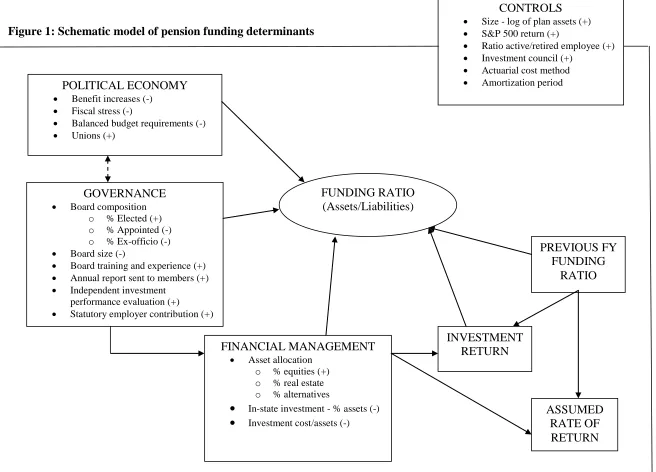
The schematic model in Figure 1 illustrates the key hypothesized relationships and lists the main
30 Figure 1: Schematic model of pension funding determinants
PREVIOUS FY FUNDING RATIO FUNDING RATIO (Assets/Liabilities) GOVERNANCE
Board composition o % Elected (+) o % Appointed (-) o % Ex-officio (-) Board size (-)
Board training and experience (+) Annual report sent to members (+) Independent investment
performance evaluation (+)
Statutory employer contribution (+)
FINANCIAL MANAGEMENT Asset allocation
o % equities (+) o % real estate o % alternatives
In-state investment - % assets (-) Investment cost/assets (-)
INVESTMENT RETURN POLITICAL ECONOMY
Benefit increases (-) Fiscal stress (-)
Balanced budget requirements (-) Unions (+)
ASSUMED RATE OF RETURN CONTROLS
Size - log of plan assets (+) S&P 500 return (+)
Ratio active/retired employee (+) Investment council (+)
31
Hypotheses
This section discusses in more detail the key hypothesized relationships, which will be
tested empirically in the next section. The first set of hypotheses focuses on the set of
governance variables. It is followed by hypotheses about the impact of the financial
management variables, political variables, and the controlling variables.
H1A: Political trustees are expected to be associated with lower pension funding and lower
investment returns.
H1B: Trustees who are plan members are expected to be associated with higher funding ratios
and higher investment return.
Following the implications of potential agency problems, board members who are
political appointees are expected to be influenced by political pressures, and the decisions they
make may be suboptimal for the performance of the system. They may manipulate the actuarial
assumptions in order to decrease the employer contributions to the pension system and thus
undermine the long-term funding of the system. Or, they may engage in targeted investments at
the state/local level with higher risk but not commensurate compensation for this risk in terms of
return. Hess (2005) finds a positive impact of appointed trustees on investment return, while
Romano (1993) finds a negative impact of appointed and ex-officio trustees on investment
return.
On the other hand, board members who are plan members are expected to have their
interests aligned with those of beneficiaries. Plan members bear directly the results of pension
plan performance through changes in their contributions or benefits, and they are not subject to
the same type and extent of political pressure that political appointees would be, given their
32
of plan members should advance pension fund performance. Harper (2008), Hsin and Mitchell
(1997) find the expected positive relationship, while Yang and Mitchell (2005) find a negative
impact of pension members on funding levels.
There is an ongoing debate about the expected effect of having ex-officio board
members. On the one hand, they are perceived equal to political appointees and expected to be
subject to the same agency problems. On the other hand, it is argued that ex-officio trustees
often have high reputation stakes involved because of their prominent positions. Therefore, they
will try to avoid negative publicity by ensuring the successful management and performance of
the pension system. In this study, ex-officio status is measured as appointment to the board of
trustees as a result of holding a government office such as a chief financial officer. In line with
agency theory, we are positing a negative relationship between ex-officio trustees and pension
performance.
H2: Training and expertise in financial management is expected to be associated with higher
investment return and pension funding levels.
Elected plan members to public pension boards may not and usually do not have the
necessary knowledge and/or experience to understand complex investment decisions or control
investment managers adequately. Appointed trustees who are required to possess substantive
knowledge and experience in financial management can be expected to make better investment
decisions and therefore generate higher returns on investment. In the model above, we control
for financial management experience and knowledge by including a dummy variable indicating
whether experience or education are required for appointment to the board of directors. This
33
Given the available information about expertise requirements, it may be difficult to
account for the complete impact of pension expertise. Controlling for experience and knowledge
may account for differences in performance where there is an explicit statutory requirement.
However, if such experience is not required but is nevertheless present, it may be difficult to
differentiate between the effect of experience (which is expected to be positive) and the effect of
political pressure (expected to be negative) on performance.
H3: Information controls in the form of independent investment performance evaluations and
annual reports sent to all members are expected to improve the performance of the pension system.
The external evaluations compare the investment performance of the pension fund to
similar funds and provide recommendations for improving performance. Most of these are done
at least annually, and a large number are done quarterly, but the variable used in this study does
not control for frequency. The investment performance report itself provides information to
stakeholders that can be used to control potential agency problems. It is not clear exactly the
mechanism through which independent investment performance evaluations work, but Useem
and Mitchell (2000) find that they only have an indirect impact on investment through the
investment strategies that are selected by the board. This implies that the information is used by
the board of trustees.
Pension systems are required to put together a comprehensive annual financial report
(CAFR) and provide it to employers and the legislature. The annual report includes sections
about investments, actuarial assumption, and financial performance. Most of the systems now
have their annual reports on their websites, but it is not clear to what extent pension plan