Exploring Potentials of Marine Microbiology and
Biotechnology in Developing Countries
Olumide Adedokun Odeyemi
Marine Science program (Marine microbiology and biotechnology), School of Environmental and Natural Resources, Faculty of Science and Technology, National University of Malaysia, UKM Bangi, Malaysia
Abstract- Ocean occupies 70 % of the earth’s land mass. Forty
percent of the world inhabitants are living along the coastline of the oceans. Marine ecosystems provide more potential biodiversity for novel products and services than any other ecosystem in the world. Marine lives ranging from bacteria to higher forms of lives are sources of micro and macro molecules required for advancement of biotechnology. Despite the vast socio economic potentials of oceans, yet developing countries are yet to fully tap the potentials. Hence, marine microbiology which is the study of microorganisms from marine environment and marine biotechnology defined as application of marine micro and macro organisms either in whole or part for production of various industrial, medical, environmental and agricultural products and services for human utilization serve as key tools in exploring oceanic potentials. This paper aim to highlights potentials of marine microbiology and biotechnology as key tools in tapping vast marine biodiversity and challenging factors to utilize the tools like other developed countries of the world.
Index Terms- marine microbial diversity, marine microbiology, biotechnology.
I. INTRODUCTION
eventy percent of the earth is occupied by oceans and thereby makes the earth “blue planet” (Bowler et al.,2009; Glöckner and Joint 2010). Moreso, the ocean as been considered as the mother of all forms of lives (Bhatnagar and Kim, 2010). Forty percent of the world inhabitants are living along the coastline of the oceans. Marine microorganisms have been associated with various processes in the ocean with 50% of global primary production occurring in the ocean and carried out by marine bacterial metabolisms of chemical elements. One mililitre of sea water contains more than 10 5 bacterial cells hence the global oceans invariably contains 3.6 x 10 29 cells making a vast bio resource centre (Sogin et al., 2006). Marine microbes are drivers of most biogeochemical cycles occurring in the sea. A significant question to ask is that with marine biodiversity, is there any possibility of exploring both the social and economic potentials of these oceanic forms of life for the benefits of mankind?. Absolutely yes as marine microbiology and biotechnology proffer answers to the question. The last few decades have been experiencing global explosion by various researchers of the world in understanding isolations, functions and utilization of bacteria, fungi, protozoans and viruses from the ocean. Microbiology is the study of microorganisms that are too small to be seen with naked eyes. Although developed over few centuries ago, yet more and more aspect of this field of scientific
endeavor keeps emerging. Among these newly emerging aspects of microbiology are marine microbiology and marine biotechnology. The former is defined as the study of microorganisms which could be bacteria, viruses, fungi and from ocean, marine sediment, hydrothermal vents, surface of marine macro-organisms like sponges, sea foods and other higher forms of life (Aristides Yahanas 2003). Marine biotechnology is also an emerging field of biotechnology. Biotechnology defined as either the application of living organism (whole or part) or a process with the sole aim of developing products and services for the benefit of mankind (Thakur and Thakur 2005, Odeyemi 2012). Biotechnology and its applications have existed before now. Although not known as biotechnology then but its applications in fermentation of foods in China, brewing of beer and baking of bread in Egypt has been in practice ever before civilization that revolutionalized technology globally. However, a major breakthrough occurred as a result of production of the first recombinant DNA (deoxyribonucleic acid) aside deciphering the structure of DNA in the early 1960s. Application of biotechnology cuts across pharmaceuticals drugs (pharmaceutical biotechnology), agriculture (agricultural biotechnology), medical (medical or health biotechnology), industry (industrial biotechnology) and environment (environmental biotechnology) to conservation of food and related organic wastes. Global revolution in biotechnology occurs due to various scientific discoveries in biological sciences with its huge basic and applied research impacts. Biotechnology itself is a multidisciplinary science involving fields such as molecular biology, microbiology, genetics, immunology, chemistry, biochemistry, tissue and cell culture (Tonukari, 2004). Developing nations of the world have been said to be significantly benefiting from biotechnological advancement (Tonukari, 2004) with the advent of various collaboration with developed countries both in capacity development and resources for research and development. Inclusive of these huge benefits by developing countries is patenting and introduction of biotechnology education into higher education curriculum although some countries are still lagging behind in this. Marine biotechnology could be defined as application of marine micro and macro organisms either in whole or part for production of various industrial, medical, environmental and agricultural products and services for human utilization serve as key tools in exploring oceanic potentials. Historically, it started in the United States of America and Australia in the late 1970’s and 1980’s. However, in 1989, Japan joined this wagon as a result of interest and investment from the public sector. The Japanese government therefore initiated and created over 15 companies and two Marine Biotechnology Institutes. This led to, organization of an
International Marine Biotechnology Conference (IMBC’89). Japanese Biotechnology Society was founded while and Journal of Marine Biotechnology was established. Early 1990’s, Journal of Molecular Marine Biology and Biotechnology was formed in the United States with the mandate of to handling increasing number of manuscripts on molecular techniques applied to marine animals. Further conferences on marine biotechnology were organized in the following countries: Baltimore, US, 1991; TromsØ, Norway, 1994; and Sorrento, Italy, 1997 and Australia, 2000. European Society for Marine Biotechnology (ESMB) came into existence in 1994 at TromsØ, Norway while in 1995; Asian-Pacific Marine Biotechnology Society was founded (Halvorson et al., 2001). The Asian society in collaboration with Japanese Society for Marine Biotechnology held a conference in July, 2012 at Kochi, Japan. It is noteworthy that up till date no such scientific organization focusing on advancement of marine biotechnology research and development is formed in Africa. Ever since then, more of such conferences, workshops, research and training institutes are springing forth in the developed world. However, developing countries are yet to tap into these vast opportunities.
Potentials of marine microbiology and Biotechnology
The potentials of marine microbiology and biotechnology will be highlighted with the following area of benefits.
Health – novel drug discovery
Global occurrences of emerging and re emerging resistance of pathogenic organisms to available and once potent drugs have called for research into other sources of drugs. Initially, when antibiotics was discovered, there was sigh of relief from scientists that deadly human and animal pathogens with their attendant diseases and infections are soon to be past history. However, this was never so as some of these pathogens began to develop resistance to most available chemotherapeutics which
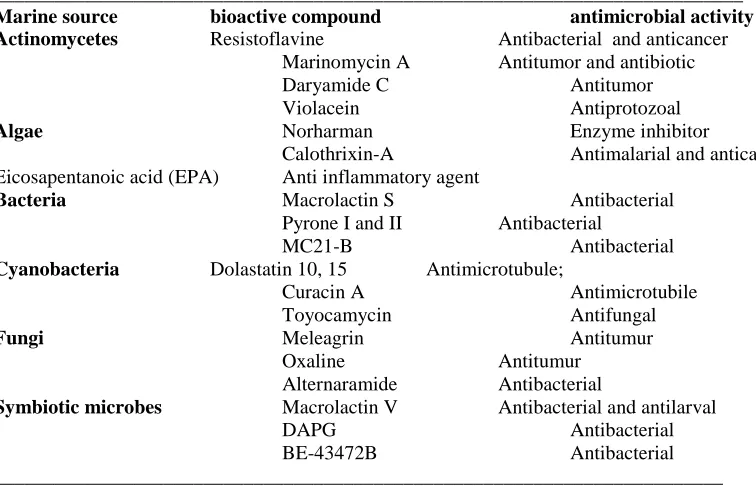
[image:2.612.39.417.481.724.2]eventually has led to global search for new and novel drugs capable of combating these antibiotics resistant microorganisms. Despite the fact that divers natural products have been discovered and recovered from both higher forms of life such as plants and animals and microorganisms with a total estimate of more than 1 million products discovered and averagely 50 % of these products were derived from terrestrial plants with more than 22% of these natural products showing antibacterial, anti fungal, anti protozoal, anti cancer, anti malarial, anti inflammatory and anti nematode activities either in vivo or in vitro (Berdy, 2005; Penesyan et al., 2010), yet the search continues because use of antibiotics indiscrimately coupled with horizontal transfer of genes among these pathogens have increase antibiotics resistance worldwide. The search therefore as shifted from plants and other terrestrial forms of life to marine biodiversity with main focus on marine microbes which only began in 20th century (Monaghan and Tkacz 1990). One tenth of all known bioactive compounds originated from microbial sources however, 10 7 antibiotics are yet to be discovered from actinomycetes alone. Scientific focus on marine sources (microorganisms and macroorganisms) for discovery of novel bioactive products has received attention in recent time. Most of the recent and ongoing discoveries regarding marine bioactive compounds are traceable to developed countries. Developing countries especially Africa need to take giant step of tapping into these unlimited marine bio resources as the continent is the most disease ravaged in the world from Malaria to cholera. Researchers in this part of the world need to take of the challenge of proffering solution to the endemic occurrence of deadly diseases in the region. Less dependence should be on foreign companies coming up with drugs to cure diseases in developing nations.
Table 1: Identified marine microbial bioactive compounds ___________________________________________________________________________ Marine source bioactive compound antimicrobial activity Actinomycetes Resistoflavine Antibacterial and anticancer
Marinomycin A Antitumor and antibiotic Daryamide C Antitumor Violacein Antiprotozoal
Algae Norharman Enzyme inhibitor
Calothrixin-A Antimalarial and anticancer Eicosapentanoic acid (EPA) Anti inflammatory agent
Bacteria Macrolactin S Antibacterial
Pyrone I and II Antibacterial
MC21-B Antibacterial
Cyanobacteria Dolastatin 10, 15 Antimicrotubule;
Curacin A Antimicrotubile Toyocamycin Antifungal
Fungi Meleagrin Antitumur
Oxaline Antitumur Alternaramide Antibacterial
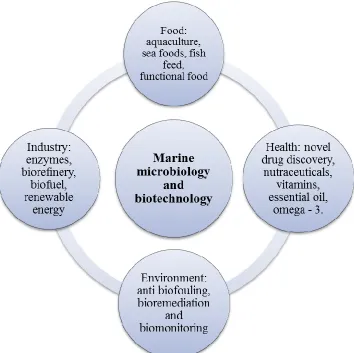
Figure 1: Potentials of marine microbiology and biotechnology ( Odeyemi, 2012)
Isolation of marine microbes (bacteria, fungi)
Screening for antimicrobial activities
Identification of microbes Biochemical tests
Molecular methods
Screening for antimicrobial activities
Extraction of bio active compounds
Purification and identification of active compounds using HPLC, NMR.
Optimization and large scale production
Evaluation of purified compounds Clinical trials
Approval, patenting and commercialization
II. MARINE MICROBIAL ENZYMES
Divers enzymes have been isolated, identified and purified from different sources such as plants, animals and microorganisms. However, due to diversity of microbes in nature, large scale fermentation process and genetic engineering, more enzymes have been isolated in microorganisms than any other source (Bragger et al., 1989, Annison, 1992 and Niehaus et al, 1999). As earlier stated, over 70 % of this planet earth is been covered ocean. Microbes inhabit different part of the ocean from shallow shell sea to deep and ocean and hydrothermal vents. Due to this, marine microbes require different substrates for metabolic processes thereby producing various enzymes required to metabolize these substrates. Exploring these marine microorganisms can help understand various biochemical pathways through which these enzymes are produced. Additionally, microorganisms from the marine environment has received much research attention from scientists because enzymes produced by these organisms are found to be more potent biochemically and stable than those derived from plants and animals (Bull and Ward 2000; Kin 2006). Advancement in biotechnology globally has led to increased interest and search for enzymes with unique properties. It is however, from marine environment that such enzymes could be obtained as a result of the complex nature of the marine ecosystem due to low temperature, high salinity and pressure because these microorganisms require enzymes different from those obtained from other forms of live to be able to survive in these type of environment. So far, enzymes obtained from marine microbial sources have been used in food additives, pharmaceuticals and other chemicals substances. More recently, enzymes with unique attributes from marine microbes such as bacteria, actinomycetes and fungi are been used for industrial purposes most especially marine microbial enzymes with considerable amount of bioactive properties. (Haefner, 2003; Ghosh et al, 2005). Protease is the most commercially available enzyme with over 60% of world enzymes. These enzymes are used in leather and detergent industries respectively. Moreso, it is applicable in pharmaceutical industries for production of anti inflammatory and easily digestible drugs. Lipases enzymes are present in different environments and they are responsible for the catalytic degradation of fats and oils releasing free fatty acids, glycerol di - acylglycerols, and monoglycerols as by products. These enzymes are also used in various chemical processes like esterification, aminolysis, and trans esterification (Babu et al., 2008). Microbial lipases are found useful in production of detergents,cosmetics, paper and food flavours respectively. Other polysaccharide degrading enzymes such chitinase, agarase, alginate lyases, xylase, cellulose and hydrolases have all been isolated from marine organisms.
Marine derived functional foods
Different definitions have been given to functional foods. However, it could be defined as foods having resemblance to “normal’ conventional foods in terms of appearance which are therefore consumed like other foods although with inherent health enhancement and reduction of risk of diseases potentials. Both functional foods and nutraceuticals are been used
interchangeably in some countries of the world while they are been considered different in other countries (Freitas et al., 2012, Shirwaikar et al., 2011, Shahidi, 2009). In 2010, Kadam and Prabhasankar stated that marine ecosystems are good sources of high valued functional foods because they are naturally rich in functional ingredients like algal constituents, carotenoids, omega-3 oils, fish protein hydrolysates chitin, chitosan, collagen and taurine. These functional ingredients can be extracted from the marine sources and incorporated into conventional foods to achieve the purpose of health enhancement. Marine bacteria, fungi, algae, macro and microalgae are excellent sources of functional ingredients. Algae also known as seaweeds are naturally rich in calori free fat (Ganesan et al., 2008; Je et al., 2009). Sargassum, a macroalgae is also said to be rich in dietary carotenoids and fibers coupled with antioxidant properties. It can be used to prevent neuron related diseases (Chandini et al., 2008). Minerals, vitamins, amino acids like taurine, omega 3, calcium, proteins and antioxidants can all be obtained from fish and fish wastes ((Dragnes et al., 2009). Marine fungi especially yeast have been reported to yield level of γ-amino-butyric acid making it a promising functional food ingredient (Masuda et al., 2008). Likewise, some marine bacteria have been reported to be producers of different kinds of Polyunsaturated fatty acids –
PUFAs like docosahexaenoic acid (DHA) and eicosapentaenoic
acid – EPA (Bozarth et al., 2009).
Marine algae derived biofuel
The discovery of crude oil was a fundamental scientific breakthrough due to products like petroleum, diesel, lubricating oil, gasoline and others that were derivable from its raw form. Various countries of the world have relied solely on crude oil as major economy booster. However, some of these products are deleterious to human environment as a result of the green house gases that serve as by products which in turn affects the climate and causing global warming. Ever increasing climate change has therefore necessitated search for alternative energy sources can be renewed and that poses less danger to the environment. Aside causing climate change, some of these products especially petrol is becoming more expensive and unaffordable to citizens of developing countries. Marine microalgae or phytoplankton have been targeted as good renewable energy source ( Walker et al., 2005). They are aquatic photosynthetic microorganisms that are able to convert carbon dioxide other biochemicals which can eventually be converted to bio fuel ( Demirbas 2010; Wilffels and barbosa 2010; Pienkos and Darzins 2009; Oltra 2011). Production of biodiesel from marine microalgae is still at the early stage of development and affected by factors such as production cost and public acceptance. Some developed countries have carried out various research on microalgae derived biofuel and are even using it as alternative source of energy although still expensive than normal petrol.
Marine sustainable aquaculture
world food economy growing and increasing yearly by 10 % contributing 30% of total fish consumed in the world. Aquaculture has its origin in Asia with China responsible for over 65% of production in the region unlike Africa and Latin America that are just tapping the potentials (White et al., 2004). Among the 40% of the world inhabitants living along the coastline of the oceans, fishing serves source of income to most of them. Most developing countries only practice small scale fisheries out of over 40 million people globally earning income from aquaculture. Globally, there is an increased need for food due to increase in overall population. Moreso, marine organisms are going into extinction. One of the ways to reduce much demands on fisheries stock and yet still meet worldwide demand for seafood, is through sustainable aquaculture as world demands could lead to complete fall of the fishery industry (Worm et al., 2006). Efficiency in production process, cost effectiveness, high yield and reduction in environmental pollution serve as focus of sustainable aquaculture. These can be achieved through the use of latest marine microbiology and biotechnology tools for identification of molecular markers needed to identify high yielding species, molecular diagnosis of pathogens and feed production.
III. CONCLUSION
Exploring potentials of marine microbiology and biotechnology in developing countries could help solve problems of food shortage, unemployment, disease outbreak by discovering novel bioactive compounds needed to combat resistant pathogens. However, factors such as lack of adequate man power in this field, poor infrastructures, state of the art equipment, research funding from government agencies, adequate awareness and policy. Developing countries need to consciously empower its citizens through inclusion of marine science related courses into their post secondary and higher education curricula. More scientists needs to be sponsored either through private or public scholarships and trained in developed countries that well advanced in exploring marine microbial world on the use of various molecular marine microbiology and biotechnology tools that are needed to further their knowledge in this field. Having adequate man power will help solving food shortage and unemployment. Regional and international collaboration is also required. Conferences, seminars and workshops on benefits of marine related researches should be organized nationwide. More marine research stations or institutes to be located in all states of these countries will also help to foster marine research. Marine ecosystems undoubtedly serve as bio economy sources globally. Developed countries have been able to identify these potentials and exploring them. This is no so in many developing countries due to some or all of the challenges highlighted above. Conscious efforts from individual, government and private agencies are all required if the potentials of marine microbiology and biotechnology is to be completely tapped.
REFERENCES
[1] Niehaus, F.; Bertoldo, C.; Kähler, M.; Antranikian, G. Extremophiles as a source of novel enzymes for industrial application. Appl. Microbiol. Biotechnol. 1999, 51, 711–729.
[2] Annison, G. Commercial enzyme supplementation of wheatbased diets raises ilegal glycanaseactivitites and improves apparent metabolisable energy starch and pentosan digestibilities in broiler chockens. Anim. Feed Sci. Technol. 1992, 38, 105–121.
[3] Bragger, J.M.; Daniel, R.M.; Coolbear, T.; Morgan, H.W. Very stable enzyme from extremely thermophilic archaeabacteria and eubacteria. Appl. Microbiol. Biotechnol. 1989, 31, 556–561.
[4] Kin, S.L. Discovery of novel metabolites from marine actinomycetes. Curr. Opin. Microbiol. 2006, 9, 245–251.
[5] Bull, A.T.; Ward, A.C.; Goodfellow, M. Search and discovery strategies for biotechnology: The paradigm shift. Microbiol. Mol. Biol. Rev. 2000, 64, 573–606.
[6] Bernan, V.S.; Greenstein, M.; Maiese, W.M. Marine micro-organisms as a source of new natural products. Adv. Appl. Microbiol. 1997, 43, 57–89. [7] David, W.; Michel, J. Extremozymes. Curr. Opin. Chem. Biol. 1999, 3, 39–
46.
[8] Harmsen, H.J.M.; Prieur, D.; Jeanthon, C. Distribution of microorganisms in deep sea hydrothermal vent chimneys investigated by whole-cell hybridization and enrichment culture of thermophilic subpopulations. Appl. Environ. Microbiol. 1997, 63, 2876–2883.
[9] HALVORSON, Harlyn O.; CHAVEZ-CROOKER, Pamela; DIAZ, Paula y QUEZADA, Fernando. Marine Biotechnology Opportunities for Latin America. Electron. J. Biotechnol. [online]. 2001, vol.4, n.2, pp. 19-20. ISSN 0717-3458.
[10] Shahidi F. Nutraceuticals and functional foods: whole versus processed foods. Trends Food Sci Technol 2009;20:376–87.
[11] Shirwaikar A, Parmar V, Khan S. The changing face of nutraceuticals—an overview. Int J Pharm Life Sci 2011;2:925–32.
[12] Walker TL, Purton S, Becker DK, Collet C: Microalgae as bioreactors. Plant Cell Rep 2005, 24:629-641.
[13] Demirbas A: Use of algae as biofuel sources. Energ Convers Manage 2010, 51:2738-2749.
[14] Pienkos P, Darzins A: The promise and challenges of microalgal-derived biofuels. Biofuel Bioprod Bior 2009, 3:431-440.
[15] Oltra C: Stakeholder perceptions of biofuels from microalgae. Energ Policy 2011, 39:1774-1781.
[16] Wijffels RH, Barbosa MJ: An outlook on microalgal biofuels. Science 2010, 329:796-799.
[17] Worm, B., Barbier, E.B., Beaumont, N., Duffy, J.E., Folke, C., Halpern, B.S., Jackson, J.B.C., Lotze, H.K., Micheli, F., Palumbi, S.R., Sala, E., Selkoe, K.A., Stachowicz, J.J., Watson, R., 2006. Impacts of biodiversity loss on ocean ecosystem services. Science 314, 787–790.
[18] Cambria Finegold (2012). The importance of fisheries and aquaculture to development. Fisheries, Sustainability and Development. 353 -363. [19] Chandini SK, Ganesan P, Suresh PV, Bhaskar N. In vitro antioxidant
activities of three selected brown seaweeds of India. Food Chem 2008;107:707–13.
[20] Dragnes BT, Stormo SK, Larsen R, Ernstsen H, Elvevoll EO. Utilization of fish industry residuals: screening the taurine concentration and angiotensin converting enzyme inhibition potential in cod and salmon. J Food Compos Anal 2009;22:714–7.
[21] Ganesan P, Chandini SK, Bhaskar N. Antioxidant properties of methanol extract and its solvent fractions obtained from selected Indian red seaweeds. Bioresour Technol 2008;99:2717–23.
[22] Masuda K, Guo X, Uryy N, Hagiwara T, Watabe S. Isolation of marine yeasts collected from the Pacific Ocean showing a high production of γ-Aminobutyric acid. Biosci Biotechnol Biochem 2008;72:3265–72 [23] Kadam SU, Prabhasankar P. Marine foods as functional ingredients in
bakery and pasta products. Food Res Int 2010;43:1975–80.
[24] Bozarth A, Maier UG, Zauren S. Diatoms in biotechnology: modern tools and applications. Appl Microbiol Biotechnol 2009;82:195–201.
towards applications in new functional foods. Biotechnology Advances 30 (2012) 1506–1515.
[26] Bowler, C., Karl, D.M., and Colwell, R.R. (2009) Microbial oceanography in a sea of opportunity. Nature 459: 180– 184.
[27] Frank Oliver Glöckner and Ian Joint (2010). Marine microbial genomics in Europe: current status and perspectives. Microbial Biotechnology (2010) 3(5), 523–530.
[28] Bhatnagar, Ira; Kim, Se-Kwon. 2010. "Immense Essence of Excellence: Marine Microbial Bioactive Compounds." Mar. Drugs 8, no. 10: 2673-2701.
[29] Sogin ML, Morrison HG, Huber JA, Mark WD, Huse SM, et al. (2006) Microbial diversity in the deep sea and the underexplored “rare biosphere”. Proc Natl Acad Sci USA 103: 12115-12120.
[30] A. Aristides Yayanas (2003). Marine microbiology at Scripps. Oceanography. Vol. 16 (3):67 -75.
[31] Narsinh L. Thakur and Archana N. Thakur ( 2006). Marine microbiology: An overview. Indian Journal of Biotechnology. Vol 5. 263-268.
[32] Nyerhovwo J. Tonukari (2004). Fostering biotechnology entrepreneurship in developing countries African Journal of Biotechnology Vol. 3 (6), pp. 299-301.
[33] Odeyemi OA. Harnessing potentials of medical biotechnology in delivery of quality health service in Nigeria. Int J Stud Res 2011;1(4):105-7. [34] Glöckner FO, Joint I (2010) Marine microbial genomics in Europe: current
status and perspectives. Microbial Biotechnology 3:523-530.
[35] Berdy, J., 2005. Bioactive microbial metabolites, a personal view. J. Antibiot., 58: 1-26.
[36] Anahit Penesyan, Staffan Kjelleberg, and Suhelen Egan 2010. Development of Novel Drugs from Marine Surface Associated Microorganisms. Mar Drugs. 2010; 8(3): 438–459.
[37] Monaghan, R.L., and Tkacz, J.S. (1990). Bioactive microbial products: Focus upon mechanism of action. Annu. Rev. Microbiol. 44, 271–301. [38] Ghosh, D.; Saha, M.; Sana, B.; Mukherjee, J. Marine Enzymes. Adv.
Biochem. Eng. Biot. 2005, 96, 189–218.
[39] Haefner, B. Drugs from the deep: marine natural products as drug candidates. Drug Discov. Today 2003, 8, 536–544.
[40] Kumar, C.; Joo, H.S.; Koo, Y.M.; Paik, S.; Chang, C.S. Thermostable Alkaline Protease from a Novel Marine Haloalkalophilic Bacillus Clausii Isolate. World J. Microbiol. Biotechnol. 2004, 20, 351–357.
[41] Ilona, K.; Zdzislaw, E.S. Neutral and alkaline muscle proteases of marine fish and invertebrates a review. J. Food Biochem. 2007, 20, 349–364. [42] Zhang, L.X.; An, R.; Wang, J.P.; Sun, N.; Zhang, S.; Hu, J.C.; Kuai, J.
Exploring novel bioactive compounds from marine microbes. Curr. Opin. Microbiol. 2005, 8, 276–281.
[43] Guerard, F.; Guimas, L.; Binet, A. Production of tuna waste hydrolysates by a commercial neutral protease preparation. J. Mol. Catal. B-Enzym. 2002, 19, 489–498.
[44] Franz, S.; Rosa, M.; Thomas, P. Extracellular Protease-Producing Psychrotrophic Bacteria from High Alpine Habitats. Arct. Antarct. Alp. Res. 1992, 24, 88–92.
[45] Rajesh, P.; Mital, D.; Satya, P.S. Extracellular alkaline protease from a newly isolated haloalkaliphilic Bacillus sp.: Production and optimization. Process Biochem. 2005, 40, 3569–3575.
[46] Babu, J.; Pramod, W.R.; George, T. Cold active microbial lipases: Some hot issues and recent developments. Biotechnol. Adv. 2008, 26, 457–470. [47] Kobayashi, T.; Koide, O.; Mori, K.; Shimamura, S.; Matsuura, T.; Miura,
T.; Takaki, Y.; Morono, Y.; Nunoura, T.; Imachi, H.; Inagaki, F.; Takai, K.; Horikoshi, K. Phylogenetic and enzymatic diversity of deep subseafloor aerobic microorganisms in organics- and methane-rich sediments off Shimokita Peninsula. Extremophiles 2008, 12, 519–527.
[48] Seiichi, A.; Akihiko, Y.; Mutsuo, H. Occurrence of Marine Bacterial Lipase Hydrolyzing Fish Oil. Agric. Biol. Chem. 1991, 55, 2657–2659.
[49] Chi, Z.; Chi, Z.; Zhang, T.; Liu, G.; Li, J.; Wang, X. Production, characterization and gene cloning of the extracellular enzymes from the marine-derived yeasts and their potential applications. Biotechnol. Adv. 2009, 27, 236–255.
[50] Bragger JM, Daniel RM, Coolbear T, Morgan HW (1989) Very stable enzyme from extremely thermophilic archaeabacteria and eubacteria. Appl Microbiol Biotechnol 31: 556±561
AUTHORS
First Author – Olumide Adedokun Odeyemi, Marine Science