S T U D Y P R O T O C O L
Open Access
CryptoDex: A randomised, double-blind,
placebo-controlled phase III trial of adjunctive
dexamethasone in HIV-infected adults with
cryptococcal meningitis: study protocol for a
randomised control trial
Jeremy Day
1, Darma Imran
2, Ahmed Rizal Ganiem
3, Natriana Tjahjani
4, Retno Wahyuningsih
2,16,
Robiatul Adawiyah
17, David Dance
5, Mayfong Mayxay
5, Paul Newton
5, Rattanaphone Phetsouvanh
5,
Sayaphet Rattanavong
5, Adrienne K Chan
18, Robert Heyderman
6, Joep J van Oosterhout
18, Wirongrong Chierakul
7,
Nick Day
7, Anatoli Kamali
8, Freddie Kibengo
8, Eugene Ruzagira
8, Alastair Gray
9, David G Lalloo
10, Justin Beardsley
1*,
Tran Quang Binh
14, Tran Thi Hong Chau
1, Nguyen Van Vinh Chau
11, Ngo Thi Kim Cuc
11, Jeremy Farrar
1,
Tran Tinh Hien
1, Nguyen Van Kinh
12, Laura Merson
1, Lan Phuong
14, Loc Truong Tho
1, Pham Thanh Thuy
13,
Guy Thwaites
1, Heiman Wertheim
15and Marcel Wolbers
1Abstract
Background:Cryptococcal meningitis (CM) is a severe AIDS-defining illness with 90-day case mortality as high as 70% in sub-Saharan Africa, despite treatment. It is the leading cause of death in HIV patients in Asia and Africa. No major advance has been made in the treatment of CM since the 1970s. The mainstays of induction therapy are amphotericin B and flucytosine, but these are often poorly available where the disease burden is highest. Adjunctive treatments, such as dexamethasone, have had dramatic effects on mortality in other neurologic infections, but are untested in CM. Given the high death rates in patients receiving current optimal treatment, and the lack of new agents on the horizon, adjuvant treatments, which offer the potential to reduce mortality in CM, should be tested.
The principal research question posed by this study is as follows: does adding dexamethasone to standard antifungal therapy for CM reduce mortality? Dexamethasone is a cheap, readily available, and practicable intervention.
Method:A double-blind placebo-controlled trial with parallel arms in which patients are randomised to receive either dexamethasone or placebo, in addition to local standard of care. The study recruits patients in both Asia and Africa to ensure the relevance of its results to the populations in which the disease burden is highest. The 10-week mortality risk in the control group is expected to be between 30% and 50%, depending on location, and the target hazard ratio of 0.7 corresponds to absolute risk reductions in mortality from 30% to 22%, or from 50% to 38%. Assuming an overall 10-week mortality of at least 30% in our study population, recruitment of 824 patients will be sufficient to observe the expected number of deaths. Allowing for some loss to follow-up, the total sample size for this study is 880 patients. To generate robust evidence across both continents, we aim to recruit roughly similar numbers of patients from each continent. The primary end point is 10-week mortality. Ethical approval has been obtained from Oxford University’s Tropical Research Ethics Committee (OxTREC), and as locally mandated at each site.
Trial registration:International Standard Randomised Controlled Trial Number: ISRCTN59144167 26-July-2012
* Correspondence:[email protected]
1
Oxford University Clinical Research Unit, Wellcome Trust Major Overseas Programme Vietnam, Ho Chi Minh City, Vietnam
Full list of author information is available at the end of the article
Background and rationale Background
Cryptococcal meningitis (CM) is estimated to cause 625,000 deaths every year, most occurring within 3 months of diag-nosis [1]. It is the leading cause of death in HIV patients in Asia and Africa, affecting 3.2% of the HIV-infected popula-tion per year [1]. The incidence in these regions is the high-est in the world; in Africa, more deaths are high-estimated to be due to CM than to tuberculosis [1]. The 90-day case-fatality rate is up to 55% in Asia and 70% in Africa [1].
Despite improvements in access to HIV care, the WHO estimates that HIV/AIDS will be the leading cause of dis-ease in middle- and low-income countries by 2015, and models suggest that, even if 80% access to HIV treatment is achieved by 2012, there will be 6.5 million AIDS deaths p.a. by 2030 [2]. Thus, CM is likely to remain a significant health burden for the foreseeable future.
No major advance has occurred in the treatment of cryptococcal meningitis since the 1970s. The mainstays of induction therapy are drugs that are more than 50 years old (amphotericin B and flucytosine), although these are often poorly available where the disease burden is highest. Although amphotericin therapy is undoubtedly superior to fluconazole monotherapy, amphotericin combination ther-apy has only recently been shown to reduce mortality when compared with amphotericin monotherapy. Whereas effective antifungal therapy is the key, adjunctive treat-ments, which have been seen to have dramatic effects on mortality in other neurologic infections, are untested in cryptococcal meningitis. Given the high death rates in pa-tients receiving current optimal treatment, and the paucity of new agents on the horizon, adjuvant treatments offer the greatest potential to reduce mortality in CM.
This study aims to reduce the death rate from CM. The principal research question is as follows: does adding dexamethasone to standard antifungal therapy for CM re-duce mortality? In this double-blind placebo-controlled trial (DBRCT) patients will be randomised to receive either dexamethasone or placebo. Dexamethasone is a cheap, readily available, and practicable intervention.
This multicentre study recruits patients in both Asia and Africa to ensure the relevance of the study results in the populations in which the disease burden is highest.
Treatment of CM
Successful treatment of CM depends on effective antifun-gal therapy and successful management of complications, notably increased intracranial pressure (see Appendix 3). Antifungal treatment schedules for cryptococcal meningi-tis are not globally uniform but are affected by drug avail-ability, costs, and human resources. The Infectious Diseases Society of America convenes an international panel to draw up treatment guidelines, most recently pub-lished in 2010, and the WHO currently has guidelines in
development that will be specifically aimed at manage-ment in resource-poor countries. These conform closely to the IDSA guidelines. Treatment generally consists of a period of induction therapy by using high-dose or combin-ation antifungal therapy (usually for 2 weeks), followed by a period of consolidation therapy of 8 weeks with flucona-zole. After this time, provided that the patient has responded to treatment, secondary prophylaxis using lower-dose fluazole is given to prevent disease relapse. It is generally con-sidered safe to stop secondary prophylaxis if ARV therapy has resulted in suppression of the plasma viral load and im-mune reconstitution with recovery of the CD4 cell count to >100 cells/μl has lasted for at least 6 months).
Consistent with the local practices and the WHO and IDSA guidelines, in this study, patients will receive anti-fungal therapy consisting of amphotericin B (1 mg/kg/ day) combined with fluconazole, 800 mg/day for 2 weeks, followed by fluconazole 800 mg/day for a further 8 weeks before switching to secondary prophylaxis [3,4].
Rationale for adjuvant treatment with dexamethasone Several mechanisms exist through which dexamethasone may modify disease outcome in cryptococcal meningitis. Current IDSA guidelines suggest that corticosteroids may be beneficial in cryptococcal meningitis in patients who have cryptococcomas with mass effect, acute respiratory distress syndrome, or IRIS [4]. However, corticosteroids have never been tested in a randomised controlled trial. Of note, 150 of 381 patients in the ACTG trial of combin-ation antifungal therapy in cryptococcal meningitis re-ceived steroids during the study. The Graybill (2000)post hocanalysis of these patients has some serious limitations (1997) [5,6]. Steroids were prescribed at the discretion of the attending physician, and the reasons for prescription are unclear. The Graybill analysis was limited to just 41 of the 150 steroid recipients, and did not report their impact on mortality. Clinical success (defined as stabilisation or improvement at 2 weeks) was lower in the 41 steroid re-cipients analysed (66% versus 86%). Apparently worse mycologic outcomes in these 41 patients are impossible to interpret, because no adjustments were made for the anti-fungal therapy received, anti-fungal load, or clinical severity at baseline, all of which are known to be important outcome predictors [7,8]. The exclusion from the analysis of the vast majority of patients who received steroids means that it is impossible to draw robust conclusions about their ef-fect and underlines the need for a trial.
this RCT, conducted in Vietnam, 545 patients were re-cruited, of whom 98 were HIV infected. In addition to the reduced risk of death, fewer adverse events were found in patients receiving dexamethasone [10].
Potential mechanisms of action dexamethasone in CM
Antiinflammatory action
Cryptococcal meningitis is a chronic granulomatous men-ingitis, with foci of inflammation in the basilar meninges, cerebral mass lesions, and a lymphocytic cerebrospinal fluid (CSF). The basilar meningitis leads to impairment of resorption of CSF, and this, along with physical blockage of CSF drainage by yeast cells and conglomerations of cap-sule, is believed to contribute to the increased intracranial pressure seen in the disease [11]. The immune response in the mouse model mimics that seen in AIDS patients [12]. The effect of antiinflammatory agents has been tested in this model. Reduction of inflammation prolongs survival in mice infected with a lethal dose ofC. neoformans[13]. Dexamethasone increases median survival from 19 to 26 days (P <0.05), a benefit preserved when dexametha-sone is combined with amphotericin B [14]. Dexametha-sone does not interfere with the pharmacologic properties of amphotericin or fluconazole [14,15]. Moderation of the inflammatory response is postulated to be through micro-glial cells, a key in the immune response to CM [16].
Reduction of cerebral oedema and brain swelling
Cerebral oedema is a key feature of CM, and cryptococcal capsule has been shown directly to induce cerebral oedema [17]. Vascular endothelial growth factor (VEGF) is a potent inducer of vascular permeability and angiogen-esis, which has been implicated in the pathogenesis of brain oedema [18,19]. Elevated levels are seen in both the CSF and blood of HIV patients with cryptococcal menin-gitis, and cryptococcal capsule has been shown to induce VEGF production by monocytes, neutrophils, and periph-eral blood mononuclear cells in a dose-dependent manner [18,20].In vitro, this induction is significantly downregu-lated by dexamethasone [18]. Downregulation occurs at a range of concentrations consistent with those achieved in human dosing. A rat model of brain oedema suggests that the effect of steroids on oedema is mediated through the inhibition of VEGF [21]. Corticosteroids reduce vascular permeability and limit oedema, and inhibition of VEGF may explain the beneficial effect of steroid therapy in TBM [10,22].
Reduction of intracranial pressure
Increased intracranial pressure (ICP) is frequent in CM and is an important cause of mortality [5]. Dexamethasone reduces increased ICP in models of other brain infections [23-25]. The mechanisms are not clear, but through attenu-ation of inflammattenu-ation, cerebral oedema, and restorattenu-ation of
the blood/brain barrier, it is plausible that dexamethasone may reduce increased ICP in CM.
Modification of cerebral vasculitis
Cerebral vasculitis, frequently described in infections, is a recognised feature of CM [26-29]. The pathophysiology of neurologic vasculitis is relatively well understood: the neurologic features arise principally through ischaemia and infarction secondary to inflammation [30]. In infec-tions, the vascular insult may be mediated through any or all of vascular wall invasion, immune complexes, or cryo-globulins. Of these, both endothelial invasion and immune complex disease are described in cryptococcosis [31,32].
Steroids are an important therapeutic option in primary cerebral vasculitides, and their beneficial effect in TBM may be through an antivasculitic action [30]. Attenuation of the vasculitis seen in CM may improve outcome.
Potential harms of dexamethasone
Reported side effects of dexamethasone are well described and similar to those of other corticosteroids. Side effects include dysglycaemia, changes in mood, Cushing-like syndrome, gastrointestinal bleeding, immunosuppression, hypertension, and secondary hypoadrenalism. Side effects are more likely with higher doses (dexamethasone≥16 mg/ kg/day) and longer courses of treatment [33]. Dexametha-sone is frequently prescribed for patients with intracranial pathology, including infectious diseases, and in addition, data on adverse events are available from large RCTs of dexamethasone that have been completed in tuberculous meningitis (TBM) and acute bacterial meningitis (BM) [10,34-36]. In the BM trials, the duration of steroid therapy was 4 days, and in TBM, 6 to 8 weeks. In all these trials, ad-verse events, including potentially life-threatening adad-verse events such as gastrointestinal bleeding, were rare and were no more common in patients receiving dexamethasone compared with placebo.
In this study, patients will receive dexamethasone 0.3 mg/kg/day, reducing weekly over 6 weeks. This is the lower dose that was used in the TBM trial for pa-tients with Grade I disease [10]. The risk and severity of any adverse events must be considered in the context of the high mortality seen in cryptococcal disease. Notably, dexamethasone has no mineralocorticoid effect and is not associated with hypokalaemia [37].
Immunosuppression
Patients with CM are profoundly immunosuppressed: the median CD4 count in Vietnamese patients is 16 cells/μl (which compares with a median CD4 count of 42 in Vietnamese HIV patients with tuberculous meningitis) [38]. Given this, whether dexamethasone will significantly increase the risk of other opportunistic infections (OIs) is not clear. The incidence of other OIs is a secondary end point of the study. Patients in the study will receive chemoprophylaxis againstPneumocystis jiroveciiand other opportunistic infections, in line with national guidelines. Patients will be screened for TB at study entry as part of normal care.
Secondary hypoadrenalism
Adrenal suppression is a recognised risk in patients re-ceiving corticosteroid therapy for prolonged periods or in higher doses. With a treatment course of the length in this study, adrenal suppression will be short lived and is prevented through the gradual reduction in dose, as stipulated in the protocol. Patients must be provided with an information card detailing the importance of taking the steroids as per the study protocol, and so that other doctors who attend them will be aware of their prescription. Steroid information cards must be provided in the local language. Steroids will be administered in a reducing dose according to best medical practice.
Hyperglycaemia
Reversible hyperglycaemia is a recognised side effect of corticosteroids. Hyperglycaemia is uncommon in patients receiving dexamethasone in this dose, with elevated fast-ing glucose occurrfast-ing in fewer than 1% of patients and equally frequently amongst TBM patients receiving active drug or placebo [10]. A review of the adverse effects of corticosteroids in severe sepsis found an increased abso-lute risk of hyperglycaemia of 5.6% [39].
Cushing-like syndrome
A Cushing- type syndrome can develop in people receiv-ing prolonged steroid therapy, with weight gain, redistri-bution of body fat, and acne. However, in the dose and duration given in this study, development of Cushing syndrome is unlikely. Moreover, it is reversible on treat-ment cessation.
Gastrointestinal bleeding
Data from TBM, bacterial meningitis, and sepsis suggest that corticosteroids do not increase the risk of gastro-intestinal bleeding when used in these dosages and dura-tions [10,35,36,39].
Hypertension, salt retention, and hypokalaemia
These effects of corticosteroids are due to their min-eralocorticoid action. Because dexamethasone belongs to
the glucocorticoid group, the risk of these side effects is negligible.
Overview of the trial
A multicentre double-blind randomised placebo-controlled trial of adjunctive treatment with dexamethasone in adults with HIV-associated cryptococcal meningitis
Study aim:To reduce mortality from cryptococcal men-ingitis in HIV-infected adult patients
Intervention: Dexamethasone in a reducing dose over the first 6 weeks of treatment
Randomisation:1:1 study-intervention versus placebo, by using variably sized blocks and stratified by site
Primary end point:Survival during the first 10 weeks after randomisation
Antifungal therapy: Amphotericin B, 1 mg/kg/day + fluconazole 800 mg/day for 2 weeks, followed by flucon-azole, 800 mg/day for 8 weeks, followed by secondary prophylaxis with fluconazole, 200 mg/day
Secondary end points:Survival during 6 months after randomisation, disability, rates of fungal clearance, rates of visual impairment, rates of IRIS, rates of new AIDS-defining illnesses, frequency of grade 3, grade 4, or serious adverse events, rates of increased intracranial pressure, time to new neurologic events, health economics analysis.
Sample size:880 patients (roughly equal numbers from Asia and Africa)
Participating countries: Uganda, Malawi, Vietnam, Thailand, Indonesia, Laos
Study sponsor:Oxford University
Study funding: The UK Department for International Development, The Wellcome Trust (UK), and the Medical Research Council (UK) Joint Global Health Trials Scheme
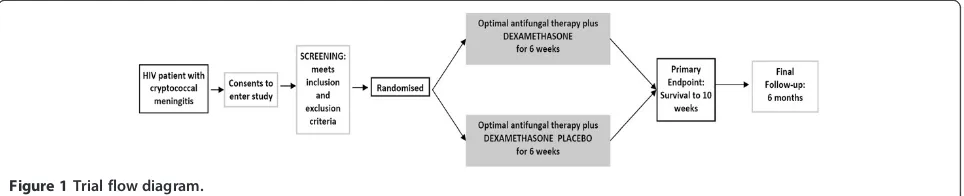
Study duration (recruitment and follow-up): 3 years (Figures 1 and 2).
Study aims Primary aim
To investigate the effect of dexamethasone adjunctive therapy on 10-week survival in HIV-infected adult patients with cryptococcal meningitis
Secondary aims
End points Primary end point
The primary outcome is overall survival until 10 weeks after randomisation.
Secondary end points
Survival until 6 months after randomisation
Relapse occurs in cryptococcal meningitis. Most cases occur within 6 months of diagnosis. We will collect sur-vival data at 6 months (alive versus date of death) to en-sure that any survival benefit at 10 weeks is sustained at 6 months, and not negated by, for example, a higher re-lapse rate in patients receiving steroids.
Disability at 10 weeks and 6 months
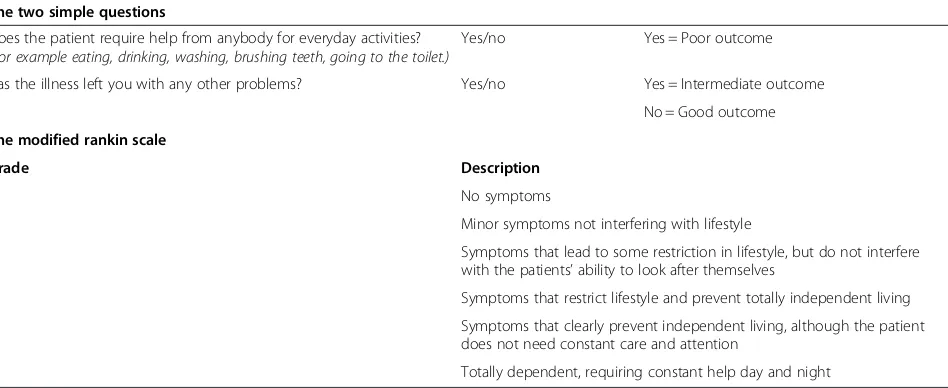
Neurologic disability will be assessed by using the modi-fied Rankin score and the Two Simple Questions and clas-sified as good, intermediate, severe disability, or death, as previously described (Table 1) [10].
[image:5.595.58.540.90.188.2]Disability is an expected consequence of cryptococcal meningitis, including blindness, deafness, and other focal neurological deficits. In addition to reduced death rate, patients receiving dexamethasone may also have lesser (or higher) rates of these disabilities. The Rankin score and the Two Simple Questions are well-validated mea-sures of the degree of disability in stroke survivors, and have been used frequently to measure disability after neurologic infections.
Figure 1Trial flow diagram.
Day 1:
Study Entry Day 3 Day 7 Day 11 Day 14 Day 21 Day 28 Day 42 Day 70 Day 182
Take informed consent Clinical Assessment** FBC (Hb, WCC, plt) 1ml
Na, K, Urea, creat, glu 2ml # # #
CD4 / CD8 count 2ml HIV anbody 2ml Blood cultures 5ml
CSF Opening pressure If indicated If indicated If indicated
Lateral Flow Angen on CSF
CSF Gram stain, India Ink 0.5ml If indicated If indicated If indicated CSF cell count, protein, glucose 1ml If indicated If indicated If indicated CSF TB smear 6ml***
CSF Yeast Quant Count 1ml If indicated If indicated
StoreC. neoformansisolate****
Store CSF supernatant and pellet If indicated If indicated If indicated Sputum TB smear*****
Chest X-ray*** Store blood plasma 4.5ml Store blood cell pellet
Approximate blood volume ml 16.5 2 3 2 3 3 3 2
Approximate CSF volume ml 8.5 2-5 2-5 2-5
[image:5.595.53.540.408.721.2]Rate of CSF sterilisation during the first 2 weeks
It is conceivable that dexamethasone could slow the rate of CSF sterilisation, although this is not seen in the ani-mal model. In a subset of patients, we will measure the repeated fungal burdens in CSF over the first 2 weeks of treatment, model the rate of decline, and determine the effect of dexamethasone on fungal clearance. We will also determine whether the rate of CSF sterilisation is predictive of mortality in both study arms, based on joint modelling of longitudinal fungal counts and mor-tality. Specifically, the longitudinal model will be a mixed model with fixed effects for the intercept, time (that is, the slope), and a treatment-time interaction and random (bivariate normal) effects for the intercept and the slope. The Cox survival model will have shared random effects with the longitudinal model.
Adverse events
Comparison of the proportion of patients with any grade 3 or 4 adverse event and of serious adverse events between treatment groups will form an important part of the study analysis, to determine the safety of the intervention.
Rate of IRIS until 10 weeks
We will model the rate of IRIS over time with a cause-specific hazards model, taking into account the competing risk of prior death. CM-related IRIS will be defined as per the recent proposed definition (see Appendix 2) [40].
Time to new AIDS-defining illnesses or death until 10 weeks
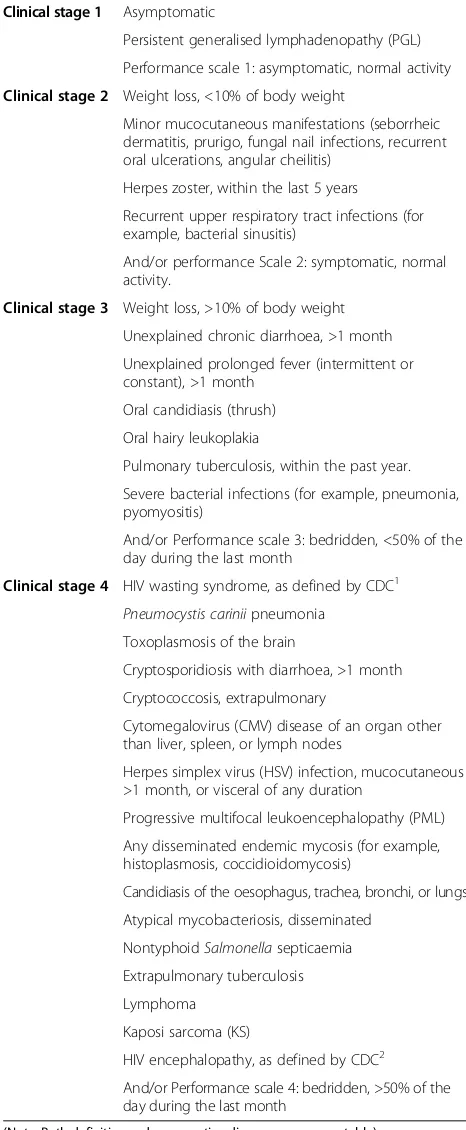
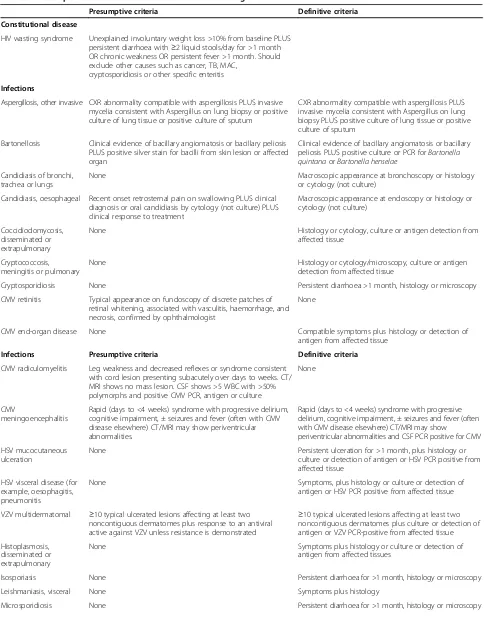
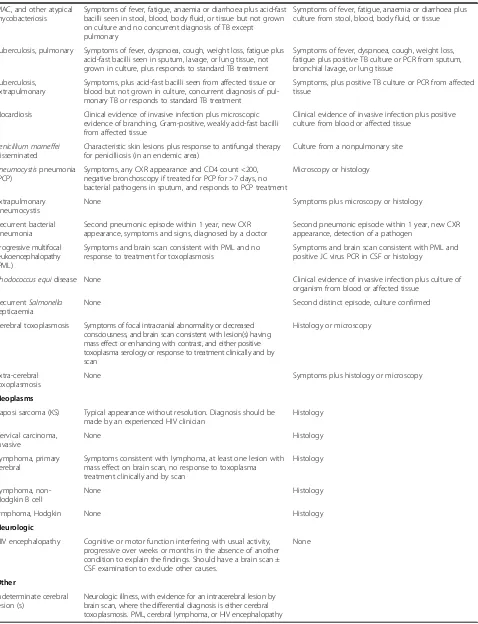
AIDS-defining illnesses will be defined as per the WHO classification (see Table 2).
Visual deficit at 10 weeks
Retrospective data from HIV-uninfected patients with meningitis due to Cryptococcus gattii suggest that ste-roids may have a profound effect in reducing visual loss; 10% of Vietnamese HIV patients have visual impairment at 10 weeks [41]. We will compare the incidence of blindness and other visual deficits between treatment groups. Visual deficit will be assessed by using a simple 6-point scale (see Table 3).
Time to new neurologic event or death until 10 weeks
A neurologic event is defined as a decrease in Glasgow coma scale score by≥2 points for≥2 days from the highest previously recorded Glasgow coma scale score (including baseline) or the occurrence of any of the following adverse events: cerebellar symptoms, coma, hemiplegia, paraple-gia, seizures, cerebral herniation, new-onset blindness or deafness, or cranial nerve palsy.
Longitudinal measurements of intracranial pressure during the first 2 weeks
Intracranial pressure (ICP) will be measured at study entry, days 3, 7, and 14, and if clinically indicated (depending on local practice). The main outcomes are longitudinal ICP measurements until day 14, and we will model the effect of dexamethasone on ICP based on a joint model for lon-gitudinal and survival data similar to the model described for rate of CSF sterilization, above.
[image:6.595.63.537.101.295.2]Clinical need and local practice will determine the fre-quency of lumbar punctures after day 14 and clinician’s diagnoses of increased ICP based on the presence of head-ache, nausea, diurnal and postural variation, relief with lumbar puncture, and presence of papilloedema will be somewhat subjective.
Table 1 Outcome and disability grading:“two simple questions”and rankin score
The two simple questions
Does the patient require help from anybody for everyday activities?
(For example eating, drinking, washing, brushing teeth, going to the toilet.)
Yes/no Yes = Poor outcome
Has the illness left you with any other problems? Yes/no Yes = Intermediate outcome
No = Good outcome
The modified rankin scale
Grade Description
0 No symptoms
1 Minor symptoms not interfering with lifestyle
2 Symptoms that lead to some restriction in lifestyle, but do not interfere with the patients’ability to look after themselves
3 Symptoms that restrict lifestyle and prevent totally independent living
4 Symptoms that clearly prevent independent living, although the patient does not need constant care and attention
5 Totally dependent, requiring constant help day and night
Antifungal treatment intensification or retreatment for cryptococcal meningitis in the 6 months after randomisation
Relapse occurs in patients with cryptococcal disease. All patients will be receiving either treatment doses of anti-fungal therapy or secondary prophylaxis doses during the 6-month period of follow-up. Although all patients will be encouraged to return to the study hospital in the event of illness during the 6-month follow-up period, it is possible that, because of their location, some patients will undergo treatment elsewhere where diagnostic facil-ities may be less developed. This episode may only be identified at the 6-month follow-up period. For this rea-son, a pragmatic definition of relapse will be used. This is defined as either intensification of antifungal therapy above that according to the study antifungal schedule, or readmission for treatment of cryptococcal disease. The main outcome measure will be the cause-specific hazard of relapse, taking into account the competing risk of death.
Health economics
If effective, the low cost of dexamethasone makes it promising as a cost-effective intervention in low-income settings. To assess this formally, a cost-effectiveness ana-lysis will be conducted in collaboration with the Health Economics Research Centre, University of Oxford. The objective of the analysis will be to estimate the incre-mental cost-effectiveness ratio (ICER), expressed as cost per life year gained and cost per Quality Adjusted Life Year (QALY) gained and per Disability Adjusted Life Year (DALY) averted of dexamethasone treatment com-pared with standard antifungal therapy for cryptococcal meningitis (CM).
[image:7.595.305.538.100.213.2]The analysis will collect information during the study on resources used and direct and indirect costs, including health care costs (treatments, medications, consultations, initial and subsequent hospitalisations), and patient/family incurred costs (out-of-pocket costs, employment). Health-care resources used will be obtained primarily from trial case record forms. Unit costs will be obtained in each coun-try from participating centres and national sources. Infor-mation on patient-employment status and costs will be Table 2 WHO clinical staging for HIV/AIDS
Clinical stage 1 Asymptomatic
Persistent generalised lymphadenopathy (PGL)
Performance scale 1: asymptomatic, normal activity
Clinical stage 2 Weight loss, <10% of body weight
Minor mucocutaneous manifestations (seborrheic dermatitis, prurigo, fungal nail infections, recurrent oral ulcerations, angular cheilitis)
Herpes zoster, within the last 5 years
Recurrent upper respiratory tract infections (for example, bacterial sinusitis)
And/or performance Scale 2: symptomatic, normal activity.
Clinical stage 3 Weight loss, >10% of body weight
Unexplained chronic diarrhoea, >1 month
Unexplained prolonged fever (intermittent or constant), >1 month
Oral candidiasis (thrush)
Oral hairy leukoplakia
Pulmonary tuberculosis, within the past year.
Severe bacterial infections (for example, pneumonia, pyomyositis)
And/or Performance scale 3: bedridden, <50% of the day during the last month
Clinical stage 4 HIV wasting syndrome, as defined by CDC1
Pneumocystis cariniipneumonia
Toxoplasmosis of the brain
Cryptosporidiosis with diarrhoea, >1 month
Cryptococcosis, extrapulmonary
Cytomegalovirus (CMV) disease of an organ other than liver, spleen, or lymph nodes
Herpes simplex virus (HSV) infection, mucocutaneous >1 month, or visceral of any duration
Progressive multifocal leukoencephalopathy (PML)
Any disseminated endemic mycosis (for example, histoplasmosis, coccidioidomycosis)
Candidiasis of the oesophagus, trachea, bronchi, or lungs
Atypical mycobacteriosis, disseminated
NontyphoidSalmonellasepticaemia
Extrapulmonary tuberculosis
Lymphoma
Kaposi sarcoma (KS)
HIV encephalopathy, as defined by CDC2
And/or Performance scale 4: bedridden, >50% of the day during the last month
(Note: Both definitive and presumptive diagnoses are acceptable).
1
HIV wasting syndrome: weight loss of >10% of body weight, plus either unexplained chronic diarrhoea (>1 month), or chronic weakness and unexplained prolonged fever (>1 month).
2
[image:7.595.55.288.101.666.2]HIV encephalopathy: clinical finding of disabling cognitive and/or motor dysfunction interfering with activities of daily living, progressing over weeks to months, in the absence of a concurrent illness or condition other than HIV infection that could explain the findings.
Table 3 Visual assessment
Visual assessment–record the best performance
Function Score
Normal 1
Blurred 2
Finger counting 3
Movement perception 4
Light perception 5
obtained from patients by a small number of questions ad-ministered at recruitment and again at the final follow-up (10-week) visit. The main measures of effectiveness will be (a) life years gained (b) quality-adjusted life years gained (QALYs), estimated by using the EQ-5D instrument in offi-cial English, Vietnamese, and Thai languages in its three-level version, and (c) disability-adjusted life years (DALYs) averted, which measures both years of life lost because of premature mortality and years lived with disability. Life years gained will be based on the primary outcome measure of survival at 10 weeks, extrapolated by using best estimates of longer-term survival in each country for HIV-infected adults. QALY and DALY estimates will adjust the life-year estimates by taking into account secondary end points, including blindness, deafness, and other neurologic disabil-ities that are important sequelae of cryptococcal disease. QALY adjustment will be done by using EQ-5D-3 L re-sponses, and DALY adjustment by using clinical judgment to align recorded morbidity with DALY states. The use of both approaches will provide internal validity checks and maximise opportunities to present relevant information to decision makers.
As unit costs, absolute risks, life expectancy, and other variables are likely to differ substantially across regions, separate cost-effectiveness estimates will be produced for Asia and Africa; however, a trial-wide estimate of effective-ness will be applied unless clear evidence exists of hetero-geneity in effect across regions. All estimates of costs, outcomes, and cost-effectiveness will be reported with full recognition of uncertainty, including cost-effectiveness ac-ceptability curve and sensitivity analyses around key pa-rameters, including unit costs, long-term life expectancy, and disability adjustment.
The economic evaluation is concerned primarily with estimation of cost and outcome differences and cost-effectiveness rather than hypothesis testing, and a power cal-culation for a ratio statistic is likely to be highly uncertain, especially as the DALY/QALY measure (the denominator) will itself be a composite of survival and quality/disability adjustment. The proposed size of the study (880 patients) should permit cost differences of 12% or greater to be reli-ably detected by assuming a coefficient of variance of 60%.
Methods Study design
A randomised, double-blind, placebo-controlled trial with two parallel arms: dexamethasone versus placebo during the first 6 weeks of treatment. This multicentre study will recruit patients who offer informed consent across Asia and Africa, in Malawi, Uganda, Laos, Thailand, Indonesia, and Vietnam. The study is pragmatic, designed to main-tain relevance through trialing adjuvant treatment with dexamethasone in the context of the best standard of lo-cally available care.
Dexamethasone-treatment dose
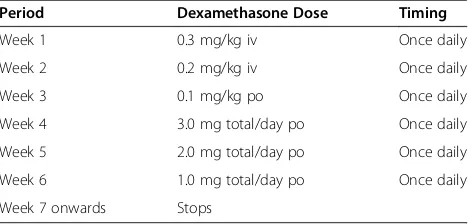
Dexamethasone will be given in a reducing dose accord-ing to body weight (Table 4):
This dose is identical to the dose used in patients with Grade 1 tuberculous meningitis and has been shown to have a low rate of side effects [10]. Dexamethasone/ placebo will be administered intravenously, during the period of intravenous antifungal treatment, and orally once antifungal treatment is administered orally. Treat-ment will be weight-dosed to the nearest half milligram. With the exception of the first dose, which should be given with the first dose of antifungal therapy, dexametha-sone should be given in the morning.
Study population
All HIV-infected adult patients with a diagnosis of CM presenting to the study centres will be eligible to enter the study, subject to meeting the inclusion/exclusion cri-teria and giving informed consent.
Trial location
The study will recruit patients at sites in Vietnam, Indonesia, Thailand, Laos, Uganda, and Malawi.
Inclusion criteria
Age≥18 years
HIV antibody positive
Cryptococcal meningitis defined as a syndrome
consistent with CM and one or more of
○positive CSF India ink (budding encapsulated
yeasts),
○C. neoformanscultured from CSF or blood,
○positive cryptococcal antigen Lateral Flow Antigen Test (LFA) in CSF
Informed consent to participate given by patient or acceptable representative
Exclusion criteria
[image:8.595.305.540.621.733.2]Pregnancy
Table 4 Dexamethasone-reducing regimen
Period Dexamethasone Dose Timing
Week 1 0.3 mg/kg iv Once daily
Week 2 0.2 mg/kg iv Once daily
Week 3 0.1 mg/kg po Once daily
Week 4 3.0 mg total/day po Once daily
Week 5 2.0 mg total/day po Once daily
Week 6 1.0 mg total/day po Once daily
Active gastrointestinal bleeding (defined as vomiting blood or melena stool in the previous week)
Currently receiving treatment for CM and having
received≥1 week of anti-CM therapy
Known allergy to dexamethasone
Current steroid use defined as
a) currently receiving the equivalent of prednisolone 40 mg/day or more
b) currently receiving steroid therapy (any dose) for more than 3 weeks (except topical steroids, which are permitted)
Concurrent condition for which corticosteroids are
indicated because of proven benefit (such as severe
Pneumocystispneumonia (pO2< 70 mm Hg) or tuberculous meningitis)
Renal failure (defined as creatinine >3 × ULN, despite adequate hydration)
Study procedures Recruitment
The target population for study screening is any patient known or suspected to have CM. To enter the study, pa-tients must be confirmed to have CM according to the definition in the inclusion criteria. Screening procedures will adapt to the standard of care of each setting to en-sure that study-related procedures are performed only after informed consent has been obtained. According to the clinical care of the treating hospital, patients sus-pected of having CM will undergo
a) an IMMY lateral-flow cryptococcal antigen test (LFA) on serum or plasma,
AND/OR
b) blood culture forCryptococcus AND/OR
c) a lumbar puncture with an IMMY lateral-flow cryptococcal antigen test, and/or microscopic exam-ination of CSF, and/or culture of CSF.
d) When the results of the IMMY lateral-flow test (plasma, serum, or CSF), or CSF microscopy, or blood or CSF culture are available, study staff may consider whether the patient should be approached regarding the study. Only patients 18 years or older who are not known to be pregnant and who have evidence of cryptococcal disease from one of the specified tests will be approached.
A member of study staff will invite the patient to discuss the details of the study. If the patient is judged by the staff to be unfit or unable to give informed consent, an accept-able representative will act on the patient’s behalf for the following procedures. The study staff will give the patient/ representative a copy of the informed-consent form and
explain the details of the study, including the study pro-cedures, risks and benefits, financial and confidentiality considerations, treatment alternatives, and how to obtain more information. The study staff will invite the patient/ representative to ask questions and will endeavour to en-sure that she or he understands the information given. The study staff will then ask the patient/representative to consider study participation. Those who refuse consent will be treated as per the best available standard care and will not have any study-related procedures performed.
Those who consent to the study will sign and date two copies of the informed-consent form. The study staff will also sign and date the two copies.
If the patient/representative is illiterate, a witness who is not a member of the study staff will be present during the informed-consent discussion. The informed-consent form will be read to the patient/representative in the presence of the witness. If the patient/representative agrees to par-ticipate, the form will be signed and dated by the witness.
Consenting patients will be screened for eligibility.
Screening
Only patients who are 18 years or older, who are not known to be pregnant, and who have at least one of posi-tive CSF or blood/serum LFA test, posiposi-tive blood or CSF culture, or positive CSF microscopy will be consented. Consenting patients will undergo the following screening procedures/tests. In the case of an unconscious patient, in-formation will be obtained from a knowledgeable relative or caregiver.
– Medical history will be taken, including: (a) signs and symptoms consistent with cryptococcal meningitis, (b) allergy to dexamethasone, and (c) history of corticosteroid use and antifungal therapy.
– Patient will be checked for signs of active gastrointestinal bleeding.
– All women of child-bearing age will have a urine or
blood pregnancy test.
– Creatinine level
– HIV status will be confirmed from clinical history or testing as per standard of care.
– A lumbar puncture will be performed on all patients
to obtain CSF. CSF will be tested by: (a) India ink stain or equivalent, (b) culture, and (c) lateral-flow cryptococcal antigen test. Cultured isolates will be stored for subsequent studies.
– If a lumbar puncture was done recently (within
48 hours) for clinical care, and volume of fresh CSF remains available for these tests (stored according to established SOPs), the lumbar puncture need not be repeated.
– If the patient underwent a recent lumbar puncture,
no contraindications exist) if any of the following are true: (a) uncertainty exists regarding the microbiologic diagnosis, (b) increased intracranial pressure is suspected, (c) the previous puncture was >2 days before, and no effective treatment has been given, and (d) it is required for standard care. If none of these is true or if the patient refuses further lumbar puncture, the patients may be randomised without additional lumbar puncture, provided they are eligible for the study.
– If the lumbar puncture was not recent, it will be repeated (provided no contraindications exist) to confirm the diagnosis, and to determine CSF pressure and fungal burden.
All lumbar punctures require verbal or written consent according to local standard clinical practice. Failure to consent according to local practice is a contraindication to the procedure.
When all inclusion and exclusion criteria are verified, eligible patients will be randomised to treatment.
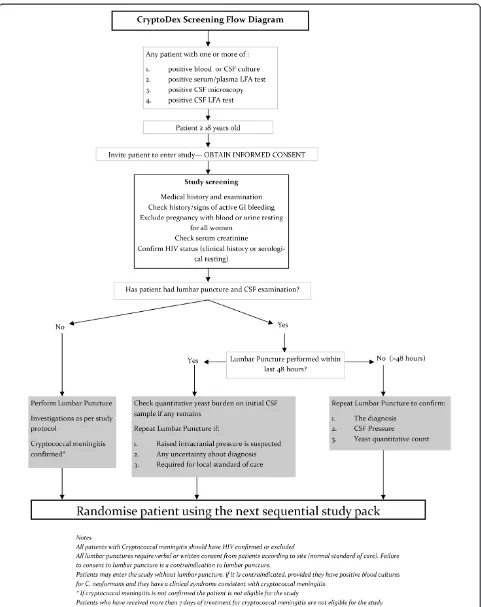
Patients who are determined to be ineligible will be withdrawn from the study, and the reason recorded. Pa-tients withdrawn from the study will be treated accord-ing to the best available standard care. Screenaccord-ing flow is illustrated in Figure 3.
The number of patients who do meet inclusion/exclu-sion criteria, but are not enrolled in the study will be recorded.
Randomisation
Randomisation will be 1:1 to either dexamethasone or identical placebo. Patients will be stratified by hospital of enrolment. Enrolment logs specific to each site will be used to assign patients to the next available sequential number. The assigned number will correspond to a blinded, sealed, treatment pack containing dexamethasone for injection and dexamethasone tablets, or visually identical placebos. Treatment packs will be prepared centrally by an un-blinded study pharmacist and distributed to the sites in batches, as required. Only central study pharmacists who hold the master randomisation list will know the contents of each pack. This list will be accessed only in the case of emergency unblinding, authorised by an investigator or designee, as per standard operating procedures. At each site we will use block randomisation with variable block lengths of size 4 (with probability 0.75) or 6 (with probabil-ity 0.25), respectively. Stratification by site will minimise the effect of any differences in patient or health care char-acteristics by ensuring that nearly equal numbers of pa-tients receive either of the two treatment arms at each site. Drug appearance and administration schedules will be identical to maintain blinding amongst the attending phy-sicians and nurses.
Patient management Initial evaluation
On admission, all patients will have a full clinical assess-ment and examination.
Study-entry laboratory tests will be performed as per the study schedule in section Treatment of CM.
A baseline chest radiograph will be performed. A CT or MRI brain scan will be performed if evidence is found of increased intracranial pressure or focal neurologic ab-normalities according to local practice and resources.
Other treatment
Antifungal treatment
All patients will receive antifungal treatment consisting of 2 weeks of intravenous amphotericin B, 1 mg/kg/day, com-bined with high-dose fluconazole (800 mg/day), followed by fluconazole 800 mg/day for 8 weeks (10 weeks in total; see Appendix 4 and Appendix 5). This is locally feasible and consistent with recent guidelines [3,4]. After the 10-week period of therapy, all patients, provided they have responded to treatment, will receive long-term secondary prophylaxis with fluconazole, 200 mg/day. Modification of antifungal therapy will be made according to the patient’s needs and the judgment of the attending physician. Any changes to an-tifungal therapy will be recorded in the case-record form. The cost of antifungal treatment (including secondary prophylaxis until 6 months after randomisation) will be cov-ered by existing local financial support or trial finances.
Antiretroviral therapy
All patients must to be referred to local HIV services as soon as practicable, preferably while still admitted to hospital, to ensure that they have access to locally avail-able HIV services, including counselling and ARVs.
It is not clear when antiretroviral therapy should be started in CM. Large studies are currently under way to answer this question. Early initiation may offer faster im-mune reconstitution benefiting survival, or may increase the risk of IRIS and drug toxicities, adversely affecting survival. In the absence of reliable data, most physicians would recommend starting ARVs after 4 weeks of anti-fungal treatment, provided the patient has made a good response. The date that ARVs are started (or stopped) in patients in the study will be recorded.
Opportunistic infection prophylaxis
Most patients will be profoundly immunosuppressed and should receive prophylactic therapy against other opportun-istic infections, such as daily trimethoprim-sulfamethoxazole, in accordance with local guidelines and practices.
Hospital admission
Clinical monitoring
Patients will have daily GCS and review, as per standard care, until discharge from hospital. The decision to dis-charge patients from the hospital is at the attending phy-sician’s discretion and is based on the clinical status of the patient. After discharge, patients will be seen weekly until 4 weeks, at 6 weeks, and at 10 weeks. If the exact visit day is not feasible, scheduled visits can occur at up to 5 days after the stipulated time to account for week-end and holidays (for example, the 4-week review should occur on day 28 to 33 after randomisation, and week 10 visit on day 70 through 75). Patients will be monitored closely for
Death: the date of death and cause will be recorded
New neurologic events (onset of new focal
neurologic signs or decrease in Glasgow coma scale score of≥2 points for≥2 days, after >7 days clinical stability or improvement after randomisation)
Drug-related adverse events
New or recurrent AIDS-defining illnesses (see
Table5)
Visual deficit (at week 10)
IRIS
Increased intracranial pressure (clinical or measured)
Uniform management of patients and recording of data will be ensured by the local study staff, who will do clinical assessments daily while admitted and at follow-up visits.
Disability and mortality at 6 months and evidence of morbidity (including IRIS) since last seen (week 10) will be collected with either a structured telephone interview or an outpatient visit. Outpatient visits may occur in the patient’s home when the patient cannot come to the hospital.
Laboratory monitoring
Inpatient laboratory monitoring will be as shown in the study schedule (section Treatment of CM).
Other investigations may be performed as clinically in-dicated. Data for the following will be recorded when performed for routine clinical care:
CSF, if neurologic deterioration (Gram stain and
routine culture, ZN stain and mycobacterial culture, India ink stain, and fungal quantitative culture)
Sputum, if symptomatic (routine culture, ZN stain)
Urine culture, if urinary symptoms (urine culture)
Stool examination, if prolonged diarrhoea
(microscopy, culture, and parasites)
Blood cultures, if persistent fever
Lymph node aspiration (routine and mycobacterial
cultures)
Blood glucose will be measured when CSF is
examined or if hyperglycaemia is suspected
A window period of ±2 days outside of the scheduled laboratory tests will apply to all tests that are not base-line inclusion/exclusion criteria.
Imaging
A chest radiograph must be performed on study entry if it has not been done at the time of diagnosis. The result will be recorded in the CRF. Brain imaging is not man-dated by the study. The decision to perform brain im-aging will be according to local practice. Results of brain imaging, when available, will be recorded.
Management of adverse events
Possible side effects of dexamethsone were described earlier.
Given the experience from tuberculous meningitis, gastrointestinal haemorrhage is extremely unlikely (it occurred more frequently in placebo recipients than in patients receiving dexamethasone in the large randomised controlled trial from Vietnam). Gastrointestinal hae-morrhage will be treated as per local practices, with car-diovascular support and proton pump inhibitors or H2
antagonists. Hyperglycaemia will be managed with insulin.
Stopping study drug and unblinding rules
The purpose of the randomised, double-blind design of the trial is to protect the results from the potential influ-ence of study staff or patient bias about which treatment is the most effective.
Occasionally it can be necessary to STOP the study intervention (placebo or dexamethasone) or to UNBLIND the patient’s treatment allocation.
Note:
STOPPINGstudy drug does not necessitate
UNBLINDINGthe treatment allocation.
UNBLINDINGtreatment is not necessarily an
indication toSTOPtreatment.
STOPPING or UNBLINDING a patient’s treatment
does not mean that they have withdrawn from the study. Patients continue in the study and follow the protocol schedule for visits and investigations until its conclusion at 6 months of follow-up.
Stopping study drug
Table 5 Presumptive and definitive criteria for AIDS-defining events
Presumptive criteria Definitive criteria
Constitutional disease
HIV wasting syndrome Unexplained involuntary weight loss >10% from baseline PLUS persistent diarrhoea with≥2 liquid stools/day for >1 month OR chronic weakness OR persistent fever >1 month. Should exclude other causes such as cancer, TB, MAC,
cryptosporidiosis or other specific enteritis
Infections
Aspergillosis, other invasive CXR abnormality compatible with aspergillosis PLUS invasive mycelia consistent with Aspergillus on lung biopsy or positive culture of lung tissue or positive culture of sputum
CXR abnormality compatible with aspergillosis PLUS invasive mycelia consistent with Aspergillus on lung biopsy PLUS positive culture of lung tissue or positive culture of sputum
Bartonellosis Clinical evidence of bacillary angiomatosis or bacillary peliosis PLUS positive silver stain for bacilli from skin lesion or affected organ
Clinical evidence of bacillary angiomatosis or bacillary peliosis PLUS positive culture or PCR forBartonella quintanaorBartonella henselae
Candidiasis of bronchi, trachea or lungs
None Macroscopic appearance at bronchoscopy or histology or cytology (not culture)
Candidiasis, oesophageal Recent onset retrosternal pain on swallowing PLUS clinical diagnosis or oral candidiasis by cytology (not culture) PLUS clinical response to treatment
Macroscopic appearance at endoscopy or histology or cytology (not culture)
Coccidiodomycosis, disseminated or extrapulmonary
None Histology or cytology, culture or antigen detection from affected tissue
Cryptococcosis, meningitis or pulmonary
None Histology or cytology/microscopy, culture or antigen detection from affected tissue
Cryptosporidiosis None Persistent diarrhoea >1 month, histology or microscopy
CMV retinitis Typical appearance on fundoscopy of discrete patches of retinal whitening, associated with vasculitis, haemorrhage, and necrosis, confirmed by ophthalmologist
None
CMV end-organ disease None Compatible symptoms plus histology or detection of antigen from affected tissue
Infections Presumptive criteria Definitive criteria
CMV radiculomyelitis Leg weakness and decreased reflexes or syndrome consistent with cord lesion presenting subacutely over days to weeks. CT/ MRI shows no mass lesion. CSF shows >5 WBC with >50% polymorphs and positive CMV PCR, antigen or culture
None
CMV
meningoencephalitis
Rapid (days to <4 weeks) syndrome with progressive delirium, cognitive impairment, ± seizures and fever (often with CMV disease elsewhere) CT/MRI may show periventricular abnormalities.
Rapid (days to <4 weeks) syndrome with progressive delirium, cognitive impairment, ± seizures and fever (often with CMV disease elsewhere) CT/MRI may show
periventricular abnormalities and CSF PCR positive for CMV
HSV mucocutaneous ulceration
None Persistent ulceration for >1 month, plus histology or culture or detection of antigen or HSV PCR positive from affected tissue
HSV visceral disease (for example, oesophagitis, pneumonitis
None Symptoms, plus histology or culture or detection of antigen or HSV PCR positive from affected tissue
VZV multidermatomal ≥10 typical ulcerated lesions affecting at least two noncontiguous dermatomes plus response to an antiviral active against VZV unless resistance is demonstrated
≥10 typical ulcerated lesions affecting at least two noncontiguous dermatomes plus culture or detection of antigen or VZV PCR-positive from affected tissue
Histoplasmosis, disseminated or extrapulmonary
None Symptoms plus histology or culture or detection of antigen from affected tissues
Isosporiasis None Persistent diarrhoea for >1 month, histology or microscopy
Leishmaniasis, visceral None Symptoms plus histology
Table 5 Presumptive and definitive criteria for AIDS-defining events(Continued) MAC, and other atypical
mycobacteriosis
Symptoms of fever, fatigue, anaemia or diarrhoea plus acid-fast bacilli seen in stool, blood, body fluid, or tissue but not grown on culture and no concurrent diagnosis of TB except pulmonary
Symptoms of fever, fatigue, anaemia or diarrhoea plus culture from stool, blood, body fluid, or tissue
Tuberculosis, pulmonary Symptoms of fever, dyspnoea, cough, weight loss, fatigue plus acid-fast bacilli seen in sputum, lavage, or lung tissue, not grown in culture, plus responds to standard TB treatment
Symptoms of fever, dyspnoea, cough, weight loss, fatigue plus positive TB culture or PCR from sputum, bronchial lavage, or lung tissue
Tuberculosis, extrapulmonary
Symptoms, plus acid-fast bacilli seen from affected tissue or blood but not grown in culture, concurrent diagnosis of pul-monary TB or responds to standard TB treatment
Symptoms, plus positive TB culture or PCR from affected tissue
Nocardiosis Clinical evidence of invasive infection plus microscopic evidence of branching, Gram-positive, weakly acid-fast bacilli from affected tissue
Clinical evidence of invasive infection plus positive culture from blood or affected tissue
Penicillium marneffei
disseminated
Characteristic skin lesions plus response to antifungal therapy for penicilliosis (in an endemic area)
Culture from a nonpulmonary site
Pneumocystispneumonia (PCP)
Symptoms, any CXR appearance and CD4 count <200, negative bronchoscopy if treated for PCP for >7 days, no bacterial pathogens in sputum, and responds to PCP treatment
Microscopy or histology
Extrapulmonary pneumocystis
None Symptoms plus microscopy or histology
Recurrent bacterial pneumonia
Second pneumonic episode within 1 year, new CXR appearance, symptoms and signs, diagnosed by a doctor
Second pneumonic episode within 1 year, new CXR appearance, detection of a pathogen
Progressive multifocal leukoencephalopathy (PML)
Symptoms and brain scan consistent with PML and no response to treatment for toxoplasmosis
Symptoms and brain scan consistent with PML and positive JC virus PCR in CSF or histology
Rhodococcus equidisease None Clinical evidence of invasive infection plus culture of
organism from blood or affected tissue
RecurrentSalmonella
septicaemia
None Second distinct episode, culture confirmed
Cerebral toxoplasmosis Symptoms of focal intracranial abnormality or decreased consciousness, and brain scan consistent with lesion(s) having mass effect or enhancing with contrast, and either positive toxoplasma serology or response to treatment clinically and by scan
Histology or microscopy
Extra-cerebral toxoplasmosis
None Symptoms plus histology or microscopy
Neoplasms
Kaposi sarcoma (KS) Typical appearance without resolution. Diagnosis should be made by an experienced HIV clinician
Histology
Cervical carcinoma, invasive
None Histology
Lymphoma, primary cerebral
Symptoms consistent with lymphoma, at least one lesion with mass effect on brain scan, no response to toxoplasma treatment clinically and by scan
Histology
Lymphoma, non-Hodgkin B cell
None Histology
lymphoma, Hodgkin None Histology
Neurologic
HIV encephalopathy Cognitive or motor function interfering with usual activity, progressive over weeks or months in the absence of another condition to explain the findings. Should have a brain scan ± CSF examination to exclude other causes.
None
Other
Indeterminate cerebral lesion (s)
Neurologic illness, with evidence for an intracerebral lesion by brain scan, where the differential diagnosis is either cerebral toxoplasmosis. PML, cerebral lymphoma, or HIV encephalopathy
will be followed for study patients. Tapering the dose of corticosteroids reduces the risk of adrenal suppression. Study drug should only be stopped immediately in two circumstances:
1. if the patient has received four or fewer doses of the study drug, or
2. if the study drug is being replaced by other corticosteroid therapy
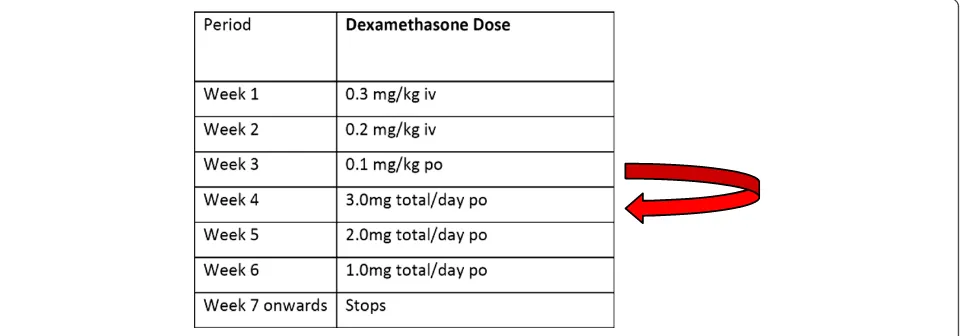
[image:15.595.59.539.550.718.2]In all other circumstances, study drug will be stopped by using dose tapering by moving the patient’s treatment forward on the dosing schedule, as illustrated below: (for example, if the patient is in week 3 of treatment, he or she should be moved immediately onto the week 4 dose, and then continue treatment as per the dose-tapering schedule with weekly reductions in the treatment dose) (Figure 4).
Any changes in patient’s medication must be recorded on the CRF and on the concomitant medication form.
Indications for stopping study drug/placebo
The main indication to stop the study drug is if the patient develops a condition for which there is good evidence that steroids are beneficial and should be prescribed. Examples of this are as follows:
1. Tuberculous meningitis:Dexamethasone has been demonstrated in a large randomised controlled trial to reduce the risk of death [10]. If a patient develops TB meningitis, the study drug should be stopped, and the patient should receive the appropriate dosage of steroids according to the severity of the disease. This does not necessitate unblinding of treatment allocation.
2. Intracranial space-occupying lesion with mass effect:For example, a primary brain tumour such as
CNS lymphoma. Space-occupying lesion with mass effect is generally considered to be an indication for steroid therapy. A typical dose would be dexamethasone, 4 mg, 4 times daily. The study drug should be stopped in all patients, and the patient should receive corticosteroid treatment as per local guidelines. This does not necessitate unblinding of treatment allocation.
Note: a suspected cryptococcoma is not an
indication to alter the study drug; we do not know whether dexamethasone is indicated in this case, and the study is testing this indication.
3. Severe pneumocystis pneumonia (PCP):All patients in the study must receive PCP prophylaxis with co-trimoxazole; this reduces the risk of developing PCP. However, PCP may still occur. Microbiologic confirmation of PCP is not always possible, and the diagnosis is often made on clinical grounds. The chest radiograph typically shows bilateral interstitial, often perihilar, shadowing. The differential diagnosis of this appearance includes bacterial pneumonia and acute respiratory distress syndrome (ARDS) due to
cryptococcosis. The gold standard for diagnosis of PCP is to demonstrate the presence ofPneumocystis jirovecii in bronchoalveolar lavage washings or in induced sputum samples. Severe PCP is confirmed when there is a typical clinical syndrome is present AND the arterial blood oxygen partial pressure (pO2) is less than
70 mm Hg (FiO2≥20%). Prednisolone (40 mg twice
daily for 5 days, 40 mg once daily for 5 days, followed by 20 mg/day for 11 days), in combination with high dose co-trimoxazole, has been shown to reduce the risk of death from severe PCP [41]. Where arterial blood gas measurement is not available, diagnosis of severe PCP should be made in accordance with local guidelines. In any patient in whom the diagnosis of severe PCP is made, the study drug must be stopped
immediately, and the patient treated with prednisolone in conventional doses, and high dose co-trimoxazole as per local guidelines. This does not necessitate unblinding of treatment allocation.
Any changes to study medication will be recorded in the case-record form.
Unblinding
Unblinding means revealing the identity of the study treat-ment (that is, dexamethasone or placebo). Treattreat-ment allo-cation should be unblinded only if knowing the treatment that a patient has been allocated will result in a change in the patient’s management. The need to unblind is likely to be rare during the study. Unblinding a patient’s treatment allocation does not enable us to tell if a particular adverse event is due to the investigational agent; that conclusion can be drawn only with an analysis of all available data, ei-ther at an interim safety analysis (which is done by the in-dependent data and safety-monitoring board) or after the final analysis of the study.
Process for unblinding
The decision whether to unblind should be discussed with the lead country investigator or the principal inves-tigator, when possible. Unblinded treatment allocation should be held securely at each site and be available at all times. The responsibility to approve unblinding will be assigned to dedicated staff at each site. Access to treatment allocation should be given only with the ap-proval of one of these dedicated staff. Unblinding will be documented in the case-record form.
Data on concomitant medications
At each visit, information on other medications, includ-ing start dates and reason for takinclud-ing them, will be docu-mented in the case-record forms.
Withdrawal from the trial
Patients may voluntarily withdraw from the trial for any reason. If this occurs, the patient will be referred to standard clinical care facilities. The patient’s withdrawal from the trial will not affect the access to the best stand-ard of care within the local health system. With the agreement of the patient, clinical and laboratory assess-ment should be performed and recorded at the time of withdrawal. Patients may also decide to stop study treat-ment without withdrawing from the study, in which case, treatment will be adjusted as described later, and follow-up will continue as per the study schedule.
Provided no more than 4 days of study drug have been administered, if a patient wishes to withdraw, the study drug can be stopped immediately. If a patient has re-ceived 5 or more days of study drug, then it is possible
that adrenal suppression has occurred, and the dose of dexamethasone should be tapered. Thus, if a patient wants to withdraw from the study, and has received 5 or more days of study drug, then the withdrawal phase of steroid dosing will be started immediately; the patient will be switched to the next dexamethasone dose in the steroid-dosing sequence. For example, if on day 16, a pa-tient wants to leave the study, then he or she will be im-mediately switched to the next phase of steroid/placebo dose (3 mg/day), and the treatment tailed off according to the treatment schedule (Table 4). This continuation of treatment after withdrawal will be fully explained in the informed-consent form. Follow-up will be according to clinical need. All patients in the study will be pro-vided with steroid information cards in their own lan-guage. These will detail the need to reduce the dose gradually if they are to be stopped, and to inform other health care workers that they are taking dexamethasone, should they require treatment from a health care worker not involved with the trial. If the patient has an un-scheduled period off treatment or not in follow-up, this should be recorded in the case-report forms.
Definition and assessment of adverse events Definition of adverse events
An adverse event (AE) is any undesirable event that oc-curs to a study participant during the course of the study, regardless of whether that event is considered re-lated to the study drug. An AE can, therefore, be any un-favourable and unintended sign (including an abnormal laboratory finding, for example), symptom, or disease temporally associated with the study drug, whether or not considered related to the study drug.
Examples include the following:
An increase in severity or frequency of a preexisting abnormality or disorder (events that are marked by a change from the participant’s baseline/entry status)
All reactions from sensitivity or toxicity to study drug
Injuries or accidents (for example, for a fall secondary to dizziness,“dizziness”is the event and the injury secondary to the fall is the“outcome”)
New clinically significant abnormalities in clinical laboratory values, physiological testing, or physical examination.
Stable chronic conditions, such as arthritis, which are present before clinical trial entry and do not worsen are not considered AEs and will be documented in the sub-ject’s clinical chart as medical history.
Definition of serious adverse events
An AE is considered to be "serious" if it results in one of the following outcomes
Death,
Life-threatening event (the subject was at immediate
risk of death at the time of the event; it does not refer to an event that hypothetically might have caused death if it were more severe),
Inpatient hospitalisation or prolongation of existing hospitalisation
Persistent or significant disability/incapacity (a substantial disruption of a person's ability to conduct normal life functions),
Congenital anomaly/birth defect,
Important medical event that may not be
immediately life-threatening or result in death or hospitalisation but may jeopardise the patient or may require intervention to prevent one of the other outcomes listed in the earlier definition.
Definition of unexpected serious adverse events
Unexpected serious adverse events are untoward med-ical events that fit one or more of the previously ex-plained criteria for SAEs and that are not considered a part of normal clinical progression of disease or an ex-pected drug reaction. Any event that becomes of con-cern to the investigators or study doctors during the course of the trial may be reported as a USAE.
Assessment of adverse events
Adverse events will be defined according to the Com-mon Terminology Criteria for Adverse Events (CTCAE) definitions: http://ctep.cancer.gov/protocolDevelopment/ electronic_applications/ctc.htm. New AIDS-defining events will be defined according to the revised CDC criteria modified for this trial (see Table 5, and Appendix 6). In the event that an adverse event is not described within the CTCAE definitions, or a new AIDS-defining event, as defined in Table 5, the following generic severity grading will be used:
Grade 1 Mild;asymptomatic or mild symptoms; clinical or diagnostic observations only; intervention not indicated.
Grade 2 Moderate;minimal, local, or noninvasive intervention indicated; limiting age-appropriate instrumental Activities of Daily Living (ADLs)*.
Grade 3 Severe or medically significant but not immediately life-threatening;hospitalisation or prolongation of hospitalisation indicated; disabling; limiting self-care ADL**.
Grade 4 Life-threatening consequences;urgent intervention indicated.
*Instrumental ADLs refer to preparing meals, shopping for groceries or clothes, using the telephone, managing money, and so on.
**Self-care ADLs refer to bathing, dressing and undressing, feeding self, using the toilet, taking medications, and not bedridden.
Details on the grading of specific adverse events can be found in Appendix 6. [Note: “Life-threatening” as a severity grade is not necessarily the same as “life-threat-ening” as a “serious” criterion used to define a serious adverse event. The former is a“potential” threat to life, and the latter is an“immediate”threat to life.]
Alaboratory abnormalitymust be recorded as a clin-ical adverse event only if it is associated with an inter-vention. Intervention includes, but is not limited to, discontinuation of a current treatment, dose reduction/ delay of a current treatment, or initiation of a specific treatment. In addition, any medically important labora-tory abnormality may be reported as an adverse event at the discretion of the investigator. This would include a laboratory result for which no intervention is needed, but the abnormal value suggests a disease or organ tox-icity. Laboratory events will be graded according to CTCAE definitions.
If clinical sequelae are associated with a laboratory ab-normality, the diagnosis or medical condition should be reported as the adverse event (for example, renal failure, haematuria), not the laboratory abnormality (for ex-ample, elevated creatinine, urine RBC increase).
Recording and reporting of adverse events and protocol violations
Adverse event recording
Grade 3 and 4 adverse events will be recorded in the case report form and entered into the study database. Grade 1 and 2 events will not be recorded, because in a severe disease such as CM, the number of low-grade ad-verse events is likely to be high, representing a large reporting burden, which may affect the quality of re-cording and reporting of more important grade 3 and 4 adverse events.
Adverse event reporting
Protocol violations
Protocol violations are events that contradict or omit protocol instructions. Violations that compromise pa-tient safety or the integrity of trial data will be recorded and reported to the responsible Ethics Committees, as required by the regulations of each Committee.
Statistics
Sample size and power considerations
The trial is powered for the primary end point (that is, overall survival during the 10-week follow-up period).
Few data exist on which to estimate the potential ef-fect size of dexamethasone on mortality from CM. We have based our estimate of the effect size on data from tuberculous meningitis, which shares clinicopathologic features with CM. In a large RCT of dexamethasone to treat tuberculous meningitis in Vietnam, the hazard ratio (HR) for death was 0.69 at 9 months in favour of dexa-methasone [25]. Most of this effect occurred during the first 3 months of treatment. The dose of dexamethasone we will test is the same as that used in that trial. Add-itionally, in a study of dexamethasone in bacterial men-ingitis in Vietnam, the HR was 0.43 in patients with microbiologically confirmed disease, and 0.59 in a study based in Europe, again in favour of dexamethasone [34,35]. These analyses were all based on the intention-to-treat principle (including noncompliant patients), and it seems sensible to expect a similar rate of noncompli-ance in our study. Therefore, we believe a target hazard ratio of 0.7 in favour of dexamethasone to be reasonable for our trial.
To detect such a risk reduction of 30% with 80% power at the two-sided 5% significance level, a total of at least 247 deaths must be observed. Based on historical data and consultation with principal investigators from all study sites, the 10-week mortality risk in the control group is expected to be between 30% and 50% [38], and the target hazard ratio of 0.7 corresponds to absolute risk reductions in mortality from 30% to 22%, or from 50% to 38%. Assuming an overall 10-week mortality of at least 30% in our study population, recruitment of 824 patients is sufficient to observe the target number of deaths. Allowing for some loss to follow-up, the total sample size for this study is 880 patients.
A major aim of this trial is to generate robust evidence across both continents. To achieve this goal, we aim to recruit roughly similar numbers of patients from each continent.
Event-driven stopping of the trial after 247 observed deaths is not foreseen even if this should occur prior to recruiting 880 patients. Thus, the study will be conserva-tively powered if the study mortality is larger than 30%. For example, if overall mortality was around 50% and 412 deaths were observed during the study, power would
increase to 95% for a true hazard ratio of 0.7 and to 83% for a true hazard ratio of 0.75.
Analysis
Analysis of the primary end point and 6-month mortality
The analysis will be based on a stratified Cox propor-tional hazards model allowing for separate baseline haz-ards for each continent (Asia or Africa) and treatment allocation as the only covariate. The stratification is based upon the expectation of different mortalities in the control arm by continent but similar (relative) effects of the intervention across continents. The proposed test is essentially equivalent to using a stratified log‐rank test to compare the two treatment arms. We prefer to use the Cox model as it automatically provides treatment ef-fect estimates and confidence intervals in addition to the Pvalue.
In a second stage, overall survival will be modelled by using the Cox proportional hazards regression model with stratification by continent and the follow-ing covariates (in addition to the treatment group): country, baseline fungal load, Glasgow coma score less than 15, and ARV status at study entry (ARV naïve or experienced).
Potential heterogeneity of the treatment effect will be assessed based on appropriate interaction (likelihood ra-tio) tests and the following predefined subgrouping variables:
Continent
Country
IDSA indications for steroid treatment at baseline
(cryptococcoma with mass effect, acute respiratory distress syndrome or IRIS: yes or no)
Glasgow coma score <15 (yes or no)
Naïve to ARVs at study entry versus on ARVS at
study entry
All Cox regressions and sub-group analyses will be performed for the primary end point (10-week survival) as well as for 6-month survival. Kaplan-Meier plots and explicit survival estimates at 10 weeks and 6 months of follow-up will also be calculated for the full populations and for each continent separately.
Analysis of secondary end points