255
Chapter 35
Education as an Earthquake Disaster Mitigation Efforts to Improve Safety in
Children Through State Primary Media Comics in The Village New District
Labuhan Ratu Bandarlampung Lampung
Irma Lusi Nugraheni1,a
1
Faculty of Teachers Training and Education, University of Lampung, Indonesia a
Abstract In order to build a culture of safety and resilience, especially for the younger generation, disaster risk reduction needs to be given to children from an early age. A total of 113 countries in the world have included disaster preparedness education into primary schools. Among them are India, Iran, Turkey and Bangladesh. Learning from the experience of the natural disaster that occurred in the province of Lampung, hence the need for disaster preparedness especially pedidikan about earthquakes for children since childhood using comics media, considering the kids really like the comic. Targets to be achieved from this research is to increase knowledge, skills and awareness of primary school students in urban areas Bandarlampung against earthquake disaster through the medium of comics. The purpose of this study was to determine the elementary school students' knowledge about disaster preparedness education before and after reading the comics. The method used in this research is descriptive survey method that uses structured questions given to students from elementary age of 12 years. Taking samples of random sampling techniques where students sampled were children of primary school.
Keywords: education, mitigation, disaster
I.
Introductions
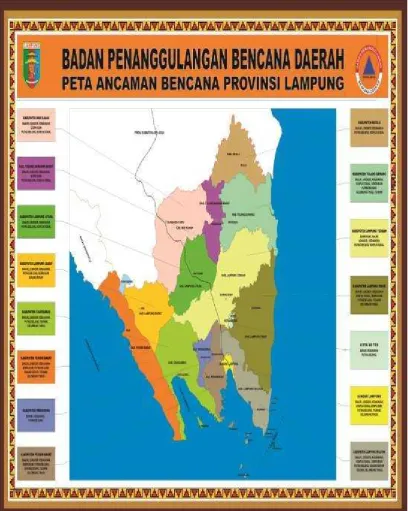
Indonesia merupaka country with a high vulnerability to earthquakes. Earthquakes are caused by the interaction of tectonic plates can cause tidal waves in the ocean in case. Earthquakes often led to casualties, both adults and children and toddlers. The main cause of fatalities are due to a lack of public knowledge about the disaster and the lack of community preparedness in anticipation of the disaster. Especially for the earthquake victims who died as a result because of falling rubble from collapsed buildings. Among the casualties, most are women and children. Why? Because they are less aware of the knowledge about how to deal with when the earthquake came. Generally they do not immediately respond to the earthquake disaster. Salu Lampung Province is one province that includes the path of the fire ring is certainly also experienced natural disasters bumi.Berdasarkan earthquake Earthquake Threat Map created by the Regional Disaster Management Agency of Lampung Province in 2010, it is known that the entire section in the Lampung province have the threat of earthquakes Earth, such as in Bandarlampung have the threat of floods, earthquakes, landslides, fires, tornados, etc.
256
The impact of the earthquake is still felt up to 40 kilometers from the capital of the West Lampung regency. (https://id.wikipedia.org/wiki/Gempa_bumi_Liwa_1994, February 28, 2011). The latest earthquake occurred in Lampung ie on 18.10.2014 according to the Meteorology, Climatology, and Geophysics has happened twice earthquakes in the province of Lampung, but according to local authorities until Sundaymorning there has been no reports of damage and casualties as a result of the quake. BMKG through the Head of Geophysics Station Kotabumi Lampung, Yuharman, mentioned twice an earthquake that occurred in Lampung on Saturday, the quake measuring 5.2 on the Richter scale (SR) occurred at 15:02 pm on the coordinates of 5.81 degrees. South latitude (LS) and 104.10 degrees east longitude (BT), with a depth of 28 km.Lokasi this earthquake in the southSumatra; 73 km southwest of West Lampung regency; 85 km southwest Tanggamus; 110 km southwest Pringsewu; 135 km southwest Bandarlampung in Lampung; and 305 km northwest of Jakarta. Nevertheless, a number of residents in Lampung, as in Bandarlampung claimed to feel a tremor of 4.6 magnitude and was surprised at the center of their activity (http://www.antaranews.com/berita/459454/gempa-di-lampung-tak-no-damage-report, 19 October 2014). Based on the index map earthquake hazard BNPB tahun2010, Bandarlampung included into the high earthquake hazard.
Therefore, education disaster preparedness should further be given to students in schools especially at the primary level where it is necessary to teach children of primary school age on standby earthquake, which also includes, how to save themselves when disaster threatens and avoid unnecessary accidents happen in everyday life. Knowledge of the earthquake itself, has actually been awarded to students in the 5th grade elementary 2nd half on the material science of Nature and impact events. There is described one of them about earthquakes, just not detailed. Likewise the students grade 6 semesters 2, the material is also given earthquake in social studies of natural phenomena Indonesia and neighboring countries.
The approach can be done to provide knowledge about earthquake disaster mitigation to children of primary school is one with the comic medium. We all know that children are very fond of reading comics. The comic itself is actually one of the alternative readings are entertaining children, it's just that sometimes the content in the comics there are some that are not appropriate for children of primary school age. Therefore, it would be interesting if the knowledge about earthquake disaster mitigation can be introduced through the medium of comics.
II.
Problem Formulation
1. Indonesia is a country prone to earthquakes
2. The death toll caused by the earthquake at most are children and women 3. Earthquakes can occur anywhere without warning.
4. Children of primary school age need to acquire knowledge about disaster mitigation5. Media comics is one alternative giving interesting learning media to convey knowledge about earthquake disaster mitigation.
III.
Research Objectives
257
Fig 1. Map Hazards Lampung Province, 2010
IV.
Study of Theoretical
a.Understanding Earthquake Disaster Mitigation
258
Disaster itself is an event or series of events that threaten and disrupt the lives and livelihoods caused by both natural factors and / or non-natural factors and human factors that resulted in the emergence of human fatalities, environmental damage, loss of property, and psychological impact. Disasters can be a fire, tsunamis, earthquakes, volcanic eruptions, floods, landslides, tropical storms, and others.(http://www.rcweb.0fees.net/index.php?p=1_27_Pengertian-Mitigasi&ckattempt=1, 2013)Mitigation can be done in three stages: before it happens, when it took place and after an earthquake. 1. Before an earthquake
Some things we can do that is always alert is:
a. Construct buildings (office, home, etc.) in accordance with standard kaidah2. Discuss the one with experts so that your building earthquake resistant. Do not build with carelessly let alone without calculation.
b. Dentify the location of the building where you live or work, if not at fault earthquake or other such places prone to landslides and so on.
c. Place the furniture in place proportionate. If you have a closet, it's good to be nailed to the wall, so as not to collapse and come to rest on when an earthquake happens. If there are furnishings which are suspended, check regularly savety.
d. standby equipment such as flashlights, P3K boxes, instant food and so on. Provide also a radio, because at the time of the earthquake means of communication and other. information such as Phone, HP, Television, the Internet will be disrupted. Radios that use only batteries will be very useful in times of disaster.
e. Always check the use of electricity and gas, turn off when not in use. f. Record important calls such as firefighters, hospital etc.
g. Know the evacuation route. Some areas in Indonesia, especially in areas prone to tsunami, now has to build the evacuation route to higher ground.
h. Follow simulated seismic disaster mitigation activities that have been started by some of the areas such as the city of Padang, West Sumatra. This is usually done by the Japanese people. So they are not awkward anymore when disaster strikes. By attending this event, we will be familiar with bentuk2 early warning provided by the local government, such as sirens sign Tsunami, Flood sirens etc.
2. When the earthquake took place
a.The first one is DO NOT BE PANIC, mastered yourself that you can escape from the disaster.
b.Avoidance of buildings, trees, power poles, etc. are likely to collapse upon us. If you are inside a building, try to run out. If not possible take shelter under a strong table, bed. Or take shelter in a corner of the building. c.Pay attention to where you are standing, because of large earthquakes will allow rengkahan ground.
d.If you are driving, turn off your vehicle and fell. If you are on the beach, then ran away from the beach. if you were in a mountainous area, then look around you whether there is a possibility of landslides.
3. After an earthquake
a.If you are still in the building, then exit in an orderly manner, do not use the elevator, use the stairs. b.Check your surroundings, whether there is any damage, be it power outages, gas leaks, cracked walls etc. Check also if anyone is injured. If yes, do first aid.
c.Avoid building that seems almost collapsed or the potential for collapse d.Look for information about the earthquake, use radio earlier.
b. Earthquake Disaster Mitigation Education
259
This is in line that mandated by Law No. 24 Year 2007 on Disaster Management should be integrated into development programs, including in the education sector. It is also stressed in the law is that education is a determining factor in disaster risk reduction activities. Socialization on aspects of an earlier age and the type of lesson that touched directly natural phenomena such as IPA, is very strategic to be implemented, since the two aspects were not widely used by teachers and school authorities. In fact, primary school children's understanding of natural phenomena such as floods, landslides, volcanic eruptions and earthquakes have been revealed in science lessons.Therefore, skills and understanding of the application of disaster mitigation dintegrasikan with science lessons be interesting, these conditions are expected to develop sensitivity and reduce anxiety in children's self. Knowledge and life skills needed by students in particular classes early so that when disaster strikes can perform self-rescue efforts and can also help others. This strategy is considered accurate because, elementary school children is a condition that is easily formed, in accordance with the development of children, students at the age of 7-12 years, according to Piaget's theory of development, the concrete operational phase. In the dimensions of the children get to know the reality and easily mimicked what is given.
c. Characteristics Of Primary School Students (7-12 Years)
The period of primary school age as childhood final which takes place from the age of six years until approximately the age of eleven or twelve years old. The main characteristics of elementary school students is that they show individual differences in many aspects and fields of, among others, differences in intelligence, ability in cognitive and language, personality development and physical development of children. Medium according to Thornburg (1984) primary school children is an individual that is growing, perhaps no longer in doubt his courage.
Each elementary school child is in physical and mental changes lead to better. Their behavior in the face of social and non-social environment increases. A fourth grader, have the ability of tolerance and cooperation are higher, there is even among those who reveal the behavior of adolescent behavior approaching the beginning. According to Piaget, there are five factors that support the intellectual development are: maturity (maturation), experience (physical experience), penyalaman mathematical logic (logical mathematical experience), social transmission (social transmission), and the balance (equilibriun) or the regulatory process itself (self-regulation).
Primary school age children interested in learning achievement. They develop self-confidence in the ability and the achievement of good and relevant. Although children need a balance between feeling and ability with the fact that they won, but the feeling of failure or incompetence can force them feeling negative towards itself, thereby inhibiting their learning. Piaget identified the stages of intellectual development through which children are: (a) the motor sensory phase of 0-2 years of age, (b) the operational phase of 2-6 years of age, (c) concrete operational stage aged 7-11 or 12 years, (d) formal operational stage 11 or 12 years of age and over.
260
forecasted as start prominence of factors, (4) generally children facing their duties freely and seek to resolve itself, (5) in this period child looking at the value of (bad performance) as the right size on school performance, (6) the child at this age like to form a peer group, usually to play together.As said Darmodjo (1992) primary school age children are children who are experiencing perrtumbuhan both intellectual growth, emotional and growth badaniyah, where the speed of growth of the child in each of these aspects are not the same, resulting in a wide variety of growth rates of these three aspects. This is a factor that gave rise to individual differences in children of primary school age even though they are in sama.Dengan characteristics of students who have been described as above, teachers are required to be able to pack the planning and learning experience that will be given to students with good, deliver -it is in the neighborhood of everyday student life, so that lessons learned are not abstract and more meaningful for children. In addition, students should be given the opportunity to be pro-active and gain direct experience both individually and in groups.Its characteristics include:
1.like play
That is in an early age children tend to want to play and spend time just to play because children are innocent that he knows just play it on the order not less happy childhood megalami children should not be restricted in playing. As an elementary teacher candidates we need to know the character of the child so that the application of the method or the learning model can be fit and achieve the target, for example a model pembelajran relaxed but serious, play while learning and preparing schedules for subjects (science, math, etc.) with mild interspersed lessons (skills, sports etc.)
2.Like move
Children love to move his point in the future growth and mental child becomes hyperactive even here there bobbing like feel not tired of them do want to be quiet and sit down according to the observations of experts child sitting quietly a maximum of about 30 minutes. Therefore, we as a prospective teacher should designing a model of learning that allows the child to move or moves.
Perhaps with games or sports, etc.
3.Like work in groups
Children love working in groups meant as a human being,children also have an instinct as social beings who socialize with others, especially peers, sometimes they form a group certain to play. In the group of children can learn to meet the rules group rules, learning of solidarity, learning does not depend on receipt environment, learn to accept responsibility, learn to compete with people Another healthy manner (sportsmanship), learn the sport, learn fairness and democracy. This may have implications for us as prospective teachers to specify the method or model of group learning so that children get a lesson as mentioned above, the teacher can make a small group eg 3-4 children to be more easily coordinated because there are many differences opinions and characteristics of these children and reduce contention among children in one group. Then the children were given a task to do together, here the child should brainstorm children become more appreciative the opinions of others also.
4.Like feel / do something directly
261
Thus we as a prospective teacher should design a learning model that enables a child to engage directly in the learning process. For example, children will be more understanding about the direction winds, by bringing direct child out of the classroom, then pointed. Direct each direction angina, even with a bit sticking out her tongue would known exactly from which direction the wind when it blows.5. crybaby Kids
At the age of elementary school children, the child is still whiny and spoiled. They always wanted observed and obeyed all their desires are still not independent and should always guided.Therefore, we must make methods instructional tutorial or method of guidance so that we can always guide and directing the child, the child mental shape so as not whiny.
6. Difficult kids to understand the contents of the speech of others.
On the basis of that elementary education, child difficulty in understanding what is given teacher, teachers here have to be able to make or use the appropriate method for example by means of experimental methods so that children can understand the given lesson to find their own core of the lesson, while the lectures make children even do not understand the contents of what was said by the teacher.
7. Like note
In a child's social interaction are usually looking for the attention of a friend or teacher, they are happy when others notice, in various ways done so that people notice. Here the role of the teacher to direct The child's feelings by using a question and answer method, for example, children wants to be noticed will try to answer or ask the teachers to other children and teachers watched
8.Like mimic
In daily life children who are often looking for a Fig. he saw and he encountered. They then mimicked what was done and charged people he wanted to emulate them. In real life many children are affected. Television shows and mimicked the scene performed there, say event smack down that first aired now been eliminated because there is news of a child movements in the smack down on her friend, who finally makes his injured. But now television has been sorted out to whom the show watchable. Another example are typically emulated is a teacher who becomes the center of attention of the students. We as a prospective teacher must keep the actions, attitudes, words, looks nice and neat in order to provide a good example for our students. television shows and mimicked the scene performed there, say event smack down that first aired now been eliminated because there is news of a child movements in the smack down on her friend, who finally makes his injured. But now television has been sorted out to whom the show watchable. Another example are typically emulated is a teacher who becomes the center of attention of the students. We as a prospective teacher must keep the actions, attitudes, words, looks nice and neat in order to provide a good example for our students.
d. Media Comics For Learning
262
happy, arousing the curiosity of students, motivating students to learn, etc.As one of the visual media, comics media certainly has its own advantages when used in teaching and learning activities. Excess comic medium by Trimo (1997.22) is:1.Comic add vocabulary readers
2. Simplify the students catch things or abstract formula
3. Can develop children's interest and develop a field of study other 4. All the comics to the one thing that is good.
While the weakness of comics by Trimo (1997.21) is: 1. Many love scene that stands out
2. Ease of people reading comics makes lazy to read, causing denial-denial of the books that are not illustrated. The fundamental role of comics as a medium of learning, according Sudjana and Rival (2002.68) is the ability to create student interest. As `Audio-Visual media, in order to function properly that optimize learning, then in the development of the comic had to hold on a few things, as follows (Arsyad, 2006):
1. Shape
Selection of important form in order to generate interest and attention of students. 2. Outline
Lines used to connect the elements that are sequential. So it can be said that the elements of this line can help the clarity of the story.
3. Texture
Serves to create the impression of a smooth or rough that may indicate an element of suppression. 4.Warna
Function gives the impression of separation or emphasis and to build cohesion and enhance the reality of the object and create an emotional response.
Comic educative value in the learning process is not in doubt. Media comics in the learning process creates high student interest.
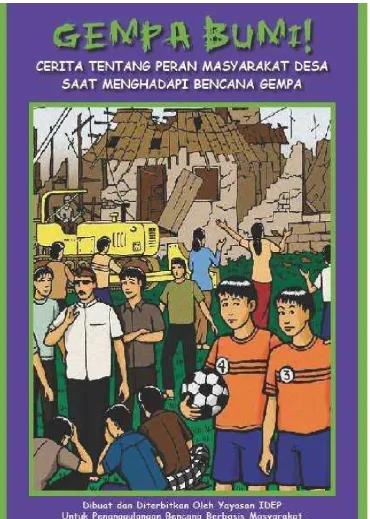
E. Comic Earthquake
263
Fig. 2. Comic Earthquake
V.
Research Methods
264
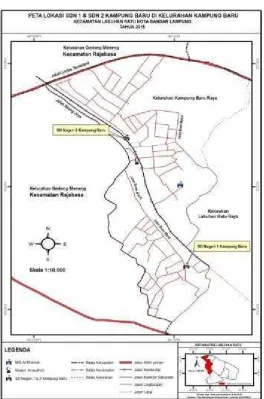
The unit of analysis in this study were elementary school students aged 12 years who attend school at SDN 1 and 2 Kampung Baru Kedaton Bandarlampung 6th grade who is on vacation data collection technique using about pretest postets. Analysis of data using the scoring. Furthermore, to find out how much the students' understanding of the three aspects of disaster mitigation, ie before the earthquake there were six questions, in the event of an earthquake there are 6 questions, after the earthquake there are eight questions, then it is done by calculating a score by percentage (%) in each category is to calculate the total score divided by the acquisition of a maximum score multiplied by 100 to obtain the percentage results. The result, then matched with the data interpretation criteria scores as in Table 1 below.Table 1. List Criteria Score Interpretation
no
understanding CategoryPersentase (%)
1
Less than once0-20
2
Less21-40
3
Self41-60
4
Good61-80
5
Well once81-100
Source: Arikunto 2006
[image:10.595.182.447.354.754.2]265
VI.
Research
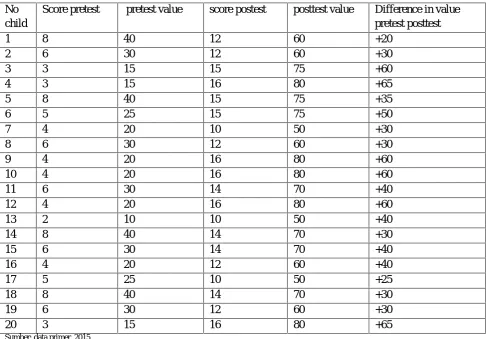
[image:11.595.52.539.317.656.2]Researchers conducted a pretest and posttest be spread about the question for elementary school students grade 6 in the new village in children yanag being school holidays which is derived from SDN 1 and 2 KampungBaru. Pretest given before students acquire disaster preparedness educational materials and a posttest is given after primary school students read a comic about disaster preparedness. The material in question is the third aspect of categories, before the earthquake, in the event of an earthquake and after the earthquake. Scoring, this study is the sum total of items each student who answered each item correctly on the test item. Problem pretest posttest totaling 20 items, where each item was answered correctly was given a score of 1 and one given a score of 0 to a maximum score is 20. For the assessment, is to divide the score in the can each student with a 0.2, so that the range of values obtained between 0-100. Overall, there is increased knowledge of elementary school students about disaster mitigation in view of the results of pretest scores and postesnya. Before the elementary school students reading comics about disaster mitigation, they have not understood correctly what the concept of disaster mitigation. But once given a comic about disaster mitigation, and they read it, they get additional knowledge thus increasing the value of their postest. This can be seen in Table 1, the list of scores and the pretest and posttest them.
Table 2. List of pretest posttest scores and Value Elementary Students STATE 1 and 2 Kampung Baru
No child
Score pretest pretest value score postest posttest value Difference in value pretest posttest
1 8 40 12 60 +20
2 6 30 12 60 +30
3 3 15 15 75 +60
4 3 15 16 80 +65
5 8 40 15 75 +35
6 5 25 15 75 +50
7 4 20 10 50 +30
8 6 30 12 60 +30
9 4 20 16 80 +60
10 4 20 16 80 +60
11 6 30 14 70 +40
12 4 20 16 80 +60
13 2 10 10 50 +40
14 8 40 14 70 +30
15 6 30 14 70 +40
16 4 20 12 60 +40
17 5 25 10 50 +25
18 8 40 14 70 +30
19 6 30 12 60 +30
20 3 15 16 80 +65
Sumber: data primer 2015
266
no
items
Scores acquisition pretest Score1
1
8
18
2
2
6
10
3
3
7
20
4
4
12
16
5
5
5
10
6
6
8
20
Score
acquisition46
94
Maksimal score
200
200
score (%)
23%
47%
no
items
Scores acquisition pretest Scores a1
7
7
14
2
8
10
16
3
9
8
20
4
10
7
20
5
11
8
13
6
12
20
20
Scores acquisition
60
103
Maksimal score
200
200
score(%)
30%
51,5%
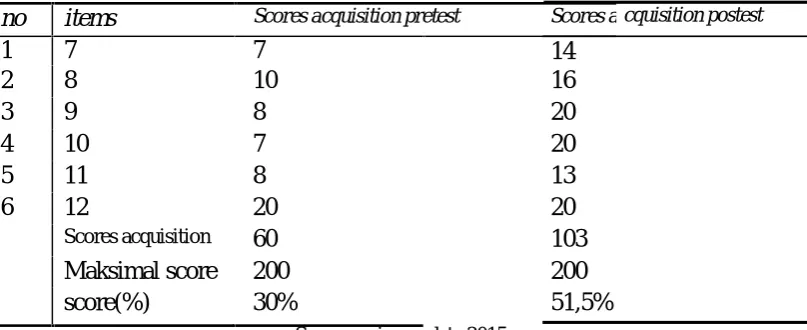
read comics on earthquake disaster mitigation, the acquisition of their posttest scores improved considerably from the previous pretest. For example, previously postestnya only got a score of 2, after reading the comic acquisition postestnya score to 10 with a value of 50. This means that their knowledge of earthquake disaster mitigation increases, after reading the comics on earthquake disaster mitigation. Problem pretest posttest on earthquake disaster mitigation is divided into three categories, namely category before the earthquake (about
[image:12.595.112.499.206.373.2]1-6), a category in the event of earthquakes (about 7-12) and the category after the earthquake (about 13-20 ). Each category because each numbered 6,6,8, making a total of about pretest posttest No 20. To determine the ability of students in each category, the analysis item in order to get the score of each acquisition -masing items. Furthermore, for the category before the earthquake, then the acquisition postestnya pretest scores in Table 3.
Table 3. Score pretest posttest Category Before the Earthquake
s acquisition postest
Source:primary data 2015
Seen in Table 3, it is known that for items No. 1,2,3,5, and 6, from 20 students who answered the category before the earthquake turned out to be the correct answer less than 10 students. This happens because of the questions it contains material on earthquake disaster mitigation knowledge before the earthquake in general and those in the comics, so a lot of elementary school students who answered questions, wrong. As for question number 4, why the answer is right there 12 students, as a matter included in the category of easy matter which one of the alternative answer is, all right, making it easier for students to choose jawaban.Namun increase in scores occurred during the post-test, after students read comics earthquake disaster mitigation. For all items, can be answered by students from elementary right where the answer is right there 10-20 elementary students in each item you see. So from here it can be seen that the elementary students the knowledge of earthquake disaster mitigation after reading the comics form the increase in the category before an earthquake.For the second category, ie at the time of the earthquake which amounted to 6 about the beginning of the question number 7 to number 12, the acquisition of pretest scores postesnya per item can be viewed in Table 4.
Table 4. Scores pretest posttest Category On When Earthquake
cquisition postest
[image:12.595.104.508.599.764.2]267
no
items
Scores acquisition pretest Scores a1
13
4
20
2
14
6
17
3
15
5
20
4
16
10
20
5
17
9
14
6
18
13
19
7
19
8
20
8
20
1
18
Scores acquisition
56
148
Maksimal score
200
200
score(%)
28%
74,5%
Source: primary data 2015
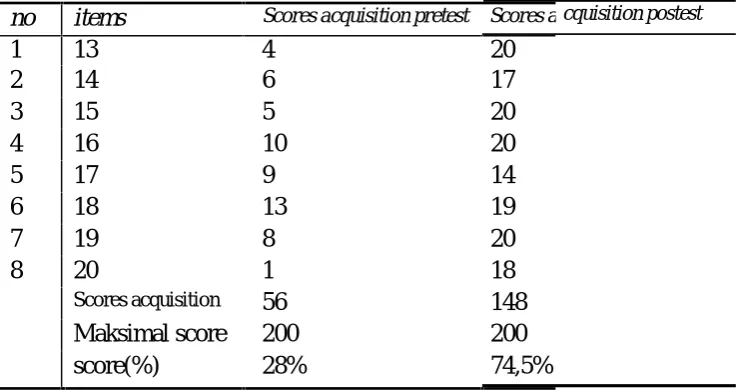
[image:13.595.120.489.177.372.2]As in Table 3, in Table 4 was obtained a score lower than the score pretestnya postestnya per item. Why? Due to the material about the category in the event of an earthquake, many took the material from the comic, so it is known why the score postestnya be increased because they've read the comics and their answers correct errors during the posttest.The next category is material to the three questions about the aftermath of an earthquake. Problem starts from number 13 to number 20. Acquisition postestnya pretest scores of each item can be seen in Table 5.
Table 5. Scores pretest posttest category after the earthquake
cquisition postest
Table 5 shows the results of a score that is not much different from the previous tables 3 and 4, where the acquisition pretestnya scores lower than the acquisition posttest scores. Pretest posttest score obtained by item with the division of the three categories above, then the percentage in order to determine how large a percentage of the ability of elementary school students in the 6th grade understanding the material per category seen from pretest scores postestya per item. Score the percentage obtained by dividing the total score of the acquisition of the category with the maximum score multiplied by
[image:13.595.147.462.584.678.2]100. Example matter for category one, about the categories before the earthquake, Table 3, for pretest scores obtained percentage of 60 divided by 200 multiplied by 100 equals 30 percent. Thirty percent of this which will be matched with a list of criteria for the interpretation of the score Arikunto, 2006, to be adjusted by category understanding, whether the percentage of 30% is included in the category of less understanding, less, sufficient, good or excellent. The percentage list pretest scores for the three categories can be seen in Table 6.
Table 6. Percentage Score List pretest By Category Third Earthquake Disaster Mitigation
Earthquake Disaster Mitigation category
Prosentase
pretest
Criteria Understanding
Prior to the earthquake
23%
less
In the event of an earthquake
30%
less
After the earthquake occurred
28%
less
Source: primary data 2015
268
understanding about the understanding of the pretest, mainly due to lack of primary school students have read about previous earthquakes materials. Although the material was never delivered in class 5 but since the study was conducted during the school holidays, then how frequently they read the book not as often during the school day. So do not be surprised if their pretest scores per item based on the criteria categories include less understanding.Not so with the percentage of their post-test scores. After reading comics earthquake disaster mitigation, they increased the posttest scores showed that their knowledge of earthquake disaster mitigation also increased. Can be seen in Table 7.Table 7. Percentage Score List posttest By Category Third Earthquake Disaster Mitigation
Earthquake Disaster category
Mitigation Prosentase postest
criteria
Prior to the earthquake 47% Enough
In the event of an earthquake 54,5% Enough After the earthquake occurred 74,5% Good
Source: primary data 2015
Table 7 above shows that for the category before the earthquake, the percentage postestnya to 47% from pretest percentage of 23%. Increased by 24%. But despite the increase, it is still understanding criteria including criteria cukup.Kategori at the time of the earthquake, the percentage postestnya pretestnya 54.5% compared to 30%, an increase of 24.5% with a sufficient understanding of the criteria. Category after the earthquake, the percentage was 74.5% postestnya of postestnya which is only 28%, an increase of 46.5% and enter in either category. It can be concluded that the percentage of post-test to obtain the understanding that the two criteria for the categories before and at the time of the earthquake, -siswa elementary school students have sufficient understanding, while for the category after the earthquake, their understanding has been included either.
VII. Conclusion
1. Knowledge Students grade 6 before being given a comic media still do not understand about the earthquake disaster mitigation.
2. Having given medium of comics, their knowledge of earthquake disaster mitigation become quite familiar in the category of the material before the earthquake and in the event of an earthquake. For the category after the earthquake their knowledge after reading the comics to be good.
References
[1] Arsyad, Azhar,2006. Media pembelajaran. Jakarta : RajaGrafindo Persada
[2] Hendro Darmojo dan Jenny R.E Kaligis. 1992. Pendidikan IPA 2. Jakarta: Departemen Pendidikan dan Kebudayaan.
[3] Nasution,Noehi,dkk,1992. educational psychology. jakarta.dikti. Department of Education [4] Sudjana, Nana and Rival Ahmad.2002. Media Teaching. Bandung. Sinar Baru
[5] Trimo. 1997. Media Pendidikan.Jakarta.Depdikbud.