From a colonial institution to a neoliberal
real estate developer:
Comparative analysis of universities in the urban
process in East Asia
Do Young Oh
The London School of Economics and Political Science
A thesis submitted to the Department of Geography and Environment at
the London School of Economics and Political Science for the degree of
- 2 -
Declaration
I certify that the thesis I have presented for examination for the MPhil/PhD degree of
the London School of Economics and Political Science is solely my own work other
than where I have clearly indicated that it is the work of others (in which case the
extent of any work carried out jointly by me and any other person is clearly identified
in it).
The copyright of this thesis rests with the author. Quotation from it is permitted,
provided that full acknowledgement is made. This thesis may not be reproduced
without my prior written consent.
I warrant that this authorisation does not, to the best of my belief, infringe the rights
of any third party.
I declare that my thesis consists of
93,021
words.
Statement of use of third party for
editorial help
I can confirm that my thesis was copy edited for conventions of language, spelling
- 3 -
Abstract
This thesis investigates the question of how East Asian universities have engaged in urban processes as spatially grounded variegated social processes from the colonial era to recent decades by adopting a comparative urbanism approach.
Historically, universities in the US and Europe have been influential urbanisation actors in their hosting cities, having occupied a substantial amount of land. The relationship between a university and its hosting city was often defined as ‘Town and Gown’; that implies an adversarial link, but this traditional relationship has changed. Universities in East Asia have also participated in urbanisation processes in diverse ways since their birth, but the dynamics behind this multi-faceted process has rarely been addressed.
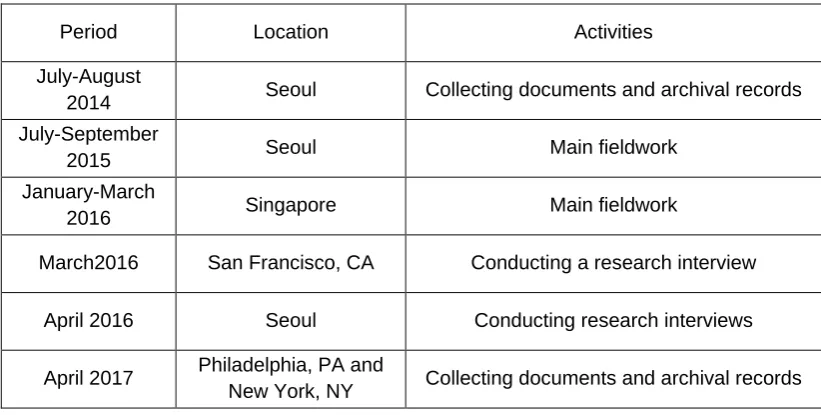
Using research data collected mainly from fieldwork in Singapore and South Korea, including 42 interviews and archival records, this thesis highlights the relationship between universities and cities in East Asia, focusing on three distinctive periods: the colonial, developmental, and postdevelopmental eras. In all these enquiries, land ownership by universities acts as a thread that weaves the diverse facets of the role of universities into different periods.
The findings of this thesis can be summarised as follows: Firstly, colonialism has been influential in the university-urbanisation relationship. During the colonial era, the East Asian university emerged as a symbolic and political institution in the city. Various colonial and local actors surrounded the colonial universities to promote or fight against the ideology of imperialism, which demonstrates the diverse aspects of colonialism in cities of East Asia. Such legacies of colonialism are still found today.
Secondly, the East Asian developmental state is a variegated concept. The university plays an important role in society, but the way in which the university engages with the developmental state has varied across geographies. The developmental state attempted to utilise universities to support rapid economic and urban development, but such efforts were not always successful. This finding challenges the conventional understanding that assumes a homogeneous conceptualisation of the East Asian developmental state.
- 4 -
since the 1990s. While the entrepreneurial university has a long history in East Asia, the globalised and financialised interests are penetrating the university more actively through various urban development projects.
- 5 -
Acknowledgement
This research would not have been completed without the support of those people I met over four years of my time at LSE. I might not realise that I am truly blessed to have such great people if I did not do my PhD. For me, writing a PhD thesis was thus not only an intellectual journey but also an opportunity to look around and appreciate people surrounding myself. To name a few here:
First, I owe my deepest gratitude to my supervisor, Dr Hyun Bang Shin, for his full support, patient guidance, and constructive comments throughout the research. I truly feel proud and lucky to be his student.
I would like to express my sincere appreciation to Dr Tim Bunnell, my adviser at the National University of Singapore, for his support for my fieldwork in Singapore. LSE PhD Mobility Scheme and Santander Travel Research Fund also facilitate my fieldwork in Singapore. I cannot mention their names here, but I am very grateful to those who kindly agreed to be interviewed in Singapore and Korea to share their time and knowledge with me.
My sincere gratitude also goes to all the people who supported my research including my review supervisor Dr Murray Low, Dr Nancy Holman, Dr Alan Mace, Dr Jung Won Sonn, Dr HaeRan Shin, Prof JeSook Song, and senior researchers at the Korea Research Institute for Human Settlements, the Korea Land and Housing Institute, and the Seoul Institute.
My former teachers and colleagues at University College London, including Dr Claire Colomb, Prof Nick Phelps, Naofumi Araya, Petr Návrat, and Joaquim Guitart, also showed constant support.
I would also like to acknowledge some of my colleagues for their support. Thank you very much, Dr Sin Yee Koh, Dr Yimin Zhao, Dr Mara Nogueira-Teixeira, Ulises, Yi, Laura, Didi, Harry, Pablo, and many others including whom I met at the Korean PhD Student and Researchers in the UK.
- 6 -
Abbreviations
CBD EDB GDP HDB HUDC IAAP JTC KRW MIT NTU NUS OED OMA PAP PCUSA PPP S$ SMU
Central Building District
(Singapore) Economic Development Board Gross domestic product
(Singapore) Housing & Development Board
(Singapore) Housing and Urban Development Company (Singapore) International Academic Advisory Panel JTC Corporation (formerly Jurong Town Corporation) Korean Won
Massachusetts Institute of Technology
(Singapore) Nanyang Technological University National University of Singapore
NUS Office of Estate and Development
(Netherland) Office for Metropolitan Architecture (Singapore) People's Action Party
Presbyterian Church in the United States of America Public-Private Partnership
Singapore dollar
- 7 - SMR
SUTD UNESCO UNDP URA USAMGIK USFK USD UTown WCU
Seoul Metropolitan Region
Singapore University of Technology and Design
United Nations Educational, Scientific and Cultural Organization United Nations Development Programme
(Singapore) Urban Redevelopment Authority United States Army Military Government in Korea United States Forces Korea
US dollar
NUS University Town
- 8 -
Table of Contents
Declaration ... 2
Statement of use of third party for editorial help ... 2
Abstract ... 3
Acknowledgement ... 5
Abbreviations ... 6
Table of Contents ... 8
List of Tables ... 12
List of Figures ... 14
List of Boxes ... 17
Introduction ... 18
1.1. Research contexts: university and the city ... 21
1.2. Research questions ... 27
1.3. Thesis overview ... 30
Theoretical framework: Locating the East Asian university in the
urban process ... 33
2.1. The urban university in the capital circuits ... 35
2.1.1. The university in the process of capital circulation ... 35
2.1.2. The built environment of the university ... 38
2.1.3. Financialisation and the university under the urban process... 41
- 9 -
2.2.1. Questioning the positive role of the university in urban and regional economic
development ... 45
2.2.2. Urban politics and the urban university ... 47
2.2.3. Globalised cities and the university ... 50
2.3. The circuits of capital and the East Asian developmental state ... 54
2.3.1. The emergence of the developmental state in East Asia ... 54
2.3.2. Neoliberal reform of the East Asian developmental state ... 57
2.3.3. The geopolitics of the East Asian developmental state ... 59
2.4. Locating the university in East Asian cities ... 62
2.4.1. The East Asian university under the state’s control ... 62
2.4.2. The nature of the built environment of the university in East Asia ... 64
2.4.3. The built environment of the university in East Asia under a neoliberalising state ... 67
Doing comparative urbanism in the Global East ... 72
3.1. The comparative case study approach... 73
3.1.1. Why a comparative case study? ... 74
3.1.2. Doing a comparative case study in the Global East ... 74
3.1.3. Case selection process: cities in East Asia ... 79
3.1.4. Case selection process: universities ... 82
3.2. Data collection methods ... 85
3.2.1. Collection of local documents and archival records ... 85
3.2.2. Semi-structured interviews ... 90
3.2.3. Unobtrusive observation ... 93
3.2.4. Reflections ... 94
3.3. Qualitative data analysis ... 96
3.3.1. Comparative analysis ... 97
3.3.2. Data classification and analysis strategy ... 98
Universities in East Asian cities under the colonial rule ... 104
4.1. The birth of the modern university in colonial Korea ... 106
4.1.1. Colonial universities in Korea ... 106
4.1.2. The rapid growth of private universities after liberation from Japan in 1945 .... 110
4.1.3. Urbanness of colonial universities and private universities after liberation ... 113
4.2. Universities in colonial Singapore and in the early independence era ... 124
4.2.1. Universities in the colonial and transition era ... 124
4.2.2. The early independence era and state intervention ... 127
- 10 -
4.3. Comparative analysis of colonial universities in Korea and Singapore ... 139
4.3.1. The colonial university as a socio-political institution ... 139
4.3.2. The space of the colonial university and thereafter ... 142
The developmental state and universities in East Asian cities ... 148
5.1. The Korean developmental state and the development of the higher education sector ... 150
5.1.1. Forming the national higher education policies under the Korean developmental state ... 150
5.1.2. The university in the spatial restructuring process in Korea ... 156
5.2. The Singapore developmental state and the birth of the National University of Singapore ... 170
5.2.1. Nationalising universities for nation-building ... 170
5.2.2. Building new campuses in changing socio-economic and political conditions . 176 5.3. Comparative analysis of the relationship between the developmental state and the university in Korea and Singapore ... 185
5.3.1. The developmental state’s attempts to mobilise the university for economic development ... 185
5.3.2. University campus for uneven and even regional and national development .... 188
Locating neoliberal universities in East Asia ... 192
6.1. The postdevelopmental state in Korea and the legacies of the university System .... 193
6.1.1. Higher education policies under the Korean postdevelopmental state ... 194
6.1.2. The new urbanisation process and the speculative university in Korea ... 197
6.2. Globalising Singapore and new universities ... 214
6.2.1. Globalising the higher education sector and the birth of entrepreneurial universities in Singapore ... 214
6.2.2. The state’s continuing attempts to mobilise universities for urbanisation ... 219
6.3. Comparative analysis of universities in Korea and Singapore in the postdevelopmental era ... 234
6.3.1. A more complex state-university relationship in the postdevelopmental state .. 234
6.3.2. The corporatised university and the real estate sector... 237
Entrepreneurial Universities in Action ... 241
7.1. Yonsei University and Songdo International City development ... 242
7.1.1. Songdo International City as a forgotten knowledge hub in Northeast Asia ... 243
7.1.2. Yonsei University Songdo Campus ... 255
7.2. Diversified urbanisation processes by NUS ... 264
- 11 -
7.2.2. NUS as a real estate developer ... 273
7.3. Comparative analysis of Yonsei University and NUS’ recent development projects 282 7.3.1. Whither the entrepreneurial university in East Asia? ... 282
7.3.2. East Asian universities in the process of financialisation ... 285
Conclusion ... 290
8.1. Summary of arguments ... 292
8.1.1. Colonial legacies and the university ... 292
8.1.2. The developmental state-university relationship ... 295
8.1.3. Entrepreneurial universities in East Asian cities ... 298
8.2. Contributions of this research ... 301
8.3 Coda ... 303
References ... 305
- 12 -
List of Tables
Table 3-1 The overview of data collection schedule ... 85
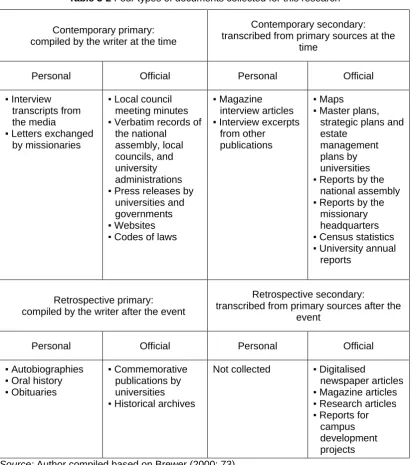
Table 3-2 Four types of documents collected for this research ... 87
Table 3-3 Distribution of interviewees by theme ... 92
Table 4-1 Number of students enrolled in higher educational institutions in Korea in 1937 by nationality and school type ... 110
Table 4-2 Changes in the number of higher educational institutions and students in South Korea (1945–1948) ... 111
Table 4-3 Changes in the number of students of selected universities in South Korea (1937– 1963) ... 112
Table 4-4 The expenditure on higher educational institutions in comparison with the overall educational expenditure in Singapore ... 127
Table 4-5 Science and engineering students in Singapore (1961–1970) ... 129
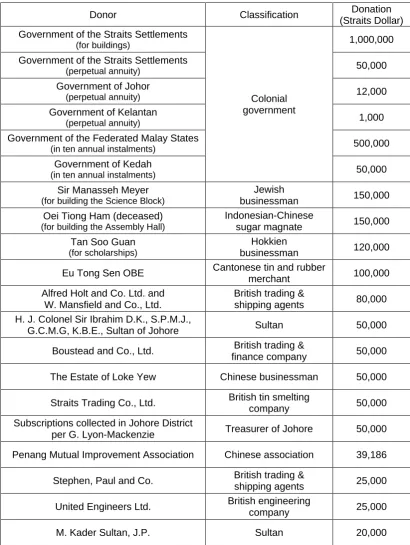
Table 4-6 Major donors for the establishment of Raffles College (as of January 1928) ... 133
Table 4-7 Higher educational institutions in Seoul under colonial rule ... 146
Table 4-8 Higher educational institutions in Singapore in the 1960s ... 146
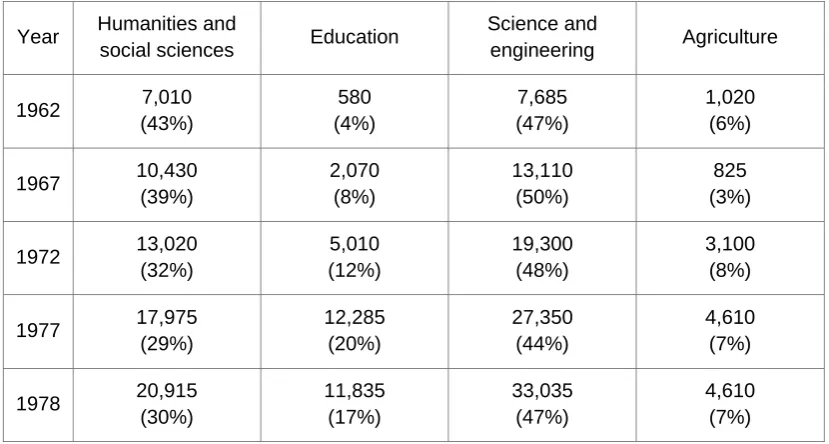
Table 5-1 Changes in majors of first-year university students in South Korea, 1962–1978 152 Table 5-2 Number of universities, student quota and population in the capital and non-capital regions in South Korea from 1980 to 2005 ... 159
Table 5-3 Changes in enrolment rates of the University of Singapore by subject ... 180
Table 6-1 Fiscal self-reliance ratio of local finance of major municipalities with former USFK bases in the northern capital region in 2015 ... 204
- 13 -
Table 6-3 The average minimum asset requirements for a private university in South Korea with 10,000 students (in KRW millions) ... 209 Table 6-4 Value and revenue of profitable assets of all private universities in South Korea
- 14 -
List of Figures
Figure 3-1 Locations of Yonsei University campuses ... 84
Figure 3-2 Locations of the National University of Singapore campuses ... 84
Figure 4-1 Comparison of the land sold to Chosen Christian College and Gyeongbokgung ... 117
Figure 4-2 Chosen Christian College master plan ... 117
Figure 4-3 The physical growth of campuses of government higher education institutions (1927–1943) ... 119
Figure 4-4 Keijō Imperial University and other government schools complex in Seoul ... 120
Figure 4-5 The 1928 population distribution and 1958 forecast of Keijō’s surrounding vicinities ... 121
Figure 4-6 An artist’s impression of Ngee Ann University ... 130
Figure 4-7 Aerial view of Singapore Polytechnic in the 1950s ... 136
Figure 4-8 Nanyang University library and administration building ... 137
Figure 4-9 The Cover of the Strait Times on 28 June 1964 in relation to the raid on Nanyang University ... 138
Figure 4-10 Map of university campuses in Singapore in the 1960s ... 147
Figure 5-1 Number of universities and university students in South Korea (1965-1995) ... 151
Figure 5-2 Increase of university entrance quotas in South Korea by region (1975–2005) 160 Figure 5-3 Average number of students of a university in South Korea (1970–1995) ... 161
Figure 5-4 Changes in the entrance quota of Yonsei University (1970–1990) ... 163
Figure 5-5 Increase of land and gross floor area of Yonsei University Sinchon Campus ... 163
- 15 -
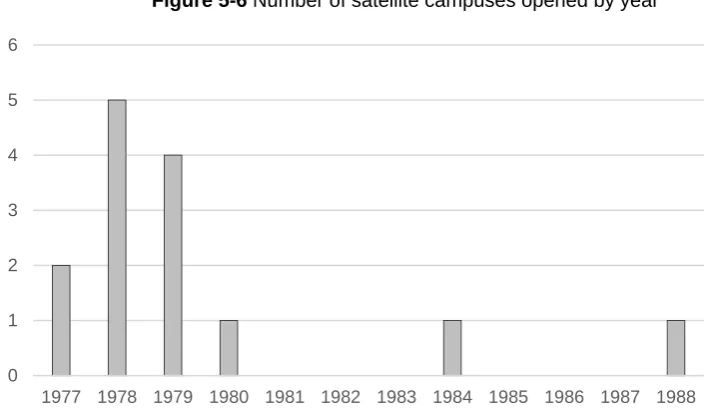
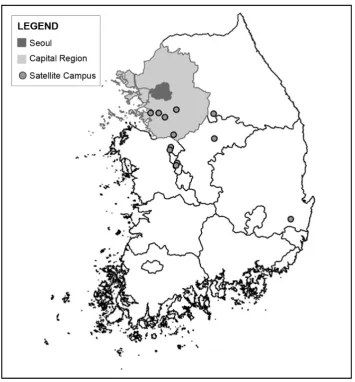
Figure 5-7 Location of satellite campuses opened between 1977 and 1988 in Korea ... 165
Figure 5-8 Map of British military installations before their withdrawal ... 178
Figure 5-9 The first master plan of Kent Ridge campus ... 183
Figure 6-1 The increase of the number of four-year universities and enrolment quotas in South Korea (1990–2015) ... 195
Figure 6-2 The increase of gross floor area and land of universities in South Korea (1990– 2015) ... 198
Figure 6-3 Relocation plan of USFK bases in South Korea ... 200
Figure 6-4 Municipalities affected by USFK base relocations in Gyeonggi Province and Incheon Metropolitan City ... 201
Figure 6-5 Average annual spending on the construction activities of a private university in South Korea (1995–2015) ... 208
Figure 6-6 View of Yonsei Severance Building ... 212
Figure 6-7 The scenario for the university sector in Singapore, with possible student enrolment figures in 10–15 years’ time ... 215
Figure 6-8 Gross enrolment ratio for tertiary education in Singapore (1990–2015)... 221
Figure 6-9 The buildings of SMU in Bras Basah ... 222
Figure 6-10 Bras Basah Park in the 1980s ... 224
Figure 6-11 Alternative SMU campus proposal by Tay Kheng Soon ... 224
Figure 6-12 View of the west side of NUS Campus ... 227
Figure 7-1 The location of Songdo International City ... 244
Figure 7-2 A panoramic view of Songdo International City ... 244
Figure 7-3 Incheon’s plan for functional distribution in the city in 1984 ... 246
Figure 7-4 1992 master plan of Songdo International City ... 248
Figure 7-5 Two main development concepts of Songdo International City ... 250
Figure 7-6 Plan of R&D and University Districts in Songdo International City in 1998 and 1999 ... 254
- 16 -
- 17 -
List of Boxes
- 18 -
Introduction
1.1. Research contexts
1.2. Research questions
- 19 -
One day in June 2017, I had a chance to introduce my doctoral research to a geography professor from South Korea visiting London. During the conversation, I complained that there was almost no academic research about academic capitalism or neoliberal universities in Korea, even though most people have recognised these issues as often covered in the media. When I told her that I was trying to explore such issues a little bit in my doctoral thesis, she told me that she agreed on the issue of underrepresentation because the phenomena are quite evident. She continued to tell me that she nevertheless recommended me not to publish any research article about the academic capitalism of the Korean higher education sector unless I had already secured a stable academic position in Korea. It was a casual conversation, but I could see the point that my research might be seen as unfavourable to some, especially to those who have power in the academic system. In fact, the professor’s reaction was not surprising to me. By spending several years at a Korean university, I frequently observed hierarchical and political aspects of the university.
My interests in the relationship between the university and the urban process have grown naturally grown while I was a student in several higher educational institutions. All universities I was studying had conducted major campus expansion and new development projects: At this moment when I am writing this introduction in September 2017, the London School of Economics is conducting the largest capital development project in its history. The University College London revealed its plan to redevelop the nine-hectare Carpenters Estate in the London Borough of Newham in 2012 when I was doing my master’s degree. Yonsei University in Seoul, where I spent more than five years, also kept conducting large-scale development projects, including a new satellite campus in Songdo International City, located near Seoul. Such attempts of the universities to expand their territories led me to ask these questions: how can universities conduct such large-scale development projects? Where did all the money come from?
- 20 -
was suspended due to opposition by the residents and students, but the university has continued to pursue the project in another adjacent site by working with the Greater London Authority using central government funding. I also saw a similar student movement in Yonsei University in the mid-2000s, but the project was realised in the end. Such conflicts between the university and others are often seen in large cities in different parts of the world including Columbia University’s Manhattanville Campus development project, and Seoul National University’s Siheung Campus project. Such conflicts imply that the university-city relations are multifaceted and need to be investigated carefully considering their historical and geographical conditions.
There have always been attempts to understand an institution by a person belonging to it through self-reflection. One of the most inspiring movements to me was the ‘Institutional Critique’ that emerged from artists at the end of the 1960s, represented by German-American artist Hans Haacke. The Institutional Critique is an artist’s systematic inquiry into the institutional structure, policy and practice of museums and galleries (Marstine, 2017). It challenges the operating logic of museums and galleries under political and ideological interests through self-understanding of the institution in which artists participate (Alberro, 2009). Since the 1980s, institutional critique has expanded its boundaries to locate art in the larger socio-political area and the logic of financial speculation (Marstine, 2017). Of course, there have been attempts to critically understand the university, such as Callinicos (2006), Readings (1996), and Slaughter and Rhoades (2004) as well as the recently emerging Critical University Studies. However, such movements have not yet produced any noticeable changes, even though their works are crucial and timely.
- 21 -
been rapidly increasing. For example, in the case of the UK, where the data is available, there has been a sharper increase of capital investment in properties than an increase of student numbers. In this regard, the influence of universities on cities turns out to be larger than before. Furthermore, the dynamics within host cities have also shifted. The university can be a representative actor in the host city, suggesting that the roles of various actors evolve under the pressure of neoliberal globalisation.
This research aims to understand the spatial development of universities as a part of wider urban processes focusing on the university in East Asia where the higher education sector has expanded rapidly over past decades. It is believed that the East Asian university has been mobilised by the developmental state (Altbach, 2004). Then, after the emergence of the new economy, the university has become favoured as a knowledge and innovation producer, as a vast amount of literature demonstrates (Arbo and Benneworth, 2007). This research points out that there are notable gaps in the literature regarding the roles of the university in the East Asian urbanisation process. Urbanisation in East Asia can be understood as one of the core economic strategies (Shin and Kim, 2015). The university in East Asia also needs to be conceptualised as one of urbanisation actors in the city. In this regard, this research aims to offer understandings of evolving urbanisation processes by investigating universities in South Korea and Singapore using a comparative case study method.
1.1. Research contexts: university and the city
- 22 -
604 institutions were expanding their boundaries at the time of the research. The rapid increase in university expansion projects is not only observed in the United States, but also in other parts of the world. In the United Kingdom, the capital expenditure on university estates in 2011 was 3.6 billion pounds. This sum is 130 per cent larger than the equivalent in 1997, which was around 1 billion pounds (The Higher Education Design Quality Forum, 2013). During the same period, the number of students has increased only by 43 per cent. These case studies suggest investigating spatial development processes of universities and their consequences in the urban environment while urging the needs of developing a theoretical framework to explain such trends (Perry and Wiewel, 2008: 4).
This trend also can be found outside of North America and Western Europe. During the past three decades, universities in East Asia have shown more rapid growth than ones in the West. They have been developing not only quantitatively but also qualitatively: East Asian Universities are the third largest group in world university rankings next to the US and Western Europe (The Times Higher Education, 2013). While universities are experiencing rapid growth, their influence on their host cities is also expanding. The concept of the modern university is derived from Western Europe and was developed in the United States. Then, the development of universities in East Asia ignited from the latter half of the 20th century. It is generally considered that universities in Europe and the United States have long participated in the urbanisation process as a prominent urban growth actor in cities. In this regard, it can be assumed that the development of the East Asian university has also affected the urbanisation mechanism of East Asian cities. Thus, exploring spatial expansion projects of East Asian universities would extend the debate about the roles of the university in the urban process further.
- 23 -
– have produced rapid economic growth as well as improved human development (World Bank, 1993). The East Asian economies have been fuelled by the developmental state to achieve national economic development. Industrialisation has been at the centre of government policies to achieve the national goal of achieving and sustaining high levels of economic growth. Those policies include developing technological capabilities, promoting exports, and building the domestic capacity to manufacture a range of intermediate goods (Stiglitz, 1996). The state has also steered the education sector in accordance with industrialisation policies to reach government goals (Marginson, 2011; Seth, 2002). Nevertheless, the higher education sector has not been a primary focus of the state when compared with the primary and secondary education sectors because of the industrial structure of the East Asian economies, which depends on less-advanced industries (Altbach, 2004). This is mainly because such industries require mainly low- and semi-skilled workers rather than highly educated workers.
Urbanisation trends are prominent in East Asia. For example, the share of urban population in South Korea’s national population increased from 27.7 per cent in 1960 to 82.9 per cent in 2010 (United Nations, 2012). The investment in the built environment in South Korea accounted for a large share of the GDP in South Korea. In this regard, it could be argued that the built environment has played a crucial role in accelerating economic growth through absorbing surplus from other industries such as manufacturing and heavy industry (Shin, 2009). Even though the higher education sector was relatively small, universities were also important actors in urban development. Thus, the spatial development of universities in East Asia also could be understood as part of the capital accumulation strategies of the state.
- 24 -
urban development by collaborating with the private sector while its development project still has been guided by the state policies.
However, the notion that universities can play a significant role in knowledge and innovation production for their regions and countries has been increasingly questioned, especially in East Asia where it was driven by the state. Castells and Hall (Castells and Hall, 1994: 248) already pointed out this aspect by mentioning that:
[The roles of university as the sources of innovation] need not be identical in every place. University or research institute may provide the basis in one country or region, not in another.
Sohn and Kenney (2007) argue that the role of the university in South Korea still remains to supply high-quality graduates for firms instead of producing knowledge and innovation. This is more evident when comparing East Asian universities with universities in the United States and Europe (Mok, 2012). Wong and Bunnell (2006) demonstrated how the concept of the new economy was mobilised by the state to justify large-scale urban development projects with state rhetoric. In this regard, the new economy led by the university could be just state rhetoric to justify speculative urban development projects in East Asia, just like other rhetoric such as that about ‘eco-cities’ (Shin, 2017).
- 25 -
of economic development while the East Asian developmental state was actively promoting rapid industrialisation during the 1970s and 1980s. Such a relationship becomes even more diverse and complicated after the emergence of the knowledge economy and urban entrepreneurialism in East Asia from the 1990s onward.
Such trends suggest that the university’s engagement in the built environment needs to be understood in a wider accumulation process. The university is more actively expanding not only technology-related facilities, but also buildings and facilities, including sports and cultural facilities for its own sake (Coffield and Gaither, 1976; Schimmel, 1997). According to Harvey (1978), the built environment, as part of the secondary circuit of capital, is where the surplus value from the primary circuit (basic commodity production and social reproduction of labour) and tertiary circuit (investment in science and technology and social expenditures) of capital is absorbed to enable the continuation of capital accumulation processes. The belief in the university as a major site for knowledge and innovation-producing activities attracted more investment in the university. Such investments are resulted in investments in the built environment.
The widespread belief that the university can bring wealth and innovation is also an influential factor that accelerates the uneven development of cities and regions. In this regard, theories of urban politics are useful to complement more abstract theories of capital circulation. Especially, as Lefebvre (1991) implied, concrete urban processes reflect different modes of production at different development stages of specific moments. By investigating the university as a growth actor in its city, we can have a better understanding about the way in which society works.
- 26 -
crisis of 1996–1997 as well as its relation to other Asian economies by developing the capital circulation theory. He argued that the crisis resulted from intertwined accumulation processes of both domestic and international markets. His study emphasises the importance of expanding Harvey’s capital circulation theory to reflect different spatial levels of capital circulation processes. Such studies show that the theory of capital circulation is useful to investigate variegated capital accumulation processes underlying capitalism.
The growth machine theory has important implications for the understanding of East Asian cities in terms of its ideology and discourses, as it refers to the importance of growth coalitions. To create the illusion that the growth will contribute to people’s wellbeing is one of the important aspects of the growth machine (Jonas and Wilson, 1999). The idea of creating the illusion coincides with the belief that real estate (re)development activities are considered to indicate the progress of society (Tang, 2008). Such ideas can be a starting point to investigate the urbanisation process in East Asia. In this regard, this research aims to utilise these theories to understanding diverse aspects of the urbanisation processes in East Asia by investigating university-related urban development projects.
- 27 -
in property development projects elsewhere. Such investment is not a major role for the university, but it cannot be overlooked.
The diverse influences of the university on the urban environment imply that the university-urbanisation relationship is a processual one. Haar (2011: xxv) argued that the university is not a static entity, and ‘campus and urban space are in constant negotiation’. Such a claim coincides with the definition of the urban process by David Harvey, who defines the urban process as ‘a spatially grounded social process in which a wide range of different actors with quite different objectives and agendas interact through a particular configuration of interlocking spatial practices’ (Harvey, 1989: 5). In this regard, this thesis intentionally utilises the term ‘urban process’ to demonstrate diverse and multifaceted aspects of the university-urbanisation relationship.
1.2. Research questions
This research is based on the initial awareness that only little systematic research exists on the role of the university in the spatial expansion of its host city. The university is recognised as a prominent actor in the new economy and also promotes the expansion of its boundaries under the belief that it can enhance the competitive advantage of its host city. However, how the university is collaborating with the state and other actors in its host city to promote its material goals is still unclear because most literature does not focus on its relation to the urbanisation process but only on economic development. In this regard, there is a strong need to understand the relationship between the university and others within its host city.
- 28 -
2006; Olds, 2007; Sidhu et al., 2011), the spatial development of universities remains an under-researched topic. Furthermore, while there is an ongoing debate regarding how the East Asian developmental state has been transformed from the late 1990s in earnest due to neoliberal restructuring processes (Hill et al., 2012), how the spatial development of universities in East Asia has been transformed by such transformation of the developmental state is also uncertain. Considering the emerging position of universities in the new economy in East Asia, an understanding of the spatial development of universities in East Asia can offer a critical understanding of the evolving capital accumulation processes in East Asia.
Furthermore, what are the circumstances under which universities expand and how do these circumstances determine the characteristics of university expansion? Not every university is actively participating in its expansion activities. If so, under which circumstances is the university more likely to be engaging in expansion activities? Previous studies mostly focus on investigating a single case, so they cannot provide a sound argument showing the different relationships of universities with their counterparts (see Coffey and Dierwechter, 2005; Han and Yu, 2008; Marcuse and Potter, 2005; Takeuchi, 2008). A comparative perspective can provide an answer to the question of how and why urban development processes are uneven and where such differences come from.
The objective of this thesis is to study emerging urbanisation actors in East Asia focusing on the university to understand evolving urbanisation trends. Therefore, it tackles research gaps identified above by addressing the question: How and why does the university participate in urban processes in different historical and geographical contexts such as in East Asia where
- 29 -
1) How does the relationship among the university and the state and private sector actors in the urban process have been changed in East Asia?
2) What are the emerging spatial development pattern of universities in East Asia, and how do they produce their campuses and affiliated properties?
3) How do spatial strategies of universities differ based on different national contexts? Can they offer comparative perspectives on East Asian urbanisation by investigating the uneven process of development?
- 30 -
1.3. Thesis overview
This thesis is divided into eight chapters including this chapter introducing the research background, research gaps and questions, and the objectives of the research.
Chapter Two presents the theoretical framework of this thesis. As briefly elaborated above, based on Harvey’s (1978, 1982) capital circulation theory, I aim to locate the university in the circuits of capital by resorting to Harvey’s conceptualisation of uneven development and circuits of accumulation, incorporating recent debates on the relationship between the university and the city into the concept. The second part of this chapter then looks into other related theories about the political economy of space such as the growth machine and new urban politics to investigate the relationship between the university and other urbanisation actors. The third part of this chapter focuses on the context of the East Asian developmental state linking it with its colonial past and the current reform. The last part of this chapter conceptualises the roles of East Asian university in the process of urban development based on the discussions in earlier parts of this chapter.
Chapter Three details the methodology I used for the research design and discusses methodological issues. The core methodological idea of this thesis is comparative urbanism. I utilise comparative urbanism not only as a method for this research but also a mode of thought to contribute to expanding the debates of East Asian cities as well as to offer new viewpoints of cities as guided by Robinson (2002, 2016) and McFarlane (2010). The earlier part of this chapter shows how comparative urbanism is beneficial for my research. Then, the case selection processes are introduced. This research mainly investigates two universities: Yonsei University in Seoul, South Korea and the National University of Singapore. How and why these cities and universities have been chosen for a comparative case study is elaborated. The rest of the chapter, then, presents data collection method and qualitative data analysis.
- 31 -
universities goes back to the colonial era, and their colonial legacies cannot be underestimated because they are essential to understand conditions of the current higher education sector. Moreover, Seoul and Singapore experienced different colonial powers. In this regard, this chapter asks the question how different colonial experiences affected the universities as well as the urban environments in these cities. Findings from this chapter show that the variegated colonialism shaped universities and surrounding urban environments. Such understandings are crucial to understand the development trajectory of the developmental state and the related urban trends.
Chapter Five focuses on the growth of universities under the developmental state. There has been a widespread belief that the East Asian developmental state successfully intervened and mobilised various sectors of society to support economic growth. This chapter challenges this conventional understanding by investigating the higher education sector and the urbanisation strategy of the developmental state. In this regard, this chapter shows that the state’s attempt to mobilise the higher education sector was not always successful because of public demands, political issues, and other external pressures. This chapter also shows that colonial legacies are still relevant to the developmental state to determine the success of the state intervention. Such findings show the diverse aspects of the East Asian developmental state.
- 32 -
Chapter Seven investigates the deep involvement of universities in real estate projects by examining the two universities as case studies. In the case of Yonsei University, the development of its new satellite campus in Songdo International City was investigated. In case of the National University of Singapore, its major expansion project University Town and Gillman Heights redevelopment project, were examined. The rationale behind these projects is investigated with related contexts. Then, the negotiation process with other stakeholders such as the state is examined. The findings are discussed in relation to the emergence of entrepreneurial universities: both cases clearly show how entrepreneurial interests dominate the university operation, but the drivers and the role of the state in such change vary in the two universities.
- 33 -
Theoretical framework:
Locating the East Asian university in
the urban process
2.1. The urban university in the capital circuits
2.1.1. The university in the process of capital circulation 2.1.2. The built environment of the university
2.1.3. Financialisation and the university under the urban process
2.2. A political anatomy of universities in cities
2.2.1. Questioning the positive role of the university in urban and regional economic development
2.2.2. Urban politics and the urban university 2.2.3. Globalised cities and the university
2.3. The circuits of capital and the East Asian developmental state
2.3.1. The emergence of the developmental state in East Asia 2.3.2. Neoliberal reform of the East Asian developmental state 2.3.3. The geopolitics of the East Asian developmental state
2.4. Locating the university in East Asian cities
2.4.1. The East Asian university under the state’s control
2.4.2. The nature of the built environment of the university in East Asia
- 34 -
Universities now operate in a much more Darwinian world, where the fit survive and others flounder. – David Harvey (1998: 113)
The neoliberal restructuring of universities has dramatically changed the situation of both staff and students. These changes can be summed up in two words – ‘proletarianisation’ and ‘precarity’. – Alex Callinicos (2006: 24)
It is no doubt that the university is undergoing change: so do its roles in a city, a region, and a country. Cities and regions, in general, have been welcoming the university as a knowledge producer (O’Mara, 2012) which might bring economic growth to them while only a few studies (e.g. Addie et al., 2015) have attempted to critically understand the complex functions of the university. Existing studies, however, have mostly focused on elite universities and global cities in the West. The university is a complicated institution, involving various internal and external shaping forces, different spatial scale, and multiple functions based on historical and geographical conditions. Thus, it can be assumed that universities in the West and universities in East share similar elements but also play different roles given their positions in regional and global economies.
- 35 -
2.1. The urban university in the capital circuits
There are multiple studies attempting to explain the evolution of the university system and the roles of university since the 1970s in relation to globalisation (Hill and Kumar, 2009; Morrow and Torres, 2013), the knowledge economy (Capello et al., 2013b; Martin and Etzkowitz, 2000), and academic capitalism (Clark, 1998; Slaughter and Rhoades, 2004). However, the degree of these changes varies from country to country, since the university’s relationship with the state as well as civil societies is diverse in different places. For example, among OECD countries, while the governments of Finland and Norway fund more than 95 per cent of the total higher education sector expenditure, the ones in South Korea, Japan and the US only fund less than 40 per cent (OECD, 2017). Such differences resulting from diverse historical and geographical contexts make it difficult to objectify universities as a research topic. In this regard, this section will utilise the theory of capital circulation to conceptualise the university within the context of capital accumulation.
2.1.1. The university in the process of capital circulation
- 36 -
university in the circuits of capital requires special attention considering its emerging position in cities and regions.
The political function of the university in a capitalist society will be reviewed in this section before investigating its economic function. As mentioned above, social infrastructures play diverse roles in society. Investments in social infrastructures have been made in order to absorb the inevitable struggles and paradoxes in the accumulation process as a compensatory investment (King, 1989: 458; Soederberg, 2015: 5). They also work for ideological control and the repression of society (Harvey, 1982: 401). Readings (1996) argued that the traditional function of the university was to nurture elite citizens. The university functions to solidify national cultures as a socio-political mission with the support of the state (Readings, 1996; Scott, 2006). One of the recent examples is the US university during the Cold War period. Noam Chomsky (1997) once described how the Massachusetts Institute of Technology was operated with the support of Pentagon: nearly 90 per cent of the academic budget came from the Pentagon in the 1960s. This was not only for science and engineering departments, but also political science department in the university was openly funded by the Central Intelligence Agency (ibid.). Several government projects were implemented by social scientists to serve the interests of the state by promoting a pro-American ideology not only in the US but also in the other parts of the world (Simpson, 1998). Such investment of the state is not directly related to production but obviously intended as a stabiliser of society.
- 37 -
and cultural forms of capital (ibid.). The university can be considered as one of core institutions where their cultural and social capital is reproduced (Bourdieu, 1986).
This condition of the university means that the space of university can be the centre of organised resistance against the dominant class, such as in the events of May 1968 in Paris and the anti-Vietnam War movement in the US in the 1960s. As Harvey (1982) mentioned, social infrastructures can be a general field of class struggle where different classes project their needs, even though they are mostly funded by the state and the capitalist class. The university is an essential institution to support the social and economic development of capitalist society, but it can result in a legitimation crisis as defined by Habermas (1988).
- 38 -
The university is where diverse capital and revenue investments are circulated. Harvey (1982: 404) argued that the investment in social infrastructures is mainly done by the state as a form of tax, but the form of investment in the university is more diverse because universities’ historical and geographical contexts are diverse. As shown above, in some countries, the higher education sector is funded more by private firms, financial institutions, and families. One common form of investment in the university is 'location rent' as defined by Harvey (1982: 403). Private firms share their surplus value with the university on the condition of accessing benefits from the university with higher priority. Harvey (1982: 404) argued that technology and labour are mobile, but this argument can only be partially accepted. In the same book, Harvey (1982: 418) himself admitted that the geographical concentration of capital and accumulation resulted from the collective provision of physical and social infrastructures. Walker (2000) also argued that the immobility of technologically sophisticated labour was due to the existing barriers and accumulated advantages. The university enjoys its monopoly status by offering firms advanced means of production as well as reserve workers an opportunity to increase their future wages. Since the university is expected to increase the overall accumulation of society, the university can utilise fictitious capital, which is money based on future surplus value production. Fictitious capital enables university investment in other circuits of capital, such as the built environment, for further accumulation. The following subsection focuses on the university’s investment in the built environment to explore the various roles of the university in its host city and region.
2.1.2. The built environment of the university
- 39 -
process in relation to a specific historical and geographical context. Investigating different universities and constructing them as a group of specific actors in urban development processes can help investigate the dynamics of capitalism by ‘reflecting daily life as in a mirror’ (Harvey, 1989: 10). To do so, this subsection investigates the peculiarity of conceptualising the built environment of the university in circuits of capital and offers an alternative concept of the built environment of the university. This step is necessary because the theory of capital circulation helps in understanding concrete phenomena of time and space and offers a useful framework for an analysis of the urban process.
- 40 -
for individual capitalists to invest. In this regard, the state and financial institutions mediate this transfer process by utilising fictitious capital and implementing supportive policies (ibid.)
The built environment of the university has unique characteristics: it does not only serve for the reproduction of society but also serves production. Such functions work in a complex way when comparing with other kinds of built environments such as offices, houses, and roads. The unique characteristics of the university suggests that the role of the university and its campus in the urbanisation process needs to be understood beyond its involvement in the tertiary circuit. The university thus needs to be conceptualised as an institution engaged in multiple circuits of capital, which differs from the traditional understanding of the university. It is also considered an ecosystem consisting of its own circuits of capital while interacting with other capitalists in different circuits of capital. In this regard, the built environment of the university should be understood as a multi-faceted process, wherein various levels of actors are competing with and affecting each other, which also greatly influencing the urban environment.
- 41 -
1997). The emerging roles of the university after the emergence of flexible accumulation will be conceptualised further in the following subsection.
2.1.3. Financialisation and the university under the urban process
The emergence of more flexible modes of accumulation can be one of rationales to explain the evolving roles of the university. From the 1970s, the flexible mode of accumulation has emerged in some parts of advanced economies represented by flexible labour processes and markets as well as by patterns of consumption (Harvey, 1987). Uneven development between sectors and geographical regions resulting from the emergence of flexible modes of accumulation has produced increasing fiscal constraints and unemployment issues in the US in particular. It forced the restructuring of local governments in the US, and thus local governments have been forced to increase investment and innovation to make their cities more attractive. In this process, the roles of governing bodies and financial institutions have been emphasised (ibid.). The roles of the secondary circuit also have evolved in reaction to the emergence of new accumulation strategies such as mortgage securitisation (Coq-Huelva, 2013; Gotham, 2009). In this regard, this shift helps in understanding the emerging roles of university in cities and regions.
- 42 -
facilitating the tertiary circuit of capital because investments in the tertiary circuit tend to be large-scale and long-term processes. This means that there are barriers that prevent individual capitalists from switching their surplus from the primary circuit to the tertiary circuit of capital. In this regard, the built environment of the university might be a medium to enable individual capitalists to channel their investments into the tertiary circuit more easily through the secondary circuit.
The competitive advantage of the university as a knowledge producer can be understood as a form of knowledge (or technological) rent and as a new source of revenue in contemporary capitalism (Teixeira and Rotta, 2012; Tretter, 2016). Marxist theory traditionally defined the value of science and technology as zero because the knowledge of science and technology were considered to be mobile and reproducible at nearly zero cost (Rigi, 2014; Teixeira and Rotta, 2012). However, along with the emergence of information and communication technology, science and technology have become monopolised commodities through the introduction of intellectual property rights. Such a transformation reflects the idea of capital as a social subject reflecting the transformation of capitalism, and it has led to the university enjoying its superior status in its host city as a knowledge producer and an enabler. The university receives part of the surplus value from productive activities as a form of knowledge rent, which is powerful because the surplus value can come from anywhere since knowledge has no geographical boundaries, even though not every university is able to extract knowledge rents because each university has different roles and innovation capabilities in society.
- 43 -
seen in recent decades. In this process, the realm of finance has stretched to non-financial corporations and institutions by forcing them to participate in financial markets actively (ibid.). Financialisation penetrates every aspect of society in developed economies as well as in the developing world to a substantial degree (Lapavitsas, 2009). Financialisation has also shifted responsibility for the market from the state to others such as private firms and individuals as argued by Fraser (2015). By decoupling the economy from the polity, the state can effectively avoid a legitimacy crisis (Fraser, 2015). The university was not an exception in the process of financialisation. Particularly in the US, various types of universities have become increasingly dependent on finance (Eaton et al., 2016). As seen in the US and UK, students and their households are increasingly reliant on lending to pay tuition (Callinicos, 2006; Eaton et al., 2016).
- 44 -
significantly over recent two decades, a part of the funds has been invested in the built environment (Eaton et al., 2016).
Summary
This section conceptualised the university in the circuits of capital. Capital circulation as an abstract theory can be a core concept to understand ongoing urbanisation processes. Harvey (1978) focused on capital switching from the primary circuit to the secondary circuit of capital while paying relatively less attention to the switching of capital from the secondary and tertiary circuits to the primary circuit in a relative sense. However, as argued above, the built environment of university is also actively participating in the capital accumulation process by internal and external demands while other capital circuits of university offset the limits and contradictions of the accumulation process through internal capital switching processes. Furthermore, the emergence of flexible accumulation accelerates such processes. Nevertheless, the theory should not be understood as a homogeneous concept for understanding the urbanisation process in concrete space. As Lefebvre (1991: 308) argued, ‘the space that homogenises thus has nothing homogeneous about it’. In this regard, the following section will focus on the theories of urban politics as a supplement framework for understanding the more concrete level of the urban processes of the university in cities. While the capital circulation theory allows this study to position the university’s role in broader urban processes, this framework will offer a more grounded understanding of the relationship between the university and other urban actors.
2.2. A political anatomy of universities in cities
- 45 -
elsewhere. Thus, this section also aims to form a basis for investigating the relationship between the university and cities and regions in other parts of the world. To do so, this section firstly reviews the literature in relation to regional development, which represents a conventional analysis of the university for the economic development of cities and regions. Then, it moves to theories of urban politics to provide more critical analysis together with the theoretical framework developed in the previous section.
2.2.1. Questioning the positive role of the university in urban and
regional economic development
The urban university has emerged from the mid-20th century with a rapid increase in enrolment (Klotsche, 1966). While there are various definitions of the ‘urban university’, Klotsche (1966: 3) broadly defines it as a university located in and serving an urban community. The urban university in the US in the mid-20th century actively pursued campus development projects to accommodate an increasing number of students. In this process, the university is expected to act as a ‘fixer’ of the city, utilising its resources to be an ‘urban university’ instead of a ‘university built in a city’ (Goodall, 1970: 48). In particular, Goodall (1970) emphasised the urban university’s public service and community involvement functions and suggested that the urban university needs to utilise its urban location to benefit both the university and the community. The urban university can help solve the complex problems of contemporary cities effectively by playing various roles: providing a high-skilled labour force, attracting industrial firms, and providing research about local and regional problems (Gottmann, 1986). Such a belief has led that the state and private firms to offer favourable conditions for the university to relocate or to expand its campus.
- 46 -
scalar effects and knowledge spillover (Capello et al., 2013a: 2). Universities are expected to actively participate in these processes for regional and national economic growth (Arbo and Benneworth, 2007). The triple helix and regional innovation systems theories explain how universities are operated for achieving such growth. The triple helix theory argues that the university has engaged in hybrid organisational forms that enable collaboration between the university, the state, and industries to promote a new mode of knowledge production (Etzkowitz and Leydesdorff, 2000). The theory of regional innovation systems emphasises the role of the university in regional innovation through networking as well as regional development processes. The university is believed to be actively participating in the knowledge production process while interacting with other actors in a region for constructing regional competitive advantage (Charles, 2006).
- 47 -
economic growth of cities but accelerate gentrification as a socio-spatial process of class struggle (ibid.). Existing theories about the university and regional economic development ignore this integrated relationship between the university and the city.
It is also questionable as to how the built environment of university has contributed to the processes of knowledge and innovation production. As argued above, much literature has focused on the role of the university in knowledge and innovation production in cities and regions, however, they neglected the questions of 1) how and why the built environment of university is produced; 2) how it is related to knowledge and innovation production; and 3) how it is related to its host city and region (van Heur, 2010). Furthermore, the belief in the university as a knowledge and innovation producer also needs to be challenged. Felsenstein (1994) argues that governments often uncritically promote policies for knowledge and innovation production, despite the tendency that they can only be successful under certain conditions. The research conducted by Goddard et al. (2012) for the case of the north-east of England also supports the argument that innovation production is unlikely to be successful in an economically lagging region. In this regard, the construction of new university facilities for supporting a new mode of knowledge production could end up being a speculative real estate development project, as Felsenstein (1994) argued above. In this process, knowledge and innovation production may remain just a rhetoric to justify real estate development projects conducted by the university and private interests (Harloe and Perry, 2004).
2.2.2. Urban politics and the urban university
- 48 -
large part in the process of capital accumulation and the urbanisation process in its host city because, as Harvey (1978) argued, the secondary circuit of capital plays a substantial role in the capital accumulation process. New accumulation strategies resulting from emerging modes of accumulation have shifted the university system in the following directions: diversified funding sources due to public funding cuts, and expanded developmental periphery, strengthened steering cores like business firms, and an integrated academic culture (Clark, 1998). How these shifts of university systems have affected the built environment of university in the city needs to be investigated further.
Several studies have examined how universities have participated in their spatial expansion projects and influenced their surroundings, but most of them did not try to link such projects with wider urbanisation processes as well as the transformation of societies. Harvey’s (2008) article is one of the few attempts that have been made to conceptualise the university in urban processes. He uses the examples of Columbia University and the University of Baltimore in the United States to argue that universities became powerful institutions for shaping much of the urban fabric to suit their needs. Moss (2011) analyses various university expansion projects in New York and claims that universities nowadays actively engage in urban development processes by utilising various planning and zoning tools as much as possible. Universities also become a part of neighbourhood development processes by carrying out real estate development-based projects (Coffey and Dierwechter, 2005; Rodin, 2007). These activities may be understood in terms of universities trying not only to improve their neighbourhoods but also to ensure their competitiveness by improving their reputation. Furthermore, universities also directly engage in urban planning processes by working with local governments under the mission to revitalise their cities (Bunnell and Lawson, 2006). This applies not only to public universities but also to private universities.
- 49 -
accumulation and risk sharing supported by the state and finance capital (Harvey, 1989). The theory was developed in the 1970s by Molotch (1976) as a tool to understand the growth dynamics of cities, such as the shaping of land-use patterns and the distribution of resources. According to this argument, a coalition is formed in a city for pursuing economic growth by promoting high-density land use (Logan and Molotch, 1987). This enables property owners to increase rent collection, while associated profits can be used for achieving growth. Every growth actor shares an interest in local growth and its effects on land values. Various actors and organisations in cities are identified as land-based interests. The ‘rentier’ class, including property developers and banks, is centred in a growth coalition. Auxiliary players, including the media, sport teams, and the chamber of commerce, support the rentier class to achieve their material goals. Public officials also play a significant role in a growth coalition, while they are supporting the material interests of the rentier class.
In the growth machine theory, the university was considered as one of the auxiliary players (Logan and Molotch, 1987), although it might play a more significant role in a city than the theory originally claimed. The university is induced to join a growth coalition by other actors, such as bankers and newspapers, by acting like a growth ‘statesman’ instead of being an advocate for a certain type of growth (Molotch, 1976: 316). The reason for the university to join the growth coalition is that the university needs more students to sustain its own expansion plans. As a part of a growth coalition, the university is understood as a body pursuing its material goals and trying to maximise its benefits. The theory tends to conceptualise the university as a secondary player to support the rentier class in a city, defining the university as a passive actor in the growth coalition.
- 50 -
process. There have been several attempts to apply the growth machine theory to other parts of the world, including the UK (Harding, 1991) and Eastern Europe (Kulcsar and Domokos, 2005). These studies often point out that the growth machine concept cannot be fully applied in their local contexts because the theory neglects the role of the state within their cities, which differs from that in the US. Moreover, as Cochrane (1999) points out, the localist approach of the theory fails to sufficiently explain the emerging roles of global-level politics.
The growth machine concept, nevertheless, is still a useful assumption to understand cities in different contexts. In the process of applying the concept, the similarities and differences of cities in different contexts can be discovered effectively. Several studies have also been conducted by using the growth machine concept as a theoretical framework to investigate East Asian cities including Japan (Molotch and Vicari, 1998), South Korea (Bae and Sellers, 2007; Kim and Ahn, 2010), Singapore (Pow, 2009), and China (He and Wu, 2005; Zhu, 1999). These studies emphasise the strong presence of the state. The state in East Asia often pursues large-scale infrastructure provision, working with large conglomerates, which are often transnational companies (Molotch and Vicari, 1998). Supralocal-level actors such as the central government remain important actors in urban growth when compared with cities in the US (Bae and Sellers, 2007). Such attempts suggest that conceptualising the university as a growth actor can be an effective strategy for understanding the dynamics among urban growth actors.
2.2.3. Globalised cities and the university
- 51 -
accumulation (Harvey, 1987). The university is also considered as one of the critical elements of cities to improve their competitiveness by improving the quality of labour power and providing efficiency and depth of social and physical infrastructures (Harvey, 1989). The uneven geographical development resulting from increasing interurban competition is related to the role of the university in the city as well. Some powerful cities like New York and London have acquired centralised control and management over other parts of the world (Sassen, 2012). Cultural and innovative powers also can be instruments for control and management (Harvey, 1989). In this regard, the university can be a contributing factor for uneven geographical development.
Increasing interurban competition at various scales is key to explaining the emerging position of the university within the ruling coalition. As investigated above, the presence of the university is now considered as a critical precondition for more profitable accumulation under the knowledge-based economy. This has been possible because of the belief that knowledge capital, derived from universities, has a close relationship with economic growth and wealth creation (Cooke, 2002; Etzkowitz et al., 2000; Porter, 1990). The city expects that some parts of knowledge rents extracted by the university are shared with the city through consumption and reinvestment activities. Such a belief has led to the active spatial expansion of universities and the emerging position of universities within their host cities. The major difference with other built forms is that the university engages with multiple circuits of capital in a complex way as argued above. In this regard, the spatial expansion of universities within cities need not be overlooked as an auxiliary activity of their cities.
- 52 -
which negotiates its benefits from the government or private firms by utilising a haze of illusion in the positive role of the university in the city and the region. Particularly in deindustrialised cities in the US such as Baltimore and Philadelphia, the university, together with the medical sector, replaces the role of the private sector to play a leadership role in city affairs (Ehlenz, 2016; Stoker et al., 2015).
The New Urban Politics can be a useful concept to explain the emerging position of the university in the city. The new urban politics understands urbanisation as a multi-level process wherein different levels of actors are involved (Jonas and Wilson, 1999). Cox (1993, 1995) particularly stresses that global-level influences promote local economic development by attracting mobile capital instead of the narrow focus of the growth machine theory that has local politics as its centre. Furthermore, the new urban politics not only focuses on diverse urban actors from different levels but also emphasises the need to understand the internal political dynamics within a globalising city, which the globalisation literature tends to overlook (Ancien, 2011; MacLeod, 2011). In this regard, the university can be conceptualised as one of urban actors collaborating with the state, the private sector, and global partners to promote local economic development and participate in urban development projects. Such activities are also related with the effort to integrate the university and the city in the global economy (Benneworth et al., 2010). As Cox (2011) and MacLeod and Jones (2011) admit, the existing studies of New Urban Politics mostly focused on the US context, but an increasing number of studies including Jessop and Sum (2000) and Olds (1995) shows their usefulness for understanding the nexus of variegated geographical contexts and politics on various scales (Ancien, 2011).
- 53 -
introducing a set of policies in this regard. Such policies aim to enhance investments in the built environment and restructure the labour market for accelerating the circulation of capital through state intervention. Swyngedouw et al. (2002) investigated large-scale urban development projects in Western Europe as cases of the new urban politics, and five out of six major urban development projects include university buildings and research facilities for promoting economic growth of their cities. Such projects tend to be beneficial to certain classes in cities and to promote socioeconomic polarisation rather than social cohesion, aggravating the living conditions of vulnerable social groups. Similar cases can be found not only in globalising Western European cities but also elsewhere, like in Abu