2016 Joint International Conference on Artificial Intelligence and Computer Engineering (AICE 2016) and International Conference on Network and Communication Security (NCS 2016)
ISBN: 978-1-60595-362-5
Research and Implementation of LED Optical Design Information
Integration and Sharing Service Platform
Jing GONG
1,a,*, Cai-Feng CAO
2,b1,2Computer School Wuyi University Jiangmen, Guangdong, China
a[email protected], b[email protected]
*Corresponding author
Keywords: LED Optical Design, Information Sharing Service Platform, NET, Focused-crawler.
Abstract. Led optical design information integration and sharing service platform, provides
resource sharing services for led optical design and provides for the industry, school, research institute and users with service and communication. It integrates two times optical design information, and uses the led optical design theme crawler algorithm which is put forward by us to collect data accurately and search led topic relevant web information.
Background of the Research
According to the requirement of jiangmen economy and information bureau’s project and
jiangmen led industry development plan, the study uses the technologies of internet, web, database
and web crawler to establish an Led optical design information sharing service platform system. It will contribute to improve led optical design technology, shorten led product design and manufacturing cycle, reduce production costs and improve the overall technological level and market competitiveness of Jiangmen led industry.
Data Information Integration Design
In the process of led optical design, a large number of important data will be generated. The system data information planning is as follows:
The first category: material database of the first time led optical design. The library includes chip data table, scaffold material data table and packaging material data table. The chip data table includes chip type, name, specifications, performance parameters, nature, manufacturers, appearance pictures data; scaffold material data table data includes a code, specification, model, name, material type, nature, manufacturers, appearance pictures; packaging materials data table data includes packaging material number, specification, model, name, type, effect of encapsulation, manufacturers, appearance pictures.
The second category: information database of the secondary led optical design. By the first time optical design, it produces a number of necessary design results, based on the results to realize the secondary optical design and to achieve the ultimate purpose of product design. Information database of the secondary led optical design contains a plurality of intermediate results data table, the main data tables are listed below: led light source package data table, light cup data table, reflective material data table, lens data table, circuit board data table.
The fourth category: led optical design technology progress information database. By topic crawler search software, get the latest progress of led optical design technology information, and saved in the database. It contains information number, title, links page, source, priority, date.
System Function Design
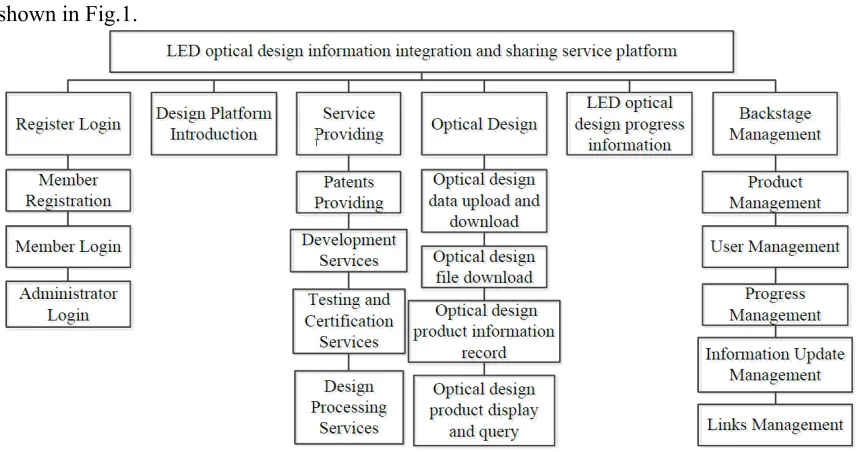
[image:2.612.91.519.158.384.2]The overall framework of led optical design information integration and sharing service platform is shown in Fig.1.
Figure 1. Overall function structure framework ofLED optical design information integration and sharing service platform.
This system function contains six modules, contains register login module, design platform introduction module, service providing module, optical design module, led optical design progress information module, backstage management module.
LED Optical Design Focused Crawler Algorithm Design
To design led optical design theme crawler algorithm to achieve effective fetch and retrieval led optical design technology progress information.
Algorithm: the improved shark-search algorithm removes anchor text near the character factors,
inherited his father's reservations relating to the similarity of nodes and anchor text relevance of these two factors, in order to improve the efficiency of its crawled pages. Calculation of the reliance of the sub-topic page is shown in Eq.1.
potential_score(child_url)=γ*inherited_score(child_url)+(1-γ)*sim(q,anchor). (1)
The coefficient of γ<1, here γ=0.5, δ=0.5. In Eq.1, potential_score(child_url) is sub-pages topic
relevance. inherited_score(child_url) is topic relevance of sub-pages inherited from father page.
Inherited_score(child_url)= δ*sim(q,current_url),if sim(q,current_url>δ),
sim(q,anchor) is comparability between anchor text and led optical design topic vector q, anchor is
anchor text. inherited_score(child_url) and sim(q,anchor) are calculated with the same original
Shark-Search algorithm[1].
Calculate sub-page url thematic relevance score, then compare the correlation scores with the threshold value, if the correlation score is greater than or equal to the threshold value, put sub-page url into the url to be crawled list waiting to crawl, and vice versa, then discard the sub-page url. The description of led focused crawler algorithm (topic-first) is as follows.
Input: url list of father node fatherQueue;
Output: led optical design topic-relative web pages sets led;
while(fatherQueue not null ) {
get an fatherURL from fatherQueue
crawl pages of fatherURL and extract all the urls,
put urls into URL list of child node sonQueue;
while(sonQueue not null) {
get a sonQueue url;
//according to Eq.2, Eq.1, calculate ingerited_score and potential_score
if(sonURL contains Topic - mark the word){
put sonURL into fatherQueue; }
If(potential_score>=threshold value){ put sonURL into fatherQueue; }
put pages of fatherQueue into led; }}
return led;
Implement of LED Optical Design Focused Crawler Algorithm
Led optical design topic crawler algorithm implemented by Java open source web crawler system
heritrix. Led optical design progress information is automatically collected, the titles and urls of the
information are saved into database. This class is stored in extractorforled.java file.the main method
is shown as belows.
public void extract(CrawlURI curi) {
// get current page reliance score
float father_score = curi.getUURI().getInheritedScore(); float child_score = 0;
// define url reliance score
o = ParserPage.extractPage(baos.toByteArray( ), encoding); // get content and url
if (o != null) {
urls = (Map<String, String>) o[0]; // save anchor text and url
HTMLContent = (String) o[1]; // calculate current page reliance score
float sim_father = ComputeCorrelativety.analysis(HTMLContent); //handle url according to focused crawler algorithm (Topic-First) final Iterator<String> key = urls.keySet().iterator();
while (key.hasNext()) {
final String anchor = key.next(); String link = urls.get(anchor); if (anchor != null && link != null) { link = getAbsoluteURL(currentUrl, link); if (link != null && checkURL(link) == true) {
addLinkFromString(curi, link, "", Link.NAVLINK_HOP,father_score); } else {
// calculate url reliance score if (sim_father > C) {
child_score = C * sim_father; } else {
child_score = C * father_score; }
// calculate sim(q,anchor) of anchor text and topic q float sim_anchor = ComputeCorrelativety.analysis(anchor); // calculate reliance score
if (potential_score >= Threshold) { // judge
addLinkFromString(curi, link, "",Link.Navlink_Hop,child_score); }} } }} } }
System Implement and Deployment
Asp.net is used to develop foreground and background system, Java is used to implement led optical design theme crawler system. A large number of controls, such as FileUpload, Repeater,
AspNetPager, CKEditor, Heritrix, etc. are used. It also uses web services and ajax. The homepage
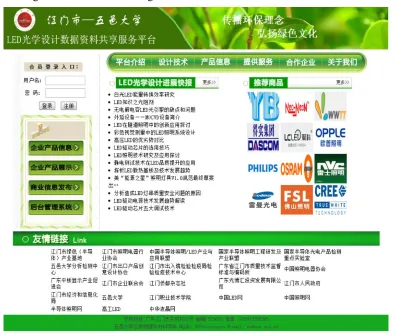
[image:4.612.110.507.329.665.2]is shown in Fig.2. Users can visite it to get their needs.
Figure 2. The home page.
The system is deployed on wuyi university network center server clusters, access address is
Conclusion
We have developed led topic dictionary and the system is fully tested. The function of the system with friendly interface operates normally. Especially the experiments of testing the focused crawler algorithm are carried out under the conditions of same seed number. Its accuracy rate is 13 percentages higher than the breath-first algorithm. The system will be optimized and improved in
the process of trial operation in the future.
References
[1] Hersovici M., Jacovi M., Maarek Y.S., et al. The shark-search algorithm. An Application: tailored Web site mapping [J]. Computer Networks and ISDN Systems, 1998, 30(1): 317-326. [2] Xiaoru Liu. Jiangmen LED semiconductor lighting industry development present situation and countermeasure research [D]. Guangzhou: South China University of Technology, 2012.
[3] Guoqiang He. LED lighting application status and development prospects [J]. Science and Technology, 2013, (2): 21-23.
[4] Srinivasan P., Menczer F., Pant G. A general evaluation framework for topical crawlers [J]. Information Retrieval, 2005, 8(3): 417-447.
[5] Renguang Yang, Yu Song, Xiangzeng Meng. A Shark - Search multimedia topic Search algorithm [J]. Computer Engineering and Application, 2010, 46-48(14): 152-154.
[6] Lianting. Design and implementation of a vertical search engine system based on Thesaurus [D]. Dalian: Dalian University of Technology, 2009.