2017 International Conference on Electronic and Information Technology (ICEIT 2017) ISBN: 978-1-60595-526-1
Method for Heterogeneous Identification Peer-to-peer
Resolution Technology of IoT Based on Block Chain
Dong-xu ZHANG
1,2,a, Ye TIAN
2,3,b,*and Wen-jun LUO
1,c1
College of Computer Science & Technology, Chongqing University of Posts & Telecommunications, Chongqing 400065, China
2
Computer Network Information Center of Guangzhou, Chinese Academy of Sciences, Guangzhou 511458, China
3
Computer Network Information Center, Chinese Academy of Science, Beijing 100190, China
a
[email protected], [email protected], [email protected]
*Corresponding author
Keywords: Internet of things, Heterogeneous identification, Peer-to-peer resolution
service, Block chain, Data consistency.
Abstract. In IoT-related technologies, because of the lack of a unified standard, there
are various identity types and coexist of many resolution services which cannot interconnect with each other, prone to single-point failure, single point of control and so on, cannot make full use of IoT resources, limiting the rapid development of the IoT. In order to solve the above problems, many scholars put forward solutions of decomposing the single resolution service into multi-root, and design new identity resolution to solve the heterogeneous identification. However, these solutions ignored the fundamental problem of data synchronization between nodes due to architecture change. This paper explores a peer-to-peer resolution service architecture based on block chain, makes full use of its consensus mechanism and trust feature to ensure the consistency of Common Mapping Table, and design the heterogeneous identity peer-to-peer resolution service. At last, through the experimental data of consistency conflicting indicators, the peer-to-peer resolution service based on block chain can effectively solve the problem of data consistency in distributed architecture, guarantee the correctness of data.
Introduction
In recent years, the application of Internet of things(IoT) comes into all aspects of people's lives, the sharing of bicycles, shared houses, smart homes, intelligent traffic can be seen everywhere, profoundly affecting our world. Through the IoT, human beings have increased their control of the physical world, and society has entered into the period of IoT maturation development [1]. According to the 40th China Statistical Report on Internet Development, the number of global networking devices is expected to reach 26 billion by 2020, and data from IoT equipment will reach 44ZB [2]. All kinds of perceptual information constitute a massive IoT, and the mass IoT resources have become a difficult problem for its development.
resolution service, because of there is no unified standard, leading to various identity types, and coexist of many resolution service. In order to solve thoses problem, scholars decomposing the single root service into multiple equivalent root’s service, and design a new identity coding rule to realize the heterogeneous identification resolution service in the distributed peer-to-peer (P2P) architecture. However, related research ignores the indeterminacy of the synchronization process of the Common Mapping Table (CMT) in the distributed P2P network, resulting in the data inconsistency problem, and the new designed identity coding rule will aggravate the heterogeneous.
This paper focuses on the resolution service, using block chain technology to solve the problem of synchronization consistency of the CMT which is used to record mapping relationships of the multi-root distributed architecture. Then realizes the complete equivalence between the root resolution services without designing a new identity system. Finally achieving a P2P resolution service in conformity with heterogeneous identity resolution service.
In this paper, we firstly analyze the problem of data inconsistency in the distributed architecture. Secondly, we explore a distributed CMT consistency scheme based on block chain technology. After that, achieve the heterogeneous identity resolution of the multi-root distributed architecture. Finally, designs a simulation experiment.
Related Work
Because of the competition of the IoT, there are many kinds of identity system, such as: the EPC code proposed by American, the Ucode proposed by Japan, the mFRID code proposed by Korea, the Handle code proposed by the international organization Dona, the OID code proposed by ISO/IEC and ITU, etc. In the future, there will be more identification and resolution service, at the same time, in order to be compatibled with other resolution services, the new object identification rules will be compatible with existing identification, which will lead to further aggravate heterogeneity.
Heterogeneous IoT identification resolution service is used for one entrance to provide a unified service for the identity of different identification system. The IoT P2P service is the root service of various identification systems. A P2P network of equal status and mutual cooperation is used to form a root resolution service, which can be accessed to the corresponding resolution service by maintaining a CMT based on the identity to address the corresponding resolution service. Complete the fair P2P heterogeneous identity resolution services together.
The most commonly used resolution service is the ONS (Object Name Service), proposed by EPCglobal which is the world's largest RFID standardization organization. In the resolution process of ONS, the identity split up by dot and inverted put together, finally add the root suffix, then translate it into the corresponding FQDN (Fully Qualified Domain Name), and then use the DNS protocol to complete the resolution. However, the ONS service only supports parsing the identity which is belonged to its own system, and it is completely controlled by EPCglobal [3].
management rights [5]. Both of the two schemes change the single resolution service to multi-roots, mitigate the problem of single point failure and single point of control, improve the speed of query process and increase load balancing, but the root nodes have a master-subordinate relationship, the single point of control still remains. Luo et al. proposed an ONS model based on two-layer P2P network, which decomposes the ONS root into a P2P network, each local ONS assigned a default and multiple alternate root ONS, and providing alternative mapping information services when the load is large, effectively solving the load balancing problem [6]. Cao et al. has improved the chord search algorithm of node network, by introducing the concept of node information correlation degree, grouping and adding the super node group according to correlation degree, adding the anticlockwise route for each node, selecting the shortest path in two directions, to solve the node performance of frequently leave and join chord network problems [7]. Liu et al. according to the characteristics of DNS and DHT, design a two-layer identification structure, the standard of identification resolution layer using DHT network, object identification resolution layer utilizing hierarchical DNS network to achieve heterogeneous identity resolution services [8]. Li et al. analyzed the relationship between trust mechanism and network security, put forward a P2P network architecture based on trust mechanism, and summarized the classical algorithms of trust degree, to solve the problem of network security in the existing P2P network architecture [9]. Jia through the deep research of addressing and analysis ONS architecture, utilizing the BIND software to build three-layer ONS, applied it to internal business service [10]. In the study of a car network in Auto-id Labs, scholars defined the data sharing model for automobile life cycle events, and established the data system with the ONS system to break the data island formed by the independent research and development of each company [11].
The above research mainly studies the network architecture, the heterogeneous identifier parsing process, the promotion of the resolution service load balancing and the query efficiency. However, there are still some problems to be solved in the data synchronization process between the distributed nodes, such as inconsistent mapping table in a distributed network, especially many distinct versions mapping table.
Architecture
In order to solve the problem that the root nodes not equal, the single point of failure and the less interconnection, it is necessary to meet the following three points to construct a heterogeneous P2P identity resolution:
(1) Ensure every resolution service’s node is completely fair and equal;
(2) Design reliable data synchronization mechanism ensures mapping data reliably; (3) Achieve the complete heterogeneous identity resolution.
[image:4.612.284.496.159.258.2]Therefore, the scheme consists of three main sections:
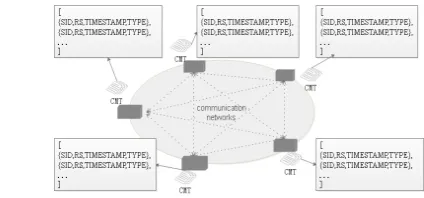
Figure 1. The P2P network of multi-root identity system based on block chain.
Figure 2. Synchronization mechanism of mapping table based on block chain.
Architecture Design
As shown in Fig. 1, the architecture and the parsing process maintain the original mode, just need the resolution service can provide a query process for the identity which belongs to the identity system. The root resolution services of various identification systems are formed into P2P networks, each node can interact with the other directly, and each node deploys the block chain service to maintain the Common Mapping Table, realizes the decentralized and equivalent identity network without trust any party.
Synchronization Mechanism based on Block Chain
The Common Mapping Table is the data that all identity system root resolution nodes jointly maintain, which include all the root node records, and it is used to dispatch the parsing request to the corresponding resolution service. That is to say, the correctness and consistency of the CMT are the key factor of the heterogeneous identification service. The mapping record format which stored in the block chain is defined as follows:
Record = {SID, RS, TIMESTAMP, TYPE};
The SID is the standard identifier, which is the result that the identifier matched by the encoding rules; RS (Resolution service) is the address which can provide the identity of the corresponding resolution service; TIMESTAMP is a field used to ensure get the latest record; TYPE is used to record whether data is valid, because the block chain data cannot be deleted physically, use this field to indicate the record is available. The operations of the mapping data such as increment, deletion and modification, correspond to the append operations to the block chain data. Each record data needs to mark the state by the value of TYPE, indicating whether the mapping relationship has been updated or deleted. Each query will base on the SID, and use the maximum TIMESTAMP and the valid TYPE gets the valid mapping data record.
other nodes. When the block chain network is initialized or the new data is generated, the data synchronization process as following:
(1) When the new node joins the block chain network, the newly added node obtains the data list stored in the block chain from the other nodes in the P2P network.
(2) By comparing the block chain data owned by other nodes, every node can synchronize the block data which owned by more than 50% nodes to the local block chain;
(3) When new data is generated on the P2P networking, the data will be broadcast to other nodes, and the nodes will verify the data real-timely, the approved data will be put into its own block chain new block.
(4) According to the agreement consensus when a node has the right to submit the next block, the node calculates the hash value of the previous block, and then packs the block data’s Merkle root value into a new block, and broadcast to all nodes through the P2P module.
(5) Other nodes verify that each block and mapping record in this block is legitimate, synchronize the legitimate block to the node's local block chain , and base the new block hash value encapsulate the next block.
Client
Root Res olution
Service
Block chain network
Resolution request
for Code
Finding RSby SIDCod e
Return RSC od e
Matching by coding
rules and get SID
Resolution process for Cod e
Resolution Service
[image:5.612.119.307.295.426.2]Return the result
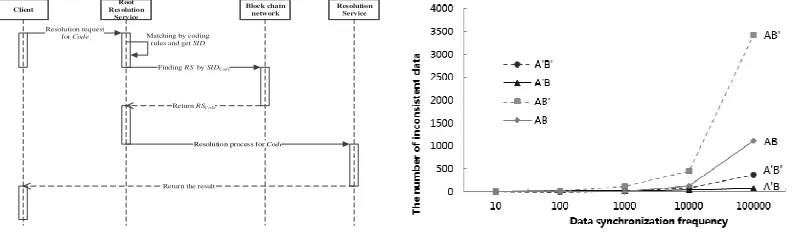
[image:5.612.112.509.296.412.2]Figure 3. Resolution scheme for heterogeneous identity based on block chain.
Figure 4. Inconsistent results of two experiments.
Resolution Scheme for Heterogeneous Identity based on Block Chain
The P2P network is formed by all the root resolution service root nodes, and maintains CMT based on block chain technology. Any root resolution service can receive the identification resolution request, and find the corresponding resolution service from the mapping table according to the identity. The identity query request is forwarded to the corresponding resolution service, and the result will return to the request originator.
As shown in Fig. 3, in a P2P network consisting of multiple identity resolution service root nodes, the specific heterogeneous identity resolution process as following: (1) Any resolution server RSi in the P2P network, receiving the identification Code parsing request;
(2) The RSi is matched by the identification coding rules, and obtains the corresponding SIDCode.
(3) According to SIDCode find its corresponding resolution server address RSCodein the memory cache mapping table, if not hit the cache, then query on the block chain data;
Experiment
By comparing the synchronization mechanism based on block chain put forward by this thesis and the synchronization mechanism from the thesis [14]. Designing the prototypes, and continually request for two group experiments, simulate the DDoS in P2P network attack by random sleep of the service thread. After repeated trials, compare the sum number of different data for each group experiment.
The experimental hardware environment is composed of five physical machines, which simulate the root service of five different identification resolution service. Constructs a P2P network architecture based on block chain and an ordinary network architecture respectively, then realizes the synchronization mechanism of two sets of schemes. Equipment as follows, hardware environment: Intel (R) Core (TM) I7-4710MQ model CPU, frequency 2.50GHz, memory 8G, hard drive 150G, software Environment: Ubuntu16.04 operating system, JDK1.8 environment, Tomcat8 server, BigchainDB1.3 block chain database, Mongodb3.4 NoSQL database, Jmeter automatic testing tool.
In the experiment, one group design used the block chain database Bigchaindb cluster, which inherits the characteristics of block chain and modern distributed database, has the features of decentration, trusted and tamper-proof, and also has the features of high throughput, high capacity and high efficient query of modern distributed database [15]. Another group design uses Mongo cluster to storage data accordingly.
By using Jmeter to initiate a quantitative data synchronous requests, separately carry on 10, 100, 1000, 10000, 100,000 times. When data synchronization, the data validation module will record the inconsistent sum amount.
The two groups of experiments are based on the block chain network architecture labeled B and the ordinary network architecture labeled B’, in the simulated attack environment labeled A and the normal environment labeled A’, the two types of indicators are grouped into four time experiments, according to the experimental data drawing the following chart.
As shown in Fig. 4, in the absence of DDoS simulation, two groups of their performance was stable even the intension increased by 10 times each trial. When there are DDoS attacks, the non-block chain synchronization inconsistencies a lot. There is some temporary inconsistency in the data synchronization based on block chain, which because the block chain’s agreement consensus takes some time, but according to the final mapping table results, all the data in the block chain network nodes are the same. That is to say, the synchronization mechanism of mapping table based on block chain is found to be more effectively to ensure data consistency.
Conclusion
factors. The next step is to optimize the algorithm of distinguishing different identity, so that it can be compatible with more identity systems, and optimize the time cost by block chain consensus, further enhance the feasibility of the consensus mechanism.
References
[1] China Information and Communication Research Institute. White paper on the Internet of things [EB/OL], 2016.
[2] China Internet Network Information Centre. The 40th China Statistical Report on Internet Development [EB/OL], 2017.
[3] EPCglobal Inc. GS1 Object Name Service (ONS) Version 2.0.1[S].The EPCglobal Standards Development Process, 2013.
[4] Evdokimov S, Fabian B, Günther O. Multipolarity for the Object Naming Service [M]. Lecture Notes in Computer Science, Springer Berlin Heidelberg, 2008:1-18.
[5] Balakrichenan S, Kin-Foo A, Souissi M. Federated ONS Architecture for the Internet of Things–A Functional Evaluation[C]. In Proceedings of the 1st Conference on Internet of Things, 2010.
[6] Luo Weimin, Xiong Jiang, Ying Hong, et al. Object Naming Service Model Based on Two-layer P2P Structure in Internet of Things [J]. Computer Engineering, 2013, 38(12):79-81.
[7] Cao Lei, Zhang Yu-Mei, Wu Xiao-Jun, et al. Improvement of Chord Search Algorithm Research in P2P Network [J]. Application Research of Computers, 2014, 31(2):518-521.
[8] Liu Yang, Li Xinchi, Tian Ye, et al. Research on Key Technology of Name Service for the Internet of Things [J]. Acta Electronica Sinica, 2014, 42(10):2032-2039.
[9] Li Yongjun, Dai Yafei. Research on Trust Mechanism for P2P Network [J]. Chinese Journal of Computers, 2010, 3(33):390-405.
[10] Jia Zhiqiang. Design and Implementation of Enterprise-class ons System Architecture in EPC Network [J]. Computer Applications and Software, 2016, 1(22):116-137.
[11] Bongjin Sohn, Sungpil Woo, et al. GS1 Connected Car Using EPCIS-ONS System[C]. 2016 IEEE International Congress on Big Data, 2016.
[12] Information and Software Services Division of the Ministry of Industry and Information Technology, China Block chain Technology and Industry Development Forum. White Paper on China Block Chain Technology and Application Development (2016) [S], 2016.
[13] Nakamoto S. Bitcoin: A Peer-to-peer Electronic Cash System [EB/OL], 2009.
[14] LI Xinchi. Research on the Equitable Federated Name Service for the Internet of Things Oriented to Heterogeneous Identification [D]. Beijing: University of Chinese Academy of Sciences, 2014.