Munich Personal RePEc Archive
Financial Liberalization Or Repression?
Ang, James
Monash Univeristy
2009
Online at
https://mpra.ub.uni-muenchen.de/14497/
1
F
INANCIAL
L
IBERALIZATION
O
R
R
EPRESSION
?
James B. Ang
*Monash University
Abstract
While financial liberalization has always been advocated in developing countries,
experiences with it do not always produce desirable outcomes. In order to evaluate the costs and
benefits associated with financial liberalization and repression, this study highlights that the overall
effectiveness of the reform programs depends on the relative strength of each financial sector policy
implemented. Using India as a case study, the results indicate that interest rate controls, statutory
liquidity requirements and directed credit programs positively affect the level of financial
development. A rise in cash reserve requirements appears to have an adverse effect on development
of the financial system. The results lend some support to the argument that some form of financial
restraints may help promote financial development.
Key words: Financial development; financial liberalization
JEL classification: E44; E58; O16; O53
*
Department of Economics, Monash University, 900 Dandenong Road, Caulfield East, Vic 3145, Australia. Tel: +61 3 99034516, Fax: +61 3 99031128, E-mail: [email protected]
Acknowledgements: Useful comments and suggestions received from the participants of the 37th Australian Conference of Economists are greatly appreciated. I would also like to thank Shishir Saxena for sharing his insights. Financial support from the Australian Research Council (ARC) is gratefully acknowledged.
2
1. Introduction
The financial liberalization thesis of McKinnon (1973) and Shaw (1973) has had a
far-reaching influence on the policy prescriptions adopted by many developing countries during the
1970s and 1980s, which tended to encourage more financial saving by increasing real interest rates.
This was motivated by the argument that financial repression policies were regarded to be largely
accountable for the poor economic performance of developing countries in the 1960s, where low
saving and credit rationing were widely observed. Investment suffered both in terms of quantity and
quality as funds were allocated at the discretion of policy makers. McKinnon (1973) and Shaw
(1973) challenged the financial repression ideology and provided a new paradigm in the design of
financial sector policies. Their theories proposed that distortions in the financial systems, such as
loans issued at an artificially low interest rate, directed credit programs, and high reserve
requirements would reduce saving, retard capital accumulation, and prevent efficient resource
allocation. The elimination of these distortions would significantly deepen financial systems and
therefore stimulate economic growth.
Experiences with financial liberalization, however, do not always produce desirable results.
As noted by Demirguc-Kunt and Detragiache (1998) and Kaminsky and Reinhart (1999), financial
liberalization seems to be systematically related to banking fragility, which dampens financial
sector development. This apparent controversy prompts us to take a different perspective at the
subject. A more satisfactory approach to assessing the effect of financial sector reforms should
explicitly account for each component of the reform program. This would provide a more complete
analysis of the costs and benefits associated with financial repression and liberalization. Thus, the
overall effectiveness of the entire reform program would depend on the relative strength of each
type of financial sector policy implemented. Analysis performed at the disaggregated level also
helps identify an appropriate mix of financial liberalization and repressionist policies which is
effective in deepening the financial systems.
The literature so far has only focused on either examining the role of finance on growth or
establishing the causal link between them. Although much progress has been made, little attention
has been paid to understanding what shapes financial development with particular reference to the
role of financial policy. Results merely based on causality tests or cross-country growth regressions
provide little guidance to draw any useful policy lessons from the available literature. The lack of
attention afforded to understanding the role of financial policy in the process of financial deepening
may have therefore contributed to the lack of success of this strand of literature in influencing the
formulation of financial sector policies. As emphasized by Ang (2008a), understanding how each
type of financial sector policy affects financial development has important policy implications. In
3
considerable interest to academic researchers and policy makers in the aftermath of the recent
global financial turbulence. While this paper does not directly address the implications of the global
financial crisis, it is hoped that the analysis will provide policy makers with some direction in
formulating appropriate financial sector policies.
The above considerations also highlight that the “one size for all” argument, based on the
results obtained from cross-country regressions, cannot be rigidly applied given that each country
has its own unique institutional setting and financial sector history (see Rioja and Valev, 2004a). As
a result, we focus our analysis on a case study rather than a larger sample of country. India provides
an ideal testing ground for the analysis given its rich history in financial sector reforms. There was
little financial repression in the financial system of India prior to the 1960s. However, the Reserve
Bank of India gradually imposed more controls over the financial system by introducing interest
rate controls in the 1960s. The statutory liquidity ratio was raised from 25% in 1966 to 38% in
1989, and the cash reserve rate increased considerably from 3% to 15% during the same period.
These requirements enabled the Reserve Bank to purchase government securities at low cost. The
extent of directed credit programs has also increased markedly since the nationalization of the 14
largest private banks in 1969. A number of priority lending rates were set at levels well below those
that would prevail in the free market. This process culminated in the late 1980s when directed
lending was more than 40% of the total.
The major phase of financial liberalization was undertaken in 1991 as part of the broader
economic reform in response to the balance of payments crisis of 1990-91. The objective was to
redirect the entire orientation of India’s financial development strategy from its position as a
financially repressed system to that of a more open system so as to provide a greater role for
markets in price determination and resource allocation. Consequently, interest rates were gradually
liberalized and reserve and liquidity ratios were significantly reduced. However, despite liberalizing
the financial sector since the early 1990s, the Indian financial system has continued to operate
within the context of repressionist policies, particularly through the provision of subsidized credit to
certain priority sectors. Hence, it appears that repressionist measures coexist with a set of liberalized
policies of promoting free allocation of resources. But it is not clear how each of these policies
would affect development of the financial system.
The issue financial liberalization in India has been well studied in the literature. Among
others, Sen and Vaidya (1999) provide a detailed examination of the process of financial
liberalization, focusing on its link with the regulatory regime, real sector reforms, the general
macroeconomic environment and the conduct of monetary policy. Emran et al. (2007) assess the
effects of financial liberalization on the price responsiveness of private investment. Their results
4
liberalization. The dynamic relationship between finance and inequality in India is recently
examined by Ang (2009a), who shows that while financial development helps reduce income
inequality, financial liberalization seems to exacerbate it. Moreover, Ang (2009b) assesses how
financial sector policy influences private investment in India. The results indicate that directed
credit programs, interest rate controls, and reserve and liquidity requirements have mixed effects on
private investment.
While the above studies have contributed to the understanding of the effects of financial
liberalization on macroeconomic performance in India, so far no study has focused on how each
type of financial sector policies affects development of the Indian financial system. This study
addresses the important question of how government intervention in the financial system, including
cash reserve requirements, directed credit programs, statutory liquidity requirements and interest
rate controls, affects development in the financial system using India as a case study. It is hoped
that the results of this study can be used to inform analytical and policy debate in India, as well as
other developing countries. The remainder of this paper is organized as follows. Section 2 discusses
some conceptual issues. Model specification and data are described in Section 3. Sections 4 and 5
present the estimation techniques and results, and the last section concludes.
2. Conceptual Issues
The McKinnon-Shaw school of thought proposes that government restrictions on the
operation of the financial systems, such as interest rate ceilings, directed credit programs, reserve
and liquidity requirements (dubbed “financial repression”), may inversely affect the quality and
quantity of investment and thus hinder financial development. Their analytical framework focuses
on interest rate controls, particularly interest rate ceilings, which may distort the economy in several
ways. First, it may discourage entrepreneurs from investing in high risk but potentially
high-yielding investment projects. Second, financial intermediaries may become more risk averse and
offer preferential lending to established borrowers. Third, borrowers who obtain their funds at
relatively low cost may prefer to invest only in capital intensive projects. Hence, they argue in favor
of liberalizing the financial sectors by way of removing interest rate controls and allowing the
market to determine its own credit allocation in order to deepen the financial system.
However, some counter arguments suggest that financial liberalization may not necessarily
lead to higher financial development. For instance, the neostructuralist contributions of van
Wijnbergen (1982) and Taylor (1983) suggest that the impact of lower taxation on financial systems
may reduce the flow of credit to the private sector, thereby discouraging financial intermediating
activity. Since the formal financial systems are subject to reserve requirements, which involve a
5
perform more efficiently in intermediating savers and investors. A rise in bank deposit rates
following financial liberalization induces households to substitute curb market loans for bank
deposits, resulting in a fall in the supply of loanable funds. Thus, in the presence of efficient curb
markets, removing interest rate restraints tends to discourage lending to the private sector, thereby
retarding financial development.
Stiglitz (1994) also argues that interest rate restraints may lead to higher financial saving
when good governance is present in financial systems. When depositors perceive restrictions as
policies aimed at enhancing the stability of the financial system, they may well be more willing to
keep their savings in the form of bank deposits, thereby increasing the depth of the financial system.
Hellmann et al. (1996) show that in a competitive equilibrium, banks have no incentive to attract
new customers and deepen market penetration since their profit margin on deposits is zero due to
intense competition. However, if the government imposed a deposit rate ceiling, banks can make
positive returns and therefore have an incentive to attract more depositors, as long as the market is
not fully penetrated. This reasoning suggests that deposit rate controls can induce banks to spend
more resources on deepening the financial system.
In the case of reserve requirements, Courakis (1984) shows that under the condition where
the demand for loanable funds is not perfectly inelastic, higher reserve requirements may increase
the profit-maximization deposit rate and hence the volume of loanable funds. Using a general
equilibrium model, Bencivenga and Smith (1992) show that the optimal degree of financial
repression depends on the size of government deficits. In the presence of large government deficits,
it will be desirable to impose higher reserve requirements. Their model also implies that financial
liberalization will not increase financial intermediating activity, since savings in the formal sector
translate into lower investment compared to savings in the informal sector, due to the absence of
reserve requirements.
However, in the model developed by Giorgio (1999), the optimal level of reserve
requirements is inversely related to the extent of financial intermediation since financial innovation
makes reserve requirements less effective by creating new instruments which are close substitutes
for assets subject to these mandatory requirements. Kim and Santomero (1988) and Gennotte and
Pyle (1991) also show that capital requirements increase a bank’s portfolio risk and hence may
result in an inefficient allocation of resources. This is arguably the case when the funds related to
these repressionist programs are not allocated efficiently to generate productive returns.
The implementation of directed credit programs generally involves the administered
allocation of loans to priority sectors, in India’s case mainly agriculture and small-scale industry.
Without such interventions, banks generally will not fund those activities with low returns.
6
displace investment projects with potentially higher returns, Stiglitz and Weiss (1981) show that
financial liberalization is unlikely to result in allocative efficiency. This is because under
asymmetric information, banks will practice credit rationing and be reluctant to raise interest rates
in response to higher demand for loans, due to adverse selection problems. According to Schwarz
(1992), directed credit programs may lead to increased financial intermediation in the targeted
sectors. If more funds are allocated to the high-return sector, an economy-wide increase in financial
intermediating activity will be expected. However, the allocation of funds involving the government
in developing countries may be subject to the risk of biased assessments and corruption, and often
results in sub-optimal outcomes (Emran and Stiglitz, 2009). Given the above, it appears that the
impact of each of these financial sector policies on financial development is theoretically
ambiguous. It is therefore ultimately an empirical issue.
3. Model Specification and Data
The empirical specification of the financial development (FDt) equation in Eq. (1) considers
how each type of financial repressionist policies, including interest rate restraints (IRRt), cash
reserve ratio (CRRt), statutory liquidity ratio (SLRt) and directed credit program (DCPt), impacts on
development of the Indian financial system.1 The expected signs for χ's cannot be determined a
priori since the impacts of each type of financial sector policies on financial development is theoretically ambiguous. The specification includes an income variable given that expansion of the
financial system may be induced by higher per capita income due to increased demand for financial
services (Robinson, 1952). We include a measure for macroeconomic uncertainty (VCPIt) in view
that financial development may be affected by the level of uncertainty in the economy. Finally, the
specification also includes a dummy variable to capture the effect of the balance of payment crisis
in 1991. Annual data covering the period 1950-2005 are used in the empirical analysis. The data
series are directly obtained or compiled from Annual Report and Report on Currency and Finance
of the Reserve Bank of India and National Accounts Statistics of the Central Statistical Organisation
in India.
1 2 3 4
t t t t t t t t
FD
= +
α β
ED
+
χ
IRR
+
χ
CRR
+
χ
SLR
+
χ
DCP
+
δ
VCPI
+
ε
(1)Obtaining a precise indicator of financial development is a difficult task, as highlighted by
Levine (2005) and Ang (2008b). In this study, we follow the standard approach used in the
1
7
literature by taking the ratio of private credit to GDP as the measure of financial development
(PCYt) (see, e.g., King and Levine, 1993; Levine et al., 2000; Rioja and Valev, 2004a, b; Clarke et
al., 2006; Mavrotas and Son, 2006). This ratio increased significantly from only about 5 percent in
1950 to 28 percent in 1990, and 45 percent in 2005. As a sensitivity check, we also consider two
other financial development indicators, namely credit to the commercial sector as a share of GDP
(CCYt) and the ratio of M3 minus M1 to GDP (MMYt). The former indicator excludes bank credit
extended to the household sector. This measure does not include credit obtained for financing house
purchase, which does not contribute to financial deepening. However, it also excludes credit raised
to finance small-scale business initiated by households, which constitutes an important part
financial intermediation. In the latter, subtracting narrow money from broad money allows us to
focus on the intermediation activities provided by the banking system (see, e.g., Rousseau and
Wachtel, 2002). By doing so, the measure better reflects the extent of financial intermediation,
which is in line with the debt intermediation hypothesis of Gurley and Shaw (1955) and Shaw
(1973).
Economic development (EDt) is measured by per capita gross domestic product at 1993
prices. Uncertainty (VCPIt) is measured by taking three-year moving average deviation of the
change in inflation between period t and t-1, where the rate of inflation is constructed using
consumer price index. FDt, EDt and VCPIt are measured in natural logarithms. The policy variables
statutory liquidity ratio (SLRt) and cash reserve ratio (CRRt) are measured in percentages. The
extent of directed credit programs (DCPt) is measured by 0, 1, 2 and 3 when the programs cover
zero percent, up to 20 percent, 21-40 percent, and more than 40 percent, respectively, of total bank
credit (see Ang, 2009a, b). While the extent of these programs was negligible in the 1950s, the
government progressively imposed more controls over the next there decades, providing subsidized
credit to certain priority sectors such as agriculture and small-scale manufacturing. Significant
directed credit controls remain in force to-date.
A summary measure of interest rate restraints (IRRt) is constructed using the method of
principal component analysis to represent the joint impact of the various interest rate controls
imposed on the financial system in India. The construction of the index involves six interest rate
controls: a fixed deposit rate (FDRt), a deposit rate ceiling (DRCt), a deposit rate floor (DRFt), a
fixed lending rate (FLRt), a lending rate ceiling (LRCt), and a lending rate floor (LRFt). These policy
controls are translated into dummy variables which take the value of 1 if a control is present and 0
8
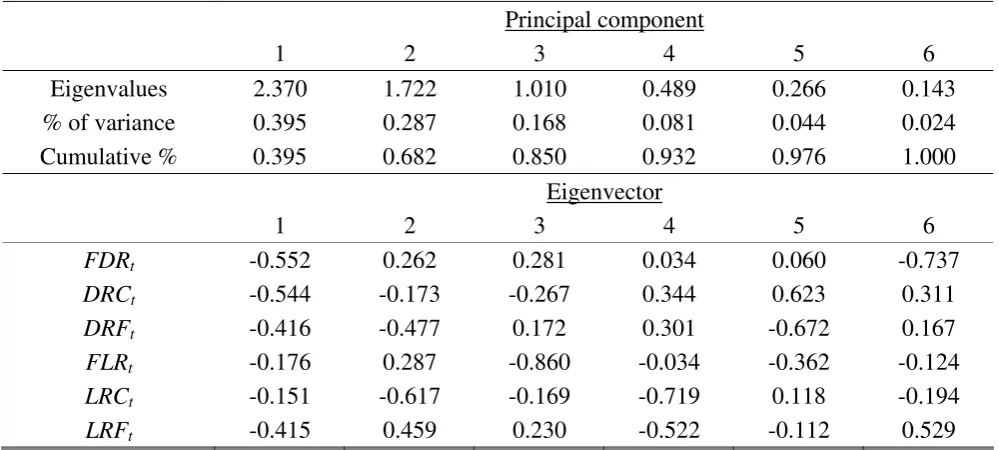
Table 1: Principal component analysis for the index of interest rate restraints Principal component
1 2 3 4 5 6 Eigenvalues 2.370 1.722 1.010 0.489 0.266 0.143
% of variance 0.395 0.287 0.168 0.081 0.044 0.024
Cumulative % 0.395 0.682 0.850 0.932 0.976 1.000
Eigenvector
1 2 3 4 5 6
FDRt -0.552 0.262 0.281 0.034 0.060 -0.737
DRCt -0.544 -0.173 -0.267 0.344 0.623 0.311
DRFt -0.416 -0.477 0.172 0.301 -0.672 0.167
FLRt -0.176 0.287 -0.860 -0.034 -0.362 -0.124
LRCt -0.151 -0.617 -0.169 -0.719 0.118 -0.194
LRFt -0.415 0.459 0.230 -0.522 -0.112 0.529
Notes: FDRt = fixed deposit dummy, DRCt = deposit rate ceiling dummy, DRFt = deposit rate floor dummy, FLRt =
fixed lending dummy, LRCt = lending rate ceiling, and LRFt = lending rate floor.
Table 1 presents the results for the index of interest rate restraints obtained from principal
component analysis. The eigenvalues indicate that the first principal component explains about 39.5
percent of the standardized variance, the second principal component explains another 28.7 percent
and so on. The first principal component is computed as a linear combination of the six policy
measures with weights given by the first eigenvector. In this case, the four largest principal
components are extracted, and they are able to capture 93.2 percent of the information from the
original data set. The remaining principal components are not considered since their marginal
information content is relatively small. The percentages of variance are adjusted to make sure that
their absolute values sum up to one. These adjusted values are then used as the weights to compute
the index. In this connection, the first principal component, which accounts for 39.5 percent of the
total variation of the policy variables, has a weight of 39.5/93.2, and so on.
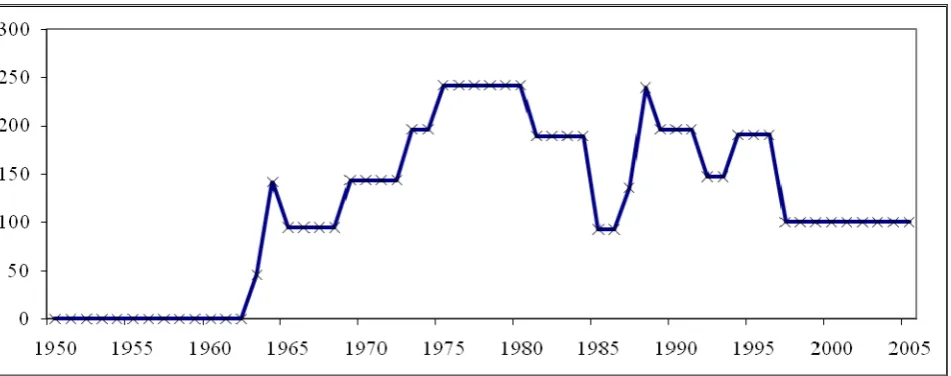
The resulting index is presented in Figure 1. As is evident, the financial system in India
appears quite liberalized in the 1950s since there was no interest rate controls imposed during that
period. The first interest rate control was introduced in 1963 when a maximum lending rate was
imposed. Since then, the index shows an upward trend and reaches a peak during the period
1975-1980. The index begins to move downwards in the early 1980s, following the introduction of some
liberalization measures, before bouncing back again in 1987. 1988 saw another peak in the index,
coinciding with the implementation of various interest rate controls. A major reform in interest rate
policy occurred in early 1990s when the Reserve Bank allowed banks to determine their own
interest rates. In recent years, the extent of interest rate restraint was further moderated to the level
9
Figure 1: Index of interest rate restraints (IRRt)
Figure 2 shows how cash reserve ratio (CRRt) and statutory reserve requirement (SLRt)
evolve over time. The former requires banks to hold part of their deposits in the form of cash
balances at the Reserve Bank of India, while the latter imposes a requirement for banks to keep a
share of their asset in government securities at below-market interest rates. Historically, CRRt has
been kept low in the range of 3-3.5 percent during the 1950s and 1960s. The ratio was gradually
raised to 15 percent in 1990 to increase cash balances. Similarly, SLRt was raised from 20 percent in
1950 to 38.5 percent in 1990, which helped the government to obtain cheap finance. Both
requirements have fallen significantly following the liberalization initiated in 1991. Currently, the
[image:10.595.54.546.522.709.2]CRRt and SLRt stand at 5 and 25 percent of bank deposits, respectively.
10
4. Estimation Techniques
The objective of our empirical estimation is to examine the long-run relationship between
financial development and its determinants. We begin the analysis by maintaining the assumption
that the data generating process for the relationship between the underlying variables is a vector
autoregressive (VAR) model at levels. The testing procedure involves three steps. First, we perform
an integration analysis for each variable using the conventional unit root tests. The second step is to
test for cointegration using the Johansen approach for the VARs constructed in levels. If
cointegration is detected, the third step is to estimate the long-run relationship. The VAR model is
given as:
1
p
t j t j
j
φ −
=
= +
∑
+ tx μ x ε (2)
where xt is a column vector of the underlying variables, μ is a vector of constant terms and φj is a
matrix of VAR parameters for lag j. The vector of error term εt ~ IN( ,0 Ω), where Ω is the
variance-covariance matrix of the residuals. The VAR model in Eq. (2) can be transformed into a
vector error correction model (VECM) after some mathematical manipulation, as given in Eq. (3).
1 1
1
p
t t j t j
j
π − λ − −
=
Δ = +x μ x +
∑
γ Δx +εt (3)where the rank of π is equal to the number of cointegrating vectors. The cointegration test draws
upon the procedure of Johansen (1988), which can be performed using the VECM formulated in Eq.
(3). By normalizing FDt, the cointegrating vector can be interpreted as the long-run equation for the
financial development equation.
Since the small sample properties of VECM are unknown (see, e.g., Bewley et al., 1994),
we propose two single equation approaches to obtain the long-run estimates of the financial
development equation: the fully-modified unrestricted error-correction model (FM-UECM) and
dynamic ordinary least squares (DOLS) estimator. The FM-UECM estimator of Inder (1993)
involves estimating the long-run parameters by incorporating adequate dynamics into the
specification to avoid omitted lagged variable bias, as given in Eq. (4).
0 , ,
1 0 0 1
p p
k k
t j j t i t i ji j t i t
j i i j
FD α β DET γ FD− δ DET − ε
= = = =
11
where DETt is a vector of k determinants of FDt. However, this approach may not be asymptotically
optimal given that it takes no account of the possible endogeneity of the income variable. In view of
this, we follow Bewley (1979) by using the instrumental variable technique to correct the standard
errors so that valid inference can be drawn. Specifically, lagged level terms are used as the
instruments for the first differenced terms to correct for endogeneity bias. Next, the short-run effects
are removed by defining:
*
0 1 ˆ , 0 0 1 ˆ ,
ˆ k p ˆ p k
t t j j j t i i t i i j iji j t i
FD =FD −α −
∑
= β DET −∑
= γ ΔFD− −∑ ∑
= =δ ΔDET − (5)The fully modified estimator is then obtained by employing the Phillips-Hansen
non-parametric corrections to the regression of FDt* on DETj t, . The resulting estimator thus adequately
deals with omitted lag variables bias and has been shown to be asymptotically optimal, even in the
presence of endogeneous explanatory variables (Inder, 1993). Caporale and Pittis (2004) have
shown that this estimator possesses the most desirable small sample properties in a class of 28
estimators.
The DOLS procedure of Stock and Watson (1993) is asymptotically equivalent to the
maximum likelihood estimator of Johansen (1988), and it has been shown to perform well in finite
samples. The estimation involves regressing one of the I(1) variables on the remaining I(1)
variables, the I(0) variables, leads and lags of the first difference of the I(1) variables, and a
constant, as shown in Eq. (6). By doing so, it corrects for potential endogeneity problems and small
sample bias, and provides estimates of the cointegrating vector which are asymptotically efficient.
0 , ,
1 1
p
k k
t j j t j i j t i t
j i p j
FD α β DET δ DET − ε
= =− =
= +
∑
+∑ ∑
Δ + (6)The long-run model for FDt can be obtained from the reduced form solution by setting all
short-run dynamic terms to be zero. The error-correction term (ECT) can be obtained by taking
0 1 1, 2 2, ... ,
t t t k k t
FD −α −β DET −β DET − −β DET to formulate an error-correction model. The ECT
captures the evolution process on the variable of concern by which agents adjust for prediction
errors made in the last period. The general-to-specific modelling approach is adopted to derive a
satisfactory short-run dynamic model. This involves testing down the general model by
successively eliminating statistically insignificant regressors and imposing data acceptable
12
5. Results
5.1 Integration and cointegration analyses
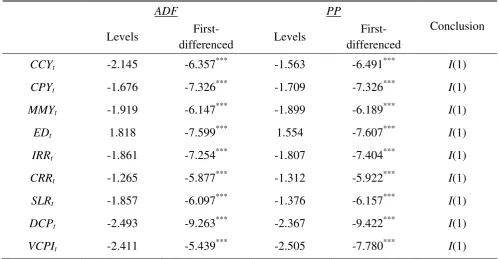
Two standard unit root tests are used to assess the order of integration of the underlying
variables - the Augmented Dickey-Fuller (ADF) and Phillips-Perron (PP) tests. The results reported
in Table 2 reveal that all variables are non-stationary in their levels but become stationary after
taking the first difference. Hence, we conclude that all series are I(1) at the 1% level of significance.
Given that all underlying variables share common integration properties, we can now proceed to
[image:13.595.49.549.276.535.2]testing for the presence of a long-run cointegrated relationship between the variables.
Table 2: Unit root tests
ADF PP
Levels
First-differenced Levels
First-differenced
Conclusion
CCYt -2.145 -6.357*** -1.563 -6.491*** I(1)
CPYt -1.676 -7.326*** -1.709 -7.326*** I(1)
MMYt -1.919 -6.147*** -1.899 -6.189*** I(1)
EDt 1.818 -7.599*** 1.554 -7.607*** I(1)
IRRt -1.861 -7.254*** -1.807 -7.404*** I(1)
CRRt -1.265 -5.877*** -1.312 -5.922*** I(1)
SLRt -1.857 -6.097*** -1.376 -6.157*** I(1)
DCPt -2.493 -9.263*** -2.367 -9.422*** I(1)
VCPIt -2.411 -5.439*** -2.505 -7.780*** I(1)
Notes: *** indicates 1% level of significance. For ADF, AIC is used to select the lag length and the maximum number of lags is set to be five. For PP, Barlett-Kernel is used as the spectral estimation method. The bandwidth is selected using the Newey-West method.
It is well-known that the Johansen approach may be sensitive to the choice of the lag length,
we therefore conduct a series of nested likelihood ratio tests on first-differenced VARs to determine
the optimal lag length prior to performing cointegration tests. Given the sample size, we have
considered a maximum lag length of five. The optimal lag length is found to be one in both models.
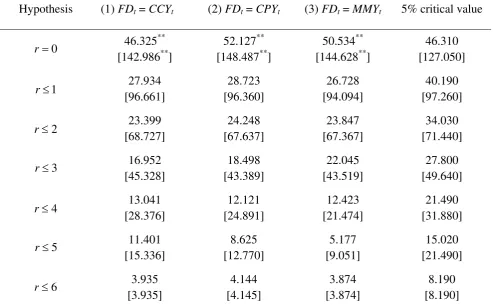
Cointegration tests are then performed for the VARs at levels. In Table 3, both the results of
Johansen trace and maximum eigenvalue tests unanimously point to the same conclusion that there
13
Table 3: Johansen cointegration tests
Maximum Eigenvalue Test Statistics [Trace Test Statistics]
Hypothesis (1) FDt = CCYt (2) FDt = CPYt (3) FDt = MMYt 5% critical value
0
r= 46.325
**
[142.986**]
52.127**
[148.487**]
50.534**
[144.628**]
46.310 [127.050]
1
r≤ 27.934
[96.661] 28.723 [96.360] 26.728 [94.094] 40.190 [97.260] 2
r≤ 23.399
[68.727] 24.248 [67.637] 23.847 [67.367] 34.030 [71.440] 3
r≤ 16.952
[45.328] 18.498 [43.389] 22.045 [43.519] 27.800 [49.640] 4
r≤ 13.041
[28.376] 12.121 [24.891] 12.423 [21.474] 21.490 [31.880] 5
r≤ 11.401
[15.336] 8.625 [12.770] 5.177 [9.051] 15.020 [21.490] 6
r≤ 3.935
[3.935] 4.144 [4.145] 3.874 [3.874] 8.190 [8.190]
Notes: Trace statistics are reported in brackets. The indicators of financial development are normalized as the dependent variables. r is the number of cointegrated vector. Critical values for the tests follow MacKinnon et al. (1999). ** indicates 5% level of significance.
5.2 Causality tests
There is a large body of literature focusing on testing the causal relationship between the
growth rate of financial development and economic growth. However, the results do not yield
conclusive finding on the direction of causality. Given that our variable of interest is financial
development, it is important to establish that it has no causal impact on real economy. Following
the results of cointegration tests, we perform the ECM-based causality tests. The two sources of
causation are the error-correction term and the lagged dynamic terms. Given these sources of
causality, we can perform three different causality tests, i.e., short-run Granger non-causality test,
weak exogeneity and strong exogeneity tests.
To perform the short-run Granger non-causality test, we test the significance of the lagged
dynamic terms using the Wald test. Non-rejection of the null implies economic growth does not
Granger-cause growth in financial development in the short-run. The weak exogeneity test is a
notion of long-run non-causality test. It is based on a likelihood ratio test which follows a χ2
14
restrictions by testing the joint significance of both the lagged dynamic terms and error-correction
term. That is, the strong exogeneity test requires Granger non-causality and weak exogeneity. The
strong exogeneity test does not distinguish between the short-run and long-run causality but it is a
more restrictive test which indicates the overall causality in the system.
Table 4: Causality tests between ΔFDt and ΔEDt
0: t t
H ΔED → Δ/ FD
Model Short-run Granger
non-causality test Weak exogeneity test
Strong exogeneity test
(1) FDt = CCYt
5.732** (0.021) 8.027*** (0.007) 5.629*** (0.007)
(2) FDt = CPYt
12.598*** (0.001) 2.232 (0.142) 6.501*** (0.003)
(3) FDt = MMYt
5.466** (0.024) 6.630** (0.013) 4.729** (0.014)
0: t t
H ΔFD → Δ/ ED
Model Short-run Granger
non-causality test Weak exogeneity test
Strong exogeneity test
(1) FDt = CCYt
0.205 (0.653) 0.488 (0.489) 0.286 (0.753)
(2) FDt = CPYt
0.174 (0.678) 0.042 (0.838) 0.164 (0.849)
(3) FDt = MMYt
0.103 (0.749) 1.359 (0.249) 0.681 (0.511)
Notes: CCYt= ln (credit to the commercial sector / GDP); CPYt= ln (credit to the private sector / GDP); MMYt = ln (M3
– M1 / GDP); EDt = ln GDP; p-values are reported in parentheses; ** and *** indicate 5% and 1% level of significance,
respectively.
On the basis of the results reported in Table 4, we find evidence of economic growth
causing (in the Granger sense) growth in financial development both in the short-run and long-run,
but no feedback relationship is observed. The evidence is further supported by the results of the
strong exogeneity tests which show the overall causality for both short-run and long-run. The
findings indicate that economic growth exerts a positive and uni-directional causal effect on the
growth rate of financial development, consistent with the time series evidence of Ang and
McKibbin (2007) who have found no support for the finance-led growth hypothesis for the
Malaysian experience. In sum, the causality tests indicate that the growth rates of GDP is a
15
5.3 Long-run and short-run estimates
Based on the results of the causality tests, we treat EDt as a long-run forcing variable for FDt
in the specification. The long-run elasticities of the financial development equation are estimated
using two different time series approaches, i.e., the FM-UECM and DOLS procedures. In general,
these two approaches give quite similar results. All variables enter the long-run equation
significantly at the conventional levels. The signs and magnitudes of the coefficients also appear
reasonable.
Economic development enters the long-run equation significantly at the 1% level with the
expected positive sign. Specifically, the long-run elasticity of financial development with respect to
economic development is found to be in the range of 0.834–1.078. The results imply that the
process of financial development in India has been shaped by a higher level of economic activity,
which results in an increased demand for financial services. Such a finding is by and large
consistent with the literature (see, e.g., Ang and McKibbin, 2007). Since economic expansion
serves to deepen the financial system, greater efforts by the government are necessary to ensure
sustained development in the economy.
The long-run elasticities of financial development with respect to interest rate restraints are
found to be 0.001 across all models. The results are not sensitive to different financial development
indicators and estimators used. The results imply that the interest rate restraints imposed on the
Indian financial system seem to have deepened the financial system, although its effect is rather
small. This finding is largely consistent with Ang (2008a) for the Malaysian experience. It is also
broadly consistent with the theoretical arguments put forward by van Wijnbergen (1982), Taylor
(1983), Stiglitz (1994) and Hellmann et al. (1996), among other.
Cash reserve requirements enter the equation significantly, but with varying effects.
Specially, its long-run elasticity is found to be negative in the models that use CCYt and CPYt as the
indicators of financial development. The coefficients are quite precisely estimated at the
conventional levels. However, for the models that use MMYt as the indicator, a positive effect is
found. Hence, the effect of reserve requirements on financial development appears to be ambiguous,
although more evidence of a negative effect is found, which supports the propositions of Kim and
Santomero (1988) and Gennotte and Pyle (1991). The results from all models show a significant
positive effect of statutory liquidity requirements, with long-run elasticities in the range of 0.015–
0.043. Thus, the evidence points to the importance of maintaining adequate capital liquidity to
ensure the smooth functioning of the financial system. The findings are, by and large, consistent
with the theoretical propositions of Courakis (1984) and Bencivenga and Smith (1992) under
16
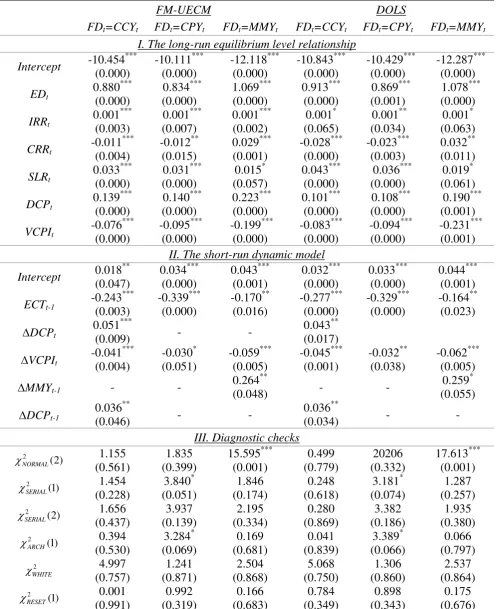
Table 5: The effects of financial sector policies on financial development
FM-UECM DOLS
FDt=CCYt FDt=CPYt FDt=MMYt FDt=CCYt FDt=CPYt FDt=MMYt
I. The long-run equilibrium level relationship Intercept -10.454
*** (0.000) -10.111*** (0.000) -12.118*** (0.000) -10.843*** (0.000) -10.429*** (0.000) -12.287*** (0.000) EDt 0.880*** (0.000) 0.834*** (0.000) 1.069*** (0.000) 0.913*** (0.000) 0.869*** (0.001) 1.078*** (0.000) IRRt 0.001*** (0.003) 0.001*** (0.007) 0.001*** (0.002) 0.001* (0.065) 0.001** (0.034) 0.001* (0.063)
CRRt -0.011
*** (0.004) -0.012** (0.015) 0.029*** (0.001) -0.028*** (0.000) -0.023*** (0.003) 0.032** (0.011) SLRt 0.033*** (0.000) 0.031*** (0.000) 0.015* (0.057) 0.043*** (0.000) 0.036*** (0.000) 0.019* (0.061) DCPt 0.139*** (0.000) 0.140*** (0.000) 0.223*** (0.000) 0.101*** (0.000) 0.108*** (0.000) 0.190*** (0.001) VCPIt -0.076*** (0.000) -0.095*** (0.000) -0.199*** (0.000) -0.083*** (0.000) -0.094*** (0.000) -0.231*** (0.001)
II. The short-run dynamic model Intercept 0.018 ** (0.047) 0.034*** (0.000) 0.043*** (0.001) 0.032*** (0.000) 0.033*** (0.000) 0.044*** (0.001) ECTt-1 -0.243*** (0.003) -0.339*** (0.000) -0.170** (0.016) -0.277*** (0.000) -0.329*** (0.000) -0.164** (0.023)
ΔDCPt
0.051***
(0.009) - -
0.043**
(0.017)
ΔVCPIt
-0.041*** (0.004) -0.030* (0.051) -0.059*** (0.005) -0.045*** (0.001) -0.032** (0.038) -0.062*** (0.005)
ΔMMYt-1 - -
0.264**
(0.048) - -
0.259*
(0.055)
ΔDCPt-1
0.036**
(0.046) - -
0.036**
(0.034) - -
III. Diagnostic checks 2 (2) NORMAL χ 1.155 (0.561) 1.835 (0.399) 15.595*** (0.001) 0.499 (0.779) 20206 (0.332) 17.613*** (0.001) 2 (1) SERIAL χ 1.454 (0.228) 3.840* (0.051) 1.846 (0.174) 0.248 (0.618) 3.181* (0.074) 1.287 (0.257) 2 (2) SERIAL χ 1.656 (0.437) 3.937 (0.139) 2.195 (0.334) 0.280 (0.869) 3.382 (0.186) 1.935 (0.380) 2 (1) ARCH χ 0.394 (0.530) 3.284* (0.069) 0.169 (0.681) 0.041 (0.839) 3.389* (0.066) 0.066 (0.797) 2 WHITE χ 4.997 (0.757) 1.241 (0.871) 2.504 (0.868) 5.068 (0.750) 1.306 (0.860) 2.537 (0.864) 2 (1) RESET χ 0.001 (0.991) 0.992 (0.319) 0.166 (0.683) 0.784 (0.349) 0.898 (0.343) 0.175 (0.676) Notes: 2
(2)
NORMAL
χ refers to the Jarque-Bera statistic of the test for normal residuals; 2
(1)
SERIAL
χ and 2
(2)
SERIAL
χ are the
Breusch-Godfrey LM test statistics for no first and second order serial correlation, respectively; χ2ARCH(1) is the Engle’s
test statistic for no autoregressive conditional heteroskedasticity; 2 WHITE
χ denotes the White’s test statistic to test for homoskedastic errors, with degrees of freedom equal to the number of slope coefficients; χRESET2 (1) is the Ramsey’s test
17
The extent of directed credit programs is found to have a favourable effect on development
of the Indian financial system, consistent with Schwarz (1992). The coefficients, in the range of
0.101-0.223, enter the financial development equations significantly in all models with a positive
sign. Consistent with its long-run counterpart, the effect of directed credit controls is found to be
significant in the short-run in the model that uses CCYt as the proxy for financial development. The
results seem to suggest that directing funds to certain priority sectors in the economy is an effective
mechanism to deepen the financial system. Macroeconomic uncertainty is found to exert a negative
influence on financial development. The results are consistent in across all regressions. The
long-run elasticities are found to be much larger in the models that use MMYt as the proxy for financial
development. A similar finding is obtained in the short-run dynamic model, based on the
coefficients reported on ΔVCPIt.
The error-correction term in the short-run dynamic model is statistically significant at the
5% level and correctly signed. This provides further evidence against the absence of a long-run
relationship for the financial development equation. The magnitude of its coefficients provides a
measure of the speed of adjustment back to the long-run equilibrium. Using CCYt as the measure for
financial development, the economy takes 3.6–4.1 years to achieve long-run equilibrium when there
is a deviation from equilibrium. The restoration to equilibrium takes slightly shorter when CPYt is
used, and slightly longer when MMYt is used as the measure for financial development. The crisis
dummy is found to be insignificant in all cases, and therefore dropped from the estimation.
5.4 Robustness checks
In order to test the robustness of the results, all estimations are subject to various diagnostic
tests. Except for the model that uses MMYt as the financial development indicator, which fails the
normality test at the 1% percent level, the regression specifications fit remarkably well and pass the
diagnostic tests against normality, first and second order serial correlation, autoregressive
conditional heteroskedasticity, White’s heteroskedasticity, and Ramsey’s functional specification, at
the 5 percent level of significance. Structural stability of the equations is examined using the
cumulative sum (CUSUM) and CUSUM of squares tests on the recursive residuals. In all equations,
the test statistics are generally within the 5% confidence interval band, suggesting that the estimated
models are somewhat stable over the sample period. The actual and predicted series of each
equation are also compared, which show that the predicted series track the actual series very closely
over time for all models.2 Finally, in view that there was little control imposed on the Indian
2
18
financial system in the 1950s, we have also experimented by restricting the estimation period to a
shorter sample of 1960-2005. The results do not significantly alter the main findings in this study.
5.5 Further discussion of results
How could the above results be interpreted within the specific context of India? Firstly, our
results indicate that interest controls have a positive effect on deepening the financial system in
India. This finding is not surprising given that the deregulation of lending rates may increase the
cost of borrowing and the removal of deposit interest floors may discourage financial savings. The
former increases the cost of capital for entrepreneurs whereas the latter reduces the amount of credit
available to them. The extent of interest rate restraints in India rose sharply following the direct
intervention of the Reserve Bank of India in the setting of interest rates in 1963. Despite these
regulations, the ratio of M3 to GDP increased significantly from 24% to 51% during the period
1963-1988. This process of saving mobilization was much quicker than many other developing
countries during the same period, and reflected a high propensity to save and confidence in the
banking system. Given India’s closed capital account regime, high saving mobilization has provided
ample domestic resources to facilitate lending activity. Moreover, the imposition of interest rate
ceilings from the 1960s to 1980s also ensured that entrepreneurs who lacked funding were able to
obtain credit at a reasonably low cost. However, it should be highlighted that financial savings may
be discouraged if bank deposit rates are suppressed to a very low level. As emphasized by
Chiappori et al. (1995) and Emran and Stiglitz (2009), financial savings will respond positively
only when an optimal level of deposit ceiling is chosen.
Secondly, our results suggest that higher statutory liquidity requirements are positively
related to financial development whereas an increase in the cash reserve requirements tends to
retard the process of financial deepening in India. These findings are consistent with Ang (2008a)
for Malaysia. Although in general one may expect an increase in the liquidity requirements to be
associated with credit rationing, this may not always be the case. The finding of a positive effect of
the statutory liquidity requirements suggests that adequate capital liquidity requirements are
necessary to ensure the smooth functioning of the financial system. Liquidity shortages may induce
insolvency problems and trigger financial instability. These requirements are particularly important
for financial systems which are not sufficiently sophisticated such as one in India. For reserve
requirements, it appears that their significant reductions after the liberalization have greatly
expanded the amount of loanable funds, which has contributed to a process of rapid financial
deepening during the 1990s. Our results therefore argue in favor of a policy of deregulation in the
financial system by way of reducing the cash reserve requirements in order to boost financial
19
Finally, our results also suggest that directed credit programs tend to promote financial
development. Due to the nationalization of banks in 1969, the allocation of credit has been mainly
performed by government banks. Although credit allocation under the direction of the central bank
may be less efficient and subject to the risks of biased assessments, it appears that these negative
effects have little effect on financial development in India. Instead, central allocation of credit has
significantly benefited some farmers and small traders, who would otherwise be denied credit, by
allowing them to have adequate access to finance. The presence of directed credit programs, which
remains significant today despite the major phase of financial liberalization that occurred in 1991,
appears to have played a significant role in facilitating financial intermediating activity in India.
This finding, however, stands in sharp contrast to the results of Ang (2008a) for the Malaysian
experience. In the case of Malaysia, a series of directed credit programs pertaining to the native
Malay community were implemented from 1975, following the institution of the New Economic
Policy (NEP) in 1970. Although credit allocation by the government may have succeeded in
bringing the native Malays into business, it has largely resulted in the transfer of paper wealth from
one company to another in the interests of the politically well-connected few.
6. Concluding Remarks
Using annual time series data for the period 1950-2005, this paper attempts to assess the
effects of several types of financial sector policies, including interest rate controls, statutory reserve
requirements, directed credit programs and capital liquidity requirements, on development of the
financial system in India. The study highlights that since financial sector policies may have
different effects on financial development, it is important to consider each component of financial
reforms separately. Using the Johansen cointegration techniques, the results show a robust long-run
relationship between financial development and its determinants. The causality tests indicate that
the growth rates of GDP is a reasonably good predictor of evolution in financial development.
However, this causal relationship is not bidirectional, meaning that the causality only runs from
growth to finance and not in the opposite direction.
The results further suggest that financial development in India positively depends on the
level of economic development. An increase in macroeconomic uncertainty is associated with a
lower level of financial development. Overall, the results provide very little support for the financial
liberalization thesis. Specifically, interest rate restraints appear to be an effective device for
deepening the financial sector. Similarly, maintaining adequate capital liquidity and the presence
directed credit programs favouring certain priority sectors seem critical for shaping the financial
system. The effects of cash reserve requirements are found to be ambiguous, although a negative
20
being pursued in India are unlikely to result in financial deepening. The increased level of financial
depth observed is primarily driven by higher demand for financial products and services due to
increase in aggregate income. The results tend to support the proposition of Stiglitz (1994) and
Hellmann et al. (2000) that some form of financial restraints may help deepening the financial
systems.
References
Ang, J.B. (2008a). "Are Financial Sector Policies Effective in Deepening the Malaysian Financial System?"
Contemporary Economic Policy 62, pp. 623-635.
____ (2008b). "A Survey of Recent Developments in the Literature of Finance and Growth." Journal of Economic Surveys 22, pp. 536-576.
____ (2009a). "Finance and Inequality: The Case of India." Southern Economic Journal, forthcoming. ____ (2009b). "Private Investment and Financial Sector Policies in India and Malaysia." World Development, forthcoming.
Ang, J.B. and McKibbin, W.J. (2007). "Financial Liberalization, Financial Sector Development and Growth: Evidence from Malaysia." Journal of Development Economics 84, pp. 215-233.
Bencivenga, V.R. and Smith, B.D. (1992). "Deficits, Inflation, And The Banking System In Developing Countries: The Optimal Degree Of Financial Repression." Oxford Economic Papers 44, pp. 767-790.
Bewley, R. (1979). "The Direct Estimation of the Equilibrium Response in a Linear Dynamic Model."
Economics Letters 3, pp. 357-361.
Bewley, R.; Orden, D.; Yang, M. and Fisher, L.A. (1994). "Comparison of Box-Tiao and Johansen Canonical Estimators of Cointegrating Vectors in VEC(1) Models." Journal of Econometrics 1-2.
Caporale, G.M. and Pittis, N. (2004). "Estimator Choice and Fisher's Paradox: A Monte Carlo Study."
Econometric Reviews 23, pp. 25-52.
Chiappori, P.-A.; Perez-Castrillo, D. and Verdier, T. (1995). "Spatial Competition in the Banking System: Localization, Cross Subsidies and the Regulation of Deposit Rates." European Economic Review 39, pp. 889-918.
Clarke, G.; Xu, L.C. and Zou, H.-f. (2006). "Finance and Income Inequality: What Do the Data Tell Us?"
Southern Economic Journal 72, pp. 578-596.
Courakis, A.S. (1984). "Constraints on Bank Choices and Financial Repression in Less Developed Countries." Oxford Bulletin of Economics and Statistics 46, pp. 341-370.
Demirguc-Kunt, A. and Detragiache, E. (1998). "The Determinants of Banking Crises in Developing and Developed Countries." International Monetary Fund Staff Papers 45, pp. 81-109.
21
Emran, S. and Stiglitz, J. (2009). "Financial Liberalization, Financial Restraint, and Entrepreneurial Development." (Available at SSRN: http://ssrn.com/abstract=1332399).
Gennotte, G. and Pyle, D. (1991). "Capital Controls and Bank Risk." Journal of Banking and Finance 15, pp. 805-824.
Giorgio, G.D. (1999). "Financial Development and Reserve Requirements." Journal of Banking and Finance
23, pp. 1031-1041.
Gurley, J.G. and Shaw, E.S. (1955). "Financial Aspects of Economic Development." American Economic Review 45, pp. 515-538.
Hellmann, T.F.; Murdock, K.C. and Stiglitz, J.E. (1996). "Deposit Mobilisation Through Financial Restraint," Hermes, N. and Lensink, R. (Ed), In: Financial Development and Economic Growth: Theory and Experiences from Developing Countries. London: Routledge, 219-246.
____ (2000). "Liberalization, Moral Hazard in Banking, and Prudential Regulation: Are Capital Requirements Enough?" American Economic Review 90, pp. 147-165.
Inder, B. (1993). "Estimating Long-Run Relationships in Economics: A Comparison of Different Approaches." Journal of Econometrics 57, pp. 53-68.
Johansen, S. (1988). "Statistical Analysis of Cointegration Vectors." Journal of Economic Dynamics and Control 12, pp. 231-254.
Kaminsky, G.L. and Reinhart, C.M. (1999). "The Twin Crises: The Causes of Banking and Balance-of-Payments Problems." American Economic Review 89, pp. 473-500.
Kim, D. and Santomero, A.M. (1988). "Risk in Banking and Capital Regulation." Journal of Finance 43, pp. 1219-1233.
King, R.G. and Levine, R. (1993). "Finance and Growth: Schumpeter Might Be Right." Quarterly Journal of Economics 108, pp. 717-737.
Levine, R. (2005). "Finance and Growth: Theory and Evidence," Aghion, P. and Durlauf, S. (Ed), In:
Handbook of Economic Growth. Netherlands: Elsevier Science, 865-934.
Levine, R.; Loayza, N. and Beck, T. (2000). "Financial Intermediation and Growth: Causality and Causes."
Journal of Monetary Economics 46, pp. 31-77.
MacKinnon, J.G.; Haug, A.A. and Michelis, L. (1999). "Numerical Distribution Functions of Likelihood Ratio Tests For Cointegration." Journal of Applied Econometrics 14, pp. 563-577.
Mavrotas, G. and Son, S.-I. (2006). "Financial Sector Development and Growth: Re-examining the Nexus," Bagella, M., Becchetti, L. and Hasan, I. (Ed), In: Transparency, Governance and Markets. Amsterdam: Elsevier Science, 217-242.
McKinnon, R.I. (1973). Money and Capital in Economic Development. Washington, D.C.: Brookings Institution.
Rioja, F. and Valev, N. (2004a). "Does One Size Fit All? A Reexamination of the Finance and Growth Relationship." Journal of Development Economics 74, pp. 429-447.
____ (2004b). "Finance and the Sources of Growth at Various Stages of Economic Development." Economic Inquiry 42, pp. 127-140.
22
Rousseau, P.L. and Wachtel, P. (2002). "Inflation Thresholds and the Finance-Growth Nexus." Journal of International Money and Finance 21, pp. 777-793.
Schwarz, A.M. (1992). "How Effective Are Directed Credit Policies in the United States? A Literature Survey." The World Bank Policy Research Working Paper Series No.: 1019.
Sen, K. and Vaidya, R. (1999).The Process of Financial Liberalization in India. Oxford: Oxford University Press.
Shaw, E.S. (1973).Financial Deepening in Economic Development. New York: Oxford University Press. Stiglitz, J.E. (1994). "The Role of the State in Financial Markets," Bruno, M. and Pleskovic, B. (Ed), In:
Proceedings of the World Bank Annual Conference on Development Economics, 1993: Supplement to The World Bank Economic Review and The World Bank Research Observer. Washington, D.C.: World Bank, 19-52.
Stiglitz, J.E. and Weiss, A. (1981). "Credit Rationing in Markets with Imperfect Information." American Economic Review 71, pp. 393-410.
Stock, J.H. and Watson, M.W. (1993). "A Simple Estimator of Cointegrating Vectors in Higher Order Integrated Systems." Econometrica 61, pp. 783-820.
Taylor, L. (1983).Structuralist Macroeconomics: Applicable Models for the Third World. New York: Basic Books.