Analysis and Comparison of Compensation Techniques
of HPA Nonlinearity in Multi-User MIMO OFDM Systems
using MMSE Receiver
Maha Cherif Dakhli
Innov’Com Lab Sup’Com University of Carthage Tunis, Tunisia
Rafik Zayani
Innov’Com Lab Sup’Com University of Carthage Tunis, TunisiaRidha Bouallegue
Innov’Com Lab Sup’Com University of Carthage Tunis, TunisiaABSTRACT
The combination of Multiple Input Multiple Output (MIMO) with Orthogonal Frequency Division Multiplexing (OFDM) is a promising technique for high performance with very high data rates in 4G broadband wireless communications. However, the non-linearities caused by the High Power Amplifier (HPA) degrade the performance of MIMO-OFDM systems.
In this paper, we present a theoretical analysis of nonlinear (NL) distortion effects in a MIMO-OFDM system in terms of error probability and system Capacity. Then, two compensators for reducing the distortion are proposed. The first is based on neural networks and the second is an iterative technique called Power Amplifier Nonlinearty Cancellation (PANC). These techniques correct the nonlinear distortion effects on the received signal, accompanied with MMSE detector. This receiver has shown best performance comparing to other receivers [1].
Simulation results show the comparison between the theoretical and simulated of nonlinear distortion effects in MIMO-OFDM transmission systems, as well as the performance of different compensators.
Keywords
MIMO, OFDM, HPA, NN, PANC, MMSE.
1. INTRODUCTION
The application of MIMO technology, significantly, increases the capacity of the wireless communications. On the other hand, OFDM is one of transmission techniques which can improve the spectrum efficiency. The combination of this two techniques, guarantees high performance with very high data rates in 4G broadband wireless communications [2].
In order to propagate the signal on the channel, a High Power Amplifier (HPA) is needed here. However, like in classical SISO-OFDM, MIMO OFDM exhibits large Peak-to-Average Power Ratios (PAPR), “i.e.”, large fluctuations in their signal envelopes [3]. Indeed, the performance of the transceiver is very sensitive to nonlinear distortions, caused by the High Power Amplifiers (HPAs) when operating near their nonlinear saturation regions. In fact, in such cases, nonlinear distortions, include amplitude and phase distortions, they are introduced into the transmitted symbols. Moreover, given that HPAs are cost-effective, power efficient, light in weight and small in size, “e.g.”, class-AB amplifiers, exhibit high distortion and poor linearity, it is essential to consider the HPA imperfections when evaluating the performance of wireless communication systems and designing such systems [4].
Several recent research efforts have dealt with the issue of HPA nonlinearity in OFDM and MIMO system. For instance, the impact of HPA non-linearity on the symbol error probability (SEP) was studied in [5] for MIMO systems employing space-time trellis codes. The above-mentioned work used the Saleh model [6], which is useful for Travelling Wave Tube Amplifiers (TWTA).
In addition, the theoretical analysis of nonlinear distortions effects in an OFDM signals done by David Dardari, Andrea Conti in [7], [8], Fernando Gregorio in [9] and Vivek Zshok Bohara in [10], provides the motivation of this work. Indeed, by analyzing the properties of OFDM signal, we use three approaches such as TWTA, Solid-State Power Amplifier (SSPA) [9], and polynomial model [10], to model the nonlinear distortion effects at the output of HPA.
On the other hand, the nonlinear distortion degrades the bit error rate of the system and its capacity.
In this paper, we will formulate the analytical expressions of BER and SNR for a MIMO OFDM [9] system accompanied with MMSE receiver in the case of linear and nonlinear system. Then, we will derive the effect of HPA on the system capacity [12].
In addition, we present two methods for nonlinear distortion compensation. The first is based on neural networks and the second is an iterative technique (PANC) [9].
In the fact, we propose the combination of the multiuser detection (MMSE), and these nonlinear compensation techniques at the receiver side. We note that the MMSE affects on the system capacity and influences on the compensation methods.
The first method (NN) present a nonlinear structure, it could be a good tool to compensate the non-linearities. Moreover, the NN was proposed as a compensator technique for communications systems. These compensations are realized with Multi Layer Perceptron (MLP) neural networks, to linearize stationary HPA, associated with learning algorithm [4].
The second method (PANC) consists in the iterative estimation and compensation of the nonlinear distortion introduced by HPA. The basic idea of the PANC technique is: An initial estimate of the user symbols.
This procedure can be repeated in an iterative manner to obtain, almost, undistorted estimates in two or three iterations [9].
Results were supported with Matlab simulation of a “MIMO OFDM” system under Rayleigh fading channel. The remainder of this paper is organized as follows: In section II the theoretical BER and SNR in linear multi user MIMO OFDM system is introduced. The expression of system capacity obtained with MMSE receiver in MIMO OFDM system with nonlinear HPA is derived in section III. Section IV presents a NN and PANC techniques. Numerical results and discussions are presented in Section V, while the conclusion is given in section VI.
2. LINEAR MULTI-USER MIMO OFDM
In this section, we present the Multi-user MIMO OFDM system with linear and nonlinear HPA systems running under a Rayleigh fading channel. Thereafter, we briefly review the MMSE receiver technique for separating the user signals at the base station (BS), and we will study the performances in terms of BER and system capacity.
[image:2.595.345.540.274.319.2]2.1
System model
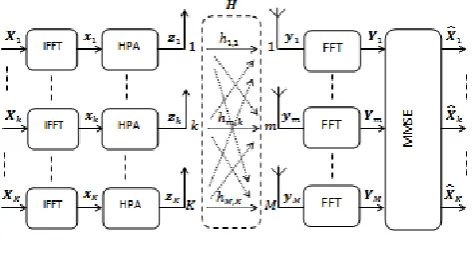
Fig 1. Linear Multi-User MIMO OFDM system.
The Multi-user MIMO-OFDM system under consideration consists of one BS equipped with antennas and mobile users with a single transmit antenna that results in a MIMO OFDM system.
Figure (1) shows a block diagram of the system. It is assumed that all users are simultaneously transmitting independent signals on all subcarriers. The Frequency Domain (FD) symbol is assumed to contain the source information of user and to belong to a BPSK alphabet. In this work, the Fast Fourrier Transform (FFT) matrix of dimension is denoted by .
The transmitted signal from user , at time instant is obtained by means of an Invers fast Fourrier Transform (IFFT) of the , and is given by:
(1)
Before reaching the receiving antennas, the transmitted signals are affected by the propagation channel which can be modeled by a propagation matrix . The received signal of a linear HPA is represented by:
(2)
Where is the Additive White Gaussian Noise AWGN and is an circulant Time Domain (TD) channel matrix at time instant , which is formed by the channel response vector for the link between user and BS antenna . The FD expression of the received signal is obtained by taking the FFT of equation (2) giving:
(3)
Let, denote the vector of received signals at each antenna on subcarrier . Then, the received signal vector for each subcarrier can be expressed as:
(4)
Where is the vector that contains transmitted signals from each user and is the AWGN with
The FD channel transfer matrix in equation (4) is given by:
(5)
[image:2.595.60.282.334.486.2]Where denotes the channel response on subcarrier at time between antenna element of the BS and user [9], [12].
2.2
MMSE detector
The signals which are transmitted by different users on subcarrier can be estimated with the aid of a suitable linear combiner . The Minimum Mean Square Error (MMSE) detection minimizes the mean square error between the transmit signal and the estimated signal [13],[14]. The optimal MMSE weight is obtained as follows:
(6)
Where, is the Noise variance, and is the matrix identity. After equalization the approximated signal can be expressed as:
(7)
2.3 Performances in terms of BER and
channel Capacity
In this section, we evaluate the BER performance and channel capacity for the multi-user MIMO OFDM systems with linear HPA. Assuming perfect channel equalization in the receiver, a soft estimate can be obtained by applying the MMSE equalizer that’s given by:
, (8)
The effective SNR after equalization is:
(9)
(10)
It is theoretically known that the MIMO system can provide greater channel capacity than a conventional wireless system. In this section, we focus on the effect of nonlinear amplification due to HPA on the capacity of the MIMO system in the presence of MMSE receiver. The theory expression for system capacity is given by:
(11)
3. MULTI USER MIMO OFDM SYSTEMS
WITH NONLINEAR HPA
3.1 HPA models
The nonlinearity in the channel appears due to the nonlinear amplification of the HPA. Several models (TWTA, SSPA, polynomial…) for the HPA are well established in the literature.
Memoryless power amplifiers are completely characterized by their AM/AM and AM/PM conversions which depend only on the current input signal value. Considering the complex envelope of the HPA input, the complex envelope of a memoryless HPA output can be modeled as follows:
, (12)
Where and denote the HPA amplitude conversion (AM/AM), and phase conversion (AM/PM), respectively.
3.1.1 Traveling Wave Tube Amplifier (TWTA)
model
For a nonlinear HPA model, the TWTA can be characterized by the Salah’s model, which has the advantage of exhibiting simplicity and accuracy than other models. The AM/AM and AM/PM conversions can be represented as follow:
(13)
Where is the input modulus of TWTA, and are the parameters decide the nonlinear level, and and are phase displacements. The values for these parameters are assumed to be: , and [4].
3.1.2
Solid State Power Amplifier (SSPA) model
The AM/AM and AM/PM conversion characteristics for SSPA amplifier can be represented by [9]:
(14)
Where is the maximum output amplitude and the parameter controls the smoothness of the transition from the linear region to the limiting region. In the simulation we consider .
The operating point of the amplifier is usually identified by the “back-off”. In the simulations, we define the input back-off (IBO) as:
(15)
where is the maximum output amplitude and is the input average power. The effects of the non-linearities can be reduced by working with high back-off, which corresponds to moving the operating point of the amplifier to the linear region. Unfortunately, this leads to a loss in power efficiency of the HPA [3].
3.2 System model
[image:3.595.311.548.199.326.2]We consider wireless nonlinear Multi-User MIMO OFDM systems where a transmitted signal is passed through the HPA before transmitting into the channel as shown in figure (2).
Fig 2. Multi-User MIMO OFDM with nonlinear HPA.
3.2.1 Analytical study of TWTA and SSPA models
For a nonlinear HPA model, firstly, we have chosen the TWTA characterized by the Saleh’s model and SSPA model.
The multi carrier signal after passing the NL HPA consists of two terms:
(16)
Where the first term is the distortion-free discrete-time input signal vector in time domain of equation (1) and is the gain of the linear part. The second term is the nonlinear distortion which is a function of the modulated and the PA transfer function
The received signal at antenna , is constituted by the superposition of independently faded signals, associated with the users sharing the same space-frequency resource. The received signal is assumed to be corrupted by a Gaussian noise at the array elements, and it is given by:
(17)
The frequency domain expression by taking the FFT of the received signal is obtained of equation (17):
(18)
The received signal vector at each antenna on subcarrier can be written as [9], [12]:
(19)
Where, is the channel transfer matrix, is the transmitted signal from each user. It contains the NL distortion of each user on subcarrier and is the AWGN.
Applying the MMSE detector to the received signal , the following estimate of the transmitted signal is obtained:
(20)
3.2.1.1
BER and the capacity performances
The analysis presented in this section is based on the assumption that the distortion caused by the HPA can be modeled as Additive Gaussian noise, whose variance depends on the input signal and the NL-HPA characteristics.
Using (20) the SNR for each subcarrier can be calculated as:
(21) Where .
Using (21) we can calculate the Bit Error Probability for each subcarrier for a BPSK modulation system [8], [9]:
(22)
and the expression of channel capacity is given by:
(23)
3.2.1.2
Evaluation of
and
Using the equation (20), we have:
(24)
From which, we obtain the gain as:
(25)
The NL distortion term can be calculated by:
(26)
From the equation (25) and (26), we arrive at the following expressions [8], [9]:
(27)
(28)
4.
COMPENSATION
OF
HPA
NONLINEAR
Several methods are studied to solve a nonlinear distortion introduced by HPA. We present two methods to limit this problem. The first is based on neural networks and the second is an iterative technique (PANC).
It must be noted that we done a combination of multiuser detection (MMSE) with nonlinear compensation techniques at the receiver side.
4.1 Neural network compensator
In a digital communication system, the compensator can be inserted on various locations. In this work, we study the performance of neural network compensator in frequency [15],[16] and time domain [17].
4.1.1 Architecture of the applied neural network
In this subsection, we present the most popular neural network architecture used in digital communications which is the multilayer perceptron (MLP).
A multilayer neural network (see figure (3)) is composed of neurons connected to each other. The input layer is connected to all norones of the hidden layer and then we have the output layer. It is well known that each neuron in the network is composed of a linear combiner and an activation function which gives the neuron output:
(29)
where is the weight which connects the neuron in layer
is the biais terms, and
x
ij,m~
denotes input signal to the [image:4.595.333.535.298.402.2]neuron from the component of the input vector of the receive antenna. In general, the activation function is a nonlinear one (sigmoid function or hyperbolic tangent) [4], [5]. The output neurons have a linear activation function.
Fig 3. Multilayer neural network: this network has 2 layers, 1 input signal, 4 neurons in the first layer, 3 neurons
in the second layer and 2 neurons in the output layer (1 output signal).
4.1.2 Training and generalization
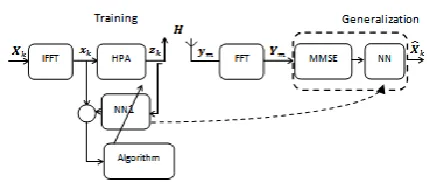
The basic idea proposed is to identify the TWTA inverse transfer function with a feed-forward neural network. Therefore, by using this structure (see figure (4)), we aim at obtaining direct estimation of the amplitude and phase nonlinearities.
4.1.2.1
Training
Fig 4. Block diagram for training and generalization of the compensation with HPA.
[image:4.595.322.536.552.643.2]4.1.2.2 Generalization (see Figure 4)
Coefficients of the NN1 are recopied on NN that achieves the equalization. The training procedure can be done on ground because the HPA is stationary.
[image:5.595.76.264.139.242.2]4.1.3
Compensation in Frequency Domain (FD)
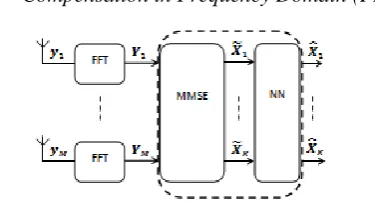
Fig 5. Proposed MIMO OFDM receiver structure for compensation with NN in FD of nonlinear distortion using
MMSE detector.
To compensate the non-linearities at the receiver, the proposed system uses a NN based MMSE receiver in FD, as shown in figure (5) [15], [16].
Indeed, in this position, we have a problem when we manipulate a large number of sub-carrier, such as , the size of the NN must also be , to solve this problem with numerical simulation, we have adapted the compensator to operate like in the case of single-carrier system, which means that it treats each input independently.
4.1.4 Compensation in Time Domain (TD)
In the case where the neural network is studied in time domain to compensate the nonlinearities, the proposed scheme uses an IFFT before NN and FFT after them, as shown in figure (6). The main problem is that the non-linearitie from the HPA is in the time domain, whereas the NN is in the domain. It can't be done before the FFT block because in this case we have to equalize the channel which is a very complicated operation in time domain [17].
Fig 6. Proposed MIMO OFDM receiver structure for compensation with NN in TD of nonlinear distortion using
MMSE detector.
4.2
PANC technique
The technique PANC consists on the iterative estimation and compensation of the nonlinear distortion introduced by HPA. In this section we attempt to estimate and eliminate the nonlinear distortion terms in (20). Taking into account these assumptions, the nonlinear iterative detection procedure will consist on the following steps [9]:
Step 1: Using , an estimate of the original transmitted constellation is obtained by applying hard decoding. This process is carried out for all active carriers. Using the
recovered symbols, the time domain signal is reproduced via IFFT as:
(30)
Step 2: Assuming that the nonlinear model of HPA is known at the receiver, compute the estimation of the nonlinear distortion terms using equation (20):
(31)
Where is the TD representation of recovered signal for user at iteration . The frequency domain term is obtained applying the FFT operator:
(32)
Step 3: The distortion is subtracted from the estimated signal . Using this result, the transmitted constellation is re-estimated in a new decoding/distortion cancellation step. The process can be carried out iteratively.
5. NUMERICAL RESULTS
In this section, Firstly, we present theoretical and numerical results illustrating the analysis of OFDM signal after passing the nonlinear HPA. Secondly, we investigate the effect of the nonlinearities on the system capacity. Finally, we evaluate the performance of compensators accompanied with MMSE which corrects at the receiver level, the NL distortions due to the HPA in a SISO OFDM and MIMO OFDM systems running under a Rayleigh fading channel.
For validation of our theoretical results, we shall consider three different HPA (TWTA and SSPA). The theoretical BER is calculated using (10) in the linear case (L) and (22) in the nonlinear (NL) case. Figure (7) presents the comparison between theoretical and numerical results in SISO and MIMO OFDM systems. The comparison between the theoretical curves and the simulated points for different cases, confirm the precision of the analytical approach. In the rest of the simulations we choose the TWTA model, since it has the advantage of exhibiting greater simplicity and accuracy than other models.
Figure (8) presents the effect of non-linearities due to HPA on the capacity system in SISO and MIMO OFDM systems using MMSE receiver. The analysis of this figure shows that the system capacity is strongly affected by nonlinear distortion. This result motivates the introduction of a compensating method in order to keep the system capacity close to the linear case.
[image:5.595.66.271.512.601.2]Figure (9) shows the best performance of each neural network compensator struture in FD on SISO OFDM for an
. For an SNR more than , we proove that the NN( ) gives good performance compared to other structures.
Figure (10) shows the performance of several compensators in FD in MIMO OFDM system for an . From this results, we can say that the NN( ) presents a good performance in comparison with other structures, because for a BER roughly equals we note a gain of
[image:6.595.320.543.74.241.2]compared to NN( ) and to NN( ).
Fig 7. Theoretical (marker points) and simulation (solid lines) results for BER for linear and nonlinear HPA in
SISO and MIMO ( OFDM systems using
MMSE receiver with and .
Fig 8. Capacity evaluation in SISO and MIMO (
OFDM systems in the cases linear and nonlinear
HPA using MMSE receiver for and .
Fig 9. BER of the SISO OFDM system with NN in
frequency domain versus SNR for and
[image:6.595.55.279.215.381.2]
Fig 10. BER of the MIMO OFDM system with NN in FD
versus SNR for , and .
Figures (11) and (12) present successively the performance of the compensating method based NN in TD in SISO and MIMO OFDM. In figure (14), we can say that the NN( ) is most performant compared with other structures, because for a BER roughly equals we note a gain of of compared to NN( ) , of to NN( ) and a gain of compared to NN( ). In Figure 15, simulation results shown that NN(4,9-9,4) gives the best performance in comparison to other structures, because for a BER roughly equals we note a gain of .
Figures (13) and (14) show the BER performance against SNR (dB) at different iterations for PANC technique in SISO and MIMO OFDM using MMSE receiver. We note that for an increase in the number of iterations we have a small improvement in the estimation procedure.
[image:6.595.316.542.216.449.2] [image:6.595.56.284.249.601.2]Fig 11. BER of the SISO OFDM system with NN in time
[image:7.595.321.537.74.454.2]domain versus SNR for and .
Fig 12. BER of the MIMO OFDM system with NN in time
domain versus SNR for , and
.
Fig 13. BER versus Eb/N0 of SISO OFDM system with
PANC using MMSE receiver for and
[image:7.595.321.539.77.239.2].
Fig 14. BER versus Eb/N0 of MIMO OFDM system with
PANC using MMSE receiver for ,
and .
Fig 15. BER comparison versus Eb/N0of NN ( TD and FD) with PANC in SISO OFDM using MMSE receiver for
and .
Fig 16. BER comparison versus Eb/N0of NN ( TD and FD) with PANC in MIMO OFDM using MMSE receiver for
, and .
6. CONCLUSION
[image:7.595.58.279.257.458.2] [image:7.595.59.281.459.672.2] [image:7.595.316.539.477.663.2]In the fact, the validity of the theoretical results have been shown through simulations for three different HPA.
Other, the basic analysis showed that the system capacity is strongly affected by nonlinear distortion and the results have motivated the introduction of a compensating method in order to keep the system capacity close to that of the linear case.
In this paper, we have studied the performance of two nonlinear compensators for MIMO OFDM systems. These compensators are placed at the receiver to correct the non-linearities introduced by the HPA. To evaluate the performance of these compensators, a comparison between them showed that for an SNR greater than they gives, almost, the same results.
This architecture has been studied and simulated in a complete MIMO OFDM system using 64 carriers, a BPSK modulation and running under a Rayleigh fading channel.
7. REFERENCES
[1] Maha Dakhli, Rafik Zayani, Ridha Bouallegue, “On the
effect Of High Power Amplifier Nolinearity on MIMO MC-CDMA Systems”, IEEE Signal Processing Society, ISSPIT( Decembre 2010).
[2] Sami Ahmed Haider, Khalida Noori, “System Design and Performance Analysis of Layered MIMO OFDM communication Systems”, Published in the IEEE Feb. 15-18, 2009 ICACT 2009.
[3] Byung Moo Lee, Rui J.P. de Figueiredo, “MIMO-OFDM
PAPR redaction by selected mapping using side information power allocation”, ELSEIVER, Digital Signal Processing 20 (2010) 462-471.
[4] Rafik Zayani, Ridha Bouallegue, Daniel Roviras, “Adaptative Predistortions Based on Neural Networks Associated with Levenberg-Marquardt Algorithm for Satellite Down Links”, EURASIP Journal on Wireless Communications and Networking, volume 2008, Article ID 132729, 15 Pages.
[5] Jian Qi, Sonia Aïssa, “On the Effect of Power Amplifier
Nonlinearity on MIMO Transmit Diversity Systems”, Published in the IEEE ICCC 2009 Proceedings.
[6] A.A.M. Saleh, “Frequency-independent and
frequency-dependent nonlinear models of TWT amplifiers”, IEEE Trans. Commun. 29 (1981) 1715–1720.
[7] David Dardari, Velio Tralli and Alessendre vaccari, “A
Theoretical Characterization of Nonlinear Distortion Effects in OFDM Systems”, IEEE Trans. Commun. Vol.48, NO. 10,October 2000.
[8] Andrea Conti, David Dardari and Valio Tralli, “An
Analytical Framework for CDMA Systems With a Nonlinear Amplifier and AWGN”, IEEE Trans. Commun. Vol. 50, NO. 7, July 2002.
[9] Fernando Gregorio, Stefan Werner, Timo I. Laakso and Juan Cousseau, “Receiver Cancellation Technique for Nonlinear Power Amplifier Distortion in SDMA-OFDM Systems”, IEEE Trans. On Vehicular Technology, Vol. 56, NO. 5, September 2007.
[10] Vivek Ashok Bohara and See Ho Ting, “Theoretical Analysis of OFDM Signals in Nonlinear Polynomial Models”, Published in the IEEE, 2007 ICICS.
[11] Ishtiaq Ahmad Sulyman, Abdulhameed Alsanie and Awad Alasmari, “On the Effect of Amplifier Non-linearity on the Capacity of MIMO Systems”, Published in the IEEE, Feb. 19-22, 2011, Dubai, GCC 2011.
[12] Fernardo H. Gregorio, Stefan Werner, Juan E. Cousseau and Timo I. Laakso, “Iterative Channel Estimation for Multiuser OFDM Systems in the Presence of Power Amplifier Nonlinearities”, Published in the IEEE, 2006 PIMRC’06.
[13] Pierre-Jean Bouvet, Vincent Le Nir, Maryline H’elard, Rodolphe Le Gouable, “Spatial Multiplexed Coded MC-CDMA With Iterative Receiver”, IEEE 15th International Symposium on Personal, Indoor, and Mobile Radio Communications, proceedings, Barcelona, Spain, 5-8 September, 2004.
[14] Peng Liu, Mu Qing Wu, Chun Xiu Xu and Feng Zheng,”Multi-User MIMO Linear Precoding Schemes in OFDM Systems”, Published in the IEEE, 978-1-4244-5540-9/10, 2010.
[15] S.Tertois, A. Le Glaunec and G. vaucher, “Compensating
the Non linear Distortions of an OFDM Signal using Neural networks”, Recent Trends in Multimedia Information processing. Proceedings of IWSSIP’02. ISBN: 981-239-243-7- pp.484-488.2002.
[16] Maha Dakhli, Rafik Zayani, Ridha Bouallegue, “Compensation for Nonlinear Distortion In MIMO OFDM Systems Using MMSE Receiver”, IEEE 15th International Conferencr on Communication Systems, ICCS( Singapore 2012).
[17] Maha Dakhli, Rafik Zayani, Ridha Bouallegue, “Neural