IJPSR (2015), Vol. 6, Issue 10 (Research Article)
Received on 31 March, 2015; received in revised form, 25 May, 2015; accepted, 29 July, 2015; published 01 October, 2015
FORMULATION OF DIRECT COMPRESSED VERAMPAMIL SUSTAINED RELEASE FORMULATION USING OPTIMIZED CO PROCESSED EXCIPIENTS
P. Preetha*, A. Srinivasa Rao and C. Y. Priyanka
Department of Pharmaceutics, Bhaskar Pharmacy College, Hyderabad,Andhra Pradesh, India
ABSTRACT: Pharmaceutical excipients when co-processed have improved flow and disintegrant properties in tablet formulations. However, physical mixtures of excipients show limited functions, poor flow properties, and poor functional properties so they cannot be used directly in tablet formulations. Majority of solid dosage forms contain multiple excipients, which provides a wide window of opportunities by combining existing excipients to achieve the desired set of performance characteristics. Over the years, the development of single-bodied excipient combinations at a sub-particle level, called co-processed excipients which deals with particle engineering, has gained huge importance. Co-processing involves interaction of two or more excipients at the sub-particle level aimed at providing a synergy of functionality improvements, as well as masking the undesirable properties of the individual excipients. Preparation of co-processed excipients involves incorporation of one excipient into the particle structure of another, using Co-Drying and Melt granulation technology. Co-processing is primarily aimed at addressing the issues of flow ability, compressibility and disintegration potential. Co-processing of excipients is multifaceted with the characteristic properties like Absence of chemical change, Improved Flow Properties, Improved Compressibility, Better dilution potential, reduced lubricant sensitivity and multiple advantages like reducing inventory burden, reduced product cost etc.
INTRODUCTION: Co-processed excipients by virtue of combining properties of two different excipients fulfill the increasing demand of multifunctional excipients for direct compression tabletting. Co-processed excipients are prepared by incorporating one excipient into the particle structure of another excipient using processes such as co-drying. The co-processed multi-component-based excipients are introduced to achieve better characteristics and tabletting properties than a single substance or the physical mixtures 1-5.
QUICK RESPONSE CODE
DOI:
10.13040/IJPSR.0975-8232.6(10).4324-35
Article can be accessed online on: www.ijpsr.com DOI link: http://dx.doi.org/10.13040/IJPSR.0975-8232.6(10).4324-35
They have been developed primarily to address the issues of flowability, compressibility, and disintegration potential.
Co-processed excipients are appropriate for consideration as new monographs because one or more of the components may be formed in-situ, or the component may not be isolated prior to co-processing. That is, the manufacturing process for one component may not have been taken to completion before the addition of the other components, and/or the co-processed excipient combination cannot be adequately controlled using the monograph tests for the individual component excipients 6.
Co-processed excipients are a mixture of two or more existing excipients at sub particle level, offer substantial benefits of the incorporated excipients Keywords:
Co processed, HPMC, Microcrystalline cellulose, Stearic
Acid, Cetostearyl Alcohol, Guar Gum and Maize Starch
Correspondence to Author: P. Preetha
Assistant Professor
Dept. of Pharmaceutics, Bhaskar Pharmacy College, J.B.Group of Institutions, Moinabad, Hyderabad-500 075, Andhra Pradesh, India
and minimize their drawbacks. These multipurpose excipients have significantly reduced the number of incorporating excipients in the tablet. The present article discusses the development and source of new excipients, potential advantages of co-processed excipients, material characteristics required for coprocessing, methods of preparing directly compressible adjuvants and various co-processed excipients for direct compression available in the market 7.
MATERIALS AND METHODS:
Materials:
Verapamil HClwas obtained as gift samples from EMCO Industries, Hyderabad. Different grades of HPMC (DOW Chemicals, USA), microcrystalline cellulose (FMC Biopolymer), Stearic Acid (Dow Chemicals, USA), Cetostearyl Alcohol (Alpha Chemika, Mumbai), Guar Gum (Hindustan Gum, India), Lactose (DFE Pharma, India), Sugar (Avantor, India)and Maize Starch(Meru Chem, Mumbai) were obtained.
Methods for Co processing of excipients: Co drying:
Aqueous solution of parent excipient is prepared by dissolving it in selected/suitable liquid/solvent (water). This aqueous solution is transferred to a beaker which is kept on a heating mantle (at 800c), after 2-3 minutes add selected excipient (second excipient) to the beaker slowly by stirring continuously. Now this slurry is added to a pre-heated pan and kept in a hot oven (at 800cc). To avoid formation of gel the pan must be pre-heated and sufficient head should be supplied to evaporate the water/solvent. When the water/solvent is evaporated completely, the dry powder/co-processed product is collected to characterize and evaluate to know its flow properties and functionality.
Melt granulation:
This technique is best suitable for excipients with low melting point. First Stearic acid is taken in petri dish and heated at 800c temperature until turns to liquid state; to this Maize starch is added slowly on constant stirring, while stirring the temperature should be maintained at 800c constantly. After constant mixing for 5-10minutes, it is cooled and the product we get is a solid wax which is triturated
and sieved (no. 60) to get uniform particle size. This co-processed product is collected to characterize and evaluate to know its flow properties and functionality.
Preformulation studies:
The Co processing of selected excipients are done in three ratios 8:2, 6:4 and 4:6. The selected ratio of Co processed excipients were subjected to pre compressions parameters like Bulk density, Tapped density, % Compressibility index, Hausner ratio and Angle of repose.
Drug excipient compatibility studies:
The drug-excipient compatibility studies were done for pure drugs and pure drug and Co processed excipient combinations by FT-IR studies.
Scanning Electron Microscopy (SEM) and Photomicroscopy:
The optimized compositions of co-processed excipient products which posses good characteristics properties as well as suitable for controlled release oral solid dosage forms were done SEM.
X-ray diffraction (XRD):
XRPD profiles were measured using an X-ray diffractometer (PW1729, Philips, Holland). The range and the chart speed were set at 2 × 10³ cycles/sec and 10 mm/βθ, respectively.
Calibration curve preparation:
Suitable analytical method was developed for the Verapamil HCl using UV spectrophotometer in pH 6.8 buffer. The λmax of the Verapamil HCl in pH
6.8 buffer was found to be 278 nm.
Preparation of Tablets:
Tablets are prepared with excipients co-processed at optimum ratio by direct compression method. 500mg weight sustained release tablets containing 50mg dose of Verapamil are prepared with all the optimized co-processed excipient products.
Dissolution profile studies:
Apparatus : USP Type II
Dissolution Medium : 900 ml,
RPM : 50 rpm
Temperature : 37º ± 2ºC
Time points (hrs) : 0, 1, 2, 4, 8, 12, and 20
5 ml of sample was withdrawn at each time point, suitably diluted and absorbance was measured at 215 nm. The % drug dissolved was calculated by comparing the absorbance with that of a standard Aripiprazole solution measured at 215 nm. The 5 ml sample withdrawn was replaced with fresh 5 ml 0.1N HCl.
[image:3.612.65.546.200.427.2]RESULTS AND DISCUSSION:
TABLE 1: CHARACTERIZATION OF CO-PROCESSED PRODUCTS OF DIFFERENT FORMULATIONS AT RATIO 8:2
Formulation Composition
Bulk density Tapped density
Hausner’s ratio
Carr’s index Angle of repose
F1 MCC + K15M 0.67 0.91 1.36 24.4 35.5
F2 MCC + K100M
0.62 0.92 1.48 32.6 38.5
F3 MCC+ GG 0.67 0.91 1.36 24.4 35.5
F4 MCC + CSA 0.67 0.91 1.36 24.4 35.5
F5 MCC+SA 0.62 0.92 1.48 32.6 38.5
F6 Lactose+K15M 0.67 0.91 1.36 24.4 35.5
F7 Lactose+ K100M
0.62 0.92 1.48 32.6 38.5
F8 Lactose+GG 0.67 0.91 1.36 24.4 35.5
F9 Lactose+CSA 0.67 0.91 1.36 24.4 35.5
F10 Lactose+SA 0.62 0.92 1.48 32.6 38.5
F11 Sugar+K15M 0.67 0.91 1.36 24.4 35.5
F12 Sugar+K100M 0.62 0.92 1.48 32.6 38.5
F13 Sugar+GG 0.62 0.92 1.48 32.6 38.5
F14 Sugar+CSA 0.67 0.91 1.36 24.4 35.5
F15 Sugar+SA 0.62 0.92 1.48 32.6 38.5
F16
Maize Starch
+ Stearic acid 0.67 0.91 1.36 24.4 35.5
Polymers of different formulations which are co-processed in the ratio 8:2 show poor flow properties (Table 1).
TABLE 2: CHARACTERIZATION OF CO-PROCESSED PRODUCTS OF DIFFERENT FORMULATIONS AT RATIO 6:4
Formulation Composition Bulk density Tapped
density
Hausner’s ratio
Carr’s index Angle of repose
F17 MCC + K15M 0.71 0.83 1.18 14.5 26.2
F18 MCC + K100M 0.71 0.83 1.18 14.5 26.6
F19 MCC+ GG 0.71 0.83 1.18 14.5 26.0
F20 MCC + CSA 0.71 0.83 1.18 14.5 27.3
F21 MCC+SA 0.71 0.83 1.18 14.5 26.1
F22 Lactose+K15M 0.71 0.83 1.18 14.5 27.3
F23 Lactose+ K100M 0.67 0.80 1.17 15.0 26.3
F24 Lactose+GG 0.67 0.80 1.17 15.0 26.3
F25 Lactose+CSA 0.67 0.80 1.17 15.0 26.7
F26 Lactose+SA 0.71 0.83 1.18 14.5 27.3
F27 Sugar+K15M 0.71 0.83 1.18 14.5 26.7
F28 Sugar+K100M 0.71 0.83 1.18 14.5 26.9
F29 Sugar+GG 0.67 0.80 1.17 15.0 26.3
F30 Sugar+CSA 0.67 0.80 1.17 15.0 27.3
F31 Sugar+SA 0.71 0.83 1.18 14.5 26.5
F32
Maize Starch
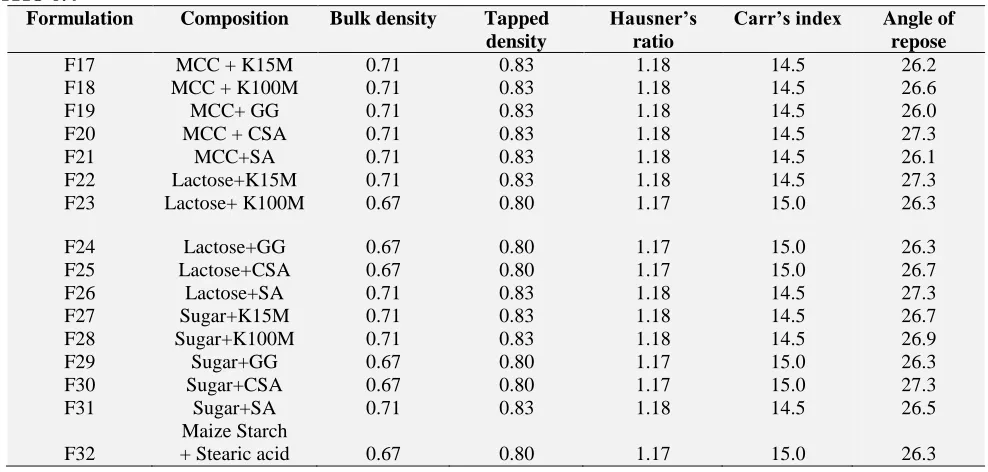
[image:3.612.58.552.501.737.2]Excipients of different formulations co-processed at the ratio 6:4 show good flow properties and they
[image:4.612.59.548.100.324.2]are optimized (Table 2).
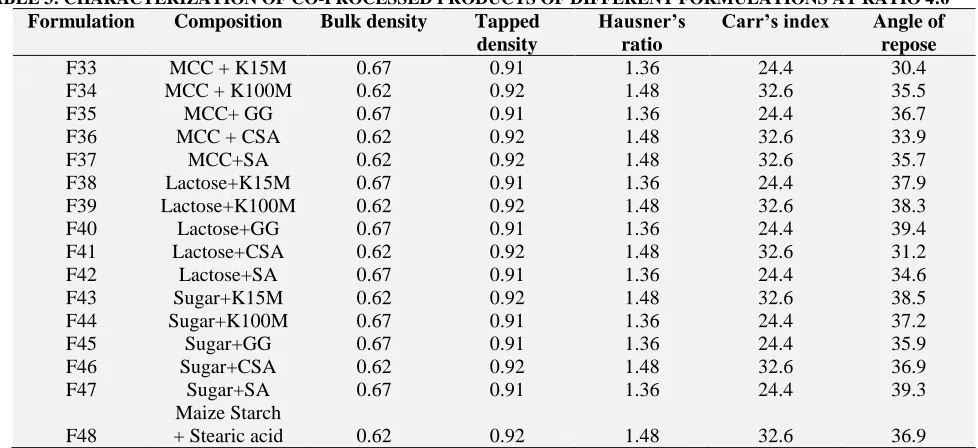
TABLE 3: CHARACTERIZATION OF CO-PROCESSED PRODUCTS OF DIFFERENT FORMULATIONS AT RATIO 4:6
Formulation Composition Bulk density Tapped
density
Hausner’s ratio
Carr’s index Angle of repose
F33 MCC + K15M 0.67 0.91 1.36 24.4 30.4
F34 MCC + K100M 0.62 0.92 1.48 32.6 35.5
F35 MCC+ GG 0.67 0.91 1.36 24.4 36.7
F36 MCC + CSA 0.62 0.92 1.48 32.6 33.9
F37 MCC+SA 0.62 0.92 1.48 32.6 35.7
F38 Lactose+K15M 0.67 0.91 1.36 24.4 37.9
F39 Lactose+K100M 0.62 0.92 1.48 32.6 38.3
F40 Lactose+GG 0.67 0.91 1.36 24.4 39.4
F41 Lactose+CSA 0.62 0.92 1.48 32.6 31.2
F42 Lactose+SA 0.67 0.91 1.36 24.4 34.6
F43 Sugar+K15M 0.62 0.92 1.48 32.6 38.5
F44 Sugar+K100M 0.67 0.91 1.36 24.4 37.2
F45 Sugar+GG 0.67 0.91 1.36 24.4 35.9
F46 Sugar+CSA 0.62 0.92 1.48 32.6 36.9
F47 Sugar+SA 0.67 0.91 1.36 24.4 39.3
F48
Maize Starch
+ Stearic acid 0.62 0.92 1.48 32.6 36.9
Polymers of different formulations which are co-processed in the ratio 4:6 show poor flow properties (Table 3). Over all, excipients co-processed at 6:4 ratio shows good flow properties, this ratio of composition seems to be better one in which co-processed excipient products show advanced/additional properties which are absent in individual and their physical mixtures & so they are optimized for formulation of tablets.
FT-IR Studies:
FT-IR analysis is done for only these 6 co-processed excipient products,
F23 (Lactose + HPMC K100M)
F24 (Lactose + Guar gum)
F25 (Lactose + CSA)
F29 (Sugar + Guar gum)
F30 (Sugar + CSA)
F32 (Maize Starch + Stearic acid)
Scanning Electron Microscopy (SEM) and Photo microscopy:
There are 5 optimized compositions of co-processed excipient products which possess good characteristics properties as well as suitable for controlled release oral solid dosage forms.
(a)Lactose (b) HPMC K100M (c) Lactose+HPK100M (Co-processed)
[image:4.612.63.553.548.730.2]SEM of co-processed excipient product when compared to SEM of individual excipients indicates
spherical, porous structures which show good free flowing properties (Fig. 1)
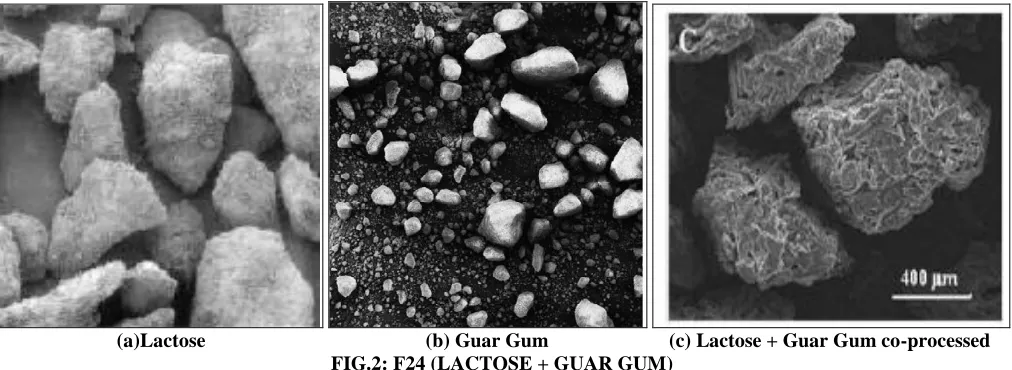
(a)Lactose (b) Guar Gum (c) Lactose + Guar Gum co-processed FIG.2: F24 (LACTOSE + GUAR GUM)
SEM of co-processed excipient product when compared to SEM of individual excipients indicates
spherical, porous structures which show good free flowing properties (Fig. 2).
(a)Lactose (b) CSA (c) Lactose+CSA co-processed
FIG.3: F25 (LACTOSE + CSA)
SEM of co-processed excipient product when compared to SEM of individual excipients indicates
spherical, porous structures which show good free flowing properties (Fig. 3).
[image:5.612.55.561.93.278.2] [image:5.612.62.554.327.508.2]SEM of co-processed excipient product when compared to SEM of individual excipients indicates
spherical, porous structures which show good free flowing properties (Fig. 4).
(a)Sugar (b) CSA (c) Sugar + CSA co-processed FIG.5: F30 (SUGAR + CSA)
SEM of co-processed excipient product when compared to SEM of individual excipients indicates
spherical, porous structures which show good free flowing properties (Fig.5).
[image:6.612.55.563.84.275.2](a)Maize starch (b)Stearic acid (c)Maize starch + Stearic acid co-processed
FIG. 6: F32 (MAIZE STARCH + STEARIC ACID)
SEM of co-processed excipient product when compared to SEM of individual excipients indicates
spherical, porous structures which show good free flowing properties (Fig. 6).
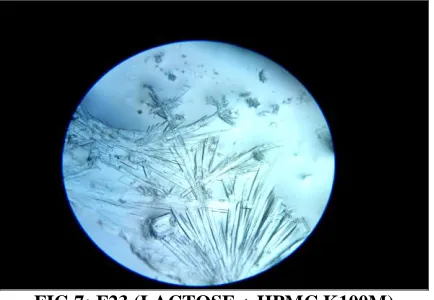
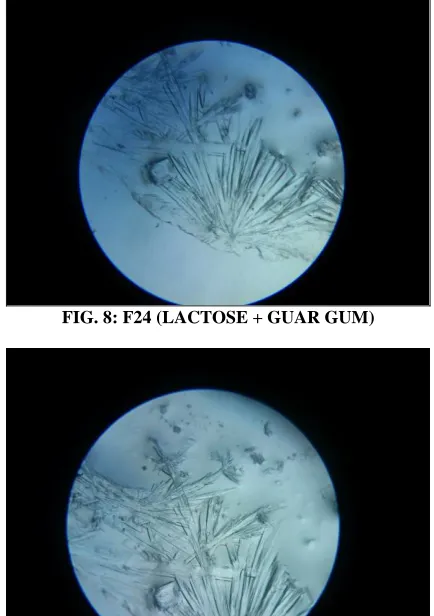
Photo-Microscopy:
[image:6.612.199.416.596.746.2]FIG. 8: F24 (LACTOSE + GUAR GUM)
FIG.9: F25 (LACTOSE + CSA):
[image:7.612.200.413.55.213.2]FIG. 10: F29 (SUGAR + GUAR GUM)
[image:7.612.197.414.62.370.2] [image:7.612.199.413.420.736.2]FIG.12: F32 (MAIZE STARCH + STEARIC ACID)
The photomicroscopy of all the co processed excipients are found to be very porous in
comparison to individual excipients (Fig.7 to Fig. 12).
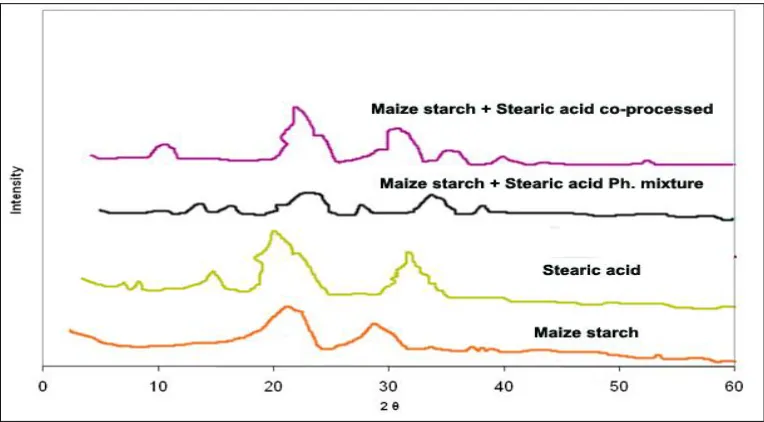
X ray diffraction:
FIG.13: F23 (LACTOSE + HPMC K100M)
FIG.15: F25 (LACTOSE + CSA)
FIG.16: F29 (SUGAR + GUAR GUM)
FIG.18: F32 (MAIZE STARCH + STEARIC ACID)
Here, co-processed excipients show broader peaks compared to individual and physical mixture, these broader peaks are indication of number of hydrogen bonds within and between the molecules. Co-processed excipient products exhibit strong binding properties properties when used in pharmaceutical solid dosage forms (Fig.13-18).
Calibration curve:
Suitable analytical method was developed for the Verapamil HCl using UV spectrophotometer in pH 6.8 buffer. The λmax of the Verapamil HCl in pH
6.8 buffer was found to be 278 nm. The calibration curve of Verapamil HCl was found to be linear.
Preparation of Tablets:
Tablets are prepared with excipients co-processed at 6:4 ratio only.
Sustained release tablets of Verapamil HCl:
500mg weight tablets containing 50mg dose of Verapamil are prepared with all the five optimized co-processed excipient products (6:4 ratio). These optimized co-processed products have good flow properties and desirable to prepare tablets by direct compression method, a very time saving technique and does not show any problem to high compression forces.
TABLE 4: CHARACTERIZATION OF TABLETS
S.No Formulation
No.
Hardness MN
Thickness Mm
Friability % w/w
1 F22 97.68 6.4 0.122
2 F24 98.06 6.3 0.127
3 F29 98.10 6.5 0.123
All the formulations were within the acceptable range of friability values and possessed good hardness (Table 4).
Dissolution profile studies:
All formulations were subjected to dissolution profile studies in 0.1N HCl as per the following conditions:
Apparatus : USP Type II
Dissolution Medium : 900 ml,
RPM : 50 rpm
Temperature : 37º ± 2ºC
Time points (hrs) : 0, 1, 2, 4, 8, 12, and 20
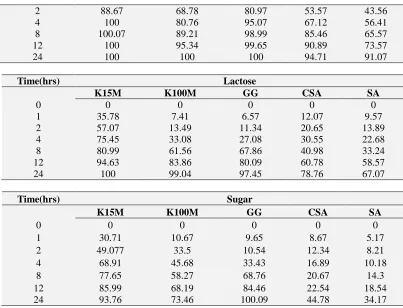
TABLE 5: IN VITRO DISSOLUTION DATA PROFILE OF DRUG WITH 0.1 HCL.
Time(hrs) MCC
K15M K100M GG CSA SA
0 0 0 0 0 0
2 88.67 68.78 80.97 53.57 43.56
4 100 80.76 95.07 67.12 56.41
8 100.07 89.21 98.99 85.46 65.57
12 100 95.34 99.65 90.89 73.57
24 100 100 100 94.71 91.07
Time(hrs) Lactose
K15M K100M GG CSA SA
0 0 0 0 0 0
1 35.78 7.41 6.57 12.07 9.57
2 57.07 13.49 11.34 20.65 13.89
4 75.45 33.08 27.08 30.55 22.68
8 80.99 61.56 67.86 40.98 33.24
12 94.63 83.86 80.09 60.78 58.57
24 100 99.04 97.45 78.76 67.07
Time(hrs) Sugar
K15M K100M GG CSA SA
0 0 0 0 0 0
1 30.71 10.67 9.65 8.67 5.17
2 49.077 33.5 10.54 12.34 8.21
4 68.91 45.68 33.43 16.89 10.18
8 77.65 58.27 68.76 20.67 14.3
12 85.99 68.19 84.46 22.54 18.54
24 93.76 73.46 100.09 44.78 34.17
Verapamil HCl tablets prepared with optimized co-processed excipient product (6:4 ratio),
F23 (Lactose + HPMC K100M),
F25 (Lactose + CSA),
F30 (Sugar + CSA)
[image:11.612.103.506.50.358.2]Show desired dissolution profile of that of a marketed/innovator controlled release tablets (Table 5 and Fig. 19).
FIGURE 19: IN VITRO DISSOLUTION DATA PROFILE
SUMMARY AND CONCLUSION:
Verapamil HCl tablets of compositions F23, F25, and F30 show desired dissolution profile of that of marketed/innovator controlled release tablets. Based on dissolution profile, drug release rate kinetics is determined as follows:
F23 (Lactose + HPMC K100M) is Hixson-Crowell Model dependent.
F30 (Sugar + CSA) is Hixson-Crowell Model dependent.
Here, the Objective of preparing a co-processed excipient product which can be used as a strong binder to prepare controlled release tablets is achieved. Moreover it is added advantage of all co-processed excipients that they possess good flow properties suitable for direct compression technique which reduces production times and costs and there are many more added advantages of direct compression technique.
ACKNOWLEDGEMENTS: We are indebted to
the Chairman of J.B. Group who provided necessary facilities for successful completion of our project through our Principal Dr. A. Srinivasa Rao.
REFERENCES:
1. Rudnic, E.M and J.D. Schwartz: Oral Dosage Forms. In Remigton: The Science and Practice of Pharmacy, Ed,
Gennaro, A.R. 20th Edition, Published by Philadelphia College of Pharmacy and Science. 2000; 858-893. 2. Jivraj, M., L.G. Martini and C.M. Thomson: An overview
of the different excipients useful for the direct compression of tablets. 2000; 3(2):58-63
3. Hauschild, K. and K.M. Picker: Evaluation of a new coprocessed compound based on lactose and maize starch for tablet formulation. http//www.aapspharmsci.org, AAPS PharmScitech.2004; 6: 27-38.
4. Limwong, V., N. Sutanthavibul, and P. Kulvanich: Spherical composite particles of rice starch and microcrystalline cellulose: A new coprocessed excipient for direct compression. AAPS PharmSciTech. 2004; 5(2): E30
5. Saha, S. and A.F. Shahiwala: Multifunctional coprocessed excipients for improved tabletting performance. Expert Opinion on Drug Delivery.2009; 6(2): 197-208.
6. LH Block, RC Moreton, SP Apte, RH Wendt, EJ Munson, JR Creekmore, IV Persaud, C Sheehan, H Wangc: Co-processed excipients. Pharm. Forum. 35. 2009; 1026– 1028.
7. Minakshi Marwaha, Deepak Sandhu, Rakesh Kumar Marwaha: coprocessing of excipients: a review on excipient development for improved tabletting performance, International Journal of Applied Pharmaceutics.2010; 2(3): 41-42.
All © 2013 are reserved by International Journal of Pharmaceutical Sciences and Research. This Journal licensed under a Creative Commons Attribution-NonCommercial-ShareAlike 3.0 Unported License.
This article can be downloaded to ANDROID OS based mobile. Scan QR Code using Code/Bar Scanner from your mobile. (Scanners are available on Google Playstore)
How to cite this article: