A systematic review of the evidence that supports gender transformative interventions that address violence against
women
By
Yovania Dechtiar
A paper presented to the faculty of the University of North Carolina at Chapel Hill in partial fulfillment of the requirements
for the degree of Master of Public Health in the Department of Maternal and Child Health.
Chapel Hill, N.C.
November 20th, 2019
Approved by:
First Reader – Kavita Singh Ongechi, PhD
Abstract
Violence against women (VAW) is the most widespread form of abuse worldwide with on average a third of all women globally affected in their lifetime. VAW affects the physical and mental health of women, is a violation of their human rights and has an economic impact on society. Harmful gender norms have been identified as one of the drivers of VAW. The aim of this systematic review is to identify effective approaches that address gender norms that are associated with VAW. The interventions identified in this review highlight the global focus on addressing violence perpetrated by men against women in the context of heteronormative relationships.
Violence perpetrated against women is a pervasive public health issue and a violation of woman’s human rights. According to the United Nations, violence against women is defined as “any act of gender-based violence that results in, or is likely to result in, physical, sexual, or mental harm or suffering to women, including threats to such acts, coercion or arbitrary deprivation of liberty, whether occurring in public on in private life”.1 The World Health
Organization (WHO) global estimates suggests that 35% of women worldwide have experienced either physical and/or sexual intimate partner violence and non-partner violence in their
lifetime.1 One third of all women worldwide have been in a relationships have experience physical and/or sexual violence by an intimate partner.4 In the United States, 23% of female undergraduate university students have reported experiencing sexual assault or sexual
misconduct in a survey of 27 universities conducted in 2015.14 In the European Union, one in 10 women report having experience cyber-harassment since the age of 15.14
Violence not only has consequence for the women, but also negatively impacts their families, the community and the country at large. On a personal level, women’s health is affected and it prevents them from fully participating in society. An Australian study using burden of disease methodology estimated that intimate partner violence among women ages 18-44 was associated with 7% of the overall burden of disease and that this type of violence was a larger risk factor than other diseases traditionally included such as increased body weight and raised blood pressure.3 Violence can also have fatal consequences such as homicide and suicides. In 2017 it was estimated that 87,000 women were intentionally killed and that 58% of these were killed by intimate partners or family members.2 Health outcomes that are impacted as well include, unintended pregnancies, induced and potentially unsafe abortions and sexually transmitted infections including HIV.5 A WHO analysis in 2013 concluded that women who
had experienced physical or sexual abuse were 1.5 more likely to have a transmitted infection and were twice as likely to have an abortion.4 The same analysis found that women who were victims of intimate partner violence (IPV) were 16% more likely to experience a miscarriage and 41% more likely to have a pre-term birth.4 There are also mental health consequences for women who experience IPV; the likelihood of depression and alcohol addiction was twice as likely according to the WHO4.
At the level of the family, there have been reported intergenerational effects. A study in Nicaragua found that children of women who were abused by their partners were six times more likely than other children to die before the age of five5. Furthermore, children from households were IPV is present can exhibit increase rates of behavioral and emotional problems which in turn can result in a rise in difficulties with education and employment, leading to early school drop-out, youth offending and early pregnancy6,7.
On a society level, enormous costs are associated with gender-based violence which includes greater needs of healthcare, legal expenses and losses in productivity on a large scale. One analysis conducted in the UK estimated that the annual costs of IPV to their economy was 22.9 billion pounds8. In the US, the population economic burden of IPV was estimated at $3.6 trillion over 43 million U.S adults victim’s lifetimes.15
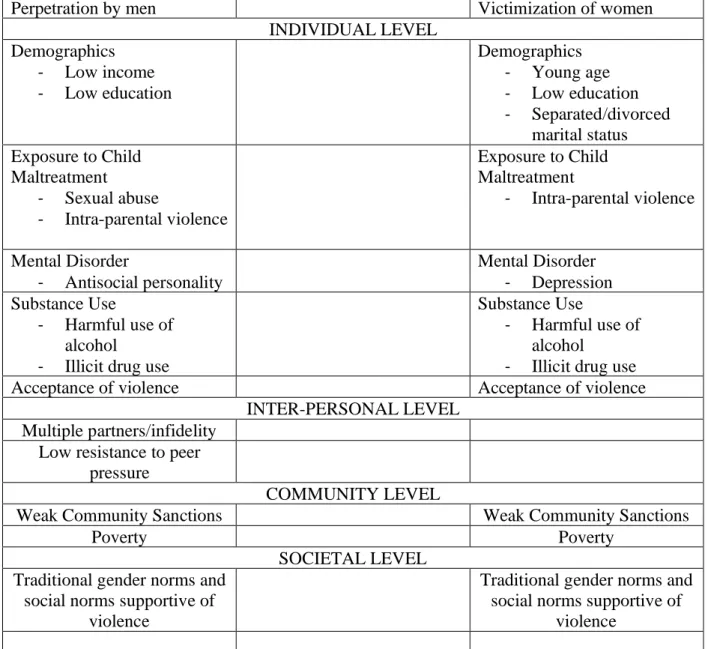
There is an urgency to undertake effective action against VAW given its prevalence and the harm that is causes to society. Using an ecological framework as used by Dahlberg & Krug (2002) allows for the organization and interplay of the complex risk and protective factors of VAW. Identifying risk and protective factors is crucial to inform strategies and programs to guide mitigating and prevention efforts. Table 1 succinctly lists some of the risk factors that are associated with IPV and sexual violence at four levels of the ecological framework.
Table 1: Risk factors for both intimate partner violence and sexual violence
Perpetration by men Victimization of women
INDIVIDUAL LEVEL Demographics - Low income - Low education Demographics - Young age - Low education - Separated/divorced marital status Exposure to Child Maltreatment - Sexual abuse - Intra-parental violence Exposure to Child Maltreatment - Intra-parental violence Mental Disorder - Antisocial personality Mental Disorder - Depression Substance Use - Harmful use of alcohol
- Illicit drug use
Substance Use
- Harmful use of alcohol
- Illicit drug use
Acceptance of violence Acceptance of violence
INTER-PERSONAL LEVEL Multiple partners/infidelity
Low resistance to peer pressure
COMMUNITY LEVEL
Weak Community Sanctions Weak Community Sanctions
Poverty Poverty
SOCIETAL LEVEL Traditional gender norms and
social norms supportive of violence
Traditional gender norms and social norms supportive of
violence *This table was adapted from a WHO document prepared for policy-makers and planners to develop data-drive and evidence-based programmes for prevention IPB and sexual violence10
Studies conducted across cultures have revealed that societies in which men have economic and decision-making power in the household, where divorce is not accessible to women and where violence is an acceptable way of resolving conflict tend to experience higher levels of VAW 10. Gender norms that favor a patriarchal society often reflect gender inequalities and inequities at the social level and legitimizes the perpetration of intimate partner violence and
sexual violence by men11. According to Ali et Bustamante-Gavino, societal norms of a
patriarchal and male dominant society contribute to VAW and gender inequalities and inequities by allowing for power hierarchies where the men are perceived as economically and religiously superior and have a higher status in society when compared to women.16 These societal norms impact all levels of the ecological framework. Men are socialized to believe that they are superior and the submission of women comes to be expected.17 Male dominance prevents the equal participation of women in society, and exacerbates health gender-based inequities in health and access to health care, lessens opportunities for employment, education and political
representation. Understanding how gender norms can act as a protective or risk factor will allow for effective programming when seeking to address VAW.
Purpose of This Paper
The purpose of this systematic review is to summarize existing interventions that are effective in addressing gender norms that are associated with VAW. This can provide insights for future programming and may assist policy-makers, researchers, and program planners in making informed decisions when addressing VAW. The questions that this systematic review seeks to answer are:
- What types of interventions currently exist worldwide?
- What are existing interventions that aim to change cultural/gender norms supporting violence against women? What are characteristics of these interventions in terms of their components, structure, and delivery?
- What is the effectiveness of existing programs, and are their factors related to the programs or their delivery that enhance effectiveness?
- What are methodological strengths and limitations of the literature evaluating these interventions?
Methods
Eligibility criteria and types of studies included
The articles of interest in this review presented quantitative and/or qualitative evaluation results of a program or intervention that was in part gender transformative, and that particularly
addressed gender norms that are supportive of violence against women. Interventions were included regardless if the gender norm was a primary or secondary outcome of interest or a mediating factor. Only outcome evaluations were included in order to be able to present a
compilation of effective interventions. The main types of violence looked at are dating violence, IPV, violence caused by a non-partner. Other types of violence such as sex trafficking, and female genital mutilation were excluded. This is because the interventions to address these forms of violence are beyond the scope of this review. Only English articles that after 2000 were included. Books, magazines, editorials, think pieces, websites and grey literature were excluded. Search Strategy
For the purposes of this review, the term gender norms were used to refer to informal rules and shared social expectations that distinguish expected behaviour on the basis of gender and that may encourage or justify violence being perpetrated against women. The review was done using medical subject headings (MeSHs). Electronic searches for published and peer-reviewed
literature were conducted using the following databases: Academic Search Premiers, PsycINFO, PubMed, Health Source: Nursing/Academic Edition, Web of Science, CINAHL Plus with Full Text and Scopus. Search terms included (social norm* OR cultural norm* OR cultural values OR gender norm* OR gender values OR gender equity) AND (interventions OR program* OR
prevention OR curriculum OR campaign) AND (intimate partner violence OR partner violence OR partner abuse OR spouse abuse OR spousal abuse OR domestic violence OR domestic abuse OR dating violence OR dating abuse OR battered OR IPV OR DV OR marital violen* OR rape OR sexual violence OR sexual assault OR nonconsensual sex OR sexual abuse OR sexual victimization OR gender-based violence OR gender based violence). The overall search results were exported to Zotero citation manager software and duplicates were removed.
Selection of studies
Fig. 1 depicts the search and selection process. Initial electronic searches yielded >9000 studies. After removing articles due to duplication, they were reviewed based on their titles and abstracts to determine if they had an outcome evaluation component. Based on this, 111 full-text articles were then assessed for eligibility. Using the inclusion criteria, the systematic search identified 21 studies for review. Reasons for exclusion at this stage included formative evaluations,
interventions that were not gender transformative, and studies that were focused on types of violence against women that went beyond the scope of this review such as sex trafficking and female gender mutilation.
Results
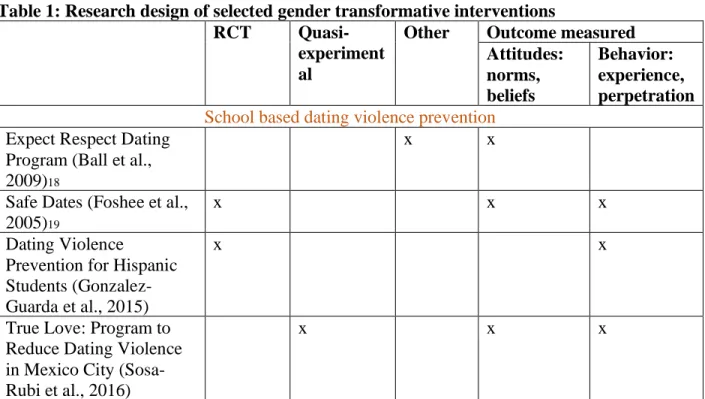
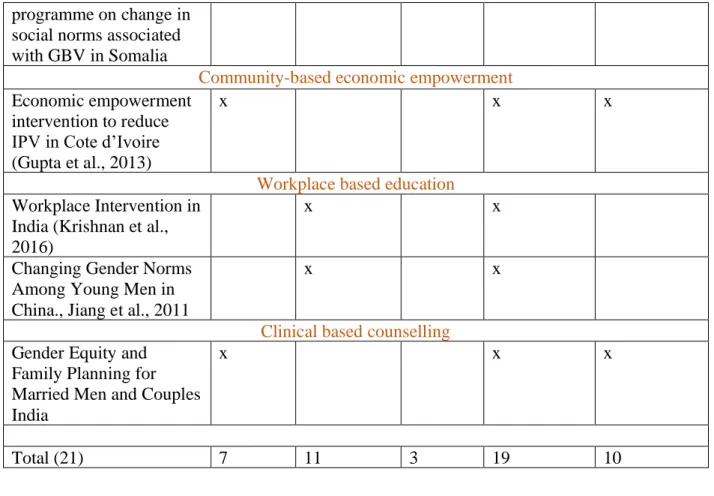
The 21 studies were then reviewed using an abstraction form. The abstraction form documented key elements of each study, including study aim, design, sample size and characteristics, main results and key findings and recommendations. Table 1 summarizes key factors of each study
while Table 2 summarizes looks at effectiveness of the studies. The rigor of the evaluations varied greatly, and most of the studies used a quasi-experimental design. Many had relatively weak research design (e.g. Short follow-up period, low retention rates, etc.) There was also a lack of robust standardized measures for behavioral outcomes. While the results of many evaluations indicate that interventions are promising, the effectiveness of interventions are not definitive. However, it is important to note that in most cases these interventions are better when compared to having no interventions at all.
Furthermore, the lack of consistent metrics and standardized measures result in a lack of comparability across programs. The only scale used more than once in the studies was the Gender Equitable Men Scale which is used to measure gender norms. Presenting a meta-analysis that can estimate an overall change in attitude, knowledge or behavior would have been
desirable. However, the following challenges precluded such an approach: - variability in study design
- diversity in curriculum components included in the interventions
- diversity of instrument and outcome measures used to assess the effectiveness of the intervention
- variability in post-intervention follow-up duration and the retention rates during that period
In this review, interventions were classified as “effective”, “emerging”, “ineffective” or “unclear” based on the strength of the data presented, the degree to which the intervention was generalizable to other settings, and its ability to be replicated. This classification has been used in similar systematic reviews evaluating interventions designed to address violence against
synthesize evidence. Morrison et al classified the studies they evaluated into these categories based on statistical tests reported in the evaluations.12
Figure 2. Criteria for ranking intervention effectiveness based on Lundgren &Amin, 2015.
Table 1: Research design of selected gender transformative interventions
RCT
Quasi-experiment al
Other Outcome measured Attitudes: norms, beliefs Behavior: experience, perpetration
School based dating violence prevention
Expect Respect Dating Program (Ball et al., 2009)18
x x
Safe Dates (Foshee et al., 2005)19
x x x
Dating Violence
Prevention for Hispanic Students (Gonzalez-Guarda et al., 2015)
x x
True Love: Program to Reduce Dating Violence in Mexico City (Sosa-Rubi et al., 2016)
x x x
Effective: Interventions supported by a well-designed study showing prevention of violence against women. In order to be considered effective, interventions had to demonstrate a change in the experience of perpetration of violence (behavioral outcome), not only improved knowledge and/or attitudes.
Emerging evidence of effectiveness: Interventions are evaluated by a well-designed study showing a positive change in knowledge, attitudes and beliefs related to violence against women. Violence perpetration or experience not measured. Unclear relevance to other settings.
Effectiveness unclear: Insufficient or mixed evidence, including programs with weak evaluation designs
Ineffective: Evidence from well-designed studies which show no change in attitudes, knowledge or beliefs related to violence against women
Male -Targeted University Sexual
Aggression (Zounlome et al., 2018)
x x
School-based sex-ed/education/health promotion
The World Starts With Me (Rijsdijk et al., 2011)
x x
SEHER secondary school intervention (Shinde et al., 2018)
x x x
IPV Prevention among young people (Makleff et al., 2019)
x x
Evaluation of school-based peer facilitated, healthy relationship program for at-risk adolescents (McLeod et al., 2015)
x x
Community-based health promotion and education
Strong Family Program (Duley et al., 2017)
x x
HIV Prevention for Mexican American Female Adolescents (Harper et al., 2009)
x x x
Community-based health promotion in Sri Lanka (Herath et al., 2018)
x x
IPV prevention in Cote D’Ivoire (Hossain et al., 2014)
x x
Soul City’s fourth series (Usdin et al., 2005)
x x x
Impact of SASA on reported HIV related risk behaviours and relationship in Kampala (Kyegombe et al., 2014) x x x MenCare+ in South Africa:findings from a gender transformation young men’s education group
x x
Effectiveness of Communities Care
programme on change in social norms associated with GBV in Somalia
Community-based economic empowerment
Economic empowerment intervention to reduce IPV in Cote d’Ivoire (Gupta et al., 2013)
x x x
Workplace based education
Workplace Intervention in India (Krishnan et al., 2016)
x x
Changing Gender Norms Among Young Men in China., Jiang et al., 2011
x x
Clinical based counselling
Gender Equity and Family Planning for Married Men and Couples India
x x x
Total (21) 7 11 3 19 10
Table 2: Effectiveness of gender transformative interventions
Type of intervention n Effective Emerging Unclear Ineffective School-based dating violence prevention/Campus sexual assault prevention18, 19, 20, 21, 22, 5 2 1 2 School-based sex ed/health/education23, 24, 25, 26 4 1 1 2 Community-based: health promotion and education + community based economic empowerment27, 28, 29, 30, 31, 32, 33, 34, 35 (3,8,9, 10, 11, 25, 15, 13, 5) 9 1 6 2
Workplace education36, 37 2 2 Counselling in clinical setting38 1 1 21 4 11 6
Critical Review of the selected literature
School-based dating violence prevention interventions
The school-based dating violence prevention programs reviewed were from Mexico21 and the United States.18,19,20,22 One of the prevention programs was aimed at adolescents in Mexico City21 in secondary schools. In the United States, one program was aimed at Cuban
adolescents,20 one took place in rural North Carolina19, one was aimed at at-risk youth in middle and high schools and adolescents in juvenile detention in Texas18 and the last one targeted made adults at a univversity22. Most of the interventions included individual level, classroom level and school-wide components. Interventions were either delivered by the school teachers, lay
counsellors or peers. Norms around dating were examined through critical reflection, arts and discussion groups. School wide intervention components included developing school policies around dating violence, school-wide poster competitions. Norms examined included gender roles, sexual rights, unintended pregnancies, and power dynamics. Skills that the interventions sought to address was the ability to speak up, effective communication skills for diffusing difficult situations, and seeking help behaviors. One intervention also had a session for parents. Effectiveness
School-based interventions targeting dating violence among adolescent show some effectiveness. Most interventions looked at both attitudes and behavioral outcomes. Two of the
psychological violence for males with a 58% and 55% (p < 0.05) reduction respectively21 and reduced psychological abuse perpetration19, with outcomes being sustained over time. It was hypothesized that this was because dating violence prevention programs were being offered at the beginning of the adolescent dating careers and that they could therefore include the training and skills developed during the intervention in their dating practices throughout high school. One study adopted a qualitative evaluation, and showed emerging effectiveness when addressing gender norms. However, there was a lack of generazibility of the results beyond the participant interviewed. This may therefore not be replicable and useful in other setting. 18. Dating violence prevention programs19,21 were also effective at addressing acceptance of sexist attitudes, gender norms, norms around healthy relationships, asking for consent and resolving conflicts. However, there were no effects found on the prevention or reduction of severe physical victimization. In addition, most surveys are self-reported and this may not portray accurate results since this may introduce bias in people’s reporting, and they may want to please the facilitator when
participating in focus groups and interviews.
The Safe Dates program19 ran for four years and was evaluated at four follow-up periods and the program showed positive effects at all points. This demonstrates that interventions can be
effective even if adolescents are exposed to them at any point in time during schooling. Dating violence prevention programs were the most promising of this review, and their importance is significant because of the potential long-term effects into adulthood. Furthermore, evidence suggests that efforts at addressing dating violence norms and harmful gender norms can prevent adolescent dating violence.
School-based sex education/health/education
Offering sexual and health education in a school setting show emerging effectiveness. The findings from the review indicate that schools remain an important place to address issues of gender, sex and violence no matter the country. In this case, talking about gender norms was embedded in the curricula that was conducted either about health education in general, or was specific to sexual education. The four interventions that evaluated sexual education/health education programs were from Mexico,23 Uganda24, India25 and the U.S.26 The studies had large samples of adolescents, the largest one including over 13,000 respondents in India25. This was the only study that showed to be effective and that targeted both attitudes and behavioral outcomes. A randomized controlled trial study design was used to measure its effectiveness. In this study, lay counsellors were used to deliver the interventions and this was associated with large improvements in school climate. Components of the sexual education and health promotion interventions included establishing school health promotion committee, peer meetings,
counselling and curriculum addressing unintended pregnancies, gender and power dynamics, sexuality, condom use and intimate partner violence. Outcomes addressed by these interventions included behaviors around gender, sexuality and violence;23 non-coercive sex,24 violence and attitudes towards gender equity.25 World Starts with Me24 in Uganda used a low-tech computer based interactive sex education program that required minimum input from the teachers. It allowed adolescents to interact with the material in a non-judgmental way. However, there were limitations in the implementation of the intervention given the low-resource settings where computers were not always working or available and lack of electricity was an issue. There were also issues with fidelity of implementation. It is therefore difficult the assess the actual
positive attitude towards condom use and had more self-efficacy when dealing with instances of sexual violence. While it was found that using school teachers in a classroom setting presented with less logistical conflicts, teachers needed to be comfortable and adequately trained in order to deliver the intervention. In addition, asking teachers to deliver the intervention was an added pressure for them whereas using external staff was seen to be more effective in creating a space where adolescents felt comfortable asking questions, having discussions about hard subjects. Effectiveness
Comprehensive sexuality education can be a strategy to address violence. Interventions should target the individual adolescents as well as seek to impact the overall climate of the school. In addition, it was found that sexuality education was can be an effective vehicle to address
perceive social norms about healthy relationships, attitudes regarding STIs, HIV, delaying sexual intercourse and that critical reflection can support attitude and behavior change. Furthermore, it was found that facilitators played a crucial role and that the interactions of the facilitators with the adolescents were critical in encouraging more open and honest dialogue about sensitive topics. Peer facilitators emerged as a promising tool to deliver sensitive content25, 23. Curriculums that are not part of the school should have some flexibility in order to adapt to the reality of each school. In general, school setting intervention had more of an impact if there were accompanying school-wide components that targeted the school climate.
Community based health promotion and education
Community-based gender transformative interventions show emerging effectiveness. This category contains the highest number of studies. The studies reviewed under this category are from South Africa25,34, USA29, Cote d’Ivoire28,31, Uganda33, Somalia35, Australia27 and Sri Lanka30. Considerations of community-based interventions included stakeholder consultations to
ensure the cultural appropriateness of the program27,30, delivery of the program by staff of the appropriate sex, relevance of the content based on the culture of the target population, identifying harmful gender norms through community consultation.
One key element was extensive consultation process with relevant stakeholders. One study combined an economic empowerment intervention with a gender transformative intervention that aimed to have a gender dialogue with a woman and her partner 28. Based on the results, this intervention showed that adding a gender transformative component to an economic
empowerment program can address concerns around microcredit programs that are implemented without any efforts to challenge the male normative assumptions and can potentially increase violence against women as they become more empowered and financially independent. Another study in South Africa used multi-media health promotion approach intending to have impact at various at the individual, community and socio-political environment32. However, it was hard to determine if there was any reduction in domestic violence as a result of the programming. Effectiveness
Several of the studies showed that having a component of the intervention that focuses on men is beneficial. In Cote d’Ivoire, a male focused intervention added on to an IPV prevention program for women showed reductions in level of reported physical and/or sexual IPV, although this was not significant31. All studies reporting increase in knowledge around gender concepts
(participation in household tasks, women’s acceptance of traditional gender roles, women’s belief regarding sexual assault) and shifts in attitudes (domestic violence being a private affair, justification of wife beating, a woman’s ability to refuse sex). Two studies highlighted the importance of the elders when addressing gender norms so that positive changes towards gender norms were sustained27,30. Adherence to the training was an important determinant of the
effectiveness of an intervention28. One common methodological challenge was the short follow-up period between the intervention and the evaluation30,32. In addition, because of the conflict settings of two of the studies31,28, it was not always possible to implement the intervention and carry-out evaluations as planned. This contributed to reduction in the analytical sample. However it did indicate that evaluation of interventions in these settings are not impossible.
Workplace education
Workplace education and health promotion interventions showed emerging effectiveness. One took place in an electronic factory in China36 and the other took place in a garment factory in India37. Neither study measured behavioral outcomes. Interventions component included educational session covering topics such as gender, sexuality, relationships, alcoholism and violence against women. Interventions were delivered via information displays, one on one interactions, interactive street play, health camps and classes. Intervention period was less than year.
Effectiveness
Both studies highlighted the feasibility of addressing norms at a workplace setting and the ability to reach a high number of people. Changes were seen within programmatic time frames that were sustained at a year follow-up. Gender-related attitudes were significantly impacted using the Gender Equitable Men scale. Changes were validated by female counterparts as well37. This was a methodological strength.
Counselling in a clinical setting
The only study reviewed in this category took place in India38. It consisted of three contextually tailored family planning and gender equity counselling session to married men on an individual basis, and a joint session with their wife. Sessions were delivered by male healthcare providers.
This study was effective in impacting behavioral outcomes related to contraception use and marital contraceptive communication.
Effectiveness
This was a low-intensity intervention that showed promising effects, using existing health infrastructure and which could be replicated in other settings.
Interpretation of findings
This review summarizes gender transformative interventions across different settings and countries that can impact attitudes and behaviors that are associated with violence against women. Firstly, promising intervention including dating violence prevention programs have shown to be impactful on both psychological and behavioral outcomes. Secondly, across settings, targeting men in the intervention, rather than just women was an effective way of addressing violence. The quality of community-based programming was increased, when content was tailored to the specific context and involved stakeholder input. Furthermore, across settings, addressing gender norms did not have any negative impact. Some studies reported counter-intuitive increased in attitudes related to violence. However, this may be due to individual becoming more aware of them after the interventions. Lastly, most interventions were measured for their effectiveness with self-reported surveys, or questionnaires, and were done within shorter time frames except for one longitudinal study that had a follow-up at 4 years. More studies are needed to measure the effects of these intervention on a longer time period.
Conclusion and Recommendation
Results from this review suggest that it would be beneficial to adopt a “gender mainstreaming” approach in any maternal and child health related intervention when feasible. This will ensure that a systematic effort is being made to address gender norms that support violence against
women. It would also imply wide-scale efforts to address these norms that could have an impact at all levels of the ecological framework. The review also revealed that combine programming should be pursued when appropriate, for example, interventions addressing gender norms can be embedded in HIV/AIDs program. Furthermore, efforts should be made to target both women and men when engaging the population in trying to shift harmful gender norms.
Most interventions reviewed were evaluated in the short and medium term. More research is needed to assess the impact of the interventions over a longer period of time and determine how
Acknowledgement
I would like to express my gratitude to my first and second reader, Dr. Kavita Singh Ongechi and Dr. Cindy Fraga for their endless support and assistance in completing this paper.
References
1. World Health Organization. Violence against women - Key Facts.
https://www.who.int/news-room/fact-sheets/detail/violence-against-women. Published 2017. Accessed October 29, 2019.
2. What we do: Ending violence against women | UN Women – Headquarters.
https://www.unwomen.org/en/what-we-do/ending-violence-against-women. Accessed October 29, 2019.
3. Vos T, Astbury J, Piers L, … AM-B of the W, 2006. Measuring the impact of intimate partner violence on the health of women in Victoria, Australia. SciELO Public Heal.
https://www.scielosp.org/scielo.php?pid=S0042-96862006000900017&script=sci_abstract&tlng=fr. Accessed October 29, 2019.
4. World Health Organization. Global and Regional Estimates of Violence against Women: Prevalence and Health Effects of Intimate Partner Violence and Non-Partner Sexual Violence.; 2013.
https://apps.who.int/iris/bitstream/handle/10665/85239/9789241564625_eng.pdf. Accessed October 29, 2019.
5. Åsling-Monemi K, … RP-B of the W, 2003. Violence against women increases the risk of infant and child mortality: a case-referent study in Nicaragua. SciELO Public Heal.
https://www.scielosp.org/scielo.php?script=sci_arttext&pid=S0042-96862003000100004. Accessed October 29, 2019.
6. Anda R, Felitti V, Chapman D, Pediatrics JC-, 2001. Abused boys, battered mothers, and male involvement in teen pregnancy. Am Acad Pediatr.
https://pediatrics.aappublications.org/content/107/2/e19.abstract. Accessed October 29, 2019.
7. Dube S, Anda R, … VF-V and, 2002. Exposure to abuse, neglect, and household dysfunction among adults who witnessed intimate partner violence as children: implications for health and social services. connect.springerpub.com.
https://connect.springerpub.com/content/sgrvv/17/1/3. Accessed October 29, 2019. 8. Walby S. The cost of domestic violence. 2004.
https://eprints.lancs.ac.uk/55255/1/cost_of_dv_report_sept04.pdf. Accessed October 29, 2019.
9. Levinson D. Family Violence in Cross-Cultural Perspective.; 1989.
https://psycnet.apa.org/record/1989-97364-000. Accessed October 29, 2019.
Concepts, Methods, and Findings. researchgate.net.
https://www.researchgate.net/profile/Angela_Pirlott/publication/6610117_Gender-Based_Violence/links/5b929793a6fdccfd54213177/Gender-Based-Violence.pdf. Accessed October 29, 2019.
11. Morrison S, Hardison J, Mathew A, Washington JO-, Department D, 2004. An evidence-based review of sexual assault preventive intervention programs. ncjrs.gov.
https://www.ncjrs.gov/pdffiles1/nij/grants/207262.pdf. Accessed November 17, 2019. 12. Lundgren R, Health AA-J of A, 2015. Addressing intimate partner violence and sexual
violence among adolescents: emerging evidence of effectiveness. Elsevier.
https://www.sciencedirect.com/science/article/pii/S1054139X14003449. Accessed November 17, 2019.
13. Morrison S, Hardison J, Mathew A, Washington JO-, Department D, 2004. An evidence-based review of sexual assault preventive intervention programs. ncjrs.gov.
https://www.ncjrs.gov/pdffiles1/nij/grants/207262.pdf. Accessed November 17, 2019. 14. Cantor D, Fisher B, Chibnall S, Townsend R, Lee H. Report on the AAU campus climate
survey on sexual assault and sexual misconduct. 2015.
https://ias.virginia.edu/sites/ias.virginia.edu/files/University of
Virginia_2015_climate_final_report.pdf. Accessed November 18, 2019.
15. Peterson C, Kearns MC, McIntosh WL, et al. Lifetime Economic Burden of Intimate Partner Violence Among U.S. Adults. Am J Prev Med. 2018;55(4):433-444.
doi:10.1016/j.amepre.2018.04.049
16. Ali T, Gavino IB. Prevalence of and reasons for domestic violence among women from low socioeconomic communities of Karachi. 2007.
https://apps.who.int/iris/handle/10665/117392. Accessed November 18, 2019.
17. Fawzi M, Lambert W, Singler J, … YT-S science &, 2005. Factors associated with forced sex among women accessing health services in rural Haiti: implications for the prevention of HIV infection and other sexually. Elsevier.
https://www.sciencedirect.com/science/article/pii/S0277953604002795. Accessed November 18, 2019.
18. Ball B, Kerig P, Practice BR-HP, 2009. Like a family but better because you can actually trust each other. journals.sagepub.com.
https://journals.sagepub.com/doi/abs/10.1177/1524839908322115. Accessed November 17, 2019.
19. Foshee VA, Bauman KE, Ennett ST, Suchindran C, Benefield T, Linder GF. Assessing the Effects of the Dating Violence Prevention Program “Safe Dates” Using Random
CoefficientRegression Modeling. Prev Sci. 2005;6(3):245-258. doi:10.1007/s11121-005-0007-0
20. Gonzalez-Guarda RM, Guerra JE, Cummings AA, Pino K, Becerra MM. Examining the Preliminary Efficacy of a Dating Violence Prevention Program for Hispanic Adolescents. J Sch Nurs. 2015;31(6):411-421. doi:10.1177/1059840515598843
21. Sosa-Rubi SG, Saavedra-Avendano B, Piras C, Van Buren SJ, Bautista-Arredondo S. True Love: Effectiveness of a School-Based Program to Reduce Dating Violence Among Adolescents in Mexico City. Prev Sci. 2017;18(7):804-817. doi:10.1007/s11121-016-0718-4
22. Zounlome N, Masculinity YW-P of M&, 2018. Addressing male-targeted university sexual aggression: An experimental evaluation of a social norms approach.
psycnet.apa.org. https://psycnet.apa.org/record/2018-41906-001. Accessed November 17, 2019.
23. Makleff S, Garduño J, Zavala RI, et al. Preventing Intimate Partner Violence Among Young People—a Qualitative Study Examining the Role of Comprehensive Sexuality Education. Sex Res Soc Policy. April 2019. doi:10.1007/s13178-019-00389-x
24. Rijsdijk LE, Bos AE, Ruiter RA, Leerlooijer JN, de Haas B, Schaalma HP. The World Starts With Me: A multilevel evaluation of a comprehensive sex education programme targeting adolescents in Uganda. BMC Public Health. 2011;11(1):334. doi:10.1186/1471-2458-11-334
25. Shinde S, Weiss H, … BV-, 2018. Promoting school climate and health-related outcomes: a cluster randomised controlled trial of the SEHER multi-component secondary school intervention. researchonline.lshtm.ac.uk. http://researchonline.lshtm.ac.uk/4650068/. Accessed November 17, 2019.
26. McLeod DA, Jones R, Cramer EP. An Evaluation of a School-based, Peer-facilitated, Healthy Relationship Program for At-Risk Adolescents. Child Sch. 2015;37(2):108-116. doi:10.1093/cs/cdv006
27. Duley P, Botfield JR, Ritter T, Wicks J, Brassil A. The Strong Family Program: an innovative model to engage Aboriginal and Torres Strait Islander youth and Elders with reproductive and sexual health community education. Heal Promot J Aust.
2017;28(2):132-138. doi:10.1071/HE16015
28. Gupta J, Falb KL, Lehmann H, et al. Gender norms and economic empowerment intervention to reduce intimate partner violence against women in rural Côte d’Ivoire: a randomized controlled pilot study. BMC Int Health Hum Rights. 2013;13(1):46.
29. Harper G, Bangi A, Sanchez B, … MD-AE&, 2009. A quasi-experimental evaluation of a community-based HIV prevention intervention for Mexican American female adolescents: the SHERO’s program. Guilford Press.
https://guilfordjournals.com/doi/abs/10.1521/aeap.2009.21.5_supp.109. Accessed November 17, 2019.
30. Herath T, Guruge D, Fernando M, Jayarathna S, Senarathna L. The effect of a
community-based health promotion intervention to change gender norms among women in a rural community in Sri Lanka. BMC Public Health. 2018;18(1):977.
doi:10.1186/s12889-018-5914-7
31. Hossain M, Zimmerman C, Kiss L, et al. Working with men to prevent intimate partner violence in a conflict-affected setting: a pilot cluster randomized controlled trial in rural Côte d’Ivoire. BMC Public Health. 2014;14(1):339. doi:10.1186/1471-2458-14-339 32. Usdin S, Scheepers E, Goldstein S, Japhet G. Achieving social change on gender-based
violence: A report on the impact evaluation of Soul City’s fourth series. Soc Sci Med. 2005;61(11):2434-2445. doi:10.1016/j.socscimed.2005.04.035
33. Kyegombe N, Abramsky T, Devries KM, et al. The impact of SASA!, a community mobilization intervention, on reported HIV-related risk behaviours and relationship dynamics in Kampala, Uganda. J Int AIDS Soc. 2014;17(1):19232.
doi:10.7448/IAS.17.1.19232
34. Kedde H, Rehse K, Nobre G, van den Berg W. MenCare+ in South Africa: findings from a gender transformative young men’s group education on sexual and reproductive health and rights. Sex Educ. 2018;18(2):206-218. doi:10.1080/14681811.2017.1417831
35. Glass N, Perrin N, Marsh M, Clough A, open AD-B, 2019. Effectiveness of the
Communities Care programme on change in social norms associated with gender-based violence (GBV) with residents in intervention. bmjopen.bmj.com.
https://bmjopen.bmj.com/content/9/3/e023819?utm_content=consumer&utm_medium=cp c&utm_source=trendmd&utm_term=1-A&utm_campaign=bmjo. Accessed November 17, 2019.
36. Jiang X, Ren S, Hou L, Jiu DH-… SY, 2011. Evaluation summary: Changing gender norms among young men and reducing violence In Chongqing China. Washingt DC PATH 2012 Jun.
37. Krishnan S, Gambhir S, Luecke E, Jagannathan L. Impact of a workplace intervention on attitudes and practices related to gender equity in Bengaluru, India. Glob Public Health. 2016;11(9):1169-1184. doi:10.1080/17441692.2016.1156140
Gender Equity and Family Planning Intervention for Married Men and Couples in Rural India. Braitstein P, ed. PLoS One. 2016;11(5):e0153190.