Secure and Efficient Substantial Enhancement
over Access Control Capability using
RBAC-CPABE with Zero-Computational Overhead
Muneeb Unnisa1 and MdAteeq Ur Rahman2,
1
Research Scholar, Dept. of Computer Science & Engineering, SCET, Hyderabad, India
2
Professor and Head, Dept. of Computer Science & Engineering, SCET, Hyderabad, India
Abstract: For enterprise systems running on public clouds during which the servers are outside the management domain of the enterprise, access management that was historically dead by reference monitors deployed on the system servers will not be trustworthy . Hence,a self-contained security theme is considered a good means for shielding outsourced information. However, building such a theme that may implement the access management policy of the enterprise has become a vital challenge. during this paper, we have a tendency to propose a self-contained information protection mechanism referred to as RBAC-CPABE by group action role-based access management (RBAC), that is wide utilized in enterprise systems, with the ciphertext-policy attribute-based secret writing (CP-ABE). First, we have a tendency to gift a information-centric RBAC (DC-RBAC) model that supports the specification of fine-grained access policy for every data object to boost RBAC’s access management capabilities. Then, we have a tendency to fuse DC-RBAC and CP-ABE by expressing
DC-RBAC policies with the CP-ABE access tree and write in code information mistreatment CP-ABE. as a result of CP-ABE enforces each access management and coding, access authorization are often achieved by the info itself. A security analysis and experimental results indicate that RBAC-CPABE maintains the protection and potency properties of the CP-ABE theme on that it's based mostly, however considerably improves the access management capability. Finally, we have a tendency to gift associate degree enforced framework for RBAC-CPABE to shield privacy and enforce access management for information keep within the cloud.
Index Terms: Role-based access control, ciphertext-policy attribute-based encryption, self-contained data protection, cloud Computing.
I. INTRODUCTION
In cloud computing, an increasing variety of enterprises and organizations use cloud servers as their system platform. Today, role-based access management (RBAC) model is that the preferred model utilized in enterprise systems; but, this model has severe security issues once applied to cloud systems. A classic RBAC model uses reference monitors running on knowledge servers to implement authorization. However, the servers within the cloud square measure out of the management of enterprise domains and, therefore, should be thought-about un-trusted by default. Hence, building a good knowledge protection mechanism for cloud-based enterprise systems has become a serious challenge. Currently, coding is that the primary mechanism utilized in clouds to confirm knowledge security. The Cloud Security Alliance (CSA) suggests that a wonderful technique of skyrocketing knowledge security is to stay knowledge encrypted each in transit and once hold on at intervals the cloud. though classic coding schemes cherish public-key coding and identity-based coding (IBE) will guarantee knowledge confidentiality, they can't enforce effective access management. However, if the encrypted knowledge were to feature Associate in Nursing internalized access policy and was able to authorize or deny users supported the access policy, then confidentiality and access management may be achieved by the info itself instead of having to suppose the un-trusted cloud servers.
there square measure 2 ways that to attain this goal. the primary approach is to assign the permission p to 1 of married woman 's roles r. However, it means all users UN agency square measure allotted to role r also are granted permission p, which can introduce security issues.
The second approach is to feature a brand new role r' and assign it to married woman . though this approach solves the matter raised by the primary approach, adding a further role r' will increase the quality of the system particularly once such authorizations square measure terribly frequent. Thus, neither approach will effectively win the goal. eight RBAC describes Associate in Nursing access management policy for the total assortment {of knowledge|of knowledge|of information} within the entire enterprise instead of for every data object. By process roles and distribution those roles to users, RBAC are able to do knowledge protection. However, knowledge is barely one constituent of a system (i.e. users, roles, permission assignments then forth will have constraints, however knowledge cannot). Hence, RBAC is targeted principally to integral management of the info within the system, however it cannot meet the particular security needs of every knowledge object. eight RBAC has to be enforced victimization reference monitors that run on the info servers. as a result of cloud servers might not perpetually be sure, reckoning on them to enforce access management introduces insecurities into the system. Therefore, the RBAC model and its social control mechanism can not be directly applied to a self-contained knowledge protection mechanism. Attribute-based coding (ABE) provides support for self-contained knowledge protection.
In ABE, each a user's personal key and therefore the ciphertext square measure related to some attributes. once the attributes utilized in the ciphertext and therefore the attributes during a user's personal key match, the user will decode with success. during this approach, ABE achieves each coding and access management at the same time. There square measure 2 variants of ABE, namely, key-policy ABE (KP-ABE) and ciphertext-policy ABE (CP-ABE). In KP-ABE, the ciphertext is related to a group of attributes and therefore the personal secret's related to Associate in Nursing access policy. In CP-ABE, the idea is reversed: the ciphertext is related to Associate in Nursing access policy and therefore the personal secret's related to a group of attributes . Between these 2 variants of ABE, CP-ABE is additional appropriate for Associate in Nursing enterprise setting, and it's a perfect elementary theme for implementing a self-contained knowledge protection mechanism. though ABE is capable of implementing access management, it's incompatible with the wide used RBAC model as a result of it cannot support role inheritance. Zhu et al. addressed this downside by presenting Associate in Nursing ABE theme with attribute hierarchy within which every role was mapped to 1 or additional attributes reckoning on a migration proxy. In observe, to produce fiexible access management, attributes containing complicated operators cherish the NOT operator also are helpful. however this technique has no answer. to reinforce the policy expression ability of ABE, researchers have conferred numerous schemes to support either NOT or comparison operators (i.e., >, _, < and _). Among them, solely the Extended CP-ABE (ECP-ABE), theme is ready to handle all sorts of operators at the same time and might be simply extended to support different operators.
Therefore, we tend to value more highly to integrate RBAC with ECP-ABE. during this paper, we tend to construct a self-contained protection mechanism for outsourced enterprise knowledge. additionally to being compatible with the prevailing RBAC system, our technique additionally permits users to specify different needed policies for every knowledge object. Compared with ancient protection mechanisms, the foremost distinguished characteristic of our answer is that it provides knowledge the flexibility to confirm its own security victimization each coding and a classic access management model while not reckoning on the servers on that it resides. The contributions of this paper square measure conferred as follows. (1) To specify a fiexible access policy for every knowledge object underneath RBAC model, we tend to propose a data-centric RBAC (DC-RBAC) model. In DC-RBAC, the access policy is finite by knowledge, that supports self-contained knowledge protection. additionally to role constraints, DC-RBAC additionally contains user attribute constraints and setting constraints, that correspond to data concerning the licensed users and discourse data concerning the setting, severally. Hence, DC-RBAC could be a additional communicatory and fine-grained access management model. (2) we tend to integrate DC-RBAC with a CP-ABE theme (i.e. ECP-ABE) and propose a self-contained knowledge protection theme known as RBAC-CPABE. To support all sorts of constraints with DC-RBAC, we tend to 1st extend ECP-ABE to support role assignment and inheritance. Then, we tend to gift a mapping model to remodel the DC-RBAC access policy to the ECP-ABE access tree. Finally, the info object is encrypted with ECP-ABE. Through this style, RBAC-CPABE provides knowledge the flexibility to hold finegrained access policy and enforce access management entirely by itself. the remainder of this paper is organized as follows. In Section II, we tend to review the connected work on RBAC and ABE. Section III introduces some information utilized in this paper.
Section VII. In cloud computing, Associate in Nursing increasing variety of enterprises and organizations use cloud servers as their system platform. Today, role-based access management (RBAC) model is that the preferred model utilized in enterprise systems; but, this model has severe security issues once applied to cloud systems. A classic RBAC model uses reference monitors running on knowledge servers to implement authorization. However, the servers within the cloud square measure out of the management of enterprise domains and, therefore, should be thought-about untrusted by default. Hence, building a good knowledge protection mechanism for cloud-based enterprise systems has become a serious challenge. Currently, coding is that the primary mechanism utilized in clouds to confirm knowledge security. The Cloud Security Alliance (CSA) [1] suggests that a wonderful technique of skyrocketing knowledge security is to stay knowledge encrypted each in transit and once hold on at intervals the cloud. though classic coding schemes cherish public-key coding and identity-based coding (IBE) [2] will guarantee knowledge condentiality, they can't enforce effective access management. However, if the encrypted knowledge were to feature Associate in Nursing internalized access policy and was able to authorize or deny users supported the access policy, then confidentiality and access management may be achieved by the info itself instead of having to suppose the un-trusted cloud servers. this sort of protection model, that is named as self-contained knowledge protection during this paper, not solely minimizes the reliance on the cloud servers however additionally prevents unauthorized knowledge access and meddling throughout transmission.
distinguished characteristic of our answer is that it provides knowledge the flexibility to confirm its own security victimization each coding and a classic access management model while not reckoning on the servers on that it resides. The contributions of this paper square measure conferred as follows. (1) To specify a fiexible access policy for every knowledge object underneath RBAC model, we tend to propose a data-centric RBAC (DC-RBAC) model. In DC-RBAC, the access policy is finite by knowledge, that supports self-contained knowledge protection. additionally to role constraints, DC-RBAC additionally contains user attribute constraints and setting constraints, that correspond to data concerning the licensed users and discourse data concerning the setting, severally. Hence, DC-RBAC could be a additional communicatory and ne-grained access management model. (2) we tend to integrate DC-RBAC with a CP-ABE theme (i.e. ECP-ABE) and propose a self-contained knowledge protection theme known as RBAC-CPABE. To support all sorts of constraints with DC-RBAC, we tend to 1st extend ECP-ABE to support role assignment and inheritance. Then, we tend to gift a mapping model to remodel the DC-RBAC access policy to the ECP-ABE access tree. Finally, the info object is encrypted with ECP-ABE. Through this style, RBAC-CPABE provides knowledge the flexibility to hold finegrained access policy and enforce access management entirely by itself. the remainder of this paper is organized as follows. In Section II, we tend to review the connected work on RBAC and ABE.
Section III introduces some information utilized in this paper. The DC-RBAC model is conferred in Section IV. In Section V, we tend to 1st gift the strategy of expressing DC-RBAC policy with ECP-ABE. Then we tend to propose our self-contained knowledge
protection theme RBAC-CPABE and analyze its security and potency.
II. RELATED WORKS
A. Existing System
The RBAC model was initial planned by Ferraiolo and Kuhn in 1992 and was wide studied within the mid-1990s. The RBAC model introduced roles between users and permissions. Permissions area unit appointed to roles instead of users; users should be appointed to a task to achieve the permissions appointed thereto role. The RBAC model greatly simplified permission management; consequently, it's become the foremost wide used access management model within the past few years.
By developing completely different policies, RBAC can do the wants of each discretionary access controls (DAC) and obligatory access controls (MAC).
Some studies have targeted on combining RBAC with numerous encoding schemes to guard information. Crampton introduced a replacement characterization of RBAC policies, namely, victimization the partial order relevance describe the policies. This approach transforms RBAC policies into data flow policies; then, it uses scientific discipline enforcements of the policies to construct a scientific discipline RBAC mechanism.
Zhu et al. planned a role-key hierarchy model (RKH) consisting of a scientific discipline RBAC model which will support role hierarchies. In RKH, every role corresponds to a novel role-key, ANd users area unit appointed an exclusive user-key related to every role to that they belong. However, as a result of users should maintain a non-public key comparable to every role, this technique will increase the burden of key management for users—especially once a user is appointed several roles.
III. PROPOSED SYSTEM
The projected system not solely minimizes the reliance on the cloud servers however conjointly prevents unauthorized information access and change of state throughout transmission. Therefore, self-contained information protection basically offers information the flexibility to confirm its own security, and it's an efficient mechanism to safeguard information in cloud.
IV. SYSTEM ARCHITECTURE
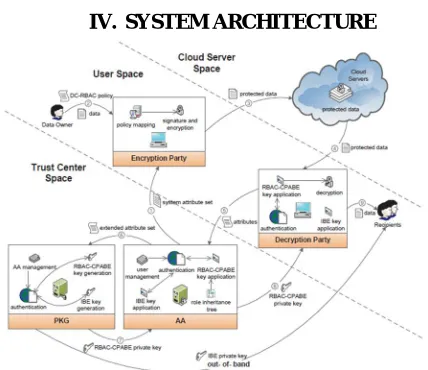
Figure 1: System Architecture of the Proposed System
To investigate the appliance of RBAC-CPABE, we tend to gift associate enforced framework for this theme. The framework is predicated on the model of the RBAC-CPABE theme (see Fig. 1), that contains 3 parts: PKG, the cryptography party and therefore the coding party. to cut back the procedure burden associated avoid PKG changing into an potency bottleneck, we tend to introduce the Attribute Authority (AA), that assumes a part of the work of a standard PKG. to make sure secure communication, the sender ought to sign a message and therefore the receiver ought to verify the sender's signature before responding to the request. during this framework, we tend to use the IBE [2] theme to sign and verify the identity. IBE doesn't need advanced distribution and management of personal keys, and therefore the public parameters and personal keys may be generated by PKG. Computations on the tree structure and pairing operations in CP-ABE cause its potency to be below that of symmetrical cryptography schemes. to enhance the potency, we tend to use a hybrid cryptography technique that has the advanced cryptography normal (AES) and RBAC-CPABE. The enforced framework of RBAC-CPABE is illustrated in Fig. 9. The framework may be divided into 3 parts: the cloud server house, that is employed to store the protected data; the user house, that contains cryptography and coding users of the community; and therefore the trust center house, that contains trusty servers that square measure to blame for managing users' attributes and generating non-public keys.
A. cryptography PARTY knowledge homeowners outline access policies and cypher knowledge within the cryptography Party. To publish knowledge to a cloud server, the info owner uses the info and therefore the DC-RBAC access policy as input. Then, the access policy is mapped to the equivalent extended tree with the policy mapping module. Next, the info is signed with the user's IBE non-public key and hybrid cryptography is enforced victimisation the signature and cryptography module. a lot of specifically, the info is encrypted with AES whereas the non-public key of AES is encrypted by RBAC-CPABE victimisation the access policy tree. Finally, the ciphertext, consisting of the AES ciphertext, the RBAC-CPABE ciphertext, the access tree and therefore the signature, is revealed to the cloud server.
B. coding PARTY knowledge access is achieved through the coding Party. the info access method consists of 2 integral steps as represented in Section V-C.2 (i.e. public key application and knowledge decryption). victimisation the RBAC-CPABE non-public key application module, the leaf nodes and extended leaf nodes of the access tree hooked up within the ciphertext square measure extracted and sent to AA together with the user's identity, forming missive of invitation to use for associate RBAC-CPABE non-public key. Before causing, the message is signed with the user's IBE non-public key. Users while not associate IBE non-public key should 1st apply for one through the IBE non-public key application module. once receiving the message from AA, the coding Party veri_es the signature with the authentication module then extracts the RBACCPABE non-public key. If the user's attributes satisfy the access policy, the coding module are going to be able to decode the RBAC-CPABE ciphertext to get the AES non-public key with that the first knowledge may be decrypted.
sends it to PKG through the IBE non-public key application module. If the request is for a RBAC-CPABE non-public key, AA extracts the user's info through the management module with the user's identity. Then the RBAC-CPABE non-public key application module is employed to verify the extended attributes with the user info and therefore the role inheritance tree and generate the extended attribute set, that is distributed to PKG to yield the user non-public key.
D. PKG the most perform of PKG in our framework is to come up with non-public keys. kind of like AA, once receiving a message, PKG at one time verifies whether or not the message is from a legitimate AA victimisation the authentication module and AA management module. once the request is valid, PKG generates the non-public key victimisation either the IBE non-public key generation module and therefore the RBAC-CPABE non-public key generation module consistent with the request kind. The IBE non-public secret is distributed physically, whereas the RBAC-CPABE non-public secret is came back to the AA once being signed. Then AA signs and returns the message to the user once confirming the validity of PKG. because the on top of method shows, by adopting RBAC-CPABE, knowledge gains the flexibility to work out whether or not to authorize users relying entirely on associate access policy embedded inside the info itself. Therefore, this implementation of RBAC-CPABE will eliminate the dependence on third-party servers and may deliver the goods self-contained knowledge protection.
V. CONCLUSION
Based on the classic RBAC model, we have a tendency to 1st propose a data-centric access management model, DC-RBAC, that permits information|the info|the information} owner to specify personalised RBAC policies for every data object. Besides role-level constraints, DC-RBAC conjointly contains user attribute constraints and surroundings constraints, that correspond to data regarding the approved users and discourse data regarding the surroundings, severally. Hence, DC-RBAC achieves additional versatile and fine-grained access management.
REFERENCES
[1] S. Alliance. (2011). Security Guidance for Critical Areas of Focus in Cloud Computing V3.0. [Online]. Available: https://downloads. cloudsecurityalliance.org/initiatives/guidance/csaguide.v3.0.pdf
[2] D. Boneh and M. Franklin, ``Identity-based encryption from the Weil pairing,'' in Proc. CRYPTO, Santa Barbara, CA, USA, Aug. 2001, pp. 213229
[3] Y. Zhu, G.-J. Ahn, H. Hu, and H. Wang, ``Cryptographic role-based security mechanisms based on role-key hierarchy,'' in Proc. 5th ACM Symp. Inf., Comput. Commun. Secur., Beijing, China, Apr. 2010, pp. 314319.
[4] Y. Zhu, H.-X. Hu, G.-J. Ahn, H.-X. Wang, and S.-B. Wang, ``Provably secure role-based encryption with revocation mechanism,'' J. Comput. Sci. Technol., vol. 26, no. 4, pp. 697710, Jul. 2011.
[5] Y. Zhu, G.-J. Ahn, H. Hu, D. Ma, and S.Wang, ``Role-based cryptosystem: A new cryptographic RBAC system based on role-key hierarchy,'' IEEE Trans. Inf. Forensics Security, vol. 8, no. 12, pp. 21382153, Dec. 2013.
[6] A. Sahai and B.Waters, ``Fuzzy identity-based encryption,'' in Advances in CryptologyEUROCRYPT (Lecture Notes in Computer Science), Berlin, Germany: Springer, May 2005, pp. 457-473.
[7] V. Goyal, O. Pandey, A. Sahai, and B.Waters, ``Attribute-based encryption for ne-grained access control of encrypted data,'' in Proc. 13th ACMConf. Comput. Commun. Secur., Oct. 2006, pp. 89-98
[8] J. Bethencourt, A. Sahai, and B. Waters, ``Ciphertext-policy attributebased encryption,'' in Proc. IEEE Symp. Secur. Privacy (SP), May 2007, pp. 321334. [9] Zhu, D. Huang, C. J. Hu, and X. Wang, ``From RBAC to ABAC: Constructing flexible data access control for cloud storage services,'' IEEE Trans. Services
Computing, vol. 8, no. 4, pp. 601616, Jul. 2015.