EXTRA CORPOREAL KNOTTING VS HARMONIC SCALPEL FOR APPENDICULAR STUMP
LIGATION IN LAPAROSCOPIC APPENDECTOMY
*Dr. Sanjay Kumar Bhasin
Postgraduate Department of Surgery, Government Medical College, Jammu (J&K), India
ARTICLE INFO ABSTRACT
Background
surgery, with a life time incidence of about 6% to 8%. One of the most important steps in appendectomy procedure is closure of appendix stump.
stump ligation. Harmonic scalpel is an energy device that can be used to deal with appendicular stump.
and Methods:
Surgery, Government Medical College Jammu. All patients with clinical evidence of acute appendicitis, recurrent appendicitis and patients dated for interval appendectomy were included in this study and laparoscopic appendectomy wa
morbid condition contraindicating surgery under general anaesthesia were excluded from this study group. 84 patients were taken up for the study but data of four pa
to open surgery. Rest of the 80 patients were randomly divided into two groups. Group A included 40 patients in whom appendicular stump was dealt with extracorporeal knotting and group B included 40
appendicular stump was dealt with harmonic scalpel. Results group was 27.6 years (7
extracorporeal k
Operative time in Group B was 35.44 minutes and it was 50.8 minutes in Group A. time was statistically significant (p < 0.00001).Mean appen
was 44.6 seconds and in extracorporeal knotting group was 295.6 seconds and difference was statistically significant (p<0.0001). Post operative ileus was present in 5% (n=2) patients in knotting group an
group it was present in 7.5% (n=3) patient. Statistically difference in two groups was not significant (p=1.000). Mean pain score as observed was 4.12 in Group A and 3.8 in Group B. In majority of the patients in both groups; only 02 doses of
group and 7.5% (n=3) in knotting group (P=0.609). The mean duration of post operative hospital stay was 3.12 days
(2-routine was 7.4 days in knotting group and 7.64 days in harmonic group. There is no statistically significant difference between two groups (p=0.513).
scalpel is very simple and safe that is changing surgeons’ performances to refined, quicker and efficient procedures. In view of the results available from the present study it is concluded that harmonic scalpel appendicular stump c
knotting closure of appendicular stump. In situations where facilities of harmonic scalpel are available patients of appendicitis must be extended the benefit of li
Copyright©2019, Sanjay Kumar Bhasin et al. This unrestricted use, distribution, and reproduction in any medium,
INTRODUCTION
Acute appendicitis is one of the most common cause of surgical abdomen requiring emergency surgery, with a life time incidence of about 6% to 8% (Dey et al.,
al., 2012). Appendicitis is disease of young, with 40% of the patients between the age groups of 10 to 29 years. Currently, the mortality rate for acute appendicitis with treatment is less than 1% (Shivamallaiah, 2014). One of the most important steps in appendectomy procedure is closure of appendix stump. A traditional method of dealing with the appendix stump is to crush it, ligate it, divide and then invaginate it, carbolisation of the stump prior to invagination was included as an added safeguard method against infection (Miles and
First reported laparoscopic appendectomy was done in 1983 as
ISSN: 0975-833X
Article History:
Received 22nd November, 2018
Received in revised form 09th December, 2018 Accepted 26th January, 2019
Published online 28th February, 2019
Citation: Dr. Sanjay Kumar Bhasin, Dr. Fallak Sher Khan and Dr. Sunita Kumari
stump ligation in laparoscopic appendectomy”, International Journal of Current Research
Key Words:
Acute appendicitis, Appendicular stump, Harmonic scalpel, Extra corporeal knotting.
*Corresponding author:
Dr. Sanjay Kumar Bhasin,
RESEARCH ARTICLE
EXTRA CORPOREAL KNOTTING VS HARMONIC SCALPEL FOR APPENDICULAR STUMP
LIGATION IN LAPAROSCOPIC APPENDECTOMY
Dr. Sanjay Kumar Bhasin, Dr. Fallak Sher Khan and Dr. Sunita Kumari
Postgraduate Department of Surgery, Government Medical College, Jammu (J&K), India
ABSTRACT
Background: Acute appendicitis is one of the most common cause of surgical abdomen requiring emergency surgery, with a life time incidence of about 6% to 8%. One of the most important steps in appendectomy procedure is closure of appendix stump. In laparoscopic appendectomy extra corporeal or intra corporeal knotting are used for stump ligation. Harmonic scalpel is an energy device that can be used to deal with appendicular stump.
and Methods: This prospective randomized comparative study was conducted in Po
Surgery, Government Medical College Jammu. All patients with clinical evidence of acute appendicitis, recurrent appendicitis and patients dated for interval appendectomy were included in this study and laparoscopic appendectomy was performed in all. Patients with clinically apparent perforation, appendicular lump and co morbid condition contraindicating surgery under general anaesthesia were excluded from this study group. 84 patients were taken up for the study but data of four patients were excluded from study as they needed conversion to open surgery. Rest of the 80 patients were randomly divided into two groups. Group A included 40 patients in whom appendicular stump was dealt with extracorporeal knotting and group B included 40
appendicular stump was dealt with harmonic scalpel. Results: Mean age of patients in extracorporeal knotting group was 27.6 years (7-62 years) and in harmonic scalpel group it was 26.9 years (8
extracorporeal knotting group (Group A) being 1.5:1 and in Group B (Harmonic scalpel) it was 1.7:1. Mean Operative time in Group B was 35.44 minutes and it was 50.8 minutes in Group A.
time was statistically significant (p < 0.00001).Mean appendicular stump closure time in harmonic scalpel group was 44.6 seconds and in extracorporeal knotting group was 295.6 seconds and difference was statistically significant (p<0.0001). Post operative ileus was present in 5% (n=2) patients in knotting group an
group it was present in 7.5% (n=3) patient. Statistically difference in two groups was not significant (p=1.000). Mean pain score as observed was 4.12 in Group A and 3.8 in Group B. In majority of the patients in both groups; only 02 doses of analgesics were required. Port site infection was observed in 2.5% (n=1) patient in harmonic group and 7.5% (n=3) in knotting group (P=0.609). The mean duration of post operative hospital stay was 3.12 -5 days) in knotting group and 2.76 days (2-4 days) in harmonic group. The mean interval to return to daily routine was 7.4 days in knotting group and 7.64 days in harmonic group. There is no statistically significant difference between two groups (p=0.513). Conclusion: The technique of laparoscopic a
scalpel is very simple and safe that is changing surgeons’ performances to refined, quicker and efficient procedures. In view of the results available from the present study it is concluded that harmonic scalpel appendicular stump closure is safe, time saving, easily accessible and simple when compared with extracorporeal knotting closure of appendicular stump. In situations where facilities of harmonic scalpel are available patients of appendicitis must be extended the benefit of ligating appendicular stump with harmonic scalpel.
is an open access article distributed under the Creative Commons medium, provided the original work is properly cited.
Acute appendicitis is one of the most common cause of surgical abdomen requiring emergency surgery, with a life et al., 2010; Rickert et Appendicitis is disease of young, with 40% of the e age groups of 10 to 29 years. Currently, the mortality rate for acute appendicitis with treatment is less One of the most important steps in appendectomy procedure is closure of appendix stump. ng with the appendix stump is to crush it, ligate it, divide and then invaginate it, carbolisation of the stump prior to invagination was included as an added and Wilkie, 1993). tomy was done in 1983 as
an alternative approach to open surgery
Various methods have been described for dealing with meso appendix and closure of appendicular stump during laparoscopic appendectomy like stapler, endoloop, clips, suture knots, bipolar cauterization, ligature, harmonic scalpel, endo ring applicator and fallope rings
et al., 2013; Doke et al., 2016
knot tying are among the most basic, but also the most challenging, skills required of the laparoscopic surgeon. The oldest technique is Intracorporeal suturing and knot tying. The technique requires skill to manipulate the needle, pass it from 1 needle driver to the next, and execute a series of knots. Extracorporeal knot tying techniques were later introduced as an alternative to intracorporeal knot tying
2004). Suture closure of appendix base is simple and is done in
International Journal of Current Research Vol. 11, Issue, 02, pp.1589-1594, February, 2019
DOI: https://doi.org/10.24941/ijcr.34192.02.2019
Dr. Sanjay Kumar Bhasin, Dr. Fallak Sher Khan and Dr. Sunita Kumari, 2019. “Extra corporeal knotting vs Harmonic scalpel for appendicular International Journal of Current Research, 11, (02), 1589-1594.
EXTRA CORPOREAL KNOTTING VS HARMONIC SCALPEL FOR APPENDICULAR STUMP
LIGATION IN LAPAROSCOPIC APPENDECTOMY
Dr. Sunita Kumari
Postgraduate Department of Surgery, Government Medical College, Jammu (J&K), India
Acute appendicitis is one of the most common cause of surgical abdomen requiring emergency surgery, with a life time incidence of about 6% to 8%. One of the most important steps in appendectomy procedure dectomy extra corporeal or intra corporeal knotting are used for stump ligation. Harmonic scalpel is an energy device that can be used to deal with appendicular stump. Materials
This prospective randomized comparative study was conducted in Post Graduate Department of Surgery, Government Medical College Jammu. All patients with clinical evidence of acute appendicitis, recurrent appendicitis and patients dated for interval appendectomy were included in this study and laparoscopic s performed in all. Patients with clinically apparent perforation, appendicular lump and co morbid condition contraindicating surgery under general anaesthesia were excluded from this study group. 84 tients were excluded from study as they needed conversion to open surgery. Rest of the 80 patients were randomly divided into two groups. Group A included 40 patients in whom appendicular stump was dealt with extracorporeal knotting and group B included 40 patients in whom Mean age of patients in extracorporeal knotting 62 years) and in harmonic scalpel group it was 26.9 years (8-64 years) with M:F ratio in notting group (Group A) being 1.5:1 and in Group B (Harmonic scalpel) it was 1.7:1. Mean Operative time in Group B was 35.44 minutes and it was 50.8 minutes in Group A. The difference in operating dicular stump closure time in harmonic scalpel group was 44.6 seconds and in extracorporeal knotting group was 295.6 seconds and difference was statistically significant (p<0.0001). Post operative ileus was present in 5% (n=2) patients in knotting group and in harmonic group it was present in 7.5% (n=3) patient. Statistically difference in two groups was not significant (p=1.000). Mean pain score as observed was 4.12 in Group A and 3.8 in Group B. In majority of the patients in both groups; analgesics were required. Port site infection was observed in 2.5% (n=1) patient in harmonic group and 7.5% (n=3) in knotting group (P=0.609). The mean duration of post operative hospital stay was 3.12 days) in harmonic group. The mean interval to return to daily routine was 7.4 days in knotting group and 7.64 days in harmonic group. There is no statistically significant The technique of laparoscopic appendectomy by harmonic scalpel is very simple and safe that is changing surgeons’ performances to refined, quicker and efficient procedures. In view of the results available from the present study it is concluded that harmonic scalpel losure is safe, time saving, easily accessible and simple when compared with extracorporeal knotting closure of appendicular stump. In situations where facilities of harmonic scalpel are available patients of
gating appendicular stump with harmonic scalpel.
Commons Attribution License, which permits
an alternative approach to open surgery (Semm, 1983). Various methods have been described for dealing with meso appendix and closure of appendicular stump during laparoscopic appendectomy like stapler, endoloop, clips, suture ts, bipolar cauterization, ligature, harmonic scalpel, endo-ring applicator and fallope endo-rings (Ali and Maliekkal, 2009; Hue 2016). Laparoscopic suturing and knot tying are among the most basic, but also the most skills required of the laparoscopic surgeon. The oldest technique is Intracorporeal suturing and knot tying. The technique requires skill to manipulate the needle, pass it from 1 needle driver to the next, and execute a series of knots. tying techniques were later introduced as an alternative to intracorporeal knot tying (Honnie et al., Suture closure of appendix base is simple and is done in
INTERNATIONAL JOURNAL OF CURRENT RESEARCH
similar way as in open surgery with disadvantage of prolonging time for laparoscopic appendicular surgery (Mayir et al., 2013). The recent introduction of alternative energy based devices in surgery and their use in laparoscopic appendectomy shortened the duration of operations but these devices are generally used for meso appendix dissection. These devices did not receive wide acceptance among surgeons as there is not enough evidence confirming their use in appendicular lump operations (Yavuz et al., 2016). Harmonic scalpel is one such energy source that can be used to deal with appendicular stump ligation. It is a high power system which works at frequency of 55,500 vibrations/ sec. The shear can coagulate vessels up to 5mm, where the hook and blade is only 2 mm in diameter. The harmonic scalpel probe reach the temperature of 8°C and even on prolonged use stays below 250 °C which is far less than other electrosurgical sources resulting in reduced lateral thermal spread and charring. Vibration of active probe prevents sticking of coagulated tissues over it however mist production could minimally affect visibility. Its use in cauterization and cutting appendicular stump has been reported in many studies (Obonna et al., 2014; Bajpai et al., 2014; Yauger et al., 2005). In laparoscopic appendectomy complications like haemorrhage, caecal burn, fistulae etc. were overcome when it replaced other electric coagulation system especially harmonic scalpel like energy sources (Shahidulla et al., 2011). The present study was undertaken to assess efficacy of harmonic scalpel appendicular stump closure with respect to its safety, accessibility, and technicality and advantage over the conventional extra corporeal knotting of appendicular stump.
MATERIALS AND METHODS
This prospective randomized comparative study was conducted in Post Graduate Department of Surgery, Government Medical College Jammu. All patients with clinical evidence of acute appendicitis, recurrent appendicitis and patients of appendicitis dated for interval appendectomy were included in this study and laparoscopic appendectomy was performed in all. Patients with clinically apparent perforation, appendicular lump and co morbid condition contraindicating surgery under general anaesthesia were excluded from this study group. In our study there were total 84 patients and data of four patients were excluded from study as they needed conversion to open surgery due to dense adhesions and intra operatively detected appendicular lump. Rest of the 80 patients were randomly divided into two groups. Group A included 40 patients in whom appendicular stump was dealt with extracorporeal knotting and group B included 40 patients in whom appendicular stump was dealt with harmonic scalpel. All patients included in the study were subjected to the preoperative investigations and work up including pre anaesthetic check up prior to surgery. The primary outcome parameters assessed were operative time, time for stump closure, need for drain, pain score, need for analgesic, postoperative ileus, postoperative peritonitis, hospital stay and return to work.
RESULTS
Mean age of patients in extracorporeal knotting group was 27.6 years (7-62 years) and in harmonic scalpel group it was 26.9 years (8-64 years). In both groups majority of the patients were male with M:F ratio in extracorporeal knotting group (Group I) being 1.5:1 and in Group II (Harmonic scalpel) it was 1.7:1.In
[image:2.595.307.558.272.320.2]both the groups majority of patients were having acute appendicitis as presenting complaints (extracorporeal knotting group=80%, harmonic scalpel group 85%). The patients who presented for Interval appendectomy were 28% in knotting group and 16% in harmonic group whereas patients who presented as recurrent appendicitis were 8% and 24 % in both groups respectively. Intra operative findings in majority of patients in knotting group (48%) comprised of severe oedema with thick appendicular stump where as in that of harmonic scalpel group (56%) were mild hyperaemia and oedema of the appendicular stump. Omental adhesions were present in 32% in knotting group and 44% in harmonic scalpel group. Whereas, there was no appendicular base necrosis in either of the groups. Appendicular faecolith was present in 16% patients (n=4) in knotting group where as in 8% patients (n=2) in the harmonic scalpel group.
Table 1 Mean Time (in seconds) for mesoappendix dissection in two Groups
Group A Group B P value =0.513
>0.05 Statistically insignificant
Mean time 106.6 sec 100.2 sec
Range 50 sec -180 sec 15 sec - 120 sec
SD 41.14 25.87
[image:2.595.304.562.414.469.2]There was no statistically significant difference in time for meso appendix dissection between both the groups. This could be explained by the fact that harmonic scalpel was used for dissection of mesoappendix in both groups.
Table 2. Mean Time (in seconds) for ligation of appendicular stump in two groups
Group A (in seconds)
Group B (in seconds) Mean time for appendicular stump
closure 295.6 44.6
P< 0.0001 (Significant)
Range 240-410 30-60
SD 7.99 9.67
Mean appendicular stump closure time in harmonic scalpel group was 44.6 seconds and in extracorporeal knotting group was 295.6 seconds. Difference between the time taken for ligation of appendicular stump in the two groups was statistically significant (p<0.0001).
Table 3. Operating time (in minutes) in both groups
Operative time Group A ( in minutes) Group B (in minutes)
Mean 50.8 35.44
SD 7.17 6.37
Range 30-60 20-40
Mean Operative time in harmonic scalpel group was 35.44 minutes and in extracorporeal knotting group was 50.8 minutes. There was statistically significant difference between the operating times of the two groups (p < 0.00001).
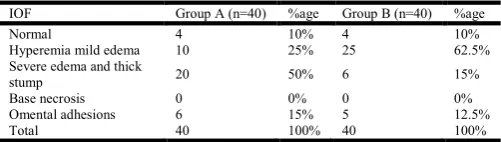
Table 4. Comparison of intra operative finding.
IOF Group A (n=40) %age Group B (n=40) %age
Normal 4 10% 4 10%
Hyperemia mild edema 10 25% 25 62.5%
Severe edema and thick
stump 20 50% 6 15%
Base necrosis 0 0% 0 0%
Omental adhesions 6 15% 5 12.5%
Total 40 100% 40 100%
[image:2.595.306.559.567.607.2] [image:2.595.308.559.689.760.2](62.5%) were mild hyperaemia and oedema of the appendicular stump. 10% in each group were having normally appearing appendix intr-operatively.
Table 5. Position of appendix in both groups
Group A
(n=40) %age
Group B
n=40 %age
Retrocaecal 16 40 12 30
Pelvic 10 25 16 40
Others 6 15 4 10
Position not well defined due to
adhesion/severe inflammation 8 20 8 20
Total 40 100 40 100
[image:3.595.307.562.262.411.2]Most common position of appendix in group I was retrocaecal in 40% of patients (n=16), whereas; in group II it was pelvic position which was seen in 30% of patients (n=12). In 20% of patients in each group the exact position of the appendix could not be ascertained either due to omental adhesion or severe inflammatory process in and around appendix.
Table 6. Comparison of mean size of appendicular stump (in mm)
Group A
(Extracorpreal knotting)
Group B (Harmonic scalpel)
Mean size of appendicular stump 8.84 8.12
Range 6-11 6-10
SD 1.57 1.12
Mean size of appendicular stump was comparable in both the groups (p-value 0.06)
Table 7. Intraperitoneal Drainage in both groups
Group A
n= 40 %age
Group B
n=40 %age
Drain kept 16 40% 26 65%
Drain not kept 24 60% 14 35%
Total 40 100% 40 100%
Intraperitoneal drain was kept in 40% patients (n=16) in knotting group and 65% (n=26) in harmonic scalpel group. Statistically difference was not significant (p=0.089).
Table 8. No. of patients having Post operative ileus
Group A (n=40) %age Group B (n=40) %age
Post op ileus 2 5% 3 7.5%
[image:3.595.34.291.291.337.2]Post operative ileus was present in 5% (n=2) patients in knotting group and in harmonic group it was present in 7.5% (n=3) patient. Statistically difference in two groups was not significant (p=1.000)
Table 9. Commencement of oral feeding in patients post operatively in two groups
Group A n=40 %age Group B n=40 %age
1st 36 90% 36 90%
2nd 2 5% 2 5%
In 90% (n=36) patients in both the groups, the oral feeding was started on 1st post operative day. By 2nd post operative day 95% of patients had taken oral feeding. In only 02 patients in harmonic scalpel group oral feeding was withheld beyond second post operative day. The difference between two groups was statistically insignificant (p=1.000). In our study post-operative pain was assessed according to the demand of analgesics by the patients using Visual Analogue Scale and Mean pain score as observed was 4.12 in knotting group and 3.8 in harmonic group. Majority of the patients in both groups; knotting group (n=15) and harmonic group (n=12) required
[image:3.595.34.291.397.444.2]only 02 doses of analgesics. Maximum of 05 doses were required in 01 patient in knotting group, while in harmonic group maximum of 04 doses were required in 1 patient. Port site infection was observed in 2.5% (n=1) patient in harmonic group and 7.5% (n=3) in knotting group (P=0.609). There was no case of iatrogenic bowel injury, small bowel obstruction, abdominal abscess, stump blow out or leak in both groups. None of patient required readmission or exploration in follow up period. However there was one case of bleeding from port site in group B and one case of bleeding from mesoappendix in group A that were managed. The mean duration of post operative hospital stay was 3.12 days (2-5 days) in knotting group and 2.76 days (2-4 days) in harmonic group. The mean interval to return to daily routine was 7.4 days in knotting group and 7.64 days in harmonic group. There is no statistically significant difference between two groups (p=0.513).
Fig 1: Post Position in Laparoscopic Appendectomy
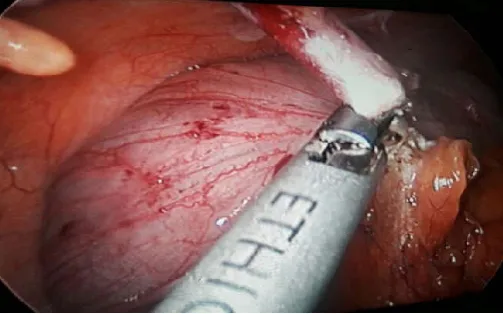
Fig 2: Extracorporeal Knotting in Laparoscopic Appendectomy
[image:3.595.307.561.436.591.2] [image:3.595.308.560.621.778.2]DISCUSSION
Laparoscopic procedures have become well established modality of treatment in many surgeries and appendectomy is no exception. Advantages of laparoscopic appendectomy over open appendectomy are clearly defined in terms of superiority in cases of diagnostic uncertainty and obesity, better visualization of peritoneal cavity, less pain, faster recovery and better cosmetic results. But at the same time it is associated with longer operative time, expensive instruments and need of technical expertise. Closure of appendix base is decisive step in the incidence of intra-abdominal infections, faecal fistulas and surgical site infection both in case of open and laparoscopic appendectomies. Base closure is more important in laparoscopic appendectomy; because initial experience showed laparoscopic appendectomies to have higher incidence of intra-abdominal infections especially in cases of perforated appendicitis and because of non availability of gold standard techniques to close the base. The present study was undertaken to find out differences in two commonly practised techniques of appendicular stump treatment in appendectomy i.e. extracorporeal knotting and harmonic scalpel. In our study there were total 84 patients, however 4 patients were excluded from study as they needed conversion to open surgery due to dense adhesions or intra operatively detected appendicular lump. Rest of patients were randomly divided into two groups. Group A included 40 patients in whom appendicular stump was dealt with extracorporeal knotting and group B included 40 patients where harmonic scalpel ligation of appendicular stump was done.
The two groups were similar in terms of age and sex. Mean age of patients in Group A (extracorporeal knotting) was 27.6 years (7-70 years) and in group B (harmonic scalpel) was 26.9 years (8-68 years) with maximum number of patients in age group of 11-20 years in both. Mean age in our was consistent with similarly situated studies in the literature (Mayir et al., 2015; Scott-Conner et al., 1992; Strzalka et al., 2016). There was male predominance in both extracorporeal knotting (60%) and harmonic scalpel groups (64%) in our study with Male: Female ratio of 1.6:1. Similar male predominance has been seen in study by Scott-Conner et al. (1992) with male to female ratio of 1.3:1. In study by Mayir et al. (2015) there was also male predominance with 1.5:1. Likewise in study by Strzałka et al. (2016) male to female ratio was 1.3:1. In group A, 32 patients were admitted as a case of acute appendicitis, 7 were for interval appendectomy while 1 patient was admitted as case of recurrent appendicitis. In group B, 34 patients were admitted as case of acute appendicitis, 2 for interval appendectomy and 4 were admitted as recurrent appendicitis. In study by Khanna et al. (2004), there were total 60 patients undergoing laparoscopic surgery, 41 patients were having acute appendicitis and 13 had recurrent appendicitis. In study by Yang et al. (2005) laparoscopic appendectomy using the Ligasure was attempted in 15 patients who were admitted as case of acute appendicitis. Doke and Gadekar (2016) did a study where they included 40 patients of acute appendicitis and recurrent appendicitis. Intra operatively in group A, 3 patients had normal appendix, 4 patients had mild hyperaemia, and 20 patients had severe oedema with thick stump. Adhesions with omentum and peritoneum were seen in 6 patients. While in group B, 4 patients had normal appendix, 25 patients had mild hyperaemia, 6 patients had severe oedema and 5 patients had adhesions. None of patients in both groups had necrosis of base. Two patients in harmonic scalpel group had faecolith in
appendix while four patients of extracorporeal knotting group had faecolith. It is clear from above discussion that there were more patients with severe oedema and erythema were taken up for extra corporeal knotting rather than for harmonic scalpel ligation. This observation is statistically significant with P value of 0.04. In study by Gomes et al. (2013) 34% patients had segmental necrosis of appendix, 9.2% had appendicular base necrosis, 25% had abscess, 17 % had regional peritonitis. Ashour-Abou (2014) noted normal appendix in 6 patients, hyperaemia with oedema in 75 patients severe oedema and thickening in 15 patients and base necrosis in 1 patient in knotting group. In study by Yang et al. (2002) 2 patients had normal appendix, 10 patients had inflamed appendix, perforation was seen in 3 patients and one had caecal inflammatory mass.
knot could cause more demand of analgesic doses in knotting group patients. There were 3 cases of port site infection in extracorporeal knotting vs. 1 case of infection in harmonic scalpel group. All these patients were managed conservatively with local wound dressing. Kazimier et al. (2006) in their study also noted a higher port site infection with endoloops as compared to stapler. Abou-Ashour, (2014) in their study noted a higher rate of port site infection with knotting group vs stapler group. In study by Doke and Gadekar, (2016) 1 patient had port site infection out of 40 patients. Stump in this patient was closed by endoloop. In study by Khanna et al. (2004) reported 2 cases of wound infection in their study of 60 patients. In both group oral feed was started in 1st post op day except for 3 patients in whom oral feeding was started on 2nd post op day. Both groups were comparable in case of oral feeding without statistically significant difference. In study by Khanna et al. (2004) median time to start oral feeding was 12 hrs ( 12 to 36 hrs). Post operative ileus was noticed in one patient in extracorporeal knotting group (4%) and two patients in Harmonic scalpel group (8%). In study by Doke and Gadekar, (2016) there were 3 patients who had post-operative ileus. In 2 patients stump was closed with bipolar cautery and in 1 endoloop was used. Nadeem et al. (2016) noted an incidence of ileus of 2.8% in knotting group and 6.3% in clipping group Ashour-Abou (2014) noted one case of ileus in metal clip closure group. No case of ileus was seen in knotting group in their study. In our study one patient had bleeding from port site intra operative, while other patient had bleeding from meso appendix, both these patients were managed intraoperative and were stable in post-operative period. No case of iatrogenic bowel injury, small bowel obstruction, stump blowout or leak and abdominal abscess were seen in both groups. Ashour-Abou, (2014) in their study also didn’t see any complications like bleeding, bowel injury, obstruction, post-operative abscess formation or stump blowout.
Mean hospital stay in group A was 3.12 days while it was 2.76 days in group B. Intergroup comparison statistically was not significant. Scott-Conner et al. (1992) noted a mean post op hospital stay of 2.5 days. Galatioto et al. (2013) in their study noted a mean post-operative stay of 2.7 days. In study Khanna et al. (2004) the mean post op hospital stay was 3 days. Mean post-operative hospital stay of 1.3 days was noted by Mayir et al. (2015) with a range of 1-2 days. Elshoura et al (2017) in their study noted an average hospital stay of 1.73 days, 1.8 days and 2.3 days in stapler, extracorporeal sliding knot and intracorporeal knotting respectively. Mean number of days to return to normal routine was 7.4 days in extracorporeal knotting versus 7.64 in harmonic scalpel group, without any statistical significance.
Conclusion
The technique of laparoscopic appendectomy by harmonic scalpel is very simple. There was no need of changing instruments while closing base of appendix with harmonic. Similarly for closing appendicular stump there was no need of cumbersome handling of suture while placing it through the appendix and there was minimal handling of bowel during harmonic scalpel closure of appendicular stump, hence minimizing the chance for iatrogenic injury as well as post-operative ileus. Hence, harmonic scalpel is considered as safe latest surgical instrument that is changing surgeons’ performances to refined, quicker and efficient procedures. Apart from reduction in operation time compared to
extracoporeal knotting group, it also allows the patients to take less anaesthetic drugs and its related haphazard. In view of the results available from the present study it is concluded that harmonic scalpel appendicular stump closure is safe, time saving, easily accessible and simple when compared with extracorporeal knotting closure of appendicular stump. In situations where facilities of harmonic scalpel are available patients of appendicitis must be extended the benefit of ligating appendicular stump with harmonic scalpel in view of its added advantages over knotting.
REFERENCES
Ali I V, Maliekkal J I. 2009. Laparoscopic appendectomy using endo-ring applicator and fallope rings. Saudi J Gastroenterol., 15:39-41.
Ashour-Abou H S. 2014. Evaluation of Intracorporeal knotting and metallic clipping of appendicular stump in laparoscopic appendectomy. The Egyptian J Surg., 33: 188-93.
Bajpai M. 2014. Technique of suture less appendectomy by laparoscopy in children: Preliminary communication.J Indian Assoc Paed Surg., 19(1): 28-30.
Bajpai M. 2014. Technique of suture less appendectomy by laparoscopy in children: Preliminary communication. J Indian Assoc Paed Surg.,19(1): 28-30
Dey S, Mohanta P K, Baruah A K. et al. 2010. Alvarado Scoring in Acute Appendicitis – A clinicopathological correlation. Indian J Surg, 72(4): 290-93
Doke A, Gadekar J. 2016. Study of Various Techniques of Appendicular Stump Closure during Laparoscopic Appendectomy. IJSR, 5(1): 104 – 07.
Elshoura A, Hassan O, Saber S. 2017. Application of different methods for stump closure in laparoscopic appendectomy. Egypt J Surg., 36:131-6.
Galatioto C, Guadagni S, Zocco G et al. 2013. Mesoappendix and appendix stump treatment in laparoscopic appendectomy: a retrospective study in 1084 patients. Ann Ital Chir., 84(3):269-74.
Gomes C A, Junior C S, de Peixoto R O. et al. 2013. Appendiceal stump closure by metal endoclip in the management of complicated acute appendicitis. WJES, 8:35.
Honnie B, Fenoglio M, Haun W, Moore J T. 2004. Laparoscopic Suturing and Knot Tying: A Comparison of Standard Techniques to a Mechanical Assist Device JSLS, 8(2): 187-89.
Hue CS, Kim JS, Kim KH. et al. 2013. The usefulness and safety of Hem o-lok clips for the closure of appendicular stump during laparoscopic appendectomy. J Korean Surg Soc., 84:27–32
Kazemier G, Hof K H, Saad S. et al. 2006. Securing the appendiceal stump in laparoscopic appendectomy: Evidence for routine stapling?, Surg Endosc., 20: 1473-76. Khanna S, Khurana S, Vij S. 2004. No clip, no ligature
laparoscopic appendectomy. Surg laparosc Endosc & Percutan Tech., 14 (4): 201-03.
Martin del Olmo JC, Blanco Alvarez Ji, Carbajo Caballero MA et al. 2002. Journal Laparoscopic appendectomy by ultrasonically activated scalpel in acute appendicitis: Preliminary report. J Laparoendosc Adv Surg Tech A., 12(2): 111-13.
Miles A, Wilkie D P. 1933. Appendectomy as treatment for appendicitis. In: Miles A, Wilkie DP, editors. Operative surgery. Vol. 2. London: Oxford University Press, 488-09 Nadeem M, Khan S M, Ali S. et al. 2016. Comparison of
extra-corporeal knot-tying suture and metallic endo-clips in laparoscopic appendiceal stump closure in uncomplicated acute appendicitis. Int J Surg., 2: 11-14.
Obonna G.C., Mishra R.K. 2014. Difference between Thunderbeat, Ligasure and Harmonic Scalpel Energy System in Minimally invasive Surgery. World J Lap Surg., 7(1): 41-44.
Rickert A, Bönninghoff R, Post S. et al. 2012. Appendix stump closure with titanium clips in laparoscopic appendectomy. Lange Arch of Surg., 397(2):327-31
Scott-Conner CE, Hall TJ, Anglin BL. et al. 1992. Laparoscopic appendectomy. Initial experience in a teaching program. Ann Surg., 215(6):660-67.
Shahidulla A M, Islam M A, Pavreen Z. 2011. Prospective study of harmonic scalpel in 800 cases covering both open and laparoscopic methods. J. Dhaka National Med. Coll. Hos., 17(01): 25-28.
Semm K. 1983. Endoscopic appendectomy. Endoscopy, 15:59-64
Shivamallaiah S V. 2014. Appendicitis and antibiotics an approach to the management of acute appendicitis. JEMDS, 3(59) 2014:13282-87
Strzalka M, Matyja M, Rembiasz K. 2016. Comparison of results of laparoscopic appendectomies with application of different techniques for closure of appendicular stump. World J Emerg Surg., 11:4.
Yang H R, Wang Y C, Chung P K. et al. 2005. Laparoscopic appendectomy using the Liga Sure Vessel Sealing System. J Laparoendosc Adv Surg Tech A., 15(4):353-56.
Yauger B J, Dunlow S G, Lockrow E G. 2005. Laparoscopic appendectomy: a series of cases using laprosonic coagulating shears as compared to endo GIA and endo shears. J Reprod Med., 50(4): 231-34.
Yavuz A, Bulus H, Taş A. et al. 2016. Evaluation of Stump Pressure in Three Types of Appendectomy: Harmonic Scalpel, LigaSure, and Conventional Technique. J Laparoendosc Adv Surg Tech A,26(12):950-953.