Processing of Refractory Organic Waste Water Using Ozone
and Novel Agitation Method
Moriyoshi Shitara
1;*, Manabu Iguchi
2, Keiji Takano
1, Taku Tamamori
1,
Hidehiro Shitara
1, and Toshihiko Maruyama
31Huens Co., Ltd., Obihiro 080-0802, Japan
2Division of Materials Science and Engineering, Graduate School of Engineering, Hokkaido University, Sapporo 060-8628, Japan 3Science and Technology Coordinator, Northern Advancement Center for Science and Technology,
Japan Science and Technology Corporation (JST), Sapporo 001-0021, Japan
A novel agitation method using ozone was applied to removing BOD5, CODMn, color, and NH4-N in organic waste water filled in a
cylindrical vessel. The organic waste water was agitated by injecting the same organic waste water into the bath through a centered bottom nozzle. Its flow rate was adjusted to form a jet above the nozzle. A pump was used for draining the organic waster water through four nozzles settled on the bottom of the vessel and circulating it until the aforementioned four quantities were sufficiently decreased. The swirl motion of the jet appeared under certain injection conditions. The bath was strongly agitated in the presence of the swirl motion. An ozone and air mixture therefore was supplied into the nozzle and then introduced into the bath with the jet. The rate constants of BOD5, CODMn, color, and NH4-N
were highly enhanced by this method compared to the conventional method using aeration of an ozone-air mixture supplied through a perforated plate.
(Received June 13, 2003; Accepted July 30, 2003)
Keywords: ozone, BOD5, CODMn, waste treatment, organic waste water, swirl motion, jet, agitation
1. Introduction
Wastes from industrial works, farms, and so on are increasing year by year. Many efforts have been devoted for a long time to removing undesirable components, materials and inclusions from them to decrease damages to
the environment as well as to recycling them.1–3)A variety of
biological and physicochemical processes have been proposed
depending on the properties of the wastes.4–6) Rapid and
efficient processing of refractory organic waste water, however, is left unsolved. So far, biological methods have mainly been developed to treat the refractory organic waste
water.7,8) Unfortunately, these methods are not necessarily
stable, and the treatment time is not so short because the degradation rate of the organic waste water by bacteria is rather limited. Physicochemical methods are therefore expected to achieve stable and rapid treatments. Among possible methods, processing of the refractory organic waste water using ozone seems promising, as ozone is widely known
as the bactericide, deodorant, and decoloring agent.9–14)
According to Sieke,10)ozone can find its wide applications
as follows:
(1) Processing of drinking water and pool water,
(2) Processing and treatment of cooling, sewage and industrial water,
(3) Purification of exhaust air,
(4) Bleaching and sterilization of food, (5) Optimization of combustion process, (6) Technology of environmental protection, (7) Use in waste disposal,
(8) Use in glass, wood and textile industry
However, it is said that BOD5contained in organic waste
water is hardly removed by ozone, although CODMn and
color (chromaticity) are rather readily decreased.8) The
present authors considered that the intensity of agitation was too weak in previous processing of organic waste water because ozone was mixed with air and then the ozone-air mixture was introduced into the reactor through a perforated plate. The agitation intensity in such an aeration system is usually weak.
The main objective of this study is to examine whether
rapid removal of BOD5 in refractory organic waste water is
possible or not using ozone. Organic waste water contained in a cylindrical vessel was agitated by injecting the same organic waste water into it from a centered bottom nozzle. The organic waste water was drained from four nozzles placed on the bottom of the vessel and circulated with a pump
until BOD5 was effectively removed. As expected, the rate
constants of BOD5, CODMn, color, and NH4-N were highly
enhanced in the presence of the swirl motion of the bath.
2. Some Aspects of Bath Agitation by Swirl Motion of Bottom Blowing Jet
2.1 Classification of swirl motions of bubbling jet In materials processing operations a molten metal bath is
often agitated by bottom gas injection.15–17) Gas is injected
through a centered single or some eccentric nozzles placed on the bottom of the reactor. The gas thus introduced into the molten metal bath disintegrates successively into bubbles at the nozzle exit and a bubbling jet is formed in the bath. The bubbling jet formed above the single nozzle does not always rise straight upward, but under certain conditions rise swirling around the vessel axis. The bath also exhibits a swirl motion, being in phase with the swirl motion of the
bubbling jet.18) Meanwhile, when gas is injected through
more than two eccentric bottom nozzles, complex bath
oscillations take place under certain blowing conditions.19)
*Present address: Graduate Student, Hokkaido University
Special Issue on New Systems and Processes in Recycling and High Performance Waste Treatments
The swirl motion of a bubbling jet resembles the rotary sloshing observed for a bath contained in a cylindrical vessel
subjected to external forced oscillation.20)Two types of swirl
motions occur depending on the aspect ratio,HL=D, as shown
in Fig. 1: the shallow-water wave type and the deep-water
wave type, whereHL is the bath depth andDis the vessel
diameter.18) The former appeared for HL=D<0:3 and the
latter appeared forHL=Dranging from approximately 0.3 to
unity. The bath was highly agitated in the presence of the
swirl motion of the deep-water wave type.21)This is because
a large-scale three-dimensional recirculating flow is induced in the bath.
2.2 Swirl motion of liquid jet
The swirl motion of a water bath also appeared when water was injected into the bath through a centered bottom
nozzle.22–24) The same effect as that of the swirl motion of
a bubbling jet is expected on the agitation of the bath. In this study an ozone-air mixture was premixed with organic waste water in the pipe connected upstream of the nozzle and then introduced into the organic waste water bath to examine
whether the removal of BOD5 is possible or not in the
presence of the swirl motion. This processing was named the ‘‘ozone injection with swirl’’. Meanwhile, an ozone-air mixture was directly introduced into the bath through a perforated plate. This processing was named the ‘‘ozone aeration’’.
2.3 Starting time of the swirl motion of bubbling jet It is of essential importance in practical applications to evaluate the period from the start of organic waste water injection into the bath until the swirl motion of the water jet
occurs. This period, Ts,s, called the starting time of swirl
motion, is given by23)
Ts,sðg=DÞ0:5 ¼0:253½Tcðg=DÞ0:51:75 ð1Þ
Tc¼VL=QLb ð2Þ
QLb¼0:3QLHL=dnen ð3Þ
wheregis the acceleration due to gravity,Tcis a
character-istic time,VL is the volume of the bath, QLb is the upward
moving liquid flow rate in the bath induced by the liquid
jet,25)QL is the liquid flow rate at the nozzle exit anddnenis
the nozzle diameter.
2.4 Mixing time in the presence of the swirl motion of bubbling jet
The intensity of agitation is quantitatively evaluated by
means of the mixing time, Tm. According to the previous
study,8)the mixing time in the presence of the swirl motion of
the deep-water wave type is predicted by the following empirical equation.
Tm¼4:92g0:22Qg0:47D 1:27H
L0:33 0:03
L ð4Þ
whereQgis the gas flow rate andLis the kinematic viscosity
of liquid. Equation (4) was obtained based on the commonly used 95% criterion. Experimentally obtained mixing time was much shorter (say approximately one fifth) in the presence of the swirl motion than in the absence of it.
Agitation of a bath using the swirl motion of a bubbling jet
was first applied to snow melting.26)Snow was charged into a
water bath. The bath was agitated by bottom gas injection. The melting rate of snow was highly enhanced when the swirl motion of the bubbling jet occurred.
Information on the mixing time for a bath agitated by a bottom blowing liquid jet is not available, and accordingly, eq. (4) is tentatively used in the presence of the swirl motion of the jet. It is regarded as the same order of magnitude as that
for the bubbling jet judging from the flow in the bath.22,23)
3. Experimental Apparatus and Procedure
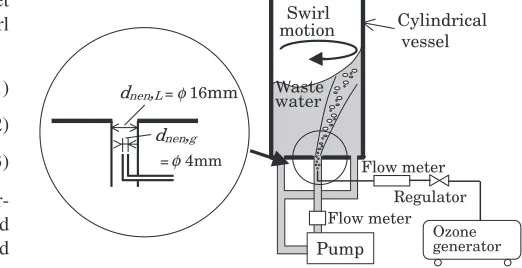
Figure 2 shows a schematic diagram of the experimental apparatus. The test vessel, made of transparent acrylic resin,
had an inner diameter, D, of 380 mm and a height, H, of
1000 mm. Organic waste water supplied from a cow bleeder
was filled to a depth,HL, of 400 mm. The aspect ratio,HL=D,
therefore was 1.05, being suitable for the occurrence of the swirl motion. The organic waste water contains excreta of milk cows, acid, alkali, germicides, and so on in large amount in addition to milk element. Ozone was generated by making use of an ozone generator and mixed with air. The air was supplied with a compressor. Such an ozone-air mixture was premixed with the organic waste water in the pipe connected
upstream of the nozzle. The air flow rate,Qg, was adjusted
with a mass flow controller. The liquid flow rate was
1670 cm3/s. Bubbles generated at the nozzle were
disinte-grated into smaller bubbles due to strong shear forces acting on them. The bubble diameter therefore is considered to be less than approximately 1 mm. Some of bubbles floating in
Shallow water Deep water
Fig. 1 Classification of swirl motions.
dnen,L =φ16mm
dnen,g
=φ4mm
Pump
Cylindrical vessel
Waste water
Flow meter Flow meter
Regulator
Ozone generator Swirl
motion
[image:2.595.50.290.73.216.2] [image:2.595.286.547.634.768.2]the bath were sucked by a pump and re-entered into the bath. The bubbles were further disintegrated into smaller bubbles when they pass the pump. The residence time of bubbles in the bath was much longer than that for the ozone aeration. The hole diameter of the perforated plate is 0.15 mm and the diameter of bubbles for the ozone aeration also seems less than approximately 1 mm.The concentration of ozone in the
ozone-air mixture was varied from 21 to 42 g/Nm3. In order
to make clear the effects of the swirl motion of the liquid jet on the treatment of refractory organic waste water, an ozone-air mixture was directly introduced into the bath through a perforated plate. The concentration of ozone in the ozone-air mixture was set to be equal in the two cases. Further information on the period, amplitude, starting time and damping time of swirl motion of the bath is referred to the
previous papers.22,23)
4. Experimental Results and Discussion
4.1 Effect of swirl motion on decreasing rate of BOD5
[image:3.595.306.544.74.237.2]and CODMn
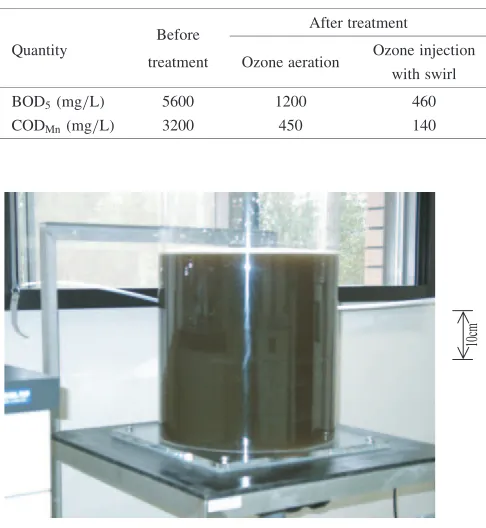
Table 1 lists the changes in BOD5and CODMnbefore and
after the treatment using the swirl motion of the bath. Figures 3 through 5 show the photographs of the waste water at three representative instants. The flow rate of organic
waste water, QL, was 1670 cm3/s and the initial bath
temperature was 25C. The temperature of the ozone-air
mixture was set to be equal to the initial temperature of the bath. As predicted by eq. (1), the swirl motion of the organic
waste water jet became to occur at around t¼2s after the
start of the injection of the waste water and reached a steady
state at aroundt¼8s.The period and amplitude of the swirl
motion were 0.64 s and 17 cm, respectively. The mixing
condition therefore did not change during the treatment. The temperature of the bath increased almost linearly from
25C, reached 60C at around t¼6h and then remained
unchanged. The heat was supplied by the pump. In general, chemical reaction rate is enhanced as the temperature is raised. However, the temperature rise is not necessarily beneficial for the ozone reaction because the dissolution rate of ozone into the waste water decreases with an increase in the temperature.
Equation (4) suggests that the bath is completely mixed at 10 s after the swirl motion occurred. These two periods are very short compared to the treatment time. The concentration
of ozone in the ozone air mixture was 42 g/Nm3. The initial
values of BOD5and CODMn were 5600 mg/L and 3200 mg/
L, respectively. When the aeration of an ozone-air mixture
was applied for 24 hours, BOD5was 1200 mg/L and CODMn
was 450 mg/L. On the other hand, the presence of the swirl motion of water jet including an ozone-air mixture decreased
BOD5to 460 mg/L and CODMn to 140 mg/L. Owing to the
occurrence of the swirl motion, both BOD5 and CODMn
[image:3.595.307.545.288.455.2] [image:3.595.47.290.508.772.2]became approximately one third of those obtained by the ozone aeration. As the composition of the presently used organic waste water is complex, it is difficult to describe the whole chemical reactions. Some representative chemical
Table 1 Changes in BOD5 and CODMn in organic waste water after
different treatments.
Before After treatment Quantity
treatment Ozone aeration Ozone injection with swirl BOD5(mg/L) 5600 1200 460
CODMn(mg/L) 3200 450 140
10cm
Fig. 3 Photograph of organic waste water (before treatment).
10cm
Fig. 5 Photograph of organic waste water (after treatment by ‘‘ozone injection with swirl’’).
10cm
reactions with ozone are listed in Ref. 12).
The 99.9% of the ozone which was introduced into an organic waste water bath was effectively used for the degradation of organic materials contained in the waste water in the presence of the swirl motion of the bath, while only 70.3% was used in the aeration system. The remaining ozone escaped from the bath surface into the atmosphere.
Figure 6 shows the photographs of the organic waste water kept quietly in 30 minutes after the treatment of 24 hours. It is evident that the water is transparent, and the decomposed materials can readily be removed as the precipitate.
4.2 Effect of concentration of ozone on decreasing rate of BOD5
Table 2 shows the effect of the concentration of ozone on
the decreasing rate of BOD5 in organic waste water. The
treatment time was 24 hours. The flow rate of organic waste
water, QL, was 1670 cm3/s and the initial bath temperature
was 25C. For a concentration of ozone of 42 g/Nm3, BOD
5
became 40.8% of its initial value of 1740 mg/L for the ozone aeration, while it became only 6.3% for the ozone injection
with swirl. The final BOD5value increased from 110 mg/L to
250 mg/L as the concentration of ozone was decreased from
42 g/Nm3 to 21 g/Nm3. Nevertheless, this 250 mg/L was
much lower than 710 mg/L for the ozone aeration. The use of swirl motion therefore is beneficial for significantly
decreas-ing BOD5 as well as CODMn.
4.3 Temporal changes in pH, BOD5, CODMn, and NH4
-N
As can be seen in Fig. 7 and Table 3, the pH slightly
increased. Both the color and CODMn decreased gradually
just after the start of treatment. Three hours later, the color
was 14.2% and CODMnwas 59.1% of their respective initial
values. Accordingly, the color was most sensitive to ozone,
as mentioned earlier.8) BOD5 first increased and then
decreased to its initial value at treatment time of approx-imately 8 hours. Subsequently, it decreased to a very low level and reached 8.2% of its initial value after 24 hours.
Previous studies carried out by other researchers indicate
that BOD5can not be decreased by ozone when the ozone-air
mixture is introduced through a perforated plate, i.e., when
the aeration of the ozone-air mixture is employed.8) The
presently observed decrease in BOD5 due to aeration is
considered to be achieved because the treatment time was long enough. It should be emphasized that an effective
decrease in BOD5 was first observed in this study. NH4-N
also was not sensitive to ozone in the initial stage of treatment
just like BOD5 but it became to decrease after sufficient
treatment time and changed finally into NO3 via NO2. The
amount of NO3 became 87.7% of the total nitrogen (T-N)
after the treatment of 24 hours. NO3can be decomposed into
N2 by anaerobic bacteria and released into the atmosphere
2 cm
[image:4.595.49.284.73.235.2]Fig. 6 Photograph of organic waste water (kept quietly in 30 minutes after treatment by ‘‘ozone injection with swirl’’).
Table 2 Change in BOD5in organic waste water after different treatments.
After treatment
Quantity Before Ozone injection Ozone injection Ozone aeration treatment with swirl with swirl
(ozone concentration (ozone concentration (ozone concentration = 42 g/Nm3) = 21 g/Nm3) = 42 g/Nm3)
BOD5(mg/L) 1740 110 250 710
pH CODMn BOD5 NH4-N color
103
102
10
1
0 5 10 15 20 25
COD
Mn
, BOD
5
, NH
4
-N (mg/L)
pH, , color
(–)
Treatment Time, t/h
Fig. 7 Changes in pH, CODMn, BOD5, NH4-N and color of organic waste
[image:4.595.306.548.76.235.2]water after treatment by ‘‘ozone injection with swirl’’.
Table 3 Changes in pH, CODMn,BOD5, NH4-N and color in organic waste
water after treatment by‘‘ozone injection with swirl’’.
Quantity Treatment time (h)
0 3 8 24
pH 7.1 7.4 7.1 7.7
CODMn(mg/L) 494 292 105 10
BOD5(mg/L) 61 138 56 5
NH4-N (mg/L) 55.2 59.6 59.6 9.4
[image:4.595.305.549.307.396.2] [image:4.595.44.551.695.787.2]without causing damages to the environment.
[image:5.595.53.551.86.186.2]4.4 Rate constant of CODMn, BOD5 and color
Table 4 summarizes the rate constants of CODMn, BOD5
and color in organic waste water. The results indicates that the swirl motion of the bath is very beneficial for the rapid treatment of undesirable materials in refractory organic waste water.
5. Conclusions
(1) The 99.9% of the ozone which was introduced into an organic waste water bath was effectively used for the degradation of organics contained in the waste water in the presence of the swirl motion of the bath. Meanwhile, only 70.3% was used in the aeration system.
(2) Ozone has long been known to be ineffective to removing
BOD5. This was true until the treatment time of 8 hours even
in the presence of the swirl motion. However, with a further
lapse of time, BOD5became to be effectively decreased after
the color and CODMnwere decreased to certain levels. Such a
high decreasing rate of BOD5was first observed in this study.
This result was brought about owing to very intense agitation in the presence of the swirl motion.
(3) In the same manner as that for BOD5, NH4-N also was
deoxidized after the color and CODMn were sufficiently
decreased and it changed finally into NO3. This result is very
beneficial for the development of a novel process for removing nitrogen in waste water.
Nomenclature
BOD5: biochemical oxygen demand (mg/L)
CODMn: chemical oxygen demand evaluated by Mn (mg/
L)
D: bath diameter (m)
g: acceleration due to gravity (m/s2)
H: height of test vessel (m)
HL: bath depth (m)
Qg: flow rate of ozone-air mixture (cm3/s)
QL: flow rate of organic waste water (cm3/s)
QLb: flow rate of organic waste water induced by liquid jet
in the bath (cm3/s)
Tc: circulation time (s)
Tm: mixing time (s)
Ts,s: starting time of swirl motion (s)
L: kinematic viscosity of liquid (m2/s)
REFERENCES
1) A. H. El-Shaarawari and W. W. Piogosch:Encyclopedia of Environ-metrics, Vols. 1-4, (John Wiley & Sons Ltd., West Sussex, 2002). 2) K. Yoshida: Dictionary of Environmental Technology,
(Sangyo-Chosakai, Tokyo, 1998).
3) K. Ishii: History of Environmental Problems in 20th Century in Japan, Industrial and Environmental Management Association, Maruzen, (2002).
4) J. Kondo: Dictionary of Recycling of Industrial Wastes, (Sangyo-Chosakai, Tokyo, 2002).
5) T. Yamanaka:CO2Recycling, (Maigaia, Tokyo, 1998).
6) Jpn. Soc. Wastes:Handbook of Wastes, (Ohm Pub. Co. Ltd., Tokyo, 1996).
7) H. Ozaki, S. Kurinobu, and T. Watanabe: TML Annual Report Supplement I, (2002) 103-109.
8) Jpn. Environmental and Sanitary Center: Lecture note for treatment of general wastes, (1993) 418.
9) L. Lamarre: EPRI J., July/August (1997), 7-15.
10) R. W. Sieke: Plasmaozone, C: jTech-Proj Thermolij Praesentaj
Plasmaz.Docj(1996), 1-15.
11) Y. Nitta: J. IEE Japan114-10 (1994) 658-659. 12) E. Niki: Zosui Gijyutsu14-4 (1988) 13-19. 13) I. Somiya: Zosui Gijyutsu14-4 (1988), 19-24.
14) G. Inoue, K. Sugimoto and H. Uchiyama: Zosui Gijyutsu14-4 (1988) 24-28.
15) K. Mori and M. Sano: Tetsu-to-Hagane67(1981) 672-695. 16) ISIJ: 100th and 101st Nishiyama Memorial Lecture, ISIJ (1984). 17) O. J. Ilegbusi, M. Iguchi and W. Wahnsiedler: Mathematical and
Physical Modeling of Materials Processing Operations, (Chapman & Hall/CRC, Boca Raton, 1999) 362-467.
18) M. Iguchi, S. Hosohara, T. Koga, R. Yamaguchi and Z. Morita: ISIJ Int.
33(1993) 1037-1044.
19) Y. Kato, T. Nozaki, K. Suzuki and T. Emi: Tetsu-to-Hagane68(1982) 1604.
20) A. Kimura and H. Ohashi: Trans. Jpn. Soc. Mech. Eng., Pt. 144(1978) 3024-3033.
21) Y. Takatsuka and M. Iguchi: ISIS Int.41(2001) 124-127.
22) J. Yoshida, D. Iguchi, M. Shitara, T. Tamamori and M. Iguchi: CAMP-ISIJ16-1 (2003) 106.
23) D. Iguchi, J. Yoshida and M. Iguchi: CAMP-ISIJ16-1 (2003) 107. 24) M. Shitara, T. Tamamori, D. Iguchi, J. Yoshida, M. Iguchi and T.
Kumagai: CAMP-ISIJ16-1 (2003) 105.
25) K. Abe and M. Iguchi: ISIJ Int.42(2002) 581-587.
[image:5.595.304.550.275.726.2]26) M. Iguchi, Y. Sasaki, K. Sasaki, and J. Yoshida: Jpn. J. Multiphase Flow16-3 (2002) 232-239.
Table 4 Rate constants of CODMn, BOD5and color in organic waste water by different treatments.
Treatment method
Ozone injection Ozone injection Ozone aeration with swirl with swirl
(ozone concentration (ozone concentration (ozone concentration = 42 g/Nm3) = 21 g/Nm3) = 42 g/Nm3)
Rate constant CODMn 0.170 0.110 0.071
[1/h] BOD5 0.090 0.084 0.059