case study in cystic fibrosis clinics (abstract only)
GIRLING, Carla, HIND, Daniel, ARDEN, Madelynne A
<http://orcid.org/0000-0002-6199-717X> and WILDMAN, Martin J
Available from Sheffield Hallam University Research Archive (SHURA) at:
http://shura.shu.ac.uk/25025/
This document is the author deposited version. You are advised to consult the
publisher's version if you wish to cite from it.
Published version
GIRLING, Carla, HIND, Daniel, ARDEN, Madelynne A and WILDMAN, Martin J
(2019). Developing an implementation strategy for the use of objective adherence
data in routine clinical practice: a case study in cystic fibrosis clinics (abstract only).
Implementation Science, 14 (Supp2).
Copyright and re-use policy
See http://shura.shu.ac.uk/information.html
Sheffield Hallam University Research Archive
MEETING ABSTRACTS
Open Access
Proceedings from the 2nd Annual UK
Implementation Science Research
Conference, 'Advancing the science of
scaling up: Improving efficiency and
effectiveness of implementation strategies
in healthcare': meeting abstracts
London, United Kingdom. 18 July 2019
Published: 10 July 2019
P1
What makes innovations both‘stick’and‘spread’? A
multidisciplinary systematic review to understand implementation depth and scale-up of innovations in healthcare
Alexandra Ziemann1, Yaru Chen1, Yiannis Kyratsis1,2, Charitini
Stavropoulou1,3, Harry Scarbrough1,4
1Centre for Healthcare Innovation Research (CHIR), City, University of
London, London, United Kingdom; 2 VU Amsterdam, Amsterdam 1081 HV, Netherlands;3School of Health Sciences, City, University of London,
London, United Kingdom;4CASS Business School, City, University of London, London, United Kingdom
Implementation Science2019,14(Suppl 2):P1
Correspondence:Alexandra Ziemann ([email protected])
Background
Often, healthcare innovations are not sustained after adoption and vary in their effectiveness when scaled-up.[1] Diverging research strands focus on either implementation or scale-up/diffusion. These strands typically have different analysis levels, focus on different im-plementation phases and are conducted in different research fields (e.g., health research (implementation), organisation studies (diffu-sion)). This systematic review aimed at synthesising evidence on im-plementation depth and innovation diffusion published in these diverging research fields.
Method
We systematically searched eleven health and organisation/manage-ment studies databases for theoretical and empirical studies pub-lished in English language, including Medline and Business Source Complete. The search strategy combined terms for innovation with terms for implementation depth or diffusion. Further we hand-searched key textbooks, references and citations of included studies and relevant journals in the two fields. Two reviewers screened for inclusion and extracted data. Conflicts were resolved in the team. Data are analysed applying qualitative thematic analysis and sum-marised in a narrative synthesis.
Results
Preliminary results show that conceptualisations of implementation depth and innovation diffusion vary according to the theoretical per-spective. They can be conceptualised along dimensions of scale (ex-tensiveness, completeness, prevalence), scope (degree of fit, fidelity and adaptation), process (incremental and continuous or disruptive and episodic) and outcome (decoupling and ephemeral or sustained change).
Conclusion
The review synthesises concepts from different levels of analysis and diverse literatures. It sheds light on the blind spot in our understand-ing of how to achieve both, the widespread and sustainable imple-mentation of innovations.
Acknowledgements
This abstract is presented on behalf of the interdisciplinary Centre for Healthcare Innovation Research (CHIR) at City, University of London. All authors contributed equally to the abstract.
Reference
1. Health Foundation, editor. The spread challenge. London: Health Foundation; 2018.
P2
Scaling up guidance documents on dementia palliative care: PAR methods and strategies to promote implementation
Suzanne Timmons1, Nicola Cornally1, Irene Hartigan1, Elaine Lehane1, Catherine Buckley2, Christina O
’Loughlin4, Colette Finn1, Marie Lynch3,
Alice Coffey4
1University College Cork, Cork, Ireland;2St Luke’s Home, Cork, Ireland; 3
Irish Hospice Foundation, Dublin, Ireland;4University of Limerick, Limerick, Ireland
Implementation Science2019,14(Suppl 2):P2 Correspondence:Alice Coffey ([email protected])
Background
Dementia is a progressive illness and in the later stages, the person will have difficulty communicating their needs in relation to thirst, hunger, pain or discomfort. In Ireland, over one third of people with dementia reside in Long Term Care settings. Evidence based guid-ance documents for dementia palliative were developed by the au-thors with the support of the Irish Hospice Foundation. The aim of this study is to implement the guidance intervention in three Long Term Care (LTC) facilities in Ireland.
Method
The Consolidated Framework for Implementation Science (CFIR) underpinned the 3 phases to promote implementation. Phase 1 con-sisted of situational analysis, interviews with residents and carers and audit of current practice to identify factors that for the up scaling of the intervention and implementation process. The implementation process is guided by Participatory Action Research (PAR)
© The Author(s). 2019Open AccessThis article is distributed under the terms of the Creative Commons Attribution 4.0
methodology. These data informed the design of the educational intervention within work based learning groups (WBLG).
Results
Work based learning groups with virtual and physical resources were de-veloped using combined blended approach to learning. Four face-to-face sessions with active and creative learning opportunities were designed based on findings from the situational analysis results in phase 1.
Conclusion
This dynamic approach to implementing the guidance within WBLG enables learners to have greater control over how the learning takes place. Provisions within the work place allow for ‘in employment’ education to overcome any disconnect associated with traditional education methods. Using this Participatory Action Research process within an implementation framework created learning and embra-cing of change in practice from within including the identification of strategies to overcome difficulties and maximise benefits of implementation.
AcknowledgementsThis study is co-funded by the Irish Health Research Board Applied Partnership Award and the Irish Hospice Foundation
O3
Improving European Healthcare Systems through the
Development of a Realist Evaluation Framework for a European Public Health Data Analytic Project
Andrew Boilson1, Regina Connolly2, Anthony Staines1, Paul Davis2, Justin Connolly1, Dale Weston3
1
School of Nursing and Human Sciences, Dublin City University, Glasnevin, Dublin 9, Ireland;2Business School, Dublin City University,
Glasnevin, Dublin 9, Ireland;3Emergency Response Department, Science and Technology, Health Protection Directorate, Public Health England, Porton Down, Salisbury, UK
Implementation Science2019,14(Suppl 2):O3
Correspondence:Andrew Boilson ([email protected])
Background
The multi-national MIDAS (Meaningful Integration of Data Analytics and Services) project is developing a big data platform to facilitate utilisation of a wide range of health and social care data to enable integration of het-erogeneous data sources, providing analytics, forecasting tools and be-spoke visualisations of actionable epidemiological data.
Method
An evaluation framework starting with a logic model and semi-structured interviews using the principles of realist evaluation was developed working with 6 developers, 5 health service managers, 2 allied health professionals and 3 policy makers. Parallel case studies were used to address the re-quirements of stakeholders at critical time points during the project.
Results
At this early stage of the MIDAS project’s development, the logic model represents an accurate representation of the project’s key out-puts, outcomes and impacts identified through the logic model tran-scripts coding process. The logic model was developed through a number of iterations of consultation with the MIDAS consortium as an initial process of evaluating, planning and developing the project. As the project progresses, key indicators (outputs, outcomes and im-pacts) that were not initially included in the logic model may be identified through interviews with end users of the MIDAS platform tools and the technical development teams.
Conclusion
The objective of this study is to narrow the gap between end user re-quirements of the platform tools and technical developers’ expecta-tions of the end user needs, an ongoing process of refining the logic model is required at critical stages of the project’s development. To narrow the gap an ongoing process of refining the logic model is re-quired at critical stages of the project’s development. Overall, the early stage interviews indicated the logic model is an effective frame-work for the evaluation of the project.
O4
Scaling up with structure: Impact, feasibility and theoretical reflections on a practice-informed scale up template to improve patient safety
Andrew Sibley, Tracy Broom
Wessex Academic Health Science Network, Innovation Centre, Southampton, UK.
Implementation Science2019,14(Suppl 2):O4
Correspondence:Andrew Sibley ([email protected])
Background
In 2017/18 Wessex Patient Safety Collaborative (PSC) led a project to support local NHS teams expand established patient safety initiatives. The aim was to develop a‘scale up template’(SUT) and test its use in practice. The SUT undertook“deliberate efforts to increase the im-pact of innovation to benefit more people and to foster policy and program development on a lasting basis.”[1] The SUT aimed to sup-port“scale up to at least 60% of a target population that could po-tentially benefit from the program.” [2] The SUT developed a 10-stage process to scale up and used pragmatic techniques of engage-ment, face-to-face, with staff to work through the complexities of scale up.
Method
A mixed methods investigation, of the impact and feasibility of the SUT, collected quantitative scale up data on each initiative and undertook qualitative focus groups with staff.
Results
Quantitative findings indicated all initiatives reached their target of 60% (55 of 92 possible) scaled up units (hospital wards, care homes etc). Sixteen themes from a synthesised thematic analysis of four focus groups were identified. Themes included: Overwhelmingly positive perceptions of SUT; SUT changed the previous scale up ap-proach; Train the trainer potential. Facilitator themes included: Pro-ject manager role vital; First meeting with AHSN PSC lead vital; SUT developed staff awareness of implementation science/scale up; Ex-ecutive sponsorship vital. A key barrier theme was the systemic underestimation, by staff, of scale up complexity and challenges.
Conclusion
The SUT was perceived as a positive force for change as teams prag-matically worked with complexity to scale up their initiatives. The SUT was a catalyst for changing approach after previous failed at-tempts to scale up had occurred. Active ingredients of its value were identified. Reflections on how the SUT mapped to implementation theories was undertaken to further develop the SUT.
Acknowledgements
On behalf of Wessex AHSN and Wessex Patient Safety Collaborative, we would like to thank the NHS staff who participated in this scale up initiative and evaluation.
References
1. Norton WE, McCannon CJ, Schall MW, Mittman BS. A stakeholder driven agenda for advancing the science and practice of scale up and spread in health. Implementation Science. 2012; 7: 118.
2. Rabin BA, Brownson RC. Developing the terminology for dissemination and implementation of research. Dissemination and implementation research in health. 2012; DOI:10.1093/acprof:oso/9780199751877.003.0002
O5
The role of knowledge exchange in scaling-up a complex intervention for osteoarthritis (ESCAPE-pain) in England Andrew Walker1,2, Annette Boaz2, Michael V Hurley1,2
1Health Innovation Network, London, UK;2Kingston University and St
George’s, University of London, London, UK
Implementation Science2019,14(Suppl 2):O5
Background
Implementing and scaling-up innovations is a collective social process [1,2]. However, there is limited analysis about how knowledge exchange operates in practice to support scaling-up [3]. ESCAPE-pain is an evidence-based complex intervention for osteoarthritis currently in >100 sites in England. The study investigated the role of knowledge exchange in scaling-up ESCAPE-pain.
Method
A qualitative case study approach was used. Forty clinicians and managers participated in 50 interviews across 14 organisations in England. Four NHS providers were selected as case studies, each comprising 5-7 participants. A fifth case study was undertaken of a clinical-academic network’s role in supporting the scale-up of ESCAPE-pain. This used an ethnographic ap-proach comprising multiple interviews with project and senior managers, 8 months of observations and documentation.
Results
Two themes are explored.
1) Creating spaces to exchange formal and tacit knowledge:
a. Physical spaces–large stakeholder knowledge sharing events
and partnership working with early adopters were used to share learning about implementing ESCAPE-pain.
b. Digital spaces–a website and app were developed to expand
geographical reach and provide practical knowledge about ESCAPE-pain and its implementation.
2) Types of knowledge created and its purpose–the knowledge ex-change process developed understanding about:
a. ESCAPE-pain and how to manage osteoarthritis better through
manualising it, developing a training course, and creating resources (e.g. return on investment tool).
b. How to implement ESCAPE-pain to expand reach across differ-ent settings, widening target populations, and broadening the workforce delivering it (e.g. clinician/non-clinicians).
Conclusion
The study provides empirical evidence that builds on reframing the idea of the evidence-practice gap as one of a“space”of interaction [4]. The clinical-academic network actively facilitated better connect-ivity across systems to support the exchange and production of knowledge to drive spread. It was a non-linear and emergent process that utilised formal and tacit knowledge. This has implications for planning system-wide scale-up.
Acknowledgements
We would like to thank the participants who took part on the study. Health Innovation Network for funding the study.
References
1. Lanham HJ, Leykum LK, Taylor BS, McCannon CJ, Lindberg C, Lester RT. How complexity science can inform scale-up and spread in health care: understanding the role of self-organization in variation across local con-texts. Soc Sci Med 1982. 2013 Sep; 93:194–202.
2. May CR, Johnson M, Finch T. Implementation, context and complexity. Implement Sci. 2016;11:141.
3. Ward V, Smith S, House A, Hamer S. Exploring knowledge exchange: a useful framework for practice and policy. Soc Sci Med 1982. 2012 Feb;74(3):297–304.
4. Kitson A, Brook A, Harvey G, Jordan Z, Marshall R, O’Shea R, et al. Using Complexity and Network Concepts to Inform Healthcare Knowledge Translation. Int J Health Policy Manag. 2018 Mar 1;7(3):231–43.
O6
Assessing causal links and potential consequences of implementing innovations in complex systems–A worked example of applying participatory systems thinking methods in a regional emergency medical service system in Oldenburg, Germany
Anja Sommer1,2, Cassandra Rehbock1, Thomas Krafft1, Alexandra
Ziemann1,3
1
Faculty of Health, Medicine and Life Sciences, Care and Public Health Research Institute, Maastricht University, Maastricht, The Netherlands;
2Department of Anesthesiology, University Hospital Aachen, RWTH
Aachen University, Aachen, Germany;3CHIR Centre for Healthcare Innovation Research, City, University of London, London, United Kingdom
Implementation Science2019,14(Suppl 2):O6
Correspondence:Anja Sommer ([email protected]) & Cassandra Rehbock ([email protected])
Background
We assessed the usefulness of systems thinking methods to guide the implementation of interventions reducing demand in a German emergency medical service (EMS) system with the aim of
a. analysing intended and unintended consequences of
implementing innovations in a complex system; and b. enhancing stakeholder involvement in the implementation
process.
Method
Within a stakeholder group (EMS managers, frontline staff, health in-surance representatives), causes and consequences of‘rising EMS de-mand’were discussed and incorporated into a causal loop diagram [1]. Potential interventions to reduce demand were identified by the group and incorporated into the diagram. A pathway analysis was conducted identifying intended or unintended consequences of prioritised interventions in the system [2]. Next steps include asses-sing time delays, a cross-comparison of the interventions’impact and a stakeholder evaluation of the methodology.
Results
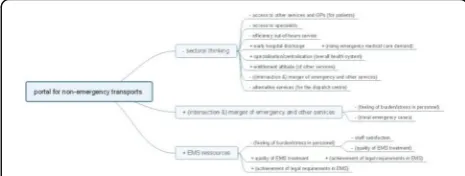
36 variables in four thematic groups were identified as interlinked causes/consequences of demand rise (staff, patients, other services, policy level). Eight feedback loops were identified. Four of 13 inter-ventions were included in the path analysis showing no unintended consequences in the system (Figure 1). Results of the next analysis steps will be presented at the conference.
Conclusion
Applying systems thinking methods helped understanding the com-plex interactions in the EMS system around the specific problem of demand rise and assess the impact of potential interventions. The methodology allowed for the interactive involvement of the stake-holders from the beginning of the implementation process.
Acknowledgements
Both corresponding authors have contributed equally to this paper and count as first authors. We also thank the Oldenburg-project consortium for their steady input throughout the process of this work.
References
1. Schoenenberger LK, Bayer S, Ansah JP, Matchar DB, Mohanavalli RL, Lam SSW, Ong MEH. Emergency department crowding in Singapore: Insights from a systems thinking approach. SAGE Open Med. 2016; 4: 1 - 10. 2. Schoenenberger L, Schenker-Wicki A, Beck M. Analysing Terrorism from a
P7
Can a short course increase the skills of early career researchers in initiating and sustaining partnerships with policy? Findings from a pilot evaluation
Anna Williamson1,2,3, Hannah Tait1, Sian Rudge1, Louisa Jorm2, Sally Redman1
1
The Sax Institute, Sydney, NSW, Australia;2The University of New South Wales, Sydney, NSW, Australia;3The University of Sydney, Sydney, NSW,
Australia.
Implementation Science2019,14(Suppl 2):P7
Correspondence:Anna Williamson ([email protected])
Background
Researchers internationally are increasingly motivated to work in partnership with policy agencies on research projects. Such partner-ships can be challenging to initiate and sustain, however, and there are few resources available to guide researchers wishing to build skills in this space. The current study presents pilot data from a short course designed to increase the capacity of early career researchers to initiate and sustain research partnerships with policy agencies. The specific aims of the study are to assess the: a) Uptake and ac-ceptability of the course; b) Impact of the course on intentions to work with policy makers and confidence in doing so; and c) Extent to which the impacts (if any) of the course were sustained six months post attendance.
Method
A pilot evaluation of the first two rounds of this course, developed by the Centre for Informing Policy in Health with Evidence from Re-search (CIPHER) and the Sax Institute, was conducted. Process mea-sures were collected to assess feasibility, a post-course feedback form was administered to assess acceptability. Participants com-pleted a short questionnaire rating their skills and confidence in working with policy makers, pre, immediately post and six months post course attendance.
Results
The course was feasible to run. Ten participants attended and com-pleted each course (as planned) and feedback data suggested the course was highly acceptable to participants (average ratings of
≥’satisfied’ for all items). Significant improvement in self-reported skills, confidence and intentions regarding working with policy agen-cies were noted amongst participants post course and almost all were maintained at six month follow up.
Conclusion
Early data suggests that this short course is a feasible and effective way of improving early career researchers self-reported skills, confi-dence and intentions to work in partnership with policy agencies on research projects.
Acknowledgements
This course was developed as part of the Centre for Informing Policy in Health with Evidence from Research (CIPHER), CIPHER was a National Health and Medical Research Council Centre for Research Excellence (APP1011436). The evaluation of this course was funded by a NSW Health Early-Mid Career Research Fellowship awarded to Dr Anna Williamson.
O8
Implementing the children and young people’s IAPT quality improvement initiative in Cambridgeshire: findings from a process evaluation
Anne-Marie Burn1, Maris Vainre1, Ayla Humphrey2, Emma Howarth1
1NIHR CLAHRC East of England, Institute of Public Health, University of
Cambridge, Cambridge, UK;2Department of Psychiatry, University of
Cambridge, Cambridge, UK
Implementation Science2019,14(Suppl 2):O8
Correspondence:Anne-Marie Burn ([email protected])
Background
In 2011, the Children and Young People’s Improving Access to Psycho-logical Therapies (CYP-IAPT) programme was introduced nationally to im-prove outcomes and experience of care for children and young people. The aim was to support services to embed key CYP-IAPT principles into everyday clinical practice so as to deliver evidence-based practice, demon-strate accountability through outcome monitoring, increase access to ef-fective services and engage children and young people to participate in decisions about treatment and services. The current study explored the process of implementation and the experiences of professionals in special-ist mental health settings in Cambridgeshire.
Methods
i) An audit and analysis of national and local documents issued between 2011 and 2015 and mapped along a five-year timeline; ii) Thematic ana-lysis of in-depth interviews with 20 staff working in three specialist mental health settings in the Cambridgeshire and Peterborough Foundation Trust, conducted at two time points along the implementation trajectory.
Results
While there was high investment from frontline staff, there was a lack of clarity about the scope and aims of the CYP-IAPT programme dur-ing the early implementation phase. Programme developers empha-sised some CYP-IAPT principles more than others and there was variation in perceptions of the extent to which principles were em-bedded. The creation of dedicated staff posts were a key driver to implementing and sustaining the CYP-IAPT model at a local level; specialist training and enhanced supervision facilitated evidence-based practice and outcome monitoring. Barriers to implementation included inadequate and inflexible IT systems, time limited funding and a lack of support from senior management. Organisational differ-ences between partner agencies led to ineffectual collaborative working and high staff turnover prevented knowledge continuity.
Conclusion
This study provides valuable insights into local implementation of a complex national quality improvement programme. Recommenda-tions will inform other local quality improvement initiatives relating to children and young people’s mental health.
P9
Developing an implementation strategy for the use of objective adherence data in routine clinical practice: a case study in cystic fibrosis clinics
Carla Girling1, Daniel Hind1, Madelynne A Arden2, Martin J Wildman3 1Clinical Trials Research Unit, School of Health and Related Research, The
University of Sheffield, Sheffield, UK;2Department of Psychology, Sheffield Hallam University, Sheffield, UK;3Sheffield Adult CF Centre,
Sheffield Teaching Hospital NHS Foundation Trust, Sheffield, UK
Implementation Science2019,14(Suppl 2):P9
Correspondence:Carla Girling ([email protected])
Background
Preventative inhaled treatments preserve lung function and prolong life in Cystic Fibrosis (CF). An online platform (CFHealthHub) has been developed with patients and clinicians to support treatment habits. Self-report adherence to these treatments is over-estimated. CFHealthHub displays real-time objective adherence data from dose-counting nebulisers, so that clinical teams can offer informed treat-ment support.
[image:5.595.56.289.89.177.2]In this paper, we used the theoretical domains framework (TDF) to identify implementation barriers to health professionals accessing objective adherence data through CFHealthHub. In 2019, scale up of implementation is required in a further 19 CF centres.
Method
Qualitative data were collected through semi-structured interviews with health professionals in three participating UK CF centres. The participants (n=13) were purposively sampled based on location and professional category. A topic guide was created exploring all theor-etical domains. Transcripts were analysed by two researchers using framework analysis.
Results
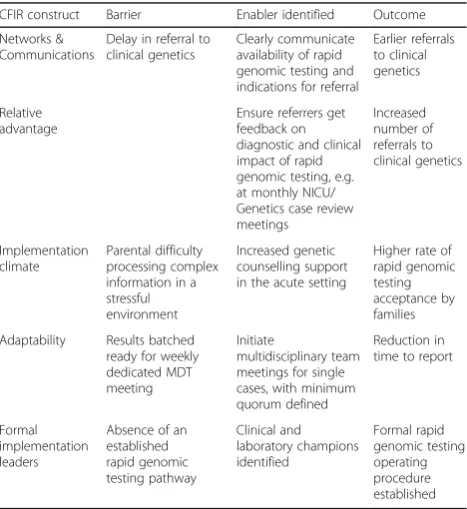
Interviews demonstrated that participants did not have routine habits for using adherence data in clinical care. Analysis indicated that an implementation strategy should address all 14 domains to successfully support implementation scale up.
Participants reported insufficient training and low confidence in using adherence data. As a result, participants reported negative be-liefs that adherence data would be used to“tell patients off”. In addition, participants frequently justified lack of engagement be-cause they believed adherence was primarily a physiotherapist responsibility.
Environmental barriers, such as computer access and pressures on staff time were common. Participants thought environmental and so-cial influence barriers could be addressed by dedicated senior management.
Conclusion
The identified barriers supported the development of an implemen-tation strategy using the behaviour change wheel. The strategy in-cludes support for habit formation and other barriers using intervention functions, such as environmental restructuring, enable-ment, education and modelling. The success of this strategy will be evaluated as the project opens in new CF centres.
Acknowledgements CFHealthHub Data Observatory is funded by NHS England Commissioning for Quality and Innovation
Trial RegistrationISRCTN14464661
O10
What are the relationships between contexts, mechanisms and outcomes which underpin the‘dynamic sustainability’of a complex health care intervention across a system? Carrie-Ann Black, Nick Sevdalis, Crispin Day, Lucy Goulding
1
Centre for Implementation Science, Health Service Population Research, IOPPN, King’s College, London, UK
Implementation Science2019,14(Suppl 2):O10
Correspondence:Carrie-Ann Black ([email protected])
Background
Whilst there is agreement within the implementation science arena that sustainability is a key outcome, limited attention has been given to understanding how to sustain complex interventions in practice [1]. Historically, the emphasis has been on evaluating and exploring the initial implementation, with time and budgetary constraints often meaning that longer term sustainability has not been a focus. To understand what affects the determinants of sustainability, we need to understand the relationships between determinants. To address this gap, we present a review of the evidence base which aims to contribute to our understanding of these determinants and how they interrelate in different contexts.
Method
A systematic rapid realist review of the literature was undertaken, to examine the relationships between contexts, mechanisms and out-comes which underpin the ‘dynamic sustainability’ of a complex health care intervention across a system. Evidence was submitted to thematic content analysis and synthesised to create a series of Context-Mechanism-Outcome Configurations (CMOCs). Testable hy-potheses based on these configurations were derived for further research.
Results
539 studies were screened, of which 17 studies were included in the review. Projects were initiated in a variety of healthcare settings and represented a range of complex interventions. The findings include a series of 17 CMOCs each illustrating how, triggered by specific con-textual factors a combination of programme resource and stake-holder reasoning led to specific outcomes.
Conclusion
The review identified for the first time a set of CMOCs that determine sustainability of complex healthcare interventions. These CMOCs are empirically testable. Our further research focuses on studying how these CMOCs impact on sustainability outcomes.
References
1. Wiltsey Stirman, S., Kimberly, J., Cook, N., Calloway, A., Castro, F. and Charns, M. The sustainability of new programs and innovations: a review of the empirical literature and recommendations for future research.IS. 2012; 7 (17). Available from https://doi.org/10.1186/1748-5908-7-17
P11
Implementation of non-specialist delivered counselling for depression and harmful alcohol use in South Africa: managers’ perspectives
Carrie Brooke-Sumner1, 2, Petal Petersen-Williams1,2, James Kruger3,
Hassan Mahomed3,4, Bronwyn Myers1,2
1Alcohol, Tobacco and Other Drug Research Unit, South African Medical
Research Council, Francie Van Zijl Drive, Parow Valley, Cape Town 7501, South Africa;2Department of Psychiatry and Mental Health, University of
Cape Town, J-Block, Groote Schuur Hospital, Observatory, Cape Town, South Africa;3Western Cape Government: Health, Norton Rose House, 8
Riebeeck Street, Cape Town 8001, South Africa;4Division of Health Systems and Public Health, Department of Global Health, Faculty of Health Sciences, Stellenbosch University, Francie van Zijl Drive, Tygerberg, Cape Town 7505, South Africa
Implementation Science2019,14(Suppl 2):P11
Correspondence:Carrie Brooke-Sumner ([email protected])
Background
Primary Health Care (PHC) Facility Managers have a key role in promoting and sustaining implementation of health innovations. The Project MIND randomised controlled trial is evaluating inte-gration of counselling for depression and harmful alcohol use into current chronic disease care. This qualitative study investi-gated the experiences of Facility Managers who delivered the MIND counselling during the trial.
Method
This counselling has been implemented in 16 PHC facilities. We aimed to conduct three focus group discussions with the man-agers from these sites. Two focus groups were conducted; how-ever, participation was low (n=7 total). We followed up with in-depth individual interviews with 8 Facility managers and 1 Oper-ational manager. Interviews were conducted in English and tran-scribed verbatim. Thematic analysis in NVivo 12 was conducted by two researchers independently.
Results
Three main themes emerged.
1. Perceived benefits underpin managers’support for implementation.All managers were supportive of the wider implementation of the counselling. They described a range of benefits including (i) prioritisation of mental disorders in the facility (ii) addressing social determinants not addressed by clinical care.
3. Strategies for improving integration into current services.
These included (i) linking with mental health nurses for counsellors to attend to less severe cases (ii) ensuring feedback to the treating clinician (e.g. HIV treatment) regarding outcome of counselling.
Conclusion
Facility managers in South Africa are a difficult to reach group given the pace and nature of their work [1]. This study indicates their sup-port for implementation of MIND counselling despite health system constraints. Participants focused on facilitators to enable the counsel-ling to be integrated into their facilities, which should be incorpo-rated into future implementation studies.
Reference
1. Brooke-Sumner C, Petersen-Williams P, Kruger J, Mahomed H, Myers B.
‘Doing more with less’: a qualitative investigation of perceptions of South African health service managers on implementation of health innova-tions. Health Policy and Planning. 2019; 34: 132-140
O12
Developing products for knowledge mobilisation of healthcare research
Charlotte A Sharp1, 2, 3, William G Dixon4, Ruth Boaden1, 3, Caroline Sanders2
1
National Institute for Health Research Collaboration for Leadership in Applied Health Research and Care, Greater Manchester, Salford Royal NHS Foundation Trust, Salford, UK;2National Institute for Health Research School for Primary Care Research, The University of
Manchester, Williamson Building, Oxford Road, Manchester, UK;3Alliance Manchester Business School, The University of Manchester, Manchester, UK;4Arthritis Research UK Centre for Epidemiology, Division of Musculoskeletal and Dermatological Sciences, School of Biological Sciences, The University of Manchester, Manchester, UK
Implementation Science2019,14(Suppl 2):O12
Correspondence:Charlotte A Sharp ([email protected])
Background
The current emphasis on demonstrating academic‘impact’ contrib-utes to the proliferation of knowledge mobilisation (KM) products from healthcare research (e.g. toolkits, guidance etc), which may be referred to as‘boundary objects’. A research gap exists regarding the motivation for their development, development processes and the factors influencing whether and how they mobilise knowledge.
Methods
Phase 1: Semi-structured interviews (20) + focus group (11) (aca-demics, healthcare managers, funders) focussing on perceptions of toolkits. Phase 2: Four case studies of applied healthcare research projects developing KM products. An ethnographic approach gener-ated data from observations (80+ hours), document analysis (>150) and interviews (40). Thematic analysis was inductive and deductive, building on Phase 1 themes and developing new themes where appropriate.
Results
Phase 1 saw the academic context constraining researchers’ability to concentrate on developing KM products. Toolkits were perceived as ill-defined, practical resources, helping users put knowledge into practice. Participants reported overwhelming cynicism towards them yet felt obliged to produce them. Phase 1 themes supported Phase 2, where the impact agenda perpetuates KM product development as stand-alone interventions instead of a broader KM strategy. Cross case analysis revealed themes influencing the potential to move KM products from‘designated boundary objects’to‘boundary objects in use’: need (ranging from unclear to identified gap), audience (ill-de-fined to clear), team dynamic (dysfunctional to collaborative), leader-ship ((dis)engaged), project management (chaotic to clear) stakeholder engagement (tokenism to co-production), and product
(ill-defined to boundary object-in-use). KM products were charac-terised as symbolic boundary objects, used as bargaining chips with funders or research subjects.
Conclusion
To optimise the potential application of KM products, researchers and funders should consider the motivation for their development. Where developing such a product is felt, potentially, to make a meaningful impact in practice, carefully planning stakeholder en-gagement, collaboration and project management might enhance their impact.
Acknowledgements
Charlotte A Sharp is supported by the National Institute for Health Research Collaboration for Leadership in Applied Health Research and Care (NIHR CLAHRC) Greater Manchester. The views expressed are those of the authors and not necessarily those of the NIHR, the NHS or the Department of Health and Social Care.
O13
Of distribution and drift, the role of everyday technologies in the implementation of care bundles
Charlotte Overton
Centre for Health Innovation Leadership and Learning, Nottingham University Business School, University of Nottingham, UK
Implementation Science2019,14(Suppl 2):O13
Correspondence:Charlotte Overton ([email protected])
Background
In the NHS there are challenges regarding the implementation, sus-tainability and spread of quality improvement innovations [1]. Tech-nology in practice offers a useful theoretical perspective to explore the implementation of quality-improvement tools. By applying this perspective, tools are viewed as everyday technologies that play an active part in healthcare as opposed to being inanimate objects in the form of paper- based or computer-based tools [2, 3].
Method
This study sought to systematically and critically examine the role quality-improvement tools play in healthcare organisations. Using sepsis as an example, the study explored two comparative case stud-ies of implementation strategstud-ies used to improve the recognition and treatment of sepsis. Ethnographic observation in the Emergency Department (ED), ward settings and relevant meetings (200 hours), semi-structured interviews (60) and documentary analysis were used. The data were analysed using thematic analysis.
Results
The empirical findings showed that when implemented there was a gap between tools and practice which was crossed by a chain of re-representations. Each re-representation contained a multitude of ac-tions and decisions that were; highly distributed across a range of heterogeneous entities such as the tool itself, healthcare workers and equipment. This resulted in workarounds and various elements drift-ing from the original intention of the tools. For example, usdrift-ing the tool in the ED was different compared to the acute inpatient setting. In the ED work practices were directed towards the recognition and treatment of acute illness. Conversely, in acute inpatient settings work practices were directed towards a multitude of other activities.
Conclusion
This research provides valuable insights into where distribution and drift occur. The findings contribute towards an understanding of the mechanisms by which improvement programmes work. An under-standing of the role that tools play when used in practice can lead to more efficient and effective implementation, sustainability and spread of quality improvement innovations.
References
1. Horton T., Illingworth J., Warburton W. The spread challenge. The Health Foundation. 2018
2. Berg M. Of Forms, Containers and the Electronic Medical Record: some tools for a sociology of the formal. Science Technology and Human Values. 1998; 22: 403-433.
3. Allen D. From polyformacy to formacology. BMJ Quality and Safety. 2017. 26: 695-697.
P14
Implementation Science Research Development (ImpRes) Tool Protocol Assessment Criteria (ImpResPAC): Development and Evaluation
Chloe Sweetnam, Lucy Goulding, Louise Hull
Centre for Implementation Science, Department of Health Service and Population Research, Institute of Psychiatry, Psychology and
Neuroscience, King’s College London, United Kingdom
Implementation Science2019,14(Suppl 2):P14
Correspondence:Lucy Goulding ([email protected]) & Louise Hull ([email protected])
Background
The Implementation science Research development (ImpRes) tool and supplementary guide have been developed to provide guide-lines on how to design high-quality implementation science research [1]. ImpRes did not include quantitative assessment criteria for evalu-ating the quality of implementation science protocols: these were de-veloped in this study to identify strengths and weaknesses in implementation science research protocols and make recommenda-tions to address current deficits in implementation research design.
Method
This study developed ‘Implementation science Research develop-ment toolProtocolAssessmentCriteria’(ImpResPAC), a protocol scor-ing system, to quantitatively evaluate implementation science protocols for information provided on five out of the 10 ImpRes do-mains: research characteristics, implementation theory frameworks and models, implementation strategies, implementation outcomes, and unintended consequences. ImpResPAC was applied to 16 imple-mentation science protocols, published in Impleimple-mentation Science, to identify strengths and weaknesses of planned implementation sci-ence research.
Results
The majority of protocols scored highly on describing the re-search gap, but few differentiated between the implementation activities associated with each implementation stage. Although most protocols provided strong rationale for the choice of theory, framework and model underpinning the research, many lacked thorough application throughout the implementation research. In most cases, the implementation strategy was explicitly described and justified. Many protocols described the intention to measure fidelity, but few intended to measure appropriateness, acceptabil-ity, penetration and sustainability. Only two of the protocols intended to measure unintended consequences. The reliability of ImpResPAC was evaluated by conducting intra-class correlation coefficient (ICC) tests on a subset of protocols and demonstrated agreement of 0.85 (ICC).
Conclusion
The application of ImpResPAC to 16 protocols identified strengths and weaknesses in research design. Furthermore, ImpResPAC pre-sents a reliable scoring system that researchers, funders and decision-makers can use as a learning tool to self-assess implementa-tion science research protocol quality.
Reference
1. King’s Improvement Science, Implementation Science Research Development (ImpRes) tool and guide. Available from:http://
www.kingsimprovementscience.org/ImpRes[accessed 1st April 2019].
P15
Scaling up a polypharmacy Action Learning Sets tool: interim findings and methodological insights
Cindy F. Brooks1, Anastasios Argyropoulos1, Catherine B. Matheson-Monnet1, Richard Guerrero-Luduena1, David Kryl1,2, Ruth George2, Vicki Rowse2and Clare Howard2
1Centre for Implementation Science, University of Southampton,
Southampton, UK;2Wessex Academic Health Science Network, Southampton, UK
Implementation Science2019,14(Suppl 2):P15
Correspondence:Cindy F. Brooks ([email protected])
Background
In line with national policy, to address the issues associated with in-appropriate polypharmacy, the Centre for Implementation Science are evaluating the implementation of a Wessex Academic Health Sci-ence Network led Action Learning Sets (ALS) tool, to improve health-care practitioners’ confidence, perceptions and experiences of stopping inappropriate medicines safely.
Methods
Up to 125 healthcare practitioners attending ALS across three local-ities in the South of England are being invited to participate in the study. A mixed method approach involving pre-post ALS question-naires, evaluation forms and observational methods, will be used to evaluate the study.
To date, interim findings have been analysed from one locality (n=33), and methodological insights recorded which relate to the prospective scale up and evaluation of the ALS across two further localities. Quantitative paired ppost ALS questionnaire re-sponses were analysed using the Wilcoxon signed-rank test, whilst qualitative data were analysed using thematic analysis and ethnographic methods. Overall impact of the ALS will be evalu-ated using Kirkpatrick’s evaluation model.
Results
Interim findings show the ALS has contributed to improving per-ceptions, confidence and experiences in addressing polypharmacy and more specifically perceptions of; stopping inappropriate med-icines, use of knowledge, information and tools, shared decision making with patients/clinicians and the role of institutional fac-tors. Methodological insights relating to the scale-up of the ALS across two further localities include the impact of locality upon participation, as well as the process of engagement of partici-pants in the evaluation.
Conclusion
Interim findings and methodological insights in scaling up the study may be of relevance to national policy to understand how to address polypharmacy issues in different localities.
P16
The Life Link Clinic: Meeting the socio-economic needs of patients and families within complex rehabilitation in-patient services Claire Hendry1,2,3, Clarissa Giebel3,4, Tim Villanueva1,2,5, Nicola Hill1,6,
Thomas Spearitt1,2, Lea Johnson1,5, Clare Moore1,2, Jon Smith1,2,5,6, Siobhan Mealey7, Peter Bailey3, Jennifer Bailey3, Heather Burnage1,2,
Michelle Hughes1,2,6, Maria Moyo1,2
1The Cheshire and Merseyside Rehabilitation Network, The Walton
Centre NHS Foundation Trust, Liverpool, UK;2The Walton Centre NHS Foundation Trust, Liverpool, UK;3NIHR CLAHRC North West Coast,
Institute of Population Health Sciences, University of Liverpool, Liverpool, UK;4Institute of Population Health Sciences, University of Liverpool;
Liverpool, UK;5The Royal Liverpool and Broadgreen University Hospitals NHS Trust, Liverpool, UK;6St Helens and Knowsley NHS Trust,
Merseyside, UK;7The Brain Charity, Liverpool, UK
Implementation Science2019,14(Suppl 2):P16
Background
Feedback from patients and families in complex rehabilitation ser-vices highlighted that socio-economic issues increased their stress and anxiety levels. In response, an integrated provision is being piloted within complex rehabilitation inpatient settings under the umbrella of the Cheshire and Merseyside rehabilitation network. This service aims to offer a multi-agency approach to support patients with any socioeconomic issues, to help reduce stress and anxiety, to promote integrated accessible support.
Method
We conducted sixteen Semi-structured interviews with staff and ser-vice users to evaluate the existing three serser-vices and improve the im-plementation of the two new sites. Using the DASS 21 and the NHS family and friends test, service users are asked to provide feedback on the service and rate their stress and anxiety before and after accessing the service. Staff and service users’perception of the ser-vice is also collected through semi-structured interviews. Using a mixed method analysis, the semi-structured interviews were themat-ically analysed and paired t-test utilised to compare changes in pre-and post- data.
Results
Interviews indicated that this support was considered essential, which helped to improve the two new sites implemented since December 2018. The service evaluation is on-going. Preliminary analysis suggests that stress levels in families are above the ranges which we see in patients on admission to the acute re-habilitation setting. Using information from the staff question-naire, socio-economic issues encountered by patients, carers, and families were mapping across the main themes raised when accessing the service. This reflected that the service was meeting the needs of patients and families.
Conclusion
Findings from the evaluation of this implementation of two new sites and five in total across the North West Coast region can help to iden-tify the benefits of this service to people with complex brain injuries and their families in terms of their social needs.
O17
Evaluation of implementation of high-throughput Non-Invasive Prenatal Testing (NIPT) for foetalRHDgenotype testing: results of a survey of maternity units in England, supplemented by expert elicitation findings
Edyta Ryczek1, Judith White1, Grace Carolan-Rees1 1
Cedar, Cardiff and Vale University Health Board, Cardiff, United Kingdom
Implementation Science2019,14(Suppl 2):O17
Correspondence:Edyta Ryczek ([email protected])
Background
An RhD-negative mother carrying an RhD-positive foetus is at high risk of sensitisation which can be reduced by administration of Rou-tine Antenatal Anti-D Prophylaxis (RAADP). However, approximately 33% of women carry an RhD-negative baby and do not need RAADP [1]. In 2016, The National Institute for Health and Care Excellence rec-ommended Non-Invasive Prenatal Testing (NIPT) for foetalRHD geno-type as a cost-effective option to guide RAADP in the United Kingdom and established research recommendations investigated in this study1. The aim of the study was to evaluate the implementation
of high-throughput NIPT for foetalRHDgenotype in maternity units in England, the United Kingdom.
Method
A survey evaluating the implementation, antenatal care, uptake of the new test, RAADP adherence and postpartum care was sent to 39 Hospital Trusts in England. Topics which required further investiga-tion were explored during qualitative interviews with seven clinicians chosen based on their geographical location. Test results from all hospitals in the United Kingdom which offer the new testing strategy are included.
Results
Nurses and midwives were most likely to have received training organised internally within a Trust. The new service is not ex-pected to incur extra costs. Cost savings include reduction in Anti-D use, Anti-D quantification, and samples testing (cord blood typing, the Kleihauer test). RAADP appointments are shorter or not required which balances the extra time needed during the initial appointments. The frequency of positive, negative and in-conclusive results is 55.9%, 34.5% and 4.3%, respectively. Neither the uptake of NIPT for foetal RHD genotype nor adherence to RAADP is routinely monitored. Trusts described using four differ-ent postpartum testing strategies.
Conclusion
NIPT for foetal RHD genotype fits well within the existing patient pathway. The success of implementation of the new testing was as-sociated with good working relationship between staff and organisa-tion of work within the department.
Acknowledgements
The authors would like to acknowledge Dr James Evans, Ruth Poole, Kathleen Withers, Dr Laura Knight and Dr Helen Morgan for their
contribution to the study design, management and/or revision of the paper. References
1. National Institute for Health and Care Excellence. High-throughput non-invasive prenatal testing for foetal RHD genotype. NICE diagnostic guid-ance 25; 2016.
O18
Developing a scaling up plan for quality improvement training in urological surgery
Elena Pallari1,2, Zarnie Khadjesari1,3, James Green4and Nick Sevdalis1
1King's College London, Institute of Psychiatry, Psychology &
Neuroscience (IoPPN), Centre for Implementation Science (CIS), Health Service and Population Research Department, London, UK;2MRC
Clinical Trials and Methodology, University College London, London, UK;
3School of Health Sciences, University of East Anglia, Norwich Research
Park, Norwich, UK;4Bart’s NHS Trust, Whipps Cross Hospital, Urological Department, London, UK
Implementation Science2019,14(Suppl 2):O18
Correspondence:Elena Pallari ([email protected])
Background
The education in quality improvement programme (EQUIP) for ur-ology aims to address the need for an evidence-based curriculum in quality improvement (QI) methods training in surgery. Key goal of EQUIP is to be nationally scalable in the UK. Here we present the de-velopment of the EQUIP scale-up strategy.
Methods
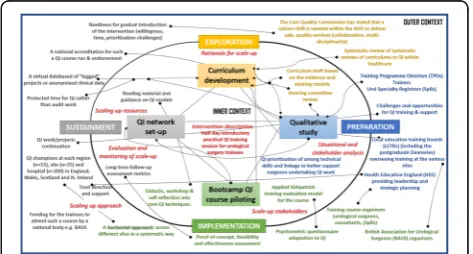
The strategy was developed using evidence triangulation from mixed-methods studies: evidence-based curriculum development (evidence reviews), national gap analysis (qualitative data), and programme piloting at two UK sites for feasibility and effectiveness (quantitative data). The collected data involved a range of stake-holders: training programme directors and trainers as well urology trainees, and a steering group which included educational practi-tioners, patient representatives, trainees and consultant urologists. Further, we framed the implementation model of the scale up plan based on the Exploration, Preparation, Implementation, Sustainment (EPIS) framework (Fig 1).
Results
Conclusion
This study offers an empirical and theoretical understanding of how to scale-up the EQUIP programme nationally in the UK. Based on the study, the scale-up strategy involves national stakeholder support; an IT platform; nationally shared training materials; and a train-the-trainers programme. The scale-up strategy will be evaluated further in the coming 2 years of EQUIP implementation and will be used to guide potential diffusion across other specialities.
Acknowledgements
The authors would like to thank the Training Programme Directors of each region, the trainers on the course and the Urology Surgery trainees who took part in the study.
Funding
This research work was supported from funding by The Urology Foundation and The Schroders Foundation. EP/NS are supported by the National Institute for Health Research (NIHR) Collaboration for Leadership in Applied Health Research and Care South London at King’s College Hospital NHS Foundation Trust. The views expressed are those of the authors and not necessarily those of the NHS, the NIHR or the Department of Health.
O19
The development and application of a logic model to translate an established Perioperative medicine for Older People undergoing Surgery (POPS) service to a novel setting
Emily Jasper1, Nick Sevdalis2, R de las Casas1, C Meilak3, A Whittle3,
Judith SL Partridge1, Jugdeep K Dhesi1
1Perioperative medicine for Older People undergoing Surgery (POPS)
Service, Guy’s St Thomas Trust NHS, London, UK;2Centre for Implementation Science, Kings College London, London, UK;3
Perioperative medicine for Older People undergoing Surgery (POPS), Dartford and Gravesham NHS Trust, Kent, UK
Implementation Science2019,14(Suppl 2):O19
Correspondence:Emily Jasper ([email protected])
Background
Older people are at higher risk of adverse perioperative outcome in comparison to younger patients and the need for geriatrician in-volvement in surgical pathways is advocated. An evidenced-based method of improving care for older surgical patients has been devel-oped and embedded at Guy’s & St Thomas Trust (GSTT) and is being replicated nationally [1-5]. There is a call for scale up of Perioperative medicine for Older People undergoing Surgery (POPS) services but this requires a systematic approach [6]. A logic model is a critical ini-tiating step to begin the scale up process with fidelity [7,8].
Method
Thirteen clinical and safety implementation experts were recruited to par-ticipate in three sessions to develop the POPS logic model. Guided by lit-erature review and consensus, the model was constructed through mapping themes against core components of the Kellogg Logic Model
Guide [8]. The model was applied and evaluated at Darent Valley Hospital (POPS@DVH).
Results
The logic model was used to design, develop, iterate and embed POPS@DVH. Over 18 months the new service resulted in improvements in process measures reductions in length of stay (-2.58 days) and readmission rates (-12%). Other key outcomes included improved documentation of medical complications (eg. improved delirium diagnosis from 0 to 21%) and comorbidities, translating to improved patient care and hospital cod-ing. Stakeholder engagement was actively sought throughout this process, with high satisfaction noted from surgical teams, junior doctors and pa-tients. The overall success of POPS@DVH was reflected in substantive sur-gical directorate funding allowing sustainability.
Conclusion
This study demonstrates the clinical utility of a logic model in facilitating successful scale up of an established POPS service into a novel setting. Fur-ther work would involve refinement of this logic model to establish a rele-vant and sustainable framework for a wider POPS scale up.
References
1. Ellis G, Whitehead M, O’Neill D, Langhorne P, Robinson D. Comprehensive geriatric assessment for older adults admitted to hospital (Review). Cochrane Library. 2011; 7.
2. Braude P, Goodman A, Elias T, Babic-Illman G, Challacombe B, Harari D, Dhesi J. Evaluation and establishment of a ward-based geriatric liaison service for older urological surgical patients: POPS-Urology (Proactive Care of Older People Undergoing Surgery). BJU International. 2016; 120:123-129.
3. Partridge J, Harari D, Martin F, Peacock J, Bell R, Mohammed A, Dhesi J. Randomised clinical trial of comprehensive geriatric assessment and optimisation in vascular surgery. BJS Society. 2017; 104:679-98.
4. Vilches-Moraga A, Fox J. Geriatricians and the older emergency general surgical patient: proactive assessment and patient centred interventions -Salford-POP-GS. Aging Clinical and Experimental research. 2018; 30:277-282.
5. Joughin A, Partridge J, O’Halloran T, Dhesi J. Where are we now in perioperative medicine? Results from a repeated UK survey of geriatric medicine delivered services for older people. Age and Aging; 2019; 0:1-4 6. Horton T, Illingworth J, Warburton W. The Spread Challenge–How to
support the successful uptake of innovations and improvements in health care [Internet]. 2018 [Cited 25th Feb 2019]. Available from: https:// www.health.org.uk/publications/the-spread-challenge
7. Medical Research Council. Developing and evaluating complex interventions [Internet]. 2019 [cited 28thApril 2019]. Available from: www.mrc.ac.uk/complexinterventionsguidance
8. W.K. Kellogg Foundation. Logic Model Development Guide [Internet]. 2004 [cited 22 February 2019]. Available from: https://www.wkkf.org/ resource-directory/resource/2006/02/wk-kellogg-foundation-logic-model-development-guide
O20
A systematic review and synthesis of facilitators and barriers to the implementation of evidence-based practices to support physiological labour and birth in obstetric settings Florence Darling, Christine McCourt and Martin Cartwright City, University of London, London, United Kingdom
Implementation Science2019,14(Suppl 2):O20
Correspondence:Florence Darling ([email protected])
Background
One of the biggest challenges facing health-care professionals who care for women in labour and birth are decisions about the appropri-ate use of clinical interventions. Interventions for example caesarean-sections or instrumental births are necessary when problems arise, however routine use increases mortality and morbidity. We under-took a systematic review of studies to explore facilitators and barriers to the implementation of evidence-based practices to support physiological labour and birth, an important initiative, to reduce rou-tine intervention use. We reviewed studies that explored practices in obstetric setting where routine intervention use is higher compared to midwife-led settings.
[image:10.595.56.293.287.414.2]Method
Using PRISMA guidelines [1], databases was searched from 1990 to September 2018 and 31 original studies were included for thematic synthesis [2]. Analytic themes that were theoretically informed en-abled us to explore facilitators and barrier at a micro level (obstetri-cians, midwives and women) and meso level (organisation) to implementing EBPs to support physiological labour and birth.
Results
The synthesis showed that prevalent risk perceptions of birth are an important barrier. This informed an approach based on risk surveil-lance and active management of labour. Obstetricians who hold strong risk perceptions of birth exert control over other professionals to apply a risk-based approach. An important barrier is their reluc-tance to relinquish this power. Approaches cognisant with EBPs to support physiological labour and birth is muted. Midwifery acqui-esces, obstetric and midwifery preoccupation with risk surveillance and rationalisation of intervention use are important barriers. Women expect interventions to shape birth experiences. Centralisation of labour care sustains a risk-based approach. Facilitators included col-laborative working by obstetricians and midwives to implement evidence-based practices, midwifery involvement in decision-making and organisational efforts to enhance midwifery autonomy
Conclusion
Future research should explore obstetrician’s reluctance to relinquish power, factors that facilitate collaborative working between profes-sional groups, organisational influences and women’s experiences in obstetric settings.
Registration: International Prospective Register of Systematic Reviews (Ref: CRD42017081891)
References
1. Shamseer L, Moher D, Clarke M, Ghersi D, Liberati A, Petticrew M, et al. Preferred reporting items for systematic review and meta-analysis proto-cols (PRISMA-P) 2015: elaboration and explanation. BMJ: British Medical Journal. 2015;349(jan02): g7647.
2. Thomas J, Harden A. Methods for the thematic synthesis of qualitative research in systematic reviews. BMC medical research methodology 2008;8 (1):45.
P21
Evaluation of a Physical Health Plan for people with psychosis: Protocol for a Quality Improvement study
Julie Williams1, Nick Sevdalis2, Fiona Gaughran3,4 1
Health Service and Population Research Department, Institute of Psychiatry, Psychology and Neuroscience, King’s College London, London , UK;2Centre for Implementation Science, Institute of Psychiatry, Psychology and Neuroscience, King’s College London, London, UK;3Psychosis Studies, Institute of Psychiatry, Psychology and Neuroscience, King’s College London, London, UK;4National Psychosis
Service, South London and Maudsley NHS Foundation Trust, London, UK.
Implementation Science2019,14(Suppl 2):P21
Correspondence:Julie Williams ([email protected])
Background
People with serious mental illness (SMI) have poorer physical health compared to the general population. Reasons for this are complex but include the identification and treatment of physical health condi-tions. Creating tools to support people with SMI to assume more control of their physical health may help to ameliorate some of these problems. This study evaluates the use of a service user-held Physical health plan (PHP) for service users to determine whether its use in-creases uptake of physical health services.
Method
We have undertaken a pilot quality improvement study to test the use of the PHP [1]. This included testing a Theory of Change using focus groups with service users and staff and evaluating the use of the PHP in two community mental health teams using the RE-AIM implementation framework to guide the evaluation using qualitative and quantitative measures to do this (eg collecting data on how many people used the PHP, if they required support, if there was a
change to uptake in physical health services, measuring Patient Activation)
Results
Focus groups were run with staff and service users before the pilot started which led to some change to the PHP and how it was used. 27 service users have completed the PHP. Participants have found it easy to use and were able to identify physical health needs. These were shared with clinical staff. Follow-up is ongoing which will in-clude interviews with service users and clinical staff to elicit their views on using the PHP. Analysis of the implementation outcomes using the RE-aim framework is ongoing.
Conclusion
This study used an implementation framework to test a novel inter-vention for people with SMI. Participants found the PHP easy to use and analysis will help us to evaluate the success of the intervention and whether a larger-scale definitive RCT is warranted.
Acknowledgements
Thank you to all the service users, carers and academic and clinical staff who took part in the initial stages of the development of the PHP. Special thanks to the two service users who ran the focus groups.
This study/project is supported by the Maudsley Charity and the National Institute for Health Research (NIHR) Collaboration for Leadership in Applied Health Research and Care South London (NIHR CLAHRC South London) at King’s College Hospital NHS Foundation Trust. The views expressed are those of the author(s) and not necessarily those of the NIHR or the Department of Health and Social Care.
Trial Registration
ClinicalTrials.gov Identifier: NCT03178279. Registered date: 05/06/2017 Reference
1. Williams, J. Sevdalis, N. Gaughran, F. Evaluation of a Physical health plan for people with psychosis: a protocol for a quality improvement study. Pilot and Feasibility Studies. 2019, 5.8.
P22
Measuring success of quality improvement in a mental health NHS Foundation Trust
Kia-Chong Chua1, 2, Barbara Grey2, Michael Holland2, Claire Henderson1,
Nick Sevdalis1
1Institute of Psychiatry, Psychology & Neuroscience, King’s College
London, SE5 8AF, UK;2South London & Maudsley NHS Foundation Trust, SE5 8AZ, UK
Implementation Science2019,14(Suppl 2):P22
Correspondence:Kia-Chong Chua ([email protected])
Background
Quality Improvement (QI) in healthcare is widespread [1] with diverse projects and target outcomes [2]. Success rates are highly variable, often with disappointing results [3]. Existing guidance on QI evalu-ation [4] does not aid organisevalu-ational reporting on the impact of QI [5]. We aim to develop a framework for measuring success of QI to aid organisational learning and shed light on capacity building needs and resource allocation priorities in South London and Maudsley (SLaM) NHS Foundation Trust.
Method
Logistic regression was used to compare the impact of contextual, in-put and process factors on whether projects achieved their aims.
Results
Among 52 QI projects across five boroughs of London, 12 achieved their aims. Contextual and input factors showed very little impact. In contrast, process factors like stakeholder engagement and measure-ment plan showed sizable impact on whether projects achieved their aims.
Conclusion
Measurement plan and data quality matters more than contextual and input factors in determining success of QI.
References
1. Kaplan HC, Provost LP, Froehle CM, Margolis PA: The Model for Understanding Success in Quality (MUSIQ): building a theory of context in healthcare quality improvement.BMJ Qual Saf2012, 21(1):13-20. 2. Chassin MR, Loeb JM: The ongoing quality improvement journey: next
stop, high reliability.Health Aff (Millwood)2011, 30(4):559-568.
3. Dixon-Woods M, Martin GP: Does quality improvement improve quality?
Future Hospital Journal2016, 3(3):191-194.
4. Parry G, Coly A, Goldmann D, Rowe AK, Chattu V, Logiudice D, Rabrenovic M, Nambiar B: Practical recommendations for the evaluation of improvement initiatives.Int J Qual Health Care2018, 30(suppl_1):29-36. 5. Morganti KG, Lovejoy S, Haviland AM, Haas AC, Farley DO: Measuring
success for health care quality improvement interventions.Med Care
2012, 50(12):1086-1092.
6. Hollnagel E: Why is work-as-imagined different from work-as-done? In:
Resilient Health Care. Volume 2, edn. Edited by Wears RL, Hollnagel E. London: CRC Press; 2017.
P23
Provider training and implementation of newborn care
interventions at facilities in Malawi: a secondary analysis of Service Provision Assessment survey data
Kimberly Peven1, Debra Bick2, Edward Purssell3, Lindsay Mallick4, Cath
Taylor5
1Florence Nightingale Faculty of Nursing, Midwifery & Palliative Care,
Kings College London, London, UK;2Department of Women and Children’s Health, School of Life Course Sciences, Faculty of Life Sciences and Medicine, King’s College London, UK ;3School of Health Sciences, City, University of London, London, UK;4Avenir Health, Rockville, MD,
USA ;5School of Health Sciences, University of Surrey, UK
Implementation Science2019,14(Suppl 2):P23
Correspondence:Kimberly Peven ([email protected])
Background
In Malawi, most newborns have contact with health service in the first days of life, however, coverage of comprehensive newborn care remains low. National efforts have been made to improve and scale up provider training in newborn care. We aimed to evaluate the as-sociations between provider training in newborn care and interven-tions implemented in practice at facilities in Malawi.
Methods
Using data from the 2013-14 Service Provision Assessment survey in Malawi, we employed ordinal and logistic regression models to evaluate the associations between training and observed newborn interventions, adjusting for facility and provider factors. Data in-cluded 1294 providers, 527 facilities and 474 observed births.
Results
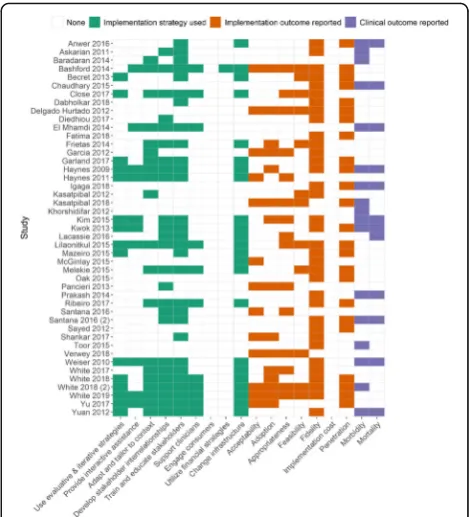
Newborn care providers reported attending trainings covering on average 4.7 (95%CI=4.5,5.0) themes in their career and 2.6 (95%CI= 2.4,2.8) themes in the past two years out of 14 training themes in-cluded in the survey (Figure 1). Following births observed at facilities, providers implemented on 6.9 (95%CI=6.6,7.2) of 12 recommended interventions. Preliminary analyses did not show an association be-tween number of recent training themes attended by a provider and the number of interventions implemented after birth (AOR= 1.05,95%CI=0.98,1.12), however for every additional recent training theme attended, providers were 8% (AOR=1.08,95%CI=1.02,1.16) more likely to implement more than the mean number of interventions.
Conclusions
While newborn care providers in Malawi reported attending recent trainings on newborn care, the relationship between recent training and improved practice is not clear. More research is required to understand drivers of improved newborn care following provider training and scale-up coverage of comprehensive newborn care.
O24
Knowledge brokering in a public mental health program: does sharing knowledge derived from implementation science help to improve outcomes?
Kristian G. Hudson,Rebecca Lawton,Siobhan Hugh-Jones School of Psychology, University of Leeds, Leeds, UK
Implementation Science2019,14(Suppl 2):O24
Correspondence:Kristian G. Hudson ([email protected])
Background
Schools need mental health interventions that are deliverable, scal-able and effective. However, rates of successful implementation of evidence-based practices in schools is low. An underpinning factor is lack of understanding, and attention, by commissioners, providers and schools, to evidence about what works to bolster effective and sustained implementation. Knowledge brokering is one way to im-prove use of implementation science in program delivery in complex settings. To date, evidence for the use of KBs in public health set-tings is scarce, and their use for brokering implementationrelated knowledge is non-existent.
The aim of this study was to examine whether it was feasible and ac-ceptable for knowledge about implementation to be brokered to a steering group responsible for a wide scale, public mental health, school-based intervention, and what impact this might have on their implementation decisions.
Methods
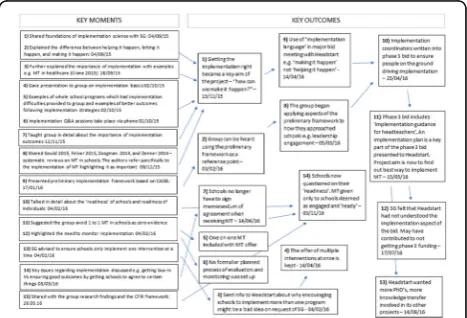
The primary researcher attended 13 (3 hrs each) monthly steering group meetings during the initial implementation phase of the public mental health program and shared implementation knowledge with them. With consent, meeting notes were taken by the primary researcher, and a journal kept of 12 meetings; 5 meetings were also audio re-corded and SG minutes referred to. All data were amalgamated and ordered into month-by-month summaries. The analysis attempted to identify when implementation knowledge was shared with the group (coded a ‘key moment’) and what the steering group did with this knowledge (coded a‘key outcome’).
Results
Over the 13 meetings, 15 key moments led to 14 key outcomes, 10 of which involved implementation decisions being made based on
[image:12.595.306.539.155.317.2]