Investigating openability of rigid plastic containers with
peelable lids : the link between human strength and grip
and opening forces
CANTY, Laura A, LEWIS, Roger and YOXALL, Alaster
<http://orcid.org/0000-0002-0954-2725>
Available from Sheffield Hallam University Research Archive (SHURA) at:
http://shura.shu.ac.uk/7076/
This document is the author deposited version. You are advised to consult the
publisher's version if you wish to cite from it.
Published version
CANTY, Laura A, LEWIS, Roger and YOXALL, Alaster (2013). Investigating
openability of rigid plastic containers with peelable lids : the link between human
strength and grip and opening forces. Proceedings of the Institution of Mechanical
Engineers, Part C: Journal of Mechanical Engineering Science, 227, 1056-1068.
Copyright and re-use policy
See
http://shura.shu.ac.uk/information.html
Sheffield Hallam University Research Archive
http://pic.sagepub.com/
Engineering Science
Engineers, Part C: Journal of Mechanical
http://pic.sagepub.com/content/227/5/1056
The online version of this article can be found at:
DOI: 10.1177/0954406212457729
1056 originally published online 17 August 2012
2013 227:
Proceedings of the Institution of Mechanical Engineers, Part C: Journal of Mechanical Engineering Science
Laura A Canty, Roger Lewis and Alaster Yoxall
and grip and opening forces
Investigating openability of rigid plastic containers with peelable lids: The link between human strength
Published by:
http://www.sagepublications.com
On behalf of:
Institution of Mechanical Engineers
can be found at:
Science
Proceedings of the Institution of Mechanical Engineers, Part C: Journal of Mechanical Engineering
Additional services and information for
http://pic.sagepub.com/cgi/alerts
Email Alerts:
http://pic.sagepub.com/subscriptions
Subscriptions:
http://www.sagepub.com/journalsReprints.nav
Reprints:
http://www.sagepub.com/journalsPermissions.nav
Permissions:
http://pic.sagepub.com/content/227/5/1056.refs.html
Citations:
What is This?
- Aug 17, 2012
OnlineFirst Version of Record
- Apr 18, 2013
Version of Record
Original Article
Investigating openability of rigid plastic
containers with peelable lids: The link
between human strength and grip and
opening forces
Laura A Canty
1, Roger Lewis
1and Alaster Yoxall
2Abstract
As society ages there is a growing need to understand issues surrounding declining user capabilities. One such area has been accessibility of packaging by older people. To date much of the current research in this area has focused on measuring strength of older people and analysing the force needed to open various pack formats and has largely concentrated on accessibility of jam or sauce jars. However, a survey by ‘Yours’ magazine indicated that problems with thin film pack forms and peelable packaging was also an issue for older people. Hence the authors undertook a small-scale study to understand the issues surrounding accessing a rigid plastic container with a peelable lid. To that end the authors built a bespoke measuring device to measure container peeling forces, measured finger friction between pack and finger and undertook an observational analysis on 60 users accessing packaging of this type. Results indicated that the force needed to open containers of this type is lower than measured user forces including older people and it is therefore likely that the issues surrounding accessibility of this type of pack format are related to dexterity not strength. However, the authors also showed that this can be affected by context of use in that oily fingers could reduce the friction coefficient between finger and pack such that older people may not have sufficient strength to open packs of this type.
Keywords
Packaging, openability, inclusive design
Date received: 3 February 2012; accepted: 16 July 2012
Introduction
In 2009, the UK market for plastic packaging was worth an estimated 3.47bn, between 2005 and 2008, the UK market value grew by 15.6%. Further, more than 1.65 million tonnes of plastic packaging are consumed in the UK every year, equivalent to just over 27 kg per capita. If present trends continue, plas-tic is expected to become the packaging market’s lar-gest sector at some point within the next decade, overtaking paper and board. Packaging is the leading application for the UK plastics industry, currently accounting for 38% of annual usage. Leading end-user industries for plastic packaging include food and drink, pharmaceuticals, and cosmetics and personal care.1
Plastic packaging is usually found in two forms, termed rigid plastic (such as milk bottles or beverage bottles and pots) or flexible plastic (such as shrink wraps and pouches).2Designers have to balance two conflicting requirements with this type of packaging; the need to prevent the packaging opening prema-turely or by accident and the need to allow easy
access when the packaging is being opened intentionally.3
However, the ease of access to a pack is becoming a major concern for the packaging industry. Society is ageing, in 1950 there were approximately 200 million older adults (defined by the US Census Bureau as
þ65) rising to 487 million in 2006 and predicting to rise to 1.55 billion by 2050.4In the UK, the popula-tion is projected to become older gradually, the aver-age (median) aver-age rising from 39.3 years in 2008 to 42.2 years by 2033. However, the numbers of people at the oldest ages is increasing rapidly. The number of over
1
Department of Mechanical Engineering, The University of Sheffield, Mappin Street, Sheffield, UK
2
Art and Design Research Centre, Sheffield Hallam University, Sheffield, UK
Corresponding author:
Roger Lewis, Department of Mechanical Engineering, The University of Sheffield, Mappin Street, Sheffield S1 3JD, UK.
Email: [email protected]
Proc IMechE Part C:
J Mechanical Engineering Science
227(5) 1056–1068 !IMechE 2012 Reprints and permissions:
85’s is predicted to more than double between 2008 and 2033 rising to some 3.3 million.5
This demographic shift creates a major public health problem; that with increasing age there is an increased risk of development of a number of age-related pathologies. With ageing, there is loss of strength and dexterity, decline in cognitive function, impaired immune function, increased susceptibility to infection and increased risk of heart disease and cancer.6–8 Hence with the associated decline in strength dexterity and cognition, a larger proportion of society will in future potentially experience prob-lems of accessibility to everyday items such as food or healthcare products.
Indeed, a 2004 survey by McConnell for the maga-zine ‘Yours’.9 Over 2000 people were questioned about their difficulty in accessing packaged goods with bleach bottles and jars ranked first and second in their perceived difficulty by aged consumers.
Given that jars ranked so highly in the survey it is of no surprise that the bulk of previous work in this area has looked at strength issues in relation packa-ging of this type.10–13The authors have also recently looked at issues surrounding accessibility of bleach bottles.14
Less work has been undertaken, however, on acces-sibility of packaging items requiring the peeling of a film or lid although these packaging types rank highly as problematic packaging in this survey. Further, no work has been undertaken to understand whether the accessibility of products of this type is one of strength or dexterity or indeed a combination.
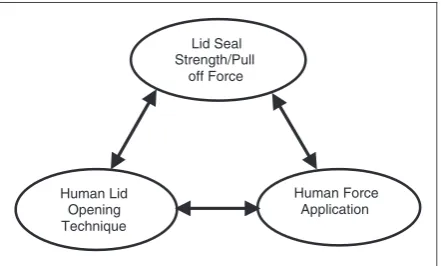
Therefore, in order to understand the problem more clearly, this investigation focussed on three interlinked areas of peelable rigid plastic packaging and used yogurt pots (as shown in Figure 1) as a case study example (Figure 2):
. The required opening force (linked to the strength of the lid seal) – there needs to be a com-promise between the seal strength and the ease of opening.
. The technique used to open the lid – this includes the way people grip the tab on the lid, the way they hold the pot and the angle they pull the lid off at.
. The force people can apply to pull the lid off with – if the strength needed to pull the lid off is greater than the strength people can exert, then the pot is unusable.
[image:4.595.330.532.72.307.2]Yogurt pots were chosen as they were typical of thin-film lidded rigid plastic containers of this type and the authors were supported by a UK producer willing to supply lids and containers sealed at vary-ing temperatures. The lids themselves were polypro-pylene although aluminium and polyester variants are produced depending on the application. An example of this type of packaging is shown in Figure 1.
There were several aims of this work, firstly to pull the three areas of research together to form a design methodology for improving the openability of peel-able packaging of this type packaging. This ‘three-stranded approach’ to understanding the relationship of human ability to pack function has been outlined previously,16 but this is the first time it has been put into practice on an actual piece of packaging. The secondary aim was to understand whether issues sur-rounding this pack were related to strength, dexterity or a combination of the two.
This approach could certainly be rolled out to any type of packaging, and while yoghurt pots may have turned out to not be a significant problem when com-pared to other forms of packaging, they are a good starting point from which to understand the issues and trial the proposed methodology.
Work was carried out initially observing partici-pants pot opening techniques, in particular the grip style used and any spillage and comments made by
Figure 1. Typical rigid PET container with flexible peelable lid. PET: polyethylene terephthalate.
Lid Seal Strength/Pull
off Force
Human Force Application Human Lid
[image:4.595.322.543.372.505.2]Opening Technique
the participant. Measurements were taken using a bespoke test rig to obtain pot opening forces. Finger friction measurements were also carried out to look at how easy the lid material is to grip under a number of conditions. This data was compared with opening forces to determine whether fingers would slip before opening was achieved.
Background
Gripping techniques and forces
The Department of Trade and Industry (DTI) in the UK have developed techniques for testing human grip.17 The data describes generic functions rather than being product specific so that it can be used in as many design applications as possible. The most relevant to this study is pinch-pull strength.
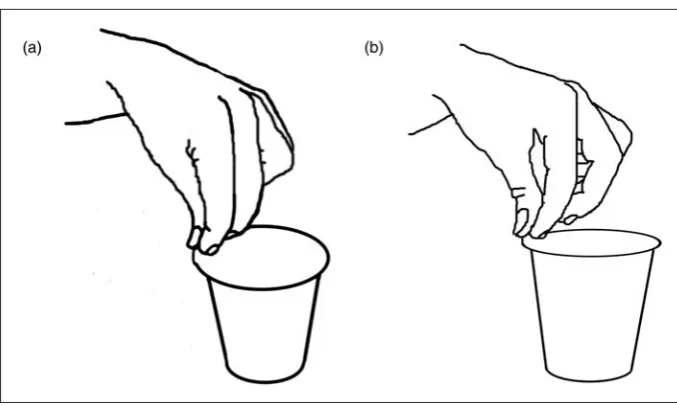
The test to measure this strength uses one hand (usually the dominant one) at three pinch distances. Two grip types are tested; the pulp pinch pull (PPP) (pad of the thumb opposing the pad of the index finger) (see Figure 3(a) for illustration) and the chuck pinch pull (CPP) (the pad of the thumb oppos-ing the pads of the index and middle fingers) (see Figure 3(b) for illustration). The lateral pinch pull (LPP) (the pad of the thumb in opposition to the side of the index finger with the rest of the fingers backing it up) (see Figure 4 for illustration), whilst observed in this study as a technique used was not included.
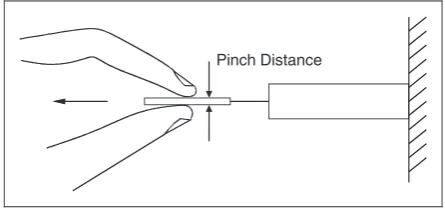
[image:5.595.121.460.67.270.2]The test apparatus is made up of a strip of material (made from, for example, textured fabric) clamped into an instrumented box (as shown in Figure 5). Test subjects are asked grip and pull using the maximum force they can without causing injury
Figure 4. The lateral pinch pull (LPP) being used to open a lid away from the user.
Figure 3. (a) The pulp pinch pull (PPP) grip; (b) the chuck pinch pull (CPP) grip.
[image:5.595.111.478.310.529.2]to themselves. There are very definite rules about how the equipment should be used. These include standing in front of the measuring device, building up to a maximum strength in the first few seconds and main-taining the strength for a further few. Data gathered for a series of tests with 2-mm-thick material is shown in Figure 6. As can be seen the CPP allows a greater pulling force than the PPP and the force decreases with increasing age, as would be expected. Further tests with thicker test specimens showed that greater force could be applied if the gripping (pinch) distance was increased. This probably means that the forces at 2 mm are greater than would be expected for a thin film of material as commonly found on flexible packa-ging. This test, while providing an important insight to pulling forces is a bit too generic to be applied to flexible packaging. When grip is used in everyday activities (to open packaging for example) there is no set rule about which gripping technique to use and so a more realistic way of measuring grip is needed.
Another piece of work carried out by the DTI was more specific, focussing on peel-back forces.18A pre-liminary study was used to investigate which types of
packaging were the most difficult to open. This involved two focus groups which were sat around a table with a video camera mounted at one end. Members of the groups were asked to open a type of packaging while the other three observed. They were encouraged to talk about their experiences with packaging at home. There was a knife and a pair of scissors in the centre of the table. It was found that factors that caused the most problems were small and slippery grip areas and packages that were sealed too strongly.
An instrument was developed during the study for measuring peel back strength. The size and weight of the peel-back tester was determined by the instrumen-tation built into it. This meant that the tester was not representative of a specific piece of packaging. The participants were asked to peel back one of the tabs or pull the tabs apart from each other in a variety of different ways and the results were recorded. Different tab sizes and shapes were tested in the rig. Tests were carried out on groups of able bodied and disabled test subjects.
The results, shown in Figure 7, are for the test unit with one tab, placed on the worktop. One hand was used to stabilise the unit and the other grasped the tab (20 mm long) and exerting a peel-back pull with the wrist rotating. It is not clear which grip method was used on the tab or even if this was noted. The data could be used, however, to determine a threshold force required to open a piece of packaging. Ideally this would be achievable by 100% of both able bodied and disabled users.
Work by Imrhan19 recognised that pinching and pulling are extremely important functions of the hand. It was found that the type of grip used for a pulling task is mainly influenced by the shape and surface area of the object available to the fingers for
0 20 40 60 80 100 120 140 160
m f m f m f m f m f m f
21-30 31-50 51-60 61-70 71-80 81-90
Test Candidate Information
Pinch Pull Force (N)
PPP
[image:6.595.65.288.390.495.2]CPP
Figure 6. DTI pinch-pull force data for a 2-mm-thick material (replotted from Peebles and Norris17). DTI: The Department of Trade and Industry.
Pinch Distance
[image:6.595.141.469.549.744.2]pinching and the task to be performed. If a small area is available to the subject, a PPP technique will be used, but if the area available is larger, a CPP or LPP will be used. The most powerful grip was found to be the LPP followed by the CPP and least powerful was the PPP. This was not found to change with pulling direction. Therefore, the work concluded that products should be designed to take advantage of the fact that larger purchase area allows for the stronger grip type to be used.
Peel force measurement
A number of test rigs are available commercially for measuring peeling forces. One example is the peel back force tester.20 This piece of equipment is used
to accurately record the peel back force readings for removing cover tape from carrier tape (used to protect components when they are being transported).
An instrument for testing yogurt containers is also available from Lloyds Instruments.21 The TG 5346 peel fixture is an accessory that allows testing of the optimum peel strength of sealed lids on yogurt pots. It consists of an angled platform that is positioned on a base plate and locked securely in a position to suit the container being tested. When the lid is pulled off using this apparatus, the angle of peel is constantly changed.
There is no standard test for peel force and there are no standards relating to required opening forces for flexible packaging. However, many companies have their own set of ‘requirements’ with regard to opening force.
0 10 20 30 40 50 60 70 80 90 100
0 5 10 15 20 25 30 35 40 45
Force (N)
Percentage Able to Exert Force
Disabled
[image:7.595.129.457.321.525.2]Non-Disabled (aged 51+)
Figure 7. Peel-back pull strength with the wrist rotating with a single 20 mm tab.18
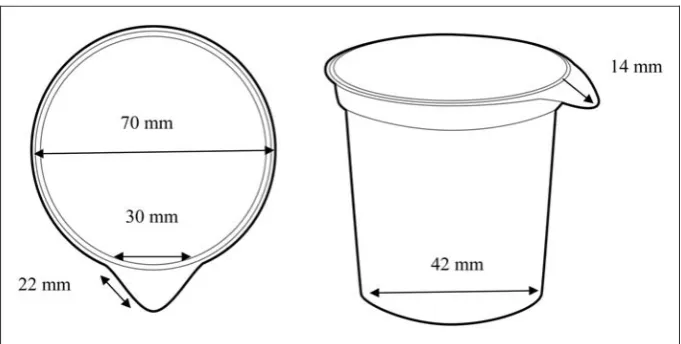
Figure 8. Dimensions of yogurt pots used in opening study.
[image:7.595.121.462.584.756.2]Summary of previous work
The investigation of previous work and methods that could be used led to the decisions to initially investi-gate opening techniques using an observational approach, i.e. giving people pots and seeing how they interacted with it and eventually opened the lid to see where the problems were. This has been used successfully in other studies by the authors.22
Although there are clearly machines available for measuring opening forces, it was not clear that they exactly mimicked the opening behaviour. From the observational studies it was intended to use high speed video techniques to assess opening speed and angle to build this into a new test for opening actual pots that gave greater flexibility. Finally it was decided to analyse the finger pad inter-action with the lid material to a greater extent that has been done before, in terms of friction, and to use this to predict human force capabilities by com-bining the output with pinch force data already available.
Human lid opening technique
The technique people use to open flexible packaging varies. This can be due to what ever feels the most comfortable, which may be affected by a disability or lack of mobility, or because certain grips give different levels of strength in different circumstances. To estab-lish how yogurt pots are opened a simple ethno-graphic study was carried out.
Approach
Video techniques questionnaires and photographs to analyse the techniques used in opening yogurt pots. Sixty studies were undertaken across a wide age range. Participants were drawn from staff and stu-dents at The University of Sheffield and Sheffield Hallam University on a voluntary basis. Test partici-pants were in a seated position at a table when they were given the pots to open. They were videoed from a distance to ensure that they were not affected by the camera being too close.
The main questions that were asked about the interaction people had with the yogurt pots were:
. How did they hold the pot?
. How did they locate the tab and how was it gripped?
. What direction was load applied in (toward them or away)?
. Were any problems encountered while trying to open the pot?
Specimens
The yogurts used in the study comprised of plastic pots (polyethylene terephthalate (PET)) with plastic lids (polypropylene (PP)). A diagram of a pot can be seen in Figure 8. The lids, in order to use the min-imum amount of material, are cut from squares that have a side length the same as the diameter of the pot at the top. This means that for this pot the tab was 14 mm long.
Results
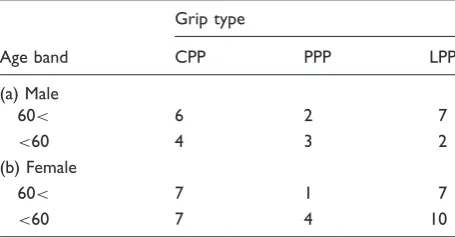
It was found that there were three common types of grip that people chose when they opened the yogurt pots. These were the grips described earlier; CPP, PPP and LPP, and are illustrated in Figures 4 and 5. Whilst there is no official definition of what age a user becomes an ‘older adult’ here it has been taken as 60 years (consistent with the World Health Organization and the United Nations23). Table 1 shows the age and observed grip for male and female participants. The data is split between those over or under 60 for both genders. Figure 9 shows how many pulled towards or away.
[image:8.595.317.545.644.763.2]The most popular grip by far was the CCP, mainly pulling away from the body. This type of grip obvi-ously generated enough force to open the pot. This grip would be easy to use for people with poor dex-terity because it does not involve the fingers bending to the extent they would have to if a LPP grip was chosen. The LPP was the second most popular. While it generates the most power, it requires a relatively large area for pinching which clearly yogurt pot lids, and many other forms of flexible packaging, do not offer. It is noticeable from Table 1 that more ‘younger’ test participants opted for the LPP grip, which may have been because of their greater dexter-ity. The least popular grip was the PPP. This type of grip generates the least power19 and so this is prob-ably why it was not an obvious choice. No obvious differences emerge between female and male test participants.
Table 1. Grip type for male and female test candidates.
Grip type
Age band CPP PPP LPP
(a) Male
60< 6 2 7
<60 4 3 2
(b) Female
60< 7 1 7
<60 7 4 10
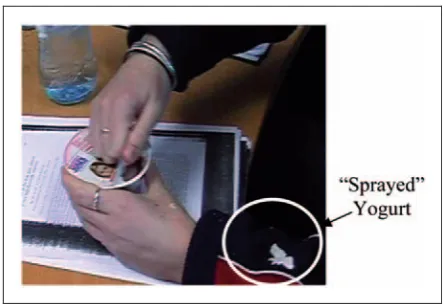
In terms of whether participants pulled the tab towards them or away some significant differences are clear. Participants over 60 were far more likely to pull away from themselves, i.e. they did not want, perhaps, to go through the procedure of re-orientating the pot so the tab was on the far side of the pot. This is interesting as it is this orientation that is more likely to lead to yogurt ‘spraying’ onto the candidate (Figure 10). It may be another issue created by lower dexterity.
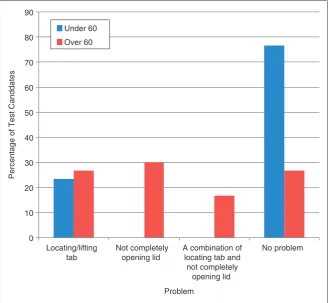
[image:9.595.307.530.248.401.2]Problems opening/handling the pots were also rec-orded if they occurred. The details are shown in Figure 11, again with a split between under 60 and over 60. It is possible to see from Figure 12 that a reasonable number of test participants had problems with opening the lids. Most (for younger and older participants) were related to locating and lifting the tab, an issue directly related to dexterity and relative finger pad/tab size. The older participants also had problems opening the lid completely or with both in combination, which were not an issue for the younger users. Incomplete opening may be a strength issue or could be associated with a problem with wrist twisting to continue the pulling motion to the far side of the pot.
High speed recordings of yogurt pot opening were taken to establish opening angles and speed for the testing to be carried out to measure opening forces. The results showed that force was applied at an angle of approximately 30 and the opening speed was of
the order of 500–600 mm/min. This was used in
developing the test method for assessing lid pull off force required (outlined in the next section).
Lid pull-off force
An understanding of how difficult the lids are to peel-off is important. This can then be related to the strength people can exert when pulling a lid off. In order to measure the force required to pull the lid off, a machine was needed that could pull in a uni-form, repeatable manner. Standard approaches did
0 10 20 30 40 50 60 70 80 90
Towards Away Towards Away Towards Away
CPP PPP LPP
Percentage of Test Candidates
Grip Type and Direction Under 60
[image:9.595.129.460.482.756.2]Over 60
Figure 9. Proportion of test participants peeling towards and away from themselves.
Figure 10. Typical yogurt spillage during pot opening (using an LPP grip).
LPP: lateral pinch pull.
not give any flexibility so a new method was devised based on standard servo-hydraulic test apparatus.
Apparatus
The peel strength of the pots was found by using a bespoke rig mounted in a hydraulic test machine. The rig (shown in Figure 12) was designed to be bolted onto the test machine. A specially designed clip on a cable fixed to the top of the test machine was attached to the tab (Figure 13). The pot was held on the rig by hand as it was moved down by the test machine (in displacement control). As this happened the cable tightened and moved around the roller and the tab was pulled back and the lid was peeled off the pod when the opening force was achieved. While being used for yogurt pots in this study the rig was kept relatively simple in order to allow testing of other flexible packaging.
The rig has a number of advantages over commer-cially available test apparatus, which include the abil-ity to maintain the opening angle during lid pull-off, variable pulling speed and the fact that a variety of packaging types can be tested.
The hydraulic test machine was set to move down at a constant velocity of 600 mm/min. This speed was chosen to represent the way pots are opened in every day life (as measured during the observations). A sep-arate load cell was incorporated into the hydraulic test machine as the built in cell had too high a range for
this application (forces down to 0.1 N could be mea-sured). Force data was logged during tests.
Pots sealed at five different temperatures were tested (180C to 220C at intervals of 10C). Ten
pots sealed at each temperature were tested. Sealing temperature is usually optimised to give the seal qual-ity required while still allowing the pot to be opened easily. There is, however, no standard for opening forces in relation to flexible packaging. The pots used were manufactured from PET and had PP lids and did not have yogurt in.
Results
The results generated from the testing were displayed as plots of force against time. An example of a result for a pot sealed at 200C can be seen in Figure 14.
The force builds up to a peak which occurs when the seal is broken and the lid starts to peel off. The force then immediately drops off to a range it stays at for the rest of the duration of the peel. The fluctuation in the force for the rest of the peel occurs because one side of the lid opens slightly, then the other side repeatedly.
The average opening forces measured along with the spread observed is shown in Figure 15. A steady increase can be observed as the temperature is increased. This result was expected as a higher tem-perature leads to a stronger seal. However, the amount of spread of maximum force, in particular
0 10 20 30 40 50 60 70 80 90
Locating/lifting tab
Not completely opening lid
A combination of locating tab and not completely
opening lid
No problem
Percentage of Test Canddates
Problem Under 60
[image:10.595.140.470.71.374.2]Over 60
for the pots sealed at 190C, 210C and at 220C,
was unexpectedly high. Studies carried out on the seals using ultrasound24 have shown, however, that large variation in the quality of seals (even those at nominally the same temperature) occurs, which could explain the spread.
Comparison with human pinch-pull data
Comparison of the opening forces measured with the DTI data for ‘pinch-pull’ (Figure 6) and ‘peel’ strengths (Figure 7) indicates that most people will be able to open yogurt pots. Some disabled users, though, may find it more difficult. Of course, however, this strength data is for the wrong type and thickness of material and the measurement process did not require any kind of manipulation as opening real packaging would. The strength data is therefore really an upper boundary. Measurement techniques for human strength are required that involve more realistic scenarios.
Finger friction measurements
To further understanding of hand/pack interaction an indication of how easy the pack is to grip is required. Finger friction measurements were taken on yogurt pot lid material (PP) and used to work out at what force the fingers would slip. This data was then com-pared with opening force data. While here it could clearly be anticipated that the slip force would be higher than that of the opening force, with other packaging this may not be the case. This exercise was really performed to establish the measurement technique and is included here to provide indicative information. The methodology of using a single sub-ject to produce indicative results was previously used by the authors to study finger to pack interaction on a range of bottle/closure materials.25
Apparatus
The rig used in the testing is shown in Figure 16. It basically incorporates two load cells and a block to hold the counterface material. The load cells were carefully selected to be able to take account of effects due to eccentric loading. This was because as the finger slides on the counterface the position relative to the normal force load cell will change. Voltage measurements from the load cells were downloaded, via two strain gauges and an oscilloscope, to a PC, where they were converted to force values using the load cell voltage/force relationships and finally to fric-tion coefficients. Before use, both load cells were cali-brated by applying dead weight loading and recording
Yogurt pot String attaches to top
of hydraulic test machine
Hydraulic test machine moves down at constant rate
[image:11.595.132.453.68.322.2]Extendable pillar to allow change of the peel back angle
Figure 12. Lid peel test apparatus.
Tab of the lid is clamped in here
Figure 13. Clip used to attach to the tab on the lid to the hydraulic test machine.
[image:11.595.54.279.385.463.2]the output voltage to obtain the voltage/force rela-tionships required for the data analysis.
As mentioned previously the rig has been used in an earlier study to analyse finger interaction with a range of bottle/closure materials.25 The rig was vali-dated by sliding various materials along a steel counterface.
Test methodology
The index finger (of a 23-year-old female) was set in position at an angle of 30to the counterface with the
yogurt pot lid attached and the tip was placed on the counterface (Figure 16). The user then adjusted the load applied to be around 20 N. This was used as it was found that good control could be exerted at this level of load. Tests were carried out in dry, slightly wet and oily conditions. In each test one drop of liquid were applied to the test surface at the finger application point.
In performing the tests, once the finger was adjusted and the load was at the required value, the user attempted to slide their finger, as slowly as pos-sible, along the counterface. This was because when gripping something the finger is not actually meant to move. This technique proved successful, as a clear static coefficient of friction could be identified in the results. Once movement did occur the finger motion was continued down the counterface. Tests were repeated ten times for each set of conditions. Fingers and counterfaces were cleaned and dried thor-oughly between tests.
Figure 17 shows the friction coefficient values determined by dividing the friction force by the normal force. The important data was the static value, which is indicated.
Results
Static friction results are shown in Figure 18. As can be seen, slightly wetting the surface actually increases friction. This has been seen before26–28and is analo-gous to ‘licking’ a finger when opening a plastic
The Peel Strength Required to Open A Pot Sealed at 200 Degrees Celcius
–2 0 2 4 6 8 10
0 2 4 6 8 10 12 14 16
Time/s
[image:12.595.142.469.71.252.2]Force/N
Figure 14. Force against time for a typical pot opening experiment.
0 2 4 6 8 10 12
170 180 190 200 210 220 230
Yogurt Pot Sealing Temperature (°C)
[image:12.595.63.291.322.478.2]Opening Force (N)
Figure 15. Maximum peel force recorded at five sealing temperatures.
30° Load Cell
Load Cell
Material Specimen
[image:12.595.320.542.322.459.2]carrier bag, for example. Figure 19 shows some sample data for a finger sliding against PVC for vary-ing moisture levels (from Tomlinson et al.26).
Using finger ‘press’ forces measured by the DTI29 (and shown in Table 2 for different ages) as the pinch/ normal force, the friction coefficients can be used to calculate a slip force,Fs
Fs¼2N ð1Þ
where,Nis the finger press force andmis the friction coefficient. The slip forces for dry and oily conditions are shown in Figure 20 for different ages and sexes. As can be seen, the forces are mainly well above the opening forces measured (Figure 15) so it should be possible for most users to open the pots even with oil on the tab. With oil though, more elderly female users
0 0.1 0.2 0.3 0.4 0.5 0.6 0.7 0.8 0.9 1
0 5 10 15 20
Time (secs)
Friction Coefficient
Static Coefficient of Friction
Normal Load
ApplicationNormal and Tangential Load Application
[image:13.595.110.469.70.272.2]Kinetic Coefficient of Friction
[image:13.595.53.279.349.483.2]Figure 17. Friction coefficient against time.
Table 2. DTI force data for index fingers18.
Age Gender
Index finger
Min Avg Max
21–30 M 76 118.67 155.6
F 55.9 78.87 98.4
31–50 M 85.6 122.17 174.2
F 66.4 87.12 111.8
51–60 M 55.4 104.12 137.5
F 53.8 67.62 79
61–70 M 73.5 101 121
F 59 65.78 73.2
71–80 M 58.6 83.52 103.3
F 41.4 58.29 84.6
DTI: The Department of Trade and Industry.
0 0.5 1 1.5 2 2.5
40 50 60 70 80 90 100
C
o
e
ffic
ie
n
t o
f fri
c
ti
o
n
Moistsense Reading (au)
Figure 19. Variation of friction coefficients with moisture for
tests run against PVC (taken from Tomlinson et al.26).
PVC: polyvinyl chloride. 0
0.1 0.2 0.3 0.4 0.5 0.6 0.7
Dry Wet Oil
Friction Coefficient
[image:13.595.303.534.361.534.2]Test Condition
Figure 18. Static coefficient of friction values for the conditions tested.
[image:13.595.51.280.586.730.2]may have problems as the minimum forces come close to the forces measured for pot opening.
Conclusions
Three areas of work have been carried out to investi-gate openability of a piece of thin film peelable packaging:
1. Participant observation has been used to establish problems with opening the packaging, opening techniques used and opening parameters, such as pulling speed, direction of pulling etc.
2. Opening force measurements have been carried out simulating the techniques observed during the observations and using the opening param-eters determined.
3. Finger friction measurements have been taken to further understanding of the hand/pack interaction.
A significant amount of work has been undertaken assessing the strength needed to access jars and bottles.30,31 However, less work has been undertaken assessing the use of flexible packaging by older people.
This work demonstrates that for flexible packaging of this type, dexterity is more of an issue than strength. Both force measurements and frictional data suggest that the opening event is within the cap-abilities of a large proportion of the population whilst the observation results showed older people having some difficulty manipulating the pot and the tab and hence use a grip choice that maximised the ease of opening. Given that a survey undertaken in a popular magazine aimed at older people9 stated that shrink wrapped products, cellophane ready meals, milk and juice cartons and biscuits were problematic indicates that products where dexterity is an issue for opening rank along with those that require purely strength.
Like strength, dexterity is seen to decrease with age32and hence, improving accessibility of packaging of this type should concentrate on tab shape and design so that less dextrous fingers can locate and manipulate the tab.
The method used in this work can easily be applied to flexible packaging with more openability issues and the finger friction testing in particular used to develop material textures with greater friction to aid in open-ing this type of packagopen-ing.
However, whilst the work did show that for pack types like this it is likely that dexterity is more of an issue than strength, the authors also showed that con-text of use is important when understanding this issue. Packaging is often used in the kitchen or bathroom and therefore users will often have wet or oily hands. That oil on the hands say, may change the accessibil-ity problem from one of dexteraccessibil-ity to strength for older female users is an important insight for researchers and designers attempting to measure users ability and design more inclusive packaging.
Future work
To date, most research into packaging access has con-centrated on issues surrounding strength and under-standing issues related to declining strength in older people. However results indicate that declining dex-terity is likely to be a significant issue when accessing packaging of this type. It is apparent that more work should be done to understand this issue in general. The authors seek to undertake a number off future studies in this area:
. understanding current ‘state of the art’ with respect to dexterity and packaging access in more detail.
. determine what features of pack formats affect packaging access.
. determine what user characteristics (age, gender, hand size) affect packaging access.
0 20 40 60 80 100 120
Age/Sex
Slip Force (N)
Oil Max Oil Min
0 20 40 60 80 100 120
M F M F M F M F M F
21-30 31-50 51-60 61-70 71-80
M F M F M F M F M F
21-30 31-50 51-60 61-70 71-80
Age/Sex
Slip Force (N)
[image:14.595.97.517.71.236.2]Dry Max Dry Min
. undertake more detailed studies measuring friction coefficient between users and packaging materials.
. understand context of use relating to packaging access.
Funding
This work was funded by The University of Sheffield, UK.
References
1. Keynote Companies. Packaging (Plastics) market report executive summary, http://www.keynote.co.uk/ market-intelligence/view/product/2319/packaging–plas-tics (2010, accessed 11 June 2012).
2. DTI, PIRA, The Packaging Federation. Packaging in the 3rd millennium, Main Report, http://www.packa-gingfedn.co.uk/images/reports/mainreport.pdf (2009, accessed 11 June 2012).
3. Keates S and Clarkson J.Countering design exclusion: an introduction to inclusive design. London: Springer-Verlag, 2003.
4. U.S. Census Bureau Population division 1-886-758-1060. http://www.census.gov (2010, accessed 11 June 2012).
5. UK Government Actuary Population Projections. National Statistics Office, Government Buildings, Cardiff Road, Newport, Wales, UK, 2009.
6. British Association for Parenteral and Enteral Nutrition, B. Nutrition screening survey in the UK in 2007. Redditch: BAPEN, 2008.
7. British Association of Parenteral and Enteral Nutrition, B. Malnutrition among older people in the community: policy recommendations for change. London, BAPEN, The European Nutrition for Health Alliance,
Internaional Longevity Centre, Associate
Parliamentary Food and Health Forum, 2006. 8. Howard BM and Griffin MJ. Repeatability of grip
strength and dexterity tests and the effects of age and gender. Int Arch Occup Environ Health 2002; 75(1/2): 111–119.
9. McConnell V. Pack it in! Just say no to impossible packaging. Yours Magazine, 30th January to 27th February 2004, pp. 16-18.
10. Rohles JR, Frederick H, Moldrup, Kelli L, et al. Opening jars: an anthropometric study of the wrist-twisting strength of the elderly. Proc Human Factors Ergonom Soc1983; 1: 112–116.
11. Voorbij AIM and Steenbekkers LPA. The twisting force of aged consumers when opening a jar. Appl Ergonom2002; 33: 105–109.
12. Yoxall A and Janson R. Fact or friction: a model for understanding the openability of wide mouth closures.
Packag Technol Sci2008; 21: 137–147.
13. Su FC, Chiu HY, Chang JH, et al. Jar-opening chal-lenges. Part 1: An apparatus for assessing hand and finger torques and forces in a jar-opening activity.
Proc IMechE, Part H: J Engineering in Medicine2009; 223: 121–129.
14. Yoxall A, Rodriguez-Falcon EM and Luxmoore J. Carpe diem, Carpe ampulla: a numerical model as an aid to the design of child-resistant closures. Appl Ergonom2012 (in press).
15. DTI.Consumer safety research. Assessment of broad age related issues for package opening. DTI: London, 1997. 16. Langley J, Janson R, Wearn J, et al. ‘Inclusive’ design for containers: improving openability.Packag Technol Sci2005; 18: 285–293.
17. Peebles L and Norris B. Filling ‘gaps’ in strength data for design.Appl Ergonom2003; 34: 73–88.
18. DTI.Research into the forces required to open paper and sheet plastic packaging – experiments, results and statis-tics in detail. DTI: London, 2003.
19. Imrhan S and Sundararajan K. An investigation of finger pull strength.Ergonomics1992; 35: 289–299. 20. Hanatek Instruments. Advanced friction tester (with
peel attachment), http://www.hanatekinstruments.com (accessed 2 February 2012).
21. Lloyds Instruments. Peel fixture for yoghurt pot foil seals, http://new.ametek.com (accessed 2 February 2012).
22. Rowson J and Yoxall A. Hold, grasp, clutch or grab: consumer grip choices during food container opening.
Appl Ergon2011; 42: 627–633.
23. World Health Organisation. Definition of older or eld-erly person, www.who.int/healthinfo/survey/ageingdef-nolder/en/index.html (accessed 30 January 2012). 24. Canty L. Understanding the opening of flexible
packa-ging. MPhil Thesis, The University of Sheffield, 2005. 25. Lewis R, Menardi C, Yoxall A, et al. Finger friction:
grip and opening packaging. Wear 2007; 263: 1124–1132.
26. Tomlinson SE, Lewis R, Liu X, et al. Understanding the friction mechanisms between the human finger and flat contacting surfaces in moist conditions.Tribol Lett
2011; 41: 83–294.
27. Andre´ T, Lefevre P and Thonnard J-L. A continuous measure of fingertip friction during precision grip.
J Neurosci Meth2009; 179: 224–229.
28. Nonomura Y, Fujii T, Arashi Y, et al. Tactile impres-sion and friction of water on human skin.Colloid Surf B: Biointerf2009; 69: 264–267.
29. DTI.Adultdata – The handbook of adult anthropometric and strength measurements. DTI: London, 1998. 30. Yoxall A, Langley J, Janson R, et al. How wide do you
want the jar? The effect on diameter for ease of opening for wide-mouth closures.Packag Technol Sci2010; 23: 11–18.
31. Yoxall A and Janson R. Fact or friction: a model for understanding the openability of wide-mouth closures.
Packag Technol Sci2008; 21: 137–147.
32. Desrosiers J, Herbert R, Bravo G, et al. The Purdue Pegboard test: normative data for people aged 60 and over.Disab Rehab1995; 17: 217–224.