THRESHOLD CONCEPTS IN THEORY AND PRACTICE
This special issue on Threshold Concepts in Management Education invites readers to engage with a distinctive category of concepts that, when learned, result in students “seeing things in a new way” and thereby making transformative leaps in understanding (Meyer & Land, 2003:1). Threshold concepts have garnered much attention and enthusiasm in the broader education literature over the past decade (e.g.: Timmerman et al, 2013; Meyer & Land, 2005; Meyer, Land & Baillie, 2010: Wimshurst, 2011) but have been underdeveloped in the management education literature. Thus, our initial premise in proposing this special issue was that applying threshold concepts to the pedagogy and practice of management education was important and had the potential to open up valuable advances for students, educators and managers.
understanding associated with threshold concepts is usually not reversible. Once new connections and patterns have been discerned, a retreat into earlier patterns of understanding cannot easily be achieved, although the concept itself might be superseded by even more sophisticated, alternative conceptualizations (Trafford, 2008). Fifth, successful engagement with threshold concepts is transformational. The irreversible reconfiguration of patterns of understanding, which results from the engagement, has effects on the patterns of practical action that follow; if the “world” is seen anew, the way in which one should think and act must also change (Meyer, Land & Davies, 2008; Mezirow, 2000).
These five characteristics of threshold concepts provide the foundation for the contributions of the special issue, and the four articles that follow offer the kinds of advances we envisaged by taking threshold concepts in new pedagogic and disciplinary directions. We briefly introduce each article before considering their contributions in relation to the scholarly conversations they engage with and the target beneficiaries of their insights.
In This Issue
on the role of experience in supporting student’s interpretive engagement and how educators might leverage this experience.
In the next article, Burch, Burch, Bradley & Heller present a conceptual essay that builds on the integrative and transformative characteristics of threshold concepts. The authors argue that educators can identify stumbling blocks and transform students through a bottom-up micro-oriented approach to curriculum design and delivery. They articulate a model of a Conception-Focused Curriculum (CFC) that integrates concepts viewed through the lens of the discipline and illustrate the implementation of their model using the example of organizational behaviour courses.
In the third article, Vidal, Smith & Wellington further unpack the troublesome and integrative characteristics of threshold concepts by exploring how troublesomeness can arise from interconnections between concepts. The authors present an empirical study based on the redesign of an undergraduate course teaching sustainability, social responsibility and ethics. Their study demonstrates how multiple theoretical concepts that are (or can be) interconnected may function as threshold conceptions. The authors also provide methodological guidance for how educators can evaluate student progress in navigating the ‘liminal space’ of engagement with threshold concepts.
The special issue concludes with a resource review by Nichols & Wright1, who build on the notion that the characteristics of threshold concepts create a liminal space which students must navigate for the ‘new way of seeing’ to come into view. The authors argue that simulations offer a valuable learning resource for helping students to navigate the liminal space. Extending Wright & Gilmore's (2012) finding that
introductory management courses are underpinned by the threshold concept that ‘management is a practice informed by theory’, the authors illustrate how the Everest Team Simulation by Harvard Business Publishing can be used to help this threshold concept come into view for novice management students.
Themes and Insights
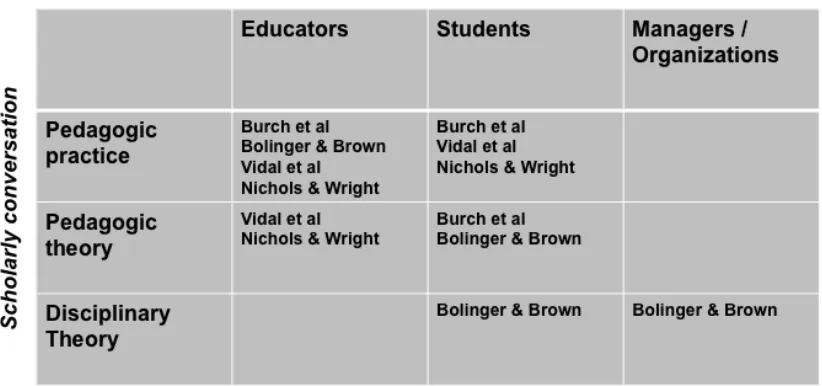
Figure 1: Conversations and inquiry insights
Insights for educators – in theory and practice
that transform the understanding of one another” (p. 498). Burch et al and Vidal et al thus draw attention to the need for educators to think about how they use integrative conceptions in their courses and reinforce the emphasis on threshold conceptions rather than threshold concepts in recent research in this area (c.f. Wright & Gilmore, 2012).
However, as other research has identified, there continue to be areas of management education where a focus on particular concepts is an appropriate approach. Yip & Raelin (2012), for example, have previously established the existence of particular threshold concepts in leadership education. Bolinger & Brown adopt this approach in their contribution to the special issue, offering a powerful illustration of the concept of entrepreneurial failure as a particular threshold concept in entrepreneurship education.
Taking the insights from our contributors together, a clear question for further research is suggested: how might we theoretically distinguish when there is a need to approach a body of knowledge through integrated threshold conception(s) or particular threshold concept(s) - or perhaps even a combination of both - across the breadth of a curriculum? Bolinger & Brown and Vidal et al present methods for engaging with this conundrum empirically, notably multi-stage concept mapping and survey research before and after course redesign, while Burch et al engage with it speculatively in their model of course and curriculum development. How might we go further and develop a deeper theoretical approach for predicting threshold learning challenges?
targeted at educators involved in undergraduate introductory courses, where students’ lack of experience creates a threshold conception regarding the connection between management theory and practice. The authors advance pedagogic theory for educators by encouraging them to think about how resources can be used to simulate experience, rendering the threshold conception less troublesome. Bolinger & Brown further unpack the role of experience in learning from (or through) threshold concepts. Their broad cohort of undergraduate students included some with substantial work and entrepreneurial experience. Their findings reveal how the life and career-stage of students may impact on their desire and ability to engage with (some) troublesome threshold concepts. They argue that: “Whereas previous research has suggested that threshold concepts are where individuals are likely to find the greatest difficulty in learning from experience [we] suggest that experiences themselves may provide the motivation for individuals to learn threshold concepts such as entrepreneurial failure” (p. 470). This insight supports Hibbert & Cunliffe’s (2013) recent finding that experience contributes to a reflexive engagement with threshold concepts. Thus, we think that Bolinger & Brown’s findings encourage management educators to consider how broader formational experiences in students’ lives and careers impact on their (potential for) engagement with threshold concepts and conceptions.
Student participation – in theory and practice
Characterising Bloom’s notion of “understanding” as a threshold conception, the authors explain how this new characterisation illuminates students’ (lack of) progression through the stages of Bloom’s taxonomy. Bolinger & Brown also offer an interesting theoretical contribution to our understanding of threshold concepts by opening up the potential dynamic role of experience and student learning trajectories, which connects with the burgeoning interest in interpretation and learning per se (c.f. Hibbert, Siedlok & Beech, 2014; Quinn Trank, 2014). There is clearly more room to explore how (theories) of students’ interpretive ‘work’ might illuminate their processes of engagement with threshold concepts.
Bringing theory and practice to managers and organizations
Conclusion: a first step across the threshold, and a conversation to be continued
Overall, our contributors offer rich additions to the conversation on threshold concepts, providing useful practical insights and developments that extend into other theoretical domains and debates. We have been privileged to work with these authorial teams, the supportive editors-in-chief, Jeanie Forray and Kathy Lund Dean and the resource reviews editor, Scott Allen. This special issue has been a collective and a collegial endeavour.
While valuable inroads have been made by the contributors, we believe the special issue has just scratched the surface of threshold concepts in management education. Further research is needed to ‘fill in’ some of the ‘gaps’ in our conceptual research map presented in Figure 1. Specifically, there are three potential areas for further research that we suggest might be beneficial.
First, there is a need for research on how managers deal with threshold concepts when they address them as independent learners – that is, after they have completed their formal education. Contextual turbulence and the dynamics of change will continue to expose managers to new and unexpected challenges that we suggest might fit the troublesome and transformative characteristics of threshold concepts. No formal learning program can cover every emergent possibility that students might face in the future. Nevertheless, by investigating how managers inside organizations approach challenges as threshold concepts, we as educators might better understand how to embed opportunities for our students to develop skills to detect, interpret and negotiate troublesome threshold concepts for themselves.
‘symptoms’. The latter are well described in the literature, but the former are not so well understood. The contributions in this special issue open up some potential new lines of inquiry into the causes of troublesomeness. Emotional attachment to narrowly simplistic interpretations of concepts, alluded to by Bolinger & Brown, might contribute to troublesomeness when underlying concepts are in fact complex and polysemic, as Vidal et al found with the concepts in their study. These insights are starting points only and the root causes of ‘troublesomeness’ require much more extensive investigation.
Finally, scope exists for future research that focuses on the dynamics of experience and interpretation in relation to the recognition of, and engagement with, threshold concepts. Such research may also better illuminate the role of experience and interpretation in learning challenges more generally, building on recent research in this area (Hibbert et al, 2014; Quinn Trank, 2014).
We hope that our suggestions for further research, and the contributions made by the authors of the papers in this special issue, are just the beginning of new conversations and debates about the theory and practice of threshold concepts in management education. We are pleased to have been able to stimulate and facilitate discussion that advances our understanding of threshold concepts and conceptions, as well as offering practical applications for our fellow educators invested in improving student learning in their courses. Nevertheless we would like to end by emphasising that our conclusions remain provisional and we (always) eagerly await further dialogue and insights:
structure of conversation, as of wonder, to begin and end on a note of uncertainty and openness to further inquiry” (Fairfield, 2011:83).
REFERENCES
Cousins, G. (2006). Threshold concepts, troublesome knowledge and emotional capital: an exploration into learning about others, in Meyer, J. and Land, R. (eds) Overcoming Barriers to Student Understanding: Threshold Concepts and Troublesome Knowledge. London: Routledge.
Fairfield, P. (2011). Dialogue in the classroom. In: Fairfield, P. 2011. (ed.) Education, Dialogue and Hermeneutics (pp77-90). London: Continuum.
Hibbert, P., Siedlok, F. & Beech, N. (2014, forthcoming in print). The role of interpretation in learning practices, in the context of collaboration. Accepted for publication in Academy of Management Learning and Education, available online early, doi: 10.5465/amle.2014.0004
Hibbert, P. and Cunliffe, A. (2013, forthcoming in print). Responsible management: Engaging moral reflexive practice through threshold concepts. Accepted for publication in Journal of Business Ethics, available online early, doi:
10.1007/s10551-013-1993-7
Jenkins, A. S. 2012. After Firm Failure: Emotions, Learning and Re-entry: Jönköping International Business School. Unpublished doctoral dissertation. Jenkins, A. S., Wiklund, J., & Brundin, E. 2014. Individual responses to firm failure:
McCormick, R. (2008). Threshold concepts and troublesome knowledge: some reflections on the nature of learning and knowledge. In Land., R., Meyer, J.H.F. and Smith, J. (eds) Threshold Concepts within the Disciplines, 51-58. Rotterdam: Sense.
Meyer, J. H. F., & Land, R. (2005). Threshold concepts and troublesome knowledge (2): epistemological considerations and a conceptual framework for teaching and learning. Higher Education, 49: 373-388.
Meyer, J. H. F., & Land, R. (2006). Threshold concepts and troublesome knowledge: issues of liminality, in Meyer, J.H.F. and Land, R. (eds) Overcoming Barriers to Student Understanding: Threshold Concepts and Troublesome Knowledge, 19-32. London: Routledge.
Meyer, J. H. F. & Land, R. (2003). Threshold concepts and troublesome knowledge: linkages to thinking and practising within the disciplines, in Rust, C. (ed)
Improving student learning: Theory and practice - ten years on, 412-424. Oxford: Centre for Staff and Learning Development.
Meyer, J.H.F., Land, R. & Davies, P. (2008). Threshold concepts and troublesome knowledge, in Land., R., Meyer, J.H.F. and Smith, J. (eds) Threshold Concepts within the Disciplines, 59-74. Rotterdam: Sense.
Meyer, J.H.F., Land, R. & Baillie, C. (eds., 2010). Threshold Concepts and Transformational Learning. Rotterdam: Sense.
Mezirow, J. (2000). Learning as Transformation. San Francisco: Jossey-Bass.
Perkins, D. (2006). Constructivism and troublesome knowledge, in Meyer, J.H.F. and Land, R. (eds) Overcoming Barriers to Student Understanding: Threshold Concepts and Troublesome Knowledge, 33-47. London: Routledge.
Quinn Trank, C. (2014). “Reading” evidence-based management: The possibilities of interpretation. Academy of Management Learning and Education, 13: 381-395.
Timmerman, B., Feldon, D., Maher, M., Strickland, D. & Gilmore, J. (2013). Performance-based assessment of graduate student research skills: timing, trajectory, and potential thresholds. Studies in Higher Education, 38: 693-710. Trafford, V. (2008). Conceptual frameworks as a threshold concept in doctorateness.
In Land, R., Meyer, J.H.F. and Smith, J. (eds) Threshold Concepts within the Disciplines, 273-288. Rotterdam: Sense.
Wimshurst, K. (2011). Applying threshold concepts theory to an unsettled field: an exploratory study in criminal justice education. Studies in Higher Education,
36: 301-314.
Wright, A.L. & Gilmore, A. (2012). Threshold Concepts and Conceptions: Student Learning in Introductory Management Courses. Journal of Management Education, 36(5), 614-635.