LANGUAGE MEASURE OF TRUST FOR ONLINE GROUPS
BY
STEVEN NICHOLSON BSc (Hons), MSc
DEPARTMENT OF PSYCHOLOGY LANCASTER UNIVERSITY
APRIL 2016
ii Declaration
I declare that the thesis is my own work, and has not been submitted in substantially the same form for the award of a higher degree elsewhere.
Steven Nicholson
iii Abstract
This thesis investigated the link between trust and language in online dyadic, online group, and virtual community interactions. The first two empirical studies revealed that positive emotion is reliably linked to trust, that is to say that dyads and groups that produce more positive emotion words show greater trust. In addition, by priming group members to believe their group was either high or low in
trustworthiness, the second empirical study revealed that group members produce more positive emotion words as a consequence of greater trust.
A third study revealed an additional important language phenomena to trust, this was a type of linguistic mimicry known as linguistic style matching (LSM). The study guided groups through established phases of group development (relational, task, and task resolution), findings revealed that LSM in the early, relational phase, predicted trust. Further analysis of the relationship between phase of development, positive emotion words and LSM revealed that when LSM was low in the relational phase, positive emotion once again became a cue used to trust in subsequent task phases.
The Relevant and Reliable Language Theory was proposed to explain the phase of group development dependent effects of LSM and positive emotion on trust. In short, the theory states that language must be relevant, i.e. the group is still
iv
detrimental effect on trust. A confederate implementing these disruptions, relative to a comparable control, supported the theory; with groups who were subject to the ‘strong’ disruption producing lower trust behaviour than the control group.
v
Acknowledgements
Firstly, I would like to thank Prof. Adam Joinson and Dr. Casey McCulloch for examining this thesis, I hope you enjoy reading it as much as I have enjoyed writing it, and I very much look forward to discussing the contents with two people who’s contribution to social science is an inspiration to myself and I’m sure many other academics starting their careers. I am most grateful to Dr. Stacey Conchie and Prof. Paul Taylor for all the hard work they have contributed to help make the thesis what it is today. Your wisdom and down to earth nature I’m sure has shaped the researcher I am today, you have both helped make the last three years most enjoyable. Finally, I would like to thank Lauren Gilling and Dr. Rob Davies for your generous help with data collection and analysis respectively.
vi
iii
Table of Contents
1. Chapter 1: An Introduction to Trust, Trust Online, and Trust
Measurement ... 1
1.1. What is Trust? ... 1
1.1.1. The Meaning of Trust ... 1
1.1.2. Trust Components ... 3
1.2. What behaviours lead to, and result from, trust? ... 7
1.3. What are the benefits and problems of trust? ... 9
1.4. How does trust function online? ... 12
1.4.1. Face-‐to-‐face medium versus computer mediated communication .... 13
1.4.2. Existing models of trust ... 14
1.5. What methods have been used to measure trust? ... 18
1.5.1. Trust propensity measures ... 18
1.5.2. Trust beliefs and trust intention measures ... 19
1.5.3. Trust behaviour measures ... 20
1.6. How might language be a reliable indicator of trust? ... 22
1.6.1. The relationship between language and latent constructs. ... 22
1.6.2. Using language to measure trust. ... 26
1.7. Conclusion ... 29
2. Chapter 2: Language Basis of Trust in Online Dyadic Interactions ... 31
2.1. Trust, trustworthiness, and propensity to trust ... 31
2.1.1. Emotion words ... 32
2.1.2. Cognitive process words ... 32
iv
2.1.4. Perceptual process words ... 34
2.1.5. Linguistic style matching ... 34
2.2. Method ... 35
2.2.1. Participants ... 35
2.2.2. Materials ... 36
2.2.3. Design ... 38
2.2.4. Procedure ... 38
2.2.5. Analysis ... 40
2.3. Results ... 42
2.4. Discussion ... 43
2.4.1. Limitations and future research ... 48
2.4.2. Conclusion ... 49
3. Chapter 3: Language Basis of Trust in Online Group Interactions 50 3.1. Trust formation in online groups ... 51
3.2. Priming trust in online groups ... 53
3.3. Method ... 56
3.3.1. Participants ... 56
3.3.2. Materials ... 56
3.3.3. Design ... 60
3.3.4. Procedure ... 61
3.3.5. Analysis ... 63
3.4. Results ... 65
3.5. Discussion ... 68
3.5.1. Individual word categories ... 68
3.5.2. Linguistic style matching ... 69
3.5.3. Language outcomes of trust ... 71
v
3.5.5. Conclusion ... 74
4. Chapter 4: Language Style Matching and Positive Emotion as Predictors of Trust in Online Groups: The Importance of Phase of Group Development ... 76
4.1. Context as Group Phase Development ... 79
4.2. Method ... 80
4.2.1. Participants ... 80
4.2.2. Materials ... 81
4.2.3. Design ... 85
4.2.4. Procedure ... 86
4.3. Results ... 89
4.3.1. Hypothesis testing ... 89
4.4. Discussion ... 92
4.4.1. Linguistic style matching ... 92
4.4.2. Relevance and reliability ... 95
4.4.3. Limitations and future research ... 97
4.4.4. Conclusion ... 100
5. Chapter 5: Disrupting Two Language Paths to Trust in Online Groups ... 102
5.1. From Language to Trust ... 102
5.2. Manipulating language ... 104
5.3. Trust beliefs and intentions ... 107
5.4. Method ... 109
5.4.1. Participants ... 109
5.4.2. Materials ... 110
vi
5.4.4. Procedure ... 112
5.5. Results ... 116
5.5.1. Hypothesis testing. ... 116
5.6. Discussion ... 120
5.6.1. Limitations and future research ... 123
5.6.2. Conclusion ... 124
6. Chapter 6. Using Language to Measure Trust in a Criminal Virtual Community ... 125
6.1. Overview of Virtual Communities ... 125
6.2. Trust Matters in Virtual Communities ... 126
6.3. Trust Matters in Criminal Groups ... 127
6.4. Language Matters in Virtual Communities ... 127
6.5. The Present Study ... 128
6.6. Hypotheses ... 129
6.7. Method ... 133
6.7.1. Participants. ... 133
6.7.2. Materials. ... 134
6.7.3. Procedure ... 136
6.7.4. Design ... 137
6.7.5. Ethics ... 139
6.8. Results ... 140
6.9. Discussion ... 142
6.9.1. Applications and implications ... 145
6.9.2. Limitations and future research ... 146
6.9.3. Conclusion ... 147
vii
7.1. Experiment and Theory Summary ... 148
7.2. Implications ... 153
7.3. Applications ... 155
7.4. Limitations and future research ... 156
7.5. Concluding remarks ... 158
iii List of Tables
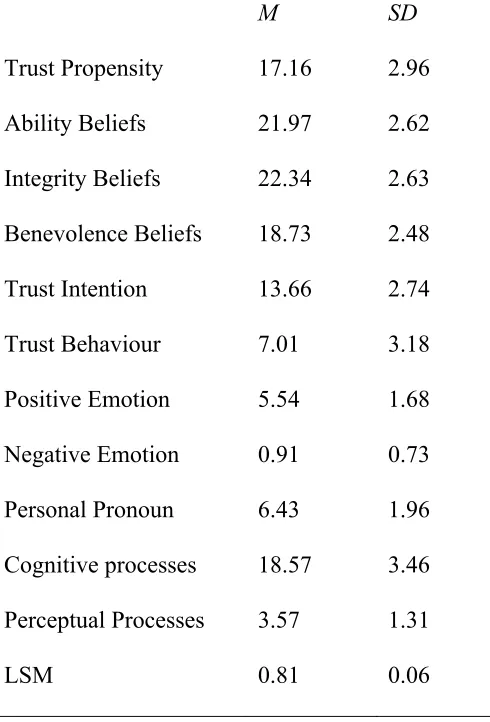
Table 2.1 Means and standard deviation for trust and language measures. ... 43
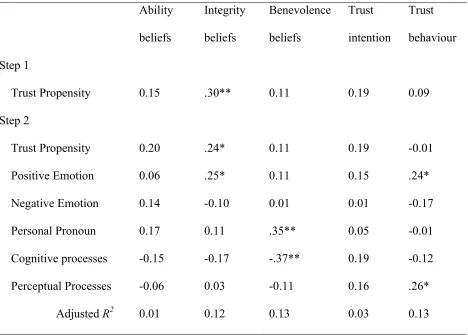
Table 2.2 Results from hierarchical regression analyses (Hypotheses 1 to 4) ... 44
Table 2.3 Results from hierarchical regression analyses (Hypothesis 5) ... 44
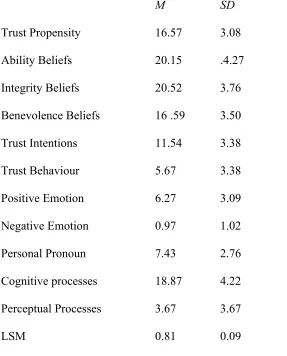
Table 3.1 Means and standard deviations for trust and language variables ... 66
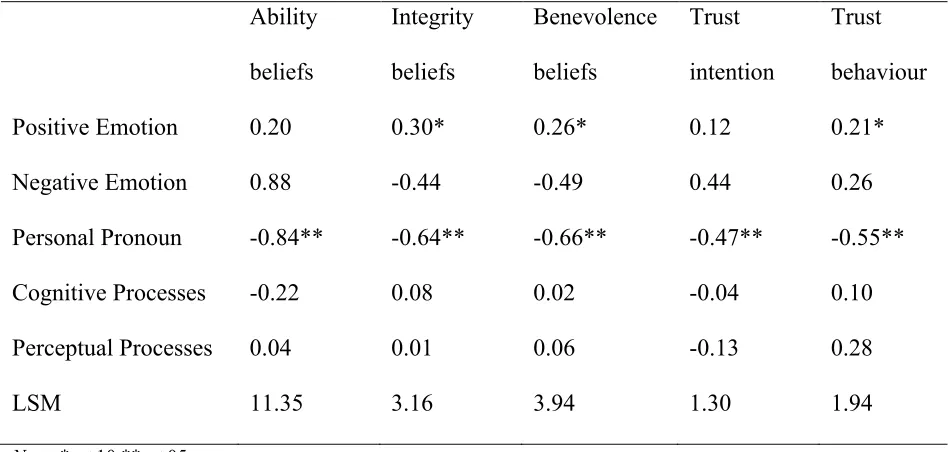
Table 3.2 Results from individual language category linear mixed effects models (Hypotheses 1 and 2) ... 67
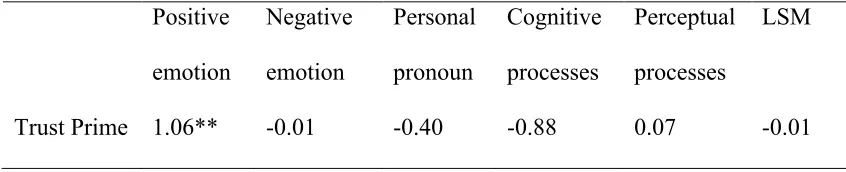
Table 3.3 Results from trust prime linear mixed effects models (Hypothesis 3 and 4) 68 Table 4.1 Means and standard deviations for trust measures and language variables across phases of group development. ... 90
Table 4.2 Effect of positive emotion on trust behaviour for groups with high or low LSM in the relational activity phase. ... 93
Table 5.1 Means and standard deviations for production of function words per person during the study in Chapter 4 ... 113
Table 5.2 Means and standard deviations for trust measures in each phase. ... 117
Table 5.3 Means and standard deviations for LSM and positive emotion in each phase and each experimental condition. ... 117
Table 5.4 Least square means estimates of effect of disruption condition on trust behaviour. ... 119
Table 6.1 Phases of group’s life cycle. ... 138
Table 6.2 Summary of LME model; phase of group interaction predicting LSM. ... 141
iv List of Figures
Figure 1.1 Schematic representation of Mayer et al.’s (1995) trust model. ... 30 Figure 2.1 Schematic representation of a conceptual model linking the language of an
interactional partner to an individual’s trust beliefs, trust intentions and trust
behaviour. ... 36 Figure 3.1 Schematic representation of a conceptual model linking the language of a
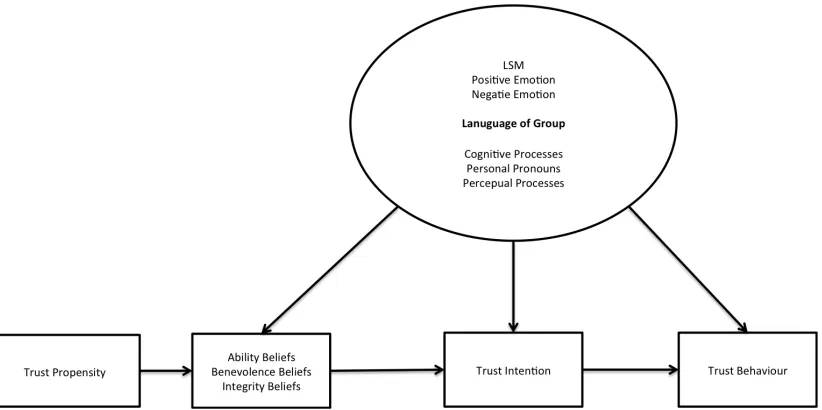
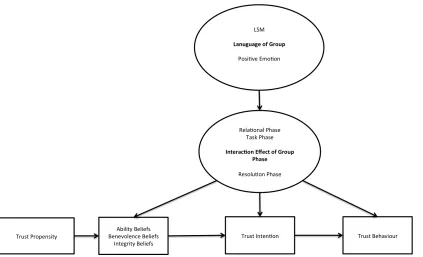
group to an individual’s trust beliefs, trust intentions and trust behaviour. ... 54
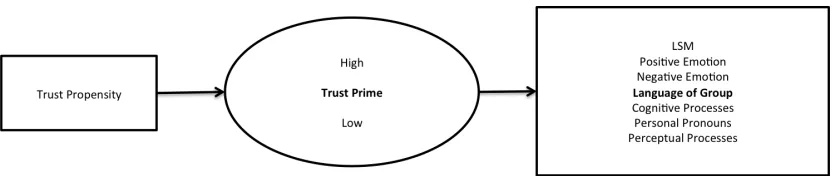
Figure 3.2 Schematic representation of a conceptual model linking primed trust to the individual’s language use. ... 57 Figure 4.1 Schematic representation of a conceptual model linking the language of a
group to an individual’s trust beliefs, trust intentions and trust behaviour
including the effect of phase of group development. ... 81 Figure 5.1 Schematic representation of a conceptual model linking the experimentally
manipulated language of a group to an individual’s trust beliefs, trust intentions
and trust behaviour including the effect of phase of group development. ... 109
Figure 6.1 Schematic representation of a conceptual model linking the varying levels of high and low trust and the language of the group in an entirely relational
1. Chapter 1: An Introduction to Trust, Trust Online, and Trust Measurement This thesis will study the link between language and trust in online group interactions. Computer text analysis will be a central tool in studying this link. Computer text analysis has been used to relate to other latent constructs, such as deception (Hancock, Curry, Goorha, & Woodworth, 2007) this thesis will be the first to explore its utility in relating to trust. A series of empirical studies will simulate group interactions using student participants. Finally, the language measure derived from these simulations will be utilized and its robustness tested by applying it to real world online criminal discussions.
1.1. What is Trust?
This Chapter seeks to answer a number of questions that are important to our understanding of what trust is and how it could be measured in remote groups. The questions addressed by this review include: what is trust?; what behaviours lead to and result from trust?; what are the benefits and problems of trust?; how does trust function online?; what methods have been used to measure trust?; and, how might language be a reliable indicator of trust? With regard to applications, the questions are designed to connect with operational and investigative concerns. For example, the question ‘What are the benefits, and what are the problems of trust?’ has potential value for teams that are thinking of using or manipulating trust as part of a disruption effort.
1.1.1. The Meaning of Trust
Rousseau, Sitkin, Burt & Camerer, 1998; Zand, 1972). These components have increasingly converged in researchers’ conceptualisations of trust, and they are reflected in the often-cited definition provided by Rousseau et al. (1998), who propose that:
“Trust is a psychological state comprising the intention to accept vulnerability based upon positive expectations of the intentions or behaviors of another” (p. 395)
“Positive expectations” reflect a person’s (i.e., trustor’s) beliefs about another party (i.e., trustee), and “the intention to accept vulnerability” refers to their
willingness to rely on that party. Inherent within this definition is the fact that trust is an underlying psychological condition of intention, which gives rise to a set of
behaviours that may be regarded as risky (Rousseau et al., 1998). The risk that exists with trust is created by the fact that trust begins where rational prediction ends, and where another’s behaviours cannot be predicted with certainty. Further, because it exists in situations that call for reliance on another party to achieve some goal, to trust another makes a person vulnerable to another’s insincere behaviours. Risk,
interdependence and vulnerability, are the cornerstones of trust.
(completion of some other task). The fact that the consequences from broken trust outweigh the benefits when trust is fulfilled makes the decision to trust a risky one.
1.1.2. Trust Components
Two main components of trust have been identified that relate to beliefs and intentions. The belief that another person is trustworthy informs intentions to rely on that person in a risky situation, which in turn predicts actual behaviour. In most situations, trust beliefs and in turn trust intentions, are informed through experiences with the other person. However, where this does not exist (i.e., in a novel situation), a person’s trust in another may depend on their general predisposition to trust others. This view of trust as an intention, which is influenced by beliefs and dispositions, and in turn influence trust behaviours, marks the dominant theoretical model of trust (Mayer et al., 1995; McKnight & Chervany, 2001).
Trust beliefs. Trust beliefs are the extent to which one believes, with feelings of relative security, that the other person has characteristics beneficial to oneself (McKnight & Chervany, 2001). The belief that another person is trustworthy
A person’s level of ability is inferred from the knowledge and skills that they are assumed to hold for a specific task, along with the interpersonal skills and general wisdom needed to succeed at the task (Gabarro, 1978). Perceived ability has been identified by a number of studies as leading to trust (Cook & Wall, 1980; Deutsch, 1960; Jones, James, & Bruni, 1975; Sitkin & Roth, 1993). It is captured through qualities such as ability, competence, knowledge, qualifications and experience (e.g., Butler, 1991; Butler & Cantrell, 1984; Kee & Knox, 1970; Lieberman, 1981).
Benevolence is the extent to which the trustee is believed to want to do good for the trustor, aside from an egocentric profit motive (Jones, James & Bruni, 1975; Mayer et al., 1995). The positive orientation of the trustee toward the trustor, often manifested as being helpful when one is not required to be helpful, is the essence of the benevolence characteristic. Numerous studies have examined similar constructs to benevolence as qualities leading to trust. These include altruism, loyalty and care (Butler & Cantrell, 1984; Frost, Simpson, & Maughan, 1978; McAllister, 1995).
Finally, integrity relates to the extent to which a trustee is believed to adhere to a set of sound moral and ethical principles, which the trustor finds acceptable (Colquitt et al., 2007; Mayer et al. 1995). Adherence is central to the concept of integrity. For example, for an individual to be perceived as having integrity, he or she must follow a set of personal principles consistently (personal integrity) and follow a set of principles in which the trustee judges acceptable (moral integrity) (McFall, 1987). Hence perceptions of fairness, justice, consistency and promise fulfilment all affect the degree to which another is judged to have integrity (Butler & Cantrell, 1984; Butler, 1991; Colquitt et al., 2007; Gabarro, 1986).
the most proximal outcome of trust beliefs (Colquitt et al., 2007; Mayer et al., 1995). Trust intentions have often been conceptualised as synonymous with trust beliefs and trust behaviour due to their proximity. However, Mayer et al. (1995) suggested they exist independent of the other components. That is to say that, trust intentions do not assume vulnerability, as is the case with trust behaviour when an explicit act of trust occurs. Nor are trust intentions explicitly perceptions of another’s trustworthiness (trust beliefs). That is to say that, a positive belief about a trustee’s ability,
benevolence, and integrity does not automatically translate into a trust intention, if, for example, risk in the situation is too high. Thus, trust intentions are conceptually separate to beliefs.
Trust intentions may be subdivided into a willingness to disclose (disclosure trust intentions) and a willingness to rely (reliance trust intentions) (Gillespie, 2003). Their existence as distinct, but related constructs, has been provided at both a
theoretical and empirical level (Conchie, Taylor & Donald, 2012; Gillespie, 2003). Furthermore, it has been proposed, and empirically shown, that reliance trust
intentions are more closely related to ability trustworthiness beliefs, while disclosure trust intentions are more closely related to integrity and benevolence trustworthiness beliefs (Conchie et al., 2012; Gilespie, 2003). Taken together, trust intentions operate as a distinct trust component that is informed by trust beliefs, and in turn, inform trust behaviours.
Trust behavior. Trust behaviour refers to actions that reflect a person’s voluntary dependency on another in a risky situation (McKnight & Chervany, 2001). This behaviour is an observable choice a person makes by accepting risk and
influence, granting autonomy, and transacting business (McKnight & Chervany, 2001). Crucially, these behaviours might only be described as trust behaviour when they occur under risky conditions; in essence, when the trustor does not control the actions of the trustee (Mayer et al., 1995).
Trust propensity. In addition to trust beliefs, intentions and behaviour, which are largely shaped through experiences that a trustor has with a potential trustee (i.e., situational factors), some researchers have examined trust propensity (Rotter, 1980). Trust propensity refers to a general belief regarding the trustworthiness or
untrustworthiness of a broad spectrum of people and situations. It has been shown to shape behaviours in novel situations in which two parties are unfamiliar with each other (Rotter, 1971). However, within established relationships or contexts, research shows trust beliefs based upon the other party’s actual behaviour and perceived intentions are a stronger determinant of behaviour than their trust propensity (Becker, 1996; Lewicki et al., 2006; Parks, Henager, & Scamahorn, 1996; Robert, Dennis & Hung, 2009). Nevertheless, trust propensity has frequently been cited as a key determiner of trust, especially in the early stages of novel contexts. Hence, it is necessary whilst studying trust from a situational perspective to control for possible dispositional factors influencing trust.
situational and dispositional antecedents and outcomes. An understanding of trust in this sense has emerged as the most comprehensive means to answer the question “What is trust?” and the most promising grounds to continue to build our
understanding of trust.
1.2. What behaviours lead to, and result from, trust?
Trust develops over time as one accumulates trust relevant knowledge about another person through experiences with them (Holmes, 1991; Lewicki & Bunker, 1995). Through this history of interaction, the trustor develops a general expectancy about the other person’s trustworthiness, and whether they can be relied upon in uncertain situations (Lewicki & Bunker, 1996). To inform these expectations, a trustor uses the trustee’s past and present behaviours to guide their decisions (Alge, Wiethoff, & Klein, 2003). Behaviours most relevant to trust formation are those that signal information about a person’s ability, benevolence and integrity. As mentioned earlier, ability may be indicated through behaviours that illustrate knowledge of the specific job; benevolence is indicated through demonstrations of interest in the trustor, such as trying to protect the trustor from the ramifications of mistakes; and Integrity is demonstrated through honourable behaviour, consistent action, and an alignment between these actions and spoken word. It follows that knowledge of a person’s behaviours, in respect to their trustworthiness, is a key process by which trust is formed.
et al., 2007; Dirks & Ferrin, 2001). One empirical difficulty with modelling some behaviours as resulting from trust is that they are also likely to garner trust, as they often demonstrate ability, benevolence or integrity (Mayer et al., 1995). This has led to confusion regarding the degree to which one can separate behaviours leading to trust from those resulting from it. Arguably, this confusion has largely resulted from the methodological limitations of existing research, which can be overcome through careful experimental design or by considering trust over time.
In their meta-analysis, Dirks and Ferrin (2001, 2002) classified behaviours as either antecedents or consequences of trust on the basis of how they were theoretically positioned in the existing literature. The limitation in this approach is that much previous research is cross-sectional, i.e. data collected at one specific time, which has made modelling behaviours that lead to trust, through to distinct behaviours which result from trust, difficult (Lewis & Wigert, 2012). For example, studies on peer trust have positioned trust beliefs as leading to information sharing behaviour. However, one-time measures are unable to determine if in fact information sharing behaviours led to trust beliefs, or that trust beliefs led to information sharing behavior (McKnight, Cummings, & Chervany, 1995). Simply put, cross-sectional research designs are unable to disentangle behaviours leading to trust from those that result from trust.
By contrast to cross-sectional designs, longitudinal designs establish temporal information for behaviours, so those leading to trust and those resulting from it are evident in their ordering. For example, Crisp and Jarvenpaa (2013) considered trust beliefs and team performance in global virtual teams across eight weeks. The
demonstrated considerate language behaviour to relate to affective trust, which in turn led to more cooperative behaviours. Those studies that have considered trust
longitudinally provide evidence for the distinction between behaviours leading to trust from those resulting from trust.
Another way to disentangle behaviours that lead to trust from those that result from trust is through experimental manipulation. Zand (1972) primed executive decision-making groups to expect either trustworthy or untrustworthy behaviour. They showed separable outcomes of trust such as lesser controlling behaviour, acceptance of influence and greater information sharing among those that expected trustworthy behaviours. Similarly, Robert, Alan, and Yu‑Ting (2009) used vignettes to detail past behaviours of future group members. Members’ behaviour was either characteristic of high ability, benevolence or integrity. Participant’s knowledge of members’ past behaviour reliably informed their trust beliefs and subsequent intentions. By forming actual groups a similar process was modelled by McCarter and Sheremeta (2013). They found that replacing two team members with
newcomers had a detrimental effect on trust. However, this effect was mitigated if “old-timers” received information about positive past behaviours of newcomers, while the opposite was observed if negative past behavior information was distributed. Hence, through careful experimental control of either precursors or consequences, behaviours leading to trust are shown to be distinct from behaviours that result from trust.
1.3. What are the benefits and problems of trust?
interest in trust has not been driven by a quest solely for conceptual clarity. Kramer (1999) observed that interest in trust over the previous 20 years had been fuelled, at least in part, by accumulating evidence that trust has a number of important benefits. Much activity in trust research has emerged from the organizational literature where early organizational scholars professed trust to be an important hallmark of effective organizations (e.g., Argyris, 1962; Likert, 1967; McGregor, 1967). Such claims have arguably led to a bias towards benefits and a neglect of potential problems of trust (Lewicki, McAllister, & Bies, 1998). Both benefits and problems of trust are reviewed in this section.
The benefits of trust have been listed with great specificity. Trust directly predicts sharing confidences and providing timely information in buyer-seller relationships (Smith & Barclay, 1997). It has also been shown to have a positive relationship on group performance. Trust in leaders amongst NCAA basketball teams predicted team success (Dirks & Ferrin, 2000), while priming groups with high trustworthiness perceptions of other group members elicited greater creative problem solving skills (Klimoski & Karol, 1976). Benefits of trust have also been
demonstrated at an attitudinal and perceptual level. These include job satisfaction and employee’s perceptions of accuracy of information (Benton, Gelber, Kelley, &
Liebling, 1969; Roberts & O’Reilly, 1974), and goal/decision acceptance (Dirks & Ferrin, 2001).
Despite this positive evidence, trust does not always result in benefits. A review by Dirks and Ferrin (2001) revealed numerous studies where high trust and low trust interactions were characterised by equal degrees of information sharing and task performance. It is noteworthy that contemporary theories of workplace
theorists cite goals, needs or incentives (Kanfer, 1990) while macro theorists cite roles, rules and norms as beneficial workplace determiners (Perrow, 1986).
Therefore, it follows that these constructs might produce the basis for benefit, while trust acts as the vehicle through which the benefit is realised only in risky situations. For example, a motivational construct may provide the drive for cooperation and under low risk circumstances will be sufficient to produce a benefit. However, under high-risk circumstances, trust helps facilitate the occurrence of benefit because trust mitigates the risk that one party may not reciprocate cooperation. The benefits of trust are not inherent in every context; it is only in situations of risk where trust benefits an interaction.
Benefits of trust have been exemplified in demonstrations of how trust can allow the trustor to cooperate, put oneself at risk to the other party, and perceive the other party's actions in a positive light. It is important to recognise, however, that the same behaviours, which result from high levels of trust and are considered beneficial, might also be considered a problem of trust. A significant potential downside of trust exists in providing a greater “opportunity for malfeasance” (e.g., Granovetter, 1985). The traditional view of trust has seen trust as good and distrust as bad. However, excessive trust, or trust without suspicion, can be dangerous. This perspective is now reviewed.
information being unable to flow in and out of the group. One consequence of this is that group decisions are based on less information and so are relatively poor (Manz, Neck, Mancuso, & Manz, 1997). At a dyadic level, Benton, Gelber, Kelley and Liebling (1969) found that participants, despite being taken advantage of 25% of the time by a partner, continued to allow the partner to systematically take advantage of them if high trust was established. Such examples illustrate the potential problem of trust.
The benefits of trust have drawn on a large amount of research efforts to harness said benefits (Kramer, 1999). Arguably this has led to neglect of certain intuitive truths regarding the benefits and problems of trust. That is to say, benefits will only emerge under certain contextual conditions, namely risk and
interdependence. The problems of trust are somewhat subjective. In the examples of trust problems given in this section, trust can be seen as benefiting or hindering interaction depending upon one’s perspective. For example, high trust within dyadic relationships is highly beneficial to a party wishing to take advantage of another. While, problems of trust are inevitable where malfeasance exists or, additionally, from an outsider perspective when a group must be disrupted.
1.4. How does trust function online?
1.4.1. Face-to-face medium versus computer mediated communication Trust between people online, including members of online groups (also referred to as online teams and virtual teams), has been researched in contexts where the predominant communication medium is email and instant message chat (Rusman, Van Bruggen, Sloep, Valcke, & Koper, 2010); commonly known as computer
mediated communication (CMC). Compared to face-to-face communication, CMC differs in numerous ways, relevant to trust. CMC makes impression formation about another person difficult, as less information about the other person is available
(Hancock & Dunham, 2001). Difficulties and delays in impression formation in CMC may be attributed to the lack of reputational information (e.g., fewer word of mouth or social characteristics information) (Riegelsberger, Sasse, & McCarthy, 2005).
Furthermore, in CMC the same signs and signals important to relationship formation, such as nonverbal communication, are not available. There is also less time and opportunity for informal communication, which is known to facilitate trust (Rusman et al., 2010). In sum, in CMC there is reduced social information (Walther et al., 2005), and hence less information to form trust beliefs. Conventional wisdom has suggested it is difficult to trust online.
A more optimistic view of trust online comes from anthropological evidence. Studies in online relationship formation has found evidence of people claiming to “click” and trust more with people online than they could with people face-to-face (Henderson & Gilding, 2004). There are also examples of groups forming strong trust that is predictive of group resilience to failings in online gaming (Chen, 2009).
Zubrow, Moses, & Geller, 1985; Siegel, Dubrovsky, Kiesler, & McGuire, 1986). There are also demonstrations of hyper interpersonal acts and task-orientated
communication proximal to trust in online settings (Straus, 1997; Walther, 1996). In line with these findings, researchers have suggested that rather than trust formation being unattainable through CMC, it is simply delayed (Walther, Bunz, & Bazarova, 2005). In conclusion, despite early pessimism that interpersonal trust would not emerge in online settings, research efforts have found evidence that online settings are in fact fertile ground for trust.
1.4.2. Existing models of trust
Evidence of trust in online settings has led researchers to consider how existing models of trust, developed mainly for offline interactions, generalise to online settings. Such research has extended the relevance of each component of trust discussed earlier; highlighting the importance of trust propensity, trust beliefs, trust intentions and trust behaviours. The generalisation of existing models of trust, namely Mayer et al.’s (1995) model, to online settings would suggest we do not need to rethink our model of trust when considering trust online. Barriers to trust outlined above are in fact in line with Mayer et al.’s (1995) formulation of the relationship between trust and risk; where trust is more difficult to establish due to greater risk in online settings. As we attempt to build upon the existing prominent model of trust, a language measure of trust, it is important that we understand how this dominant model is suitable to online interactions, and be aware of the nuances of scaling this model up to an online domain.
Trust propensity. Trust propensity has been positioned as an antecedent of trust, which becomes less important as members of online interactions acquire
1998). However, prior to knowledge of trustee’s characteristics, trust propensity is an important determiner of trust (Mayer et al., 1995). Given the restricted channels of communication in CMC, and the proposition that impression formation takes longer to establish in CMC, trust propensity might play a more important role in trust development in online groups. Indeed, Jarvenpaa et al. (1998) found that trust propensity was a significant predictor of trust in early online meetings but became a less important predictor of trust at subsequent meetings. Robert et al. (2009) found a similar effect online but further noted that early dispositions to trust, to an extent, coloured trust beliefs for the duration of meetings. The role of trust propensity as a more important predictor of trust only prior to trustworthiness information also applies to interpersonal trust online. Hence it is important to control for the effects of this dispositional state on trust formation when seeking to understand other, more situational, influences.
Trust beliefs and trust intentions. Attempts to integrate theoretical models of trust to online interactions have generalised the importance of trust beliefs and trust intentions found in offline interactions. Hung et al. (2004) positioned ability, benevolence and integrity beliefs as the best predictors of trust intentions online. These beliefs are superseded in early stages of a relationship by trust propensity, rule-, category- and role- based judgements (Meyerson, Weick, & Kramer, 1996). Once trustworthiness knowledge is acquired about another through interactions, these latter “peripheral” routes to trust give way to “central” routes as members’ personal
The importance of trustworthiness characteristics may vary as a group or dyad moves through its life cycle (Hung et al., 2004). When time pressures are salient, members may focus more on task goals than on relational development (Jarvenpaa et al., 1998; Mayerson et al., 1996). At these stages, therefore, perceived integrity and ability are more important than perceived benevolence. In sum, trust online is influenced by deliberate assessment of members’ ability, benevolence and integrity, but also by the relative importance of each to specific stages of the group or dyad’s life cycle.
Trust behavior. Research predominantly shows that among online group members and online dyads, trust predicts behavioural outcomes. For example, Mitchell and Zigur’s review (2007) of 42 empirical studies of online trust revealed that trust has been shown to predict socio emotional outputs such as cohesiveness, commitment and team performance, as well as task outputs such as communication, knowledge transfer, project scripting, task performance, and transactive memory. However, there have been instances of trust not emerging as a strong predictor of behavioural outcomes online despite emerging in equivalent face-to-face conditions (Bos, Olson, Gergle, & Olson, 2002; Hancock & Dunham, 2001; Riegelsberger, Sasse, & McCarthy, 2005; Wilson, Straus, & McEvily, 2006). For example, studies have shown that zero-order teams (i.e., those with little knowledge of each other), exhibit higher trust and exchange more information in face-to-face interactions than online (Alge et al., 2003).
the relationship’) to occur, could explain instances of behavioural trust outcomes not emerging in online interactions. There is a compelling case that in online interactions there is greater ‘risk’ due to monitoring behaviours becoming more difficult and the time lag between exchanges leading to uncertainty, expecting the worst, and a “behavioural invisibility” (Sheppard & Sherman, 1998). Online, there is generally a slower transfer of trustworthiness information, which equates to trust decisions made on less information and therefore greater risk (Bos et al., 2002). However, it follows that with time, risk is reduced and trust behaviour should emerge parallel to how it would in face-to-face groups with equal risk. Evidence for this position is found in studies where online groups are given more time to converse. For example, Wilson et al. (2006) found that trust did not predict a group’s trust behaviour in early stages of development, but after three meetings trust and trust behaviour was equivalent to that found in face-to-face groups. The role of risk in relation to trust behaviour operates in online interaction in much the same way as in face-to-face interaction.
1.5. What methods have been used to measure trust?
The dominant approach to measuring trust has been via self-report questionnaire surveys. This approach to measuring latent constructs, commonly known as the psychometric approach, typically takes the form of a multi-item survey that includes a variety of questions intended to capture different trust components (McEvily & Tortoriello, 2011). Broadly, such measures will ask to what extent people trust a specific other or group. This approach treats trust as a psychological state and so measures trust as individual level phenomena (Rousseau et al., 1999). Trust has been considered as a multi-faceted concept in this review, therefore measures that tap different components of trust (beliefs and intentions), as well as trust outcomes and trust propensity are reviewed. Finally, a divergence from the dominant psychometric approach is reviewed in the form of behavioural measures of trust, where trust outcomes are operationalized as trust decisions in experimental economic games (Berg, Dickhaut, & McCabe, 1995). This completes a review of the instruments available for measuring trust, which are the platform for a new language measure.
1.5.1. Trust propensity measures
1.5.2. Trust beliefs and trust intention measures
Trust toward another person or group has been measured via items designed to assess one’s trust beliefs and intentions. A review by McEvily and Tortoriello (2011) revealed that questionnaire items to measure trust beliefs and intentions have become extremely fragmented. Their review identified 38 different dimensions of trust, with little replication and validation of many of these. To accommodate for this, McEvily and Tortoriello (2011) highlighted five noteworthy measures of trust that were developed with a great deal of rigour and were the most highly replicable. The five measures are those developed by McAllister (1995), Currall and Judge (1995), Cummings and Bromiley (1996), Mayer and Davis (1999), and Gillespie (2003). Of the five, Mayer and Davis’ (1999) measure was found to have been replicated the most (McEvily & Tortoriello, 2011).
of trust beliefs and intentions is proposed as the most complete psychometric measure of trust.
1.5.3. Trust behaviour measures
Research efforts have operationalized trust outcomes in social experiments, this is important to establishing a new language measure of trust as it offers
standardized means to assess how varying language impacts trust with regard to
observable trust behaviour. Thus offering an additional measure to comparing
language to psychometrically reported trust. The first to propose that trust could be operationized in such a way was Deutsch (1958) in a series of prisoner dilemma style games. These experiments suggested that trust behaviour could be observed as cooperative moves in a risky situation. For example, in prisoner dilemma games two players play a game with monetary reward. The outcome with the highest pay off is for one party to defect while the other cooperates, next is cooperation by both players, followed by joint defect. Typically, in repeat games, cooperative behaviour is
accepted as an observable manifestation of trust (Axelrod, 1984).
An alternative to prisoner dilemma style games has been proposed by Berg, Dickhaut, and McCabe (1995), and relates to ‘trust games’. In the standard trust game, participants are divided into two groups: Senders and Recipients. Each Sender is anonymously paired with a Recipient. Senders are then given a sum of money and must decide how much of this money, if any, to transfer to the Recipient. The
Trust games are asynchronous (one party is the trustee while the other is the trustor) while prisoner dilemma style games are synchronous (each party is the trustee and trustor at the same time). As measures of trust outcomes this leads to two
noteworthy advantages of the trust game over prisoner dilemma style games. First, the synchrony in prisoner dilemma style games limits their ecological validity. We rarely have to reach a trust decision at exactly the same time without knowing the other’s decision (Riegelsberger et al, 2003). The trust game more closely replicates many everyday trust situations, where a trustee acts to fulfil or defect on the trust invested by the trustor. Second, using the trust game, behaviours leading to trust can be more precisely modelled. In the trust game the behaviour of the trustee and trustor that lead to trust can be explored separately. This feature is important to the thesis as it allows for the relationship between language and trust of respective parties to be analysed independently.
Importantly, performance on the trust game has been shown to associate with some of the psychometric measures of trust components described above. For example, decisions on the trust game have been shown to be mediated by perceived trustworthiness (Delgado, Frank, & Phelps, 2005) and trust intention (Brülhart & Usunier, 2012), and trust has been supported as the dominant factor in motivating behaviour even when compared to factors such as altruism (Brülhart & Jean-Claude Usunier, 2012). Interestingly, the trust game measure of trust behaviour and
the form of instruments proposed in this section, is proposed for this thesis as the most holistic and robust means to assess trust.
1.6. How might language be a reliable indicator of trust?
1.6.1. The relationship between language and latent constructs.
Individuals differ in the words they use and it is reasonable to expect that this variation would reflect psychological differences (Fast & Funder, 2008). For example, in Hancock et al. (2007), word quantity, prounoun use, emotion words, and cognitive processes words, are shown to be language indicators of deceptive discourse. In this way, language can be used to indicate many latent constructs; this idea is the premise for identifying a language indicator of trust.
established measures for the construct of interest, the language that reflects the construct is revealed.
Analysing language in this way has also been conducted to reveal language indicators of dyad and group dynamics. This involves assessing the degree to which speakers’ language profiles are coordinated. A new measure called linguistic style matching (LSM) has been used to assess the degree to which people subtly match each other’s speaking or writing style. This produces a measure of synchrony across various linguistic categories, matching on a subgroup of ‘style’ words (as opposed to ‘content’ words) have been shown to correlate with latent social constructs such as rapport (Chung & Pennebaker, 2007) and group cohesiveness (Gonzales, Hancock, & Pennebaker, 2010). The suggestion with LSM is that if language style use provides insight into how an individual is perceiving the world and if people are matched in their linguistic styles, then a measure of LSM could indicate when individuals are, or are not, experience harmony in the way they are perceiving and experiencing a situation (Niederhoff & Pennebaker, 2002).
The key to LSM is it’s exclusive focus on function words, over content words. Unlike content words, sometimes referred to as the ‘what’ of discourse, function words communicate the grammatical structure of language and can be referred to as the ‘how’ of discourse. They are typically short (usually 1-4 letters) and produced quickly in speech (100-300 milliseconds) (Ireland et al. 2010). In LSM research the 9 most common categories of function words are adverbs, articles, auxiliary verbs, conjunctions, indefinite pronouns, negations, personal pronouns, prepositions, and quantifiers.
frequency in everyday speech. Function words make up around 55% of all the words we speak, hear, and read in our everyday lives (Campbell & Pennebaker, 2003). This is despite the fact that only about 0.05% of all the words in the English vocabulary are function words (Chung & Pennebaker, 2007). Second, function words can be
considered strictly ‘social’ words. That is to say that they are independent of both the context and content of communication. Content words such as ‘table’, ‘blue’ or
‘walking’ produce very clear pictures in the speakers mind. In contrast, trying to
imagine words such as ‘because’ or ‘really’ isimpossible (Richardson, Taylor, Snook, Conchie, & Bennell, 2014). Therefore these words have been considered as like the cement holding content words together (Tausczik & Pennebaker, 2010). Third, function words can be measured across different domains unbiased by the context of the interaction. For example, they are unbiased by whether the interaction is relational or task focused. Meaning that people can talk about identical topics in psychologically different ways.
Linguistic style matching has been linked to consciously reported constructs such as emotional state and connections with others (Gonzales, Hancock, &
Pennebaker, 2010; Maddux, Mullen, & Galinsky, 2008; Scissors, Gill, & Gergle, 2008), however the extent to which individuals are conscious of the language
processes underlying these social outcomes is debated. Broader behavioural mimicry research tends to support the automatic production of mimicry and suggests that, in social interaction, behavioural mimicry is the default response (Chartrand & Lakin, 2012). Mimicry is such an innate behaviour that it appears even when individuals are under extreme cognitive load (Lakin, Jefferis, Cheng, & Chartrand, 2003).
Pickering, 2009). Alignment happens automatically and is idiosyncratic in nature. Alignment occurs for many different languages categories covering semantic expression, syntactic expression and lexical expression. IAT draws our attention to the importance of the success of communication. Alignment can be used to create a shared understanding of the situation leading to communicative success (Richardson, 2013). IAT states mimicry is simply a priming process that helps communication become more automatic, ego less conscious.
There is evidence for LSM similarly being an unconscious mimicry process. Research shows that function words are typically ‘skimmed over’ in reading tasks, whilst content words require more effort to produce and comprehend (Ireland & Pennebaker, 2010). For this reason, LSM theory and research has tended to view function words as being difficult or impossible to consciously control (Niederhoff & Pennebaker, 2002).
On the other hand, some researchers have suggested mimicry processes can sometimes become conscious. According to Lakin and Chartrand (2013) mimicry can occur either automatically, without conscious awareness, or through a deliberate intent to imitate. Communication accommodation theory (CAT) (Giles & Coupland, 1991) suggests that, while mimicry is typically unconscious, when a conversation is not going well, or when interactants dislike or are threatened by each other,
divergence can be consciously used to create social distance through refusal to accommodate on linguistic behaviours (Richardson, 2013). In addition, CAT states that when a discrepancy occurs between speaker’s expectations regarding
An interesting area of research that relates to this debate comes from
experiments were a confederate has been used to encourage or discourage mimicry. For example Swaab, Maddux and Sinaceur (2011) asked individuals to match a targets language style and found an increase in mimicry, suggesting an individual can bring linguistic mimicry under conscious control. A more recent study, specific to the mimicry metric LSM, was novel in training a confederate to mimic on specifically function words, evidencing raised LSM relative to a control condition (Richardson, 2013). Such theories and experiments support the argument that mimicry, and specifically LSM, can become a conscious process in some circumstances.
In conclusion it appears mimicry, including LSM, is typically an unconscious phenomena. However, such processes might become more conscious in novel situations, when conversations negatively deviate from expectations, or when
individuals are instructions to attend to features of language in experimental settings. 1.6.2. Using language to measure trust.
Using various combinations of the methods detailed above, language analysis has proved a useful measure of constructs where trust may have been implicit. For example, in online speed dating one’s willingness to request a second date was positively predicted by LSM (Ireland, Slatcher, Eastwick, Scissors, Finkel, & Pennebaker, 2011). While Ireland et al. (2011) interpreted greater LSM and a
performance (Dirk & Ferrin, 2001) it follows that LSM measures of team performance might tap a trust component. In each study above, trust was not experimentally isolated; however, given the covariance between the constructs
reviewed and trust, we might expect similar results when trust is the primary construct of interest.
Some studies have used qualitative measures of language and drawn links to trust itself. For example, Donohue and Druckman (2009) reviewed public and private rhetoric from the Oslo peace accords: relating rhetoric to developments in the conflict, and so too trust. Rhetorical devices such as forward framing (addressing underlying, similarities, acknowledgements, and awareness of underlying reasons for conflict) was related to developments in trust while rhetorical devices such as backward framing (addressing previous wrong doings and justice) was related to impasses in negotiation. In a study by Donohue, Pugh, and Sabrie (2014) the authors discuss crisis negotiations with groups of Samali pirates. Interviews with two Somali pirates revealed insights into trust in the negotiation process, whereby the pirates report mistrusting not only the negotiator, but so too one another. It was said that by minimizing overt signs of threat in the communication style of the negotiator, this paradox could be resolved.
Rarely, but with the following few exceptions, automated text analysis has been used to directly investigate the relationship between language and trust. For example, an analysis of real-world historical interactions indicated higher levels of LSM on word categories such as prepositions, past tense, verbs, social, and insight during times of trust and cooperation between speakers during the Watergate scandal (Niederhoffer & Pennebaker, 2002). Similarly, analyses of hostage negotiations have revealed that successful negotiations, which establish trust between negotiator and hostage taker, were characterised by higher levels of turn by turn matching on word categories such as articles, prepositions, causation, present tense and insight (Taylor & Thomas, 2008). Due to the retrospective nature of these analyses, explicit
measures of trust during interactions were unavailable. Nevertheless, this research demonstrates that where trust is theorised to be a central construct, language is a reliable indicator of trust.
The present review found only one example where automated language analysis was used and an explicit measure of trust was taken under experimental conditions. This was in an experiment conducted by Scissors, Gill, Geraghty, and Gergle (2009) where participants completed a repeat round version of the prisoner dilemma game in pairs. Hence, an explicit measure of trust behaviour was utilised. Analysis revealed matching on content word categories such as positive emotion, leisure and occupation, as well as on style words such as past, present and future tense, related to trusting behaviour as measured by cooperative moves. Arguably, in this study, trust might have been measured more precisely (i.e., by using
albeit similar to LSM. In conclusion, language matching is again demonstrated as a measure of a behaviour that holds, at least, a component of trust.
To date, no research has isolated trust through comprehensive measures and correlated such measures with an individual or group’s language use. This review has found that there are adequate valid and reliable psychometric and behavioural
measures of trust. Furthermore, it has found automated text analysis to be a valid and reliable measure of latent constructs, many of which potentially subsumed by trust. Hence there is evidence that a language measure of trust is not only highly desirable but also within our reach.
1.7. Conclusion
Figure 1.1 Schematic representation of Mayer et al.’s (1995) trust model.
Now, the following working model is proposed as the starting point to empirically test and quantify a novel language measure of trust.
2. Chapter 2: Language Basis of Trust in Online Dyadic Interactions The study presented in this Chapter takes the first step to understand the relationship between language and trust in online groups. It does this by considering this relationship at the dyadic level, from which we may identify individual and collective language behaviour that relates to trust, to then be tested at the group level. Computer text analysis was used to measure language correlates of trust. Hypotheses were made regarding which language categories would predict trust. Results from 40 dyads indicated that positive emotion words, personal pronouns, perceptual and cognitive processes words were related to trust components.
2.1. Trust, trustworthiness, and propensity to trust
2.1.1. Emotion words
A number of qualitative studies have focused on the relationship between language and trust (Crisp & Jarvenpaa, 2013; Wilson, Straus, & McEvily, 2006). These have shown the importance of affective language, i.e. language of positive or negative valance, in trust development. Wilson et al. (2006) tested communication styles in computer mediated communication (CMC) groups, and found that high counts of inflammatory remarks and antagonistic language were related to lower trust beliefs towards group members. Similarly, studies have reported that high trust CMC groups demonstrate elevated enthusiasm, agreement and general positivity in
communication (Crisp & Jarvenpaa, 2013; Jarvenpaa & Leidner, 1999). These latter communication styles are indicative of support and predictability, and it is believed that it is this that leads to elevated trust (Gibson & Manuel, 2003). Drawing on this research, it was predicted that:
H1: Trust in another will be positively predicted by positive affect language (e.g., positive emotion words) and negatively predicted by negative affect language (e.g., negative emotion words).
2.1.2. Cognitive process words
language which communicates an honest or dishonest demeanor will influence perceptions of trustworthiness.
One indication of a person’s level of honesty is the use of cognitive processes words. Cognitive processes words include tentativeness (e.g., maybe, perhaps), exclusion (e.g., but, without) and discrepancy words (e.g., could, would) (van Swol et al., 2013), amongst other subcategories. Cognitive processes words relate to cognitive complex thinking, and in some circumstances, dishonesty. For example, research shows that cognitive processes words are used when a person is considering alternative scenarios (Junghaenel, Smyth, & Santner, 2008), being deceptive (ten Brinke & Porter, 2010) or describing imagined rather than experienced events (Masip, Sporer, Garrido, & Herrero, 2005). Given the link between actual (and perceived) dishonest behavior and cognitively complex language, it was predicted that:
H2: Cognitive processes words (e.g., but, could, perhaps) negatively predict trust.
2.1.3. Personal pronouns
Personal pronoun use has been related to numerous social phenomena.
an emotional investment of caring for others, which forms the foundation of a strong relationship and affective attachment. Therefore it was predicted that:
H3: Personal pronouns (e.g., I, we, you) positively predict trust. 2.1.4. Perceptual process words
A final language category that may predict trust is perceptual processes word use. Perceptual words relate to an individual’s processing of environmental cues (e.g., feel, hear, see) (Pennebaker, Booth, & Francis, 2007). Studies report that a lack of perceptual cues in CMC, such as a lack of non-verbal communication or a shared environment, can lead to greater feelings of risk, and consequently reduce one’s willingness to trust (Walther, Bunz, & Bazarova, 2005). However, priming perceptual information, such as by allowing short face-to-face meetings or communication in a public location, has been shown to foster trust (Jarvenpaa & Leidner, 1999; Swaab, Kern, Diermeier, & Medvec, 2009). It follows that individuals who can substitute the lack of perceptual cues in CMC interactions with elevated perceptual word use may be able to produce a similar priming effect eliciting a higher trust. It was predicted that:
H4: Perceptual process words (e.g., see, hear, feel) positively predict trust. 2.1.5. Linguistic style matching
Sinaceur (2011) concluded from their study which found that when individuals where instructed to mimic partners in online interactions, they were able to build a greater foundation of mutual trust and facilitate greater joint outcomes. Dominant theories of communication accommodation, such as communication accommodation theory (Giles & Ogay, 2006), state that one function of language accommodation is to
establish trust. Although the mechanisms as to how language mimicry builds trust are unclear, there is extant research to suggest that this is the case.
What is remarkable about research into the relationship between language mimicry and positive social outcomes is that it appears to occur, or can at least be reliably measured, not at the level of absolute word matching but at the level of matching in function words (Taylor, Dando, Ormerod, Ball, Jenkins, Sandham, & Menacere, 2013). Hence, LSM was the metric used to assess the relationship between mimicry and trust.
H5: LSM positively predicts trust.
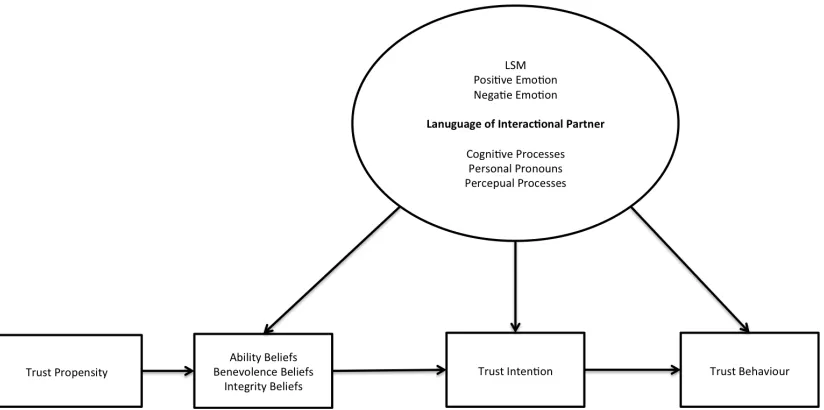
Figure 2.1 shows a summary of the conceptual model tested in the present study. The lower half of the figure represents Mayer's (1995) original trust model, and was not retested in the present study. Key causal paths from language variables (represented in the upper half of the figure) to each node of Mayer et al.’s (1995) situational trust variables were tested. Trust propensity is modeled to affect trust prior to participant’s interaction in the study.
2.2. Method
2.2.1. Participants
Figure 2.1 Schematic representation of a conceptual model linking the language of an interactional partner to an individual’s trust beliefs, trust intentions and trust
behaviour.
language. Participants took part in the study in return for course credits. Participants were randomly allocated to pairs to give a total of 40 dyads. Of these, one dyad was removed as they reported knowledge of the aim of the study prior to participating. This left a total of 39 dyads for use in the final analysis.
2.2.2. Materials
The survival game.Dyads were tasked with completing the survival game (Brett & Thomson, 2008). The survival game is an interdependent task that requires players to imagine a scenario in which they have survived a plane crash. They are instructed to imagine that they are the only two survivors, and are given written details about their surroundings (e.g., temperature, terrain, points of interest) and a list of twelve items that might be used to aid their survival. The task objective is for dyads to agree and submit a list of items in rank order of importance for survival, as well as stating a use for each item.
propensity (Rotter, 1967; Costa & McCrea 1992; Yamagishi, 1986). The Costa and McCrea measure was chosen because it was the most recently devised;
also, the measure had previously been used in group contexts (Kichuk & Wiesner,
1997).
An example item is ‘I believe that people are basically moral.’ To minimise participants guessing the true nature of the study, trust propensity items were
embedded with 10 self-report measures of extraversion and conscientiousness; taken from the IPIP (Goldberg, 1999). Responses to all items were made on a 5-point scale that ranged from “strongly disagree” (1) to “strongly agree” (5).
Post-experiment measure. Trust beliefs and trust intentions were measured by using items from Mayer and Davis’ (1999) trust scales. Items were adapted to the experimental context, for example Mayer and Davis’ (1999) item; “top management has a strong sense of justice” was adapted to “the person I interacted with has a strong sense of justice.” Six items measured beliefs about the other’s ability (α = .78; ‘The
person I interacted with is skilled’), 5 items measured beliefs about the other’s
benevolence (α = .80; ‘The person I interacted with is concerned with others
welfare’), 6 items measured beliefs about the other’s integrity (α = .71; ‘The person I
interacted with sticks to their word’), and 4 items measured trust intentions (α = .67;
‘I would feel comfortable giving the other person complete responsibility’).
Responses were made on a 5-point scale that ranged from “strongly disagree” (1) to “strongly agree” (5).
2.2.3. Design
Independent variables were taken at the individual and dyad level. At the individual level, independent variables were the use of personal pronouns, positive emotion, negative emotion, cognitive processes, and perceptual processes words as measured by LIWC. At the dyad level, the independent variable was LSM scores for each dyad. Participants propensity to trust was a control variable. The dependent variables were trust beliefs (ability, integrity and benevolence), trust intentions, and trust behaviour.
2.2.4. Procedure
Two participants attended each testing session and were each instructed to go to a different testing room to meet with the experimenter (this was to ensure
signed up individually or with someone they knew, to ensure no friends or
acquaintances had signed up to the same timeslot. All participants stated that they had signed up individually.
Participants were prepped for the task. Participants were instructed that they would be interacting online with another participant to complete a survival game and a short decision-making task, after which they would be asked to complete a short questionnaire on their experience. After giving their consent to take part, participants completed the pre-interaction questionnaire and were then provided with instructions for the survival game. Each participant received their own paper response sheet with three columns listing the items, their rank number and use.
Participants were informed that there was a correct order to each item’s importance, and that survival experts have established a use for each item. Their goal, as a dyad, was to rank as many items as possible in the ‘correct’ order. Participants were informed that points were awarded for each item correctly ranked with the correct use, and that points would be transferred into raffle tokens and entered into a prize draw for the chance to win a £10 voucher. The point structure was as follows; five points allocated for the most important item correctly ranked, five points for the least important item correctly ranked, and one point each for the remaining items if ranked in the correct order. The task was made interdependent by informing
participants that points were only awarded for items ranked in the same, correct, order by both members of the dyad. Participants submitted their own list independently and relied on the other participant submitting the same order.
disabled as the study was interested only in text-based online interactions. The experimenter informed participants when to begin the game, when 5 minutes remained, and when the game had ended.
After the 17 minutes, the conference chat window was disabled so that participants could no longer communicate with one another. The experimenter collected the paper response sheets from each of the participants. They were then informed, in a private chat window with the experimenter, that the order they
proposed had collectively earned them 10 raffle tokens for the prize draw. In reality, as there was no correct solution to the survival game, every dyad received 10 raffle tokens irrespective of participants’ responses.
Each participant was given instructions to complete the trust game as the ‘sender’ using the 10 raffle tokens that they had been awarded. The participant communicated how many points they wished to send via a private chat window with the experimenter. They were then asked to complete the post-interaction
questionnaire, while they believed that the other person was being informed of their choice and deciding how many tokens to return. Once both participants had
completed the post-interaction questionnaire, they were informed that the experiment had ended and were debriefed about the deception and nature of the study. Each participant was given the same chance to win in the prize draw regardless of how many tokens they stated they wanted to transfer to the other person.
2.2.5. Analysis
The language used by participants during the survival game was analysed using the automated text analysis program Linguistic Inquiry and Word Count
dictionaries, which capture language at a basic linguistic and psychological level. A person’s linguistic profile contains one score per linguistic dictionary. In the current study, transcripts of each dyad’s online interaction were split into two single text files; one for each dyad member. The output from linguistic dictionaries positive emotion, negative emotion, pronoun, cognitive processes and perceptual processes words were recorded per text file.
LSM scores were calculated using the procedure described by Ireland,
Slatcher, Eastwick, Scissors, Finkel and Pennebaker (2011).LIWC output within the dictionaries of nine main categories of function words (adverbs, articles, auxiliary verbs, conjunctions, indefinite pronouns, negations, personal pronouns, prepositions, and quantifiers) were compared between dyad members. The degree to which the proportion of one dyad member’s function word use matched the other member’s function word use was calculated per category using the formula (the category ‘articles’ is used for illustration):
LSMarticle = 1 – [(│articleA – articleB│)/(articleA + articleB + 0.0001)]
ArticleA is the proportion of a dyad member’s discourse that was articles, while articleB is the proportion of the other member’s discourse that was articles. The denominator, 0.0001, is added to prevent division by zero in empty sets. The nine category-level LSM scores are averaged to produce a composite LSM score of overall matching in each dyad. The LSM score is bounded between 0 and 1; where higher numbers represent greater style matching between speakers. Language used at both the individual level and dyad level (i.e., LSM) were analysed in separate