Original citation:
Bhattacharya, Sayan, Chakrabarty, Deeparnab, Henzinger, Monika and Nanongkai, Danupon (2018) Dynamic algorithms for graph coloring. In: Twenty-Ninth Annual ACM-SIAM
Symposium on Discrete Algorithms, New Orleans, USA, 7-10 Jan 2018. Published in:
Proceedings of the Twenty-Ninth Annual ACM-SIAM Symposium on Discrete Algorithms pp. 1-20.
Permanent WRAP URL:
http://wrap.warwick.ac.uk/97518
Copyright and reuse:
The Warwick Research Archive Portal (WRAP) makes this work by researchers of the University of Warwick available open access under the following conditions. Copyright © and all moral rights to the version of the paper presented here belong to the individual author(s) and/or other copyright owners. To the extent reasonable and practicable the material made available in WRAP has been checked for eligibility before being made available.
Copies of full items can be used for personal research or study, educational, or not-for-profit purposes without prior permission or charge. Provided that the authors, title and full
bibliographic details are credited, a hyperlink and/or URL is given for the original metadata page and the content is not changed in any way.
Publisher’s statement:
Copyright © 2018 by the Society for Industrial and Applied Mathematics
A note on versions:
The version presented here may differ from the published version or, version of record, if you wish to cite this item you are advised to consult the publisher’s version. Please see the ‘permanent WRAP URL’ above for details on accessing the published version and note that access may require a subscription.
Dynamic Algorithms for Graph Coloring
Sayan Bhattacharya
∗Deeparnab Chakrabarty
†Monika Henzinger
‡Danupon Nanongkai
§Abstract
We design fast dynamic algorithms for proper vertex and edge colorings in a graph undergoing edge insertions and deletions. In the static setting, there are simple linear time algorithms for (∆ + 1)- vertex coloring and (2∆− 1)-edge coloring in a graph with maximum degree ∆. It is natural to ask if we can efficiently maintain such colorings in the dynamic setting as well. We get the following three results. (1) We present a randomized algorithm which maintains a (∆ + 1)-vertex coloring withO(log ∆) expected amortized update time. (2) We present a deterministic
algorithm which maintains a (1 + o(1))∆-vertex coloring withO(polylog∆) amortized update time. (3) We present a simple, deterministic algorithm which maintains a (2∆− 1)-edge coloring with O(log ∆)worst-case update time. This improves the recent O(∆)-edge coloring algorithm with
˜
O(√∆) worst-case update time [4].
1 Introduction
Graph coloring is a fundamental problem with many ap-plications in computer science. A properc-vertex color-ing of a graph assigns a color in{1, . . . , c}to every node, in such a way that the endpoints of every edge get dif-ferent colors. The chromatic number of the graph is the smallest c for which a proper c-vertex coloring exists. Unfortunately, from a computational perspective, ap-proximating the chromatic number is rather futile: for any constant > 0, there is no polynomial time algo-rithm that approximates the chromatic number within a factor of n1− in ann-vertex graph, assuming P 6=N P
[16, 33] (see [25] for a stronger bound). On the pos-itive side, we know that the chromatic number is at most ∆ + 1 where ∆ is the maximum degree of the graph. There is a simple linear time algorithm to find a (∆ + 1)-coloring: pick any uncolored vertexv, scan the
∗Department of Computer Science, University of Warwick,
UK. Email: [email protected].
†Department of Computer Science, Dartmouth College, USA.
Email: [email protected].
‡University of Vienna, Faculty of Computer Science. Email:
monika.henzinger at univie.ac.at.
§Department of Theoretical Computer Science, KTH Royal
Institute of Technology, Sweden. Email: [email protected].
colors used by its neighbors, and assign tov a color not assigned to any of its neighbors. Since the number of neighbors is at most ∆, by pigeon hole principle such a color must exist.
In this paper, we consider the graph coloring prob-lem in the dynamic setting, where the edges of a graph are being inserted or deleted over time and we want to maintain a proper coloring after every update. The objective is to use as few colors as possible while keep-ing the update time1 small. Specifically, our main goal is to investigate whether a (∆ + 1)-vertex coloring can be maintained with small update time. Note that the greedy algorithm described in the previous paragraph can easily be modified to give a worst-case update time ofO(∆): if an edge (u, v) is inserted between two nodes
uandvof same color, then scan the at most ∆ neighbors ofv to find a free color. A natural question is whether we can get an algorithm with significantly lower update time. We answer this question in the affirmative.
• We design and analyse a randomized algorithm which maintains a (∆ + 1)-vertex coloring with
O(log ∆) expected amortized update time.2
It is not difficult to see that if we had (1 +)∆ colors, then there would be a simple randomized algorithm with
O(1/)-expected amortized update time (see Section 2.1 for details). What is challenging in our result above is to maintain a ∆ + 1 coloring with small update time. In contrast, if randomization is not allowed, then even maintaining a O(∆)-coloring with o(∆)-update time seems non-trivial. Our second result is on deterministic vertex coloring algorithms: although we do not achieve a ∆ + 1 coloring, we come close.
• We design and analyse a deterministic algorithm
1There are two notions of update time: amortized update time
– an algorithm has amortized update time ofαif for anyt, after
tinsertions or deletions the total update time is≤αt, andworst case update time– an algorithm has worst case update time ofα
if every update time≤α. As typical for amortized update time guarantees, we assume that the input graph is empty initially.
2As typically done for randomized dynamic algorithms, we
as-sume that the adversary who fixes the sequence of edge insertions and deletions isobliviousto the randomness in our algorithm.
which maintains a (∆ +o(∆))-vertex coloring with
O(polylog∆) amortized update time.
Note that in a dynamic graph the maximum degree ∆ can change over time. Our results hold with the changing ∆ as well. However, for ease of explaining our main ideas we restrict most of the paper to the setting where ∆ is a static upper bound known to the algorithm. In Section 6 we point out the changes needed to make our algorithms work for the changing-∆ case.
Our final result is on maintaining an edge coloring
in a dynamic graph with maximum degree ∆. A proper edge coloring is a coloring of edges such that no two adjacent edges have the same color.
• We design and analyze a simple, deterministic (2∆− 1)-edge coloring algorithm with O(log ∆)
worst-caseupdate time.
This significantly improves upon the recent O(∆)-edge coloring algorithm of Barenboim and Maimon [4] which needs ˜O(√∆)-worst-case update time.
Perspective: An important aspect of (∆ + 1)-vertex coloring is the following local-fixability property: Consider a graph problemP where we need to assign a
state(e.g. color) to each node. We say that a constraint is local to a node v if it is defined on the states of v
and its neighbors. We say that a problemP is locally-fixable iff it has the following three properties. (i) There is a local constraint on every node. (ii) A solution S
to P is feasible iff S satisfies the local constraint at every node. (iii) If the local constraint Cv at a node
v is unsatisfied, then we can change only the state of
v to satisfy Cv without creating any new unsatisfied
constraints at other nodes. For example, (∆ + 1)-vertex coloring is locally-fixable as we can define a constraint local to v to be satisfied if and only if v’s color is different from all its neighbors, and if not, then we can always find a recoloring ofvto satisfy its local constraint and introduce no other constraint violations. On the other hand, the following problems do not seem to be locally-fixable: globally optimum coloring, the best approximation algorithm for coloring [19], ∆-coloring (which always exists by Brook’s theorem, unless the graph is a clique or an odd cycle), and (∆ + 1)-edge coloring (which always exists by Vizing’s theorem).
Observe that if we start with a feasible solution for a locally-fixable problem P, then after inserting or deleting an edge (u, v) we need to change only the states of u and v to obtain a new feasible solution. For instance in the case of (∆ + 1)-vertex coloring, we need to recolor only the nodes incident to the inserted edge. Thus, the number of changes is guaranteed to be small, and the main challenge is to search for these changes in an efficient manner without having
to scan the whole neighborhood. In contrast, for non-locally-fixable problems, the main challenge seems to be analyzing how many nodes or edges we need to recolor (even with an inefficient algorithm) to keep the coloring proper. A question in this spirit has been recently studied in [2].
It can be shown that the (2∆ −1)-edge coloring problem is also locally-fixable (see Appendix A). Given our current results on (∆ + 1)-vertex coloring and (2∆−1)-edge coloring, it is inviting to ask whether there is some deeper connections that exist in designing dynamic algorithms for these problems. In particular, are there reductions possible among these problems? Or can we find a complete locally-fixable problem? It is also very interesting to understand the power of randomization for these problems.
Indeed, in the distributed computing literature, there is deep and extensive work on and beyond the locally-fixable problems above. (In fact, it can be shown that any locally-fixable problem is in theSLOCAL com-plexity class studied in distributed computing [18]; see Appendix A.) Coincidentally, just like our findings in this paper, there is still a big gap between determinis-tic and randomized distributed algorithms for (∆ + 1)-vertex coloring. For further details we refer the to the excellent monograph by Barenboim and Elkin [3] (see [18, 17], and references therein, for more recent results). Finally, we also note that the dynamic problems we have focused on are search problems; i.e., their solutions always exist, and the hard part is to find and maintain them. This posts a new challenge when it comes to proving conditional lower bounds for dynamic algorithms for these locally-fixable problems: while a large body of work has been devoted to decision problems [30, 1, 23, 26, 14], it seems non-trivial to adapt existing techniques to search problems.
Other Related Work. Dynamic graph coloring is a natural problem and there have been many works on this [15, 29, 31, 20]. Most of these papers, however, have proposed heuristics and described experimental results. The only two theoretical papers that we are aware of are [4] and [2], and they are already mentioned above.
Organisation of the rest of the paper. In Section 2 we give the high level ideas behind our vertex coloring result. In particular, Section 2.1 contains the main ideas of the randomized algorithm, whereas Section 3 contains the full details. Similarly, Section 2.2 contains the main ideas of the deterministic algorithm, whereas Section 4 contains the full details. Section 5 contains the edge-coloring result. We emphasize that Sections 3, 4, 5 are completely self contained, and they can be read independently of each other. As mentioned earlier, in Sections 3, 4, 5 we assume that the parameter
∆ is known and that the maximum degree never exceeds ∆. We do so solely for the better exposition of the main ideas. Our algorithms easily modify to give results where ∆ is the current maximum degree. See Section 6 for the details.
2 Our Techniques for Dynamic Vertex Coloring 2.1 An overview of our randomized algorithm.
We present a high level overview of our randomized dynamic algorithm for (∆ + 1) vertex coloring that has an expected amortized update time of O(log ∆). The full details can be found in Section 3. We start with a couple of warm-ups before sketching the main idea.
Warmup I: Maintaining a2∆-coloring inO(1) ex-pected amortized update time. We first observe that maintaining a 2∆ coloring is easy using random-ization against an oblivious adversary – we need only
O(1) expected amortized time. The algorithm is this. Let C be the palette of 2∆ colors. Each vertexv stores the last timeτvat which it was recolored. If an edge gets
deleted or if an edge gets inserted between two vertices of different colors, then we do nothing. Next, consider the scenario where an edge gets inserted at time τ be-tween two vertices uandv of same color. Without any loss of generality, suppose thatτv > τu, i.e., the vertexv
was recolored last. In this event, we scan all the neigh-bors ofv and store the colors used by them in a setS, and select a random color from C \S. Since |C|= 2∆, we have |C \S| ≥ ∆ as well. Clearly this leads to a proper coloring since the new color of v, by design, is not the current colors of any of v’s neighbors.
The time taken to compute the set S can be as high as O(∆) since v can have ∆ neighbors. Now, let us analyze the probability that the insertion of the edge (u, v) at time τ leads to a conflict. Suppose that at timeτv, just beforevrecolored itself, the color ofuwas
c. The insertion at time τ creates a conflict only if v
chose the color c at time τv. However the probability
of this event is at most 1/∆, since v had at least ∆ choices to choose its color from at time τv. Therefore
the expected time spent on the addition of edge (u, v) is O(∆)·(1/∆) =O(1).
In the analysis described above, we have crucially used the fact that the insertion of the edge (u, v) at time τ is oblivious to the random choice made while recoloring the vertex v at time τv. It should also be
clear that the constant 2 is not sacrosanct and a (1+)∆ coloring can be obtained inO(1/)-expected amortized time. However this fails to give a ∆ + 1 or even ∆ +c
coloring ino(∆) time for any constantc.
Warmup II: A simple algorithm for (∆ + 1)
coloring that is difficult to analyze. In the previous
algorithm, while recoloring a vertex we made sure that it never assumed the color of any of its neighbors. We say that a colorcisblankfor a vertexv iff no neighbor of v gets the color c. Since we have ∆ + 1 colors, every vertex has at least one blank color. However, if there is only one blank color to choose from, then an adversarial sequence of updates may force the algorithm to spend Ω(∆) time after every edge insertion. A polar-opposite idea would be to randomly recolor a vertex without considering the colors of its neighbors. This has the problem that a recoloring may lead to one or more neighbors of the vertex being unhappy (i.e., having the same color as v), and then there is a cascading effect which is hard to control.
We take the middle ground: Define a color c to beunique for a vertexv if it is assigned toexactly one
neighbor ofv. Thus, ifvis recolored using a unique color then the cascading effect of unhappy vertices doesn’t explode. Specifically, after recoloring v we only need to consider recoloring v’s unique neighbor, and so on and so forth. Why is this idea useful? This is because although the number ofblankcolors available to a vertex (i.e., the colors which none of its neighbors are using) can be as small as 1, the number of blank+unique colors is always at least ∆/2. This holds since any color which is neither blank nor unique accounts for at least two neighbors ofv, whereasv has at most ∆ neighbors.
The above observation suggests the following natu-ral algorithm. When we need to recolor a vertexv, we first scan all its neighbors to identify the set S of all uniqueand blank colors for v, and then we pick a new colorcfor v uniformly at random from this set S. By definition of the setS, at most one neighbory ofxwill have the same colorc. If such a neighboryexists, then we recolory recursively using the same algorithm. We now state three important properties of this scheme. (1) While recoloring a vertexxwe have to makeat most one
recursive call. (2) It takesO(∆) time to recolor a vertex
x, ignoring the potential recursive call to its neighbor. (3) When we recolor a vertex x, we pick its new color uniformly at random from a set of size Ω(∆). Note that the properties (2) and (3) served as the main tools in establishing theO(1) bound on the expected amortized update time as discussed in the previous algorithm. For property (1), if we manage to upper bound the length of the chain of recursive calls that might result after the insertion of an edge in the input graph between two vertices of same color, then we will get an upper bound on the overall update time of our algorithm. This, how-ever, is not trivial. In fact, the reader will observe that it is not necessary to have ∆+1 colors in order to ensure the above three properties. They hold even with ∆ col-ors. Indeed, in that case the algorithm described above
might never terminate. We conclude that another idea is required to achieveO(log ∆) update time. This turns out to be the concept of a hierarchical partition of the set of vertices of a graph. We describe this and present an overview of our final algorithm below.
An overview of the final algorithm. Fix a large constant β > 1, and suppose that we can partition the vertex-set of the input graph G = (V, E) into
L= logβ∆levels 1, . . . , Lwith the following property.
Property 2.1. Consider any vertex v at a level 1 ≤
`(v) ≤ L. Then the vertex v has at most O(β`(v))
neighbors in levels{1, . . . , `(v)}, and at leastΩ(β`(v)−5)
neighbors in levels {1, . . . , `(v)−1}.
It is not clear at first glance that there even exists such a partition of the vertex-set: Given astatic graph
G= (V, E), there seems to be no obvious way to assign a level`(v)∈ {1, . . . , L}to each vertexv∈V satisfying Property 2.1. One of our main technical contributions is to present an algorithm that maintains a hierarchical partition satisfying Property 2.1 in a dynamic graph. Initially, when the input graphG= (V, E) has an empty edge-set, we place every vertex at level 1. This trivially satisfies Property 2.1. Subsequently, after every inser-tion or deleinser-tion of an edge inG, our algorithm updates the hierarchical partition in a way which ensures that Property 2.1 continues to remain satisfied. This algo-rithm is deterministic, and using an intricate charging argument we show that it has an amortized update time of O(log ∆). This also gives a constructive proof of the existence of a hierarchical partition that satisfies Prop-erty 2.1 in any given graph.
We now explain how this hierarchical partition, in conjunction with the ideas from Warmup II, leads to an efficient randomized ∆ + 1 vertex coloring algorithm. In this algorithm, we require that a vertex u keeps all its neighbors v at levels `(v) ≤ `(u) informed about its own color χ(u). This requirement allows a vertex
x to maintain: (1) the set C+
x of colors assigned to its
neighborsywith`(y)≥`(x), and (2) the setCx=C \Cx+
of remaining colors. We say that a color c ∈ Cx is
blank for x iff no neighbor y of x with `(y) < `(x) has the same color c. In contrast, we say that a color
c ∈ Cx is unique for x iff exactly one neighbor y of
x with `(y) < `(x) has the same color c. Note the crucial change in the definition of a unique color from Warmup II. Now, for a color c to be unique for x it is not enough thatxhas exactly one neighbor with the same color; in addition, this neighbor has to lie at a level
strictly below the level of x. Using the property of the hierarchical partition that x has Ω(β`(x)−5) neighbors in levels {1, . . . , `(x)−1} and an argument similar to one used in Warmup II, we can show that there are a
large number of colors that are either blank or unique forx.
Claim 1. For every vertex x, there are at least 1 +
Ω(β`(x)−5)colors that are either blank or unique.
We now implement the same template as in Warmup II. When a vertex x needs to be recolored, it picks its new color uniformly at random from the set of its blank + unique colors. This can cause some other vertex y to be unhappy, but such a vertex y
lies at a level strictly lower than `(x). As there are
O(log ∆) levels, this bounds the depth of any recur-sive call: At level 1, we just use a blank color. Fur-ther, whenever we recolor x, the time it needs to in-form all its neighbors y with `(y) ≤ `(x) is bounded by O(β`(x)) (by the property of the hierarchical parti-tion). Since each recursive call is done on a vertex at a strictly lower level, the total time spent on all the re-cursive calls can also be bounded by O(β`(x)) due to a geometric sum. Finally, by Claim 1, each time x
picks a random color it does so from a palette of size Ω(β`(x)−5). If the order of edge insertions and dele-tions is oblivious to this randomness, then the probabil-ity that an edge insertion is going to be problematic is
O(1/β`(x)−5), which gives an expected amortized time bound ofO(1/β`(x)−5)×O(β`(x)) =O(β5) =O(1).
2.2 An overview of our deterministic algo-rithm. We present a high level overview of our deter-ministic dynamic algorithm for (1+o(1))∆ vertex color-ing that hasO(polylog∆) amortized update time. The full details are in Section 4. As in Section 2.1, we start with a warmup before sketching the main idea.
Warmup: Maintaining a 4∆ coloring in O(√∆)
amortized update time. Let C be the palette of 4∆ colors. We partition the setC into 2√∆ equally sized subsets: C1, . . . ,C2√∆ each having 2
√
∆ colors. Colors inCtare said to be oftypetand we lett(v) denote the
type of the color assigned to a nodev. Furthermore, we let dt(v) denote the number of neighbors of v that are
assigned a typetcolor. We refer to the neighbors uof
v witht(u) =tastypetneighbors of v. For every node
v, we let Γ(v) denote the set of neighbors u of v with
t(u) =t(v). Every nodev maintains the set Γ(v) in a doubly linked list. Note that if the nodev gets a color from Ct, then we have dt(v) = |Γ(v)|. We maintain a
proper coloring with the following extra property: If a nodev is of typet, then it has at most 2√∆−1 typet
neighbors.
Property 2.2. If any node v is assigned a color from
Ct, then we have dt(v)<2
√
∆.
Initially, the input graphG= (V, E) is empty, every vertex is colored arbitrarily, and the above property holds. Note that the deletion of an edge from G does not lead to a violation of the above property, nor does it make the existing coloring invalid. We now discuss what we do when an edge (u, v) gets inserted intoG, by considering three possible cases.
Case 1: t(u)6=t(v). There is nothing to be done since
uandv have different types of colors.
Case 2: t(u) = t(v) = t, but both dt(u) and dt(v) <
2√∆−1 after the insertion of the edge (u, v). The colors assigned to the vertices u andv are of the same type. In this event, we first set Γ(u) = Γ(u)∪ {v}
and Γ(v) = Γ(v)∪ {u}. There is nothing further to do if u and v don’t have the same color since the property continues to hold. If they have the same color
c, then we pick an arbitrary endpoint u and find a type t color c0 6= c that is not assigned to any of the neighbors of u in the set Γ(u). This is possible since
|Γ(u)|=dt(u)<2
√
∆−1 and there are 2√∆ colors of each type. We then change the color of utoc0. These operations take O(|Ct|+|Γ(u)|) =O(
√
∆) time.
Case 3: t(u) =t(v) =tand dt(u) = 2
√
∆−1after the insertion of the edge (u, v). Here, after the addition of the edge (u, v), the vertex uviolates Property 2.2. We run the following subroutine RECOLOR(u):
• Sinceuhas at most ∆ neighbors and there are 2√∆ types, there must exist a type t0 with dt0(u) ≤ √
∆/2. Such a type t0 can be found by doing a linear scan of all the neighbors ofu, and this takes
O(∆) time sinceuhas at most ∆ neighbors.
From the set Ct0 we choose a color c that is not
assigned to any of the neighbors ofu: Such a color must exist since |Ct0| = 2
√
∆ > dt0(u). Next, we
update the set Γ(u) as follows: We delete from Γ(u) every neighborxofuwitht(x) =t, and insert into Γ(u) every neighbor x of u with t(x) = t0. We similarly update the set Γx for every neighborxof
u witht(x)∈ {t, t0}. It takesO(d
t(u) +dt0(u)) = O(√∆) time to implement this step.
Accordingly, the total time spent on this call to the RECOLOR(.) subroutine isO(∆) +O(√∆) =
O(∆). However, Property 2.2 may now be violated for one or more neighborsu0ofu. If this is the case, then we recursively call RECOLOR(u0) and keep doing so until all the vertices satisfy Property 2.2. In the end, we have a proper coloring with all the vertices satisfying Property 2.2.
A priori it may not be clear that the above proce-dure even terminates. However, we now argue that the amortized time spent in all the calls to the RECOLOR
subroutine isO(√∆) (and in particular the chain of re-cursive calls to the subroutine terminates). To do so we introduce a potential Φ := P
v∈V dt(v)(v), which sums over all vertices the number of its neighbors which are of the same type as itself. Note that when an edge (u, v) is inserted or deleted the potential can increase by at most 2. However, during a call to RECOLOR(u) the potential Φ drops by at least 3√∆. This is because u
moves from a color of typetold to a color of type tnew
wheredtold(u) = 2
√
∆ anddtnew(u)≤
√
∆/2; this leads to a drop of 1.5√∆ and we get the same amount of drop when consideringu’s neighbors. Therefore, during
T edge insertions or deletions starting from an empty graph, we can have at mostO(T /√∆) calls to the RE-COLOR subroutine. Since each such call takes O(∆) time, we get the claimedO(√∆) amortized update time.
Getting O(polylog∆) amortized update time.
One way to interpret the previous algorithm is as follows. Think of each color c ∈ C as an ordered pair
c = (c1, c2), where c1, c2 ∈ {1, . . . ,2
√
∆}. The first coordinate c1 is analogous to the notion of a type, as defined in the previous algorithm. For any vertexv ∈V
and j ∈ {1,2}, let χ∗j(v) denote the j-tuple consisting of the firstj coordinates of the color assigned tov. For ease of exposition, we defineχ∗0(v) =⊥. Furthermore, for every vertex v ∈ V and every j ∈ {0,1,2}, let
Nj∗(v) = {u ∈ Nv : χ∗j(u) = χ∗j(v)} denote the set
of neighbors u of v with χ∗j(u) = χ∗j(v). With these notations, Property 2.2 can be rewritten as: |N∗
1(v)|< 2√∆ for allv∈V.
To improve the amortized update time to
O(polylog∆), we think of every color as an L tuple
c = (c1, . . . , cL), whose each coordinate can take λ
possible values. The total number of colors is given by λL = |C|. The values of L and λ are chosen in such a way which ensures thatλ = O(lg1+o(1)∆) and
L = O(lg ∆/lg lg ∆). We maintain the invariant that
|N∗
j(v)| ≤ (∆/λj)·f(j) for all v ∈ V and j ∈ [0, L],
for some carefully chosen function f(j). We then im-plement a generalization of the previous algorithm on these colors represented as L tuples. Using some care-fully chosen parameters we show how to deterministi-cally maintain a (∆+o(∆)) vertex coloring in a dynamic graph inO(polylog∆) amortized update time. See Sec-tion 4 for the details.
3 A Randomized Dynamic Algorithm for ∆ + 1
Vertex Coloring
As discussed in Section 2.1, our randomized dynamic algorithm for ∆ + 1 vertex coloring has two main components. The first one is a hierarchical partition of the vertices of the input graph into O(log ∆)-many levels. In Section 3.2, we show how to maintain
such a hierarchical partition dynamically. The second component is the use of randomization while recoloring a conflicted vertex v so as to ensure that (a) at most one new conflict is caused due to this recoloring, and (b) if so, the new conflicted vertex lies at a level strictly lower than`(v). We describe this second component in Section 3.3. The complete algorithm, which combines the two components, appears in Section 3.4. The theorem below captures our main result.
Theorem 3.1. There is a randomized, fully dynamic
algorithm to maintain a∆ + 1vertex coloring of a graph whose maximum degree is ∆ with expected amortized update time O(log ∆).
3.1 Preliminaries. We start with the definition of a hierarchical partition. Let G= (V, E) denote the input graph that is changing dynamically, and let ∆ be an upper bound on the maximum degree of any vertex in
G. For now we assume that the value of ∆ does not change with time. In Section 6, we explain how to relax this assumption. Fix a constantβ >20. For simplicity of exposition, assume that logβ∆ =L(say) is an integer and that L > 3. The vertex set V is partitioned into
L−3 subsets V4, . . . , VL. The level `(v) of a vertex v
is the index of the subset it belongs to. For any vertex
v ∈ V and any two indices 4 ≤ i ≤ j ≤ L, we let
Nv(i, j) = {u : (u, v) ∈ E, i ≤ `(u) ≤ j} be the
set of neighbors of v whose levels are between i and
j. For notational convenience, we define Nv(i, j) = ∅
whenever i > j. A hierarchical partition satisfies the following two properties/invariants. Note that since
βL= ∆, Invariant 2 is trivially satisfied by every vertex at the highest level L. Invariant 1, on the other hand, is trivially satisfied by the vertices at level 4.
Invariant 1. For every vertex v∈V at level`(v)>4,
we have |Nv(4, `(v)−1)| ≥β`(v)−5.
Invariant 2. For every vertex v ∈ V, we have
|Nv(4, `(v))| ≤β`(v).
Let C = {1, . . . ,∆ + 1} be the set of all possible colors. A coloring χ : V → C is proper for the graph
G = (V, E) iff for every edge (u, v) ∈ E, we have
χ(u)6=χ(v). Given the hierarchical partition, a coloring
χ: V → C, and a vertex xat level i =`(x), we define a few key subsets of C. Let C+
x :=
S
y∈Nx(i,L)χ(y) be the colors used by neighbors of x lying in levels i and above. Let Cx := C \ Cx+ denote the remaining set of
colors. Note that a vertex in Nx(4, i−1) might get a
color from C+
x. We say a color c ∈ Cx is blank for x
if no vertex in Nx(4, i−1) is assigned color c. We say
a color c ∈ Cx is unique for x if exactly one vertex in
Nx(4, i−1) is assigned colorc. We let Bx (respectively
Ux) denote the blank (respectively unique) colors forx.
LetTx:=Cx\(Bx∪Ux) denote the remaining colors in
Cx. Thus, for every color c∈Tx, there are at least two
verticesu∈ Nx(4, i−1) that are assigned color c. We
end this section with a crucial observation.
Claim 2. For any vertex x at level i, we have |Bx∪
Ux| ≥1 +|Nx(42,i−1)|.
Proof. Since |C|= 1 + ∆ ≥1 +|Nx(4, L)| and |Cx+| ≤
|Nx(i, L)|, we get|Cx| ≥1 +|Nx(4, i−1)|. The following
two observations, which in turn follow from definitions, prove the claim; (a) |Cx| = |Bx ∪Ux|+|Tx| and (b)
2|Tx| ≤ |Nx(4, i−1)|.
Data Structures. We now describe the data struc-tures used by our dynamic algorithm. The first set is used to maintain the hierarchical partition and the sec-ond set is used to maintain the sets of colors.
(1) For every vertexv ∈V and every level`(v)≤i≤L, we maintain the neighbors Nv(i, i) of v in level i in a
doubly linked list. If `(v) > 4, then we also maintain the set of neighborsNv(4, `(v)−1) in a doubly linked
list. We use the phraseneighborhood listofvto refer to any one of these lists. For every neighborhood list we maintain a counter which stores the number of vertices in it. Every edge (u, v) ∈ E keeps two pointers – one to the position ofu in the neighborhood list of v, and the other vice versa. Therefore when an edge is inserted into or deleted fromGthe linked lists can be updated in
O(1) time. Finally, we keep two queues ofdirtyvertices which store the vertices not satisfying either of the two invariants.
(2) We maintain the coloringχas an array whereχ(v) contains the current color ofv. Every vertexvmaintains the colors C+
v and Cv in doubly linked lists. For each
colorcand vertexv, we keep a pointer from the color to its position in eitherC+
v orCv depending on which listc
belongs to. This allows us to add and delete colors from these lists in O(1) time. We also maintain a counter
µ+v(c) associated with each colorcand each vertexv. If
c∈ C+
v, then the value of µ+v(c) equals the number of
neighborsy∈ Nv(i, L) with color χ(y) =c. Otherwise,
if c ∈ Cv, then we set µ+v(c) ← 0. For each vertex v,
we keep atimecounterτv which stores the last “time”
(edge insertion/deletion) at whichvwas recolored3, i.e., itsχ(v) was changed.
3Note that as long as the number of edge insertions and
deletions are polynomial,τv requires onlyO(logn) bits to store;
if the number becomes superpolynomial then everyn3rounds or
so we recompute the full coloring in the current graph.
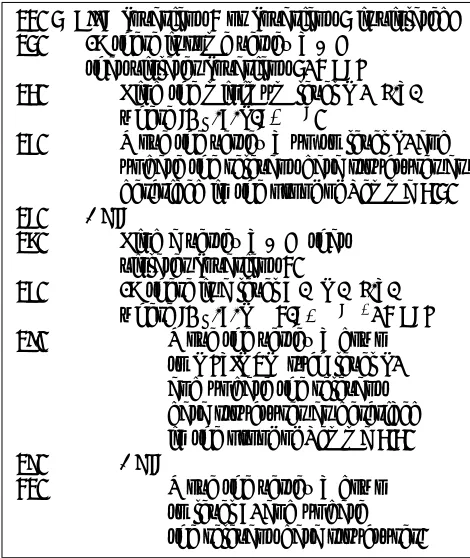
3.2 Maintaining the hierarchical partition. Ini-tially when the graph is empty, all the vertices are at level 4. This satisfies both the invariants vacuously. Subsequently, we ensure that the hierarchical partition satisfies Invariants 1 and 2 by using a simple greedy heuristic procedure. To describe this procedure, we de-fine a vertex to be dirtyif it violates any one of the in-variants, andcleanotherwise. Our goal then is to ensure that every vertex in the hierarchical partition remains clean. By inductive hypothesis, we assume that every vertex is clean before the insertion/deletion of an edge. Due to the insertion/deletion of an edge (u, v), some vertices of the formx∈ {u, v}might become dirty. We fix the dirty vertices as per the procedure described in Figure 1. In this procedure, we always fix the dirty ver-tices violating Invariant 2 before fixing any dirty vertex that violates Invariant 1. This will be crucial in bound-ing the amortized update time. Furthermore, note that as we change the level of a vertex x during one itera-tion of theWhileloop in Figure 1, this might lead to a
change in thebelow or side degrees4 of the neighbors of
x. Hence, one iteration of theWhileloop might create multiple new dirty vertices, which are dealt with in the subsequent iterations of the sameWhileloop. It is not hard to see that any iteration of the while loop acting on a vertex x ends with making it clean. We encap-sulate this in the following lemma and the subsequent corollary.
Lemma 3.1. Consider any iteration of the Whileloop in Figure 1 which changes the level of a vertex x ∈ V from i to k. The vertex x becomes clean (i.e., satisfies both the invariants) at the end of the iteration. Furthermore, at the end of this iteration we have: (a) |Nx(4, k)| ≤βk, (b)|Nx(4, k−1)| ≥βk−1 if k >4.
Proof. There are three cases to consider, depending on how the vertex moves from level ito levelk.
Case 1. The vertexxmoves up from a leveli∈[4, L−1].
In this case, the vertex moves up to the minimum
level k > i where |Nx(4, k)| ≤ βk. This implies that
|Nx(4, k−1)| > βk−1 > βk−5. Thus, the vertex x
satisfies both the invariants after it moves to level k, and both the conditions (a) and (b) hold.
Case 2. The vertex x moves down from level i to a level 4 < k < i. In this case, steps 07, 08 in Figure 1 imply that k < i is the maximumlevel where
|Nx(4, k−1)| ≥βk−1. Hence, we have|Nx(4, k)|< βk.
So the vertex satisfies both the invariants after moving to levelk, and both the conditions (a) and (b) hold.
4The termsbelow-degreeandside-degreeof a vertexvrefer to
the values of|Nv(4, `(v)−1)|and|Nv(`(v), `(v))|respectively.
01. WhileInvariant 1 or Invariant 2 is violated: 02. Ifthere is some vertexx∈V
that violates Invariant 2,Then
03. Find the minimum levelk > `(x) where |Nx(4, k)| ≤βk.
04. Move the vertex xup to level k, and update the relevant data structures as described in the proof of Lemma 3.2. 05. Else
06. Find a vertexx∈V that violates Invariant 1.
07. If there is a level 4< k < `(x)
where |Nx(4, k−1)| ≥βk−1,Then
08. Move the vertexxdown tomaximumsuch levelk, and update the relevant data structures as described in the proof of Lemma 3.3.
09. Else
[image:8.612.316.551.52.331.2]10. Move the vertexxdown to level 4, and update the relevant data structures.
Figure 1: Subroutine: MAINTAIN-HP is called when an edge (u, v) is inserted into or deleted fromG.
Case 3. The vertex x moves down from level i to level k = 4. Here, steps 07, 09 in Figure 1 imply that
|Nx(4, j −1)| < βj−1 for every level 4 < j < i. In
particular, settingj = 5 =k+ 1, we get: |Nx(4, k)| <
β0 = 1 < β4. Thus, the vertex satisfies both the invariants after it moves down to level 4, and both the conditions (a) and (b) hold.
Lemma 3.1 states that during any given iteration of the While loop in Figure 1, we pick a dirty vertex x
and make it clean. In the process, some neighbors ofx
become dirty, and they are handled in the subsequent iterations of the sameWhile loop. When the While
loop terminates, every vertex is clean by definition. It now remains to analyze the time spent on implementing thisWhileloop after an edge insertion/deletion in the
input graph. Lemma 3.1 will be crucial in this analysis. The intuition is as follows. The lemma guarantees that whenever a vertexxmoves to a level k >4, its below-degree is at least βk−1. In contrast, Invariant 1 and Figure 1 ensure that whenever the vertex moves down from the same levelk, its below-degree is less thanβk−5. Thus, the vertex loses at least βk−1−βk−5 in below-degree before it moves down from levelk. Thisslackof
βk−1−βk−5 help us bound the amortized update time. We next bound the time spent on a single iteration of theWhileloop in Figure 1.
Lemma 3.2. Consider any iteration of the Whileloop
in Figure 1 where a vertex xmoves up to a levelkfrom a level i < k (steps 2 – 4). It takes Θ(βk) time to implement such an iteration.
Proof. First, we claim that the value of k (the level where the vertexxwill move up to) can be identified in Θ(k−i) time. This is because we explicitly store the sizes of the lists Nx(4, i−1) andNx(j, j) for allj ≥i.
Next, we update the lists {C+
v,Cv} and the counters
{µ+
v(c)} for x and its neighbors as follows. For every
levelj ∈ {i, . . . , k}and every vertexy∈ Nx(j, j):
• C+
y ← Cy+ ∪ {χ(x)}, Cy ← Cy \ {χ(x)} and
µ+y(χ(x))←µ+y(χ(x)) + 1.
• If j < k,Then
– µ+
x(χ(y))←µ+x(χ(y))−1.
– If µ+x(χ(y)) = 0, then C+
x ← Cx+\ {χ(y)}and
Cx← Cx∪ {χ(y)}.
The time spent on the above operations is bounded by the number of vertices inNx(4, k).
Since the vertex x is moving up from level i to level k > i, we have to update the position of x in the neighborhood lists of the verticesu∈ Nx(4, k). We
also need to merge the listsNx(4, i−1) andNx(j, j) for
i≤j < k into a single list Nx(4, k−1). In the process
if some vertices u ∈ Nx(4, k) becomes dirty, then we
need to put them in the correct dirty queue. This takes Θ(|Nx(4, k)|) time.
By Lemma 3.1, we have |Nx(4, k)| ≤ βk, and
|Nx(4, k)| ≥ |Nx(4, k−1)| ≥βk−1. Sinceβis a constant,
we conclude that it takes Θ(βk) time to implement this
iteration of the Whileloop in Figure 1.
Lemma 3.3. Consider any iteration of the Whileloop
in Figure 1 where a vertex x moves down to a level k from a level i > k (steps 5 – 10). It takes O(βi) time to implement such an iteration.
Proof. We first bound the time spent on identifying the level k < i the vertex x will move down to. Since the vertex x violates Invariant 1, we know that
|Nx(4, i−1)|< βi−5 =O(βi). Therefore, the algorithm
can scan through the list Nx(4, i− 1) and find the
required level k in Θ(i+|Nx(4, i−1)|) time. Next,
we update the lists {C+
v,Cv}and the counters {µ+v(c)}
for xand its neighbors as follows.
Forevery vertexy∈ Nx(4, i−1)∪ Nx(i, i):
• If i≥`(y)> k,Then
– µ+y(χ(x))←µ+y(χ(x))−1.
– If µ+y(χ(x)) = 0, thenC+
y ← C+y \ {χ(x)}and
Cy ← Cy∪ {χ(x)}.
• If i > `(y)≥k, Then
– C+
x ← Cx+ ∪ {χ(y)}, Cx ← Cx \ {χ(y)} and
µ+x(χ(y))←µ+x(χ(y)) + 1.
The time spent on the above operations is bounded by the number of vertices inNx(4, i).
Since the vertex x is moving down from level i to levelk < i, we have to update the position of x in the neighborhood lists of the verticesu∈ Nx(4, i). We also
need to split the listNx(4, i−1) into the listsNx(4, k−1)
and Nx(j, j) for k ≤ j < i. In the process if some
verticesu∈ Nx(4, i) become dirty, then we need to put
them in the correct dirty queue. This takes Θ(|Nx(4, i)|)
time.
Figure 1 ensures that the vertex x satisfies In-variant 2 at level i before it moves down to a lower level. Thus, we have |Nx(4, i)| ≤ βi, and we spend
Θ(1 +|Nx(4, i)|) = O(βi) time on this iteration of the Whileloop.
Corollary 3.1. It takesΩ(βk) time for a vertexx to
move from a leveli to a different level k.
Proof. If 4≤i < k, then the corollary follows immedi-ately from Lemma 3.2. For the rest of the proof, suppose thati > k. In this case, as per the proof of Lemma 3.3, the time spent is at least the size of the listNx(4, k−1),
and Lemma 3.1 implies that |Nx(4, k−1)| ≥ βk−1.
Hence, the total time spent is Ω(βk−1), which is also Ω(βk) since β is a constant. Note that we ignored the
scenarios where k = 4 since in that event βk is a con-stant anyway.
In Theorem 3.2, we bound the amortized update time for maintaining a hierarchical partition.
Theorem 3.2. We can maintain a hierarchical
parti-tion of the vertex setV that satisfies Invariants 1 and 2 in O(log ∆)amortized update time.
We devote the rest of Section 3.2 to the proof of the above theorem using a token based scheme. The ba-sic framework is as follows. For every edge inser-tion/deletion in the input graph we create at mostO(L) tokens, and we use one token to performO(β2) units of computation. This implies an amortized update time of
O(β2·L) =O(β2·log
β∆), which isO(log ∆) sinceβis
a constant.
Specifically, we associate θ(v) many tokens with every vertexv∈V andθ(u, v) many tokens with every
edge (u, v)∈E in the input graph. The values of these tokens are determined by the following equalities.
θ(u, v) = L−max(`(u), `(v)).
(3.1)
θ(v) = max 0, β
`(v)−1− |N
v(4, `(v)−1)|
2β
(3.2)
if `(v)>4;
= 0 otherwise.
Initially, the input graphG is empty, every vertex is at level 4, andθ(v) = 0 for allv ∈V. Due to the insertion of an edge (u, v) in G, the total number of tokens increases by at most L−max(`(u), `(v)) < L, where
`(u) and`(v) are the levels of the endpoints of the edge just before the insertion. On the other hand, due to the deletion of an edge (u, v) in the input graph, the value of θ(x) forx∈ {u, v}increases by at most 1/(2β), and the tokens associated with the edge (u, v) disappears. Overall, the total number of tokens increases by at most 1/(2β) + 1/(2β)≤O(L) due to the deletion of an edge. We now show that the work done during one iteration of theWhileloop in Figure 1 is proportional to O(β2)
times the net decrease in the total number of tokens during the same iteration. Accordingly, we focus on any single iteration of the Whileloop in Figure 1 where a
vertexx(say) moves from levelito levelk. We consider two cases, depending on whetherxmoves to a higher or a lower level.
Case 1: The vertexxmoves up from levelito levelk > i. Immediately after the vertexxmoves up to levelk, we haveNx(4, k−1)≥βk−1and henceθ(x) = 0.
This follows from (3.2) and Lemma 3.1. Since θ(x) is always nonnegative, the value of θ(x) does not increase as x moves up to level k. We now focus on bounding the change in the total number of tokens associated with the neighbors ofx. Note that the event ofxmoving up from levelito levelkaffects only the tokens associated with the vertices u∈ Nx(4, k). Specifically, from (3.2)
we infer that for every vertex u ∈ Nx(4, k), the value
of θ(u) increases by at most 1/(2β). On the other hand, for every vertex u ∈ Nx(k+ 1, L), the value of
θ(u) remains unchanged. Thus, the total number of tokens associated with the neighbors of x increases by at most (2β)−1· |Nx(4, k)| ≤(2β)−1·βk=βk−1/2. The
inequality follows from Lemma 3.1. To summarize, the total number of tokens associated with all the vertices increases by at most βk−1/2.
We now focus on bounding the change in the total number of tokens associated with the edges incident on
x. From (3.1) we infer that for every edge (x, u) with
u∈ Nx(4, k−1), the value of θ(x, u) drops by at least
one as the vertex x moves up from level i < k to level
k. For every other edge (x, u) with u ∈ Nx(k, L), the
value ofθ(x, u) remains unchanged. Overall, this means that the total number of tokens associated with the edges drops by at least |Nx(4, k −1)| ≥ βk−1. The
inequality follows from Lemma 3.1. To summarize, the total number of tokens associated with the edges decreases by at leastβk−1.
From the discussion in the preceding two para-graphs, we reach the following conclusion: As the vertex
xmoves up from level i < k to level k, the total num-ber of tokens associated with all the vertices and edges decreases by at leastβk−1−βk−1/2≥βk−1/2. In con-trast, Lemma 3.2 states that it takesO(βk) time taken
to implement this iteration of theWhile loop in
Fig-ure 1. Hence, we derive that the time spent on updating the relevant data structures is at most O(2β) =O(β2) times the net decrease in the total number of tokens. This concludes the proof of Theorem 3.2 for Case 1.
Case 2: The vertex xmoves down from level i to level k < i. As in Case 1, we begin by observing that immediately after the vertex x moves down to level k, we have |Nx(4, k − 1)| ≥ βk−1 if k > 4,
and hence θ(x) = 0. This follows from Lemma 3.1. The vertex x violates Invariant 1 just before moving from level i to level k (see step 6 in Figure 1). In particular, just before the vertex moves down from level
i to level k, we have |Nx(4, i−1)| < βi−5 andθ(x) ≥
(2β)−1 · βi−1−βi−5 = βi−2/2−βi−6/2 ≥ βi−2/3. The last inequality holds sinceβ is a sufficiently large constant. So the number of tokens associated with x
drops by at leastβi−2/3 as it moves down from leveli to level k. Also, from (3.2) we infer that the value of
θ(u) does not increase for anyu∈ Nxasxmoves down
to a lower level. Hence, we conclude that:
The total number of tokens associated (3.3)
with all the vertices drops by at leastβi−2/3.
We now focus on bounding the change in the number of tokens associated with the edges incident on x. From (3.1) we infer that the number of tokens associated with an edge (u, x) ∈ Nx(4, i−1) increases
by (i−max(k, `(u))) as x moves down from leveli to level k. In contrast, the number of tokens associated with any other edge (u, x)∈ Nx(i, L) does not change
as the vertexxmoves down from levelito a lower level. Let Γ be the increase in the total number of tokens associated with all the edges. Thus, we have:
Γ = X
(u,x)∈Nx(4,i−1)
(i−max(k, `(u))) (3.4)
=
i−1 X
j=k
|Nx(4, j)|,
where the last equality follows by rearrangement. Next, recall that the vertexxmoves down from levelito level
k during the concerned iteration of the Whileloop in
Figure 1. Accordingly, steps 7 – 10 in Figure 1 implies that |Nx(4, j−1)|< βj−1 for all levelsi > j > k. This
is equivalent to the following statement:
|Nx(4, j)|< βj for all levels i−1> j≥k.
(3.5)
Next, step 6 in Figure 1 implies that the vertex x
violates Invariant 1 at level i. Thus, we get: |Nx(4, i−
1)| < βi−5. Note that for all levels j < i, we have
Nx(4, j) ⊆ Nx(4, i−1) and |Nx(4, j)| ≤ |Nx(4, i−1)|.
Hence, we get: |Nx(4, j)| < βi−5 for all levels j < i.
Combining this observation with (3.5), we get:
|Nx(4, j)|<min(βi−5, βj)
(3.6)
for all levels i−1≥j≥k.
Plugging (3.6) into (3.4), we get:
Γ<5βi−5+
i−6 X
j=k
βj< βi−3.
(3.7)
In the above derivation, the last inequality holds since
β is a sufficiently large constant.
From (3.3) and (3.7), we reach the following con-clusion: As the vertex x moves down from level i to a level k < i, the total number of tokens associated with all the vertices and edges decreases by at least
βi−2/3−Γ > βi−2/3−βi−3 = Ω(βi−2). In contrast, by Lemma 3.3 it takes O(βi) time to implement this
iteration of the Whileloop in Figure 1. Hence, we de-rive that the time spent on updating the relevant data structures is at most O(β2) times the net decrease in the total number of tokens. This concludes the proof of Theorem 3.2 for Case 2.
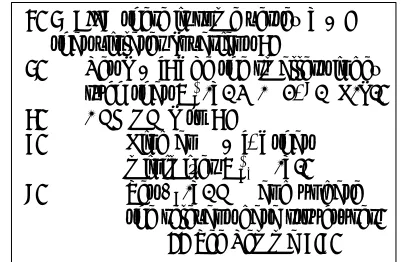
3.3 The recoloring subroutine. Whenever we want to change the color of a vertex v∈V, we call the subroutine RECOLOR(v) as described in Figure 2. We ensure that the hierarchical partition does not change during a call to this subroutine. Specifically, through-out the duration of any call to the RECOLOR subrou-tine, the value of`(x) remains the same for every vertex
x ∈ V. We also ensure that the hierarchical partition satisfies Invariants 1 and 2 before any making any call to the RECOLOR subroutine.
During a call to the subroutine RECOLOR(v), we randomly choose a color c for the vertex v from the subsetBv∪Uv⊆ Cv. In case the random colorclies in
Uv, we find the unique neighborv0∈ Nv(4, `(v)−1) of
v which is assigned this color, and then we recursively recolor v0. Since the level ofv0 is strictly less than that
1. Choosec∈Bv∪Uv uniformly at random.
// These notations are defined in Section 3.1.
2. Setχ(v)←c.
3. Update the relevant data structures as described in the proof of Lemma 3.4. 4. Ifc∈Uv:
5. Find theunique vertexv0∈ Nv(4, `(v)−1)
[image:11.612.317.555.53.177.2]withχ(v0) =c. 6. RECOLOR(v0).
Figure 2: Subroutine RECOLOR(v)
ofv, the maximum depth of this recursion isL. We now bound the time spent on a call to RECOLOR(v).
Lemma 3.4. It takes O(β`(v)) time to implement one call to RECOLOR(v). This includes the total time spent on the chain of subsequent recursive calls that originate from the call to RECOLOR(v).
Proof. Let us assume that `(v) = i and χ(v) =c0 just before the call to RECOLOR(v). To implement Step 01 in Figure 2, the vertexv scans the neighborhood list
Nv(4, i−1) and computes the subset colors Tv ⊆ Cv
which appear twice or more among the these vertices. The vertexv keeps these colorsTvin a separate list and
deletes every color inTvfrom the listCv. On completion,
the list Cv consists of the colors in Bv ∪Uv and the
algorithm samples a random color c from this list.5 Next, the algorithm adds all the colors inTvback to the
listCv, thereby restoring the list Cv to its actual state.
The algorithm can also do another scan ofNv(4, i−1) to
check whetherc∈Bv orc∈Uv. The total time taken
to do all this is Θ(|Nv(4, i−1)|) which by Invariants 1
and 2 is Θ(β`(v)). After changing the color of the vertex
vfromc0tocin step 02, the algorithm needs to update the data structures (see Section 3.1) as follows.
• Forevery vertexw∈ Nv(4, i):
– µ+
w(c0)←µ+w(c0)−1.
– If µ+w(c0) = 0, Then Cw+ ← Cw+ \ {c0} and
Cw ← Cw∪ {c0}.
– C+
w ← Cw+∪ {c}, Cw ← Cw\ {c}andµ+w(c)←
µ+w(c) + 1.
The above operations also take Θ(|Nv(4, i)|) = Θ(β`(v))
time, as per Invariants 1 and 2.
5Note that we might have|B
v∪Uv| β`(v) and so it is not
clear how to sample inO(β`(v)) time. The modification required
here is that it is sufficient to sample from the firstβ`(v)elements
ofBv∪Uv. For clarity of exposition, we ignore this issue.
Finally, in the subsequent recursive calls suppose we recolor the vertices y1, y2, . . .. Note that `(x) >
`(y1) > `(y2) > · · ·. Therefore the total time taken can be bounded by Θ(β`(x)+β`(y1)+· · ·) = Θ(β`(x)) since it is a geometric series sum. This completes the proof.
3.4 The complete algorithm and analysis. Ini-tially, when the graph G= (V, E) is empty, every ver-tex v ∈ V belongs to level 4 and picks a random color
χ(v)∈ C. At this point, the coloringχ is proper since there are no edges, and Invariants 1 and 2 are vacu-ously satisfied. Now, by inductive hypothesis, suppose that before the insertion or deletion of an edge inG, we have the guarantee that: (1) χis a proper coloring and (2) Invariants 1, 2 are satisfied. We handle the insertion or deletion of this edge inGaccording to the procedure in Figure 3.
Specifically, after the insertion or deletion of an edge (u, v), we first update the hierarchical partition by calling the subroutine MAINTAIN-HP (see Figure 1). At the end of the call to this subroutine, we know for sure that Invariants 1 and 2 are satisfied. At this point, we check if the existing coloringχis proper. The coloring χcan become invalid only if the edge (u, v) is getting inserted and χ(u) = χ(v). In this event, we find the endpoint x ∈ {u, v} that was recolored last, i.e., the one with the larger τx. Without any loss of
generality, let this endpoint be v. We now change the color of v by calling the subroutine RECOLOR(v). At the end of the call to this subroutine, we know for sure that the coloring is proper. Thus, we can now apply the inductive hypothesis for the next insertion or deletion of an edge.
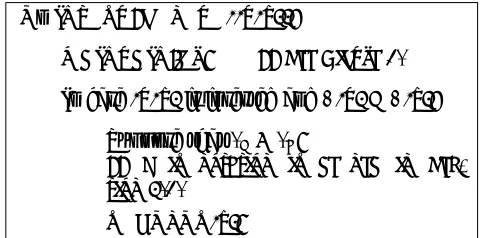
On INSERT/DELETE((u, v)):
MAINTAIN-HP. // See Figure 1.
In case (u, v) is inserted andχ(u) =χ(v):
Suppose thatτv > τu.
// This notation is defined in Sec-tion 3.1.
[image:12.612.57.300.484.603.2]RECOLOR(v).
Figure 3: Dynamic Algorithm to maintain ∆ + 1 vertex coloring
We first bound the amortized time spent on all the calls to the RECOLOR subroutine in Lemma 3.5. From Theorem 3.2 and Lemma 3.5, we get the main result of this section, which is stated in Theorem 3.1.
Lemma 3.5. Consider a sequence of T edge
inser-tions/deletions starting from an empty graph G = (V, E). Let TR and THP respectively denote the
to-tal time spent on all the calls to the RECOLOR and
MAINTAIN-HP subroutines during these T edge in-sertions/deletions. Then E[TR]≤O(T) +O(THP).
Proof. Since edge deletions don’t lead to recoloring, we need to bother only with edge insertions. Consider the scenario where an edge (u, v) is being inserted into the graph at timeτ. Without any loss of generality, assume that τv > τu. Recall that these are the last times
beforeτ whenvanduwere recolored. Suppose that the vertexvis at leveliimmediately after we have updated the hierarchical partition following the insertion of the edge at time τ. Thus, if χ(u) = χ(v) at this point in time, then the subroutine RECOLOR(v) will be called to change the color of the endpoint v. On the other hand, if χ(u) 6= χ(v) at this point in time, then no vertex will be recolored. Furthermore, suppose that the vertexvwas at level jduring the call to RECOLOR(v) at timeτv. The analysis is done via three cases.
Case 1: i > j. In this case, at some point in time during the interval [τv, τ], the subroutine
MAINTAIN-HP raised the level of the vertexv to i. Corollary 3.1 implies that this takes Ω(βi) time. On the other hand, even if the subroutine RECOLOR(v) is called at time
τ, by Lemma 3.4 it takesO(βi) time to implement that call. So the total time spent on all such calls to the RECOLOR subroutine is at mostO(THP).
Case 2: 4< i≤j. In this case, we use the fact that the vertexv picks a random color at timeτv. In particular,
by Lemma 3.4 the expected time spent on recoloring the vertexv at time τ is at most O(βi)·Pr[E
τ], where Eτ
is the event thatχ(u) = χ(v) just before the insertion at time τ. We wish to bound this probability Pr[Eτ],
which is evaluated over the past random choices of the algorithm which the adversary fixing the order of edge insertions is oblivious to.6 We do this by using the principle of deferred decision.
Letcuandcvrespectively denote the colors assigned
to the vertices uand v during the calls to the subrou-tines RECOLOR(u) and RECOLOR(v) at timesτuand
τv. Note that the eventEτ occurs iffcu =cv. Condition
on all the random choices made by the algorithm till just before the time τv. Since τu < τv, this fixes the color
cu. At timeτv, the vertexvpicks the colorcv uniformly
at random from the subset of colorsBv∪Uv. Letλ
de-note the size of this subsetBv∪Uv at timeτv. Clearly,
the eventcv = cu occurs with probability 1/λ, i.e., we
have Pr[Eτ] = 1/λ. It now remains to lower bound λ.
6In case 1, we used the trivial upper bound Pr[E
τ]≤1.
Since 4 < i ≤ j, Claim 2 and Invariant 1 imply that when the vertex v gets recolored at time τv, we have:
λ = |Bv ∪Uv| ≥ 1 +|Nv(4, j−1)|/2≥ 1 +βj−5/2 =
Ω(βj−5) = Ω(βi−5). To summarize, the expected time spent on the possible call to RECOLOR(v) at timeτ is at most O(βi)·Pr[E
τ] =O(βi)·(1/λ) =O(β5) =O(1).
Hence, the total time spent on all such calls to the RE-COLOR subroutine is at most O(T).
Case 3. i= 4. Even if RECOLOR(v) is called at time
τ, by Lemma 3.4 at most O(β4) =O(1) time is spent on that call. So the total time spent on all such calls to the RECOLOR subroutine isO(T).
Proof of Theorem 3.1. The theorem holds since
E[TR] +THP ≤O(T) +O(THP)≤O(T) +O(Tlog ∆) =
O(Tlog ∆). The first and the second inequalities re-spectively follow from Lemma 3.5 and Theorem 3.2.
4 A Deterministic Dynamic Algorithm for(1 +
o(1))∆ Vertex Coloring
LetG= (V, E) denote the input graph that is changing dynamically, and let ∆ be an upper bound on the maximum degree of any vertex inG. For now we assume that the value of ∆ does not change with time. In Section 6, we explain how to relax this assumption. Our main result is stated in the theorem below.
Theorem 4.1. We can maintain a (1 +o(1))∆
ver-tex coloring in a dynamic graph deterministically in O(lg5+o(1)∆/lg lg2∆)amortized update time.
4.1 Notations and preliminaries. Throughout Section 4, we define three parametersη,L,λas follows.
η=e16/lg lg ∆, L=
lg(η∆) lg lg ∆ (4.8)
andλ=l2lg(η∆)L m
.
We will use λL colors. From (4.8) and Lemma 4.1,
it follows that λL≤η∆ = (1 +o(1))∆ when ∆ =ω(1). In Lemma 4.1, we establish a couple of useful bounds on the parameters η, Landλ.
Lemma 4.1. We have:
1. lg ∆≤λ≤2 lg1+o(1)∆, and
2. λL ≤η∆≤(λ+ 1)L.
Proof. From (4.8) we infer that:
λ≥2lg(η∆)L ≥2
lg(η∆)
lg(η∆)/lg lg ∆ = lg ∆.
From (4.8) we also infer that:
λ ≤ 2·2lg(η∆)L
≤ 2·2
lg(η∆) lg(η∆)/lg lg ∆−1
= 2·2
lg(η∆)
lg(η∆)−lg lg ∆·lg lg ∆
= 2·2(1+o(1))·lg lg ∆= 2 lg1+o(1)∆.
The proves part (1) of the lemma. Next, note that:
λL ≤2lg(η∆)L
L
=η∆≤l2lg(η∆)L mL
= (λ+ 1)L.
This proves part (2) of the lemma.
We let C = {1, . . . , λL} denote the palette of all colors. Note that |C| = λL = (1 + o(1))∆. Indeed,
we view the colors available to us as L-tupled vectors where each coordinate takes one of the values from
{1, . . . , λ}. In particular, the color assigned to any vertexv is denotes asχ(v) = (χ1(v), . . . , χL(v)), where
χi(v) ∈ [λ] for each i ∈ [L]. Given such a coloring
χ: V → C, for every indexi ∈ [L] we define χ∗i(v) := (χ1(v), . . . , χi(v)) to be the i-tuple denoting the first
i coordinates of χ(v). For notational convenience, we defineχ∗0(v) :=⊥for all v. For alli∈[L] and α∈[λ], we let χ∗i→α(v) = (χ1(v), . . . , χi−1(v), α) denote the i -tuple whose first (i−1) coordinates are the same as that ofχbut whose ith coordinate isα.
For all i ∈ [L] and α ∈ [λ], we define the subsets
Ni∗(v) = {u ∈ V : (u, v) ∈ E andχ∗i(u) = χ∗i(v)}
and Ni∗→α(v) = {u ∈ V : (u, v) ∈ E andχ∗i(u) =
χ∗i→α(v)}. In other words, the set Ni∗(v) consists of
all the neighbors of a vertex v ∈ V whose colors have the same first i coordinates as the color of v. On the other hand, the set Ni∗→α(v) denotes the status of the setNi∗ in the eventthat the vertexv decides to change the ith coordinate of its color to α. In particular, if
χi(v) 6=α, then Ni∗(v)∩N
∗
i→α(v) = ∅. Going over all
possible choices ofχi(v) we get the following
Ni∗−1(v) = [
α∈[λ]
Ni∗→α(v)
Also note that N0∗(v) is the full neighborhood of v. Define D∗i(v) = |Ni∗(v)| and Di∗→α(v) = |Ni∗→α(v)|.
The above observations is encapsulated in the following corollary.
Corollary 4.1. For every vertex v ∈ V, and every
indexj ∈ {1, . . . , L}, the setNj∗−1(v)is partitioned into
the subsetsNj∗→α(v) for α∈ {1, . . . , λ}. In particular, we have: D∗j−1(v) =
P
α∈[λ]D∗j→α(v).
We maintain the following invariant.
Invariant 3. For all v ∈ V, i ∈ [0, L], we have
D∗i(v)≤(∆/λi)·f(i), where f(i) = ((λ+ 1)/(λ−1))i.
For everyj, we havef(j)>1 andf(j−1)≤f(j). We now give a brief intuitive explanation for the above invariant. Associate a rooted λ-ary tree Tv of depth
L with every vertex v ∈ V. We shall refer to the vertices of this tree Tv as meta-vertices, to distinguish
them from the vertices of the input graph G= (V, E). The total number of leaves in this tree is λL, which is the same as the total number available colors. Thus, we can ensure that each root to leaf path in this tree corresponds to a color in a natural way, and any internal meta-vertex at depthicorresponds to theith coordinate of a color. The quantityDi∗(v) can now be interpreted as follows. Consider the meta-vertex (say) xi at depth
i on the unique root to leaf path corresponding to the color of v. Let µi denote the number of all neighbors
of v in G such that this meta-vertex xi also belongs
to the root to leaf paths for their corresponding colors. Then we have D∗i(v) = µi. Note that if i = 0, then
the meta-vertex xi is the root of the tree, which is at
depth zero. It follows that if i = 0, then µi equals
the degree of the vertex v in the input graph G, which is at most ∆. Thus, we have µ0 ≤ ∆. Now, let
y1, . . . , yλ denote the children of the root x0 in thisλ -ary tree Tv. A simple counting argument implies that
there exists an index j ∈ {1, . . . , λ}with the following property: At most a 1/λ fraction of the neighbors of
v in G have colors whose corresponding root to leaf paths contain the meta-vertex yj. Thus, if it were the
case that the root to leaf path corresponding to the color of v also passes through such a meta-vertex yj,
then we would have Di∗(v) = µi ≤ ∆/λ for i = 1.
Invariant 3, on the other hand, gives a slack of f(1) and requires that D∗i(v) ≤ (∆/λ)· f(1) for i = 1. We can interpret the invariant in this fashion for every subsequent index i∈ {2, . . . , L}by iteratively applying the same principle. The reader might find it helpful to keep this interpretation in mind while going through the formal description of the algorithm and its analysis.
Lemma 4.2. If Invariant 3 holds then χ is a proper
vertex coloring.
Proof. Claim 3 below implies that for i = L, the invariant reduces to: D∗L(v) < 1. Since D∗L(v) is a nonnegative integer, we actually haveD∗L(v) = 0. Since
D∗
L(v) is the number of neighbors ofvwho are assigned
the color χ(v), no two adjacent vertices can get the same color. The invariant thus ensures a proper vertex coloring.
Claim 3. We have: (∆/λL)·f(L)<1.
Proof. We derive that:
(∆/λL)f(L)
≤ (((λ+ 1)L/η)/λL)·f(L) (4.9)
= (1/η)·(1 + 1/λ)L·(1 + 2/(λ−1))L
≤ (1/η)·(1 + 1/λ)L·(1 + 4/λ)L (4.10)
≤ (1/η)·(1 + 7/λ)L (4.11)
≤ (1/η)·e7L/λ
≤ (1/η)·e7 lg(η∆)/(λlg lg ∆)
(4.12)
≤ (1/η)·e7 lg(∆2)/(lg ∆ lg lg ∆)
(4.13)
≤ (1/η)·e14/lg lg ∆ < 1.
(4.14)
In the above derivation, step (4.9) follows from part (2) of Lemma 4.1. Steps (4.10) and (4.11) holds as long as
λ≥2.7 Step (4.12) follows from (4.8). Step (4.13) fol-lows from (4.8) and part (1) of Lemma (4.1). Step (4.14) follows from (4.8).
Data structures. For every vertex v ∈ V, we maintain the following data structures. (1) For all
i ∈ [0, L], the set Ni∗(v) as a doubly linked list and the counterDi∗(v). It will be the responsibility of the neighbors of v to update the list Ni∗(v) when they change their own colors. Using appropriate pointers, we will ensure that any given node xcan be inserted into or deleted from any given listNi∗(y) inO(1) time. Note that each vertex figures out if it satisfies the Invariant 3 or not. (2) The colorχ(v) = (χ1(v), . . . , χL(v)) assigned
to the vertexv.
4.2 The algorithm. Initially, since the edge-set of the input graph is empty, we can assign each vertex an arbitrary color. For concreteness, we set χi(v) = 1
for all i ∈ [L] and v ∈ V. Since there are no edges,
Di∗(v) = 0 for all i, v and so Invariant 3 vacuously holds at this point. We show how to ensure that the invariant continues to remain satisfied even after any edge insertion or deletion, and bound the amortized update time.
Deletion of an edge. Suppose that an edge (u, v) gets deleted from G. No vertex changes its color due to this deletion. We only need to update the relevant data structures. Without any loss of generality, suppose that i ∈ [0, L] is the largest index for which we have
χ∗i(v) = χ∗i(u). Then for every vertex x ∈ {u, v} and everyj∈[0, i], we delete the vertexy∈ {u, v}\{x}from the set Ni∗(x) and decrement the value of the counter
Dj∗(x) by one. This takes O(L) time. To summarize,
7Whenλ <2, we have ∆ =O(1) and hence we can trivially
maintain a (∆ + 1)-vertex coloring inO(∆) =O(1) update time.