~m OmOOlOO'.OO'I!IIIDIIDII 0 51 ~mOmOO'KDl5'Y!XXDXXDDI 0 11 1i~'0~'Y!IXIlH5l1!1D1X111D1111t 1il'II2OYiDWOO.L!lYIIIImXXDII 011 1ia'II2OYOOlDDD.D!lYIIIImXXDII5 II 1i~'II2OYOO1DD2.L!lYIIIImXXDII 0 51
1i~'II2OYOOmoJOY!DOODDl 0 11
1ili~Y&JDIIIi!.1!lY1111mXXD11111t
1ili D2lY iDlOOO.l!lYIIIImXXDII 0 II 1il'D2lYOOaollJ.IlDY!IXDDIIIJD 5"1 1il' D2lYOOlOOl.DOYIlXXIODDI 051 l2li D2lYOOmo.l2YllJ!DXXllXJDD 0 11 l2a, D2lY mDDU2Yll!Dl!ODDIHI 1il'D22"IIJDDOO.llOYIOJ()()(I( ~ '1 l2liD2a',\OOOHUlY!lOODIJD!DXXl1 \\1 l2a'D2'"OODDOO.1JOYIl()()()()! 9\\1 l2Ji02SYiDlIIJD.OiYOOIIDOIJ()IIJ()( 0 II l2li 025YOO1ODO.0IlYOOOOOOOIllOO 5"1 l2li 025YOO1OO2.WYODDDDIIJDIIJD 051 l2Ji 025YOOlOOOJDYODOOOOODIIID 0 11 l2ai 02SY!OOOD21DYOODDDDDDIIID 1"1 l2ai 02'Yi01000 EDYDOODOOlllDlll 0 II 12Ji 02iYOOIDDD.ODYOIJOOlJOOlXJlll 5 UI
l2Ji 02,Y001000 15YOODDOOOOllJD 0 51 l2a'D2iYODo/.JOO.OJYODOOOODDDOO 0 11 l2ai02iYI00000.1~YOOOOOODOOOO lUI
l2a'021YLOlOOO.'OYDDDOOOOOOOO 0 II
l2Ji021YOOI000.00YOOOOOOOOOOO 5 \\1 l2a'021YOO1ODta5YOOOOOOODOOO 051 12a'021YOOIOOOJ lYOOOOIlJDOOOO 0 11
l2a'021Y80000 1.52YOOOOODOOODD 1 \\1 l2J' 028Y 'OIoOOO.OOYOOOOOOOODOO 0 II
l2ai 028YOOJOOO.oOYOOOOODDOOOO 5 \\1
l2ai028YOOlOOUI5YOOOOODOllJDO 051 l2ai 02~YOO\ODO.)iYIIOODOOOOOOO 011 l2ai 02~YIODOO "2IYOOOOOOOOOOO 1 \\1 12Ji02IYiIHOOO.iDYOOOOOODOllJD Oil l2aL 021YOOlllJD.00YOOOOIJ()()()IJ( 5UI 1iai D2IYOO1DD2.'OYOOOOOOOOllJD 051
1iaiD2IYOO\ODO.10YODOOII00DIIJD 0 11
l2ai D2'Y'IJIJOO2.10YIXJOOOIXDDI1UI
l2liOaDYiD1OOO'DYDOOOOOOOODD 0 II l2ai OJOYII010D0.00YOOOOOOOIllOO 5 UI l2ai OJOYOOlOOJ.ODYllODOOOOIllOO 051 l2ai OJOYOOIOOO.I2YOOO(J()()()IIJD() 0 11 12JiOJDY!OOOOa.12YOOOOIlODllJDD lUI
12JiOJII"0IDOO.'DYOOOOO()()()OOO Oil
12Ji OalYOO'lODO.OOYIIOOOOOOOOOO 5 \\1 12ai OalYOO1OO2.MYDDDOOOODOOO 051 l2aL OalYIIO'OOO.OOYOOOOOOOOllJD 5 \\1 l2J' OalYOO11102.MYDOOOOOOOOOO 051 12aiOJIYOOIOOO.2'YOODOOOOODllO 0 11
l2aiOJIYI0000L.00YOOOOOOOOODO 'UI l2ai OJ2YiOI01lO.iOYOOOODDDOOOO 0 II
l2J' OJ2YOII000.00YOODOOOOOOOO 5 \\1
mi OJ2Y022005.00YOOOOOOOOOOO 051 l2Ji OJ2YOO'lOOO.20YlXlOOOOOOOOO 0 11 12ai OJ2Y~ODD05.20YOOOOOOOOllJD 1 UI mi OJJYL01000.'OY()()()OOOOOOOO 0 II 12aL OJJYOOlOOO.OOYOOOOOOOOOOD 5 UI
l2JL OJJYOO11102.2SYOODDDOODOOD 0 51
12aL OJJYOOIOOO.D\YlXXXJ!XXI()!D) 0 11 l2JL OJJY~OO0D2.J ,YOOOOOOOOOOO 1 \\1 12JLOJWLOIOOO.MIYOOOO!XXXXlOO 011 l2JLOJ'YOOIOOO.00Y0000IXXJ()II 5UI
l2li OJ m1l1OOO. '\YOOOO!OXXDO 051
l2lL oa 'YOOWOO.OOYOODOOIOIlOO 5 UI l2aiOaWOO1llJD.MYIIJD!DDDIO 051 l2U01'YOOlOOi.DOYIlXXIODDI 0 51 l2aL myOO'IIID ~LYIOJOOIJ!DIIJ 0 11 l2JiDl'Y!ODOH.5JYOOl!DODllHI l2ai II2OYiD1OOO.LIJYOO(O)(DDJ() 011
l2JiIl2OYOOlDDD.DOI'!IXXOXXlDl 5 UI l2li~YOO1DD2.LDY!DDDIIIIOO 0 51 l2li~YOOmo.l!lYIIIImXXDII 0 11
l2Ji~y&xm2.1DY!DDD1111OO 111/
l2Ji D2lY iD1OOO.1OYOIJOOIlXDDI 0 HI
I2li D2lYOOJOOO.ODYOOOOOOOOOOD 5"1 l2J'D2lYOO100J.00Y1IIJ000!IDDI 051 12ai 02IYOO'lOOO.l2YO()llJD1IJDIIJD 0 11
12JiD21Y90000J.12YOODDOOO1lOOD 1ft1 l2Ji022"OOOOOO.ODYOOOOOOOOOOD U '1
12li02J"OOOllJ.& 1YOOOOOOOOODD 1 \\1
l2Ji D2 '"OOOOOO.OOYOOIIOOIIJDDOD '\\1 l2ai 02SY iDlIIJD.IMiYIJOOOO!DIOOD 0 II l2ai 025YOO1000.00YDOOOOOOODOO 5 \\1
l2 Ji 0 al Y '01000 LDYOOOOIIODIIJDD 0 II 12aiOJ1YOO'lOOO.ODY[J(J()()IJDDJIJ 5UI
l2aiOalYOO1OO2~~YOO!XXXIIIIIII 0 51 l2liOJIYOO'IIOD.1JOYOO!OIOOIIOJ 5 UI l2J'OJIYOO1OD2 ~~1'OOOIIIl'OXIII 0 51 l2JiOalyoomo2'IY00000DIIIX0l 0 11 l2Ji DalY lOOOOi.OIlYOOOOIJOOOII '"I l2J60a2YiOIOOO iDYOOOOOOOO!lll 0 II l2aiOa2Y01101lO.00YOOOOOOOOOOO 5\\1 l2ai0a2Y02200'iOIlYOOJO(JJ(J(OJ 051 l2ai Oa2YOO9llJD.21JY!111D01XOO1 0 11 l2ai0a2Y&IO!I0520YOODOOOOOOOD 1ft1 12aiOJJYi010OO'OYIIODOOOOODOO 011 l2J'OJaYOOIOOO.00YOOOOOIIIDDDD 5"1 l2a, OaJYOO11102 2SYOOOOOIIIDDDD 051
12J' OJJYOOIOOO.OIYIXIOO!XXIO!DI 0 11
l2a'OJJY~00002.J IYOODOIIOOOOOO 1 III 12a'Oa 'YiOlllODiDYOOOOOII!OIXl 0 II l2J'OJ 'YOOIOOD ODYDDDOO!DXJOO 5 UI 12aiOJ 'YOO1000. m'OOOOOO!OJJD 0 5) l2J'Oa 'YOD1OOO.00YOOOO!DDDl 5 UI l2ai OJ WOO1llJDMYOOOOOOOIJJJD 0 51 l2U Ol'YOOlOOi.OOY!XXDXXDDI 051 l2liOl'YOO'lOOD.5iYlOJOOlJ!DllJ 0 11
l2ai 01'Y!ODDH.5l1!1D1X111D1HI
l2Ji ~Y iDlOOO.iDYOOOOOOOIOID 0 II l2ai~YOOIDDD.OOYOOOOOOOIIIOO 5 UI l2Ji ~YII01002.LOYODDDOOOIllOO 0 51 l2li ~YOO'lOOD.lOYOOllOOOOlXOJ 0 11 l2ai ~Y&JDIIIi!.lDY!DDD1111OO HI l2ai D2lY iOlOOO.lOYIXJ!XJIOODIO 0"1 I2JiD2lYOOJOOO.OOYOOOOOOOOOOO 5 \\1 l2Ji02lYOO1ODJ.ODYOOOOOllJDlOJ 0 51 l2ai02IYOOIOODJ2YOIJIXXl!DIOOO 0 11
12ai021Y10000U2YODOOIIJDOOOO HI l2ai022UOOOIlO0.00YOOOODOOOOOD" '1
12aiD2aUOOOllH1YOOOOOODOOOO 1 \\1
l2aiD2'"()()()OOQ.OOYOOOOOlJOO()()( 9\\1
l2aiD25YOOlllJD.IMiYOOOOOOOOOOO 0 II l2aiD2SYOOIDOO.OOYODIIOOOOODDD SUI
l2li 025Y1I01OO2.IOYOOOOOOOOOOO 051 I2Ji D2SYIIOIDOOJOYOOOOO()()()OOO 0 11
l2ai 025Y!OOD02.1OYIIOOOOODDDOO lUI
12a'02iYL01OOO.EDYIIOODOODDDOO 0 II
l2a, 02LYOO1DDD.OOY()[)()I)O{)!D)O 5 \\1
l2J'02'YOO100015YOOOOOOOOIIJD 0 51
l2J' 02'YOOI000.OaYII0001lO!DlOO 0 11
m, 026YI01lOOO.l~YOOOOOOOOOOO 1ft1
l2J'021Y'OlOOO.'DYOOOOODOIIIOO 0 II l2a'021YOOIOOO.00YOOOOOOOODOO 5\\1 l2a'021Y00100"J5YOODOOOODDOO 051
l2J' 021Y001000.11YOOOOOOOIJOIJO 0 11
l2J'021Y~0000 "52YOOOOllOlllDJ() HI l2a, 028Y'01000.'OYIJ0000DDDOOO 0 II l2J' 028YOOJOOO.00YOOOOOODOOOO 5"1
l2J' 02~YOOlOO '.05YOODDDIIOOOOO 0 51 l2a, D2~YOO\ODO.liYII!XlIIXXIIOOO 0 11 l2Ji02~Y'lOO00"2IYOIlO0IlOOOOOO 1ft1 li!lb02IYiDlIlOO.iOYOOOOOOOIllOO 0 II
l2ai02IYOO1OOO.00YDlJOODOOIllJllO 5 \\1 l2JiD2IYOO1OO2.iOYOOOODDDDDDO 051 l2JiD2IYOO'lOoO.lOYOOOODOOOOOO 0 11
l2aiD2IY'lOOO02.10YIJOOOOODOOOO 1ft1 l2JiOaDYiDIOOO.iIlYOOOOOOOOOOO 0 UI
l2J'OJOYOO1DDD.ODY!XJ()(){)()()() 5UI 12aiOaOYOOlOOa.ODYDDDOOOOOOOO OSr
l2J'OJOYOOIOOOJ2YOOOOOOOODOD 0 11
l2aiOJDYIIOOOOH2Y!OIO!DXI!DI1"r
l2aiOJlYiDIDDD 'IIY!DXXI!DXOI Oil l2Ji OJlYOO,IIOD.OOYIIOOOIIIDDDDD SUI l2li OaIYOOlO02.MYOO!XXXIIIIIII 051 l2Ji OJlYOO'OOO.OOYOOIIIDDDDDDD 5 UI
12ai OJlYOO1OO2.~~YIXJDIII!XXOIJ 051 l2ai OJIYOD'IOOO.2 'lY00000IJ()IIJ00 0 11
l2ai OalYIIlOOO'.OOYOODDDDDDIJXI 'UI
l2ai0a2Yb01OOO.iDYDOOO{)()()()IIJD 0 II l2aiOJ2YOIIODO.00YOOOOOOOOOIII 5 \\1 12ai OJ2Y022005.00YODDOODDOOOO 051
l2ai OJ2YOOIODO.20YOOOOOOOOOOO 0 11 • l2ai 0a2Y!OOOOS.20YOOOOOOlJ!OJO 1 UI 12ai OJJYiOlOOD.iOYOOOOlJ!DllllO 0 II l2ai OJJYOOIOOO.IIOYODODOOOOOOD 5 III l2ai OaaYOD11102.2SYDDDODIIIDDDD 051
l2Ji OaaYOD'lOOD.O!Y!DDDIII!DJ 0 11 l2ai OJaY!000D2.a W!DIOOODDDDIIl \\1
l2JiOa .YiDIDDD.'OYODlJOODOOOOD 0 MI
August
When your computer
marries one of our
single capstan tape transports,
it marries the whole family.
TM - 11 or TM - 12 for high speeds
TM - 7 or TM - 9 for moderate speeds
The man in charge of your P & L statement will be glad. Here's why:
Within the Ampex range of drive speeds and data transfer rates, you can meet any of your digital tape transport requirements. And you can do it at one source. Quickly. Economically. Each member of the Ampex family is interface interchangeable with all of the other members. So you can combine drives, or make replacements easily to meet new requirements. All four basic drives have the Ampex patented* single capstan electronic servo control.
This design "interswappability" gives you many other advantages. Servicing is similar for all units. Training is simplified. Parts provisioning is simplified, with replacements readily available from one source.
MTBF is 2,000 hours-at least a billion start/stop operations. That's partly because we use only one-fifth as many parts as non-single-capstan drives. And partly because
at Ampex whatever we build we build the best we can. You need order only the items necessary for your immediate requirements, easily add on later. Just a transport. Or one with electronics and control. Or a system of several drives with time-shared data electronics.
There is much more you should know.
Write Ampex, Dept. 7-14, Redwood City, California 94063.
Ampex Family
BROAD RANGE OF SINGLE CAPSTAN TRANSFER RATES
K C 0 10 20 30 40 50 60 70 80 90 100 110 120
·Pat. Nos. 3,185,364 and 3,251,563
AMPEX
Ouropucal
reader can do
anything
your
keypunch
operators do.
(Well, almost.)
It
can't come back from a two-week vacation with a
third degree sunburn. Or get sick. Or go to the little
girls' room. But it
can read. And gobble data at the
rate of 2400 typewritten characters a second. And
compute while it reads. And reduce errors from a
keypunch operator's one in a thousand to an efficient
one in a
hundredthousand.
Our machine can read upper and lower case
char-acters in intermixed, standard type fonts. It can
. handle intermixed sizes and weights of paper,
including. carbon-backed sheets. .
An ordinary computer program tells our reader what
to do ... to add, subtract, edit, check, or verify as it
reads. This lets you forget format restrictions,
lead-ing and traillead-ing zeros, skipped fields, and
~edrecord lengths. And our reader will not obsolete
any of your present hardware because it
spea~sthe
same output language as your computer.
Our Electronic Retina Computing Reader can
re-place aU "";or almost all-of your keypunch opera-·
tors. Right now, our Electronic Retina Computing
Reader is saving companies like United Air Lines
hundreds of dollars every day.
If
you have a volume input application, it can do
the same for you. Tell us your problem and we'll
tell you how.
CIRCLE 4 ON READER CARD
J
,
"',
And Now, the $10,000 Computer
PDP-SIS: A full, general purpose, digital computer for real time analysis. 4K core memory (expandable). usec speeds. 66 plus instructions.
Complete, proven software, including FORTRAN. Flexible input/output bus. Teletype included.
Available now, the new PDP·8/S - a direct lineal descendant of the PDP-8, the most flexible, versatile, approachable, on-line, real time, high speed digital computer ever made. Both use the same basic design concept. Both have the same size
memories. Both are expandable. Both use the same instructions, use the same software libraries.
They do not, however, work at the same speeds. And they do not cost the same amount of money.
The PDP-8
IS
adds in 32 microseconds (compared with 3.0 microseconds for its parent). If you need the speed, the PDP-8 is for you.The PDP-8
IS
costs $10,000.Think of it. Full computer. Proven hardware. Proven software. $10,000. Any DIGITAL field office can give you the details. Or write.
mOmOD!D.
COMPUTERS' MODULES4
DECISION CONTROL·
core memories
Decision Control's VersaSTORE
Core Memories-available in a full range of
sizes for computer mainframes,
buffers, and special systems.
Loaded with features.
• PNP or NPN interface • 3v. to 24v. input range • Integrated circuit construction • Lamp display of data registers • 2 usec operation
• 256 to 4,096 words-up to 24 bits • Bk.-65k., up to 74 bits
• DATAGUARD protection system
For a 13 page VersaSTORE applications brochure, write to:
(~J
DECISIDN CDNTRDL, INC.1590 Monrovia Avenue, Newport Beach, California Telephone (714) 646·9371 • TWX (714) 642·1364
CIRCLE 6 ON READER CARD
august
1966
volume 12Publisher Editor
number 8
GARDNER F. LANDON ROBERT B. FOREST
Managing Editor & Arl Director
Associate Editors
CLEVE MARIE BOUTELL EDWARD K. YASAKI WILLIAM J. ROLPH HEIDE E. HESS ANGELINE PANTAGES CHARLES WHITE HOWARD BROMBERG ROBERT V. HEAD PHIL HIRSCH ROBERT L. PATRICK
Assistant Editor Eastern Editor Europe'an Editor Contributing Editors Washington Reporter
Editorial Adviser Technical Consultants Production Manager Director of Circulation Circulation Fulfillment
Eastern Distrid Manager.
DANIEL D. McCRACKEN LOWELL AMDAHL MARILEE PITMAN FRANK DeCARLO ALGENE TRAINA
JAMES M. MORRIS WARREN A. TIBBETTS
1.41 E • .4.4th St., New York N.Y. 10017 [212] MUrray Hill 7·5180
New England District Manager
& Vice President
WARREN A. TIBBETTS
112 West Haven Rd., Manchester, N.H., [603] NAtional 5-9498
Midwest District Manager JOHN BRENNAN
205 West Wacker Drive, Chicago, III. 60606 [312] Financial 6-1026 •
Western Distrid Manager HAMILTON S. STYRON
& Vice President 1830 W. OlymplCl Blvd., Los Angeles, Cal., 90006
mi1
(213) 385-047.4
EDITORIAL OFFICES
1830 WEST OLYMPIC BLVD. LOS ANGELES, CALIF. 90006
Circulation audited by Business Publications Audit
Member, American Buslnell Prell, InCl.
DATAMATION is published monthly on or about the tenth day of every month by F. D. Thompson Publications, Inc., Frank D. Thompson, Chairman; Gardner F. Landon, Pres-ident; Gilbert Thayer, Senior Vice President. Executive, Circulation and Advertising offices, 141 East 44th Street, New York, New York 10017 (Murray Hill 7-5180). Editorial offices, 1830 W. Olympic Blvd., Los Angeles, California 90006. Published at Chicago, III.
DATAMATION is circulated without charge by name and title to individuals who qualify by our standards and are employed by manufacturers or users of automatic information-handling equipment in all branches of business, industry, government and the military. Available to others by subscription at the rate of $15.00 annually; single issues (when available) $1.50. Reduced rate for qualified students. Foreign sub-scriptions are on a paid basis only at a rate of $25.00 annually. No subscription agency is authorized by us to solicit or take orders for subscriptions. Controlled circulation paid at Columbus, O. and Chicago, III. Form 3579 to be sent to F. D. Thompson Publications, Inc., 205 W. Wacker Dr., Chicago, III. 60606. Copyright 1966, F. D. Thompson Publications, Inc. Microfilm copies of DATAMATION may be obtained from University Microfilms, Inc.; 313 No. First St., Ann Arbor, Michigan.
Printed by Beslow Associates, Inc.
This issue 64,902 copies
FOR ELECTRONIC MEMORIES CIRCLE 7 ON READER CARD~
this
is a commercial:
about commercial memory stacks. like the one on the right, for instance.
It's one of 30 we designed and built this year for new computers. This one, as well as the 29 others, was developed by our responsive, technically talented engineering group. They're concerned solely with the design of economical, fast commercial stacks.
For most of the stacks, we used or adapted standard cores from stock. In the case of the well-arrayed model at the right, we quickly made a brand new one. That's why we have our own core-development plant, staffed by research ceramists, chemists and pilot line people. All specialists in ferrite cores.
Since 1961 we've been producing high reliability cores, stacks and memory systems for com-mercial, military and aerospace use, inone's and ,two's and production lots. For small computers, big computers, everyday computers and ,wayout computers.
If you're designing something new, all you have to do is tell us what you have in mind. We'll send you some cores to testand evaluate. Or, you might want an array to checkout your electronics. If you're well into your design we'll build you a prototype stack. Howls that for a commercial?
If you'd like a further word from our sponsor write or phone.
Memory systems, stacks, and cores for commercial,
military and space applications
Dept.lC, 12621 Chadron Avenue, Hawthorne, '
Heads!
You don't pick precision magnetic tape this way, but we have the feeling that
some people do.
"How can you lose," we've heard
itmuttered, "one leading brand is as good
as another."
.
Well, like the song says, "it ain't necessarily so."
Take Computape users. They would rather be safe than sorry. And they've
found that, for long, reliable, error-free performance, Computape is about the
safest tape going.
Has to be. Not a reel of tape leaves the plant that hasn't been checked and
re-checked dozens of times for perfect quality and uniformity. And of course,
each reel has been meticulously produced to meet the individual specifications
of the equipment on which it will be used.
Nothing is completely sure in this life, but when you can come this close
with Computape, why tempt fate with some other brand?
VISIT OUR BOOTH NO. 39-40 AT ACM
CIRCLE 8 ON READER CARD
A PRODUCT OF COMPUTRON INC.
august
1966
volume 12 number 8
automatic
information
processing
for business
industry &science
I
25 COMPUTERS IN RETAILING, by
Samllel
B.Harvey.
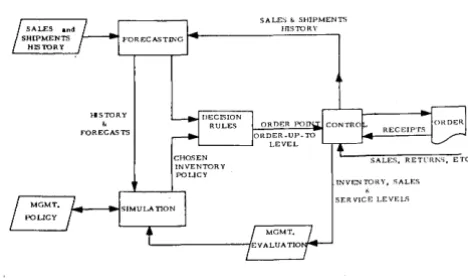
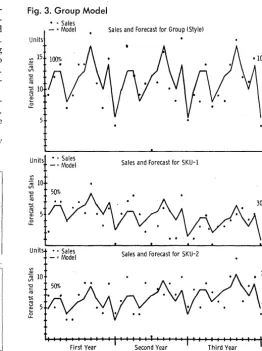
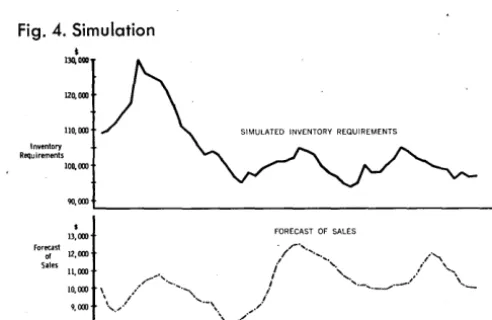
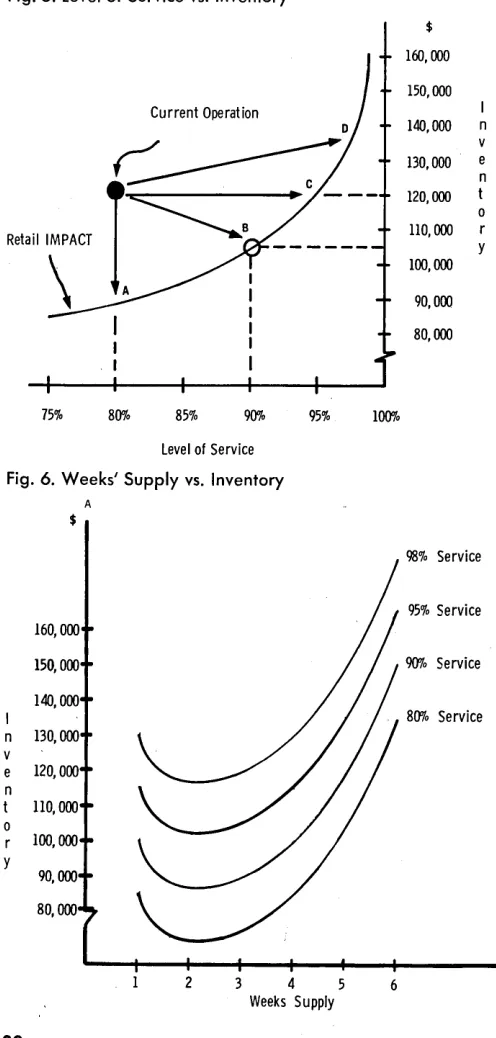
Attitudes and reasons behind the slow pace at which retailers have been automating, and a hopeful look for the future.28 RETAIL FORECASTING, by
M.
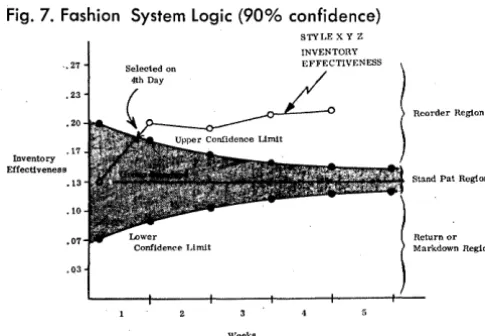
D.Seversky.
Computer-based inventory management system is designed to control in-stock position of staple and fashion merchandise, which includes advanced sales forecasting techniques.35 STOCK CONTROL AT THE MAY COMPANY,
by'Malcolm
K.Lee.
The CLASS system, with emphasis on automated buying and inventory manage-ment as the first step in a successful departmanage-ment store application.
38 IS RETAILING READY FOR OLRT?, by
Mildred Pass.
On-line real-time systems may not be the answer at this time for solving the problems encountered in retailing, but if approached intelligently, could be useful in the future.43 THE VOICE RESPONSE SYSTEM, by
James
W.Proctor
Jr.
Operation of voice answer-back system at American Stock Exchange illustrates possible uses in other applications.45 DATA PROCESSING GOES TO WAR, by
Maior Henry
W.Tubbs
Jr.
Experiences of the first dp platoon (Marine) to land in South Viet Nam-1401, keypunches, and all.52 ACM NATIONAL CONFERENCE
57 IMMEDIATE ACCESS
&
THE USER, byDr. Murray Turoff.
Illuminating article, of interest to users and language designers, alike. Includes seven features that will keep non-programmers away from a computer.
62 COMPUTERS IN DESIGN & COMMUNICATION. Report on a com-puter graphics conference held at the Univ. of Waterloo, Ontario, Canada.
68 THE NAME GAME, by
Bill Williams.
An explanation of naming practices in the industry and some asynchronous history.datamation departments
11 Calendar 93 World Report
12 Letters to the Editor 101 Washington Report
17 Look Ahead 113 People
21 The Editor's Readout 117 Books
71 News Briefs 119 Datamart
79 New Products 124 The Forum
hO\N
simple can
data communications
r
be?
~,
Even if you have a highly sophisticated data processing
system, data communications can be as simple as this
standard Teletype Model 33 KSR (keyboard
send-receive) set. Why? Because Teletype terminal equipment
is still the most reliable, versatile, and least costly for
collecting and distributing data.
One reason is that Teletype Models 33 and 35
equip-ment utilize an 8-level code that is compatible with the
official language of many computers and other business
machines-the American Standard Code for Information
Interchange (ASCII).
Input/output Features In
many data processing
systems, Teletype equipment serves as the input/output
medium for computers as well as for on-line
communi-cations. And, the punched paper tape capabilities of the
Models 33 and 35 ASR (automatic send-receive) sets add
the versatility of automatic, unattended operations.
For instance, messages and data can be punched into
tape for later transmission on-line at full speed to distant
points or directly to computers. Efficiency and accuracy
are further increased because fixed 'information can be
stored on punched paper tape and combined with
vari-able data to save retyping.
machines that make data move
These sets have 4-row keyboards that are familiar to any
typist, and also help to reduce the chance of errors.
Data Communications At Work
An electronics
manufacturer uses Teletype equipment to transmit
pay-roll information from a California plant to the firm's
payroll processing center in Baltimore. The information
is fed into a computer, which sends back payroll and
detailed employees' earnings data. This is received at the
California plant by Teletype sets and printed directly on
payroll checks and earnings statements.
There are many more versatile applications of Teletype
equipment in data communications systems. For
ex-ample: a nationwide trucking firm uses standard Teletype
sets to transmit daily progress reports from terminals to
the home office computer, which processes the data and
sends back recommended routing and scheduling. A
major electrical manufacturer uses standard Teletype
machines to link
300sales offices, plants, and warehouses
to two real-time computers to streamline order handling,
production scheduling, and red'uce large inventories.
For Reliable Communications
These examples show
why the Teletype Models 33 and 35 equipment are used
by the Bell System and others who require reliable
com-munications at the lowest possible cost. For more
ex-amples of applications, write for our new brochure,
"WHAT DATA COMMUNICATIONS CAN DO FOR YOU."
Teletype Corporation, Dept. 81H, 5555 Touhy Avenue,
Skokie, Illinois
60076.Look for the familiar label.
You'll see it on Bryant Auto-Lift® memory drums being used in all types of
E D P systems. Because the unique Auto-Lift fits any computer, it has
be-come commonplace product line equipment with major manufacturers.
10
Just as important, every unit is backed by Bryant's reputation for proven
reliability. As the leading independent maker of drum and ,drum
sys-tems, Bryant maintains the best Product Assurance group in the field.
It
checks equipment from design through production to final
acceptance testing. And Bryant's top management makes sure the
product meets customer requirements. The whole story is in
our free brochure #BCPB-I08-5-6S. We'll be glad to
send it. Meanwhile, keep·an eye out for our
labels. You won't have to look far.
CIRCLE 10 ON READER CARD
~
calendar
~
DATE TITLE
Aug. 23-25 Course:
Aug. 29-Sept. 2
Aug. 29-Sept. 2
Aug. 30-Sept. 1
Time-Sharing. $195.
Course: Control Engineering. $185.
Course: Basic APT
National Conference
Sept. 12-16 Course: Militran Language. $200.
Sept. 12-Dec. 19
Course: Operations Research. $85.
Sept. 19-22 On-line Computing Methodology. $225.
Sept. 20-22 IBM 360/Software $195.
Sept. 21 Symposium: Process Control
Sept. 25-28 International Systems Meeting
Sept. 26-27 Symposium:.
Sept. 26-Oct. 14
Prospects for Simulation
8800 Maintenance
Sept .. 27-29 Time-Sharing $195.
Sept. 29-30 Users' Conference
Sept. 30 Deadline for papers: J oint Automatic Control Conference
LOCATION
Jack Tar Hotel San Francisco
Berkeley, Calif.
Chicago, IlL
SPONSORS
Computer Usage Education, Inc.
U niv. of California Engineering Extension
lIT Research Institute
Ambassador Hotel Assn. for
Los Angeles, Calif. Computing Machinery
Willard Hotel Washington, D.C.
Los Angeles San Francisco Fullerton, Calif. San Diego
Marriott Key Bridge Motor Hotel Washington, D.C.
Hotel 'Royal Monceau Paris, France
Culton Systems Research Croup, Inc.
Univ. of Calif. Extension Offices
Informatics, Inc.
Computer Usage Education, Inc.
Viking Theatre American Institute Haddon Hall Hotel of Chemical Atlantic City, N.J. Engineers
Queen Elizabeth & Systems & Procedures Sheraton-Mount Assn.
Royal Hotels, Montreal, Canada
,
Westinghouse Defense &
Space Center Baltimore, Md.
Princeton Com-putation Center New Jersey
Hotel Royal Monceau Paris, France
USAF Office of Scientific Research
& Westinghouse
Electronic Associates, Inc.
Computer Usage Education, Inc.
Netherland Hilton Honeywell 200 Hotel Users' Group Cincinnati, Ohio
Mail to:
Program Chairman Mr. Cary K. L. Chein
IBM Corp. 1000 Westchester Ave.
White Plains, N.Y.
Host society: Instrument Society of America
.
are you paYing
more than
$600
a month
for computer
tape handling?
Investigate the lower-cost, super-dependable IBM interchangeables.
Datamec D 3029 Tape Unit· (interchangeable with IBM 729-11 and 729-V)
$600
a
month
Purchase Price: $14,500
Make your own profit-saving move. Write Tom Tracy at Datamec, 345 Middlefield Road, Mountain View, California 94041. Better yet, pho'ne Tom at (415) 968-7291.
@)~7J~U!JJ§(5~
A DIVISION OF HEWLETT-PACKARD
~
letters
graphics software
Sir:
In the article, "Computer Graphics" (May, p. 22), Ivan Sutherland men-tions the hidden line problem as being unsolved for surfaces other than planes. I would like to refer him to my article, "BE VISION, A Pack-age of FORTRAN Programs to Draw Orthographic Views of Combinations of Plane and Quadric Surfaces," in the April issue of the Journal of the ACM.
RUTH A. WEISS
Bell Telephone Laboratories Murray Hill, New York
computers & anthropomorphism
Sir:
Newspaper and magazine articles, and even DATAMATION, contain items that reinforce the layman's idea of a computer as a magical box to be held in awe. I am referring in particular to the NCR advertisement on p. 58 of the May issue . . . which implies that an NCR computer is so intelli-gent that it can tell the army when to promote Alvin Smith. We all know that any computer could be equally intelligent if it were provided with the same data and an equivalent pro-gram. This is obvious to us, but the implication that a computer has the ability on its own to perform such tasks is put before the public so often that I regulary meet people who are actually afraid of computers.
Souldn't we, the people who use computers every day and plan our futures around them, do what we can to keep such misconceptions and groundless fears from forming? LYLE B. SMITH
Stanford, California
manufacturer's software
Sir:
Mr. Goetz's (The Forum, May, p. 117) exposure to software produced by computer manufacturers leaves something to be desired. With regard to the building of generalized busi-ness packages, he states "computer manufacturers have ignored this area."
I suggest Mr. Goetz familiarize himself with the commercial software offered by SDS. Specifically, he should become acquainted with SDS MAN-AGE, a general-purpose file manage-ment system that is currently opera-tional on SDS 910, 920, 925, and
12
9300 computers. Additionally, a powerful Payroll Generator is avail-able to SDS users. Like the other MANAGE Program Generators (File Maintenance, Data Retrieval and Re-port Generator), the Payroll Genera-. tor is independent of the format of the data base being processed and employs a parameter notation that is readily used by non-programmer
per-sonnel.
MANAGE was implemented for all five computers concurrently by writ-ing only one set of source code. Such source code was written in the SDS BUSINESS LANGUAGE, a PRocedural ex-tension of the SDS Meta-Assembler, META-SYMBOL. By merely changing one variable and reassembling, a MANAGE Processor was implemented for a different computer, The "logical generative macros" to which Mr. Goetz refers, are merely subsets of the BUSINESS LANGUAGE Super Proc's employed in implementing SDS MAN-AGE ...
DON SUNDEEN
Scientific Data Systems Santa Monica, California
The author replies: While MANAGE has many features which make it suitable for solving specific data processing problems, I question its overall effectiveness as a general-purpose business language for efficiently solving com-plex commercial applications such as rail· road payrolls, insurance premium accounting and utility billing. For Mr. Sundeen's educa-tion, SOS describes MANAGE as a generalized file management system designed to aid cor-porate decision making. Apparently, Mr. Sun-deen believes it will do more than that.
In any event, my article was addressed to the major computer manufacturers, represent-ing 99% of all small- and medium-scale com-puter installations that are delivering COBOL, RPG's and assemblers to support the program-ming of all commercial applications. These soft-ware systems are the systems I referred to as being defined and implemented back in the middle 1950's, and this is an historical fact.
Until software is priced separately from hard-ware, there will be a continuing tendency on the part of computer manufacturers to produce only the minimum amount of new software re-quired for meeting competition or for gaining a competitive edge in the sale of hardware.
system conversion
Sir:
Because the conversion from one com-puter to another can be an expensive and traumatic experience for data processing users, I was quite pleased to read the three articles in the June issue. These well-written articles covered the various factors involved with greater insight and clarity than any which I have read before.
It must be noted, however, that in each situation discussed by the authors the conversion was from one com-puter to another of a higher level manufactured by the same company.
It is unfortunate that at least one ar-ticle did not consider the greatly mag-nified problems involved in convert-·· ing from the equipment of one manu-facturer to that of another ...
Data processing employees of small or medium-size installations are often intensely loyal to the equipment they are presently using. This stems from a familiarity with the equipment . . .
Management must be alert to un-due loyalty when planning the con-version to equipment of another manu-facturer. Plans to minimize the effect of this attitude must begin very early, well before there is any definite com-mitment to acquire new equipment. Management should attempt to devel-op, on the part of employees, an in-dependence of mind toward hard-ware. This may be done by providing means whereby employees are in-structed in the features (advantages and disadvantages) of other manufac-turer's equipment and by promoting an arms-length relationship between employees and personnel of the pres-ent manufacturer.
BRUCE JOPLIN
City of Los Angeles Los Angeles, California
memory terminology
Sir:
According to R. L. Patrick ("Not So Random Discs," June, p. 77), informa-tion access from discs is "neither ran-dom nor direct, but cyclic in nature." I notice ads in the June issue calling them "direct access devices." It is a classic example of terminology in a field that is relatively new ... I would suggest further differentiation-e.g., disc' access as distinguished from drum, etc.
UDHAM SINGH
Stratford, Conn.
text editing
Sir:
Robert Magnuson's article, "Comput-er Assisted Writing" (June, p. 49), describes objectives which have been implemented, with a somewhat dif-ferent approach, as part of a research prototype and production code at the Univ. of California at San Diego. The UCSD program differs in two re-spects. First, instead of relying on manual corrections to a card deck, it uses a context editing technique which enables the operator to perform all editing by means of English-like instructions to the computer. Inser-tions, deleInser-tions, reordering parts of the text, adding new material, chang-ing the paragraph structure, etc., are performed directly. Page format com-mands similar to those described by Mr. Magnuson are also available.
The second point: the UCSD code
CRTRMRTICN
LOSING CONTROL?
You say your cat cracker is making rock and roll? Or the new hot strip mill that just went on computer control is turning out miniskirts? The control program that was developed for you by a little software outfit in the garage behind your brother-in-Iaw's house didn't include any real-time monitors? The processors are recursive, but there's no dynamic storage? The job.:shop programmer who was supposed to straighten out the mess doesn't know fore-ground from backfore-ground and keeps taking trips without even leaving the computer room? And all those direct dollar benefits you told the president the control system would yield have just been deducted from your salary? No need to lose control of both your process and yourself; caliIDC. What's an IDC?Well, let's close the loop on that query right now.
IDC is a company that knows what goes with control programs. From an exact specification ••• through real-time compilers, monitors and assemblers .•• and on to system updating programs ..• IDC can and does do. If your problem is in closed-loop batch or continuous processing, or any other real-time area where a computer is now, or will be, in control of a process, IDC's totally integrated software capabilities are your ·answer. IDC's uncommon ability to supply a complete package will guarantee you a process unit that performs
con-sistently with predictable uniformity in quality, quantity, cost, and profit. So
I N FOR M AT ION
why not talk to us during the design of your process control system? After all,D EVE LOP MEN T
some of our best customers are the people from whom you'll probably bebuy-ing your computer. For an improved perspective on your process control prob-
COM PA N Y
lem, contact IDC now.1621 E.17th St., Santa Ana, Calif. Phone (714) 547-8861SOFTWARE PERSPECTIVES
CIRCLE 12 ON READER CARD
Old
Faithful-that's Remex
Read, read, read, all
it ever does is read.
Remex gives you
predictable reliability.
That's why it's
the top tape
reader around. It's
built simple; so
it's rugged. We
make rugged reliable
readers in all
sizes and types . We
make spoolers the
very same way.
Tha t' s the reason
you'll find our
equipment used by
leading
manufac-turers of computers,
numerical controls
and automatic test equipment. Call us
at 213-772-5321 or write Remex
Electronics, 5250 W. El Segundo Blvd.,
Hawthorne, Cal. 90250.
See us at Booth Number 2005 and 2006 at WESCON
REMEX ELECTRONICS
A UNIT OF EX·CELL·O CORPORATION
CIRCLE 13 ON READER CARD
14
letters
is oriented toward eventual use with a time-sharing system having a mass storage device and remote consoles which give access to the main com-puter.
JAMIE SWANSON
University of California San Diego, California Sir:
Mr. Magnuson's system utilizes two elements of the transliterating pro~
gram from Simon M. Newman, Row-ena W. Swanson and Kenneth Knowlton, "A Notation System for Transliterating Technical and Scien-tific Texts for Use in Data Processing Systems," Office of Research and De-velopment Reports No. 15, Washing-ton, D.C., U.S. Patent Office, U.S. Dept. of Commerce, May 22, 1959. Sec. 2.2 (p. 5) discloses the ignoring of ends of lines and pages. Sec. 2.16 shows the insertion (and removal) of matter in the body of the text.
The codes of the report, equivalent
to the editing instructions of the
Mag-nuson articles, were mnemonic, where possible, but the computer output transliterations were user oriented and
easily comprehended.
SIMON M. NEWMAN
Washington, D.C.
Mr. Magnuson replies: While there are some similarities, there are a great many differences between my Automated Documentation System and Mr. Newman's system . . . designed to store patents in machine readable form for retrieval purposes. It was never intended that these patents would ever be printed in other than a coded system . . . Furthermore, the processing programs (for retrieval purposes) were written for a large computer, the IBM 704. Mr. Newman's system was documented by means of an ordinary typewriter, and not by means of itself. Indeed, it could not document itself for, among other things, there are for-bidden strings of characters which cannot be typed within his system (e.g., his codes). Mr.
Newman's procedure for insertion of matter in-to the body of the text requires that the correct portion of the entire card beyond the area of insertion be manually retyped. Ignoring ends of lines and pages, a feature of both systems, is of rather ancient origin; it is practiced at times by every typist.
My Automated Documentation System was designed to produce documents of any type. The processing program was designed to fit into a small computer-initially a 4K IBM 140l. The system was used to document itself. Indeed this very letter was produced by means of an improved form of it. There are no forbidden strings; any combination of characters may be printed. The correction procedure (e.g., for in-sertion of material) requires the typing of the matter to be inserted and not of the other correct material on the I BM card .
The present version of my Automated Docu-mentation has been implemented on an IBM 360/30 computer. It is at least as good as IBM's Administrative Terminal System, but costs 1/10th as much to use.
These DATA/620's
I I I I I
i
I I I I I I
to do the following jobs:
The new Data/620 is a remarkably versatile computer
adapt-able to a wide variety of system, real time, and data handling
applications, with such features as 16 or 18 bit words-over
100 machine commands-1.8 usec GP core memories-up to
64 I/O devices-software including FORTRAN, Assembler,
Aid and Maintain.
If
you have a computer requirement, ask about the computer
that really does the job, and costs $28,800-the DATA/620.
We have an interesting fact filled 36-page brochure, yours for
the asking. Write to:
DATA MACHINES
Shipboard Telemetry Data Acquisition and Processing Real-Time Digital Data Compression Studies Digital Computer Maintenance Education Digital Computer Technology Education Point of Sale Data Acquisition and Display Automatic Checkout of Launch Vehicles Aqueduct C~ntrol System
Business Data Conversion Character Recognition Polymer Chemistry Research Biomedical Research High-Energy Physics Research Wind Tunnel Data Acquisition Isochronous Cyclotron Data Processing Time-shared Engineering Calculations Portable Aerial Survey Data Processing Aircraft Test Data Acquisition and Processing Sonar Data Reduction
Nuclear Effects Study Optical Scanning
Communication Concentration and Switching
1590 Monrovia Avenue, Newport Beach, California. Telephone (714) 646-9371
TWX (714) 642-1364
Division of DECISION Control, Inc.
If ASI's ADVANCE Series Computers
are so great ... who uses them?
Here's who: leading companies in many technical fields. These knowledgeable computer buyers have recognized the advantages of the ADVANCE Series such as the exceptional processing power. Similarly the true modu-larity of ADVANCE Series Computers permits several levels of expansion at low cost. ADVANCE Series Computers offer greater productivity than anyone else can offer at the price and, as a result, we have been
chosen by those who really know computers well enough to be selective. ASI Computer Division, Electro-Mechanical Research, Inc., 8001 Bloomington Freeway, Minneapolis, Minn. 55420. Phone: 612-888-9581.
ASI COMPUTER DIVISION
p,,11
CIRCLE 15 ON READER CARD
i
I
I
-
~ssi
~
10151
I
III.
I
_ I
i
-
i
-
~
- I
- I
- J
I
_ I
_ I
-
_ I
I
I
-
I
I
I
I
. ~~-,-J
who reads
DRTR·MRTICNl'
?
•
look
ahead
ONWARD
TOWARDS ASCII
The proposed ASA standard for mag tape, which IBM
opposed, has been pulled from the balloting in favor of
a revision which could be a small step toward making
equipment now in use compatible with ASCII.
The
ASA-preferred zero value for the 8th bit (high order) will
,remain -- still a controversial point, but the track
assignment will allow an interchange of binary.or
packed numeric tapes between IBM and ASCII-oriented
equipment.
EBCDIC, in major use now and throughout at
least the life of the 360 line, still requires a
black box for translation into ASA or ISO codes •
The revision, IF approved by ASA, has a good chance of
adoption by the International Standards Organization.
Another IBM-opposed proposal -- Decimal ASCII
punch card standard -- has been killed by a split vote,
and ASA X3.2 must decide before Sept. 13 whether to
revive it or propose a new standard -- a tough
decision since ISO is also voting on Decimal ASCII
and needs only a maj ori ty " not a consensus as ASA does'.
ANOTHER FIRM
JOINS THE FRAY
Chalk up another entry in the burgeoning mainframe
field.
Interstate Electronics Corp., Anaheim, Calif.
(wholly owned subsidiary of Interstate Engineering
Corp.), after 10 years in the instrumentation and
systems arena, is announcing a 16-bit (plus parity
and protect bits) gp computer, the IEC 1010.
The
16-bit length facilitates 8-bit-byte (ASCII)
manipulation.
A single-address machine, it operates
in
1-and 2-word modes.
A 4K CPU with four levels
of interrupt will sell for $30.5K, less than the CDC
1700 and IBM 1800.
Add an ASR 33 Teletype and baSic
I/O and it's $38K.
Memory is expandable to 64K, all
directly addressable.
Using CTL integrated circuits, cycle time is 1
usec, add time is 2 usec, and multiply time is 7 usec.
It has 81 instructions, nine registers, up to 28
devices on a standard low-speed I/O bus (200KC --
16-bit words) and four data channels, each handling up to
eight devices; word rate is 900KC.
Standard
peripherals are available with an extended peripheral
set available in the near future.
Software will
include Fortran IV, test and utility programs, symbolic
assembly and math subroutines.
360 SOFTWARE:
CHANGES, DELETIONS, ADDITIONS
Acc9rding to a recent IBM OS 360 announcement to users,
binary numeric fields have been dropped.
Oh, and so
has the PL/I H compiler.
Users are wondering if IBM
is de-emphasizing PL/I, but IBM says no.
It's
intended, but not announced, that a beefed-up 44K F
level compiler will incorporate the. features of the
H, such as list processing and code optimization
(requiring additional passes) and do it within memory
constraints. Larger compilers haven't been ruled out
either.
For now, without the H level system, future
PL/I compilers can't be written in PL/I.
•
18
TI-t~l2~~§
~U I3U§I~~§§
LII\~
~UUl2 I3U§I~~§§
(
OPERATION SUPPORT . .
Puts You In Business
J
Do you have that once-in-a-lifetime idea that could be refined and developed for profit? The idea that some-day would nput-you-in-your-business".
Today may be your someday!
If YOU have that IDEA and the CONVICTIONS necessary to develop it, WE at ADR have an interest-ing proposition for you.
APPLIED DATA RESEARCH offers its OPERA-TION SUPPORT as a unique partnership arrange-ment for developing your ideas for applications packages, computer services, new software develop-ment, or similar concepts. We are interested in exploring OPERATION SUPPORT possibilities with you.
ADR is a tpanufacturer of proprietary programs . AUTOFLOW*iis our computer documentation system that has been widely acclaimed by industry.
If you have a sound idea on which you are willing to work, we offer you a partnership . . . and the resources of our organization. Only two conditions are neces-sary. First, your idea must be commercially sale-able. Second, you must be willing to participate in its development.
Basically, YOU provide the IDEA . . . WE provide MACHINE TIME, PROGRAMMING ASSIST-ANCE, TECHNICAL CONSULTATION, MAN-AGEMENT, and MARKET SUPPORT. PROFITS would be divided equitably on the basis of contribution and risk.
It may be that we won't like your idea . . . maybe you won't like our offer. You could spend the rest of your life wondering.
nCould I have been in business for myself?" nHow successful would I have been?"
We wouldn't want you to wonder.
For further information concerning OPERATION SUPPORT, contact Mr. Richard C. Jones, President, Applied Data Research, Inc., Route 206 Center, Princeton, New Jersey.
~
APPLIED DATA RESEARCH, INC.
....
206 Center, Route 206 • Princeton, New Jersey
. . . 609-921-8550
Offices in Princeton, Washington, New York and Los Angeles
"'Trademark Patent Pending ADR is an Equal Opportunity Employer
e
e
•
CIRCLE 122 ON READE,R CARD
DRTRMRTICN
Moving?
If you're going to have a new business address, please fill out the form at the right now and return it to us. We'll make sure that DATAMA-TION keeps up with you. To save time, we need your old address, just as it's printed on the mailing label, (or the whole label is better yet) as well as your new address.
define
your terTns,
please
Whatever your work in in· formation processing, you'll communicate better with the help of this authoritative glossary.
Name_ Title_ Compa
Addres City_
NEW,
Name_ Title_ Compa
Addres City_ What i! Your Si
an in1
DA
This 62,
of techl essing. tronics, This glc as a re familiar as a co respons Please
141 E.
PleasE
Name
Addre
City_
look ahead
(Continued from page 17 )
PROGRAMMING THE
"EMOTIONAL FACTOR"
RUMORS AND
RAW RANDOM DATA
concerned; their plans for PL/I did not reach to the
complex 256K H level.
In the meantime, the first
F compiler should .come out around Aug. 5, ahead of
its slipped Aug. 31 date.
On the COBOL front, a new, improved E level
compiler for the 360 should be available by late fall.
An investment management firm that seems to be on the'
right track in today's stock market is Los
Angeles-based William O'Neil
&
Co.
They're applying computers
to stock analysis but, unlike others in the same
game, they have added an "emotional factor" that
affects .weightings and timing.
O'Neil is not an advisory service but a portfolio
manager; you give them a fixed amount of money and
delegate the management to them.
Two or three years
later you might be much richer -- at least many of
their clients have been so far.
During calendar '65,
when the Dow-Jones industrials finished the year just
about wpere they 'started on Jan. 1, O'Neil's growth
accounts were up some 40%.
They now use an IBM 1440,
are getting a 64K 360/30 early next year, scheduled
to be upgraded in stages to a 262K mod ,50.
To get a running start on its multiple projects, the
NBS Center for
Compu~erSciences and Technology
directed by Norman Ream has parceled out contracts to
Advanced Computer Techniques for
perfo~manceof
FORTRAN criteria; to Computer Technology for
documentation standards; and to Informatics for
time-sharing.
Two jobs go to Auerbach -- state of the art
on source data information, interface and
communications standards -- and three to Computer
Sciences: systems definition requirements, criteria
for selection of edp, compatibility and data
interchange ••• Mohawk Data
Sci~nces,with 1300 of its
source-data-to-mag-tape recorders sold, will announce
the 6400 series -- a similar unit but compatible with
800 bpi 9-channel tape used by the 360 ••• The Los
Angeles Univac office already has 30 orders for the
just-announced 9200 and 9300 ••• Data Automation Co.,
Dallas-based leasing firm dealing in IBM equipment,
plans expansion into the Pacific northwest, west coast,
Rocky Mountains, and midwest during the next six
months -- hopes to become a $10 million operation by
next year ••• The 360 65 at Northrop, after being in for
about six weeks, still hadn't passed its acceptance
tests ••• Los Angeles City has withdrawn certification
of its 360 -- software problems ••• Computer Sciences is
said to have had some success in wooing GE personnel
to change employers but stay at their same jobs at
Huntsville.
CSC has set up a department for the big
project there, headed by Donald A. Jackson ••• Financial
speculation of the month: what will the booming
You'd have to be crazy
to publish a firm software
delivery. schedule.
Here's one for Sigma 7:
Fourth quarter 1966.
Stand-alone package, operating without a monitor in minimum storage. Includes SDS standard FORTRAN IV, a standard Assem-bler, a Library of Mathematical and Utility Routines, and a program debug package. This package permits you to operate one job at a time - either a real-time or a general-purpose job.First quarter 1967.
The first level of SDS monitors, called Basic Control Monitor. All the stand-alone software is available under the monitor, and you can now do two things simultaneously - a real-time job in the foreground, and a general-purpose job in the background.Second quarter 1967.
You step up to Batch Processing Monitor, a much more comprehensive monitor, plus this additional software:SDS Extended FORTRAN IV, debug version, oriented toward program checkout.
High-Efficiency Extended FORTRAN IV, oriented toward efficient object programs.
Extended assembler (Meta-Symbol).
ADAPT, an application-oriented package for numerical control of machine tools.
Third quarter 1967.
Debug version of PLI I.Fourth quarter 1967.
Conversational versions'of FORTRAN IV and PLII; standard version of the Universal Time-Sharing Monitor; High-Efficiency ver-sion of PLI I.Soon thereafter we will deliver the Extended version of the Universal Time-Sharing Monitor; MANAGE, a management information system which includes a Report Generator; a generalized Sort! Merge program, and other
app~ications packages.
We're not promising to deliver a great big musclebound
mass of all-purpose software all at once.
All Sigma 7 software is reentrant.
Sigma 7 software is multi-use.
Itlooks the same
regard-less of the mode of use of the hardware.
And we're not going to let you sit and wait for software
after your Sigma 7 is installed.
We're going to deliver successive levels of software on
a firm schedule. Every level is compatible with the next
one, so that you'll move up to greater capability with each
new package.
Sigma 7 software gives you a choice of three
compila-tion modes - debug, high-efficiency, conversacompila-tion.
All Sigma 7 software has very low overhead. The muscle
is where it counts.
All of the delivery dates are firm. We'll be glad to put
them in writing. In an order.
Scientific Data Systems
1649 Seventeenth Street, Santa Monica, California Offices in principal cities throughout the world
CIRCLE 17 ON READER CARD
editor's
read~ut
THE THOUGHTLESS
INFORMATION TECHNOLOGIST
a guest editorial
Several years ago a senior vice president of one of this country's largest indus-trial firms-among the first 50 of Fortune's 500-indicted his information tech-nologists with this bill of particulars:
They don't exercise enough initiative in identifying problems and designing solutions for them. As salesmen, the infonnation technologists consistently fail to impress me with the importance or the benefits of the work proposed to be undertaken. They are impatient with my lack of knowledge of their tools, techniques and methodology-their mystique; and sometimes their impatience settles into arrogance. The infonnation technologists are too often insufficiently concerned with the cost and contribution to profitability of a proposed-or even accepted-project (i.e., its economic feasibility); technical feasibility seemed to be the technologists sole desideratum. In sum, "The technologists just don't seem to understand what I need to make decisions."!
What is worse, according to this man, his pre-computer information tech-nologists were at least sympathetic to his occasional demands for unanticipated information; they would try-and frequently enough succeed-to get him what he needed with reasonable dispatch. Four years ago, with more than five million dollars worth of fancy equipment and an even larger number of dollars worth of fancy people-people like you and me-the response of the new breed of information technologists was, "It'll take 90 days to write and debug a program to provide that information." In the V.P.'s view, that was not prog-ress. It's not progress in my view either.
In many other ways we information technologists seem to insist upon alienating those whom we serve.
I can give you an indication of the magnitude of our problem by quoting to you excerpts from the Proceedings of the first SIGPROM meeting. The Pro-ceedings identify questions we haven't answered-but must:
1. "Management of programming" must be defined.
2. The environment in which programming is done must be defined. How does one establish and protect such an environment?
3. How can programmers be taught to "appreciate" resources?
4. "Efficiency" is the name for how well one does whatever he does. "Effectiveness" is the name for doing the right thing. (It is more important -usually-to be inefficiently effective than to be efficiently ineffective.) We must develop measures of effectiveness and efficiency-and a combined measure of both.
5. How does one estimate the cost of a programming task? Does cost vary with attributes of the task? How does one know when a task is 80% complete? 90%?
6. How can programmer performance be evaluated?
7. What forms of organization enhance the performance of programming tasks?
8. How does one exercise effective control over the development of a program: "How do you keep programmers building the thing that was to be built?" 9. What are the "real costs" of data processing? Wh::.t are the "real
revenues"?
10. What are the "operational costs" of programming?
11. What can managers do to improve the chances of obtaining maintain-able programs?
12. How little of programming technology must a programrping manager know?
It is little wonder-if we can ask these questions and NOT obtain answers to
SINGLE SOURCE RESPONSIBILITY FOR A
COMPLETE MAGNETIC MEMORY SYSTEM!
Component integration can be costly and time consuming if a memory
system is purchased piecemeal. Magne-Head engineers and technicians
form a team with the proven capability to interface with any digital data
source at the source input-output
ter-minals . • Write today for free DRUM
MEMORY SYSTEMS BULLETIN.
. qIJ
MAG
N·E -
HEAD
a division of General Instrument Corp.13040 South Cerise Avenue / Hawthorne, California 90250 / 213 679-3377 / 772-2351 / TWX 910-325-6203
CIRCLE 18 ON READER CARD
readout
them-that we make little use of our own technology to help us manage that technology. But it is a cause for great concern that we are not doing more about it. In our failure I sense the same responses I have seen in those operating managers who have declined to accept the technology's embrace. Whereas we have learned, in the last 20 years, that the activities that can be programmed are seemingly numberless and of endless diversity-and we have urged acceptance of this view by operating management-we seem unwilling to con-sider our own province a subject fit for planning or programming.I think I understand some of the reason why we haven't programmed impor-tant segments of our jobs: it is because we know that only the easier parts can be programmed. If we give the easy parts to the computer, it must be that we will have to contend with the difficult ones. And the difficult tasks are just
the ones we have always been able to defer because we can never get our desks "cleared of that messy, routine paper work. Or we excuse poor performance of the difficult task because of the need to attend to the programmable tasks. The principle demand of the new technology, as described by Patrick
J.
Robin-50n,2 is for a rational, systematic and disciplined approach to a manager's jurisdiction; such an approach requires a soundly-based knowledge of the en-vironment in which an activity is conducted. Only with such knowledge will a manager be able to face the future with reasonable conviction that he can function effectively. The future-that is the key to the problem of our reluc-tance. If we are to accept the "intelligent technician" -the trained technologistcum computer-as a partner, we must do an about face. Where previously, like historians, we were concerned mostly with the past, aided by the new technology we can be, we must be, soothsayers, concerned mostly with the future.
There is another aspect of programming our jobs that is illuminated by Robinson's remarks: it is an implicit assumption of the ability to program our jobs that we shall have a comprehensive and accurate description of our en-vironment. In the absence of such a description-and which of you is in posses-sion of it?-some part of our resources must be devoted to obtaining it, and to assuring that, once obtained, the description remains valid. Thus, the use of the new technology demands of its practitioners that they be possessed of at least a modicum of the spirit of research.3 Such a spirit is alien to the "practical"
man of business whom most of us become when we become involved in or with the technology whether as Indians or Chiefs.
It is also too true that we don't always know the difference between a prob-lem and a solution to a probprob-lem. How many times have you heard it said, "We've got a problem; we've got to reduce inventory?" Probably, not one per-son in ten making the statement is aware that "we've got to reduce inventory" is not a problem statement; it's a statement of a solution to a problem! The
chances are pretty good that a lot of work must be done before we even know what the problem is, let alone which of many alternative solutions might be acceptable.
It is a commonplace that the majority of business executives are not equipped to deal with the technicians who use the tools and methodologies of science to do the firm's bidding. It is almost equally a commonplace that these same technicians are ill-equipped to deal with the executives for whom they work.4 Moreover, there does not seem to be reason for optimism that this
situation will be rectified in the near future except, perhaps, in isolated in-stances, where understanding can be nurtured and there is a willingness, on the part of both parties, to work toward closing the gap.
As I have already noted, some information technologists are given to public introspection. But the technologists more closely identified with the digital computer have been the most arrogant in their willful disregard of the nature of a manager's job. These technologists have clothed themselves in the garb of the arcane wherever they could do so, thus alienating those whom they would serve.
One of our most important tasks is to get our own house in order. We should go forth and get on with the necessary work.
-ROBERT M. GORDON
2 Operations Research, "The Canadian Chartered Accountant," May 1960, pp. 445-453.
3 Two articles in the "Harvard Business Review" touch on this subject: "The Age of Synthesis" by James W. Culliton (HBR Sept-Oct 1962, pp. 36ff); "The Manager's Job. A Systems Approach" by Seymour Tilles, (H BR Jan-Feb 1963, pp. 73-81).
"If that computer of ours
has all the answers,
let's have a few ... now!"
You'll have them with the B 3500.
It's the
responsive
computer-re-sponsive to the needs of
manage-ment.
It's responsive for many reasons
... and
multiprocessing
is one.
By enabling the busy executive
to have numerous unrelated
com-puter jobs multiprocessed-rather
than processed one by one-the
B 3500 gives him the answers he
24 .
wants
when he wants them.
regulates these complex
opera-The full cost of any computer
tions by using a small portion of
system goes right on, no matter
its own computer power.
It
gets
how little of the system is in use.
a lot more work done for its price
So it makes good sense to get a
-including immediate
process-Burroughs B 3500 that keeps its
ing of unscheduled rush jobs.
components constantly busy (with
If
you'd like all the answers
as many as 50 or more functions
about our new B 3500-give us
going on at once). The B 3500
a call.
Burroughs
CorpoD~:~C~~~ ~
CIRCLE 19 ON READER CARD