184
©IJRASET: All Rights are Reserved
Face Detection using Logit Boost Algorithm with
YCbCr Color Space
Deepali G. Ganakwar1, Dr. Vipulsangram K. Kadam2
1
Department of Science & Technology, Dr. Babasaheb Ambedkar Marathwada University, Aurangabad
2
P.E.S. College Of Engineering, Aurangabad
Abstract: In this paper, for detecting faces in an image hybrid method is used. It is based on joint haar-like features with LogitBoost algorithm and for skin pixel segmentation YCbCr color space is used. Our method is based on the co-occurrence Haar-like features which can capture the structural characteristic of the face, make it possible to construct a more effective weak classifier. As the Haar-like, the joint Haar-like feature can be calculated very effective and has the robustness to the addition of noise and change in illumination. The face detector is learned by stage wise selection which is different from Viola and Jones Detector is that we use LogitBoost. Our experimental results show that the LogitBoost obtain higher performance than AdaBoost. We have confirmed that our method based on LogitBoost and YCbCr color space yielded higher performance than AdaBoost and YCbCr color space based skin pixel segmentation when acted solely.
Keywords: Color space, Face Detection, AdaBoost, LogitBoost, Accuracy, False detection
I. INTRODUCTION
In the past decades, many researchers have started with the aim of teaching the machine to recognize human faces and facial expressions. The need to extract information from images is enormous. Face detection and extraction as computer vision tasks have many applications and have direct relevance to the face-recognition and facial expression recognition problem. Face detection is the first stage towards automatic face recognition. Potential applications of face detection and extraction are in human-computer interfaces, surveillance systems, census systems and many more. This research is mainly interested in the face detection issue, which means how to find, based on visual information, all the occurrences of faces regardless of who the person is. Face detection is one of the most challenging problems in computer vision and no solution has been achieved with performance comparable to humans both in precision and speed. High precision is now technically achieved by building systems that learn from a lot of data in the training set to minimize errors on the test sets. In most cases, the increase in precision is achieved at the expense of a decline in run-time performance (computational time) and, in major applications, high precision is demanded, and hence dealing with computation to reduce processing time is now a problem with hard constraints. Face detection is the stepping stone to all facial analysis algorithms, including face alignment, face modelling, face relighting, face recognition, face verification/authentication, head pose tracking, facial expression tracking/recognition, gender/age recognition, and many more. Only when computers can understand face well will they begin to truly understand people's thoughts and intentions. Given an arbitrary image, the goal of face detection is to determine whether or not there are any faces in the image and, if present, return the image location and extent of each face. While this appears as a trivial task for human beings, it is a very challenging task for computers and has been one of the top studied research topics in the past few decades. Nowadays the field of face detection has made significant progress in real-world applications. In particular, the seminal work by Viola and Jones [1] has made face detection practically feasible in some applications such as digital cameras and photo organization software. Many improvement of the Viola-Jones detection have been proposed. They may focus on two points: The first is the improvement of the boosting algorithm: There are modified versions of AdaBoost such as RealBoost [2] [3], KLBoost and LogitBoost [4] [5]. In this paper, we use the LogitBoost for training the classifier [6].
II. NEED AND SIGNIFICANCE OF THE FACE DETECTION
185
©IJRASET: All Rights are Reserved
understand face well will they begin to truly understand people's thoughts and intentions. Given an arbitrary image, the goal of face detection is to determine whether or not there are any faces in the image. With the rapid increase of computational powers and availability of modern sensing, analysis and rendering equipment and technologies, computers are becoming more and more intelligent. Many research projects and commercial products have demonstrated the capability for a computer to interact with the human naturally by looking at people through cameras, listening to people through microphones, understanding these inputs, and reacting to people in a friendly manner. One of the fundamental techniques that enable such natural human-computer interaction (HCI) is face detection. Face detection is the stepping stone to all facial analysis algorithms, including face alignment, face modeling, face relighting, face recognition, face verification/authentication, head pose tracking, facial expression tracking/recognition, gender/age recognition, and many more. Only when computers can understand face well will they begin to truly understand people's thoughts and intentions. Given an arbitrary image, the goal of face detection is to determine whether or not there are any faces in the image.
III.SYSTEM DEVELOPMENT
A. Lighting Compensation
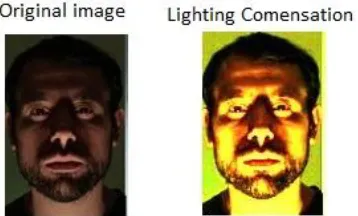
[image:2.612.225.404.294.402.2]The effect of skin color segmentation is often affected by the lighting conditions. In the case of poor lighting conditions, we will not get the desired results. In order to eliminate this adverse influence, we need to compensate the illumination of the image before using skin color segmentation algorithms. We adopt the Reference White method.
Fig.1 Lighting Compensation Results
B. YCbCr Color Space Based Skin Pixel Segmentation
The YCbCr color space has good performance of clustering, and the transformation from RGB to YCbCr is linear. The choice of color space is considered as the primary step in skin detection/classification. This is an orthogonal color space in which the color is represented with statistically independent components. Because luminance and chrominance components are explicitly separated, color spaces of this type (orthogonal) are a favourable choice for skin detection [7]. The luminance (Y) component is computed as a weighted sum of RGB values while the chrominance (Cb and Cr) components are computed by subtracting the luminance component from B and R values [8]. This is shown in below:
Y = 16 + 65.481R + 128.533G + 24.966B Cb = 128 - 37.797R - 74.203G + 112B Cr = 128 + 112R - 93.786G - 18.214B
where R, G, and B components ranges from 0 to 1.
[image:2.612.147.478.579.713.2]186
©IJRASET: All Rights are Reserved
C. Skin Detection
The color space is converted from RGB to YCbCr so that we can segment the image into skin-like regions and non-skin regions in this space. Thresholding segmentation is the simplest method, which has better computing performance than the Gaussian skin color model. We regard a pixel as skin if it satisfies the following conditions:
Y > 80, 77< Cb < 127, 135 < Cr < 175
Fig. 2 Skin detection
The result of thresholding segmentation is a binary image where white represent the skin-like regions and black represent the non-skin regions. Then we use the median filter to remove noise. The median filter can remove noise with less attenuation of edges. Fig. 2 is the results of skin color segmentation.
D. Morphological Operation
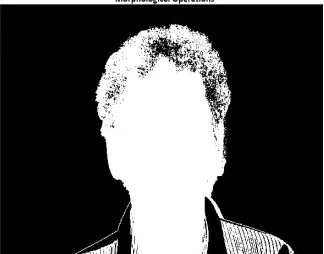
[image:3.612.231.393.384.511.2]We get a binary image after threshold segmentation. For better performance, it is necessary to use morphological operations. The morphological close and open operation is applied. Moreover, holes filling operation is also needed because the facial regions may contain holes which represent eyes, mouth, facial hair, etc.
Fig. 3 Morphological Operations
E. Joint Haar like Features
To improve the computation speed and the accuracy, we use weak classifiers that observe multiple features. Features co-occurrence makes it possible to classify difficult examples that are misclassified by weak classifiers using a single feature. We represent the feature value by using their joint probability. We quantize the feature value to two levels by using a threshold. By doing so, each feature value is represented by a binary variable s which is 1 or 0. And the Joint Feature will be represented by a binary array. We use the binary array to classify face or non-face. The variables for x is calculated by
s(x) =1 if z(x) > θ ,0 otherwise……… (1)
187
©IJRASET: All Rights are Reserved
F. LogitBoost Algorithm
1) AdaBoost can be considered as fitting an additive logistic regression model
2) where are constants to be determined and are our weak classifiers, then it can be shown that the two-class Adaboost
algorithm is fitting such a model by minimizing the criterion:
, where y is the true class label in {-1, 1} .
3) However, the exponential loss function changes exponentially with the classification error, rendering the AdaBoost algorithm
vulnerable while handing noisy data.
4) To solve the problem, Friedman et al. proposed a binomial log-likelihood loss function
5) By using Newton-like steps to fit an additive logistic regression model to optimize, which changes linearly with the
classification error and turns out to be less sensitive to noise and outliers.
Following are the steps of LogitBoost Algorithm:
G. Cascade
The next major stage of this new proposed method is combining successively more complex classifiers in a cascade structure which dramatically increases the speed of the detector by focusing attention on promising face like regions of the image. This cascade structure consists of classifiers. It works in a manner that initial classifiers are simpler and they are used to reject the majority of sub-windows and in the end, complex classifiers are used to achieve low false-positive rates.
Fig.4 Block Diagram of Proposed Method for Face Detection
188
©IJRASET: All Rights are Reserved
IV.EXPERIMENTAL RESULTS
We have used “Minear, M. & Park, D.C. (2004). A lifespan database of adult facial stimuli. Behavior Research Methods, Instruments, & Computers, 36, 630-633” database and some other database. Minear, M. & Park, D.C database consist of more than 300 individual faces ranging from ages 18 to 93. It has faces of 218 adults age 18–29, 76 adults age 30–49, 123 adults age 50–69, and 158 adults age 70 and older [9].
Three methods are compared on the basis of false detection and precision. False detection can be calculated by taking ratio of total number of falsely detected faces to the total number of faces in given image (ideally it should be 0). Precision is also a ratio of total number of falsely detected faces to the total number of faces present in given image (Ideally it should be 1).
1) False detection= Total Number of falsely detected faces/ Total number of faces
2) Precision= total Number of correctly detected faces/Total number of faces
[image:5.612.126.491.226.364.2]Following are some experimental results
[image:5.612.184.440.388.552.2]Fig. 6. Some Outputs of Viola Jones Face Detector based on AdaBoost Algorithm
Fig.7 Some outputs of Proposed Method
Table.4.1 Results of face detection for different type of dataset
Parameters Viola jones Face
Detector
YCbCr color space based Face Detection method
Proposed Method
Total numbers of Input Images (T)
1008 1008 1008
Correctly Detected Faces (C) 893 976 992
Falsely Detected Faces (F) 28 31 15
Accuracy
(A = C/T) 0.8859 0.9682
0.9841
False Detection
(FD = F/T) 0.0277 0.0307
[image:5.612.58.561.594.731.2]189
©IJRASET: All Rights are Reserved
V. CONCLUSIONS
The proposed method is tested and studies on various database and better results are gained for a variety of samples with different ages, gender, occlusion, expression, complex background, and illumination. The Accuracy and False detection rate of the proposed method is greater than other compared methods.
REFERENCES
[1] Viola, Paul, and Michael Jones. "Rapid object detection using a boosted cascade of simple features." Computer Vision and Pattern Recognition, 2001. CVPR 2001. Proceedings of the 2001 IEEE Computer Society Conference on. Vol. 1. IEEE, 2001.
[2] Friedman, Jerome, Trevor Hastie, and Robert Tibshirani, "Additive logistic regression: a statistical view of boosting (With discussion and a rejoinder by the authors)", The annals of statistics 28.2 (2000): 337-407,2000.
[3] Wu, Bo, et al. "Fast rotation invariant multi-view face detection based on real adaboost." Automatic Face and Gesture Recognition, 2004. Proceedings. Sixth IEEE International Conference on. IEEE, 2004.
[4] Mita, Takeshi, Toshimitsu Kaneko, and Osamu Hori. "Joint haar-like features for face detection." Computer Vision, 2005. ICCV 2005. Tenth IEEE International Conference on. Vol. 2. IEEE, 2005.
[5] Zhang, Cha, and Zhengyou Zhang,” A survey of recent advances in face detection”, Tech. rep., Microsoft Research, 2010.
[6] Fried Chen, Zhen-Xue, et al. "Fast Face Detection Algorithm Based on Improved Skin-Color Model." Arabian Journal for Science and Engineering 38.3 (2013): 629-635,2013.
[7] S. Chitra, G. Balakrishnan , “Comparative Study for Two Color Spaces HSCbCr and YCbCr in Skin Color Detection”, Applied Mathematical Sciences, Vol.6, no.85, pp.4229 - 4238, 2012.
[8] Devendra Singh Raghuvanshi, Dheeraj Agrawal, “Human Face Detection by using Skin Color Segmentation, Face Features and Regions Properties”, International Journal of Computer Applications, Vol. 38, No.9, pp.14-17,2012.