http://www.scirp.org/journal/ape ISSN Online: 2164-0408
ISSN Print: 2164-0386
DOI: 10.4236/ape.2017.74039 Nov. 28, 2017 473 Advances in Physical Education
Laterality of Accuracy of Grip and Elbow
Flexion Force Exertions and Their Differences
Hiroki Aoki
1*, Shin-Ichi Demura
21Fukui National College of Technology, Fukui, Japan 2Kanazawa University, Ishikawa, Japan
Abstract
Accuracy of grip and elbow flexion force exertions has been examined. Be-cause agonist muscles related to the achievement of these movements differ, the laterality of their accuracy may also differ. This study aimed to examine the accuracy of grip and elbow flexion force exertions for each demand value and the difference between movements. Participants were 22 right-armed healthy young males (mean age 22.5 ± 5.6 yrs, mean height 170.9 ± 5.8 cm, mean weight 62.4 ± 9.4 kg). Demand values of 25%, 50%, and 75% of maxi-mum voluntary contraction (MVC) were selected. Using subjective judgment, participants were requested to exert each arm’s handgrip and elbow flexion forces for each demand value. Evaluation parameters were differences (errors) between demand and exertion values and their total error. Results of two-way ANOVA (laterality and demand value) showed a significant interaction in grip movement. In results of multiple comparisons, an error in 25% MVC was greater than that in 50% MVC and 75% MVC in the non-dominant arm. For elbow flexion movement, a significant difference was found in a demand value factor, and results of multiple comparisons showed that error was greater in the order of 25% MVC, 50% MVC, and 75% MVC in the non-dominant arm; in the dominant arm, error was greater in 25% MVC than in 50% MVC and 75% MVC. Total error showed significant interaction and was greater in el-bow flexion strength than in grip strength in the non-dominant arm. In con-clusion, the non-dominant arm had less error with greater demand values in grip and elbow flexion strengths, and laterality was not found in either movement at each demand value. Accuracy of force exertion in elbow flexion strength was inferior to grip strength.
Keywords
Hand Grip Strength, Elbow Flexion Strengths, Laterality
How to cite this paper: Aok, H., & De-mura, S.-I. (2017). Laterality of Accuracy of Grip and Elbow Flexion Force Exertions and Their Differences. Advances in Physi-cal Education, 7, 473-479.
https://doi.org/10.4236/ape.2017.74039
Received: October 26, 2016 Accepted: November 25, 2017 Published: November 28, 2017
Copyright © 2017 by authors and Scientific Research Publishing Inc. This work is licensed under the Creative Commons Attribution International License (CC BY 4.0).
DOI: 10.4236/ape.2017.74039 474 Advances in Physical Education
1. Introduction
Humans generally exert submaximal strength based on a subjective sense of the force needed in daily life and in sports situations. Until now, coordination of force exertion has been evaluated by tests as follows: Exert a handgrip coordi-nately while adjusting an index shown on a screen (Kubota et al., 2012); exert handgrip, elbow flexion, and pinch strengths based on subjective judgment while accurately matching each relative demand value of maximum voluntary contrac-tion (MVC) (Seki & Ohtsuki, 1995; Kitabayashi et al., 2013). Demura et al.
(2001)demanded participants to exert 25%, 50%, and 75% of maximum
isoki-netic knee extension strength; they reported finding no differences between each demand value and actual output value. Noguchi et al. (2014) reported that the accuracy of handgrip exertions showed insignificant differences among demand values of 20% MVC, 40% MVC, 60% MVC, and 80% MVC.
Furthermore, humans demonstrate functional right and left differences in each bilaterally symmetrical body part; this is called “laterality” (Dolcos et al.,
2002;Bohannon, 2003;Roy et al., 2003;Noguchi et al., 2009). Laterality is
par-ticularly noticeable in functions of fingers, such as in using a spoon or writing letters, and is considered to occur from more preferential and frequent use of one hand in daily activities. Until now, lateral dominance of muscle function has frequently been reported. Seki and Ohtsuki (1995) reported that accuracy of ex-ertion values (errors between each demand and exex-ertion value) in elbow flexion showed little difference between dominant and non-dominant arms. However,
Kitabayashi et al. (2013) reported that error between demand (50% MVC) and
exertion values in pinch strength was less in the dominant than in the non-dominant hand. In this way, laterality in accuracy of force exertion differs even in the same upper limbs. This is why agonist muscles contributing to the achievement of each movement seem to differ. Agonist muscle is a muscle group in the fingers and antebrachium for handgrip and in biceps brachii for elbow flexion. Hence, laterality in accuracy of force exertion may differ between handgrip and elbow flexion in spite of movement in the same upper limb.
Thus, for demand values in grip and elbow flexion, this study examined late-rality in accuracy of exertion force.
2. Method
2.1. Participants
DOI: 10.4236/ape.2017.74039 475 Advances in Physical Education
2.2. Experimental Instruments and Methods
Grip strength and elbow flexion strength were measured using the dynamometry device (YG-100, Yagami, Japan). Demand values selected in force exertion tests were 25%, 50%, and 75% of the maximum handgrip and elbow flexion strength
(Seki & Ohtsuki, 1995). For measurement of handgrip strength, participants sat
on an adjustable ergometric chair, and the arm, supported by an armrest, was in a sagittal and horizontal position, with the forearm vertical to the hand, in a semi-prone position. For each individual, grip width could be adjusted with a dial to achieve a 90-degree angle with the proximal-middle phalanges.
For measurement of elbow strength, participants sat on an adjustable ergome-tric chair sideways and placed their axilla on the table’s edge, with supination of the forearm. After participants touched their palms to the handle, isometric strength exertion by elbow flexion (joint angle of 90 degrees) was measured.
Participants performed the maximum voluntary contraction (MVC) test twice with both arms, and the higher value was used as the MVC. Participants were divided at random into two groups who began measurements from the right or left arm. Two trials with a 2-min rest were performed for each demand value. We did not provide participants with their measurement values.
After that, participants selected the order of demand values at random for each arm from the following six patterns: 1) 25% → 50% → 75% MVC; 2) 25% → 75% → 50% MVC; 3) 50% → 25% → 75% MVC; 4) 50% → 75% → 25% MVC; 5) 75% → 25% → 50% MVC; and 6) 75% → 50% → 25% MVC. Differences (errors) between demand and exerted values for each trial (25%, 50% and 75% MVC) were calculated. The less error of two trials was used as a parameter. In addition, a total error of demand value was calculated in dominant and non-dominant arms.
2.3. Statistical Analysis
Intra-class correlation coefficient (ICC) for each test was calculated to examine reliability. Two-way ANOVA (demand value x dominant/non-dominant arm) was used to examine differences among mean errors. Two-way ANOVA (move difference x dominant/non-dominant arm) was used to examine mean differ-ences between total error of the dominant and non-dominant arms. When a sig-nificant interaction or main effect was found, a Tukey’s Honestly Sigsig-nificant Difference (HSD) test was used for multiple comparisons. The level of signific-ance was determined to be 0.05.
3. Results
ICCs of three trial errors were 0.63 - 0.85 in the dominant arm and 0.55 - 0.85 in the non-dominant arm.
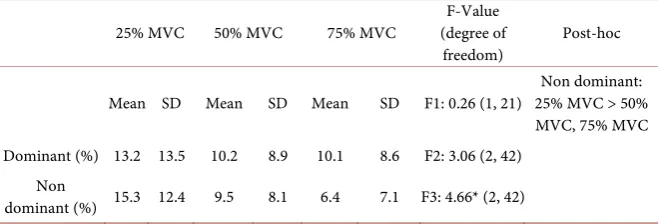
Table 1 shows basic statistics for errors in handgrip strength according to
DOI: 10.4236/ape.2017.74039 476 Advances in Physical Education that error was greater in 25% MVC than in 50% MVC and 75% MVC in the non-dominant arm.
Table 2 shows basic statistics for elbow flexion strength errors according to
[image:4.595.210.539.422.558.2]demand values, dominant and non-dominant arms, and results of two-way ANOVA. Significant main effect was found. Multiple comparison tests showed that error was greater in the order of 25% MVC, 50% MVC, and 75% MVC in the dominant arm; in the non-dominant arm, error was greater in 25% MVC than in 50% MVC and 75% MVC.
Table 3 shows basic statistics for total error according to hand and elbow
Table 1. Basic statistics for handgrip strength errors according to demand values,
domi-nant and non-domidomi-nant arms, and results of two-way ANOVA.
25% MVC 50% MVC 75% MVC (degree of F-Value
freedom) Post-hoc
Mean SD Mean SD Mean SD F1: 0.26 (1, 21) 25% MVC > 50% Non dominant: MVC, 75% MVC Dominant (%) 13.2 13.5 10.2 8.9 10.1 8.6 F2: 3.06 (2, 42)
Non
dominant (%) 15.3 12.4 9.5 8.1 6.4 7.1 F3: 4.66* (2, 42) *p < 0.05; F1: demand value; F2: dominant/non-dominant arms; F3: interaction.
Table 2. Basic statistics for elbow flexion strength errors according to demand values,
dominant and non-dominant arms, and results of two-way ANOVA.
25% MVC 50% MVC 75% MVC (degree of F-Value
freedom) Post-hoc
Mean SD Mean SD Mean SD 5.96* (1, 21) F1: MVC > 50% MVC, Dominant: 25% 75% MVC
Dominant (%) 16.8 13.9 6.9 7.1 5.4 5.9 12.36* (2, 42) F2: MVC > 50% MVC > Non dominant: 25% 75% MVC Non dominant
[image:4.595.206.538.631.712.2](%) 19.5 17.3 11 7.2 7.3 12.2 6.65* (2, 42) F3: *p < 0.05; F1: demand value; F2: dominant/non-dominant arms; F3: interaction.
Table 3. Basic statistics for total error according to hand and elbow flexion movement,
dominant and non-dominant arms in handgrip and elbow flexion strength, and results of two-way ANOVA.
Hand grip Elbow flexion F-Value (degree of freedom) Post-hoc
Mean SD Mean SD F1: 1.17 (1, 21) Non dominant: Elbow flexion > hand grip
DOI: 10.4236/ape.2017.74039 477 Advances in Physical Education flexion movement, dominant and non-dominant arms in handgrip and elbow flexion strength, and results of two-way ANOVA. Significant interaction was found. Multiple comparison tests showed that total error was greater in elbow flexion strength than in handgrip strength for the non-dominant arm.
4. Discussion
The present results showed that errors between demand and exertion values in subjective force exertion of handgrip strength are greater in 25% MVC than in 50% MVC and 75% MVC in the non-dominant arm and that accuracy of force exertion differs among demand values. Noguchi et al. (2014) reported finding no significant difference among demand values of 20% MVC, 40% MVC, 60% MVC, and 80% MVC in accuracy of handgrip exertion, regardless of difference of demand values in the dominant arm. Handgrip is movement using plural small joints, and the innervation ratio of hand and finger muscle groups related to the movement is high(Nagata et al., 1976). In other words, exerting force to adjust demand values in the dominant hand’s muscle groups is easy because they are frequently used in daily life. Additionally, accuracy of force exertion among demand values might not show any difference in dominant handgrip movement.
In the present results, errors between demand and exertion values of elbow flexion strength differed among 25% MVC and demand values of 50% MVC and 75% MVC in both arms. According to Demura et al.’s (2001)report, which amined differences between demand and exertion values in isokinetic knee ex-tension strength using dominant and non-dominant legs, insignificant differ-ence was found between demand values of 25%, 50%, and 75% of maximum strength. In contrast, Seki and Ohtsuki (1995) reported that error between strength exertion value based on subjective judgment and demand value de-creases with increased demand. In a case of small demand value, such as 25% MVC, compared with great demand value approaching maximum strength, such as 75% MVC, errors between demand and exertion values are great probably because participants find it difficult to imagine sizes of exertion force. Thus, it is also possible that accuracy of force exertion among demand values differed be-tween 25% MVC and greater demand values of 50% MVC and 75% MVC in el-bow flexion movement.
In the non-dominant arm, total error was greater in elbow flexion strength than in handgrip strength. Ohtsuki (1996) reported that development of con-trolled force-exertion ability is affected by acquired learning experience.
Sada-moto and Ohtsuki (1977) reported that accuracy of programming formed by
DOI: 10.4236/ape.2017.74039 478 Advances in Physical Education easily be adjusted to exert strength appropriate to demand values, but using bi-ceps brachii for elbow flexion to perform minute force exertion is difficult. Pos-sibly, because the non-dominant arm’s elbow flexion movement is used little in daily life, the tendency becomes marked, so total error was greater in elbow flexion movement than in handgrip movement in the non-dominant arm.
Errors of each demand value and total error did not show differences between dominant and non-dominant arms. In short, laterality was not found in the ac-curacy of handgrip and elbow flexion movements’ force exertions.Kubota et al.
(2012) reported that ability to exert handgrip coordinately is superior in the
do-minant hand, and thus laterality was found. In addition, according to Noguchi et
al.’s (2009) report, due to it being used more frequently, functions related to
achievement of operation in the dominant hand develop, and the difference be-tween hands becomes remarkable. However, accuracy of force exertion differs from the ability to exert a handgrip coordinately while adjusting an index shown on a screen. Ia group nerve fibers of muscle spindle contribute to control strength exertion (Yoshitake et al., 2011). Because this difference between the dominant and non-dominant arms is small, laterality might not occur in either handgrip or elbow flexion movements.
5. Conclusion
With greater demand values, the non-dominant arm demonstrated less error in handgrip and elbow flexion strength, and each demand value did not show later-al dominance. In elbow flexion strength, the accuracy of force exertion is inferior to handgrip strength.
References
Bohannon, R. (2003). Grip Strength: A Summary of Studies Comparing Dominant and Non Dominant Limb Measurements. Perceptual & Motor Skills, 96, 728-730.
https://doi.org/10.2466/pms.2003.96.3.728
Demura, S., Sato, S., & Nagasawa, Y. (2009). Re-Examination of Useful Items for Deter-mining Hand Dominance. Medica Italiana Archivio per le Scienze Mediche, 168,
169-177.
Demura, S., Yamaji, S., Goshi, F., & Nagasawa, Y. (2001). Lateral Dominance of Legs in Maximal Muscle Power, Muscular Endurance, and Grading Ability. Percept Mot Skills, 93, 11-23.
Dolcos, F., Rice, H. J., & Gabeza, R. (2002). Hemispheric Asymmetry and Aging Right Hemisphere Decline or Asymmetry Reduction. Neuroscience & Biobehavioral Reviews, 26, 819-825.
Kitabayashi, T., Demura, S., & Aoki, H. (2013). Differences between Maximum and Sub-maximum Pinch Strengths in Dominant and Non-Dominant Hands. Medica Italiana Archivio per le Scienze Mediche, 172, 179-184.
Kubota, H., Demura, S., & Kawabata, H. (2012). Laterality and Age-Level Differences between Young Women and Elderly Women in Controlled Force Exertion (CFE). Arc-hives of Gerontology and Geriatrics, 54, e68-e72.
DOI: 10.4236/ape.2017.74039 479 Advances in Physical Education Nagata, A., Muro, M., & Kitamoto, H. (1976). Frequency Characteristics in Isotonic
Muscular Contractions from Correlation Function and Fourier Transformation of Surface Electromyogram (the Second Report). The Japanese Journal of Physical Fitness and Sports Medicine, 25, 28-36.https://doi.org/10.7600/jspfsm1949.25.28
Noguchi, T., Demura, S., & Aoki, H. (2009). Superiority of the Dominant and Nondomi-nant Hands in Static Strength and Controlled Force Exertion. Perceptual & Motor Skills, 109, 339-346.https://doi.org/10.2466/pms.109.2.339-346
Noguchi, T., Demura, S., & Omoya, M. (2014). Accuracy of Force Exertion in Response to Demanded Forces Based on Subjective Information and Laterality. American Jour-nal of Sports Science and Medicine, 2, 190-193.https://doi.org/10.12691/ajssm-2-5-3
Ohtsuki, T. (1996). Skillful of Brain and Voluntary Exercise. Journal of Health, Physical Education and Recreation, 46, 444-446.
Roy, E. A., Bryden, P., & Gavill, S. (2003). Hand Differences in Pegboard Performance through Development. Brain and Cognition, 53, 315-317.
https://doi.org/10.1016/S0278-2626(03)00133-7
Sadamoto, T., & Ohtsuki, T. (1997). Accuracy of Output Control in Jumping: Characte-ristics in Grading and Reproduction of Distance. Japan Journal of Physical Education, 22, 215-229.
Seki, T., & Ohtsuki, T. (1995). Reproducibility of Subjectively Graded Voluntary Isome-tric Muscle Strength in Unilateral and Simultaneous Bilateral Exertion. Ergonomics, 38, 1867-1876.https://doi.org/10.1080/00140139508925234
Yoshitake, Y., Nakamoto, H., & Ue, H. (2011). Mechanism that Contribute to Differences in Perceived Submaximal Force Production between Young and Old Adults and Effect of Strength Training. Research-Aid Report, No. 26, 131-141.