5350
Sequence Labeling Parsing by Learning Across Representations
Michalina Strzyz David Vilares Carlos G´omez-Rodr´ıguez Universidade da Coru˜na, CITIC
FASTPARSE Lab, LyS Research Group, Departamento de Computaci´on Campus de Elvi˜na, s/n, 15071 A Coru˜na, Spain
{michalina.strzyz,david.vilares,carlos.gomez}@udc.es
Abstract
We use parsing as sequence labeling as a com-mon framework to learn across constituency and dependency syntactic abstractions. To do so, we cast the problem as multitask learning (MTL). First, we show that adding a parsing paradigm as an auxiliary loss consistently im-proves the performance on the other paradigm. Secondly, we explore anMTLsequence label-ing model that parses both representations, at almost no cost in terms of performance and speed. The results across the board show that on averageMTLmodels with auxiliary losses for constituency parsing outperform single-task ones by 1.05 F1 points, and for depen-dency parsing by 0.62UASpoints.
1 Introduction
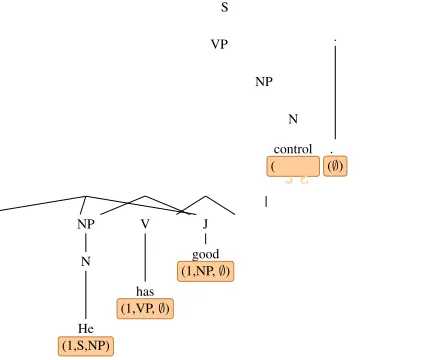
Constituency (Chomsky, 1956) and dependency grammars (Mel’cuk, 1988; K¨ubler et al., 2009) are the two main abstractions for representing the syntactic structure of a given sentence, and each of them has its own particularities (Kahane and Mazziotta, 2015). While in constituency parsing the structure of sentences is abstracted as a phrase-structure tree (see Figure1a), in dependency pars-ing the tree encodes binary syntactic relations be-tween pairs of words (see Figure1b).
When it comes to developing natural language processing (NLP) parsers, these two tasks are usu-ally considered as disjoint tasks, and their im-provements therefore have been obtained sepa-rately (Charniak,2000;Nivre,2003;Kiperwasser and Goldberg, 2016;Dozat and Manning, 2017;
Ma et al.,2018;Kitaev and Klein,2018).
Despite the potential benefits of learning across representations, there have been few attempts in the literature to do this.Klein and Manning(2003) considered a factored model that provides separate methods for phrase-structure and lexical depen-dency trees and combined them to obtain optimal
parses. With a similar aim,Ren et al.(2013) first compute thenbest constituency trees using a prob-abilistic context-free grammar, convert those into dependency trees using a dependency model, com-pute a probability score for each of them, and fi-nally rerank the most plausible trees based on both scores. However, these methods are complex and intended for statistical parsers. Instead, we pro-pose a extremely simple framework to learn across constituency and dependency representations.
Contribution (i) We use sequence labeling for constituency (G´omez-Rodr´ıguez and Vilares,
2018) and dependency parsing (Strzyz et al.,2019) combined with multi-task learning (MTL) ( Caru-ana, 1997) to learn across syntactic representa-tions. To do so, we take a parsing paradigm (con-stituency or dependency parsing) as an auxiliary task to help train a model for the other parsing representation, a simple technique that translates into consistent improvements across the board. (ii) We also show that a single MTL model fol-lowing this strategy can robustly produce both constituency and dependency trees, obtaining a performance and speed comparable with previ-ous sequence labeling models for (either) con-stituency or dependency parsing. The source code is available at https://github.com/ mstrise/seq2label-crossrep
2 Parsing as Sequence Labeling
Notation We use w = [wi, ..., w|w|] to denote an input sentence. We use bold style lower-cased and math style upper-cased characters to refer to vectors and matrices (e.g.xandW).
tag-ging, named-entity recognition or chunking (Sang and Buchholz, 2000; Toutanova and Manning,
2000; Tjong Kim Sang and De Meulder, 2003). More recently, syntactic tasks such as constituency parsing and dependency parsing have been suc-cessfully reduced to sequence labeling ( Spous-tov´a and Spousta, 2010;Li et al., 2018; G´omez-Rodr´ıguez and Vilares,2018;Strzyz et al.,2019). Such models compute a tree representation of an input sentence using|w|tagging actions.
We will also cast parsing as sequence labeling, to then learn across representations using multi-task learning. Two are the main advantages of this approach: (i) it does not require an explicit parsing algorithm nor explicit parsing structures, and (ii) it massively simplifies joint syntactic modeling. We now describe parsing as sequence labeling and the architecture used in this work.
Constituency parsing as tagging G´omez-Rodr´ıguez and Vilares (2018) define a lineariza-tion methodΦ|w| : Tc,|w| → L
|w|
c to transform a
phrase-structure tree into a discrete sequence of labels of the same length as the input sentence. Each label li ∈ Lc is a three tuple (ni, ci, ui)
where: ni is an integer that encodes the number
of ancestors in the tree shared between a wordwi
and its next onewi+1 (computed as relative vari-ation with respect toni−1),ciis the non-terminal
symbol shared at the lowest level in common between said pair of words, andui (optional) is a
leaf unary chain that connectscitowi. Figure1a
illustrates the encoding with an example.1
Dependency parsing as tagging Strzyz et al.
(2019) also propose a linearization methodΠ|w| :
Td,|w|→L |w|
d to transform a dependency tree into
a discrete sequence of labels. Each labelri ∈ Ld
is also represented as a three tuple(oi, pi, di). If oi > 0, wi’s head is the oith closest word with
PoS tagpito the right ofwi. Ifoi <0, the head is
the−oith closest word to the left ofwithat has as
a PoS tag pi. The elementdi represents the
syn-tactic relation between the head and the dependent terms. Figure1bdepictures it with an example.
Tagging with LSTMs We use bidirectional LSTMs (BILSTMs) to train our models ( Hochre-iter and Schmidhuber, 1997; Schuster and Pali-wal,1997). Briefly, let LSTM→(x)be an
abstrac-1In this work we do not use the dual encoding byVilares et al.(2019), which combines the relative encoding with a top-down absolute scale to represent certain relations.
S
.
.P
(∅) VP
NP
N
control (-2,S,∅) J
good (1,NP,∅) V
has (1,VP,∅) NP
N
He (1,S,NP)
(a) A constituency tree
<ROOT> He has good control .
N V J N .
1 2 3 4 5
(+1,V,nsubj) (-1,ROOT,root) (+1,N,amod) (-1,V,dobj) (-1,V,punct) nsubj
dobj amod root
punct
[image:2.595.308.526.64.244.2](b) A dependency tree
Figure 1: An example of constituency and dependency trees with their encodings.
tion of a LSTM that processes the input from left to right, and letLSTM←(x)be anotherLSTM pro-cessing the input in the opposite direction, the out-puthiof aBILSTMat a timestepiis computed as:
BILSTM(x, i) = LSTM→(x0:i) ◦LSTM←(xi:|w|). Then, hi is further processed by a feed-forward
layer to compute the output label, i.e. P(y|hi) =
softmax(W∗hi+b). To optimize the model, we
minimize the categorical cross-entropy loss, i.e.
L=−P
log(P(y|hi)). In AppendixAwe detail additional hyperpameters of the network. In this work we use NCRFpp (Yang and Zhang,2018) as our sequence labeling framework.
3 Learning across representations
To learn across representations we cast the prob-lem as multi-task learning. MTL enables learning many tasks jointly, encapsulating them in a sin-gle model and leveraging their shared represen-tation (Caruana, 1997;Ruder, 2017). In particu-lar, we will use a hard-sharing architecture: the sentence is first processed by stacked BILSTMs shared across all tasks, with a task-dependent feed-forward network on the top of it, to compute each task’s outputs. In particular, to benefit from a specific parsing abstraction we will be using the concept of auxiliary tasks (Plank et al.,2016;
Bingel and Søgaard, 2017;Coavoux and Crabb´e,
better generalization of the model.2 For instance,
Hershcovich et al.(2018) have shown that seman-tic parsing benefits from that approach.
The input is the same for both types of pars-ing and the same number of timesteps are required to compute a tree (equal to the length of the sen-tence), which simplifies the joint modeling. In this work, we focus on parallel data (we train on the same sentences labeled for both constituency and dependency abstractions). In the future, we plan to explore the idea of exploiting joint training over disjoint treebanks (Barrett et al.,2018).
3.1 Baselines and models
We test different sequence labeling parsers to de-termine whether there are any benefits in learn-ing across representations. We compare: (i) a single-task model for constituency parsing and an-other one for dependency parsing, (ii) a multi-task model for constituency parsing (and another for dependency parsing) where each element of the 3-tuple is predicted as a partial label in a separate subtask instead of as a whole, (iii) different MTL models where the partial labels from a specific parsing abstraction are used as auxiliary tasks for the other one, and (iv) anMTLmodel that learns to produce both abstractions as main tasks.
Single-paradigm, single-task models (S-S) For constituency parsing, we use the single-task model byG´omez-Rodr´ıguez and Vilares(2018). The in-put is the raw sentence and the outin-put for each to-ken a single label of the formli=(ni, ci, ui). For
dependency parsing we use the model by Strzyz et al.(2019) to predict a single dependency label of the formri=(oi, pi, di)for each token.
Single-paradigm, multi-task models (S-MTL) For constituency parsing, instead of predicting a single label output of the form(ni, ci, ui), we
gen-erate three partial and separate labels ni, ci and uithrough three task-dependent feed-forward
net-works on the top of the stackedBILSTMs. This is similar to Vilares et al. (2019). For dependency parsing, we propose in this work a MTL version too. We observed in preliminary experiments, as shown in Table 1, that casting the problem as 3-task learning led to worse results. Instead, we cast it as a 2-task learning problem, where the first task consists in predicting the head of a word wi, i.e.
2Auxiliary losses are usually given less importance during
the training process.
[image:3.595.345.492.172.373.2]Model UAS LAS S-S 93.81 91.59 S-MTL(2) 94.03 91.78 S-MTL(3) 93.66 91.47
Table 1: Comparison of the single-paradigm models for dependency parsing evaluated on the PTB dev set where each label is learned as single, 2- or 3-tasks.
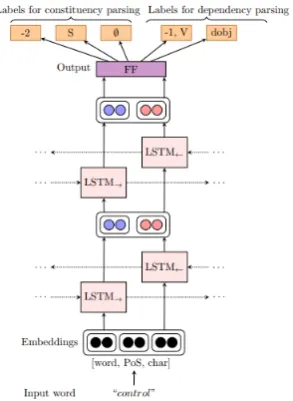
Figure 2: Architecture of our double-paradigm, MTL
model with 3-task learning for constituency parsing and 2-task learning for dependency parsing.
predicting the tuple (oi, pi), and the second task
predicts the type of the relation (di). The loss is
here computed asL=P
tLt, whereLtis the
par-tial loss coming from the subtaskt.
Double-paradigm, multi-task models with aux-iliary losses (D-MTL-AUX) We predict the par-tial labels from one of the parsing abstractions as main tasks. The partial labels from the other pars-ing paradigm are used as auxiliary tasks. The loss is computed as L=P
tLt+PaβaLa, where La
is an auxiliary loss andβa its specific weighting
factor. Figure2shows the architecture used in this and the following multi-paradigm model.
Double paradigm, multi-task models (D-MTL)
All tasks are learned as main tasks instead.
4 Experiments
4.1 Data
Model
Dependency Parsing
Constituency Parsing
UAS LAS F1
English (PTB)
S-S 93.60 91.74 90.14
S-MTL 93.84 91.83 90.32
D-MTL-AUX 94.05 92.01 90.39
D-MTL 93.96 91.90 89.81
Basque
S-S 86.20 81.70 89.54
S-MTL 87.42 81.71 90.86
D-MTL-AUX 87.19 81.73 91.12
D-MTL 87.09 81.77 90.76
French
S-S 89.13 85.03 80.68
S-MTL 89.54 84.89 81.34
D-MTL-AUX 89.52 84.97 81.33
D-MTL 89.45 85.07 81.19
German
S-S 91.24 88.76 84.19
S-MTL 91.54 88.75 84.46
D-MTL-AUX 91.58 88.80 84.38
D-MTL 91.45 88.67 84.28
Hebrew
S-S 82.74 75.08 88.85
S-MTL 83.42 74.91 91.91
D-MTL-AUX 83.90 75.89 91.83
D-MTL 82.60 73.73 91.10
Hungarian
S-S 88.24 84.54 90.42
S-MTL 88.69 84.54 90.76
D-MTL-AUX 88.99 84.95 90.69
D-MTL 88.89 84.89 90.93
Korean
S-S 86.47 84.12 83.33
S-MTL 86.78 84.39 83.51
D-MTL-AUX 87.00 84.60 83.39
D-MTL 86.64 84.34 83.08
Polish
S-S 91.17 85.64 92.59
S-MTL 91.58 85.04 93.17
D-MTL-AUX 91.37 85.20 93.36
D-MTL 92.00 85.92 93.52
Swedish
S-S 86.49 80.60 83.81
S-MTL 87.22 80.61 86.23
D-MTL-AUX 87.24 80.34 86.53
D-MTL 87.15 80.71 86.44
average
S-S 88.36 84.13 87.06
S-MTL 88.89 84.07 88.06
D-MTL-AUX 88.98 84.28 88.11
[image:4.595.73.291.76.525.2]D-MTL 88.80 84.11 87.90
Table 2: Results on thePTBandSPMRLtest sets.
Model
Dependency parsing
Constituency Parsing
UAS LAS F1
Chen and Manning(2014) 91.80 89.60 — Kiperwasser and Goldberg(2016) 93.90 91.90 — Dozat and Manning(2017) 95.74 94.08 — Ma et al.(2018) 95.87 94.19 — Fern´andez-G and G´omez-R (2019) 96.04 94.43 —
Vinyals et al.(2015) — — 88.30 Zhu et al.(2013) — — 90.40 Vilares et al.(2019) — — 90.60 Dyer et al.(2016) — — 91.20 Kitaev and Klein(2018) — — 95.13
D-MTL-AUX 94.05 92.01 90.39
Table 3: Comparison of existing models against theD
-MTL-AUXmodel on the PTB test set.
PTB For the evaluation on English language we use the English Penn Treebank (Marcus et al.,
1993), transformed into Stanford dependencies (De Marneffe et al.,2006) with the predicted PoS tags as inDyer et al.(2016).
SPMRL We also use theSPMRLdatasets, a col-lection of parallel dependency and constituency treebanks for morphologically rich languages (Seddah et al., 2014). In this case, we use the predicted PoS tags provided by the organiz-ers. We observed some differences between the constituency and dependency predicted input fea-tures provided with the corpora. For experiments where dependency parsing is the main task, we use the input from the dependency file, and the converse for constituency, for comparability with other work. D-MTL models were trained twice (one for each input), and dependency and con-stituent scores are reported on the model trained on the corresponding input.
Metrics We use bracketing F-score from the original EVALB and EVAL SPMRL official scripts to evaluate constituency trees. For dependency parsing, we rely on LAS and UAS scores where punctuation is excluded in order to provide a ho-mogeneous setup for PTB and SPMRL.
4.2 Results
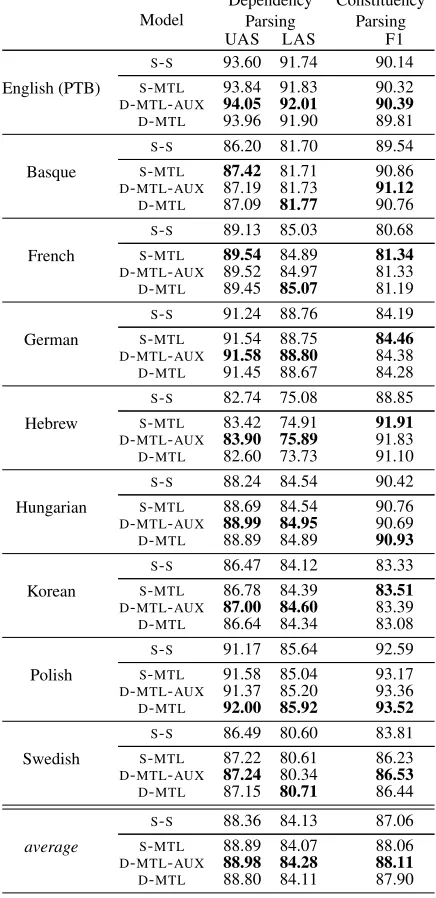
Table2compares single-paradigm models against their double-paradigm MTL versions. On aver-age, MTL models with auxiliary losses achieve the best performance for both parsing abstractions. They gain1.05 F1 points on average in compari-son with the single model for constituency parsing, and0.62UASand0.15LASpoints for dependency parsing. In comparison to the single-paradigm MTL models, the average gain is smaller: 0.05F1 points for constituency parsing, and 0.09UASand 0.21LASpoints for dependency parsing.
[image:4.595.71.290.565.723.2]Model Basque French German Hebrew Hungarian Korean Polish Swedish average
Nivre et al.(2007) 70.11 77.98 77.81 69.97 70.15 82.06 75.63 73.21 74.62 Ballesteros(2013) 78.58 79.00 82.75 73.01 79.63 82.65 79.89 75.82 78.92 Ballesteros et al.(2015)(char+POS) 78.61 81.08 84.49 72.26 76.34 86.21 78.24 74.47 78.96 De La Clergerie(2013) 77.55 82.06 84.80 73.63 75.58 81.02 82.56 77.54 79.34 Bj¨orkelund et al.(2013)(ensemble) 85.14 85.24 89.65 80.89 86.13 86.62 87.07 82.13 85.36
[image:5.595.73.527.64.150.2]D-MTL-AUX 84.02 83.85 88.18 74.94 80.26 85.93 85.86 79.77 82.85
Table 4: Dependency parsing: existing models evaluated with LAS scores on the SPMRL test set.
Model Basque French German Hebrew Hungarian Korean Polish Swedish average
Fern´andez-Gonz´alez and Martins(2015) 85.90 78.75 78.66 88.97 88.16 79.28 91.20 82.80 84.22 Coavoux and Crabb´e(2016) 86.24 79.91 80.15 88.69 90.51 85.10 92.96 81.74 85.66 Bj¨orkelund et al.(2013)(ensemble) 87.86 81.83 81.27 89.46 91.85 84.27 87.55 83.99 86.01 Coavoux and Crabb´e(2017) 88.81 82.49 85.34 89.87 92.34 86.04 93.64 84.00 87.82 Vilares et al.(2019) 91.18 81.37 84.88 92.03 90.65 84.01 93.93 86.71 88.10 Kitaev and Klein(2018) 89.71 84.06 87.69 90.35 92.69 86.59 93.69 84.35 88.64
D-MTL-AUX 91.12 81.33 84.38 91.83 90.69 83.39 93.36 86.53 87.83
Table 5: Constituency parsing: existing models evaluated with F1 score on the SPMRL test set.
Model Dependency parsing Constituency parsing
S-S 102±6 117±6 S-MTL 128±11 133±1 D-MTL-AUX 128±11 133±1 D-MTL 124±1 124±1
Table 6: Sentences/second on thePTBtest set.
the single-task setup excludes unlikely combina-tions of dependency labels with PoS tags or depen-dency directions that are not found in the training set, while in the 2-task setup, both components are treated separately, which may be having a negative influence on dependency labeling accuracy.
In general, one can observe different range of gains of the models across languages. In terms of UAS, the differences between single-task andMTL models span between 1.22 (Basque) and −0.14
(Hebrew); forLAS,0.81and−1.35(both for He-brew); and for F1,3.06(Hebrew) and−0.25 (Ko-rean). Since the sequence labeling encoding used for dependency parsing heavily relies on PoS tags, the result for a given language can be dependent on the degree of the granularity of its PoS tags.
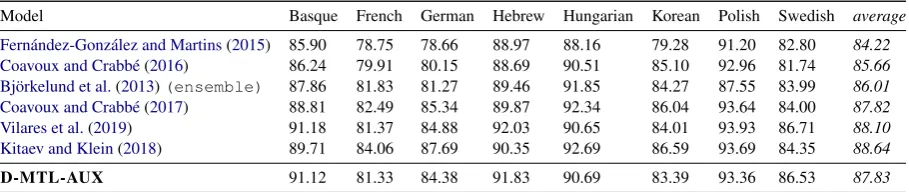
In addition, Table 3 provides a comparison of theD-MTL-AUXmodels for dependency and con-stituency parsing against existing models on the PTB test set. Tables4and5shows the results for various existing models on the SPMRL test sets.3
3
Note that we provide these SPMRL results for merely in-formative purposes. While they are the best existing results to our knowledge in these datasets, not all are directly com-parable to ours (due to not all of them using the same kinds of information, e.g. some models do not use morphological
Table6shows the speeds (sentences/second) on a single core of a CPU4. TheD-MTLsetup comes at almost no added computational cost, so the very good speed-accuracy tradeoff already provided by the single-task models is improved.
5 Conclusion
We have described a framework to leverage the complementary nature of constituency and depen-dency parsing. It combines multi-task learning, auxiliary tasks, and sequence labeling parsing, so that constituency and dependency parsing can ben-efit each other through learning across their repre-sentations. We have shown thatMTLmodels with auxiliary losses outperform single-task models, andMTL models that treat both constituency and dependency parsing as main tasks obtain strong re-sults, coming almost at no cost in terms of speed. Source code will be released upon acceptance.
Acknowlegments
This work has received funding from the ropean Research Council (ERC), under the Eu-ropean Union’s Horizon 2020 research and in-novation programme (FASTPARSE, grant agree-ment No 714150), from the ANSWER-ASAP project (TIN2017-85160-C2-1-R) from MINECO, and from Xunta de Galicia (ED431B 2017/01).
features). Also, there are not many recent results for depen-dency parsing on the SPMRL datasets, probably due to the popularity of UD corpora. For comparison, we have included punctuation for this evaluation.
[image:5.595.72.527.183.279.2] [image:5.595.73.291.322.377.2]References
Miguel Ballesteros. 2013. Effective morphologi-cal feature selection with maltoptimizer at the spmrl 2013 shared task. In Proceedings of the Fourth Workshop on Statistical Parsing of Morphologically-Rich Languages, pages 63–70.
Miguel Ballesteros, Chris Dyer, and Noah A. Smith. 2015. Improved transition-based parsing by mod-eling characters instead of words with LSTMs. In Proceedings of the 2015 Conference on Empirical Methods in Natural Language Processing, pages 349–359, Lisbon, Portugal. Association for Compu-tational Linguistics.
Maria Barrett, Joachim Bingel, Nora Hollenstein, Marek Rei, and Anders Søgaard. 2018. Sequence classification with human attention. InProceedings of the 22nd Conference on Computational Natural Language Learning, pages 302–312.
Joachim Bingel and Anders Søgaard. 2017. Identify-ing beneficial task relations for multi-task learnIdentify-ing in deep neural networks. CoRR, abs/1702.08303.
Anders Bj¨orkelund, Ozlem Cetinoglu, Rich´ard Farkas, Thomas Mueller, and Wolfgang Seeker. 2013. (re) ranking meets morphosyntax: State-of-the-art re-sults from the spmrl 2013 shared task. In Proceed-ings of the Fourth Workshop on Statistical Parsing of Morphologically-Rich Languages, pages 135–145.
Rich Caruana. 1997. Multitask learning. Machine learning, 28(1):41–75.
Eugene Charniak. 2000. A maximum-entropy-inspired parser. In Proceedings of the 1st North American chapter of the Association for Computational Lin-guistics conference, pages 132–139. Association for Computational Linguistics.
Danqi Chen and Christopher D. Manning. 2014. A fast and accurate dependency parser using neural net-works. InProceedings of the 2014 Conference on Empirical Methods in Natural Language Processing (EMNLP), pages 740–750, Doha, Qatar. Association for Computational Linguistics.
Noam Chomsky. 1956. Three models for the descrip-tion of language. IRE Transactions on information theory, 2(3):113–124.
Maximin Coavoux and Benoit Crabb´e. 2016. Neural greedy constituent parsing with dynamic oracles. In Proceedings of the 54th Annual Meeting of the As-sociation for Computational Linguistics (Volume 1: Long Papers), volume 1, pages 172–182.
Maximin Coavoux and Benoˆıt Crabb´e. 2017. Multi-lingual lexicalized constituency parsing with word-level auxiliary tasks. In 15th Conference of the European Chapter of the Association for Compu-tational Linguistics (EACL 2017), volume 2, pages 331–336. Association for Computational Linguis-tics.
Eric De La Clergerie. 2013. Exploring beam-based shift-reduce dependency parsing with dyalog: Re-sults from the spmrl 2013 shared task. In Proceed-ings of the Fourth Workshop on Statistical Parsing of Morphologically-Rich Languages, pages 53–62.
Marie-Catherine De Marneffe, Bill MacCartney, Christopher D Manning, et al. 2006. Generat-ing typed dependency parses from phrase structure parses. InLrec, volume 6, pages 449–454.
Timothy Dozat and Christopher D. Manning. 2017. Deep biaffine attention for neural dependency pars-ing. In 5th International Conference on Learning Representations, ICLR 2017, Toulon, France, April 24-26, 2017, Conference Track Proceedings.
Chris Dyer, Adhiguna Kuncoro, Miguel Ballesteros, and Noah A. Smith. 2016. Recurrent neural net-work grammars. InProceedings of the 2016 Con-ference of the North American Chapter of the Asso-ciation for Computational Linguistics: Human Lan-guage Technologies, pages 199–209. Association for Computational Linguistics.
Daniel Fern´andez-Gonz´alez and Carlos G´omez-Rodr´ıguez. 2019. Left-to-right dependency parsing with pointer networks. InProceedings of the 2019 Conference of the North American Chapter of the Association for Computational Linguistics: Human Language Technologies, Volume 2 (Short Papers), page to appear, Minneapolis, Minnesota, USA. Association for Computational Linguistics.
Daniel Fern´andez-Gonz´alez and Andr´e F. T. Martins. 2015. Parsing as reduction. InProceedings of the 53rd Annual Meeting of the Association for Compu-tational Linguistics and the 7th International Joint Conference on Natural Language Processing (Vol-ume 1: Long Papers), pages 1523–1533, Beijing, China. Association for Computational Linguistics.
Carlos G´omez-Rodr´ıguez and David Vilares. 2018. Constituent parsing as sequence labeling. In Pro-ceedings of the 2018 Conference on Empirical Meth-ods in Natural Language Processing, pages 1314– 1324. Association for Computational Linguistics.
Daniel Hershcovich, Omri Abend, and Ari Rappoport. 2018.Multitask parsing across semantic representa-tions. InProceedings of the 56th Annual Meeting of the Association for Computational Linguistics, ACL 2018, Melbourne, Australia, July 15-20, 2018, Vol-ume 1: Long Papers, pages 373–385.
Sepp Hochreiter and J¨urgen Schmidhuber. 1997. Long short-term memory. Neural computation, 9(8):1735–1780.
Eliyahu Kiperwasser and Yoav Goldberg. 2016. Sim-ple and accurate dependency parsing using bidirec-tional lstm feature representations. Transactions of the Association for Computational Linguistics, 4:313–327.
Nikita Kitaev and Dan Klein. 2018. Constituency parsing with a self-attentive encoder. In Proceed-ings of the 56th Annual Meeting of the Association for Computational Linguistics (Volume 1: Long Pa-pers), volume 1, pages 2676–2686.
Dan Klein and Christopher D Manning. 2003. Fast ex-act inference with a fex-actored model for natural lan-guage parsing. InAdvances in neural information processing systems, pages 3–10.
Sandra K¨ubler, Ryan McDonald, and Joakim Nivre. 2009. Dependency parsing. Synthesis Lectures on Human Language Technologies, 1(1):1–127.
Zuchao Li, Jiaxun Cai, Shexia He, and Hai Zhao. 2018. Seq2seq dependency parsing. In Proceedings of the 27th International Conference on Computational Linguistics, pages 3203–3214, Santa Fe, New Mex-ico, USA. Association for Computational Linguis-tics.
Xuezhe Ma, Zecong Hu, Jingzhou Liu, Nanyun Peng, Graham Neubig, and Eduard Hovy. 2018. Stack-pointer networks for dependency parsing. In Pro-ceedings of the 56th Annual Meeting of the Associa-tion for ComputaAssocia-tional Linguistics (Volume 1: Long Papers), volume 1, pages 1403–1414.
Mitchell P Marcus, Mary Ann Marcinkiewicz, and Beatrice Santorini. 1993. Building a large annotated corpus of english: The penn treebank. Computa-tional linguistics, 19(2):313–330.
Igor Aleksandrovic Mel’cuk. 1988. Dependency syn-tax: theory and practice. SUNY press.
Joakim Nivre. 2003. An efficient algorithm for pro-jective dependency parsing. In Proceedings of the Eighth International Workshop on Parsing Tech-nologies (IWPT, pages 149–160, Nancy, France.
Joakim Nivre, Johan Hall, Jens Nilsson, Atanas Chanev, G¨uls¸en Eryigit, Sandra K¨ubler, Svetoslav Marinov, and Erwin Marsi. 2007. Maltparser: A language-independent system for data-driven depen-dency parsing. Natural Language Engineering, 13(2):95–135.
Barbara Plank, Anders Søgaard, and Yoav Goldberg. 2016. Multilingual part-of-speech tagging with bidirectional long short-term memory models and auxiliary loss. In The 54th Annual Meeting of the Association for Computational Linguistics, page 412.
Marek Rei and Anders Søgaard. 2018. Zero-shot se-quence labeling: Transferring knowledge from sen-tences to tokens. InProceedings of the 2018 Con-ference of the North American Chapter of the
Asso-ciation for Computational Linguistics: Human Lan-guage Technologies, Volume 1 (Long Papers), vol-ume 1, pages 293–302.
Xiaona Ren, Xiao Chen, and Chunyu Kit. 2013. Com-bine constituent and dependency parsing via rerank-ing. InTwenty-Third International Joint Conference on Artificial Intelligence.
Sebastian Ruder. 2017. An overview of multi-task learning in deep neural networks. CoRR, abs/1706.05098.
Erik F Tjong Kim Sang and Sabine Buchholz. 2000. Introduction to the conll-2000 shared task chunk-ing. In Fourth Conference on Computational Nat-ural Language Learning and the Second Learning Language in Logic Workshop.
Mike Schuster and Kuldip K Paliwal. 1997. Bidirec-tional recurrent neural networks. IEEE Transactions on Signal Processing, 45(11):2673–2681.
Djam´e Seddah, Sandra K¨ubler, and Reut Tsarfaty. 2014. Introducing the spmrl 2014 shared task on parsing morphologically-rich languages. In Pro-ceedings of the First Joint Workshop on Statisti-cal Parsing of MorphologiStatisti-cally Rich Languages and Syntactic Analysis of Non-Canonical Languages, pages 103–109.
Drahom´ıra Spoustov´a and Miroslav Spousta. 2010. Dependency parsing as a sequence labeling task. The Prague Bulletin of Mathematical Linguistics, 94(1):7–14.
Michalina Strzyz, David Vilares, and Carlos G´omez-Rodr´ıguez. 2019. Viable dependency parsing as se-quence labeling. InProceedings of the 2019 Con-ference of the North American Chapter of the Asso-ciation for Computational Linguistics: Human Lan-guage Technologies, Volume 2 (Short Papers), page to appear, Minneapolis, Minnesota, USA. Associa-tion for ComputaAssocia-tional Linguistics.
Erik F. Tjong Kim Sang and Fien De Meulder. 2003. Introduction to the CoNLL-2003 shared task: Language-independent named entity recognition. In Proceedings of the Seventh Conference on Natu-ral Language Learning at HLT-NAACL 2003, pages 142–147.
Kristina Toutanova and Christopher D Manning. 2000. Enriching the knowledge sources used in a maxi-mum entropy part-of-speech tagger. InProceedings of the 2000 Joint SIGDAT conference on Empirical methods in natural language processing and very large corpora: held in conjunction with the 38th An-nual Meeting of the Association for Computational Linguistics-Volume 13, pages 63–70. Association for Computational Linguistics.
Associ-ation for ComputAssoci-ational Linguistics: Human Lan-guage Technologies, Volume 2 (Short Papers), page to appear, Minneapolis, Minnesota, USA. Associa-tion for ComputaAssocia-tional Linguistics.
Oriol Vinyals, Łukasz Kaiser, Terry Koo, Slav Petrov, Ilya Sutskever, and Geoffrey Hinton. 2015. Gram-mar as a foreign language. In Advances in neural information processing systems, pages 2773–2781.
Jie Yang and Yue Zhang. 2018. Ncrf++: An open-source neural sequence labeling toolkit. Proceed-ings of ACL 2018, System Demonstrations, pages 74–79.
Muhua Zhu, Yue Zhang, Wenliang Chen, Min Zhang, and Jingbo Zhu. 2013. Fast and accurate shift-reduce constituent parsing. In Proceedings of the 51st Annual Meeting of the Association for Compu-tational Linguistics (Volume 1: Long Papers), vol-ume 1, pages 434–443.
A Model parameters
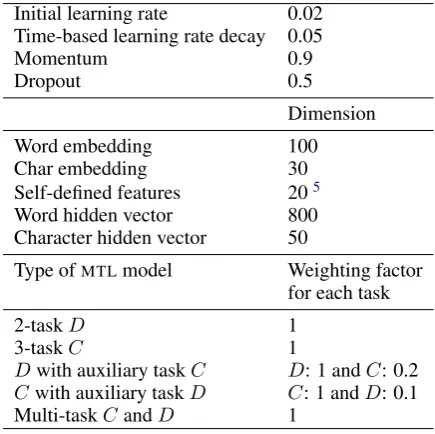
The models were trained up to 150 iterations and optimized with Stochastic Gradient Descent (SGD) with a batch size of 8. The best model for constituency parsing was chosen with the high-est achieved F1 score on the development set dur-ing the traindur-ing and for dependency parsdur-ing with the highestLAS score. The best double paradigm, multi-task model was chosen based on the highest harmonic mean amongLASand F1 scores.
Table7shows model hyperparameters.
Initial learning rate 0.02 Time-based learning rate decay 0.05
Momentum 0.9
Dropout 0.5
Dimension
Word embedding 100
Char embedding 30
Self-defined features 205
Word hidden vector 800
Character hidden vector 50
Type ofMTLmodel Weighting factor for each task
2-taskD 1
3-taskC 1
Dwith auxiliary taskC D: 1 andC: 0.2
Cwith auxiliary taskD C: 1 andD: 0.1
Multi-taskCandD 1
Table 7: Model hyperparameters. D indicates depen-dency parsing andCconstituency parsing.
5Models trained on PTB treebank used PoS tag
[image:8.595.73.291.466.683.2]