WAIST CIRCENFERENCE AS AN INDICATOR OF CLINICAL PARAMETERS IN BRAZILIAN CHILDREN
*,1,2
Sandra M. Barbalho,
3Marcio Emílio
and
1
Department of Biochemistry and Nutrition, School of Medicine, Un
Filho Avenue, 1001, Marília
2Food Technology School (FATEC), Higino Muzzi Filho Ave
3
4
Danone Nutricia Early Life Nutrition
ARTICLE INFO ABSTRACT
Objective:
(WC) in children as a marker for abdominal obesity. Methods:
population of the study comprised 882 children of both sexes, with ages ranging from 6 to 10. The following anthropometric variables were evaluated: BMI/A (body mass index
W/A (weight in relation to age); the TSF (
determine the parameters evaluated here are for children and adolescents aged 2 to 20. Results:
of the variables studied here, the WCs are the same for both sexes and it is reasonable to suggest that a correlation between the WC and the pBMI/A, pTSF and pW/A is a good parameter to diagnose the nutritional
diagnosis of obesity and its correlation with the development of metabolic disorders. Conclusions:
children between 6 and 10 years of age.
Copyright © 2016 Sandra M. Barbalhoet al.This
unrestricted use, distribution, and reproduction in any medium, provided the original work is properly cited.
INTRODUCTION
Obesity is considered a public health problem that affects both young and adult populations. It is generally caused by an excessive consumption of fat and sugar-rich foods, associated with low consumption of energy. This pathology is difficult to control, with high percentages of therapeutic failure and recurrence, which may lead to serious psychosocial repercussions. This condition represents a multifactorial disease resulting from a complex interaction of behavioral, cultural, genetic, physiological and psychological factors. Thus, it can be determined by external agents relating to a hypercaloric diet, environmental and economic, genetic or endocrinal factors. It is believed that external factors are more relevant in the incidence of obesity than genetic
(Lazorick et al., 2016; Rocca et al., 2016 and Pbert
2016). Overweight and obesity affects groups with low or high
socio-economic status, both adults and children.
decades, obesity has become one of the greatest challenges of
*Corresponding author: Sandra M. Barbalho
Department of Biochemistry and Nutrition, School of Medicine, Marília (UNIMAR).
ISSN: 0975-833X
Article History:
Received 22nd October, 2015
Received in revised form
07th November, 2015
Accepted 25th December, 2015
Published online 31st January,2016
Key words:
Waist circumference, Body mass index, Tricipital skinfold, Childhood.
Citation: Sandra M. Barbalho, Marcio Emílio Paiva Filho, Ana Paula M. Spada, Marie Oshiiwa and Karina
Circenference as an indicator of clinical parameters in Brazilian Children
RESEARCH ARTICLE
WAIST CIRCENFERENCE AS AN INDICATOR OF CLINICAL PARAMETERS IN BRAZILIAN CHILDREN
Marcio Emílio Paiva Filho,
4Ana Paula M. Spada,
and
1Karina Rodrigues Quesada
Department of Biochemistry and Nutrition, School of Medicine, University of Marília (UNIMAR)
Filho Avenue, 1001, Marília – SP- Brazil
Food Technology School (FATEC), Higino Muzzi Filho Avenue, 1001, Marília
3Clinic of Nutrition – Lins – SP, Brazil
Danone Nutricia Early Life Nutrition-Brazil
ABSTRACT
Objective: The purpose of this study was to verify and set a standard for the (WC) in children as a marker for abdominal obesity.
Methods: The study involved 8 state schools in the city of Lins, state of São Paulo, Brazil. The population of the study comprised 882 children of both sexes, with ages ranging from 6 to 10. The following anthropometric variables were evaluated: BMI/A (body mass index
W/A (weight in relation to age); the TSF (Tricipital Skinfold), and the WC. The curves used to determine the parameters evaluated here are for children and adolescents aged 2 to 20.
Results: An analysis of the WC values in terms of pBMI/A, pTSF, and pW/A
of the variables studied here, the WCs are the same for both sexes and it is reasonable to suggest that a correlation between the WC and the pBMI/A, pTSF and pW/A is a good parameter to diagnose the nutritional status of 6 to 10-year-old children, and that it can be used in clinical practice to aid the diagnosis of obesity and its correlation with the development of metabolic disorders.
Conclusions: The results show that the WC is a valid parameter to diagnose children between 6 and 10 years of age.
This is an open access article distributed under the Creative Commons Att use, distribution, and reproduction in any medium, provided the original work is properly cited.
Obesity is considered a public health problem that affects both young and adult populations. It is generally caused by an rich foods, associated with low consumption of energy. This pathology is difficult to with high percentages of therapeutic failure and recurrence, which may lead to serious psychosocial repercussions. This condition represents a multifactorial disease resulting from a complex interaction of behavioral, sychological factors. Thus, it can be determined by external agents relating to a hypercaloric diet, environmental and economic, genetic or endocrinal factors. It is believed that external factors are more relevant in the incidence of obesity than genetic factors
., 2016 and Pbert et al.,
Overweight and obesity affects groups with low or high economic status, both adults and children. Over the last decades, obesity has become one of the greatest challenges of
Department of Biochemistry and Nutrition, School of Medicine, University of
researchers and professionals in the field of health, since the excessive accumulation of body fat is associated with the
development of innumerable metabolic dysfunctions
such as cardiopathies, arterial
cholesterolemia and hyperlipidemia. Besides, it has reached epidemic proportions in industrialized countries, negatively affecting the health of children and adults, and leading to excessively high costs for society as a whole
Liu et al., 2016 and Norman et al
have greater chances of becoming obese adults, and also be at higher risk of contracting these obesity
industrialized countries, childhood obesity has reached alarming proportions, exceeding the
infectious diseases. Brazil is no exception, and the high rates of childhood obesity have become a major public health concern, particularly due to the impact it causes in children’s lives, with its physical, social, economic and
(Fernández-Barrés et al., 2016; Lee
2016; Costa Junior et al., 2015
performed in Brazil, there are 33.5% of overweight in children and adolescents are 14.3% are obese
Available online at http://www.journalcra.com
International Journal of Current Research Vol. 8, Issue, 01, pp.25089-25093, January, 2016
INTERNATIONAL
Sandra M. Barbalho, Marcio Emílio Paiva Filho, Ana Paula M. Spada, Marie Oshiiwa and Karina
indicator of clinical parameters in Brazilian Children”, International Journal of Current Research, 8, (01),
z
WAIST CIRCENFERENCE AS AN INDICATOR OF CLINICAL PARAMETERS IN BRAZILIAN CHILDREN
Ana Paula M. Spada,
2Marie Oshiiwa
iversity of Marília (UNIMAR)-
Higino Muzzi
nue, 1001, Marília – SP- Brazil
The purpose of this study was to verify and set a standard for the Waist Circumference
involved 8 state schools in the city of Lins, state of São Paulo, Brazil. The population of the study comprised 882 children of both sexes, with ages ranging from 6 to 10. The following anthropometric variables were evaluated: BMI/A (body mass index in relation to age); ), and the WC. The curves used to determine the parameters evaluated here are for children and adolescents aged 2 to 20.
MI/A, pTSF, and pW/Aindicates that, in terms of the variables studied here, the WCs are the same for both sexes and it is reasonable to suggest that a correlation between the WC and the pBMI/A, pTSF and pW/A is a good parameter to diagnose the old children, and that it can be used in clinical practice to aid the diagnosis of obesity and its correlation with the development of metabolic disorders.
The results show that the WC is a valid parameter to diagnose the nutritional status of
is an open access article distributed under the Creative Commons Attribution License, which permits
and professionals in the field of health, since the excessive accumulation of body fat is associated with the
development of innumerable metabolic dysfunctions
arterial hypertension,[ diabetes, hyper
emia and hyperlipidemia. Besides, it has reached epidemic proportions in industrialized countries, negatively affecting the health of children and adults, and leading to
excessively high costs for society as a whole (Ma et al., 2016;
et al., 2016). Obese children may have greater chances of becoming obese adults, and also be at higher risk of contracting these obesity-related diseases. In industrialized countries, childhood obesity has reached alarming proportions, exceeding the rates of malnutrition and infectious diseases. Brazil is no exception, and the high rates of childhood obesity have become a major public health concern, particularly due to the impact it causes in children’s lives, with its physical, social, economic and psychological consequences
., 2016; Lee et al., 2016; Buckley et al.,
., 2015). In line with the latest census
performed in Brazil, there are 33.5% of overweight in children
and adolescents are 14.3% are obese (Costa Junior et al., 2015;
INTERNATIONAL JOURNAL OF CURRENT RESEARCH
Sandra M. Barbalho, Marcio Emílio Paiva Filho, Ana Paula M. Spada, Marie Oshiiwa and Karina Rodrigues Quesada,2016. “Waist
Sobol-Goldberg et al., 2013) (http:// www.ibge.gov.br/home/ presidencia/noticias/noticia_visualiza. php?id_noticia=1699). Therefore, the purpose of this work was to carry out a survey of the anthropomorphic profile and nutritional classification of children of both sexes, aged 6 to 10, and to ascertain if the waist circumference (WC) is a suitable parameter to indicate the child’s nutritional status.
MATERIALS AND METHODS
The study was conducted at eight public state schools in the city of Lins, state of São Paulo, Brazil, authorized by the municipality’s Supervisor of Education. This project was approved by the Research Ethics Committee of UNIMEP, and only children whose parents or caregivers had signed the consent form participated in the study (Resolution 196/10 of October 1996 – National Health Council – CNS). The population of this study encompassed 882 children of both sexes aged 6 to 10. The anthropomorphic measurements were taken and evaluated according to the World Health Organization (http://www.abeso.org.br/ artigos.htm).
The children’s weight and height were measured at their school with an electronic balance (Filizola), with capacity for 180 kg, and a SANNY stadiometer with millimetric precision. The skinfolds were measured with the aid of a Lange compass with 0.5mm reading. The diagnosis of overweight and obesity
was based on the criterion of the WHO (1995), which
considers the 50 percentile (p50) to be normal, p>85 indicating an overweight classification, and p>95 a diagnosis of obesity
(WHO, 1995). The anthropomorphic data of TSF (tricipital
skinfold) were collected and analyzed according to (Harrison
et al., 1998) and the WC following the proposal of (Lean et al.,
1995). The curves used for the determination of the parameters
evaluated here are for children and adolescents aged 2 to 20
(National Center for Health Statistics, 2000; Redfern et al.,
2016). The data were analyzed by Descriptive Statistics and
significance tests.
RESULTS
Table 1 presents the WC values in terms of the parameters of pBMI/A, pTSF, and pW/A for male children considered underweight, eutrophic, overweight and obese. This table indicates that a comparison of the WC against pBMI/A showed values of 50.28 to 55.95, while for pTSF the values were 49.69 to 58.71, and for pW/A they were 49.68 to 65.65 for underweight children. The WC for eutrophic children in relation to the pBMI/A was 56.87 to 57.90; for pTSF the values were 57.84 to 59.31, and for pW/A they were 61.52 to 63.44. The WC of overweight children in relation to the pBMI/A was 59.89 to 65.54 and for pTSF the values were 59.27 a 65.8. The WC could not be compared with the pW/A because, in this study, there was no record of any overweight male child in terms of pW/A. Analyzing the WC of obese children revealed pBMI/A values of 72.58 to 75.96.
[image:2.595.96.492.345.407.2]The analysis of the WC in relation to the pTSF showed values of 70.99 to 75.01. The WC could not be compared with pW/A due to the absence of any male child with obesity in relation to pW/A. Table 1 presents the WC values in terms of the parameters of pBMI/A, pTSF, and pW/A for female children considered underweight, eutrophic, overweight and obese. This table indicates that that a comparison of the WC against pBMI/A showed values of 48.37 to 54.56, while for pTSF the values were 50.02 to 54.58, and for pW/A they were 44.45 to 57.22 for underweight children. The WC for eutrophic children in relation to the pBMI/A was 56.71 to 57.78; for pTSF the values were 58.27 to 59.62, and for pW/A they were 61.10 to 62.68. The WC of overweight children in relation to the
Table 1. WC (in cm) in relation to the parameters of pBMI/A (body mass index in relation to age), pTSF (tricipital skinfold), and pW/A (weight in relation to age) for underweight, eutrophic, overweight and obese male children aged 6 to 10. (CI = confidence
interval, LL = lower limit, and UL = upper limit)
CI Underweight Eutrophic Overweight Obese
pBMI pTSF pW/A pBMI pTSF pW/A pBMI pTSF pW/A pBMI pTSF pW/A
LL
50.28 49.69 49.68 56.87 57.84 61.52 59.89 59.27 72.58 70.99
UL 55.95 58.71 65.65 57.90 59.31 63.44 65.54 65.8 75.96 75.01
CI = confidence interval of 95%
Table 2. WC (in cm) in relation to the parameters of pBMI/A (body mass index in relation to age), pTSF (tricipital skinfold), and pW/A (weight in relation to age) for underweight, eutrophic, overweight and obese female children aged 6 to 10. (CI = confidence
interval, LL = lower limit, and UL = upper limit)
CI Underweight Eutrophic Overweight Obese
pBMI pTSF pW/A pBMI pTSF pW/A pBMI pTSF pW/A pBMI pTSF pW/A
LL
48.37 50.02 44.45 56.71 58.27 61.10 63.57 63.83 70.74 70.74
UL 54.56 54.58 57.22 57.78 59.62 62.68 66.38 69.24 73.46 74.47
[image:2.595.182.410.566.618.2]CI = confidence interval of 95%
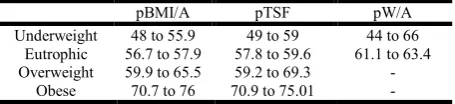
Table 3. Comparison of WC values (in cm) in relation to pBMI/A, pTSF and pW/A for male and female children
pBMI/A pTSF pW/A
Underweight 48 to 55.9 49 to 59 44 to 66
Eutrophic 56.7 to 57.9 57.8 to 59.6 61.1 to 63.4
Overweight 59.9 to 65.5 59.2 to 69.3 -
pBMI/A was 63.57 to 66.38 and for pTSF the values were 63.83 to 69.24. The WC could not be compared with the pW/A because there was no record of any overweight female child in terms of pW/A in this study. Analyzing the WC of obese children revealed pBMI/A values of 70.74 to 73.46. The analysis of the WC in relation to the pTSF showed values of 70.74 to 74.47. The WC could not be compared with pW/A due to the absence of any female child with obesity in relation to pW/A. Table 3 summarizes the values of WC in terms of the parameters of pBMI/A, pTSF and pW/A presented in Tables 1 and 2 for children of both sexes according to the nutritional classification.
DISCUSSION
In the last few decades, obesity has been identified in the literature as an important risk factor for the development of cardiovascular diseases (CVD). However, it is well known that this risk is aided and abetted by other factors, regardless of whether or not the individual is obese. These factors include the WC, which has been exhaustively shown in adults to participate in metabolic syndrome and which has, more recently, been identified as a risk factor in children and adolescents. Visceral fat accumulated in the abdominal perimeter is considered one of the most relevant risk factors for CVD, diabetes, cancer and other metabolic problems. Among the various methods to evaluate visceral fat, the WC measurement is the, simplest, easiest and most reliable one
(Costa Junior et al., 2015; Redfern et al., 2015;
Fernández-Barrés et al., 2016; Lee et al., 2016; Hatipoğlu et al., 2015). There are many difficulties to find out cut-off points to evaluate the WC in children because in this life phase it is necessary to consider age, height, sexual maturity stage
converging to a fast physical growth (Hur et al., 2015). In face
of these difficulties, this work considered age, sex, height and weight of the studied children to have more credible data to find the cut-off points to waste WC in children of both sexes aged 6 to 10. Based on the results listed in Tables 1 to 3, it was found that the correlation of the WC (WC) with the pTSF and W/A were not good parameters to evaluate the nutritional status of the children of this study, since there are variations in the value ranges among the different nutritional classification parameters. However, using the BMI/A, one can establish a range for female and male children’s WC (in centimeters) of 48 to 55 for underweight; 56 to 58 for eutrophic, 59 to 69 for overweight, and above 70 for obesity. The establishment of these values provides a reliable standard of nutritional classification based on a simple, fast and noninvasive measurement.
These data are useful for classifying children, since it is known that excessive body fat, especially in the abdominal perimeter, leads to the accumulation of lipids in tissues, particularly in the adipose tissue, muscles, liver and pancreatic β cells, which seem to induce the biochemical alterations that occur in
metabolic syndrome (Hur et al., 2015; Mårild et al., 2015;
Zardast et al., 2015; Hirschler et al., 2015). According to some
authors, not only adults but also children can suffer effects resulting from the so-called metabolic syndrome when they present abdominal-type fat distribution. This finding indicates that the early diagnosis of alterations in the accumulation of abdominal fat underlines the importance of possessing an easy measuring method for children, since it is a rapid method that
facilitates the work of the researcher in studies involving large numbers of individuals. Some studies show that the distribution of body fat can be checked by a variety of anthropometric procedures. The waist-hips ratio has been used for adults, but studies have shown that only the measurement of the WC can be a safer tool to determine central adiposity, including in children.
In central adiposity, the distribution of adipose tissue occurs preferentially at the level of the trunk, with increased
deposition in the intra-abdominal region (Harrison et al., 1998;
Fernández-Barrés et al., 2016; Lee et al., 2016; Hatipoğlu et
al., 2015; Monzani et al., 2016; Bahk et al., 2016; Hur et al.,
2015; Mårild et al., 2015; Zardast et al., 2015; Hirschler et al.,
2015; Juan et al., 2015). An analysis of the results obtained
with the children of the public schools in Lins showed a predominance of overweight and obesity for WC values in terms of the pBMI/A and pTSF, which is congruent with
studies on obesity by (Duncan et al., 2011) that found
overweight and obesity in a large sample of children and adolescents living in São Paulo (Brazil). These authors encountered a prevalence of 19.4% of boys and 16.1% of girls with overweight classification and 8.9% and 4.3% were obese.
Nihues et al., (2014), performed a review in order to identify
the prevalence of overweight and obesity in children and adolescents between 2 and 19 years old in different regions of Brazil and found a higher prevalence of overweight in the south (25.7%) and north (28.8%) of the country, and obesity in the southeast (15.4%) and south (10.4%). The cut-off points currently in use for classifying the WC were defined initially by Lean Han, Morrison, 1995. The cut-off points of the WC
associated with 25 kg/m2 and 30 kg/m2 BMI were identified.
To facilitate their use for clinical purposes and in public health programs, these cut-off points were described at two levels: level 1 (WC of > 80 cm for women and > 94 cm for men), where the individuals were classified according to their increased risk of obesity-related morbidities, and level 2 (> 88 cm for women and > 102 cm for men), where individuals were classified as at very high risk for CVD, morbid obesity and metabolic syndrome. In the case of children, this comparison can establish a cut-off parameter that would serve as a warning to seek the help of a health professional for the reduction of WC and hence of weight, in order to avoid future obesity-related morbidities and a more in-depth diagnosis of other risk factors, aiming to enhance the quality of life since childhood. The increase in levels of fat, as indicated by the WC values in relation to the pBMI/A, pTSF and pW/A, indicate that children may be accustomed to the consumption of food rich in fats and simple carbohydrates, associated with a sedentary lifestyle. This finding is corroborated by many studies, which shows that the comparison of anthropometric measurements and
frequency of energy balance disorders confirms a
predominance of nutritional disorders relating to excessive
food consumption, as well as little physical activity (Jean et
al., 2011; Pauline et al., 2015; Erik et al., 2011). In view of all
the results presented here, it is reasonable to suggest that a correlation between the WC and the pBMI/A, pTSF and pW/A was a good parameter to diagnose the nutritional status of 6 to 10-year-old children in the studied population, and that it can be used in clinical practice to aid the diagnosis of obesity and its correlation with the development of metabolic disorders. However, it is important to stress the need for further studies to establish cut-off points for abdominal WC that indicate the
child’s risk of developing disorders associated with the accumulation of abdominal adiposity in future life. Data such as those evaluated in this population demonstrate that increased adiposity indicates the need for early nutritional education programs, as well as changes toward a healthier lifestyle.
Acknowledgements
We are indebted to the directors of the schools who made this survey possible, and to all the professionals who participated directly and indirectly in this study.
Conflict of interests
Authors declare no conflict of interests related to this work.
REFERENCES
ABESO. Associação para o Estudo da Obesidade e da
Síndrome Metabólica, 2006. Available at http://www.
abeso.org.br/ artigos.htm.
Bahk, J., Khang, Y.H. 2016. Trends in childhood obesity and central adiposity between 1998-2001 and 2010-2012 according to household income and urbanity in Korea. BMC Public Health. Jan 7;16(1):18. doi: 10.1186/s12889-015-2616-2.
Buckley, J.P., Engel,S.M., Braun, J.M., Whyatt, R.M., Daniels, J.L., Mendez, M.A., Richardson, D.B., Xu, Y., Calafat, A.M., Wolff, M.S., Lanphear, B.P., Herring, A.H., Rundle, A.G. Prenatal phthalate exposures and body mass index among 4 to 7 year old children: A pooled analysis. Epidemiology. 2016 Jan 6
Costa Junior, D, Peixoto-Souza, F.S
.
, Araujo PN,Barbalho-Moulin MC, Alves VC, Gomes EL, Costa D. Influence of Body Composition on Lung Function and Respiratory Muscle Strength in Children With Obesity. J Clin Med
Res. 2016 Feb;8(2):105-10. doi: 10.14740/jocmr2382w.
Epub 2015 Dec 28.
Erik E. J. G. Aller, Itziar Abete, Arne Astrup, J. Alfredo
Martinez,MarleenA.vanBaak.Starches, Sugars and Obesity.
Nutrients. 2011 March; 3(3): 341–369. Published online 2011 March 14. doi: 10.3390 /nu3030341
Fernández-Barrés S, Romaguera, D., Valvi, D., Martínez, D., Vioque, J., Navarrete-Muñoz, E.M., Amiano, P., Gonzalez-Palacios, S., Guxens, M., Pereda, E., Riaño, I., Tardón, A., Iñiguez, C., Arija, V., Sunyer, J., Vrijheid, M. 2016. INMA Project. Mediterranean dietary pattern in pregnant women and offspring risk of overweight and abdominal obesity in early childhood: the INMA birth cohort study. Pediatr Obes. Jan 13. doi: 10.1111/ijpo.12092. [Epub ahead of print]
Fernández-Barrés, S., Romaguera, D., Valvi, D., Martínez, D., Vioque, J., Navarrete-Muñoz, E.M., Amiano, P., Gonzalez-Palacios, S., Guxens, M., Pereda, E., Riaño, I., Tardón, A., Iñiguez, C., Arija, V., Sunyer, J., Vrijheid, M. 2016. INMA Project. Mediterranean dietary pattern in pregnant women and offspring risk of overweight and abdominal obesity in early childhood: the INMA birth cohort study.Pediatr Obes. 2016 Jan 13. doi: 10.1111/ijpo.12092. [Epub ahead of print]
Halberstadt, J., van Strien, T., de Vet, E., Eekhout, I., Braet, C., Seidell, J.C. ?.
Harrison, G.G., Buskirk, E.R., Lindsay, C.J.E., Johnston, F.E., Lohman, T.G., Pollock, M.L., Roche AF, Wilmore JH. Skinfold Thicknesses and measuremente technique. Antropometric standardizations reference manual; 1998. p. 55-70.
Hatipoğlu N, Doğan S, Mazicioğlu M, Kurtoğlu S.
Relationship between Neck Circumference and
Non-alcoholic Fatty Liver Disease in Childhood Obesity. J Clin
Res Pediatr Endocrinol. 2015 Dec 18. doi: 10.4274/
jcrpe.2313. [Epub ahead of print]
Hirschler V, Molinari C, Maccallini G, Hidalgo M, Gonzalez
C. Waist Circumference Percentiles in Indigenous
Argentinean School Children Living at High Altitudes. Child Obes. 2015 Dec 24. [Epub ahead of print].
Hur YI, Park H, Kang JH, Lee HA, Song HJ, Lee HJ, Kim OH. Associations between Sugar Intake from Different Food Sources and Adiposity or Cardio-Metabolic Risk in Childhood and Adolescence: The Korean Child-Adolescent Cohort Study. Nutrients. 2015 Dec 31;8(1). pii: E20. doi: 10.3390/nu8010020.
IBGE. Ministerio do Planejamento, Orcamento e Gestao do Instituto Brasileiro de Geografia e Estatistica. Disponivel
em: http://www.ibge.gov.br/home/presidencia/noticias/
noticia_visualiza.php?id_noticia=1699
Jean A Welsh, Andrea J Sharma, Lisa Grellinger, Miriam B Vos. Consumption of added sugars is decreasing in the United States. Am J Clin Nutr. 2011 September; 94(3):
726–734. Published online 2011 July 13.
doi: 10.3945/ajcn.111.018366
Juan C. Aristizabal, Jacqueline Barona, Marcela Hoyos, Marcela Ruiz, Catalina Marín. Association between anthropometric indices and cardiometabolic risk factors in
pre-school children. BMC Pediatr. 2015; 15:
170. Published online 2015 November 6.
doi: 10.1186/s12887-015-0500-y
Lazorick S, Fang X, Crawford Y. The MATCH Program: Long-Term Obesity Prevention Through a Middle School Based Intervention. Child Obes. 2016 Jan 20. [Epub ahead of print]
Lean MEJ, Han TS, Morrison CE. Waist circumference as a measure for indicating need for weight management. B M J. 1995; 311:158-161.
Lee SK, Kim MK. Relationship of sodium intake with obesity among Koreanchildren and adolescents: Korea National Health and Nutrition Examination Survey. Br J Nutr. 2016 Jan 13:1-8. [Epub ahead of print]
Lee SK, Kim MK. Relationship of sodium intake with obesity among Koreanchildren and adolescents: Korea National Health and Nutrition Examination Survey.Br J Nutr. 2016 Jan 13:1-8. [Epub ahead of print]
Liu X, Chen G, Yan J, Luo J. Weight status and bullying
behaviors among Chinese school-aged children.
Child Abuse Negl. 2016 Jan 7;52:11-19. doi:
10.1016/j.chiabu.2015.12.010. [Epub ahead of print] Ma Y, He FJ, Yin Y, Hashem KM, MacGregor GA. Gradual
reduction of sugar in soft drinks without substitution as a strategy to reduce overweight, obesity, and type 2 diabetes: a modelling study. Lancet Diabetes Endocrinol. 2016 Jan 6.
pii: S2213-8587(15)00477-5. doi:
10.1016/S2213-8587(15)00477-5. [Epub ahead of print]
community based health-promotion programme in 2- to 9-year-old children in Europe on markers of the metabolic syndrome, the IDEFICS study. Obes Rev. 2015 Dec;16 Suppl 2:41-56. doi: 10.1111/obr.12368.
Monzani A, Rapa A, Prodam F, Fuiano N, Diddi G, Petri A,
Bellone S, Bona G. High Discrepancy in
Abdominal Obesity Prevalence According to
Different Waist Circumference Cut-Offs and Measurement Methods in Children: Need for Age-Risk-Weighted Standardized Cut-Offs? PLoS One. 2016 Jan 8;11(1): e0146579. doi: 10.1371/journal.pone.0146579. eCollection 2016.
National Center for Health Statistics (NCHS). Growth Curves for Children Birth – 2 to 20 years. National Center for Chronic Disease Prevention and Health Promotion; 2000. Niehues JR, Gonzales AI, Lemos RR, Bezerra PP, Haas P.
Prevalence of overweight and obesity in children and adole scents from theage range of 2 to 19 years old in Brazil. Int J Pediatr. 2014;2014:583207. doi: 10.1155/2014/583207. Epub 2014 Jun 3.
Norman Å, Nyberg G, Elinder LS, Berlin A. One size does not fit all-qualitative process evaluation of the Healthy School Start parental support programme to prevent overweight and obesity among children in disadvantaged areas in Sweden. BMC Public Health. 2016 Jan 14;16(1):37. doi: 10.1186/s12889-016-2701-1.
Pauline M. Emmett, Louise R. Jones. Diet, growth, and obesity development throughout childhood in the Avon Longitudinal Study of Parents and Children. Nutr Rev. 2015 October; 73(Suppl 3): 175–206. Published online 2015 September 22.doi: 10.1093/nutrit/nuv054 Pbert L, Druker S, Barton B, Olendzki B, Andersen V,
Persuitte G, Bram J, Kurtz S, Powers EM, Crawford S, Geller AC. Use of a FITLINE to Support Families of Overweight and ObeseChildren in Pediatric Practices. Child Obes. 2016 Jan 20. [Epub ahead of print]
Redfern J, Enright G, Raadsma S, Allman-Farinelli M, Innes-Hughes C, Khanal S, Lukeis S, Rissel C, Gyani A. Effectiveness of a behavioral incentive scheme linked to goal achievement: study protocol for a randomized controlled trial. Trials. 2016 Jan 16;17(1):33. doi: 10.1186/s13063-016-1161-3.
Rocca MS, Pecile V, Cleva L, Speltra E, Selice R, Di Mambro A, Foresta C, Ferlin A. The Klinefelter syndrome is associated with high recurrence of copy number variations on the X chromosome with a potential role in the clinical phenotype. Andrology. 2016 Jan 20. doi: 10.1111/ andr.12146. [Epub ahead of print]
Sobol-Goldberg S, Rabinowitz J, Gross R. School-based
obesity prevention programs: a meta-analysis of
randomized controlled trials. Obesity (Silver
Spring) 2013;21(12):2422–2428. doi:
10.1002/oby.20515. [PubMed] [Cross Ref]
Stephen, A. M Alles, C de Graaf, M Fleith, E Hadjilucas, E Isaacs, C Maffeis, G Zeinstra, C Matthys, A Gil. The role and requirements of digestible dietary carbohydrates in
infants and toddlers. Eur. J. Clin. Nutr. 2012 July; 66(7):
765–779. Published online 2012 April 4. doi: 10.1038/ ejcn.2012.27
The association of eating styles with weight change after an intensive combined lifestyle intervention for children and adolescents with severe obesity. Appetite. 2016 Jan 2. pii: S0195-6663(15)30140-9. doi: 10.1016/j.appet.2015.12.032. [Epub ahead of print]
WHO - World Health Organization. Physical Status: The use and interpretation of anthropometry. Geneva, 1995.
Zardast M, Namakin K, Chahkandi T, Taheri F, Kazemi T, Bijari B. Prevalence of Metabolic Syndrome in Elementary SchoolChildren in East of Iran. J Cardiovasc Thorac Res. 2015;7(4):158-63. doi: 10.15171/jcvtr.2015.34. Epub 2015 Nov 29.