Final Journeys 1&2
Evaluating an introductory training
course about care at the end of life
2
Table of Contents
Foreword ... 6
Executive Summary... 7
Acknowledgements ... 9
1 Introduction ... 10
1.1 Background ... 10
1.2 Description of the Final Journeys Programme... 11
1.2.1 Objectives of Final Journeys ... 11
Final Journeys One ... 11
Final Journeys Two ... 11
1.2.2 Establishing Final Journeys ... 12
1.2.3 The Standard Final Journeys Programme ... 13
1.3 Preparation Training for Facilitators ... 14
1.3.1 Facilitator Recruitment ... 14
1.3.2 Facilitator Preparation and Support ... 14
1.4 Objectives of this Review ... 15
2 Method ... 16
2.1 Method of Analysis of Final Journeys One and Two ... 16
2.1.1 Initial Feedback Forms ... 16
2.1.2 Postal Survey of Participants ... 16
2.2 Method for Facilitators ... 17
2.2.1 Initial Facilitator feedback forms ... 17
2.2.2 Postal Survey of Facilitators ... 17
2.2.3 Facilitators’ Workshop ... 18
3 Results ... 19
3.1 Participants ... 19
3.2 Analysis of Initial Feedback Forms ... 20
Comments from the Feedback Forms from Final Journeys 1 ... 20
Comments from the feedback forms from Final Journeys 2 ... 22
3.3 Facilitators ... 25
Experience and Training ... 26
Attendance of Facilitators at Final Journeys ... 27
4 Final Journeys – making a difference to awareness and communication around end of life care ... 28
3
4.2 Addressing the objectives of increasing awareness and making an impact on
ability to communicate around end of life issues ... 28
4.3. The impact of Final Journeys – intended and actual changes in care ... 29
4.3.1 Intended Change ... 29
4.3.2 Actual Changes ... 30
Factors that Helped and Hindered ... 32
4.4 Participants’ views of the Training Process (Postal Survey) ... 33
4.5 Developing and Improving Final Journeys ... 35
5 Final Journeys - Developing and supporting facilitators for the Final Journeys Training Programme ... 37
5.1 Facilitators’ Overall View of the Final Journeys Facilitator Preparation ... 37
Course Content and Delivery ... 37
5.2 Preparation, skills and resources required to facilitate Final Journeys ... 38
Supports ... 39
5.3 Experience of facilitating Final Journeys ... 40
Factors that Helped and Hindered ... 41
5.4 Facilitators’ and Potential Facilitators’ Needs ... 42
Workshop Findings ... 42
Preparation ... 42
Staff Release... 43
Learning Styles ... 43
Course Promotion ... 44
Supports ... 44
Course Materials ... 45
Workshop Overview ... 45
6 Summary and Conclusion ... 46
6.1 Participants ... 46
6.2 Facilitators ... 46
6.3 Content and Delivery ... 47
6.4 Does Final Journeys achieve its objectives? ... 48
6.5 Conclusion ... 48
Appendices ... 49
Appendix 1-Initial Feedback Forms... 49
Appendix 2-Table of Occupation by Hospital (Participants) ... 51
Appendix 3- Table of Occupation by Hospital (Facilitators) ... 53
4
5
List of Figures
Figure 1-Geographical spread by HSE region of course participants ... 20
Figure 2- Experience and Training of Facilitators ... 26
Figure 3-Types of Previous Experience and Training ... 26
Figure 4- Change in Awareness... 28
Figure 5- Impact on ability to communicate ... 29
Figure 6- Did the course change interactions with patients? ... 30
Figure 7- Did the course change interactions with families? ... 31
Figure 8- Did the course change interactions with staff? ... 31
Figure 9- Did you have no problem getting time off? ... 33
Figure 10- Did you attend in your personal time? ... 33
Figure 11- Did you have a clear understanding? ... 33
Figure 12- Participants' views on programme features ... 34
Figure 13- How participants rated the duration of Final Journeys... 35
Figure 14- Facilitators’ opinions on Course Materials ... 38
Figure 15- Facilitators’ opinions on Group facilitation ... 38
Figure 16- Facilitators’ reflections on Resources and Support. ... 39
Figure 17-Facilitators’ views on Preparation ... 41
List of Tables
Table 1- Participant Numbers by Occupation ... 13Table 2- Facilitator Numbers by Occupation ... 14
Table 3- Participants by Workplace and Occupation & Response Rates ... 19
Table 4-Ratings of Final Journeys 1 ... 22
Table 5-Ratings of Final Journey 2 ... 24
Table 6- Facilitators by Workplace and Occupation & Response Rates ... 25
Table 7- Participants’ Overall view of Final Journeys ... 28
Table 8- Facilitators’ Overall view of Final Journeys ... 37
6 Foreword
Final Journeys 1& 2 was yet another ambitious programme launched by the Hospice Friendly Hospitals (HFH) team of the Irish Hospice Foundation (IHF) in partnership with the Health Service Executive (HSE). Its highly focused educational aim was to enable healthcare staff and volunteers to become more confident, competent and comfortable in addressing end-of-life issues with patients, their families and fellow members of staff. The programme required meticulous planning and supervision by the HFH Programme Team. It involved a massive logistical exercise that saw participation by 623 healthcare personnel at 49 sessions, involving up to 201 volunteer facilitators between September 2010 and May 2011.
Given the scale of such an innovative educational programme the Project Advisory Group in the IHF wisely decided to have an expert external evaluation of the programme to determine how well it met its stated goals and what additional modifications and developments were required to continue the roll out of Final Journeys 1&2 on a nationwide scale. As a result, Ms. Alanna Byrne and Ms. Olivia Murphy of the University College Dublin (UCD) PACE-R Programme undertook a detailed professional evaluation of the programmes. Their perceptive and scholarly evaluation is contained in this report. The conclusions they arrive at make for encouraging reading. Based on their analysis of detailed questionnaires, they reported very high satisfaction ratings for both modules – Final Journeys 1&2.They commented particularly on the beneficial impact the educational courses had on a heightened awareness of end-of-life issues and enhanced skill levels, as reported by the participants. Just as importantly, the analysis collated the rich feedback material that dealt with suggested improvements in the course for the future. The narrative material in the feedback also clearly conveyed a sense of the enthusiasm of the participants for such courses and a wish that periodic reinforcing refresher sessions would occur in the future.
All of this analysis will be of immense value to the Irish Hospice Foundation – particularly in reviewing the programme content, the modalities of educational delivery and the training issues highlighted in this report. Ultimately, the two main challenges will be; 1. to ensure the main-streaming of these and similar programmes so as to reach every
healthcare practitioner involved in end-of-life care nationwide and
2. to ensure a sustainable educational model that will stand the test of time.
Particular thanks must go to Alanna Byrne and Olivia Murphy who conducted the evaluation with academic rigor and whose commentary was so perceptive. Mr. Bryan Nolan of the HFH Programme Team was the superb and tireless Communications Co-ordinator for the programme and he co-facilitated many of the courses evaluated. Thanks must also go to all the enthusiastic facilitators who put in so much work to facilitate Final Journeys on the ground, and finally, to all the participants, particularly those who responded to the questionnaires and gave such insightful and valuable feedback.
___________________________ Professor MX FitzGerald MD FRCP
7
Executive Summary
“Hospice can work anywhere; I only need to have enthusiasm to implement love, and a caring and empathetic environment.”
Final Journeys 1&2 Participant Background and Methodology
In September 2010 the Hospice Friendly Hospitals Programme launched Final Journeys 1&2; an introductory programme aimed at enhancing the quality of interactions between patients at end of life, their families and hospital staff. A review of Final Journeys 1&2 was carried out over an 8-week period to evaluate if the course content and delivery mode enables the course to meet its objectives. A Project Advisory Group was established within the Irish Hospice Foundation to oversee the review. Two independent researchers were invited to conduct the review with supervision from UCD through the PACE-R programme.
Material from 49 sessions of Final Journeys 1&2 (623 people) was analysed. This included
Feedback forms (completed immediately after Final Journeys 1&2 by participants)
Postal survey of participants Postal survey of facilitators
Feedback from workshop with facilitators
Feedback from workshop with Hospice Friendly Hospitals Programme team Epi Info was used to analyse data gathered in the evaluation of Final Journeys 1&2. A thematic framework was used to collate comments from open ended questions on the initial feedback forms and surveys. Statistical data was also generated as part of the evaluation.
Summary of Results Participants
Participants included a wide variety of staff including, AHPs, Administrative staff, Chaplaincy and Pastoral Care, HCAs, Nursing and Support staff. The initial feedback forms showed that 100% of participants rated Final Journeys 1 as Excellent and 99.5% of participants rated Final Journeys 2 as Excellent or Good. The opportunity for group discussions and the use of DVD material was reported as being useful. Final Journeys positively affecting an individual’s awareness of issues about death and dying was reported by 93% of participants and 92% of participants said that Final Journeys had an impact on their ability to communicate with patients and families at end of life.
8
The content of the course was reported as Excellent or Good in almost all of the responses received. Most participants completed Final Journeys as part of a ‘mixed group’ i.e.; with colleagues from a variety of disciplines/areas in the hospital. Participants found this lead to more interesting and informative discussion where they learned from each other’s experiences of end-of-life care.
Facilitators
Just over 60% of facilitators reported previous experience and training in facilitation. 100% of Facilitators reported their experience of Final Journeys as either Excellent or Good, with positive reports also on course materials. These resources, in particular the facilitator pack and the support offered by the HFH Co-facilitator were identified as factors which played a major role in facilitators feeling prepared for facilitating Final Journeys.
On-going support from the HFH Programme was identified as a key to the successful roll out of the Programme, as well as staff release from facilitators own organisations/hospitals. The creation of a National Facilitators Network was identified as a possible mechanism for providing support and facilitation training. For those Facilitators who have not facilitated session(s) the main factor identified was that ‘the opportunity has not arisen’.
Summary of Conclusions/Recommendations
This review has shown that Final Journeys 1&2 is meeting its objectives of enabling staff to become more, confident, competent and comfortable in end-of-life care and end of life communication. The course material assists in meeting the objectives and some minor opportunities to adjust the course material have been identified by the review.
Of the returned surveys 93% of respondents reported an increase in awareness of death and dying and 92% reported an increase in the ability to communicate with patients and families. In order for these objectives to continue to be met, facilitators need on-going support. Facilitators are concerned that the skills they developed through Final Journeys will diminish if more opportunities to facilitate do not arise. This review has illustrated that Final Journeys 1&2 is promoting a culture of awareness about end-of life care and supporting the development of good communication skills in end-of-life care.
________________________________________
Project Advisory Group-Final Journeys Evaluation Irish Hospice Foundation
9
Acknowledgements
This review has been developed with the support and advice of individuals within both University College Dublin and The Irish Hospice Foundation. We wish to extend our gratitude to all those involved especially those mentioned below.
Philip Larkin, Associate Professor, UCD School of Nursing, Midwifery and Health Systems.
Amanda McCann, Senior Lecturer, UCD School of Medicine and Medical Science.
Orla Keegan, Head of Education, Research and Bereavement Services, IHF.
Jackie Crinion,Training & Development Advisor, IHF.
Mary Bowen,Operations Manager, Hospice Friendly Hospitals Programme, IHF.
Grace O'Sullivan,Development Support, Hospice Friendly Hospitals Programme, IHF.
We would like to acknowledge all who partook in Final Journeys 1&2, with our sincere appreciation for those who completed the surveys and those who attended workshops.
We would also like to thank The Health Research Board for funding part of this project.
________________________________________
Alanna Byrne & Olivia Murphy
10
1 Introduction
1.1 Background
Final Journeys 1&2 is an introductory programme aimed at enhancing the quality of the interactions between patients at end of life, their families and hospital staff. It was devised by the Hospice Friendly Hospitals (HFH) Programme in association with the Health Service Executive (HSE). Final Journeys consists of two modules. The aim
of Final Journeys 1: Developing Awareness in End-of-Life Care is to develop a culture
of awareness of end-of-life care among all staff. The aim of Final Journeys 2:
Developing Communication Skills in End-of-Life Care is to support the development
of communication skills in end-of-life care for staff in direct contact with patients and their families.
11
1.2 Description of the Final Journeys Programme
1.2.1 Objectives of Final Journeys
Final Journeys One
The purpose of Final Journeys One is to promote a culture of awareness about end-of-life care.
The objectives of Final Journeys One are to enable staff to become more Confident,
Competent and Comfortable regarding end-of-life care.
The content of the course incorporates;
The context of end-of-life care e.g. ‘What are the main causes of death in Ireland?’ ‘Where do most people die?’
The culture of end-of-life care e.g. ‘What would I want for myself at the end of life?’ ‘What do we mean by hospice approach?’
Care after death e.g. ‘What happens in our hospital?’ (Policies, mortuary staff, checklists etc.)
A closing with summary, key messages and feedback. Final Journeys Two
The purpose of Final Journeys Two is to support the development of good communication skills in end-of-life care.
The objectives of Final Journeys Two are enable staff to become more Confident,
Competent and Comfortable in end of life communication.
The content of the course incorporates;
Context e.g. ‘What is my role in communicating with patients at end of life and their families?’
Skills (Communication impact; physical, voice, words). Open and sensitive communication in end-of-life care.
The red and green platform (‘How we see ourselves determines how we feel and how we act’).
12 1.2.2 Establishing Final Journeys
In order to introduce the Final Journeys programme within hospitals, a key coordinator of Final Journeys within the hospital is established. This may be either a HFH team member or an appropriate staff member with whom a link may already have been forged through a HFH initiative. This coordinator then invites certain staff members to the first session. The people they invite may be people who previously participated in HFH programmes, in particular the ‘Train the Trainer’ communication skills course. This initial participant session is attended by staff who will potentially become facilitators for Final Journeys. After this initial participant session, the hospital sets dates for the Final Journeys programme and then advertises the courses within the hospital. The ideal number of participants per session is between ten and fourteen and a mix of hospital staff is recommended.
13
1.2.3 The Standard Final Journeys Programme
The standard Final Journeys session starts at 8.30am, there are 2 facilitators and between 10 and 14 staff attending. Final Journeys One is usually completed by 1pm including a 20 minute coffee break. Final Journeys Two commences after a 40 minute break for lunch. This section usually finishes by around 4.30pm with a small stretch break during the afternoon if required.
The courses are highly interactive using a variety of delivery modes including group work, discussion, scenarios, role plays and facilitator presentation. Participants are provided with learning logs to note their reflections throughout the day. They are encouraged to reflect on their key learning and how to apply it in their workplace. At the end of each course, the participants complete feedback forms which are retained by the healthcare site and a copy is sent to the HFH programme office in Dublin. Hand-outs are provided to remind participants of course content. Leaflets about support services and resources available within the hospital are also available from the facilitators. (Feedback forms are included in the Appendix 1)
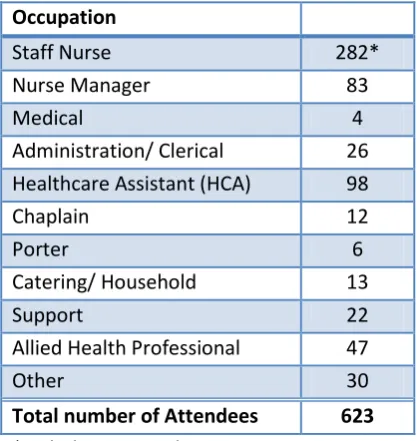
[image:14.595.84.293.446.667.2]Over the 49 session of Final Journeys run between 1st September 2010 and 1st May 2011, there were 623 participants; grouped by occupation below in Table 1. Participant numbers by occupation and by hospital can be found in Appendix 2.
Table 1- Participant Numbers by Occupation
Occupation
Staff Nurse 282*
Nurse Manager 83
Medical 4
Administration/ Clerical 26 Healthcare Assistant (HCA) 98
Chaplain 12
Porter 6
Catering/ Household 13
Support 22
Allied Health Professional 47
Other 30
Total number of Attendees 623
14 1.3 Preparation Training for Facilitators
1.3.1 Facilitator Recruitment
Final Journeys 1&2 are usually co-facilitated by two people with experience of facilitating groups in a workshop format. Facilitators are approached by the HFH team or nominated locally from existing staff already skilled and/or experienced in this kind of work. It is not a train-the-trainer programme. One source of facilitators is trainers from a previous HFH ‘Train the Trainer’ communication skills course and suitably experienced candidates that have links with the HFH Programme. Another source is the range of tutors, trainers and facilitators currently working in the health system, particularly in Centres for Nurse and Midwifery Education.
1.3.2 Facilitator Preparation and Support
Potential facilitators are initially invited to take part in the Final Journeys programme to explore if facilitation of Final Journeys is something they would consider. Facilitators then receive a Facilitator’s pack if they wish to facilitate the programme. This pack includes the presentation slides, slide notes, DVD clips and hand-outs as well as a practical step by step guide to running & facilitating Final Journeys. HFH Programme personnel work with local facilitators at the initial implementation stage to familiarise them with the courses. They also provide a ‘buddy’ system of co-facilitation until facilitators are comfortable with delivery. Facilitators who have facilitated Final Journeys are described as active facilitators; those who have not yet facilitated are referred to as potential facilitators.
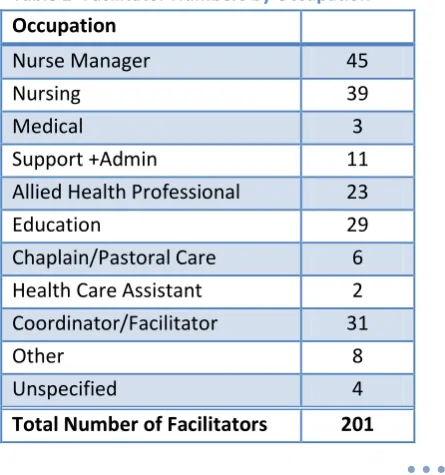
[image:15.595.84.307.541.779.2]The total number of facilitators (active and potential) recruited between the 1st September 2010 and 1st May 2011 is outlined in the table below by occupation. Facilitator numbers by occupation and by hospital can be found in Appendix 3.
Table 2- Facilitator Numbers by Occupation
Occupation
Nurse Manager 45
Nursing 39
Medical 3
Support +Admin 11
Allied Health Professional 23
Education 29
Chaplain/Pastoral Care 6
Health Care Assistant 2
Coordinator/Facilitator 31
Other 8
Unspecified 4
15 1.4 Objectives of this Review
This review is being conducted to establish both quantitative and qualitative information on the implementation of Final Journeys 1&2 from 1st September 2010 to 1st May 2011. A Project Advisory Group was established within the HFH Programme to coordinate the review. Alanna Byrne and Olivia Murphy, researchers from UCD, were invited in to conduct the evaluation. This ensured the objectivity of the report as they had no previous link with the HFH Programme or the IHF and had not previously participated in Final Journeys.
16
2 Method
2.1 Method of Analysis of Final Journeys One and Two
2.1.1 Initial Feedback Forms
From the 49 courses run from the 1st September 2010 until the 1st May 2011, there were 623 participants and 201 facilitators who attended Final Journeys. (The 201 facilitators first attended the course as participants.) Initial Feedback Forms are completed immediately after each of Final Journeys1&2. The Feedback Forms are stored on site and copies are sent to the HFH office for review. From the 1st September 2010 to the 1st May 2011, 926 Feedback Forms were sent to the HFH office. Of these, 493 were Feedback Forms from Final Journeys One and 433 were from Final Journeys Two. The participants were asked four open ended questions on each form that gave their overall views on the course.
2.1.2 Postal Survey of Participants
The postal survey of participants was designed to obtain feedback on Final Journeys content, outcomes of the course and the demographics of those attending the course. There were also sections on the surveys asking the participants to highlight any changes or improvements that they would like to see for Final Journeys.
The Project Advisory Group issued a letter on 3rd June 2011 to all Chairs of Standing Committees and Key Coordinators of Final Journeys in hospitals linked to the HFH Programme, to inform them of the evaluation of Final Journeys. In this letter it was outlined that a postal survey of participants and facilitators would be conducted and a workshop for facilitators would take place.
17 2.2 Method for Facilitators
2.2.1 Initial Facilitator feedback forms
When facilitators initially attended Final Journeys they filled out the participant feedback forms immediately after the course, even though they attended the course with the aim of becoming a facilitator. The facilitator feedback was captured with the participant feedback and there is no way of distinguishing between them. The Feedback Forms do not include specific references to facilitation of the course. Perhaps a feedback form focused on capturing the potential challenges and required supports of the facilitators could be a way of resolving this issue. In some cases, it was evident that the feedback forms were from those that were intending to become facilitators. These forms mentioned that they would like the day to include “more on the how-to of facilitating” and practice scenarios of difficult situations which may arise while they are facilitating.
2.2.2 Postal Survey of Facilitators
The survey of facilitators was designed to obtain feedback on course content, delivery methods, documentation and resources. The survey (Appendix 5-Facilitators Survey) was aimed at gathering information about the facilitator’s background and/or previous experience of facilitation, their thoughts on course content/delivery and course resources, as well as their opinions on familiarisation with Final Journeys 1&2, follow-up support and whether or not they went on to deliver the courses. The Final Journeys Project Advisory Group drew up a survey and piloted it at the meeting of the Facilitators’ Network in the Dublin North-East HSE region on the 12th May 2011.
The final surveys were posted to the work addresses of all facilitators, both active and potential, recruited during the period 1st September 2010 to 1st May 2011. The questionnaire was accompanied by an information sheet and a stamped addressed envelope for return to Alanna Byrne at the Irish Hospice Foundation. This was to ensure that the surveys were returned directly to the researcher and not to the HFH programme staff.
18 2.2.3 Facilitators’ Workshop
A workshop/focus group was conducted with facilitators on 19th July 2011 to explore in more depth the issues emerging regarding course content, methods, documentation, resources and issues related to delivering the courses.
The invite to the workshop was included with the cover information sheet that was posted with the survey. A reminder was also included in the email sent to all facilitators.
19
3 Results
3.1 Participants
In the database there were 623 people who had participated in Final Journeys 1, Final Journeys 2 or both. 146 surveys were returned in time to include them in the analysis and 6 returned too late to be included. The response rate was 24%.
Reasons for a low response rate could be that the questionnaires never reached their intended recipient once they entered the hospital. The recipients may also have been on annual leave, moved departments or ceased working in the hospital.
Table 3- Participants by Workplace and Occupation & Response Rates
Workplace
Number Of Participants
Survey Responses
Percentage Response
Acute Hospital 453 107 24%
Community Hospital 120 18 15%
Other 50 15 30%
Unspecified 0 6
Occupation
Staff Nurse* 282* 62 19%
Nurse Manager 83 36 43%
Medical 4 0 0%
Administrative 26 5 19%
Healthcare Assistant 98 15 15%
Chaplain 12 0 0%
Porter 6 0 0%
Catering/ Household 13 1 8%
Support 22 4 18%
Allied Health Professional 47 18 38%
Other 30 1 3%
Unspecified 0 4
Total 623 146 23%**
*Includes one student nurse.
20
Figure 1-Geographical spread by HSE region of course participants
3.2 Analysis of Initial Feedback Forms
Comments from the Feedback Forms from Final Journeys 1
1. What did you find most useful?
The participants were asked what they found to be the most useful aspects of the course. The most mentioned aspects included;
Group discussions (views from other disciplines).
Topics covered e.g. “What I would like?”- the Holistic approach. All of the DVD clips.
Other things mentioned included;
“Learning how I can make a difference”. The End of Life Symbol.
21 2. How could the course be improved?
The participants were asked what they would like to see improved on the course and the most frequently occurring aspects included;
Give more resources at the end for participants to take away to remind them of the course content.
Tailor the course to suit specific staff groups e.g. Paediatrics, Midwifery and Intellectual Disability nurses.
More DVDs.
The length of the course was commented on regularly with a lot of people saying that it should be shorter but with even more people saying that it should be made longer. This question was not asked directly in the initial feedback forms, therefore the figures saying that the course is either too short or long are not statistically meaningful. This was followed up in the postal survey with a specific question on the length of the course.
Other comments made included;
Give more time to letting staff share their experiences. Learn more practical ways of dealing with a dying patient. More role play.
The course should provide suggestions for policy and procedure. Get to work with different people in each small group session.
3. Following on from today, what will you do differently in your own area of work?
The areas most commonly identified by the participants regarding what they will do differently in their area of work included;
An increase of respect for the patient and family (awareness of the importance of dignity, privacy etc.)
Working to improve overall end-of-life care, involving all staff members to improve the experience for the patient and family.
Communicate better with patients and families.
Getting actively involved and helping where possible by giving advice and support.
Other suggestions included;
Awareness of the needs of staff.
“Give more of my time to patients and families”.
22
4. Do you have any other comments or suggestions?
The comments most frequently mentioned were;
Give the course to all staff dealing with end-of-life care (more diverse, include doctors).
Follow-up/refresher course.
Provide the course at undergraduate level.
It would be useful to include a tour of the mortuary facilities.
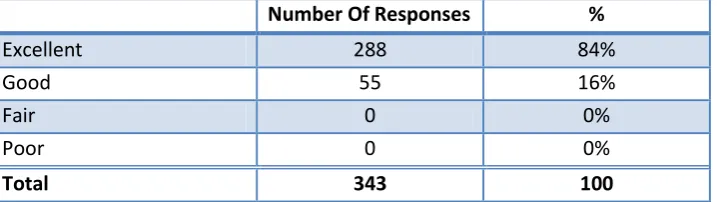
[image:23.595.89.448.317.418.2]Of the 493 Initial Feedback Forms, 343 (70%) had a section asking the participants to rate the course as Excellent, Good, Fair or Poor. 100% of participants rated Final Journeys 1 as excellent or good.
Table 4-Ratings of Final Journeys 1
Number Of Responses %
Excellent 288 84%
Good 55 16%
Fair 0 0%
Poor 0 0%
Total 343 100
Comments from the feedback forms from Final Journeys 2
1. What did you find most useful?
The participants were asked what they found to be the most useful aspects of the course. The most mentioned aspects included;
Communication skills learned e.g. body language and active listening. Group discussion and interaction across disciplines.
Role play e.g. how to diffuse a difficult situation. DVDs.
How to deal with conflict. Other aspects mentioned included;
An understanding of different cultures.
“Awareness of my own circumstances in my work area and how to improve them.”
23 2. How could the course be improved?
The participants were asked what they would like to see improved on the course and the things that came back most frequently included;
More role playing and sharing of experiences. Allow more time for Final Journeys 2.
Give more actual situations/ experiences/ difficult questions. More audio and visual aids.
Tailor the course to specific staff groups e.g. paediatrics. Other improvements suggested included;
Different speakers coming in to talk e.g. palliative care, family member. Shorter course.
More breaks.
Visit to the mortuary.
3. Following on from today, what will you do differently in your own area of work?
The suggestions most commonly given by the participants regarding what they will do differently in their area of work included;
Be a better communicator (active listening, aware of body language).
Be more confident when dealing with end of life issues including families and answering difficult questions.
“Pass on the things I learned to my colleagues”. “Take my time when dealing with a patient”.
Awareness of my actions and how they may affect the feelings of staff and/ or families.
Think positively (green platform exercise). Other suggestions included;
“Evaluate what I can do to enhance the experience for the client”. Increased awareness of different cultures and needs.
Being an advocate for the patient.
24
4. Do you have any other comments or suggestions?
The comments most frequently mentioned were;
The course should be given to all staff involved in end-of-life care. A follow-up/refresher course.
“I will be more comfortable and confident with end of life issues.” Allow more time to fill out the feedback forms.
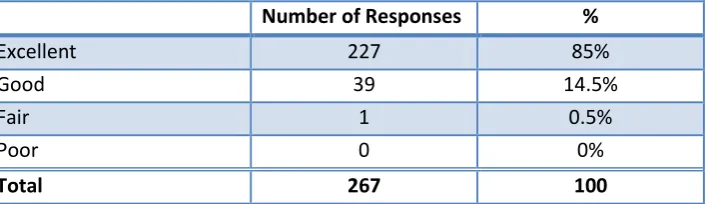
[image:25.595.92.447.294.396.2]Of the 433 Initial Feedback Forms, 267 (62%) had a section asking the participants to rate the course as Excellent, Good, Fair or Poor. Over 99% of participants rated Final Journeys 2 as excellent or good.
Table 5-Ratings of Final Journey 2
Number of Responses %
Excellent 227 85%
Good 39 14.5%
Fair 1 0.5%
Poor 0 0%
25 3.3 Facilitators
201 surveys were distributed by post, 3 were returned undelivered, a further 3 people responded saying that they had received the survey in error and they were not facilitators and 4 were returned past the deadline, bringing the total number to 191. 77 completed surveys were returned giving a response rate of just over 40%. Detailed in the table below are the respondent numbers relative to location and occupation.
Table 6- Facilitators by Workplace and Occupation & Response Rates
Workplace
Number of Facilitators
Survey Responses
Percentage Response
Acute Hospital 120 49 41%
Community Hospital 45 15 33%
CNME 15 3 20%
Education 13 5 38%
Hospice 6 2 33%
Other 2 2 100%
Unspecified 0 1
Occupation
Nurse Manager 45 26 58%
Nursing 39 11 28%
Medical 3 1 33%
Support +Admin 11 6 55%
Allied Health Professional 23 10 43%
Education 29 7 24%
Chaplain/Pastoral Care 6 3 50%
Health Care Assistant 2 1 50%
Coordinator/Facilitator 31 8 26%
Other 8 3 38%
Unspecified 4 1 25%
Total 201 77 38%*
26 Experience and Training
The facilitators were asked if they had any previous experience in facilitation or any training and/or qualification as a facilitator, teacher or tutor. The results can be seen in the charts below. Over 60% of facilitators said they have both experience and training in the area. The questions on experience and training were asked separately on the survey yet many respondents combined there answers leading to difficulties in analysing them separately.
Figure 2- Experience and Training of Facilitators
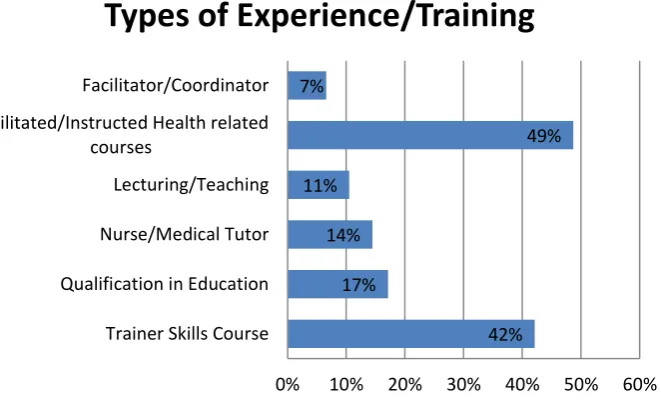
[image:27.595.110.441.513.713.2]When asked to describe the experience and training the most common answers can be seen in Figure 3 below.
Figure 3-Types of Previous Experience and Training
61% 16%
5% 18%
Experience and Training
Experience and Training Experience Alone Training Alone Neither
42% 17%
14% 11%
49% 7%
0% 10% 20% 30% 40% 50% 60% Trainer Skills Course
Qualification in Education Nurse/Medical Tutor Lecturing/Teaching Facilitated/Instructed Health related
courses
Facilitator/Coordinator
27 Attendance of Facilitators at Final Journeys
28
4 Final Journeys – making a difference to awareness and
communication around end of life care
4.1 Participants’ Overall view of Final Journeys
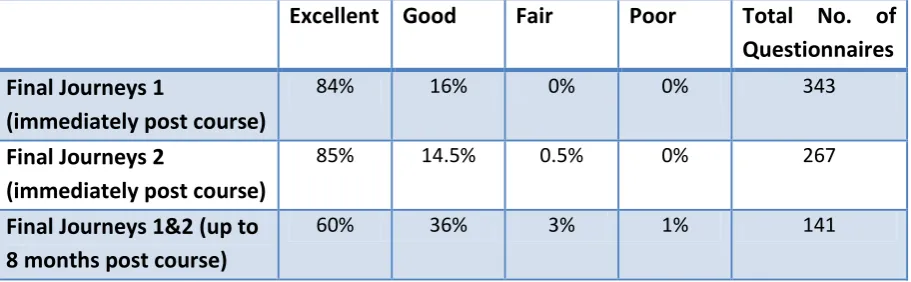
[image:29.595.87.543.270.411.2]Overall ratings of the Final Journeys programmes showed that the vast majority of people who participated in the course thought that it was excellent when asked to fill out a feedback form immediately after the course. The number of participants who rated the courses as excellent a period of time (1-8 months) after the course was reduced.
Table 7- Participants’ Overall view of Final Journeys
Excellent Good Fair Poor Total No. of Questionnaires Final Journeys 1
(immediately post course)
84% 16% 0% 0% 343
Final Journeys 2
(immediately post course)
85% 14.5% 0.5% 0% 267
Final Journeys 1&2 (up to 8 months post course)
60% 36% 3% 1% 141
4.2 Addressing the objectives of increasing awareness and making an impact on ability to communicate around end of life issues
‘Did Final Journeys have any impact on your awareness of issues about death and
dying?’
Figure 4- Change in Awareness
0% 10% 20% 30% 40% 50% 60%
much more aware
more aware the same less aware much less aware
[image:29.595.132.456.532.713.2]29
This shows that in general participants found that the courses positively affected their awareness of issues about death and dying as 93% of participants said that Final Journeys made them more aware or much more aware of the issues around death and dying.
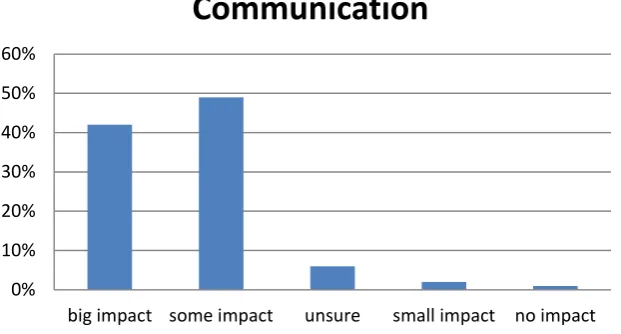
‘Did Final Journeys have any impact on your ability to communicate with patients and
[image:30.595.132.443.205.372.2]families at end of life?’
Figure 5- Impact on ability to communicate
It is evident again that most people reported an impact on their ability to communicate with 92% of people saying that Final Journeys had a big impact or some impact on their ability to communicate.
4.3. The impact of Final Journeys – intended and actual changes in care
4.3.1 Intended Change
In the initial participant feedback forms, there was an open ended question asking the participants about the changes they intended to make in their own area of work. The suggestions most commonly given by the participants after Final Journeys 1 regarding what they will do differently included;
An increase of respect for the patient and family (awareness of the importance of dignity, privacy etc.).
Working to improve overall end of life care, involving all staff members to improve the experience for the patient and family.
Communicating better with patients and families.
Getting actively involved and helping where possible, by giving advice and support.
0% 10% 20% 30% 40% 50% 60%
big impact some impact unsure small impact no impact
30 Other suggestions included;
Awareness of the needs of staff.
“Give more of my time to patients and families.”
“Make myself more aware of what happens next” (post death procedures). Be more comfortable and confident when dealing with difficult situations. The suggestions most commonly given by the participants after Final Journeys 2 regarding what they will do differently included;
Be a better communicator (active listening, aware of body language).
Be more confident when dealing with end of life issues including families and answering difficult questions.
Pass on the things I learned to my colleagues. Take my time when dealing with a patient.
Aware of my actions and how they may affect the feelings of staff and/ or families.
Think positively (green platform exercise). Other suggestions included;
“Evaluate what I can do to enhance the experience for the client.” Increased awareness of different cultures and needs.
Being an advocate for the patient.
More use of a multidisciplinary approach. 4.3.2 Actual Changes
In the postal survey, the participants were asked if they had changed any aspect of their interactions with patients, families and staff. 141 participants answered the question about patients and families and 135 answered about changes with staff. Most people reported that they had changed in these aspects. The details of these changes are outlines below.
Changes around how I interact with patients
72% of people who were asked if the course changed the way they interact with patients said that it did.
The main changes described included an increase in confidence around the area of end-of-life care. This led to more interaction with the patients and more time given by the staff to listen to the patients and answering their queries.
yes 72% no
28%
31
Also an increase in sensitivity was widespread, with the participants now more aware of the quality of life issues and needs including dignity and privacy. Other comments described how the staff now treat the patient holistically, being aware of nonphysical issues. Better communication skills were also noted with the participants using their new active listening skills and better body language.
Changes around how I interact with families
72% of people who were asked if the course changed the way they interact with families said that it did.
The main changes described again included an increase in confidence which led to more interaction with the families and more time spent listening to them and explaining things to them. Better communication with active listening and improved body language also helped this interaction.
The participants also noted that they were more empathetic and attended to family needs by giving support, both practical and emotional, and giving advice regarding post death preparations. Participants were more aware of respecting the family’s opinions and wishes, keeping them informed and involved. They were conscious of the different dynamics that may exist between families.
Changes around how I interact with staff
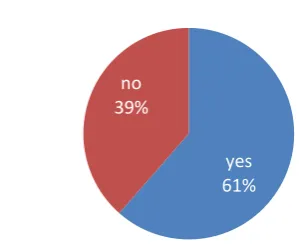
61% of people who were asked if the course changed the way they interact with staff said that it did.
The main changes described included an increased awareness of the needs, issues and feelings of the other staff. Reflective practice and better communication have been noted as a way of helping others. Participants include more people in the sharing of information about a patient and their care.
yes 72% no
28%
yes 61% no
[image:32.595.92.260.200.345.2]39%
Figure 7- Did the course change interactions with families?
[image:32.595.94.244.550.675.2]32
A more multi-perspective approach is also being used in end-of-life care. Participants said that they passed on what they learned to their colleagues and encouraged all to be more respectful on a ward where a death has occurred.
Factors that Helped and Hindered
The participants were then asked to identify what factors helped or hindered them in applying the course to their area of work.
What factors helped you in applying your learning from this course?
The factors that the participants identified that helped them the most when applying the course to their work place were;
Support from colleagues and managers, especially from those that had also participated in Final Journeys.
“Applying what I learned and sharing it with others.” Improved communication skills.
Confidence gained that allowed more interaction with patients, families and staff.
Implementation of resources (e.g. end of life symbol, ward alter). Other factors mentioned were;
Being more aware of people’s feelings. Debriefing sessions/ reflective practice. Delegation of work load.
What factors hindered you in applying your learning from this course?
The factors that the participants identified as hindering them the most in applying the learning from the course were;
Time constraints (to attend to the patients and to implement changes). Lack of staff.
Limited situations to which the course applies.
Not enough staff attended the course/ lack of awareness. Privacy issues/ not enough single rooms.
Other factors mentioned were;
Patients not told their diagnosis on time. Financial constraints.
33
4.4 Participants’ views of the Training Process (Postal Survey)
The participants were asked if they had no problem getting time off to attend the course 133 participants answered this question and for most people it did not pose a problem.
The participants were then asked if they attended in their own personal time, 117 answered and again most people did not which shows support within the hospitals in facilitating staff to attend Final Journeys.
The postal survey asked if the participants had a clear understanding of what the course involved before they arrived. 127 participants answered this question. A significant percentage of people did not have a clear understanding. This illustrates a problem with the advertising of the course within the hospitals or a situation where staff are instructed to go on the course by senior staff without being given any information about the course.
yes 83% no 17%
yes 23%
no 77%
yes 56% no
44%
Figure 9- Did you have no problem getting time off?
Figure 10- Did you attend in your personal time?
34
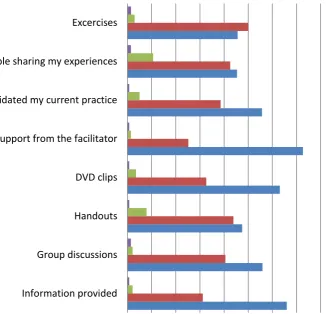
[image:35.595.164.491.147.461.2]As Final Journeys is designed to incorporate experiential learning, discussion and exercises it was important to find out how participants viewed this type of learning event. The graph below gives participants’ views on specific features of the programme.
Figure 12- Participants' views on programme features
Role Play
In the postal survey, 68% said they took part in role play as part of the course and 32% said they did not. Only 3 people had negative comments about the experience saying that it was unhelpful, uncomfortable or badly done.
The other comments were very positive with people saying that they found it very useful, it highlighted issues and let you “step into the shoes of others”. Participants reported that it really helped to prepare for the real life situations and was an opportunity to learn from others. It was also noted that the course could benefit from more time spent on role play.
0% 10% 20% 30% 40% 50% 60% 70% 80%
Information provided Group discussions Handouts DVD clips Support from the facilitator Course validated my current practice I felt comfortable sharing my experiences Excercises
35 A multi-perspective session
Of the participants asked, 94% said they had a mixed group (staff from a variety of areas) when doing the course and only 6% said they did not have a mixed group. Most of the comments about this were very positive. Participants found that it paved the way for a more interesting and informative discussion where they could both learn from the experience of others and share their own experiences with the group. Having different perspectives within the discussions was of great benefit.
It was also reported that a diverse staff group was a means of appreciating that all hospital staff are involved in end-of-life care. The participants could gain insights into how other staff cope with and deal with end of life issues.
People who participated in a course that was not mixed found either that the participants knowing each other was helpful or that it led to people only reflecting on their own small area.
4.5 Developing and Improving Final Journeys
[image:36.595.94.442.401.609.2]In the postal survey the participants were asked whether they found the course too long, too short or that the time was just right. Most people were very happy with the length of the course.
Figure 13- How participants rated the duration of Final Journeys
0% 10% 20% 30% 40% 50% 60% 70% 80% 90%
36
There were some open ended questions in the survey that asked the participants to comment on changes or improvements that they would like to see for the Final Journeys.
There were a few recommendations for changes that kept appearing in the surveys. These included;
Giving more time during the course for discussions, group work etc. Running the course over 2 days.
Making the course shorter. Better hand-outs, more DVDs.
Tailoring the course for specialties e.g. Paediatrics, Midwifery, Intellectual Disability.
Inputting more clinical topics around end-of-life care e.g. use of the morphine pump, withdrawal of artificial nutrition and hydration.
Other suggestions included;
A brief session on preparation post death. A visit to the mortuary.
Content of the course clear beforehand.
Guidelines for staff about how to alleviate aggressive behaviour. Give feedback form earlier in the day.
Hand-outs at the start, not the end.
More guest speakers (so that it isn’t just one voice all day). Other comments;
Have recommended it to others.
All staff should attend/ it should be mandatory. Follow up/ refresher courses.
Brought up memories of loved ones dying. Should be more widely advertised.
37
5 Final Journeys - Developing and supporting facilitators
for the Final Journeys Training Programme
5.1 Facilitators’ Overall View of the Final Journeys Facilitator Preparation
[image:38.595.89.449.243.289.2]Facilitators’ overall experience of participating in Final Journeys 1&2 was rated in the majority as excellent. Their experience of the course can be seen below.
Table 8- Facilitators’ Overall view of Final Journeys
Excellent Good Fair Poor
Percentage of Facilitators 64% 36% 0% 0%
Course Content and Delivery
The survey posed the question whether there should be any changes to the course content or delivery. Of the 77 responses, 39% and 20% said yes to change for course content and course delivery respectively.
One of the most common issues that arose was the focus of the course. It was suggested that the course needs to be tailored to fit specific health care areas such as paediatrics and midwifery.
Similarly the issue of the course being mostly focused on nurses and doctors than other healthcare staff was raised. Final Journeys is designed as a course for all hospital staff yet some facilitators reported they found it difficult when a participant does not have regular patient contact. However from the participant numbers it is evident that a high percentage of course participants are nurses who are in direct contact with patients. Some suggested that it required a very skilled and experienced facilitator to be able to successfully facilitate a multidisciplinary/multi-perspective group where the participants had few patient interactions.
Many also raised the concern that the course content such as the DVDs and slide photos only showed the negative side of the end of life experience and that this subject had been broached by many course participants. This issue is further discussed later.
38
5.2 Preparation, skills and resources required to facilitate Final Journeys
[image:39.595.102.453.181.410.2]Respondents rated the extent to which course materials and aspects of Final Journeys helped them in becoming a facilitator. These are generally viewed as positive as can be seen from Figure 14 below.
Figure 14- Facilitators’ opinions on Course Materials
An important challenge for Final Journeys facilitators is to feel comfortable, confident and competent in facilitating group work and discussing aspects of death and end-of-life care with multidisciplinary groups. When asked in the questionnaire whether they were comfortable and competent with these aspects of group work the overall results were positive as can be seen below.
Figure 15- Facilitators’ opinions on Group facilitation
0% 10% 20% 30% 40% 50% 60% 70% 80%
DVD clips Facilitators Guide
Powerpoint slides
Slide notes Handouts
Per ce n tage o f Facil itat o rs
Course Materials
Excellent Good Fair Poor 0% 10% 20% 30% 40% 50% 60% 70% Managing Group Dynamics Discussing Death and Dying Facilitating Group Discussions Managing Group Exercises Per ce n tage o f Facil itat o rsConfidence in Group Facilitation
Strongly agree Agree
Neither Disagree
[image:39.595.102.439.531.739.2]39
[image:40.595.95.424.205.460.2]Given the material and facilitation support provided through the Final Journeys training, respondents to the questionnaire were also asked to identify the extent to which they were able to avail of time, venue, management support and printing resources in order to convene a Final Journeys training session in their work organisation. Generally the response was positive. Most issues arose with not being able to secure time within regular hours to deliver the course.
Figure 16- Facilitators’ reflections on Resources and Support.
Supports
Some other supports were identified by the respondents in the survey as key issues to the success of the programme. When asked what the HFH programme could do, a great number of people wanted to have a refresher course in facilitation skills to supplement the previous facilitator training they received. Another suggestion was to attend Final Journeys again as a participant to obtain a different perspective and gain more experience. Establishing a National Facilitator Network was also suggested. This gathering of facilitators could be used for mutual support, for facilitators to share their experiences and concerns as well as an opportunity to avail of further training. Many respondents also wished to be kept up to date about other end-of-life care issues and initiatives.
0% 10% 20% 30% 40% 50% 60%
Managers Support
Access to Printing
Access to Training
Room
Access to Equipment
Colleagues Support
No problem with Time
off
Resources and Supports
Strongly agree Agree
Neither Disagree
40
When asked to identify aspects that their own organisation could change to further support them in the delivery of Final Journeys, staff release was the main issue. Nearly 40% of respondents raised this point in their surveys. Where numbers attending are low it was identified as due to the fact that staff are not being released from their regular duties to attend Final Journeys. The facilitators anticipated that management would promote and possibly give study leave for Final Journeys in order to allow staff to attend. Facilitators own workload and release from their duties was also a concern. In addition to identifying problems with securing release from regular duties, Figure 16 above illustrates that over 20% of the respondents specifically mention that their own time constraints were an issue.
5.3 Experience of facilitating Final Journeys
[image:41.595.91.406.385.469.2]Of the 77 trained facilitators who responded to the questionnaire 33 had facilitated at least one session since September 2010. The 44 who had not yet facilitated a session gave the following reasons.
Table 9- Reasons for not facilitating
Reason Percentage
The opportunity has not arisen 82%
I do not feel confident enough to run a session 2% I did not realise what I was signing up for 0%
Unspecified 16%
41
[image:42.595.103.449.117.321.2]The extent to which respondents felt the training had adequately prepared them is illustrated in Figure 17 below for both the facilitators who went on to facilitate session and those who did not.
Figure 17-Facilitators’ views on Preparation
It is evident that those who have facilitated a session felt more prepared than those that have not facilitated. 20% of the 44 potential facilitators left this question unanswered. Only 2% said they were not confident enough to run a session, yet over 15% said they did not feel well prepared. When the questions regarding changes to course content, delivery, resources and support were reviewed in terms of those who had facilitated Final Journeys and those who were yet to do so; it was clear that the ‘active’ facilitators had more concerns due to their experience of facilitating the course. Many ‘potential’ facilitators neither agree nor disagree for the supports questions or answered positively for all the suggested supports. Due to their lack of experience in facilitating the course it may have been difficult for them to have a definitive perspective on this.
Factors that Helped and Hindered
When asked what factors helped in the facilitation of Final Journeys in the workplace, preparation and previous experience in a facilitation role were the main themes. The course resources available played a major role in preparation for the course. When active facilitators were asked to give advice to new facilitators, going over the notes in the facilitators guide was the main point. Many respondents found the support of their co-facilitator to be extremely helpful. Several also said that the co-facilitator buddy system provided by the HFH and the support they gave in general was very helpful in rolling out the programme initially. They advised any new facilitators to meet with their co-facilitator a few days before to discuss the course.
0% 10% 20% 30% 40% 50% 60% 70% 80% 90% 100%
Active Facilitators Potential Facilitators
Preparation
42
Working in an environment where the necessary facilities were available was also deemed as very helpful. A small number of respondents had difficulties with facilities such as availing of a room, printing, and technology access.
Facilitators were asked what factors hindered their delivery of the course in the workplace. As previously discussed staff release was the biggest issue here. Lack of experience in facilitation and also the long time between courses being held, led to facilitators lacking confidence. Many facilitators felt uncomfortable, as they were not experienced enough in giving the course. Some potential facilitators said they have had yet to have a chance to conduct Final Journeys but a lot of time has elapsed since their training. Much of what they learned is now forgotten.
The lack of attendance of certain staff groups was an issue. Many of the respondents would have like to have seen more doctors, senior personnel and management attending Final Journeys. One suggestion was to have co-facilitators who come from different healthcare backgrounds. As can been seen from Table 2 the majority of facilitators come from the nursing and education fields with other disciplines under represented.
5.4 Facilitators’ and Potential Facilitators’ Needs
Workshop Findings
Many of the previously discussed issues arose in the workshops. It gave the opportunity to delve deeper into the facilitators’ thoughts and opinions on certain aspects of the course.
The first facilitators’ workshop had 13 facilitators from 7 hospitals in attendance (both acute and community), 7 of whom were active and 6 of whom were potential facilitators. This mix gave a wide range of views.
Preparation
43 Staff Release
When asked what could be done to approach the difficulties staff face in securing time to attend Final Journeys; the facilitators had some practical suggestions. The layout of the course was discussed in detail; whether it is better run all on one day or split over 2 days. One suggestion was to split it further into 5 sessions. The various methods had both advantages and disadvantages. Where staff are not released from regular duties for the full day to attend, splitting up the course was suggested. However it became apparent that getting the same group to attend Final Journeys 2 was a problem when 1&2 were run over separate days. It was also put forward that when Final Journeys 1&2 are run on separate days it gives time for reflection and in some cases was seen to improve the group morale. When it was suggested to split the course into more than two sessions, there was some opposition. It was thought that this would dilute the content and impact of the course.
It was also remarked by the facilitators that the majority of the staff attending were those from the allied health professions. Those working on the wards were under represented. However from the participant numbers it was evident that nurses were the occupation most commonly attending Final Journeys. Facilitators then said that most nurses found it difficult to be released from the wards and that many attended in their own time. In one hospital this issue was being effectively managed as the Final Journeys course was linked to the hospital service plan and the End of Life Coordinator and Standing Committee played a major role in promotion of the course. Some facilitators however did not have this formal link and had little or no contact with the End of Life Development Coordinator.
Learning Styles
44 Course Promotion
The facilitators agreed that the course needs greater promotion. Most hospitals are running on a self-nomination basis for the course. In the facilitators’ opinions, if senior management were to promote the course and give time off in lieu or provide study days, the attendance at the course would be far greater. Some suggested that feedback to management is crucial and that if they attend the course it is very beneficial. Another suggestion is to clearly advertise Final Journeys to all hospital staff. Some hospitals carry out this practice in staff emails, newsletters and posters. Supports
The creation of a National Facilitators Network was raised and all agreed it would be a valuable and useful gathering. It was suggested it could be run once a year, with the possibility of a local network more often. Those who currently partake in the existing Dublin North East Facilitators Network viewed it as a valuable and worthwhile learning experience. All facilitators viewed the network as an opportunity to get a different perspective, gain ideas on course promotion and possible changes they could make to their delivery of the course.
Many of the HFH team broached the subject that they could play a greater role in supporting the facilitators. Facilitators are currently obtaining very little if any local feedback or support in their experiences of facilitation of Final Journeys and perhaps a method for constructive feedback should be established.
45 Course Materials
The same issues were raised here as previously discussed. Facilitators from paediatric hospitals wanted to cater the course to their fields with DVD clips and presentation slides relating to paediatric end-of-life care. The equipment and resources are available but need to be altered in certain places to suit the setting. As Final Journeys 2, when run immediately after 1, can make the day long, tiring and tight for time it was suggested that some content could be edited and/or rearranged. The Red and Green Platform exercise was viewed as effective but it was thought that it does not get the time it deserves and may need to be repositioned. The hand-outs were discussed and many raised the issue that more focus on breaking bad news is required. Perhaps a reflection exercise could also be included. Workshop Overview
The workshop was a great opportunity to talk to those who facilitate Final Journeys. Numerous issues on course content and delivery, methods, resources and supports were raised and the workshop gave the opportunity to discuss these in depth. The main issues have been discussed previously but many other significant topics were also mentioned.
Possibility of the course becoming mandatory with many facilitators having different views on this point.
Certification (Continuing Professional Development points/credits) of the course for all staff but especially doctors.
What to do if someone gets overwhelmed while participating in Final Journeys, with one facilitator noting, “is there such a thing as training for this?”
All the facilitators concurred the Final Journeys was a very worthwhile course and that they were delighted to be involved in such a programme. When the issue of further developments of Final Journeys was raised they all showed great interest in their continuing involvement.
46
6 Summary and Conclusion
The purpose of this review was to establish whether Final Journeys 1&2 is meeting its stated objectives of promoting the culture of awareness and to support the development of good communication skills in end-of-life care. Overall Final Journeys is viewed to be a worthwhile course with over 94% of all those who partook rating it as excellent or good. Discussed here are some of the main findings of this review with various recommendations for potential changes to Final Journeys.
6.1 Participants
From the 1st September 2010 to 1st May 2011, 623 people attended Final Journeys 1, 2 both. The majority of attendees were nursing staff with a good mix of other staff also attending. There was a noticeable shortage of medical staff in attendance. The large number of nursing staff may be due to the Hospice Friendly Hospitals contacts for Final Journeys often being made through the Centres for Nurse (and Midwifery) Education. This is not an unusual finding as nursing staff are often the people with whom patients and families have the most contact.
The Dublin North East and Dublin Mid Leinster HSE regions have a considerably higher number of participants than the South and the West regions as shown in Figure 1. This could be as a result of the course being available in these regions for a longer period of time and therefore becoming well known within hospitals. Support from managers and co-workers also significantly improves a staff members likelihood of being able to attend the course and also of being able to implement changes in their own area of work.
6.2 Facilitators