Everyday Futures
Edited by Nicola Spurling & Lenneke Kuijer
Everyday Futures, Edited by
Nicola Spurling (Sociology and Institute for Social Futures, Lancaster University)
Lenneke Kuijer (Industrial Design, Eindhoven University of Technology)
Introduction: Everyday Futures as an Area of Research
, Lancaster University, UK)
University of
but it is an area ripe for development. t, and have far al., 2014, Strengers, 2013). Future everyday life is certain to be different from today, but how is it shaped in the present, how might such futures be made differently, and what theories and methods would be required to do this?
This Everyday Futures essay collection brings a range of concepts and methods to bear on these questions, exploring what everyday futures are, and how and why they might form the starting point for a new research agenda. The essays develop discussions initiated at the Everyday Futures Workshop held at the Institute for Social Futures, Lancaster University in July 2016. Connecting all the authors, including ourselves, is a commitment that future everyday lives should be foregrounded in futures work. The essays that follow reflect our initial conversations on this topic. They demonstrate that multiple conceptualisations of‘the everyday’ and ‘the future’ exist. Moreover, it is through recognising and bringing together these concepts in different combinations for specific purposes that ‘the future everyday’ can be developed as a useful area of inquiry.
In one sense the everyday refers to the repetitive and routine. The future is already here in the present and attention is drawn to the social structures and practices which are perpetuated into the future, through everyday action.This is taken up in Chatterton and Newmarch’s contribution. By looking at social, temporal and spatial inequalities they speculate on how futures may be made in ways that are beneficial to those who are often excluded from official narratives of change. Ebrey and Moussaoui offer their reflections on how ethnographic methods including biographical interviews, multisited ethnography, observations and diaries might reveal the processes through which futureoriented practices operate, and the possible futures of practices in everyday life. The piece by Harrison and Mackey also resonates with this approach. They reflect on their own search for manifestations of future sustainable and digitally enhanced clothing practices in the present.
In a second formulation, ‘the everyday future’ might refer to an imagined future state of affairs –akin to More’s ‘Utopia’(More, 1516), and the everyday lives which are implied, or made explicit in these models. Welch, Keller and Mandich illustrate the types of critique that social theory can offer to contemporary visions of the future produced by organisations, think tanks and Government. Their contribution looks in detail at the imagined workings of ‘The Circular Economy’and explores whether and how everyday life is represented and implied. Using a similar approach, Marcore and Spurling's detailed case study of a planned community garden in Italy explores why such planner’s models often have unintended consequences in practice.
In a third formulation, the everyday, rather than referring to the repetitive and routine, might instead draw attention to issues of temporal scale. The everyday –or diurnal cycle –is one such scale amongst others, all of which might usefully be brought to futures research. How we inhabit our homes and cities varies
sense, the ‘everyday’ invites the study of such variations in everyday life in different countries and cultures, and in urban, suburban and rural environments. Such more finegrained analysis has implications for which futures are possible, plausible and preferable (Urry, 2016) in different places.
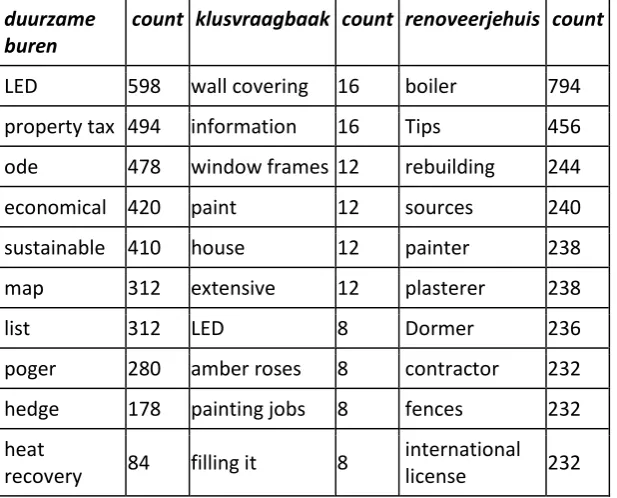
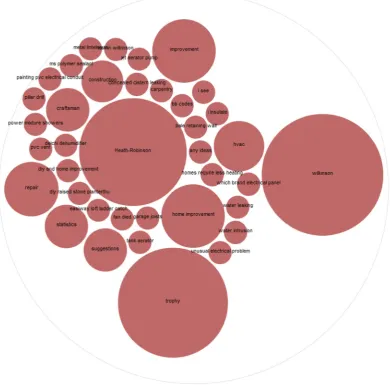
Finally, everyday futures can capture how people’s everyday actions take place in temporal structures of pastpresentfuture (Luhmann, 1976). Here the focus might be on how time horizons vary between generations, societies and social groups (Zeiderman, A., 2016). The production and implications of these different time horizons for present everyday lives is a pertinent topic in current contexts of austerity, and can help to reveal how ‘the future’ is unevenly distributedacross societies and around the world. For example, whether a home is owned or rented creates different time horizons of the future, and how lives are imagined and lived within it. Touching on this idea, Timan and EllsworthKrebs use digital methods to explore contemporary DIY in the Netherlands and the UK, focussing on which near futures of the home such methods might reveal.
Taking the relationship between pastpresentfuture in a slightly different direction, Wright and Pooley provide an accessible overview of methods and sources for studying everyday pasts and past futures, and reflect on these histories as sources for understanding presents and shaping futures. Gatherer, Kuijer and Nilstad Pettersen draw on an historical exploration of the use of data in decision making, to reveal the processes of quantification and decontextualisation of everyday judgments which futures of big data might hold. Marcore and Spurling also draw on an historical analysis, to explore how practices of domestic food growing have endured and waned across time, suggesting the importance of cultural heritage (and of what is considered to be cultural heritage) for futures of everyday life.
The variety of relationships between pastpresentfuture is also driven home if we consider practices that actively set about to create change –such as planning, designing and making. Such approaches challenge the everyday as the repetitive and routine, instead viewing the present as a potential turning point between the past and the future (Luhmann, 1976). This view opens up horizons and makes multiple futures possible. Meadow and Kouw’s aim is to design methods which emphasise this openness and plurality of the future. Different futures will have different winners and losers, and an analysis of who these winners and losers are, the production of multiple visions and the conditions of their realisation enables, they argue, more inclusive future design.
By bringing a range of questions, concepts and methods to bear on the question of ‘what is the everyday future?’, and why it might be an explicit focus of research and debate, the authors in this volume bring a broad spectrum of topics to the table. The essays that follow share our initial conversations, from which a rich programme of research has begun to emerge. We hope you enjoy it.
References
DUNN, N. (2016) Dark Matters: A Manifesto for the Nocturnal City. Winchester: Zero Books.
INGOLD, T. (2008) Bindings against boundaries: entanglements of life in an open world, Environment and Planning A, 40, 17961810.
INGOLD, T. (2010) Footprints through the weather world: walking, breathing, knowing, Journal of the Royal Anthropological Institute, 121139.
LUHMANN, N. (1976) The Future Cannot Begin: Temporal Structures in Modern Society, Social Research, 43,1, 123152.
SCOTT, J. C. 1998. Seeing like a state: How Certain Schemes to Improve the Human Condition Have Failed, New Haven, CT, Yale University Press.
STRENGERS, Y. 2013. Smart Energy Technologies in Everyday Life: Smart Utopia?, Palgrave Macmillan. THROGMORTON, J. A. 1996. Planning as Persuasive Storytelling: The rhetorical construction of Chicago’s
electric future, Chicago, University of Chicago Press.
TIMMS, P., TIGHT, M. & WATLING, D. 2014. Imagineering mobility: constructing utopias for future urban transport. Environment & Planning A,46,7893.
“T
Evenly Distributed.”
ster University, UK)
elements spread, to ‘write’ the future, is unequally spread, and without great care, inequalities of today will lead to similar inequalities tomorrow.
The future….is not evenly distributed
This title quote from the American speculative fiction author William Gibson alludes primarily to the fact that the things that will constitute the ‘normal’ or ‘everyday’ within the lives of those living in the future, already exist for some today. Most of what will constitute change, at least in the shortto midterm, is simply the spread of these niche, or minority, ‘things’ to become more pervasive. Qualities may change to a minor extent, but not so much as for things to become unrecognisable. Instead it is scale, quantity and patterns of distribution that will be the primary trajectories of change. The future may, or may not, only be limited by our imaginations, however, an imagined future can only be imagined in terms of the already conceivable, and cannot exist outside extensions of elements that are already in existence (even if they may exist only as concepts).
Gibson’s quote can also be interpreted by considering that ‘the future’ itself will be characterised by inequalities, both locally and globally in a way that is similar to the present. The unequal distributions of power, freedoms and resources in the future are likely to be determined in a large part by the way those inequalities manifest today (and have done in the past). In order that these inequalities are not reproduced, or that their reproduction is minimised, it is necessary to ensure that those processes in the present which ‘write’ the future are not irredeemably tainted by these same inequalities.
This essay will briefly describe some of the ways in which we may be able to see the future as being unequally distributed in the present, over three key domains of the social, the spatial and the temporal. It will then consider what impact these distributional inequalities play with regard to those who may play a significant role in attempting to write the future.
It is hard to clearly identify what elements of the present will become more widespread in the future. Over the 20thCentury, social transitions in the West have often involved the trappings of wealth becoming more accessible to wider sections of society, such as automobility, better quality housing, high quality healthcare and consumer technology. Whilst many contemporary future scenarios present the future to be a utopia of wealth and health furnished by a panoply of hightech gadgets and permitted by continued economic growth, it is also possible that the future for some, or all, will involve either a gradual or rapid reduction in standards of living. Thus the future might consist of the expansion of the current lifestyles of either the rich and powerful, or the poor and oppressed. The carbon reduction approach of “Contraction and Convergence” (Meyer, 2007) explicitly proposes reducing global inequalities, in terms of both expectations of lifestyles and the environmental damage they cause.
whilst there is some interest in looking at how, in the language of sociotechnical transitions, technological or social niches become part of the landscape, here we are more interested in how these minority elements are, in this moment, unequally distributed; how these inequalities are likely to be reproduced or altered in the future; and how these inequalities may actually determine what future or futures we arrive at. Through exploring how existing differences create unequal futures, we can begin to understand how to look forward in a way which is beneficial to those who are often excluded from official narratives of change.
Social Inequalites
Sometimes certain social groups (identifiable by gender, class, race physical ability etc.) are omitted from visions of the future, be that intentionally or not. Futurity is usually captured officially by politicians and ‘experts’ who wish to shape policy through ‘horizon scanning’. The unofficial futures of everyday experience, hopes, dreams and imagined futures are often not considered. Social inequalities open up questions of power within sociotechnical transitions and assessments of how to address these factors for a ‘better’ future is often lacking from projections of what is to come.
Efforts to incorporate everybody in views of the future often result in dystopian images, as attempting to dismantle social strata highlights current differences in exaggerated ways. J.G. Ballard’s (1975) High Rise, presents us with a fictional interpretation of class and futures which is useful when assessing how social inequalities within the everyday are constructed and consumed. In the novel, class divide is physical (the higher the floor in Ballard’s tower block, the higher the class of resident). Aldous Huxley’s (1932) Brave New Worldalso portrays fundamental inequalities at the heart of the imagined society, though here these are built into genetics and conditioning, not just architecture.
Understanding the everyday future in terms of the utopia/dystopia dichotomy is not necessarily beneficial. It is not only a frame which fails to assess the complete image of lived experience, but their exaggerated nature tends to render them unrepresentative of lives lived now. Even within utopia there will always be winners and losers, as differences result in sociospatial boundaries creating differences between the insiders and outsiders.
In many ways, certain visions of utopia already exist, at least in fragments. In the UK, the vast majority of people can access clean drinking water in such sufficiency that we flush our toilets with it, calorific food in such quantity that we can become obese, and free health care to treat the consequences. It might be churlish to expect utopia to only exist as a singularity, and we should recognise and cherish these fragments as and when we find them, and it may be necessary to fight hard to keep them.
Spatial
The ruralurban divide is one spatial axis that highlights differences that are apparent across potential elements of the future. Access to new transport modes such as car clubs or Uber are increasingly available in cities but have little reach into rural areas. It is questionable how far these sorts of systems will be able to practically reach these areas, highlighting how different futures may emerge resulting from location. Moving from physical mobility to virtual mobility, access to high speed internet is another example of how
something that is ‘the present’ in urban areas and may soon constitute a (relatively near) future for rural areas.
distributions of the consequences of the global financial crash hitting Portugal, Italy, Greece and Spain particularly harshly.
Sometimes though, space causes less of a divide. Mobile phones provide a fascinating case study of how fast new technology can establish itself globally, rapidly levelling access to the services that a technology can provide. Mobile phones highlight not only speed with which futures can arrive, but also a ‘virtual’ shift in the everyday, from one which is only experienced through direct contact to one where connections are not just physical. Here the future may also hark further back to the past. There is a body of work that sees computing and the virtual realm as an extension of the oracles and shamans of the past (Davis, 2015). We haven’t moved far from the past, and the past will always remain with us.
Temporal
Shortterm events and disruptions such as blackouts and supply chain disruptions represent snippets of insight into more precarious unstable futures, as increasing energy consumption and retired generation mean that energy supply systems become progressively overloaded. These shortterm events demonstrate how unstable futures are already embedded in current systems. Whilst disruptions to systems may appear sudden, they occur within the context of long build ups of dependencies and allow not just for a greater understanding of the nature of innovation in the moment, but also reveal much about the undisrupted, everyday ‘normal’. But what is it we are seeking from the future? Are we just trying to maintain the current system to stop an unstable future? Or are we trying to actively improve it? If the former, for whom is the current system actually stable? The UK and northern EU are relatively rare in being parts of the world where black/brownouts are not considered normal, and for some with prepay meters, even here stability of supply is not guaranteed.
Temporal inequalities can also manifest across generations: the aging population may be a picture of the future for today’s young. Although attempting to avoid the consequences of aging has been a longtime concern of much of the human race, this has, in the modern west, led to a failure to adequately consider the wellbeing of the old. Rather than adopting an attitude of denial, younger sections of society should help design the future by improving life for those who are old now and, consequently, for themselves when that time comes.
At the other end of the age spectrum, the comfort with technology shown by Generation Z/ ‘Digital Natives’ provides an insight for older sections of society as to how digital technology can rapidly become a given within everyday life, but also shows how we may not just take this technology for granted as a benefit, but also become dependent on its pervasiveness for the maintenance of everyday life.
Structural Inequalities
The three domains above social, spatial and temporal are just three ways of identifying differences. What matters most is not whether differences exist, but the extent to which the differences that arise over these domains result from the structuring of society (as opposed to say ‘choice’). When they arise from
structuring, and particularly when leading to negative impacts, these become issues of inequality that are of concern. How these differences become structured inequalities is usually related to issues of power. Unequal power relationships determine who gets to write the future, at least at a macro level, for example, through decisions about longterm infrastructure provision and the built environment, or through corporate strategies and government policies that will shape many people’s everyday lives for years to come. These decisions are often made by a particular section of society –typified by being white, (upper) middle class and male. Although the demographics of decisionmakers are now beginning to broaden, many of the
for any and all. However, even when apparently benign, current differences in power have a strong impact on how the future is being written (for example, the power of people like Bill Gates and Mark Zuckerberg in deciding how a future free from global disease will be paid for and thus what it will look like).
Dealing with Inequality
How can we move forward to a more equitable future? Current discourse on labour seeks to understand the relationship between work and technology. From a Marxist perspective, many of the inequalities described above arise from discrepancies in access to and control of capital. Automation offers a mechanism through which to assess class and everyday futures, as well as incorporating a new economic model, that is being posited not as utopian socialism, but rather Postcapitalism.
Automation is often viewed as the reason for workers losing jobs, zerohour contracts and a lower standard of living. However, recent work (Mason, 2015; Srnicek and Williams, 2015), highlights how the increase of technology that eliminates aspects of labour may see the future change in a way that is beneficial to those who have till now depended on state welfare and been excluded. Through becoming part of a narrative that views leisure and reduced work as integral to the everyday, the un/underemployedwill be able to ‘demand the future’ and become stronger participants in their own futures, rather than having their lives dictated by the structures of labour that are currently in place. The extreme view is that increased technologies in the workplace willallow for everyone to work less, resulting in what Srnicek and Williams call ‘fully automated luxury communism’. Other views of the future have been put forward that, rather than automating all work, propose a refocussing on work that is less efficient whilst being more fulfilling. For example, Jackson (2011) in Prosperity Without Growth, potentially reflecting William Morris’ (1885) Useful Work versus Useless Toil, suggests a vision of the future where worth and meaning might be seen as something to be obtained through work, rather than as something to be purchased from proceeds of work. This may, however, need to be partly obtained through automation of drudgery.
Full automation and Postcapitalism recognise the shift to a servicebased economy that has occurred in the
last 30 years, and the increase in what David Graebar calls ‘bullshit jobs’ (Graebar, 2013). It is not a vision,
but rather a manifesto on how to transition to a better everyday for all, and this future may not be that different from the present, yet it provides a way for inequalities within wage income and work processes to be considered. Alongside full automation, is the idea of a universal basic income, a concept already being suggested as part of an everyday future in several countries, such as a recent experiment in Utrecht, Holland and a referendum in Switzerlandi. Basic income is a guaranteed unconditional amount of money, regardless of employment or social position. Changing economic and social infrastructure in such a way means state welfare becomes something beneficial to all. However, the idea that a person should be entitled to payment for being a citizen of a certain state is controversial, perhaps because those who are already financially stable view a livelihood as something which people have to earn and are not necessarily entitled to.
Futures narratives require an understanding of how inequalities could be changed, culturally, economically and politically. Significant change in the current systems may be more likely to occur (at a large level) from the bottom up via revolution than from the top down –indeed Morris clearly saw that the wealthy would not relinquish their power without a struggle. In recent years the number of social protests and networks dedicated to changing social standings has increased significantly. For example, the #BlackLivesMatter network highlights the ways in which black people are deprived of certain rights by the state and
‘intentionally left powerless’ii. Creating a movement that is both digital (the use of the hashtag in the
Contemporary Efforts to Address Inequalities in the Writing of the Future
The narrative explored throughout this piece has suggested that the future tends to be written by the incumbent establishment, and this highlights how we appear to be living in interesting times. Whilst it might be naïve to suggest that in a democratic society the ballot box is the pen with which the future of a country is written, we are currently seeing the electorate and elections as a prominent fighting ground. The voices of some who have perceived their influence as being diminished over the last few decades, are now being heard to call an end to the future being “more of the same”.These struggles can be seen to be not about what the future will actually be like, but simply about the ability to have a stake in its writing.The 2016 UK referendum to leave the European Union can be seen as an effort by many people whose voice has been excluded from politics to cast a vote that counted, as opposed to many worthless votes in general elections under the UK’s first past the post system. A vote to leave could be seen as a vote that signalled desire for change from the established trajectory of the UK. It is hard to say what a vote for leaving represented in actuality, but what is clear is that the leave vote is culturally associated with many
characteristics of those who have reason tofeel excluded from the “classless society”, not only in terms of lower income, lower social grade and lower levels of education, but also by age, as younger people
overwhelming voted to remain, seeing their future in a different way to those who will not live to be a part of it.
The referendum cut across already weakened party lines but within the traditional UK political system we are witnessing another attempt to derail the future from being an extension of businessasusual written by the incumbent establishment. Jeremy Corbyn’s rise to power as leader of the Labour Party can be seen as an attempt by both young and leftwing people to wrest control back of a political system that has become associated with an elite, Westminstercentred political class. Whilst Corbyn maynot usually be anyone’s first choice of leader (including his own), a chain of events has resulted in him being the figurehead for a
significant number of people. These people have felt increasingly excluded from the Labour Party (and consequently from electoral politics) for over a decade for a variety of reasons. Given that his supporters appear to be more working class than his opposition, this could be seen to be reflective of the Brexit vote in some ways. However, the strength of the youth call for change through support for Corbyn is at odds with the tendency for young people to have voted Remainiii. In this case, they are cast as a generation who has been forgotten, or even singled out for particularly harsh treatment, by the current political class.
So, which bits of the present will the future be composed of and how will it be distributed? Our exploration of some of the social, spatial and temporal inequalities that highlight unequal distribution of an ‘everyday future’ in the present has raised many questions. Will we continue on current trajectories of growing inequality, or will current radical niches (social, technological or economic) spread and dominate? What will determine the path(s) we take? One thing is for certain, particularly in the context of climate change, businessasusual is not an option.
Acknowledgements
grant agreement 689289 (ClairCity project)
Ballard, J.G., 1975.High-Rise: A Novel. Jonathan Cape
Davis, E., 2015. TechGnosis: Myth, magic, and mysticism in the age of information. North Atlantic Books. Graeber, D., 2013. The democracy project: A history, a crisis, a movement. Spiegel & Grau.
Huxley, A. 1932. Brave New World, Chatto & Windus.
Jackson, T., 2011. Prosperity without growth: Economics for a finite planet. Routledge. Mason, P., 2016. Postcapitalism: A guide to our future. Macmillan.
Meyer, A., 2007. Contraction and convergence. Global Commons Institute, London. Available from http://www.gci.org.uk/ (accessed September 2016).
Morris, W., 1885. Useful work vs. useless toil.Political Writings of William Morris, pp.86108.
Srnicek, N. and Williams, A., 2015. Inventing the future: Postcapitalism and a world without work. Verso Books.
Isabelle Garabuau
Abstract
The understanding of future
anthropology, for instance) or the proposition of alternative methods (narratives, etc.);
The role of ethnographies in developing a shared idea of futures through collaborative work with research partners.
Introduction
This essay examines the connections between everyday life, futures and ethnographic perspectives, a set of complex relationships which cannot be fully developed here.ivThis introductory work will, therefore, with reference to relevant literatures, propose a series of questions and topics as an aid to further exploration of the subject. Harvey (2011), suggests that ethnography is ‘the way in which anthropologists explore people’s social worlds’ through the ‘analytical, theoretical and empirical’ where ‘the specific skills and practices of specific groups’ are understood relationally. Utilising the ‘specific modes of attention’ of ethnography, it will consider both how this method has a role in analysing everyday futures in contrasting social worlds, and how it might be usefully involved in discovering more about the process of innovation and the production of futures. It will discuss how ethnographic work the coming together of different worlds in the course of a particular enquiry might, by its very nature, be continually constructing different kinds of future.
Understanding future-orientated practices and imaginaries
People, in everyday life, partly think and act in relation to the “future” or potential futures. As Appadurai suggests (Appadurai, 2013, discussed by Elbez, 2014), anthropology is often focused on routines, stabilities and reproductions, but ethnographic methods might help an understanding of the “future” as a native category, that is to say, built by people. As E. T. Hall suggests, ‘Future, present and past are not only intellectual concepts”, but lived experience (quoted in Minvielle, Wathelet and Masson, 2016: 49). In particular, the “capacity to aspire” (term proposed by Appadurai) is not equally shared by all social groups. For instance, the lives of people having low and intermittent income are far more subject to uncertainty than those who are wealthy or with stable revenues. Anticipation of the future is less practical, when everyday life is a struggle.
Nonetheless, the practices of “savings” (energy, money, etc.), storage, scheduling of tasks, implementing “life projects”, the upbringing of children, anticipation of life changes (retirement preparation, ‘empty nests’ (children leaving home), professional changes, etc.) all represent a “projection” into futures that can be usefully studied with ethnographic methods.
Analysing the potential futures of practices and everyday life
technology or new ways of living (for instance, the group of “cultural creatives”, a name given by Ray and Anderson (2000) to people with a new lifestyle based on spirituality, social activism and environmental concern, who appeared in the 1990’s in the United States). These specific or alternative ways of life are inspiring, and there are some diffusions of elements (of their discourses and of their practices) in other social groups.
The ethnographic method might allow some understanding of how ideas on lived futures are diffused through networks and their attendant bridging mechanisms. The analysis of such practises, discourses and forms of diffusion can stimulate questions about the “power” and influence of such social groups, for example, asking how important can ‘the future’ be, if the power to make a future seems not to be in your own hands.
Ethnographic methods can also be used to understand the social, technical and imaginary histories of both ‘things’ and ‘humans’ through the tracing of their biographies, observation in the domestic context, and biographical interviews which reflect on past, present and future. For example, anthropologies of science and technology have used these methods to analyse the “cultural biography of things” (Kopytoff, 1986), where the journey of an object carries within it traces of the past, present and future, that is, their genealogies, trajectories, diffusions and evolutions during time . This may help to anticipate the potential futures of “families” of objects and imaginaries (what is persistent, what changes, where are the hybridisations). Minvielle, Wathelet and Masson (2016), for instance, suggest making the ‘future’ more ‘present’, through drawing on fictional and popular cultural accounts of the future and developing ‘future scenarios in order to build an alternative world view’.
This approach can help an understanding of the processes through which change might occur. For instance, there are some cycles in the history of innovation: a first step with “great” versus “dark” imaginaries, followed by hybridisations, and then trivialised practices, usages, appropriation and misappropriation. This cycle can provoke a second step of creative and innovative changes in the design of the product or service. Alternatively, the ‘Diderot Effect’ (McCracken, 1988) can be considered, that is how the introduction of a technology or service will change other parts of the social system.
New and innovative practices might be supported through the ethnographic process, and anthropological work can help prepare local groups, companies and public institutions for change. For example, the anthropologist Annette Henning (2005) worked with a public energy company to prepare the infrastructure of a new district heating system, specifically focussing on the relationships between infrastructures and people, and preparing them to connect to it. But taking into account the possible future, change is only potential contribution of this kind of applied ethnography. For instance, Pink and Mackley (2016) explain that they:
“do not consider [their] task to be simply to inform designers with ethnographic insights about what people do in their homes, which might then be used to inform ways of modelling either ‘personas’ to design for to the making of prototypes to be tested” (p. 184).
future everyday practices. Design may consider them as a misappropriation, whereas anthropology may consider them as a contingent appropriation, creating room for manoeuvre in reaction to the formal rules. Ethnography is also used as a phase into the “design thinking process” a method of innovation which connects user experience to creativity. Ethnographic participation in this process uses observations (user centric approaches) to design problems, and uses this ‘data’ as the basis for exploring problems and subsequent alternative practice. On the basis of this, the designthinking method then proposes ideas for new products or services, and is then in a position to explore some prototypes and business models.
Although it is not possible to fully anticipate future practices, there are some methods that can help us understand how practices are shaped. When an ethnography is not yet possible, because the future practice does not yet exist, interviews with social science experts is one way to connect diverse parts of a question about futures. For instance, in the 1990’s, when exploring the question of “how the baby boomers might act when they retire”, for a public company, Desjeux and GarabuauMoussaoui (2000) interviewed social scientists about the life cycle, social movements, activism, and collective identity of Baby Boomers, asking them for their expert point of view. Through connection, comparison and analysis, Desjeux and Garabuau Moussaoui were then able to propose some scenarios upon retirement of this particular social group.
Analysing who is producing futures
Ethnographic work can also reveal how the everyday work of building scenarios, forecasts, imaginaries and technologies of the future is done. Whilst everyone participates in the future as a cultural category, some are more directly involved in representing it. Firstly, there are the popular cultural productions of the future, for example, comic strips, cartoons, manga, scifi novels and movies. Secondly, there are ‘culture(s) of the future’ in the corporate world, a commercial culture of the future involving how companies speak to each other about their futures and their customers, the latter through advertising, and corporate movies amongst other forms. Thirdly, there is a “scientific” culture of the future consisting of, for example, futurologists and prospective forecasters.
All these categories are cultural: each society, at a specific period, defines its future(s) which often reveals as much about the present as the future. Ethnographers can observe and analyse this particular practice of defining and developing a future, for instance in studying how prospective futures might be implemented in a particular administration (Weber, 2015), or how anthropology and design are used in creative and innovative processes in a large company (Suchman, 2011). Suchman suggests that anthropology needs to be relocated. After a “turn toward ‘home” in anthropology (reinvention following the awareness of its colonial history), Suchmann suggests that the direction of the discipline should now be from home to “locations characterised by their cultural familiarity and their political and economic centrality”, for example companies or Government departments. (2011:16). Suchmann has herself practiced this through “a long term immersion within a site identified as a centre of innovation and futuremaking, which became [her] professional home” (19791999 at Xerox’s Palo Alto Research Center (PARC)). (2011: 16).
Sharing futures
Therefore, the idea of immediate futures is one that both parties will discuss as part of everyday conversation, which then may stimulate a kind of coproduction of futures. Frankenberg suggests, that: “… ‘futures’ rather than being a separate dialogue about social reality, at most levels of discourse, consists, not in displaying an historic past nor in describing an ethnographic present, but in a continually contextualising reflexive process of producing hypothetical shared or unshared futures”.
Frankenberg (2008: X) goes further: “The job of the analyst (s) of the fleeting present is to uncover all the various theoretical possibilities embedded in the presentation of the perceived past and to decide which outcomes different categories of person in interaction will seek, and/or succeed in bringing about’, thereby suggesting that inherent in any dialogue are clues or hints about ‘possibilities’ and ‘outcomes’, which are about particular futures.”
Desmond (2016) in his ethnography of eviction discusses ways of being an ethnographer. He suggests that it is more than just a method, rather a ‘fundamental way of being in the world’, a ‘sensibility’ a means of ‘building rapport with the people you want to know better’, ‘observing and experiencing what they do, working and playing alongside them, and recording as much action and interaction as you can, until you begin to move like they move, talk like they talk, think like they think, and feel something like they feel’. Whilst the language here is somewhat casual (the use of ‘they’ is problematic), the suggestion that the ethnographer should get into the groove of life in the field, is one that has to be useful for any understanding of how ‘the future is imagined and shaped in everyday practices’. Laura Forlano (2013) reminds us that in order to make ethnography work in a future sense:
"… as ethnographers, it is not enough to describe social reality, to end a project when the last transcripts and field notes have been analyzed and written up. We must find new ways to engage and collaborate with our subjects (both human and nonhuman). We need better ways of turning our descriptive, analytical accounts into those that are prescriptive, and which have greater import in society and policy. We may do this by inhabiting narratives, generating artifacts to think with and engaging more explicitly with the people
formerly known as our “informants” as well as with the public at large."
Conclusion
There is a challenge to observe what doesn’t exist yet. We can see that ethnographic method helps to comprehend this paradox. Humans think and act in part according to futures; they may have some definitions of what might be the future; but these vary, depending on their forms of capital and other resources. We have here suggested, that this ‘suite’ of methods may help in an understanding of emergent ideas, experiences and practices through the highlighting of “lines”, the “wires”, between past, present and future; between practices, discourses and imaginaries; between conception and use; between disciplines which explore the future.
Even when studying our own society, anthropological methods are a means of shifting and decentring our vision, thereby facilitating an analysis of how people act, speak, and imagine futures but also to get beneath the skin of these practices and the social representations. At the same time we can investigate the people and social groups that work on the social production of futures and how power and agency are distributed amongst them.
of practical encounters . . . the makeshift links across distance and difference that shape global futures— and ensure their uncertain status” Tsing (2005, 12,quoted in Suchman 2011: 2).
Endnotes
ivThis work is the first stage of an investigation which will be developed more fully at a later date.
Acknowledgments
Isabelle GarabuauMoussaoui thanks the French network of applied anthropology, Anthropik, in particular: Dominique Desjeux, Fanny Parise, Nina Testut, Olivier Wathelet, for their stimulating ideas and literature references.
References
militant ?
185
Today, 21/3: 812
Kopytoff Igor, 1986, “The cultural biography of things”, in Appadurai Arjun, The social life of things. Commodities in cultural perspective, Cambridge, Campbridge University Press
McCracken G (1988). Culture and Consumption: New Approaches to the Symbolic Character of Consumer Goods and Activities.Indiana University Press, Bloomington
Pink Sarah, Mackley Kerstin Leder, 2016, Moving, making and atmosphere: routines of home as sites for mundane improvision, Mobilities, 11:2, 171187
–363.
create long lasting significant ‘change’ through changing behavior or rethinking the entire fashion system, a more holistic understanding of how garments live will be essential. The everyday, an often overlooked but fundamental part of fashion practice, could therefore be considered an action space for practicebased researchers to explore constructing positive futures. We define the everyday as personal, daily interactions with garments over long periods of time. Drawing on three diverse fashion experiments that explore daily clothing practices and rituals we consider how the everyday can be utilised to enact change and create future visions.
Introduction
The apparel industry is continually reinventing itself aesthetically while keeping up with advancements in technology, production processes, and legislation. In 2015 it was globally worth $3,000 billion accounting for 2% of the worlds GDP (Fashion United 2016) and employing 75 million people worldwide (Stotz et al 2015). The future visions channeled by this industry have significant impacts on people, economics and the
environment. Sustainable design and wearable technology, two very different but emerging fields in fashion, share the ability to fundamentally change the way in which we consume, use and dispose of clothing. In order to enact positive and preferable visions for the future of fashion, we discuss the value of explorations into everyday clothing wearing practices. We propose the everydayas an underexplored space within fashion innovation that is rich with information about people, their behaviour and rates of stability and change. We argue that this space can offer valuable insights about the opportunities and challenges of speculations within the field, just as important as their technological and systematic development.
Futuring and Fashion
Futuring, a broad term that describes the activities used to identify and evaluate future events (Cornish, 2004), is an important tool of the fashion industry. Behind mainstream fashion is a complex and developed industry of fashion forecasting and futuring led by organisations such as WGSN, which follow socioeconomic trends to supply the industry with probable future visions (Tham 2015). Consumer studies supply data on changes within the system feeding back information on consumption habits to retailers (Klepp 2015). But the way in which we interact with our clothing on a daily basis – the garment’s life with us –are activities far removed from the boardrooms of multinational companies and have thus become understudied and over
simplified.
Clothing consumption studies look at fast changes within the system that do not focus on the slow process happening everyday within the home (Klepp et al 2015). Trend forecasting and consumption studies also neglect to take into account the phase during which the item of clothing is actually being used. This ‘use phase’ is documented as being the phase that has the largest energy and water impact on the lifecycle of clothing (Fletcher 2008, Allwood 2006). Such studies also fail to take into account the daily clothing practices such as dressing and assimilating novel outfits which take place within the home on an ongoing basis
(Fashion Ecologies 2016). Put simply, we lack a lot of knowledge about what people actually do with their clothing (Klepp at al 2015). As a result, mainstream trends and associated future visions are focused on the object, the garment, rather than on understanding the complex relationships between the garment, people and place.
Within the field of sustainable design, this lack of understanding of everyday clothing practices can lead to a focus on incremental improvements and often shortsighted solutions leading to limited systems change (Meadows 1999). With a few exceptions, most industryrelated sustainability focuses on the making of products –their materials and production –and not on how they will perform over time and ‘live’.How long a wearer will wear or keep their garment, for example, is not accounted for.
Similarly, within smart garment and wearable technology disciplines –fields that propose the integration of electronics and computational abilities directly into clothing fabrics or worn accessories –a narrow focus on technological development has lead to relatively few developments making it to the mainstream consumer market in the last decade (Dunne 2010). If the ambition of both the sustainability and wearable technology agenda is going to create long lasting significant ‘change’ through changing behavior orrethinking the entire fashion system, a more holistic understanding of how garments live will be essential. In this essay we ask whether understanding the practices and rituals of clothing within the everyday give researchers and designers an action space in which to build stronger visions for the future.
Action space of ‘The Everyday’ in Fashion
We propose the everydayas an action space for practicebased researchers, which we define as those conducting research through the activities of their fashion practice, to explore constructing positive futures within fashion. In this context, we define the everyday as personal, daily interactions with garments over long periods of time. By collecting data, probing and experimenting in this area we aim to deepen understandings of the nuances of personal expression through clothes, the life of garments through their wearers, and life of garments beyond their wearers. We see fashion as dynamic in its nature –often fluid, messy, personal and always changing at a rapid or slow pace. Through studying clothing in an everyday context we can observe the interactions of wearer and garments in their ‘natural habitat’ –moving through time and different contexts.
Sustainable futures aim to offer visions that mean living within our ecological means (Rockstrom 2009). Looking at the global impact of the apparel industry this feels like we need to radically rethink the way in which we wear and interact with our clothing. However, the limited studies that do look at the everyday practices of clothing use in detail, such as KRUS (KRUS 2016) and Craft of Use (Fletcher 2016) uncover many sustainable practices already happening within the home. Woodward suggests that rather than viewing everyday actions as problematic, they may shine light on existing, more preferable behaviours (Woodward 2015), which gives space to develop preferable future visions. Building on this notion we argue that a garment unworn is a static object. Solutions for producing ecofriendly textiles or improving industrial garment production methods are two kinds of approaches meant to improve the environmental impact of these objects, but concentrate on them as objects alone. Clothing touched, worn, styled, mended, washed and shared by their wearers holds information that can inspire sustainability solutions in the form of action based systems and services for future interactions of clothes.
Similarly within the context of smart garments and wearable technology, there is a tension between the rapid technological developments of smart materials and understandings of what it might mean to wear them. Producing prototypes and garment samples for ‘intelligent’ clothing meant for mainstream
‘wearable’ until they are truly worn – until they become part of an individual’s wardrobe and are seen by a community of people around them. Through these activities the garment can begin to situate itself, with its wearer, within the language of fashion and dress. In both sustainability and wearable technology contexts for clothing, we see the need for deeper understandings of daily clothing practices and sociocultural contexts to achieve the futures that are envisioned.
Explorations of ‘The Everyday’ Within Fashion
In order to enact change there is a need to develop a detailed understanding of how we already wear and use our clothing, or experiment by inserting new ideas into this space. The everyday provides a fertile action space to cultivate this understanding allowing fashion to be observed as a time based practice. Below, we briefly describe three recent studies led by the authors of this paper within sustainable design and wearable technology that have used the everyday as an action space for exploring future visions for fashion. We list themes that have emerged from each study, and elaborate on their meanings in the discussion.
Fashion Ecologies
Fashion Ecologies is a research project that aims to find novel relationships between people, clothing and place within a narrowly defined geographical location in order to understand current local fashion practices. The methods employed by the study explore the space of the wardrobe within local homes using
experimental approaches to understand the everyday use of clothing (Fashion Ecologies 2016). One of the methods being employed is a holistic wardrobe audit of an individual’s material and social clothing assets which includes a full audit of all categories of clothing, resources for caring and washing clothing, resources for making and repairing clothing and other related items. Accompanying the audit is an interview aiming to uncover the daily journeys of clothing through the wardrobe and the home covering acquisition, care, use and disposal aiming to map the flow of clothing through the household. Within Fashion Ecologies the audits are being completed in a single town in the UK in order to build up a picture of the complexity and
[image:21.595.243.420.453.713.2]interconnectivity of the local fashion system. The study is being repeated in a location in Norway to gain insights about the particular relationships between people, clothing and place.
Figure 1: Local clothing example from Fashion Ecologies Project
households as well as the daily practices of the individuals. The researchers work with the participant to calculate the perceived quantity of clothing they own and then count the actual quantity of clothing owned. In addition to quantifying the household resources, the method also uncovers the flow of textiles around the home and what external services are used to maintain the clothing over time. Working closely at a
household level to uncover small, perhaps ‘insignificant’ insights into clothing use the research team are able to probe the balance between the quantity of clothing owned and the capacity to maintain and care for that clothing during the use phase.
By focusing on the space of the everyday,this study collected data and insights about clothing related to themes ofrepetition and change and evolution in various homes, and mapping of complex systems and scale.
ReMade in Leeds
[image:22.595.191.385.420.679.2]‘ReMade in Leeds’ is a research project and social enterprise based in Leeds, UK which aimed to uncover local clothing practices within a community, thereby particularly focusing on repair and reuse activities (WhitsonSmith et al 2012). The project created a community based clothing repair studio located within an unused retail unit in an inner city suburb of Leeds and was open daily from 20112013. Members of the public could drop into the studio with clothing or other household textiles that needed repairing and book the item in for a repair, alteration or modification. This process involved a onetoone discussion about the nature of what needed to be done and often required the garment to be tried on. A member of the ReMade in Leeds team then completed the sewing work, after which the owner would return to collect the garment and pay a fee for the service. The service was priced to cover the cost of the machines and the rent of the space. Throughout the project, data was collected on types of repairs undertaken, which ranged from trivial and simple repairs such as replacing a button to more largescale clothing ‘crisis’ including a last minute bridal dress repair.
Figure 2: ReMade in Leeds Repair poster.
The study recorded the types of repairs commonly required as a result of both wear and tear and manufacturing faults. It also gained insights into the types of skills available and those lacking in the
value placed on repairs were explored and micro insights of daily clothing wear as well as unforeseen clothing crises were generated. For example, identifying the simple repairs, which, due to a lack of basic skills and without intervention would have resulted in a garments disposal. By focusing on the space of the everyday,this study collected data and insights about clothing related to themes ofmundane and
extraordinary crisesand coproduction.
Greenscreen Dress
In this study, future notions of wearing dynamic display clothing or dynamic fabric, is explored in everyday life. If the textiles making up a garment can act like a computer screen –being able to display colour, pattern, text or video through computational input –what might this experience be like in everyday life? What might be the challenges and opportunities for introducing this kind of fabric into our garment systems? The very possibility of integrating dynamic fabric into clothing challenges many of the norms of fashion. For example, it introduced the notion of one garment functioning as multiple garments (Devendorf et al. 2016; Dunne 2010).In theory, this breed of ‘ultimate garment’ could potentially mitigate the waste and unsustainability of ‘fastfashion’, i.e. the cyclical change of fashion based on trends and seasonal changes of spring and autumn collections (Dunne 2010).
Using autoethnography, the researcher in Greenscreen Dresswears green clothing every day for six months and captures videos and images of her garments with changing digital content on them through a chroma key mobile application. She then posts the pictures of herself wearing the garments daily on Instagram as a way for them to exist within a social ecosystem and fashion dialogue. The study focuses on exploring
dynamic fabric from the perspective of what it might mean to wear it in everyday life, as opposed to offering technological or prototypical innovations towards the concept.
Reflections from the study include, but are not limited to, insights into the expressive possibilities of dynamic fabric, challenges of integrating a new ‘hyperfunctional’ textile into an individual’s wardrobe, and the social reception of dynamic fabric within contemporary fashion dialogue. For example, in the study the researcher began by wearing one green dress, assuming that if periodically washed and dried overnight the dress would meet all of her personal style needs. However, after two weeks she discovered that even though she could change the façade of her dress, she still desired new silhouettes, textures and
[image:23.595.147.449.545.744.2]combinations of clothes to fit the social norms. Over the period of the study she collected 20 new green garments and accessories. This questions the promise that a garment with dynamic fabric would lead to less consumption of clothing, and at minimum, highlights the complexity of the language of fashion as it exists today, and can help dynamic fabric developers foresee challenges and opportunities in the future.
By focusing on the space of the everyday,this study collected data and insights about clothing with dynamic fabric related to themes ofmundane and extraordinary crisis, the introduction of new materials, repetition, personal expression, situated audience andchange and evolution over long periods of time.
Discussion
In using the everydayas an action space, the studies Fashion Ecologies, ReMade in Leeds and Greenscreen Dresswere able to draw out information related to everyday clothing practice that contribute to future visions within the fashion field. The kinds of information gained and resulting themes varied from study to study, but were consistent in terms of drawing onthe everydayto generate new insights.
The following three themes were consistent: change and evolution, repetition, and mundane and
extraordinary crisis. These themes within the domestic everyday offer novel approaches to understanding perspectives on the complex relations between user and garment as it develops over time. In order to obtain rich data, the studies ran longitudinally from six months to three years or spanned numerous participants in a focused location. In essence, the nature of the studies allowed the unfolding stories of wear to be
documented (Spivack 2014) as they evolved in the present. For example, through wearing the green garments daily in Greenscreen Dress, the researcher was able to observe specific moments throughout the sixmonth period for when and why things changed or remained consistent. Related to a range of issues like weather, emotion, personal tastes, audience input, audience interaction, and availability of green clothing and materials around her, we can see a genuine personal context affecting the outcome.
Each study has also developed novel methods in order to get inside the everydayof fashion practice, and in all cases this was done with the public or within the public domain. The methods range from an auto ethnographic approach to participatory action research, but use the nexus of the wardrobe as a starting point. Finally, whether using physical places like the shop for ReMade in Leeds,or social media platforms for the Greenscreen Dress, the methods all develop in the present, allowing the public to engage in real time.
Conclusion
In order to generate positive future visions, whether around creating a fashion system which is viable and in sync with our natural world and planetary boundaries, or developing a new generation of smart clothing which will transform our daily lives we need to expand our knowledge of how clothing is lived with and used. This means understanding the nuanced dialogue between wearer and garment in order to gain a deep appreciation of the daily rituals and behaviours, which govern the interactions of wearing clothes. Using the everydayas an action space gives designers and researchers a space to develop methods to observe, explore and interrogate fashion in new ways. Through sharing our fashion experiments we hope to inspire other researchers in our field and beyond to find a new starting point for exploring everyday practices and hope that building a body of work on this space will provide future discussion.
References
Allwood, J. M., Laursen, S.E., Malvido de Rodrigue, C. and Brocken, N. M. P. (2006), Well Dressed?, Cambridge: University of Cambridge Institute of Manufacturing.
Cornish, E. (2004). Futuring: The Exploration of the Future. World Future Society.
Dunne, L. (2010). Smart Clothing in Practice: Key Design Barriers to Commercialization. Fashion Practice: The Journal of Design, Creative Process & the Fashion Industry, 2(1), 41 –66.
https://doi.org/10.2752/175693810X12640026716393
. Earthscan
Imagined futures of the Circular Economy
Abstract
The essay sketches some lines of enquiry into how ‘everydayfutures’ are imagined in discourse around ‘the Circular Economy’. The Circular Economy is offered as a model for a significantly more environmentally sustainable economy, an alternative to the current “linear economy” of “make, use, dispose” (WRAP, n.d.). The discourse has grown in prominence in recent years, with the EU recently reframing its policy
commitments to sustainable production and consumption in terms of the Circular Economy (EC 2015). We examine examples from the national contexts of Estonia, Italy and the United Kingdom, and the EU level, to explore how everyday life and consumption are imagined in the future of the Circular Economy. We offer some initial sketches, drawing on practice theory (e.g. Schatzki, 2002) and conventions theory or ‘pragmatic sociology’ (e.g. Boltanki and Thévenot, 2006; Thévenot, 2001) and suggest further theoretical articulations to be pursued through the empirical area.
Introduction
This essay begins to think about how ‘everyday futures’ are imagined in discourse and practice around ‘the Circular Economy’. The Circular Economy is offered as a model for a significantly more environmentally sustainable economy—a blueprint for an alternative future to the current “linear economy” of “make, use, dispose” (WRAP, n.d.)—and of resilience in the face of resource insecurity and the potential disruptions of ecological crisis. With Mische (2014), we argue for the importance of the task of analysing such “sites of heightened, futureoriented public debate about possible futures”, or “sites of hyperprojectivity” (p. 437). Projects and visions of collective futures mobilise—sometimes conflicting—understandings of the common good, or “orders of worth” (Stark 2009; Boltanski and Thévenot 2006), actual or imagined “teleoaffective” engagements (Schatzki, 2002; Welch and Warde, 2017), and implicit models of engagement with everyday life (and in the case of circular economy, centrally, of consumption). Such imagined futures may come to invest professional practices, political spaces, and everyday consumption. We approach the task from a dual theoretical background in practice theory (e.g. Schatzki, 2002; Warde, 2005) and conventions theory or ‘pragmatic sociology’ (e.g. Boltanki and Thévenot, 2006; Thévenot, 2001, 2014)v. Our intuition is that the project of the Circular Economy provides a productive site in which concepts from these two theoretical traditions may encounter one another in the context of projected everyday futures. This essay offers some initial thoughts on what is intended to be a larger project to articulate these theoretical positions together, with the goal to enrich and develop understandings of the cultural dimensions of projections of socio
technical everyday futures (see Jasanoff and Kim, 2009, 2015). In this essay we simply sketch some lines of enquiry, drawing on examples from the national contexts of Estonia, Italy and the United Kingdom, and the EU level.
Circular Economy and the European Union
design (Braungart and McDonough, 2002), and “natural capitalism” (Hawken et al., 1999). In the imagined future of the Circular Economy, as the Ellen MacArthur Foundation put it, the very “concept of waste” would be eliminated (UCL, n.d.), with resources and materials cycling through the economy on the model of a nutrient cycle. The principle of “ecoefficiency”, which carries within it the logic of the steam engine— “efficiency” is defined as the ratio of useful output to total input—is replaced by that of “‘ecoeffectiveness’, highlighting the potentially infinite contribution of materials to the generation of value” (Mylan, et al., 2016: 2).
The European Commission has recently reframed its commitments to a “resource efficient Europe” of waste reduction and recycling (EC 2011) in terms of the Circular Economy (EC 2014), with an EU “action plan for the Circular Economy” recently published (EC 2015). A number of nongovernmental organisations and think tanks, notably the Ellen MacArthur Foundation in the UK, have championed the project of Circular Economy, and engaged in business and academic collaborations. As Gregson et al. (2015: 221) note “idealized visions of the circular economy” are of a new, producerled, industrial revolution, of “industrial symbiosis” and products designed for extended lifetimes and endoflife recyclability as new material inputs. However, the policy reality is, thus far, largely one of enhanced, postconsumer waste management (Gregson et al., 2015). Levels of engagement with the project by member states and regions of the EU varies widely. A critical report from the UK parliament noted that “instead of scaling up its work” on Circular Economy the UK Government “ is cutting it back” and “lacks leadership” (EAC 2014: 3). On the other hand, in the UK, think tanks, often in collaboration with business and academia, have been active in promoting the Circular Economy. In Estonia, the situation is reversed: on the formal government policy level Estonia is tightly engaged with EU developments, however there is little civil society, academic or media engagement with the concept, outside of the waste processing sector. Italy is similarly politically engaged, playing a very active role at EU level and in May 2015 organized an informal meeting in Rome with other EU states to stimulate dialogue on the Circular Economy ahead of publication of the EU action plan (EC 2015).
Circular Economy, Consumption and Everyday Futures
As Gregson et al. (2015) note there has been little critical engagement with the concept and vision of Circular Economy. While Gregson et al. (2015: 225) focus on the normative exclusions of the geographically bounded EU vision of Circular Economy and the “collisions of morality, materiality and market logics” that will likely form the ground of its political contestation, our concern is with both the “orders of worth” (Boltanski and Thévenot, 2006) and imagined futures of everyday life and consumption invoked within visions and models of Circular Economy, as well as the “dimensions of projectivity”, or dimensions of variation in future
orientation, expressed by them (Mische, 2014).
We take as an entry point the observation of recent social scientific engagements with the Circular Economy (e.g. Antikainen et al 2015; Jensen 2016; Mylan et al., 2016) that current models “fall short in regard to the conceptualisation of ‘consumption’ and ‘consumers’” and, as Mylan et al. (2016: 2) note, the particular “lack of attention paid to the domestic sphere, an important site and space for the enactment of practices which shape how and why consumers use particular products and services, how ‘waste’ is generated, and
ultimately how this might be changed.”
Some widespread definitions of the Circular Economy tend to elide the domain of everyday life and consumption, even as the “use” stage remains the central pivot to the entire model, as in this definition from the Ellen MacArthur Foundation:
Compare here the centrality of “Consumer” and “User” in a widely reproduced graphical representation of the Foundation’s model:
Consumption does feature as a key domain within the EU action plan document (EC 2015), however, here again we note the restrictive, individualised, behaviourial model of social action through which consumption is framed. (We discuss the practice theoretical critique of this model of consumption below). The action plan section on “Consumption” begins:
“The choices made by millions of consumers can support or hamper the circular economy. These choices are shaped by the information to which consumers have access, the range and prices of existing products,and the regulatory framework.”(EC 2015: 6)
And proceeds to largely rehearse the conventional tools through which sustainable consumption policy has been framed by the EU since its outset: ecolabelling, price incentives, household waste reduction and recycling.
Orders of Worth and Projectivity
We also note in the EU action plan’s “Consumption” section (EC 2015) the absence of general statements of value or normative exhortations to action, the effect of which is to frame the domain of consumption within market and industrial “orders of worth” (Boltanski and Thevenot, 2006). That is to say the conventional forms of worth to justify a future orientation towards Circular Economy are framed through general understandings of, on the one hand, profit maximization and competition (market order) and on the other productivity, efficiency and instrumentality (industrial order). Notable then is not only the absence of an ecological order of worth but a gesture beyond the model of industrial efficiency towards “eco
effectiveness” through which the Circular Economy claims to distinguish itself (Mylan et al., 2016).
Thevenot et al (2000), Chiapello (2013) and others (e.g. Finch et al., 3013; Blok, 2013) have explored the emergence of an ecological or green order of worth, commonly in contestation or collision with market and industrial orders. We note variation in the invocation of orders of worth across our pilot study documents. Justification processes in official government texts are generally not very elaborate, drawing upon taken for granted, naturalised keywords, such as “sustainable” and “competitive”. In our Estonian example the ecological, industrial and market orders of worth are all invoked, adjectives signalling different orders are placed side by side, eliminating conflict between them, and normalising a future imaginary that sets competition, efficiency and ecological sustainability all in harmony:
“Estonia supports most of the measures in the Circular Economy Package of the European Commission, which aim to promote the growth of competitive and sustainable economy in the European Union by increasing more effective and sustainable implementation of resources within the entire product value chain.” (Envir.ee, 2016)
Noting that “Sustainable consumption, production, and innovation are the keywords in developing new business models and markets”, the Estonian Minister of Environment collapses the market and green orders into one, making “sustainability” an inherent part of a new business order of the CircularEconomy. We note here that while such collisions may signal contradiction and conflict, a strand of research into orders of worth has focused on the how such dissonance may itself act as a form of coordination (e.g. Finch et al., 2013); or how as Stark (2009: 191) puts it “misunderstandings produced through such discordant
attributions may in fact facilitate as opposed to thwart coordination among heterogeneous actors within and across organizations”. This noted, critical for the environmental claims of the Circular Economy model here is that, as one commentator has put it, “the exact relationship between circularity that maximizes profits and circularity that minimizes environmental benefits is unclear” (Van Ewijk, 2014,n.p.).
the present tense and the absence of futurecharacterizing nouns (such as aspirations, challenge, progress, vision etc.). What seems to be at stake is more the short time destiny of the Italian economy than the long
term environmental and everyday futures. The transition to a Circular Economy is most of the time presented as a resource for improving the competitiveness of the Italian economic system:
"Here is an entrepreneurship that believes in Italy and in Europe, which knows to bet on innovation environment, now a decisive element for competitiveness in the global market. [And which] serves to project ourselves in the only possible future, the circular economy and sustainable development as the cornerstone of doing business.” (MDA 2016)
In the Italian policy documents we find the market order of worth the primary frame, with the green frame in a way a new marketing strategy for Italian economic competitiveness. This partly reflects the strong need of the Italian government to support its entrepreneurial system in the global economy but also carries all the fragility and inherent tensions of green orders of worth, as elsewhere analysed (Finch et al., 2016, Thèvenot et al., 2000).
Dissonance between orders of worth and the relation of projectivity to those orders are fruitful lines of further enquiry. Lastly, we note the tentative possibility that the articulations of general understandings from ecological, industrial and market orders suggests an emergent Circular Economy order of worth struggling to coherently compose itself from disparate elements.
Circular Economy as a New Model of Consumption
The EU action plan does note “innovative forms of consumption” (EC 2015: 7) as supporting the
development of the Circular Economy and thus gestures towards imagined novel practices of consumption assumed by the models. Here the action plan rehearses a common collection of elements: “sharing products or infrastructure (collaborative economy), consuming services rather than products, or using IT or digital platforms” (ibid.). As a recent UK policy briefing note comments: “Moving to a circular economy will require changes in how people consume products” (POST 2016: 1). Business and think tank discourse on the Circular Economy tends to frame the future of everyday life in terms