Abstract—This paper examines various illumination invariant techniques and identifies the one which works well with principle component analysis for human face recognition. Experimental results show that by applying the technique called Gradientfaces at the pre-processing stage which computes the orientation of the image gradients in each pixel of the face images and uses the computed face representation as an illumination invariant version of the input image, it can greatly improve the recognition rates. From a low recognition rate of 6.25% up to 60.75% testing on the Asian face database which has images with various illumination.
Index Terms—Face recognition, principle component analysis (PCA), gradientfaces, illumination insensitive measure.
I. INTRODUCTION
LLUMINATION is probably one of the main problems for human face recognition. In our previous research work [1, 24, 25], we had identified that problem. A source of light can affect facial features. Some of them may appear to diminish in certain cases. In the past, a lot of works had been done to solve that problem.
II. RELATED WORKS
Jobson et al. [2] proposed the single scale retinex (SSR) algorithm. This photometric normalization techniques is based on the so-called retinex theory [3]. The multi scale retinex (MSR) algorithm which is an extension of the single scale retinex algorithm again proposed by Jobson et al. [4]. Park et al. [5] proposed the adaptive single scale retinex (ASR) algorithm which was one of the newest additions to the retinex techniques.
Homomorphic filtering (HOMO) is a well known normalization technique where the input image is first transformed into the logarithm and then into the frequency domain. Here, the high frequency components are emphasized and the low-frequency components are reduced. As a final step, the image is transformed back into the spatial domain by applying the inverse Fourier transform and taking the exponential of the result. A more detailed description of
Bruce Poon is with the School of Electrical & Information Engineering, University of Sydney, NSW 2006, Australia (e-mail: [email protected]).
M. Ashraful Amin is with the Computer Vision & Cybernetics Research Group, SECS, Independent University Bangladesh, Bashundhara, Dhaka 1229, Bangladesh. (e-mail: [email protected]).
Hong Yan is with the Department of Electronic Engineering, City University of Hong Kong, Hong Kong, China (e-mail:[email protected])
the technique can be found in [6]. Wang et al. [7] introduced the single scale self quotient image (SSQ) to the field of face recognition. This technique exhibits similarities to the single scale retinex technique, but unlike SSR technique, it uses an anisotropic filter for the smoothing operation. Like the SSQ technique, the multi scale self quotient image (MSQ) was also introduced to the field of face recognition by Wang et al. [7]. The technique exhibits similarities to the multi scale retinex technique, but unlike the MSR technique, it uses an anisotropic filter for the smoothing operation.
Chen et al. [8] proposed the discrete cosine transform (DCT) based normalization technique. This technique sets a number of DCT coefficients corresponding to low-frequencies to zero and hence tries to achieve illumination invariance. Du & Ward [9] proposed the wavelet based (WA) normalization technique. This technique applies the discrete wavelet transform to an image and then processes the obtained sub-bands. It emphasizes the matrices of detailed coefficient and applies histogram equalization to the approximate coefficients of the transform. After the manipulation of the individual sub-band, the normalized image is reconstructed using the inverse wavelet transform. Zhang et al. [10] proposed the wavelet denoising (WD) based normalization technique. This technique applies wavelet denoising to an image to obtain an estimate of the luminance and consequently to compute the reflectance.
Gross and Brajovic [11] proposed the isotropic diffusion (IS) based normalization technique which uses isotropic smoothing of the image to estimate the luminance function. It represents a simpler variant of the anisotropic diffusion based normalization technique. A more detailed description of the technique can be found in [6]. The anisotropic diffusion (AS) based normalization technique which uses anisotropic smoothing of the image to estimate the luminance function was again introduced to the field of face recognition by Gross and Brajovic [11]. The modified anisotropic diffusion (MAS) based normalization technique represents a modified version of the anisotropic diffusion based normalization technique was again proposed by Gross and Brajovic [11]. Two modification were introduced into the technique when compared to the original approach : (i) the estimate of the local contrast was made more robust by introducing an additional atan function. This has the effect of saturating the extreme values that are introduced to the contrast estimate due pixel intensities near 0 in the original face images. (ii) a robust postprocessing procedure [12] was applied in the final stage of the technique.
Freeman and Adelson [13] proposed the steerable filter (SF) based normalization technique which uses steerable
Improved Methods on PCA Based Human Face
Recognition for Distorted Images
Bruce Poon, M. Ashraful Amin, and Hong Yan
filters for removing illumination induced appearance variations from the facial images. Struc and Pavesic [14] proposed the non-local means [NLM] based normalization technique which uses the non-local means denoising algorithm to compute the luminance function and consequently to estimate the reflectance. The adaptive non-local means (ANL) was again proposed by Struc and Pavesic [14] which uses the adaptive non-local means denoising algorithm to compute the luminance function and consequently to estimate the reflectance. Here, the adaptiveness of the smoothing is controlled by the images local contrast.
Zhang et al. [15] proposed the gradientfaces (GRF) based normalization techique which computes the orientation of the image gradients in each pixel of the face images and uses the computed face representation as an illumination invariant version of the input image. Wang et al. [16] proposed the single scale Weberfaces (WEB) normalization technique which computes the relative gradient in the form of a modified Weber contrast and uses the computed face representation as an illumination invariant version of the input image. The multi scale Weberfaces (MSW) is a straight forward extension of the single scale Weberfaces approach also proposed by Wang et al. [16]. The function computes the relative gradient in the form of a modified Weber contrast for different neighborhood sizes and uses a linear combination of the computed face representations as an illumination invariant version of the input image.
Xie et al [17] proposed the large and small-scale features (LSSF) normalization technique which normalizes the input image by first computing the reflectance and luminance functions of the image and then further processing both computed functions using a second round of normalization. SSR technique is being used in both steps, but does not implement the non-point light technique which requires training data that would limit the applicability of the technique to frontal images.
Tan and Triggs [12] proposed the Tan and Triggs (TT) normalization technique which normalizes the input image through the use of a processing chain that first applies gamma correction to the input image, then subjects the corrected image to difference of Gaussians (DoG) filtering and finally employs a robust post-processor to produce the final result. The DoG filtering-based normalization technique relies on the difference of Gaussians filter to produce the normalized image. Basically it applies a bandpass filter to the input image and produces a normalized version of it.
Sharif et al. [18] proposed an illumination normalization technique which works at the pre-processing stage where the face image is first divided into equal regions. Each sub-region is then processed separately for illumination normalization. The segments are then joined back follow further processing like noise, removal and contrast enhancement.
The INface toolbox provided by Struc [19], [20] has a collection of various illumination normalization techniques. After evaluation and testing, we have identified that gradientfaces (GRF) based normalization techique works best with principle component analysis for human face
recognition. Details of works and experiments are being described in the following sections.
III. PROPOSEDTECHNIQUE A. System Structure
To handle the illumination normalization problem for facial recognition, this paper proposes to add the Gradientfaces based normalization technique [15] in the pre-processing stage in order to compute the orientation of the image gradients in each pixel of the face images and uses the computed face representation as an illumination invariant version of the input image. A typical facial recognition system with four major generic components and an additional illumination normalization module is shown in Figure 1.
Fig. 1 A generic facial recognition system with illumination normalization
B. Facial Image Acquisition
In our previous work [1], we had identified the problem with illumination on face images from the Asian Face Database [21]. We utilized the same face database in order to compare the differences in experimental results.
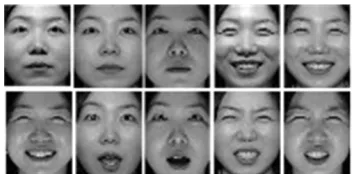
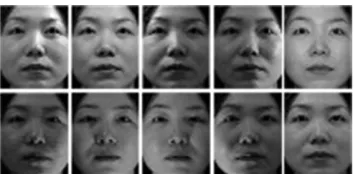
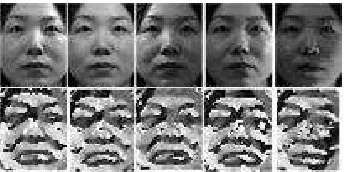
For the Asian Face Database, we have selected the following three groups, a) Faces with various expressions and slight different illumination; b) Faces with various poses and slight different illumination; and c) Faces with frontal images but various illumination conditions. For each group, there are ten different aligned images of each of 40 distinct persons. The size of each image is 40×50 pixels, with 256 gray levels per pixel. Examples are provided in Figures. 2, 3 and 4.
Fig. 2 Sample images for a subject of the Asian Face Database with various facial expressions and slightly different illumination
Fig. 3 Sample images for a subject of the Asian Face Database with various poses and slightly different illumination
Facial Data Acquisition
Illumination Normalization
Facial Data Pre-processing
Facial Feature Extraction
Facial Recognition or
[image:2.595.304.549.259.330.2] [image:2.595.328.505.548.635.2] [image:2.595.329.504.665.751.2]
Fig. 4 Sample images for a subject of the Asian Face Database with frontal images but various illumination conditions (from bright to dark)
C. Facial Images Preprocessing
In this preprocessing stage, we add the Gradientfaces based normalization technique [15] in order to extract the illumination insensitive measures which will be described as follow :
c.1 Reflectance Model : The reflectance Model used in
many cases can be expressed as
I(x, y) = R(x, y) L(x, y) (1)
where I(x, y) is the image pixel value, R(x, y) is the reflectance and L(x, y) is the illuminance at each point (x, y). Here, the nature of L(x, y) is determined by the lighting source, while R(x, y) is determined by the characteristics of the surface of object. Therefore, R(x, y) can be regarded as illumination insensitive measure. Separating the reflectance
R and the illuminace L from real images is an ill-posed
problem. In order to solve the problem, a “common” assumption is that L varies very slowly while R can change abruptly.
c.2 Gradientfaces : In order to extract illumination
insensitive measure from gradient, we have the following theorem by studying the relationships between the components of gradient domain.
Theorem 1 : Given an arbitrary image I(x, y) taken illumination condition, the ratio of y-gradient of I(x, y) ( I(x,
y)/ y) to x-gradient of I(x, y) ( I(x, y)/ x) is an illumination
insensitive measure.
Proof : Considering two neighboring points
(x, y)
and (x+∆ x, y)), according to the illumination model (1), we haveI(x, y) = R(x, y) L(x, y) (2)
I(x+∆ x, y) = R(x+∆ x, y) L(x+∆ x, y) (3)
Subtracting (2) from (3), we obtain
I(x+∆ x, y) - I(x, y)
= R(x+∆ x, y) L(x+∆ x, y) - R(x, y) L(x, y)
Based on the above-mentioned “common” assumption, which means L is approximately smooth, we have
I(x+∆ x, y) - I(x, y)
≈ R(x+∆ x, y) L(x, y) - R(x, y) L(x, y)
≈ (R(x+∆ x, y) - R(x, y)) L(x, y) (4)
Taking the limitation of the above equality (4), we can obtain ≈ ∂ ∂ x y x
I( , ) L(x, y) x
y x R
∂
∂ ( , ) (5)
Similarly, we have
≈ ∂ ∂ y y x
I( , ) L(x, y) y
y x R
∂
∂ ( , ) (6)
Dividing (6) by (5), we have
x y x I y y x I ∂ ∂ ∂ ∂ ) , ( ) , ( ≈ x y x R y y x R ∂ ∂ ∂ ∂ ) , ( ) , ( (7)
According to illumination model (1), R can be considered as an illumination insensitive measure. Thus, the ratio of y-gradient of I(x, y)∂I(x,y) ∂y to x-gradient of I(x, y)
x y x
I ∂
∂ ( , ) is also an illumination insensitive measure.
In practical application, the ratio of y-gradient of image to x-gradient of image might be infinitude derived by zero value of x-gradient of image. Therefore, it cannot be directly used as the illumination insensitive measure. These considerations lead us to defining Gradientfaces as follows.
Definition 1 : I be an image under variable lighting
conditions, then Gradientfaces (G) of image I can be defined as
G = arctan
− − gradient x gradient y I I
, G
∈
[0, 2π ) (8) Where I x-gradient and I y-gradient are the gradient of image I in the x, y direction, respectively.c.3 Implememtation : In order to extract Gradientfaces,
we need firstly to calculate the gradient of face image in the x, y direction. Gradientfaces can then be computed by the definition (8). There are many methods for calculating the gradient of image. However, the numerical calculation of derivative (gradient) is typically ill-posed. To compute the gradient stably, we smoothen the image first with Gaussian kernel function. With a convolution-type smoothing, the numerical calculation of gradient is much more stable in calculation. The main advantage for using Gaussian kernel is twofold: (a) Gradientfaces is more robust to image noise and, (b) it can reduce the effect of shadows. The implementation of Gradientfaces can be summarized in Table I.
Table I Implementation of Gradientfaces
and save your graphic images using a suitable graphics processing program that will allow you to create the images as PostScript (PS), Encapsulated PostScript (EPS), or Tagged Image File Format (TIFF), sizes them, and adjusts the resolution settings. If you created your source files in one of the following you will be able to submit the graphics without converting to a PS, EPS, or TIFF file: Microsoft
Word, Microsoft PowerPoint, Microsoft Excel, or Portable
Input: Image I
Output: The Gradientfaces of I
1. Smoothen input image by convolving with Gaussian kernel function :
I’ = I * G(x, y, σ),
where *is the convolution operator and
G(x, y, σ) = (1 / 2πσ2) exp ( - (x2 + y 2
) / 2 σ2 )
is Gaussian kernel function with standard deviation σ.
2 . Compute the gradient of image Iby feeding the smoothed image though a convolution operation with the derivative of Gaussian kernel function in the x, y directions:
Ix= I’ * Gx(x, y, σ),and Iy= I’ * Gy(x, y, σ),
where Gx(x, y, σ) and Gy(x, y, σ) are the derivative of Gaussian
kernel function in the x, y directions, respectively. 3. Compute the illumination insensitive measure by G = arctan (Iy / Ix )
∈
[0, 2π ). [image:3.595.72.249.48.135.2]Fig. 5 Sample images for a subject of the Asian Face Database with frontal images but various illumination conditions (from bright to dark) (upper row) and the corresponding Gradientfaces processed images (lower row)
Figure 5 shows the original images and the corresponding Gradientfaces processed images. Gradientfaces can extract the important features of face, such as facial shapes and facial objects (e.g., eyes, noses, mouths, and eyebrows) under various lighting conditions, which are key features for face recognition. Therefore, Gradientfaces is an illumination insensitive measure.
D. Facial Feature Extraction using principle component analysis (PCA)
Initial feature of a facial image is the gray intensity of each pixel. Each facial image is converted into a row vector by appending each row one after another. For the Asian database which has facial images geometry normalized and illumination insensitive measures extracted by the Gradientfaces technique has image size of 40 x 50. It will become a 2,000 dimensional feature vector which is very high for any classification technique to be applied in order to learn the underlying classification rules. Therefore, principle component analysis (PCA) is applied to extract more relevant features/signatures [22]. Principle component analysis (PCA) is a simple statistical method to reduce the dimensionality while minimizing mean squared reconstruction error [22].
Let us assume that
M
facial images that are denoted as MΙ
Ι
Ι
1,
2,...,
have sizea
×
b
pixels. Using conventional row appending method, we convert each of the images intob
a
N
=
×
dimensional column vector. At first the mean image as column vector,Ξ
of sizeN
, from all the image vectors of is calculated as shown in Equation (9).∑
=Ι
=
Ξ
Mi i
M
11
(9)
Then each face difference from the average is calculated using the equation (10).
a
i=
Ι
i−
Ξ
(10)We then construct the matrix
A
=
[
a
1,
a
2,...,
a
M]
containing all the mean-normalized face vectors as columns. Using this normalized face vectors we can calculate the covariance matrix
ℑ
along the feature dimension of sizeN
N
×
of all the features using the following conventional formula as:T
N
ΑΑ
=
ℑ
1
(11)Here notice that the matrix
ΑΑ
T of size2000
×
2000
needed to be constructed to calculate the matrixℑ
. However, it is virtually impossible for the memory constrains to perform any matrix operation on theΑΑ
T matrix. Rather, the method described in [23] is employed to construct the matrixℵ
using Equation (12). Instead ofT
ΑΑ
, the matrixΑ
TΑ
of size360
x
360
(out of 400 images 10 for each subject, 40 images one for each subject is kept apart for testing) is constructed asℵ
of sizeM
M
×
using:ℵ
=
Α
TΑ
M
1
(12)
Then we calculate the eigenvalue and eigenvectors of this covariance matrix using Equation (13).
[
V
,
D
]
=
eigs
(
ℵ
)
(13)Here,
D
=
[
d
1,
d
2,...,
d
M]
of sizeM
contains thesorted eigenvalues, such that
d
1〉
d
2〉
...
〉
d
M and the corresponding eigenvectors of the matrixℵ
is contained in the matrixV
=
[
v
1,
v
2,...,
v
M]
which is of sizeM
×
M
. According to the method proposed in [24], we can acquire the corresponding eigenvectors of the matrixℑ
using[
v
v
v
M]
V
=
1,
2,...,
as:
U
=
A
×
V
(14) Here notice that, even though each vectorv
i is of sizeM
, the vectorsu
iofU
=
[
u
1,
u
2,...,
u
M]
are of sizeN
. We can use the matrixU
to project ourN
data onto lowerM
dimensions. The projected data from the originalN
dimensional space to a subspace spanned by
r
principal eigenvectors (for the topr
eigenvalues) contained in the matrixΩ
r expressed as:
Y
r=
Ω
rA
(15) In our previous research work [1], we chose the top 50 principle components as features in the lower dimension as the sum of the top 50 eigenvalues of the covariance matrix is more than 90% of the sum of all the eigenvalues.E. Facial Recognition or Classification
[image:4.595.76.249.49.135.2]normalize the test images vector by subtracting the mean calculated previously (Equation (9)) using:
B
=
T
−
Ξ
(16) Then using Equation (15) we project the normalized test data set as shown in the following equation.Z
r=
Ω
rB
(17)For each column in the matrix
Z
r, we calculate the Euclidean Norm of the difference with the projected vectors of matrixY
r. Finally, the test image is identified as the person with the smallest value among all the Euclidean Norm values.IV. EXPERIMENTAL RESULTS AND DISCUSSION
Figures 6, 7 & 8 show the recognition accuracy with & without Gradientfaces preprocessing under various conditions.
0 10 20 30 40 50 60 70
1 4 7 10 13 16 19 22 25 28 31 34 37 40 43 46 49 Number of signatures
%
A
ccu
ra
cy
With Preprocessing
[image:5.595.307.549.123.296.2]Without Preprocessing
Fig. 6 Recognition accuracy with and without Gradientfaces preprocessing for the Asian Face Database with various facial expressions and slightly different illumination
In Figure 6, for face database with various facial expressions and slightly different illumination, there is a slight improvement in recognition accuracy with Gradientfaces illumination normalization in the preprocessing stage, from 51.75% to 59.75%.
0 5 10 15 20 25 30 35 40
1 4 7 10 13 16 19 22 25 28 31 34 37 40 43 46 49 Number of signatures
%
A
ccu
ra
cy
With Preprocessing
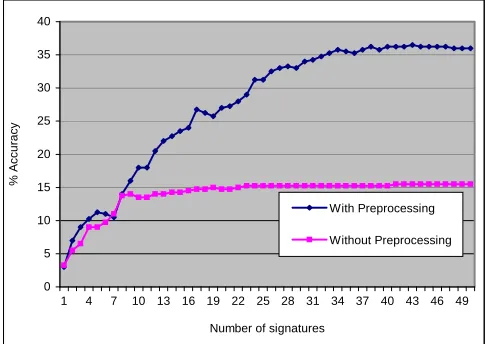
[image:5.595.48.292.272.460.2]Without Preprocessing
Fig. 7 Recognition accuracy with and without Gradientfaces preprocessing for the Asian Face Database with various poses and slightly different illumination
In Figure 7, for face database with various poses and slightly different illumination, there is a big improvement in recognition accuracy with Gradientfaces illumination normalization in the preprocessing stage, from 15.50% to 36.50%.
0 10 20 30 40 50 60 70
1 4 7 10 13 16 19 22 25 28 31 34 37 40 43 46 49 Number of signatures
%
A
ccu
ra
cy
With preprocessing
[image:5.595.299.553.418.498.2]Without preprocessing
Fig. 8 Recognition accuracy with and without Gradientfaces preprocessing for the Asian Face Database with frontal images but various illumination conditions (from bright to dark)
In Figure 8, for face database with frontal images but various illumination, there is a much bigger improvement in recognition accuracy with Gradientfaces illumination normalization in the preprocessing stage, from 6.25% to 60.75%. The results are summarized in Table II.
Table II Summary of testing results Conditions Recognition
accuracy without preprocessing
Recognition accuracy with preprocessing
% of improvement
Various Expression
51.75% 59.75% 15.45% Various Poses 15.50% 36.50% 235.48% Various
Illumination
6.25% 60.75% 972.00%
V. CONCLUSIONS
Illumination has been a major problem on our PCA based human face recognition. With illumination normalization technique in the facial image preprocessing stage to extract the illumination invariant features, it improves the recognition rate. Among all the illumination normalization techniques we have evaluated, Gradientfaces has been identified as the one which works well with our PCA based human face recognition system. It greatly improves the recognition rate especially those images under various illumination conditions, from a low recognition rate of 6.25% to 60.75%.
[image:5.595.49.292.566.738.2]REFERENCES
[1] B. Poon, M. A. Amin and H. Yan, “Performance evaluation and comparison of PCA based human face recognition methods for distorted images,” International Journal of Machine Learning and Cybernetics,Volume 2, Issue 4 (2011) p.245 – p.259.
[2] D. J. Jobson, Z. Rahman, G.A. Woodell, “Properties and performance of a center/surround retinex”, IEEE Transactions on Image Processing, Vol. 6, No.3, pp. 451-462, 1997.
[3] E. R. Land, J.J. McCann, “Lightness and retinex theory”, Journal of the Optical Society of America, Vol. 61, No.1, pp. 1-11, 1971. [4] D. J. Jobson, Z. Rahman, G.A. Woodell, “A multiscale retinex for
bridging the gap between color images and the human observations of scenes”, IEEE Transactions on Image Processing, Vol. 6, No. 7, pp. 965-976, 1997.
[5] Y. K. Park, S. L. Park, J. K. Kim, “Retinex method based on adaptive smoothing for illumination invariant face recognition”, Signal Processing, Vol. 88, No. 8, pp. 1929-1945, 2008.
[6] G. Reusch, F. Cardinaux, S. Marcel, “Lighting normalization algorithms for face verification”, IDIAP-com 05-03, March 2005. [7] H. Wang, S. Z. Li, Y. Wang, J. Zhang, “Self quotient image for
face recognition”, Proceedings of the International Conference on Image Processing, Vol. 2, pp. 1397-1400, 2004.
[8] W. Chen, M. J. Er, S. Wu, “Illumination compensation and normalization for robust face recognition using discrete cosine transform in logarithmic domain”, IEEE Transactions on Systems, Man and Cybernetics - part B, Vol. 36, No.2, pp. 458-466, 2006. [9] S. Du, R. Ward, “Wavelet-based illumination normalization for
face recognition”, Proc. of the IEEE International Conference on Image Processing, Vol. 2, pp. 954-957, 2005.
[10] T. Zhang, B. Fang, Y. Yuan, Y. Y. Tang, Z. Shang, D. Li, F. Lang, “Multiscale facial structure representation for face recognition under varying illumination”, Pattern Recognition, Vol. 42, No.2, pp. 252-258, 2009.
[11] R. Gross, V. Brajovic, “An image preprocessing algorithm for illumination invariant face recognition”, Proc. of the 4th International Conference on Audio and Video-Based Biometric Personal Authentication, Lecture Notes in Computer Science, Vol. 2688, pp. 10-18, 2003.
[12] X. Tan, B. Triggs, “Enhanced local texture sets for face recognition under difficult lighting conditions”, IEEE Transactions on Image Processing, Vol. 19, No.6, pp. 1635-1650, 2010.
[13] W. T. Freeman, E. H. Adelson, “The design and use of steerable filters”, IEEE Transactions on Pattern Analysis and Machine Intelligence, Vol. 13, pp. 891-906, 1991.
[14] V. Struc, N. Pavesic, “Illumination invariant face recognition by non-local smoothing”, Proceedings of the Biometric ID Management and Multimodal communication, Lecture Notes in Computer Science, Vol. 5707, pp. 1-8, 2009.
[15] T. Zhang, Y.Y. Tang, B. Fang, Z. Shang, X. Liu, “Face recognition under varying illumination using gradientfaces”, IEEE Transactions on Image Processing, Vol. 18, No. 11, pp. 2599-2606, 2009.
[16] B. Wang, W. Li, W. Yang, Q. Liao, “Illumination normalization based on weber's law with application to face recognition”, IEEE Signal Processing Letters, Vol. 18, No.8, pp. 462-465, 2011. [17] X. Xie, W. S. Zheng, J. Lai, P. C. Yuen, C. Y. Suen,
“Normalization of face illumination based on large- and small- scale features”, IEEE Transactions on Image Processing, Vol. 20, No.7, pp. 1807-1821, 2011.
[18] M. Sharif, S. Mohsin, M. J. Jamal, M. Raza, “Illumination Normalization Preprocessing for face recognition”, 2nd Conference
on Environmental Science and Information Application Technology, pp. 44 – 47, 2010.
[19] V. Struc, N. Pavesic, “Photometric normalization techniques for illumination invariance”, In: Y.J. Zhang (Ed.), Advance in Face Image Analysis : Techniques and technologies, IGI Global, pp. 279-300, 2011
[20] V. Struc, N. Pavesic, “Gabor-Based Kernel partial-Least-Square Discrimination Features for Face Recongition”, Informatica (Vilnius), vol. 20, no.1, pp. 115-138, 2009.
[21] Asian face database from Intelligent Media Laboratory www.imlab.postech.ac.kr
[22] M. Turk and A. Pentland, “Eigenfaces for Recognition”, Journal of Cognitive Neuroscience, Vol. 13, No.1, pp. 71-86, 1991.
[23] R. Chellapa, C. L. Wilson and S. Sirohey, “Human and machine recognition of faces: a survey”, Proc. IEEE, pp 705-740, 1995
[24] B. Poon, M. A. Amin and H. Yan, “PCA based face recognition and testing criteria”, ICMLC, Vol. 5, pp. 2945—2949, 2009.