Review Article
Effect of metformin on cardiac function in patients with
STEMI: a systematic review and meta-analysis
Linglong Chen
1, Rongrong Zhou
3, Zhili Xu
1, Liyi You
2Departments of 1Emergency, 2Ultrasound Medicine, Wenzhou People’s Hospital, Wenzhou, Zhejiang Province, P. R. China; 3Medical Skill Center, Wenzhou People’s Hospital, Wenzhou, Zhejiang Province, P. R. China
Received November 15, 2017; Accepted July 21, 2018; Epub September 15, 2018; Published September 30, 2018
Abstract:Background and aim: Metformin may have the potential in improving cardiac function in patients with ST-elevation myocardial infarction (STEMI). However, the results remain controversial. We conducted a systematic review and meta-analysis to explore the effect of metformin on cardiac function of patients with STEMI. Methods: PubMed, EMbase, Web of science, EBSCO, and Cochrane library databases were systematically searched. Randomized controlled trials (RCTs) assessing the effect of metformin versus placebo on cardiac function of pa-tients with STEMI were included. Two investigators independently searched articles, extracted data, and assessed the quality of included studies. Meta-analysis was performed using the random-effect model. Results: Four RCTs involving 1366 patients were included in the meta-analysis. Overall, compared with control intervention in
non-diabetic patients with STEMI, metformin treatment was found to significantly reduce LVEF (MD = -1.70; 95% CI = -1.71 to -1.69; P<0.00001), and increase LVEDV (MD = 0.50; 95% CI = 0.43 to 0.57; P<0.00001) and LVESV (MD = 3.80; 95% CI = 3.74 to 3.86; P<0.00001), but demonstrated no influence on NT-proBNP (MD = -1.90; 95% CI = -35.90 to 32.10; P = 0.91), creatinine (MD = -0.23; 95% CI = -2.09 to 1.62; P = 0.81), and HbA1c (MD = 0.00; 95% CI = -0.05 to 0.05; P = 1.00). Conclusions: Compared to control intervention non-diabetic patients with STEMI,
metformin treatment significantly reduced LVEF, and improved LVEDV as well as LVESV, but had no influence on
NT-proBNP, creatinine and HbA1c.
Keywords: Metformin, cardiac function, ST-elevation myocardial infarction, systematic review, meta-analysis
Introduction
Cardiac dysfunction is commonly caused by
acute myocardial infarction, and up to 40% of
patients suffer from diastolic dysfunction which
serves as an important and independent
pre-dictor of adverse outcome regardless of
systol-ic dysfunction [1-3]. Diastolsystol-ic dysfunction after
myocardial infarction is associated with
diabe-tes, the extent of myocardial injury, delayed and
unsuccessful reperfusion, hypertension and fe-
male sex [4, 5]. Acute myocardial injury is repor-
ted to directly affect regional diastolic
dysfunc-tion, and subsequent infarct healing and remo-
deling have important association with global
diastolic function [6-9]. However, there still lack
effective therapies to treat or prevent the oc-
currence of diastolic dysfunction following
myo-cardial infarction [10, 11].
Metformin is known as the most commonly us-
tes [12-14]. Metformin has been reported to im-
prove outcome independently of glycemic
con-trol in patient with diabetics, and may have di-
rect cardioprotective effects [15-17]. Diastolic
function in diabetes is improved by metformin
treatment after coronary angiography [18]. Left
ventricular end-diastolic pressure is lowered in
in a non-diabetic rat model [19]. However, in
ST-elevation myocardial infarction (STEMI) and
non-diabetic patients, metformin treatment ca-
nnot help preserve left ventricular ejection
frac-tion (LVEF) at 4 months [20]. Considering these
inconsistent effects, we therefore conduct a sy-
stematic review and meta-analysis of RCTs to
evaluate the effectiveness of metformin
treat-ment on cardiac function in patients with STE-
MI.
Materials and methods
Preferred Reporting Items for Systematic Re-
views and Meta-analysis statement [21] and
the
Cochrane Handbook for Systematic Revi-
ews of Interventions
[22]. All analyses were
based on previously published studies, and
thus no ethical approval and patient consent
were required.
Literature search and selection criteria
PubMed, EMbase, Web of science, EBSCO, and
the Cochrane library were systematically sear-
ched from inception to November 2017, with
the following keywords: metformin, and
myo-cardial infarction or cardiac infarction. To in-
clude additional eligible studies, the reference
lists of retrieved studies and relevant reviews
were also hand-searched and the process
above was performed repeatedly until no
fur-ther article was identified.
The inclusion criteria were as follows: (1) study
population are non-diabetic patients with STE-
MI; (2) intervention treatments are metformin
versus placebo; (3) and study design is RCT.
The exclusion criteria included known diabe-
tes, previous myocardial infarction, and severe
renal dysfunction.
Data extraction and outcome measures
The following information was extracted for the
included RCTs: first author, publication year,
sa-mple size, baseline characteristics of patients,
quality of each RCT included in this
meta-analy-sis [23]. This scale conmeta-analy-sisted of three
evalua-tion elements: randomizaevalua-tion (0-2 points), blin-
ding (0-2 points), dropouts and withdrawals
(0-1 points). One point would be allocated to
each element if they had been mentioned in
article, and another one point would be given if
the methods of randomization and/or blinding
had been detailedly and appropriately describ-
ed. If the methods of randomization and/or
blinding were inappropriate, or dropouts and
withdrawals had not been recorded, then one
point was deducted. The score of Jadad Scale
varied from 0 to 5 points. An article with Jadad
score ≤2 was considered to be of low quality. If
the Jadad score ≥3, the study was thought to
be of high quality [24].
Statistical analysis
Mean differences (MDs) with 95% confidence
intervals (CIs) for continuous outcomes (LVEF,
LVEDV, LVESV, NT-proBNP, creatinine and
Hb-A1c) were used to estimate the pooled effects.
All meta-analyses were performed using the
random-effect models with DerSimonian and
Laird weights. Heterogeneity was tested using
the Cochran Q statistic (p<0.1) and quantified
with the I
2statistic, which described the
varia-tion of effect size that was attributable to
het-erogeneity across studies. An I
2value greater
than 50% indicated significant heterogeneity.
Sensitivity analysis was performed to detect
[image:2.612.92.369.72.293.2]the influence of a single study on the overall
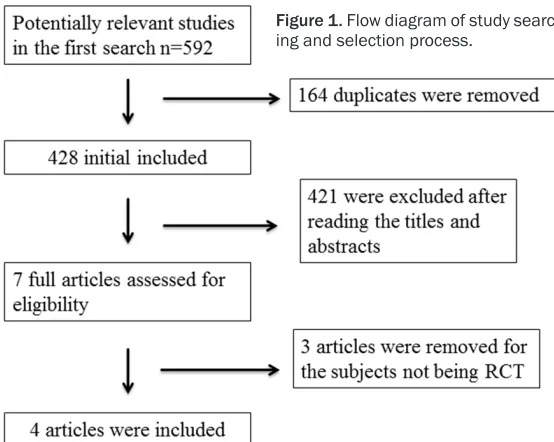
Figure 1. Flow diagram of study search-ing and selection process.
metformin, control, study de-
sign. The author would be
contacted to acquire the da-
ta when necessary.
The primary outcome was left
ventricular ejection fraction
(LVEF). Secondary outcomes
include left ventricular end
diastolic volume (LVEDV), left
ventricular end systolic
vol-ume (LVESV), N-terminal
pro-brain natriuretic peptide (NT-
proBNP), creatinine and
gly-cated hemoglobin (HbA1c).
Quality assessment in
indi-vidual studies
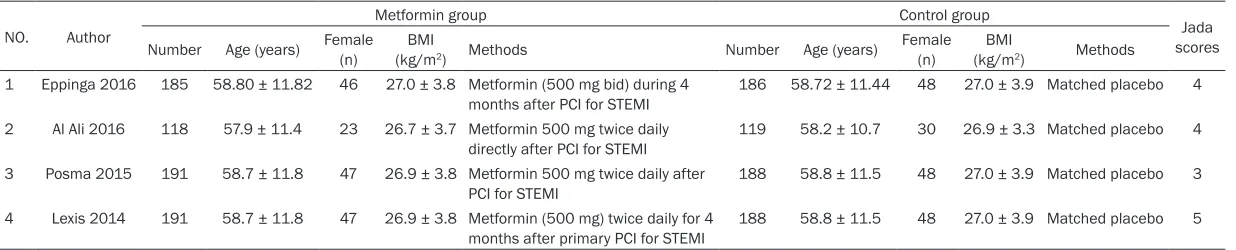
Table 1. Characteristics of included studies
NO. Author
Metformin group Control group
Jada scores Number Age (years) Female (n) (kg/mBMI 2) Methods Number Age (years)
Female
(n) (kg/mBMI 2) Methods 1 Eppinga 2016 185 58.80 ± 11.82 46 27.0 ± 3.8 Metformin (500 mg bid) during 4
months after PCI for STEMI 186 58.72 ± 11.44 48 27.0 ± 3.9 Matched placebo 4 2 Al Ali 2016 118 57.9 ± 11.4 23 26.7 ± 3.7 Metformin 500 mg twice daily
directly after PCI for STEMI 119 58.2 ± 10.7 30 26.9 ± 3.3 Matched placebo 4 3 Posma 2015 191 58.7 ± 11.8 47 26.9 ± 3.8 Metformin 500 mg twice daily after
PCI for STEMI 188 58.8 ± 11.5 48 27.0 ± 3.9 Matched placebo 3
4 Lexis 2014 191 58.7 ± 11.8 47 26.9 ± 3.8 Metformin (500 mg) twice daily for 4
estimate via omitting one study in turn when
necessary. Owing to the limited number (<10)
of included studies, publication bias was not
assessed. P<0.05 in two-tailed tests was
con-sidered statistically significant. All statistical
analyses were performed with Review Mana-
ger Version 5.3 (The Cochrane Collaboration,
Software Update, Oxford, UK).
Results
Literature search, study characteristics and
quality assessment
The flow chart for the selection process and
detailed identification was presented in
Figure
1
. A total of 592 publications were identified
through the initial search of databases. Ultima-
tely, four RCTs were included in the
meta-analy-sis [20, 25-27].
[image:4.612.96.519.69.148.2]The baseline characteristics of the four eligible
RCTs in the meta-analysis are summarized in
Table 1. The four studies were published betw-
een 2014 and 2016, and sample sizes ranged
from 237 to 379 with a total of 1366. There
were similar baseline characteristics between
metformin group and control group. Metformin
500 mg twice daily or matched placebo were
taken directly after percutaneous coronary in-
tervention (PCI) in patients with STEMI.
Among the four RCTs, three studies reported
the LVEF [20, 25, 26], two studies reported the
LVEDV and LVESV [25, 26], two studies report
-ed the NT-proBNP, creatinine and HbA1c [20,
25]. Jadad scores of the four included studies
varied from 3 to 5, and all four studies were
considered to be high-quality ones according to
quality assessment.
Primary outcome: LVEF
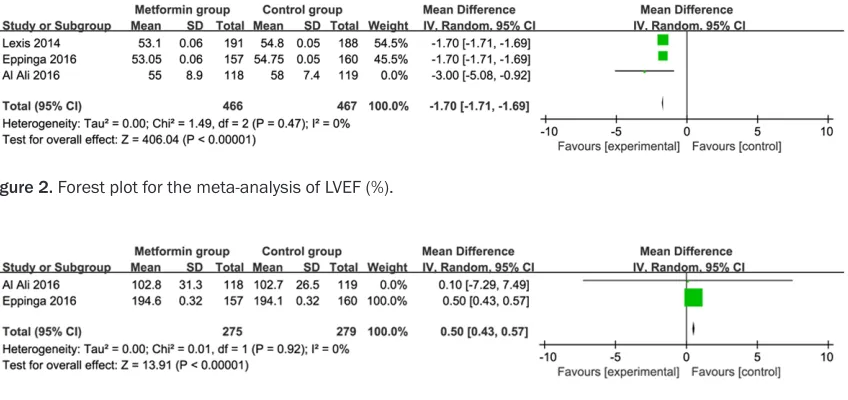
This outcome data was analyzed with the
ran-dom-effect model, and the pooled estimate of
the three included RCTs suggested that
com-pared to control group in patients with STEMI,
metformin intervention was associated with a
significantly decreased LVEF (MD = -1.70; 95%
CI = -1.71 to -1.69; P<0.00001), with no hetero
-geneity among the studies (I
2= 0%, heteroge
-neity P = 0.47) (
Figure 2).
Sensitivity analysis
No heterogeneity was observed among the in-
cluded studies for the LVEF. Thus, we did not
perform sensitivity analysis by omitting one
study in each turn to detect the source of he-
terogeneity.
Secondary outcomes
Compared with control intervention in patients
with STEMI, metformin intervention significant
-ly improved LVEDV (MD = 0.50; 95% CI = 0.43
[image:4.612.97.521.71.271.2]to 0.57; P<0.00001; Figure 3
), LVESV (MD =
3.80; 95% CI = 3.74 to 3.86; P<0.00001;
Fig-
ure 4
), but had no remarkable influence on
NT-proBNP (MD = -1.90; 95% CI = -35.90 to
32.10; P = 0.91;
Figure 5
), creatinine (MD =
-0.23; 95% CI = -2.09 to 1.62; P = 0.81;
Figure
[image:4.612.97.521.189.260.2]Figure 2. Forest plot for the meta-analysis of LVEF (%).
6
), and HbA1c (MD = 0.00; 95% CI = -0.05 to
0.05; P = 1.00;
Figure 7).
Discussion
It is well known that left ventricular function is
thought to be the most important predictor of
morbidity and mortality after STEMI. One
clini-cal study reports that 500 mg of metformin
twice daily for 4 months shows no notable influ
-ence on LVEF in patients without diabetes after
primary PCI for STEMI [20]. Concentration of
NT-proBNP has the strong relationship with
LV-EF and clinical outcome [28, 29]. In our
meta-analysis, compared to control intervention in
patients with STEMI, metformin as adjunct to
optimal medical treatment is associated with
significantly reduced LVEF, and improved
LVE-DV and LVESV, with no remarkable effect on
NT-proBNP. To our knowledge, this
meta-analy-sis is the first to study the effects of metformin
on cardiac function in non-diabetic patients
with STEMI.
However, these results are not consistent with
experimental studies. Metformin has been fou-
nd to result in the reduced infarct size of 22%
and relative improvement in LVEF of 52% in a
non-diabetic rat model of myocardial infarction
[19]. In a mouse model, administration of
met-formin is effective in improving left ventricu-
lar function during ischemia-reperfusion [30].
There may be several reasons for the lack of
efficacy of metformin on LVEF in STEMI. Earlier
[image:5.612.95.520.77.421.2]Figure 4. Forest plot for the meta-analysis of LVESV (ml).
[image:5.612.102.520.293.367.2]Figure 5. Forest plot for the meta-analysis of NT-proBNP (ng/L).
Figure 6. Forest plot for the meta-analysis of creatinine (μmol/L).
[image:5.612.92.524.407.477.2]animal studies reports the protective effects of
metformin are mainly performed in animals un-
dergoing occlusion of the left main or the
proxi-mal left anterior descending coronary artery
[30, 31]. This meta-analysis only includes pati-
ents presenting with acute myocardial
infarc-tion and excludes the patients with diabetes.
The exclusion of this high-risk category may
affect our findings and is contrast with com
-monly real-life practice [32].
In addition, the lack of efficacy of metformin
may be due to the insufficient time window
between coronary occlusion and achieving ef-
fective plasma levels of metformin. On average,
the time between PCI and the achievement of
effective plasma levels of metformin is
approxi-mately 4 hours [33]. Effective plasma
metfor-min levels during reperfusion or earlier may be
very important for the clinical outcomes of
STEMI. In one recent RCT of metabolic syndro-
me patients, metformin treatment (250 mg 3
times daily) starting 7 days prior to elective PCI
is revealed to produce a smaller cardiac
bio-marker release and a favorable 1-year clinical
outcome [34]. The beneficial effects of metfor
-min on left ventricular function and myocardial
infarct size are proven when metformin is ad-
ministered prior to or during
ischemia-reperfu-sion in experimental animal studies [30].
Furthermore, the dose of metformin
adminis-tration (500 mg twice daily) may be insufficient
for the efficacy in myocardial infarction patients
and is generally well-tolerated, but the highest
possible dose of metformin may cause lactic
acidosis or impaired renal function [35].
Long-term metformin treatment results in lower peak
levels of biochemical markers of myocardial
infarct size and improved outcome compared
with other glucose-lowering therapies in pati-
ents with diabetes [17, 36]. Metformin
treat-ment (500 mg twice daily) for 4 months is re-
ported to have no significant effect on glycemic
control compared to placebo, as evidenced by
the analysis of glucose and HbA1c levels [20].
Our meta-analysis indicates that metformin
treatment (500 mg twice daily) demonstrates
no notable influence on creatinine, and HbA1c
in STEMI. However, in patients with coronary ar-
tery disease but without diabetes, metformin
treatment (850 mg twice daily for 18 months)
lead to a significantly reduced HbA1c values
[37]. More higher doses and longer duration of
metformin treatment may have the benefits to
clinical outcome for STEMI.
Several limitations should be taken into acco-
unt. Firstly, our analysis is based on only four
RCTs, and more clinical trials with large sam-
ple are needed to explore this issue. The do-
ses and duration of metformin treatment in
this meta-analysis may be insufficient for the
efficacy of metformin treatment. Next, future
meta-analysis should perform subgroup
analy-sis based on non-diabetic patients with
myo-cardial infarction and diabetic patients with
myocardial infarction. Finally, some unpublish-
ed and missing data may lead bias to the
pooled effect.
Metformin treatment may show no benefits to
cardiac function in patients with non-diabetic
patients with STEMI, but more studies should
be performed to investigate the higher dose
and longer duration of metformin in STEMI.
Disclosure of conflict of interest
None.
Address correspondence to: Liyi You, Department of
Ultrasound Medicine, Wenzhou People’s Hospital, 57 Canghou Street, Wenzhou 325000, Zhejiang Province, P. R. China. Tel: 008657788059907; Fax: 008657788059907; E-mail: [email protected]
References
[1] Meta-Analysis Research Group in Echocardiog-raphy (MeRGE) AMI Collaborators, Møller JE,
Whalley GA, Dini FL, Doughty RN, Gamble GD,
Klein AL, Quintana M, Yu CM. Independent prognostic importance of a restrictive left
ven-tricular filling pattern after myocardial infarc -tion: an individual patient meta-analysis: Me-ta-Analysis Research Group in Echocardiogra- phy acute myocardial infarction. Circulation 2008; 117: 2591-2598.
[2] Beitnes JO, Gjesdal O, Lunde K, Solheim S, Ed-vardsen T, Arnesen H, Forfang K and Aakhus S. Left ventricular systolic and diastolic function improve after acute myocardial infarction treat-ed with acute percutaneous coronary
interven-tion, but are not influenced by intracoronary
injection of autologous mononuclear bone marrow cells: a 3 year serial echocardiogra- phic sub-study of the randomized-controlled ASTAMI study. Eur J Echocardiogr 2011; 12: 98-106.
[4] Ceyhan K, Kadi H, Koc F, Celik A, Ozturk A and Onalan O. Longitudinal left ventricular function
in normotensive prediabetics: a tissue Doppler
and strain/strain rate echocardiography study. J Am Soc Echocardiogr 2012; 25: 349-356. [5] Scantlebury DC and Borlaug BA. Why are wom
-en more likely than m-en to develop heart fail-ure with preserved ejection fraction? Curr Opin Cardiol 2011; 26: 562-568.
[6] Prasad SB, See V, Brown P, McKay T, Narayan
A, Kovoor P and Thomas L. Impact of duration of ischemia on left ventricular diastolic proper-ties following reperfusion for acute myocardial infarction. Am J Cardiol 2011; 108: 348-354. [7] Azevedo PS, Polegato BF, Minicucci MF, Pio
SM, Silva IA, Santos PP, Okoshi K, Paiva SA and Zornoff LA. Early echocardiographic predictors of increased left ventricular end-diastolic pres-sure three months after myocardial infarction in rats. Med Sci Monit 2012; 18: BR253-258. [8] McAlindon E, Bucciarelli-Ducci C, Suleiman MS
and Baumbach A. Infarct size reduction in acute myocardial infarction. Heart 2015; 101: 155-160.
[9] Baron T, Hambraeus K, Sundström J, Erlinge D,
Jernberg T, Lindahl B; TOTAL-AMI study group. Impact on long-term mortality of presence of obstructive coronary artery disease and
clas-sification of myocardial infarction. Am J Med
2016; 129: 398-406.
[10] Jarnert C, Landstedt-Hallin L, Malmberg K, Melcher A, Ohrvik J, Persson H and Ryden L. A randomized trial of the impact of strict glycae-mic control on myocardial diastolic function
and perfusion reserve: a report from the DADD (Diabetes mellitus And Diastolic Dysfunction)
study. Eur J Heart Fail 2009; 11: 39-47. [11] McMurray JJ, Adamopoulos S, Anker SD, Auric
-chio A, Böhm M, Dickstein K, Falk V, Filippatos
G, Fonseca C, Gomez-Sanchez MA, Jaarsma T, Køber L, Lip GY, Maggioni AP, Parkhomenko A, Pieske BM, Popescu BA, Rønnevik PK, Rutten FH, Schwitter J, Seferovic P, Stepinska J,
Trin-dade PT, Voors AA, Zannad F, Zeiher A; Task Force for the Diagnosis and Treatment of Acute
and Chronic Heart Failure 2012 of the Euro-pean Society of Cardiology, Bax JJ,
Baumgart-ner H, Ceconi C, Dean V, Deaton C, Fagard R, Funck-Brentano C, Hasdai D, Hoes A, Kirchhof P, Knuuti J, Kolh P, McDonagh T, Moulin C,
Popescu BA, Reiner Z, Sechtem U, Sirnes PA,
Tendera M, Torbicki A, Vahanian A, Windecker S, McDonagh T, Sechtem U, Bonet LA,
Avraa-mides P, Ben Lamin HA, Brignole M, Coca A,
Cowburn P, Dargie H, Elliott P, Flachskampf FA,
Guida GF, Hardman S, Iung B, Merkely B, Muel-ler C, Nanas JN, Nielsen OW, Orn S, Parissis JT, Ponikowski P; ESC Committee for Practice Guidelines. ESC guidelines for the diagnosis and treatment of acute and chronic heart
fail-ure 2012: The Task Force for the Diagnosis
and Treatment of Acute and Chronic Heart Fail-ure 2012 of the European Society of
Cardiolo-gy. Developed in collaboration with the Heart
Failure Association (HFA) of the ESC. Eur J Heart Fail 2012; 14: 803-869.
[12] Mellbin LG, Malmberg K, Norhammar A, Wedel
H, Rydén L; DIGAMI 2 Investigators. The impact
of glucose lowering treatment on long-term prognosis in patients with type 2 diabetes and
myocardial infarction: a report from the DIGA -MI 2 trial. Eur Heart J 2008; 29: 166-176. [13] Maruthur NM, Tseng E, Hutfless S, Wilson LM,
Suarez-Cuervo C, Berger Z, Chu Y, Iyoha E,
Se-gal JB and Bolen S. Diabetes medications as
monotherapy or metformin-based combination therapy for type 2 diabetes: a systematic re-view and meta-analysis. Ann Intern Med 2016; 164: 740-751.
[14] Syngelaki A, Nicolaides KH, Balani J, Hyer S, Akolekar R, Kotecha R, Pastides A and Sheha-ta H. Metformin versus placebo in obese preg-nant women without diabetes mellitus. N Engl J Med 2016; 374: 434-443.
[15] Mellbin LG, Malmberg K, Norhammar A, Wedel
H, Rydén L; DIGAMI 2 Investigators. Prognostic
implications of glucose-lowering treatment in patients with acute myocardial infarction and diabetes: experiences from an extended
fol-low-up of the Diabetes Mellitus Insulin-Glucose Infusion in Acute Myocardial Infarction (DIGA
-MI) 2 study. Diabetologia 2011; 54:
1308-1317.
[16] Kao J, Tobis J, McClelland RL, Heaton MR, Da
-vis BR, Holmes DR Jr, Currier JW; Investigators
in the Prevention of Restenosis With Tranilast and Its Outcomes Trial. Relation of metformin treatment to clinical events in diabetic patients undergoing percutaneous intervention. Am J Cardiol 2004; 93: 1347-50, A5.
[17] Lexis CP, Wieringa WG, Hiemstra B, van Deurs
-en VM, Lipsic E, van der Harst P, van Veldhuis
-en DJ and van der Horst IC. Chronic metformin
treatment is associated with reduced myocar-dial infarct size in diabetic patients with ST-segment elevation myocardial infarction.
Car-diovasc Drugs Ther 2014; 28: 163-171.
[18] Andersson C, Sogaard P, Hoffmann S, Han-
sen PR, Vaag A, Major-Pedersen A, Hansen TF,
Bech J, Kober L, Torp-Pedersen C and Gislason GH. Metformin is associated with improved left ventricular diastolic function measured by
tis-sue Doppler imaging in patients with diabetes.
Eur J Endocrinol 2010; 163: 593-599. [19] Yin M, van der Horst IC, van Melle JP, Qian C,
van Gilst WH, Sillje HH and de Boer RA. Metfor-min improves cardiac function in a nondiabetic rat model of post-MI heart failure. Am J Physiol Heart Circ Physiol 2011; 301: H459-468. [20] Lexis CP, van der Horst IC, Lipsic E, Wieringa
Nieuwland W, Willemsen HM, Dorhout B, Mol -mans BH, van der Horst-Schrivers AN, Wolffen-buttel BH, ter Horst GJ, van Rossum AC, Tijssen JG, Hillege HL, de Smet BJ, van der Harst P, van
Veldhuisen DJ; GIPS-III Investigators. Effect of
metformin on left ventricular function after acute myocardial infarction in patients without diabetes: the GIPS-III randomized clinical trial. JAMA 2014; 311: 1526-1535.
[21] Moher D, Liberati A, Tetzlaff J, Altman DG and
Group P. Preferred reporting items for system-atic reviews and meta-analyses: the PRISMA statement. BMJ 2009; 339: b2535.
[22] Higgins JPT GS. Cochrane Handbook for
Sys-tematic Reviews of Interventions Version 5.1.0
[updated March 2011]. The Cochrane Collabo-ration 2011. Available from www.cochrane-handbook.org.
[23] Jadad AR, Moore RA, Carroll D, Jenkinson C, Reynolds DJ, Gavaghan DJ and McQuay HJ. As -sessing the quality of reports of randomized clinical trials: is blinding necessary? Controlled Clinical Trials 1996; 17: 1-12.
[24] Kjaergard LL, Villumsen J and Gluud C. Report -ed methodologic quality and discrepancies be-tween large and small randomized trials in meta-analyses. Ann Intern Med 2001; 135: 982-9.
[25] Eppinga RN, Hartman MH, van Veldhuisen DJ,
Lexis CP, Connelly MA, Lipsic E, van der Horst
IC, van der Harst P and Dullaart RP. Effect of
metformin treatment on lipoprotein subfrac-tions in non-diabetic patients with acute myo-cardial infarction: a glycometabolic interven-tion as adjunct to primary coronary interveninterven-tion in ST elevation myocardial infarction (GIPS-III) trial. PLoS One 2016; 11: e0145719.
[26] Al Ali L, Hartman MT, Lexis CP, Hummel YM,
Lipsic E, van Melle JP, van Veldhuisen DJ, Voors
AA, van der Horst IC and van der Harst P. The effect of metformin on diastolic function in pa-tients presenting with ST-elevation myocardial infarction. PLoS One 2016; 11: e0168340. [27] Posma RA, Lexis CP, Lipsic E, Nijsten MW,
Damman K, Touw DJ, van Veldhuisen DJ, van
der Harst P and van der Horst IC. Effect of metformin on renal function after primary per-cutaneous coronary intervention in patients without diabetes presenting with ST-elevation myocardial infarction: data from the GIPS-III
trial. Cardiovasc Drugs Ther 2015; 29:
451-459.
[28] van Veldhuisen DJ, Linssen GC, Jaarsma T, van
Gilst WH, Hoes AW, Tijssen JG, Paulus WJ,
Voors AA and Hillege HL. B-type natriuretic
peptide and prognosis in heart failure pati- ents with preserved and reduced ejection frac-tion. J Am Coll Cardiol 2013; 61: 1498-1506.
[29] Stampfli SF, Erhart L, Hagenbuch N, Stahli BE,
Gruner C, Greutmann M, Niemann M, Kauf- mann BA, Jenni R, Held L and Tanner FC. Prog-nostic power of NT-proBNP in left ventricular non-compaction cardiomyopathy. Int J Cardiol 2017; 236: 321-327.
[30] Calvert JW, Gundewar S, Jha S, Greer JJ,
Bes-termann WH, Tian R and Lefer DJ. Acute met -formin therapy confers cardioprotection again- st myocardial infarction via
AMPK-eNOS-medi-ated signaling. Diabetes 2008; 57: 696-705.
[31] Gundewar S, Calvert JW, Jha S, Toedt-Pingel I,
Ji SY, Nunez D, Ramachandran A, Anaya-Cisne
-ros M, Tian R and Lefer DJ. Activation of
AMP-activated protein kinase by metformin impro- ves left ventricular function and survival in heart failure. Circ Res 2009; 104: 403-411. [32] McAlister FA, Quan H, Fong A, Jin Y, Cujec B
and Johnson D. Effect of invasive coronary re -vascularization in acute myocardial infarction on subsequent death rate and frequency of chronic heart failure. Am J Cardiol 2008; 102: 1-5.
[33] Tucker GT, Casey C, Phillips PJ, Connor H, Ward
JD and Woods HF. Metformin kinetics in
heal-thy subjects and in patients with diabetes mel-litus. Br J Clin Pharmacol 1981; 12: 235-246. [34] Li J, Xu JP, Zhao XZ, Sun XJ, Xu ZW and Song SJ.
Protective effect of metformin on myocardial injury in metabolic syndrome patients follow-ing percutaneous coronary intervention. Cardi-ology 2014; 127: 133-139.
[35] Renda F, Mura P, Finco G, Ferrazin F, Pani L and Landoni G. Metformin-associated lactic acidosis requiring hospitalization. A national 10 year survey and a systematic literature re-view. Eur Rev Med Pharmacol Sci 2013; 17 Suppl 1: 45-49.
[36] Roussel R, Travert F, Pasquet B, Wilson PW, Smith SC Jr, Goto S, Ravaud P, Marre M, Porath
A, Bhatt DL, Steg PG; Reduction of
Atheroth-rombosis for Continued Health (REACH) Regis-try Investigators. Metformin use and mortality among patients with diabetes and athero-thrombosis. Arch Intern Med 2010; 170: 1892-1899.
[37] Preiss D, Lloyd SM, Ford I, McMurray JJ, Hol -man RR, Welsh P, Fisher M, Packard CJ and Sattar N. Metformin for non-diabetic patients with coronary heart disease (the CAMERA study): a randomised controlled trial. Lancet